

Our bodies are made up of trillions of tiny cells, each demanding oxygen, water, and nutrients.
The cardiovascular system delivers those elements where they need to go. The heart pumps oxygen- and nutrient-rich blood through the body, down into the tiny capillaries that feed every cell.
All told, the human body holds an estimated 100,000 km (60,000 miles) of circulatory tubing — and roughly 80% of that length is capillaries alone. When this system falters, the whole body suffers.
Here’s what heart disease is, what causes it, and where herbal medicine honestly fits in.

What is Heart Disease?
Heart disease remains the leading cause of death in the United States 1Reference 1Mortality in the United States, 2023 (NCHS Data Brief No. It’s a top-two killer in Australia — where, by the latest figures, it was narrowly overtaken by dementia 2Reference 2Causes of Death, Australia — ischaemic heart disease and dementia as the leading causes — and it ranks second in Canada, behind cancer 3Reference 3Deaths, 2023 (The Daily, Dec 4 2024) — heart disease second behind cancer.
“Heart disease” (also called cardiovascular disease, or CVD) isn’t one illness. It’s an umbrella term for a process that usually takes years to develop and shows up in many forms. Most of it traces back to a mix of diet, activity, and other risk factors that slowly damage the blood vessels. High blood pressure, obesity, atherosclerosis, chronic inflammation, and diabetes are all major contributors.
As for the underlying cause, the picture is more refined than the old “cholesterol is bad” headline. The current scientific consensus is that LDL — specifically the apoB-containing “bad cholesterol” particles — is a direct, causal driver of atherosclerosis, but it does its damage in concert with an injured, inflamed artery wall rather than on its own 4Reference 4Low-density lipoproteins cause atherosclerotic cardiovascular disease. In other words: it’s the LDL particle burden plus endothelial injury and chronic inflammation, working together, that builds disease over time.
Common Forms of Heart Disease
Heart disease comes in many colours — it’s commonly talked about as if it were a single condition, but it’s really a family of disorders. It can mean blockages forming in the arteries that feed the heart (a heart attack, or myocardial infarction), dangerously high pressure inside the arteries, or electrical and pumping problems within the heart’s own chambers.
The most common heart conditions include:
- Coronary artery disease
- Congestive heart failure
- Arrhythmia
- Angina
- Hypertension (high blood pressure)
Factors Contributing To Heart Disease
Many different factors raise the risk of heart disease, including:
- Diabetes
- High cortisol levels (chronic stress)
- Age (risk climbs past 45)
- Sex (higher in men; women’s risk rises after menopause)
- Smoking (a major risk factor)
- Diet (high in sugar and processed foods)
- Obesity
- Low physical activity
- Some viral or bacterial infections
Atherosclerosis
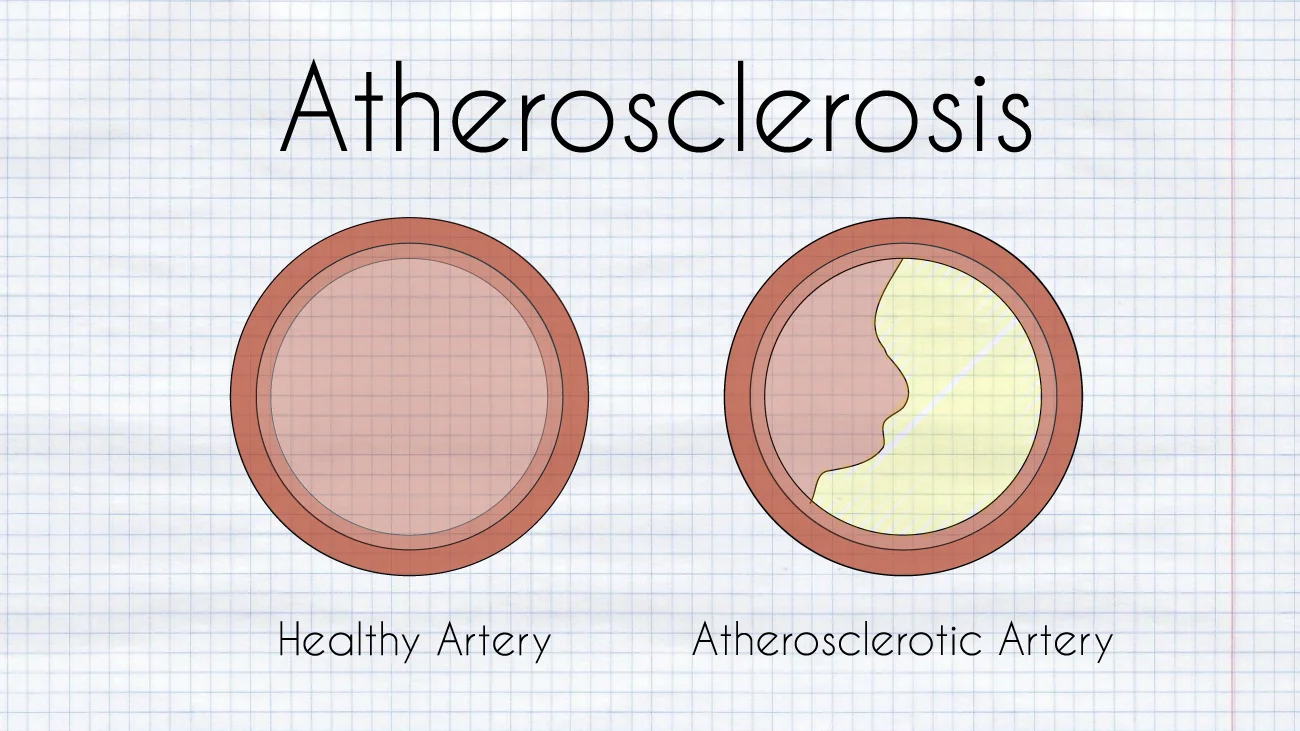
Atherosclerosis is a condition in which the blood vessels throughout the body harden and narrow. Over time they can narrow enough to choke off blood flow, starving the tissue they feed of oxygen.
Our blood vessels are built from several layers. The middle layer is muscle that tightens and relaxes to control blood pressure; the innermost layer is a delicate, single-cell lining called the endothelium. (This is a common point of confusion — the vessel lining is endothelium, not the “epithelium” that lines the gut.) The endothelium keeps the inside of the vessel smooth and toned so blood flows with as little resistance as possible, and it’s this layer that’s injured first in atherosclerosis 5Reference 5Role of endothelial dysfunction in atherosclerosis.
Once the endothelium is damaged and inflamed, LDL particles are retained in the vessel wall, engulfed by immune cells, and slowly built into a fatty plaque. Over many years the plaque grows, oxidises, and hardens. Left unchecked, it can block the artery entirely 4Reference 4Low-density lipoproteins cause atherosclerotic cardiovascular disease.
When this blockage happens in the coronary arteries feeding the heart, the result is a heart attack: starved of blood, the heart tissue begins to die — which is often fatal.
Atherosclerosis is a slow, chronic process. It builds over decades, and the earliest signs show up startlingly young: autopsy studies have found fatty streaks — the first stage of atherosclerosis — in the arteries of children and teenagers 6Reference 6Association between multiple cardiovascular risk factors and atherosclerosis in children and young adults (the Bogalusa Heart Study).
It’s the main cause of strokes, heart attacks, and peripheral vascular disease, and it does its damage in two main ways. The plaque can build up until it occludes the artery completely (common in heart attacks). Or a plaque can rupture, detach, and travel through the bloodstream until it lodges in a narrower vessel downstream — a common cause of strokes.
Risk factors for atherosclerosis:
- High homocysteine (can stem from low B-vitamin intake)
- High C-reactive protein (a marker of inflammation, often tied to obesity)
- Oxidative stress (from smoking or environmental exposures)
- Genetics
Angina
Angina is the chest pain that comes when the heart’s own blood supply is briefly or partially cut off. It typically flares during exertion and eases with rest.
Angina itself isn’t fatal, but it’s an important warning sign of an impending cardiovascular event. It reflects narrowed arteries that can’t deliver enough oxygen to meet the heart’s demand when you push it.
Coronary Artery Disease
The heart has a very high demand for oxygen and nutrients — and, ironically, the blood coursing through its chambers doesn’t supply them. That blood is just passing through. The heart muscle itself is fed by a dedicated network: the coronary arteries, which wrap around the heart and feed its cells through capillaries.
If a coronary artery becomes blocked or narrowed, the section of heart muscle it supplies is cut off from oxygen. Those cells stop working almost immediately and will die if blood flow isn’t restored — this is a heart attack.
If the blockage strikes an artery feeding the heart’s electrical nodes — the cells that set the heartbeat — that node can die, forcing the heart onto a weaker backup rhythm. People in this situation may not fully recover, and those who do are often left with a weakened heart.
Congestive Heart Failure
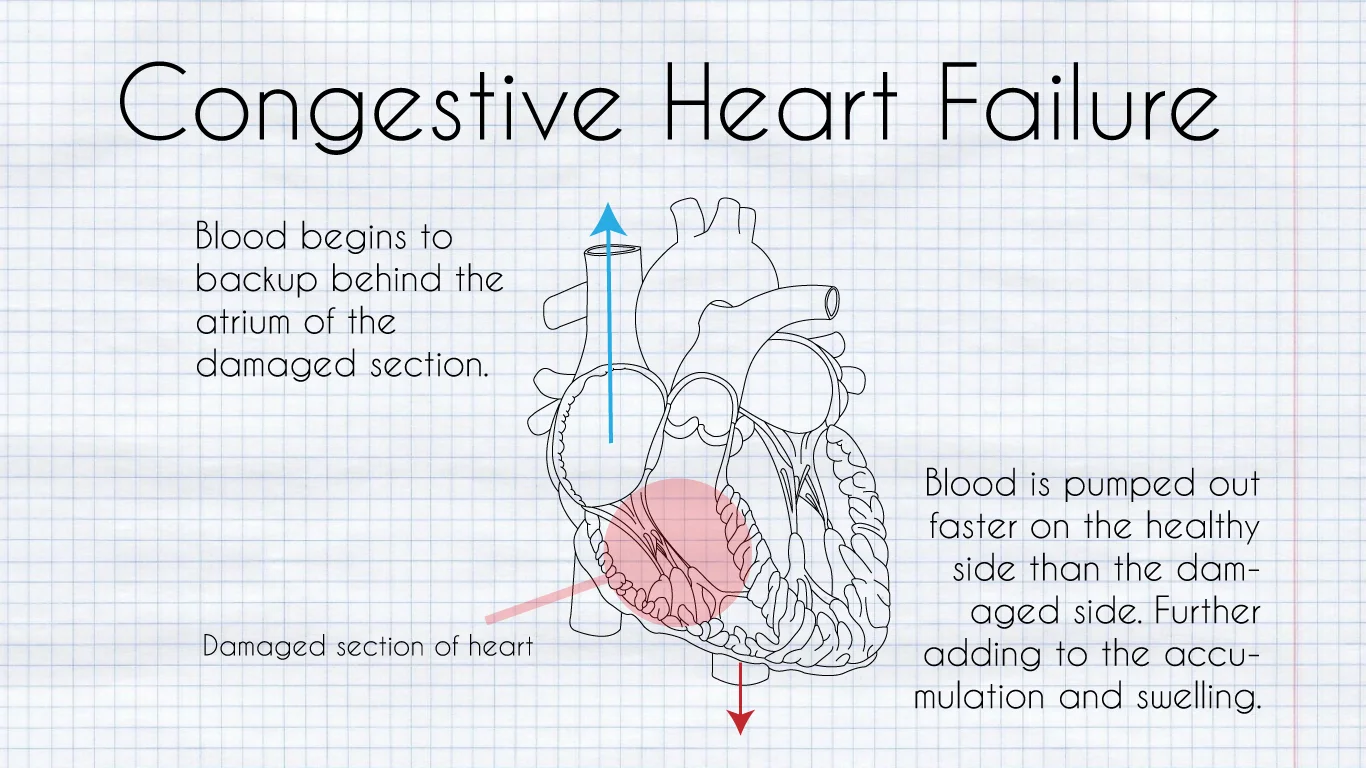
Congestive heart failure isn’t a single event but a syndrome: the heart can no longer pump well enough to meet the body’s needs, so blood backs up and fluid pools in the tissues.
A prior heart attack is the most common cause, but it’s far from the only one. Long-standing high blood pressure, heart-valve disease, diseases of the heart muscle itself (cardiomyopathies), and chronic arrhythmias can all lead to heart failure 7Reference 7Causes and Risks for Heart Failure.
Which side of the heart is affected shapes the symptoms. If the right side is weak, blood backs up into the body and fluid builds in the extremities. If the left side is weak, blood backs up into the lungs, causing fluid to accumulate there. Both are serious, and both usually require lifelong management.
Arrhythmia
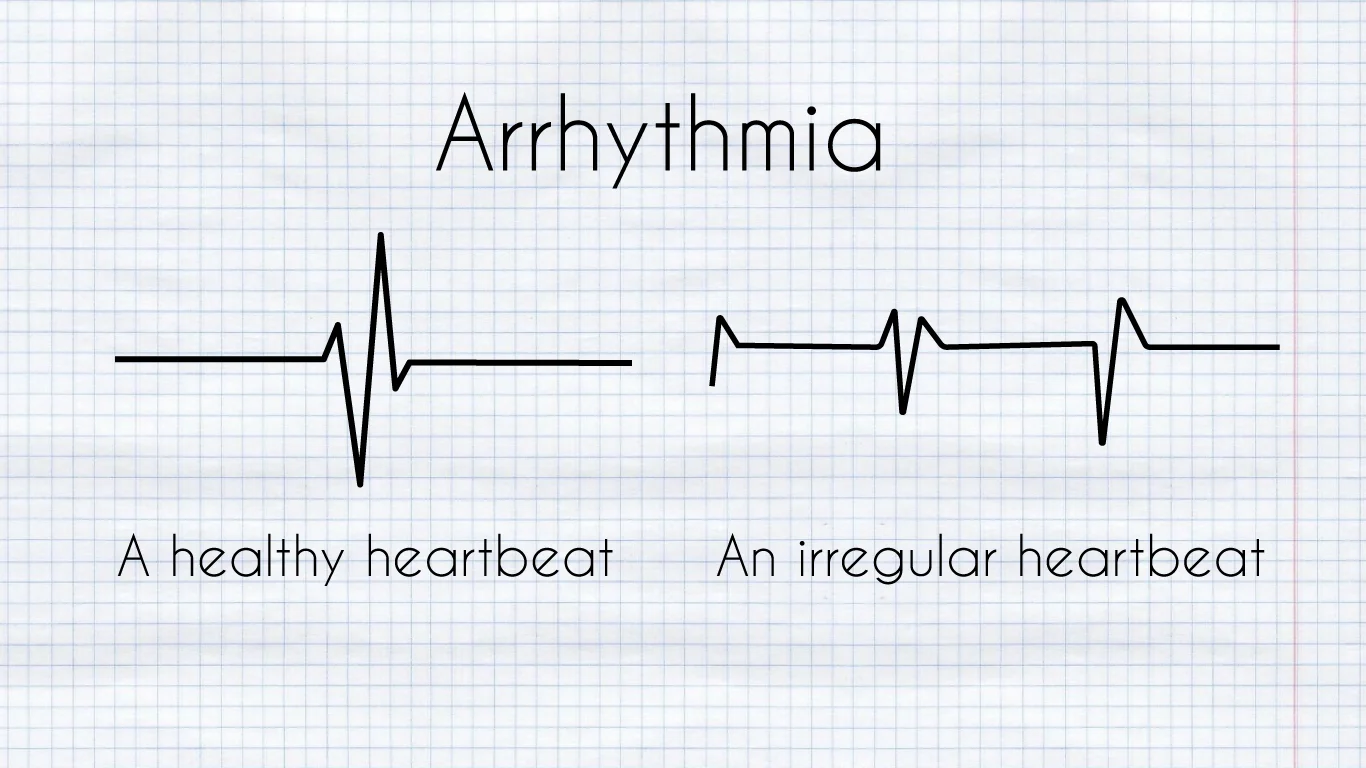
“Arrhythmia” covers a wide range of electrical disturbances in the heart. They come in many forms, and not all of them are a problem.
The heartbeat is set by a group of nodes that fire on a timed cycle, sending an electrical impulse that ripples through the heart muscle and makes it contract. When that system glitches, beats can fall out of sync or be skipped entirely.
Arrhythmias are easily diagnosed with an ECG, and depending on the type and cause, treatment isn’t always necessary.
Types of arrhythmia:
- Atrial fibrillation (upper chambers not firing properly)
- Bradycardia (slow heart rate)
- Tachycardia (fast heart rate)
- Premature contraction
- Ventricular fibrillation (uncontrolled contractions of the lower chambers)
- Conduction disorders
Essential Hypertension
In most cases of hypertension (high blood pressure), no single cause can be found. When a doctor can’t pin down a cause, it’s called essential hypertension; when the cause is known, it’s secondary hypertension.
Identifying the cause matters because it lets treatment be more targeted. The general approach is often similar either way, but tailoring it to the underlying driver makes it far more effective.
A reading at or above 180/120 mmHg is a hypertensive crisis — and if it’s accompanied by signs of organ damage like chest pain, breathlessness, vision changes, or weakness, it’s a medical emergency that needs urgent care, not herbs 8Reference 8Whelton, P. K., et al. (2018). 2017 ACC/AHA Guideline for the Prevention, Detection, Evaluation, and Management of High Blood Pressure in Adults. Hypertension, 71(6), e13–e115. (Hypertensive crisis ≥180/120 mmHg.) Link.
That urgency exists because, left untreated, high blood pressure quietly damages the heart, kidneys, eyes, and brain over years. It’s earned its nickname: the silent killer.
Herbs Traditionally Used to Support Heart Health
Several plants have a long history of traditional use as “heart tonics.” It’s worth being clear about what that means: these come from folk and traditional systems of medicine, and most of the supporting research is preliminary, low-quality, or done in the lab. They are not a substitute for medical treatment, and heart disease is not something to self-manage.
This is also the part of herbal medicine where drug interactions get genuinely dangerous — several heart herbs interact with common cardiovascular drugs like warfarin and digoxin. If you have a diagnosed heart condition, or you’re on any cardiac medication, talk to your doctor before adding any of these. With those caveats firmly in place, here are a few of the better-known traditional heart herbs.
Hawthorn (Crataegus spp.) is the classic heart tonic of both Chinese and Western herbalism, traditionally used for angina, the early stages of heart disease, and palpitations. It also has the best clinical evidence of the three. A Cochrane review of randomised trials found hawthorn extract, used as an add-on to conventional treatment, improved symptoms and exercise tolerance in chronic heart failure 9Reference 9Systematic reviewHawthorn extract for treating chronic heart failure. The important caveat came later: the large SPICE trial found hawthorn did not reduce cardiac deaths or hospitalisations, so it appears to help how people feel without a proven effect on survival 10Reference 10Clinical trialThe efficacy and safety of Crataegus extract WS 1442 in patients with heart failure: the SPICE trial. Because it has mild heart-acting effects of its own, it shouldn’t be combined with digoxin except under medical supervision 9Reference 9Systematic reviewHawthorn extract for treating chronic heart failure.
Dan Shen (Salvia miltiorrhiza) is a Chinese herb used for angina and coronary heart disease, traditionally said to steady the rhythm and protect the heart. Human trials exist, but they’re overwhelmingly small, low-quality Chinese studies that can’t support firm conclusions 11Reference 11Meta-analysisHow efficacious is danshen (Salvia miltiorrhiza) dripping pill in treating angina pectoris? Evidence assessment for a meta-analysis of randomised controlled trials. More important is a well-documented safety issue: dan shen dangerously potentiates warfarin, raising INR and bleeding risk, and it should be avoided by anyone taking warfarin or other blood thinners 12Reference 12Interaction between warfarin and danshen (Salvia miltiorrhiza).
Arjuna (Terminalia arjuna) is an Indian tree whose bark is used in Ayurveda for heart conditions — held in roughly the same regard there as hawthorn is in Chinese medicine. It actually has some human trial data: small studies in chronic stable angina reported fewer angina episodes and improved exercise tolerance. A systematic review judged the evidence real but limited in quantity and quality — promising, not proven 13Reference 13Meta-analysisTerminalia arjuna in chronic stable angina: a systematic review and meta-analysis.
Author
The Sunlight Experiment
References
- Centers for Disease Control and Prevention, National Center for Health Statistics. Mortality in the United States, 2023 (NCHS Data Brief No. 521) — heart disease remains the leading cause of death. Link
- Australian Bureau of Statistics. Causes of Death, Australia — ischaemic heart disease and dementia as the leading causes. Link
- Statistics Canada. Deaths, 2023 (The Daily, Dec 4 2024) — heart disease second behind cancer. Link
- Ference, B. A., et al. (2017). Low-density lipoproteins cause atherosclerotic cardiovascular disease. A consensus statement from the European Atherosclerosis Society Consensus Panel. European Heart Journal, 38(32), 2459–2472. Link
- Davignon, J., & Ganz, P. (2004). Role of endothelial dysfunction in atherosclerosis. Circulation, 109(23 suppl 1), III-27–III-32. Link
- Berenson, G. S., et al. (1998). Association between multiple cardiovascular risk factors and atherosclerosis in children and young adults (the Bogalusa Heart Study). New England Journal of Medicine, 338(23), 1650–1656. Link
- American Heart Association. Causes and Risks for Heart Failure. Link
- Whelton, P. K., et al. (2018). 2017 ACC/AHA Guideline for the Prevention, Detection, Evaluation, and Management of High Blood Pressure in Adults. Hypertension, 71(6), e13–e115. (Hypertensive crisis ≥180/120 mmHg.) Link
- Guo, R., Pittler, M. H., & Ernst, E. (2008). Hawthorn extract for treating chronic heart failure. Cochrane Database of Systematic Reviews, (1), CD005312. Link
- Holubarsch, C. J. F., et al. (2008). The efficacy and safety of Crataegus extract WS 1442 in patients with heart failure: the SPICE trial. European Journal of Heart Failure, 10(12), 1255–1263. Link
- Jia, Y., et al. (2017). How efficacious is danshen (Salvia miltiorrhiza) dripping pill in treating angina pectoris? Evidence assessment for a meta-analysis of randomised controlled trials. Journal of Ethnopharmacology. Link
- Chan, T. Y. K. (2001). Interaction between warfarin and danshen (Salvia miltiorrhiza). Annals of Pharmacotherapy, 35(4), 501–504. Link
- Kaur, K., et al. (2014). Terminalia arjuna in chronic stable angina: a systematic review and meta-analysis. Cardiology Research and Practice, 2014, 281483. Link
Justin Cooke
Clinical herbalist and the writer behind The Sunlight Experiment — an evidence-based pharmacopoeia of herbs, supplements, and the chemistry behind them.