

Influenza is a common infection in humans, birds, dogs, livestock, and whales.
The virus infects and hijacks our cells, causing them to churn out more viruses rather than perform the normal metabolic activities the cell was intended to perform.
Most of us that fall ill from influenza will recover within a few days. For some, however, the infection can lead to much more serious complications like pneumonia and death.
Every once in a while, we experience more severe influenza outbreaks. The worst on record — the Spanish flu of 1918 — infected about a third of the world and killed an estimated 50 million people, roughly 2–5% of the global population depending on whose estimate you use.
A more recent outbreak, the 2009 “swine flu” (H1N1) pandemic, is estimated to have killed around 284,000 people worldwide in its first year — with estimates ranging from about 150,000 to 575,000.
The risk of another catastrophic influenza outbreak is high, and treatment options are limited. As far as drug therapies are concerned, there are 3 go-to drugs that doctors and hospitals have available, all of which are becoming less effective as time goes on.
The reason being that as a virus mutates, it can become resistant to the drugs we have available. This, combined with the lack of new drug development places the possibility of catastrophic viral disaster at a high risk.
Here we discuss the mechanisms of action behind the drug therapies most commonly used by health professionals to treat influenza, what their strengths and weaknesses are, and how they are best used to prevent a significant outbreak in the future.

An Introduction To Influenza
Influenza comes in three main types, A, B, and C.
For the most part, influenza A and B are the main concern for human health. The virus works by using special protein complexes on the outside of the viral envelope to enter the cell and release special RNA segments into the nucleus of our cells.
Unusually for an RNA virus, influenza copies itself inside the nucleus — but it doesn’t rewrite our DNA. Instead it hijacks the cell’s own machinery to replicate its genes and churn out viral proteins, crowding out the normal work the cell was meant to do.
Stopping this process with drugs needs to be done early, before the virus has infected too many of our cells. These drugs will usually work by inhibiting one of these protein complexes, preventing new viruses from leaving the cells that produced them.
First Line Of Defence
The best treatment for anything is prevention.
This is achieved by physically blocking the viral particles from entering the body. Medical professionals achieve this with thorough and frequent hand-washing, and physical barriers placed on both the patient and the practitioner.
Face masks are a common form of prevention when in contact with infected individuals, but it’s important to note that not all masks are the same.
Dust masks offer little protection from the infected, but do work in isolating viral particles in those already infected.
These masks don’t filter the air for those wearing them, and airborne particles such as influenza can still enter the lungs of those wearing them. The better option is mask that actually filters the air entering the lungs such as the iconic N95 respirator masks. These masks need to be fitted to get the best results, but offers the best protection to those not yet infected.
For those who are already infected, a common dust mask is often used because despite not filtering the exhaled air directly, they are effective in containing the spread of water droplets infected with the virus.
Drug Therapy Options For Influenza
Fortunately, we have a few different drugs that we can use to treat influenza if caught early. These medications mainly work by inhibiting a specific viral protein which thus prevents it from functioning properly.
There are 3 main antiviral treatments for influenza
- Zanamivir (Relenza®) (Inhalation)
- Oseltamivir (Tamiflu®) (Oral)
- Peramivir (Rapivab®) (IV)
Older, more outdated medicines include:
- Amantadine
- Rimantadine
The Strengths And Weaknesses Of These Drugs
These drugs can help, but their benefit is more modest than many people assume. Started within 48 hours of the first symptoms, the neuraminidase inhibitors (like oseltamivir/Tamiflu) shorten illness by roughly a day on average; the evidence that they prevent serious complications or hospitalisation is weaker and has been widely debated 18Reference 18Systematic reviewNeuraminidase inhibitors for preventing and treating influenza in healthy adults and children.
Side effects are mostly minor with the current drugs — they were more of a problem with the older generation, such as amantadine. The bigger concerns are structural.
The main problem lies in the rate at which viral strains have been achieving drug resistance, and the significant lack of development going into new drugs across the globe.
Influenza Drug Resistance
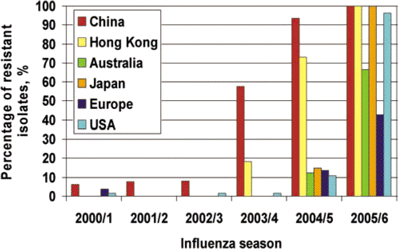
Source: Hayden, F. (2009). Developing new antiviral agents for influenza treatment: what does the future hold? Clinical Infectious Diseases, 48(Supplement 1), S3–S13.
Over the past decade, drug resistance to all of our most useful anti-influenza medications have been increasing exponentially.
M2 ion-channel inhibition — the mechanism behind the older drugs amantadine and rimantadine — has become virtually useless against most circulating influenza strains as a result of drug resistance (see chart above) 1,2,3,4,5,6,7,8Reference 1Developing new antiviral agents for influenza treatment: what does the future hold?Reference 2Recovery of drug-resistant influenza A virus during therapeutic use of rimantadine, Antimicrob Agents Chemother , 1991, volReference 3Emergence and apparent transmission of rimantadine-resistant influenza A virus in families, N Engl J Med , 1989, volReference 4Hall CB, Dolin R, Gala CL, et al. . Children with influenza A infection: treatment with rimantadine, Pediatrics , 1987, vol. 80 (pg. 275-82)Reference 5High frequency of resistant viruses harboring different mutations in amantadine-treated children with influenza, J Infect Dis , 2003, volReference 6Englund JA, Champlin RE, Wyde PR, et al. . Common emergence of amantadine- and rimantadine-resistant influenza A viruses in symptomatic immunocompromised adults, Clin Infect Dis , 1998, vol. 26 (pg. 1418-24)Reference 7Bright RA, Medina MJ, Xu X, et al. . Incidence of adamantane resistance among influenza A(H3N2) viruses isolated worldwide from 1994 to 2005: a cause for concern, Lancet , 2005, vol. 366 (pg. 1175-81)Reference 8Deyde VM, Xu X, Bright RA, et al. . Surveillance of resistance to adamantanes among influenza A(H3N2) and A(H1N1) viruses isolated worldwide, J Infect Dis , 2007, vol. 196 (pg. 249-57).
New medications (Zanamivir, Oseltamivir, and Peramivir) work by inhibiting a viral protein known as neuraminidase, which is needed for newly formed viruses to exit the cell and infect other hosts. This has also seen significant increases in resistance by viral strains and continues to grow 9,10,11,12,13,14,15,16,17Reference 9Treatment of influenza with neuraminidase inhibitors: virological implicationsReference 10Oral oseltamivir treatment of influenza in childrenReference 11Oseltamivir (Tamiflu) and its potential for use in the event of an influenza pandemicReference 12Resistant influenza A viruses in children treated with oseltamivir: descriptive studyReference 13Case reportRecovery of drug-resistant influenza virus from immunocompromised patients: a case seriesReference 14Prevention and treatment of influenza in high-risk groupsReference 15Use of influenza antivirals during 2003–2004 and monitoring of neuraminidase inhibitor resistanceReference 16Wkly Epidemiol Rec, 2007, volReference 17Emergence of influenza B viruses with reduced sensitivity to neuraminidase inhibitors.
It is unknown how much longer these medications will be effective in treating influenza A, B, and C.
1. Amantadine Hydrochloride
Amantadine is one of the older medications used in treating influenza.
It works by inhibiting the M2 ion channel in the influenza A virus.
This channel pumps protons (H⁺ ions) into the interior of the virus once it has been taken up inside the cell. That burst of acidity is the trigger the virus needs to uncoat and release its RNA segments. Block the channel and the virus can’t uncoat — its RNA never reaches the nucleus, and the virus is effectively inactivated.
2. Zanamivir
This drug was invented in Australia around the same time as its competitor Oseltamivir (Tamiflu®). Both of these drugs work by inhibiting the viral envelope protein neuraminidase. By inhibiting this protein, the virus is not able to exit the cell to infect other hosts.
Zanamivir differs from Oseltamivir in its application. It is inhaled as a powdered spray, which allows it to reach the site of infection (respiratory tract) more effectively. This is beneficial in several ways:
- Comes into direct contact with the infected tissue
- Reduces systemic side effects
- Bypasses the low oral bioavailability of the drug
The Future Of Drug Therapies For Influenza
With the increased rate of drug resistance amongst influenza viruses, and the catastrophic past of influenza infection, it is becoming ever more important to develop effective medications to treat them before another pandemic occurs.
With the notable antiviral activity of some plants — including elder (Sambucus nigra) — there’s real interest in whether the next generation of influenza antivirals might be derived from plant sources.
Author
The Sunlight Experiment
References
- Hayden, F. (2009). Developing new antiviral agents for influenza treatment: what does the future hold?. Clinical Infectious Diseases, 48(Supplement_1), S3-S13.
- Hayden FG, Sperber SJ, Belshe RB, Clover RD, Hay AJ, Pyke S. Recovery of drug-resistant influenza A virus during therapeutic use of rimantadine, Antimicrob Agents Chemother , 1991, vol. 35 (pg. 1741-7)
- Hayden FG, Belshe RB, Clover RD, Hay AJ, Oakes MG, Soo W. Emergence and apparent transmission of rimantadine-resistant influenza A virus in families, N Engl J Med , 1989, vol. 321 (pg. 1696-702)
- Hall CB, Dolin R, Gala CL, et al. . Children with influenza A infection: treatment with rimantadine, Pediatrics , 1987, vol. 80 (pg. 275-82)
- Shiraishi K, Mitamura K, Sakai-Tagawa Y, Goto H, Sugaya N, Kawaoka Y. High frequency of resistant viruses harboring different mutations in amantadine-treated children with influenza, J Infect Dis , 2003, vol. 188 (pg. 57-61)
- Englund JA, Champlin RE, Wyde PR, et al. . Common emergence of amantadine- and rimantadine-resistant influenza A viruses in symptomatic immunocompromised adults, Clin Infect Dis , 1998, vol. 26 (pg. 1418-24)
- Bright RA, Medina MJ, Xu X, et al. . Incidence of adamantane resistance among influenza A(H3N2) viruses isolated worldwide from 1994 to 2005: a cause for concern, Lancet , 2005, vol. 366 (pg. 1175-81)
- Deyde VM, Xu X, Bright RA, et al. . Surveillance of resistance to adamantanes among influenza A(H3N2) and A(H1N1) viruses isolated worldwide, J Infect Dis , 2007, vol. 196 (pg. 249-57)
- Roberts NA. Treatment of influenza with neuraminidase inhibitors: virological implications. Philos Trans R Soc Lond B Biol Sci, 2001, vol. 356 (pg. 1895-7).
- Whitley RJ, Hayden FG, Reisinger KS, et al. Oral oseltamivir treatment of influenza in children. Pediatr Infect Dis J, 2001, vol. 20 (pg. 127-33).
- Ward P, Small I, Smith J, Suter P, Dutkowski R. Oseltamivir (Tamiflu) and its potential for use in the event of an influenza pandemic. J Antimicrob Chemother, 2005, vol. 55 Suppl 1 (pg. i5-21).
- Kiso M, Mitamura K, Sakai-Tagawa Y, et al. Resistant influenza A viruses in children treated with oseltamivir: descriptive study. Lancet, 2004, vol. 364 (pg. 759-65).
- Ison MG, Gubareva LV, Atmar RL, Treanor J, Hayden FG. Recovery of drug-resistant influenza virus from immunocompromised patients: a case series. J Infect Dis, 2006, vol. 193 (pg. 760-4).
- Whitley RJ, Monto AS. Prevention and treatment of influenza in high-risk groups. J Infect Dis, 2006, vol. 194 Suppl 2 (pg. S133-8).
- Neuraminidase Inhibitor Susceptibility Network. Use of influenza antivirals during 2003–2004 and monitoring of neuraminidase inhibitor resistance. Wkly Epidemiol Rec, 2005, vol. 80 (pg. 156).
- Monitoring of neuraminidase inhibitor resistance among clinical influenza virus isolates in Japan during the 2003–2006 influenza seasons. Wkly Epidemiol Rec, 2007, vol. 82 (pg. 149-50).
- Hatakeyama S, Sugaya N, Ito M, et al. Emergence of influenza B viruses with reduced sensitivity to neuraminidase inhibitors. JAMA, 2007, vol. 297 (pg. 1435-42).
- Jefferson, T., Jones, M. A., Doshi, P., et al. (2014). Neuraminidase inhibitors for preventing and treating influenza in healthy adults and children. Cochrane Database of Systematic Reviews, (4), CD008965. Link
Justin Cooke
Clinical herbalist and the writer behind The Sunlight Experiment — an evidence-based pharmacopoeia of herbs, supplements, and the chemistry behind them.