

Bacterial infection has always plagued human history, and it likely always will.
Organisms like Tetanus, Anthrax, Tuberculosis, Cholera, Botulism, Syphilis, E. coli, and Typhoid fever have taken countless human lives over the past 200 years alone.
Thanks to the invention of antibiotics, bacterial infections have become far less severe over the past 70 years. Recently, however, these organisms are developing resistance to the antibiotics we use against them.
Eventually we’ll run out of options to use against bacterial infections, allowing them to wreak havoc on modern society as they did in the era preceding the invention of antibiotics.
The first big post antibiotic outbreak could be from a common form of Typhoid fever found in Pakistan.

Drug Resistance
Drug resistance has been around since the mid 1950’s, but didn’t start to pose significant problems until recently. As a bacteria becomes resistant to one strain of antibiotic, doctors would simply switch to another. As time goes on however, bacteria are becoming better at resisting our medicines, and drug resistance is now an ever increasing issue in the medical industry.
Salmonella typhi, the bacteria responsible for Typhoid fever is one of the most virulent bacterial infections known. Since the 1980’s, S. typhi has gradually become resistant to antibiotics.
Recently, a new strain of S. typhi has been appearing in areas around Pakistan that can resist all but the last line of antibiotics used to treat it. Researchers are calling this strain “extensively drug-resistant typhoid” (XRT).
If XRT resists our last line of defence, we will no longer be able to battle and contain outbreaks.
What Is Typhoid Fever?
Typhoid fever comes from a Salmonella bacterium infection. There are over 2500 different types of salmonella, however, the most common human illness from salmonella comes from the Salmonella enterica species.
Salmonella can be separated into 2 categories:
1. Non Typhoidal Salmonella
This is the type of salmonella infection we often hear about as outbreaks in our food, or that can be transmitted through raw eggs or meat. It can spread between animals including livestock and domesticated pets, and humans. This type of salmonella infects only our gastrointestinal tissue, causing moderate to severe diarrhea. Salmonella enterica is the most common species of non-typhoidal salmonella.
2. Typhoidal Salmonella
This infection is much more severe. These strains of salmonella can puncture the gastrointestinal lining, allowing various compounds and microorganisms to enter our bloodstream and infect other organs (including salmonella itself). The main species responsible for this is Salmonella typhi.
Typhoid fever is the name given to any condition involving the infection of typhoidal salmonella infection.
Other strains of Salmonella can cause very similar symptoms (though ultimately less severe). These are referred to as Paratyphoid Salmonella. This is caused by the species S. paratyphi A, B, or C.
What Are The Symptoms Of Typhoid Fever?
Symptoms usually appear 1 to 3 weeks after exposure, and the disease has a fairly distinctive course if left untreated. The hallmark sign is a sustained “stepwise” fever — the temperature climbs a little higher each day over the first few days until it plateaus around 39–40°C and stays there.
Common early symptoms include:
- A gradually rising, sustained fever
- Headache
- General malaise, weakness, and fatigue
- Abdominal pain and discomfort
- Constipation (more typical early on) or diarrhea
- Loss of appetite
- A dry cough or sore throat
Two classic clinical signs that point toward typhoid are:
- Rose-coloured spots — small, salmon-pink, blanching spots that appear on the chest and abdomen of roughly a quarter of patients, usually late in the first or second week.
- Relative bradycardia — a pulse that stays slower than you’d expect for such a high fever (sometimes called the Faget sign).
As the infection establishes itself in the bloodstream and organs, an enlarged liver and spleen (hepatosplenomegaly) are often found.
Classically, untreated typhoid progresses week by week:
- Week 1: Fever rises in a stepwise pattern; headache, malaise, and relative bradycardia set in.
- Week 2: High, sustained fever; rose spots appear; abdominal pain and an enlarged liver and spleen develop. Patients are often exhausted and may become delirious.
- Week 3: This is the most dangerous stage. As the bacteria damage the lymphoid tissue (Peyer’s patches) in the intestinal wall, the risk of intestinal hemorrhage and intestinal perforation — a hole in the gut that leads to peritonitis and sepsis — rises sharply. These complications are the main cause of death in typhoid.
- Week 4: In those who survive, the fever gradually subsides and recovery begins.
The danger of typhoid is that perforation can happen with little warning. Worsening abdominal pain, a distended abdomen, signs of bleeding, or sudden deterioration in week three are medical emergencies that require immediate hospital care.
How Is Typhoid Spread?
Salmonella typhi only infects humans, and is spread through human faeces. This means that transmission is especially virulent in areas with poor hygiene and waste disposal. It can also be transmitted through food handled by infected individuals who didn’t wash their hands effectively or from flies travelling from faeces to food.
In areas like India and Pakistan where Salmonella typhi is endemic, it’s common to see areas with overpopulation and poor sewage systems contaminating drinking water and crops. This provides a perfect breeding ground for Salmonella of all kinds.
It’s also possible for Salmonella typhi to spread from infected individuals who are showing no symptoms. The first case of this was a woman aptly nicknamed Typhoid Mary.
Mary was a carrier of Salmonella typhi, but showed no symptoms of the disease.
She was a chef, and was thought to have transmitted the bacteria to over 50 people through the food she prepared them. Some of these people ended up dying from the illness.
[caption id="" align=“alignnone” width=“1280”]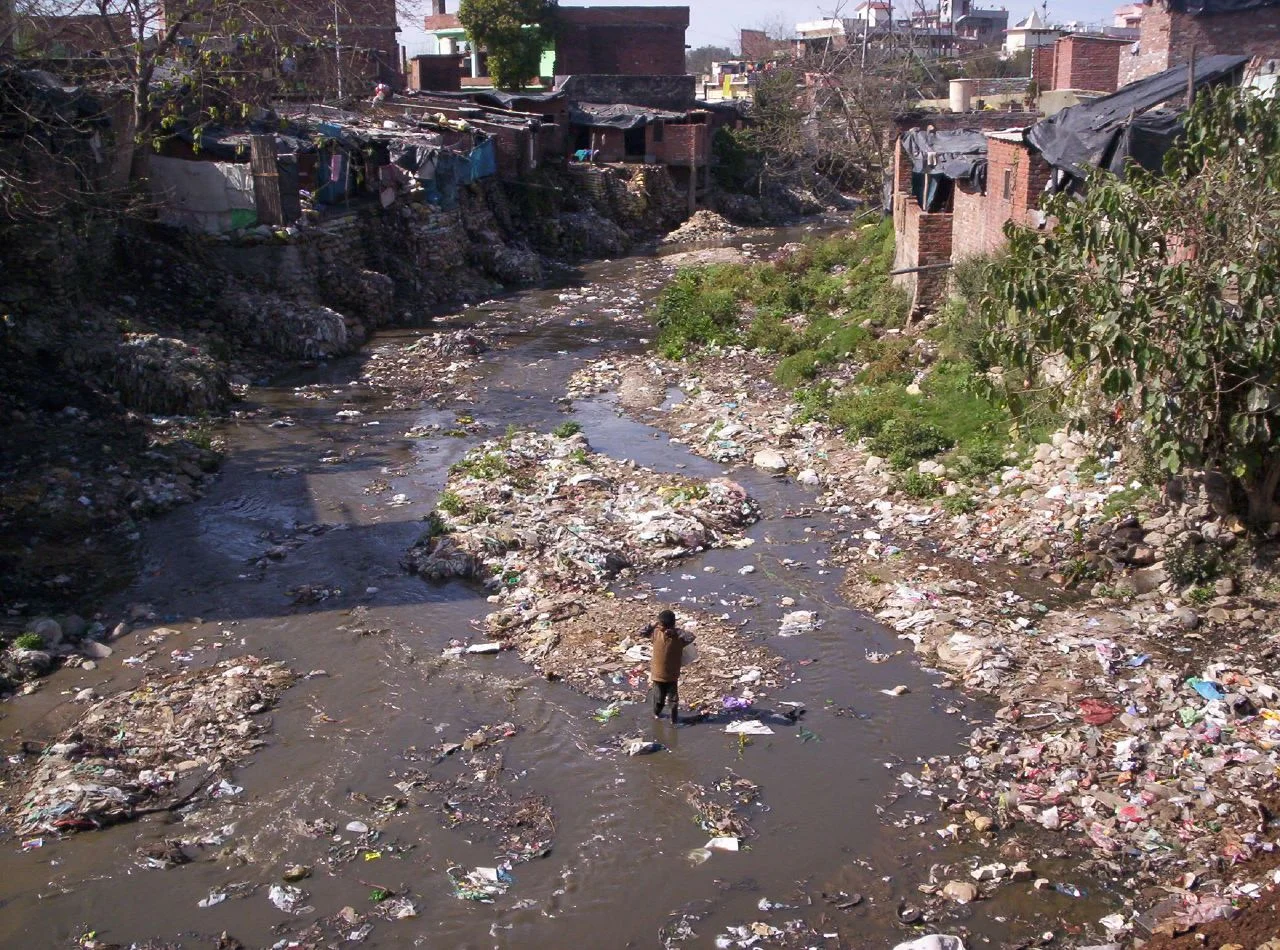 Contaminated waterways like this are a perfect breeding ground for drug resistant microbes like Salmonella typhi [/caption]
How Dangerous Is Typhoid Fever?
The CDC lists typhoid fever as a life threatening illness. As many as 21.5 million people are infected every year resulting in the death of 130 000 to 210 000 people each year. This is about 1% of those infected. It’s important to note that this is WITH effective antibiotics available. Without these, the numbers would likely be MUCH higher.
Typhoid fever results in death in about 20-25% of those infected (without antibiotics), and if it isn’t treated, the fever can last for several weeks or months.
Even those whose symptoms disappear can still be infected with Salmonella typhi, allowing them to transmit the illness to others more easily.
Without antibiotics, the death toll based on this fatality rate could be closer to 4.3-5.3 million deaths each year.
How Does Typhoid Fever Work?
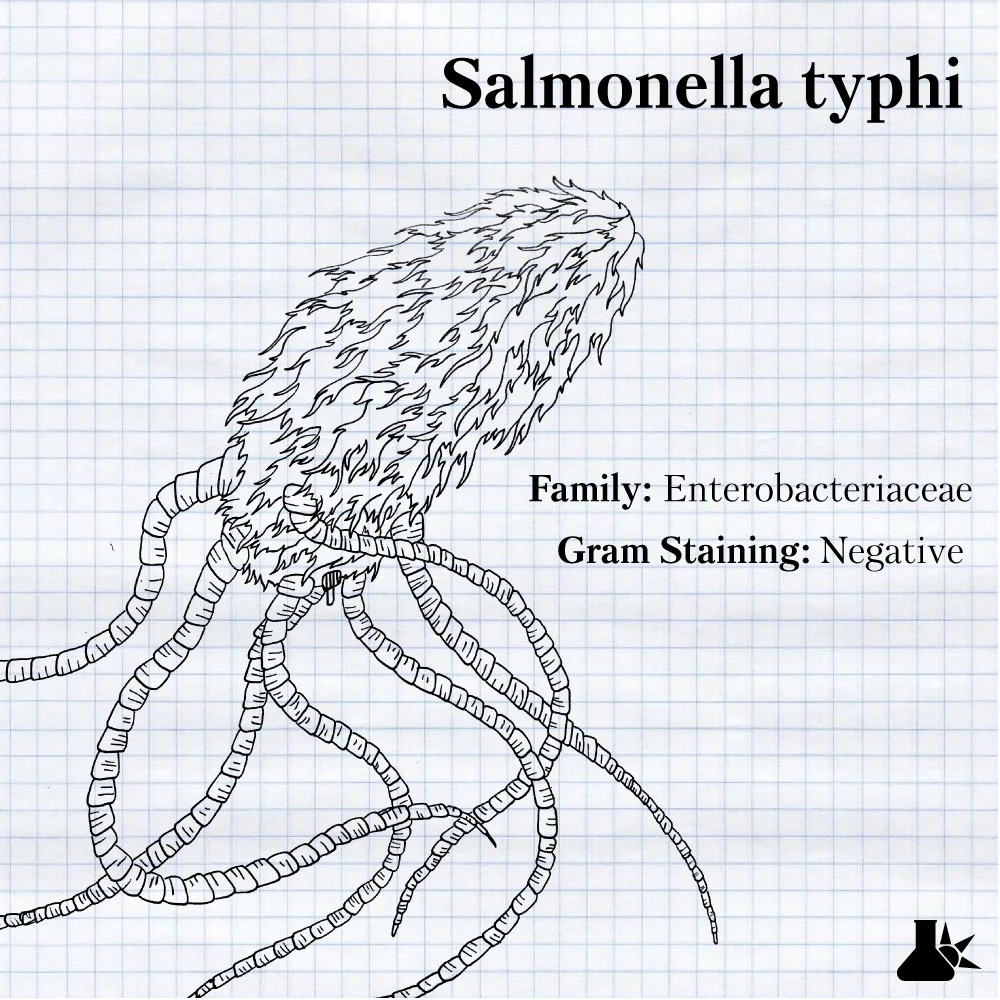
Salmonella typhi is considered a gram negative bacteria. It’s rod shaped, and has a set of long flagella that allows it to control its movement to reach more ideal places in the body.
Upon entering the body, Salmonella typhi attaches to the epithelial cells lining the gastrointestinal tract. Here, it injects them with a cocktail of toxins (effector proteins) directly into the intestinal cells. These effector proteins manipulate the cells function, causing it to engulf the invading salmonella. Once inside, it secretes other effector proteins to protect itself from being digested, allowing it to grow and multiply inside the cell.
Most salmonella remains in the gastrointestinal tract for the duration of their lifespan, however, Salmonella typhi can spread into the blood, and begin infecting other organs as well. This is what makes typhoid fever so devastating. It often leads to sepsis, and death.
Treating Typhoid
The ability for typhoid to enter the cells and multiply (much like a virus) makes it especially difficult to treat since the antibiotics used need to be able to penetrate the infected cells.
We currently have 3 main antibiotics we can use to treat typhoid fever:
- Ceftriaxone
- Fluoroquinolones (such as Ciprofloxacin)
- Azithromycin
In severe cases, corticosteroids like prednisone are often used to control symptoms.
Mortality is most common in those who are malnourished, making it especially important to ensure adequate nutrition in those affected.
The Significance of the Typhoid Outbreak in Pakistan
Salmonella infection, including Typhoid Fever, is common in Asia. Up to 75% of infections in the United States are the result of overseas travel to places like Southeast Asia. Pakistan and India are especially common places to contract these infections.
The recent outbreak in Pakistan is different than most salmonella infections because the infecting strain is resistant to all but azithromycin, the last line of defence against Salmonella typhi. If this bacterium manages to develop resistance to this class of antibiotic, there will be no treatment options left to manage the infection. This also means there are no other options for those who may be allergic to azithromycin, resulting in further complications, or an inability to use the drug at all.
The conditions present in the epicenter of this outbreak, Hyderabad, have allowed a perfect storm of Typhoid adaptation and infection. The city is overpopulated, containing an estimated 6 million people, and has poor sewage elimination. This allows the sewage to overflow into rivers and streams, contaminating drinking water sources.
This outbreak is not localised to these regions, however, and will likely spread globally, replacing weaker strains of the bacteria, and spreading throughout both the developed and undeveloped world. A case has already been detected in the United Kingdom.
If this strain worsens, we’re likely to experience similar fatality rates to pre-antibiotic eras, which was about 1 in 4 infected.
Herbs For Typhoid Fever
Traditionally there are many different herbs indicated for Typhoid according to various regions and indigenous cultures. Over the past 60 years, since the invention of antibiotics, we have stopped relying on plants in the treatment of Typhoid fever and other forms of Salmonella.
With drug resistance increasing at an alarming rate, we need to begin considering other treatment options for this condition. From here, we can identify herbs that are effective for treating or managing the condition, as well as investigate new drugs from these plant sources to combat XDR Typhoid and other superbugs just like it.
Typhoid fever is a serious, potentially fatal bacterial infection. It requires prompt medical diagnosis and treatment with antibiotics. The plants discussed below are NOT a substitute for antibiotics, and they should never be used in place of proper medical care. If anything, the emergence of drug-resistant (XDR) typhoid makes getting the right medical treatment more important, not less — because the window for effective treatment is narrowing, and complications like intestinal perforation can be deadly. Anyone with suspected typhoid needs to see a doctor.
With that said, plants have a long history of traditional use against fevers and enteric infections in the regions where typhoid is endemic, and a number of them have shown activity against Salmonella typhi in laboratory studies. The vast majority of this evidence is preliminary — it comes from in vitro (test-tube) or animal research, not from clinical trials in people. It tells us which plants are worth investigating as adjuncts or as sources of future drugs, not which ones “cure” typhoid. Several of the studies below are most interesting precisely because the plant extract appeared to work alongside antibiotics rather than replace them.
Some of the better-studied candidates include:
- Andrographis paniculata (King of Bitters) — a staple of traditional Indian and Southeast Asian medicine for fevers. Extracts have inhibited S. typhi in vitro, and some studies have looked at combining it with conventional antibiotics.
- Garlic (Allium sativum) — its sulphur compound allicin is a broadly antimicrobial agent, and aqueous garlic extracts have inhibited clinical isolates of S. typhi in the lab.
- Neem (Azadirachta indica) — leaf, bark, and seed extracts show moderate antibacterial activity against S. typhi, reflecting neem’s long history in traditional Indian medicine.
- Cryptolepis sanguinolenta — a West African plant used traditionally for fevers and infections; its alkaloid-rich root extracts have shown notable activity against S. typhi strains in vitro.
- Holy basil / Tulsi (Ocimum sanctum) — revered in Ayurveda, with leaf extracts showing anti-Salmonella activity and, in some studies, a synergistic effect when paired with antibiotics.
- Bael (Aegle marmelos) — another Ayurvedic remedy for digestive and enteric complaints, whose extracts have shown activity even against multi-drug-resistant S. typhi in laboratory testing.
Beyond these, general supportive measures matter enormously in typhoid: maintaining hydration and adequate nutrition (mortality is highest in those who are malnourished). The many additional plants in the references below carry traditional anti-enteric or antibacterial reputations from cultures across Asia and Africa, and the literature is collected here to serve as a starting point for researchers — not as a treatment plan for anyone who is sick. That always means antibiotics and a doctor.
References
- Khan, S. W., & Khatoon, S. U. R. A. Y. Y. A. (2008). Ethnobotanical studies on some useful herbs of Haramosh and Bugrote valleys in Gilgit, northern areas of Pakistan. Pakistan Journal of Botany, 40(1), 43.
- Tsobou, R., Mapongmetsem, P. M., & Van Damme, P. (2013). Medicinal plants used against typhoid fever in Bamboutos division, western Cameroon. Ethnobotany Research and Applications, 11, 163-174.
- Osuntokun, O. T., & Olajubu, F. A. (2015). Antibacterial and phytochemical properties of some Nigerian medicinal plant on Salmonella typhi and Salmonella paratyphi isolated from Infected Human Stool in Owo local Government. Journal of Scientific Research & Reports, 4(5), 441-449.
- Eze, E. A., Oruche, N. E., Onuora, V. C., & Eze, C. N. (2013). Antibacterial screening of crude ethanolic leaf extracts of four medicinal plants. Journal of Asian Scientific Research, 3(5), 431.
- Joshi, B., Sah, G. P., Basnet, B. B., Bhatt, M. R., Sharma, D., Subedi, K., … & Malla, R. (2011). Phytochemical extraction and antimicrobial properties of different medicinal plants: Ocimum sanctum (Tulsi), Eugenia caryophyllata (Clove), Achyranthes bidentata (Datiwan) and Azadirachta indica (Neem). Journal of Microbiology and Antimicrobials, 3(1), 1-7.
- Khan, M. R., Kihara, M., & Omoloso, A. D. (2001). Anti-microbial activity of Bidens pilosa, Bischofia javanica, Elmerillia papuana and Sigesbekia orientalis. Fitoterapia, 72(6), 662-665.
- Doughari, J. H., Elmahmood, A. M., & Manzara, S. (2007). Studies on the antibacterial activity of root extracts of Carica papaya L. African Journal of Microbiology Research, 1(3), 037-041.
- Ray, P. G., & Majumdar, S. K. (1976). Antimicrobial activity of some Indian plants. Economic Botany, 30(4), 317.
- Teke, G. N., Kuiate, J. R., Ngouateu, O. B., & Gatsing, D. (2007). Antidiarrhoeal and antimicrobial activities of Emilia coccinea (Sims) G. Don extracts. Journal of ethnopharmacology, 112(2), 278-283.
- Ogu, G. I., Madagwu, E. C., & Eboh, O. J. (2011). Antibacterial activities of three medicinal plants against some gastro-intestinal microorganisms. International Journal of Natural and Applied Sciences, 7(3), 248-256.
- Usman, H., Abdulrahman, F. I., & Usman, A. (2009). Qualitative phytochemical screening and in vitro antimicrobial effects of methanol stem bark extract of Ficus thonningii (Moraceae). African Journal of Traditional, Complementary and Alternative Medicines, 6(3).
- Doughari, J. H., Pukuma, M. S., & De, N. (2007). Antibacterial effects of Balanites aegyptiaca L. Drel. and Moringa oleifera Lam. on Salmonella typhi. African Journal of biotechnology, 6(19).
- Sumathy, V., Lachumy, S. J., Zakaria, Z., & Sasidharan, S. (2011). In vitro bioactivity and phytochemical screening of Musa acuminata flower. Pharmacologyonline, 2, 118-127.
- Arima, H., & Danno, G. I. (2002). Isolation of antimicrobial compounds from guava (Psidium guajava L.) and their structural elucidation. Bioscience, biotechnology, and biochemistry, 66(8), 1727-1730.
- Teke, G. N., Elisée, K. N., & Roger, K. J. (2013). Chemical composition, antimicrobial properties and toxicity evaluation of the essential oil of Cupressus lusitanica Mill. leaves from Cameroon. BMC complementary and alternative medicine, 13(1), 130.
- Owoyale, J. A., Olatunji, G. A., & Oguntoye, S. O. (2005). Antifungal and antibacterial activities of an alcoholic extract of Senna alata leaves. Journal of Applied Sciences and Environmental Management, 9(3), 105-107.
Justin Cooke
Clinical herbalist and the writer behind The Sunlight Experiment — an evidence-based pharmacopoeia of herbs, supplements, and the chemistry behind them.