Materia Medica
Horse Chestnut
Aesculus hippocastanum
Horse chestnut (Aesculus hippocastanum) — a vascular tonic used for varicose veins, poor circulation, haemorrhoids and swelling.
What Is Horse Chestnut?
Horse chestnut is a large tree with a long history of use for treating vascular conditions like varicose veins and other forms of poor vascular tone.
Its common name originated from a belief that horse chestnut seeds were able to relieve panting horses.
What Is Horse Chestnut Used For?
Horse chestnut is mainly used for its astringent and anti-inflammatory activity specific to the vascular system. It’s also used for fluid accumulation, chest pain, rheumatism, neuralgia, hemorrhoids, and sinus congestion.
Botany
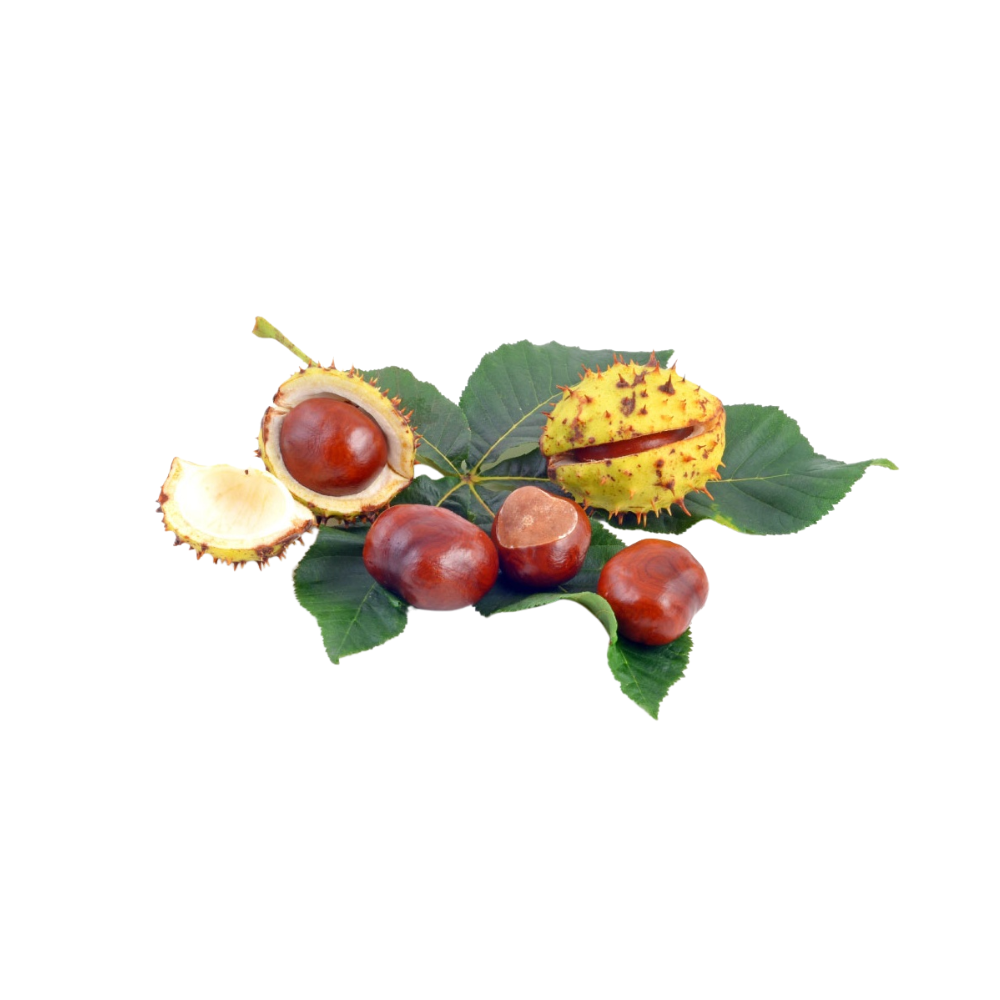
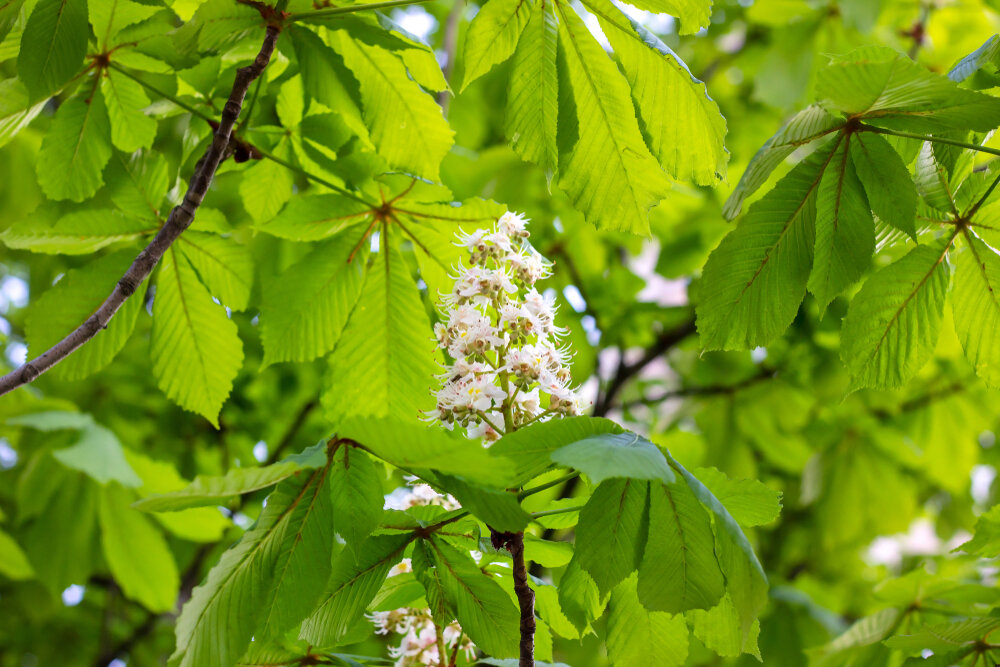
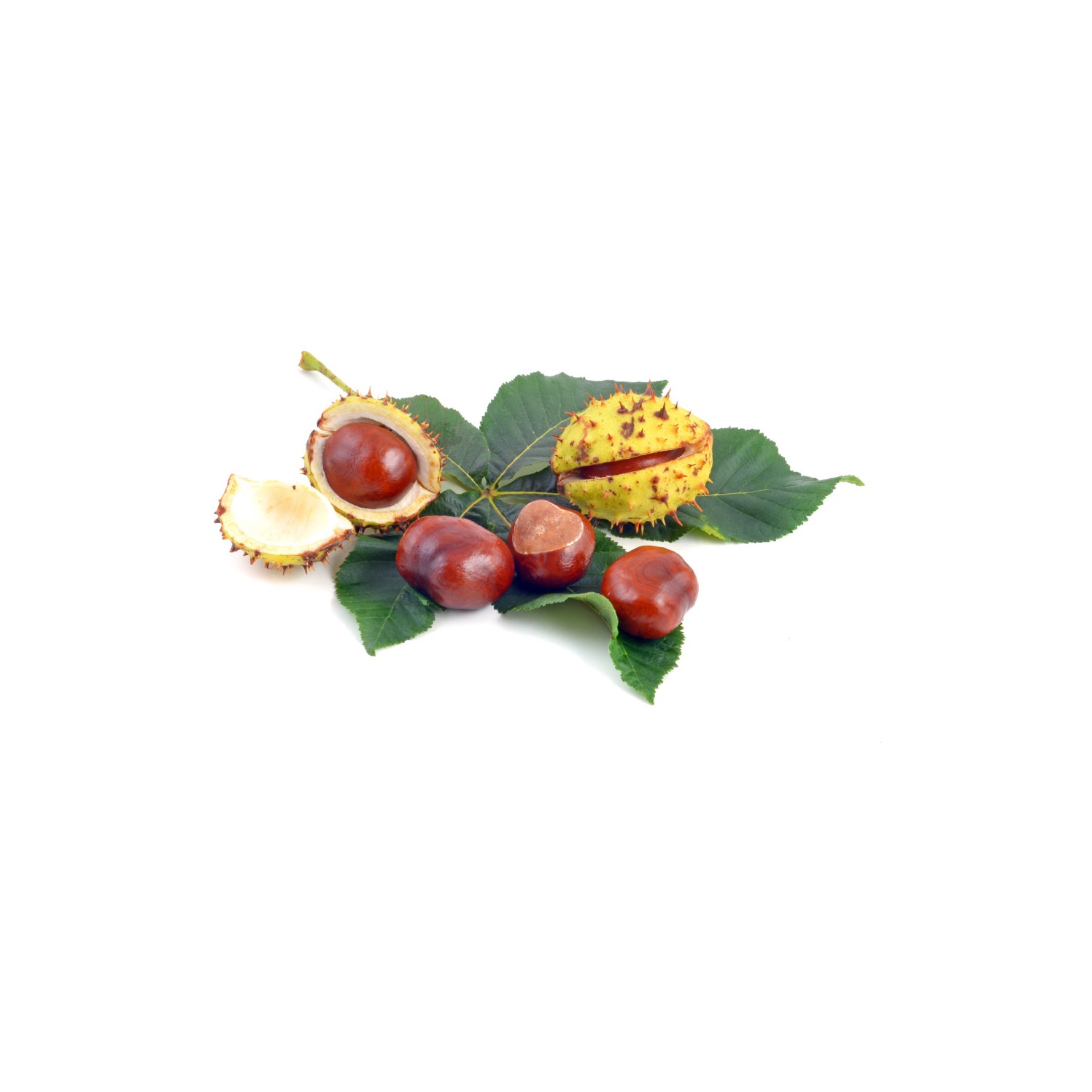
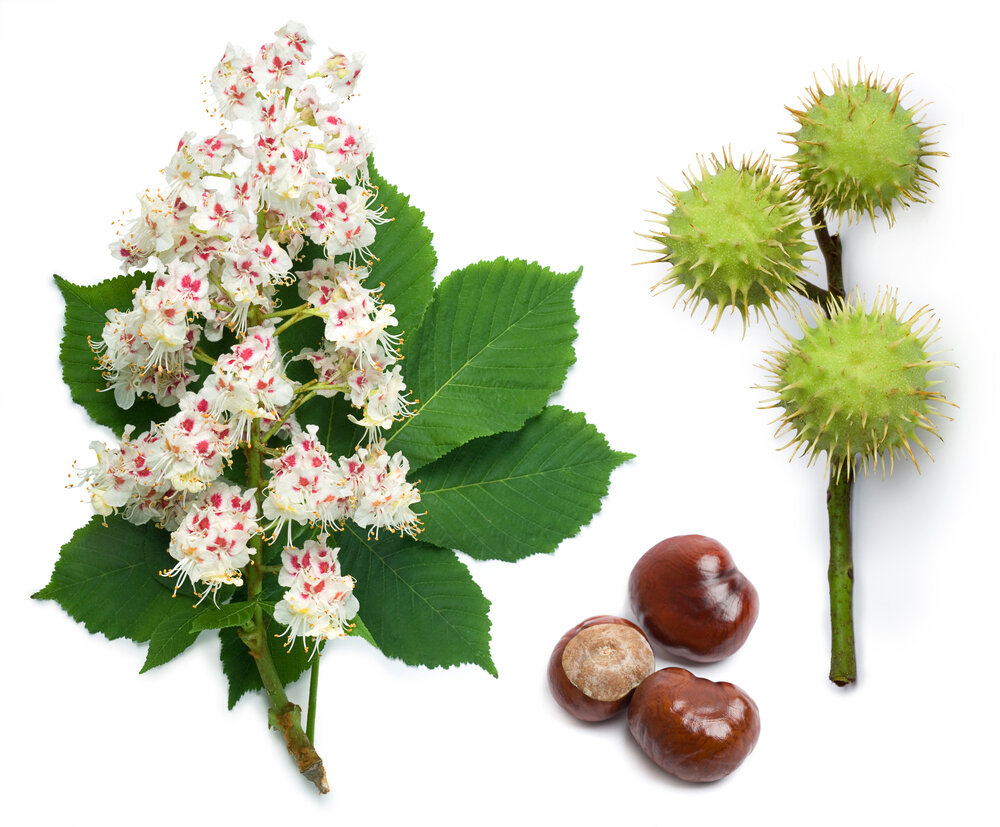
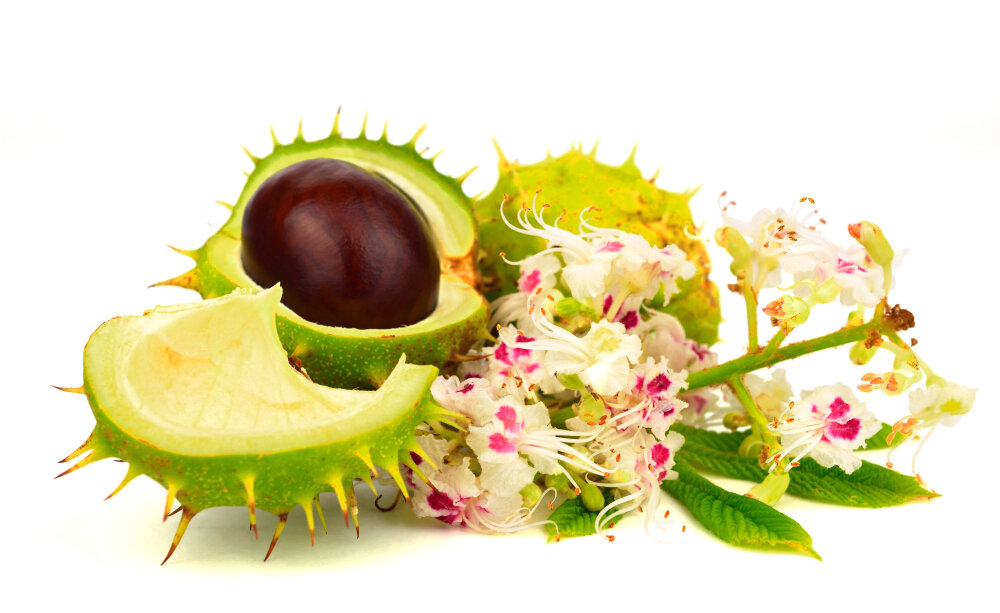
Horse chestnut is a big, imposing deciduous tree in the soapberry family (Sapindaceae) — the same family as maple (Acer spp.), lychee, longan and guarana — and sits in the genus Aesculus alongside the American buckeyes (Ohio, yellow, red and California buckeye). You can recognise it from a distance by its large palmate leaves splayed like a hand of long fingers, and in spring by upright “candles” of white, red-flecked flowers. By late summer those flowers become spiny green husks that split to drop glossy mahogany-brown seeds — the conkers of schoolyard fame.
A point that matters for anyone gathering plant material: those conkers are toxic. The raw seeds, along with the bark, leaves and flowers, contain aesculin and related saponins and are not safe to eat as-is. Critically, horse chestnut is a dangerous look-alike for the true sweet chestnut (Castanea sativa), whose roasted nuts are edible; the two are unrelated, and mistaking a spiny-husked, single-seeded conker for a sweet chestnut has caused poisonings. Medicinal horse-chestnut preparations are always processed to standardise and control these compounds — the plant is not used raw.
Distribution
Horse chestnut hails from the mountains of the Balkan Peninsula in southeastern Europe, but centuries of planting have made it one of the most familiar park and street trees across Europe and North America. Ironically, while it is everywhere in cultivation, its shrinking wild populations back in the Balkans are now considered Vulnerable.
Growing Conditions
- Full sun to partial shade; it wants an open site with room for a large, spreading crown.
- Prefers deep, moist but well-drained soil, and tolerates a wide range of soil types once established.
- Cold-hardy and long-lived — comfortable across a broad temperate range (roughly USDA zones 3–8).
- Grown easily from fresh conkers, but allow decades and plenty of space; this becomes a 50–75 ft tree.
- Full cultivation detail lives on the companion farm-wiki grow guide for Aesculus hippocastanum (link to be added once that project’s public URL is confirmed).
Phytochemistry
Horse chestnut’s vascular activity is carried almost entirely by aescin (escin), a complex mixture of triterpenoid saponin glycosides. Reported total aescin in the raw seed ranges from about 0.8% to 4.2% by dry weight depending on harvest time and growing conditions 19Reference 19Industrial Crops and Products. (Total seed aescin reported in the range ~0.82–4.16% depending on harvest time.), and clinical extracts are standardised to 16–20% aescin to give a reproducible dose. Aescin tones venous walls, reduces capillary permeability and counters oedema — the basis for its use in chronic venous insufficiency 5,18Reference 5ReviewAescin: pharmacology, pharmacokinetics and therapeutic profile — reviewView study →Reference 18ReviewHorse chestnut – efficacy and safety in chronic venous insufficiency: an overview — review.
Alongside the saponin sit two coumarin glycosides, esculin (aesculin) and fraxin; esculin is the component most often reduced or removed during processing because of its toxicity 15Reference 15ReviewWang, Y., Han, X., Wan, X., et al. (2023). β-Escin: an updated review of its analysis, pharmacology, pharmacokinetics, and toxicity — review. The American Journal of Chinese Medicine. https://pubmed.ncbi.nlm.nih.gov/37865870/View study →. The seed also carries a polyphenol fraction — flavonol glycosides such as rutin, quercetin and kaempferol, plus condensed proanthocyanidins — which contribute antioxidant and additional vasoprotective effects 11,18Reference 11In vitroInfluence of extrahent on antioxidant capacity of Aesculus hippocastanum seeds — in vitroView study →Reference 18ReviewHorse chestnut – efficacy and safety in chronic venous insufficiency: an overview — review.
Constituent Summary
Figures are share of the dry seed unless noted; aescin “standardised” figures refer to finished extract, not raw seed. Saponin and coumarin levels vary widely with harvest time and provenance.
Saponin1 compound1 with data
Flavanol1 compoundno data
Pharmacology & Research
Horse chestnut is unusual among vascular herbs in having a genuine human evidence base: its seed extract (HCSE), standardised to the triterpenoid saponin aescin (escin), is one of the few botanicals with a Cochrane systematic review behind it and is a mainstay of the herbal literature on chronic venous disease 17Reference 17ReviewHerbal drugs in chronic venous disease treatment: an update — reviewView study →. That review pooled seventeen randomised trials in chronic venous insufficiency (CVI) and found consistent reductions in leg pain, leg volume and oedema versus placebo, with one large trial reporting equivalence to compression stockings 1,2Reference 1Meta-analysisHorse chestnut seed extract for chronic venous insufficiency — systematic review and meta-analysisView study →Reference 2RCTComparison of leg compression stocking and oral horse-chestnut seed extract therapy in patients with chronic venous insufficiency — randomised controlled trialView study →. Beyond CVI the picture thins quickly — anti-oedematous and anti-inflammatory activity is well mapped mechanistically (aescin behaves partly like a glucocorticoid-receptor sensitiser and reduces capillary permeability), but hemorrhoid, antioxidant, antiviral and anticancer claims rest on single trials, cell lines or the isolated saponin rather than the whole seed 5,6,11,12,13,14Reference 5ReviewAescin: pharmacology, pharmacokinetics and therapeutic profile — reviewView study →Reference 6Molecular mechanism for cellular response to β-escin and its therapeutic implicationsView study →Reference 11In vitroInfluence of extrahent on antioxidant capacity of Aesculus hippocastanum seeds — in vitroView study →Reference 12In vitroAesculus hippocastanum L. seed extract shows virucidal and antiviral activities against respiratory syncytial virus (RSV) and reduces lung inflammation in vivo — in vitro and animal modelView study →Reference 13ReviewMolecular targets and anti-cancer potential of escin — reviewView study →Reference 14In vitroEscin suppresses migration and invasion involving the alteration of the CXCL16/CXCR6 axis in human gastric adenocarcinoma AGS cells — in vitroView study →. A load-bearing caveat runs through everything: nearly all clinical data use a standardised extract delivering ~100 mg aescin/day, not a tea or whole-seed powder, and the raw seed also contains toxic components (esculin) that processing removes 1,15Reference 1Meta-analysisHorse chestnut seed extract for chronic venous insufficiency — systematic review and meta-analysisView study →Reference 15ReviewWang, Y., Han, X., Wan, X., et al. (2023). β-Escin: an updated review of its analysis, pharmacology, pharmacokinetics, and toxicity — review. The American Journal of Chinese Medicine. https://pubmed.ncbi.nlm.nih.gov/37865870/View study →.
- Best-supported: chronic venous insufficiency — reduced leg pain, leg volume and oedema across pooled RCTs, comparable to compression stockings 1,2Reference 1Meta-analysisHorse chestnut seed extract for chronic venous insufficiency — systematic review and meta-analysisView study →Reference 2RCTComparison of leg compression stocking and oral horse-chestnut seed extract therapy in patients with chronic venous insufficiency — randomised controlled trialView study →; anti-oedematous action after trauma/surgery 4,5Reference 4RCTEffects of horse-chestnut seed extract on transcapillary filtration in chronic venous insufficiency — randomised placebo-controlled crossover trialView study →Reference 5ReviewAescin: pharmacology, pharmacokinetics and therapeutic profile — reviewView study →.
- Emerging, worth watching: aescin’s glucocorticoid-receptor/NF-κB anti-inflammatory mechanism 8,9Reference 8In vitroEscin exerts synergistic anti-inflammatory effects with low doses of glucocorticoids in vivo and in vitroView study →Reference 9AnimalAnti-inflammatory effects of escin are correlated with the glucocorticoid receptor/NF-κB signaling pathway, but not the COX/PGF2α signaling pathway — in vivoView study →; a single in-vivo signal against respiratory syncytial virus 12Reference 12In vitroAesculus hippocastanum L. seed extract shows virucidal and antiviral activities against respiratory syncytial virus (RSV) and reduces lung inflammation in vivo — in vitro and animal modelView study →.
- Mechanistically thin: antioxidant activity (polyphenol fraction, in-vitro only) and anticancer activity (isolated escin in cell lines) 11,13,14Reference 11In vitroInfluence of extrahent on antioxidant capacity of Aesculus hippocastanum seeds — in vitroView study →Reference 13ReviewMolecular targets and anti-cancer potential of escin — reviewView study →Reference 14In vitroEscin suppresses migration and invasion involving the alteration of the CXCL16/CXCR6 axis in human gastric adenocarcinoma AGS cells — in vitroView study →.
- The caveat: the human data are for a standardised extract (~100 mg aescin/day), not tea or whole powder; raw seed carries toxic esculin removed during processing 1,15Reference 1Meta-analysisHorse chestnut seed extract for chronic venous insufficiency — systematic review and meta-analysisView study →Reference 15ReviewWang, Y., Han, X., Wan, X., et al. (2023). β-Escin: an updated review of its analysis, pharmacology, pharmacokinetics, and toxicity — review. The American Journal of Chinese Medicine. https://pubmed.ncbi.nlm.nih.gov/37865870/View study →.
1. Chronic venous insufficiency
This is the indication horse chestnut is actually used for, and the one with real human data. The 2012 Cochrane review pooled seventeen RCTs and found HCSE improved CVI signs and symptoms versus placebo: leg pain fell in six of seven placebo-controlled trials, and leg volume dropped by a weighted mean of 32 mL across six trials (n=502) 1Reference 1Meta-analysisHorse chestnut seed extract for chronic venous insufficiency — systematic review and meta-analysisView study →. A 240-patient randomised trial published in the Lancet found HCSE (50 mg aescin twice daily) reduced lower-leg volume about as much as class-II compression stockings over 12 weeks 2Reference 2RCTComparison of leg compression stocking and oral horse-chestnut seed extract therapy in patients with chronic venous insufficiency — randomised controlled trialView study →. A separate meta-analysis combining 13 RCTs (1,051 patients) with three large observational studies (10,725 patients) reached the same direction of effect on pain, oedema and leg heaviness 3Reference 3Meta-analysisEfficacy, routine effectiveness, and safety of horsechestnut seed extract in chronic venous insufficiency — meta-analysis of randomised controlled trials and observational studiesView study →. Mechanistically, a placebo-controlled crossover trial showed a single dose cut the capillary filtration coefficient by 22%, confirming the extract reduces the trans-capillary fluid leak that drives venous oedema 4Reference 4RCTEffects of horse-chestnut seed extract on transcapillary filtration in chronic venous insufficiency — randomised placebo-controlled crossover trialView study →.
Gap: trials are mostly short-term (weeks, not months), heterogeneous in extract and dosing, and the Cochrane authors explicitly call for larger definitive RCTs; long-term outcomes are unproven.
2. Oedema reduction
Aescin’s defining pharmacological action is anti-oedematous, and it extends beyond venous disease to post-operative and post-traumatic swelling — the seed extract has a long clinical track record in these settings and is used as the standard anti-swelling comparator in surgical trials 5Reference 5ReviewAescin: pharmacology, pharmacokinetics and therapeutic profile — reviewView study →. The effect is not merely diuretic: aescin reduces vascular permeability and stabilises the capillary wall, limiting fluid extravasation into tissue 4,6Reference 4RCTEffects of horse-chestnut seed extract on transcapillary filtration in chronic venous insufficiency — randomised placebo-controlled crossover trialView study →Reference 6Molecular mechanism for cellular response to β-escin and its therapeutic implicationsView study →. This is the same mechanism that produces the leg-volume reductions seen in venous insufficiency, which is why oedema is the most reproducible objective endpoint across the clinical literature 1Reference 1Meta-analysisHorse chestnut seed extract for chronic venous insufficiency — systematic review and meta-analysisView study →.
Gap: modern, well-powered placebo-controlled trials specifically for post-surgical/traumatic oedema are limited; much of the support is older or comes from aescin used as an active comparator rather than the primary intervention.
3. Anti-inflammatory
The anti-inflammatory activity of horse chestnut is carried by escin and is mechanistically well characterised. Escin acts partly as a glucocorticoid-receptor sensitiser: it exerts synergistic anti-inflammatory effects with low-dose glucocorticoids in vivo and in vitro 8Reference 8In vitroEscin exerts synergistic anti-inflammatory effects with low doses of glucocorticoids in vivo and in vitroView study →, and its anti-inflammatory action correlates with glucocorticoid-receptor/NF-κB signalling rather than the COX/prostaglandin pathway 9Reference 9AnimalAnti-inflammatory effects of escin are correlated with the glucocorticoid receptor/NF-κB signaling pathway, but not the COX/PGF2α signaling pathway — in vivoView study →. At the vascular endothelium, aescin blunts hypoxia-induced neutrophil adherence to umbilical-vein endothelial cells — a plausible link between venous stasis and the inflammatory injury of the vein wall 7Reference 7In vitroEffect of aescine on hypoxia-induced neutrophil adherence to umbilical vein endothelium — in vitroView study →. Even topical escin reduces cutaneous inflammation via the glucocorticoid receptor 10Reference 10AnimalAnti-inflammatory effect of external use of escin on cutaneous inflammation: possible involvement of the glucocorticoid receptor — animal modelView study →.
Gap: the human anti-inflammatory evidence is indirect (inferred from CVI/oedema endpoints); there are no standalone RCTs using inflammation itself as the primary outcome, and most mechanism work uses isolated escin, not whole extract.
4. Hemorrhoids
Hemorrhoids are a classic venotonic indication for horse chestnut, and the pharmacology transfers directly — hemorrhoids are essentially varicosities of the anorectal venous plexus, so the same capillary-sealing and venotonic actions apply. The aescin pharmacology review reports clinically significant activity in hemorrhoids alongside CVI and post-operative oedema, citing controlled-trial support 5Reference 5ReviewAescin: pharmacology, pharmacokinetics and therapeutic profile — reviewView study →. Registered trials of aescin-containing preparations for hemorrhoidal disease are ongoing.
Gap: dedicated, high-quality RCTs are sparse and often use aescin within multi-ingredient products, making the herb’s independent contribution hard to isolate; most support is extrapolated from the venous mechanism.
5. Antioxidant
Horse chestnut seed carries a polyphenol fraction — flavonol glycosides (rutin, quercetin, kaempferol) and condensed proanthocyanidins — that shows measurable free-radical-scavenging capacity in vitro, and this activity varies with extraction solvent and harvest time 11Reference 11In vitroInfluence of extrahent on antioxidant capacity of Aesculus hippocastanum seeds — in vitroView study →. This is a genuine constituent-level property, but it is a laboratory measurement, not a demonstrated clinical benefit, and the antioxidant polyphenols are minor relative to the saponin fraction that drives the herb’s actual use.
Gap: entirely in-vitro/constituent-level; no human antioxidant-status data, and the effect is not the reason the herb is prescribed.
6. Anticancer
Isolated escin has drawn research interest as an anticancer agent: reviews catalogue its modulation of NF-κB, STAT3 and apoptotic pathways across multiple tumour types 13Reference 13ReviewMolecular targets and anti-cancer potential of escin — reviewView study →, and specific studies show escin suppresses migration and invasion in human gastric adenocarcinoma cells via the CXCL16/CXCR6 axis 14Reference 14In vitroEscin suppresses migration and invasion involving the alteration of the CXCL16/CXCR6 axis in human gastric adenocarcinoma AGS cells — in vitroView study →. These are mechanistically interesting but strictly preclinical signals.
Gap: all evidence is in vitro or in animal models using purified escin, frequently at concentrations unrelated to oral dosing; there are no human oncology trials, and this is not a use for the whole herb.
Mechanisms
| Mechanism | Drives | Key compounds |
|---|---|---|
| ↑ venous tone, ↓ capillary permeability, ↓ neutrophil adhesion, glucocorticoid-receptor sensitisation, NF-κB ↓ | venous insufficiencyoedemaanti-inflammatoryhemorrhoids | aescin (escin) |
| mild vasoprotective; esculin removed in processing (toxic) | vasoprotective (minor); safety concern | esculin, fraxin |
| free-radical scavenging, capillary support | antioxidantadjunct vasoprotective | rutin, quercetin, kaempferol |
| antioxidant, collagen/vessel-wall stabilisation | antioxidantvasoprotective | condensed proanthocyanidins |
Clinical trials
Registered human trials exist and cluster around venous insufficiency, post-operative swelling and hemorrhoids — several completed, several currently recruiting — consistent with the mature CVI evidence base. Counts are approximate (ClinicalTrials.gov plus the trials pooled in the Cochrane review).
| Completed | Planned | Terminated | Preclinical |
|---|---|---|---|
| ~12(CVI, lymphoedema, hemorrhoids, post-op swelling) + 17 RCTs pooled in Cochrane | ~6recruiting (post-op oedema, hemorrhoids, aescin combinations) | 0 | ~50+ |
Last checked: July 2026.
Clinical Applications
Horse chestnut is a reliable vascular tonic, suitable for most forms of vascular insufficiency or fluid retention. Varicose veins, spider veins, burst blood vessels, and peripheral vascular and arterial insufficiency are all indicated for use with horse chestnut internally.
Its strongest modern evidence sits with chronic venous insufficiency: the standardised seed extract reduces leg pain, swelling and oedema across pooled randomised trials, and in one landmark study worked about as well as class-II compression stockings for leg-volume reduction 1,2Reference 1Meta-analysisHorse chestnut seed extract for chronic venous insufficiency — systematic review and meta-analysisView study →Reference 2RCTComparison of leg compression stocking and oral horse-chestnut seed extract therapy in patients with chronic venous insufficiency — randomised controlled trialView study →. The extract’s anti-oedematous action also extends to post-operative and post-traumatic swelling, and the herb is a traditional venotonic for hemorrhoids 5Reference 5ReviewAescin: pharmacology, pharmacokinetics and therapeutic profile — reviewView study →. Note that essentially all of this evidence uses a standardised extract delivering roughly 100 mg aescin per day — not a tea or whole-seed powder.
Safety & Pregnancy
Standardised horse chestnut seed extract is well tolerated, but the raw seed is a different matter — it contains toxic esculin and is poisonous if eaten. Because aescin can affect coagulation and kidney handling, caution applies with blood thinners and in kidney or liver disease.
- Raw seed is poisonous. The whole raw plant — seed, leaf, bark and flower — contains toxic esculin; children who swallow raw conkers can develop bleeding and GI upset.
- Bleeding risk. Aescin can affect coagulation — use caution with anticoagulant/antiplatelet medication.
- Kidney or liver disease. Contraindicated on precautionary grounds given aescin’s renal and coagulation effects.
- Pregnancy & breastfeeding. Contraindicated as a precaution — not formally assessed.
- Standardised extract well tolerated. Adverse events were mild and infrequent across the pooled Cochrane trials.
Full safety & interactions detail
Standardised horse chestnut seed extract is well tolerated in trials — adverse events were mild and infrequent across the pooled Cochrane data 1Reference 1Meta-analysisHorse chestnut seed extract for chronic venous insufficiency — systematic review and meta-analysisView study →. The important safety distinction is between the standardised extract and the raw seed: raw or improperly processed seed contains esculin (aesculin), a toxic coumarin glycoside that quality extracts deliberately remove or reduce, and whole raw horse chestnut (seed, leaf, bark, flower) is considered poisonous if ingested — the toxic esculin fraction is why children who swallow raw conkers can develop bleeding and gastrointestinal upset 15Reference 15ReviewWang, Y., Han, X., Wan, X., et al. (2023). β-Escin: an updated review of its analysis, pharmacology, pharmacokinetics, and toxicity — review. The American Journal of Chinese Medicine. https://pubmed.ncbi.nlm.nih.gov/37865870/View study →. Because aescin can affect coagulation and renal handling, caution is warranted with anticoagulant/antiplatelet medication and in kidney or liver impairment 15,16Reference 15ReviewWang, Y., Han, X., Wan, X., et al. (2023). β-Escin: an updated review of its analysis, pharmacology, pharmacokinetics, and toxicity — review. The American Journal of Chinese Medicine. https://pubmed.ncbi.nlm.nih.gov/37865870/View study →Reference 16ReviewEfficacy and mechanism of escin in improving the tissue microenvironment of blood vessel walls via anti-inflammatory and anticoagulant effects — reviewView study →. These interaction cautions are precautionary and mechanistic — drawn from aescin’s pharmacology, not from dedicated human drug-interaction trials, which have not been done.
Contraindications
- Pregnancy
- Breast feeding
- Kidney disease
- Liver disease
- Anticoagulant medication use
Horse chestnut has not been formally evaluated in pregnancy or lactation, and no controlled data exist. It is contraindicated on traditional and precautionary grounds — the raw plant is toxic and aescin’s coagulation and renal effects are not something to test in pregnancy — rather than because harm has been demonstrated. The honest position is that it is unstudied 15,16Reference 15ReviewWang, Y., Han, X., Wan, X., et al. (2023). β-Escin: an updated review of its analysis, pharmacology, pharmacokinetics, and toxicity — review. The American Journal of Chinese Medicine. https://pubmed.ncbi.nlm.nih.gov/37865870/View study →Reference 16ReviewEfficacy and mechanism of escin in improving the tissue microenvironment of blood vessel walls via anti-inflammatory and anticoagulant effects — reviewView study →.
References
- Pittler, M. H., & Ernst, E. (2012). Horse chestnut seed extract for chronic venous insufficiency — systematic review and meta-analysis. Cochrane Database of Systematic Reviews. https://pubmed.ncbi.nlm.nih.gov/23152216/
- Diehm, C., Trampisch, H. J., Lange, S., et al. (1996). Comparison of leg compression stocking and oral horse-chestnut seed extract therapy in patients with chronic venous insufficiency — randomised controlled trial. Lancet. https://pubmed.ncbi.nlm.nih.gov/8569363/
- Siebert, U., Brach, M., Sroczynski, G., et al. (2002). Efficacy, routine effectiveness, and safety of horsechestnut seed extract in chronic venous insufficiency — meta-analysis of randomised controlled trials and observational studies. International Angiology. https://pubmed.ncbi.nlm.nih.gov/12518108/
- Bisler, H., Pfeifer, R., Klüken, N., et al. (1986). Effects of horse-chestnut seed extract on transcapillary filtration in chronic venous insufficiency — randomised placebo-controlled crossover trial. Deutsche Medizinische Wochenschrift. https://pubmed.ncbi.nlm.nih.gov/3527643/
- Sirtori, C. R. (2001). Aescin: pharmacology, pharmacokinetics and therapeutic profile — review. Pharmacological Research. https://pubmed.ncbi.nlm.nih.gov/11529685/
- Domanski, D., Zegrocka-Stendel, O., Perzanowska, A., et al. (2016). Molecular mechanism for cellular response to β-escin and its therapeutic implications. PLoS ONE. https://pubmed.ncbi.nlm.nih.gov/27727329/
- Bougelet, C., Roland, I. H., Ninane, N., et al. (1998). Effect of aescine on hypoxia-induced neutrophil adherence to umbilical vein endothelium — in vitro. European Journal of Pharmacology. https://pubmed.ncbi.nlm.nih.gov/9593599/
- Xin, W., Zhang, L., Sun, F., et al. (2011). Escin exerts synergistic anti-inflammatory effects with low doses of glucocorticoids in vivo and in vitro. Phytomedicine. https://pubmed.ncbi.nlm.nih.gov/20850956/
- Wang, H., Zhang, L., Jiang, N., et al. (2013). Anti-inflammatory effects of escin are correlated with the glucocorticoid receptor/NF-κB signaling pathway, but not the COX/PGF2α signaling pathway — in vivo. Experimental and Therapeutic Medicine. https://pubmed.ncbi.nlm.nih.gov/24137201/
- Zhao, S. Q., Xu, S. Q., Cheng, J., et al. (2018). Anti-inflammatory effect of external use of escin on cutaneous inflammation: possible involvement of the glucocorticoid receptor — animal model. Chinese Journal of Natural Medicines. https://pubmed.ncbi.nlm.nih.gov/29455725/
- Kukula-Koch, W., Kędzierski, B., Głowniak, K., et al. (2015). Influence of extrahent on antioxidant capacity of Aesculus hippocastanum seeds — in vitro. Natural Product Research. https://pubmed.ncbi.nlm.nih.gov/25109836/
- Salinas, F. M., Vázquez, L., Gentilini, M. V., et al. (2019). Aesculus hippocastanum L. seed extract shows virucidal and antiviral activities against respiratory syncytial virus (RSV) and reduces lung inflammation in vivo — in vitro and animal model. Antiviral Research. https://pubmed.ncbi.nlm.nih.gov/30711418/
- Cheong, D. H. J., Arfuso, F., Sethi, G., et al. (2018). Molecular targets and anti-cancer potential of escin — review. Cancer Letters. https://pubmed.ncbi.nlm.nih.gov/29474858/
- Lee, H. S., Hong, J. E., Kim, E. J., et al. (2014). Escin suppresses migration and invasion involving the alteration of the CXCL16/CXCR6 axis in human gastric adenocarcinoma AGS cells — in vitro. Nutrition and Cancer. https://pubmed.ncbi.nlm.nih.gov/24911042/
- Wang, Y., Han, X., Wan, X., et al. (2023). β-Escin: an updated review of its analysis, pharmacology, pharmacokinetics, and toxicity — review. The American Journal of Chinese Medicine. https://pubmed.ncbi.nlm.nih.gov/37865870/
- Yan, L., Zhang, Y., Li, Y., et al. (2025). Efficacy and mechanism of escin in improving the tissue microenvironment of blood vessel walls via anti-inflammatory and anticoagulant effects — review. Open Life Sciences. https://pubmed.ncbi.nlm.nih.gov/41245382/
- Bencsik, T., Balázs, V. L., Farkas, Á., et al. (2024). Herbal drugs in chronic venous disease treatment: an update — review. Fitoterapia. https://pubmed.ncbi.nlm.nih.gov/39419127/
- Dudek-Makuch, M., & Studzińska-Sroka, E. (2015). Horse chestnut – efficacy and safety in chronic venous insufficiency: an overview — review. Revista Brasileira de Farmacognosia, 25(5), 533–541.
- Impact of harvest time of Aesculus hippocastanum seeds on the composition, antioxidant capacity and total phenolic content (2016). Industrial Crops and Products. (Total seed aescin reported in the range ~0.82–4.16% depending on harvest time.)