Materia Medica
Burdock
Arctium lappa
Burdock (Arctium lappa) — a classic alterative and skin herb used for psoriasis, eczema, acne, indigestion and to support detoxification.
What Is Burdock?
Burdock is a large biennial plant native to Eurasia and now naturalized throughout much of North America. The long taproot has a long history of use in Western herbal medicine, Traditional Chinese Medicine, and food traditions as both a nutritive vegetable and medicinal alterative.
In Western herbalism, burdock became closely associated with chronic skin conditions, sluggish digestion, and “blood purification” approaches to chronic inflammatory states. Modern herbalists often reinterpret this traditional alterative role in terms of digestive support, elimination, microbiome modulation, and metabolic function.
The root is rich in inulin, mucilage, lignans, and phenolic compounds that contribute to its reputation as a gentle restorative and detoxification-support herb.
How Is Burdock Used?
Burdock is commonly used as a decoction, tincture, powder, capsule, or whole-food preparation.
The fresh or dried root is traditionally taken long term for chronic skin conditions such as acne, eczema, psoriasis, and dry inflammatory skin states. It is also used to support digestion, bowel regularity, and metabolic health.
Because the root is mild and nutritive, burdock frequently appears in long-term tonic formulas alongside herbs such as dandelion, yellow dock, cleavers, nettle, or red clover.
The root is also widely consumed as a food plant, particularly in East Asian cuisine where it is known as gobo.
Traditional Uses
Western Herbal Medicine
In Western herbal medicine, burdock is regarded as a classic alterative, nutritive, and skin remedy with affinity for chronic inflammatory and metabolic conditions.
Traditional indications include eczema, psoriasis, acne, constipation, sluggish digestion, rheumatic conditions, and states historically described as “toxicity” or impaired elimination.
The root was often used long term in chronic constitutional formulas intended to gradually improve skin quality and digestive function.
Traditional Chinese Medicine
In Traditional Chinese Medicine, burdock seed (Niu Bang Zi) is more commonly used than the root and is considered pungent, bitter, and cooling.
The seed is traditionally used to disperse wind-heat, benefit the throat, clear toxicity, and support skin eruptions such as boils or inflammatory lesions.
Traditional indications include sore throat, cough, fever, and inflammatory skin conditions.
Ayurvedic Medicine
Although not a classical Ayurvedic herb, burdock is sometimes used in modern Ayurvedic practice as a cooling and cleansing herb for inflammatory skin conditions and metabolic imbalance.
Its moistening and mildly bitter qualities make it useful in constitutions associated with heat, dryness, and inflammatory irritation.
Indications
Burdock is primarily indicated for chronic inflammatory and metabolic conditions, particularly involving the skin and digestion.
Common traditional and modern indications include:
- Psoriasis
- Eczema
- Acne
- Dry skin
- Indigestion
- Constipation
- Sluggish digestion
- Type 2 diabetes
- Prostatitis
- Benign prostatic hyperplasia (BPH)
- Rheumatic conditions
- General metabolic support
The seed has also been used traditionally in hypothyroid presentations and inflammatory respiratory conditions.
Botany
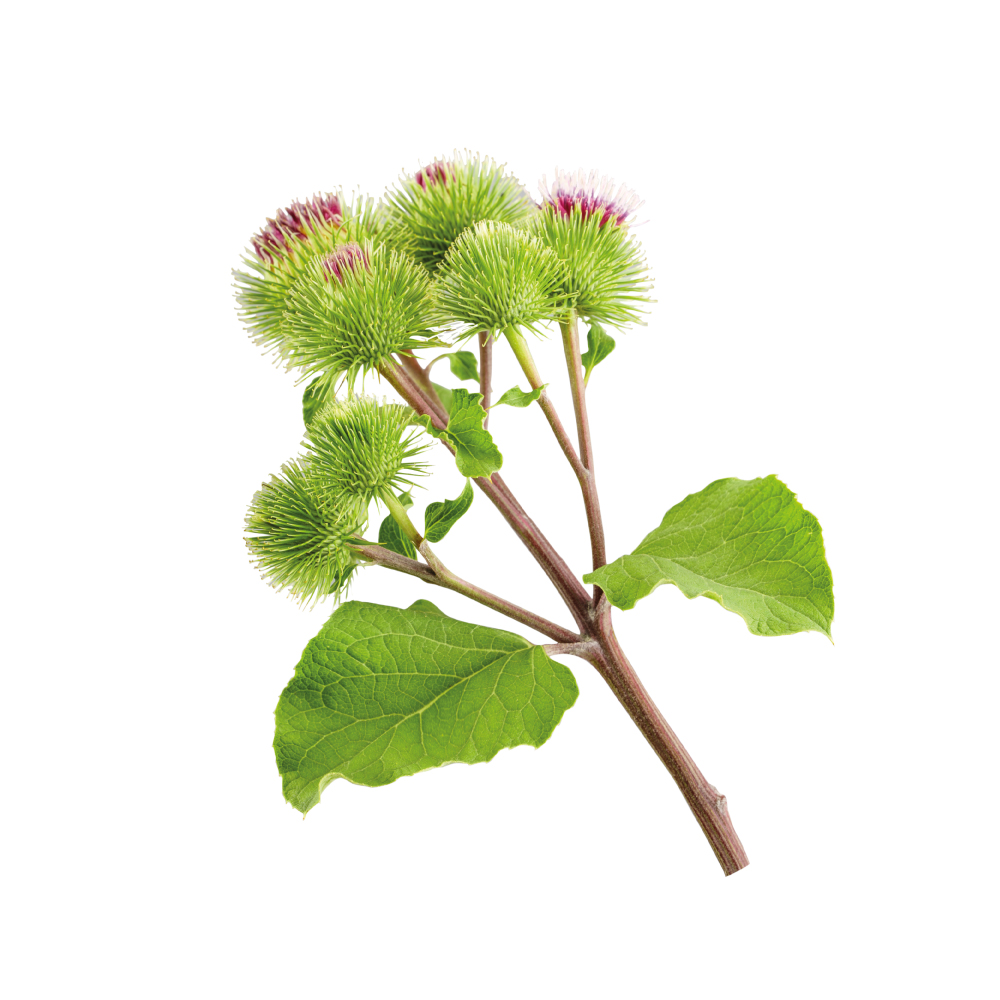
Burdock is a large biennial herb in the daisy family (Asteraceae) — the same family as dandelion, yarrow, chicory and artichoke. In its first year it forms a basal rosette over a deep taproot; in the second year it sends up tall flowering stalks bearing characteristic purple, thistle-like flower heads wrapped in hooked bracts — the burrs that inspired the invention of Velcro. Plants typically reach 3–10 ft, with large, coarse, heart-shaped leaves up to 12 in. long. The medicinal root is harvested in the plant’s first year, before flowering, when its inulin content is highest.
Distribution
Native to temperate Eurasia, from Scandinavia to the Mediterranean and the British Isles through Russia and the Middle East to India, China, Taiwan and Japan. It has naturalized widely outside that range, especially in North America and Australia, favoring high-nitrogen disturbed soils, roadsides, empty lots, parks, fields and pastures. The Invasive Plant Atlas of the United States tracks it as an invasive species (reported in Badlands National Park) and notes it is difficult to eradicate once established, owing to its deep taproot and long-viable seed — locally weedy to regionally invasive rather than federally noxious-listed. No conservation concern; it is common and widespread.
Pharmacology & Research
The pharmacological literature on burdock (Arctium lappa) is moderately sized but sits almost entirely in the preclinical tier. Most mechanistic work centres on a single lignan — arctigenin, the aglycone of arctiin, studied in cell and rodent models for anti-inflammatory, anticancer, antidiabetic and neuroprotective activity, alongside root polysaccharides (chiefly inulin) studied for antioxidant and prebiotic effects. One small human randomised controlled trial exists (burdock root tea in knee osteoarthritis), plus a burn-care pilot using the leaf; there is no controlled human trial of the root for the skin conditions burdock is traditionally used for. A recurring caveat runs through the whole file: the root as drunk or eaten is a very different preparation from the seed-derived arctigenin driving most of the mechanistic data, so the strongest molecular findings do not automatically transfer to the whole-root remedy.
- Best-supported: anti-inflammatory and antioxidant activity, with a small human RCT showing burdock root tea lowered IL-6, hs-CRP and lipid peroxidation in knee osteoarthritis 3,4,7Reference 3RCTEffects of Arctium lappa L. (Burdock) root tea on inflammatory status and oxidative stress in patients with knee osteoarthritis — randomised controlled trialView study →Reference 4In vitroIn vitro anti-inflammatory effects of arctigenin through inhibition of iNOS and COX-2 — in vitroView study →Reference 7In vitroIn vitro and in vivo antioxidant activity of a fructan from the roots of Arctium lappa L. — in vitro and animalView study →.
- Emerging, worth watching: arctigenin’s anticancer and neuroprotective signals, and root polysaccharides for metabolic and gut-microbiota effects — all preclinical 15,21,27Reference 15AnimalArctigenin ameliorates high-fat diet-induced metabolic disorders by reshaping gut microbiota — mouse in vivoView study →Reference 21In vitroIdentification of arctigenin as an antitumor agent able to eliminate cancer-cell tolerance to nutrient starvation — in vitro and animalView study →Reference 27AnimalArctigenin exerts neuroprotective effect by ameliorating cortical activities in experimental autoimmune encephalomyelitis — mouse in vivoView study →.
- Mechanistically thin: the traditional “blood-purifying”/skin (alterative) role, which rests on antioxidant and anti-inflammatory inference plus in-vitro antimicrobial data, not clinical skin trials.
- The caveat: most potent effects come from isolated arctigenin (a seed lignan) or purified polysaccharides at doses and routes far from a cup of root decoction; whole-root human data is limited to one 42-day tea RCT.
1. Anti-inflammatory
This is burdock’s most human-anchored indication, though still modest. In a 42-day randomised controlled trial, 36 patients with knee osteoarthritis given three daily cups of root tea (2 g root/150 mL) on top of standard analgesia had significant reductions in serum IL-6, high-sensitivity C-reactive protein and malondialdehyde versus a hot-water control 3Reference 3RCTEffects of Arctium lappa L. (Burdock) root tea on inflammatory status and oxidative stress in patients with knee osteoarthritis — randomised controlled trialView study →. Mechanistically this tracks with the lignan arctigenin, which suppresses inducible nitric oxide synthase and COX-2 in stimulated macrophages in vitro 4Reference 4In vitroIn vitro anti-inflammatory effects of arctigenin through inhibition of iNOS and COX-2 — in vitroView study → and attenuates experimental colitis and thioglycollate-induced peritonitis in mice — where arctigenin, not its glycoside arctiin, was the effective constituent 5,6Reference 5AnimalArctigenin but not arctiin is the major effective constituent of Arctium lappa fruit for attenuating colitis — animal modelView study →Reference 6AnimalArctigenin protects mice from thioglycollate-induced acute peritonitis — mouse in vivoView study →. The signal is consistent across the inflammatory cascade, but the human evidence is a single small trial in one condition.
Gap: Only one small RCT in a single indication; no dose-finding, no independent replication, and the potent mechanistic data uses isolated arctigenin rather than whole root.
2. Antioxidant
Burdock root polysaccharides (largely the storage fructan inulin) and its phenolic acids show reproducible free-radical scavenging and in-vivo antioxidant activity: a purified root fructan raised antioxidant enzyme activity and lowered lipid peroxidation in animal models 7Reference 7In vitroIn vitro and in vivo antioxidant activity of a fructan from the roots of Arctium lappa L. — in vitro and animalView study →, and crude root polysaccharide fractions show comparable dose-dependent scavenging in vitro 8Reference 8AnimalExtraction and antioxidant activities of polysaccharides from roots of Arctium lappa L. — animal modelView study →. Importantly, the knee-osteoarthritis RCT also measured this arm directly — root tea significantly raised total antioxidant capacity and superoxide dismutase activity in patients 3Reference 3RCTEffects of Arctium lappa L. (Burdock) root tea on inflammatory status and oxidative stress in patients with knee osteoarthritis — randomised controlled trialView study →. The antioxidant read-out is the most likely modern mechanism behind burdock’s traditional “alterative” reputation.
Gap: Human antioxidant data comes from the same single trial’s biomarkers; most evidence is in-vitro/animal on purified polysaccharide fractions, not the crude preparation people actually drink.
3. Hepatoprotective
Rodent models are fairly consistent here. Burdock root extract protected rat livers against carbon tetrachloride and acetaminophen 9Reference 9AnimalHepatoprotective effects of Arctium lappa on carbon tetrachloride- and acetaminophen-induced liver damage — rat in vivoView study →, against combined chronic ethanol plus CCl4 injury — restoring glutathione and cytochrome P-450 content and lowering serum transaminases 10Reference 10AnimalHepatoprotective effects of Arctium lappa Linne on liver injuries induced by chronic ethanol and CCl4 — rat in vivoView study → — and against cadmium-induced hepatotoxicity in Wistar rats 11Reference 11AnimalHepatoprotective effect of Arctium lappa root extract on cadmium toxicity in adult Wistar rats — rat in vivoView study →. The proposed mechanism is antioxidant: reducing oxidative stress on hepatocytes rather than any specific enzyme-inducing action. The effect is replicated across three independent injury models, which is why it scores above the isolated-compound indications despite having no human data.
Gap: Entirely animal; no clinical liver-endpoint studies, and doses (≈300 mg/kg in rats) are far above culinary or tea exposure.
4. Anticancer
This is the largest single body of burdock-related literature, but it is almost entirely about isolated arctigenin, not the whole herb. Arctigenin was first identified as an “antiausterity” agent that selectively kills cancer cells deprived of nutrients 21Reference 21In vitroIdentification of arctigenin as an antitumor agent able to eliminate cancer-cell tolerance to nutrient starvation — in vitro and animalView study →, and subsequent cell and xenograft studies report activity across breast, colorectal, liver, prostate and other lines through pathways including STAT3/β-catenin and GM-CSF signalling 22,23Reference 22In vitroArctigenin attenuates breast cancer progression through decreasing GM-CSF/TSLP/STAT3/β-catenin signaling — in vitro and animalView study →Reference 23ReviewArctigenin, an anti-tumor agent — reviewView study →. The breadth is striking and mechanistically coherent, but the translational distance is large: these are purified-compound studies at pharmacological concentrations, several use derivatives or nanocarriers, and one colorectal paper in this area has since been retracted.
Gap: No human trials; effects require isolated arctigenin at doses unattainable from root or seed preparations, and the whole herb has never been tested as an anticancer agent.
5. Antidiabetic / metabolic
Rodent data is consistent: burdock root hydro-alcoholic extract lowered glucose and improved lipids in type-2 diabetic mice 12Reference 12AnimalAntidiabetic, hypolipidemic and hepatoprotective effects of Arctium lappa root extract in type 2 diabetic mice — animal modelView study →, root polysaccharide corrected diabetic lipid metabolism via the PKC/NF-κB pathway 13Reference 13AnimalRegulation of lipid metabolism in diabetic rats by Arctium lappa L. polysaccharide through the PKC/NF-κB pathway — rat in vivoView study →, and arctigenin improved insulin resistance through the IRS2/GLUT4 pathway and reshaped gut microbiota in high-fat-diet mice 14,15Reference 14AnimalArctigenin mitigates insulin resistance by modulating the IRS2/GLUT4 pathway via TLR4 in type 2 diabetes — animal modelView study →Reference 15AnimalArctigenin ameliorates high-fat diet-induced metabolic disorders by reshaping gut microbiota — mouse in vivoView study →. The prebiotic angle is mechanistically attractive because inulin, burdock root’s dominant constituent, is a fermentable fructan that feeds beneficial gut bacteria — plausibly linking the traditional digestive/metabolic uses to a real substrate.
Gap: No human glycaemic trial of burdock; all endpoints are rodent, and the hypoglycaemic signal underlies the page’s existing caution about combining with antidiabetic drugs.
6. Neuroprotective
Arctigenin has a broad rodent neuroprotection literature: it reduced injury in focal cerebral ischemia-reperfusion rats by inhibiting neuroinflammation 28Reference 28AnimalArctigenin protects focal cerebral ischemia-reperfusion rats through inhibiting neuroinflammation — rat in vivoView study →, ameliorated cortical pathology in experimental autoimmune encephalomyelitis (a multiple-sclerosis model) 27Reference 27AnimalArctigenin exerts neuroprotective effect by ameliorating cortical activities in experimental autoimmune encephalomyelitis — mouse in vivoView study →, and produced antidepressant- and anxiolytic-like effects on repeated dosing in mice 29Reference 29AnimalRepeated arctigenin treatment produces antidepressant- and anxiolytic-like effects in mice — mouse in vivoView study →. The mechanisms converge on dampened neuroinflammation and modulation of glutamatergic signalling. As with the cancer work, this is isolated-lignan pharmacology and does not describe the whole root.
Gap: Isolated arctigenin only, all preclinical; burdock root is not traditionally a nervous-system herb and no human neurological data exists.
7. Antimicrobial
In-vitro data is the backbone here. Burdock root and leaf extracts inhibit oral and endodontic-infection organisms including Enterococcus faecalis and Candida albicans 17,18Reference 17In vitroAntimicrobial activity of Arctium lappa constituents against microorganisms commonly found in endodontic infections — in vitroView study →Reference 18In vitroIn vitro evaluation of the antibacterial activity of Arctium lappa as a phytotherapeutic agent used in intracanal dressings — in vitroView study →, and isolated arctigenin shows antibacterial and anti-virulence activity against methicillin-resistant Staphylococcus aureus 20Reference 20In vitroArctigenin from burdock root exhibits potent antibacterial and anti-virulence properties against MRSA — in vitroView study →. A small pilot found low-molecular-weight peptides from burdock root had antibacterial and antibiofilm activity relevant to acne 19Reference 19In vitroAnti-acne action of peptides isolated from burdock root — in vitro and pilot testingView study → — a mechanistic thread to the traditional skin use, since acne involves Cutibacterium acnes. All of this is bench-level.
Gap: No clinical infection or acne trial of burdock; activity is in-vitro against isolated organisms, and effective concentrations may not be reachable topically or systemically from normal preparations.
8. Wound healing (topical)
The most-cited human material is a series of burn cases in Amish communities treated with a multi-herb “Burns & Wounds” ointment dressed with burdock leaves, reporting low infection rates and acceptable healing 24Reference 24ObservationalThe effect of Burns & Wounds (B&W)/burdock leaf therapy on burn-injured Amish patients — pilot study (observational)View study →. This is genuinely human but heavily confounded: burdock leaf is one of several ingredients (the ointment also contains honey, aloe, comfrey and others), it is the leaf not the medicinal root, and there is no control group. Supporting animal work shows a burdock-polysaccharide hydrogel accelerated diabetic wound closure in mice 25Reference 25AnimalInjectable Arctium lappa polysaccharide-based composite hydrogel enhances diabetic wound healing — animal modelView study →, and arctiin protected human dermal fibroblasts from UVB damage in vitro 26Reference 26In vitroArctiin induces a UVB protective effect in human dermal fibroblast cells through microRNA expression — in vitroView study →.
Gap: No controlled trial; the human data is uncontrolled case reports of a multi-component leaf preparation, so burdock’s specific contribution cannot be isolated.
Mechanisms
| Mechanism | Drives | Key compounds |
|---|---|---|
| iNOS ↓, COX-2 ↓, NF-κB ↓ | anti-inflammatoryhepatoprotectiveantidiabetic | arctigenin, arctiin |
| Free-radical scavenging, ↑SOD/glutathione | antioxidanthepatoprotective | inulin fructan, chlorogenic acid |
| STAT3/β-catenin ↓, antiausterity (nutrient-starvation sensitivity) | anticancer | arctigenin |
| IRS2/GLUT4 signalling, gut-microbiota remodelling, prebiotic fermentation | antidiabetic / metabolic | arctigenin, inulin |
| Bacterial growth/biofilm and virulence inhibition | antimicrobialanti-acne | arctigenin, polyacetylenes |
Clinical trials
A small number of registered trials exist — burdock root extract in asymptomatic hyperuricemia/gout (recruiting), homeopathic and cosmetic acne studies, an arctigenin safety study in healthy men, and older TCM-formula work — but the published human evidence is essentially one 42-day root-tea RCT in knee osteoarthritis plus an uncontrolled burn-care pilot.
| Completed | Planned | Terminated | Preclinical |
|---|---|---|---|
| ~4 | ~3 | 0 | ~100+ |
Last checked: July 2026.
Phytochemistry
Burdock root is, by mass, mostly inulin — a storage fructan that can reach about half the dry weight and underlies the root’s prebiotic and gently detoxifying (“alterative”) reputation 1,16Reference 1ReviewA review of the pharmacological effects of Arctium lappa (burdock) — reviewView study →Reference 16Metabolic profile of the bioactive compounds of burdock (Arctium lappa) seeds, roots and leavesView study →. Its characteristic actives, though, are the lignans: arctiin and its aglycone arctigenin, along with matairesinol, which supply antioxidant, anti-inflammatory and phytoestrogenic activity 1,16Reference 1ReviewA review of the pharmacological effects of Arctium lappa (burdock) — reviewView study →Reference 16Metabolic profile of the bioactive compounds of burdock (Arctium lappa) seeds, roots and leavesView study →.
The root also carries caffeoylquinic phenolic acids (chlorogenic acid and related caffeoylquinic acids), soothing mucilage, and the bitter polyacetylenes responsible for some of its antimicrobial action 1,16Reference 1ReviewA review of the pharmacological effects of Arctium lappa (burdock) — reviewView study →Reference 16Metabolic profile of the bioactive compounds of burdock (Arctium lappa) seeds, roots and leavesView study →.
Constituent Summary
Inulin content is high but season-dependent (highest in autumn-dug roots); the other constituents are not well standardised 1,16Reference 1ReviewA review of the pharmacological effects of Arctium lappa (burdock) — reviewView study →Reference 16Metabolic profile of the bioactive compounds of burdock (Arctium lappa) seeds, roots and leavesView study →.
Fructan1 compound1 with data
Phenolic acid2 compoundsno data
Mucilage1 compoundno data
Other1 compoundno data
Dosage
In research, the one human trial dosed whole root as a tea (~6 g/day); most other findings use isolated arctigenin (a seed lignan) or purified fractions at doses that don’t convert to a whole-herb amount.
| Indication | Preparation | Dose | Est. dried-herb equivalent | Source |
|---|---|---|---|---|
| Anti-inflammatory (knee OA) | Root tea (aqueous infusion) | 3 cups/day (2 g root/150 mL), 42 days ≈ 6 g root/day | ~6 g dried root/day (the intervention is whole root) | 3Reference 3RCTEffects of Arctium lappa L. (Burdock) root tea on inflammatory status and oxidative stress in patients with knee osteoarthritis — randomised controlled trialView study → |
| Hepatoprotective | Root extract, oral (rat) | ~300 mg/kg 3×/day | — (rat; not human-applicable) | 10Reference 10AnimalHepatoprotective effects of Arctium lappa Linne on liver injuries induced by chronic ethanol and CCl4 — rat in vivoView study → |
| Antioxidant | Purified root fructan (animal/in vitro) | fraction-level | — (isolated fraction) | 7Reference 7In vitroIn vitro and in vivo antioxidant activity of a fructan from the roots of Arctium lappa L. — in vitro and animalView study → |
The OA-RCT dose is whole root, so its dried-herb equivalent equals the dose (~6 g/day); the rodent and fraction studies don’t convert to a human whole-herb dose — marked ”—”, no ratio invented. These are research doses, not recommendations.
Traditional Dosage
Typical adult dosing ranges include:
- Dried root decoction: 2–6 g daily
- Tincture (1:5): 2–5 mL, up to three times daily
- Powdered root: 1–4 g daily
- Fresh food preparations: freely consumed as a vegetable
Because burdock is relatively gentle, it is commonly used long term in tonic and alterative formulas.
Safety & Pregnancy
Burdock root has a long history of use as both food (gobo) and medicine and is generally well tolerated; the notable risks are Asteraceae allergy, an additive effect with blood-sugar-lowering drugs, and — importantly — the poisoning risk from misidentified or contaminated “burdock” products.
- Sourcing and contamination. Misidentified wild plants and atropine-contaminated commercial “burdock root tea” have caused anticholinergic poisoning — provenance matters.
- Asteraceae allergy. Use cautiously with known ragweed, chrysanthemum or chamomile allergy.
- Additive with antidiabetic drugs. Rodent data show a hypoglycaemic effect — monitor blood sugar if combining.
- GI upset at high doses. The root’s inulin and fibre can cause bloating, flatulence or loose stools.
- Avoid medicinal doses in pregnancy and lactation. Not formally studied.
- Otherwise gentle. Widely eaten as a vegetable and used long term in tonic formulas.
Full safety & interactions detail
Burdock root has a long history of use as both food (gobo) and medicine and is generally well tolerated; the most consistent risk is allergic reaction in people sensitive to the Asteraceae (daisy) family, so it should be used cautiously by anyone with known ragweed, chrysanthemum or chamomile allergy 2Reference 2ReviewArctium lappa (Burdock): insights from ethnopharmacology, chemical constituents, clinical studies and pharmacological utility — reviewView study →. Because the root is rich in inulin and fibre, large doses can cause bloating, flatulence or loose stools in sensitive individuals. Rodent studies show a hypoglycaemic and hypolipidaemic effect, so burdock may add to the action of antidiabetic drugs and blood-sugar-lowering regimens — monitor if combining 12,13Reference 12AnimalAntidiabetic, hypolipidemic and hepatoprotective effects of Arctium lappa root extract in type 2 diabetic mice — animal modelView study →Reference 13AnimalRegulation of lipid metabolism in diabetic rats by Arctium lappa L. polysaccharide through the PKC/NF-κB pathway — rat in vivoView study →. A well-documented practical hazard is misidentification: wild-harvested burdock has been confused with toxic look-alikes such as belladonna/deadly nightshade during early growth, and commercial “burdock root tea” contaminated with atropine-containing material has caused anticholinergic poisoning, so provenance matters.
Not established — avoid as a medicine in pregnancy and lactation. Burdock’s safety in pregnancy and breastfeeding has not been formally studied, and traditional sources vary; the root is eaten as a vegetable in many cultures, but medicinal-strength extracts and teas are not backed by safety data. In the absence of evidence, the conventional herbal-safety position is to avoid therapeutic doses during pregnancy and lactation — a precaution from lack of data, not a demonstrated harm.
References
- Chan, Y.-S., et al. (2011). A review of the pharmacological effects of Arctium lappa (burdock) — review. Inflammopharmacology. https://pubmed.ncbi.nlm.nih.gov/20981575/
- de Souza, A. R. C., et al. (2023). Arctium lappa (Burdock): insights from ethnopharmacology, chemical constituents, clinical studies and pharmacological utility — review. Biomedicine & Pharmacotherapy. https://pubmed.ncbi.nlm.nih.gov/36516694/
- Maghsoumi-Norouzabad, L., et al. (2016). Effects of Arctium lappa L. (Burdock) root tea on inflammatory status and oxidative stress in patients with knee osteoarthritis — randomised controlled trial. International Journal of Rheumatic Diseases. https://pubmed.ncbi.nlm.nih.gov/25350500/
- Zhao, F., et al. (2009). In vitro anti-inflammatory effects of arctigenin through inhibition of iNOS and COX-2 — in vitro. Journal of Ethnopharmacology. https://pubmed.ncbi.nlm.nih.gov/19429312/
- Wu, X., et al. (2014). Arctigenin but not arctiin is the major effective constituent of Arctium lappa fruit for attenuating colitis — animal model. International Immunopharmacology. https://pubmed.ncbi.nlm.nih.gov/25284342/
- Wang, Z., et al. (2020). Arctigenin protects mice from thioglycollate-induced acute peritonitis — mouse in vivo. Pharmacology Research & Perspectives. https://pubmed.ncbi.nlm.nih.gov/32960513/
- Wang, D., et al. (2014). In vitro and in vivo antioxidant activity of a fructan from the roots of Arctium lappa L. — in vitro and animal. International Journal of Biological Macromolecules. https://pubmed.ncbi.nlm.nih.gov/24508920/
- Li, Y., et al. (2019). Extraction and antioxidant activities of polysaccharides from roots of Arctium lappa L. — animal model. International Journal of Biological Macromolecules. https://pubmed.ncbi.nlm.nih.gov/30439439/
- Lin, S.-C., et al. (2000). Hepatoprotective effects of Arctium lappa on carbon tetrachloride- and acetaminophen-induced liver damage — rat in vivo. American Journal of Chinese Medicine. https://pubmed.ncbi.nlm.nih.gov/10999435/
- Lin, S.-C., et al. (2002). Hepatoprotective effects of Arctium lappa Linne on liver injuries induced by chronic ethanol and CCl4 — rat in vivo. Journal of Biomedical Science. https://pubmed.ncbi.nlm.nih.gov/12218354/
- El-Kott, A. F., & Bin-Meferij, M. M. (2015). Hepatoprotective effect of Arctium lappa root extract on cadmium toxicity in adult Wistar rats — rat in vivo. Biological Trace Element Research. https://pubmed.ncbi.nlm.nih.gov/24929543/
- Ahangarpour, A., et al. (2017). Antidiabetic, hypolipidemic and hepatoprotective effects of Arctium lappa root extract in type 2 diabetic mice — animal model. Avicenna Journal of Phytomedicine. https://pubmed.ncbi.nlm.nih.gov/28348972/
- Wang, Y., et al. (2019). Regulation of lipid metabolism in diabetic rats by Arctium lappa L. polysaccharide through the PKC/NF-κB pathway — rat in vivo. International Journal of Biological Macromolecules. https://pubmed.ncbi.nlm.nih.gov/31195041/
- Chen, R., et al. (2023). Arctigenin mitigates insulin resistance by modulating the IRS2/GLUT4 pathway via TLR4 in type 2 diabetes — animal model. International Immunopharmacology. https://pubmed.ncbi.nlm.nih.gov/36481528/
- Sun, Y., et al. (2024). Arctigenin ameliorates high-fat diet-induced metabolic disorders by reshaping gut microbiota — mouse in vivo. Phytomedicine. https://pubmed.ncbi.nlm.nih.gov/39396403/
- Ferracane, R., et al. (2010). Metabolic profile of the bioactive compounds of burdock (Arctium lappa) seeds, roots and leaves. Journal of Pharmaceutical and Biomedical Analysis. https://pubmed.ncbi.nlm.nih.gov/19375261/
- Pereira, J. V., et al. (2005). Antimicrobial activity of Arctium lappa constituents against microorganisms commonly found in endodontic infections — in vitro. Brazilian Dental Journal. https://pubmed.ncbi.nlm.nih.gov/16429183/
- Gentil, M., et al. (2006). In vitro evaluation of the antibacterial activity of Arctium lappa as a phytotherapeutic agent used in intracanal dressings — in vitro. Phytotherapy Research. https://pubmed.ncbi.nlm.nih.gov/16521107/
- Wojciechowska, A., et al. (2020). Anti-acne action of peptides isolated from burdock root — in vitro and pilot testing. Molecules. https://pubmed.ncbi.nlm.nih.gov/32349230/
- Zhang, Y., et al. (2024). Arctigenin from burdock root exhibits potent antibacterial and anti-virulence properties against MRSA — in vitro. Journal of Microbiology and Biotechnology. https://pubmed.ncbi.nlm.nih.gov/39049476/
- Awale, S., et al. (2006). Identification of arctigenin as an antitumor agent able to eliminate cancer-cell tolerance to nutrient starvation — in vitro and animal. Cancer Research. https://pubmed.ncbi.nlm.nih.gov/16452235/
- Feng, T., et al. (2020). Arctigenin attenuates breast cancer progression through decreasing GM-CSF/TSLP/STAT3/β-catenin signaling — in vitro and animal. International Journal of Molecular Sciences. https://pubmed.ncbi.nlm.nih.gov/32887217/
- Hasnat, H., et al. (2021). Arctigenin, an anti-tumor agent — review. European Journal of Pharmacology. https://pubmed.ncbi.nlm.nih.gov/34391770/
- Kolacz, N. M., et al. (2014). The effect of Burns & Wounds (B&W)/burdock leaf therapy on burn-injured Amish patients — pilot study (observational). Journal of Holistic Nursing. https://pubmed.ncbi.nlm.nih.gov/24668061/
- Wang, L., et al. (2025). Injectable Arctium lappa polysaccharide-based composite hydrogel enhances diabetic wound healing — animal model. International Journal of Biological Macromolecules. https://pubmed.ncbi.nlm.nih.gov/39978498/
- Knott, A., et al. (2014). Arctiin induces a UVB protective effect in human dermal fibroblast cells through microRNA expression — in vitro. International Journal of Molecular Medicine. https://pubmed.ncbi.nlm.nih.gov/24398562/
- Li, X.-J., et al. (2021). Arctigenin exerts neuroprotective effect by ameliorating cortical activities in experimental autoimmune encephalomyelitis — mouse in vivo. Frontiers in Immunology. https://pubmed.ncbi.nlm.nih.gov/34349758/
- Fan, T., et al. (2012). Arctigenin protects focal cerebral ischemia-reperfusion rats through inhibiting neuroinflammation — rat in vivo. Biological & Pharmaceutical Bulletin. https://pubmed.ncbi.nlm.nih.gov/22972486/
- Xu, X., et al. (2019). Repeated arctigenin treatment produces antidepressant- and anxiolytic-like effects in mice — mouse in vivo. Brain Research Bulletin. https://pubmed.ncbi.nlm.nih.gov/30597190/
- Yang, Z., et al. (2005). Effect of anti-influenza virus of arctigenin in vivo — animal model. Zhong Yao Cai. https://pubmed.ncbi.nlm.nih.gov/16514891/
- Hayashi, K., et al. (2010). Therapeutic effect of arctiin and arctigenin in influenza A-infected mice — mouse in vivo. Biological & Pharmaceutical Bulletin. https://pubmed.ncbi.nlm.nih.gov/20606313/
- Yao, X., et al. (2024). Arctigenin from Arctium lappa L. inhibits chikungunya virus by affecting its entry and replication — animal/in vitro. Phytomedicine. https://pubmed.ncbi.nlm.nih.gov/38489894/
- North Carolina Extension Gardener Plant Toolbox — Arctium lappa — [botanical/distribution reference]. https://plants.ces.ncsu.edu/plants/arctium-lappa/
- Invasive Plant Atlas of the United States — great burdock: Arctium lappa — [botanical/distribution reference]. https://www.invasiveplantatlas.org/subject.html?sub=13930