
Materia Medica
Chrysanthemum
Chrysanthemum morifolium
Chrysanthemum (Chrysanthemum morifolium) is an East Asian flower brewed as a cooling, soothing tea in traditional Chinese medicine.
What is Chrysanthemum?
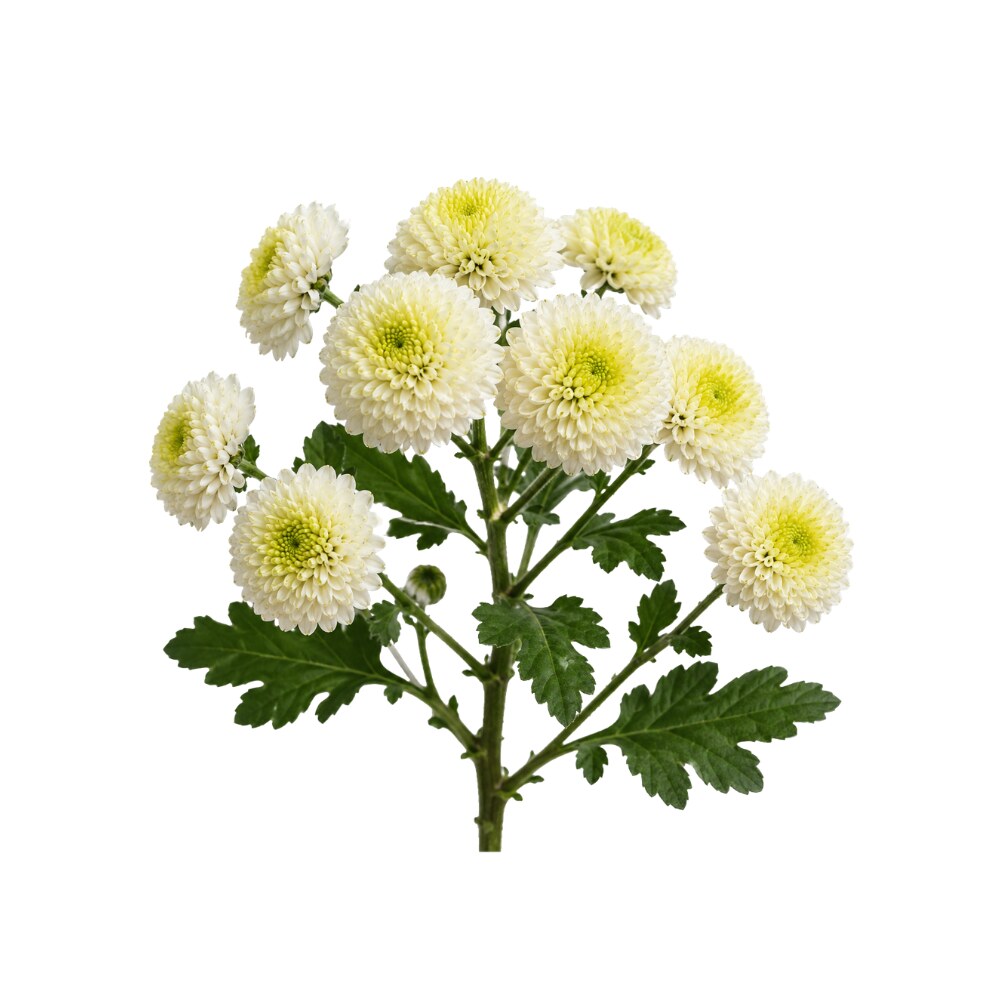
Chrysanthemum (Chrysanthemum morifolium) is a cultivated flowering plant in the daisy family, long grown in East Asia both as an ornamental and as a medicinal and culinary flower. The dried blossoms, known in Chinese medicine as ju hua, are brewed into a fragrant tea.
Traditional & Modern Uses
In traditional Chinese medicine, chrysanthemum flowers are regarded as cooling and are used to “clear heat,” soothe the eyes, ease headaches, and calm symptoms of colds and high blood pressure. Chrysanthemum tea, sometimes sweetened with rock sugar, is a popular everyday drink across China and Southeast Asia, valued as a gentle, refreshing and relaxing beverage. The flowers are also added to herbal blends.
Botany
Florist’s chrysanthemum (Chrysanthemum × morifolium) is a clump-forming herbaceous perennial in the aster family (Asteraceae), typically 0.6–0.9 m tall with a bushy, mounding habit, deeply lobed aromatic leaves, and composite flower heads that bloom from late summer through frost. The ”×” in the name is the giveaway that this is not a wild species but a hybrid of garden origin — a cultigen. It is a complex polyploid hybrid drawing on several East Asian species (including C. indicum, C. nankingense and C. zawadzkii), diversified entirely under human cultivation over more than a thousand years, so no truly wild population exists.
In Chinese medicine the cultivated flower heads are “ju hua,” used as a cooling tea. This is a distinct plant from wild chrysanthemum (C. indicum, “ye ju hua”), treated separately in the materia medica, and from the pyrethrum daisy (Tanacetum cinerariifolium), an unrelated genus grown for insecticidal pyrethrins.
Distribution
Because Chrysanthemum × morifolium is a cultigen, it has no genuine wild native range. Cultivation began in China, where chrysanthemums have been grown and selected as ornamental, culinary and medicinal plants for well over a thousand years, and Kew attaches the plant to SE China as its origin of cultivation. From there it spread across the temperate and subtropical world and is now grown ornamentally worldwide, occasionally escaping near plantings but not establishing self-sustaining wild populations of weed or conservation concern.
Growing Conditions
- Herbaceous perennial; full sun; hardy across roughly USDA zones 5–9 (crowns need winter mulching at the colder end).
- Full cultivation detail lives on the companion farm-wiki grow guide for Chrysanthemum × morifolium (link to be added once that project’s public URL is confirmed).
Phytochemistry
The cooling, anti-inflammatory character of ju hua rests on its phenolics: the flavones luteolin, apigenin and acacetin (largely as their 7-O-glycosides), together with chlorogenic acid as the dominant phenolic acid 1Reference 1Identification of the phenolic components of chrysanthemum flower (Chrysanthemum morifolium Ramat.). A fragrant essential oil supplies the aromatic terpenoids borneol, camphor and cineole, and small amounts of caffeic acid, quercetin and the sesquiterpene lactone parthenolide are also reported 1Reference 1Identification of the phenolic components of chrysanthemum flower (Chrysanthemum morifolium Ramat.).
Constituent Summary
Figures are percent (or mg/g) of dried flower and vary widely with cultivar, growing region and harvest stage; essential-oil terpenoids and the minor flavonoids are documented qualitatively and listed as No Data. † marks acacetin (notably its 7-O-rutinoside), used as a chemical marker to distinguish C. morifolium from the related C. indicum flower 1Reference 1Identification of the phenolic components of chrysanthemum flower (Chrysanthemum morifolium Ramat.).
Phenolic Acid2 compounds2 with data
Flavonoid4 compounds1 with data
Sesquiterpene Lactone1 compoundno data
Pharmacology & Research
Chrysanthemum morifolium has a large preclinical literature — mostly in vitro and rodent work — and almost no human trial data. The strongest, best-mapped signals are antioxidant, hepatoprotective and anti-inflammatory activity; the most interesting emerging ones are macular degeneration, sleep and migraine. No randomised controlled trial exists for any single indication, and results shift with cultivar and preparation (essential oil ≠ water extract ≠ whole flower).
- Best-supported: antioxidant, hepatoprotective and anti-inflammatory activity — consistent in vitro and animal data, some human observation 2,3,7Reference 2AnimalChrysanthemum morifolium water extract prevents and treats MAFLD via pan-PPAR agonism (mouse model)View study →Reference 3AnimalChrysanthemum morifolium attenuates metabolic- and alcohol-associated liver disease via gut microbiota and PPAR-α/γ (mouse model)View study →Reference 7In vitroAnti-inflammatory flavones (luteolin, acacetin) in Chrysanthemum capitula in primary rat hepatocytes (in vitro)View study →.
- Emerging, worth watching: age-related macular degeneration 12Reference 12AnimalC. morifolium extract attenuates AMD pathological angiogenesis via VEGF / NF-κB (in vivo)View study →, GABAergic sleep effects 13Reference 13AnimalC. morifolium protects HT22 cells from oxidative stress and enhances sleep via GABAergic modulation (mouse model)View study → and migraine 14Reference 14AnimalEssential oil of Chrysanthemi Flos alleviates nitroglycerin-induced migraine via CGRP and substance P (mouse model)View study → — real animal signals, no human data yet.
- Mechanistically thin: antiviral, antipyretic and cardiovascular claims rest largely on constituent-level or traditional evidence.
- The caveat: effectively all of it is preclinical. No human RCTs, cultivar and preparation vary widely, and there is no standardised dose.
1. Antioxidant
The most studied activity. Free-radical scavenging (DPPH, ORAC) is high and consistent across aqueous and ethanolic extracts, and tracks phenolic content — chlorogenic acid and luteolin glycosides especially 1Reference 1Identification of the phenolic components of chrysanthemum flower (Chrysanthemum morifolium Ramat.). Optimised drying raises total phenolics and flavonoids, with antioxidant activity following the phenolic yield 21Reference 21Metabolomics of quality components in Jinsihuangju tea during variable-temperature dryingView study →. Human evidence is observational, not intervention data.
Gap: no controlled trials with serum biomarkers; large cultivar and preparation variability.
2. Hepatoprotective
The most mechanistically detailed area. The water extract prevents and treats metabolic-associated fatty liver disease through pan-PPAR (α/γ/δ) agonism, cutting hepatic lipid accumulation and enzyme elevation in mice 2Reference 2AnimalChrysanthemum morifolium water extract prevents and treats MAFLD via pan-PPAR agonism (mouse model)View study →, and attenuates metabolic- and alcohol-associated liver disease via gut-microbiota modulation and PPAR-α/γ activation 3Reference 3AnimalChrysanthemum morifolium attenuates metabolic- and alcohol-associated liver disease via gut microbiota and PPAR-α/γ (mouse model)View study →. Germacrane sesquiterpenoids protect against acetaminophen toxicity 4Reference 4AnimalGermacrane-type sesquiterpenoids from C. morifolium protect against acetaminophen-induced liver injury (in vivo)View study →; acacetin limits heatstroke-induced liver injury via c-Jun/PTGS2 5Reference 5AnimalAcacetin attenuates heatstroke-induced acute liver injury via c-Jun/PTGS2 (mouse model). https://pubmed.ncbi.nlm.nih.gov/42068089/View study →. Flavonoids are the throughline linking liver and eye protection in the TCM “clear the liver” framing 6Reference 6ReviewPharmacological effects of Chrysanthemum flavonoids on liver and eye diseases (review)View study →.
Gap: no human RCT for liver disease; human data is observational.
3. Antimicrobial
The essential oil (borneol, camphor, 1,8-cineole) is active against S. aureus, B. subtilis, E. coli and P. aeruginosa at moderate MICs, with some antifungal activity against Candida 10Reference 10In vitroChemical composition and antimicrobial activity of C. morifolium volatile oil (in vitro)View study →. A 2025 review frames both C. morifolium and C. indicum as adjuncts in the antimicrobial-resistance context 11Reference 11ReviewAntimicrobial, anti-inflammatory, antioxidant and immunomodulatory properties of C. morifolium and C. indicum (review)View study →.
Gap: effective concentrations come from the oil, not tea — water-extract MICs are much weaker. No clinical data.
4. Anti-inflammatory
Well-mapped across pathways. Luteolin and apigenin suppress IKK / NF-κB, lowering TNF-α, IL-1β and IL-6; luteolin and acacetin inhibit COX-2 7Reference 7In vitroAnti-inflammatory flavones (luteolin, acacetin) in Chrysanthemum capitula in primary rat hepatocytes (in vitro)View study →. Bud extract attenuates UVB photoaging via MAPK and Nrf2 8Reference 8AnimalC. morifolium bud extract alleviates UVB-induced photoaging via MAPK / Nrf2 (mouse model)View study →. A Japanese folk decoction suppresses type I hypersensitivity (hay fever) through mast-cell stabilisation 9Reference 9AnimalSuppressive effect of C. morifolium on type I hypersensitivity (mouse model)View study →.
Gap: no head-to-head with NSAIDs; most pathway data is cell-line, unvalidated at oral tissue concentrations.
5. Cardiovascular
Luteolin and chlorogenic acid modulate eNOS, supporting mild vasodilation; PPAR-α activation contributes to lipid lowering and anti-atherosclerotic effects in animals 2,3Reference 2AnimalChrysanthemum morifolium water extract prevents and treats MAFLD via pan-PPAR agonism (mouse model)View study →Reference 3AnimalChrysanthemum morifolium attenuates metabolic- and alcohol-associated liver disease via gut microbiota and PPAR-α/γ (mouse model)View study →. Population studies associate chrysanthemum tea with cardiovascular health.
Gap: no dedicated hypertension trial. The clearest candidate for a first RCT.
6. Anticancer
Preclinical only. Apigenin and luteolin are established pro-apoptotic flavones (caspase-3/9, Bcl-2 / Bax); for chrysanthemum specifically, modified pectin shifts gut microbiota and curbs colorectal cancer cell proliferation 19Reference 19In vitroModified chrysanthemum pectin: effect on gut microbiota and colorectal cancer cell proliferation (in vitro). https://pubmed.ncbi.nlm.nih.gov/38604432/View study →, and polysaccharides show antitumour activity in vivo 18Reference 18ReviewPolysaccharides from Chrysanthemum: extraction, structure and bioactivity (review)View study →.
Gap: no clinical data; active flavone concentrations aren’t achievable by drinking the tea.
7. Immunomodulatory
Polysaccharides are the active fraction, driving macrophage activation, NK activity and lymphocyte proliferation in vitro; purified Gongju polysaccharides show both AChE-inhibitory and immunoregulatory activity 16Reference 16In vitroAcidic polysaccharides from C. morifolium cvView study →. Mast-cell stabilisation points to modulation at the allergy interface 9Reference 9AnimalSuppressive effect of C. morifolium on type I hypersensitivity (mouse model)View study →; a 2025 review surveys the immunomodulatory potential 11Reference 11ReviewAntimicrobial, anti-inflammatory, antioxidant and immunomodulatory properties of C. morifolium and C. indicum (review)View study →.
Gap: direction (stimulate vs. suppress) varies by fraction and dose; no clinical data.
8. Neuroprotective
The most interesting emerging area, all preclinical. Extract protects HT22 hippocampal cells from oxidative stress and improves sleep in mice via GABAergic modulation — the first mechanistic link to the sedative folk use 13Reference 13AnimalC. morifolium protects HT22 cells from oxidative stress and enhances sleep via GABAergic modulation (mouse model)View study →. Essential oil eases nitroglycerin-induced migraine by regulating CGRP and substance P 14Reference 14AnimalEssential oil of Chrysanthemi Flos alleviates nitroglycerin-induced migraine via CGRP and substance P (mouse model)View study →. A Ganoderma / Gastrodia / Chrysanthemi Flos formula improves sleep latency and duration 15Reference 15AnimalGanoderma – Gastrodia – Chrysanthemi Flos formula improves sleep in mice (animal model). https://pubmed.ncbi.nlm.nih.gov/41092578/View study →; polysaccharides inhibit AChE (Alzheimer’s-relevant) 16Reference 16In vitroAcidic polysaccharides from C. morifolium cvView study →; charred-form carbon dots show anxiolytic effects 17Reference 17AnimalAnxiolytic effects of C. morifolium Carbonisata carbon dots (mouse model)View study →.
Gap: no human data. Sleep and migraine are the signals most worth a clinical test.
10. Ophthalmologic
Directly tied to the TCM “brighten the eyes” use. Extract suppresses pathological angiogenesis in age-related macular degeneration via VEGF and NF-κB — the strongest ocular signal to date 12Reference 12AnimalC. morifolium extract attenuates AMD pathological angiogenesis via VEGF / NF-κB (in vivo)View study →. A flavonoid review notes luteolin and apigenin protect retinal cells from oxidative injury and lower intraocular pressure in animals 6Reference 6ReviewPharmacological effects of Chrysanthemum flavonoids on liver and eye diseases (review)View study →.
Gap: all preclinical; no clinical trial for any eye condition.
11. Antipyretic
The “heat-clearing” action is central to TCM use but thinly tested. COX-2 / PGE₂ suppression by luteolin and acacetin gives a plausible NSAID-like mechanism, and reviews list the herb as antipyretic 2,11Reference 2AnimalChrysanthemum morifolium water extract prevents and treats MAFLD via pan-PPAR agonism (mouse model)View study →Reference 11ReviewAntimicrobial, anti-inflammatory, antioxidant and immunomodulatory properties of C. morifolium and C. indicum (review)View study →, but dedicated fever assays are scarce. Suppression of type I hypersensitivity is related but distinct 9Reference 9AnimalSuppressive effect of C. morifolium on type I hypersensitivity (mouse model)View study →.
Gap: no dedicated antipyretic study identified. Plausible mechanism, weak empirical support.
Mechanisms
| Mechanism | Drives | Key compounds |
|---|---|---|
| NF-κB ↓, COX-2 / iNOS ↓, Nrf2 / HO-1 ↑ | anti-inflammatoryhepatoprotectiveanticancer | luteolin, apigenin, acacetin |
| radical scavenging, PPAR-α activation | antioxidantmetabolic / liver | chlorogenic acid, caffeic acid |
| membrane disruption; CGRP / substance-P modulation | antimicrobialmigraine | borneol, camphor, cineole |
| macrophage / NK activation; AChE inhibition | immunomodulatorycognitive | GJP-1, GJP-2 |
| acetaminophen-injury protection | hepatoprotective | parthenolide, germacranes |
Clinical trials
No registered clinical trials identified for any single indication — the evidence base is preclinical.
| Completed | Planned | Terminated | Preclinical |
|---|---|---|---|
| 0 | 0 | 0 | ~80+ |
Last checked: June 2026.
Dosage
Chrysanthemum is taken as a flower tea rather than a dosed medicine. A typical infusion uses about 2–3 g of dried flowers — a small handful, roughly 5–10 blossoms — steeped in hot water and drunk as a daily beverage, often with rock sugar or goji berries. There are no standardised or research-derived doses; the evidence base is preclinical, so amounts follow culinary custom rather than a therapeutic target.
Safety & Pregnancy
Chrysanthemum flower tea is mild and well tolerated at dietary amounts; the main thing to watch is that, as a daisy-family flower, it can trigger allergy in sensitive people.
- Well tolerated. Consumed widely as a beverage, with no significant toxicity at normal dietary amounts.
- Daisy-family allergy. As an Asteraceae member it can provoke allergic reactions in sensitive individuals, including contact dermatitis from handling the plants.
- Interactions unstudied. Herb–drug interactions have not been specifically evaluated — absence of reports is not evidence of safety.
Full safety & interactions detail
Chrysanthemum flower tea is generally very safe and is consumed widely as a beverage. As a member of the daisy family it can occasionally provoke allergic reactions in sensitive individuals, including contact dermatitis from handling the plants. It is mild and well tolerated, with no significant toxicity at normal dietary amounts. Herb–drug interactions have not been specifically evaluated for chrysanthemum; the absence of reported problems should not be read as evidence of safety.
Chrysanthemum has not been specifically researched in pregnancy. The flower tea is widely consumed as a food and is generally regarded as safe in normal dietary amounts, but it has not been formally evaluated in pregnancy or lactation. Treat medicinal or concentrated use as unstudied, and keep to culinary amounts.
References
- Lin, L.-Z., & Harnly, J. M. (2010). Identification of the phenolic components of chrysanthemum flower (Chrysanthemum morifolium Ramat.). Food Chemistry, 120(1), 319–326.
- Zhu et al. (2025). Chrysanthemum morifolium water extract prevents and treats MAFLD via pan-PPAR agonism (mouse model). Journal of Ethnopharmacology. https://pubmed.ncbi.nlm.nih.gov/40921229/
- Liu et al. (2024). Chrysanthemum morifolium attenuates metabolic- and alcohol-associated liver disease via gut microbiota and PPAR-α/γ (mouse model). Phytomedicine. https://pubmed.ncbi.nlm.nih.gov/38820659/
- Jiang et al. (2026). Germacrane-type sesquiterpenoids from C. morifolium protect against acetaminophen-induced liver injury (in vivo). Phytochemistry. https://pubmed.ncbi.nlm.nih.gov/41759694/
- Shu et al. (2026). Acacetin attenuates heatstroke-induced acute liver injury via c-Jun/PTGS2 (mouse model). https://pubmed.ncbi.nlm.nih.gov/42068089/
- Xiong et al. (2024). Pharmacological effects of Chrysanthemum flavonoids on liver and eye diseases (review). Journal of Ethnopharmacology. https://pubmed.ncbi.nlm.nih.gov/39532220/
- Minamisaka et al. (2025). Anti-inflammatory flavones (luteolin, acacetin) in Chrysanthemum capitula in primary rat hepatocytes (in vitro). Molecules. https://pubmed.ncbi.nlm.nih.gov/40733262/
- Xu et al. (2024). C. morifolium bud extract alleviates UVB-induced photoaging via MAPK / Nrf2 (mouse model). Journal of Ethnopharmacology. https://pubmed.ncbi.nlm.nih.gov/38762208/
- Mitsuda et al. (2026). Suppressive effect of C. morifolium on type I hypersensitivity (mouse model). Journal of Medicinal Food. https://pubmed.ncbi.nlm.nih.gov/41778644/
- Xu et al. (2018). Chemical composition and antimicrobial activity of C. morifolium volatile oil (in vitro). Journal of Food Science and Technology. https://pubmed.ncbi.nlm.nih.gov/30042595/
- Liang et al. (2025). Antimicrobial, anti-inflammatory, antioxidant and immunomodulatory properties of C. morifolium and C. indicum (review). Frontiers in Pharmacology. https://pubmed.ncbi.nlm.nih.gov/40176916/
- Jiang et al. (2025). C. morifolium extract attenuates AMD pathological angiogenesis via VEGF / NF-κB (in vivo). Journal of Ethnopharmacology. https://pubmed.ncbi.nlm.nih.gov/41016543/
- Kim et al. (2025). C. morifolium protects HT22 cells from oxidative stress and enhances sleep via GABAergic modulation (mouse model). Journal of the Science of Food and Agriculture. https://pubmed.ncbi.nlm.nih.gov/41276885/
- Meng et al. (2025). Essential oil of Chrysanthemi Flos alleviates nitroglycerin-induced migraine via CGRP and substance P (mouse model). Journal of Ethnopharmacology. https://pubmed.ncbi.nlm.nih.gov/41207345/
- Chen et al. (2025). Ganoderma – Gastrodia – Chrysanthemi Flos formula improves sleep in mice (animal model). https://pubmed.ncbi.nlm.nih.gov/41092578/
- Wang et al. (2024). Acidic polysaccharides from C. morifolium cv. Gongju: acetylcholinesterase inhibition and immunoregulation (in vitro). International Journal of Biological Macromolecules. https://pubmed.ncbi.nlm.nih.gov/39197617/
- Cui et al. (2023). Anxiolytic effects of C. morifolium Carbonisata carbon dots (mouse model). Frontiers in Molecular Biosciences. https://pubmed.ncbi.nlm.nih.gov/37520324/
- Yu et al. (2025). Polysaccharides from Chrysanthemum: extraction, structure and bioactivity (review). International Journal of Biological Macromolecules. https://pubmed.ncbi.nlm.nih.gov/39753177/
- Wang et al. (2024). Modified chrysanthemum pectin: effect on gut microbiota and colorectal cancer cell proliferation (in vitro). https://pubmed.ncbi.nlm.nih.gov/38604432/
- In silico docking of chrysanthemum-derived compounds against SARS-CoV-2 proteins (2021, in silico). https://pubmed.ncbi.nlm.nih.gov/34484639/
- Sun et al. (2026). Metabolomics of quality components in Jinsihuangju tea during variable-temperature drying. Food Research International. https://pubmed.ncbi.nlm.nih.gov/41895980/