
Materia Medica
Cordyceps
Cordyceps sinensis
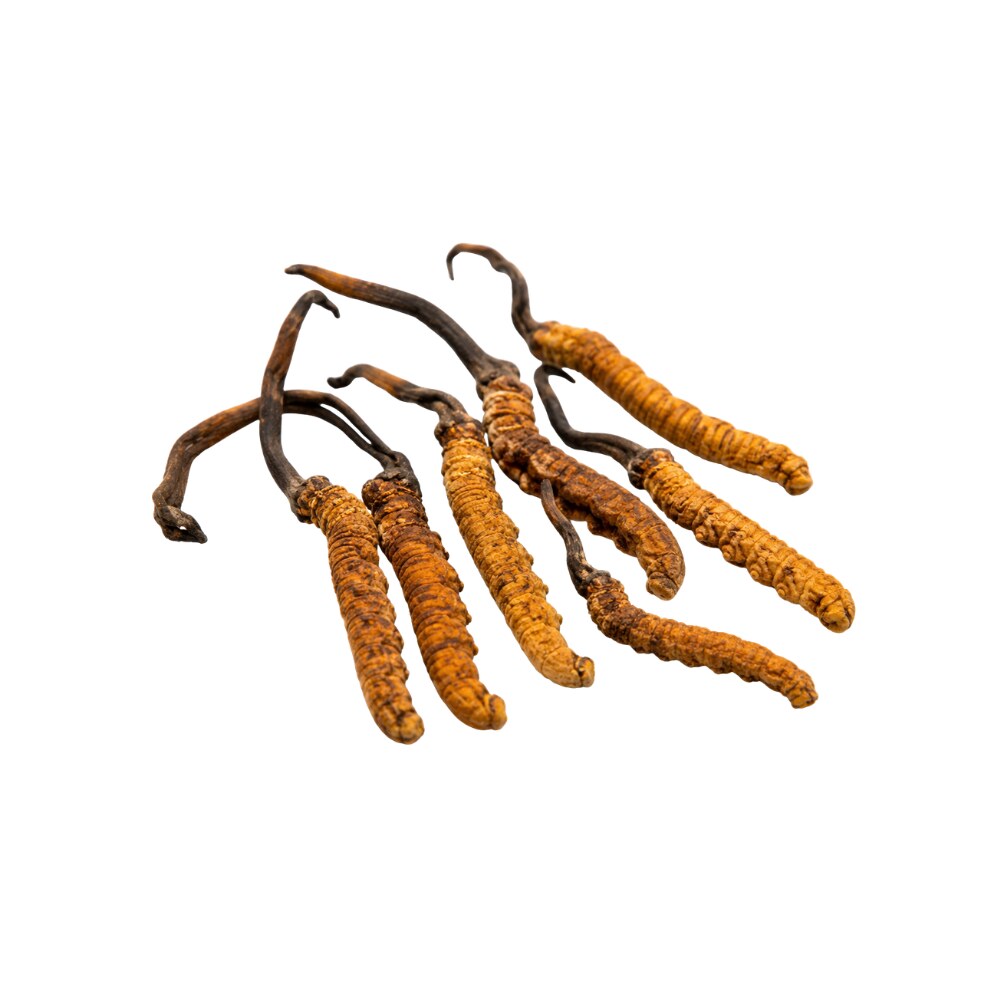
Cordyceps (Cordyceps sinensis) — a prized adaptogenic medicinal fungus used in Chinese medicine as a tonic for energy, stamina and vitality.
What Is Cordyceps?
Cordyceps is a medicinal fungus long revered in Traditional Chinese Medicine for its restorative and vitality-enhancing effects. Traditionally harvested from high-altitude regions of Tibet and the Himalayas, the wild fungus naturally parasitizes caterpillar larvae, producing the famous “caterpillar fungus” highly valued in Asian medicine.
Historically regarded as a superior tonic for fatigue, weakness, respiratory depletion, and aging, cordyceps became associated with endurance, resilience, sexual vitality, and recovery from chronic illness.
Modern demand has largely shifted toward cultivated forms — particularly Cordyceps militaris — due to the rarity and ecological pressure surrounding wild Cordyceps sinensis. Contemporary research focuses primarily on the fungus’s polysaccharides, cordycepin content, immunomodulating effects, and role in energy metabolism.
How Is Cordyceps Used?
Cordyceps is most commonly used as a long-term adaptogenic tonic.
Traditional preparations include decoctions, powders, soups, wines, capsules, tinctures, and concentrated extracts. Modern supplements frequently standardize for cordycepin, adenosine, or beta-glucan content.
The fungus is commonly used to support physical stamina, recovery from fatigue, respiratory weakness, exercise performance, and general vitality. It is also widely included in adaptogenic formulas targeting stress resilience and healthy aging.
Because cordyceps is considered relatively balanced and gentle, it is often used continuously over extended periods.
Traditional Uses
Traditional Chinese Medicine
In Traditional Chinese Medicine, cordyceps (Dong Chong Xia Cao) is considered sweet, warm, and deeply tonic.
The fungus is traditionally used to tonify Kidney and Lung Qi, strengthen vitality, replenish exhaustion, support sexual function, and improve respiratory weakness. Classical indications include fatigue, chronic cough, weakness after illness, low libido, and age-related decline.
Cordyceps is especially associated with restoring depleted constitutions and supporting recovery after chronic stress or illness.
Western Herbal Medicine
Modern Western herbalism primarily classifies cordyceps as an adaptogen and restorative tonic.
Common uses include support for fatigue, athletic endurance, stress resilience, immune modulation, respiratory function, and recovery from burnout or chronic illness.
The fungus is often grouped alongside adaptogens such as reishi, rhodiola, eleuthero, and ashwagandha.
Indications
Cordyceps is primarily indicated for fatigue, depletion, and reduced resilience.
Common traditional and modern indications include:
- Fatigue
- Low stamina
- Reduced exercise endurance
- Recovery after illness
- Chronic stress
- Burnout
- Respiratory weakness
- Age-related decline
- Low libido
- General vitality support
- Immune support
- Adaptogenic support
Clinically, the fungus is most commonly used as a long-term restorative tonic rather than an acute remedy.
Mycology
The first thing to understand about cordyceps is that it is not a herb at all — it is a fungus, and a predatory one. It grows by parasitising the buried caterpillar larvae of Himalayan ghost moths: it invades the living insect, consumes it from within, and finally pushes a thin dark club-shaped fruiting body up out of the ground from the dead caterpillar’s head. That caterpillar-and-stalk is the “herb.”
The name is worth pinning down, because the label rarely keeps up with the science. This site catalogues it as Cordyceps sinensis, the name most trade and traditional literature still use, but taxonomists reclassified the species in 2007 as Ophiocordyceps sinensis. Same organism, updated genus.
For anyone sourcing cordyceps, the crucial point is what is actually in the bottle. Wild caterpillar fungus cannot be meaningfully farmed — it needs its live insect host and a specific high-altitude habitat — so it stays scarce, expensive and (through overharvest) genuinely at risk. As a result the overwhelming majority of commercial “cordyceps” is not the wild fruiting body: it is either fermented cordyceps mycelium grown in tanks, or the entirely different but easy-to-cultivate cousin Cordyceps militaris. Reading the species and the form (“mycelium,” “fruiting body,” “militaris”) on a label tells you far more than the word “cordyceps” alone.
Distribution
The true caterpillar fungus is native to the high alpine meadows of the Tibetan Plateau and Himalaya — Tibet, western China, Nepal, Bhutan and northern India — at roughly 3,000–5,000 metres. Decades of intense wild collection to meet demand have left it depleted and formally at risk (assessed as Vulnerable), which is a large part of why it is so costly and so often substituted.
Habitat & Cultivation
- Cordyceps is an insect-parasitising fungus of cold, high-altitude Himalayan and Tibetan meadows (~3,000–5,000 m), where it infects buried ghost-moth caterpillars.
- The wild caterpillar fungus essentially cannot be commercially cultivated — it depends on a live insect host and its specific alpine environment, so genuine wild “yartsa gunbu” is rare and among the most expensive medicinal materials in the world.
- Because of this, most products labelled “cordyceps” are fermented cordyceps mycelium grown in tanks, not the wild fruiting body.
- The other common commercial source is the related, easily farmed cousin Cordyceps militaris, cultivated on grain or pupae — so check whether a product is O. sinensis mycelium, C. militaris, or (rarely, expensively) true wild fruiting body.
- Full detail lives on the companion farm-wiki page for Cordyceps sinensis (link to be added once that project’s public URL is confirmed).
Pharmacology & Research
Cordyceps has a surprisingly large research literature — several hundred papers — but its centre of gravity sits far from how the fungus is marketed. The strongest human evidence, including two Cochrane reviews and multiple meta-analyses of randomised trials, is for cordyceps as a renal adjunct: in chronic kidney disease, diabetic kidney disease, dialysis and kidney transplantation 3,4,5,6,7Reference 3Systematic reviewCordyceps sinensis (a traditional Chinese medicine) for treating chronic kidney disease — systematic reviewView study →Reference 4Systematic reviewCordyceps sinensis (a traditional Chinese medicine) for kidney transplant recipients — systematic reviewView study →Reference 5Meta-analysisEfficacy of Cordyceps sinensis as an adjunctive treatment in kidney transplant patients: A systematic-review and meta-analysis — systematic review and meta-analysisView study →Reference 6Meta-analysisThe effects of Ophiocordyceps sinensis combined with ACEI/ARB on diabetic kidney disease: A systematic review and meta-analysis — systematic review and meta-analysisView study →Reference 7Meta-analysisEfficacy of Cordyceps sinensis as an adjunctive treatment in hemodialysis patients: a systematic review and Meta-analysis — systematic review and meta-analysisView study →. A single small human RCT supports an immune (natural-killer-cell) effect 10Reference 10RCTCordyceps militaris Enhances Cell-Mediated Immunity in Healthy Korean Men — randomised, placebo-controlled trialView study →, and the celebrated endurance-tonic reputation rests on genuinely mixed trials — negative in trained athletes, modestly positive in older adults 22,23Reference 22RCTCordyceps Sinensis (CordyMax Cs-4) supplementation does not improve endurance exercise performance — randomised, placebo-controlled trialView study →Reference 23RCTEffect of Cs-4 (Cordyceps sinensis) on exercise performance in healthy older subjects: a double-blind, placebo-controlled trial — randomised, double-blind, placebo-controlled trialView study →. Almost everything else — anti-inflammatory, anticancer, antioxidant, antidiabetic, hepatoprotective, lipid-lowering, reproductive — is preclinical, driven by two signature molecules: the nucleoside cordycepin and immune-active polysaccharides (β-glucans). A recurring caveat runs through all of it: most human trials use fermented pharmaceutical preparations (Bailing, Jinshuibao) of C. sinensis, or cultivated C. militaris, not the dried fruiting body or powder on supplement shelves — and cordycepin content varies enormously between them.
- Best-supported: cordyceps as an adjunct in chronic kidney disease and renal transplantation — fewer rejection episodes and reduced calcineurin-inhibitor toxicity — backed by Cochrane reviews and meta-analyses of RCTs 3,4,5Reference 3Systematic reviewCordyceps sinensis (a traditional Chinese medicine) for treating chronic kidney disease — systematic reviewView study →Reference 4Systematic reviewCordyceps sinensis (a traditional Chinese medicine) for kidney transplant recipients — systematic reviewView study →Reference 5Meta-analysisEfficacy of Cordyceps sinensis as an adjunctive treatment in kidney transplant patients: A systematic-review and meta-analysis — systematic review and meta-analysisView study →. Immunomodulation has one supporting human RCT 10Reference 10RCTCordyceps militaris Enhances Cell-Mediated Immunity in Healthy Korean Men — randomised, placebo-controlled trialView study →.
- Emerging, worth watching: fermented-cordyceps capsules as a COPD add-on (a 2025 multi-centre RCT) 16Reference 16RCTThe Effectiveness of Yong Chong Cao Capsule in Patients With Mild to Severe COPD: A Multi-Center, Randomized, Active-Controlled Trial — multi-center randomised controlled trialView study →; adjuvant use in lung-cancer supportive care 18Reference 18Meta-analysisAdjuvant treatment with Cordyceps sinensis for lung cancer: A systematic review and meta-analysis of randomized controlled trials — systematic review and meta-analysisView study →.
- Mechanistically thin: anti-inflammatory, antioxidant, antidiabetic, hepatoprotective, lipid-lowering and reproductive claims — coherent cordycepin/polysaccharide mechanisms, but animal and in-vitro only 12,21,26,27,28,29,30,31Reference 12In vitroCordycepin inhibits lipopolysaccharide-induced inflammation by the suppression of NF-kappaB through Akt and p38 inhibition in RAW 264.7 macrophage cells — in vitroView study →Reference 21In vitroStructure analysis and antioxidant activity of polysaccharide-iron (III) from Cordyceps militaris mycelia — in vitroView study →Reference 26AnimalCordyceps militaris polysaccharide alleviates diabetic symptoms by regulating gut microbiota against TLR4/NF-κB pathway — in vivo (mouse)View study →Reference 27AnimalCordycepin from Cordyceps militaris prevents hyperglycemia in alloxan-induced diabetic mice — in vivo (mouse)View study →Reference 28AnimalInhibitive effect of cordyceps sinensis on experimental hepatic fibrosis and its possible mechanism — in vivo (rat)View study →Reference 29AnimalLipid-lowering effect of cordycepin (3’-deoxyadenosine) from Cordyceps militaris on hyperlipidemic hamsters and rats — in vivo (rodent)View study →Reference 30AnimalInhibitory effects of water extracts from fruiting bodies of cultured Cordyceps sinensis on raised serum lipid peroxide levels and aortic cholesterol deposition in atherosclerotic mice — in vivo (mouse)View study →Reference 31AnimalImprovement of sperm production in subfertile boars by Cordyceps militaris supplement — in vivo (animal)View study →.
- The caveat: trial preparations (fermented C. sinensis, cultivated C. militaris) differ chemically from most supplements; there is no standardised dose, and the renal/COPD evidence is overwhelmingly China-based and at moderate risk of bias.
1. Adjunct in chronic kidney disease
The most substantial human evidence for cordyceps is renal, not the fatigue/tonic uses it is marketed for. Two Cochrane reviews and several meta-analyses have pooled Chinese RCTs of fermented Cordyceps sinensis preparations (Bailing capsule, Jinshuibao) added to standard care — including ACE-inhibitor/ARB therapy — in chronic kidney disease and diabetic kidney disease 3,6,8Reference 3Systematic reviewCordyceps sinensis (a traditional Chinese medicine) for treating chronic kidney disease — systematic reviewView study →Reference 6Meta-analysisThe effects of Ophiocordyceps sinensis combined with ACEI/ARB on diabetic kidney disease: A systematic review and meta-analysis — systematic review and meta-analysisView study →Reference 8Meta-analysisUse of bailing capsules (cordyceps sinensis) in the treatment of chronic kidney disease: a meta-analysis and network pharmacology — meta-analysisView study →. Pooled results favour cordyceps for proteinuria, serum creatinine and eGFR, and a 2023 GRADE-rated meta-analysis of Ophiocordyceps sinensis combined with ACEI/ARB in diabetic kidney disease reported consistent adjunctive benefit for proteinuria and renal function 6Reference 6Meta-analysisThe effects of Ophiocordyceps sinensis combined with ACEI/ARB on diabetic kidney disease: A systematic review and meta-analysis — systematic review and meta-analysisView study →, while a separate meta-analysis found adjunctive cordyceps lowered C-reactive protein and improved nutritional markers in maintenance-hemodialysis patients 7Reference 7Meta-analysisEfficacy of Cordyceps sinensis as an adjunctive treatment in hemodialysis patients: a systematic review and Meta-analysis — systematic review and meta-analysisView study →. The Cochrane authors were explicit that trials were small, methodologically weak, and almost all conducted in China, so the effect size is uncertain even though its direction is consistent 3Reference 3Systematic reviewCordyceps sinensis (a traditional Chinese medicine) for treating chronic kidney disease — systematic reviewView study →.
Gap: The signal comes almost entirely from fermented-mycelium pharmaceutical preparations, not the dried fruiting body or powder sold as a supplement, and no rigorous non-Chinese trial has replicated it.
2. Renal-transplant adjunct / calcineurin-inhibitor nephrotoxicity
A 1995 randomised trial first reported that C. sinensis reduced ciclosporin-associated nephrotoxicity in kidney-transplant recipients 9Reference 9RCTAmelioration of cyclosporin nephrotoxicity by Cordyceps sinensis in kidney-transplanted recipients — randomised controlled trialView study →. A dedicated Cochrane review and a 2017 systematic review/meta-analysis of RCTs subsequently found that cordyceps as an adjuvant to calcineurin-inhibitor immunosuppression was associated with fewer acute rejection episodes, less nephrotoxicity, lower infection rates and better graft function 4,5Reference 4Systematic reviewCordyceps sinensis (a traditional Chinese medicine) for kidney transplant recipients — systematic reviewView study →Reference 5Meta-analysisEfficacy of Cordyceps sinensis as an adjunctive treatment in kidney transplant patients: A systematic-review and meta-analysis — systematic review and meta-analysisView study →. The evidence is graded low-to-moderate quality and again rests on fermented preparations in Chinese transplant centres.
Gap: This is an add-on to standard immunosuppression, never a replacement — and the immunomodulatory activity that may help here is exactly why concurrent use with immunosuppressants needs medical supervision.
3. Immunomodulation
This is the one non-renal indication with a direct human trial: a 2015 randomised, placebo-controlled study in healthy Korean men found that C. militaris (1.5 g/day for 4 weeks) increased natural-killer-cell activity and cell-mediated immunity markers versus placebo 10Reference 10RCTCordyceps militaris Enhances Cell-Mediated Immunity in Healthy Korean Men — randomised, placebo-controlled trialView study →. It is supported by a coherent preclinical mechanism — cordyceps β-glucans and other polysaccharides activate macrophages, NK cells and cytokine signalling through pattern-recognition receptors 11Reference 11In vitroStructural elucidation and immunostimulatory activity of a new polysaccharide from Cordyceps militaris — in vitroView study →. The human trial was small, short and measured immune markers rather than clinical outcomes such as infection rates.
Gap: “Boosts immunity” is measured as laboratory NK-cell activity in one small trial, not as fewer or shorter infections; the clinical meaning is unproven.
4. Anti-inflammatory
Cordycepin (3’-deoxyadenosine) is a well-characterised anti-inflammatory nucleoside: it suppresses NF-κB signalling via Akt and p38 inhibition in LPS-stimulated macrophages, lowering TNF-α, iNOS and COX-2 12Reference 12In vitroCordycepin inhibits lipopolysaccharide-induced inflammation by the suppression of NF-kappaB through Akt and p38 inhibition in RAW 264.7 macrophage cells — in vitroView study →. In animals it reduces pain and joint pathology in rodent osteoarthritis models (acting as a polyadenylation inhibitor) and drives M1→M2 macrophage repolarisation that limits organ damage in septic mice 13,14Reference 13AnimalThe polyadenylation inhibitor cordycepin reduces pain, inflammation and joint pathology in rodent models of osteoarthritis — in vivo (rodent)View study →Reference 14AnimalCordycepin induces M1/M2 macrophage polarization to attenuate the liver and lung damage and immunodeficiency in immature mice with sepsis via NF-κB/p65 inhibition — in vivo (mouse)View study →. As a polyadenylation inhibitor cordycepin has broad effects on inflammatory gene expression, which is mechanistically interesting but also a caution for specificity.
Gap: Every anti-inflammatory result is in vitro or in animals; no human trial has used inflammation as a primary endpoint, and the doses used preclinically often exceed what oral supplementation delivers.
5. COPD / respiratory adjunct
Respiratory weakness is a classical cordyceps indication, and it has modern trial support — again as a fermented pharmaceutical add-on. Meta-analyses of RCTs report that Bailing capsule (fermented C. sinensis) plus standard therapy improves lung function (FEV₁), exercise tolerance and quality of life in stable COPD, and a 2025 multi-centre randomised active-controlled trial (240 patients, 24 weeks) found a Yong Chong Cao cordyceps capsule reduced acute exacerbations versus Bailing capsule 15,16Reference 15Meta-analysisTherapeutic efficacy and pharmacological mechanism of Bailing capsule on chronic obstructive pulmonary disease: a meta-analysis and network pharmacology — meta-analysisView study →Reference 16RCTThe Effectiveness of Yong Chong Cao Capsule in Patients With Mild to Severe COPD: A Multi-Center, Randomized, Active-Controlled Trial — multi-center randomised controlled trialView study →. A broader systematic review of Chinese herbal medicine for stable COPD (BODE index, six-minute walk) points the same way but flags pervasive risk-of-bias problems 17Reference 17Systematic reviewOral Chinese herbal medicine combined with pharmacotherapy for stable COPD: a systematic review of effect on BODE index and six minute walk test — systematic reviewView study →.
Gap: Almost all trials co-administer cordyceps with other herbs or drugs and originate from Chinese-language databases, so the isolated contribution of cordyceps and the generalisability of the effect are hard to pin down.
6. Anticancer (adjuvant)
A 2024 systematic review and meta-analysis of 12 RCTs (928 patients) found adjuvant C. sinensis alongside chemotherapy in lung cancer improved performance status, immune parameters and some quality-of-life measures — as a supportive adjunct, not a cytotoxic treatment 18Reference 18Meta-analysisAdjuvant treatment with Cordyceps sinensis for lung cancer: A systematic review and meta-analysis of randomized controlled trials — systematic review and meta-analysisView study →. Mechanistically, cordycepin induces apoptosis and cell-cycle arrest in cancer cell lines and xenografts through AMPK activation and EGFR/ERK pathway inhibition, and can reverse cisplatin resistance in non-small-cell lung cancer models 19,20Reference 19AnimalCordycepin Inhibits Drug-resistance Non-small Cell Lung Cancer Progression by Activating AMPK Signaling Pathway — in vivo (mouse)View study →Reference 20In vitroCordycepin induces human lung cancer cell apoptosis by inhibiting nitric oxide mediated ERK/Slug signaling pathway — in vitroView study →.
Gap: No cordyceps trial has shown a survival benefit; the human evidence is about tolerability and supportive endpoints during conventional therapy, and the direct anti-tumour data are entirely preclinical.
7. Antioxidant
Cordyceps polysaccharides and cordycepin scavenge free radicals and up-regulate endogenous antioxidant enzymes (SOD, catalase, glutathione peroxidase) across in-vitro assays and animal models, and structurally-defined C. militaris polysaccharide fractions show dose-dependent radical-scavenging activity 11,21Reference 11In vitroStructural elucidation and immunostimulatory activity of a new polysaccharide from Cordyceps militaris — in vitroView study →Reference 21In vitroStructure analysis and antioxidant activity of polysaccharide-iron (III) from Cordyceps militaris mycelia — in vitroView study →. This antioxidant activity is the plausible common mechanism behind several of the organ-protective and anti-ageing claims.
Gap: The data are chemical-assay and animal only; there is no human biomarker trial (e.g. measured oxidative-stress markers) for whole cordyceps, and results vary widely by species, strain and extraction method.
8. Exercise performance / endurance
The endurance-tonic reputation is where the human evidence is genuinely mixed. A well-controlled 2004 RCT found C. sinensis (CordyMax Cs-4, 3 g/day for 5 weeks) did not improve VO₂peak or time-trial performance in trained cyclists 22Reference 22RCTCordyceps Sinensis (CordyMax Cs-4) supplementation does not improve endurance exercise performance — randomised, placebo-controlled trialView study →. In contrast, a 2010 double-blind trial in healthy older adults reported ~8–11% gains in metabolic and ventilatory thresholds after 12 weeks of Cs-4, and a 2017 RCT of a C. militaris-containing mushroom blend showed small improvements in high-intensity exercise tolerance 23,24Reference 23RCTEffect of Cs-4 (Cordyceps sinensis) on exercise performance in healthy older subjects: a double-blind, placebo-controlled trial — randomised, double-blind, placebo-controlled trialView study →Reference 24RCTCordyceps militaris Improves Tolerance to High-Intensity Exercise After Acute and Chronic Supplementation — randomised, double-blind, placebo-controlled trialView study →. A 2025 meta-analysis of fungal supplements in athletes found only modest, inconsistent endurance effects 25Reference 25Meta-analysisEffects of fungal supplementation on endurance, immune function, and hematological profiles in adult athletes: a systematic review and meta-analysis — systematic review and meta-analysisView study →.
Gap: Benefits appear mainly in older or less-trained people and often from multi-ingredient formulas, not standardised cordyceps; in trained athletes the best-controlled trial was flatly negative.
9. Antidiabetic / glucose regulation
Cordyceps polysaccharides and cordycepin lower blood glucose in multiple diabetic-rodent models — a 2023 study showed a C. militaris polysaccharide fraction improved hyperglycaemia by remodelling gut microbiota and downregulating the TLR4/NF-κB pathway, and cordycepin prevented hyperglycaemia in alloxan-induced diabetic mice 26,27Reference 26AnimalCordyceps militaris polysaccharide alleviates diabetic symptoms by regulating gut microbiota against TLR4/NF-κB pathway — in vivo (mouse)View study →Reference 27AnimalCordycepin from Cordyceps militaris prevents hyperglycemia in alloxan-induced diabetic mice — in vivo (mouse)View study →. The effect is consistent enough that the herb-details note about additive blood-sugar lowering is prudent.
Gap: There is no human glycaemic trial of cordyceps on its own; the diabetic-kidney-disease trials measured renal, not glycaemic, endpoints.
10. Hepatoprotective / antifibrotic
C. sinensis inhibited hepatic fibrogenesis in a CCl₄-plus-ethanol rat model, reducing collagen deposition and hepatic stellate-cell activation 28Reference 28AnimalInhibitive effect of cordyceps sinensis on experimental hepatic fibrosis and its possible mechanism — in vivo (rat)View study →. Much of the subsequent liver-fibrosis evidence, however, comes from multi-herb formulas (e.g. Fuzheng Huayu) in which cordyceps mycelium is one of several components, making its individual contribution difficult to isolate.
Gap: Whole-fungus, single-herb human liver data do not exist; most positive results are preclinical and/or from combination formulas.
11. Lipid-lowering
Cordycepin lowered serum lipids in hyperlipidaemic hamsters and rats, and water extracts of cultured C. sinensis reduced serum lipid peroxide levels and aortic cholesterol deposition in atherosclerotic mice 29,30Reference 29AnimalLipid-lowering effect of cordycepin (3’-deoxyadenosine) from Cordyceps militaris on hyperlipidemic hamsters and rats — in vivo (rodent)View study →Reference 30AnimalInhibitory effects of water extracts from fruiting bodies of cultured Cordyceps sinensis on raised serum lipid peroxide levels and aortic cholesterol deposition in atherosclerotic mice — in vivo (mouse)View study →. Related work maps polysaccharide effects on macrophage cholesterol handling (PPARγ–LXRα–ABCA1/G1).
Gap: Entirely rodent-level; no human lipid trial, and dosing in the animal studies does not translate directly to supplement use.
12. Reproductive / spermatogenic
Cordyceps’ traditional reputation for libido and sexual vitality has only animal support: C. militaris mycelium improved sperm quantity and quality in subfertile boars, and cordyceps preparations enhance steroidogenesis and protect the blood-testis barrier in rodent models 31Reference 31AnimalImprovement of sperm production in subfertile boars by Cordyceps militaris supplement — in vivo (animal)View study →.
Gap: No human fertility or libido trial exists; the vitality/aphrodisiac claim is traditional plus animal data only.
13. Antiasthmatic / airway anti-inflammatory
Cordycepin and C. sinensis extracts reduce airway hyperresponsiveness, eosinophil infiltration and Th2 cytokine signalling (via NF-κB blockade) in ovalbumin-sensitised mouse and rat models of allergic asthma 32Reference 32AnimalCordycepin alleviates airway hyperreactivity in a murine model of asthma by attenuating the inflammatory process — in vivo (mouse)View study →.
Gap: Purely preclinical; there is no clinical asthma trial, and this is distinct from the COPD-adjunct evidence, which is human but uses different (fermented, multi-component) preparations.
Mechanisms
| Mechanism | Drives | Key compounds |
|---|---|---|
| NF-κB ↓ (via Akt/p38), COX-2 / iNOS ↓, AMPK ↑, EGFR/ERK ↓, polyadenylation inhibition | anti-inflammatoryanticancerantidiabeticlipid-lowering | cordycepin, adenosine |
| Macrophage & NK-cell activation via pattern-recognition receptors; antioxidant-enzyme induction | immunomodulationantioxidantrenal & COPD adjunct | β-glucans, mannans |
| Osmotic diuresis; free-radical scavenging | antioxidantrenal support (traditional) | cordycepic acid (D-mannitol) |
| Provitamin D₂; membrane and anti-inflammatory effects | antioxidantimmune (minor) | ergosterol |
Clinical trials
Cordyceps is unusually well-represented in trial registries and Chinese-language RCT databases; most registered Western trials are small and focus on exercise, eye health or metabolic endpoints, while 100+ mostly China-based RCTs sit inside the published renal, COPD and oncology meta-analyses.
| Completed | Planned | Terminated | Preclinical |
|---|---|---|---|
| ~18 | ~8 | 0 | Several hundred |
Last checked: December 2025.
Phytochemistry
Cordyceps’ signature compound is cordycepin (3’-deoxyadenosine), a nucleoside analogue credited with much of the fungus’s antiproliferative and immunomodulating activity; it occurs alongside adenosine, and both are used as quality markers 1,2Reference 1ReviewCordyceps militaris: An Overview of Its Chemical Constituents in Relation to Biological Activity — reviewView study →Reference 2ReviewThe Chemical Constituents and Pharmacological Actions of Cordyceps sinensis — reviewView study →. Cultivated Cordyceps militaris typically contains far more cordycepin than the wild caterpillar fungus C. sinensis, which is one reason the cultivated species now dominates supply 1Reference 1ReviewCordyceps militaris: An Overview of Its Chemical Constituents in Relation to Biological Activity — reviewView study →.
The bulk of the fruiting body is cordycepic acid (D-mannitol) and immune-active polysaccharides, particularly beta-glucans 1,2Reference 1ReviewCordyceps militaris: An Overview of Its Chemical Constituents in Relation to Biological Activity — reviewView study →Reference 2ReviewThe Chemical Constituents and Pharmacological Actions of Cordyceps sinensis — reviewView study →. Ergosterol (a provitamin D2) and other sterols round out the profile 2Reference 2ReviewThe Chemical Constituents and Pharmacological Actions of Cordyceps sinensis — reviewView study →.
Constituent Summary
Cordycepin and adenosine content varies greatly between species and between wild and cultivated material, so the markers below are reported qualitatively 1,2Reference 1ReviewCordyceps militaris: An Overview of Its Chemical Constituents in Relation to Biological Activity — reviewView study →Reference 2ReviewThe Chemical Constituents and Pharmacological Actions of Cordyceps sinensis — reviewView study →.
Sugar alcohol1 compoundno data
Polysaccharide2 compoundsno data
Sterol1 compoundno data
Dosage
Cordyceps dosing depends heavily on the preparation, and research doses and traditional doses are not interchangeable — trials use standardised mycelial or fermented pharmaceuticals, while traditional practice uses the whole fungus.
Research Doses
In research, cordyceps is almost always given as a specific preparation — a fermented mycelial pharmaceutical (Bailing, Jinshuibao), the cultured C. sinensis mycelium Cs-4, or cultivated C. militaris biomass — dosed by preparation weight rather than a standardised marker.
| Indication | Preparation | Dose | Est. dried-herb equivalent | Source |
|---|---|---|---|---|
| Immunomodulation (NK-cell activity) | C. militaris capsules | 1.5 g/day × 4 weeks | ≈ same (whole biomass) | 10Reference 10RCTCordyceps militaris Enhances Cell-Mediated Immunity in Healthy Korean Men — randomised, placebo-controlled trialView study → |
| Endurance (trained cyclists — no benefit) | Cs-4 (cultured C. sinensis mycelium) | 3 g/day × 5 weeks | ≈ same (mycelial biomass) | 22Reference 22RCTCordyceps Sinensis (CordyMax Cs-4) supplementation does not improve endurance exercise performance — randomised, placebo-controlled trialView study → |
| Exercise capacity (older adults) | Cs-4 | ~1 g/day (333 mg ×3) × 12 weeks | ≈ same (mycelial biomass) | 23Reference 23RCTEffect of Cs-4 (Cordyceps sinensis) on exercise performance in healthy older subjects: a double-blind, placebo-controlled trial — randomised, double-blind, placebo-controlled trialView study → |
| High-intensity exercise tolerance | C. militaris mushroom blend | 4 g/day | order-of-magnitude only (multi-fungus blend) | 24Reference 24RCTCordyceps militaris Improves Tolerance to High-Intensity Exercise After Acute and Chronic Supplementation — randomised, double-blind, placebo-controlled trialView study → |
| Lung-cancer supportive care (adjuvant) | C. sinensis preparation | ~6 g/day, 21 days per cycle | ≈ same (biomass) | 18Reference 18Meta-analysisAdjuvant treatment with Cordyceps sinensis for lung cancer: A systematic review and meta-analysis of randomized controlled trials — systematic review and meta-analysisView study → |
| Chronic kidney disease / COPD (adjunct) | Fermented capsules (Bailing / Jinshuibao) | per product label | not convertible (fermented mycelium) | 3,15,16Reference 3Systematic reviewCordyceps sinensis (a traditional Chinese medicine) for treating chronic kidney disease — systematic reviewView study →Reference 15Meta-analysisTherapeutic efficacy and pharmacological mechanism of Bailing capsule on chronic obstructive pulmonary disease: a meta-analysis and network pharmacology — meta-analysisView study →Reference 16RCTThe Effectiveness of Yong Chong Cao Capsule in Patients With Mild to Severe COPD: A Multi-Center, Randomized, Active-Controlled Trial — multi-center randomised controlled trialView study → |
The “est. dried-herb equivalent” column is a rough guide, not a conversion factor and never a recommendation: most trial preparations are whole mycelial or fermented biomass dosed by weight, with no marker-% to back-convert to a dried-fruiting-body dose. Fermented pharmaceutical capsules, Cs-4 mycelium, dried C. sinensis powder and C. militaris are not interchangeable.
Traditional Dosage
Whole-fungus doses come from traditional practice rather than trials.
| System | Preparation | Dose |
|---|---|---|
| Western herbal | Dried fruiting body / mycelium | 1–3 g/day |
| Western herbal | Tincture | 2–5 mL, up to 3×/day |
| TCM (Dong Chong Xia Cao) | Decoction of whole fungus | ~3–9 g/day |
Cordyceps is most commonly used consistently over weeks or months as an adaptogenic tonic.
Safety & Pregnancy
Cordyceps has low intrinsic toxicity and is generally well tolerated, but it measurably modulates immune activity — so autoimmune disease and immunosuppressant use call for medical supervision — and product quality (heavy-metal contamination, adulteration) is a genuine concern.
- Immune modulation. It raises immune activity — use only under medical supervision in autoimmune disease or alongside immunosuppressant drugs.
- Product quality. Wild and some commercial products carry heavy-metal (arsenic) contamination and adulteration is common given the price — source and testing matter.
- Additive effects. Plausible additive blood-sugar lowering with antidiabetics and a traditional, theoretical additive bleeding risk with anticoagulants.
- Generally well tolerated. Occasional mild digestive upset or dry mouth; no serious toxicity in its human trials.
Full safety & interactions detail
Cordyceps is generally well tolerated, with occasional mild digestive upset or dry mouth; no serious toxicity was reported in the human renal and immune trials that make up its best evidence base 3,4,5,10Reference 3Systematic reviewCordyceps sinensis (a traditional Chinese medicine) for treating chronic kidney disease — systematic reviewView study →Reference 4Systematic reviewCordyceps sinensis (a traditional Chinese medicine) for kidney transplant recipients — systematic reviewView study →Reference 5Meta-analysisEfficacy of Cordyceps sinensis as an adjunctive treatment in kidney transplant patients: A systematic-review and meta-analysis — systematic review and meta-analysisView study →Reference 10RCTCordyceps militaris Enhances Cell-Mediated Immunity in Healthy Korean Men — randomised, placebo-controlled trialView study →.
Because cordyceps polysaccharides and cordycepin measurably modulate immune activity — a single RCT raised natural-killer-cell activity in healthy men 10Reference 10RCTCordyceps militaris Enhances Cell-Mediated Immunity in Healthy Korean Men — randomised, placebo-controlled trialView study → — and because its main clinical role is as a supervised adjuvant to immunosuppression in transplant patients 4,5Reference 4Systematic reviewCordyceps sinensis (a traditional Chinese medicine) for kidney transplant recipients — systematic reviewView study →Reference 5Meta-analysisEfficacy of Cordyceps sinensis as an adjunctive treatment in kidney transplant patients: A systematic-review and meta-analysis — systematic review and meta-analysisView study →, caution is warranted in autoimmune disease and alongside immunosuppressant drugs. The nuance matters: as a deliberate, monitored add-on to calcineurin-inhibitor therapy cordyceps appears beneficial 4,5,9Reference 4Systematic reviewCordyceps sinensis (a traditional Chinese medicine) for kidney transplant recipients — systematic reviewView study →Reference 5Meta-analysisEfficacy of Cordyceps sinensis as an adjunctive treatment in kidney transplant patients: A systematic-review and meta-analysis — systematic review and meta-analysisView study →Reference 9RCTAmelioration of cyclosporin nephrotoxicity by Cordyceps sinensis in kidney-transplanted recipients — randomised controlled trialView study →, but taken unsupervised alongside immunosuppressants it could in principle destabilise that balance — a “medical-supervision-only” situation rather than a blanket contraindication.
Preclinical data consistently show blood-glucose lowering 26,27Reference 26AnimalCordyceps militaris polysaccharide alleviates diabetic symptoms by regulating gut microbiota against TLR4/NF-κB pathway — in vivo (mouse)View study →Reference 27AnimalCordycepin from Cordyceps militaris prevents hyperglycemia in alloxan-induced diabetic mice — in vivo (mouse)View study →, so an additive effect with antidiabetic medication is plausible, and the traditional caution about additive bleeding risk with anticoagulant/antiplatelet drugs is prudent though not directly trial-verified.
A distinct and under-appreciated risk is product quality: wild C. sinensis and some commercial products have been reported to carry heavy-metal (notably arsenic) contamination, and mislabelling or adulteration is common given the fungus’s price. “Low intrinsic toxicity” does not mean “low product risk” — source and testing matter.
Herb–drug interactions have not been evaluated in dedicated pharmacokinetic studies: the immunosuppressant interaction is the intentional, supervised basis of the transplant trials; additive hypoglycaemia is inferred from consistent animal data rather than a human interaction study; and the anticoagulant/antiplatelet caution is traditional and theoretical. No CYP450 interaction study was identified. Absence of reported problems is not evidence of safety.
Cordyceps has not been formally evaluated in pregnancy or lactation, and there are no adequate human or animal reproductive-safety data. Treat it as unstudied rather than safe, and avoid medicinal or concentrated use unless supervised by a qualified practitioner.
References
- Jędrejko KJ, Lazur J, Muszyńska B (2021). Cordyceps militaris: An Overview of Its Chemical Constituents in Relation to Biological Activity — review. Foods 10(11). https://pubmed.ncbi.nlm.nih.gov/34828915/
- Liu Y, Wang J, Wang W, et al. (2015). The Chemical Constituents and Pharmacological Actions of Cordyceps sinensis — review. Evid Based Complement Alternat Med 2015:575063. https://pubmed.ncbi.nlm.nih.gov/25960753/
- Zhang HW, Lin ZX, Tung YS, et al. (2014). Cordyceps sinensis (a traditional Chinese medicine) for treating chronic kidney disease — systematic review. Cochrane Database Syst Rev 2014(12):CD008353. https://pubmed.ncbi.nlm.nih.gov/25519252/
- Hong T, Zhang M, Fan J (2015). Cordyceps sinensis (a traditional Chinese medicine) for kidney transplant recipients — systematic review. Cochrane Database Syst Rev 2015(10):CD009698. https://pubmed.ncbi.nlm.nih.gov/26457607/
- Ong BY, Aziz Z (2017). Efficacy of Cordyceps sinensis as an adjunctive treatment in kidney transplant patients: A systematic-review and meta-analysis — systematic review and meta-analysis. Complement Ther Med 30:84-92. https://pubmed.ncbi.nlm.nih.gov/28137532/
- Yan G, Chang T, Zhao Y, et al. (2023). The effects of Ophiocordyceps sinensis combined with ACEI/ARB on diabetic kidney disease: A systematic review and meta-analysis — systematic review and meta-analysis. Phytomedicine 108:154531. https://pubmed.ncbi.nlm.nih.gov/36375237/
- Bee Yean O, Zoriah A (2019). Efficacy of Cordyceps sinensis as an adjunctive treatment in hemodialysis patients: a systematic review and Meta-analysis — systematic review and meta-analysis. J Tradit Chin Med 39(1):1-14. https://pubmed.ncbi.nlm.nih.gov/32186018/
- Tao Y, Luo R, Xiang Y, et al. (2024). Use of bailing capsules (cordyceps sinensis) in the treatment of chronic kidney disease: a meta-analysis and network pharmacology — meta-analysis. Front Pharmacol 15:1342831. https://pubmed.ncbi.nlm.nih.gov/38645562/
- Xu F, Huang JB, Jiang L, et al. (1995). Amelioration of cyclosporin nephrotoxicity by Cordyceps sinensis in kidney-transplanted recipients — randomised controlled trial. Nephrol Dial Transplant 10(1):142-3. https://pubmed.ncbi.nlm.nih.gov/7724020/
- Kang HJ, Baik HW, Kim SJ, et al. (2015). Cordyceps militaris Enhances Cell-Mediated Immunity in Healthy Korean Men — randomised, placebo-controlled trial. J Med Food 18(10):1164-72. https://pubmed.ncbi.nlm.nih.gov/26284906/
- Bi S, Jing Y, Zhou Q, et al. (2018). Structural elucidation and immunostimulatory activity of a new polysaccharide from Cordyceps militaris — in vitro. Food Funct 9(1):279-293. https://pubmed.ncbi.nlm.nih.gov/29168868/
- Kim HG, Shrestha B, Lim SY, et al. (2006). Cordycepin inhibits lipopolysaccharide-induced inflammation by the suppression of NF-kappaB through Akt and p38 inhibition in RAW 264.7 macrophage cells — in vitro. Eur J Pharmacol 545(2-3):192-9. https://pubmed.ncbi.nlm.nih.gov/16899239/
- Ashraf S, Radhi M, Gowler P, et al. (2019). The polyadenylation inhibitor cordycepin reduces pain, inflammation and joint pathology in rodent models of osteoarthritis — in vivo (rodent). Sci Rep 9(1):4696. https://pubmed.ncbi.nlm.nih.gov/30886197/
- Zhang Y, Cheng J, Su Y, et al. (2022). Cordycepin induces M1/M2 macrophage polarization to attenuate the liver and lung damage and immunodeficiency in immature mice with sepsis via NF-κB/p65 inhibition — in vivo (mouse). J Pharm Pharmacol 74(2):227-235. https://pubmed.ncbi.nlm.nih.gov/34850068/
- Ma G, Jin Y (2024). Therapeutic efficacy and pharmacological mechanism of Bailing capsule on chronic obstructive pulmonary disease: a meta-analysis and network pharmacology — meta-analysis. Pharm Biol 62(1):803-817. https://pubmed.ncbi.nlm.nih.gov/39460586/
- Li S, Xie Y, Lin L, et al. (2025). The Effectiveness of Yong Chong Cao Capsule in Patients With Mild to Severe COPD: A Multi-Center, Randomized, Active-Controlled Trial — multi-center randomised controlled trial. J Evid Based Med 18(4):e70091. https://pubmed.ncbi.nlm.nih.gov/41295088/
- Chen X, May B, Di YM, et al. (2014). Oral Chinese herbal medicine combined with pharmacotherapy for stable COPD: a systematic review of effect on BODE index and six minute walk test — systematic review. PLoS One 9(3):e91830. https://pubmed.ncbi.nlm.nih.gov/24622390/
- Wang C, Wang J, Qi Y (2024). Adjuvant treatment with Cordyceps sinensis for lung cancer: A systematic review and meta-analysis of randomized controlled trials — systematic review and meta-analysis. J Ethnopharmacol 327:118044. https://pubmed.ncbi.nlm.nih.gov/38484953/
- Wei C, Yao X, Jiang Z, et al. (2019). Cordycepin Inhibits Drug-resistance Non-small Cell Lung Cancer Progression by Activating AMPK Signaling Pathway — in vivo (mouse). Pharmacol Res 144:79-89. https://pubmed.ncbi.nlm.nih.gov/30974169/
- Hwang JH, Park SJ, Ko WG, et al. (2017). Cordycepin induces human lung cancer cell apoptosis by inhibiting nitric oxide mediated ERK/Slug signaling pathway — in vitro. Am J Cancer Res 7(3):417-432. https://pubmed.ncbi.nlm.nih.gov/28401001/
- Zhang X, Zhang X, Gu S, et al. (2021). Structure analysis and antioxidant activity of polysaccharide-iron (III) from Cordyceps militaris mycelia — in vitro. Int J Biol Macromol 178:170-179. https://pubmed.ncbi.nlm.nih.gov/33639188/
- Parcell AC, Smith JM, Schulthies SS, et al. (2004). Cordyceps Sinensis (CordyMax Cs-4) supplementation does not improve endurance exercise performance — randomised, placebo-controlled trial. Int J Sport Nutr Exerc Metab 14(2):236-42. https://pubmed.ncbi.nlm.nih.gov/15118196/
- Chen S, Li Z, Krochmal R, et al. (2010). Effect of Cs-4 (Cordyceps sinensis) on exercise performance in healthy older subjects: a double-blind, placebo-controlled trial — randomised, double-blind, placebo-controlled trial. J Altern Complement Med 16(5):585-90. https://pubmed.ncbi.nlm.nih.gov/20804368/
- Hirsch KR, Smith-Ryan AE, Roelofs EJ, et al. (2017). Cordyceps militaris Improves Tolerance to High-Intensity Exercise After Acute and Chronic Supplementation — randomised, double-blind, placebo-controlled trial. J Diet Suppl 14(1):42-53. https://pubmed.ncbi.nlm.nih.gov/27408987/
- Shu MY, Zhang XC, Zuo L, et al. (2025). Effects of fungal supplementation on endurance, immune function, and hematological profiles in adult athletes: a systematic review and meta-analysis — systematic review and meta-analysis. Front Nutr 12:1670416. https://pubmed.ncbi.nlm.nih.gov/41280379/
- Zhao H, Li M, Liu L, et al. (2023). Cordyceps militaris polysaccharide alleviates diabetic symptoms by regulating gut microbiota against TLR4/NF-κB pathway — in vivo (mouse). Int J Biol Macromol 230:123241. https://pubmed.ncbi.nlm.nih.gov/36641024/
- Ma L, Zhang S, Du M (2015). Cordycepin from Cordyceps militaris prevents hyperglycemia in alloxan-induced diabetic mice — in vivo (mouse). Nutr Res 35(5):431-9. https://pubmed.ncbi.nlm.nih.gov/25940982/
- Liu YK, Shen W (2003). Inhibitive effect of cordyceps sinensis on experimental hepatic fibrosis and its possible mechanism — in vivo (rat). World J Gastroenterol 9(3):529-33. https://pubmed.ncbi.nlm.nih.gov/12632512/
- Gao J, Lian ZQ, Zhu P, et al. (2011). Lipid-lowering effect of cordycepin (3’-deoxyadenosine) from Cordyceps militaris on hyperlipidemic hamsters and rats — in vivo (rodent). Yao Xue Xue Bao 46(6):669-76. https://pubmed.ncbi.nlm.nih.gov/21882527/
- Yamaguchi Y, Kagota S, Nakamura K, et al. (2000). Inhibitory effects of water extracts from fruiting bodies of cultured Cordyceps sinensis on raised serum lipid peroxide levels and aortic cholesterol deposition in atherosclerotic mice — in vivo (mouse). Phytother Res 14(8):650-2. https://pubmed.ncbi.nlm.nih.gov/11114007/
- Lin WH, Tsai MT, Chen YS, et al. (2007). Improvement of sperm production in subfertile boars by Cordyceps militaris supplement — in vivo (animal). Am J Chin Med 35(4):631-41. https://pubmed.ncbi.nlm.nih.gov/17708629/
- Yang X, Li Y, He Y, et al. (2015). Cordycepin alleviates airway hyperreactivity in a murine model of asthma by attenuating the inflammatory process — in vivo (mouse). Int Immunopharmacol 26(2):401-8. https://pubmed.ncbi.nlm.nih.gov/25912153/