Materia Medica
Ephedra
Ephedra sinica
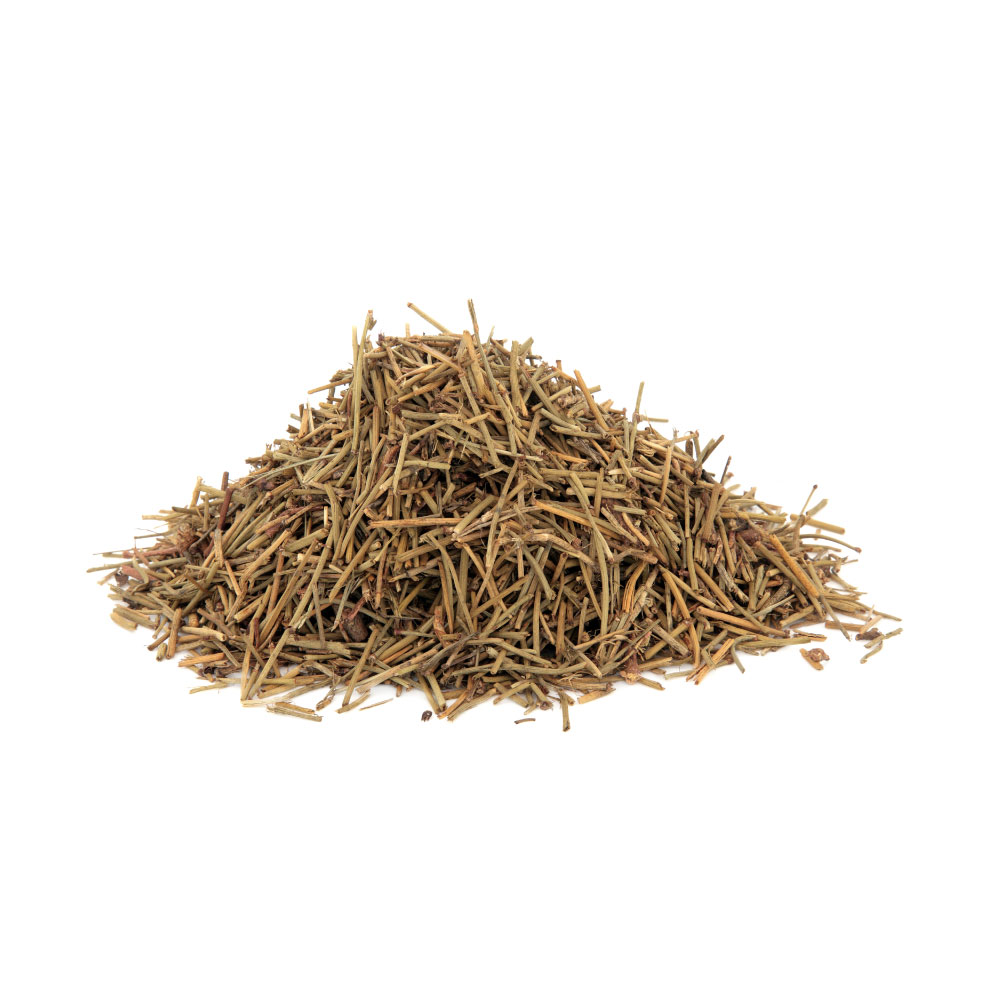
Ephedra (Ephedra sinica), Chinese Ma Huang — an alkaloid-rich bronchodilator and stimulant traditionally used for asthma and congestion.
Ephedra Summary
Ephedra is commonly known by its Chinese name “Ma Huang” due to its popularity in Chinese medicine.
It has been used medicinally for at least 5000 years in China and has been used in surrounding Asian countries like India for a very long time as well.
The main components of ephedra are a class of chemicals known as alkaloids. These alkaloids are similar in structure and function to the hormone known as epinephrine (Adrenalin). They act as sympathomimetics, which increases heart rate, blood pressure, and promote the bronchioles (airway) to dilate. This allows more air into the lungs. This last action is the reason behind ephedra’s common use on asthma, and bronchitis-related conditions.
This herb is incredibly useful to a trained herbalist but is easily abused. This has led to its banning in Australia for safety reasons. Overdose of ephedra can lead to dangerously high blood pressure which can lead to convulsions, coma, and death if not treated promptly. The problem is not in the herb itself, but the carelessness of dose.
Following a strict maximum dosage and paying close attention to how it affects your body individually will eliminate any risk of this happening.
What Is Ephedra Used For?
Ephedra is not much used in Western herbal medicine — primarily due to some bad press around people abusing the plant for its ephedrine content. Ephedrine is a central nervous system stimulant. People use ephedra similar to other stimulant drugs like modafinil, Ritalin, or Adderall.
Ephedrine stimulates the sympathetic nervous system — activating the adrenergic receptors throughout the cardiopulmonary system. One of the results of this stimulation is a feeling of euphoria, intense focus and concentration, and elevated energy levels. This has led to a large number of people using the herb as a pre-workout, recreational drug, or to support study efforts. The unfortunate result of this is the same as any stimulant drug abuse — overburdened liver and adrenals and disorientation in the sleep-wake cycle.
The FDA banned ephedra-containing dietary supplements in 2004 on the basis of the risk-to-benefit balance, not a lack of efficacy — ephedrine and pseudoephedrine remain separately regulated as pharmaceuticals 1,5Reference 1Meta-analysisEfficacy and safety of ephedra and ephedrine for weight loss and athletic performance: a meta-analysis — meta-analysisView study →Reference 5ObservationalAdverse cardiovascular and central nervous system events associated with dietary supplements containing ephedra alkaloids — cohort/observational case seriesView study →.
The medicinal uses for ephedra involve the ephedrine content as well but in smaller, more controlled doses. The ability to interact with the central nervous system so reliably makes it a beneficial herb.
One of the most important applications of this is asthma. Ephedra stimulates the adrenergic system in the lungs, causing the bronchioles to dilate — allowing more air into the lungs.
More long term use of this herb isn’t recommended, but for shorter bursts (2 weeks or less) ephedra is useful as a mild stimulant (in small doses) for supporting weight loss programs in combination with a nutritional analysis and diet plan.
Traditional Uses
Western Herbal Medicine
One of the more recent uses of ephedra is as a weight loss supplement for its ability to stimulate the CNS and increase metabolism 6Reference 6ReviewEphedra in perspective — a current review — reviewView study →.
Traditional Chinese Medicine
The use of ephedra dates back thousands of years, especially in China where it has been used for at least 5000 years as medicine. Mention of this herb has been found in some of the Hindu Vedas as well 25,26,28Reference 25Medical herbalism: The science and practice of herbal medicineReference 26Medicinal natural products: a biosynthetic approachReference 28Molecular analysis and chemical evaluation of Ephedra plants in Mongolia.
In total, its traditional usage across Asia includes the treatment of asthma, nasal congestion, hypotension, urinary incontinence 7Reference 7ReviewChemical composition of various Ephedra species — reviewView study →.
Taste
Acrid, pungent, slightly bitter 29,30Reference 29Introduction to Chinese Materia Medica (3rd ed.). (PgReference 30An Illustrated Chinese Materia Medica
Energy
Warm 29,30Reference 29Introduction to Chinese Materia Medica (3rd ed.). (PgReference 30An Illustrated Chinese Materia Medica
Channels
Lung and bladder 30Reference 30An Illustrated Chinese Materia Medica
Actions
Promotes sweating to disperse cold, diffuses the lungs to relieve wheezing, promotes the flow of lung Qi, reduces swelling by increasing urination. 29,30Reference 29Introduction to Chinese Materia Medica (3rd ed.). (PgReference 30An Illustrated Chinese Materia Medica.
Indications
Colds with wind-cold pattern (especially with lack of sweating), chest oppression, cough, wheezing due to excess, wind edema. 29Reference 29Introduction to Chinese Materia Medica (3rd ed.). (Pg.
Cautions & Safety
People who sweat easily (it’s a strong diaphoretic), deficiency type asthma, weak constitution, hypertension, or heart disease 29Reference 29Introduction to Chinese Materia Medica (3rd ed.). (Pg. Avoid large doses 30Reference 30An Illustrated Chinese Materia Medica.
Botany
Ma huang is one of the odder plants in the herbal repertoire, because botanically it is not an herb in the everyday sense and not a flowering plant at all. Ephedra sinica belongs to the gnetophytes, an old lineage of cone-bearing gymnosperms — kin, at a distance, to pines rather than to mints or daisies. What you see is a low, tangled shrub, rarely knee-high, that looks almost leafless: its true leaves are shrunk to papery scales ringing each joint, so the plant carries on its life through the stems themselves.
Those stems are the whole story for a practitioner. Slender, cylindrical and vividly green, they are divided into segments by swollen nodes, snapping apart at the joints rather like miniature horsetail. This jointed green stem — gathered, dried and cut — is the classic drug “ma huang.” The plant is dioecious, so male and female shrubs are separate, and the pollinated females ripen small red fleshy cones bearing a pair of dark seeds; but it is the aerial green stem, not the cone or the root, that the herbalist reaches for.
Worth keeping straight: Ephedra is a large, worldwide genus of these broom-like desert shrubs, and they are not interchangeable. The North American species — E. viridis, E. nevadensis and their relatives, sometimes sold as “Mormon tea” — look similar but are low in or essentially free of the ephedrine-type alkaloids that make the Asian E. sinica both potent and regulated, which is why traditional Chinese practice singled out the northern-Chinese and Mongolian species specifically.
Distribution
Ma huang is a plant of the cold, dry interior of northeast Asia — native to Mongolia and the northern provinces of China, where it colonizes arid steppe, gravelly riverbeds and open highland slopes. It is a hardy desert survivor, tolerant of thin soils and hard winters, and today it is both wild-collected and cultivated to supply the ephedrine trade.
Growing Conditions
- Full sun and sharp drainage are essential — this is a desert and steppe shrub that resents wet feet and shade.
- Lean, gritty, sandy or gravelly soil suits it far better than rich garden loam.
- Very drought-tolerant once established; water sparingly and let the soil dry between waterings.
- Cold-hardy into roughly USDA zone 5, reflecting its harsh northern-China and Mongolian winters.
- Full cultivation detail lives on the companion farm-wiki grow guide for Ephedra sinica (link to be added once that project’s public URL is confirmed).
Harvesting, Collection & Preparation
The best ephedra is reported to come from northern China, with the highest quality grown in Shanxi, Gansu, Shaanxi, and Qinghai provinces. Good quality ephedra can be identified as light green; dried, thick-stemmed with a solid centre. 29Reference 29Introduction to Chinese Materia Medica (3rd ed.). (Pg. Total alkaloid content of the dried stem varies widely with species, harvest time and provenance (roughly 0.5–2.5%), which is what makes standardisation — and therefore safe dosing — difficult 7Reference 7ReviewChemical composition of various Ephedra species — reviewView study →.
Pharmacology & Research
Ephedra is unusual among medicinal herbs: its pharmacology is essentially the pharmacology of two well-characterised drugs it contains, ephedrine and pseudoephedrine, so the human evidence for its stimulant, bronchodilator and decongestant actions is really the evidence for those isolated alkaloids rather than for the whole stem 6,7Reference 6ReviewEphedra in perspective — a current review — reviewView study →Reference 7ReviewChemical composition of various Ephedra species — reviewView study →. For weight loss the picture is genuinely clinical — several placebo-controlled trials and two meta-analyses show a modest but real effect, almost always for ephedrine combined with caffeine, and it was safety concerns rather than lack of efficacy that led to the 2004 US ban 1,2,3,5Reference 1Meta-analysisEfficacy and safety of ephedra and ephedrine for weight loss and athletic performance: a meta-analysis — meta-analysisView study →Reference 2RCTHerbal ephedra/caffeine for weight loss: a 6-month randomised, double-blind, placebo-controlled trial — randomised controlled trialView study →Reference 3Meta-analysisEfficacy and safety of ephedra-containing oral medications for weight reduction: a systematic review, meta-analysis and dose-response analysis — systematic review, meta-analysisView study →Reference 5ObservationalAdverse cardiovascular and central nervous system events associated with dietary supplements containing ephedra alkaloids — cohort/observational case seriesView study →. The most interesting recent direction reverses the usual assumption: Japanese groups have shown that an ephedrine-alkaloid-free extract retains anti-inflammatory, analgesic and antiviral activity, pointing to non-alkaloid constituents (condensed tannins, polysaccharides) as a safer therapeutic fraction 11,15,16,17,18Reference 11In vitroEphedrine alkaloids-free Ephedra Herb extract: a safer alternative to ephedra with comparable analgesic, anticancer and anti-influenza activity — in vitro, animal modelView study →Reference 15In vitroAntiviral effect of ephedrine alkaloids-free Ephedra Herb extract against SARS-CoV-2 in vitro — in vitroView study →Reference 16In vitroAntiviral effect of alkaloids-free Ephedra Herb extract on respiratory syncytial virus infection — in vitroView study →Reference 17RCTSafety and efficacy of ephedrine alkaloids-free Ephedra Herb extract (EFE) for mild COVID-19: a randomised controlled trial — randomised controlled trialView study →Reference 18AnimalPreventive and therapeutic effects of ephedrine alkaloids-free Ephedra Herb extract on paclitaxel-induced peripheral neuropathic pain — animal modelView study →. Everything outside the alkaloid actions — antioxidant, hepatoprotective, hypoglycaemic, antiarthritic — remains preclinical, often in Ephedra alata or root material rather than the E. sinica stem used medicinally, and total alkaloid content of that stem varies widely (roughly 0.5–2.5%), so dose and effect are hard to standardise 7,22Reference 7ReviewChemical composition of various Ephedra species — reviewView study →Reference 22ReviewPhytochemistry and pharmacology of the genus Ephedra — reviewView study →.
- Best-supported: modest weight loss from ephedrine + caffeine, backed by RCTs and two meta-analyses 1,2,3Reference 1Meta-analysisEfficacy and safety of ephedra and ephedrine for weight loss and athletic performance: a meta-analysis — meta-analysisView study →Reference 2RCTHerbal ephedra/caffeine for weight loss: a 6-month randomised, double-blind, placebo-controlled trial — randomised controlled trialView study →Reference 3Meta-analysisEfficacy and safety of ephedra-containing oral medications for weight reduction: a systematic review, meta-analysis and dose-response analysis — systematic review, meta-analysisView study →; bronchodilation and nasal decongestion, resting on the established drug pharmacology of ephedrine and pseudoephedrine 6,23Reference 6ReviewEphedra in perspective — a current review — reviewView study →Reference 23RCTEfficacy and safety of loratadine plus pseudoephedrine in patients with seasonal allergic rhinitis and mild asthma — randomised controlled trialView study →.
- Emerging, worth watching: the alkaloid-free extract (EFE) shows analgesic, anti-influenza and anti-coronavirus activity in vitro and in one small COVID-19 RCT — a potential route to ephedra’s benefits without the cardiovascular risk 11,15,16,17Reference 11In vitroEphedrine alkaloids-free Ephedra Herb extract: a safer alternative to ephedra with comparable analgesic, anticancer and anti-influenza activity — in vitro, animal modelView study →Reference 15In vitroAntiviral effect of ephedrine alkaloids-free Ephedra Herb extract against SARS-CoV-2 in vitro — in vitroView study →Reference 16In vitroAntiviral effect of alkaloids-free Ephedra Herb extract on respiratory syncytial virus infection — in vitroView study →Reference 17RCTSafety and efficacy of ephedrine alkaloids-free Ephedra Herb extract (EFE) for mild COVID-19: a randomised controlled trial — randomised controlled trialView study →.
- Mechanistically thin: antioxidant, hepatoprotective and hypoglycaemic claims rest on animal or in-vitro work, frequently in non-sinica species or the non-medicinal root 8,19,20,21Reference 8AnimalIsolation and hypoglycemic activity of ephedrans A, B, C, D and E, glycans of Ephedra distachya herbs — animal modelView study →Reference 19AnimalProtective effects of Ephedra pachyclada extract on mouse models of carbon tetrachloride-induced chronic and acute liver failure — animal modelView study →Reference 20AnimalMethanolic extract of Ephedra alata ameliorates cisplatin-induced nephrotoxicity and hepatotoxicity through reducing oxidative stress and genotoxicity — animal modelView study →Reference 21In vitroWater-soluble polysaccharides from Ephedra alata stems: structural characterisation, functional properties and antioxidant activity — in vitroView study →.
- The caveat: the whole-herb human evidence is inseparable from — and limited by — its ephedrine content; the herb is regulated or banned in several jurisdictions and carries a real cardiovascular and CNS risk that caps its therapeutic use 1,5Reference 1Meta-analysisEfficacy and safety of ephedra and ephedrine for weight loss and athletic performance: a meta-analysis — meta-analysisView study →Reference 5ObservationalAdverse cardiovascular and central nervous system events associated with dietary supplements containing ephedra alkaloids — cohort/observational case seriesView study →.
1. Weight loss & metabolism
This is the one indication with genuine human trial data. A 6-month double-blind RCT (n=167) of a Ma Huang/kola-nut supplement delivering 90 mg ephedrine alkaloids plus 192 mg caffeine daily produced greater loss of body weight (−5.3 vs −2.6 kg) and body fat than placebo 2Reference 2RCTHerbal ephedra/caffeine for weight loss: a 6-month randomised, double-blind, placebo-controlled trial — randomised controlled trialView study →. The pivotal 2003 JAMA meta-analysis concluded that ephedra or ephedrine promotes short-term weight loss of roughly 0.9 kg/month over placebo, but found no data supporting long-term use and flagged a 2–3-fold increase in psychiatric, autonomic, gastrointestinal and heart-palpitation events 1Reference 1Meta-analysisEfficacy and safety of ephedra and ephedrine for weight loss and athletic performance: a meta-analysis — meta-analysisView study →. A 2024 meta-analysis of 16 RCTs reaffirmed a significant reduction in BMI, body weight and waist circumference 3Reference 3Meta-analysisEfficacy and safety of ephedra-containing oral medications for weight reduction: a systematic review, meta-analysis and dose-response analysis — systematic review, meta-analysisView study →. The effect is driven by adrenergic stimulation of metabolic rate and thermogenesis, and is consistently larger when ephedrine is combined with caffeine 4Reference 4ReviewObesity and thermogenesis related to the consumption of caffeine, ephedrine, capsaicin and green tea — reviewView study →. The FDA banned ephedra-containing dietary supplements in 2004 on the basis of the risk-to-benefit balance, not an absence of efficacy 1,5Reference 1Meta-analysisEfficacy and safety of ephedra and ephedrine for weight loss and athletic performance: a meta-analysis — meta-analysisView study →Reference 5ObservationalAdverse cardiovascular and central nervous system events associated with dietary supplements containing ephedra alkaloids — cohort/observational case seriesView study →.
Gap: The benefit is small, was almost never demonstrated for the herb alone (ephedrine + caffeine was the usual combination), and is offset by a documented signal for serious cardiovascular and CNS adverse events.
2. Bronchodilation & anti-asthmatic
Ephedra’s classical use for asthma and wheezing rests on ephedrine, a mixed α- and β-adrenergic agonist that relaxes bronchial smooth muscle and opens the airways — the same mechanism as modern β-agonist inhalers, though ephedrine is far less selective and orally active 6,24Reference 6ReviewEphedra in perspective — a current review — reviewView study →Reference 24ReviewEphedrae Herba: a review of its phytochemistry, pharmacology, clinical application and alkaloid toxicity — reviewView study →. This bronchodilator pharmacology is well established for the isolated alkaloid and aligns with millennia of traditional Ma Huang use for wind-cold patterns with wheezing. What is largely missing is modern controlled evidence for the crude herb: ephedrine was superseded in asthma care by selective, inhaled β2-agonists precisely because its non-selective action drives cardiac and CNS side effects 6Reference 6ReviewEphedra in perspective — a current review — reviewView study →.
Gap: The mechanism and the isolated-drug evidence are solid, but there are essentially no contemporary RCTs of standardised whole-herb ephedra for asthma, and safer selective bronchodilators have replaced it clinically.
3. Nasal decongestant
The stem’s second major alkaloid, pseudoephedrine, is a proven oral decongestant: it constricts nasal mucosal vessels through α-adrenergic agonism and has extensive human trial support as a standalone drug and in combination products for allergic rhinitis and the common cold 7,23Reference 7ReviewChemical composition of various Ephedra species — reviewView study →Reference 23RCTEfficacy and safety of loratadine plus pseudoephedrine in patients with seasonal allergic rhinitis and mild asthma — randomised controlled trialView study →. A double-blind RCT of loratadine plus pseudoephedrine, for example, showed significant relief of nasal congestion versus placebo in seasonal allergic rhinitis 23Reference 23RCTEfficacy and safety of loratadine plus pseudoephedrine in patients with seasonal allergic rhinitis and mild asthma — randomised controlled trialView study →. Ephedrine and pseudoephedrine together make up more than 80% of the total alkaloid fraction, so the crude herb carries the active decongestant — but the human evidence is for the purified alkaloid at a controlled dose, not for a tea or tincture of variable alkaloid content 7Reference 7ReviewChemical composition of various Ephedra species — reviewView study →.
Gap: Efficacy is demonstrated for isolated pseudoephedrine; the whole herb delivers an unstandardised and variable dose of the same molecule, so the clean trial data don’t transfer directly to herbal preparations.
4. Stimulant & athletic performance
Ephedrine is a central nervous system stimulant that activates adrenergic receptors, raising alertness, heart rate and energy expenditure — the basis for ephedra’s use as a pre-workout and study aid, and its potential for abuse 4,6Reference 4ReviewObesity and thermogenesis related to the consumption of caffeine, ephedrine, capsaicin and green tea — reviewView study →Reference 6ReviewEphedra in perspective — a current review — reviewView study →. The evidence for genuine performance enhancement is weak: the 2003 meta-analysis found only a handful of small, short trials and concluded there were insufficient data to support an ergogenic effect beyond very short-term measures, most positive signals again involving co-administered caffeine 1,4Reference 1Meta-analysisEfficacy and safety of ephedra and ephedrine for weight loss and athletic performance: a meta-analysis — meta-analysisView study →Reference 4ReviewObesity and thermogenesis related to the consumption of caffeine, ephedrine, capsaicin and green tea — reviewView study →.
Gap: The stimulant pharmacology is real, but controlled evidence for meaningful athletic-performance gains is sparse and inconsistent, and the stimulant effect is the same one that drives the herb’s cardiovascular risk.
6. Anti-inflammatory & antiarthritic
Ephedra carries anti-inflammatory activity in constituents distinct from the stimulant alkaloids. From the roots, the compounds ephedrannin A and ephedrannin B inhibited LPS-induced inflammatory mediators in macrophages by suppressing NF-κB signalling in vitro 9Reference 9In vitroEphedrannin A and B from roots of Ephedra sinica inhibit lipopolysaccharide-induced inflammatory mediators — in vitroView study →. Separately, an acidic stem polysaccharide (ESP-B4) reduced pro-inflammatory cytokines and NF-κB p65 nuclear translocation via TLR4 in cultured cells and improved adjuvant-induced arthritis in rats 10Reference 10In vitroA pure polysaccharide (ESP-B4) from Ephedra sinica treating arthritis and inhibiting cytokine expression via TLR4/NF-κB — animal model, in vitroView study →. The alkaloid-free extract also shows anti-inflammatory and analgesic activity, including prevention of paclitaxel-induced neuropathic pain in mice, attributed to non-alkaloid macromolecules 11,18Reference 11In vitroEphedrine alkaloids-free Ephedra Herb extract: a safer alternative to ephedra with comparable analgesic, anticancer and anti-influenza activity — in vitro, animal modelView study →Reference 18AnimalPreventive and therapeutic effects of ephedrine alkaloids-free Ephedra Herb extract on paclitaxel-induced peripheral neuropathic pain — animal modelView study →.
Gap: The mechanism (NF-κB/TLR4 downregulation) is well mapped but the evidence is entirely animal and cell-based, and much of it comes from root or isolated-fraction material rather than the whole medicinal stem.
7. Antioxidant
Antioxidant activity is concentrated in the non-alkaloid, water-soluble fractions. Polysaccharides isolated from Ephedra alata stems showed concentration-dependent radical-scavenging activity in standard in-vitro assays (DPPH, reducing power) 21Reference 21In vitroWater-soluble polysaccharides from Ephedra alata stems: structural characterisation, functional properties and antioxidant activity — in vitroView study →. In animal models, methanolic E. alata extract restored glutathione, superoxide dismutase and catalase and lowered lipid peroxidation in cisplatin-treated rats, and E. pachyclada extract showed DPPH and β-carotene bleaching activity in vitro 19,20Reference 19AnimalProtective effects of Ephedra pachyclada extract on mouse models of carbon tetrachloride-induced chronic and acute liver failure — animal modelView study →Reference 20AnimalMethanolic extract of Ephedra alata ameliorates cisplatin-induced nephrotoxicity and hepatotoxicity through reducing oxidative stress and genotoxicity — animal modelView study →.
Gap: Findings are in-vitro or animal, use non-medicinal species (E. alata, E. pachyclada) rather than E. sinica, and there is no human antioxidant data.
8. Hepatoprotective
Related to the antioxidant fraction, ephedra extracts protect the liver in chemically-induced injury models. Ephedra pachyclada extract reduced markers of both acute and chronic carbon-tetrachloride liver damage in mice 19Reference 19AnimalProtective effects of Ephedra pachyclada extract on mouse models of carbon tetrachloride-induced chronic and acute liver failure — animal modelView study →, and E. alata methanolic extract attenuated cisplatin-induced hepatotoxicity and genotoxicity in rats by lowering oxidative stress 20Reference 20AnimalMethanolic extract of Ephedra alata ameliorates cisplatin-induced nephrotoxicity and hepatotoxicity through reducing oxidative stress and genotoxicity — animal modelView study →. The effect is ascribed to free-radical scavenging by non-alkaloid constituents rather than to ephedrine.
Gap: All evidence is from rodent toxicant models in non-sinica species; no clinical liver-protective data exist, and the stimulant alkaloids of the medicinal stem carry their own cardiovascular liabilities.
9. Hypoglycaemic
The glycans ephedrans A–E, isolated from Ephedra distachya, lowered blood glucose in animals in the foundational 1985 study that named them 8Reference 8AnimalIsolation and hypoglycemic activity of ephedrans A, B, C, D and E, glycans of Ephedra distachya herbs — animal modelView study →. Later reviews list hypoglycaemic activity among the herb’s non-alkaloid actions, but the primary data trace back largely to that single early report 22Reference 22ReviewPhytochemistry and pharmacology of the genus Ephedra — reviewView study →.
Gap: Essentially one old animal study, in a non-medicinal species, unreplicated in humans — a constituent-level signal rather than a clinical indication.
Mechanisms
| Mechanism | Drives | Key compounds |
|---|---|---|
| α- and β-adrenergic agonism (sympathomimetic) | bronchodilationnasal decongestionCNS stimulationthermogenesisweight loss | ephedrine, pseudoephedrine |
| NF-κB ↓, TLR4 ↓, pro-inflammatory cytokine ↓ | anti-inflammatoryantiarthritic | ephedrannin A, ephedrannin B, ESP-B4 polysaccharide |
| c-Met / HGF inhibition | analgesicanticancer (alkaloid-free extract) | condensed tannins |
| Free-radical scavenging | antioxidanthepatoprotective | polysaccharides |
| Glycan-mediated glucose lowering | hypoglycaemic | ephedrans (A–E) |
Clinical trials
Registered trials of the whole herb are effectively absent — the historical weight-loss RCTs predate mandatory registration and the dietary-supplement pathway was curtailed by the 2004 US ban; the only recent controlled human data come from a small alkaloid-free-extract COVID-19 RCT and from influenza trials of the multi-herb formula maoto.
| Completed | Planned | Terminated | Preclinical |
|---|---|---|---|
| 16+weight-loss RCTs (meta-analysed) + maoto influenza RCTs + 1 EFE COVID-19 RCT | 0identified | Supplement programme curtailed by 2004 FDA ban | Dozens(in vitro / animal) |
Last checked: July 2026.
Phytochemistry
Ephedra’s activity is defined by its phenylpropylamine alkaloids — ephedrine and its stereoisomer pseudoephedrine — which together usually make up more than 80% of the total alkaloid fraction and are responsible for the herb’s sympathomimetic, bronchodilator and stimulant actions 7Reference 7ReviewChemical composition of various Ephedra species — reviewView study →. These two amines are the regulated actives: it is their ephedrine content that led to ephedra being restricted or banned in several jurisdictions. Dried stem typically carries 0.5–2.5% total alkaloids, with pharmacopoeial material required to hold at least ~0.7% 7Reference 7ReviewChemical composition of various Ephedra species — reviewView study →.
Beyond the alkaloids, the stems contain flavonoids, the hypoglycaemic stem polysaccharides known as ephedrans (A–E) 8Reference 8AnimalIsolation and hypoglycemic activity of ephedrans A, B, C, D and E, glycans of Ephedra distachya herbs — animal modelView study →, and minor quinoline-2-carboxylic acids 31Reference 31Quinoline-2-carboxylic acids from Ephedra species. The non-alkaloid, water-soluble polysaccharide fraction carries antioxidant and hypolipidaemic activity independent of the stimulant alkaloids 32Reference 32Studies on extraction of water-soluble polysaccharides and the oxygen-free-radical-scavenging function of ephedra. Distinct from the stem, the roots (ma huang gen, a separate traditional material with an opposite antihidrotic action) supply the anti-inflammatory proanthocyanidins ephedrannin A and ephedrannin B 9Reference 9In vitroEphedrannin A and B from roots of Ephedra sinica inhibit lipopolysaccharide-induced inflammatory mediators — in vitroView study →.
Constituent Summary
Alkaloid figures are percent of dried stem; ephedrine/pseudoephedrine are also expressed as their share of the total alkaloid fraction. Content varies markedly with species, harvest time and origin.
Amine3 compounds3 with data
Other Alkaloid1 compoundno data
Phenolic1 compoundno data
Proanthocyanidin2 compounds2 with data
Clinical Applications
Ephedra is not recommended for general or self-directed therapeutic use, and is regulated or banned as a self-directed remedy in several jurisdictions — experienced supervision is required to use it safely. Clinically, its documented uses are bronchodilation in asthma and wheezing (the traditional Ma Huang indication), nasal decongestion, and — historically — as a caffeine-paired weight-loss stimulant, the use that drove the 2004 US dietary-supplement ban 1,5,6Reference 1Meta-analysisEfficacy and safety of ephedra and ephedrine for weight loss and athletic performance: a meta-analysis — meta-analysisView study →Reference 5ObservationalAdverse cardiovascular and central nervous system events associated with dietary supplements containing ephedra alkaloids — cohort/observational case seriesView study →Reference 6ReviewEphedra in perspective — a current review — reviewView study →. Modern practice has largely replaced the crude herb with the isolated alkaloids (ephedrine, pseudoephedrine) at controlled doses and with safer, selective bronchodilators.
Safety & Pregnancy
Ephedra owes both its activity and its danger to the sympathomimetic alkaloids ephedrine and pseudoephedrine — it carries a real cardiovascular and CNS risk, is banned or regulated as a dietary supplement in several jurisdictions, and is for short-term, expert-supervised use only.
- Serious cardiovascular & CNS risk. Linked to a 2–3× excess of cardiac/psychiatric events and to reports of MI, arrhythmia, stroke and death.
- Fatal-risk combinations. Must not be combined with MAOIs (can precipitate fatal hypertension) or cardiac glycosides; caffeine adds dangerous stimulation.
- Widely contraindicated. Cardiovascular disease, hypertension, thyroid disease, diabetes, prostate enlargement; not for use in children.
- Regulated or banned. Prohibited as a dietary supplement in several jurisdictions (US FDA, 2004); use short-term and under supervision only.
- Quality / adulteration. Commercial ephedra products have been adulterated with synthetic alkaloids.
Full safety & interactions detail
Ephedra owes both its activity and its danger to the sympathomimetic alkaloids ephedrine and pseudoephedrine, and it is regulated or banned as a dietary supplement in several jurisdictions — the US FDA prohibited ephedra-containing supplements in 2004 after clinical and post-marketing data linked the alkaloids to a 2–3-fold excess of psychiatric, autonomic and cardiac events, and to case reports of myocardial infarction, arrhythmia, stroke and death 1,5Reference 1Meta-analysisEfficacy and safety of ephedra and ephedrine for weight loss and athletic performance: a meta-analysis — meta-analysisView study →Reference 5ObservationalAdverse cardiovascular and central nervous system events associated with dietary supplements containing ephedra alkaloids — cohort/observational case seriesView study →. It is contraindicated in cardiovascular disease, hypertension, thyroid disease, diabetes and prostate enlargement, and must not be combined with monoamine oxidase inhibitors, where it can precipitate fatal hypertension, or with cardiac glycosides 5,6Reference 5ObservationalAdverse cardiovascular and central nervous system events associated with dietary supplements containing ephedra alkaloids — cohort/observational case seriesView study →Reference 6ReviewEphedra in perspective — a current review — reviewView study →. Adulteration of commercial ephedra products with synthetic alkaloids is a documented quality risk 7Reference 7ReviewChemical composition of various Ephedra species — reviewView study →. Use should be short-term only and under expert supervision; an ephedrine-alkaloid-free extract has been developed specifically to retain therapeutic activity while removing these adrenergic hazards 11,17Reference 11In vitroEphedrine alkaloids-free Ephedra Herb extract: a safer alternative to ephedra with comparable analgesic, anticancer and anti-influenza activity — in vitro, animal modelView study →Reference 17RCTSafety and efficacy of ephedrine alkaloids-free Ephedra Herb extract (EFE) for mild COVID-19: a randomised controlled trial — randomised controlled trialView study →.
The single most clinically relevant interaction in practice is additive cardiovascular and CNS stimulation with caffeine — the combination used in nearly all the weight-loss products implicated in adverse events. Guanethidine can enhance ephedra’s sympathomimetic effect, and co-administration with halothane may provoke arrhythmias 5,6Reference 5ObservationalAdverse cardiovascular and central nervous system events associated with dietary supplements containing ephedra alkaloids — cohort/observational case seriesView study →Reference 6ReviewEphedra in perspective — a current review — reviewView study →. It is not for use in children.
Scope of assessment: the important interactions here are pharmacodynamic (MAOIs, cardiac glycosides, caffeine, guanethidine), not CYP450-mediated — no major cytochrome-P450 interaction is established, so the cyp450 field is left blank rather than implying clearance from an absence of data.
Contraindications
- Cardiovascular conditions and hypertension
- Thyroid conditions
- Enlarged prostate
- Diabetes
- Pregnancy & lactation
- Not for use in children
Avoid. Ephedra is contraindicated in pregnancy and lactation. As a potent sympathomimetic it can raise maternal blood pressure and heart rate and reduce uterine and placental blood flow; the alkaloids cross into breast milk. Controlled safety data in pregnancy are absent, and given the documented cardiovascular risk in adults the herb should not be used — this is a contraindication on pharmacological grounds, not a finding of tested safety.
Dosage
In research, ephedra’s effects are almost always measured for a standardised or isolated dose of its alkaloids — or, in the newest work, for an alkaloid-free extract — rather than for the crude stem, so these research doses are not whole-herb recommendations.
| Indication | Preparation | Dose | Est. dried-herb equivalent | Source |
|---|---|---|---|---|
| Weight loss | Ma Huang/kola-nut supplement (ephedrine alkaloids + caffeine) | 90 mg ephedrine alkaloids + 192 mg caffeine/day, 6 months | ~3.6–18 g dried stem/day (assuming stem ≈ 0.5–2.5% total alkaloids); wide range reflects alkaloid variability | 2Reference 2RCTHerbal ephedra/caffeine for weight loss: a 6-month randomised, double-blind, placebo-controlled trial — randomised controlled trialView study → |
| Weight loss (pooled) | Ephedra / ephedrine ± caffeine | ~0.9 kg/month greater loss than placebo (meta-analysis) | — (heterogeneous preparations) | 1,3Reference 1Meta-analysisEfficacy and safety of ephedra and ephedrine for weight loss and athletic performance: a meta-analysis — meta-analysisView study →Reference 3Meta-analysisEfficacy and safety of ephedra-containing oral medications for weight reduction: a systematic review, meta-analysis and dose-response analysis — systematic review, meta-analysisView study → |
| Antiviral (COVID-19) | Ephedrine-alkaloids-free extract (EFE) | EFE equivalent to 6 g Ephedra Herb/day, 14 days | ~6 g dried stem equivalent (as stated by trial) | 17Reference 17RCTSafety and efficacy of ephedrine alkaloids-free Ephedra Herb extract (EFE) for mild COVID-19: a randomised controlled trial — randomised controlled trialView study → |
The estimated dried-herb equivalent is a rough back-conversion on a stated assumption (dried stem ≈ 0.5–2.5% total alkaloids); it is a guide only, not a dosing recommendation, and the wide range reflects real alkaloid variability between batches and species.
Traditional Dosage
Traditional whole-herb doses come from the classical reference texts, not the trials, and are given here for context only — ephedra requires expert supervision and is not for self-directed use.
| System | Preparation | Dose |
|---|---|---|
| Traditional Chinese Medicine | Dried stem, decoction | ~2–9 g/day (classical Ma Huang range); expert supervision required 29,30Reference 29Introduction to Chinese Materia Medica (3rd ed.). (PgReference 30An Illustrated Chinese Materia Medica |
| Western herbal | Tincture / liquid extract | Restricted; regulated or banned in several jurisdictions — not for self-directed use |
References
- Shekelle, P. G., Hardy, M. L., Morton, S. C., et al. (2003). Efficacy and safety of ephedra and ephedrine for weight loss and athletic performance: a meta-analysis — meta-analysis. JAMA. https://pubmed.ncbi.nlm.nih.gov/12672771/
- Boozer, C. N., Daly, P. A., Homel, P., et al. (2002). Herbal ephedra/caffeine for weight loss: a 6-month randomised, double-blind, placebo-controlled trial — randomised controlled trial. Int J Obes. https://pubmed.ncbi.nlm.nih.gov/12032741/
- Cho, H., Kim, J., et al. (2024). Efficacy and safety of ephedra-containing oral medications for weight reduction: a systematic review, meta-analysis and dose-response analysis — systematic review, meta-analysis. Front Pharmacol. https://pubmed.ncbi.nlm.nih.gov/39539620/
- Diepvens, K., Westerterp, K. R., & Westerterp-Plantenga, M. S. (2007). Obesity and thermogenesis related to the consumption of caffeine, ephedrine, capsaicin and green tea — review. Am J Physiol Regul Integr Comp Physiol. https://pubmed.ncbi.nlm.nih.gov/16840650/
- Haller, C. A., & Benowitz, N. L. (2000). Adverse cardiovascular and central nervous system events associated with dietary supplements containing ephedra alkaloids — cohort/observational case series. N Engl J Med. https://pubmed.ncbi.nlm.nih.gov/11117974/
- Abourashed, E. A., El-Alfy, A. T., Khan, I. A., & Walker, L. (2003). Ephedra in perspective — a current review — review. Phytother Res. https://pubmed.ncbi.nlm.nih.gov/12916063/
- Ibragic, S., & Sofić, E. (2015). Chemical composition of various Ephedra species — review. Bosn J Basic Med Sci. https://pubmed.ncbi.nlm.nih.gov/26295290/
- Konno, C., Mizuno, T., & Hikino, H. (1985). Isolation and hypoglycemic activity of ephedrans A, B, C, D and E, glycans of Ephedra distachya herbs — animal model. Planta Med. https://pubmed.ncbi.nlm.nih.gov/4034736/
- Kim, I. S., Park, Y. J., Yoon, S. J., & Lee, H. B. (2010). Ephedrannin A and B from roots of Ephedra sinica inhibit lipopolysaccharide-induced inflammatory mediators — in vitro. Int Immunopharmacol. https://pubmed.ncbi.nlm.nih.gov/20939997/
- Wang, Q., Shu, Z., Xu, B., et al. (2016). A pure polysaccharide (ESP-B4) from Ephedra sinica treating arthritis and inhibiting cytokine expression via TLR4/NF-κB — animal model, in vitro. Int J Biol Macromol. https://pubmed.ncbi.nlm.nih.gov/26835987/
- Hyuga, S., Hyuga, M., Oshima, N., et al. (2016). Ephedrine alkaloids-free Ephedra Herb extract: a safer alternative to ephedra with comparable analgesic, anticancer and anti-influenza activity — in vitro, animal model. J Nat Med. https://pubmed.ncbi.nlm.nih.gov/26943796/
- Nabeshima, S., Kashiwagi, K., Ajisaka, K., et al. (2012). A randomised, controlled trial comparing traditional herbal medicine (maoto) and neuraminidase inhibitors in influenza — randomised controlled trial. J Infect Chemother. https://pubmed.ncbi.nlm.nih.gov/22350323/
- Yoshino, T., Arita, R., Horiba, Y., & Watanabe, K. (2019). The use of maoto (Ma-Huang-Tang) to alleviate flu symptoms: a systematic review and meta-analysis — systematic review, meta-analysis. BMC Complement Altern Med. https://pubmed.ncbi.nlm.nih.gov/30885188/
- Kubo, T., & Nishimura, H. (2007). Antipyretic effect of Mao-to, a Japanese herbal medicine, for treatment of type A influenza infection in children — cohort/observational. Phytomedicine. https://pubmed.ncbi.nlm.nih.gov/17141491/
- Uema, M., Yonemitsu, K., Momose, H., et al. (2023). Antiviral effect of ephedrine alkaloids-free Ephedra Herb extract against SARS-CoV-2 in vitro — in vitro. Microorganisms. https://pubmed.ncbi.nlm.nih.gov/36838499/
- Fujikane, A., Sakamoto, A., Fujikane, R., et al. (2024). Antiviral effect of alkaloids-free Ephedra Herb extract on respiratory syncytial virus infection — in vitro. Front Pharmacol. https://pubmed.ncbi.nlm.nih.gov/39035985/
- Odaguchi, H., Hyuga, S., Sekine, M., et al. (2025). Safety and efficacy of ephedrine alkaloids-free Ephedra Herb extract (EFE) for mild COVID-19: a randomised controlled trial — randomised controlled trial. Microorganisms. https://pubmed.ncbi.nlm.nih.gov/40142533/
- Huang, X., Hyuga, S., Odaguchi, H., et al. (2025). Preventive and therapeutic effects of ephedrine alkaloids-free Ephedra Herb extract on paclitaxel-induced peripheral neuropathic pain — animal model. J Nat Med. https://pubmed.ncbi.nlm.nih.gov/39470960/
- Ghasemi, M., Azarnia, M., Jamali, M., et al. (2014). Protective effects of Ephedra pachyclada extract on mouse models of carbon tetrachloride-induced chronic and acute liver failure — animal model. Tissue Cell. https://pubmed.ncbi.nlm.nih.gov/24388354/
- Sioud, F., Amor, S., Toumia, I. B., et al. (2020). Methanolic extract of Ephedra alata ameliorates cisplatin-induced nephrotoxicity and hepatotoxicity through reducing oxidative stress and genotoxicity — animal model. Environ Sci Pollut Res. https://pubmed.ncbi.nlm.nih.gov/32008195/
- Soua, L., Koubaa, M., Barba, F. J., et al. (2020). Water-soluble polysaccharides from Ephedra alata stems: structural characterisation, functional properties and antioxidant activity — in vitro. Molecules. https://pubmed.ncbi.nlm.nih.gov/32397299/
- Zhang, B. M., Wang, Z. B., Xin, P., et al. (2018). Phytochemistry and pharmacology of the genus Ephedra — review. Chin J Nat Med. https://pubmed.ncbi.nlm.nih.gov/30502763/
- Corren, J., Harris, A. G., Aaronson, D., et al. (1997). Efficacy and safety of loratadine plus pseudoephedrine in patients with seasonal allergic rhinitis and mild asthma — randomised controlled trial. J Allergy Clin Immunol. https://pubmed.ncbi.nlm.nih.gov/9438487/
- Tang, S., Ren, J., Kong, L., et al. (2023). Ephedrae Herba: a review of its phytochemistry, pharmacology, clinical application and alkaloid toxicity — review. Molecules. https://pubmed.ncbi.nlm.nih.gov/36677722/
- Hoffmann, D. (2003). Medical herbalism: The science and practice of herbal medicine. Rochester, VT: Healing Arts Press. (Pg. 546-547)
- Dewick, P. M. (2002). Medicinal natural products: a biosynthetic approach. John Wiley & Sons. (P. 383)
- A Modern Herbal. (1931). Ephedra. http://www.botanical.com/botanical/mgmh/e/ephedr11.html
- Kitani, Y., Zhu, S., Omote, T., et al. (2009). Molecular analysis and chemical evaluation of Ephedra plants in Mongolia. Biological and Pharmaceutical Bulletin, 32(7), 1235-1243.
- Yang, J., Huang, H., Zhu, L-J., & Chen, Y. (2013). Introduction to Chinese Materia Medica (3rd ed.). (Pg. 36-40).
- Wu, J. N. (2005). An Illustrated Chinese Materia Medica. New York: Oxford University Press. (Pg. 280-281).
- Starratt, A. N., & Caveney, S. (1996). Quinoline-2-carboxylic acids from Ephedra species. Phytochemistry, 42(5), 1477-1478.
- Zhang, L., Zou, G., & Yang, T. (2000). Studies on extraction of water-soluble polysaccharides and the oxygen-free-radical-scavenging function of ephedra. Amino Acids and Biotic Resources, 22(3), 24-26.
- Rydin, C., Pedersen, K. R., & Friis, E. M. (2004). On the evolutionary history of Ephedra: Cretaceous fossils and extant molecules. Proceedings of the National Academy of Sciences, 101(47), 16571-16576.