
Materia Medica
Ginger
Zingiber officinale
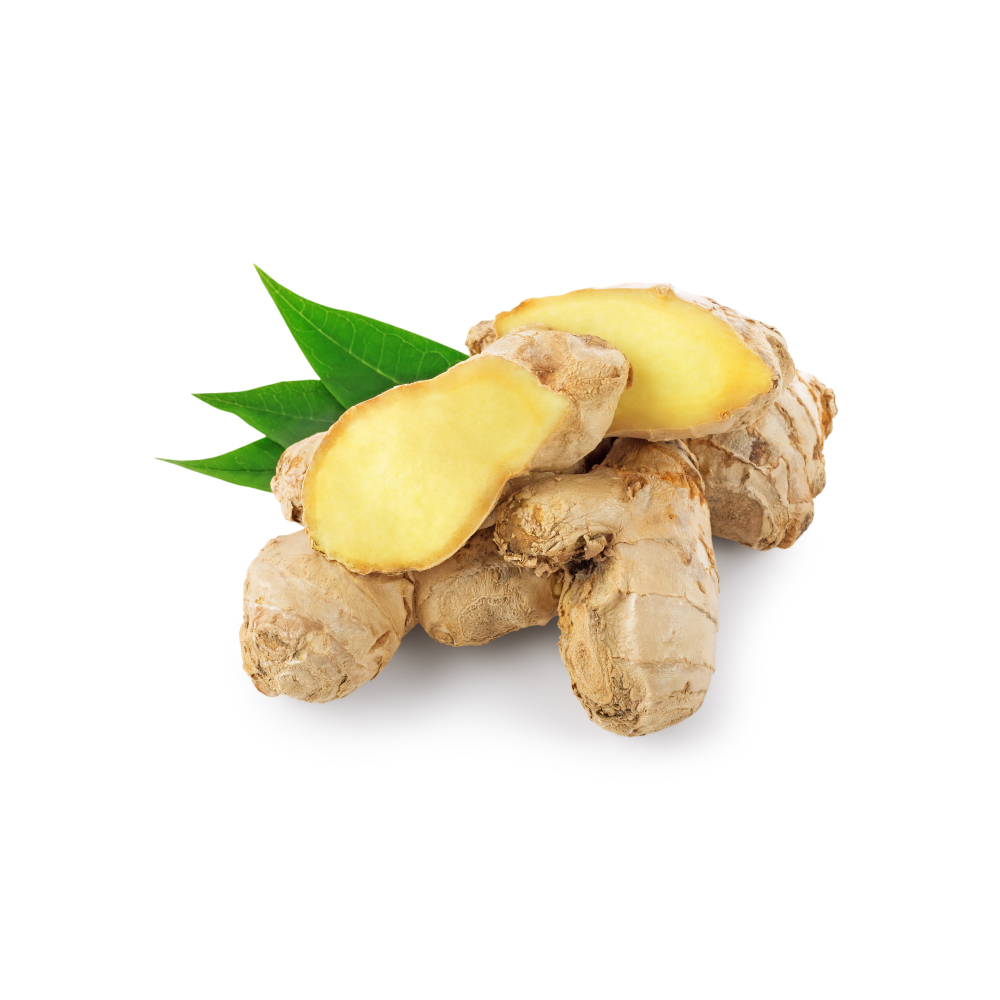
Ginger (Zingiber officinale) — a warming root used for nausea, vomiting, poor digestion, bloating and as an antiviral.
What Is Ginger?
Ginger is a very well known herb, mainly for its culinary applications. The warming, spicy food is useful as a medicinal as well for nausea, vomiting, menstrual irregularities, and to improve digestion and reduce bloating after meals.
Ginger is a staple herb in Chinese medicine, where it’s used in two different forms. Dried ginger is used for bleeding conditions and as a stimulant while fresh ginger serves as more of a tonic and is preferred for nausea and vomiting.
In Western herbal medicine, both fresh and dried ginger are used; however, for antiviral applications, only the fresh root or juice has been shown to provide antiviral benefits. Drying destroys the antiviral compounds, but the dried root remains effective for nausea.
Indications
- Alcoholic gastritis
- Bloating
- Colic
- Cramping
- Diarrhea from relaxed bowel lacking inflammation
- Drug induced nausea
- Dysmenorrhea
- Dyspepsia
- Fever
- Indigestion
- Menstrual irregularities
- Menstrual pain
- Morning sickness
- Motion sickness
- Nausea
- Poor digestion
- Vomiting
Contraindications
- None noted
What Is Ginger Used For?
Ginger is a popular culinary herb for its mild spicy flavor. Medicinally, ginger is used for its antiviral effects (fresh only), gentle stimulating action, as an anti-inflammatory, and for treating nausea and vomiting. The anti-nausea activity of ginger is robust and can be used for almost any form of nausea, including morning sickness during pregnancy, sea or car-sickness, after alcohol or drug use, stress, and gastrointestinal infection.
Ginger is also used topically for its anti-inflammatory and mildly stimulating effects best described as “warming.” Ginger salves, poultices, or tincture can be applied to the skin or sore joints to relieve the pain and down-regulate inflammation in the area through rubefacient action.
Traditional Uses
Traditional Chinese Medicine
In traditional Chinese medicine, fresh ginger and dried ginger are considered to be very different.
Dried ginger (Gan jiang) is used to warm the stomach and spleen. This action improves digestion and relieves cold conditions associated with these 2 organs. It’s often used in tonic herb formulations in order to magnify the tonic qualities of the other herbs, particularly Qi tonics 34Reference 34The Ancient Wisdom of the Chinese Tonic Herbs.
Dried Ginger (Gan Jiang)
Pinyin Gan jiang
Taste: Pungent (spicy) 35Reference 35Introduction to Chinese Materia Medica (3rd ed.), pp
Energy: Hot 35Reference 35Introduction to Chinese Materia Medica (3rd ed.), pp
Target organs: Spleen, kidney, lungs, and heart 34Reference 34The Ancient Wisdom of the Chinese Tonic Herbs.
Actions: Warms the middle jiao, rescues devastated yang, warms the lungs, relieves fluid retention, warms the channels, stops bleeding 35Reference 35Introduction to Chinese Materia Medica (3rd ed.), pp.
Indications: Spleen and stomach deficiency-cold patterns with gastric and abdominal cold pain, vomiting and diarrhoea 35Reference 35Introduction to Chinese Materia Medica (3rd ed.), pp.
Caution: Caution if using with blood heat, yin deficiency, internal heat showing a red tongue with scanty coating and dry hard stool, pregnancy. 35Reference 35Introduction to Chinese Materia Medica (3rd ed.), pp. Use dried ginger cautiously in pregnancy. Do not exceed 2g/day 36Reference 36A Clinical Guide to Blending Liquid Herbs: Herbal Formulations for the Individual Patient.
Fresh Ginger (Sheng Jiang)
Pinyin: Sheng Jiang
Taste: Pungent 35Reference 35Introduction to Chinese Materia Medica (3rd ed.), pp
Energy: Warm 35Reference 35Introduction to Chinese Materia Medica (3rd ed.), pp
Actions: Disperses the exterior, dissipates cold, warms the center, stops vomiting, dissolves phlegm, resolves toxins, moistens and cools the interior 34,35Reference 34The Ancient Wisdom of the Chinese Tonic HerbsReference 35Introduction to Chinese Materia Medica (3rd ed.), pp.
Indications: To address dryness, and expel heat. 34Reference 34The Ancient Wisdom of the Chinese Tonic Herbs. Wind-cold exterior pattern, vomiting. White glossy tongue coating. 35Reference 35Introduction to Chinese Materia Medica (3rd ed.), pp.
Caution: Contraindicated with dry red tongue with thirst and aversion to heat 35Reference 35Introduction to Chinese Materia Medica (3rd ed.), pp.
Botany
Ginger is a tender rhizomatous perennial (a geophyte) in the ginger family (Zingiberaceae), sending up reed-like leafy pseudostems 2–4 ft (0.6–1.2 m) tall from a branching, aromatic underground rhizome — the “root” of commerce. The strap-shaped leaves are two-ranked, and it occasionally produces cone-like spikes of yellow-green and purple flowers, though cultivated ginger rarely flowers or sets seed and is propagated by rhizome division. The family also holds turmeric (Curcuma longa), cardamom (Amomum/Elettaria), galangal (Alpinia galanga) and the ginger lilies (Hedychium).
Distribution
Plants of the World Online records ginger’s native range as the eastern Himalaya to south-central China, though it has been cultivated for thousands of years and is essentially known from cultivation. It is now grown throughout the warm, humid tropics and subtropics — Africa, the Caribbean, and Central and South America among them — and, being propagated vegetatively and frost-tender, rarely escapes as a weed. No conservation concern.
Growing Conditions
- Life cycle: tender rhizomatous perennial, hardy USDA zones 9–12; overwintered indoors in cooler climates.
- Light: part shade (humid, partly-shaded tropical understory).
- Water: steady moisture with rich, well-draining soil; warm and humid.
- Habit: grown for its rhizome; propagated by division, not seed.
- Full cultivation detail lives on the companion farm-wiki grow guide for Zingiber officinale (link to be added once that project’s public URL is confirmed).
Pharmacology & Research
Ginger is one of the most heavily trialled herbs in the world: PubMed indexes well over a hundred randomised controlled trials, and the strongest signals now rest on meta-analyses rather than the animal and in-vitro work that older monographs relied on. The best-supported use is exactly the traditional one — nausea, particularly the nausea and vomiting of early pregnancy, where pooled RCT data show a real effect on nausea scores 1,2,3Reference 1Meta-analysisA systematic review and meta-analysis of the effect and safety of ginger in the treatment of pregnancy-associated nausea and vomiting — meta-analysisView study →Reference 2Meta-analysisEffects of ginger for nausea and vomiting in early pregnancy: a meta-analysis — meta-analysisView study →Reference 3Systematic reviewInterventions for nausea and vomiting in early pregnancy — systematic review (Cochrane)View study →. Beyond emesis, replicated human trials support ginger for primary dysmenorrhea and, more modestly, osteoarthritis pain, alongside consistent anti-inflammatory and antioxidant biomarker shifts 4,5,6,9Reference 4Meta-analysisGinger for pain management in primary dysmenorrhea: a systematic review and meta-analysis — meta-analysisView study →Reference 5Meta-analysisEfficacy of ginger for alleviating the symptoms of primary dysmenorrhea: a systematic review and meta-analysis of randomized clinical trials — meta-analysisView study →Reference 6Meta-analysisEfficacy and safety of ginger in osteoarthritis patients: a meta-analysis of randomized placebo-controlled trials — meta-analysisView study →Reference 9Meta-analysisAntioxidant and anti-inflammatory effects of ginger supplementation in adults: a GRADE-assessed systematic review and dose-response meta-analysis of randomised controlled trials — meta-analysisView study →. The recurring caveat runs through almost every trial: nearly all of this evidence uses dried powdered rhizome or standardised extracts in capsules, typically 0.5–2 g/day, so it does not transfer cleanly to the 1:2 liquid extract or to fresh ginger, and preparations are rarely characterised for gingerol/shogaol content.
- Best-supported: nausea and vomiting of pregnancy (two meta-analyses, ~1278 women) 1,2,3Reference 1Meta-analysisA systematic review and meta-analysis of the effect and safety of ginger in the treatment of pregnancy-associated nausea and vomiting — meta-analysisView study →Reference 2Meta-analysisEffects of ginger for nausea and vomiting in early pregnancy: a meta-analysis — meta-analysisView study →Reference 3Systematic reviewInterventions for nausea and vomiting in early pregnancy — systematic review (Cochrane)View study →, primary dysmenorrhea pain (comparable to NSAIDs) 4,5Reference 4Meta-analysisGinger for pain management in primary dysmenorrhea: a systematic review and meta-analysis — meta-analysisView study →Reference 5Meta-analysisEfficacy of ginger for alleviating the symptoms of primary dysmenorrhea: a systematic review and meta-analysis of randomized clinical trials — meta-analysisView study →, and osteoarthritis pain (modest, standardised extract) 6,7Reference 6Meta-analysisEfficacy and safety of ginger in osteoarthritis patients: a meta-analysis of randomized placebo-controlled trials — meta-analysisView study →Reference 7RCTEffects of a ginger extract on knee pain in patients with osteoarthritis — randomized controlled trialView study →.
- Emerging, worth watching: anti-inflammatory/antioxidant biomarker reductions (CRP, TNF-α, IL-6, MDA) and metabolic effects — fasting glucose, HbA1c, body weight, blood pressure — mostly from small metabolic-syndrome and T2DM trials 9,10,12,13,15Reference 9Meta-analysisAntioxidant and anti-inflammatory effects of ginger supplementation in adults: a GRADE-assessed systematic review and dose-response meta-analysis of randomised controlled trials — meta-analysisView study →Reference 10Meta-analysisThe effects of ginger supplementation on markers of inflammatory and oxidative stress: a systematic review and meta-analysis of clinical trials — meta-analysisView study →Reference 12Meta-analysisThe effect of ginger supplementation on metabolic profiles in patients with type 2 diabetes mellitus: a systematic review and meta-analysis of randomized controlled trials — meta-analysisView study →Reference 13Meta-analysisGinger intervention on body weight and body composition in adults: a GRADE-assessed systematic review and dose-response meta-analysis of randomized controlled trials — meta-analysisView study →Reference 15Meta-analysisDoes ginger supplementation lower blood pressure? A systematic review and meta-analysis of clinical trials — meta-analysisView study →.
- Mechanistically thin: chemotherapy-induced nausea (meta-analysis null on incidence) 17Reference 17Meta-analysisEffects of ginger intake on chemotherapy-induced nausea and vomiting: a systematic review of randomized clinical trials — meta-analysisView study → and motion sickness (trial evidence contradictory despite strong traditional use) 24Reference 24RCTEffects of ginger on motion sickness susceptibility and gastric function — randomized controlled trialView study →.
- The caveat: the evidence base is powder/standardised-extract, not the liquid extract or fresh root the monograph centres on; heterogeneity is high and few trials report the actual gingerol dose delivered 26,30Reference 26Systematic reviewGinger in gastrointestinal disorders: a systematic review of clinical trials — systematic reviewView study →Reference 30Systematic reviewGinger on human health: a comprehensive systematic review of 109 randomized controlled trials — systematic reviewView study →.
1. Nausea and vomiting of pregnancy
This is ginger’s best-evidenced use and it aligns with centuries of traditional practice. A meta-analysis of 12 RCTs (n≈1278) found ginger significantly improved nausea versus placebo (mean difference 1.20 on nausea scales, 95% CI 0.56–1.84), though the reduction in actual vomiting episodes only trended toward significance (MD 0.72, 95% CI −0.03–1.46) 1Reference 1Meta-analysisA systematic review and meta-analysis of the effect and safety of ginger in the treatment of pregnancy-associated nausea and vomiting — meta-analysisView study →. A second meta-analysis reached the same conclusion — ginger relieved nausea more than placebo and was comparable to vitamin B6, with no increase in miscarriage or adverse pregnancy outcomes 2Reference 2Meta-analysisEffects of ginger for nausea and vomiting in early pregnancy: a meta-analysis — meta-analysisView study →. The Cochrane review of interventions for early-pregnancy nausea rates the ginger evidence as limited and inconsistent in quality but broadly supportive 3Reference 3Systematic reviewInterventions for nausea and vomiting in early pregnancy — systematic review (Cochrane)View study →. Subgroup analysis favoured lower daily doses (<1500 mg of powdered rhizome), the divided-dose form used in practice 1,26Reference 1Meta-analysisA systematic review and meta-analysis of the effect and safety of ginger in the treatment of pregnancy-associated nausea and vomiting — meta-analysisView study →Reference 26Systematic reviewGinger in gastrointestinal disorders: a systematic review of clinical trials — systematic reviewView study →.
Gap: trials use powdered/capsule ginger, not the 1:2 liquid extract; the effect on vomiting (as opposed to nausea) is weaker, and long-term fetal-safety data remain thin.
2. Primary dysmenorrhea
Two meta-analyses support ginger for menstrual pain. A 2024 review found ginger notably more effective than placebo at reducing both pain intensity (shogaol- and gingerol-standardised powder; SMD −1.13, 95% CI −1.59 to −0.68) and pain duration, and — importantly — found no significant difference between ginger and NSAIDs for pain intensity (SMD 0.01, 95% CI −0.24 to 0.25) 4Reference 4Meta-analysisGinger for pain management in primary dysmenorrhea: a systematic review and meta-analysis — meta-analysisView study →. An earlier meta-analysis reported a similarly large reduction in the pain visual-analogue score versus placebo 5Reference 5Meta-analysisEfficacy of ginger for alleviating the symptoms of primary dysmenorrhea: a systematic review and meta-analysis of randomized clinical trials — meta-analysisView study →. Effective regimens clustered around 750–2000 mg/day of powder taken over the first three to four days of menses 4Reference 4Meta-analysisGinger for pain management in primary dysmenorrhea: a systematic review and meta-analysis — meta-analysisView study →.
Gap: trials are small and mostly conducted in student populations; head-to-head equivalence with NSAIDs rests on modest numbers, and the liquid-extract form used on this page is untested here.
3. Osteoarthritis
A meta-analysis of placebo-controlled RCTs found a statistically significant but modest reduction in OA pain (SMD −0.30, 95% CI −0.50 to −0.09) and disability, with low heterogeneity — but patients on ginger were more than twice as likely to stop treatment because of (mostly gastrointestinal) side effects (RR 2.33, 95% CI 1.04–5.22) 6Reference 6Meta-analysisEfficacy and safety of ginger in osteoarthritis patients: a meta-analysis of randomized placebo-controlled trials — meta-analysisView study →. The landmark trial behind this signal randomised 247 knee-OA patients to a highly purified, standardised ginger extract and found a superior responder rate versus placebo (63% vs 50%, P = 0.048) 7Reference 7RCTEffects of a ginger extract on knee pain in patients with osteoarthritis — randomized controlled trialView study →. A later systematic review found oral capsules beat placebo for pain but topical ginger did not clearly outperform standard care 8Reference 8Meta-analysisEffectiveness of ginger on pain and function in knee osteoarthritis: a PRISMA systematic review and meta-analysis — meta-analysisView study →.
Gap: benefit is real but small, works only for the standardised extract (not tea or crude powder), and comes with a meaningful GI-tolerability cost that caps its practical value.
4. Anti-inflammatory and antioxidant activity
This is the mechanistic engine beneath ginger’s pain and metabolic effects, and it is now supported by human biomarker data rather than cell lines alone. A 2025 GRADE-assessed dose-response meta-analysis found ginger supplementation reduced C-reactive protein (WMD −0.86 mg/L), TNF-α (−1.90 pg/mL) and IL-6 (−1.15 pg/mL) while improving antioxidant capacity 9Reference 9Meta-analysisAntioxidant and anti-inflammatory effects of ginger supplementation in adults: a GRADE-assessed systematic review and dose-response meta-analysis of randomised controlled trials — meta-analysisView study →. Two earlier meta-analyses concur, reporting significant drops in CRP, TNF-α, IL-6 and the oxidative-stress marker malondialdehyde (gingerol and shogaol inhibit NF-κB and COX-2/prostaglandin signalling), with a marginal effect on PGE2 10,11Reference 10Meta-analysisThe effects of ginger supplementation on markers of inflammatory and oxidative stress: a systematic review and meta-analysis of clinical trials — meta-analysisView study →Reference 11Meta-analysisEffects of ginger supplementation on biomarkers of oxidative stress: a systematic review and meta-analysis of randomized controlled trials — meta-analysisView study →. Larger MDA reductions appeared at doses ≤1 g/day over shorter courses 11Reference 11Meta-analysisEffects of ginger supplementation on biomarkers of oxidative stress: a systematic review and meta-analysis of randomized controlled trials — meta-analysisView study →.
Gap: these are surrogate biomarkers, not clinical outcomes — a lower CRP is not itself a treated disease, and heterogeneity across trials is high.
5. Postoperative nausea and vomiting
A meta-analysis of perioperative RCTs found that, versus placebo, ginger lowered nausea severity (MD −0.71), reduced the incidence of nausea and vomiting in the first six hours after surgery (RR 0.68), and cut rescue-antiemetic use (RR 0.71) 20Reference 20Meta-analysisEfficacy of ginger in preventing postoperative nausea and vomiting: a systematic review and meta-analysis — meta-analysisView study →. Against active prophylactic antiemetics ginger was slightly better for nausea incidence but no different for vomiting, positioning it as an adjunct rather than a replacement 20Reference 20Meta-analysisEfficacy of ginger in preventing postoperative nausea and vomiting: a systematic review and meta-analysis — meta-analysisView study →. Regimens were capsule or powder given pre-operatively, consistent with the anti-emetic mechanism ginger shares across nausea types.
Gap: trials are heterogeneous in surgery type and dosing schedule, and ginger’s antiplatelet activity raises a theoretical perioperative bleeding concern that these efficacy trials were not designed to detect (see Safety).
6. Glycemic control in type 2 diabetes
A meta-analysis of RCTs in people with type 2 diabetes found ginger supplementation significantly reduced fasting blood sugar (WMD −18.81 mg/dL, 95% CI −28.70 to −8.92) and HbA1c (WMD −0.57%), alongside small blood-pressure reductions, at doses of roughly 1600–3000 mg/day of powder 12Reference 12Meta-analysisThe effect of ginger supplementation on metabolic profiles in patients with type 2 diabetes mellitus: a systematic review and meta-analysis of randomized controlled trials — meta-analysisView study →. The direction is consistent with ginger’s insulin-sensitising and anti-inflammatory mechanisms, but between-study heterogeneity was high (I² ≈ 77%) and trials were short. Lipid outcomes in the same diabetic populations were not significantly changed 12Reference 12Meta-analysisThe effect of ginger supplementation on metabolic profiles in patients with type 2 diabetes mellitus: a systematic review and meta-analysis of randomized controlled trials — meta-analysisView study →.
Gap: heterogeneity is substantial, trials are brief, and no data address hard diabetic endpoints or interaction with glucose-lowering drugs — a plausible additive-hypoglycaemia concern.
7. Body weight and metabolic markers
Two meta-analyses find small but consistent anthropometric effects. A 2024 GRADE-assessed dose-response review of 27 RCTs reported reductions in body weight (WMD −1.52 kg), BMI (−0.58 kg/m²) and waist circumference (−1.04 cm), with a non-linear effect emerging around 2 g/day over more than eight weeks 13Reference 13Meta-analysisGinger intervention on body weight and body composition in adults: a GRADE-assessed systematic review and dose-response meta-analysis of randomized controlled trials — meta-analysisView study →. An earlier meta-analysis in overweight and obese subjects found ginger lowered body weight, waist-to-hip ratio, fasting glucose and HOMA-IR and raised HDL, without affecting BMI, insulin or triglycerides 14Reference 14Meta-analysisThe effects of ginger intake on weight loss and metabolic profiles among overweight and obese subjects: a systematic review and meta-analysis of randomized controlled trials — meta-analysisView study →.
Gap: effect sizes are clinically small (roughly 1–1.5 kg), driven by short trials in metabolic-syndrome populations, and confounded by variable diet and exercise co-interventions.
8. Blood pressure
A meta-analysis of six RCTs (n=345) found ginger supplementation lowered systolic (MD −6.36 mmHg, 95% CI −11.27 to −1.46) and diastolic (MD −2.12 mmHg) blood pressure 15Reference 15Meta-analysisDoes ginger supplementation lower blood pressure? A systematic review and meta-analysis of clinical trials — meta-analysisView study →. The effect was concentrated in participants under 50 and in trials of eight weeks or less, and heterogeneity was very high (I² ≈ 90%), so the pooled figure likely overstates a real but variable effect 15Reference 15Meta-analysisDoes ginger supplementation lower blood pressure? A systematic review and meta-analysis of clinical trials — meta-analysisView study →. Consistent with the vasodilatory and antioxidant mechanisms, higher doses tended to produce larger reductions.
Gap: few trials, extreme heterogeneity, and effects limited to younger, shorter-duration studies — not yet a basis for treating hypertension.
9. Migraine
Small RCTs are encouraging for acute attacks but not for prevention. A double-blind trial of 100 patients found 250 mg ginger powder comparable to sumatriptan for aborting a common migraine attack, with fewer side effects 21Reference 21RCTComparison between the efficacy of ginger and sumatriptan in the ablative treatment of the common migraine — randomized controlled trialView study →. A second RCT found ginger, added to standard emergency-room treatment, improved clinical response at 1–2 hours versus placebo 22Reference 22RCTDouble-blind placebo-controlled randomized clinical trial of ginger (Zingiber officinale Rosc.) addition in migraine acute treatment — randomized controlled trialView study →. But a prophylaxis trial from the same group found no difference from placebo in the proportion of patients achieving a 50% reduction in attack frequency 23Reference 23RCTDouble-blind placebo-controlled randomized clinical trial of ginger (Zingiber officinale Rosc.) in the prophylactic treatment of migraine — randomized controlled trialView study →.
Gap: acute-treatment trials are small and single-centre; the one prophylaxis RCT was null, so ginger’s role appears limited to symptomatic relief, not prevention.
10. Serum lipids
The lipid evidence is genuinely mixed and preparation- and population-dependent. A 2023 meta-analysis found ginger significantly reduced total cholesterol (SMD −0.44) and triglycerides (SMD −0.61), with a dose-dependent effect on total cholesterol 16Reference 16Meta-analysisEffect of ginger (Zingiber officinale) intake on human serum lipid profile: systematic review and meta-analysis — meta-analysisView study →. But the T2DM-specific meta-analysis found no significant change in TG, TC, LDL or HDL 12Reference 12Meta-analysisThe effect of ginger supplementation on metabolic profiles in patients with type 2 diabetes mellitus: a systematic review and meta-analysis of randomized controlled trials — meta-analysisView study →, and the overweight/obese meta-analysis likewise found no triglyceride or LDL effect 14Reference 14Meta-analysisThe effects of ginger intake on weight loss and metabolic profiles among overweight and obese subjects: a systematic review and meta-analysis of randomized controlled trials — meta-analysisView study →. The signal, where present, is small and inconsistent across populations.
Gap: meta-analyses contradict each other by population and preparation; ginger is not a reliable lipid-lowering agent on current data.
11. Chemotherapy-induced nausea and vomiting
Despite a strong mechanistic rationale, the clinical picture here is disappointing. A systematic review and meta-analysis of 23 RCTs found ginger did not significantly reduce the incidence of acute nausea (P = 0.53), delayed nausea (P = 0.31), acute vomiting (P = 0.09) or delayed vomiting (P = 0.89) 17Reference 17Meta-analysisEffects of ginger intake on chemotherapy-induced nausea and vomiting: a systematic review of randomized clinical trials — meta-analysisView study →. A 2024 multicentre double-blind RCT of standardised ginger root powder found it improved nausea-related quality of life and overall CINV-related quality of life, but had no effect on anticipatory or acute CINV itself 18Reference 18RCTEffect of a standardized ginger root powder regimen on chemotherapy-induced nausea and vomiting: a multicenter, double-blind, placebo-controlled randomized trial — randomized controlled trialView study →. Mechanistically, ginger’s gingerol and shogaol constituents act as 5-HT3 receptor negative allosteric modulators and NK-1 antagonists — the same targets as standard antiemetics — which is why the null incidence data are surprising 19,25Reference 19ReviewGinger — mechanism of action in chemotherapy-induced nausea and vomiting: a review — reviewView study →Reference 25ReviewNatural negative allosteric modulators of 5-HT3 receptors — reviewView study →.
Gap: the mechanism predicts benefit that the pooled incidence data do not confirm; any real effect seems confined to quality-of-life measures, and trials vary widely in chemotherapy regimen and background antiemetics.
12. Motion sickness
Traditional use for travel sickness is long-standing, but controlled evidence is contradictory. A controlled crossover study found ginger had no effect on motion-sickness susceptibility during circular-vection testing and did not alter gastric function, directly challenging the popular claim 24Reference 24RCTEffects of ginger on motion sickness susceptibility and gastric function — randomized controlled trialView study →. Other early trials reported benefit, but the body of evidence does not converge, and the effect — if present — may depend on the provocation model used.
Gap: the best-controlled study is null; the indication rests more on tradition and a plausible gastric-motility mechanism than on consistent trial data.
Mechanisms
| Mechanism | Drives | Key compounds |
|---|---|---|
| 5-HT3 receptor negative allosteric modulation, NK-1 antagonism, enhanced gastric emptying | anti-nausea (pregnancyPONV)pro-kinetic digestion | gingerol, shogaol |
| NF-κB ↓, COX-2 ↓, prostaglandin/PGE₂ and leukotriene inhibition | anti-inflammatorydysmenorrheaosteoarthritis | gingerol, shogaol |
| ↑ glutathione peroxidase & total antioxidant capacity, ↓ malondialdehyde | antioxidantmetabolic/vascular protection | gingerol, zingerone |
| Thromboxane synthesis ↓, platelet aggregation ↓ | antiplatelet (also a bleeding-interaction risk) | gingerol |
| Carminative, spasmolytic, warming/rubefacient (topical) | carminativetopical anti-inflammatory | zingiberene, paradol |
Clinical trials
Ginger is exceptional among herbs for its trial volume — a 2020 systematic review catalogued 109 randomised controlled trials in humans, and dozens of meta-analyses now pool them by indication 30,31Reference 30Systematic reviewGinger on human health: a comprehensive systematic review of 109 randomized controlled trials — systematic reviewView study →Reference 31Meta-analysisPharmacological properties of ginger (Zingiber officinale): what do meta-analyses say? A systematic review — systematic reviewView study →. The counts below are approximate and cover the indications reviewed here, not every registered ginger study.
| Completed | Planned | Terminated | Preclinical |
|---|---|---|---|
| ~100+RCTs (20 meta-analyses reviewed here) | — | — | Hundreds |
Last checked: June 2026.
Phytochemistry
Ginger’s warmth and medicine come from two sets of compounds. The pungent principles are the gingerols — 6-gingerol most of all — which dominate the fresh rhizome and carry much of its anti-inflammatory, anti-nausea and digestive-stimulating activity 32,33Reference 32ReviewUpdate on the chemopreventive effects of ginger and its phytochemicals — reviewReference 33ReviewZingiberis rhizoma: a comprehensive review on the ginger effect and efficacy profiles — review. When the root is dried or heated these dehydrate into the sharper, more pungent shogaols, and with further cooking into milder zingerone; this shift is why traditional Chinese medicine treats fresh (Sheng Jiang) and dried (Gan Jiang) ginger as distinct remedies 32,33Reference 32ReviewUpdate on the chemopreventive effects of ginger and its phytochemicals — reviewReference 33ReviewZingiberis rhizoma: a comprehensive review on the ginger effect and efficacy profiles — review. The second set is the aromatic essential oil (~1–3% of the rhizome), built largely on the sesquiterpene zingiberene alongside paradol and other volatiles 33Reference 33ReviewZingiberis rhizoma: a comprehensive review on the ginger effect and efficacy profiles — review.
Constituent Summary
Amounts vary widely with cultivar, freshness and preparation; gingerols convert to shogaols as the rhizome is dried 32,33Reference 32ReviewUpdate on the chemopreventive effects of ginger and its phytochemicals — reviewReference 33ReviewZingiberis rhizoma: a comprehensive review on the ginger effect and efficacy profiles — review.
Phenylpropanoid4 compounds3 with data
Sesquiterpene1 compound1 with data
Clinical Applications
Ginger is useful as an antiviral if the fresh juice is used and at the first sign of infection. The anti-nausea effects of ginger are among its most reliable activities, working across a wide range of unrelated causes.
Ginger is also useful for treating flatulence, or bloating after meals, and can improve the digestive process by stimulating the release of digestive enzymes.
Topically, ginger is a reliable rubefacient useful for treating rheumatoid arthritis and muscle aches.
Dosage
In research, ginger is almost always given as dried powdered rhizome or a standardised capsule extract, typically 0.5–2 g/day in divided doses — not the fresh root or the 1:2 liquid extract this page’s sidebar lists. Here’s a roundup of the doses used:
| Indication | Preparation | Dose | Est. dried-herb equivalent | Source |
|---|---|---|---|---|
| Nausea & vomiting of pregnancy | Dried powdered rhizome (capsules), divided | <1.5 g/day | ~1–1.5 g dried rhizome | 1,2,3Reference 1Meta-analysisA systematic review and meta-analysis of the effect and safety of ginger in the treatment of pregnancy-associated nausea and vomiting — meta-analysisView study →Reference 2Meta-analysisEffects of ginger for nausea and vomiting in early pregnancy: a meta-analysis — meta-analysisView study →Reference 3Systematic reviewInterventions for nausea and vomiting in early pregnancy — systematic review (Cochrane)View study → |
| Primary dysmenorrhea | Dried powdered rhizome | 750–2,000 mg/day over the first 3–4 days of menses | as dosed | 4,5Reference 4Meta-analysisGinger for pain management in primary dysmenorrhea: a systematic review and meta-analysis — meta-analysisView study →Reference 5Meta-analysisEfficacy of ginger for alleviating the symptoms of primary dysmenorrhea: a systematic review and meta-analysis of randomized clinical trials — meta-analysisView study → |
| Osteoarthritis | Highly purified standardised extract | twice daily | (extract-based) | 6,7Reference 6Meta-analysisEfficacy and safety of ginger in osteoarthritis patients: a meta-analysis of randomized placebo-controlled trials — meta-analysisView study →Reference 7RCTEffects of a ginger extract on knee pain in patients with osteoarthritis — randomized controlled trialView study → |
| Glycemic control (type 2 diabetes) | Dried powdered rhizome | 1,600–3,000 mg/day | as dosed | 12Reference 12Meta-analysisThe effect of ginger supplementation on metabolic profiles in patients with type 2 diabetes mellitus: a systematic review and meta-analysis of randomized controlled trials — meta-analysisView study → |
| Body weight / metabolic markers | Dried powdered rhizome | ~2 g/day for ≥8 weeks | as dosed | 13,14Reference 13Meta-analysisGinger intervention on body weight and body composition in adults: a GRADE-assessed systematic review and dose-response meta-analysis of randomized controlled trials — meta-analysisView study →Reference 14Meta-analysisThe effects of ginger intake on weight loss and metabolic profiles among overweight and obese subjects: a systematic review and meta-analysis of randomized controlled trials — meta-analysisView study → |
| Migraine (acute attack) | Dried powdered rhizome | 250 mg–1.5 g per attack | as dosed | 21,22Reference 21RCTComparison between the efficacy of ginger and sumatriptan in the ablative treatment of the common migraine — randomized controlled trialView study →Reference 22RCTDouble-blind placebo-controlled randomized clinical trial of ginger (Zingiber officinale Rosc.) addition in migraine acute treatment — randomized controlled trialView study → |
Because powdered rhizome is simply dried ginger, the “dried-herb equivalent” for those rows is the dose itself; the osteoarthritis row uses a purified standardised extract, so no reliable whole-herb equivalent can be given (marked extract-based). These are guides, not recommendations, and the evidence is for powder/extract, not the fresh root or 1:2 liquid extract.
Traditional Dosage
In Western herbal medicine and Traditional Chinese Medicine, ginger is used as the whole fresh or dried root, a tincture, or a liquid extract — with fresh (Sheng Jiang) and dried (Gan Jiang) ginger treated as distinct remedies.
| System | Preparation | Dose |
|---|---|---|
| Western herbal | 1:2 liquid extract | 5–15 mL |
| Western herbal | Fresh rhizome (tea / culinary) | 1–3 g |
| TCM — Sheng Jiang (fresh ginger) | Sliced decoction | 3–9 g 35Reference 35Introduction to Chinese Materia Medica (3rd ed.), pp |
| TCM — Gan Jiang (dried ginger) | Decoction | ≤2 g/day 36Reference 36A Clinical Guide to Blending Liquid Herbs: Herbal Formulations for the Individual Patient |
Safety & Pregnancy
Ginger is well tolerated, with mostly mild gastrointestinal side effects; its one clinically meaningful signal is antiplatelet activity — a real bleeding concern around anticoagulant drugs and surgery.
- Well tolerated. Adverse effects in trials are mostly mild and gastrointestinal — heartburn, belching, stomach discomfort.
- Bleeding interaction. Ginger inhibits platelet aggregation and can potentiate warfarin — caution with anticoagulant / antiplatelet drugs and stop before elective surgery.
- Additive drug effects. Plausible additive lowering of blood glucose and blood pressure with those drugs, though not directly tested.
- Gastric disease. High intake may aggravate reflux or peptic-ulcer symptoms; traditionally avoided where gallstones are present.
- Quality & sourcing. Ginger essence is prone to adulteration — buy from a reputable supplier.
Full safety & interactions detail
Ginger is well tolerated: adverse effects in trials are mostly mild and gastrointestinal — heartburn, belching and stomach discomfort — and in osteoarthritis trials this was enough to roughly double the treatment-discontinuation rate versus placebo 6Reference 6Meta-analysisEfficacy and safety of ginger in osteoarthritis patients: a meta-analysis of randomized placebo-controlled trials — meta-analysisView study →. The most clinically important concern is not toxicity but interaction: ginger’s pungent constituents inhibit thromboxane synthesis and platelet aggregation, and it is repeatedly named among herbs that can potentiate warfarin and increase bleeding risk, with case reports of bleeding events on concurrent use 27,28,29Reference 27Systematic reviewWarfarin and food, herbal or dietary supplement interactions: a systematic review — systematic reviewView study →Reference 28ReviewSafety issues of herb–warfarin interactions — reviewView study →Reference 29ReviewNatural products with antiplatelet action — reviewView study →. This warrants caution with anticoagulant and antiplatelet drugs (warfarin, DOACs, aspirin, clopidogrel) and in the perioperative period — stop ginger supplements before elective surgery — and it argues against the “None noted” contraindications older versions of this page carried. A plausible additive effect with glucose- and blood-pressure-lowering drugs follows from the metabolic trials but has not been directly tested 12,15Reference 12Meta-analysisThe effect of ginger supplementation on metabolic profiles in patients with type 2 diabetes mellitus: a systematic review and meta-analysis of randomized controlled trials — meta-analysisView study →Reference 15Meta-analysisDoes ginger supplementation lower blood pressure? A systematic review and meta-analysis of clinical trials — meta-analysisView study →. High intake may aggravate reflux or peptic-ulcer symptoms, so caution is advised where peptic ulceration, gastro-oesophageal reflux or other gastric disease is present 36Reference 36A Clinical Guide to Blending Liquid Herbs: Herbal Formulations for the Individual Patient, and ginger is traditionally avoided where gallstones are present. Essence of ginger is also prone to adulteration — buy from a reputable supplier 37Reference 37Ginger — A Modern Herbal. http://www.botanical.com/botanical/mgmh/g/ginger13.htmlView study →.
No dedicated human pharmacokinetic (CYP450) drug-interaction trial was identified; the anticoagulant interaction is pharmacodynamic (antiplatelet activity), not a named CYP effect. The good tolerability seen in trials comes from courses of up to about 12 weeks and should not be over-read as evidence of safety at high doses indefinitely.
Ginger’s single best-evidenced use is the nausea and vomiting of early pregnancy, and two meta-analyses found no increase in miscarriage or adverse fetal outcomes at therapeutic doses 1,2Reference 1Meta-analysisA systematic review and meta-analysis of the effect and safety of ginger in the treatment of pregnancy-associated nausea and vomiting — meta-analysisView study →Reference 2Meta-analysisEffects of ginger for nausea and vomiting in early pregnancy: a meta-analysis — meta-analysisView study →. Traditional and pharmacopoeial sources nonetheless advise keeping dried-ginger intake modest (commonly cited as ≤2 g/day) 36Reference 36A Clinical Guide to Blending Liquid Herbs: Herbal Formulations for the Individual Patient, so blanket “no adverse reactions expected” reassurance overstates the certainty. Lactation has not been specifically studied — absence of reports is not evidence of safety.
References
- Viljoen E et al. (2014). A systematic review and meta-analysis of the effect and safety of ginger in the treatment of pregnancy-associated nausea and vomiting — meta-analysis. Nutrition Journal. https://pubmed.ncbi.nlm.nih.gov/24642205/
- Thomson M et al. (2014). Effects of ginger for nausea and vomiting in early pregnancy: a meta-analysis — meta-analysis. Journal of the American Board of Family Medicine. https://pubmed.ncbi.nlm.nih.gov/24390893/
- Matthews A et al. (2015). Interventions for nausea and vomiting in early pregnancy — systematic review (Cochrane). Cochrane Database of Systematic Reviews. https://pubmed.ncbi.nlm.nih.gov/26348534/
- Moshfeghinia R et al. (2024). Ginger for pain management in primary dysmenorrhea: a systematic review and meta-analysis — meta-analysis. Journal of Integrative and Complementary Medicine. https://pubmed.ncbi.nlm.nih.gov/38770631/
- Daily JW et al. (2015). Efficacy of ginger for alleviating the symptoms of primary dysmenorrhea: a systematic review and meta-analysis of randomized clinical trials — meta-analysis. Pain Medicine. https://pubmed.ncbi.nlm.nih.gov/26177393/
- Bartels EM et al. (2015). Efficacy and safety of ginger in osteoarthritis patients: a meta-analysis of randomized placebo-controlled trials — meta-analysis. Osteoarthritis and Cartilage. https://pubmed.ncbi.nlm.nih.gov/25300574/
- Altman RD et al. (2001). Effects of a ginger extract on knee pain in patients with osteoarthritis — randomized controlled trial. Arthritis and Rheumatism. https://pubmed.ncbi.nlm.nih.gov/11710709/
- Araya-Quintanilla F et al. (2020). Effectiveness of ginger on pain and function in knee osteoarthritis: a PRISMA systematic review and meta-analysis — meta-analysis. Pain Physician. https://pubmed.ncbi.nlm.nih.gov/32214292/
- Rjabi S et al. (2025). Antioxidant and anti-inflammatory effects of ginger supplementation in adults: a GRADE-assessed systematic review and dose-response meta-analysis of randomised controlled trials — meta-analysis. Inflammopharmacology. https://pubmed.ncbi.nlm.nih.gov/41123858/
- Jalali M et al. (2020). The effects of ginger supplementation on markers of inflammatory and oxidative stress: a systematic review and meta-analysis of clinical trials — meta-analysis. Phytotherapy Research. https://pubmed.ncbi.nlm.nih.gov/32147845/
- Sheikhhossein F et al. (2021). Effects of ginger supplementation on biomarkers of oxidative stress: a systematic review and meta-analysis of randomized controlled trials — meta-analysis. Clinical Nutrition ESPEN. https://pubmed.ncbi.nlm.nih.gov/34620306/
- Ebrahimzadeh A et al. (2022). The effect of ginger supplementation on metabolic profiles in patients with type 2 diabetes mellitus: a systematic review and meta-analysis of randomized controlled trials — meta-analysis. Complementary Therapies in Medicine. https://pubmed.ncbi.nlm.nih.gov/35031435/
- Rafieipour N et al. (2024). Ginger intervention on body weight and body composition in adults: a GRADE-assessed systematic review and dose-response meta-analysis of randomized controlled trials — meta-analysis. Nutrition Reviews. https://pubmed.ncbi.nlm.nih.gov/38261398/
- Maharlouei N et al. (2019). The effects of ginger intake on weight loss and metabolic profiles among overweight and obese subjects: a systematic review and meta-analysis of randomized controlled trials — meta-analysis. Critical Reviews in Food Science and Nutrition. https://pubmed.ncbi.nlm.nih.gov/29393665/
- Hasani H et al. (2019). Does ginger supplementation lower blood pressure? A systematic review and meta-analysis of clinical trials — meta-analysis. Phytotherapy Research. https://pubmed.ncbi.nlm.nih.gov/30972845/
- Salih AK et al. (2023). Effect of ginger (Zingiber officinale) intake on human serum lipid profile: systematic review and meta-analysis — meta-analysis. Phytotherapy Research. https://pubmed.ncbi.nlm.nih.gov/36786398/
- Choi J et al. (2022). Effects of ginger intake on chemotherapy-induced nausea and vomiting: a systematic review of randomized clinical trials — meta-analysis. Nutrients. https://pubmed.ncbi.nlm.nih.gov/36501010/
- Crichton M et al. (2024). Effect of a standardized ginger root powder regimen on chemotherapy-induced nausea and vomiting: a multicenter, double-blind, placebo-controlled randomized trial — randomized controlled trial. Journal of the Academy of Nutrition and Dietetics. https://pubmed.ncbi.nlm.nih.gov/37699474/
- Marx W et al. (2017). Ginger — mechanism of action in chemotherapy-induced nausea and vomiting: a review — review. Critical Reviews in Food Science and Nutrition. https://pubmed.ncbi.nlm.nih.gov/25848702/
- Zhu W et al. (2021). Efficacy of ginger in preventing postoperative nausea and vomiting: a systematic review and meta-analysis — meta-analysis. Journal of Nursing Scholarship. https://pubmed.ncbi.nlm.nih.gov/34312974/
- Maghbooli M et al. (2014). Comparison between the efficacy of ginger and sumatriptan in the ablative treatment of the common migraine — randomized controlled trial. Phytotherapy Research. https://pubmed.ncbi.nlm.nih.gov/23657930/
- Martins LB et al. (2019). Double-blind placebo-controlled randomized clinical trial of ginger (Zingiber officinale Rosc.) addition in migraine acute treatment — randomized controlled trial. Cephalalgia. https://pubmed.ncbi.nlm.nih.gov/29768938/
- Martins LB et al. (2020). Double-blind placebo-controlled randomized clinical trial of ginger (Zingiber officinale Rosc.) in the prophylactic treatment of migraine — randomized controlled trial. Cephalalgia. https://pubmed.ncbi.nlm.nih.gov/31398997/
- Stewart JJ et al. (1991). Effects of ginger on motion sickness susceptibility and gastric function — randomized controlled trial. Pharmacology. https://pubmed.ncbi.nlm.nih.gov/2062873/
- Al Kury LT et al. (2018). Natural negative allosteric modulators of 5-HT3 receptors — review. Molecules. https://pubmed.ncbi.nlm.nih.gov/30513973/
- Nikkhah Bodagh M et al. (2019). Ginger in gastrointestinal disorders: a systematic review of clinical trials — systematic review. Food Science & Nutrition. https://pubmed.ncbi.nlm.nih.gov/30680163/
- Tan CSS et al. (2021). Warfarin and food, herbal or dietary supplement interactions: a systematic review — systematic review. British Journal of Clinical Pharmacology. https://pubmed.ncbi.nlm.nih.gov/32478963/
- Hazra S et al. (2024). Safety issues of herb–warfarin interactions — review. Current Drug Metabolism. https://pubmed.ncbi.nlm.nih.gov/38465436/
- Hirsch GE et al. (2017). Natural products with antiplatelet action — review. Current Pharmaceutical Design. https://pubmed.ncbi.nlm.nih.gov/27881059/
- Anh NH et al. (2020). Ginger on human health: a comprehensive systematic review of 109 randomized controlled trials — systematic review. Nutrients. https://pubmed.ncbi.nlm.nih.gov/31935866/
- Paudel KR et al. (2025). Pharmacological properties of ginger (Zingiber officinale): what do meta-analyses say? A systematic review — systematic review. Frontiers in Pharmacology. https://pubmed.ncbi.nlm.nih.gov/40808693/
- Baliga MS et al. (2011). Update on the chemopreventive effects of ginger and its phytochemicals — review. Critical Reviews in Food Science and Nutrition, 51:499–523.
- Chrubasik S, Pittler MH, Roufogalis BD. (2005). Zingiberis rhizoma: a comprehensive review on the ginger effect and efficacy profiles — review. Phytomedicine, 12:684–701.
- Teeguarden, R. (2000). The Ancient Wisdom of the Chinese Tonic Herbs. New York, NY: Warner Books.
- Yang, J., Huang, H., Zhu, L-J., & Chen, Y. (2013). Introduction to Chinese Materia Medica (3rd ed.), pp. 47–49.
- Bone, K. (2003). A Clinical Guide to Blending Liquid Herbs: Herbal Formulations for the Individual Patient. Edinburgh: Churchill Livingstone, pp. 227–231.
- Grieve, M. (1931). Ginger — A Modern Herbal. http://www.botanical.com/botanical/mgmh/g/ginger13.html