Materia Medica
Goldenseal
Hydrastis canadensis
Goldenseal (Hydrastis canadensis) — a berberine-rich antimicrobial bitter used for gut infections, mucous membranes and digestion. A potent CYP3A4/CYP2D6 inhibitor: a genuine drug-interaction risk.
What Is Goldenseal?
Goldenseal is a small woodland plant from eastern North America whose bright-yellow root is one of the most concentrated traditional sources of berberine — the same alkaloid that gives barberry, Oregon grape, and Chinese coptis their colour and much of their antimicrobial action.
It’s primarily a remedy for the mucous membranes. Goldenseal tones, dries, and disinfects inflamed and over-secreting surfaces throughout the gut, respiratory tract, and elsewhere, which is why it shows up in formulas for digestive infections, catarrh, and irritated mucosa.
Goldenseal is also one of the most over-harvested medicinal plants in North America. Wild populations have been seriously depleted, and the species is listed under CITES Appendix II. Cultivated or certified sustainably-sourced root should always be preferred over wildcrafted material.
What Is Goldenseal Used For?
Goldenseal is mainly used for infections and inflammation of the mucous membranes, particularly in the digestive tract. Its berberine-rich alkaloid content gives it broad antibacterial activity in the laboratory, which is the traditional rationale for its use in bacterial gastroenteritis, small intestinal bacterial overgrowth, and other gut infections. It’s worth being clear that this antimicrobial activity has been shown in vitro, not in human trials.
As a bitter, it stimulates digestion and bile flow, and as a mucous membrane tonic it’s used for catarrhal conditions of the sinuses, throat, and respiratory tract. It’s also applied topically and to the mucosa for inflamed, infected, or boggy tissue.
Goldenseal is best suited to acute, short-term use rather than as a daily long-term tonic.
Traditional Uses
Goldenseal was an important medicine of several Native American peoples, used as a bitter digestive tonic, a wash for sore or inflamed eyes (hence “eye balm”), and a remedy for skin and mucous-membrane complaints. It was also used as a yellow dye.
It was adopted enthusiastically by the Eclectic physicians of nineteenth-century North America, who used it for catarrh and for inflamed and ulcerated mucous membranes throughout the body — the use it’s still best known for today.
Botany
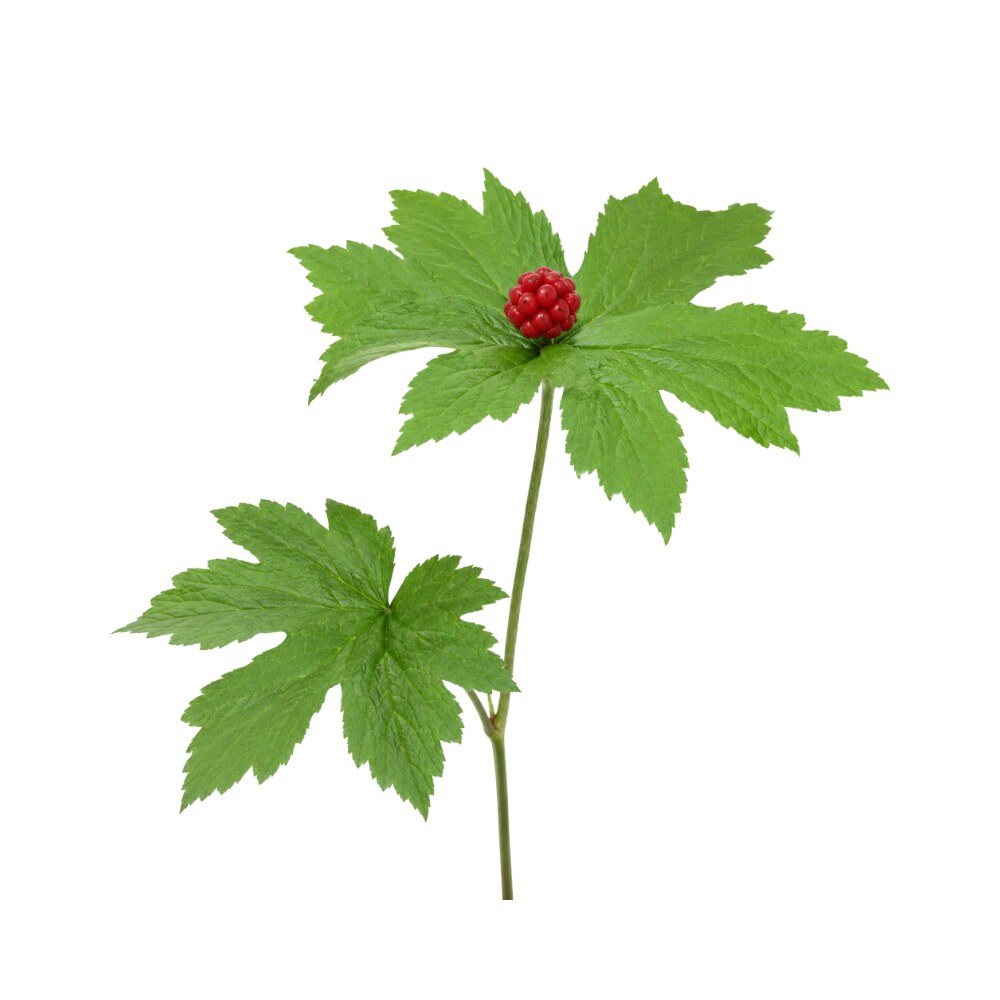
Goldenseal (Hydrastis canadensis) belongs to the buttercup family, Ranunculaceae. It is a small, slow-growing woodland perennial — a single hairy stem carrying two wrinkled, palmate-lobed leaves, one modest greenish flower and a single raspberry-like red fruit. The part that matters medicinally is hidden underground: a knotted, vivid-yellow rhizome, rich in the alkaloids berberine and hydrastine, that gives the plant both its colour and its name.
Distribution
Goldenseal is a plant of the rich, shaded deciduous woodlands of eastern North America, an understory herb that spreads slowly by rhizome rather than colonising open ground. Its wild populations are in decline: the medicinal root has been so heavily wild-harvested that the species now sits on CITES Appendix II and is assessed as at-risk, so cultivated or forest-farmed root is strongly preferred over anything wild-dug.
Growing Conditions
- Grows in the shaded understory of a mature deciduous woodland — dappled to deep shade, never full sun.
- Wants rich, moist, humusy soil with plenty of leaf mould and good drainage.
- Cold-hardy (roughly USDA zones 3–8), dying back each winter and returning from its rhizome.
- Propagates slowly, mainly by dividing the yellow rhizome; stands take years to establish.
- Growing your own — or buying cultivated/forest-farmed root — takes pressure off vulnerable wild populations.
- Full cultivation detail lives on the companion farm-wiki grow guide for Hydrastis canadensis (link to be added once that project’s public URL is confirmed).
Phytochemistry
Goldenseal’s activity is attributed mainly to its isoquinoline alkaloids, chiefly berberine and hydrastine — the two compounds to which commercial root is standardised. These are accompanied by canadine (tetrahydroberberine), canadaline, berberastine and tetrahydroberberastine. Berberine is the most studied, with well-documented antimicrobial activity; hydrastine and canadine contribute additional, distinct effects, and both are essentially unique to Hydrastis 32Reference 32Chemical comparison of goldenseal (Hydrastis canadensis L.) root powder from three commercial suppliers — analyticalView study →. Goldenseal also carries small amounts of C-methyl flavonoids — sideroxylin and 8-desmethyl-sideroxylin — which have no antibacterial action of their own but block bacterial efflux pumps, letting the whole extract out-perform pure berberine 7Reference 7In vitroAntimicrobial constituents from goldenseal (rhizomes of Hydrastis canadensis) against selected oral pathogens — in vitroView study →.
The alkaloids are concentrated in the root and rhizome — which is why these are the parts used medicinally — and total alkaloid content typically runs around 2.5–6% of dry root 32,33Reference 32Chemical comparison of goldenseal (Hydrastis canadensis L.) root powder from three commercial suppliers — analyticalView study →Reference 33Determination of hydrastine and berberine in goldenseal raw materials, extracts, and dietary supplements by HPLC with UV: collaborative study — analyticalView study →. For quality control, the US Pharmacopeia requires goldenseal supplements to contain at least 2% hydrastine and 2.5% berberine 33Reference 33Determination of hydrastine and berberine in goldenseal raw materials, extracts, and dietary supplements by HPLC with UV: collaborative study — analyticalView study →.
Constituent Summary
Figures are % of dry root/rhizome; alkaloid levels vary with provenance, age and processing.
Isoquinoline alkaloid6 compounds4 with data
C-methyl flavonoid1 compound1 with data
Pharmacology & Research
The research literature on goldenseal is substantial but sharply bifurcated. On one side sits a deep, well-replicated body of in vitro antimicrobial pharmacology — much of it built around the plant’s flagship alkaloid berberine, but with several careful studies showing that whole goldenseal extract behaves differently from isolated berberine, out-performing it against Staphylococcus aureus through flavonoid-mediated efflux-pump inhibition 1,2,3Reference 1In vitroSynergy-directed fractionation of botanical medicines: a case study with goldenseal (Hydrastis canadensis) — in vitroView study →Reference 2In vitroGoldenseal (Hydrastis canadensis L.) extracts synergistically enhance the antibacterial activity of berberine via efflux pump inhibition — in vitroView study →Reference 3In vitroQuorum quenching and antimicrobial activity of goldenseal (Hydrastis canadensis) against methicillin-resistant Staphylococcus aureus (MRSA) — in vitroView study →. On the other side, the strongest human data are not about efficacy at all: they are pharmacokinetic drug-interaction studies showing that goldenseal is a clinically meaningful inhibitor of CYP3A4, CYP2D6 and intestinal transporters 4,5Reference 4In vitroBiochemometrics to identify synergists and additives from botanical medicines: a case study with Hydrastis canadensis (goldenseal) — in vitroView study →Reference 5In vitroAn integrative approach to elucidate mechanisms underlying the pharmacokinetic goldenseal–midazolam interaction — in vitro and PBPK modellingView study →. No randomised controlled trial has tested goldenseal for any therapeutic indication. The single most important caveat runs through everything below — most “berberine” clinical evidence comes from isolated, high-dose berberine, and does not automatically transfer to goldenseal root taken as a tincture or capsule, where alkaloid content is lower and the constituent mix is different 18Reference 18ReviewGoldenseal (Hydrastis canadensis L.) and its active constituents: a critical review of their efficacy and toxicological issues — reviewView study →.
- Best-supported: broad-spectrum antibacterial activity, including against MRSA and oral pathogens, demonstrated repeatedly in vitro with whole-extract synergy beyond berberine alone 2,3,6,7Reference 2In vitroGoldenseal (Hydrastis canadensis L.) extracts synergistically enhance the antibacterial activity of berberine via efflux pump inhibition — in vitroView study →Reference 3In vitroQuorum quenching and antimicrobial activity of goldenseal (Hydrastis canadensis) against methicillin-resistant Staphylococcus aureus (MRSA) — in vitroView study →Reference 6In vitroAntibacterial activity of Hydrastis canadensis extract and its major isolated alkaloids — in vitroView study →Reference 7In vitroAntimicrobial constituents from goldenseal (rhizomes of Hydrastis canadensis) against selected oral pathogens — in vitroView study →.
- Emerging, worth watching: anti-Helicobacter pylori activity that maps onto the traditional gut-infection use 8,9Reference 8In vitroIn vitro susceptibility of Helicobacter pylori to isoquinoline alkaloids from Sanguinaria canadensis and Hydrastis canadensis — in vitroView study →Reference 9In vitroInvestigations into the antibacterial activities of phytotherapeutics against Helicobacter pylori and Campylobacter jejuni — in vitroView study →, and antifungal/antiviral signals that are real but cell-line-only 11,13Reference 11In vitroInhibition of H1N1 influenza A virus growth and induction of inflammatory mediators by the isoquinoline alkaloid berberine and extracts of goldenseal (Hydrastis canadensis) — in vitroView study →Reference 13In vitroSynergistic antifungal effects of botanical extracts against Candida albicans — in vitroView study →.
- Mechanistically thin: immunomodulant and “immune stimulant” claims — one macrophage study found whole goldenseal had little direct effect 10Reference 10In vitroImmune modulation of macrophage pro-inflammatory response by goldenseal and Astragalus extracts — in vitroView study →.
- The caveat: the entire efficacy base is preclinical; there is no standardised therapeutic dose, and isolated-berberine trials do not stand in for goldenseal.
1. Antibacterial
This is goldenseal’s best-evidenced activity, though every study is in vitro. Isolated alkaloids — berberine, β-hydrastine, canadine and canadaline — are directly bactericidal against Staphylococcus aureus, Streptococcus, E. coli and Pseudomonas, giving a rational basis for the traditional antibacterial use 6Reference 6In vitroAntibacterial activity of Hydrastis canadensis extract and its major isolated alkaloids — in vitroView study →. The more interesting finding is that whole goldenseal extract out-performs pure berberine: a leaf extract inhibited MRSA at a lower MIC (75 vs 150 µg/mL) than berberine alone, because sideroxylin and related C-methyl flavonoids inhibit the bacterial efflux pumps that would otherwise expel berberine, and the extract additionally shows anti-virulence (quorum-quenching) activity 2,3,7Reference 2In vitroGoldenseal (Hydrastis canadensis L.) extracts synergistically enhance the antibacterial activity of berberine via efflux pump inhibition — in vitroView study →Reference 3In vitroQuorum quenching and antimicrobial activity of goldenseal (Hydrastis canadensis) against methicillin-resistant Staphylococcus aureus (MRSA) — in vitroView study →Reference 7In vitroAntimicrobial constituents from goldenseal (rhizomes of Hydrastis canadensis) against selected oral pathogens — in vitroView study →. Synergy-directed fractionation and biochemometrics have since confirmed these flavonoid synergists as the constituents responsible 1,4Reference 1In vitroSynergy-directed fractionation of botanical medicines: a case study with goldenseal (Hydrastis canadensis) — in vitroView study →Reference 4In vitroBiochemometrics to identify synergists and additives from botanical medicines: a case study with Hydrastis canadensis (goldenseal) — in vitroView study →.
Gap: all data are laboratory MICs against cultured bacteria — there is no clinical trial, no oral-bioavailability data supporting systemic antibacterial use, and topical/mucosal (its traditional route) efficacy is untested in humans.
2. Anti-Helicobacter pylori
This indication is a subset of the antibacterial activity but worth separating because it maps directly onto goldenseal’s flagship use for digestive infection. Methanol extracts of Hydrastis rhizome inhibited 15 strains of H. pylori in vitro with an MIC50 in the 12.5–50 µg/mL range, with the isoquinoline alkaloids identified as the active fraction 8Reference 8In vitroIn vitro susceptibility of Helicobacter pylori to isoquinoline alkaloids from Sanguinaria canadensis and Hydrastis canadensis — in vitroView study →. A broader screen of gut-relevant phytotherapeutics likewise placed goldenseal among the extracts active against H. pylori and Campylobacter jejuni 9Reference 9In vitroInvestigations into the antibacterial activities of phytotherapeutics against Helicobacter pylori and Campylobacter jejuni — in vitroView study →.
Gap: in vitro susceptibility does not establish clinical eradication — no human study has tested whether oral goldenseal reaches inhibitory concentrations at the gastric mucosa or clears infection.
3. Anti-inflammatory
The mechanistic case rests largely on berberine, whose NF-κB and cytokine-modulating actions are well documented and have been reviewed specifically for inflammatory bowel disease 12Reference 12ReviewBerberine and inflammatory bowel disease: a concise reviewView study →. Whole-goldenseal evidence, however, is mixed: when two commercial goldenseal preparations were tested on cultured macrophages, they showed little to no direct effect on pro-inflammatory cytokine production 10Reference 10In vitroImmune modulation of macrophage pro-inflammatory response by goldenseal and Astragalus extracts — in vitroView study →. In a separate model, goldenseal extract and berberine inhibited H1N1 influenza replication while modulating TNF-α and PGE2 output, suggesting the anti-inflammatory action is context-dependent rather than a simple across-the-board suppression 11Reference 11In vitroInhibition of H1N1 influenza A virus growth and induction of inflammatory mediators by the isoquinoline alkaloid berberine and extracts of goldenseal (Hydrastis canadensis) — in vitroView study →.
Gap: the clearest anti-inflammatory data belong to isolated berberine at doses unrelated to goldenseal dosing; the one goldenseal-specific macrophage test was largely null, so the indication cannot be read across from berberine reviews.
4. Antifungal
Goldenseal and its alkaloids show in vitro antifungal activity, again mostly attributable to berberine. Berberine’s antifungal and anti-biofilm activity against Candida — including fluconazole-resistant strains — has been reviewed in detail 15Reference 15ReviewInhibitory effects of berberine on fungal growth, biofilm formation, virulence, and drug resistance — reviewView study →, and goldenseal extract featured among botanicals showing additive/synergistic anti-Candida interactions in checkerboard assays 13Reference 13In vitroSynergistic antifungal effects of botanical extracts against Candida albicans — in vitroView study →. The combined root alkaloids also affect germination of Fusarium isolated from goldenseal’s own rhizosphere, pointing to an ecological/antifungal role 14Reference 14In vitroEffects of root isoquinoline alkaloids from Hydrastis canadensis on Fusarium oxysporum isolated from Hydrastis root tissue — in vitroView study →.
Gap: activity is cell-line and agar-plate level, largely berberine-driven, with no in vivo or clinical antifungal data for goldenseal as used.
6. Immunomodulant
Goldenseal is traditionally sold as an “immune stimulant,” often paired with Echinacea, but the direct evidence is weak. In a six-week rat study, combined Echinacea-plus-goldenseal treatment raised antigen-specific IgG/IgM, yet the augmentation was principally attributable to the Echinacea component 16Reference 16AnimalIncreased production of antigen-specific immunoglobulins G and M following in vivo treatment with Echinacea angustifolia and Hydrastis canadensis — animal (rat)View study →. The macrophage study above found whole goldenseal had little direct immunostimulant effect on cytokine output 10Reference 10In vitroImmune modulation of macrophage pro-inflammatory response by goldenseal and Astragalus extracts — in vitroView study →.
Gap: no isolated goldenseal immunological benefit has been demonstrated; the positive antibody data are confounded by co-administered Echinacea, and there is no human evidence.
7. Antispasmodic
A single isolated-tissue study found that a total ethanolic goldenseal extract relaxed carbachol-precontracted guinea-pig trachea, with the effect traced to the alkaloid fraction — berberine, β-hydrastine, canadine and canadaline 17Reference 17Relaxant effects of Hydrastis canadensis L. and its major alkaloids on guinea pig isolated trachea — ex vivo animalView study →. This offers a plausible mechanism for the traditional use in respiratory/catarrhal complaints via smooth-muscle relaxation.
Gap: one ex vivo animal-tissue study; no whole-organism or human confirmation, and the doses are not relatable to oral use.
Mechanisms
| Mechanism | Drives | Key compounds |
|---|---|---|
| Membrane disruption, DNA/topoisomerase binding, post-translational block of viral protein maturation | antibacterialanti-H. pyloriantifungalantiviral | berberine, canadine, canadaline |
| Astringent/vasoconstrictive action on mucous membranes; smooth-muscle effects | antispasmodicmucous-membrane tonic | β-hydrastine |
| Bacterial efflux-pump (NorA) inhibition; potentiate berberine retention in the cell | antibacterial synergy (whole-extract > berberine) | sideroxylin, 8-desmethyl-sideroxylin |
| NF-κB ↓, cytokine modulation (context-dependent) | anti-inflammatory | berberine |
Clinical trials
No registered clinical trial has tested goldenseal for therapeutic efficacy in any indication — the efficacy base is entirely preclinical. The registered goldenseal trials that exist are pharmacokinetic drug-interaction studies (goldenseal as a CYP/transporter probe), which inform Safety rather than any indication.
| Completed | Planned | Terminated | Preclinical |
|---|---|---|---|
| 2(drug-interaction PK, e.g. NCT05081583, NCT03772262) | 0 | 0 | ~50+ |
Last checked: June 2025.
Clinical Applications
Goldenseal is most useful as a short-term antimicrobial and mucous-membrane tonic, especially for infections and inflammation of the digestive tract. It pairs naturally with other antimicrobial and bitter herbs in acute gut formulas, and with anticatarrhal herbs for sinus and respiratory congestion. Its antibacterial reputation rests on consistent laboratory data rather than human efficacy trials, of which there are none — so these applications are best read as traditional and preclinically-supported rather than clinically proven.
Because it’s potent, drying, and ecologically vulnerable, goldenseal is best reserved for situations where its specific action is needed rather than used routinely — and other berberine-containing herbs (such as barberry or Oregon grape) can often substitute for it.
Safety & Pregnancy
Goldenseal’s two headline risks are a clinically confirmed ability to inhibit drug metabolism (CYP3A4/CYP2D6) and dose-related liver tumours in long-term rodent feeding studies — together the basis for treating it as a genuine drug-interaction risk and reserving it for short-term use only.
- Liver-tumour risk. Dose-related liver tumours in two-year rodent feeding studies — the basis for “short-term use only”.
- Not in pregnancy or breastfeeding. Berberine crosses the placenta, risks neonatal kernicterus, and is a traditional uterine stimulant.
- Major drug interactions. Clinically confirmed CYP3A4 and CYP2D6 inhibitor — can raise blood levels of many prescription drugs.
- Phototoxic alkaloids. Isoquinoline alkaloids damage lens and retinal cells in vitro — worth noting given the traditional eyewash use.
- Frequent adulteration. Marketplace goldenseal is often substituted, so product identity cannot be assumed.
Full safety & interactions detail
Goldenseal is a clinically confirmed inhibitor of drug metabolism, and this is its most important safety property. Controlled human studies show it inhibits CYP3A4/CYP3A activity, raising the blood levels of co-administered CYP3A substrates such as midazolam by roughly 40–60%, and it inhibits CYP2D6 in humans as well 19,21Reference 19RCTClinical assessment of CYP2D6-mediated herb–drug interactions in humans: effects of milk thistle, black cohosh, goldenseal, kava kava, St John’s wort, and Echinacea — randomised human studyView study →Reference 21In vitroHuman cytochrome P450 inhibition and metabolic-intermediate complex formation by goldenseal extract and its methylenedioxyphenyl components — in vitroView study →. Because CYP3A and CYP2D6 between them handle a large share of prescription drugs, goldenseal should be treated as a genuine drug-interaction risk in anyone taking regular medication; it can also alter drug levels by inhibiting intestinal uptake transporters 22,31Reference 22In vitroAn in vitro evaluation of cytochrome P450 inhibition and P-glycoprotein interaction with goldenseal, Ginkgo biloba, grape seed, milk thistle, and ginseng extracts — in vitroView study →Reference 31AnimalGoldenseal-mediated inhibition of intestinal uptake transporters decreases metformin systemic exposure in mice — animal mechanistic studyView study →. The interaction is substrate-specific rather than universal — human crossover studies found no significant change in indinavir 20Reference 20Influence of goldenseal root on the pharmacokinetics of indinavir — human crossover studyView study → or, in type 2 diabetics, metformin 30Reference 30Clinical trialThe pharmacokinetic interaction between metformin and the natural product goldenseal is metformin dose-dependent: a three-arm crossover study in adults with type 2 diabetes — clinical trialView study → exposure — but the safe assumption for any prescribed drug is that goldenseal may interact until shown otherwise.
The other headline concern is carcinogenicity. In two-year rodent feeding studies, goldenseal root powder produced a dose-related increase in liver tumours — an effect linked to the topoisomerase-inhibiting and DNA-damaging activity of berberine and its metabolite berberrubine 23,24,25,26Reference 23AnimalToxicology and carcinogenesis studies of goldenseal root powder (Hydrastis canadensis) in F344/N rats and B6C3F1 mice (feed studies) — animal carcinogenicity bioassayView study →Reference 24Investigating the potential for toxicity from long-term use of the herbal products goldenseal and milk thistle — animalView study →Reference 25In vitroMechanism study of goldenseal-associated DNA damage — in vitroView study →Reference 26ReviewThe toxicity and pathology of selected dietary herbal medicines — review of animal carcinogenicity studiesView study →. This is the real basis for the traditional “short-term use only” rule. Two further cautions round out the picture: the isoquinoline alkaloids are phototoxic to human lens and retinal cells in vitro, which is worth noting given the traditional “eye balm” eyewash use 28Reference 28In vitroPhotochemistry and photocytotoxicity of alkaloids from goldenseal (Hydrastis canadensis L.) 3: effect on human lens and retinal pigment epithelial cells — in vitroView study →; and marketplace goldenseal is frequently adulterated or substituted, so product identity cannot be assumed 29Reference 29Detection of adulteration in Hydrastis canadensis (goldenseal) dietary supplements via untargeted metabolomics — analyticalView study →.
Avoid — goldenseal is contraindicated in pregnancy and lactation, and must not be given to newborns. The concern is berberine: it crosses the placenta and can displace bilirubin from albumin, raising the risk of kernicterus (bilirubin-related brain injury) in neonates 26Reference 26ReviewThe toxicity and pathology of selected dietary herbal medicines — review of animal carcinogenicity studiesView study →. A rat reproductive screen at very high oral doses did not confirm frank teratogenicity — the authors attributed this to poor intestinal absorption — but the contraindication stands on the bilirubin-displacement mechanism, and berberine is also a traditional uterine stimulant 27Reference 27AnimalA reproductive screening test of goldenseal — animal (rat)View study →.
References
- Junio, H. A., Sy-Cordero, A. A., Ettefagh, K. A., et al. (2011). Synergy-directed fractionation of botanical medicines: a case study with goldenseal (Hydrastis canadensis) — in vitro. Journal of Natural Products. https://pubmed.ncbi.nlm.nih.gov/21661731/
- Ettefagh, K. A., Burns, J. T., Junio, H. A., et al. (2011). Goldenseal (Hydrastis canadensis L.) extracts synergistically enhance the antibacterial activity of berberine via efflux pump inhibition — in vitro. Planta Medica. https://pubmed.ncbi.nlm.nih.gov/21157683/
- Cech, N. B., Junio, H. A., Ackermann, L. W., et al. (2012). Quorum quenching and antimicrobial activity of goldenseal (Hydrastis canadensis) against methicillin-resistant Staphylococcus aureus (MRSA) — in vitro. Planta Medica. https://pubmed.ncbi.nlm.nih.gov/22814821/
- Britton, E. R., Kellogg, J. J., Kvalheim, O. M., & Cech, N. B. (2018). Biochemometrics to identify synergists and additives from botanical medicines: a case study with Hydrastis canadensis (goldenseal) — in vitro. Journal of Natural Products. https://pubmed.ncbi.nlm.nih.gov/29091439/
- Nguyen, J. T., Tian, D. D., Tanna, R. S., et al. (2023). An integrative approach to elucidate mechanisms underlying the pharmacokinetic goldenseal–midazolam interaction — in vitro and PBPK modelling. Journal of Pharmacology and Experimental Therapeutics. https://pubmed.ncbi.nlm.nih.gov/37541764/
- Scazzocchio, F., Cometa, M. F., Tomassini, L., & Palmery, M. (2001). Antibacterial activity of Hydrastis canadensis extract and its major isolated alkaloids — in vitro. Planta Medica. https://pubmed.ncbi.nlm.nih.gov/11509983/
- Hwang, B. Y., Roberts, S. K., Chadwick, L. R., et al. (2003). Antimicrobial constituents from goldenseal (rhizomes of Hydrastis canadensis) against selected oral pathogens — in vitro. Planta Medica. https://pubmed.ncbi.nlm.nih.gov/12898417/
- Mahady, G. B., Pendland, S. L., Stoia, A., & Chadwick, L. R. (2003). In vitro susceptibility of Helicobacter pylori to isoquinoline alkaloids from Sanguinaria canadensis and Hydrastis canadensis — in vitro. Phytotherapy Research. https://pubmed.ncbi.nlm.nih.gov/12672149/
- Cwikla, C., Schmidt, K., Matthias, A., et al. (2010). Investigations into the antibacterial activities of phytotherapeutics against Helicobacter pylori and Campylobacter jejuni — in vitro. Phytotherapy Research. https://pubmed.ncbi.nlm.nih.gov/19653313/
- Clement-Kruzel, S., Hwang, S. A., Kruzel, M. C., et al. (2008). Immune modulation of macrophage pro-inflammatory response by goldenseal and Astragalus extracts — in vitro. Journal of Medicinal Food. https://pubmed.ncbi.nlm.nih.gov/18800897/
- Cecil, C. E., Davis, J. M., Cech, N. B., & Laster, S. M. (2011). Inhibition of H1N1 influenza A virus growth and induction of inflammatory mediators by the isoquinoline alkaloid berberine and extracts of goldenseal (Hydrastis canadensis) — in vitro. International Immunopharmacology. https://pubmed.ncbi.nlm.nih.gov/21683808/
- Habtemariam, S. (2016). Berberine and inflammatory bowel disease: a concise review. Pharmacological Research. https://pubmed.ncbi.nlm.nih.gov/27697643/
- Cho, E., et al. (2026). Synergistic antifungal effects of botanical extracts against Candida albicans — in vitro. PLoS One. https://pubmed.ncbi.nlm.nih.gov/41525270/
- Tims, M. C., & Batista, C. (2007). Effects of root isoquinoline alkaloids from Hydrastis canadensis on Fusarium oxysporum isolated from Hydrastis root tissue — in vitro. Journal of Chemical Ecology. https://pubmed.ncbi.nlm.nih.gov/17549565/
- Ding, J., et al. (2024). Inhibitory effects of berberine on fungal growth, biofilm formation, virulence, and drug resistance — review. World Journal of Microbiology and Biotechnology. https://pubmed.ncbi.nlm.nih.gov/39690297/
- Rehman, J., Dillow, J. M., Carter, S. M., et al. (1999). Increased production of antigen-specific immunoglobulins G and M following in vivo treatment with Echinacea angustifolia and Hydrastis canadensis — animal (rat). Immunology Letters. https://pubmed.ncbi.nlm.nih.gov/10424448/
- Abdel-Haq, H., Cometa, M. F., Palmery, M., et al. (2000). Relaxant effects of Hydrastis canadensis L. and its major alkaloids on guinea pig isolated trachea — ex vivo animal. Pharmacology & Toxicology. https://pubmed.ncbi.nlm.nih.gov/11129501/
- Mandal, S. K., Maji, A. K., Mishra, S. K., et al. (2020). Goldenseal (Hydrastis canadensis L.) and its active constituents: a critical review of their efficacy and toxicological issues — review. Pharmacological Research. https://pubmed.ncbi.nlm.nih.gov/32683037/
- Gurley, B. J., Swain, A., Hubbard, M. A., et al. (2008). Clinical assessment of CYP2D6-mediated herb–drug interactions in humans: effects of milk thistle, black cohosh, goldenseal, kava kava, St John’s wort, and Echinacea — randomised human study. Molecular Nutrition & Food Research. https://pubmed.ncbi.nlm.nih.gov/18214849/
- Sandhu, R. S., Prescilla, R. P., Simonelli, T. M., & Edwards, D. J. (2003). Influence of goldenseal root on the pharmacokinetics of indinavir — human crossover study. Journal of Clinical Pharmacology. https://pubmed.ncbi.nlm.nih.gov/14551183/
- Chatterjee, P., & Franklin, M. R. (2003). Human cytochrome P450 inhibition and metabolic-intermediate complex formation by goldenseal extract and its methylenedioxyphenyl components — in vitro. Drug Metabolism and Disposition. https://pubmed.ncbi.nlm.nih.gov/14570772/
- Etheridge, A. S., Black, S. R., Patel, P. R., et al. (2007). An in vitro evaluation of cytochrome P450 inhibition and P-glycoprotein interaction with goldenseal, Ginkgo biloba, grape seed, milk thistle, and ginseng extracts — in vitro. Planta Medica. https://pubmed.ncbi.nlm.nih.gov/17611934/
- National Toxicology Program. (2010). Toxicology and carcinogenesis studies of goldenseal root powder (Hydrastis canadensis) in F344/N rats and B6C3F1 mice (feed studies) — animal carcinogenicity bioassay. National Toxicology Program Technical Report Series. https://pubmed.ncbi.nlm.nih.gov/21372858/
- Dunnick, J. K., Singh, B., Nyska, A., et al. (2011). Investigating the potential for toxicity from long-term use of the herbal products goldenseal and milk thistle — animal. Toxicologic Pathology. https://pubmed.ncbi.nlm.nih.gov/21300790/
- Chen, S., Wan, L., Couch, L., et al. (2013). Mechanism study of goldenseal-associated DNA damage — in vitro. Toxicology Letters. https://pubmed.ncbi.nlm.nih.gov/23747414/
- Dunnick, J. K., & Nyska, A. (2013). The toxicity and pathology of selected dietary herbal medicines — review of animal carcinogenicity studies. Toxicologic Pathology. https://pubmed.ncbi.nlm.nih.gov/23262639/
- Yao, M., Ritchie, H. E., & Brown-Woodman, P. D. (2005). A reproductive screening test of goldenseal — animal (rat). Birth Defects Research Part B: Developmental and Reproductive Toxicology. https://pubmed.ncbi.nlm.nih.gov/16193497/
- Chignell, C. F., Sik, R. H., Watson, M. A., & Wielgus, A. R. (2007). Photochemistry and photocytotoxicity of alkaloids from goldenseal (Hydrastis canadensis L.) 3: effect on human lens and retinal pigment epithelial cells — in vitro. Photochemistry and Photobiology. https://pubmed.ncbi.nlm.nih.gov/17645667/
- Wallace, E. D., Todd, D. A., Harnly, J. M., et al. (2018). Detection of adulteration in Hydrastis canadensis (goldenseal) dietary supplements via untargeted metabolomics — analytical. Food and Chemical Toxicology. https://pubmed.ncbi.nlm.nih.gov/30031041/
- Nguyen, J. T., Tanna, R. S., Hidalgo, M. E., et al. (2025). The pharmacokinetic interaction between metformin and the natural product goldenseal is metformin dose-dependent: a three-arm crossover study in adults with type 2 diabetes — clinical trial. Clinical and Translational Science. https://pubmed.ncbi.nlm.nih.gov/39943692/
- Tanna, R. S., Nguyen, J. T., Hadi, D. L., et al. (2023). Goldenseal-mediated inhibition of intestinal uptake transporters decreases metformin systemic exposure in mice — animal mechanistic study. Drug Metabolism and Disposition. https://pubmed.ncbi.nlm.nih.gov/37562957/
- Weber, H. A., Zart, M. K., Hodges, A. E., et al. (2003). Chemical comparison of goldenseal (Hydrastis canadensis L.) root powder from three commercial suppliers — analytical. Journal of Agricultural and Food Chemistry, 51(25), 7352–7358. https://pubmed.ncbi.nlm.nih.gov/14640583/
- Brown, P. N., & Roman, M. C. (2008). Determination of hydrastine and berberine in goldenseal raw materials, extracts, and dietary supplements by HPLC with UV: collaborative study — analytical. Journal of AOAC International, 91(4), 694–701. https://pubmed.ncbi.nlm.nih.gov/18727530/