
Materia Medica
Jatobá
Hymenaea courbaril
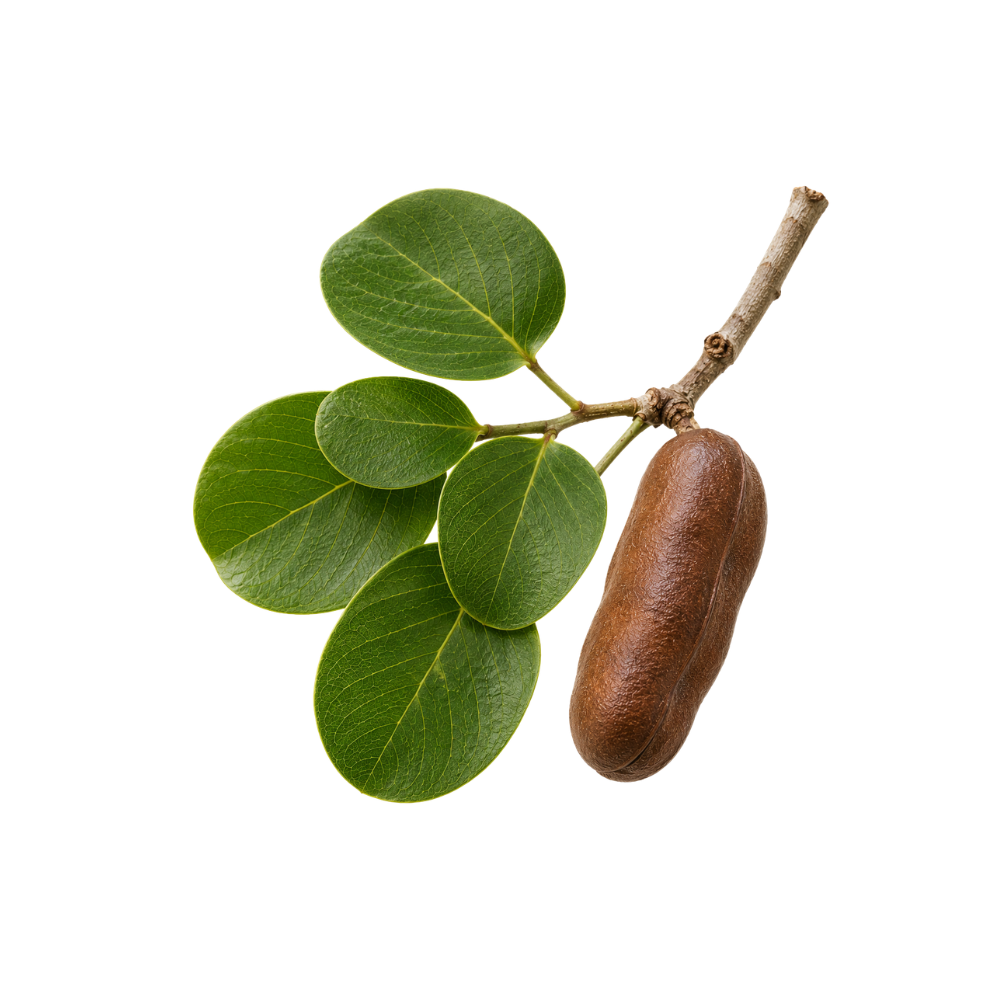
Jatoba (Hymenaea courbaril) — an Amazonian medicinal tree bark traditionally used for cystitis, prostatitis, fungal and Candida infections.
What Is Jatobá?
Jatobá is a large tropical tree native to the Amazon Basin, Central America, the Caribbean, and parts of South America. The tree is valued for its dense hardwood, edible fruit pulp, aromatic resin, and medicinal bark.
In Amazonian and Brazilian folk medicine, jatobá bark has traditionally been used as an antimicrobial, antifungal, astringent, and tonic remedy. It is especially associated with urinary tract complaints, prostate inflammation, fungal infections, intestinal parasites, coughs, and chronic inflammatory conditions.
The bark is rich in tannins, flavonoids, resins, and other phenolic compounds, giving it a drying, astringent, and antimicrobial profile.
How Is Jatobá Used?
Jatobá is most commonly prepared as a decoction, tincture, powder, capsule, or resin preparation.
Traditional use focuses primarily on urinary and reproductive complaints such as cystitis, prostatitis, and pelvic inflammation. The bark is also used for fungal infections, Candida overgrowth, intestinal worms, coughs, and general microbial conditions. It’s worth being clear that these traditional urinary and prostate uses are where jatobá’s reputation sits, but not where its evidence sits — the experimental literature has barely tested them (see the research section below).
Because the bark is astringent and resinous, decoctions are commonly used when a stronger traditional preparation is desired. Tinctures and capsules are more common in modern herbal commerce.
Topically, jatobá preparations have been used traditionally for wounds, fungal skin infections, and irritated tissue.
Traditional Uses
Amazonian Herbal Medicine
In Amazonian herbal medicine, jatobá bark is regarded as a strengthening, astringent, and antimicrobial tree medicine.
Traditional indications include cystitis, prostatitis, Candida, fungal infections, respiratory complaints, coughs, hepatitis, stomach complaints, diarrhea, and intestinal parasites.
The bark and resin are both used depending on the region, preparation, and condition.
Brazilian Folk Medicine
In Brazilian folk medicine, jatobá is commonly used for urinary complaints, prostate conditions, respiratory irritation, bronchitis, fungal infections, wounds, and general inflammation.
The fruit pulp is also consumed as food and is considered nourishing, while the bark and resin are used more specifically as medicinal preparations.
Modern Western Herbal Use
Jatobá is less established in formal Western herbal medicine but appears in contemporary Amazonian and rainforest herb traditions as an antimicrobial, antifungal, urinary, and prostate-support herb.
Modern use remains largely based on traditional practice and preliminary pharmacological research rather than standardized clinical trials.
Indications
Jatobá is primarily indicated in traditional medicine for urinary, reproductive, fungal, and microbial conditions.
Common traditional indications include:
- Acute cystitis
- Chronic cystitis
- Acute prostatitis
- Chronic prostatitis
- Fungal infections
- Candida overgrowth
- Intestinal parasites
- Worm infections
- Cough
- Bronchitis
- Skin fungal infections
- Wounds
- Diarrhea
- General inflammatory conditions
Clinically, jatobá is best regarded as a traditional antimicrobial and astringent herb rather than a well-standardized modern botanical medicine.
Botany
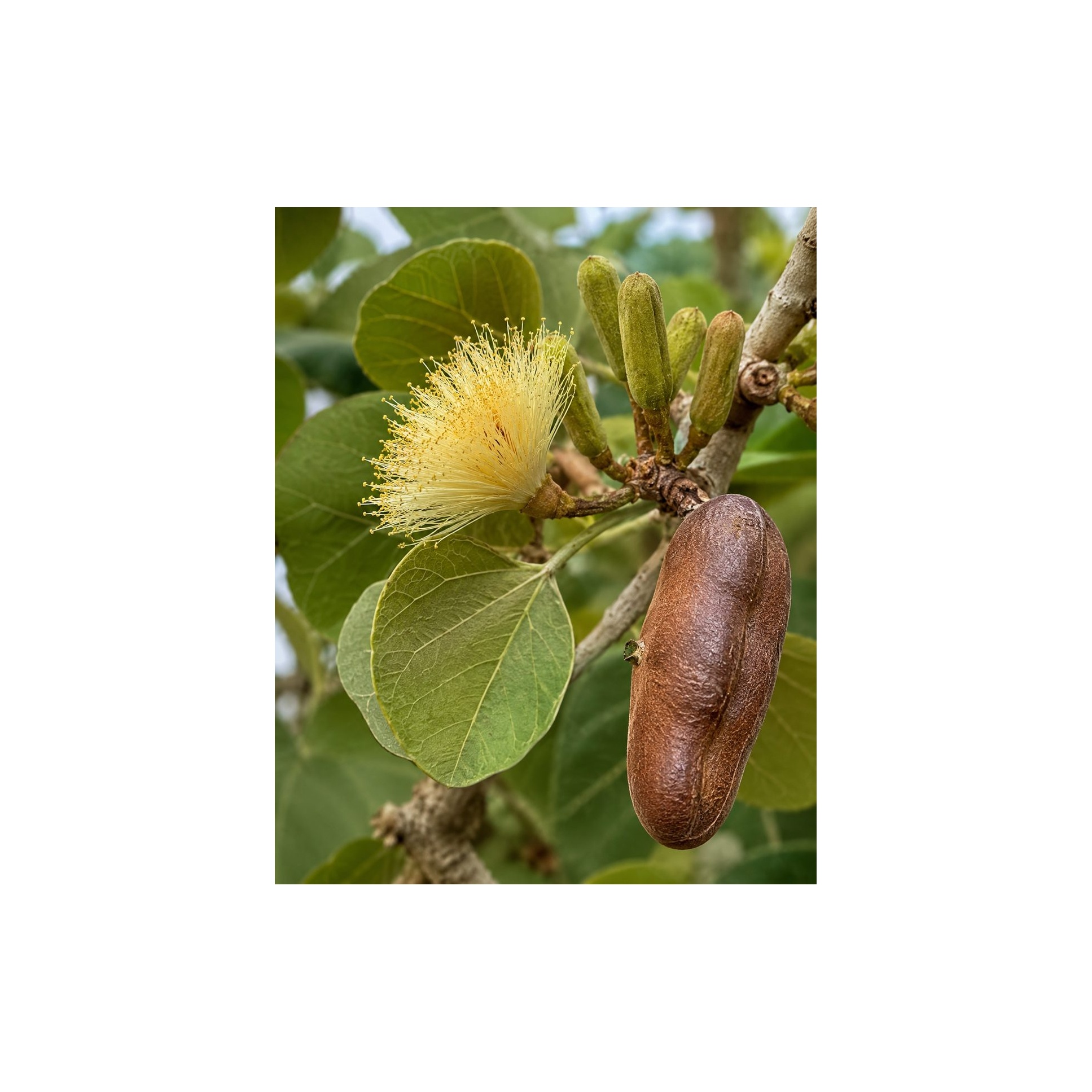
Jatobá is Hymenaea courbaril, a towering Amazonian legume tree in the family Fabaceae — a relative of the beans and acacias, but built on the scale of a rainforest giant, reaching well over 30 metres with a broad, shady crown and paired hoof-shaped leaflets.
For the herbalist, the plant offers three distinct materials. The bark is the classic medicinal part, taken as a decoction. The tree also weeps a hard, fragrant resin — the “copal” that lends the plant its old name Brazilian copal, an amber-coloured gum once burned as incense and, geologically, one of the resins that fossilises into true amber. The same trunk supplies the dense reddish timber sold as “Brazilian cherry.”
The seed pods enclose a dry, mealy pulp — edible, if famously pungent. Because bark, resin, sap, leaf and fruit each carry different chemistry, it is worth noting which part a given traditional use or study refers to; a result for one does not transfer to another.
Distribution
Hymenaea courbaril is native to the tropical Americas, growing wild from Mexico and the Caribbean down through Central America and across the great forests of South America to Brazil and Bolivia. It is a lowland rainforest species, most at home in warm, humid tropical climates.
Growing Conditions
- A strictly tropical tree — it needs frost-free, warm conditions year-round and only suits the ground outdoors in true tropical or near-tropical climates (roughly USDA zones 10–12).
- Wants full sun once established, though seedlings tolerate some shade under a forest canopy.
- Prefers deep, well-drained soils and thrives with the moisture of a wet tropical climate, but a mature tree copes with seasonal dry spells.
- Slow-growing and very long-lived; give it plenty of room, as it eventually becomes a massive canopy tree far too large for a small garden.
- Full cultivation detail lives on the companion farm-wiki grow guide for Hymenaea courbaril (link to be added once that project’s public URL is confirmed).
Pharmacology & Research
Research on jatobá is small, recent, and almost entirely preclinical: a few dozen papers on Hymenaea courbaril itself, supplemented by studies on close congeners (H. stigonocarpa, H. martiana, H. eriogyne) that share the herb’s characteristic flavonoid, astilbin. The evidence sits at the in-vitro and animal tier — no randomised or human clinical trial of jatobá exists for any indication, and none is registered 20Reference 20ReviewChemical and biological properties of Hymenaea courbaril L.: a reviewView study →. The most replicated finding is antioxidant/phenolic activity across bark, leaf and seed; the most mechanistically developed are the bark’s astilbin-linked anti-inflammatory and smooth-muscle-relaxant effects 1Reference 1In vitroPhytochemical study guided by the myorelaxant activity of the crude extract, fractions and constituent from stem bark of Hymenaea courbaril L. — animal, in vitroView study → and the antifungal activity of the fresh xylem sap and its constituent fisetin 7Reference 7In vitroAntifungal and cytotoxicity activities of the fresh xylem sap of Hymenaea courbaril L. and its major constituent fisetin — in vitroView study →. A recurring caveat runs through all of it: activity is preparation- and plant-part-specific — the antifungal work uses sap not bark decoction, the larvicidal work uses fruit-peel essential oil, and the flagship traditional uses (cystitis, prostatitis) have never been tested directly.
- Best-supported: consistent in-vitro antioxidant/high-phenolic activity across bark, leaf and seed 1,2,4,5,6Reference 1In vitroPhytochemical study guided by the myorelaxant activity of the crude extract, fractions and constituent from stem bark of Hymenaea courbaril L. — animal, in vitroView study →Reference 2In vitroEvaluation of the antioxidant, antimicrobial, and anti-biofilm effects of the stem bark, leaf, and seed extracts from Hymenaea courbaril — in vitroView study →Reference 4In vitroExtracts from jatobá (Hymenaea courbaril L.) peel and seeds: antioxidant and antimicrobial activity — in vitroView study →Reference 5In vitroGenotoxicity, anti-melanoma and antioxidant activities of Hymenaea courbaril L. seed extract — in vitro, animalView study →Reference 6In vitroChemical prospection and antioxidant activity of Humiria balsamifera and Hymenaea courbaril L. — in vitroView study →; antibacterial action of bark extracts including against MRSA and S. aureus biofilm 2,3,4Reference 2In vitroEvaluation of the antioxidant, antimicrobial, and anti-biofilm effects of the stem bark, leaf, and seed extracts from Hymenaea courbaril — in vitroView study →Reference 3In vitroAssessment of cytotoxic and antimicrobial activity of Hymenaea courbaril L. stem barks extract — in vitro, in silicoView study →Reference 4In vitroExtracts from jatobá (Hymenaea courbaril L.) peel and seeds: antioxidant and antimicrobial activity — in vitroView study →; astilbin-driven anti-inflammatory and myorelaxant effects of the stem bark in rats 1Reference 1In vitroPhytochemical study guided by the myorelaxant activity of the crude extract, fractions and constituent from stem bark of Hymenaea courbaril L. — animal, in vitroView study →.
- Emerging, worth watching: antifungal activity of the xylem sap and fisetin against Cryptococcus and dermatophytes 7Reference 7In vitroAntifungal and cytotoxicity activities of the fresh xylem sap of Hymenaea courbaril L. and its major constituent fisetin — in vitroView study →; α-amylase inhibition lowering starch-induced hyperglycaemia in mice 13Reference 13In vitroInhibitory effects of aqueous and hydroalcoholic extracts from jatobá coat (Hymenaea courbaril) on α-amylase — in vitro, animalView study →.
- Mechanistically thin: antiviral, anticancer and antiparasitic signals rest on single in-vitro screens, often in a plant part or preparation the herb isn’t used as.
- The caveat: everything is preclinical. There is no standardised dose, no human data, and marked variation between bark, sap, resin, seed and fruit-peel preparations — a result in one does not transfer to another.
1. Antioxidant
This is the herb’s most reproduced activity. Bioassay-guided work on the stem bark found the whole ethanol extract and several fractions strongly scavenged the DPPH radical 1Reference 1In vitroPhytochemical study guided by the myorelaxant activity of the crude extract, fractions and constituent from stem bark of Hymenaea courbaril L. — animal, in vitroView study →, and independent studies since have reported high total phenolic content and antioxidant capacity in bark, leaf and seed extracts 2,4,5,6Reference 2In vitroEvaluation of the antioxidant, antimicrobial, and anti-biofilm effects of the stem bark, leaf, and seed extracts from Hymenaea courbaril — in vitroView study →Reference 4In vitroExtracts from jatobá (Hymenaea courbaril L.) peel and seeds: antioxidant and antimicrobial activity — in vitroView study →Reference 5In vitroGenotoxicity, anti-melanoma and antioxidant activities of Hymenaea courbaril L. seed extract — in vitro, animalView study →Reference 6In vitroChemical prospection and antioxidant activity of Humiria balsamifera and Hymenaea courbaril L. — in vitroView study →. The activity tracks the phenolic load — flavonoids such as astilbin and its aglycone taxifolin, plus condensed procyanidins and simple flavan-3-ols like catechin and epicatechin identified by HPLC/UPLC 2,3Reference 2In vitroEvaluation of the antioxidant, antimicrobial, and anti-biofilm effects of the stem bark, leaf, and seed extracts from Hymenaea courbaril — in vitroView study →Reference 3In vitroAssessment of cytotoxic and antimicrobial activity of Hymenaea courbaril L. stem barks extract — in vitro, in silicoView study →. Seed extracts also showed an antigenotoxic (DNA-protective) effect alongside the radical scavenging 5Reference 5In vitroGenotoxicity, anti-melanoma and antioxidant activities of Hymenaea courbaril L. seed extract — in vitro, animalView study →. All measurements are cell-free chemical assays or cell-line work; none establishes an antioxidant effect in a living human.
Gap: No in-vivo antioxidant biomarker study and no human data — the finding is a chemical property of the extract, not a demonstrated clinical effect.
2. Antimicrobial
Bark and seed extracts inhibit a range of bacteria in vitro. A standardised stem-bark extract inhibited a methicillin-resistant Staphylococcus aureus (MRSA) clinical isolate and was rich in catechin and epicatechin 3Reference 3In vitroAssessment of cytotoxic and antimicrobial activity of Hymenaea courbaril L. stem barks extract — in vitro, in silicoView study →; another bark study found leaf extracts suppressed S. aureus biofilm formation by ~78%, comparable to chloramphenicol in that assay 2Reference 2In vitroEvaluation of the antioxidant, antimicrobial, and anti-biofilm effects of the stem bark, leaf, and seed extracts from Hymenaea courbaril — in vitroView study →. Fruit peel-and-seed extracts inhibited P. aeruginosa, Bacillus spp., Enterococcus faecalis and Salmonella, with marked synergy when peel and seed extracts were combined 4Reference 4In vitroExtracts from jatobá (Hymenaea courbaril L.) peel and seeds: antioxidant and antimicrobial activity — in vitroView study →. Congeneric H. stigonocarpa bark produced similar anti-staphylococcal effects with visible ultrastructural damage to the cell wall, attributed to its tannins and flavonoids 18Reference 18In vitroPhytochemical and antibacterial investigations of the stem bark of Hymenaea stigonocarpa and its effect on Staphylococcus aureus ultrastructure — in vitroView study →. The activity is consistent but modest (MICs largely in the 64–526 µg/mL range) and entirely in vitro.
Gap: No in-vivo infection model and no clinical work; MIC values are too high to imply systemic antibiotic-level potency.
3. Anti-inflammatory
The direct evidence is one rat study: the stem-bark ethanol extract and its ethyl-acetate fraction reduced ovalbumin-induced leukocytosis and airway hyperresponsiveness, with the isolated flavonoid astilbin implicated in the effect 1Reference 1In vitroPhytochemical study guided by the myorelaxant activity of the crude extract, fractions and constituent from stem bark of Hymenaea courbaril L. — animal, in vitroView study →. The surrounding genus literature strengthens the mechanism — in H. martiana (“jatobá” in northeastern Brazil), the astilbin-containing bark extract reduced carrageenan paw oedema, peritoneal leukocyte migration and nociception in mice 9Reference 9AnimalAntinociceptive and anti-inflammatory activities of Hymenaea martiana Hayne (Fabaceae) in mice — animal modelView study →, and H. eriogyne bark extract lowered oedema, pro-inflammatory cytokines, MDA and myeloperoxidase in two in-vivo models, with the higher-astilbin bark outperforming the leaf 10Reference 10Anti-inflammatory and antiophidic effects of Hymenaea eriogyne Benth extract and in-silico structure–activity prediction — animal, in silicoView study →. Astilbin’s parent flavonoid also restored lipid peroxides and tissue prostanoids in a rat hepatotoxicity model 11Reference 11AnimalProstanoids and free radicals in CCl4-induced hepatotoxicity in rats: effect of astilbin — animal modelView study →. The through-line is astilbin as a shared anti-inflammatory marker across the genus.
Gap: Only one study uses H. courbaril itself; the strongest in-vivo data are from congeners, and there is no human anti-inflammatory evidence.
4. Antifungal
The best antifungal data come from the fresh xylem sap, not the bark. Filtered H. courbaril sap and its major constituent fisetin inhibited the Cryptococcus neoformans species complex and dermatophytes at MIC <256 µg/mL (sap) and <128 µg/mL (fisetin), with fisetin showing lower toxicity to animal cells than the crude sap 7Reference 7In vitroAntifungal and cytotoxicity activities of the fresh xylem sap of Hymenaea courbaril L. and its major constituent fisetin — in vitroView study →. Separately, the leaf sesquiterpenoid caryophyllene oxide — the epoxide of β-caryophyllene — was identified decades ago as the compound making the tree’s foliage antifungal and repellent to fungus-growing ants 8Reference 8In vitroAn antifungal terpenoid defends a neotropical tree (Hymenaea) against attack by fungus-growing ants — in vitro, ecologicalView study →. Both findings are in vitro / ecological. Crucially, the constituent responsible (sap fisetin, leaf caryophyllene oxide) is concentrated in parts and preparations different from the tannin-rich bark decoction used traditionally for Candida and skin fungus — so the score is capped for preparation mismatch.
Gap: No study tests the bark preparation people actually use against fungi, and there is no clinical antifungal data.
5. Antispasmodic
In the same bioassay-guided bark study, the ethyl-acetate fraction relaxed pre-contracted rat tracheal smooth muscle, and the isolated astilbin reproduced part of that effect 1Reference 1In vitroPhytochemical study guided by the myorelaxant activity of the crude extract, fractions and constituent from stem bark of Hymenaea courbaril L. — animal, in vitroView study →. Mechanistically, the fraction blunted contractions dependent on calcium entry through voltage- and receptor-operated calcium channels — a plausible basis for the traditional use of jatobá bark in bronchitis, cough and asthma. This is a single ex-vivo study on isolated tissue.
Gap: One study, isolated tissue only; no whole-animal bronchodilation or respiratory-outcome data, let alone human.
7. Antidiabetic
Extracts of the jatobá fruit coat — an industrial by-product of jatobá-flour milling — inhibited α-amylase in vitro (IC50 ~51–82 µg/mL, non-competitive) and reduced starch-induced hyperglycaemia when given to mice in a starch-tolerance test 13Reference 13In vitroInhibitory effects of aqueous and hydroalcoholic extracts from jatobá coat (Hymenaea courbaril) on α-amylase — in vitro, animalView study →. In-silico work attributed the effect to procyanidin dimers and rhamnosides of taxifolin and quercetin. This is a genuine in-vivo pharmacological signal, but it uses the fruit coat, not the medicinal bark, so it speaks to the plant’s chemistry more than to the herb as traditionally used.
Gap: Single study, wrong plant part for the herbal preparation, and no glucose-lowering data in a diabetic model or in humans.
8. Anticancer
Evidence is cell-line only. A hydroethanolic H. courbaril seed extract was cytotoxic to B16F10 melanoma cells in a dose- and time-dependent manner while also showing antigenotoxic and antioxidant activity in the same work 5Reference 5In vitroGenotoxicity, anti-melanoma and antioxidant activities of Hymenaea courbaril L. seed extract — in vitro, animalView study →, and a standardised bark extract was profiled for cytotoxicity in RAW 264.7 macrophages during antimicrobial testing 3Reference 3In vitroAssessment of cytotoxic and antimicrobial activity of Hymenaea courbaril L. stem barks extract — in vitro, in silicoView study →. At the constituent level, dihydroflavonol rhamnosides from the congener H. parvifolia inhibited casein kinase II, a kinase relevant to proliferation 19Reference 19In vitroCasein kinase II inhibitors isolated from Hymenaea parvifolia and Wulffia baccata — in vitroView study →. Nothing has progressed to an in-vivo tumour model.
Gap: In-vitro cytotoxicity in one or two cell lines is not evidence of anticancer efficacy; no animal or human oncology data exist.
9. Antiparasitic
The traditional use is for intestinal worms, but the experimental data are insecticidal and protozoal rather than anthelmintic. The essential oils of the fruit peel were larvicidal against Aedes aegypti mosquito larvae — the ripe-peel oil (dominated by α-copaene, spathulenol and β-selinene) was the more potent at LC50 14.8 µg/mL, while the unripe-peel oil (rich in germacrene-D ~32% and β-caryophyllene ~27%) gave LC50 28.4 µg/mL; the diterpene zanzibaric acid was isolated from the ripe peel 14Reference 14In vitroChemical constituents and larvicidal activity of Hymenaea courbaril fruit peel — in vitroView study →. Whole-plant extracts showed only weak acaricidal activity against cattle ticks 15Reference 15In vitroIn vitro acaricidal efficacy of plant extracts from Brazilian flora against Rhipicephalus microplus — in vitroView study →, moderate antileishmanial activity in leaf extracts (IC50 ~36–44 µg/mL) 16Reference 16In vitroAntileishmanial activity and cytotoxicity of Brazilian plants — in vitroView study →, and H. courbaril was inactive in an antiplasmodial screen where other species carried the effect 17Reference 17In vitroIn vitro antiplasmodial investigation of medicinal plants from El Salvador — in vitroView study →. None of this tests the herb against the intestinal helminths it is traditionally used for.
Gap: No anthelmintic study of the medicinal preparation; the positive signals are in mosquito larvae and use the fruit-peel oil, a preparation mismatch with a target mismatch.
Mechanisms
| Mechanism | Drives | Key compounds |
|---|---|---|
| Radical scavenging, high phenolic load | antioxidantanti-inflammatory | astilbin, taxifolin, catechin, epicatechin |
| Cytokine / MPO / MDA reduction, leukocyte-migration block | anti-inflammatory | astilbin |
| Voltage- & receptor-operated Ca²⁺-channel inhibition | antispasmodic (myorelaxant) | astilbin |
| Membrane / cell-wall disruption, tannin protein-binding | antimicrobialantifungal | procyanidins, fisetin, catechin |
| Fungal-membrane / ergosterol interference | antifungal | fisetin, caryophyllene oxide |
| α-Amylase inhibition (non-competitive) | antidiabetic | procyanidin dimers, taxifolin |
Clinical trials
No registered or completed clinical trials of Hymenaea courbaril were identified on ClinicalTrials.gov for any indication — the entire evidence base is preclinical.
| Completed | Planned | Terminated | Preclinical |
|---|---|---|---|
| 0 | 0 | 0 | ~25–30 |
Last checked: July 2026.
Phytochemistry
The phytochemistry of Hymenaea courbaril divides between the phenolic fraction of the bark and the terpenoid fraction of the resin and oil. Bioassay-guided study of the stem bark identified the flavanonol astilbin (taxifolin 3-O-rhamnoside) and its aglycone taxifolin as the major phenolics, with astilbin carrying much of the bark’s myorelaxant and anti-inflammatory activity; the related flavonol fisetin is the dominant compound of the fresh xylem sap and the principal antifungal constituent. HPLC/UPLC profiling of the standardised stem-bark extract also identifies the flavan-3-ols catechin and epicatechin as major bark phenolics. Astringent procyanidins (condensed tannins) account for the drying character of bark decoctions, while the aromatic resin and essential oil are rich in the sesquiterpene β-caryophyllene and in labdane-type diterpene resin acids such as zanzibaric acid.
Constituent Summary
Reported from the stem bark, xylem sap, trunk resin and essential oil of Hymenaea courbaril. Most bark and resin constituents have been identified and characterised structurally rather than quantified as a percentage of dry weight, and are given as No Data; the one available figure is for β-caryophyllene as a percentage of the volatile (essential-oil) fraction, which varies markedly with plant part and ripeness — the ~27% figure is for the unripe fruit-peel oil specifically, ripe-peel oil being dominated instead by α-copaene and spathulenol 14Reference 14In vitroChemical constituents and larvicidal activity of Hymenaea courbaril fruit peel — in vitroView study →. The middle column gives the constituent type.
Flavonoid5 compoundsno data
Tannin1 compoundno data
Sesquiterpene1 compound1 with data
Diterpene1 compoundno data
Dosage
No clinical trial has established a dose for jatobá: every “dose” in the research literature is an in-vitro concentration or an animal dose, not a human recommendation. The research doses below are given for reference only and are kept separate from the traditional preparations.
| Indication | Preparation | Dose | Est. dried-herb equivalent | Source |
|---|---|---|---|---|
| Antioxidant | Bark ethanol extract / seed extract, DPPH | IC50 in the low-µg/mL range (cell-free assay) | — (in-vitro concentration, not an oral dose) | 1,5Reference 1In vitroPhytochemical study guided by the myorelaxant activity of the crude extract, fractions and constituent from stem bark of Hymenaea courbaril L. — animal, in vitroView study →Reference 5In vitroGenotoxicity, anti-melanoma and antioxidant activities of Hymenaea courbaril L. seed extract — in vitro, animalView study → |
| Antimicrobial | Bark/seed hydroalcoholic extract | MIC ~64–526 µg/mL (in vitro) | — | 2,3,4Reference 2In vitroEvaluation of the antioxidant, antimicrobial, and anti-biofilm effects of the stem bark, leaf, and seed extracts from Hymenaea courbaril — in vitroView study →Reference 3In vitroAssessment of cytotoxic and antimicrobial activity of Hymenaea courbaril L. stem barks extract — in vitro, in silicoView study →Reference 4In vitroExtracts from jatobá (Hymenaea courbaril L.) peel and seeds: antioxidant and antimicrobial activity — in vitroView study → |
| Antifungal | Fresh xylem sap / fisetin | MIC <256 µg/mL (sap), <128 µg/mL (fisetin) | — | 7Reference 7In vitroAntifungal and cytotoxicity activities of the fresh xylem sap of Hymenaea courbaril L. and its major constituent fisetin — in vitroView study → |
| Anti-inflammatory / antispasmodic | Bark ethanol extract & EtOAc fraction | ex-vivo tissue-bath concentrations; congener in-vivo 100–400 mg/kg i.p. (mice) | — (animal i.p. dose; no oral human equivalent) | 1,9Reference 1In vitroPhytochemical study guided by the myorelaxant activity of the crude extract, fractions and constituent from stem bark of Hymenaea courbaril L. — animal, in vitroView study →Reference 9AnimalAntinociceptive and anti-inflammatory activities of Hymenaea martiana Hayne (Fabaceae) in mice — animal modelView study → |
| Antidiabetic | Fruit-coat aqueous/hydroethanolic extract | α-amylase IC50 51–82 µg/mL; oral starch-tolerance in mice | — | 13Reference 13In vitroInhibitory effects of aqueous and hydroalcoholic extracts from jatobá coat (Hymenaea courbaril) on α-amylase — in vitro, animalView study → |
Est. dried-herb equivalent is left blank throughout: every figure above is an in-vitro MIC/IC50 or an animal i.p. dose with no marker-standardised human preparation to back-convert from, so inventing a dried-herb ratio here would be unfounded. These are a guide to what was tested, not a conversion factor and never a recommendation.
Traditional Dosage
Dosage is not well standardized. The doses below come from Amazonian, Brazilian and Western herbal practice — the whole-herb preparations, which are not interchangeable with the research concentrations above. Because jatobá is tannin-rich and unstandardized, long-term or high-dose internal use should be approached cautiously.
| System | Preparation | Dose |
|---|---|---|
| Amazonian / Brazilian folk | Bark decoction | 1–2 cups daily |
| Western herbal commerce | Tincture (bark) | 2–5 mL, up to 3× daily |
| Western herbal commerce | Powdered bark / capsules | per product labelling (not standardised) |
| Topical (folk) | Bark decoction / resin | applied locally as needed |
Safety & Pregnancy
Jatobá bark is rich in condensed tannins and, like other high-tannin herbs, can cause nausea, constipation or digestive irritation at higher doses. Animal assays show low acute toxicity, but no repeat-dose or human safety data exist, and interactions have never been studied.
- Tannin-rich. May cause nausea, constipation or GI irritation at higher doses; chronic use can lower iron and mineral absorption.
- No human safety data. No repeat-dose or human study exists; drug-interaction, CYP450 and reproductive-toxicity data are all absent.
- Not a substitute for medical care. Its traditional urinary, prostate, fungal and parasitic uses cover conditions that can be serious — seek assessment for febrile, recurrent or systemic infection.
- Low acute toxicity. A species review reports low acute toxicity in animal assays, and a standardised bark extract was non-cytotoxic to macrophages in vitro.
Full safety & interactions detail
Jatobá bark is rich in condensed tannins, and like other high-tannin herbs it can cause nausea, constipation or digestive irritation, especially at high doses or with prolonged internal use; chronic or high-dose use of a tannin-rich bark can also reduce the absorption of iron and other minerals. A review of the species reports low acute toxicity in animal assays 20Reference 20ReviewChemical and biological properties of Hymenaea courbaril L.: a reviewView study →, and a standardised stem-bark extract was non-cytotoxic to macrophage cells in vitro 3Reference 3In vitroAssessment of cytotoxic and antimicrobial activity of Hymenaea courbaril L. stem barks extract — in vitro, in silicoView study →; however, no repeat-dose or human safety study exists. No drug-interaction, cytochrome-P450, or reproductive-toxicity studies of jatobá have been conducted, so the absence of reported harms reflects absence of investigation rather than established safety. Because the herb is traditionally used for urinary, prostate, fungal and parasitic conditions that can be serious, it should not replace medical assessment for severe, febrile, recurrent or systemically symptomatic infection.
Scope note: no drug-interaction or CYP450 study of jatobá exists — interactions have not been assessed. The only interaction expectation is theoretical: high-tannin herbs can reduce the absorption of iron, other minerals and some alkaloidal drugs taken at the same time, a mechanistic prediction rather than a tested effect. No regulatory or pharmacopoeial monograph (WHO, ESCOP, EMA/HMPC, Commission E) exists for Hymenaea courbaril*, so the herb sits outside the formally-assessed materia medica.*
No reproductive or developmental toxicity study of Hymenaea courbaril has been published, and its safety in pregnancy or lactation has not been assessed 20Reference 20ReviewChemical and biological properties of Hymenaea courbaril L.: a reviewView study →. Traditional Amazonian and Brazilian practice avoids medicinal bark preparations during pregnancy; given the high tannin content and the lack of any safety data, avoidance is the prudent default rather than a conclusion of harm.
References
- Bezerra GP, Góis RW, de Brito TS, et al. (2013). Phytochemical study guided by the myorelaxant activity of the crude extract, fractions and constituent from stem bark of Hymenaea courbaril L. — animal, in vitro. Journal of Ethnopharmacology. https://pubmed.ncbi.nlm.nih.gov/23764737/
- Cruz JERD, Saldanha HC, Nascimento AMD, et al. (2023). Evaluation of the antioxidant, antimicrobial, and anti-biofilm effects of the stem bark, leaf, and seed extracts from Hymenaea courbaril — in vitro. Antibiotics (Basel). https://pubmed.ncbi.nlm.nih.gov/37998803/
- Gomes LM, Carmo NK, Cordeiro MCC, et al. (2025). Assessment of cytotoxic and antimicrobial activity of Hymenaea courbaril L. stem barks extract — in vitro, in silico. Brazilian Journal of Biology. https://pubmed.ncbi.nlm.nih.gov/41417498/
- Scaramussa SAL, Soares LA, Santana LCLA (2024). Extracts from jatobá (Hymenaea courbaril L.) peel and seeds: antioxidant and antimicrobial activity — in vitro. Food Science and Technology International. https://pubmed.ncbi.nlm.nih.gov/36330665/
- Spera KD, Figueiredo PA, Santos PCE, et al. (2019). Genotoxicity, anti-melanoma and antioxidant activities of Hymenaea courbaril L. seed extract — in vitro, animal. Anais da Academia Brasileira de Ciências. https://pubmed.ncbi.nlm.nih.gov/31800695/
- de Matos JM, Costa ARC, Justino MN, et al. (2024). Chemical prospection and antioxidant activity of Humiria balsamifera and Hymenaea courbaril L. — in vitro. Natural Product Research. https://pubmed.ncbi.nlm.nih.gov/36924455/
- da Costa MP, Bozinis MC, Andrade WM, et al. (2014). Antifungal and cytotoxicity activities of the fresh xylem sap of Hymenaea courbaril L. and its major constituent fisetin — in vitro. BMC Complementary and Alternative Medicine. https://pubmed.ncbi.nlm.nih.gov/25027026/
- Hubbell SP, Wiemer DF, Adejare A (1983). An antifungal terpenoid defends a neotropical tree (Hymenaea) against attack by fungus-growing ants — in vitro, ecological. Oecologia. https://pubmed.ncbi.nlm.nih.gov/28310690/
- Pacheco AGM, Pacheco EJ, Macedo LARO, et al. (2021). Antinociceptive and anti-inflammatory activities of Hymenaea martiana Hayne (Fabaceae) in mice — animal model. Brazilian Journal of Biology. https://pubmed.ncbi.nlm.nih.gov/34105646/
- Daniele-Silva A, Lucas Tenório CJ, Roberto da Costa Rodrigues J, et al. (2024). Anti-inflammatory and antiophidic effects of Hymenaea eriogyne Benth extract and in-silico structure–activity prediction — animal, in silico. Journal of Ethnopharmacology. https://pubmed.ncbi.nlm.nih.gov/39053713/
- Closa D, Torres M, Hotter G, et al. (1997). Prostanoids and free radicals in CCl4-induced hepatotoxicity in rats: effect of astilbin — animal model. Prostaglandins, Leukotrienes and Essential Fatty Acids. https://pubmed.ncbi.nlm.nih.gov/9150380/
- Cecílio AB, de Faria DB, Oliveira Pde C, et al. (2012). Screening of Brazilian medicinal plants for antiviral activity against rotavirus — in vitro. Journal of Ethnopharmacology. https://pubmed.ncbi.nlm.nih.gov/22469769/
- Polo AC, Uber TM, Souza GH, et al. (2025). Inhibitory effects of aqueous and hydroalcoholic extracts from jatobá coat (Hymenaea courbaril) on α-amylase — in vitro, animal. Plants (Basel). https://pubmed.ncbi.nlm.nih.gov/40219199/
- Aguiar JC, Santiago GM, Lavor PL, et al. (2010). Chemical constituents and larvicidal activity of Hymenaea courbaril fruit peel — in vitro. Natural Product Communications. https://pubmed.ncbi.nlm.nih.gov/21299135/
- Valente PP, Amorim JM, Castilho RO, et al. (2014). In vitro acaricidal efficacy of plant extracts from Brazilian flora against Rhipicephalus microplus — in vitro. Parasitology Research. https://pubmed.ncbi.nlm.nih.gov/24221889/
- Ribeiro TG, Chávez-Fumagalli MA, Valadares DG, et al. (2014). Antileishmanial activity and cytotoxicity of Brazilian plants — in vitro. Experimental Parasitology. https://pubmed.ncbi.nlm.nih.gov/24846006/
- Köhler I, Jenett-Siems K, Siems K, et al. (2002). In vitro antiplasmodial investigation of medicinal plants from El Salvador — in vitro. Zeitschrift für Naturforschung C. https://pubmed.ncbi.nlm.nih.gov/12064726/
- Dimech GS, Soares LA, Ferreira MA, et al. (2013). Phytochemical and antibacterial investigations of the stem bark of Hymenaea stigonocarpa and its effect on Staphylococcus aureus ultrastructure — in vitro. The Scientific World Journal. https://pubmed.ncbi.nlm.nih.gov/24396311/
- Ishibashi M, Oda H, Mitamura M, et al. (1999). Casein kinase II inhibitors isolated from Hymenaea parvifolia and Wulffia baccata — in vitro. Bioorganic & Medicinal Chemistry Letters. https://pubmed.ncbi.nlm.nih.gov/10465536/
- Coelho Gonçalves CA, de Oliveira Souza GG, Fernandes Duarte AM, et al. (2026). Chemical and biological properties of Hymenaea courbaril L.: a review. Chemistry & Biodiversity. https://pubmed.ncbi.nlm.nih.gov/41417545/