
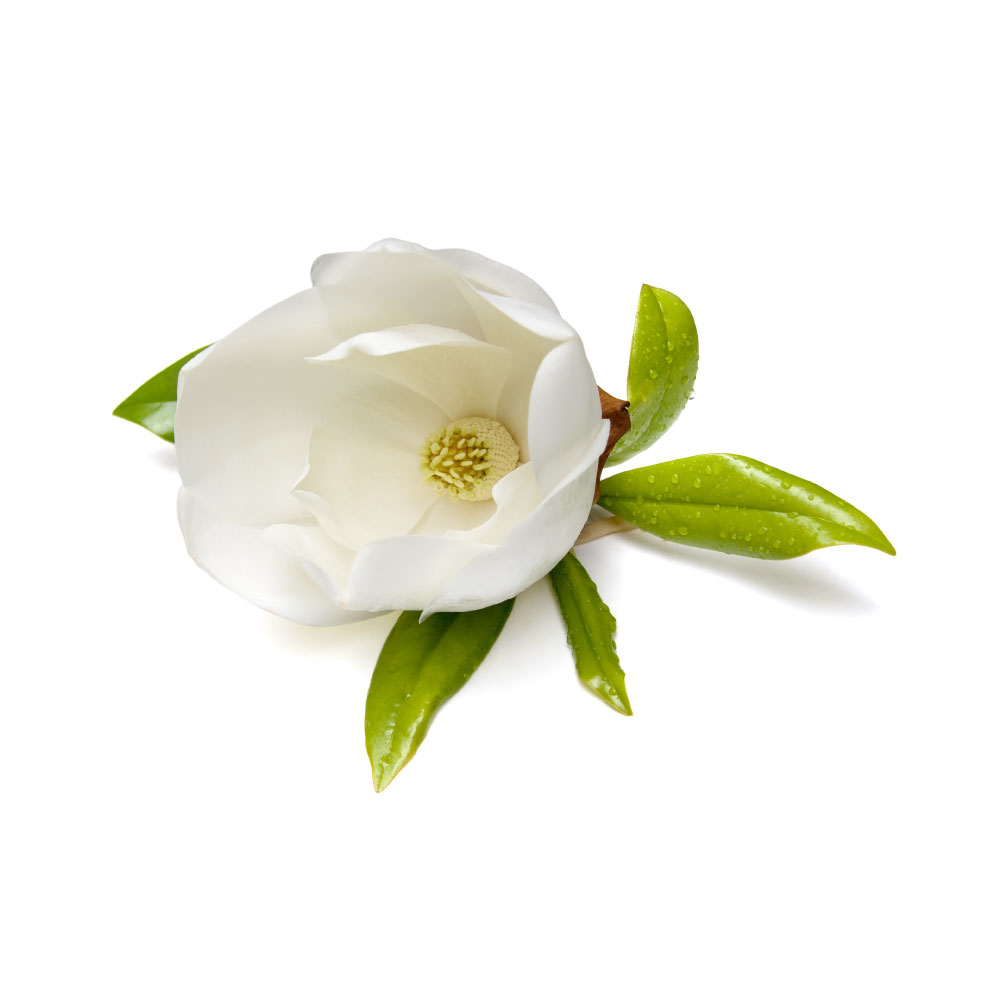
Materia Medica
Magnolia
Magnolia officinalis
Magnolia (Magnolia officinalis) — a Chinese bark for qi stagnation whose neolignans magnolol and honokiol give it a GABAergic anxiolytic, sedative and anti-inflammatory profile.
What Is Magnolia?
Magnolia bark (Magnolia officinalis), known in traditional Chinese medicine as houpo, comes from one of the most ancient lineages of flowering plants — the Magnoliaceae predate bees, and the genus evolved tough carpels pollinated by beetles, with fossils in the family dated to around 95 million years ago. The medicinal material is the aromatic, purple-brown bark of the trunk and roots.
In Chinese medicine magnolia is a classic remedy for qi stagnation — used to move stuck qi, transform damp and relieve fullness. It remains popular for sinus congestion, coughs and catarrh on the respiratory side, and for bloating, abdominal distension and poor digestion on the digestive side. Its best-evidenced modern use, however, is as a calming, anti-stress herb: its two signature neolignans, magnolol and honokiol, potentiate the GABA-A receptor, giving the bark a genuine anxiolytic and sedative action 2,6Reference 2RCTEffect of Magnolia officinalis and Phellodendron amurense (Relora) on cortisol and psychological mood state in moderately stressed subjects — randomised placebo-controlled trialView study →Reference 6AnimalHonokiol promotes non-rapid eye movement sleep via the benzodiazepine site of the GABA-A receptor in mice — animal modelView study →.
Traditional & Modern Uses
Houpo has a long record in Chinese herbal practice for qi stagnation and obstruction — abdominal pain and distension, bloating, gas, nausea and vomiting, poor appetite and sluggish digestion — and for phlegm-damp patterns affecting the chest and airways (coughs, catarrh, wheezing) 18Reference 18ReviewA review of the phytochemistry and pharmacological activities of Magnoliae officinalis cortex — reviewView study →. It is a warming, bitter and acrid bark, and classical practice cautions against its use in yin-deficiency, chronic fatigue and convalescent states.
For digestive complaints and stress it is rarely used alone. A well-known pairing combines magnolia with Phellodendron amurense bark, and this two-herb blend (marketed as Relora) is the form behind essentially all of the human anxiety and cortisol data — a point worth keeping in mind, since the trials test the combination rather than magnolia bark by itself 2,3Reference 2RCTEffect of Magnolia officinalis and Phellodendron amurense (Relora) on cortisol and psychological mood state in moderately stressed subjects — randomised placebo-controlled trialView study →Reference 3RCTEffect of a proprietary Magnolia and Phellodendron extract on stress levels in healthy women — randomised placebo-controlled trialView study →. Magnolia bark extract also has a documented niche use in oral care: at low concentrations in mints and gum it is active against the bacteria behind halitosis and caries 10Reference 10Clinical trialCompressed mints and chewing gum containing magnolia bark extract are effective against bacteria responsible for oral malodor — in vitro and human studyView study →.
Traditional indications
Abdominal pain · bloating and gas · poor appetite and digestion · nausea and vomiting · diarrhoea and dysentery · coughs, catarrh and wheezing · sinus congestion · stress and anxiety. Traditional Chinese medicine advises avoiding magnolia in convalescence, chronic fatigue and yin-deficiency states.
Botany & Varieties
Magnolia officinalis is a deciduous, medium-sized tree, roughly 5–15 m tall, with purple-brown bark. It belongs to the Magnoliaceae, a family of about 219 species across some 17 genera; the great majority sit in the Magnolia genus itself (~210 species), with the remainder in Liriodendron (the tulip trees). The family is an evolutionary relic — its flowers are built around tough carpels adapted to beetle pollination from a time before bees existed, and fossils in the family reach back around 95 million years, making magnolia one of the oldest surviving angiosperm lineages.
Bark chemistry varies markedly between species (M. officinalis versus M. grandiflora, M. dealbata and others), origin and extraction method, so the magnolol/honokiol content of a given product is not fixed.
Phytochemistry
Magnolia bark’s activity is defined by two closely related biphenyl neolignans, magnolol and its isomer honokiol. These are the markers used to standardise commercial extracts; in the raw bark magnolol is typically the more abundant, reported at roughly 2–11%, with honokiol around 1–5% (sources vary, some giving honokiol the higher figure). Together they account for the bark’s GABA-potentiating anxiolytic and sedative action as well as much of its antioxidant, anti-inflammatory and antimicrobial activity 1Reference 1ReviewSafety and toxicology of magnolol and honokiol — reviewView study →. Related neolignans occur in smaller amounts, including obovatol, which appears in the bark’s anti-Alzheimer’s and gut-motility research 13Reference 13Systematic reviewNeolignans in Magnolia officinalis as natural anti-Alzheimer’s disease agents — systematic reviewView study →.
The bark also yields an essential oil rich in sesquiterpenes, the most notable being beta-eudesmol (about 17% of the oil), which has its own reported effects on the nervous system. A minor fraction of benzylisoquinoline alkaloids is present too, chief among them magnocurarine at roughly 0.15–0.23% of the bark — an alkaloid with curare-like neuromuscular activity, which is why prolonged high-dose use warrants caution 19Reference 19In vitroStudies on the alkaloids of the bark of Magnolia officinalis: isolation and on-line analysis by HPLC-ESI-MSⁿ — in vitroView study →.
Constituent Summary
Magnolol and honokiol figures are share of the dry bark (extracts are standardised far higher); β-eudesmol is share of the essential oil, not the bark; magnocurarine is share of the dry bark. Marker levels vary with species, origin and extraction.
Lignan3 compounds3 with data
Sesquiterpene1 compound1 with data
Isoquinoline Alkaloid1 compound1 with data
Pharmacology & Research
The pharmacology of magnolia bark (Magnolia officinalis, “houpo”) is almost entirely a story of two isomeric biphenyl neolignans — magnolol and honokiol — and the literature on them is large but tiered steeply toward the preclinical. Hundreds of in vitro and animal studies map GABAergic, anti-inflammatory (NF-κB/COX-2), antioxidant and antimicrobial actions in convincing mechanistic detail, yet human data exist for only one clinical use: stress and anxiety, and even there the trials test a proprietary Magnolia + Phellodendron blend (Relora), not magnolia bark alone 2,3Reference 2RCTEffect of Magnolia officinalis and Phellodendron amurense (Relora) on cortisol and psychological mood state in moderately stressed subjects — randomised placebo-controlled trialView study →Reference 3RCTEffect of a proprietary Magnolia and Phellodendron extract on stress levels in healthy women — randomised placebo-controlled trialView study →. A handful of registered trials exist — a completed Relora anxiety study and a recruiting honokiol trial in lung cancer — but most therapeutic claims rest on cell and rodent work. The dominant caveat across the whole field is preparation: nearly all activity is attributed to magnolol and honokiol, whose content in raw bark (single-digit percent) is a fraction of the standardised extracts used in research, so an effect shown for a marker-rich extract does not transfer cleanly to a traditional decoction or tincture. The bark also carries a minor fraction of benzylisoquinoline alkaloids, chief among them the curare-like magnocurarine 19Reference 19In vitroStudies on the alkaloids of the bark of Magnolia officinalis: isolation and on-line analysis by HPLC-ESI-MSⁿ — in vitroView study →.
- Best-supported: stress and state-anxiety reduction with lowered salivary cortisol, from small human RCTs of a Magnolia/Phellodendron blend 2,3Reference 2RCTEffect of Magnolia officinalis and Phellodendron amurense (Relora) on cortisol and psychological mood state in moderately stressed subjects — randomised placebo-controlled trialView study →Reference 3RCTEffect of a proprietary Magnolia and Phellodendron extract on stress levels in healthy women — randomised placebo-controlled trialView study →; a clean, flumazenil-reversible sedative mechanism at the GABA-A benzodiazepine site 6Reference 6AnimalHonokiol promotes non-rapid eye movement sleep via the benzodiazepine site of the GABA-A receptor in mice — animal modelView study →.
- Emerging, worth watching: anti-inflammatory (NF-κB↓, COX-2↓) 9Reference 9In vitroComparative inhibitory effects of magnolol, honokiol, eugenol and bis-eugenol on cyclooxygenase-2 expression and nuclear factor-kappa B activation in RAW264.7 macrophage-like cells — in vitroView study →, oral-antibacterial 10Reference 10Clinical trialCompressed mints and chewing gum containing magnolia bark extract are effective against bacteria responsible for oral malodor — in vitro and human studyView study →, and neuroprotective/anti-Alzheimer’s signals 13Reference 13Systematic reviewNeolignans in Magnolia officinalis as natural anti-Alzheimer’s disease agents — systematic reviewView study → — all mechanistically strong but preclinical.
- Mechanistically thin: antidiabetic/metabolic and anticancer claims rest on review-level and cell/animal evidence with no efficacy trials reporting results.
- The caveat: the actives (magnolol, honokiol) sit at only a few percent of raw bark; extract-based results do not automatically apply to teas or whole-bark tinctures.
1. Anxiolytic & stress
This is the only indication with human trials, and they are consistent as far as they go. In moderately stressed adults, four weeks of a standardised Magnolia officinalis + Phellodendron amurense blend (Relora) lowered salivary cortisol exposure by ~18% versus placebo and improved mood-state indices including tension, anger and fatigue (n=56) 2Reference 2RCTEffect of Magnolia officinalis and Phellodendron amurense (Relora) on cortisol and psychological mood state in moderately stressed subjects — randomised placebo-controlled trialView study →. An earlier randomised, placebo-controlled study in overweight, stress-eating premenopausal women (n=40 intent-to-treat) found the same blend reduced transient (state) anxiety on the Spielberger STAAI but not long-standing (trait) anxiety, with no significant adverse events over six weeks 3Reference 3RCTEffect of a proprietary Magnolia and Phellodendron extract on stress levels in healthy women — randomised placebo-controlled trialView study →. A related pilot RCT reported the blend prevented stress-associated weight gain rather than causing weight loss 4Reference 4RCTEffect of a proprietary Magnolia and Phellodendron extract on weight management — pilot randomised placebo-controlled clinical trialView study →. The mechanistic basis is GABAergic — magnolol and honokiol potentiate GABA-A receptor currents 1Reference 1ReviewSafety and toxicology of magnolol and honokiol — reviewView study →. The honest limits: every trial tested a two-herb proprietary blend at ~750 mg/day, samples were small, and none isolated magnolia bark.
Gap: No RCT of magnolia bark alone; the cortisol/anxiety effect is only demonstrated for a combination product in small, mostly female cohorts.
2. Anti-inflammatory
The anti-inflammatory action is the best-characterised mechanism after the GABAergic one, though it stops at the bench. In macrophages stimulated with Porphyromonas gingivalis fimbriae, magnolol and honokiol suppressed COX-2 expression and blocked NF-κB activation, the master switch for inflammatory gene transcription 9Reference 9In vitroComparative inhibitory effects of magnolol, honokiol, eugenol and bis-eugenol on cyclooxygenase-2 expression and nuclear factor-kappa B activation in RAW264.7 macrophage-like cells — in vitroView study →. Reviews converge on NF-κB inhibition, downregulation of pro-inflammatory cytokines and COX-2, plus radical scavenging as the shared pathway underlying the bark’s reputed effects in inflammatory conditions 17,20Reference 17ReviewThe rich pharmacological activities of Magnolia officinalis and secondary effects based on significant intestinal contributions — reviewView study →Reference 20ReviewHonokiol: a review of its pharmacological potential and therapeutic insights — reviewView study →. All of this is cell-based or animal; there is no human anti-inflammatory trial of the herb or its constituents.
Gap: Consistent and mechanistically coherent, but entirely preclinical — no clinical inflammatory endpoint has been tested.
3. Antimicrobial
The antimicrobial data are strongest — and most relevant — in the oral cavity. Magnolia bark extract and its constituents magnolol and honokiol showed minimum inhibitory concentrations of 8–31 µg/mL against the halitosis and caries organisms Porphyromonas gingivalis, Fusobacterium nucleatum and Streptococcus mutans; mints with 0.2% extract killed >99.9% of these bacteria within five minutes, and a small in vivo study (n=9) found the mints cut total salivary bacteria by ~62% at 30 minutes 10Reference 10Clinical trialCompressed mints and chewing gum containing magnolia bark extract are effective against bacteria responsible for oral malodor — in vitro and human studyView study →. Broader reviews list antibacterial and antifungal activity for the neolignans, but the herb is “not commonly used for bacterial or fungal infections alone,” and the robust data are confined to topical oral-cavity use 20Reference 20ReviewHonokiol: a review of its pharmacological potential and therapeutic insights — reviewView study →.
Gap: Compelling for oral bacteria in a mints/gum format; no evidence supports systemic antimicrobial use.
4. Sedative & sleep
The sedative claim has an unusually clean mechanism. In mice, honokiol (10–20 mg/kg) shortened the latency to non-REM sleep and increased NREM sleep amount by acting at the benzodiazepine site of the GABA-A receptor — the effect was abolished by the antagonist flumazenil and accompanied by activation of sleep-promoting neurons in the ventrolateral preoptic area 6Reference 6AnimalHonokiol promotes non-rapid eye movement sleep via the benzodiazepine site of the GABA-A receptor in mice — animal modelView study →. Honokiol did not alter REM sleep or EEG power density, suggesting a benzodiazepine-like but architecturally selective action. On the human side, the sleep signal is secondary: the Relora stress trials recorded improved self-reported sleep quality and latency alongside the anxiety effect 3Reference 3RCTEffect of a proprietary Magnolia and Phellodendron extract on stress levels in healthy women — randomised placebo-controlled trialView study →, and a 24-week menopause RCT of a multi-ingredient tablet containing magnolia bark extract reported reduced insomnia and mood disturbance, though the herb’s specific contribution can’t be isolated from that formulation 5Reference 5RCTSoy isoflavones, lactobacilli, Magnolia bark extract, vitamin D3 and calcium — controlled clinical study in menopause (randomised controlled trial)View study →. This dovetails with the documented recreational interest in magnolia as a “natural sedative” 1Reference 1ReviewSafety and toxicology of magnolol and honokiol — reviewView study →.
Gap: The mechanism is animal-only at defined doses; human sleep data are secondary outcomes from a combination-product anxiety trial, not a dedicated insomnia RCT.
5. Antioxidant
Antioxidant activity is a constituent-level property rather than a demonstrated clinical effect. The phenolic hydroxyls of magnolol and honokiol give them direct radical-scavenging capacity — measured, for example, in a controlled polymerisation-inhibition assay alongside their COX-2 work 9Reference 9In vitroComparative inhibitory effects of magnolol, honokiol, eugenol and bis-eugenol on cyclooxygenase-2 expression and nuclear factor-kappa B activation in RAW264.7 macrophage-like cells — in vitroView study → — and reviews repeatedly cite reduction of lipid peroxidation and boosting of endogenous antioxidant defences as a recurring theme across the bark’s pharmacology 17,21Reference 17ReviewThe rich pharmacological activities of Magnolia officinalis and secondary effects based on significant intestinal contributions — reviewView study →Reference 21ReviewPharmacology, toxicity, bioavailability, and formulation of magnolol: an update — reviewView study →. As with the anti-inflammatory action, this is where much of the neuroprotective and hepatoprotective rationale originates, but it has not been tested as a clinical endpoint in people.
Gap: Real at the molecular level; no human antioxidant or oxidative-stress-outcome study exists for the herb.
6. Antispasmodic & GI motility
This indication marries the strongest traditional use (houpo is a classic remedy for abdominal distension, bloating and diarrhea) to a recently identified molecular target. In isolated intestinal tissue, magnolol and honokiol relaxed smooth muscle by targeting the TRPC4 channel to reduce extracellular calcium influx 11Reference 11In vitroMagnolol and honokiol target TRPC4 to regulate extracellular calcium influx and relax intestinal smooth muscle — in vitro / ex vivoView study →. In a rat model of diarrhea-predominant irritable bowel syndrome, magnolol, honokiol and obovatol improved gastrointestinal motility, intestinal permeability and inflammatory cytokines, though that study leaned heavily on network-pharmacology and molecular-docking prediction 12Reference 12AnimalDeciphering the multi-target mechanism of Magnolia officinalis in irritable bowel syndrome with diarrhea — network pharmacology, machine learning and in vivo (rat) validationView study →. The traditional digestive use is well documented in the ethnopharmacology literature 18Reference 18ReviewA review of the phytochemistry and pharmacological activities of Magnoliae officinalis cortex — reviewView study →.
Gap: A plausible ex vivo mechanism and one predictive rat study; no controlled human trial in functional GI disorders despite the strong traditional record.
7. Neuroprotective
Beyond acute GABAergic effects, the neolignans show a broad neuroprotective profile in disease models. Systematic reviews of preclinical anti-Alzheimer’s work report that honokiol, magnolol and derivatives such as 4-O-methylhonokiol improved learning and memory in animal models by inhibiting amyloid-β generation and aggregation, curbing neuroinflammation, inhibiting acetylcholinesterase and reducing oxidative stress, acting via NF-κB, ERK, AMPK/mTOR and cAMP/PKA/CREB pathways 13,22Reference 13Systematic reviewNeolignans in Magnolia officinalis as natural anti-Alzheimer’s disease agents — systematic reviewView study →Reference 22Systematic reviewNeuroprotective potency of neolignans in Magnolia officinalis cortex against brain disorders — systematic reviewView study →. Both compounds cross the blood-brain barrier, which underpins the interest 14Reference 14ReviewThe neuropharmacological effects of magnolol and honokiol — review of signal pathways and molecular mechanismsView study →. The reviewers are explicit that clinical potential “remains untapped.”
Gap: Mechanistically rich and internally consistent, but every study is in vitro or in animals — no human neuroprotection or dementia trial.
8. Antidepressant
The antidepressant signal is preclinical but replicated. A honokiol/magnolol mixture reduced immobility in the mouse forced-swim and tail-suspension tests and reversed anhedonia in the chronic-mild-stress model, while restoring serotonin levels across several brain regions and normalising corticosterone 7Reference 7AnimalAntidepressant-like effects of the mixture of honokiol and magnolol from the barks of Magnolia officinalis in stressed rodents — animal modelView study →. A follow-up showed a magnolia-bark/ginger combination produced synergistic antidepressant-like effects, with the honokiol/magnolol fraction identified as the principal active component 8Reference 8AnimalAntidepressant-like synergism of extracts from magnolia bark and ginger rhizome alone and in combination in mice — animal modelView study →. These are behavioural rodent models with monoamine correlates — informative for mechanism, not a demonstration of efficacy in depression.
Gap: No human antidepressant trial; the evidence is rodent behavioural despair models.
9. Anticancer
Anticancer activity is the largest preclinical literature and the least clinically mature. Mechanistic reviews describe honokiol and magnolol inducing apoptosis, suppressing proliferation and inhibiting metastasis across many cancer cell types by hitting multiple signalling pathways, with reportedly low toxicity to normal cells 15Reference 15ReviewNatural lignans honokiol and magnolol as potential anticarcinogenic and anticancer agents — comprehensive mechanistic reviewView study →. A registered phase trial of honokiol in early-stage resectable non-small-cell lung cancer is recruiting, but no efficacy results are available. This remains a promising but unproven direction.
Gap: Extensive cell/animal mechanism and one recruiting trial; zero human efficacy data.
10. Antidiabetic
The metabolic evidence is the thinnest of the scored indications. A review of magnolol in type-2 diabetes collates preclinical data suggesting favourable effects on glycemia, lipid metabolism and oxidative stress, positioning it as a possible adjunct rather than a standalone therapy 16Reference 16ReviewEffectiveness of magnolol, a lignan from magnolia bark, in diabetes, its complications and comorbidities — reviewView study →. There are no human trials and no defined dosing for a metabolic indication.
Gap: Review-level preclinical only; no clinical metabolic endpoint tested.
Mechanisms
| Mechanism | Drives | Key compounds |
|---|---|---|
| GABA-A potentiation (benzodiazepine site) | anxiolyticsedative/sleepantidepressant | honokiol, magnolol |
| NF-κB ↓, COX-2 ↓, cytokine ↓ | anti-inflammatoryneuroprotective | magnolol, honokiol |
| Radical scavenging, ↓ lipid peroxidation | antioxidanthepatoprotective rationale | magnolol, honokiol |
| HPA-axis modulation (↓ salivary cortisol) | stress/anxiety | magnolol, honokiol |
| TRPC4 blockade → ↓ Ca²⁺ influx → smooth-muscle relaxation | antispasmodicGI motility | magnolol, honokiol, obovatol |
| Aβ ↓, acetylcholinesterase ↓, AMPK/mTOR & CREB modulation | neuroprotective / anti-Alzheimer’s | honokiol, 4-O-methylhonokiol |
| Serotonin/noradrenaline restoration | antidepressant | honokiol, magnolol |
| Pro-apoptotic, anti-proliferative, anti-metastatic signalling | anticancer | honokiol, magnolol |
Clinical trials
Human trials exist but are confined to a proprietary Magnolia + Phellodendron blend for stress/anxiety (completed) plus a recruiting honokiol study in lung cancer; there is no registered trial of magnolia bark as a monotherapy, and the great bulk of the evidence base is preclinical.
| Completed | Planned | Terminated | Preclinical |
|---|---|---|---|
| 4 | 1 | 0 | ~hundreds |
Last checked: July 2026.
Dosage
Human trials of magnolia used either a proprietary two-herb blend (Relora) or a multi-ingredient tablet, dosed by total milligrams with no magnolol/honokiol marker percentage disclosed. Because of this, the trial doses below cannot be back-converted to a whole-bark weight, and they are research doses, not recommendations.
| Indication | Preparation | Dose | Est. dried-herb equivalent | Source |
|---|---|---|---|---|
| Stress / anxiety | Standardised M. officinalis + P. amurense blend (Relora) | 750 mg/day (250 mg ×3), 4–6 wk | — (proprietary blend; not back-convertible) | 2,3Reference 2RCTEffect of Magnolia officinalis and Phellodendron amurense (Relora) on cortisol and psychological mood state in moderately stressed subjects — randomised placebo-controlled trialView study →Reference 3RCTEffect of a proprietary Magnolia and Phellodendron extract on stress levels in healthy women — randomised placebo-controlled trialView study → |
| Weight-gain prevention (stress-eaters) | Same blend (Relora) | 750 mg/day, 6 wk | — | 4Reference 4RCTEffect of a proprietary Magnolia and Phellodendron extract on weight management — pilot randomised placebo-controlled clinical trialView study → |
| Menopausal mood / sleep | Magnolia bark extract 60 mg within a multi-ingredient tablet | 60 mg/day, 24 wk | — (multi-ingredient) | 5Reference 5RCTSoy isoflavones, lactobacilli, Magnolia bark extract, vitamin D3 and calcium — controlled clinical study in menopause (randomised controlled trial)View study → |
| Oral malodour / caries | Magnolia bark extract in mints / gum | 0.2% extract per mint (topical, oral cavity) | n/a (topical) | 10Reference 10Clinical trialCompressed mints and chewing gum containing magnolia bark extract are effective against bacteria responsible for oral malodor — in vitro and human studyView study → |
The human trials used proprietary blends or multi-ingredient tablets reporting only total mg with no disclosed marker percentage, so no defensible conversion to whole-bark weight is possible. These are not conversion factors and not recommendations.
Traditional Dosage
Traditional use is of the whole bark, as a decoction or tincture rather than a marker-standardised extract.
| System | Preparation | Dose |
|---|---|---|
| Western herbal | Liquid extract 1:2 | 2–14 mL/day |
| Traditional Chinese medicine (houpo) | Dried bark, decoction | ~3–10 g/day dried bark |
Safety & Pregnancy
Magnolia bark is well tolerated at the doses studied; its main practical concern is additive sedation with CNS depressants, and prolonged high-dose use warrants monitoring because of a minor curare-like alkaloid.
- Avoid in pregnancy. Traditionally contraindicated, with an emmenagogue reputation and the curare-like alkaloid magnocurarine.
- Sedative interactions. Additive CNS depression is plausible with benzodiazepines, alcohol, sedative-hypnotics and other depressants.
- High-dose monitoring. Contains curare-like magnocurarine (~0.15–0.23% of bark) — prolonged or high-dose use warrants professional oversight.
- Interactions unstudied. No dedicated drug-interaction or CYP450 studies; the sedative interaction is inferred, not clinically established.
- Well tolerated short-term. Human stress trials (~750 mg/day, 4–6 weeks) reported no significant adverse events 1,2,3Reference 1ReviewSafety and toxicology of magnolol and honokiol — reviewView study →Reference 2RCTEffect of Magnolia officinalis and Phellodendron amurense (Relora) on cortisol and psychological mood state in moderately stressed subjects — randomised placebo-controlled trialView study →Reference 3RCTEffect of a proprietary Magnolia and Phellodendron extract on stress levels in healthy women — randomised placebo-controlled trialView study →.
Full safety & interactions detail
Magnolia bark and its neolignans magnolol and honokiol have a reassuring toxicology profile in the doses studied, with human stress trials of a Magnolia/Phellodendron blend (~750 mg/day for 4–6 weeks) reporting no significant adverse events 1,2,3Reference 1ReviewSafety and toxicology of magnolol and honokiol — reviewView study →Reference 2RCTEffect of Magnolia officinalis and Phellodendron amurense (Relora) on cortisol and psychological mood state in moderately stressed subjects — randomised placebo-controlled trialView study →Reference 3RCTEffect of a proprietary Magnolia and Phellodendron extract on stress levels in healthy women — randomised placebo-controlled trialView study →. The principal practical concern is sedation: because honokiol and magnolol potentiate the GABA-A receptor at the benzodiazepine site, additive central depression with benzodiazepines, alcohol, sedative-hypnotics and other CNS depressants is plausible, and a review has specifically flagged a theoretical misuse potential of magnolia as a “natural sedative” 1,6Reference 1ReviewSafety and toxicology of magnolol and honokiol — reviewView study →Reference 6AnimalHonokiol promotes non-rapid eye movement sleep via the benzodiazepine site of the GABA-A receptor in mice — animal modelView study →. Magnolia bark also contains the isoquinoline alkaloid magnocurarine (~0.15–0.23% of bark), which has curare-like neuromuscular activity, so high-dose or prolonged use warrants professional monitoring 19Reference 19In vitroStudies on the alkaloids of the bark of Magnolia officinalis: isolation and on-line analysis by HPLC-ESI-MSⁿ — in vitroView study →. Traditional Chinese medicine advises avoiding magnolia in convalescence, chronic fatigue and yin-deficiency states.
Dedicated clinical drug-interaction and CYP450 studies have not been carried out, and because the human efficacy data come from two-herb blends rather than magnolia alone, herb-specific interaction data are sparse — the sedative/CNS-depressant interaction above is mechanistically inferred, not clinically established.
Avoid in pregnancy — not established as safe. Magnolia bark is traditionally regarded as contraindicated in pregnancy, and its emmenagogue reputation plus the presence of the curare-like alkaloid magnocurarine argue for caution 19Reference 19In vitroStudies on the alkaloids of the bark of Magnolia officinalis: isolation and on-line analysis by HPLC-ESI-MSⁿ — in vitroView study →. Dedicated reproductive-safety and lactation studies have not been conducted, so safety cannot be inferred from the absence of reports.
References
- Sarrica, A., Kirika, N., Romeo, M., Salmona, M., & Diomede, L. (2018). Safety and toxicology of magnolol and honokiol — review. Planta Medica, 84(16), 1151–1164. https://doi.org/10.1055/a-0642-1966
- Talbott, S. M., Talbott, J. A., & Pugh, M. (2013). Effect of Magnolia officinalis and Phellodendron amurense (Relora) on cortisol and psychological mood state in moderately stressed subjects — randomised placebo-controlled trial. Journal of the International Society of Sports Nutrition, 10, 37. https://doi.org/10.1186/1550-2783-10-37
- Kalman, D. S., Feldman, S., Feldman, R., Schwartz, H. I., Krieger, D. R., & Garrison, R. (2008). Effect of a proprietary Magnolia and Phellodendron extract on stress levels in healthy women — randomised placebo-controlled trial. Nutrition Journal, 7, 11. https://doi.org/10.1186/1475-2891-7-11
- Garrison, R., & Chambliss, W. G. (2006). Effect of a proprietary Magnolia and Phellodendron extract on weight management — pilot randomised placebo-controlled clinical trial. Alternative Therapies in Health and Medicine, 12(1), 50–54. https://pubmed.ncbi.nlm.nih.gov/16454147/
- Mucci, M., Carraro, C., Mancino, P., et al. (2006). Soy isoflavones, lactobacilli, Magnolia bark extract, vitamin D3 and calcium — controlled clinical study in menopause (randomised controlled trial). Minerva Ginecologica, 58(4), 323–334. https://pubmed.ncbi.nlm.nih.gov/16957676/
- Qu, W. M., Yue, X. F., Sun, Y., et al. (2012). Honokiol promotes non-rapid eye movement sleep via the benzodiazepine site of the GABA-A receptor in mice — animal model. British Journal of Pharmacology, 167(3), 587–598. https://doi.org/10.1111/j.1476-5381.2012.02010.x
- Xu, Q., Yi, L. T., Pan, Y., et al. (2008). Antidepressant-like effects of the mixture of honokiol and magnolol from the barks of Magnolia officinalis in stressed rodents — animal model. Progress in Neuro-Psychopharmacology & Biological Psychiatry, 32(3), 715–725. https://doi.org/10.1016/j.pnpbp.2007.11.020
- Yi, L. T., Xu, Q., Li, Y. C., et al. (2009). Antidepressant-like synergism of extracts from magnolia bark and ginger rhizome alone and in combination in mice — animal model. Progress in Neuro-Psychopharmacology & Biological Psychiatry, 33(4), 616–624. https://doi.org/10.1016/j.pnpbp.2009.03.001
- Murakami, Y., Kawata, A., Suzuki, S., & Fujisawa, S. (2012). Comparative inhibitory effects of magnolol, honokiol, eugenol and bis-eugenol on cyclooxygenase-2 expression and nuclear factor-kappa B activation in RAW264.7 macrophage-like cells — in vitro. In Vivo, 26(6), 941–950. https://pubmed.ncbi.nlm.nih.gov/23160676/
- Greenberg, M., Urnezis, P., & Tian, M. (2007). Compressed mints and chewing gum containing magnolia bark extract are effective against bacteria responsible for oral malodor — in vitro and human study. Journal of Agricultural and Food Chemistry, 55(23), 9465–9469. https://doi.org/10.1021/jf072122h
- Niu, L., Hou, Y., Jiang, M., & Bai, G. (2022). Magnolol and honokiol target TRPC4 to regulate extracellular calcium influx and relax intestinal smooth muscle — in vitro / ex vivo. Journal of Ethnopharmacology, 290, 115105. https://doi.org/10.1016/j.jep.2022.115105
- Wang, X., et al. (2026). Deciphering the multi-target mechanism of Magnolia officinalis in irritable bowel syndrome with diarrhea — network pharmacology, machine learning and in vivo (rat) validation. Biochemical and Biophysical Research Communications, 825, 153989. https://doi.org/10.1016/j.bbrc.2026.153989
- Li, N., et al. (2024). Neolignans in Magnolia officinalis as natural anti-Alzheimer’s disease agents — systematic review. Ageing Research Reviews, 99, 102398. https://doi.org/10.1016/j.arr.2024.102398
- Dai, X., et al. (2023). The neuropharmacological effects of magnolol and honokiol — review of signal pathways and molecular mechanisms. Current Molecular Pharmacology, 16(2), 161–177. https://doi.org/10.2174/1874467215666220223141101
- Mottaghi, S., & Abbaszadeh, H. (2022). Natural lignans honokiol and magnolol as potential anticarcinogenic and anticancer agents — comprehensive mechanistic review. Nutrition and Cancer, 74(3), 761–778. https://doi.org/10.1080/01635581.2021.1931364
- Szałabska-Rąpała, K., Zych, M., & Kaczmarczyk-Sedlak, I. (2021). Effectiveness of magnolol, a lignan from magnolia bark, in diabetes, its complications and comorbidities — review. International Journal of Molecular Sciences, 22(18), 10050. https://doi.org/10.3390/ijms221810050
- Niu, L., Hou, Y., & Bai, G. (2021). The rich pharmacological activities of Magnolia officinalis and secondary effects based on significant intestinal contributions — review. Journal of Ethnopharmacology, 281, 114524. https://doi.org/10.1016/j.jep.2021.114524
- Luo, H., Wu, H., Yu, X., et al. (2019). A review of the phytochemistry and pharmacological activities of Magnoliae officinalis cortex — review. Journal of Ethnopharmacology, 236, 412–442. https://doi.org/10.1016/j.jep.2019.02.041
- Yan, R., Wang, W., Guo, J., et al. (2013). Studies on the alkaloids of the bark of Magnolia officinalis: isolation and on-line analysis by HPLC-ESI-MSⁿ — in vitro. Molecules, 18(7), 7739–7750. https://doi.org/10.3390/molecules18077739
- Rauf, A., Olatunde, A., Imran, M., et al. (2021). Honokiol: a review of its pharmacological potential and therapeutic insights — review. Phytomedicine, 90, 153647. https://doi.org/10.1016/j.phymed.2021.153647
- Lin, Y., Li, Y., Zeng, Y., et al. (2021). Pharmacology, toxicity, bioavailability, and formulation of magnolol: an update — review. Frontiers in Pharmacology, 12, 632767. https://doi.org/10.3389/fphar.2021.632767
- Zhu, S., Liu, F., Zhang, R., et al. (2022). Neuroprotective potency of neolignans in Magnolia officinalis cortex against brain disorders — systematic review. Frontiers in Pharmacology, 13, 857449. https://doi.org/10.3389/fphar.2022.857449