Materia Medica
Melissa
Melissa officinalis
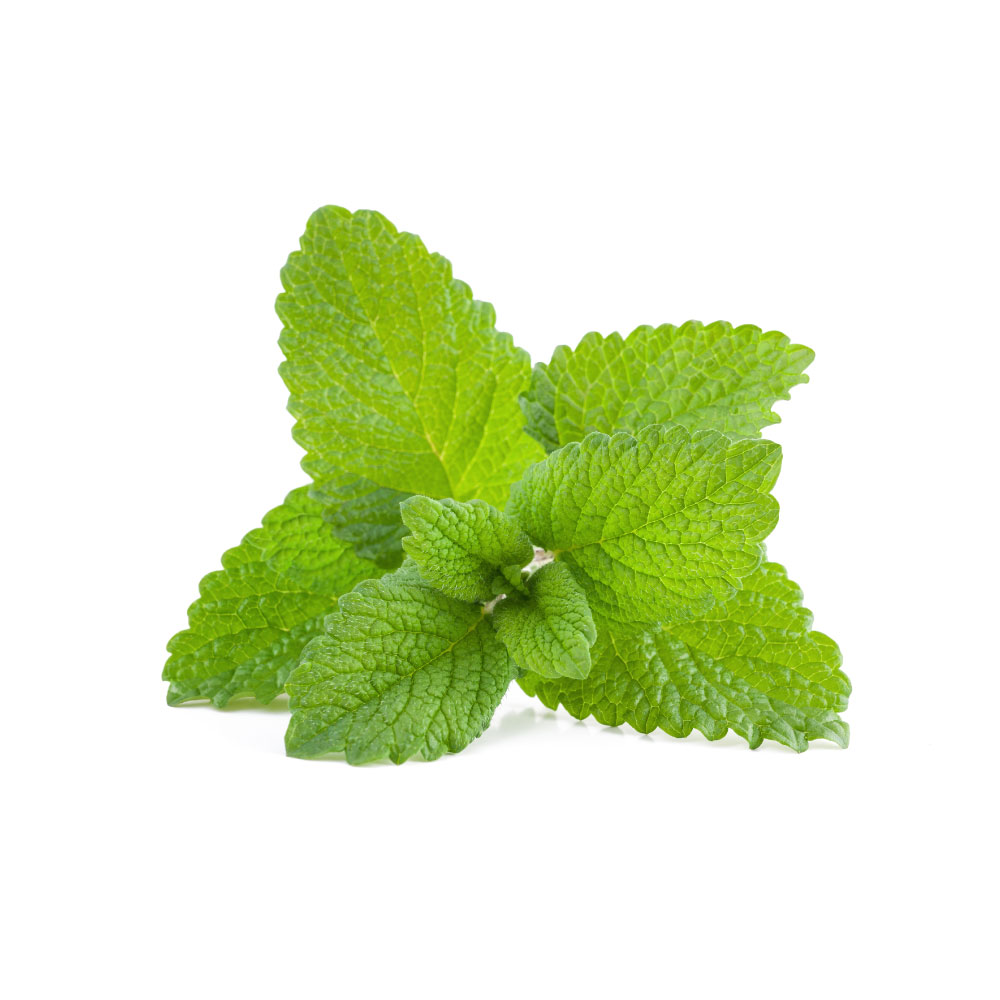
Melissa or lemon balm (Melissa officinalis) — a calming nervine used for insomnia, anxiety, depression, herpes, digestion and palpitations.
What Is Melissa?
Melissa (Melissa officinalis), more commonly known as lemon balm, is a fragrant perennial in the mint family (Lamiaceae) with a long history of use as a calming nervine and digestive remedy. Its bright lemon scent reflects its volatile-oil content, while its gentle, mildly sedative effect makes it one of the most widely used herbs for stress-related complaints.
Traditionally, melissa is chosen where the nervous system, digestion and heart appear connected — anxiety with palpitations, digestive upset driven by stress, insomnia from racing thoughts, or low mood with nervous tension. It is gentle enough for daily use as a tea yet concentrated enough, as an extract or cream, to feature in more targeted formulas for sleep, anxiety, viral skin outbreaks and digestive discomfort.
Among calming nervines, lemon balm has an unusually solid human evidence base: several small placebo-controlled trials plus meta-analyses for anxiety and mood, and a well-known topical antiherpetic cream. A recurring caveat runs through that literature — extract type and rosmarinic-acid content vary enormously between preparations, so a standardised-extract result does not transfer cleanly to a home-brewed infusion.
Traditional & Modern Uses
In Western herbal medicine, melissa is regarded as a calming nervine, mild sedative, carminative, antiviral and antispasmodic herb 28Reference 28ReviewMelissa officinalis L. — a review of its traditional uses, phytochemistry and pharmacology. Traditional indications include anxiety, insomnia, low mood, nervous palpitations, digestive upset, gas, nausea, colds and flu, headaches and stress-related digestive complaints. European herbalists valued it above all as a “gladdening” herb for melancholy and nervous exhaustion — a role that fits the modern antidepressant/anxiolytic signal — and it was a defining ingredient of aromatic cordials such as Carmelite water 28Reference 28ReviewMelissa officinalis L. — a review of its traditional uses, phytochemistry and pharmacology.
The fresh or dried aerial parts are prepared as a tea, tincture, capsule, glycerite, fresh-plant extract or infused honey. Topically, concentrated melissa creams and extracts are used for herpes simplex outbreaks, especially cold sores; this antiherpetic use is documented only for concentrated topical preparations and essential oil, not for drinking the tea. In calming formulas melissa is often combined with passionflower, skullcap, valerian, chamomile, lavender or oats; for digestion it pairs with peppermint, fennel, ginger or chamomile.
Some older sources also list melissa for epilepsy, shingles, SIBO and “hyperthyroid-type” agitation. These are traditional or theoretical uses only — no clinical or preclinical trial supports them, and the thyroid association rests on a single in-vitro finding (see Safety) rather than a study of lemon balm as a treatment.
Botany
Melissa officinalis is a herbaceous perennial in the mint family (Lamiaceae), native to Europe, the Mediterranean and western Asia and now cultivated widely across temperate regions. It produces the family’s characteristic square stems, opposite bright-green leaves and small white to pale-yellow flowers that are highly attractive to bees — the genus name Melissa is Greek for “bee,” reflecting a long association with beekeeping.
The medicinal part is the aerial portion, especially the leaves, harvested before or during flowering when the aromatic compounds are strongest. The bright lemon aroma comes from a volatile oil that fades with age, so fresh or recently dried material is generally preferred.
Phytochemistry
Two groups of compounds define lemon balm. The first is its water-soluble phenolic fraction, dominated by rosmarinic acid — the herb’s principal marker and the main driver of its antioxidant and calming activity — accompanied by caffeic acid, chlorogenic acid and a set of luteolin-based flavonoids (notably luteolin-3′-glucuronide, the major flavonoid of the subspecies officinalis) 10,26,27Reference 10ReviewMelissa officinalis L: a review study with an antioxidant prospective — reviewView study →Reference 26Luteolin 3′-glucuronide, the major flavonoid from Melissa officinalis subsp. officinalisReference 27Flavonoids from lemon balm (Melissa officinalis L., Lamiaceae). The second is a small but aromatic essential oil whose lemon character comes from citral, a near-equal pair of the isomeric monoterpene aldehydes geranial and neral, with citronellal as a further signature note. Triterpene acids — ursolic acid and its co-occurring isomer oleanolic acid, both in-vitro GABA-transaminase inhibitors — round out the profile.
Constituent Summary
Figures are percentages of dried leaf unless noted; essential-oil constituents are given as a share of the oil, which itself is only ~0.05–0.2% of the herb. Composition varies markedly with genotype, climate and harvest stage, so the ranges below are indicative rather than fixed.
Phenolic Acid3 compounds1 with data
Monoterpene3 compounds3 with data
Flavonoid1 compoundno data
Pharmacology & Research
Lemon balm has one of the larger human evidence bases among calming nervines: several small placebo-controlled RCTs plus two meta-analyses, layered over an extensive preclinical and phytochemical literature. The strongest and most consistent signal is anxiolytic/mood — a 2021 meta-analysis found meaningful reductions in both anxiety and depression scores — with the acute cognitive-and-calmness work from the Northumbria group and a well-known topical antiherpetic cream (Lo-701) as the other human-anchored findings. Most other indications (cardiometabolic, glycemic, anti-inflammatory) rest on single small trials from a few Iranian centres plus mechanism, and the antiviral effect is preparation-specific — a concentrated 70:1 cream, not the tea. A recurring caveat runs through the whole literature: extract type and rosmarinic-acid content vary enormously between preparations, so a standardised-extract result does not transfer cleanly to a home-brewed infusion.
- Best-supported: anxiety and mood, backed by a meta-analysis of clinical trials and acute crossover RCTs 1,3,4Reference 1Meta-analysisThe effects of lemon balm (Melissa officinalis L.) on depression and anxiety in clinical trials — a systematic review and meta-analysisView study →Reference 3RCTModulation of mood and cognitive performance following single doses of Melissa officinalis with CNS nicotinic and muscarinic receptor-binding properties — randomised placebo-controlled crossover trialView study →Reference 4RCTModulation of mood and cognitive performance following acute administration of Melissa officinalis — randomised placebo-controlled crossover trialView study →; topical herpes simplex, from a placebo-controlled cream trial 15Reference 15RCTBalm mint extract (Lo-701) for topical treatment of recurring herpes labialis — randomised placebo-controlled trialView study →.
- Emerging, worth watching: cardiometabolic markers (total cholesterol, systolic blood pressure) and glycemic control, each on a meta-analysis or single RCT 12,14Reference 12Meta-analysisEffects of Melissa officinalis on cardio-metabolic outcomes — systematic review and meta-analysisView study →Reference 14RCTEfficacy of Melissa officinalis extract on glycemic control and cardiovascular risk factors in type 2 diabetes — randomised double-blind clinical trialView study →.
- Mechanistically thin: antispasmodic/carminative use — largely traditional and preclinical, usually studied inside multi-herb formulas rather than lemon balm alone.
- The caveat: most human trials are small, single-centre, and use different extracts; the antiherpetic effect appears only in concentrated topical preparations, not teas.
1. Anxiety
This is the herb’s best-supported action. A 2021 systematic review and meta-analysis of clinical trials found lemon balm significantly reduced anxiety scores versus placebo (SMD −0.98, 95% CI −1.63 to −0.33), with the effect most pronounced in acute settings and no serious side effects reported 1Reference 1Meta-analysisThe effects of lemon balm (Melissa officinalis L.) on depression and anxiety in clinical trials — a systematic review and meta-analysisView study →. A 15-day open-label pilot of a standardised extract (Cyracos-type, rich in rosmarinic acid) reported an 18% drop in anxiety manifestations and high response rates, though it lacked a placebo arm 2Reference 2Clinical trialPilot trial of Melissa officinalis L. leaf extract in mild-to-moderate anxiety disorders and sleep disturbances — open-label clinical trialView study →. Acute placebo-controlled crossover work in healthy volunteers showed a single low (300 mg) dose of a standardised extract raised self-rated calmness at the earliest timepoints while 600 mg improved attention accuracy, and — in a separate combination with valerian — lower doses blunted laboratory-induced stress anxiety while the highest doses paradoxically increased anxiety in one session 4,5Reference 4RCTModulation of mood and cognitive performance following acute administration of Melissa officinalis — randomised placebo-controlled crossover trialView study →Reference 5RCTAnxiolytic effects of a combination of Melissa officinalis and Valeriana officinalis during laboratory-induced stress — randomised placebo-controlled crossover trialView study →. The mechanism is plausibly GABAergic: rosmarinic acid and the triterpenes ursolic acid and oleanolic acid inhibit GABA-transaminase in vitro, and a standardised extract reduced anxiety-like behaviour dose-dependently in mice 6,7Reference 6AnimalEffects of chronic administration of Melissa officinalis extract on anxiety-like reactivity in mice — animal modelView study →Reference 7In vitroBioassay-guided fractionation of lemon balm using an in vitro measure of GABA transaminase activity — in vitroView study →.
Gap: trials are small and use different standardised extracts; the dose-response is non-linear (higher is not better), and few studies measure physiological stress markers.
2. Depression
The same 2021 meta-analysis found a smaller but significant reduction in depression scores versus placebo (SMD −0.47, 95% CI −0.73 to −0.21) 1Reference 1Meta-analysisThe effects of lemon balm (Melissa officinalis L.) on depression and anxiety in clinical trials — a systematic review and meta-analysisView study →. Two dedicated RCTs support this in comorbid populations: a 12-week trial in type 2 diabetes patients with depressive symptoms found 700 mg/day of hydroalcoholic extract significantly reduced Beck Depression and Anxiety scores versus placebo 8Reference 8RCTThe effects of Melissa officinalis on depression and anxiety in type 2 diabetes patients with depression — randomised double-blind placebo-controlled trialView study →, and an 8-week trial in chronic stable angina patients found 3 g/day cut depression, anxiety and stress (DASS-21) scores 9Reference 9RCTThe effects of Melissa officinalis supplementation on depression, anxiety, stress and sleep disorder in patients with chronic stable angina — randomised placebo-controlled trialView study →. Historically the herb was valued as a “gladdening” remedy for melancholy, and the modern signal is consistent with that traditional use.
Gap: effect sizes are modest, samples small, and both dedicated RCTs studied medically ill populations rather than primary depression; heterogeneity across trials was high.
3. Antioxidant
Antioxidant activity is the herb’s most heavily documented mechanism, driven by its phenolic fraction — chiefly rosmarinic acid, with caffeic and chlorogenic acids and luteolin-based flavonoids 10Reference 10ReviewMelissa officinalis L: a review study with an antioxidant prospective — reviewView study →. Human confirmation comes from a cardiac RCT: 3 g/day of powdered leaf for 8 weeks lowered serum malondialdehyde (a lipid-peroxidation marker) and raised paraoxonase-1 activity versus placebo in chronic stable angina 11Reference 11RCTThe effects of Melissa officinalis in chronic stable angina on serum biomarkers of oxidative stress, inflammation and lipid profile — randomised placebo-controlled trialView study →. The bulk of the remaining evidence is in vitro and review-level, measuring radical-scavenging capacity of extracts rather than clinical endpoints.
Gap: most data are in-vitro assays; the single human biomarker study is small, and antioxidant marker shifts have not been linked to clinical outcomes here.
4. Cardiometabolic
A 2020 meta-analysis of seven RCTs found lemon balm intake reduced total cholesterol (SMD −0.26) and systolic blood pressure (SMD −0.56), with no significant change in triglycerides, LDL, diastolic pressure, fasting glucose or HbA1c pooled across studies 12Reference 12Meta-analysisEffects of Melissa officinalis on cardio-metabolic outcomes — systematic review and meta-analysisView study →. Individual trials are consistent in direction: 1000 mg leaf powder three times daily for two months lowered LDL in borderline hyperlipidemia 13Reference 13RCTLemon balm — a promising herbal therapy for patients with borderline hyperlipidemia — randomised double-blind placebo-controlled trialView study →, and the 8-week angina trial improved the full lipid panel plus hs-CRP 11Reference 11RCTThe effects of Melissa officinalis in chronic stable angina on serum biomarkers of oxidative stress, inflammation and lipid profile — randomised placebo-controlled trialView study →. The meta-analysis authors flag a serious risk of bias and a small number of studies.
Gap: pooled effects are small and rest on a handful of high-risk-of-bias trials, mostly from a few centres; no hard cardiovascular outcomes have been measured.
5. Antiherpetic
Topical lemon balm for herpes simplex (cold sores) is supported by a double-blind, placebo-controlled RCT of a standardised 1% cream (Lo-701, a 70:1 dried-leaf extract): applied four times daily, it significantly reduced the combined symptom score at day 2 — when herpes complaints peak — versus placebo, in patients with recurrent labial herpes 15Reference 15RCTBalm mint extract (Lo-701) for topical treatment of recurring herpes labialis — randomised placebo-controlled trialView study →. In vitro, an aqueous extract and rosmarinic acid inhibited attachment and penetration of both acyclovir-sensitive and acyclovir-resistant HSV-1 at very low concentrations, and the volatile oil inhibited HSV-2 replication in cell culture 16,17,18Reference 16In vitroAttachment and penetration of acyclovir-resistant herpes simplex virus are inhibited by Melissa officinalis extract — in vitroView study →Reference 17In vitroAntiviral activity of the volatile oils of Melissa officinalis against Herpes simplex virus type-2 — in vitroView study →Reference 18In vitroAntiherpes effect of Melissa officinalis L. extracts — in vitroView study →. Activity is largely virucidal (acting on free virus before cell entry), which is why concentrated topical preparations — not teas — are used.
Gap: only one modest topical RCT exists; the effect is preparation-specific to concentrated creams, and there is no evidence for oral lemon balm against herpes.
6. Sleep
Sleep benefit is plausible but rests mostly on combination products and uncontrolled data. The open-label Cyracos pilot reported a 42% reduction in insomnia over 15 days 2Reference 2Clinical trialPilot trial of Melissa officinalis L. leaf extract in mild-to-moderate anxiety disorders and sleep disturbances — open-label clinical trialView study →, and a placebo-controlled RCT of lemon balm combined with Nepeta menthoides improved insomnia severity, anxiety and depression in insomniacs 19Reference 19RCTEffects of herbal combination (Melissa officinalis L. and Nepeta menthoides) on insomnia severity, anxiety and depression in insomniacs — randomised placebo-controlled trialView study →. The angina supplementation trial also improved a sleep-quality subscore 9Reference 9RCTThe effects of Melissa officinalis supplementation on depression, anxiety, stress and sleep disorder in patients with chronic stable angina — randomised placebo-controlled trialView study →. Monotherapy, placebo-controlled sleep data for lemon balm alone remain sparse, and the herb’s traditional role is as a gentle sleep aid taken before bed.
Gap: little placebo-controlled evidence for lemon balm alone; the strongest sleep signals come from open-label or multi-herb designs.
7. Cognitive function
Acute crossover RCTs in healthy young adults show dose- and time-dependent effects: a single 1600 mg dose of a cholinergically active dried leaf improved memory and calmness at all timepoints, while lower doses slowed timed memory tasks — and a 600 mg dose improved attention accuracy but reduced alertness at the highest dose 3,4Reference 3RCTModulation of mood and cognitive performance following single doses of Melissa officinalis with CNS nicotinic and muscarinic receptor-binding properties — randomised placebo-controlled crossover trialView study →Reference 4RCTModulation of mood and cognitive performance following acute administration of Melissa officinalis — randomised placebo-controlled crossover trialView study →. A four-month RCT in mild-to-moderate Alzheimer’s disease found a fixed dose of extract significantly improved ADAS-cog scores and reduced agitation versus placebo 20Reference 20RCTMelissa officinalis extract in the treatment of patients with mild to moderate Alzheimer’s disease — randomised double-blind placebo-controlled trialView study →. Against this, the dementia-agitation aromatherapy literature is mixed to null: an early positive trial 22Reference 22RCTAromatherapy for the management of agitation in severe dementia — randomised double-blind placebo-controlled trial with MelissaView study → was not replicated in a larger, rigorously blinded RCT comparing melissa oil, donepezil and placebo (no difference between arms) 21Reference 21RCTA double-blind placebo-controlled randomised trial of Melissa officinalis oil and donepezil for the treatment of agitation in Alzheimer’s diseaseView study →, nor in a later essential-oil trial 23Reference 23RCTA randomised controlled trial of Lavender and Lemon Balm essential oils for agitated behaviour in older people with and without dementiaView study →.
Gap: acute effects are inconsistent and dose-sensitive; the one positive AD trial is small and unreplicated, and the best-blinded aromatherapy trial was null.
8. Anti-inflammatory
Human RCTs show lemon balm lowers high-sensitivity C-reactive protein (hs-CRP): the 8-week angina trial reduced hs-CRP alongside oxidative-stress markers 11Reference 11RCTThe effects of Melissa officinalis in chronic stable angina on serum biomarkers of oxidative stress, inflammation and lipid profile — randomised placebo-controlled trialView study →, and the type 2 diabetes RCT reported reduced hs-CRP versus placebo 14Reference 14RCTEfficacy of Melissa officinalis extract on glycemic control and cardiovascular risk factors in type 2 diabetes — randomised double-blind clinical trialView study →. Mechanistically the effect is attributed to phenolic constituents suppressing NF-κB signalling and downstream mediators, consistent with the herb’s antioxidant profile.
Gap: clinical evidence is limited to a couple of small trials measuring a single inflammatory marker; no inflammatory-disease endpoints have been tested.
9. Heart palpitations
A double-blind, placebo-controlled RCT rooted in Traditional Iranian Medicine tested 500 mg of lyophilised aqueous leaf extract twice daily for 14 days in adults with benign palpitations: it significantly reduced the frequency of palpitation episodes and the number of anxious patients versus placebo, with no serious side effects 24Reference 24RCTHeart palpitation relief with Melissa officinalis leaf extract — double-blind randomised placebo-controlled trialView study →. The finding fits the herb’s traditional use where nervous tension and cardiac awareness overlap, and its anxiolytic action is a plausible route to symptom relief.
Gap: a single small trial in benign (non-arrhythmic) palpitations; outcomes were patient-reported, and there is no evidence for organic arrhythmias.
10. Glycemic control
A 12-week randomised, double-blind trial in type 2 diabetes found 700 mg/day of hydroalcoholic extract significantly improved fasting blood sugar, HbA1c, β-cell activity, triglycerides, HDL, hs-CRP and systolic blood pressure versus placebo, with no adverse effects 14Reference 14RCTEfficacy of Melissa officinalis extract on glycemic control and cardiovascular risk factors in type 2 diabetes — randomised double-blind clinical trialView study →. The effect is attributed to the herb’s antioxidant flavonoids. However, the cardiometabolic meta-analysis did not find a significant pooled effect on fasting glucose or HbA1c across studies 12Reference 12Meta-analysisEffects of Melissa officinalis on cardio-metabolic outcomes — systematic review and meta-analysisView study →.
Gap: a single positive RCT against a null pooled meta-analytic result for glucose; needs replication before the antidiabetic claim is firm.
11. Antispasmodic & carminative
The traditional use of lemon balm for nervous indigestion, gas and cramping is long-standing and mechanistically plausible — the volatile oil (citral, comprising geranial and neral, plus citronellal) has spasmolytic activity — but direct human evidence for lemon balm alone is thin. Most clinical data come from multi-herb digestive formulas that include lemon balm rather than isolating its contribution.
Gap: essentially no monotherapy human trials; the antispasmodic claim rests on tradition, essential-oil pharmacology and combination-product data.
Mechanisms
| Mechanism | Drives | Key compounds |
|---|---|---|
| GABA-transaminase inhibition → ↑GABA | anxietysleeppalpitations | rosmarinic acid, ursolic acid, oleanolic acid |
| Radical scavenging, ↓lipid peroxidation | antioxidantcardiometabolic | rosmarinic acid, luteolin, caffeic acid |
| NF-κB ↓, ↓hs-CRP | anti-inflammatory | rosmarinic acid, luteolin |
| Virucidal — blocks HSV attachment/penetration | antiherpetic | rosmarinic acid, caffeic acid |
| Cholinergic receptor binding (nicotinic/muscarinic) | cognition | dried-leaf extract (constituent unresolved) |
| Antithyrotropic — inhibits TSH/Graves-IgG receptor binding | thyroid modulation (safety-relevant) | auto-oxidised phenolic constituents |
Clinical trials
Registered interventional trials exist and are active — 24 studies on ClinicalTrials.gov list lemon balm as an intervention, spanning sleep, mood, cognition, menopause and gastrointestinal indications, though many are combination products. Of the 24, 12 are completed, 4 not yet recruiting, 1 recruiting, and 7 older entries have lapsed to unknown status; none are terminated. The “Planned” column below groups the 4 not-yet-recruiting and 1 recruiting entries; the 7 unknown-status trials are not counted in the active/planned totals.
| Completed | Planned | Terminated | Preclinical |
|---|---|---|---|
| 12 | 5 | 0 | ~100+ |
Last checked: July 2026.
Dosage
In research, lemon balm is given both as whole powdered leaf (dosed by weight) and as various standardised extracts (Cyracos, hydroalcoholic, lyophilised aqueous) titrated by extract weight rather than to a stated marker — so only the powdered-leaf doses back-convert cleanly to a whole-herb amount. These are research doses, not recommendations.
| Indication | Preparation | Dose | Est. dried-herb equivalent | Source |
|---|---|---|---|---|
| Anxiety / sleep | Standardised extract (Cyracos-type) | 600 mg/day, 15 days | order of ~0.6 g extract (marker % not stated) | 2Reference 2Clinical trialPilot trial of Melissa officinalis L. leaf extract in mild-to-moderate anxiety disorders and sleep disturbances — open-label clinical trialView study → |
| Depression (type 2 diabetes) | Hydroalcoholic extract | 700 mg/day, 12 wk | — (extract ratio not reported) | 8Reference 8RCTThe effects of Melissa officinalis on depression and anxiety in type 2 diabetes patients with depression — randomised double-blind placebo-controlled trialView study → |
| Depression / anxiety / sleep (angina) | Powdered leaf | 3 g/day, 8 wk | ~3 g dried leaf | 9Reference 9RCTThe effects of Melissa officinalis supplementation on depression, anxiety, stress and sleep disorder in patients with chronic stable angina — randomised placebo-controlled trialView study → |
| Antioxidant / lipids (angina) | Powdered leaf | 3 g/day, 8 wk | ~3 g dried leaf | 11Reference 11RCTThe effects of Melissa officinalis in chronic stable angina on serum biomarkers of oxidative stress, inflammation and lipid profile — randomised placebo-controlled trialView study → |
| Hyperlipidemia | Leaf powder | 3 × 1000 mg/day, 2 mo | ~3 g dried leaf | 13Reference 13RCTLemon balm — a promising herbal therapy for patients with borderline hyperlipidemia — randomised double-blind placebo-controlled trialView study → |
| Glycemic control (type 2 diabetes) | Hydroalcoholic extract | 700 mg/day, 12 wk | — (ratio not reported) | 14Reference 14RCTEfficacy of Melissa officinalis extract on glycemic control and cardiovascular risk factors in type 2 diabetes — randomised double-blind clinical trialView study → |
| Heart palpitations | Lyophilised aqueous extract | 500 mg twice daily, 14 days | — (freeze-dried concentrate) | 24Reference 24RCTHeart palpitation relief with Melissa officinalis leaf extract — double-blind randomised placebo-controlled trialView study → |
| Acute cognition / calmness | Encapsulated dried leaf | single 600–1600 mg | ~0.6–1.6 g dried leaf | 3,4Reference 3RCTModulation of mood and cognitive performance following single doses of Melissa officinalis with CNS nicotinic and muscarinic receptor-binding properties — randomised placebo-controlled crossover trialView study →Reference 4RCTModulation of mood and cognitive performance following acute administration of Melissa officinalis — randomised placebo-controlled crossover trialView study → |
| Alzheimer’s disease | Ethanolic extract | 60 drops/day, 4 mo | — (tincture, strength not stated) | 20Reference 20RCTMelissa officinalis extract in the treatment of patients with mild to moderate Alzheimer’s disease — randomised double-blind placebo-controlled trialView study → |
| Herpes labialis (topical) | 1% standardised cream (Lo-701, 70:1) | applied 4×/day, ~5 days | n/a (topical) | 15Reference 15RCTBalm mint extract (Lo-701) for topical treatment of recurring herpes labialis — randomised placebo-controlled trialView study → |
The powdered-leaf trials use whole dried herb, so the mg dose ≈ dried-leaf weight — a guide, not a conversion factor. The extract-based trials (Cyracos, hydroalcoholic, lyophilised, tincture) report no marker % or extract ratio, so a whole-herb back-conversion would be invented and is left ”—” rather than guessed.
Traditional Dosage
Traditional Western use is of the whole dried herb as a tea or tincture, taken freely as a gentle, food-like remedy rather than a titrated extract.
| System | Preparation | Dose |
|---|---|---|
| Western herbal | Dried-herb infusion (tea) | 1.5–4.5 g, up to 3×/day (≈1–3 cups) |
| Western herbal | Liquid extract 1:2 | 20–40 mL/week (≈3–6 mL/day) |
| Western herbal | Tincture 1:5 | 2–6 mL, up to 3×/day |
Safety & Pregnancy
Lemon balm is well tolerated, with mild drowsiness the main effect and no serious adverse events reported in trials; the practical cautions are a theoretical thyroid interaction and additive sedation.
- Thyroid caution. In-vitro antithyrotropic activity — use high or prolonged doses cautiously in hypothyroidism or with thyroid medication.
- Additive sedation. Its mild sedative action may compound sedatives, sleep medication, alcohol and other calming herbs.
- Interactions untested. No clinical drug-interaction studies of lemon balm were identified.
- Well tolerated. In trials the main effect is mild drowsiness, with rare GI upset or allergy; no serious adverse events.
Full safety & interactions detail
Lemon balm is well tolerated in trials; the most common adverse effects are mild drowsiness and, rarely, gastrointestinal upset or allergic reaction in sensitive individuals, and no serious adverse events were reported across the clinical meta-analyses 1,12Reference 1Meta-analysisThe effects of lemon balm (Melissa officinalis L.) on depression and anxiety in clinical trials — a systematic review and meta-analysisView study →Reference 12Meta-analysisEffects of Melissa officinalis on cardio-metabolic outcomes — systematic review and meta-analysisView study →. Because auto-oxidised phenolic constituents inhibit TSH and Graves’-immunoglobulin binding to the thyroid receptor in vitro, high or prolonged doses are used cautiously in hypothyroidism or with thyroid medication 25Reference 25In vitroExtracts and auto-oxidised constituents of certain plants inhibit the receptor-binding and biological activity of Graves’ immunoglobulins — in vitroView study →; note this antithyrotropic effect is in-vitro only and historically tied to traditional antithyroid use, not a clinically quantified interaction. Its mild sedative action may add to that of sedatives, sleep medication, alcohol and other calming herbs, so combination warrants caution — this is inferred from the herb’s pharmacology rather than demonstrated in dedicated interaction trials 1,4Reference 1Meta-analysisThe effects of lemon balm (Melissa officinalis L.) on depression and anxiety in clinical trials — a systematic review and meta-analysisView study →Reference 4RCTModulation of mood and cognitive performance following acute administration of Melissa officinalis — randomised placebo-controlled crossover trialView study →. No clinical drug-interaction studies of lemon balm were identified.
Not established. No human pregnancy or lactation safety trials of lemon balm were identified, and clinical trials routinely excluded pregnant and breastfeeding participants — so safety in these groups is unresearched rather than demonstrated. Culinary quantities are generally regarded as low risk, but concentrated medicinal doses are best avoided without professional guidance; absence of reported harm is not evidence of safety.
References
- Ghazizadeh J, Sadigh-Eteghad S, Marx W, et al. (2021). The effects of lemon balm (Melissa officinalis L.) on depression and anxiety in clinical trials — a systematic review and meta-analysis. Phytotherapy Research. https://pubmed.ncbi.nlm.nih.gov/34449930/
- Cases J, Ibarra A, Feuillère N, Roller M, Sukkar SG. (2011). Pilot trial of Melissa officinalis L. leaf extract in mild-to-moderate anxiety disorders and sleep disturbances — open-label clinical trial. Mediterranean Journal of Nutrition and Metabolism. https://pubmed.ncbi.nlm.nih.gov/22207903/
- Kennedy DO, Wake G, Savelev S, et al. (2003). Modulation of mood and cognitive performance following single doses of Melissa officinalis with CNS nicotinic and muscarinic receptor-binding properties — randomised placebo-controlled crossover trial. Neuropsychopharmacology. https://pubmed.ncbi.nlm.nih.gov/12888775/
- Kennedy DO, Scholey AB, Tildesley NT, Perry EK, Wesnes KA. (2002). Modulation of mood and cognitive performance following acute administration of Melissa officinalis — randomised placebo-controlled crossover trial. Pharmacology Biochemistry and Behavior. https://pubmed.ncbi.nlm.nih.gov/12062586/
- Kennedy DO, Little W, Haskell CF, Scholey AB. (2006). Anxiolytic effects of a combination of Melissa officinalis and Valeriana officinalis during laboratory-induced stress — randomised placebo-controlled crossover trial. Phytotherapy Research. https://pubmed.ncbi.nlm.nih.gov/16444660/
- Ibarra A, Feuillère N, Roller M, Lesburgère E, Beracochea D. (2010). Effects of chronic administration of Melissa officinalis extract on anxiety-like reactivity in mice — animal model. Phytomedicine. https://pubmed.ncbi.nlm.nih.gov/20171069/
- Awad R, Muhammad A, Durst T, Trudeau VL, Arnason JT. (2009). Bioassay-guided fractionation of lemon balm using an in vitro measure of GABA transaminase activity — in vitro. Phytotherapy Research. https://pubmed.ncbi.nlm.nih.gov/19165747/
- Safari M, Asadi A, Aryaeian N, et al. (2023). The effects of Melissa officinalis on depression and anxiety in type 2 diabetes patients with depression — randomised double-blind placebo-controlled trial. BMC Complementary Medicine and Therapies. https://pubmed.ncbi.nlm.nih.gov/37131158/
- Haybar H, Javid AZ, Haghighizadeh MH, et al. (2018). The effects of Melissa officinalis supplementation on depression, anxiety, stress and sleep disorder in patients with chronic stable angina — randomised placebo-controlled trial. Clinical Nutrition ESPEN. https://pubmed.ncbi.nlm.nih.gov/29908682/
- Miraj S, Rafieian-Kopaei, Kiani S. (2017). Melissa officinalis L: a review study with an antioxidant prospective — review. Journal of Evidence-Based Complementary & Alternative Medicine. https://pubmed.ncbi.nlm.nih.gov/27620926/
- Javid AZ, Haybar H, Dehghan P, et al. (2018). The effects of Melissa officinalis in chronic stable angina on serum biomarkers of oxidative stress, inflammation and lipid profile — randomised placebo-controlled trial. Asia Pacific Journal of Clinical Nutrition. https://pubmed.ncbi.nlm.nih.gov/30045422/
- Heshmati J, Morvaridzadeh M, Sepidarkish M, et al. (2020). Effects of Melissa officinalis on cardio-metabolic outcomes — systematic review and meta-analysis. Phytotherapy Research. https://pubmed.ncbi.nlm.nih.gov/32614129/
- Jandaghi P, Noroozi M, Ardalani H, Alipour M. (2016). Lemon balm — a promising herbal therapy for patients with borderline hyperlipidemia — randomised double-blind placebo-controlled trial. Complementary Therapies in Medicine. https://pubmed.ncbi.nlm.nih.gov/27261994/
- Asadi A, Shidfar F, Safari M, et al. (2019). Efficacy of Melissa officinalis extract on glycemic control and cardiovascular risk factors in type 2 diabetes — randomised double-blind clinical trial. Phytotherapy Research. https://pubmed.ncbi.nlm.nih.gov/30548118/
- Koytchev R, Alken RG, Dundarov S. (1999). Balm mint extract (Lo-701) for topical treatment of recurring herpes labialis — randomised placebo-controlled trial. Phytomedicine. https://pubmed.ncbi.nlm.nih.gov/10589440/
- Astani A, Navid MH, Schnitzler P. (2014). Attachment and penetration of acyclovir-resistant herpes simplex virus are inhibited by Melissa officinalis extract — in vitro. Phytotherapy Research. https://pubmed.ncbi.nlm.nih.gov/24817544/
- Allahverdiyev A, Duran N, Ozguven M, Koltas S. (2004). Antiviral activity of the volatile oils of Melissa officinalis against Herpes simplex virus type-2 — in vitro. Phytomedicine. https://pubmed.ncbi.nlm.nih.gov/15636181/
- Dimitrova Z, Dimov B, Manolova N, et al. (1993). Antiherpes effect of Melissa officinalis L. extracts — in vitro. Acta Microbiologica Bulgarica. https://pubmed.ncbi.nlm.nih.gov/8390134/
- Ranjbar M, Firoozabadi A, Salehi A, et al. (2018). Effects of herbal combination (Melissa officinalis L. and Nepeta menthoides) on insomnia severity, anxiety and depression in insomniacs — randomised placebo-controlled trial. Integrative Medicine Research. https://pubmed.ncbi.nlm.nih.gov/30591886/
- Akhondzadeh S, Noroozian M, Mohammadi M, et al. (2003). Melissa officinalis extract in the treatment of patients with mild to moderate Alzheimer’s disease — randomised double-blind placebo-controlled trial. Journal of Neurology, Neurosurgery & Psychiatry. https://pubmed.ncbi.nlm.nih.gov/12810768/
- Burns A, Perry E, Holmes C, et al. (2011). A double-blind placebo-controlled randomised trial of Melissa officinalis oil and donepezil for the treatment of agitation in Alzheimer’s disease. Dementia and Geriatric Cognitive Disorders. https://pubmed.ncbi.nlm.nih.gov/21335973/
- Ballard CG, O’Brien JT, Reichelt K, Perry EK. (2002). Aromatherapy for the management of agitation in severe dementia — randomised double-blind placebo-controlled trial with Melissa. Journal of Clinical Psychiatry. https://pubmed.ncbi.nlm.nih.gov/12143909/
- Watson K, Hatcher D, Good A. (2019). A randomised controlled trial of Lavender and Lemon Balm essential oils for agitated behaviour in older people with and without dementia. Complementary Therapies in Medicine. https://pubmed.ncbi.nlm.nih.gov/30670268/
- Alijaniha F, Naseri M, Afsharypuor S, et al. (2015). Heart palpitation relief with Melissa officinalis leaf extract — double-blind randomised placebo-controlled trial. Journal of Ethnopharmacology. https://pubmed.ncbi.nlm.nih.gov/25680840/
- Auf’mkolk M, Ingbar JC, Kubota K, Amir SM, Ingbar SH. (1985). Extracts and auto-oxidised constituents of certain plants inhibit the receptor-binding and biological activity of Graves’ immunoglobulins — in vitro. Endocrinology. https://pubmed.ncbi.nlm.nih.gov/2985357/
- Heitz A, Carnat A, Fraisse D, Carnat AP, Lamaison JL. (2000). Luteolin 3′-glucuronide, the major flavonoid from Melissa officinalis subsp. officinalis. Fitoterapia, 71(2), 201–202.
- Patora J, Klimek B. (2002). Flavonoids from lemon balm (Melissa officinalis L., Lamiaceae). Acta Poloniae Pharmaceutica, 59(2), 139–143.
- Shakeri A, Sahebkar A, Javadi B. (2016). Melissa officinalis L. — a review of its traditional uses, phytochemistry and pharmacology. Journal of Ethnopharmacology, 188, 204–228.