
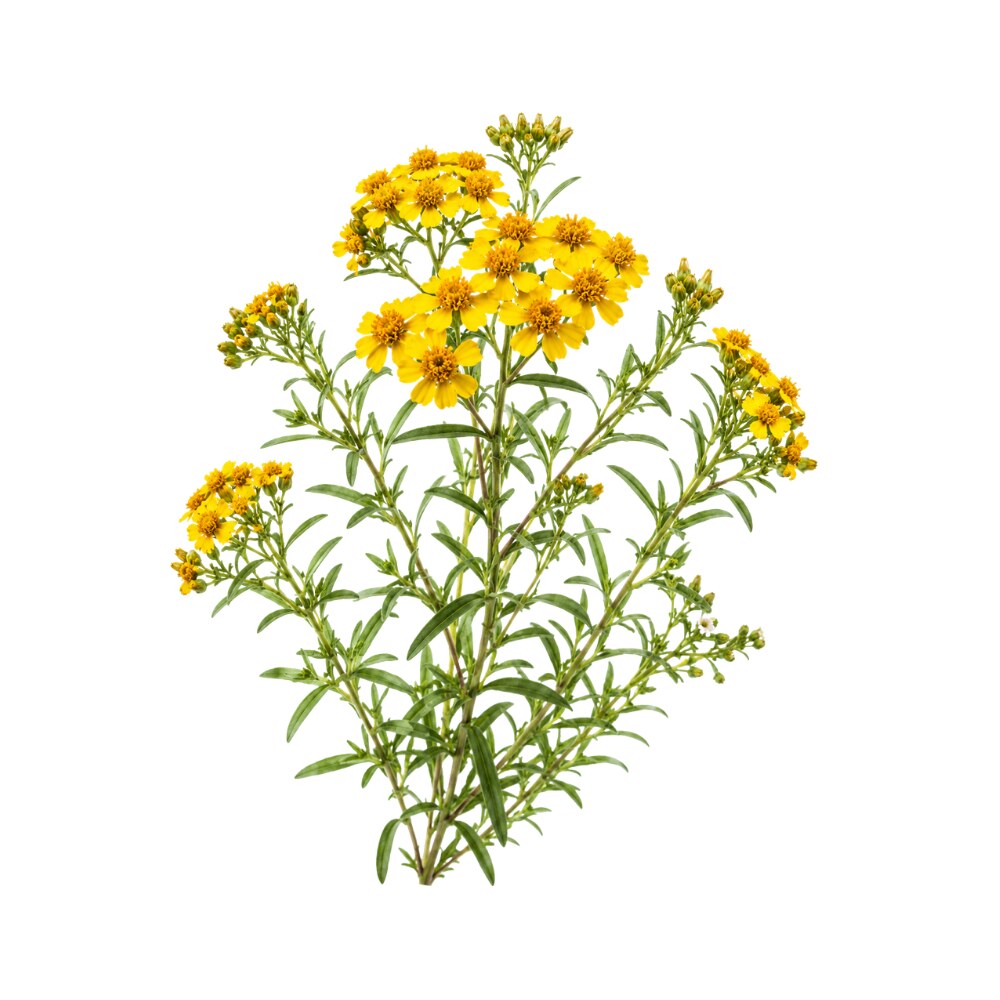
What Is Mexican Tarragon?
Mexican tarragon is an aromatic marigold native to Mexico and Central America, with narrow glossy leaves and small golden flowers, used as a tarragon-like culinary herb (its anise-tarragon flavour comes from estragole). Known to the Aztecs as yauhtli, it has a long ceremonial history alongside its kitchen and medicinal uses.
Traditional & Modern Uses
Tagetes lucida is used as a digestive and relaxing tea, a culinary seasoning, and a traditional remedy for stomach upset, chills and nervous complaints — uses that the modern pharmacology now partly supports (an antispasmodic action on the gut 19Reference 19Study of antispasmodic and antidiarrheal activities of Tagetes lucida in experimental models — animal studyView study → and anxiolytic/sedative activity on the nervous system 12Reference 12Tagetes lucida Cav.: ethnobotany, phytochemistry and pharmacology of its tranquilizing properties — animal studyView study →). The Aztecs used it ritually and as an incense, and it has been reported to be smoked, sometimes with other plants, for mild psychoactive and relaxing effects. It remains popular in Mexican folk medicine and Day of the Dead observances.
Botany
Mexican tarragon is a marigold that tastes like tarragon. Botanically it sits in Tagetes, the same genus as the golden bedding marigolds, but where those are grown for show this one is grown for its leaf: run a finger along the slim, glossy green foliage and it releases a warm, sweet, anise-and-tarragon scent that stands in for true French tarragon in the kitchen — a real convenience, since French tarragon sulks in heat while this plant revels in it.
It makes a bushy clump of upright stems, and from late summer scatters small, single, golden-yellow marigold flowers across the top. The leaves are the part used, fresh or dried.
Distribution
The plant is native to Mexico and Central America, down to Honduras, where it grows in warm, sunny, open highland country. It has been valued in Mexico since Aztec times — as the ceremonial herb pericón as well as a seasoning — and is now grown as a culinary and ornamental herb through the warmer parts of North America, though it is a cultivated plant rather than a wild one outside its home range.
Growing Conditions
- A tender perennial: reliably perennial in USDA zones 8–11, and grown as a warm-season annual where winters bring hard frost.
- Wants full sun — six or more hours of direct light; it tolerates light shade but not full shade.
- Undemanding about soil as long as it drains well, adapting to clay, loam or sand and to a wide pH.
- Heat-loving and easy from seed; plant out after the last frost, or overwinter under cover in cold climates.
- Full cultivation detail lives on the companion farm-wiki grow guide for Tagetes lucida (link to be added once that project’s public URL is confirmed).
Phytochemistry
The aroma and flavour are dominated by the phenylpropanoid estragole (methyl chavicol), the marker that can make up the great majority of the essential oil, alongside related methyleugenol and anethole 13,25Reference 13In vitroAntifungal and antibacterial activities of Mexican tarragon (Tagetes lucida) — in vitro studyView study →Reference 25A source of almost pure methyl chavicol: volatile oil from the aerial parts of Tagetes lucida (Asteraceae) cultivated in Costa Rica — analytical studyView study →. Around these sit monoterpenes such as myrcene, limonene and ocimene, and — carrying much of the plant’s pharmacology — a distinctive set of coumarins including herniarin, scopoletin, scoparone (6,7-dimethoxycoumarin) and umbelliferone. Flavonoids such as quercetagetin, patuletin and quercetin and the carotenoid lutein are also present, and the essential oil supplies the sesquiterpene β-caryophyllene 9,13Reference 9In vitroAn extract of Tagetes lucida and its phenolic constituents as antioxidants — in vitro studyView study →Reference 13In vitroAntifungal and antibacterial activities of Mexican tarragon (Tagetes lucida) — in vitro studyView study →. Essential-oil composition is strongly chemotype-dependent: an estragole/methyleugenol-dominant type is most reported, but a geranyl-acetate/geraniol-dominant chemotype (with β-caryophyllene rather than estragole) also exists 5Reference 5Role of β-caryophyllene in the antinociceptive and anti-inflammatory effects of Tagetes lucida Cav. essential oil — animal studyView study →. The basis of its mild reported psychoactivity is not well characterised.
Constituent Summary
Volatile-oil figures are share of the distilled essential oil and vary widely with origin, chemotype and growth stage; coumarins, flavonoids and the carotenoid are qualitative. † marks the phenylpropanoid markers (estragole and methyleugenol) that characterise Tagetes lucida oil 13,25Reference 13In vitroAntifungal and antibacterial activities of Mexican tarragon (Tagetes lucida) — in vitro studyView study →Reference 25A source of almost pure methyl chavicol: volatile oil from the aerial parts of Tagetes lucida (Asteraceae) cultivated in Costa Rica — analytical studyView study →.
Phenylpropanoid3 compounds2 with data
Monoterpene3 compoundsno data
Sesquiterpene1 compoundno data
Coumarin4 compoundsno data
Flavonoid3 compounds1 with data
Carotenoid1 compoundno data
Pharmacology & Research
Research on Mexican tarragon (Tagetes lucida) is modest and almost entirely preclinical: roughly three dozen primary studies, most from Mexican pharmacology groups, and no human clinical trials of any kind. The centre of gravity is the central nervous system — a well-replicated set of rodent studies shows antidepressant-like and anxiolytic/sedative activity from the aqueous (tea-like) extract, with the mechanism traced to serotonin (5-HT1A/5-HT2A) and GABA/benzodiazepine receptors 1,2,3,12Reference 1Antidepressant-like effects of Tagetes lucida Cav. in the forced swimming test — animal studyView study →Reference 2AnimalAntidepressant-like effect of Tagetes lucida Cav. extract in rats: involvement of the serotonergic system — animal studyView study →Reference 3Antidepressant-like activity of Tagetes lucida Cav. is mediated by 5-HT1A and 5-HT2A receptors — animal studyView study →Reference 12Tagetes lucida Cav.: ethnobotany, phytochemistry and pharmacology of its tranquilizing properties — animal studyView study →. Around that sit consistent anti-nociceptive, anti-inflammatory and antimicrobial signals, most of them attributable to the plant’s distinctive coumarins (herniarin, scoparone, umbelliferone, dimethylfraxetin) and, in the essential oil, β-caryophyllene 4,5,6,7,8,13,14,15Reference 4Identification of bioactive metabolites and inhibitory receptors in the antinociceptive activity of Tagetes lucida Cav. — animal studyView study →Reference 5Role of β-caryophyllene in the antinociceptive and anti-inflammatory effects of Tagetes lucida Cav. essential oil — animal studyView study →Reference 6AnimalAntinociceptive effect of Tagetes lucida in an arthritic gout-pain model in rats — animal studyView study →Reference 7Anti-inflammatory activity of coumarins isolated from Tagetes lucida Cav. — animal studyView study →Reference 8In vitroIsolation, chemical characterization, and anti-inflammatory activity of coumarins, flavonoids, and terpenes from Tagetes lucida — in vitro / animal studyView study →Reference 13In vitroAntifungal and antibacterial activities of Mexican tarragon (Tagetes lucida) — in vitro studyView study →Reference 14In vitroTagetes lucida Cav. essential oil and its main compounds are antibacterial and modulate antibiotic resistance in multi-resistant bacteria — in vitro studyView study →Reference 15In vitroChemical composition and antifungal activity of essential oils from four Asteraceae plants — in vitro studyView study →. The honest limiter is twofold: no result has been tested in humans, and the plant’s chemistry is dominated by the phenylpropanoid estragole (up to ~60–97% of the essential oil) — so essential-oil findings should not be read across to the leaf tea, and estragole itself carries a genotoxicity flag that governs the safety section rather than any benefit 25Reference 25A source of almost pure methyl chavicol: volatile oil from the aerial parts of Tagetes lucida (Asteraceae) cultivated in Costa Rica — analytical studyView study →. Broader reviews of the Tagetes genus give useful chemical and ethnomedical context but pool multiple species, so species-specific reading is essential 26Reference 26ReviewTagetes spp. essential oils and other extracts: chemical characterization and biological activity — reviewView study →.
- Best-supported: antidepressant-like activity of the aqueous extract, replicated across three rodent studies with a serotonergic mechanism 1,2,3Reference 1Antidepressant-like effects of Tagetes lucida Cav. in the forced swimming test — animal studyView study →Reference 2AnimalAntidepressant-like effect of Tagetes lucida Cav. extract in rats: involvement of the serotonergic system — animal studyView study →Reference 3Antidepressant-like activity of Tagetes lucida Cav. is mediated by 5-HT1A and 5-HT2A receptors — animal studyView study →; anti-nociceptive activity across multiple pain models and extract types, including an aqueous extract comparable to ketorolac in a 2025 gout model 4,5,6Reference 4Identification of bioactive metabolites and inhibitory receptors in the antinociceptive activity of Tagetes lucida Cav. — animal studyView study →Reference 5Role of β-caryophyllene in the antinociceptive and anti-inflammatory effects of Tagetes lucida Cav. essential oil — animal studyView study →Reference 6AnimalAntinociceptive effect of Tagetes lucida in an arthritic gout-pain model in rats — animal studyView study →.
- Emerging, worth watching: coumarin-standardised fractions are neuroprotective and immunomodulatory in neuroinflammation and demyelination models — a genuinely novel direction, still purely preclinical 20,21Reference 20Dose-effect determination of a neuroprotector fraction standardized in coumarins of Tagetes lucida and bioavailability — animal studyView study →Reference 21Effects of five coumarins and standardized extracts from Tagetes lucida Cav. on motor impairment and neuroinflammation induced with cuprizone — animal studyView study →.
- Mechanistically thin: antipsychotic-like and direct cytotoxic (anticancer) claims each rest on a single rodent or cell-line study 23,24Reference 23Herniarin, dimethylfraxetin and extracts from Tagetes lucida in psychosis secondary to ketamine and its interaction with haloperidol — animal studyView study →Reference 24In vitroCytotoxic activity of four Mexican medicinal plants — in vitro studyView study →.
- The caveat: everything is animal or in vitro; there is no standardised human dose, extract type drives the result (tea ≠ tincture ≠ essential oil), and the estragole-rich oil is a safety liability, not a therapeutic asset.
1. Antidepressant
This is the plant’s best-characterised action. In the rat forced-swimming test, an aqueous extract of the aerial parts (10–200 mg/kg orally for 14 days) reduced immobility and increased swimming as effectively as fluoxetine, without altering general motor activity or male sexual behaviour 1Reference 1Antidepressant-like effects of Tagetes lucida Cav. in the forced swimming test — animal studyView study →. A follow-up compared organic and aqueous extracts and found only the aqueous one active (50 mg/kg), with the effect appearing after 7 days and abolished by the serotonin-synthesis inhibitor PCPA — pointing squarely at the serotonergic system 2Reference 2AnimalAntidepressant-like effect of Tagetes lucida Cav. extract in rats: involvement of the serotonergic system — animal studyView study →. The mechanism was then localised to 5-HT1A and 5-HT2A receptors (blocked by WAY-100635 and ketanserin), and the active aqueous extract was shown to contain quercetin at ~7.7 mg/g 3Reference 3Antidepressant-like activity of Tagetes lucida Cav. is mediated by 5-HT1A and 5-HT2A receptors — animal studyView study →. That the effect sits in the aqueous extract is important: it matches how the herb is actually drunk as a tea.
Gap: Every study is in rodents at doses (up to 200 mg/kg) with no established human equivalent, and no clinical trial has ever tested the antidepressant claim.
2. Antinociceptive
Analgesic activity is replicated across pain models and, unusually, across three different extract types. An ethanol extract was active in the writhing and formalin tests in mice and rats, with the response reversed by the opioid antagonist naloxone and the 5-HT1A antagonist WAY-100635; bioassay-guided fractionation isolated quercetagetin 7-O-glucoside and 6,7-dimethoxycoumarin as active constituents 4Reference 4Identification of bioactive metabolites and inhibitory receptors in the antinociceptive activity of Tagetes lucida Cav. — animal studyView study →. The essential oil is also antinociceptive, an effect attributed to β-caryophyllene acting partly through cannabinoid signalling 5Reference 5Role of β-caryophyllene in the antinociceptive and anti-inflammatory effects of Tagetes lucida Cav. essential oil — animal studyView study →. Most recently (2025), an aqueous extract at 562 mg/kg produced sustained relief comparable to ketorolac in a rat gout-pain model, with the coumarin umbelliferone active in its own right and no toxicity signs at 2000 mg/kg 6Reference 6AnimalAntinociceptive effect of Tagetes lucida in an arthritic gout-pain model in rats — animal studyView study →.
Gap: All models are acute rodent nociception; there is no chronic-pain or human evidence, and the effective doses are high.
3. Anti-inflammatory
Anti-inflammatory activity tracks the coumarin fraction. In the mouse TPA-induced ear-edema model, hexane and acetone extracts were active, and among isolated coumarins 7-isoprenyloxycoumarin gave the strongest inhibition (~81%) while herniarin reduced edema by ~54% — the substituent at the coumarin C-7 position appearing decisive 7Reference 7Anti-inflammatory activity of coumarins isolated from Tagetes lucida Cav. — animal studyView study →. A later isolation study characterised fifteen coumarins, flavonoids and terpenes and ranked their inhibitory effects, several showing dose-dependence 8Reference 8In vitroIsolation, chemical characterization, and anti-inflammatory activity of coumarins, flavonoids, and terpenes from Tagetes lucida — in vitro / animal studyView study →. In neuroinflammation models, coumarin-rich fractions lower pro-inflammatory cytokines (IL-1β, TNF-α) and raise anti-inflammatory ones (IL-4, IL-10) 20,21Reference 20Dose-effect determination of a neuroprotector fraction standardized in coumarins of Tagetes lucida and bioavailability — animal studyView study →Reference 21Effects of five coumarins and standardized extracts from Tagetes lucida Cav. on motor impairment and neuroinflammation induced with cuprizone — animal studyView study →.
Gap: Endpoints are topical edema and cytokine panels in rodents; no systemic anti-inflammatory outcome has been measured in humans, and potency varies widely by extract.
4. Antioxidant
The antioxidant signal is in vitro and constituent-level. A methanolic leaf extract and several isolated phenolics — a new quercetagenin glycoside, phenolic acids and 7-methoxycoumarin — showed significant DPPH radical-scavenging relative to α-tocopherol 9Reference 9In vitroAn extract of Tagetes lucida and its phenolic constituents as antioxidants — in vitro studyView study →. Filtered infusions of the herb retain measurable antioxidant capacity, consistent with the flavonols quercetagetin and patuletin 10Reference 10In vitroAnalysis of antioxidant constituents of filtering infusions — in vitro studyView study →. The essential oil also reduces intracellular ROS and offers modest UV photoprotection (in vitro SPF ~13–14) 11Reference 11In vitroPhotoprotective agents from aromatic plants: antioxidant activity and cytotoxic potential of Tagetes lucida Cav. essential oil — in vitro studyView study →.
Gap: These are chemical and cell-based assays; no study links the herb to an antioxidant effect measured in a living organism, let alone a human.
5. Anxiolytic & sedative
An ethnobotanically grounded study interviewed healers across ten regions of Morelos, Mexico — where the herb is taken as an infusion and tincture for CNS-related “culture-bound syndromes” — and then tested polar extracts in the open-field, hole-board, plus-maze and barbiturate-hypnosis-potentiation models. Anxiolytic and sedative-like effects were confirmed and were blocked by both a 5-HT1A antagonist (WAY-100635) and the GABA/benzodiazepine antagonist flumazenil, implicating two receptor systems; herniarin was isolated as a candidate active 12Reference 12Tagetes lucida Cav.: ethnobotany, phytochemistry and pharmacology of its tranquilizing properties — animal studyView study →. The polar-extract basis again matches the traditional tea and tincture.
Gap: A single (if rigorous) study, entirely in mice, with no dose translation to humans and no clinical anxiety endpoint.
6. Antimicrobial
Antimicrobial activity is consistent but in vitro. Seven coumarins and three flavonoids isolated from the aerial parts inhibited a broad panel of bacteria and fungi 13Reference 13In vitroAntifungal and antibacterial activities of Mexican tarragon (Tagetes lucida) — in vitro studyView study →. The essential oil — in which methyleugenol (~46%) and estragole (~33%) dominate — is antibacterial against multidrug-resistant Staphylococcus aureus and Pseudomonas aeruginosa and can modulate resistance to several antibiotics 14Reference 14In vitroTagetes lucida Cav. essential oil and its main compounds are antibacterial and modulate antibiotic resistance in multi-resistant bacteria — in vitro studyView study →; a 2026 study found isolated estragole synergised with meropenem and tobramycin against MDR/XDR Gram-negative pathogens 16Reference 16In vitroAntibacterial activity of estragole from Ocimum tenuiflorum and Tagetes lucida and synergistic effect with meropenem and tobramycin against MDR-XDR Gram-negative bacteria — in vitro studyView study →. The oil is also antifungal 15Reference 15In vitroChemical composition and antifungal activity of essential oils from four Asteraceae plants — in vitro studyView study →, and an ethyl-acetate extract showed anthelmintic synergy against the sheep nematode Haemonchus contortus 17Reference 17In vitroSynergistic interaction of Artemisia cina and Tagetes lucida extracts on Haemonchus contortus — in vitro studyView study →.
Gap: All data are MIC/MBC and in vitro synergy; there is no in vivo infection model or clinical use, and the most active preparation is the estragole/methyleugenol-rich oil that safety concerns argue against ingesting in quantity.
7. Antihypertensive & vasorelaxant
A single but well-constructed study showed a crude ethanolic extract of the aerial parts lowered systolic and diastolic blood pressure in spontaneously hypertensive rats (10 and 100 mg/kg, intragastric) without changing heart rate, and relaxed noradrenaline-contracted aortic rings in a partly endothelium-dependent way — via NO/cGMP activation and calcium-channel blockade. The coumarins 6,7,8-trimethoxycoumarin, scoparone and 7-methoxycoumarin were identified as the main vasorelaxant constituents 18Reference 18Antihypertensive and vasorelaxant mode of action of the ethanol-soluble extract from Tagetes lucida Cav. aerial parts — animal studyView study →.
Gap: One lab, one extract, rats only; no dose-ranging in humans and no confirmation from an independent group.
8. Antispasmodic & antidiarrheal
Supporting the digestive-tea tradition, an aqueous extract relaxed guinea-pig ileum pre-contracted with KCl (~84%) and acetylcholine (~77%) but barely affected electrically stimulated contractions, and reduced intestinal transit in the mouse charcoal-meal test; the effect was not blocked by a ganglionic blocker or a nitric-oxide-synthase inhibitor, and the coumarins umbelliferone and herniarin reproduced the antispasmodic action 19Reference 19Study of antispasmodic and antidiarrheal activities of Tagetes lucida in experimental models — animal studyView study →.
Gap: A single ex vivo/rodent study; no human digestive-symptom data.
9. Neuroprotective
An emerging and genuinely interesting direction. A coumarin-standardised bioactive fraction (5, 10, 20 mg/kg orally) reduced blood–brain-barrier leakage and rebalanced pro- and anti-inflammatory cytokines in an LPS-induced neuroinflammation model, with pharmacokinetics characterised 20Reference 20Dose-effect determination of a neuroprotector fraction standardized in coumarins of Tagetes lucida and bioavailability — animal studyView study →. In a cuprizone demyelination model of multiple sclerosis, extracts and isolated coumarins (herniarin, dimethylfraxetin, scoparone) limited motor impairment, protected the blood–brain barrier, and shifted brain cytokines toward an anti-inflammatory profile 21Reference 21Effects of five coumarins and standardized extracts from Tagetes lucida Cav. on motor impairment and neuroinflammation induced with cuprizone — animal studyView study →.
Gap: Two studies from related groups, purely preclinical; the multiple-sclerosis and neurodegeneration framing is a model result, not a demonstrated clinical benefit.
10. Hepatoprotective
One study tested an ethanol extract of T. lucida roots (500 mg/kg) against carbon-tetrachloride liver injury in rats and found significant reductions in AST, ALT, ALP, CYP2E1 and TNF-α, comparable to silymarin, with a good safety margin 22Reference 22AnimalHepatoprotective effects of Tagetes lucida root extract in carbon-tetrachloride-induced hepatotoxicity in rats — animal studyView study →. The finding is real but rests on the root — not the leaf and flower used as the culinary herb and tea — so it does not transfer cleanly to how the plant is normally taken.
Gap: Single study, rats, and a preparation (root) most consumers never use; the score is capped for this prep mismatch.
11. Antipsychotic-like
A single behavioural study in mice examined T. lucida extracts and the coumarins herniarin and dimethylfraxetin against ketamine-induced psychosis-like behaviours (hyperlocomotion, stereotypy, cognitive and social deficits). Several extracts and both coumarins blocked most ketamine effects and enhanced haloperidol-induced catalepsy, suggesting interaction with dopaminergic and glutamatergic systems 23Reference 23Herniarin, dimethylfraxetin and extracts from Tagetes lucida in psychosis secondary to ketamine and its interaction with haloperidol — animal studyView study →.
Gap: One exploratory rodent study; the haloperidol interaction is as much a caution as a benefit, and there is no clinical relevance yet.
12. Cytotoxic activity
Cell-line screens show modest cytotoxicity. Aqueous and ethanolic extracts inhibited breast (T47D) and cervical (HeLa) cancer lines (ED₅₀ <20 µg/mL for T47D) in a sulforhodamine-B assay 24Reference 24In vitroCytotoxic activity of four Mexican medicinal plants — in vitro studyView study →, but the essential oil was only weakly antiproliferative (IC₅₀ >250 µg/mL) against liver and lung lines 11Reference 11In vitroPhotoprotective agents from aromatic plants: antioxidant activity and cytotoxic potential of Tagetes lucida Cav. essential oil — in vitro studyView study →. This is preliminary anticancer signal at best.
Gap: In vitro only, modest potency, no selectivity or in vivo tumour data — nowhere near an anticancer claim.
Mechanisms
| Mechanism | Drives | Key compounds |
|---|---|---|
| Serotonergic 5-HT1A / 5-HT2A activation | antidepressantanxiolyticantinociceptive | quercetin, aqueous-extract flavonoids |
| GABA-A / benzodiazepine-site modulation | anxiolyticsedative | herniarin |
| Opioid + CB2 (cannabinoid) signalling | antinociceptive | β-caryophyllene, umbelliferone |
| Pro-inflammatory cytokine ↓ (IL-1β, TNF-α), IL-4/IL-10 ↑ | anti-inflammatoryneuroprotective | scoparone, dimethylfraxetin |
| NO/cGMP ↑ + L-type Ca²⁺-channel block | vasorelaxantantihypertensiveantispasmodic | 6,7,8-trimethoxycoumarin, herniarin |
| Free-radical / ROS scavenging | antioxidant | quercetagetin, patuletin |
| Membrane disruption + antibiotic-resistance modulation | antimicrobial | estragole, methyleugenol |
Clinical trials
No registered clinical trials of Tagetes lucida were identified on ClinicalTrials.gov — the entire evidence base is preclinical (rodent and in vitro).
| Completed | Planned | Terminated | Preclinical |
|---|---|---|---|
| 0 | 0 | 0 | ~30 |
Last checked: July 2026.
Dosage
In research, Tagetes lucida has only ever been dosed in animals as extracts standardised by weight, never in humans — no clinical or pharmacopoeial dose exists. The table below records the doses the rodent studies used; the human column is deliberately blank because none has been established.
| Indication | Preparation | Dose | Est. dried-herb equivalent | Source |
|---|---|---|---|---|
| Antidepressant | Aqueous extract (aerial), oral, 14 d | 10–200 mg/kg (rat); active from ~10–100 mg/kg | ~0.1–2 g/kg dried aerial — rough, animal | 1,2Reference 1Antidepressant-like effects of Tagetes lucida Cav. in the forced swimming test — animal studyView study →Reference 2AnimalAntidepressant-like effect of Tagetes lucida Cav. extract in rats: involvement of the serotonergic system — animal studyView study → |
| Antidepressant | Aqueous extract, oral | 50 mg/kg effective (rat) | — (animal dose, no human translation) | 2,3Reference 2AnimalAntidepressant-like effect of Tagetes lucida Cav. extract in rats: involvement of the serotonergic system — animal studyView study →Reference 3Antidepressant-like activity of Tagetes lucida Cav. is mediated by 5-HT1A and 5-HT2A receptors — animal studyView study → |
| Antinociceptive | Aqueous extract (aerial), oral | 562 mg/kg (rat, ≈ ketorolac) | ~5–10 g/kg dried-herb equiv — animal, not a human dose | 6Reference 6AnimalAntinociceptive effect of Tagetes lucida in an arthritic gout-pain model in rats — animal studyView study → |
| Antinociceptive | Ethanol extract, i.p. | dose-dependent (writhing/formalin) | — | 4Reference 4Identification of bioactive metabolites and inhibitory receptors in the antinociceptive activity of Tagetes lucida Cav. — animal studyView study → |
| Anxiolytic & sedative | Polar (aqueous/ethanol) extract, oral | dose-dependent (mouse) | — | 12Reference 12Tagetes lucida Cav.: ethnobotany, phytochemistry and pharmacology of its tranquilizing properties — animal studyView study → |
| Anti-inflammatory | Hexane/acetone extract + coumarins, topical | edema model | — | 7Reference 7Anti-inflammatory activity of coumarins isolated from Tagetes lucida Cav. — animal studyView study → |
| Antihypertensive | Ethanol extract (aerial), intragastric | 10 & 100 mg/kg (SHR rat) | — | 18Reference 18Antihypertensive and vasorelaxant mode of action of the ethanol-soluble extract from Tagetes lucida Cav. aerial parts — animal studyView study → |
| Neuroprotective | Coumarin-standardised fraction, oral | 5 / 10 / 20 mg/kg (mouse) | — (standardised fraction, not whole herb) | 20Reference 20Dose-effect determination of a neuroprotector fraction standardized in coumarins of Tagetes lucida and bioavailability — animal studyView study → |
| Hepatoprotective | Ethanol root extract, oral | 500 mg/kg (rat) | — (root, not aerial) | 22Reference 22AnimalHepatoprotective effects of Tagetes lucida root extract in carbon-tetrachloride-induced hepatotoxicity in rats — animal studyView study → |
The dried-herb equivalents are order-of-magnitude guides only, back-converted on a stated assumption (aqueous/ethanol extract ≈ 5–10% w/w yield from dried herb) and expressed per kg body weight as reported in the animal studies. They are not human doses and not a recommendation — no human dose has ever been established for T. lucida.
Traditional Dosage
Traditional sources describe T. lucida qualitatively — an infusion or tincture “taken as a tea” — rather than in standardised weights; no pharmacopoeial monograph (WHO/ESCOP/EMA/Commission E) covers the species.
| System | Preparation | Dose |
|---|---|---|
| Mexican folk medicine (Morelos) | Infusion of dried aerial parts (tea) | A cupful as needed for digestive/nervous complaints; no standardised weight documented 12Reference 12Tagetes lucida Cav.: ethnobotany, phytochemistry and pharmacology of its tranquilizing properties — animal studyView study → |
| Mexican folk medicine | Tincture of aerial parts | Traditional dropper doses; no standardised amount documented 12Reference 12Tagetes lucida Cav.: ethnobotany, phytochemistry and pharmacology of its tranquilizing properties — animal studyView study → |
| Culinary | Fresh/dried leaf as tarragon substitute | Seasoning amounts |
Safety & Pregnancy
As a culinary herb and a leaf/flower tea Tagetes lucida is low-risk, but its estragole/methyleugenol-rich essential oil is a genotoxic-carcinogen concern that governs concentrated, high-dose or prolonged use.
- Genotoxic constituents. The essential oil is largely estragole and methyleugenol — genotoxic hepatocarcinogens and IARC possible human carcinogens; avoid the oil and concentrated or prolonged use.
- Smoking unstudied. Its mild psychoactive smoking use is essentially unstudied — treat as experimental.
- Asteraceae allergy. Cross-reactive allergy is biologically plausible but untested.
- Interactions unevaluated. No herb–drug interaction studies; absence of reports is not evidence of safety.
- Culinary amounts low-risk. Wide acute-toxicity margin — seasoning amounts and the occasional tea are the low-concern uses.
Full safety & interactions detail
As a culinary herb and a leaf/flower tea, Tagetes lucida is low-risk and has a wide acute-toxicity margin — an aqueous extract produced no toxic signs or mortality in mice at 2000 mg/kg 6Reference 6AnimalAntinociceptive effect of Tagetes lucida in an arthritic gout-pain model in rats — animal studyView study →. The dominant safety consideration is chemical: the essential oil is composed largely of the phenylpropanoid estragole (reported at ~60–97% of the oil) alongside methyleugenol 25Reference 25A source of almost pure methyl chavicol: volatile oil from the aerial parts of Tagetes lucida (Asteraceae) cultivated in Costa Rica — analytical studyView study →. Both are genotoxic hepatocarcinogens in rodents that form DNA adducts after metabolic activation, and both are classified by IARC as possible human carcinogens; this concern applies to concentrated, high-dose or prolonged exposure — as with the essential oil or heavy medicinal use — far more than to occasional culinary seasoning or a cup of tea 27,28,29Reference 27In vitroEstragole: DNA adduct formation in primary rat hepatocytes and genotoxic potential in HepG2-CYP1A2 cells — in vitro studyView study →Reference 28Evaluation of interindividual human variation in bioactivation and DNA adduct formation of estragole — modeling studyView study →Reference 29In vitroHuman translesion synthesis polymerases replicate across N2-dG methyleugenol and estragole DNA adducts — in vitro studyView study →. No serious allergy, organ-toxicity or drug-interaction reports specific to T. lucida were found in the primary literature, though as an Asteraceae member cross-reactive allergy is biologically plausible and untested. Herb–drug interactions have not been specifically evaluated (the in vitro “antibiotic-resistance modulation” findings are antimicrobial-synergy data, not a clinical interaction); the absence of reports should not be read as evidence of safety. Smoked for its mild reported psychoactivity, its effects and safety are essentially unstudied and should be treated as experimental.
Avoid medicinal or concentrated use in pregnancy and lactation; culinary amounts are likely low-risk but not specifically studied. No reproductive-toxicity study of T. lucida itself was identified. The caution is driven by its estragole/methyleugenol content — genotoxic carcinogens that cross biological barriers — which makes concentrated extracts, the essential oil, and prolonged high-dose intake inadvisable during pregnancy and lactation 27,29Reference 27In vitroEstragole: DNA adduct formation in primary rat hepatocytes and genotoxic potential in HepG2-CYP1A2 cells — in vitro studyView study →Reference 29In vitroHuman translesion synthesis polymerases replicate across N2-dG methyleugenol and estragole DNA adducts — in vitro studyView study →. Occasional use as a culinary herb is not known to be harmful, but this has not been formally assessed.
References
- Guadarrama-Cruz, G., et al. (2008). Antidepressant-like effects of Tagetes lucida Cav. in the forced swimming test — animal study. Journal of Ethnopharmacology. https://pubmed.ncbi.nlm.nih.gov/18782612/
- Guadarrama-Cruz, G., et al. (2012). Antidepressant-like effect of Tagetes lucida Cav. extract in rats: involvement of the serotonergic system — animal study. American Journal of Chinese Medicine. https://pubmed.ncbi.nlm.nih.gov/22809029/
- Bonilla-Jaime, H., et al. (2015). Antidepressant-like activity of Tagetes lucida Cav. is mediated by 5-HT1A and 5-HT2A receptors — animal study. Journal of Natural Medicines. https://pubmed.ncbi.nlm.nih.gov/26062718/
- González-Trujano, M. E., et al. (2019). Identification of bioactive metabolites and inhibitory receptors in the antinociceptive activity of Tagetes lucida Cav. — animal study. Life Sciences. https://pubmed.ncbi.nlm.nih.gov/31152811/
- Hernandez-Leon, A., et al. (2020). Role of β-caryophyllene in the antinociceptive and anti-inflammatory effects of Tagetes lucida Cav. essential oil — animal study. Molecules. https://pubmed.ncbi.nlm.nih.gov/32033302/
- Ángeles-López, G. E., et al. (2026). Antinociceptive effect of Tagetes lucida in an arthritic gout-pain model in rats — animal study. Journal of Ethnopharmacology. https://pubmed.ncbi.nlm.nih.gov/41067319/
- Nayeli, M. B., et al. (2020). Anti-inflammatory activity of coumarins isolated from Tagetes lucida Cav. — animal study. Natural Product Research. https://pubmed.ncbi.nlm.nih.gov/30618303/
- Pérez-Díaz, S. L., et al. (2022). Isolation, chemical characterization, and anti-inflammatory activity of coumarins, flavonoids, and terpenes from Tagetes lucida — in vitro / animal study. Natural Product Research. https://pubmed.ncbi.nlm.nih.gov/34789033/
- Aquino, R., et al. (2002). An extract of Tagetes lucida and its phenolic constituents as antioxidants — in vitro study. Journal of Natural Products. https://pubmed.ncbi.nlm.nih.gov/12502312/
- Álvarez, S. A., et al. (2023). Analysis of antioxidant constituents of filtering infusions — in vitro study. Molecules. https://pubmed.ncbi.nlm.nih.gov/37446829/
- Caballero-Gallardo, K., et al. (2022). Photoprotective agents from aromatic plants: antioxidant activity and cytotoxic potential of Tagetes lucida Cav. essential oil — in vitro study. Plants (Basel). https://pubmed.ncbi.nlm.nih.gov/35807645/
- Pérez-Ortega, G., et al. (2016). Tagetes lucida Cav.: ethnobotany, phytochemistry and pharmacology of its tranquilizing properties — animal study. Journal of Ethnopharmacology. https://pubmed.ncbi.nlm.nih.gov/26873624/
- Céspedes, C. L., et al. (2006). Antifungal and antibacterial activities of Mexican tarragon (Tagetes lucida) — in vitro study. Journal of Agricultural and Food Chemistry. https://pubmed.ncbi.nlm.nih.gov/19127719/
- Torres-Martínez, R., et al. (2022). Tagetes lucida Cav. essential oil and its main compounds are antibacterial and modulate antibiotic resistance in multi-resistant bacteria — in vitro study. Letters in Applied Microbiology. https://pubmed.ncbi.nlm.nih.gov/35419861/
- Bandeira Reidel, R. V., et al. (2018). Chemical composition and antifungal activity of essential oils from four Asteraceae plants — in vitro study. Zeitschrift für Naturforschung C. https://pubmed.ncbi.nlm.nih.gov/29768252/
- (2026). Antibacterial activity of estragole from Ocimum tenuiflorum and Tagetes lucida and synergistic effect with meropenem and tobramycin against MDR-XDR Gram-negative bacteria — in vitro study. MicrobiologyOpen. https://pubmed.ncbi.nlm.nih.gov/41725358/
- Santiago-Figueroa, I., et al. (2024). Synergistic interaction of Artemisia cina and Tagetes lucida extracts on Haemonchus contortus — in vitro study. Acta Parasitologica. https://pubmed.ncbi.nlm.nih.gov/38568361/
- Estrada-Soto, S., et al. (2021). Antihypertensive and vasorelaxant mode of action of the ethanol-soluble extract from Tagetes lucida Cav. aerial parts — animal study. Journal of Ethnopharmacology. https://pubmed.ncbi.nlm.nih.gov/32961278/
- Ventura-Martínez, R., et al. (2020). Study of antispasmodic and antidiarrheal activities of Tagetes lucida in experimental models — animal study. Evidence-Based Complementary and Alternative Medicine. https://pubmed.ncbi.nlm.nih.gov/33193797/
- Santibáñez, A., et al. (2023). Dose-effect determination of a neuroprotector fraction standardized in coumarins of Tagetes lucida and bioavailability — animal study. Pharmaceutics. https://pubmed.ncbi.nlm.nih.gov/36986828/
- Castro-Martínez, G., et al. (2023). Effects of five coumarins and standardized extracts from Tagetes lucida Cav. on motor impairment and neuroinflammation induced with cuprizone — animal study. Pharmaceuticals (Basel). https://pubmed.ncbi.nlm.nih.gov/37895861/
- El-Newary, S. A., et al. (2021). Hepatoprotective effects of Tagetes lucida root extract in carbon-tetrachloride-induced hepatotoxicity in rats — animal study. Pharmaceutical Biology. https://pubmed.ncbi.nlm.nih.gov/34347571/
- Porras-Dávila, S. L., et al. (2022). Herniarin, dimethylfraxetin and extracts from Tagetes lucida in psychosis secondary to ketamine and its interaction with haloperidol — animal study. Plants (Basel). https://pubmed.ncbi.nlm.nih.gov/36297813/
- Vega-Avila, E., et al. (2009). Cytotoxic activity of four Mexican medicinal plants — in vitro study. Proceedings of the Western Pharmacology Society. https://pubmed.ncbi.nlm.nih.gov/22128430/
- Cicció, J. F. (2004). A source of almost pure methyl chavicol: volatile oil from the aerial parts of Tagetes lucida (Asteraceae) cultivated in Costa Rica — analytical study. Revista de Biología Tropical. https://pubmed.ncbi.nlm.nih.gov/17354394/
- Salehi, B., et al. (2018). Tagetes spp. essential oils and other extracts: chemical characterization and biological activity — review. Molecules. https://pubmed.ncbi.nlm.nih.gov/30388858/
- Schulte-Hubbert, R., et al. (2020). Estragole: DNA adduct formation in primary rat hepatocytes and genotoxic potential in HepG2-CYP1A2 cells — in vitro study. Toxicology. https://pubmed.ncbi.nlm.nih.gov/32853702/
- Punt, A., et al. (2016). Evaluation of interindividual human variation in bioactivation and DNA adduct formation of estragole — modeling study. Chemical Research in Toxicology. https://pubmed.ncbi.nlm.nih.gov/26952143/
- Deshmukh, P. U., et al. (2023). Human translesion synthesis polymerases replicate across N2-dG methyleugenol and estragole DNA adducts — in vitro study. Biochemistry. https://pubmed.ncbi.nlm.nih.gov/37486230/