
Materia Medica
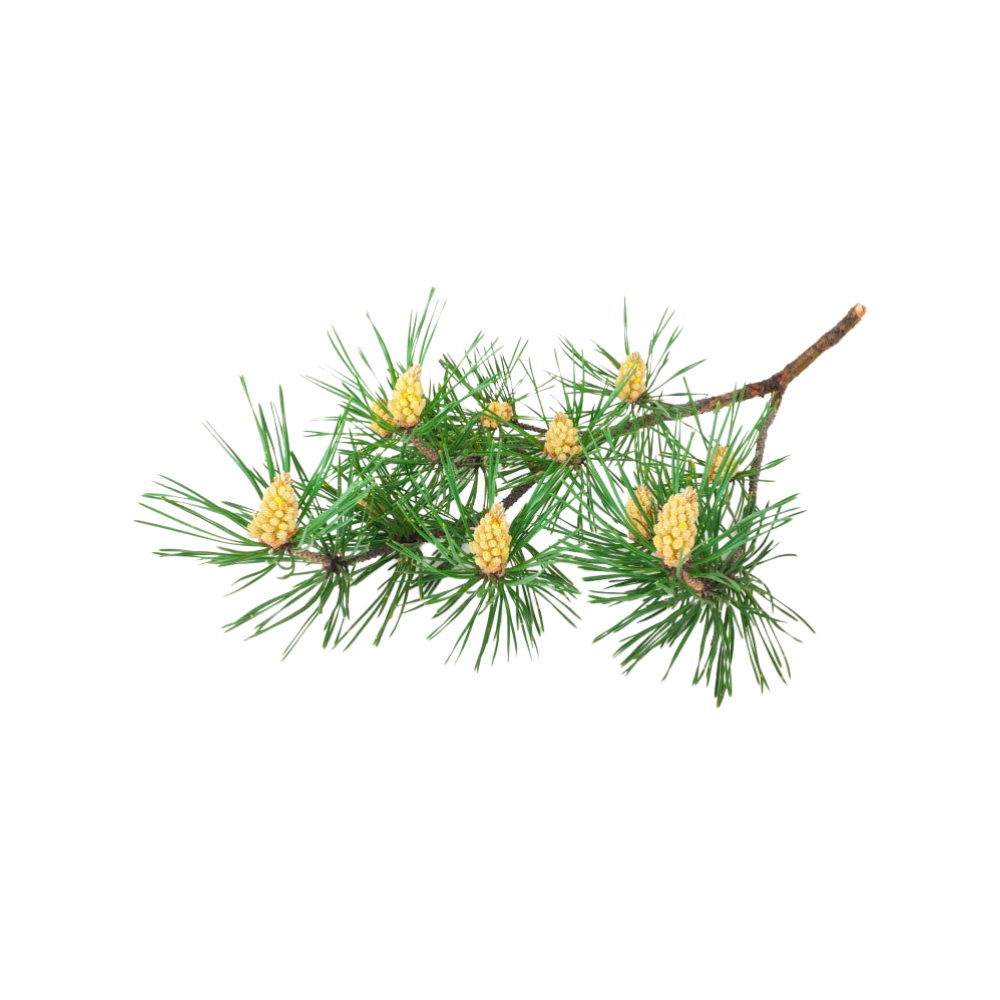
Pine
Pinus spp.
Pine (Pinus spp.) — a genus whose standardised maritime-pine bark extract (Pycnogenol) carries real venous and cardiometabolic evidence, while its needles, resin and pollen remain traditional tonics.
What Is Pine?
Pine (Pinus spp.) is a genus of roughly 120–140 coniferous trees in the family Pinaceae — one of the most widespread tree genera on Earth, dominating forests across the Northern Hemisphere and cultivated far beyond it. Almost every part has a history of use: the needles as a vitamin-rich tea, the inner bark as food and decoction, the resin (pitch) as a wound sealant, the pollen as a tonic, and the seeds (pine nuts) as food.
The single most important thing to understand about “pine medicine” is that its parts are not interchangeable, and the evidence behind them is sharply uneven. Almost all of the human clinical data belong to one preparation — standardised French maritime pine (Pinus pinaster) bark extract, sold as Pycnogenol® and Oligopin® — where proanthocyanidin antioxidant and nitric-oxide-mediated vascular activity give small but replicated effects on venous insufficiency, blood pressure and blood glucose 1,2,8Reference 1Systematic reviewPine bark (Pinus spp.) extract for treating chronic disorders — systematic reviewView study →Reference 2Meta-analysisEffects of pycnogenol on cardiometabolic health: A systematic review and meta-analysis of randomized controlled trials — meta-analysisView study →Reference 8RCTPycnogenol in chronic venous insufficiency — randomised placebo-controlledView study →. Everything attributed to the needles, resin or pollen rests on laboratory and animal work, or on tradition. A Pycnogenol result does not transfer to a cup of needle tea.
A second caveat threads through the older literature: several widely repeated “pine needle” chemistry and antioxidant figures actually come from Cedrus deodara, the Himalayan cedar, which is not a pine at all. True Pinus needle and resin oils are dominated by α-pinene, β-pinene and limonene, not the α-terpineol/linalool profile once printed here.
Traditional & Modern Uses
Humans have used pine as food and medicine for thousands of years across almost every Northern culture. Native American peoples relied on the nuts, inner bark and needles as winter nutrition, and early European explorers in North America took up pine-needle tea to ward off scurvy — the needles are a genuine source of vitamin C. Traditionally the tree has been applied to coughs, sinus and urinary-tract infections, skin infections, joint pain, debility and general convalescence, with the resin worked into salves for wounds, infections and insect bites, and pine boughs used as insect-repellent bedding.
Each part has its own traditional niche:
- Needles — a warming, aromatic tea used to support the respiratory tract, ease a sore throat, loosen phlegm and settle gas and bloating; the infusion is also applied topically as an antimicrobial wash.
- Resin (pitch) — the tree’s own wound sealant, worked into topical salves for cuts, infections and insect bites; taken internally (sparingly) as an expectorant and carminative. Its antimicrobial reputation is well grounded in the lab but has not been tested clinically (see Pharmacology).
- Bark — the inner bark is decocted into a strong, bitter, astringent tea; the standardised maritime-pine bark extract is a modern, separate product with its own evidence base.
- Pollen — used for centuries in East Asia (as song hua fen) as a strengthening and “longevity” tonic, and in the modern supplement market as a male tonic. In traditional Chinese medicine it is framed as a jing (“life-essence”) tonic acting on the five major organs. That framing is traditional, not mechanistic: there is no evidence pine pollen acts on the hypothalamus or functions as a hormone, and its trace androgen content is far too low to raise testosterone (see Pharmacology). Any real benefit is far more plausibly nutritional and anti-inflammatory than hormonal.
- Seeds (pine nuts) — a nutritious food rich in B-vitamins, vitamin E, minerals and unsaturated fats.
Botany & Varieties
The Pinus genus comprises roughly 120–140 species of evergreen conifers, an ancient lineage dating back over 100 million years. Pines are found on every continent (as natives or introductions) and dominate temperate and boreal forests of the Northern Hemisphere; different regions carry their own characteristic species.
For anyone reading the research, species identity matters more than usual, because the traditions and the clinical evidence draw on different pines:
- The clinical (human-trial) evidence is almost entirely Pinus pinaster — French/Atlantic maritime pine — and specifically its standardised bark extract.
- Traditional needle, resin and pollen use draws on species such as Pinus sylvestris (Scots pine), Pinus densiflora (Korean red pine), Pinus koraiensis, Pinus nigra and many others.
- A few species matter for safety: the needles of ponderosa pine (Pinus ponderosa) and some relatives contain the abortifacient diterpene isocupressic acid (see Safety).
Harvesting & Preparation
All parts of the pine tree can be used, and each is best gathered in its own season:
- Pollen — released only in early spring or summer; each tree produces a great deal. Collect by bagging the male catkins and shaking.
- Needles — harvestable year-round, but spring’s young growth has the best flavour and highest terpene content.
- Resin (pitch) — available all year; easiest to gather in winter when it hardens into brittle chunks rather than a sticky mess.
- Inner bark — available year-round; spring and summer are convenient.
One preparation caution belongs here rather than only in the safety notes: identify the species before making needle tea, and avoid ponderosa and other isocupressic-acid-bearing pines — especially in pregnancy.
Phytochemistry
Every part of the pine tree carries a distinct chemistry. The needles and resin yield a monoterpene-rich essential oil — led in true Pinus species by α-pinene, β-pinene and limonene 31Reference 31In vitroChemical composition and antimicrobial activity of the essential oil of endemic Dalmatian black pine (Pinus nigra ssp. dalmatica) — in vitroView study → — the resin is dense in diterpene resin acids such as abietic acid, the bark concentrates proanthocyanidins (oligomeric procyanidins/OPCs) built from catechin and taxifolin units 1Reference 1Systematic reviewPine bark (Pinus spp.) extract for treating chronic disorders — systematic reviewView study →, and the pollen layers vitamins, amino acids and trace androgens over its nutritive base 35Reference 35In vitroTestosterone, epitestosterone and androstenedione in the pollen of Scotch pine P. silvestris L — in vitroView study →.
Note on mis-sourced chemistry. The needle essential-oil profile once printed here (α-terpineol ~30%, linalool ~24%, anethole ~14.6%) derives from Cedrus deodara (Himalayan cedar), not a Pinus, and has been removed. Genuine Pinus needle and resin oils are dominated by α-/β-pinene and limonene.
Constituent Summary
Essential-oil components are qualitative for the genus (true Pinus species); pollen androgens are ng per gram of pollen; bark proanthocyanidins are given as % of a standardised bark extract. All vary markedly with species, plant part and processing — treat as representative. Where no quantitative figure is published for the whole herb, the entry reads No Data.
Flavanol4 compounds3 with data
Phenolic acid2 compounds2 with data
Stilbene1 compoundno data
Monoterpene3 compounds3 with data
Diterpene8 compounds1 with data
Sterol5 compounds3 with data
Vitamin8 compoundsno data
Some species (Scots pine — Pinus sylvestris) carry testosterone, epitestosterone and androstenedione, but the concentrations are far too low to offer any direct hormonal benefit from supplementation; pine pollen’s male-tonic reputation is better attributed to its broader nutritional and anti-inflammatory profile than to the androgens themselves.
Pharmacology & Research
The pine literature is large but sharply lopsided: almost all of the human evidence sits with one preparation — standardised French maritime pine (Pinus pinaster) bark extract, sold as Pycnogenol® and Oligopin® — while pine needles, resin and pollen remain almost entirely preclinical. A 2020 Cochrane review pooled 27 randomised controlled trials (1,641 participants) of pine bark extract across ten chronic disorders, and 2019–2025 meta-analyses add cardiometabolic and blood-pressure data; the recurring verdict is small, real, but low-certainty effects driven by proanthocyanidin antioxidant and nitric-oxide-mediated vascular activity 1,2,3,4,5Reference 1Systematic reviewPine bark (Pinus spp.) extract for treating chronic disorders — systematic reviewView study →Reference 2Meta-analysisEffects of pycnogenol on cardiometabolic health: A systematic review and meta-analysis of randomized controlled trials — meta-analysisView study →Reference 3Meta-analysisDoes supplementation with pine bark extract improve cardiometabolic risk factors? A systematic review and meta-analysis — meta-analysisView study →Reference 4Meta-analysisEffect of pycnogenol supplementation on blood pressure: A systematic review and meta-analysis of clinical trials — meta-analysisView study →Reference 5Meta-analysisEffect of Pycnogenol on Blood Pressure: Findings From a PRISMA Compliant Systematic Review and Meta-Analysis of Randomized, Double-Blind, Placebo-Controlled, Clinical Studies — meta-analysisView study →. The best-replicated signals are in venous insufficiency, blood pressure and glycaemic control 1,2,3,4,8,12Reference 1Systematic reviewPine bark (Pinus spp.) extract for treating chronic disorders — systematic reviewView study →Reference 2Meta-analysisEffects of pycnogenol on cardiometabolic health: A systematic review and meta-analysis of randomized controlled trials — meta-analysisView study →Reference 3Meta-analysisDoes supplementation with pine bark extract improve cardiometabolic risk factors? A systematic review and meta-analysis — meta-analysisView study →Reference 4Meta-analysisEffect of pycnogenol supplementation on blood pressure: A systematic review and meta-analysis of clinical trials — meta-analysisView study →Reference 8RCTPycnogenol in chronic venous insufficiency — randomised placebo-controlledView study →Reference 12RCTAntidiabetic effect of Pycnogenol French maritime pine bark extract in patients with diabetes type II — randomised placebo-controlledView study →. Everything attributed to the needles (tea, essential oil) or pollen (male tonic) rests on cell and animal work, and — importantly — several widely repeated “pine needle” chemistry and antioxidant figures actually come from Cedrus deodara, the Himalayan cedar, which is not a pine at all. Read every claim below for which part and which preparation was tested: a Pycnogenol result does not transfer to a cup of needle tea.
- Best-supported: standardised pine bark extract reduces oedema and symptoms in chronic venous insufficiency 1,8,9Reference 1Systematic reviewPine bark (Pinus spp.) extract for treating chronic disorders — systematic reviewView study →Reference 8RCTPycnogenol in chronic venous insufficiency — randomised placebo-controlledView study →Reference 9ReviewPycnogenol® in chronic venous insufficiency and related venous disorders — reviewView study →, produces modest reductions in blood pressure 2,4Reference 2Meta-analysisEffects of pycnogenol on cardiometabolic health: A systematic review and meta-analysis of randomized controlled trials — meta-analysisView study →Reference 4Meta-analysisEffect of pycnogenol supplementation on blood pressure: A systematic review and meta-analysis of clinical trials — meta-analysisView study →, and lowers fasting glucose and HbA1c 2,3,12Reference 2Meta-analysisEffects of pycnogenol on cardiometabolic health: A systematic review and meta-analysis of randomized controlled trials — meta-analysisView study →Reference 3Meta-analysisDoes supplementation with pine bark extract improve cardiometabolic risk factors? A systematic review and meta-analysis — meta-analysisView study →Reference 12RCTAntidiabetic effect of Pycnogenol French maritime pine bark extract in patients with diabetes type II — randomised placebo-controlledView study →.
- Emerging, worth watching: early diabetic retinopathy 10,11Reference 10RCTPycnogenol improves microcirculation, retinal edema, and visual acuity in early diabetic retinopathy — randomised controlled trialView study →Reference 11ReviewPycnogenol for diabetic retinopathyView study →, cognition/attention 18,19,20Reference 18Clinical trialPycnogenol® supplementation improves cognitive function, attention and mental performance in students — clinical trialView study →Reference 19Clinical trialPycnogenol® improves cognitive function, attention, mental performance and specific professional skills in healthy professionals aged 35-55 — clinical trialView study →Reference 20Meta-analysisSafety and efficacy of antioxidant therapy in children and adolescents with attention deficit hyperactivity disorder: A systematic review and network meta-analysis — systematic reviewView study →, and a pollen anti-aging signal seen only in mice 32,33Reference 32In vitroAntioxidant and antiinflammatory activity of pine pollen extract in vitro — in vitroView study →Reference 33AnimalAntiaging effect of pine pollen in human diploid fibroblasts and in a mouse model induced by D-galactose — mouseView study →.
- Mechanistically thin: the pollen “testosterone booster” reputation — androgens are present but at nanogram-per-gram levels far too low to matter 35Reference 35In vitroTestosterone, epitestosterone and androstenedione in the pollen of Scotch pine P. silvestris L — in vitroView study →; and the needle essential-oil chemistry copied from Cedrus deodara rather than a true Pinus 22,29,30,31Reference 22AnimalPycnogenol attenuates the inflammatory and nitrosative stress on joint inflammation induced by urate crystals — animal modelView study →Reference 29In vitroAntibacterial and antifungal effects of essential oils from coniferous trees — in vitroView study →Reference 30In vitroEssential oils of Pinus sylvestris, Citrus limon and Origanum vulgare exhibit high bactericidal and anti-biofilm activities against Neisseria gonorrhoeae and Streptococcus suis — in vitroView study →Reference 31In vitroChemical composition and antimicrobial activity of the essential oil of endemic Dalmatian black pine (Pinus nigra ssp. dalmatica) — in vitroView study →.
- The caveat: the strong data belong to one proprietary, standardised bark extract, not to needle tea, resin or pollen — and there is no standardised dose across the genus.
1. Venous insufficiency & edema
This is the most consistent finding for pine bark extract. In a double-blind RCT, 40 patients with chronic venous insufficiency and leg varices took Pycnogenol 100 mg three times daily or placebo for two months; the extract significantly reduced subcutaneous oedema, leg heaviness and pain, with roughly 60% of treated patients losing oedema entirely, while placebo did nothing 8Reference 8RCTPycnogenol in chronic venous insufficiency — randomised placebo-controlledView study →. A dedicated review collates further trials in CVI, long-haul-flight leg oedema, venous ulcers and haemorrhoids, attributing the effect to the extract’s antioxidant, anti-inflammatory, vasodilator and collagen-stabilising actions 9Reference 9ReviewPycnogenol® in chronic venous insufficiency and related venous disorders — reviewView study →. The 2020 Cochrane review found oedema among the outcomes where pine bark extract showed benefit, though it graded overall certainty low because trials were small and mostly funded by manufacturers 1Reference 1Systematic reviewPine bark (Pinus spp.) extract for treating chronic disorders — systematic reviewView study →. The active fraction is the bark’s proanthocyanidin OPCs — this is not an effect of needle tea or resin.
Gap: Trials are small, short, and predominantly industry-sponsored; no large independent RCT and no head-to-head against standard compression or venotonics of comparable rigour.
2. Blood pressure & cardiometabolic
Several meta-analyses converge on a modest antihypertensive effect for pine bark extract. A 2019 meta-analysis of 24 RCTs (1,594 participants) found reductions in systolic (−2.5 mmHg) and diastolic (−1.8 mmHg) blood pressure alongside lower fasting glucose, HbA1c and BMI 2Reference 2Meta-analysisEffects of pycnogenol on cardiometabolic health: A systematic review and meta-analysis of randomized controlled trials — meta-analysisView study →; a 2025 meta-analysis of 27 RCTs (1,685 participants) reported similar systolic (−2.3 mmHg) and diastolic (−2.6 mmHg) reductions plus small drops in fasting glucose, HbA1c, body weight and LDL 3Reference 3Meta-analysisDoes supplementation with pine bark extract improve cardiometabolic risk factors? A systematic review and meta-analysis — meta-analysisView study →. A blood-pressure-specific meta of 12 trials confirmed the direction of effect, more pronounced with longer supplementation 4Reference 4Meta-analysisEffect of pycnogenol supplementation on blood pressure: A systematic review and meta-analysis of clinical trials — meta-analysisView study →. Honesty requires noting the counter-evidence: a PRISMA-compliant meta restricted to seven double-blind placebo-controlled trials found no significant blood-pressure change 5Reference 5Meta-analysisEffect of Pycnogenol on Blood Pressure: Findings From a PRISMA Compliant Systematic Review and Meta-Analysis of Randomized, Double-Blind, Placebo-Controlled, Clinical Studies — meta-analysisView study →, and lipid meta-analyses were largely null apart from a small rise in HDL 6,7Reference 6Meta-analysisA systematic review and meta-analysis of the effects of pycnogenol on plasma lipids — meta-analysisView study →Reference 7Meta-analysisThe impact of pycnogenol supplementation on plasma lipids in humans: A systematic review and meta-analysis of clinical trials — meta-analysisView study →. The effect is real but small, and best read as a cardiometabolic nudge rather than a treatment.
Gap: Effect sizes are clinically minor, heterogeneity is high, and the null high-quality meta-analysis 5Reference 5Meta-analysisEffect of Pycnogenol on Blood Pressure: Findings From a PRISMA Compliant Systematic Review and Meta-Analysis of Randomized, Double-Blind, Placebo-Controlled, Clinical Studies — meta-analysisView study → shows how sensitive the signal is to trial selection.
3. Antioxidant
Antioxidant capacity is the mechanistic backbone of the whole genus, and the one place the different pine parts genuinely converge — the bark’s proanthocyanidins, the needles’ proanthocyanidins and flavonoids, and the pollen’s phenolics all scavenge free radicals in assay after assay 26,32Reference 26In vitroAntioxidant activity and analysis of proanthocyanidins from pine (Pinus densiflora) needles — in vitroView study →Reference 32In vitroAntioxidant and antiinflammatory activity of pine pollen extract in vitro — in vitroView study →. For pine needles, though, the human-facing evidence is thin and the chemistry is frequently mis-sourced: the often-quoted essential-oil profile (α-terpineol ~30%, linalool ~24%) and its radical-scavenging data come from Cedrus deodara, a cedar, not a Pinus [22 — see Gap]. Genuine Pinus densiflora needle extracts do show DPPH scavenging and cellular ROS reduction in vitro 26Reference 26In vitroAntioxidant activity and analysis of proanthocyanidins from pine (Pinus densiflora) needles — in vitroView study →, and P. densiflora needle extract was antioxidant, antimutagenic and antitumour in cell and rodent assays 27Reference 27AnimalAntioxidant, antimutagenic, and antitumor effects of pine needles (Pinus densiflora) — animal modelView study →. Human oxidative-stress biomarker improvements are documented mainly for the standardised bark extract, whose clinical and molecular effects on skin — including protection against UV-induced damage and improved skin barrier and elasticity — are the most developed human-facing antioxidant application in the genus 1,25Reference 1Systematic reviewPine bark (Pinus spp.) extract for treating chronic disorders — systematic reviewView study →Reference 25ReviewFrench Maritime Pine Bark Extract (Pycnogenol®) Effects on Human Skin: Clinical and Molecular Evidence — reviewView study →. Needle polysaccharide fractions from Pinus massoniana also raised antioxidant-enzyme activity and lowered lipids in high-fat-fed mice 28Reference 28AnimalChemical composition, antioxidant activities of polysaccharide from Pine needle (Pinus massoniana) and hypolipidemic effect in high-fat diet-induced mice — mouseView study →.
Gap: Direct human antioxidant-outcome data exist essentially only for the bark extract; the widely cited needle-oil antioxidant figures actually describe Cedrus deodara (Himalayan cedar), not pine, and should not be attributed to the genus.
4. Glycemic control
Pine bark extract has repeatable, if modest, glucose-lowering data. A double-blind placebo-controlled RCT in 77 type 2 diabetics found that 100 mg Pycnogenol daily for 12 weeks, on top of standard therapy, significantly lowered plasma glucose and HbA1c versus placebo 12Reference 12RCTAntidiabetic effect of Pycnogenol French maritime pine bark extract in patients with diabetes type II — randomised placebo-controlledView study →. A later RCT in type 2 diabetics with microalbuminuria reported improved metabolic status and lower vascular cell adhesion molecule-1 13Reference 13RCTEffect of French maritime pine bark extract supplementation on metabolic status and serum vascular cell adhesion molecule-1 levels in patients with type 2 diabetes and microalbuminuria — randomised controlled trialView study →, and the cardiometabolic meta-analyses above found pooled reductions in fasting glucose and HbA1c 2,3Reference 2Meta-analysisEffects of pycnogenol on cardiometabolic health: A systematic review and meta-analysis of randomized controlled trials — meta-analysisView study →Reference 3Meta-analysisDoes supplementation with pine bark extract improve cardiometabolic risk factors? A systematic review and meta-analysis — meta-analysisView study →. Mechanistically, pine bark and needle extracts inhibit α-glucosidase and α-amylase, blunting postprandial glucose in diabetic mice 14Reference 14In vitroInhibitory effect of pine extract on alpha-glucosidase activity and postprandial hyperglycemia — in vitroView study →. As throughout, this is bark-extract data — not needle tea.
Gap: Trials are short (≤12 weeks) and add-on to existing therapy; no evidence on hard endpoints or as monotherapy, and the needle/whole-herb forms have no human glycaemic data.
5. Anti-inflammatory
Pine’s anti-inflammatory activity is mechanistically well mapped but clinically shallow. The bark extract inhibits NF-κB signalling and downstream COX-2 and 5-lipoxygenase, lowering leukotrienes — the rationale behind its use as an add-on in asthma 24Reference 24ReviewPycnogenol® improvements in asthma management — reviewView study →. In a randomised, double-blind, placebo-controlled crossover trial, Pycnogenol improved asthma symptoms and lung function versus placebo 23Reference 23RCTPycnogenol((R)) in the Management of Asthma — randomised placebo-controlledView study →. In animal gout models, Pycnogenol attenuated urate-crystal-induced COX-2, IL-8 and iNOS in joint tissue 22Reference 22AnimalPycnogenol attenuates the inflammatory and nitrosative stress on joint inflammation induced by urate crystals — animal modelView study →. The needle essential oil is credited with COX-2 inhibition, but that specific data traces to Cedrus deodara rather than a true pine.
Gap: Human anti-inflammatory evidence is limited to a small asthma crossover trial and registry work; the joint/gout data are animal-only, and the needle-oil enzyme claims are mis-attributed to a cedar.
6. Diabetic retinopathy
Pine bark extract has a niche but genuine ophthalmic signal in early diabetic microangiopathy. A randomised controlled trial found Pycnogenol improved retinal microcirculation, reduced retinal oedema and improved visual acuity in early diabetic retinopathy, plausibly by increasing capillary resistance and reducing leakage 10Reference 10RCTPycnogenol improves microcirculation, retinal edema, and visual acuity in early diabetic retinopathy — randomised controlled trialView study →. A review of five clinical trials (≈1,289 patients, several from the 1960s–80s) reported slowed progression of retinopathy 11Reference 11ReviewPycnogenol for diabetic retinopathyView study →. The mechanism is consistent with the extract’s vasoprotective and capillary-sealing actions seen in venous disease.
Gap: The supporting trials are old, small and heterogeneous, several predating modern retinopathy management; this is adjunctive at best and not a substitute for standard ophthalmic care.
7. Erectile dysfunction
The erectile-function evidence is real but confounded, because pine bark extract is almost always tested combined with L-arginine. A 2023 meta-analysis of three trials (184 men) found the Pycnogenol-plus-L-arginine combination significantly improved erectile-function, satisfaction and desire scores versus control 15Reference 15Meta-analysisEfficacy of L-arginine and Pycnogenol® in the treatment of male erectile dysfunction: a systematic review and meta-analysis — meta-analysisView study →; earlier open and controlled studies reported the same 16,17Reference 16Clinical trialTreatment of erectile dysfunction with pycnogenol and L-arginine — clinical trialView study →Reference 17RCTNatural polyphenols improve erectile function and lipid profile in patients suffering from erectile dysfunction — randomised controlled trialView study →, the rationale being that arginine supplies substrate and the extract upregulates nitric-oxide synthase to relax cavernous smooth muscle 16Reference 16Clinical trialTreatment of erectile dysfunction with pycnogenol and L-arginine — clinical trialView study →. Because arginine alone raises nitric oxide, the pine-specific contribution can’t be isolated from these designs.
Gap: Almost no trial tests pine bark extract alone for ED — the effect is inseparable from co-administered L-arginine, and testosterone was not improved 15Reference 15Meta-analysisEfficacy of L-arginine and Pycnogenol® in the treatment of male erectile dysfunction: a systematic review and meta-analysis — meta-analysisView study →.
8. Cognitive function & attention
Pine bark extract shows a plausible but methodologically soft cognitive signal. An 8-week study in students reported improved attention, memory, executive function and exam performance with Pycnogenol 18Reference 18Clinical trialPycnogenol® supplementation improves cognitive function, attention and mental performance in students — clinical trialView study →, and a 12-week registry study in professionals with elevated oxidative stress reported similar gains 19Reference 19Clinical trialPycnogenol® improves cognitive function, attention, mental performance and specific professional skills in healthy professionals aged 35-55 — clinical trialView study →. In ADHD, a network meta-analysis of antioxidant therapies ranked pycnogenol among the more effective agents on parent- and teacher-rated attention and hyperactivity scales, though within a very heterogeneous evidence base 20Reference 20Meta-analysisSafety and efficacy of antioxidant therapy in children and adolescents with attention deficit hyperactivity disorder: A systematic review and network meta-analysis — systematic reviewView study →. The proposed mechanism is again vascular and antioxidant — improved cerebral microperfusion and reduced oxidative stress.
Gap: Most cognition studies are registry or product-evaluation designs rather than blinded placebo-controlled RCTs, raising expectation and selection bias; the ADHD signal comes from indirect network comparisons.
9. Osteoarthritis & joint
The joint evidence is suggestive but low-quality. A large systematic review and meta-analysis of dietary supplements for osteoarthritis included pine bark extract among agents with short-term effects on pain and function, but graded the overall certainty very low and cautioned against over-reading small trials 21Reference 21Meta-analysisDietary supplements for treating osteoarthritis: a systematic review and meta-analysis — meta-analysisView study →. Mechanistic support comes from a gout model where Pycnogenol reduced urate-crystal-induced joint inflammation and nitrosative stress 22Reference 22AnimalPycnogenol attenuates the inflammatory and nitrosative stress on joint inflammation induced by urate crystals — animal modelView study →. There is a coherent anti-inflammatory rationale but sparse, small human data.
Gap: Human OA trials are few, small and low-certainty; no adequately powered independent RCT confirms a clinically meaningful benefit.
10. Antimicrobial
Pine’s antimicrobial reputation — resin as a wound sealant, needle infusions as washes — is well grounded in vitro but untested in humans. Essential oils from coniferous Pinus species (P. densiflora, P. koraiensis) show antibacterial and antifungal activity 29Reference 29In vitroAntibacterial and antifungal effects of essential oils from coniferous trees — in vitroView study →, and P. sylvestris needle oil had bactericidal and anti-biofilm activity against Neisseria gonorrhoeae and Streptococcus suis 30Reference 30In vitroEssential oils of Pinus sylvestris, Citrus limon and Origanum vulgare exhibit high bactericidal and anti-biofilm activities against Neisseria gonorrhoeae and Streptococcus suis — in vitroView study →. P. nigra needle oil, rich in α-pinene and β-pinene, was likewise antimicrobial 31Reference 31In vitroChemical composition and antimicrobial activity of the essential oil of endemic Dalmatian black pine (Pinus nigra ssp. dalmatica) — in vitroView study →. These are genuine Pinus data (unlike the mis-sourced antioxidant figures), but all are laboratory assays.
Gap: No controlled human trials of pine resin or needle preparations for infection or wound healing; efficacy is inferred entirely from in vitro potency at concentrations topical use may not reach.
11. Anti-aging & longevity
The pollen’s traditional “longevity tonic” role has a modest preclinical footprint. Pine pollen extract delayed replicative senescence in human diploid fibroblasts and reduced markers of accelerated aging in D-galactose-treated mice, improving antioxidant enzyme activity 33Reference 33AnimalAntiaging effect of pine pollen in human diploid fibroblasts and in a mouse model induced by D-galactose — mouseView study →. Pollen extract also showed direct antioxidant and anti-inflammatory activity in vitro 32Reference 32In vitroAntioxidant and antiinflammatory activity of pine pollen extract in vitro — in vitroView study →, and a bibliometric review catalogues a broad but largely preclinical Chinese-medicine literature on the pollen 34Reference 34ReviewThe Potential Effects and Use of Chinese Herbal Medicine Pine Pollen (Pinus pollen): A Bibliometric Analysis of Pharmacological and Clinical Studies — reviewView study →. This is a coherent antioxidant-based anti-aging hypothesis with no human evidence.
Gap: The entire signal is cell and rodent work — chiefly one accelerated-aging mouse model — with no clinical trial of pine pollen for aging or longevity in humans.
12. Androgenic / male tonic
The claim that pine pollen “boosts testosterone” does not survive the numbers. Pollen of Scots pine (Pinus sylvestris) genuinely contains testosterone, epitestosterone and androstenedione — first shown in 1971 35Reference 35In vitroTestosterone, epitestosterone and androstenedione in the pollen of Scotch pine P. silvestris L — in vitroView study → — but at nanogram-per-gram levels: on the order of ~80 ng/g testosterone, meaning a large pollen dose delivers well under a microgram, orders of magnitude below any physiologically active oral amount. Any real-world benefit for male vitality is far more plausibly nutritional and anti-inflammatory than hormonal, and there are no human trials showing pollen raises serum testosterone. It is not an anabolic agent and should not be presented as one.
Gap: No human trial demonstrates any change in serum androgens or clinical hypogonadism outcomes from pine pollen; the androgen content is real but pharmacologically negligible.
Mechanisms
| Mechanism | Drives | Key compounds |
|---|---|---|
| NF-κB ↓, COX-2 ↓, 5-LOX ↓ | anti-inflammatoryasthmajoint | proanthocyanidins, taxifolin |
| eNOS ↑ → nitric-oxide-mediated vasodilation | blood pressureerectile functionretinopathy | proanthocyanidins, ferulic acid |
| Free-radical scavenging, ↑ SOD/GPx/catalase | antioxidantanti-agingglycemic | proanthocyanidins, caffeic acid |
| Capillary sealing / collagen stabilisation | venous insufficiencyedemaretinopathy | proanthocyanidins |
| α-glucosidase / α-amylase inhibition | glycemic control | proanthocyanidins |
| Membrane disruption of microbes | antimicrobial (topical) | α-pinene, limonene |
Clinical trials
Registered human trials exist almost exclusively for standardised pine bark extract (Pycnogenol/Oligopin) — ClinicalTrials.gov lists ~132 records under “Pycnogenol” and ~96 under “pine bark extract” (spanning venous, cardiometabolic, ophthalmic, cognitive and joint conditions), while pine pollen has essentially none (1 record); the needle and resin evidence base is entirely preclinical.
| Completed | Planned | Terminated | Preclinical |
|---|---|---|---|
| ~35 | ~2 | ~3 | ~50+ |
Last checked: July 2026.
Dosage
The human doses below are all for standardised maritime-pine bark extract (Pycnogenol/Oligopin), the only pine preparation with a real trial base. These are proprietary, OPC-standardised extracts, so there is no defensible back-conversion to raw dried bark, needle or resin — the marker (proanthocyanidin) content of raw material varies enormously with species and processing. These are research doses, not recommendations.
| Indication | Preparation | Dose | Est. dried-herb equivalent | Source |
|---|---|---|---|---|
| Venous insufficiency & edema | Pycnogenol (bark extract) | 100 mg 3×/day (300 mg/day), 2 mo | — (proprietary OPC extract; no whole-bark ratio) | 8Reference 8RCTPycnogenol in chronic venous insufficiency — randomised placebo-controlledView study → |
| Type 2 diabetes (glucose) | Pycnogenol (bark extract) | 100 mg/day, 12 wk | — | 12Reference 12RCTAntidiabetic effect of Pycnogenol French maritime pine bark extract in patients with diabetes type II — randomised placebo-controlledView study → |
| Blood pressure / cardiometabolic | Pycnogenol (bark extract) | ~100–150 mg/day | — | 2,4Reference 2Meta-analysisEffects of pycnogenol on cardiometabolic health: A systematic review and meta-analysis of randomized controlled trials — meta-analysisView study →Reference 4Meta-analysisEffect of pycnogenol supplementation on blood pressure: A systematic review and meta-analysis of clinical trials — meta-analysisView study → |
| Diabetic retinopathy | Pycnogenol (bark extract) | ~50 mg 3×/day | — | 10Reference 10RCTPycnogenol improves microcirculation, retinal edema, and visual acuity in early diabetic retinopathy — randomised controlled trialView study → |
| Cognition / attention | Pycnogenol (bark extract) | 100–150 mg/day, 8–12 wk | — | 18,19Reference 18Clinical trialPycnogenol® supplementation improves cognitive function, attention and mental performance in students — clinical trialView study →Reference 19Clinical trialPycnogenol® improves cognitive function, attention, mental performance and specific professional skills in healthy professionals aged 35-55 — clinical trialView study → |
| Erectile dysfunction | Pycnogenol + L-arginine | Pycnogenol ~60–120 mg/day (with L-arginine) | — | 15,16Reference 15Meta-analysisEfficacy of L-arginine and Pycnogenol® in the treatment of male erectile dysfunction: a systematic review and meta-analysis — meta-analysisView study →Reference 16Clinical trialTreatment of erectile dysfunction with pycnogenol and L-arginine — clinical trialView study → |
Every “dried-herb equivalent” is deliberately left ”—”: these trials used proprietary, OPC-standardised bark extracts (Pycnogenol ~65–85% procyanidins; Oligopin), for which no defensible conversion to raw dried bark or needle exists. Inventing a ratio would misrepresent the data.
Traditional Dosage
Traditional use is of whole plant parts — needle infusion, bark decoction, resin tincture and pollen — dosed as food or by feel rather than to a standardised marker.
| System | Preparation | Dose |
|---|---|---|
| Western herbal | Needle infusion (tea) | 1–2 tsp dried needles as tea, 1–3×/day |
| Western herbal | Bark decoction | strong decoction of inner bark, as tolerated |
| Western herbal | Resin tincture (high-proof) | drops only — GI-irritant, dose low |
| Chinese / Asian tradition | Pine pollen (song hua fen) | powder or high-proof extract, used sparingly as a tonic |
Safety & Pregnancy
Standardised pine bark extract is well tolerated; the real-world cautions belong to the other parts of the tree — allergenic pollen, GI-irritant resin, abortifacient isocupressic acid in some needles, and the lethal yew look-alike.
- Abortifacient needles. Some species (e.g. ponderosa) carry isocupressic acid, a proven livestock abortifacient — avoid unidentified needle tea in pregnancy.
- Toxic look-alike. Do not confuse pine with yew (Taxus) — flat needles and red berries — which is poisonous.
- Pollen allergy. Pine pollen can cause IgE-mediated allergy and cross-reacts with other pollens — patch/skin test first.
- Resin irritates the gut. Resin tinctures can irritate the GI tract — dose low and build up gradually.
- Additive drug effects. Bark extract enhances nitric-oxide vasodilation and pairs with BP/glucose drugs — monitor for additive effects.
- Bark extract well tolerated. Good tolerability across dozens of RCTs, adverse events comparable to placebo.
Full safety & interactions detail
Standardised pine bark extract (Pycnogenol/Oligopin) has a good tolerability record across dozens of RCTs, with adverse events generally mild and comparable to placebo 1Reference 1Systematic reviewPine bark (Pinus spp.) extract for treating chronic disorders — systematic reviewView study →. The main real-world cautions concern the other parts of the tree rather than the bark: pine pollen, long thought hypoallergenic, can cause genuine IgE-mediated allergy and cross-reacts with other conifer and grass pollens, so first-time users should patch/skin test 36Reference 36ObservationalAllergenicity and cross-reactivity of pine pollen — observationalView study →. Pine resin tinctures can irritate the gastrointestinal tract and should be dosed low and built up gradually. The needles of some species — notably ponderosa pine (Pinus ponderosa) — contain the abortifacient diterpene isocupressic acid, well documented to cause late-term abortion in cattle 37Reference 37AnimalPine needle abortion in cattle: a review and report of 1973-1984 research — animal modelView study →; and pine nuts can trigger “pine mouth,” a transient metallic taste disturbance lasting days to weeks 38Reference 38ReviewPine mouth — reviewView study →. Because pine bark extract enhances nitric-oxide-mediated vasodilation and is often combined with blood-pressure and glucose-lowering agents, monitor for additive effects 2,12Reference 2Meta-analysisEffects of pycnogenol on cardiometabolic health: A systematic review and meta-analysis of randomized controlled trials — meta-analysisView study →Reference 12RCTAntidiabetic effect of Pycnogenol French maritime pine bark extract in patients with diabetes type II — randomised placebo-controlledView study →. No dedicated human drug-interaction or CYP450 study of pine was identified, so interaction potential is inferred from its pharmacology rather than measured. Do not confuse pine with the toxic yew (Taxus), which has flat needles and red berries.
Pine needles of some species (e.g. ponderosa) contain isocupressic acid, a proven abortifacient in livestock, so pine-needle tea from unidentified species and any pollen or resin tincture should be avoided in pregnancy 37Reference 37AnimalPine needle abortion in cattle: a review and report of 1973-1984 research — animal modelView study →. Topical pine resin salves and culinary use of pine nuts are not implicated, but pine has not been formally studied for safety in human pregnancy or lactation — absence of reports is not evidence of safety.
References
- Robertson NU, Schoonees A, Brand A, Visser J, et al. (2020). Pine bark (Pinus spp.) extract for treating chronic disorders — systematic review. Cochrane Database Syst Rev, 9, CD008294. https://pubmed.ncbi.nlm.nih.gov/32990945/
- Malekahmadi M, Moradi Moghaddam O, Firouzi S, Daryabeygi-Khotbehsara R, et al. (2019). Effects of pycnogenol on cardiometabolic health: A systematic review and meta-analysis of randomized controlled trials — meta-analysis. Pharmacol Res, 150, 104472. https://pubmed.ncbi.nlm.nih.gov/31585179/
- Mohammadi S, Fulop T, Khalil A, Ebrahimi S, et al. (2025). Does supplementation with pine bark extract improve cardiometabolic risk factors? A systematic review and meta-analysis — meta-analysis. BMC Complement Med Ther, 25, 71. https://pubmed.ncbi.nlm.nih.gov/39987124/
- Pourmasoumi M, Hadi A, Mohammadi H, Rouhani MH, et al. (2020). Effect of pycnogenol supplementation on blood pressure: A systematic review and meta-analysis of clinical trials — meta-analysis. Phytother Res, 34, 67-76. https://pubmed.ncbi.nlm.nih.gov/31637782/
- Fogacci F, Tocci G, Sahebkar A, Presta V, et al. (2020). Effect of Pycnogenol on Blood Pressure: Findings From a PRISMA Compliant Systematic Review and Meta-Analysis of Randomized, Double-Blind, Placebo-Controlled, Clinical Studies — meta-analysis. Angiology, 71, 217-225. https://pubmed.ncbi.nlm.nih.gov/31763928/
- Sahebkar A (2014). A systematic review and meta-analysis of the effects of pycnogenol on plasma lipids — meta-analysis. J Cardiovasc Pharmacol Ther, 19, 244-55. https://pubmed.ncbi.nlm.nih.gov/24346156/
- Hadi A, Pourmasoumi M, Mohammadi H, Javaheri A, et al. (2019). The impact of pycnogenol supplementation on plasma lipids in humans: A systematic review and meta-analysis of clinical trials — meta-analysis. Phytother Res, 33, 276-287. https://pubmed.ncbi.nlm.nih.gov/30456865/
- Arcangeli P (2000). Pycnogenol in chronic venous insufficiency — randomised placebo-controlled. Fitoterapia, 71, 236-44. https://pubmed.ncbi.nlm.nih.gov/10844161/
- Gulati OP (2014). Pycnogenol® in chronic venous insufficiency and related venous disorders — review. Phytother Res, 28, 348-62. https://pubmed.ncbi.nlm.nih.gov/23775628/
- Steigerwalt R, Belcaro G, Cesarone MR, Di Renzo A, et al. (2009). Pycnogenol improves microcirculation, retinal edema, and visual acuity in early diabetic retinopathy — randomised controlled trial. J Ocul Pharmacol Ther, 25, 537-40. https://pubmed.ncbi.nlm.nih.gov/19916788/
- Schönlau F, Rohdewald P (2001). Pycnogenol for diabetic retinopathy. A review — review. Int Ophthalmol, 24, 161-71. https://pubmed.ncbi.nlm.nih.gov/12498513/
- Liu X, Wei J, Tan F, Zhou S, et al. (2004). Antidiabetic effect of Pycnogenol French maritime pine bark extract in patients with diabetes type II — randomised placebo-controlled. Life Sci, 75, 2505-13. https://pubmed.ncbi.nlm.nih.gov/15363656/
- Navval-Esfahlan E, Rafraf M, Asghari S, Imani H, et al. (2021). Effect of French maritime pine bark extract supplementation on metabolic status and serum vascular cell adhesion molecule-1 levels in patients with type 2 diabetes and microalbuminuria — randomised controlled trial. Complement Ther Med, 58, 102689. https://pubmed.ncbi.nlm.nih.gov/33610726/
- Kim YM, Jeong YK, Wang MH, Lee WY, et al. (2005). Inhibitory effect of pine extract on alpha-glucosidase activity and postprandial hyperglycemia — in vitro. Nutrition, 21, 756-61. https://pubmed.ncbi.nlm.nih.gov/15925302/
- Tian Y, Zhou Q, Li W, Liu M, et al. (2023). Efficacy of L-arginine and Pycnogenol® in the treatment of male erectile dysfunction: a systematic review and meta-analysis — meta-analysis. Front Endocrinol (Lausanne), 14, 1211720. https://pubmed.ncbi.nlm.nih.gov/37908749/
- Stanislavov R, Nikolova V (2003). Treatment of erectile dysfunction with pycnogenol and L-arginine — clinical trial. J Sex Marital Ther, 29, 207-13. https://pubmed.ncbi.nlm.nih.gov/12851125/
- Trebaticky B, Muchova J, Ziaran S, Bujdak P, et al. (2019). Natural polyphenols improve erectile function and lipid profile in patients suffering from erectile dysfunction — randomised controlled trial. Bratisl Lek Listy, 120, 941-944. https://pubmed.ncbi.nlm.nih.gov/31855055/
- Luzzi R, Belcaro G, Zulli C, Cesarone MR, et al. (2011). Pycnogenol® supplementation improves cognitive function, attention and mental performance in students — clinical trial. Panminerva Med, 53, 75-82. https://pubmed.ncbi.nlm.nih.gov/22108481/
- Belcaro G, Luzzi R, Dugall M, Ippolito E, et al. (2014). Pycnogenol® improves cognitive function, attention, mental performance and specific professional skills in healthy professionals aged 35-55 — clinical trial. J Neurosurg Sci, 58, 239-48. https://pubmed.ncbi.nlm.nih.gov/24675223/
- Zhou P, Yu X, Song T, Hou X, et al. (2024). Safety and efficacy of antioxidant therapy in children and adolescents with attention deficit hyperactivity disorder: A systematic review and network meta-analysis — systematic review. PLoS One, 19, e0296926. https://pubmed.ncbi.nlm.nih.gov/38547138/
- Liu X, Machado GC, Eyles JP, Ravi V, et al. (2018). Dietary supplements for treating osteoarthritis: a systematic review and meta-analysis — meta-analysis. Br J Sports Med, 52, 167-175. https://pubmed.ncbi.nlm.nih.gov/29018060/
- Peng YJ, Lee CH, Wang CC, Salter DM, et al. (2012). Pycnogenol attenuates the inflammatory and nitrosative stress on joint inflammation induced by urate crystals — animal model. Free Radic Biol Med, 52, 765-74. https://pubmed.ncbi.nlm.nih.gov/22198264/
- Hosseini S, Pishnamazi S, Sadrzadeh SM, Farid F, et al. (2001). Pycnogenol((R)) in the Management of Asthma — randomised placebo-controlled. J Med Food, 4, 201-209. https://pubmed.ncbi.nlm.nih.gov/12639402/
- Belcaro G, Luzzi R, Cesinaro Di Rocco P, Cesarone MR, et al. (2011). Pycnogenol® improvements in asthma management — review. Panminerva Med, 53, 57-64. https://pubmed.ncbi.nlm.nih.gov/22108478/
- Grether-Beck S, Marini A, Jaenicke T, Krutmann J, et al. (2016). French Maritime Pine Bark Extract (Pycnogenol®) Effects on Human Skin: Clinical and Molecular Evidence — review. Skin Pharmacol Physiol, 29, 13-7. https://pubmed.ncbi.nlm.nih.gov/26492562/
- Park YS, Jeon MH, Hwang HJ, Park MR, et al. (2011). Antioxidant activity and analysis of proanthocyanidins from pine (Pinus densiflora) needles — in vitro. Nutr Res Pract, 5, 281-7. https://pubmed.ncbi.nlm.nih.gov/21994521/
- Kwak CS, Moon SC, Lee MS (2006). Antioxidant, antimutagenic, and antitumor effects of pine needles (Pinus densiflora) — animal model. Nutr Cancer, 56, 162-71. https://pubmed.ncbi.nlm.nih.gov/17474862/
- Chu L, Yang L, Lin L, Wei J, et al. (2019). Chemical composition, antioxidant activities of polysaccharide from Pine needle (Pinus massoniana) and hypolipidemic effect in high-fat diet-induced mice — mouse. Int J Biol Macromol, 125, 445-452. https://pubmed.ncbi.nlm.nih.gov/30537499/
- Hong EJ, Na KJ, Choi IG, Choi KC, et al. (2004). Antibacterial and antifungal effects of essential oils from coniferous trees — in vitro. Biol Pharm Bull, 27, 863-6. https://pubmed.ncbi.nlm.nih.gov/15187434/
- Jurado P, Uruén C, Martínez S, Lain E, et al. (2023). Essential oils of Pinus sylvestris, Citrus limon and Origanum vulgare exhibit high bactericidal and anti-biofilm activities against Neisseria gonorrhoeae and Streptococcus suis — in vitro. Biomed Pharmacother, 168, 115703. https://pubmed.ncbi.nlm.nih.gov/37857249/
- Politeo O, Skocibusic M, Maravic A, Ruscic M, et al. (2011). Chemical composition and antimicrobial activity of the essential oil of endemic Dalmatian black pine (Pinus nigra ssp. dalmatica) — in vitro. Chem Biodivers, 8, 540-7. https://pubmed.ncbi.nlm.nih.gov/21404437/
- Lee KH, Kim AJ, Choi EM (2009). Antioxidant and antiinflammatory activity of pine pollen extract in vitro — in vitro. Phytother Res, 23, 41-8. https://pubmed.ncbi.nlm.nih.gov/19107823/
- Mao GX, Zheng LD, Cao YB, Chen ZM, et al. (2012). Antiaging effect of pine pollen in human diploid fibroblasts and in a mouse model induced by D-galactose — mouse. Oxid Med Cell Longev, 2012, 750963. https://pubmed.ncbi.nlm.nih.gov/22577492/
- Liang SB, Liang N, Bu FL, Lai BY, et al. (2020). The Potential Effects and Use of Chinese Herbal Medicine Pine Pollen (Pinus pollen): A Bibliometric Analysis of Pharmacological and Clinical Studies — review. World J Tradit Chin Med, 6, 163-170. https://pubmed.ncbi.nlm.nih.gov/34327226/
- Saden-Krehula M, Tajić M, Kolbah D (1971). Testosterone, epitestosterone and androstenedione in the pollen of Scotch pine P. silvestris L — in vitro. Experientia, 27, 108-9. https://pubmed.ncbi.nlm.nih.gov/5549221/
- Gastaminza G, Lombardero M, Bernaola G, Antepara I, et al. (2009). Allergenicity and cross-reactivity of pine pollen — observational. Clin Exp Allergy, 39, 1438-46. https://pubmed.ncbi.nlm.nih.gov/19573163/
- James LF, Short RE, Panter KE, Molyneux RJ, et al. (1989). Pine needle abortion in cattle: a review and report of 1973-1984 research — animal model. Cornell Vet, 79, 39-52. https://pubmed.ncbi.nlm.nih.gov/2643502/
- Hampton R, Scully C, Ellison S (2011). Pine mouth — review. Br Dent J, 210, 151. https://pubmed.ncbi.nlm.nih.gov/21350515/