What Is Rhodiola?
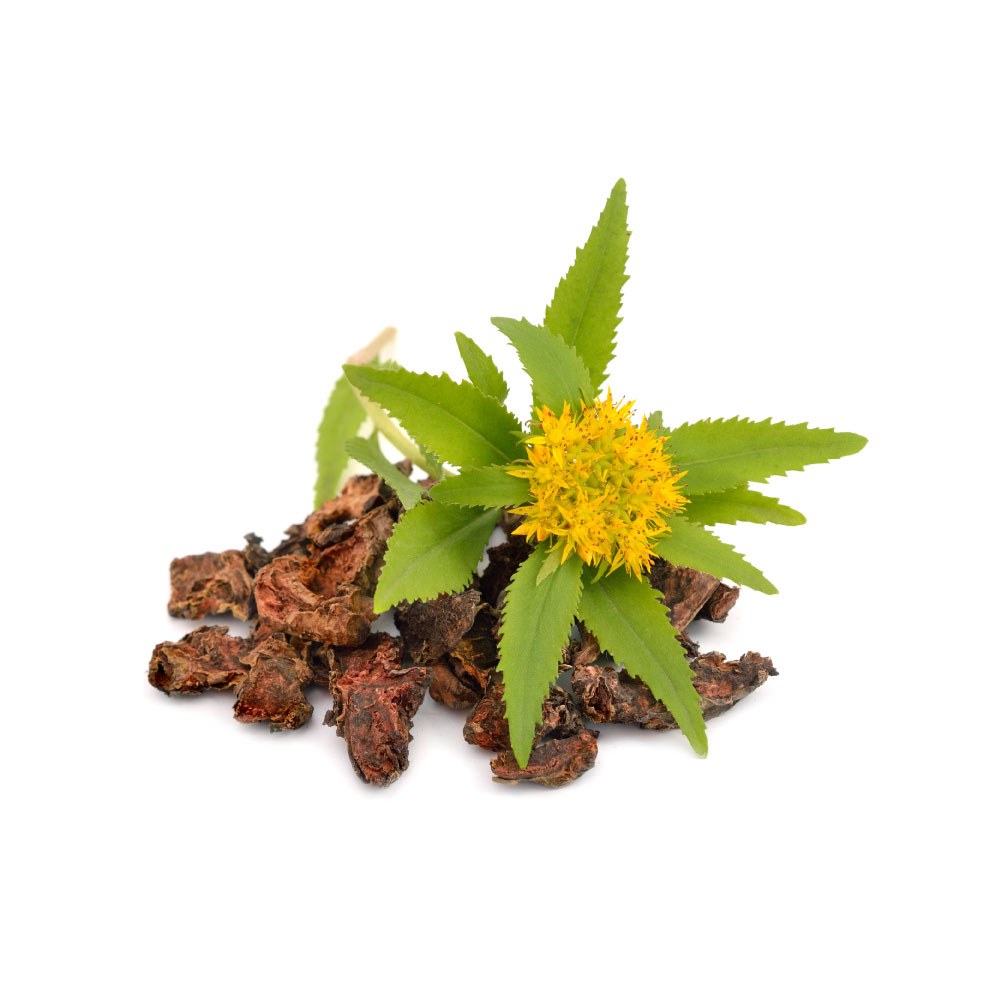
Rhodiola (Rhodiola rosea) — also called golden root or roseroot — is a hardy perennial of high, cold, mountainous regions, used in Russian, Scandinavian and Central Asian folk medicine for stamina, endurance and resilience under hard conditions. It was popularised by mid-20th-century Soviet research into “adaptogens,” much of which stayed unpublished; a substantial modern human literature has since caught up.
Rhodiola is best known as an adaptogen for stress-related fatigue. Its clearest, most replicated human benefits are for stress-related fatigue and mental performance while tired or stressed, with a 2025 meta-analysis of 26 trials now also supporting endurance exercise performance 4,20Reference 4RCTA randomised, double-blind, placebo-controlled, parallel-group study of the standardised extract SHR-5 of Rhodiola rosea in stress-related fatigue — randomised controlled trialView study →Reference 20Meta-analysisThe effect of Rhodiola rosea supplementation on endurance performance and related biomarkers — systematic review and meta-analysisView study →. It is a mild, non-jittery stimulant in the sense that it counters fatigue rather than producing the “wired” feeling of caffeine — and one trial actually found no benefit over placebo, so the effect is real but not uniform 3,6Reference 3RCTA randomized trial of two different doses of a SHR-5 Rhodiola rosea extract versus placebo and control of capacity for mental work — randomised controlled trialView study →Reference 6RCTRhodiola rosea for mental and physical fatigue in nursing students — randomised controlled trialView study →.
Two caveats run through the evidence. First, Rhodiola blunts the cortisol response to stress in humans, and the mechanism (HPA-axis feedback rather than a direct effect on the adrenals) is now better characterised than the older “we don’t really know how” framing 4Reference 4RCTA randomised, double-blind, placebo-controlled, parallel-group study of the standardised extract SHR-5 of Rhodiola rosea in stress-related fatigue — randomised controlled trialView study →. Second, almost all positive human data come from one standardised extract (SHR-5 / WS 1375, ~3% rosavins and ~1% salidroside), and those results do not automatically transfer to teas, raw powders, or cheaper Rhodiola species such as R. crenulata that carry salidroside but little rosavin.
Traditional & Modern Uses
Rhodiola rosea has a long folk history across the cold northern belt of Eurasia — Russia, Scandinavia and the mountains of Central Asia — where the root was taken to fight fatigue, boost physical and mental endurance, and help people cope with the demands of high altitude, cold and hard labour. The European Medicines Agency now recognises it as a traditional herbal medicinal product for temporary relief of stress symptoms such as fatigue and a sense of weakness, based on long-standing use rather than on the clinical trials 32Reference 32ReviewEuropean Union herbal monograph on Rhodiola rosea L., rhizoma et radix (EMA/HMPC/24177/2023, Revision 1) — pharmacopoeial monograph. https://www.ema.europa.eu/en/documents/herbal-monograph/final-european-union-herbal-monograph-rhodiola-rosea-l-rhizoma-et-radix-revision-1_en.pdfView study →.
In modern practice Rhodiola is used chiefly as an adaptogen for stress-related fatigue and burnout, as a nootropic to preserve attention and mental stamina under pressure, as a mild antidepressant in milder low mood, and among athletes as an ergogenic aid for endurance. Its popular reputation for preventing altitude sickness is not borne out by the one adequately powered trial (see Pharmacology & Research).
Botany & Varieties
Rhodiola belongs to the stonecrop family, Crassulaceae — a family of roughly 34 genera and 1,400 mostly cold- and drought-adapted succulents that also includes the ornamental and medicinal Kalanchoe. Rhodiola rosea is a hardy herbaceous perennial with a thick, aromatic rhizome (it smells faintly of rose when cut, hence “roseroot”).
While R. rosea is the preferred medicinal species, many other Rhodiola are used in various indigenous systems — including R. crenulata, R. kirilowii, R. quadrifida, R. sachalinensis and R. sacra. These are not interchangeable: the human efficacy data belong specifically to standardised R. rosea extract. The genus-wide marker salidroside is shared across species, but the rosavins that authenticate true R. rosea are largely unique to it — so cheaper species carrying salidroside without rosavin are chemically and, likely, clinically distinct 29,30Reference 29Analysis of the marker compounds of Rhodiola rosea L. (golden root) by reversed phase HPLC — chemical analysisView study →Reference 30ReviewRosenroot (Rhodiola rosea): traditional use, chemical composition, pharmacology and clinical efficacy — reviewView study →.
Habitat & Distribution
Rhodiola grows in high-altitude, mountainous and Arctic regions of Europe, Asia and North America, thriving on cold, exposed, rocky ground where few other perennials do well. Wild R. rosea faces overharvesting and conservation pressure across parts of its range — a concern that has helped drive interest in biosynthetic (fermentation-derived) salidroside as an alternative to wild-collected root.
Phytochemistry
Rhodiola’s activity is usually pinned to two groups of glycosides. Salidroside (a phenylethanoid glycoside; its aglycone is tyrosol) is the marker shared across the genus and drives much of the adaptogenic, MAO-inhibiting, anti-fatigue and Nrf2-linked antioxidant activity seen in the research 15,23Reference 15In vitroMonoamine oxidase inhibition by Rhodiola rosea L. roots — in vitroView study →Reference 23Meta-analysisNeuroprotective mechanisms of salidroside in Alzheimer’s disease — systematic review and meta-analysis of preclinical studiesView study →. The rosavins — rosavin, rosin and rosarin — are different: this group of cinnamyl glycosides is essentially unique to Rhodiola rosea, so its presence is what separates true R. rosea from cheaper species such as R. crenulata, which carry salidroside but little rosavin 29,30Reference 29Analysis of the marker compounds of Rhodiola rosea L. (golden root) by reversed phase HPLC — chemical analysisView study →Reference 30ReviewRosenroot (Rhodiola rosea): traditional use, chemical composition, pharmacology and clinical efficacy — reviewView study →. Commercial extracts are standardised to roughly 3% rosavins and 1% salidroside, preserving the ~3:1 ratio found in the root 30Reference 30ReviewRosenroot (Rhodiola rosea): traditional use, chemical composition, pharmacology and clinical efficacy — reviewView study →. A separate flavonoid fraction — rhodiosin and rhodionin, both herbacetin glycosides — is pharmacologically minor but matters for drug interactions, as both are potent CYP2D6 inhibitors in vitro 27Reference 27In vitroTwo potent cytochrome P450 2D6 inhibitors found in Rhodiola rosea — in vitroView study →.
Constituent Summary
Figures are the conventional standardisation targets for Rhodiola rosea extract (share of standardised extract); root content varies with species and source. † marks the markers used to authenticate true R. rosea against related species 29,30Reference 29Analysis of the marker compounds of Rhodiola rosea L. (golden root) by reversed phase HPLC — chemical analysisView study →Reference 30ReviewRosenroot (Rhodiola rosea): traditional use, chemical composition, pharmacology and clinical efficacy — reviewView study →.
Phenylpropanoid1 compound1 with data
Phenylethanoid glycoside1 compound1 with data
Phenolic acid1 compoundno data
Pharmacology & Research
Rhodiola rosea is one of the better-studied adaptogens in the human literature: more than a dozen randomised controlled trials, several systematic reviews, and recent meta-analyses have examined it, alongside a large preclinical body centred on its two marker constituent groups. The strongest and most consistent human signals are for stress-related fatigue, mental performance under fatigue, and physical endurance — the last now supported by a 2025 meta-analysis of 26 RCTs 20Reference 20Meta-analysisThe effect of Rhodiola rosea supplementation on endurance performance and related biomarkers — systematic review and meta-analysisView study →. Depression has two placebo-controlled trials and a 2025 meta-analysis, but one was an underpowered null 11,12,14Reference 11RCTClinical trial of Rhodiola rosea L. extract SHR-5 in the treatment of mild to moderate depression — randomised controlled trialView study →Reference 12RCTRhodiola rosea versus sertraline for major depressive disorder — randomised placebo-controlled trialView study →Reference 14Meta-analysisEfficacy of pharmacological interventions in milder depression — systematic review and meta-analysisView study →. Much of the mechanistic story — neuroprotection, cardioprotection, antioxidant defence — rests on the isolated constituent salidroside in animal and cell models rather than on the whole root in people 23,31Reference 23Meta-analysisNeuroprotective mechanisms of salidroside in Alzheimer’s disease — systematic review and meta-analysis of preclinical studiesView study →Reference 31RCTProtective effects of salidroside on epirubicin-induced early left ventricular regional systolic dysfunction in patients with breast cancer — randomised controlled trialView study →. The central caveat is preparation: nearly all positive human trials used one standardised extract (SHR-5 / WS 1375, ~3% rosavins, ~1% salidroside), and results do not automatically transfer to teas, raw powders, or cheaper Rhodiola species that lack rosavins.
- Best-supported: stress-related fatigue and mental performance under fatigue, from multiple RCTs of standardised SHR-5 extract 1,3,4Reference 1RCTRhodiola rosea in stress induced fatigue — a double blind cross-over study of a standardized extract SHR-5 — randomised controlled trialView study →Reference 3RCTA randomized trial of two different doses of a SHR-5 Rhodiola rosea extract versus placebo and control of capacity for mental work — randomised controlled trialView study →Reference 4RCTA randomised, double-blind, placebo-controlled, parallel-group study of the standardised extract SHR-5 of Rhodiola rosea in stress-related fatigue — randomised controlled trialView study →; endurance exercise performance, from a meta-analysis of 26 RCTs 20Reference 20Meta-analysisThe effect of Rhodiola rosea supplementation on endurance performance and related biomarkers — systematic review and meta-analysisView study →.
- Emerging, worth watching: antidepressant activity (two RCTs plus a 2025 meta-analysis of milder depression) 11,12,14Reference 11RCTClinical trial of Rhodiola rosea L. extract SHR-5 in the treatment of mild to moderate depression — randomised controlled trialView study →Reference 12RCTRhodiola rosea versus sertraline for major depressive disorder — randomised placebo-controlled trialView study →Reference 14Meta-analysisEfficacy of pharmacological interventions in milder depression — systematic review and meta-analysisView study →; salidroside-driven neuroprotection and cardioprotection in preclinical models 23,31Reference 23Meta-analysisNeuroprotective mechanisms of salidroside in Alzheimer’s disease — systematic review and meta-analysis of preclinical studiesView study →Reference 31RCTProtective effects of salidroside on epirubicin-induced early left ventricular regional systolic dysfunction in patients with breast cancer — randomised controlled trialView study →.
- Mechanistically thin: altitude-sickness prevention — the one adequately powered RCT (using R. crenulata, not R. rosea) was negative 24Reference 24RCTRhodiola crenulata extract for prevention of acute mountain sickness — randomised, double-blind, placebo-controlled crossover trialView study →.
- The caveat: almost all human benefit is tied to one standardised extract; a negative fatigue RCT and an underpowered depression trial show the evidence is not uniformly positive 6,12Reference 6RCTRhodiola rosea for mental and physical fatigue in nursing students — randomised controlled trialView study →Reference 12RCTRhodiola rosea versus sertraline for major depressive disorder — randomised placebo-controlled trialView study →.
1. Stress & fatigue
This is Rhodiola’s most replicated human indication. A double-blind crossover RCT in 56 physicians on night duty found a standardised SHR-5 extract significantly reduced a composite mental-fatigue index in the first two weeks 1Reference 1RCTRhodiola rosea in stress induced fatigue — a double blind cross-over study of a standardized extract SHR-5 — randomised controlled trialView study →, and a placebo-controlled pilot in students during an exam period reported reduced mental and physical fatigue 2Reference 2RCTA double-blind, placebo-controlled pilot study of the stimulating and adaptogenic effect of Rhodiola rosea SHR-5 extract on the fatigue of students during an examination period — randomised controlled trialView study →. A parallel-group RCT in 161 military cadets showed a pronounced anti-fatigue effect at both of two doses, with no advantage to the higher dose 3Reference 3RCTA randomized trial of two different doses of a SHR-5 Rhodiola rosea extract versus placebo and control of capacity for mental work — randomised controlled trialView study →. A phase III trial in 60 adults with clinically diagnosed stress-related fatigue (576 mg/day SHR-5, 28 days) found improvements in burnout scores, attention, and — notably — a blunted salivary cortisol response to awakening versus placebo 4Reference 4RCTA randomised, double-blind, placebo-controlled, parallel-group study of the standardised extract SHR-5 of Rhodiola rosea in stress-related fatigue — randomised controlled trialView study →. Systematic reviews conclude the herb “may” help with fatigue while flagging that most trials carry moderate-to-high risk of bias and lack independent replication 7,8Reference 7Systematic reviewThe effectiveness and efficacy of Rhodiola rosea L.: a systematic review of randomized clinical trialsView study →Reference 8Systematic reviewRhodiola rosea for physical and mental fatigue: a systematic reviewView study →; open-label burnout and life-stress trials of WS 1375 point the same way but are uncontrolled 9,10Reference 9Clinical trialMulticenter, open-label, exploratory clinical trial with Rhodiola rosea extract in patients suffering from burnout symptoms — clinical trialView study →Reference 10Clinical trialTherapeutic effects and safety of Rhodiola rosea extract WS 1375 in subjects with life-stress symptoms — open-label clinical trialView study →.
Gap: A well-powered nursing-student RCT actually found Rhodiola worse than placebo for fatigue 6Reference 6RCTRhodiola rosea for mental and physical fatigue in nursing students — randomised controlled trialView study →, and the positive trials share overlapping authorship and one extract — independent replication is thin.
2. Physical & endurance performance
A 2025 systematic review and meta-analysis of 26 RCTs (668 participants) found Rhodiola supplementation significantly improved VO₂max, time-to-exhaustion, and time-trial performance, with larger VO₂max gains above 600 mg/day 20Reference 20Meta-analysisThe effect of Rhodiola rosea supplementation on endurance performance and related biomarkers — systematic review and meta-analysisView study →. Acute dosing has the clearest signal: a crossover RCT showed a single 200 mg dose extended time-to-exhaustion and raised VO₂peak 17Reference 17RCTAcute Rhodiola rosea intake can improve endurance exercise performance — randomised controlled trialView study →, and a 3 mg/kg acute dose lowered heart rate and perceived exertion during a 6-mile time trial, improving finishing time 18Reference 18RCTThe effects of an acute dose of Rhodiola rosea on endurance exercise performance — randomised controlled trialView study →. A separate systematic review confirms acute benefit for endurance and perceived exertion but finds chronic supplementation helps anaerobic performance and muscle damage more than endurance 19Reference 19Systematic reviewRhodiola rosea supplementation on sports performance: a systematic review of randomized controlled trialsView study →, and another review reports reduced post-exercise muscle damage and oxidative stress 21Reference 21Systematic reviewEffects of Rhodiola rosea supplementation on exercise and sport: a systematic reviewView study →. A 2024 RCT of pure biosynthetic salidroside (60 mg/day) improved oxygen utilisation and reduced exercise-induced muscle damage, isolating one active constituent 22Reference 22RCTSalidroside and exercise performance in healthy active young adults — exploratory randomised, double-blind, placebo-controlled studyView study →.
Gap: Effect sizes are modest and heterogeneous, protocols vary widely, and most trials carry unclear or high risk of bias; the acute-versus-chronic split means “takes it before a race” and “takes it daily” are not interchangeable claims.
3. Depression
A phase III RCT in 89 adults with mild-to-moderate depression found standardised SHR-5 (340 or 680 mg/day, 6 weeks) significantly improved overall depression, insomnia, and emotional instability versus placebo 11Reference 11RCTClinical trial of Rhodiola rosea L. extract SHR-5 in the treatment of mild to moderate depression — randomised controlled trialView study →. A US proof-of-concept RCT (n=57) compared Rhodiola, sertraline, and placebo over 12 weeks: Rhodiola produced a smaller, statistically non-significant antidepressant effect than sertraline but caused far fewer adverse events, suggesting a more favourable risk-benefit ratio in milder cases 12Reference 12RCTRhodiola rosea versus sertraline for major depressive disorder — randomised placebo-controlled trialView study →. A 2025 systematic review and meta-analysis of pharmacological treatments for milder depression found Rhodiola significantly improved depressive symptoms versus placebo 14Reference 14Meta-analysisEfficacy of pharmacological interventions in milder depression — systematic review and meta-analysisView study →. The proposed mechanism includes inhibition of monoamine oxidase A and B by root extracts, shown ex vivo 15Reference 15In vitroMonoamine oxidase inhibition by Rhodiola rosea L. roots — in vitroView study →, reviewed alongside broader neuroendocrine effects 13Reference 13ReviewRhodiola rosea L. as a putative botanical antidepressant — reviewView study →.
Gap: Only two placebo-controlled RCTs exist, one of them underpowered and null on its primary comparison 12Reference 12RCTRhodiola rosea versus sertraline for major depressive disorder — randomised placebo-controlled trialView study →; there is no evidence for moderate-to-severe depression, and Rhodiola should not be assumed to substitute for established antidepressants.
4. Mental & cognitive performance
The cognitive benefits track the anti-fatigue data: improvements appear mainly as preserved attention, speed, and accuracy when people are tired or stressed, rather than as cognitive enhancement in the rested. The night-duty physician and cadet RCTs measured cognition through fatigue indices and found gains during the treatment period 1,3Reference 1RCTRhodiola rosea in stress induced fatigue — a double blind cross-over study of a standardized extract SHR-5 — randomised controlled trialView study →Reference 3RCTA randomized trial of two different doses of a SHR-5 Rhodiola rosea extract versus placebo and control of capacity for mental work — randomised controlled trialView study →. A double-blind RCT of ADAPT-232 — a fixed combination of Rhodiola, Schisandra, and Eleutherococcus — improved attention, speed, and accuracy two hours after a single dose in stressed women 16Reference 16RCTDouble-blind, placebo-controlled, randomised study of single dose effects of ADAPT-232 on cognitive functions — randomised controlled trialView study →, though as a combination product it cannot isolate Rhodiola’s contribution. Reviews frame the cognitive effect as secondary to reduced fatigue and stress load 13Reference 13ReviewRhodiola rosea L. as a putative botanical antidepressant — reviewView study →.
Gap: Some of the cognitive evidence comes from multi-herb formulations, and Cropley’s mono-extract trial found no cognitive change despite mood improvement 5Reference 5The effects of Rhodiola rosea L. extract on anxiety, stress, cognition and other mood symptoms — controlled trialView study → — the pro-cognitive claim is real only under fatigue, not as a general nootropic.
5. Antioxidant
The strongest antioxidant evidence is indirect but human: the 2025 endurance meta-analysis found Rhodiola supplementation raised total antioxidant capacity and superoxide dismutase while lowering malondialdehyde (a lipid-peroxidation marker) across exercise trials 20Reference 20Meta-analysisThe effect of Rhodiola rosea supplementation on endurance performance and related biomarkers — systematic review and meta-analysisView study →, and an exercise systematic review reported enhanced antioxidant capacity and reduced oxidative stress 21Reference 21Systematic reviewEffects of Rhodiola rosea supplementation on exercise and sport: a systematic reviewView study →. At the constituent level, salidroside activates the Nrf2 antioxidant pathway in cell and animal models, which underlies much of the mechanistic story for its neuro- and cardioprotective effects 23Reference 23Meta-analysisNeuroprotective mechanisms of salidroside in Alzheimer’s disease — systematic review and meta-analysis of preclinical studiesView study →.
Gap: Human antioxidant data are confined to the exercise setting and to biomarkers rather than clinical endpoints; the broader antioxidant claim leans on salidroside in vitro, not the whole root in people.
6. Neuroprotective
A 2023 systematic review and meta-analysis of 20 preclinical studies found salidroside improved behavioural and biochemical markers in animal models of Alzheimer’s disease, acting through anti-oxidative, anti-inflammatory, and anti-apoptotic pathways 23Reference 23Meta-analysisNeuroprotective mechanisms of salidroside in Alzheimer’s disease — systematic review and meta-analysis of preclinical studiesView study →. Salidroside also shows neuroprotection in animal and cell models of cerebral ischaemia and inflammation, and root extracts inhibit MAO-A and MAO-B ex vivo — an activity relevant to both mood and neuronal survival 15Reference 15In vitroMonoamine oxidase inhibition by Rhodiola rosea L. roots — in vitroView study →.
Gap: Every neuroprotection finding is preclinical; there are no human trials in dementia, stroke, or neurodegeneration, and salidroside’s poor oral bioavailability is a real barrier to translating cell-level potency into clinical effect.
7. Cardioprotective
Most cardioprotective evidence is preclinical and constituent-level: salidroside reduces myocardial ischaemia-reperfusion injury and anthracycline-induced cardiotoxicity in animal and cell models through AMPK, anti-ferroptosis, and antioxidant mechanisms 23Reference 23Meta-analysisNeuroprotective mechanisms of salidroside in Alzheimer’s disease — systematic review and meta-analysis of preclinical studiesView study →. The one human signal is a small randomised trial in which salidroside reduced early left-ventricular systolic dysfunction in patients receiving the chemotherapy agent epirubicin 31Reference 31RCTProtective effects of salidroside on epirubicin-induced early left ventricular regional systolic dysfunction in patients with breast cancer — randomised controlled trialView study →.
Gap: Whole-root Rhodiola has essentially no cardiovascular outcome data in people; the single positive human trial is small, in a narrow chemotherapy setting, and used isolated salidroside rather than the standardised extract sold as a supplement.
8. Anxiety
An open trial in 80 mildly anxious adults (2 × 200 mg Vitano daily, 14 days) reported significant reductions in self-rated anxiety, stress, anger, confusion, and depression versus an untreated control, with a favourable tolerability profile 5Reference 5The effects of Rhodiola rosea L. extract on anxiety, stress, cognition and other mood symptoms — controlled trialView study →. The EMA lists “slight anxiety” among the stress-related symptoms covered by Rhodiola’s traditional-use recognition.
Gap: The only dedicated anxiety trial was not placebo-controlled, so a placebo contribution cannot be excluded, and no cognitive benefit accompanied the mood change 5Reference 5The effects of Rhodiola rosea L. extract on anxiety, stress, cognition and other mood symptoms — controlled trialView study → — the anxiety claim is suggestive, not established.
9. Altitude sickness
The rationale is mechanistic: salidroside and tyrosol from R. crenulata extracts preserve Na⁺/K⁺-ATPase expression under hypoxia via the ROS-AMPK-PKCξ pathway in vitro, which was proposed to explain protection against high-altitude pulmonary problems 25Reference 25In vitroRhodiola crenulata and its bioactive components, salidroside and tyrosol, reverse the hypoxia-induced reduction of Na,K-ATPase expression — in vitroView study →. When tested directly, however, a randomised, double-blind, placebo-controlled crossover trial in 102 people ascending rapidly to 3,421 m found R. crenulata extract (800 mg/day) gave no reduction in the incidence or severity of acute mountain sickness 24Reference 24RCTRhodiola crenulata extract for prevention of acute mountain sickness — randomised, double-blind, placebo-controlled crossover trialView study →.
Gap: The supporting mechanism is in vitro and uses R. crenulata, not R. rosea; the only powered human RCT was flatly negative — this indication is essentially unsupported despite its popular reputation.
Mechanisms
| Mechanism | Drives | Key compounds |
|---|---|---|
| HPA-axis modulation, ↓ cortisol response to stress | stress & fatigueanti-fatigue | salidroside, rosavins |
| Monoamine oxidase A/B inhibition | depressionmood | salidroside, tyrosol |
| Nrf2 activation, ↑SOD/TAC, ↓MDA (antioxidant defence) | antioxidantneuroprotectivecardioprotective | salidroside |
| ↓ perceived exertion, ↑VO₂max, ↓heart rate at submaximal load | endurance performance | salidroside, rosavins |
| Na⁺/K⁺-ATPase preservation under hypoxia (in vitro) | altitude sickness (unconfirmed in vivo) | salidroside, tyrosol |
| AMPK activation, anti-ferroptosis | cardioprotective (preclinical) | salidroside |
Clinical trials
Rhodiola has an unusually deep human trial record for an adaptogen — multiple completed RCTs in fatigue, depression, and exercise, recent meta-analyses, but also documented null and negative results, and the altitude-sickness programme (R. crenulata) that failed its endpoint.
| Completed | Planned | Terminated | Preclinical |
|---|---|---|---|
| ~20+RCTs | ongoing | 0identified | ~hundreds |
Last checked: July 2026.
Dosage
In research, Rhodiola is almost always given as a standardised dry extract (SHR-5 / WS 1375, ~3% rosavins and ~1% salidroside), dosed as milligrams of extract rather than as whole root. These are research doses, not recommendations.
| Indication | Preparation | Dose | Est. dried-herb equivalent | Source |
|---|---|---|---|---|
| Stress-related fatigue | SHR-5 standardised extract | 576 mg/day, 28 days | — (proprietary extract; no marker→herb ratio given) | 4Reference 4RCTA randomised, double-blind, placebo-controlled, parallel-group study of the standardised extract SHR-5 of Rhodiola rosea in stress-related fatigue — randomised controlled trialView study → |
| Mental fatigue (night duty) | SHR-5 standardised extract | ~340–370 mg/day | — | 1Reference 1RCTRhodiola rosea in stress induced fatigue — a double blind cross-over study of a standardized extract SHR-5 — randomised controlled trialView study → |
| Depression (mild–moderate) | SHR-5 standardised extract | 340 or 680 mg/day, 6 weeks | — | 11Reference 11RCTClinical trial of Rhodiola rosea L. extract SHR-5 in the treatment of mild to moderate depression — randomised controlled trialView study → |
| Burnout / life-stress | WS 1375 dry extract | 400 mg/day (2 × 200 mg), 4–12 weeks | — | 9,10Reference 9Clinical trialMulticenter, open-label, exploratory clinical trial with Rhodiola rosea extract in patients suffering from burnout symptoms — clinical trialView study →Reference 10Clinical trialTherapeutic effects and safety of Rhodiola rosea extract WS 1375 in subjects with life-stress symptoms — open-label clinical trialView study → |
| Anxiety / mood | Vitano extract | 400 mg/day (2 × 200 mg), 14 days | — | 5Reference 5The effects of Rhodiola rosea L. extract on anxiety, stress, cognition and other mood symptoms — controlled trialView study → |
| Endurance (acute) | Extract 3% rosavin / 1% salidroside | 200 mg single dose, or 3 mg/kg | — | 17,18Reference 17RCTAcute Rhodiola rosea intake can improve endurance exercise performance — randomised controlled trialView study →Reference 18RCTThe effects of an acute dose of Rhodiola rosea on endurance exercise performance — randomised controlled trialView study → |
| Endurance (chronic) | Standardised extract | >600 mg/day for larger VO₂max effect | — | 20Reference 20Meta-analysisThe effect of Rhodiola rosea supplementation on endurance performance and related biomarkers — systematic review and meta-analysisView study → |
The trials used proprietary standardised extracts (SHR-5, WS 1375) reported as mg of extract, not as a marker dose with a stated extract ratio — so a whole-root back-conversion would be invented rather than derived, and the dried-herb equivalent is left blank.
Traditional Dosage
Traditional Western herbal use is of the whole root as a tincture or of dry extract; the EMA recognises a traditional-use posology for adults.
| System | Preparation | Dose |
|---|---|---|
| Western herbal (EMA traditional use) | Comminuted herbal substance / dry extract | 144–400 mg dry extract per day (EMA-recognised traditional posology) 32Reference 32ReviewEuropean Union herbal monograph on Rhodiola rosea L., rhizoma et radix (EMA/HMPC/24177/2023, Revision 1) — pharmacopoeial monograph. https://www.ema.europa.eu/en/documents/herbal-monograph/final-european-union-herbal-monograph-rhodiola-rosea-l-rhizoma-et-radix-revision-1_en.pdfView study → |
| Western herbal (liquid extract) | Liquid extract 1:2 | 20–40 mL per week |
Safety & Pregnancy
Rhodiola is well tolerated in short-term trials, with only mild adverse events; the main consideration is drug interactions through the CYP enzymes and P-glycoprotein, plus its stimulant-like activation.
- Well tolerated. Adverse events are mostly mild — dizziness, dry mouth, sleep disturbance — and fewer than with sertraline.
- Drug interactions. A modest but real drop in human CYP2C9 activity matters for narrow-therapeutic-index drugs like warfarin and phenytoin; CYP3A4, CYP2D6 and P-gp inhibited in vitro.
- Stimulant-like activation. Best taken earlier in the day; use caution with antidepressants, particularly MAO inhibitors.
- Pregnancy & lactation unstudied. Not established in humans — avoid unless advised by a clinician.
Full safety & interactions detail
Rhodiola rosea is well tolerated in short-term human trials, with adverse events that are mostly mild (occasional dizziness, dry mouth, or sleep disturbance) and no serious reactions attributed to the extract across the controlled studies 4,11,12Reference 4RCTA randomised, double-blind, placebo-controlled, parallel-group study of the standardised extract SHR-5 of Rhodiola rosea in stress-related fatigue — randomised controlled trialView study →Reference 11RCTClinical trial of Rhodiola rosea L. extract SHR-5 in the treatment of mild to moderate depression — randomised controlled trialView study →Reference 12RCTRhodiola rosea versus sertraline for major depressive disorder — randomised placebo-controlled trialView study →. In a head-to-head trial, Rhodiola caused markedly fewer adverse events than sertraline (30% vs 63%) 12Reference 12RCTRhodiola rosea versus sertraline for major depressive disorder — randomised placebo-controlled trialView study →. The main safety consideration is drug interactions: Rhodiola potently inhibits CYP3A4 and P-glycoprotein in vitro 26Reference 26In vitroPotent in vitro inhibition of CYP3A4 and P-glycoprotein by Rhodiola rosea — in vitroView study → and contains two constituents (rhodiosin, rhodionin) that inhibit CYP2D6 in vitro 27Reference 27In vitroTwo potent cytochrome P450 2D6 inhibitors found in Rhodiola rosea — in vitroView study →, and a controlled human study found a modest but real reduction in CYP2C9 activity, which could matter for narrow-therapeutic-index drugs such as warfarin and phenytoin 28Reference 28RCTEffect of commercial Rhodiola rosea on CYP enzyme activity in humans — randomised cross-over studyView study →. Because of its stimulant-like activation, Rhodiola is generally taken earlier in the day and used with caution alongside antidepressants (particularly MAO inhibitors, given its ex vivo MAO-inhibiting activity) 15Reference 15In vitroMonoamine oxidase inhibition by Rhodiola rosea L. roots — in vitroView study →.
Scope note: drug interactions have been assessed (in vitro CYP3A4/CYP2D6/P-gp inhibition plus a controlled human CYP-cocktail study showing CYP2C9 reduced ~21%), most relevant for narrow-therapeutic-index CYP2C9 substrates. Pregnancy and lactation have not been assessed in humans.
Safety in pregnancy and breastfeeding has not been established in humans, and the EMA restricts its traditional-use recognition to adults and explicitly does not recommend use during pregnancy and lactation because safety data are lacking 32Reference 32ReviewEuropean Union herbal monograph on Rhodiola rosea L., rhizoma et radix (EMA/HMPC/24177/2023, Revision 1) — pharmacopoeial monograph. https://www.ema.europa.eu/en/documents/herbal-monograph/final-european-union-herbal-monograph-rhodiola-rosea-l-rhizoma-et-radix-revision-1_en.pdfView study →. This is a precaution from absence of data, not evidence of harm — best avoided unless advised by a clinician.
References
- Darbinyan, V., Kteyan, A., Panossian, A., Gabrielian, E., Wikman, G., & Wagner, H. (2000). Rhodiola rosea in stress induced fatigue — a double blind cross-over study of a standardized extract SHR-5 — randomised controlled trial. Phytomedicine. https://pubmed.ncbi.nlm.nih.gov/11081987/
- Spasov, A. A., Wikman, G. K., Mandrikov, V. B., Mironova, I. A., & Neumoin, V. V. (2000). A double-blind, placebo-controlled pilot study of the stimulating and adaptogenic effect of Rhodiola rosea SHR-5 extract on the fatigue of students during an examination period — randomised controlled trial. Phytomedicine. https://pubmed.ncbi.nlm.nih.gov/10839209/
- Shevtsov, V. A., et al. (2003). A randomized trial of two different doses of a SHR-5 Rhodiola rosea extract versus placebo and control of capacity for mental work — randomised controlled trial. Phytomedicine. https://pubmed.ncbi.nlm.nih.gov/12725561/
- Olsson, E. M., von Schéele, B., & Panossian, A. G. (2009). A randomised, double-blind, placebo-controlled, parallel-group study of the standardised extract SHR-5 of Rhodiola rosea in stress-related fatigue — randomised controlled trial. Planta Medica. https://pubmed.ncbi.nlm.nih.gov/19016404/
- Cropley, M., Banks, A. P., & Boyle, J. (2015). The effects of Rhodiola rosea L. extract on anxiety, stress, cognition and other mood symptoms — controlled trial. Phytotherapy Research. https://pubmed.ncbi.nlm.nih.gov/26502953/
- Punja, S., Shamseer, L., Olson, K., & Vohra, S. (2014). Rhodiola rosea for mental and physical fatigue in nursing students — randomised controlled trial. PLoS One. https://pubmed.ncbi.nlm.nih.gov/25268730/
- Hung, S. K., Perry, R., & Ernst, E. (2011). The effectiveness and efficacy of Rhodiola rosea L.: a systematic review of randomized clinical trials. Phytomedicine. https://pubmed.ncbi.nlm.nih.gov/21036578/
- Ishaque, S., Shamseer, L., Bukutu, C., & Vohra, S. (2012). Rhodiola rosea for physical and mental fatigue: a systematic review. BMC Complementary and Alternative Medicine. https://pubmed.ncbi.nlm.nih.gov/22643043/
- Kasper, S., & Dienel, A. (2017). Multicenter, open-label, exploratory clinical trial with Rhodiola rosea extract in patients suffering from burnout symptoms — clinical trial. Neuropsychiatric Disease and Treatment. https://pubmed.ncbi.nlm.nih.gov/28367055/
- Edwards, D., Heufelder, A., & Zimmermann, A. (2012). Therapeutic effects and safety of Rhodiola rosea extract WS 1375 in subjects with life-stress symptoms — open-label clinical trial. Phytotherapy Research. https://pubmed.ncbi.nlm.nih.gov/22228617/
- Darbinyan, V., Aslanyan, G., Amroyan, E., Gabrielyan, E., Malmström, C., & Panossian, A. (2007). Clinical trial of Rhodiola rosea L. extract SHR-5 in the treatment of mild to moderate depression — randomised controlled trial. Nordic Journal of Psychiatry. https://pubmed.ncbi.nlm.nih.gov/17990195/
- Mao, J. J., Xie, S. X., Zee, J., Soeller, I., Li, Q. S., Rockwell, K., & Amsterdam, J. D. (2015). Rhodiola rosea versus sertraline for major depressive disorder — randomised placebo-controlled trial. Phytomedicine. https://pubmed.ncbi.nlm.nih.gov/25837277/
- Amsterdam, J. D., & Panossian, A. G. (2016). Rhodiola rosea L. as a putative botanical antidepressant — review. Phytomedicine. https://pubmed.ncbi.nlm.nih.gov/27013349/
- Urata, M., et al. (2025). Efficacy of pharmacological interventions in milder depression — systematic review and meta-analysis. Neuropsychopharmacology Reports. https://pubmed.ncbi.nlm.nih.gov/40014460/
- Van Diermen, D., Marston, A., Bravo, J., Reist, M., Carrupt, P. A., & Hostettmann, K. (2009). Monoamine oxidase inhibition by Rhodiola rosea L. roots — in vitro. Journal of Ethnopharmacology. https://pubmed.ncbi.nlm.nih.gov/19168123/
- Aslanyan, G., et al. (2010). Double-blind, placebo-controlled, randomised study of single dose effects of ADAPT-232 on cognitive functions — randomised controlled trial. Phytomedicine. https://pubmed.ncbi.nlm.nih.gov/20374974/
- De Bock, K., Eijnde, B. O., Ramaekers, M., & Hespel, P. (2004). Acute Rhodiola rosea intake can improve endurance exercise performance — randomised controlled trial. International Journal of Sport Nutrition and Exercise Metabolism. https://pubmed.ncbi.nlm.nih.gov/15256690/
- Noreen, E. E., Buckley, J. G., Lewis, S. L., Brandauer, J., & Stuempfle, K. J. (2013). The effects of an acute dose of Rhodiola rosea on endurance exercise performance — randomised controlled trial. Journal of Strength and Conditioning Research. https://pubmed.ncbi.nlm.nih.gov/23443221/
- Sanz-Barrio, P. M., et al. (2023). Rhodiola rosea supplementation on sports performance: a systematic review of randomized controlled trials. Phytotherapy Research. https://pubmed.ncbi.nlm.nih.gov/37495266/
- Wang, X., Yang, X., Gao, Z., Zeng, J., & Liu, Y. (2025). The effect of Rhodiola rosea supplementation on endurance performance and related biomarkers — systematic review and meta-analysis. Frontiers in Nutrition. https://pubmed.ncbi.nlm.nih.gov/41080184/
- Lu, Y., et al. (2022). Effects of Rhodiola rosea supplementation on exercise and sport: a systematic review. Frontiers in Nutrition. https://pubmed.ncbi.nlm.nih.gov/35464040/
- Schwarz, N. A., et al. (2024). Salidroside and exercise performance in healthy active young adults — exploratory randomised, double-blind, placebo-controlled study. Journal of the International Society of Sports Nutrition. https://pubmed.ncbi.nlm.nih.gov/39601362/
- Zhang, N., Nao, J., & Dong, X. (2023). Neuroprotective mechanisms of salidroside in Alzheimer’s disease — systematic review and meta-analysis of preclinical studies. Journal of Agricultural and Food Chemistry. https://pubmed.ncbi.nlm.nih.gov/37934032/
- Chiu, T. F., et al. (2013). Rhodiola crenulata extract for prevention of acute mountain sickness — randomised, double-blind, placebo-controlled crossover trial. BMC Complementary and Alternative Medicine. https://pubmed.ncbi.nlm.nih.gov/24176010/
- Lee, S. Y., et al. (2013). Rhodiola crenulata and its bioactive components, salidroside and tyrosol, reverse the hypoxia-induced reduction of Na,K-ATPase expression — in vitro. Evidence-Based Complementary and Alternative Medicine. https://pubmed.ncbi.nlm.nih.gov/23840253/
- Hellum, B. H., et al. (2010). Potent in vitro inhibition of CYP3A4 and P-glycoprotein by Rhodiola rosea — in vitro. Planta Medica. https://pubmed.ncbi.nlm.nih.gov/19790032/
- Xu, W., et al. (2013). Two potent cytochrome P450 2D6 inhibitors found in Rhodiola rosea — in vitro. Pharmazie. https://pubmed.ncbi.nlm.nih.gov/24400445/
- Thu, O. K., Spigset, O., Nilsen, O. G., & Hellum, B. (2016). Effect of commercial Rhodiola rosea on CYP enzyme activity in humans — randomised cross-over study. European Journal of Clinical Pharmacology. https://pubmed.ncbi.nlm.nih.gov/26613955/
- Ganzera, M., Yayla, Y., & Khan, I. A. (2001). Analysis of the marker compounds of Rhodiola rosea L. (golden root) by reversed phase HPLC — chemical analysis. Chemical and Pharmaceutical Bulletin. https://pubmed.ncbi.nlm.nih.gov/11310675/
- Panossian, A., Wikman, G., & Sarris, J. (2010). Rosenroot (Rhodiola rosea): traditional use, chemical composition, pharmacology and clinical efficacy — review. Phytomedicine. https://pubmed.ncbi.nlm.nih.gov/20378318/
- Zhang, H., et al. (2012). Protective effects of salidroside on epirubicin-induced early left ventricular regional systolic dysfunction in patients with breast cancer — randomised controlled trial. Drugs in R&D. https://pubmed.ncbi.nlm.nih.gov/22770377/
- European Medicines Agency, Committee on Herbal Medicinal Products (2024). European Union herbal monograph on Rhodiola rosea L., rhizoma et radix (EMA/HMPC/24177/2023, Revision 1) — pharmacopoeial monograph. https://www.ema.europa.eu/en/documents/herbal-monograph/final-european-union-herbal-monograph-rhodiola-rosea-l-rhizoma-et-radix-revision-1_en.pdf