
Materia Medica
Rosewood
Aniba rosaeodora
Rosewood (Aniba rosaeodora) — an endangered aromatic Amazonian tree whose linalool-rich, rose-scented heartwood oil is used topically and in aromatherapy; best sourced sustainably.
What Is Rosewood?
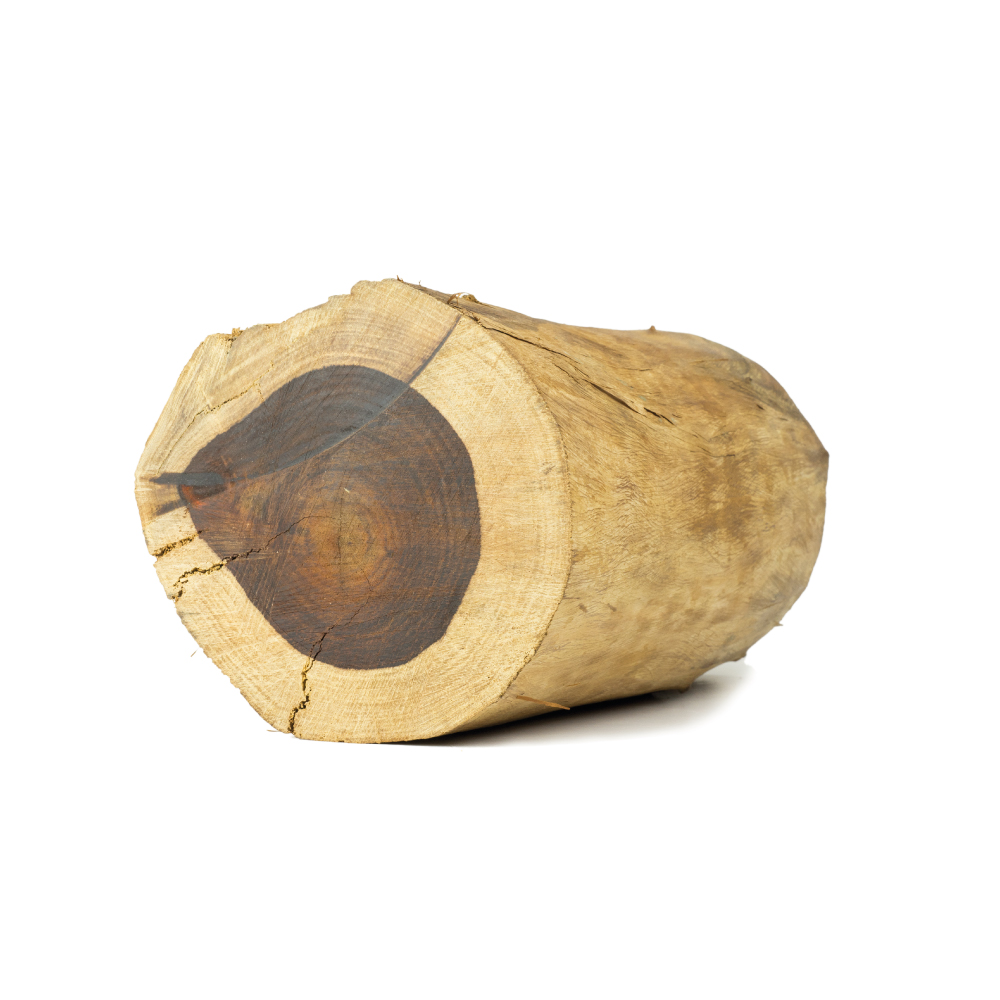
Rosewood (Aniba rosaeodora Ducke) is a large aromatic tree of the laurel family (Lauraceae), native to the Amazon rainforest. Its heartwood is steam-distilled to yield a rose-scented essential oil — the plant’s only real medicinal product — which is overwhelmingly the monoterpene alcohol linalool and has long been a commercial source of that compound for perfumery. (It should not be confused with the unrelated ornamental “rosewood” timbers of the genus Dalbergia, in the pea family.)
The most important thing to know about rosewood is that it is endangered. For most of the twentieth century the oil was won by felling whole trees for their heartwood, and unsustainable harvesting has decimated wild stands; the species is listed on CITES Appendix II. Only buy rosewood oil from producers using sustainably managed plantations or leaf-derived (non-wood) distillation, and treat the herb as a topical/aromatherapy botanical rather than a first-choice remedy.
Traditional & Modern Uses
In Brazilian and wider Amazonian folk practice, rosewood oil is used chiefly for the skin and for the nerves — as a fragrant addition to salves and lotions for irritated or dry skin, and by inhalation as a calming, mood-lifting aromatic. Internationally it is best known as a perfumery and cosmetic ingredient and an aromatherapy oil, and it is popularly applied to complaints such as acne, minor skin conditions, headaches, and low mood.
These are traditional and aromatherapy uses, not clinically proven indications. No human trial has tested rosewood for any of them, and the herb’s antibacterial and anti-inflammatory research is entirely preclinical (see Pharmacology & Research). Claims that rosewood treats “colds, flus, fevers or infections” imply an internal, systemic effect the evidence does not support — the oil is used externally and is not taken internally.
Botany & Habitat
Rosewood is an evergreen canopy tree of the Lauraceae, a family of aromatic tropical trees and shrubs (roughly 2,850 species across ~45 genera) that also includes cinnamon, camphor, and bay laurel. Aniba rosaeodora grows throughout the Amazon basin, with the aromatic oil concentrated in the heartwood.
Because heartwood extraction historically meant destroying the tree, the species has been heavily over-harvested and is now endangered and CITES-listed. A significant modern research thread is the search for sustainable alternatives: leaf and branch oils can be distilled without felling the tree and are promoted as a renewable source of rosewood-type oil, though their composition differs from heartwood oil (see Phytochemistry) 20Reference 20Leaf-derived extracts as an environmentally sustainable source of rosewood essential oil — chemistryView study →.
Phytochemistry
Rosewood is an essential-oil herb, and its medicinal and aromatic character comes almost entirely from a single monoterpene alcohol: linalool. The steam-distilled heartwood oil is overwhelmingly linalool, typically reported in the range of about 80–93% (and occasionally higher), which is why rosewood has long been a commercial source of this rose-scented compound 19,23Reference 19Chemical and genotypic variations in Aniba rosaeodora — chemistryView study →Reference 23Database of the Amazon aromatic plants and their essential oils. Interpreting rosewood pharmacologically is therefore largely interpreting concentrated linalool.
The remaining few percent of the oil is a mixture of related monoterpenoids that round out the fragrance: α-terpineol, geraniol, 1,8-cineole, and small amounts of the cis- and trans-linalool oxides. Composition varies markedly with geographic origin, genotype, tree age, and — importantly — plant part: leaf-derived oil, now studied as a sustainable non-wood alternative, runs lower and more variable in linalool than heartwood oil, so figures from one part should not be read onto the other 18,20Reference 18Chemical characterization of rosewood (Aniba rosaeodora Ducke) leaf essential oil by GC×GC-qMS — chemistryView study →Reference 20Leaf-derived extracts as an environmentally sustainable source of rosewood essential oil — chemistryView study →.
Constituent Summary
Figures are the approximate share of the steam-distilled heartwood essential oil; composition varies substantially with provenance, plant part (wood vs leaf), tree age, and distillation. Browse a class to see related compounds, or any compound for its full profile.
Monoterpene5 compounds5 with data
Pharmacology & Research
Rosewood (Aniba rosaeodora) has a small, entirely preclinical research base — roughly two dozen herb-specific papers, split between essential-oil chemistry and in vitro/rodent pharmacology. Almost every reported activity traces back to a single monoterpene alcohol, linalool, which makes up about 80–93% of the steam-distilled heartwood oil 18,19Reference 18Chemical characterization of rosewood (Aniba rosaeodora Ducke) leaf essential oil by GC×GC-qMS — chemistryView study →Reference 19Chemical and genotypic variations in Aniba rosaeodora — chemistryView study →; interpreting the herb is therefore largely interpreting concentrated linalool, and results from purified linalool don’t always transfer cleanly to the whole oil. The most consistent signals are antibacterial activity (including one in vivo Salmonella model) and central-nervous-system effects — sedative and antidepressant-type — that echo the plant’s traditional Amazonian use for the nerves. No randomised controlled trial of rosewood as a defined intervention exists; the three registered trials that mention it study multi-ingredient cosmetic or aromatherapy blends, not the herb itself. Because the tree is endangered and oils vary markedly with provenance, plant part (wood vs leaf), and distillation, even the preclinical picture is prep-dependent.
- Best-supported: antibacterial action against Gram-positive and Gram-negative species, replicated in vitro and shown in a mouse/chick Salmonella model 5,6,7,8Reference 5In vitroIn vitro synergistic antibacterial action of gentamicin and essential oils — in vitroView study →Reference 6In vitroProtective effects and mechanisms of rosewood essential oil against Salmonella infection — in vitro and animal modelView study →Reference 7In vitroAntimicrobial substances from Amazonian Aniba — in vitroView study →Reference 8In vitroMultivariate characterization of essential oils for antibacterial activity — in vitroView study →; sedative and antidepressant-type CNS effects in rodents 1,3,4Reference 1AnimalRosewood oil induces sedation and inhibits compound action potential in rodents — animal modelView study →Reference 3AnimalLinalool-rich essential oils from the Amazon display antidepressant-type effect in rodents — animal modelView study →Reference 4AnimalLinalool-rich rosewood essential oil mitigates emotional and neurochemical impairments from ethanol binge exposure in female rats — animal modelView study →.
- Emerging, worth watching: selective apoptosis in epidermoid skin-cancer cells 10Reference 10In vitroSelective cytotoxicity of Aniba rosaeodora essential oil towards epidermoid cancer cells through induction of apoptosis — in vitroView study →, whole-oil hypotensive/vasodilator activity via a vagal reflex 13Reference 13AnimalLinalool-rich rosewood oil induces vago-vagal bradycardic and depressor reflex in rats — animal modelView study →, and larvicidal activity against Aedes albopictus 15Reference 15In vitroAniba rosaeodora essential oil as a potent, eco-friendly larvicide against Aedes albopictus — in vitro/larvalView study →.
- Mechanistically thin: analgesic and gastroprotective claims rest on purified (–)-linalool (usually as a β-cyclodextrin complex), not on the oil people actually use 11,12Reference 11AnimalQuintans-Júnior LJ, et al. (2013). β-Cyclodextrin-complexed (–)-linalool produces antinociceptive effect in experimental pain protocols — animal model. Basic & Clinical Pharmacology & Toxicology. https://pubmed.ncbi.nlm.nih.gov/23692366/View study →Reference 12Animalda Silva FV, et al. (2016). β-Cyclodextrin enhanced gastroprotective effect of (–)-linalool in gastric lesion models — animal model. Naunyn-Schmiedeberg’s Archives of Pharmacology. https://pubmed.ncbi.nlm.nih.gov/27629579/View study →.
- The caveat: everything is in vitro or rodent — no human efficacy data, no standardised dose, and activity is essentially linalool’s, so chemotype and preparation drive the result.
1. Antibacterial
This is the most replicated activity. Rosewood oil inhibits both Gram-positive and Gram-negative bacteria in vitro; in one study it combined synergistically with the antibiotic gentamicin, with a very strong interaction against Acinetobacter baumannii (FIC index 0.11) 5Reference 5In vitroIn vitro synergistic antibacterial action of gentamicin and essential oils — in vitroView study →. The signal extends beyond the dish: a 2024 study characterised the oil by GC-MS, found a minimum inhibitory concentration of 4 mg/mL against Salmonella, and showed prophylactic protection in mouse and chick infection models 6Reference 6In vitroProtective effects and mechanisms of rosewood essential oil against Salmonella infection — in vitro and animal modelView study →. Isolated antimicrobial substances have been recovered from the Amazonian tree 7Reference 7In vitroAntimicrobial substances from Amazonian Aniba — in vitroView study →, and a 2026 multivariate screen placed rosewood among active antibacterial oils 8Reference 8In vitroMultivariate characterization of essential oils for antibacterial activity — in vitroView study →. The driver is linalool, with contributions from α-terpineol.
Gap: MICs are moderate rather than strong, most work is in vitro, and the whole-oil activity reflects a linalool-dominant chemotype that varies by source.
2. Antidepressant & anxiolytic
Linalool-rich rosewood leaf oil produced significant antidepressant-type activity in rats in the forced-swim and splash tests, alongside two other Amazonian linalool oils, with the effect attributed to linalool (88.6% of the pau-rosa oil) 3Reference 3AnimalLinalool-rich essential oils from the Amazon display antidepressant-type effect in rodents — animal modelView study →. A 2024 study went further mechanistically: intranasal rosewood oil (35 mg/kg) in adolescent female rats reversed emotional impairments from binge ethanol exposure and raised BDNF, S100B, and glutathione in the prefrontal cortex and hippocampus 4Reference 4AnimalLinalool-rich rosewood essential oil mitigates emotional and neurochemical impairments from ethanol binge exposure in female rats — animal modelView study →. These findings align with the plant’s documented use in Brazilian folk medicine for the nervous system.
Gap: All rodent, single research group, and the anxiolytic (elevated-plus-maze) signal was weaker than the antidepressant one — no human data.
3. Anti-inflammatory
The clearest whole-oil signal comes from the Salmonella work, where rosewood oil reduced inflammation in vivo during infection 6Reference 6In vitroProtective effects and mechanisms of rosewood essential oil against Salmonella infection — in vitro and animal modelView study →. A 2026 study built chitosan membranes loaded with rosewood oil and reported an anti-inflammatory effect for the material, pointing toward topical/wound applications 17Reference 17In vitroAnti-inflammatory effect of chitosan membranes containing rosewood essential oil — in vitroView study →. Mechanistically this rests on linalool, which lowered TNF-α and leukocyte migration in carrageenan-induced peritonitis 11Reference 11AnimalQuintans-Júnior LJ, et al. (2013). β-Cyclodextrin-complexed (–)-linalool produces antinociceptive effect in experimental pain protocols — animal model. Basic & Clinical Pharmacology & Toxicology. https://pubmed.ncbi.nlm.nih.gov/23692366/View study →.
Gap: The direct in vivo evidence is a by-product of an antibacterial study, and the strongest anti-inflammatory data are for purified linalool, not the oil.
4. Sedative
Rosewood is used in Brazilian folk medicine as a sedative, and a 2009 study gave that a mechanism: linalool-rich oil (200–300 mg/kg) shortened sleep latency and prolonged pentobarbital-induced sleep in mice, while in vitro it reduced the compound action potential of an isolated nerve by nearly 100%, indicating lowered neuronal excitability 1Reference 1AnimalRosewood oil induces sedation and inhibits compound action potential in rodents — animal modelView study →. A follow-up found that the oil and linalool inhibit forskolin-stimulated adenylate cyclase (lowering cAMP) in retinal tissue, a pathway relevant to its relaxant and anticonvulsant profile 2Reference 2In vitroLinalool from rosewood (Aniba rosaeodora Ducke) oil inhibits adenylate cyclase in the retina — in vitro mechanismView study →.
Gap: Single-laboratory rodent and tissue work; doses are high and given systemically, not by the topical/aromatherapy route the herb is actually used.
5. Antifungal
In a comparative study of Lauraceae oils against 17 micromycetes — including food-spoilage fungi and plant/animal pathogens — rosewood oil showed measurable fungistatic and fungicidal activity, with linalool as its main component 9Reference 9In vitroChemical composition of some Lauraceae essential oils and their antifungal activities — in vitroView study →. In the same panel, cinnamon oil (trans-cinnamaldehyde) was the most active, so rosewood’s antifungal action is real but comparatively modest.
Gap: In vitro only, no dermatophyte or clinical follow-up, and outperformed by other oils tested head-to-head.
6. Hypotensive & vasodilator
Intravenous linalool-rich rosewood oil produced dose-dependent, biphasic hypotension and bradycardia in rats. The rapid first phase was a vago-vagal reflex (abolished by vagotomy or atropine), and the oil relaxed pre-contracted aortic rings, indicating a direct endothelial vasodilator component in the second phase 13Reference 13AnimalLinalool-rich rosewood oil induces vago-vagal bradycardic and depressor reflex in rats — animal modelView study →. The activity is consistent with linalool’s CNS-relaxant profile.
Gap: A single study using intravenous dosing — a route with no bearing on topical/aromatherapy use — so relevance to real-world exposure is speculative.
7. Insecticidal & larvicidal
Rosewood oil was an effective larvicide against Aedes albopictus, with concentration- and time-dependent toxicity and acetylcholinesterase inhibition as the proposed neurotoxic mechanism, positioning it as an eco-friendly vector-control candidate 15Reference 15In vitroAniba rosaeodora essential oil as a potent, eco-friendly larvicide against Aedes albopictus — in vitro/larvalView study →. Older work found rosewood oil among the stronger essential oils for immobilising house-dust mites; in the same study, linalool and α-terpineol — both rosewood constituents — were among the individual ingredients (tested from Hinoki oil) with strong mite-immobilising effects 16Reference 16In vitroBreeding control and immobilizing effects of wood microingredients on house dust mites — in vitroView study →.
Gap: Environmental/pest-control relevance only; AChE inhibition is a caution flag, not a human therapeutic mechanism.
8. Analgesic
(–)-linalool — the dominant rosewood constituent — showed strong antinociceptive activity across acetic-acid writhing, formalin, and hot-plate tests in rodents, implying both peripheral and central mechanisms, and the effect improved when complexed with β-cyclodextrin to overcome linalool’s poor stability 11Reference 11AnimalQuintans-Júnior LJ, et al. (2013). β-Cyclodextrin-complexed (–)-linalool produces antinociceptive effect in experimental pain protocols — animal model. Basic & Clinical Pharmacology & Toxicology. https://pubmed.ncbi.nlm.nih.gov/23692366/View study →.
Gap: Tested as purified linalool (often as a β-CD inclusion complex), not as rosewood oil, so this is constituent-level inference rather than direct evidence for the herb.
9. Gastroprotective
Purified (–)-linalool, and more so its β-cyclodextrin complex, protected against acute and chronic gastric ulcers in rodents, an effect linked to the monoterpene’s antioxidant and anti-inflammatory profile 12Reference 12Animalda Silva FV, et al. (2016). β-Cyclodextrin enhanced gastroprotective effect of (–)-linalool in gastric lesion models — animal model. Naunyn-Schmiedeberg’s Archives of Pharmacology. https://pubmed.ncbi.nlm.nih.gov/27629579/View study →.
Gap: Constituent-level and rodent-only; rosewood oil is not taken internally, so this has no direct application to how the herb is used.
10. Anticancer
A 2011 study found rosewood essential oil selectively killed human epidermoid carcinoma (A431) and immortalised HaCaT keratinocytes while largely sparing normal keratinocytes, triggering reactive oxygen species, mitochondrial depolarisation, and caspase-dependent apoptosis via both intrinsic and extrinsic pathways 10Reference 10In vitroSelective cytotoxicity of Aniba rosaeodora essential oil towards epidermoid cancer cells through induction of apoptosis — in vitroView study →. The selectivity for pre-cancerous/cancerous skin cells is the interesting part given rosewood’s topical use.
Gap: A single in vitro study on cell lines — no animal or human data, and no demonstration that topical oil reaches relevant tissue concentrations safely.
Mechanisms
| Mechanism | Drives | Key compounds |
|---|---|---|
| ↓ neuronal excitability; adenylate cyclase ↓, cAMP ↓ | sedativeantidepressantanxiolytic | linalool |
| Bacterial/fungal membrane disruption | antibacterialantifungal | linalool, α-terpineol |
| ROS generation, mitochondrial depolarisation, caspase activation | anticancer (skin cells) | linalool |
| TNF-α ↓, leukocyte migration ↓ | anti-inflammatoryanalgesic | linalool |
| Vagal afferent stimulation + endothelial vasodilation | hypotensivebradycardic | linalool |
| Acetylcholinesterase inhibition | insecticidallarvicidal | linalool, α-terpineol |
Clinical trials
No registered clinical trials of rosewood as a defined intervention were identified — the evidence base is preclinical; the three ClinicalTrials.gov records that mention rosewood test multi-ingredient cosmetic or aromatherapy blends, not the herb.
| Completed | Planned | Terminated | Preclinical |
|---|---|---|---|
| 0 | 0 | 0 | ~20 |
Last checked: July 2026.
Dosage
Rosewood is used as the distilled essential oil, applied externally or inhaled — never as a weighed dried herb, and never internally. There is no established human dose. The figures below are the doses used in the animal and in vitro studies; they are systemic (mg/kg) or in-dish concentrations and do not translate to how the oil is used on skin or by inhalation. They are research doses, not recommendations.
| Indication | Preparation | Dose | Est. dried-herb equivalent | Source |
|---|---|---|---|---|
| Sedative | Linalool-rich oil, oral/i.p. (mice) | 100–300 mg/kg | — | 1Reference 1AnimalRosewood oil induces sedation and inhibits compound action potential in rodents — animal modelView study → |
| Antidepressant | Linalool-rich leaf oil, i.p. (rats) | 3.5–35 mg/kg | — | 3Reference 3AnimalLinalool-rich essential oils from the Amazon display antidepressant-type effect in rodents — animal modelView study → |
| Antidepressant (emotional model) | Rosewood oil, intranasal (rats) | 35 mg/kg | — | 4Reference 4AnimalLinalool-rich rosewood essential oil mitigates emotional and neurochemical impairments from ethanol binge exposure in female rats — animal modelView study → |
| Antibacterial | Whole oil, in vitro | MIC 4 mg/mL (Salmonella) | — | 6Reference 6In vitroProtective effects and mechanisms of rosewood essential oil against Salmonella infection — in vitro and animal modelView study → |
| Hypotensive | Whole oil, i.v. (rats) | dose-dependent | — | 13Reference 13AnimalLinalool-rich rosewood oil induces vago-vagal bradycardic and depressor reflex in rats — animal modelView study → |
The “dried-herb equivalent” is left blank throughout: rosewood is used as the distilled oil, not a dried-herb weight, and all efficacy doses are animal systemic (mg/kg) or in-vitro concentrations — there is no honest back-conversion to a whole-herb amount, and inventing a ratio would mislead.
Traditional Dosage
Traditional and modern use is external only, as the diluted essential oil.
| System | Preparation | Dose |
|---|---|---|
| Western aromatherapy | Essential oil, diluted in a carrier oil | ~1–2% dilution, applied topically or inhaled; external use only |
Safety & Pregnancy
Rosewood is a topical and aromatherapy oil only, never taken internally. Its main real-world risk is allergic contact dermatitis from oxidised linalool, so it should be stored well, patch-tested, and kept to a ~1–2% dilution; otherwise its interaction and internal-safety profile is simply unstudied.
- External use only. Not taken internally — the oil also inhibits acetylcholinesterase at high concentration.
- Contact sensitiser. Oxidised linalool is a well-documented fragrance allergen; store away from air and light, patch-test, dilute to ~1–2%.
- Otherwise unstudied. No human interaction, systemic-toxicity, or internal-safety data exists.
- Endangered & CITES-listed. Source only from sustainably managed plantations or leaf-derived oil.
Full safety & interactions detail
Rosewood is used as an essential oil for topical and aromatherapy purposes only; it is not taken internally. Its dominant constituent, linalool, oxidises on exposure to air to form hydroperoxides that are well-documented contact sensitisers, so old or air-exposed oil carries a real risk of allergic contact dermatitis — store it away from air and light, patch-test before use, and dilute to roughly 1–2% in a carrier oil 21,22Reference 21ObservationalPatch testing hydroperoxides of limonene and linalool in consecutive patients (IVDK) — observationalView study →Reference 22ObservationalContact allergy to oxidized linalool and oxidized limonene: patch testing in consecutive patients — observationalView study →. Oxidised linalool is a common cause of fragrance contact allergy in patch-test populations, and cross-reactivity with other oxidised terpenes (limonene, geraniol) is frequent 21,22Reference 21ObservationalPatch testing hydroperoxides of limonene and linalool in consecutive patients (IVDK) — observationalView study →Reference 22ObservationalContact allergy to oxidized linalool and oxidized limonene: patch testing in consecutive patients — observationalView study →. The oil also inhibits acetylcholinesterase (the basis of its larvicidal activity 15Reference 15In vitroAniba rosaeodora essential oil as a potent, eco-friendly larvicide against Aedes albopictus — in vitro/larvalView study →), which is a further reason not to use it internally or at high concentration. Beyond dermal sensitisation, the herb’s specific interaction, systemic-toxicity, and internal-safety profile has not been formally studied — no human or pharmacokinetic drug-interaction study exists (the one reported interaction, antibacterial synergy with gentamicin in vitro 5Reference 5In vitroIn vitro synergistic antibacterial action of gentamicin and essential oils — in vitroView study →, is a beneficial combination signal, not a safety concern). The species is endangered and CITES-listed — source only from sustainably managed plantations or leaf-derived oil.
Not formally researched. No studies have assessed the safety of rosewood oil in pregnancy or lactation. As with most essential oils high in monoterpene alcohols, cautious external use only and avoidance of internal use is prudent, but this reflects general aromatherapy convention rather than herb-specific data — absence of reports is not evidence of safety.
References
- de Almeida RN, et al. (2009). Rosewood oil induces sedation and inhibits compound action potential in rodents — animal model. Journal of Ethnopharmacology. https://pubmed.ncbi.nlm.nih.gov/19505550/
- Sampaio LFS, et al. (2012). Linalool from rosewood (Aniba rosaeodora Ducke) oil inhibits adenylate cyclase in the retina — in vitro mechanism. Phytotherapy Research. https://pubmed.ncbi.nlm.nih.gov/21544884/
- Dos Santos ÉRQ, et al. (2018). Linalool-rich essential oils from the Amazon display antidepressant-type effect in rodents — animal model. Journal of Ethnopharmacology. https://pubmed.ncbi.nlm.nih.gov/29037915/
- Dos Santos ÉRQ, et al. (2024). Linalool-rich rosewood essential oil mitigates emotional and neurochemical impairments from ethanol binge exposure in female rats — animal model. Biomedicine & Pharmacotherapy. https://pubmed.ncbi.nlm.nih.gov/39024836/
- Rosato A, et al. (2010). In vitro synergistic antibacterial action of gentamicin and essential oils — in vitro. Current Medicinal Chemistry. https://pubmed.ncbi.nlm.nih.gov/20666717/
- Wang L, et al. (2024). Protective effects and mechanisms of rosewood essential oil against Salmonella infection — in vitro and animal model. Chinese Journal of Natural Medicines. https://pubmed.ncbi.nlm.nih.gov/39326973/
- da Silva YC, et al. (2021). Antimicrobial substances from Amazonian Aniba — in vitro. Natural Product Research. https://pubmed.ncbi.nlm.nih.gov/30990331/
- Kokalj Ladan M, et al. (2026). Multivariate characterization of essential oils for antibacterial activity — in vitro. Molecules. https://pubmed.ncbi.nlm.nih.gov/41599258/
- Simić A, et al. (2004). Chemical composition of some Lauraceae essential oils and their antifungal activities — in vitro. Phytotherapy Research. https://pubmed.ncbi.nlm.nih.gov/15478207/
- Sœur J, et al. (2011). Selective cytotoxicity of Aniba rosaeodora essential oil towards epidermoid cancer cells through induction of apoptosis — in vitro. Mutation Research. https://pubmed.ncbi.nlm.nih.gov/21070863/
- Quintans-Júnior LJ, et al. (2013). β-Cyclodextrin-complexed (–)-linalool produces antinociceptive effect in experimental pain protocols — animal model. Basic & Clinical Pharmacology & Toxicology. https://pubmed.ncbi.nlm.nih.gov/23692366/
- da Silva FV, et al. (2016). β-Cyclodextrin enhanced gastroprotective effect of (–)-linalool in gastric lesion models — animal model. Naunyn-Schmiedeberg’s Archives of Pharmacology. https://pubmed.ncbi.nlm.nih.gov/27629579/
- de Siqueira RJB, et al. (2014). Linalool-rich rosewood oil induces vago-vagal bradycardic and depressor reflex in rats — animal model. Phytotherapy Research. https://pubmed.ncbi.nlm.nih.gov/23447129/
- Kohn LK, et al. (2012). In vitro antiviral activity of Brazilian plants against bovine herpesvirus type 5 and avian metapneumovirus — in vitro. Pharmaceutical Biology. https://pubmed.ncbi.nlm.nih.gov/22873798/
- Manngaihsiam R, et al. (2025). Aniba rosaeodora essential oil as a potent, eco-friendly larvicide against Aedes albopictus — in vitro/larval. Experimental Parasitology. https://pubmed.ncbi.nlm.nih.gov/41176142/
- Ando Y, et al. (1994). Breeding control and immobilizing effects of wood microingredients on house dust mites — in vitro. Japanese Journal of Public Health. https://pubmed.ncbi.nlm.nih.gov/7949285/
- Buriti BMAB, et al. (2026). Anti-inflammatory effect of chitosan membranes containing rosewood essential oil — in vitro. ACS Omega. https://pubmed.ncbi.nlm.nih.gov/41799062/
- Fidelis CHV, et al. (2012). Chemical characterization of rosewood (Aniba rosaeodora Ducke) leaf essential oil by GC×GC-qMS — chemistry. Journal of Essential Oil Research. https://doi.org/10.1080/10412905.2012.676770
- Amazonas DR, et al. (2020). Chemical and genotypic variations in Aniba rosaeodora — chemistry. Molecules. https://pubmed.ncbi.nlm.nih.gov/33375652/
- d’Acampora Zellner B, et al. (2006). Leaf-derived extracts as an environmentally sustainable source of rosewood essential oil — chemistry. Analytical Chemistry. https://pubmed.ncbi.nlm.nih.gov/16448064/
- Schubert S, et al. (2023). Patch testing hydroperoxides of limonene and linalool in consecutive patients (IVDK) — observational. Contact Dermatitis. https://pubmed.ncbi.nlm.nih.gov/37177844/
- Sukakul T, et al. (2022). Contact allergy to oxidized linalool and oxidized limonene: patch testing in consecutive patients — observational. Contact Dermatitis. https://pubmed.ncbi.nlm.nih.gov/34561893/
- Maia, J. G. S., & Andrade, E. H. A. (2009). Database of the Amazon aromatic plants and their essential oils. Química Nova, 32(3), 595–622. (Rosewood/Aniba rosaeodora heartwood oil: linalool the dominant constituent, ~78–93%+.)