
Materia Medica
Samambaia
Polypodium leucotomos
Samambaia (Polypodium leucotomos) — a Central American fern whose standardised leaf and rhizome extracts are taken orally for photoprotection and as an adjunct in melasma, vitiligo and other photodermatoses.
What Is Samambaia?
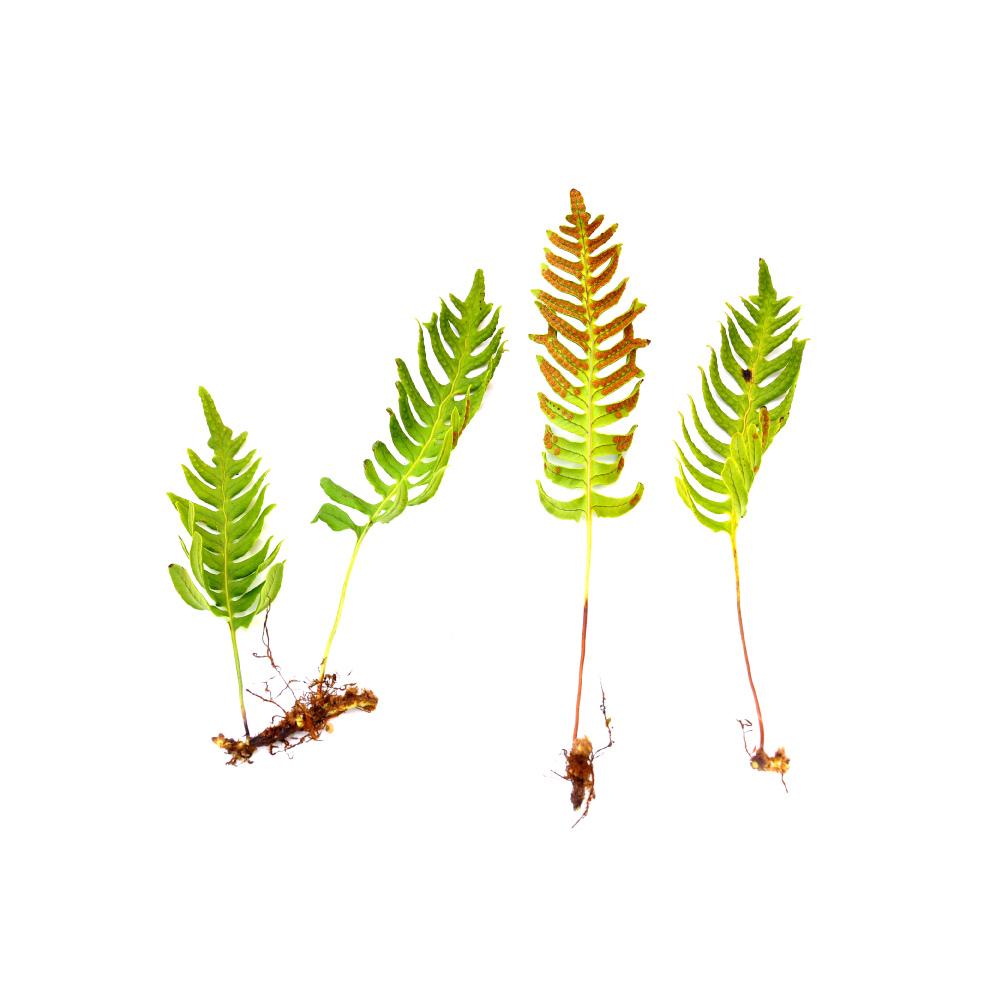
Samambaia (Polypodium leucotomos) is a tropical fern native to Central America — notably the rainforests of Honduras — and the Caribbean, from where it has spread through the neotropics 34Reference 34The Healing Power of Rainforest Herbs. The medicinal parts are the creeping rhizome, source of the older Spanish pharmaceutical Anapsos, and the aerial fronds, source of the modern standardised extract Fernblock. The species is often listed under the synonym Polypodium aureum.
It is best known today for a genuinely unusual property: taken orally, a standardised extract modestly raises the skin’s threshold for UV-induced sunburn and reduces UV-driven DNA and inflammatory damage — an internal photoprotectant rather than a topical sunblock 4,5Reference 4RCTTopical or oral administration with an extract of Polypodium leucotomos prevents acute sunburn and psoralen-induced phototoxic reactions — randomisedView study →Reference 5Clinical trialThe impact of oral Polypodium leucotomos extract on ultraviolet B response: a human clinical studyView study →. That effect is real but small, and is an adjunct to sunscreen, not a replacement.
A defining caveat runs through the whole literature: nearly all human evidence uses a handful of proprietary standardised aqueous extracts (Fernblock, Anapsos), so results do not automatically transfer to raw fern powder or tea, which are essentially unstudied 1Reference 1ReviewPolypodium leucotomos extract: a status report on clinical efficacy and safety — reviewView study →. The older reputation of samambaia as a leading psoriasis remedy, and the newer interest in dementia and cancer, rest on much thinner evidence than the photoprotection and pigmentary-disorder work and should be read with that gap in mind.
Traditional & Modern Uses
In Latin American folk medicine the rhizome and fronds have long been prepared as a decoction and used for a range of skin conditions and for upper-respiratory complaints 34Reference 34The Healing Power of Rainforest Herbs. The herb carries two principal common names: samambaia (chiefly in Brazil) and calaguala (across most of Latin America). Its best-documented medicinal history is pharmaceutical rather than purely traditional: a water extract of the rhizome was developed in Spain as Anapsos and used for psoriasis and vitiligo 34Reference 34The Healing Power of Rainforest Herbs.
Modern use has shifted decisively toward the skin and light. The standardised extracts are taken orally for photoprotection and as add-on therapy in idiopathic photodermatoses (chiefly polymorphic light eruption), melasma, vitiligo and actinic keratosis, almost always alongside a primary treatment rather than on their own.
Botany & Varieties
Samambaia belongs to the Polypodiaceae, one of the largest fern families. Within the genus Polypodium there are roughly 75 species, many of them used medicinally by the indigenous populations of the regions where they grow 34Reference 34The Healing Power of Rainforest Herbs. The genus name is descriptive — poly (“many”) and podus (“foot”) — a reference to the many foot-like divisions of the characteristic creeping rhizome.
The plant is a medium-to-large fern with an intricate, creeping root system; both this rhizome and the fronds are used medicinally 34Reference 34The Healing Power of Rainforest Herbs. It is easy to cultivate in medium light and moist to semi-dry soil. Polypodium leucotomos (syn. P. aureum) and the closely related P. decumanum are the taxa most often referred to in this monograph.
Habitat & Distribution
The Polypodiaceae are distributed through the tropics worldwide, but the species discussed here are concentrated in the Central and South American tropics and the Caribbean 34Reference 34The Healing Power of Rainforest Herbs. Polypodium leucotomos is indigenous to the Honduran rainforests and has spread through the Central American, South American and Caribbean tropics 34Reference 34The Healing Power of Rainforest Herbs. (The older monograph’s description of the plant as “Amazonian” is inaccurate — it is a Central American and Caribbean native, not an Amazon-basin endemic.)
Phytochemistry
Samambaia’s signature actives are its photoprotective phenolic acids — caffeic acid and ferulic acid among the more potent antioxidants of the group, alongside p-coumaric acid, vanillic acid and chlorogenic acid 8,9Reference 8In vitroPolypodium leucotomos extract: antioxidant activity and disposition — in vitroView study →Reference 9In vitroPhenolic components and antioxidant activity of Fernblock, an aqueous extract of the aerial parts of Polypodium leucotomos — in vitroView study →. Working with them is calagualine, the NF-κB–inhibiting compound behind much of the anti-inflammatory and anticancer rationale 16Reference 16In vitroCalagualine inhibits nuclear transcription factor-κB activated by various inflammatory and tumour-promoting agents — in vitroView study →, plus a rich lipid fraction including the patented sulfoquinovosyldiacylglycerols 34Reference 34The Healing Power of Rainforest Herbs.
Constituent Summary
Samambaia’s actives are characterised qualitatively in the literature; published whole-herb percentages are not available for the individual compounds, and the actives are concentrated in the standardised aqueous extracts rather than measured in raw fern — so amounts read No Data unless a figure exists.
Phenolic acid5 compoundsno data
Flavonoid1 compoundno data
Triterpene1 compoundno data
Sterol1 compoundno data
Lipid1 compoundno data
Other1 compoundno data
The lipid content of samambaia is notably rich — an abundance of fatty acids plus the sulfoquinovosyldiacylglycerols, a class subject to multiple patents and credited in secondary sources with many of the fern’s therapeutic actions 34Reference 34The Healing Power of Rainforest Herbs. Other documented compounds include alkaloids, arachidonic acid, arabinopyranosides, ecdysone, eicosapentaenoic acid, elaidic acid, juglanin, kaempferols, linoleic and linolenic acids, melilotoside, oleic acid, polypodaureine, ricinoleic acid, and selligueain 34Reference 34The Healing Power of Rainforest Herbs.
Pharmacology & Research
Samambaia (Polypodium leucotomos) has one of the larger clinical literatures among medicinal ferns — several dozen human studies, a Cochrane review touching its use, and multiple recent systematic reviews, layered over a deep mechanistic base of antioxidant and anti-inflammatory work 1,2,3Reference 1ReviewPolypodium leucotomos extract: a status report on clinical efficacy and safety — reviewView study →Reference 2Systematic reviewThe utility of oral Polypodium leucotomos extract for dermatologic diseases: a systematic reviewView study →Reference 3Systematic reviewOral supplements and photoprotection: a systematic reviewView study →. Almost all of it concerns a small number of standardised aqueous extracts — chiefly Fernblock (aerial parts) and the older pharmaceutical Anapsos (rhizome) — so results do not automatically transfer to raw fern powder or tea. The strongest and most consistent signal is oral photoprotection: standardised extract modestly raises the skin’s threshold for UV-induced sunburn and reduces UV-induced DNA and inflammatory damage in controlled human studies, though the effect is an adjunct to sunscreen, not a replacement 4,5Reference 4RCTTopical or oral administration with an extract of Polypodium leucotomos prevents acute sunburn and psoralen-induced phototoxic reactions — randomisedView study →Reference 5Clinical trialThe impact of oral Polypodium leucotomos extract on ultraviolet B response: a human clinical studyView study →. Randomised trials also exist for melasma, vitiligo, actinic keratosis and atopic dermatitis, almost always as an add-on to a primary therapy 17,20,22,29Reference 17RCTDouble-blind, placebo-controlled trial to evaluate the effectiveness of Polypodium leucotomos extract in the treatment of melasma — randomisedView study →Reference 20RCTNB-UVB plus oral Polypodium leucotomos extract display higher efficacy than NB-UVB alone in patients with vitiligo — randomised placebo-controlledView study →Reference 22RCTThe combination of oral and topical photoprotection with a standardized Polypodium leucotomos extract for actinic keratosis — randomised controlledView study →Reference 29RCTPolypodium leucotomos extract in atopic dermatitis: a randomised, double-blind, placebo-controlled trialView study →. The older monograph’s emphasis on dementia and “cancer treatment” rests on far thinner evidence — a single small pilot trial and mostly cell-line work respectively — and should be read with that gap in mind.
- Best-supported: oral photoprotection against UV erythema and DNA damage from standardised extract 4,5,7Reference 4RCTTopical or oral administration with an extract of Polypodium leucotomos prevents acute sunburn and psoralen-induced phototoxic reactions — randomisedView study →Reference 5Clinical trialThe impact of oral Polypodium leucotomos extract on ultraviolet B response: a human clinical studyView study →Reference 7RCTEffects of eight-week supplementation containing red orange and Polypodium leucotomos extracts on UV response — randomised double-blind placebo-controlledView study →; symptom relief in idiopathic photodermatoses such as polymorphic light eruption 12,13Reference 12Oral administration of a hydrophilic extract of Polypodium leucotomos for the prevention of polymorphic light eruptionView study →Reference 13Oral Polypodium leucotomos extract photoprotective activity in 57 patients with idiopathic photodermatosisView study →.
- Emerging, worth watching: adjunctive repigmentation in vitiligo and melasma, and reduced actinic-keratosis/field-cancerisation burden alongside standard care 17,20,22Reference 17RCTDouble-blind, placebo-controlled trial to evaluate the effectiveness of Polypodium leucotomos extract in the treatment of melasma — randomisedView study →Reference 20RCTNB-UVB plus oral Polypodium leucotomos extract display higher efficacy than NB-UVB alone in patients with vitiligo — randomised placebo-controlledView study →Reference 22RCTThe combination of oral and topical photoprotection with a standardized Polypodium leucotomos extract for actinic keratosis — randomised controlledView study →.
- Mechanistically thin: anticancer and neuroprotective/cognitive claims rest on in-vitro NF-κB inhibition and a single small dementia pilot — not human oncology or reproducible cognitive outcomes 25,30Reference 25RCTEfficacy of oral Polypodium leucotomos, colchicine cream and ingenol mebutate in the treatment of actinic keratosis — randomised controlledView study →Reference 30RCTDouble-blind, randomised, placebo-controlled pilot study with anapsos in senile dementia — randomisedView study →.
- The caveat: nearly all human data use proprietary standardised extracts (Fernblock, Anapsos) at 240–1080 mg/day; whole-herb tea or powder is essentially unstudied, and most trials are small, short and adjunctive.
1. Photoprotection
This is the herb’s flagship indication and the one with the most human data. In controlled human studies, oral standardised P. leucotomos extract (PLE) raises the minimal erythema dose and blunts UV-induced erythema, sunburn-cell formation and phototoxic reactions after both natural and artificial UV, taken orally or applied topically 4,5Reference 4RCTTopical or oral administration with an extract of Polypodium leucotomos prevents acute sunburn and psoralen-induced phototoxic reactions — randomisedView study →Reference 5Clinical trialThe impact of oral Polypodium leucotomos extract on ultraviolet B response: a human clinical studyView study →. A human study using UVB, UVA1 and visible light found oral PLE reduced UV-induced DNA damage markers and inflammatory read-outs 5Reference 5Clinical trialThe impact of oral Polypodium leucotomos extract on ultraviolet B response: a human clinical studyView study →, and recent randomised placebo-controlled work in fair-skinned volunteers reported modest MED increases and reduced UVB erythema over 8 weeks 7Reference 7RCTEffects of eight-week supplementation containing red orange and Polypodium leucotomos extracts on UV response — randomised double-blind placebo-controlledView study →. Systematic reviews of oral photoprotectants consistently place PLE among the best-evidenced botanicals here, while stressing the effect is a supplement to — never a substitute for — topical sunscreen and behavioural protection 3Reference 3Systematic reviewOral supplements and photoprotection: a systematic reviewView study →. Doses in these studies typically run 240–480 mg/day of standardised extract.
Gap: MED gains are real but small (roughly equivalent to a low single-digit SPF), effects are measured only for standardised extracts, and no trial shows reduced skin-cancer incidence in humans.
2. Antioxidant
The antioxidant activity is the mechanistic foundation for most other claims and is well characterised in vitro. HPLC fractionation of the aqueous extract identifies a suite of phenolic acids — caffeic acid, ferulic acid, p-coumaric acid, vanillic acid, chlorogenic acid and related hydroxybenzoic/hydroxycinnamic acids — that scavenge reactive oxygen species and inhibit lipid peroxidation 8,9Reference 8In vitroPolypodium leucotomos extract: antioxidant activity and disposition — in vitroView study →Reference 9In vitroPhenolic components and antioxidant activity of Fernblock, an aqueous extract of the aerial parts of Polypodium leucotomos — in vitroView study →. Beyond direct scavenging, the extract upregulates the NRF2 antioxidant pathway in keratinocytes, protecting them from particulate-pollution oxidative stress 10Reference 10In vitroFernblock upregulates NRF2 antioxidant pathway and protects keratinocytes from PM2.5-induced damage — in vitroView study →, and inhibits both immediate and delayed (“dark”) cyclobutane pyrimidine dimer formation after UVA in cell models — a genotoxicity-relevant endpoint 11Reference 11In vitroFormation of cyclobutane pyrimidine dimers after UVA exposure (dark-CPDs) is inhibited by a hydrophilic extract of Polypodium leucotomos — in vitroView study →. Human relevance is supported indirectly by the reduced UV-induced DNA-damage markers seen in photoprotection studies 5Reference 5Clinical trialThe impact of oral Polypodium leucotomos extract on ultraviolet B response: a human clinical studyView study →.
Gap: The strongest data are cell-based; there is no trial measuring systemic oxidative-stress biomarkers in people taking the herb as a standalone outcome.
3. Photodermatoses
For idiopathic photodermatoses — chiefly polymorphic light eruption (PMLE) — oral PLE has consistent supportive human data. In an open bicenter study of 35 long-standing PLE patients, a concentrated hydrophilic extract prevented or delayed photo-induced lesions on artificial UV challenge 12Reference 12Oral administration of a hydrophilic extract of Polypodium leucotomos for the prevention of polymorphic light eruptionView study →. Two Italian case series (57 and 25 patients with idiopathic photodermatoses unresponsive to usual therapy) reported reduced eruptions and improved sun tolerance with oral extract 13,14Reference 13Oral Polypodium leucotomos extract photoprotective activity in 57 patients with idiopathic photodermatosisView study →Reference 14Photoprotective activity of oral Polypodium leucotomos extract in 25 patients with idiopathic photodermatosesView study →. This is a licensed/established use of the extract in several European countries.
Gap: The supportive studies are mostly open-label and uncontrolled; there is no large double-blind placebo-controlled PMLE trial, so magnitude of benefit is uncertain.
4. Anti-inflammatory
The extract dampens several inflammatory pathways relevant to its dermatologic uses. In hairless mice, oral P. leucotomos lowered UV-induced COX-2 expression and inflammation by 48–72 hours after irradiation and enhanced DNA repair, alongside activation of the p53 tumour suppressor 15Reference 15AnimalPolypodium leucotomos extract decreases UV-induced Cox-2 expression and inflammation, enhances DNA repair in Xpc+/− mice — animal modelView study →. In vitro, calagualine inhibits NF-κB activated by a range of inflammatory and tumour-promoting agents 16Reference 16In vitroCalagualine inhibits nuclear transcription factor-κB activated by various inflammatory and tumour-promoting agents — in vitroView study →, and earlier work showed extract-mediated inhibition of inflammatory cytokine production and reactive oxygen intermediates. These mechanisms plausibly underpin the anti-psoriatic, photoprotective and pigmentary effects.
Gap: Human anti-inflammatory read-outs are indirect (disease-specific endpoints); there is no trial of the herb in a primary inflammatory disease with inflammatory biomarkers as the outcome.
5. Melasma
A double-blind, placebo-controlled RCT in 40 Asian patients with melasma tested oral PLE as an add-on to topical 4% hydroquinone and SPF 50+ sunscreen over 12 weeks, reporting improved pigmentation scores in the extract arm versus placebo 17Reference 17RCTDouble-blind, placebo-controlled trial to evaluate the effectiveness of Polypodium leucotomos extract in the treatment of melasma — randomisedView study →. A scoping review and meta-analysis of antioxidants in vitiligo and melasma 18Reference 18Meta-analysisThe impact of antioxidants on vitiligo and melasma: a scoping review and meta-analysisView study →, and a dedicated systematic review of antioxidants in melasma 33Reference 33Systematic reviewIndian J Dermatol. https://doi.org/10.4103/ijd.ijd_473_24View study →, both include PLE among agents with supportive but mixed/modest evidence.
Gap: The direct RCT is small and single-centre, PLE was an adjunct (not monotherapy), and pooled effect sizes across antioxidant reviews are modest — benefit beyond good sun protection and hydroquinone is not established.
6. Vitiligo
Two randomised trials test PLE as an adjunct to phototherapy. In 50 vitiligo vulgaris patients, adding oral extract to narrow-band UVB improved head-and-neck repigmentation versus placebo (44% vs 27%), though the difference was borderline (P = 0.06) and other sites were non-significant 19Reference 19RCTTreatment of vitiligo vulgaris with narrow-band UVB and oral Polypodium leucotomos extract — randomised double-blind placebo-controlledView study →. A later randomised study in 44 generalised-vitiligo patients found NB-UVB plus 480 mg PLE twice daily raised the response rate versus NB-UVB alone (47.8% vs 22%) 20Reference 20RCTNB-UVB plus oral Polypodium leucotomos extract display higher efficacy than NB-UVB alone in patients with vitiligo — randomised placebo-controlledView study →. The Cochrane review of vitiligo interventions catalogues such combination approaches but rates the overall evidence base as weak 21Reference 21Systematic reviewInterventions for vitiligo — Cochrane systematic reviewView study →.
Gap: Benefit appears only as an adjunct to phototherapy, trials are small, one primary endpoint was borderline, and no study supports PLE monotherapy for repigmentation.
7. Actinic keratosis
PLE has been tested as an adjunct in premalignant skin disease. A multicentre randomised open-label study in 131 elderly patients with severe actinic damage found that topical Fernblock — with or without an oral component — reduced clinical actinic keratoses and field cancerisation on confocal microscopy versus self-administered sun protection 22Reference 22RCTThe combination of oral and topical photoprotection with a standardized Polypodium leucotomos extract for actinic keratosis — randomised controlledView study →. A separate RCT in 34 patients showed oral PLE added to photodynamic therapy improved scalp AK outcomes 23Reference 23RCTPolypodium leucotomos supplementation in the treatment of scalp actinic keratosis — randomised controlledView study →, and a comparative RCT evaluated oral PLE against colchicine cream and ingenol mebutate 25Reference 25RCTEfficacy of oral Polypodium leucotomos, colchicine cream and ingenol mebutate in the treatment of actinic keratosis — randomised controlledView study →. Recent systematic reviews of dietary supplements for AK include PLE among candidates with preliminary support 24Reference 24Systematic reviewSystematic review on dietary supplements in the prevention and/or treatment of actinic keratosisView study →.
Gap: All human data are adjunctive and short-term; there is no evidence that PLE alone clears AK or prevents progression to squamous cell carcinoma.
8. Photoaging
Chronic photoaging endpoints are supported mainly by cell and biophysical data. In UV-exposed fibroblasts and keratinocytes, P. leucotomos preserved membrane integrity, reduced lipid peroxidation and beneficially regulated matrix metalloproteinase-1, elastin and fibrillar collagen — the extracellular-matrix changes that drive skin ageing 26,27Reference 26In vitroPredominant effects of Polypodium leucotomos on membrane integrity, lipid peroxidation, and expression of elastin and matrix metalloproteinase-1 in UV-exposed fibroblasts and keratinocytes — in vitroView study →Reference 27In vitroBeneficial regulation of matrix metalloproteinases and their inhibitors, fibrillar collagens and TGF-β by Polypodium leucotomos — in vitroView study →. The extract also protected dermal cells against visible and infrared-A radiation, which contribute to hyperpigmentation and MMP induction 28Reference 28In vitroFernblock prevents dermal cell damage induced by visible and infrared-A radiation — in vitroView study →. Some human combination-supplement trials report improved skin biophysical parameters, but these test multi-ingredient formulas.
Gap: The core mechanistic data are in vitro; human anti-photoaging outcomes come from combination products, so the isolated contribution of the herb is unclear.
9. Atopic dermatitis
One phase IV randomised, double-blind, placebo-controlled multicentre trial in 105 children and adolescents (ages 2–17) with moderate atopic dermatitis tested oral PLE added to standard topical corticosteroids over 6 months, examining whether it reduced corticosteroid use and disease severity 29Reference 29RCTPolypodium leucotomos extract in atopic dermatitis: a randomised, double-blind, placebo-controlled trialView study →.
Gap: This is a single trial in one population; the finding needs independent replication before atopic dermatitis can be considered an evidence-backed use.
10. Anticancer
The anticancer narrative rests almost entirely on mechanism, not clinical outcomes. Calagualine inhibits NF-κB — a transcription factor whose constitutive activation blocks apoptosis, promotes proliferation and drives chemoresistance — across multiple cell lines in vitro 16Reference 16In vitroCalagualine inhibits nuclear transcription factor-κB activated by various inflammatory and tumour-promoting agents — in vitroView study →. In animal models, oral extract blocked UVB-induced skin tumour formation, reduced COX-2 and activated p53 15Reference 15AnimalPolypodium leucotomos extract decreases UV-induced Cox-2 expression and inflammation, enhances DNA repair in Xpc+/− mice — animal modelView study →. These are the same pathways behind its anti-inflammatory and photoprotective effects, and they support a plausible chemopreventive rationale in the skin.
Gap: There are no human oncology trials and no clinical outcome data; describing samambaia as a cancer “treatment” overstates cell-line and rodent findings.
11. Neuroprotective
Interest here began with incidental reports of cognitive improvement in psoriasis patients taking Anapsos, followed by a small double-blind randomised placebo-controlled pilot in 45 patients with mild-to-moderate senile dementia (vascular and Alzheimer type), which examined effects on cognition, brain bioelectrical activity and cerebral hemodynamics 30Reference 30RCTDouble-blind, randomised, placebo-controlled pilot study with anapsos in senile dementia — randomisedView study →. Mechanistic support comes from a rat study in which anapsos modulated Cu-Zn superoxide dismutase activity in a beta-amyloid model of neuronal degeneration 31Reference 31AnimalEffects of anapsos on Cu-Zn-superoxide dismutase activity in an animal model of neuronal degeneration — animalView study →.
Gap: The human evidence is a single small pilot from 2000 that has not been replicated; the claim of established dementia benefit is not supported, and the neuro preparation differs from modern dermatologic extracts.
Mechanisms
| Mechanism | Drives | Key compounds |
|---|---|---|
| ROS scavenging, lipid-peroxidation ↓ | antioxidantphotoprotectionphotoaging | caffeic acid, ferulic acid, p-coumaric acid, chlorogenic acid |
| NRF2 antioxidant pathway ↑ | antioxidantpollution/UV defence | phenolic acid fraction |
| NF-κB ↓ | anti-inflammatoryanticanceranti-psoriatic | calagualine |
| COX-2 ↓, p53 ↑, DNA-repair ↑ | anti-inflammatoryphotocarcinogenesis prevention | phenolic acid fraction |
| CPD / “dark-CPD” formation ↓ | photoprotectiongenoprotection | aqueous extract (phenolics) |
| MMP-1 ↓, collagen/elastin regulation | photoaging | phenolic acid fraction |
Clinical trials
Multiple randomised controlled trials exist — mostly small, short and testing standardised extract as an adjunct — spanning photoprotection, melasma, vitiligo, actinic keratosis and atopic dermatitis; there is also one small dementia pilot RCT and a Cochrane vitiligo review that includes the herb, but no large pivotal monotherapy trial and no human cancer-outcome study.
| Completed | Planned | Terminated | Preclinical |
|---|---|---|---|
| ~12 | 0 | 0 | ~15 |
Last checked: July 2026.
Dosage
In research, samambaia is almost always given as a proprietary standardised aqueous extract (Fernblock from aerial parts, Anapsos from rhizome), dosed in milligrams of extract rather than to a named marker compound. Because no published marker-percentage exists, there is no defensible way to back-convert these to a whole-herb (dried-fern) weight — so the “dried-herb equivalent” column is left blank throughout. These are research doses, not recommendations.
| Indication | Preparation | Dose | Est. dried-herb equivalent | Source |
|---|---|---|---|---|
| Photoprotection | Standardised aqueous extract (oral) | 240–480 mg/day | — (proprietary extract; no marker % to back-convert) | 4,5,7Reference 4RCTTopical or oral administration with an extract of Polypodium leucotomos prevents acute sunburn and psoralen-induced phototoxic reactions — randomisedView study →Reference 5Clinical trialThe impact of oral Polypodium leucotomos extract on ultraviolet B response: a human clinical studyView study →Reference 7RCTEffects of eight-week supplementation containing red orange and Polypodium leucotomos extracts on UV response — randomised double-blind placebo-controlledView study → |
| Melasma | Standardised extract (oral, adjunct to hydroquinone + SPF 50+) | 240 mg twice daily, 12 wk | — | 17Reference 17RCTDouble-blind, placebo-controlled trial to evaluate the effectiveness of Polypodium leucotomos extract in the treatment of melasma — randomisedView study → |
| Vitiligo | Standardised extract (oral, adjunct to NB-UVB) | 250 mg three times daily, or 480 mg twice daily | — | 19,20Reference 19RCTTreatment of vitiligo vulgaris with narrow-band UVB and oral Polypodium leucotomos extract — randomised double-blind placebo-controlledView study →Reference 20RCTNB-UVB plus oral Polypodium leucotomos extract display higher efficacy than NB-UVB alone in patients with vitiligo — randomised placebo-controlledView study → |
| Photodermatoses / PMLE | Hydrophilic extract (oral) | ~480 mg/day before UV exposure | — | 12Reference 12Oral administration of a hydrophilic extract of Polypodium leucotomos for the prevention of polymorphic light eruptionView study → |
| Actinic keratosis | Fernblock (oral ± topical, adjunct) | per product regimen | — | 22Reference 22RCTThe combination of oral and topical photoprotection with a standardized Polypodium leucotomos extract for actinic keratosis — randomised controlledView study → |
| General safety ceiling | Standardised extract (oral) | up to ~1,080 mg/day without serious adverse effects | — | 1Reference 1ReviewPolypodium leucotomos extract: a status report on clinical efficacy and safety — reviewView study → |
All dosing is by proprietary standardised extract with no published marker-compound percentage, so no defensible whole-herb back-conversion exists — the dried-herb equivalent is deliberately left blank rather than invented.
Traditional Dosage
Traditional whole-herb dosing is poorly standardised: no pharmacopoeial monograph (WHO/ESCOP/Commission E) for Polypodium leucotomos was identified, and the therapeutic evidence base is built almost entirely on standardised extracts.
| System | Preparation | Dose |
|---|---|---|
| Western / South American herbal | Decoction of rhizome and frond | Traditionally prepared as a decoction; a standardised whole-herb dose is not well codified in primary or pharmacopoeial sources |
Safety & Pregnancy
Standardised Polypodium leucotomos extract has a favourable clinical safety record, with only occasional mild gastrointestinal upset and rarely pruritus; the main caveat is that this record covers proprietary extracts, not raw fern tea or powder.
- Well tolerated. Over 40 years of trials at 120–1,080 mg/day show no serious adverse effects — only occasional mild GI upset, rarely pruritus.
- Interactions theoretical. Older sources caution about cardiac-glycoside (digoxin) potentiation and reduced absorption with antacids, but primary studies don’t confirm this.
- Extract data only. Safety is established for standardised extracts; whole-herb tea or powder is essentially unstudied.
Full safety & interactions detail
Standardised Polypodium leucotomos extract has a favourable safety record in clinical use: a review of trials spanning over 40 years and daily doses from 120 to 1,080 mg found no serious adverse effects, with only occasional mild gastrointestinal upset and, rarely, pruritus reported 1Reference 1ReviewPolypodium leucotomos extract: a status report on clinical efficacy and safety — reviewView study →. A dedicated safety study in healthy adults taking the extract twice daily for 60 days recorded no clinically meaningful changes in physical examination, vital signs or laboratory panels (haematology, metabolic panel, coagulation) 6Reference 6RCTSafety and efficacy of oral Polypodium leucotomos extract in healthy adult subjects — randomised placebo-controlledView study →. Reliable, well-documented drug-interaction data are limited; older secondary sources caution about potentiation of cardiac glycosides (digitalis/digoxin) and reduced absorption with antacids, but these claims are not supported by primary pharmacokinetic studies and should be treated as theoretical. Almost all safety data concern proprietary standardised extracts rather than raw fern powder or home preparations, so the safety of whole-herb tea or powder is essentially unstudied.
Pregnancy and lactation safety has not been specifically studied for Polypodium leucotomos; controlled trials excluded pregnant and breastfeeding participants, so there is neither evidence of harm nor evidence of safety. Because it is an immunomodulatory botanical with no reproductive-toxicity data, it should be avoided during pregnancy and lactation unless directed by a qualified clinician.
References
- Winkelmann, R. R., et al. (2015). Polypodium leucotomos extract: a status report on clinical efficacy and safety — review. J Drugs Dermatol. https://pubmed.ncbi.nlm.nih.gov/25738847/
- Zundell, M. P., et al. (2025). The utility of oral Polypodium leucotomos extract for dermatologic diseases: a systematic review. J Drugs Dermatol. https://doi.org/10.36849/JDD.8410
- Natarelli, N., et al. (2025). Oral supplements and photoprotection: a systematic review. J Med Food. https://doi.org/10.1089/jmf.2024.0023
- González, S., et al. (1997). Topical or oral administration with an extract of Polypodium leucotomos prevents acute sunburn and psoralen-induced phototoxic reactions — randomised. Photodermatol Photoimmunol Photomed. https://pubmed.ncbi.nlm.nih.gov/9361129/
- Kohli, I., et al. (2017). The impact of oral Polypodium leucotomos extract on ultraviolet B response: a human clinical study. J Am Acad Dermatol. https://doi.org/10.1016/j.jaad.2017.01.044
- Nestor, M. S., et al. (2015). Safety and efficacy of oral Polypodium leucotomos extract in healthy adult subjects — randomised placebo-controlled. J Clin Aesthet Dermatol. https://pubmed.ncbi.nlm.nih.gov/25741399/
- Keršmanc, P., et al. (2025). Effects of eight-week supplementation containing red orange and Polypodium leucotomos extracts on UV response — randomised double-blind placebo-controlled. Nutrients. https://doi.org/10.3390/nu17071240
- Gombau, L., et al. (2006). Polypodium leucotomos extract: antioxidant activity and disposition — in vitro. Toxicol In Vitro. https://pubmed.ncbi.nlm.nih.gov/16263237/
- Garcia, F., et al. (2006). Phenolic components and antioxidant activity of Fernblock, an aqueous extract of the aerial parts of Polypodium leucotomos — in vitro. Methods Find Exp Clin Pharmacol. https://pubmed.ncbi.nlm.nih.gov/16810341/
- Delgado-Wicke, P., et al. (2020). Fernblock upregulates NRF2 antioxidant pathway and protects keratinocytes from PM2.5-induced damage — in vitro. Oxid Med Cell Longev. https://doi.org/10.1155/2020/2908108
- Portillo-Esnaola, M., et al. (2021). Formation of cyclobutane pyrimidine dimers after UVA exposure (dark-CPDs) is inhibited by a hydrophilic extract of Polypodium leucotomos — in vitro. Antioxidants (Basel). https://doi.org/10.3390/antiox10121961
- Tanew, A., et al. (2012). Oral administration of a hydrophilic extract of Polypodium leucotomos for the prevention of polymorphic light eruption. J Am Acad Dermatol. https://doi.org/10.1016/j.jaad.2010.09.773
- Caccialanza, M., et al. (2011). Oral Polypodium leucotomos extract photoprotective activity in 57 patients with idiopathic photodermatosis. G Ital Dermatol Venereol. https://pubmed.ncbi.nlm.nih.gov/21505393/
- Caccialanza, M., et al. (2007). Photoprotective activity of oral Polypodium leucotomos extract in 25 patients with idiopathic photodermatoses. Photodermatol Photoimmunol Photomed. https://pubmed.ncbi.nlm.nih.gov/17254039/
- Zattra, E., et al. (2009). Polypodium leucotomos extract decreases UV-induced Cox-2 expression and inflammation, enhances DNA repair in Xpc+/− mice — animal model. Am J Pathol. https://doi.org/10.2353/ajpath.2009.090351
- Manna, S. K., et al. (2003). Calagualine inhibits nuclear transcription factor-κB activated by various inflammatory and tumour-promoting agents — in vitro. Cancer Lett. https://pubmed.ncbi.nlm.nih.gov/12565172/
- Goh, C. L., et al. (2018). Double-blind, placebo-controlled trial to evaluate the effectiveness of Polypodium leucotomos extract in the treatment of melasma — randomised. J Clin Aesthet Dermatol. https://pubmed.ncbi.nlm.nih.gov/29606995/
- Speeckaert, R., et al. (2023). The impact of antioxidants on vitiligo and melasma: a scoping review and meta-analysis. Antioxidants (Basel). https://doi.org/10.3390/antiox12122082
- Middelkamp-Hup, M. A., et al. (2007). Treatment of vitiligo vulgaris with narrow-band UVB and oral Polypodium leucotomos extract — randomised double-blind placebo-controlled. J Eur Acad Dermatol Venereol. https://pubmed.ncbi.nlm.nih.gov/17659004/
- Pacifico, A., et al. (2021). NB-UVB plus oral Polypodium leucotomos extract display higher efficacy than NB-UVB alone in patients with vitiligo — randomised placebo-controlled. Dermatol Ther. https://doi.org/10.1111/dth.14776
- Whitton, M. E., et al. (2010). Interventions for vitiligo — Cochrane systematic review. Cochrane Database Syst Rev. https://doi.org/10.1002/14651858.CD003263.pub4
- Pellacani, G., et al. (2023). The combination of oral and topical photoprotection with a standardized Polypodium leucotomos extract for actinic keratosis — randomised controlled. Photodermatol Photoimmunol Photomed. https://doi.org/10.1111/phpp.12870
- Auriemma, M., et al. (2015). Polypodium leucotomos supplementation in the treatment of scalp actinic keratosis — randomised controlled. Dermatol Surg. https://doi.org/10.1097/DSS.0000000000000425
- Rodríguez-Luna, A., et al. (2025). Systematic review on dietary supplements in the prevention and/or treatment of actinic keratosis. Actas Dermosifiliogr. https://doi.org/10.1016/j.ad.2024.12.019
- Miola, A. C., et al. (2023). Efficacy of oral Polypodium leucotomos, colchicine cream and ingenol mebutate in the treatment of actinic keratosis — randomised controlled. An Bras Dermatol. https://doi.org/10.1016/j.abd.2022.04.006
- Philips, N., et al. (2003). Predominant effects of Polypodium leucotomos on membrane integrity, lipid peroxidation, and expression of elastin and matrix metalloproteinase-1 in UV-exposed fibroblasts and keratinocytes — in vitro. J Dermatol Sci. https://pubmed.ncbi.nlm.nih.gov/12788523/
- Philips, N., et al. (2009). Beneficial regulation of matrix metalloproteinases and their inhibitors, fibrillar collagens and TGF-β by Polypodium leucotomos — in vitro. Arch Dermatol Res. https://doi.org/10.1007/s00403-009-0950-x
- Zamarrón, A., et al. (2018). Fernblock prevents dermal cell damage induced by visible and infrared-A radiation — in vitro. Int J Mol Sci. https://doi.org/10.3390/ijms19082250
- Ramírez-Bosca, A., et al. (2012). Polypodium leucotomos extract in atopic dermatitis: a randomised, double-blind, placebo-controlled trial. Actas Dermosifiliogr. https://pubmed.ncbi.nlm.nih.gov/22560125/
- Álvarez, X. A., et al. (2000). Double-blind, randomised, placebo-controlled pilot study with anapsos in senile dementia — randomised. Methods Find Exp Clin Pharmacol. https://pubmed.ncbi.nlm.nih.gov/11196347/
- Fernández-Novoa, L., et al. (1997). Effects of anapsos on Cu-Zn-superoxide dismutase activity in an animal model of neuronal degeneration — animal. Methods Find Exp Clin Pharmacol. https://pubmed.ncbi.nlm.nih.gov/9151285/
- McCutcheon, A. R., et al. (1995). Antiviral screening of British Columbian medicinal plants — in vitro. J Ethnopharmacol. https://pubmed.ncbi.nlm.nih.gov/8847882/
- Role of antioxidants in melasma: a systematic review. (2025). Indian J Dermatol. https://doi.org/10.4103/ijd.ijd_473_24
- Taylor, L. (2005). The Healing Power of Rainforest Herbs. Square One Publishers (calaguala / samambaia).