Materia Medica
Yerba Santa
Eriodictyon californicum
Yerba Santa (Eriodictyon californicum) is a resinous western North American shrub used traditionally as a respiratory and expectorant herb.
What is Yerba Santa?
Yerba Santa, “holy herb,” is an aromatic, resinous evergreen shrub native to California, the southwestern United States and northern Mexico. Its sticky, fragrant leaves were valued by Indigenous peoples and Spanish missionaries alike, and are used as a tea, syrup, chewed leaf and in herbal smoking blends. The name reflects the esteem in which it was traditionally held.
Traditional & Modern Uses
Yerba Santa is classically a respiratory herb: traditionally used for coughs, colds, bronchial congestion and asthma, as an expectorant to loosen mucus and ease breathing. The leaves were also smoked or chewed for the same purposes, and it remains popular in respiratory tea and tincture blends today. It is sometimes used as a flavour-masking agent for bitter herbs — a genuinely well-documented property, with its flavanones (notably homoeriodictyol and sterubin) shown to blunt the perception of bitterness 16Reference 16In vitroEvaluation of bitter masking flavanones from Herba Santa (Eriodictyon californicum) — sensory / in vitroView study →. Much of the modern “yerba santa” flavonoid literature is actually done on the sister species E. angustifolium rather than E. californicum — the two are not interchangeable, and a benefit shown for one species (a hair-greying effect, for instance, seen with E. angustifolium but not E. californicum) does not transfer to the other 19Reference 19In vitroEriodictyon angustifolium extract, but not Eriodictyon californicum extract, reduces human hair greying — in vitroView study →.
Botany
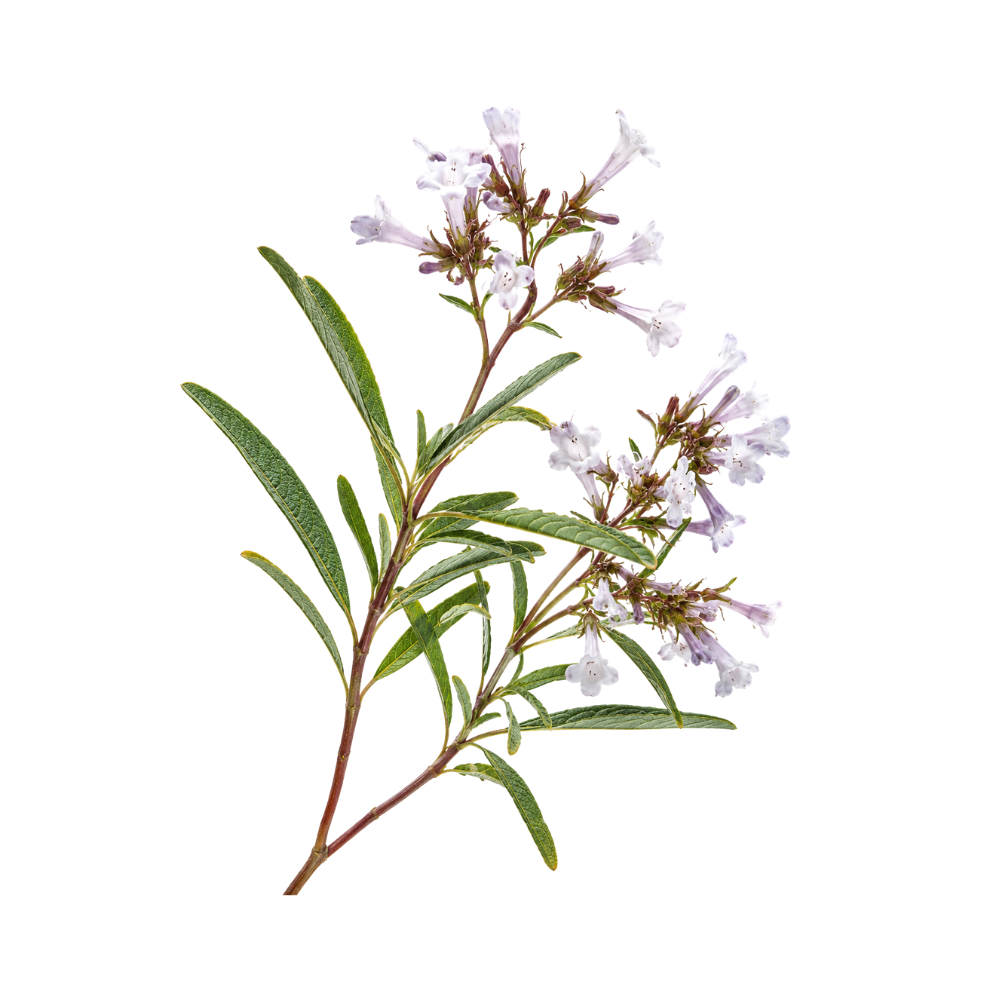
Yerba santa — “holy herb” — is an aromatic evergreen shrub of the California hills, and you can identify it almost by touch alone: its narrow, leathery leaves are dark, glossy and coated on top with a sticky, varnish-like resin, paler and felted beneath, and the whole plant gives off a warm balsamic scent. In late spring it opens funnel-shaped lavender-to-white flowers in curled, one-sided clusters. The resinous leaves are the part gathered and used.
It is a true child of the chaparral: it spreads into colonies by creeping underground stems and is a classic fire-follower, burned to the ground by wildfire only to resprout vigorously from its roots and seed the following season.
Distribution
Yerba santa is native to California and southwestern Oregon, growing on dry, rocky, well-drained slopes of chaparral, foothill and oak woodland and pine forest — often most abundant on recently burned ground. It is common and secure throughout that range and grows nowhere else in the wild.
Growing Conditions
- Wants full sun and fast-draining, dry, rocky or sandy soil; it is a drought-hardy California native suited to low-water, unirrigated gardens.
- Tolerant of poor, lean soils and summer drought — excess summer water and heavy, wet ground are the main causes of failure.
- Propagated from seed (germination is helped by heat or smoke, reflecting its fire ecology), from cuttings, and by division of its spreading rhizomes.
- Its vigorous, suckering, colony-forming habit is useful for erosion control but means it can spread widely — site it where that is welcome (roughly USDA zones 7–10).
- Full cultivation detail lives on the companion farm-wiki grow guide for Eriodictyon californicum (link to be added once that project’s public URL is confirmed).
Phytochemistry
The sticky leaves of yerba santa are rich in flavonoids and phenolic acids together with an aromatic essential oil. The characteristic flavanones are sterubin and eriodictyol — the latter giving the genus its name — accompanied by homoeriodictyol, hesperetin and 6-methoxynaringenin 1Reference 1Chemical Composition of Eriodictyon californicum (California Yerba Santa) Cultivated in Ontario, Oregon, USA — analytical/phytochemistryView study →. Activity-guided fractionation of the leaf has isolated a wider set of discrete flavonoids, including the flavanones sakuranetin and 6-methoxyhesperetin and the flavones chrysin, cirsimaritin, hispidulin, chrysoeriol and jaceosidin 13Reference 13In vitroIsolation of potential cancer chemopreventive agents from Eriodictyon californicum — in vitroView study →. The dominant phenolic acid is rosmarinic acid, alongside the prenylated Eriodictyon-specific eriolic acid C — one of a family of bisprenylated benzoic-acid derivatives characteristic of the genus 1,17Reference 1Chemical Composition of Eriodictyon californicum (California Yerba Santa) Cultivated in Ontario, Oregon, USA — analytical/phytochemistryView study →Reference 17Identification of bisprenylated benzoic acid derivatives from yerba santa (Eriodictyon ssp.) using sensory-guided fractionation — analyticalView study →. The resinous leaf also yields an essential oil dominated by the monoterpene 1,8-cineole, the component most associated with its expectorant, mucolytic action 1Reference 1Chemical Composition of Eriodictyon californicum (California Yerba Santa) Cultivated in Ontario, Oregon, USA — analytical/phytochemistryView study →. Notably, the species splits into two chemotypes — one high in sterubin, the other high in eriolic acid C — so the levels of these two markers vary enormously between plants 1Reference 1Chemical Composition of Eriodictyon californicum (California Yerba Santa) Cultivated in Ontario, Oregon, USA — analytical/phytochemistryView study →. Separate UHPLC profiling of Eriodictyon leaf confirms this flavanone-plus-phenolic-acid signature 20Reference 20Chemical characterization and quantitative determination of flavonoids and phenolic acids in yerba santa (Eriodictyon spp.) using UHPLC/DAD/Q-ToF — analyticalView study →.
Constituent Summary
Leaf figures are milligrams per gram of dry foliage (mg/g) by UHPLC, except the essential oil yield and 1,8-cineole, which are percentages. Concentrations vary widely between individual plants and especially between the two chemotypes. † marks sterubin and eriolic acid C, the two compounds whose concentrations differentiate the high-sterubin and high-eriolic-acid chemotypes of Eriodictyon californicum.
Flavonoid12 compounds9 with data
Phenolic acid2 compounds2 with data
Monoterpene1 compound1 with data
Pharmacology & Research
Yerba santa has a modest but unusually interesting research base for a plant still classified as a traditional respiratory remedy. The bulk of the modern literature is preclinical (cell-based and rodent) and centres not on the lungs but on the brain: its flavanone sterubin was flagged in an unbiased screen at the Salk Institute as one of the most potent neuroprotective compounds recovered from a large plant-extract library, and most of the strongest signals below flow from that finding 2,5Reference 2In vitroOld age-associated phenotypic screening for Alzheimer’s disease drug candidates identifies sterubin as a potent neuroprotective compound from Yerba santa — in vitro screeningView study →Reference 5In vitroThe Value of Herbarium Collections to the Discovery of Novel Treatments for Alzheimer’s Disease, a Case Made With the Genus Eriodictyon — in vitroView study →. Only one human trial exists — a small placebo-controlled weight-management study of a proprietary extract 11Reference 11RCTA Food Supplement with Antioxidative Santa Herba Extract Modulates Energy Metabolism and Contributes to Weight Management — randomised placebo-controlled clinical trialView study → — so nothing here has confirmed clinical efficacy for the indication people actually buy the herb for. Two further caveats run through everything: the species splits into a high-sterubin and a high-eriolic-acid chemotype, so sterubin content (and therefore neuro-activity) varies enormously between plants 1Reference 1Chemical Composition of Eriodictyon californicum (California Yerba Santa) Cultivated in Ontario, Oregon, USA — analytical/phytochemistryView study →, and much of the “yerba santa” flavonoid work was done on the sister species E. angustifolium, not E. californicum.
- Best-supported: sterubin is a genuinely potent neuroprotective and anti-inflammatory flavanone in cell and rodent models of Alzheimer’s and Parkinson’s disease 2,3,6,7,8Reference 2In vitroOld age-associated phenotypic screening for Alzheimer’s disease drug candidates identifies sterubin as a potent neuroprotective compound from Yerba santa — in vitro screeningView study →Reference 3In vitroStructural Requirements for the Neuroprotective and Anti-Inflammatory Activities of the Flavanone Sterubin — in vitroView study →Reference 6In vitroSterubin: Enantioresolution, Configurational Stability, Enantiomeric Purity in Nature, and Neuroprotective Activity in Vitro and in Vivo — in vitro / mouse in vivoView study →Reference 7AnimalSterubin protects against chemically-induced Alzheimer’s disease by reducing biomarkers of inflammation and oxidative stress in rats — animal model (rat)View study →Reference 8AnimalProtective effect of sterubin against neurochemical and behavioral impairments in rotenone-induced Parkinson’s disease — animal model (rat)View study →; the extract has broad antioxidant (Nrf2-inducing) activity 2,3,5Reference 2In vitroOld age-associated phenotypic screening for Alzheimer’s disease drug candidates identifies sterubin as a potent neuroprotective compound from Yerba santa — in vitro screeningView study →Reference 3In vitroStructural Requirements for the Neuroprotective and Anti-Inflammatory Activities of the Flavanone Sterubin — in vitroView study →Reference 5In vitroThe Value of Herbarium Collections to the Discovery of Novel Treatments for Alzheimer’s Disease, a Case Made With the Genus Eriodictyon — in vitroView study →.
- Emerging, worth watching: a single small human RCT of a standardised extract found modest weight and body-fat reductions 11Reference 11RCTA Food Supplement with Antioxidative Santa Herba Extract Modulates Energy Metabolism and Contributes to Weight Management — randomised placebo-controlled clinical trialView study →; sterubin restores mitochondrial function under oxidative stress 4Reference 4In vitroThe Neuroprotective Flavonoids Sterubin and Fisetin Maintain Mitochondrial Health under Oxytotic/Ferroptotic Stress in HT22 Neuronal Cells — in vitroView study →.
- Mechanistically thin: the classic expectorant/respiratory use rests almost entirely on the essential-oil constituent 1,8-cineole and tradition, not on direct clinical study 1Reference 1Chemical Composition of Eriodictyon californicum (California Yerba Santa) Cultivated in Ontario, Oregon, USA — analytical/phytochemistryView study →.
- The caveat: essentially all efficacy data are preclinical, there is no standardised medicinal dose, and the two chemotypes make “yerba santa” a moving target chemically.
1. Neuroprotective
This is the strongest and most distinctive part of the yerba santa literature. In an age-associated phenotypic screen designed to model multiple neurotoxicity pathways at once, a Salk Institute group screened a large library of medicinal-plant extracts and identified the E. californicum flavanone sterubin as the active neuroprotective component 2Reference 2In vitroOld age-associated phenotypic screening for Alzheimer’s disease drug candidates identifies sterubin as a potent neuroprotective compound from Yerba santa — in vitro screeningView study →. Follow-up work showed sterubin protects nerve cells against several distinct death triggers, potently induces the antioxidant transcription factor Nrf2, and — uniquely among seven closely related flavonoids tested — combines that neuroprotection with strong anti-inflammatory activity 3Reference 3In vitroStructural Requirements for the Neuroprotective and Anti-Inflammatory Activities of the Flavanone Sterubin — in vitroView study →. Its (S)-enantiomer occurs naturally, both enantiomers protect equally in vitro, and low oral doses preserved short- and long-term memory in a mouse model of Alzheimer’s disease 6Reference 6In vitroSterubin: Enantioresolution, Configurational Stability, Enantiomeric Purity in Nature, and Neuroprotective Activity in Vitro and in Vivo — in vitro / mouse in vivoView study →. Two rodent disease models extend this: sterubin (10 mg/kg) improved behaviour and reversed oxidative and inflammatory markers in scopolamine-induced Alzheimer’s-type impairment in rats 7Reference 7AnimalSterubin protects against chemically-induced Alzheimer’s disease by reducing biomarkers of inflammation and oxidative stress in rats — animal model (rat)View study → and in rotenone-induced Parkinson’s disease in rats 8Reference 8AnimalProtective effect of sterubin against neurochemical and behavioral impairments in rotenone-induced Parkinson’s disease — animal model (rat)View study →. A screen across 14 herbarium Eriodictyon taxa found neuroprotective potency tracked sterubin content specifically 5Reference 5In vitroThe Value of Herbarium Collections to the Discovery of Novel Treatments for Alzheimer’s Disease, a Case Made With the Genus Eriodictyon — in vitroView study →, and sterubin also restores mitochondrial health in stressed neurons 4Reference 4In vitroThe Neuroprotective Flavonoids Sterubin and Fisetin Maintain Mitochondrial Health under Oxytotic/Ferroptotic Stress in HT22 Neuronal Cells — in vitroView study →.
Gap: every finding is cell-based or rodent — there is no human neuroprotection or cognition trial, and because sterubin content is chemotype-dependent, a given batch of leaf may contain almost none of the active compound.
2. Anti-inflammatory
Anti-inflammatory activity is the mechanistic thread linking most of the other indications. Sterubin strongly suppresses inflammatory activation in brain microglia and does so in parallel with Nrf2 induction 3,5Reference 3In vitroStructural Requirements for the Neuroprotective and Anti-Inflammatory Activities of the Flavanone Sterubin — in vitroView study →Reference 5In vitroThe Value of Herbarium Collections to the Discovery of Novel Treatments for Alzheimer’s Disease, a Case Made With the Genus Eriodictyon — in vitroView study →. A high-throughput screen of natural products in LPS-activated macrophages and microglial cells (a sepsis/neuroinflammation model) identified Eriodictyon among active anti-inflammatory hits 9Reference 9In vitroNatural product HTP screening for antibacterial (E. coli O157:H7) and anti-inflammatory agents in activated macrophages and microglial cells — in vitroView study →, and a flavanone-rich extract of the sister species E. angustifolium lowered IL-6, IL-8 and MCP-1 release in endotoxin-stimulated human gingival fibroblasts 10Reference 10In vitroIdentification of an anti-inflammatory potential of Eriodictyon angustifolium compounds in human gingival fibroblasts — in vitroView study →. In the rodent Alzheimer’s and Parkinson’s models, sterubin lowered TNF-α, IL-6, IL-1β and NF-κB activity 7,8Reference 7AnimalSterubin protects against chemically-induced Alzheimer’s disease by reducing biomarkers of inflammation and oxidative stress in rats — animal model (rat)View study →Reference 8AnimalProtective effect of sterubin against neurochemical and behavioral impairments in rotenone-induced Parkinson’s disease — animal model (rat)View study →. Mechanistically the effect is attributed to NF-κB down-regulation coupled with Nrf2-driven antioxidant signalling rather than direct COX inhibition.
Gap: the human fibroblast work used E. angustifolium, and no clinical anti-inflammatory endpoint (e.g. a marker like CRP) has been tested in people.
3. Antioxidant
The antioxidant story operates at two levels. Directly, the leaf is flavonoid- and phenolic-rich — rosmarinic acid alone runs 22–53 mg/g — and a proprietary “Santa herba” extract showed measurable radical-scavenging capacity (ORAC ≈ 819 Trolox equivalents) 1,11Reference 1Chemical Composition of Eriodictyon californicum (California Yerba Santa) Cultivated in Ontario, Oregon, USA — analytical/phytochemistryView study →Reference 11RCTA Food Supplement with Antioxidative Santa Herba Extract Modulates Energy Metabolism and Contributes to Weight Management — randomised placebo-controlled clinical trialView study →. More interestingly, sterubin acts less as a direct scavenger and more as an inducer of the endogenous antioxidant response, strongly activating the Nrf2 transcription factor in both nerve and microglial cells 2,3Reference 2In vitroOld age-associated phenotypic screening for Alzheimer’s disease drug candidates identifies sterubin as a potent neuroprotective compound from Yerba santa — in vitro screeningView study →Reference 3In vitroStructural Requirements for the Neuroprotective and Anti-Inflammatory Activities of the Flavanone Sterubin — in vitroView study →; it also protects neurons specifically against oxytosis/ferroptosis, an iron-dependent oxidative death pathway, and preserves mitochondrial redox balance under that stress 4,5Reference 4In vitroThe Neuroprotective Flavonoids Sterubin and Fisetin Maintain Mitochondrial Health under Oxytotic/Ferroptotic Stress in HT22 Neuronal Cells — in vitroView study →Reference 5In vitroThe Value of Herbarium Collections to the Discovery of Novel Treatments for Alzheimer’s Disease, a Case Made With the Genus Eriodictyon — in vitroView study →. In the rat neurodegeneration models, sterubin raised SOD, glutathione and catalase and lowered malondialdehyde 7,8Reference 7AnimalSterubin protects against chemically-induced Alzheimer’s disease by reducing biomarkers of inflammation and oxidative stress in rats — animal model (rat)View study →Reference 8AnimalProtective effect of sterubin against neurochemical and behavioral impairments in rotenone-induced Parkinson’s disease — animal model (rat)View study →.
Gap: antioxidant capacity measured in a test tube or cell line does not establish a clinical benefit; the one human study measured weight outcomes, not oxidative-stress markers, in people.
4. Weight management
This is the only indication with direct human data. A 12-week randomised, placebo-controlled trial of a food supplement containing an antioxidative Santa herba (E. californicum) extract, in 49 overweight and obese women (mean age ~47.5), reported significantly reduced body weight (P = 0.042) and body fat (P = 0.044) versus placebo, with a trend toward lower leptin (P = 0.065) 11Reference 11RCTA Food Supplement with Antioxidative Santa Herba Extract Modulates Energy Metabolism and Contributes to Weight Management — randomised placebo-controlled clinical trialView study →. Supporting laboratory work in the same paper found the extract binds the adenosine A2A receptor (ADORA2A) and boosted mobility in a C. elegans model, suggesting an effect on energy metabolism 11Reference 11RCTA Food Supplement with Antioxidative Santa Herba Extract Modulates Energy Metabolism and Contributes to Weight Management — randomised placebo-controlled clinical trialView study →. The trial is registered (NCT03853603).
Gap: a single small trial, in one sex, of a specific proprietary extract, with modest effect sizes and some endpoints only at trend level — it should be read as a preliminary signal, not established efficacy, and does not transfer to leaf tea.
5. Anti-allergic
The rationale here is constituent-level. Eriodictyol, a flavanone present in yerba santa (and other plants), inhibited mast-cell degranulation in vitro — suppressing β-hexosaminidase release and IL-4 expression — by reducing ceramide kinase (CERK) expression, and it dampened passive cutaneous anaphylaxis in an animal model 12Reference 12In vitroInhibitory effect of eriodictyol on IgE/Ag-induced type I hypersensitivity — in vitro / animal modelView study →. Because mast-cell histamine release drives type-I hypersensitivity, this offers a plausible mechanism for an anti-allergic effect.
Gap: the work is on isolated eriodictyol, not yerba santa extract, and eriodictyol is widespread across the plant kingdom — the finding says little specific about the herb, and there is no human allergy data.
6. Anticancer
This is early, chemoprevention-flavoured evidence. Activity-guided fractionation of E. californicum isolated twelve flavonoids — including eriodictyol, homoeriodictyol, sakuranetin and chrysin — that inhibited metabolic activation of the carcinogen benzo[a]pyrene by hamster embryo cells, a classic chemopreventive readout 13Reference 13In vitroIsolation of potential cancer chemopreventive agents from Eriodictyon californicum — in vitroView study →. Separately, eriodictyol (200 µg/kg) reduced aberrant crypt foci, polyp incidence and oxidative stress in a rat model of chemically induced colon carcinogenesis 14Reference 14AnimalEffect of eriodictyol on preneoplastic lesions, oxidative stress and bacterial enzymes in 1,2-dimethylhydrazine-induced colon carcinogenesis — animal model (rat)View study →.
Gap: all data are in vitro or single-animal-model and largely at the level of individual constituents (some, like eriodictyol, not unique to the herb); no whole-herb or human evidence exists.
7. Antibacterial
Antibacterial activity has been reported since a 1951 study of E. californicum leaf preparations 15Reference 15In vitroStudies on the antibacterial properties of Eriodictyon californicum — in vitroView study →, and a modern high-throughput screen recovered Eriodictyon as a hit against enterohaemorrhagic E. coli O157:H7 9Reference 9In vitroNatural product HTP screening for antibacterial (E. coli O157:H7) and anti-inflammatory agents in activated macrophages and microglial cells — in vitroView study →. The activity is generally attributed to the leaf’s phenolic and flavonoid content.
Gap: in-vitro only, with no potency benchmarking against reference antimicrobials and no in-vivo or clinical follow-up — this is a screening-level observation, not a demonstrated therapeutic effect.
8. Expectorant / respiratory
This is the herb’s defining traditional use — for coughs, colds, bronchial congestion and asthma — yet it is the least directly studied. Modern support rests almost entirely on constituent inference: the resinous leaf yields an essential oil dominated by the monoterpene 1,8-cineole 1Reference 1Chemical Composition of Eriodictyon californicum (California Yerba Santa) Cultivated in Ontario, Oregon, USA — analytical/phytochemistryView study →, a compound with well-documented mucolytic and secretomotor (expectorant) activity established largely in other plants and in eucalyptus-oil research. The oil yield and cineole fraction both vary widely between plants 1Reference 1Chemical Composition of Eriodictyon californicum (California Yerba Santa) Cultivated in Ontario, Oregon, USA — analytical/phytochemistryView study →.
Gap: there is no clinical or even animal study of yerba santa itself as an expectorant; the case is ethnobotanical plus a plausible marker compound, which is why the score is low despite this being the popular headline use.
Mechanisms
| Mechanism | Drives | Key compounds |
|---|---|---|
| Nrf2 induction ↑ (endogenous antioxidant response) | antioxidantneuroprotectiveanti-inflammatory | sterubin |
| NF-κB ↓, cytokine ↓ (TNF-α, IL-6, IL-1β) | anti-inflammatoryneuroprotective | sterubin, eriodictyol |
| Oxytosis/ferroptosis inhibition, mitochondrial protection | neuroprotective | sterubin, fisetin |
| Mast-cell degranulation ↓, ceramide kinase ↓ | anti-allergic | eriodictyol |
| Carcinogen (benzo[a]pyrene) activation ↓ | anticancer / chemoprevention | eriodictyol, homoeriodictyol, sakuranetin |
| Adenosine A2A (ADORA2A) binding, energy metabolism | weight management | whole extract |
| Mucolytic / secretomotor essential-oil action | expectorant / respiratory | 1,8-cineole |
Clinical trials
One small completed human trial exists — a placebo-controlled weight-management study of a proprietary Santa herba extract (NCT03853603) — while the much stronger neuroprotective and anti-inflammatory findings remain entirely preclinical, with no registered trials despite active Alzheimer’s-disease drug-discovery interest in sterubin.
| Completed | Planned | Terminated | Preclinical |
|---|---|---|---|
| 1 | 0 | 0 | ~18 |
Last checked: July 2026.
Dosage
In research, yerba santa has not been given at any standardised medicinal dose: the single human trial used an undisclosed proprietary “Santa herba” extract, and the strongest (neuroprotective and chemopreventive) findings are for isolated compounds in animals, not the whole herb.
| Indication | Preparation | Dose | Est. dried-herb equivalent | Source |
|---|---|---|---|---|
| Weight management | Proprietary standardised “Santa herba” extract (capsule) | Proprietary mg (not disclosed as leaf-equivalent) | — (no marker % given; cannot back-convert) | 11Reference 11RCTA Food Supplement with Antioxidative Santa Herba Extract Modulates Energy Metabolism and Contributes to Weight Management — randomised placebo-controlled clinical trialView study → |
| Neuroprotective (rodent) | Isolated sterubin, oral | 10 mg/kg/day (rat) | Not applicable — an isolated-compound dose, not a leaf dose | 7,8Reference 7AnimalSterubin protects against chemically-induced Alzheimer’s disease by reducing biomarkers of inflammation and oxidative stress in rats — animal model (rat)View study →Reference 8AnimalProtective effect of sterubin against neurochemical and behavioral impairments in rotenone-induced Parkinson’s disease — animal model (rat)View study → |
| Anticancer (rodent) | Isolated eriodictyol, oral | 200 µg/kg (rat) | Not applicable — isolated constituent | 14Reference 14AnimalEffect of eriodictyol on preneoplastic lesions, oxidative stress and bacterial enzymes in 1,2-dimethylhydrazine-induced colon carcinogenesis — animal model (rat)View study → |
Est. dried-herb equivalent is deliberately left blank. The human trial used an undisclosed proprietary extract with no stated marker percentage, so no defensible leaf-weight conversion exists; the neuro/anticancer doses are for isolated compounds, and back-converting via sterubin (0–72 mg/g, chemotype-dependent) would be meaningless. This is a guide to the honest gap, not a conversion factor.
Traditional Dosage
Traditionally yerba santa is taken as a leaf infusion, chewed, or smoked, and is used as a flavour-masking agent for bitter herbs; whole-herb amounts follow herbal custom rather than a therapeutic target.
| System | Preparation | Dose |
|---|---|---|
| Western herbal | Dried leaf as infusion | 1–2 tsp dried leaf per cup |
| Western herbal | Liquid extract / tincture | Not established in the primary/pharmacopoeial sources reviewed |
Safety & Pregnancy
Yerba santa has a long traditional-use record and no established serious toxicity; its main documented hazard is allergic contact dermatitis, and formal safety data are otherwise limited and largely indirect.
- Allergic contact dermatitis. The main documented hazard — well characterised across the resinous, phenolic-rich Eriodictyon genus.
- Smoke exposure. Often smoked in herbal blends; inhaling any combustion product carries respiratory risk independent of the plant.
- Unstudied interactions. No human toxicity, drug-interaction or CYP450 data — absence of reports is not evidence of safety.
- Pregnancy & lactation. Not researched; do not assume safe.
- No established serious toxicity. Long record of traditional use with no documented organ toxicity.
Full safety & interactions detail
Yerba santa has a long record of traditional use and no established serious toxicity, but formal safety data are limited and largely indirect. The main documented hazard is allergic contact dermatitis, well characterised for the related Eriodictyon parryi (poodle-dog bush) and plausible across the resinous, phenolic-rich genus 18Reference 18Case reportContact dermatitis from Eriodictyon parryi: a novel cause of contact dermatitis in California — case reportView study →. No human toxicity, drug-interaction, or organ-toxicity studies of E. californicum have been published, and no cytochrome-P450 interaction has been demonstrated in people; an in-vitro effect on carcinogen-metabolising enzymes exists at the constituent level 13Reference 13In vitroIsolation of potential cancer chemopreventive agents from Eriodictyon californicum — in vitroView study → but is not an established clinical interaction. Because the leaf is often smoked in herbal blends, note that inhaling any combustion product carries respiratory risk independent of the plant itself. A further practical caveat is chemotype variability: a given leaf batch may contain almost no sterubin, so no particular active-compound content can be assumed.
Herb–drug interactions have not been specifically evaluated for yerba santa, and no controlled interaction or pharmacokinetic study was identified; the absence of reported problems should not be read as evidence of safety.
No controlled studies of yerba santa in pregnancy or lactation exist, and pharmacopoeial monographs do not specifically address it. Safety in pregnancy and breastfeeding therefore cannot be assumed from its traditional food/beverage use; absence of reports is not evidence of safety.
References
- Satyal P, et al. (2026). Chemical Composition of Eriodictyon californicum (California Yerba Santa) Cultivated in Ontario, Oregon, USA — analytical/phytochemistry. Molecules. https://pubmed.ncbi.nlm.nih.gov/42076034/ (Quantified 15 leaf polyphenols and the essential oil: rosmarinic acid 21.99–52.94 mg/g, eriolic acid C 0.67–151.96 mg/g, homoeriodictyol 25.92–61.47 mg/g, sterubin 0.00–71.80 mg/g; essential oil yield 0.80–3.40% with 1,8-cineole 0.6–35.5%; describes the high-sterubin and high-eriolic-acid-C chemotypes.)
- Fischer W, et al. (2019). Old age-associated phenotypic screening for Alzheimer’s disease drug candidates identifies sterubin as a potent neuroprotective compound from Yerba santa — in vitro screening. Redox Biology. https://pubmed.ncbi.nlm.nih.gov/30594901/
- Liang Z, et al. (2022). Structural Requirements for the Neuroprotective and Anti-Inflammatory Activities of the Flavanone Sterubin — in vitro. Antioxidants. https://pubmed.ncbi.nlm.nih.gov/36358569/
- Goujon M, et al. (2024). The Neuroprotective Flavonoids Sterubin and Fisetin Maintain Mitochondrial Health under Oxytotic/Ferroptotic Stress in HT22 Neuronal Cells — in vitro. Antioxidants. https://pubmed.ncbi.nlm.nih.gov/38671908/
- Maher P, et al. (2020). The Value of Herbarium Collections to the Discovery of Novel Treatments for Alzheimer’s Disease, a Case Made With the Genus Eriodictyon — in vitro. Frontiers in Pharmacology. https://pubmed.ncbi.nlm.nih.gov/32210808/
- Hofmann J, et al. (2020). Sterubin: Enantioresolution, Configurational Stability, Enantiomeric Purity in Nature, and Neuroprotective Activity in Vitro and in Vivo — in vitro / mouse in vivo. Chemistry – A European Journal. https://pubmed.ncbi.nlm.nih.gov/32358806/
- Kazmi I, et al. (2023). Sterubin protects against chemically-induced Alzheimer’s disease by reducing biomarkers of inflammation and oxidative stress in rats — animal model (rat). Saudi Journal of Biological Sciences. https://pubmed.ncbi.nlm.nih.gov/36712184/
- Alqurashi MM, et al. (2024). Protective effect of sterubin against neurochemical and behavioral impairments in rotenone-induced Parkinson’s disease — animal model (rat). Brazilian Journal of Medical and Biological Research. https://pubmed.ncbi.nlm.nih.gov/38359270/
- Mazzio EA, et al. (2016). Natural product HTP screening for antibacterial (E. coli O157:H7) and anti-inflammatory agents in activated macrophages and microglial cells — in vitro. BMC Complementary and Alternative Medicine. https://pubmed.ncbi.nlm.nih.gov/27846826/
- Walker J, et al. (2016). Identification of an anti-inflammatory potential of Eriodictyon angustifolium compounds in human gingival fibroblasts — in vitro. Food & Function. https://pubmed.ncbi.nlm.nih.gov/27248833/
- Mödinger Y, et al. (2021). A Food Supplement with Antioxidative Santa Herba Extract Modulates Energy Metabolism and Contributes to Weight Management — randomised placebo-controlled clinical trial. Journal of Medicinal Food. https://pubmed.ncbi.nlm.nih.gov/34255555/
- Yoo JM, et al. (2012). Inhibitory effect of eriodictyol on IgE/Ag-induced type I hypersensitivity — in vitro / animal model. Bioscience, Biotechnology, and Biochemistry. https://pubmed.ncbi.nlm.nih.gov/22785465/
- Liu YL, et al. (1992). Isolation of potential cancer chemopreventive agents from Eriodictyon californicum — in vitro. Journal of Natural Products. https://pubmed.ncbi.nlm.nih.gov/1593282/
- Mariyappan P, et al. (2017). Effect of eriodictyol on preneoplastic lesions, oxidative stress and bacterial enzymes in 1,2-dimethylhydrazine-induced colon carcinogenesis — animal model (rat). Toxicology Research. https://pubmed.ncbi.nlm.nih.gov/30090535/
- Salle AJ, et al. (1951). Studies on the antibacterial properties of Eriodictyon californicum — in vitro. Archives of Biochemistry and Biophysics. https://pubmed.ncbi.nlm.nih.gov/14847672/
- Ley JP, et al. (2005). Evaluation of bitter masking flavanones from Herba Santa (Eriodictyon californicum) — sensory / in vitro. Journal of Agricultural and Food Chemistry. https://pubmed.ncbi.nlm.nih.gov/16028996/
- Reichelt KV, et al. (2010). Identification of bisprenylated benzoic acid derivatives from yerba santa (Eriodictyon ssp.) using sensory-guided fractionation — analytical. Journal of Agricultural and Food Chemistry. https://pubmed.ncbi.nlm.nih.gov/20058867/
- Czaplicki CD. (2013). Contact dermatitis from Eriodictyon parryi: a novel cause of contact dermatitis in California — case report. Wilderness & Environmental Medicine. https://pubmed.ncbi.nlm.nih.gov/23473793/
- Taguchi N, et al. (2020). Eriodictyon angustifolium extract, but not Eriodictyon californicum extract, reduces human hair greying — in vitro. International Journal of Cosmetic Science. https://pubmed.ncbi.nlm.nih.gov/32324292/
- Wang M, et al. (2023). Chemical characterization and quantitative determination of flavonoids and phenolic acids in yerba santa (Eriodictyon spp.) using UHPLC/DAD/Q-ToF — analytical. Journal of Pharmaceutical and Biomedical Analysis. https://pubmed.ncbi.nlm.nih.gov/37473504/