
MAO inhibitors have a long history in medicine — as antidepressants, as nootropics, and as a mainstay treatment for neurodegenerative disorders like Parkinson’s disease.
There are also quite a few plant sources of MAO-inhibiting compounds, which is what most people come to this article looking for. This is a big update to a post I first wrote years ago. In the time since, I’ve gone through a much larger and more carefully vetted body of research — a synthesis of 178 plants and compounds with documented MAO activity — and rebuilt the herb list around what the evidence actually supports.
I’ll be honest with you up front, because it’s the single most important thing to understand: the evidence base for natural MAO inhibitors is thinner than the internet makes it look. A lot of the “top MAO herbs” you’ll find repeated across blogs (including my own older version of this one) trace back to a single crude laboratory screen. Some of those plants hold up. Several don’t. I’ve kept them in this guide, but I’ve flagged clearly which ones stand on solid ground and which are still riding on one old study.
What Is an MAO Inhibitor?
MAO stands for monoamine oxidase — an enzyme that lives on the outer surface of your mitochondria and breaks down a family of signalling molecules called monoamines. That family includes some of the most important messengers in the brain: dopamine, serotonin, noradrenaline, and adrenaline. It also breaks down dimethyltryptamine (DMT) and dietary amines like tyramine.
By degrading these molecules, MAO acts like a thermostat — it controls how much of each amine is hanging around to do its job.
An MAO inhibitor simply blocks that enzyme. Slow the breakdown down, and the amines stick around longer and accumulate. That’s the whole mechanism. It’s also the basis for both the benefits of MAO inhibition (more serotonin, more dopamine) and its dangers (which we’ll get to — this is not a risk-free category).
The Monoamines MAO Breaks Down:
- Serotonin
- Dopamine
- Noradrenaline (norepinephrine)
- Adrenaline (epinephrine)
- Phenylethylamine (PEA)
- Dimethyltryptamine (DMT)
- Melatonin
- Tyramine (a dietary amine — important for safety, more below)
MAO-A vs MAO-B — Two Enzymes, Two Different Jobs
Here’s the part most casual write-ups skip, and it’s the part that makes all the difference. There isn’t one monoamine oxidase — there are two, coded by two separate genes, and they don’t do the same job. Whether a compound blocks MAO-A, MAO-B, or both changes everything about what it does and how risky it is.
MAO-A — the mood-and-diet enzyme
MAO-A preferentially breaks down serotonin and noradrenaline, and — critically — it’s the enzyme that handles dietary tyramine in your gut and liver.
What happens when you block it:
- More serotonin and noradrenaline. This is the classic antidepressant mechanism. The original MAOI antidepressants worked largely by inhibiting MAO-A.
- It protects oral DMT from being destroyed in the gut — the basis of the whole ayahuasca tradition (its own section below).
- It raises tyramine risk. Because MAO-A is your body’s tyramine cleanup crew, blocking it strongly is what creates the dangerous “cheese reaction” (again, more in the safety section).
So MAO-A inhibition is the interesting one for mood and for the ayahuasca-style effects — and also the one that carries the more serious dietary and drug-interaction risks.
MAO-B — the dopamine-and-aging enzyme
MAO-B preferentially breaks down phenylethylamine, and — working alongside MAO-A — helps clear dopamine.
What happens when you block it:
- You preserve dopamine. This is why MAO-B inhibitors are a standard tool in Parkinson’s disease, where dopamine is in short supply.
- Lower tyramine risk. MAO-B isn’t the main tyramine enzyme, so selective MAO-B inhibitors are much safer on the dietary front.
- MAO-B also happens to climb with age, and elevated MAO-B has been linked to Alzheimer’s, Huntington’s, and some forms of Parkinson’s [3]. Elevated MAO-A, by contrast, tracks more closely with depression and anxiety [4].
Selective vs non-selective
A compound can be selective — hitting one enzyme at much lower doses than the other — or non-selective, blocking both. Scientists express this as a selectivity index (a ratio of the two potencies). You don’t need the math; you just need the intuition:
- MAO-A-selective → mood effects, DMT activation, higher tyramine risk.
- MAO-B-selective → dopamine preservation, Parkinson’s relevance, lower dietary risk.
- Non-selective → both effects, and the full set of cautions.
This is the lens to keep in mind for the whole herb list. When you see a plant that’s strong on MAO-A but does almost nothing to MAO-B (Syrian rue is the textbook case), that tells you exactly what it’s good for — and what to watch out for.
A two-column comparison graphic. MAO-A: breaks down serotonin, noradrenaline, and dietary tyramine → blocking it lifts mood, activates oral DMT, and raises the tyramine “cheese reaction” risk. MAO-B: breaks down phenylethylamine and helps clear dopamine → blocking it preserves dopamine (Parkinson’s relevance) with a much lower dietary risk. Show the shared substrates in the middle and the “selective vs non-selective” band underneath.
How the Pharmaceuticals Do It
Before we get to the plants, it’s worth seeing how the drug versions approach the same enzyme, because the style of inhibition matters as much as the strength. Two knobs matter: which enzyme a drug hits, and whether it binds reversibly or irreversibly.
- Irreversible, non-selective MAOIs — phenelzine, tranylcypromine, isocarboxazid. These are the original antidepressant MAOIs. They permanently disable both enzymes (your body has to build new ones), which makes them powerful but also the riskiest: patients on these need a strict low-tyramine diet to avoid a hypertensive crisis.
- Irreversible, MAO-B-selective — selegiline (deprenyl) and rasagiline. Used in Parkinson’s disease to stretch out the brain’s remaining dopamine. Because they mostly spare MAO-A, the dietary tyramine risk is much lower at normal doses.
- Reversible MAO-A inhibitors (RIMAs) — moclobemide is the classic example. “Reversible” is the key word: dietary tyramine can physically bump the drug off the enzyme when it needs to, so the cheese-reaction risk drops dramatically compared to the irreversible drugs.
That last category is the important reference point for the herbs. Most of the plant MAO inhibitors in this guide are reversible — which is genuinely safer than the old irreversible drugs. But “reversible and weaker” is not the same as “safe.” It lowers the risk; it doesn’t remove it.
How to Read the Potency Meters
Now the main event: the herbs, each rated for both MAO-A and MAO-B.
A quick note on the meters, because I want to be straight with you about what they can and can’t tell you. Lab potency for these enzymes is usually reported as an IC50 (the concentration needed to shut the enzyme down by half — so lower means stronger). The problem is that you can’t cleanly compare one lab’s IC50 to another’s: different enzyme sources, different substrates, and different methods all shift the number. And you definitely can’t compare a whole-plant extract (measured by weight) against a purified molecule (measured by concentration).
So I’ve deliberately not tried to plot exact numbers against each other. Instead, each meter shows a potency band — a fair, order-of-magnitude bucket:
- Very High — nanomolar potency (the heaviest hitters)
- High — low single-digit micromolar
- Moderate — roughly 10–50 µM
- Low — weak, above ~50–100 µM
- Minimal — barely touches that enzyme
- Unverified — the claim rests on a single old crude screen and isn’t backed by the newer verified data (shown as a greyed, striped bar)
- Not tested — that enzyme simply wasn’t measured for this plant
Read the bands as “how strong, roughly,” not as lab-exact rankings. And keep the honest headline in mind: outside of the β-carbolines, most of this evidence is animal or test-tube level, not human. This is a map of what’s promising and measured, not a list of proven treatments.
The MAO-Inhibiting Herbs — At a Glance
- MAO-A — mood, serotonin, DMT, tyramine risk
- MAO-B — dopamine, Parkinson’s
- Unverified — one old screen only
*Ayahuasca vine’s MAO-A rating reflects the β-carbolines it carries (harmine and harmaline), which are individually Very High. The whole-vine extract itself has only been described qualitatively — see its entry below.
The Herbs In Detail
1. Syrian Rue (Peganum harmala)
Active compounds: harmine, harmaline (β-carbolines)
If you want to understand natural MAO inhibition, this is where you start. Syrian rue is the best-characterised plant MAO inhibitor in the entire research base, and it isn’t close. Its β-carboline alkaloids — harmine and harmaline — are potent, reversible, MAO-A-selective inhibitors working down at the nanomolar level: harmine has a reported binding constant (Ki) around 5 nM and harmaline around 48 nM [9]. For scale, that’s roughly a thousand times more potent than a compound working at the micromolar level.
The selectivity is just as striking: these β-carbolines hammer MAO-A while barely touching MAO-B (under ~12% inhibition in MAO-B-dominant cells). So Syrian rue is a near-pure MAO-A story — which is exactly what makes it the traditional partner for oral DMT (the ayahuasca section explains why), and exactly why it carries the most serious tyramine and serotonin-syndrome cautions on this list.
Peganum harmala is not a casual supplement. It has real toxicity concerns of its own, independent of MAO, and its potency is precisely what makes it risky. Fascinating pharmacology; treat it with respect.
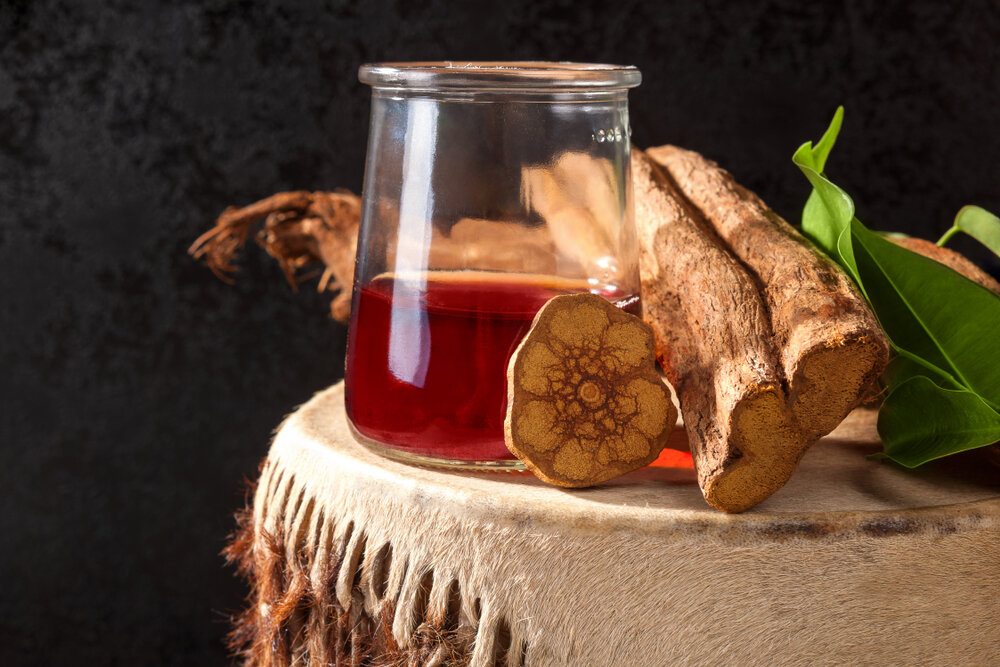
2. The Ayahuasca Vine (Banisteriopsis caapi)
Active compounds: harmine, harmaline, tetrahydroharmine (β-carbolines)
Banisteriopsis caapi is the vine at the heart of the Amazonian ayahuasca brew, and it carries the same β-carbolines as Syrian rue — harmine, harmaline, and tetrahydroharmine. Mechanistically it belongs right at the top with Peganum harmala.
The honest caveat — and the reason I’ve marked its MAO-A bar with an asterisk — is that in the verified research, the whole-vine extract has mostly been described qualitatively (“contains reversible MAO-inhibiting β-carbolines”) rather than measured with a clean potency number of its own. The nanomolar figures belong to the isolated alkaloids it contains, not to a tidy assay of the vine itself. So: mechanistically excellent, formally under-measured as a whole plant.
3. Babchi (Psoralea corylifolia)
Active compounds: bakuchicin, isopsoralen, osthenol
Babchi was in my original list, and it’s one of the entries the newer research actually upgrades rather than knocks down. Several of its coumarin-type constituents are genuine MAO-A inhibitors in the low-micromolar range — bakuchicin (IC50 ~1.78 µM), isopsoralen (~0.88 µM), and osthenol (~0.74 µM) [10]. That puts it firmly in the “High” band for MAO-A. Its MAO-B activity hasn’t been measured in this data, so I’ve left that bar honest.
A naming note, because this plant is a magnet for confusion: Psoralea corylifolia now carries the accepted botanical name Cullen corylifolium, and it’s frequently muddled online with guar (Cyamopsis tetragonoloba) because of the shared “psoral-” in an old, erroneous synonym. They are entirely different plants from different families. If you see “Bakuchi” applied to guar, that’s the mix-up in action — babchi is the one with the MAO data.
4. St. John’s Wort (Hypericum perforatum)
Active compounds: quercetin and related flavonoids
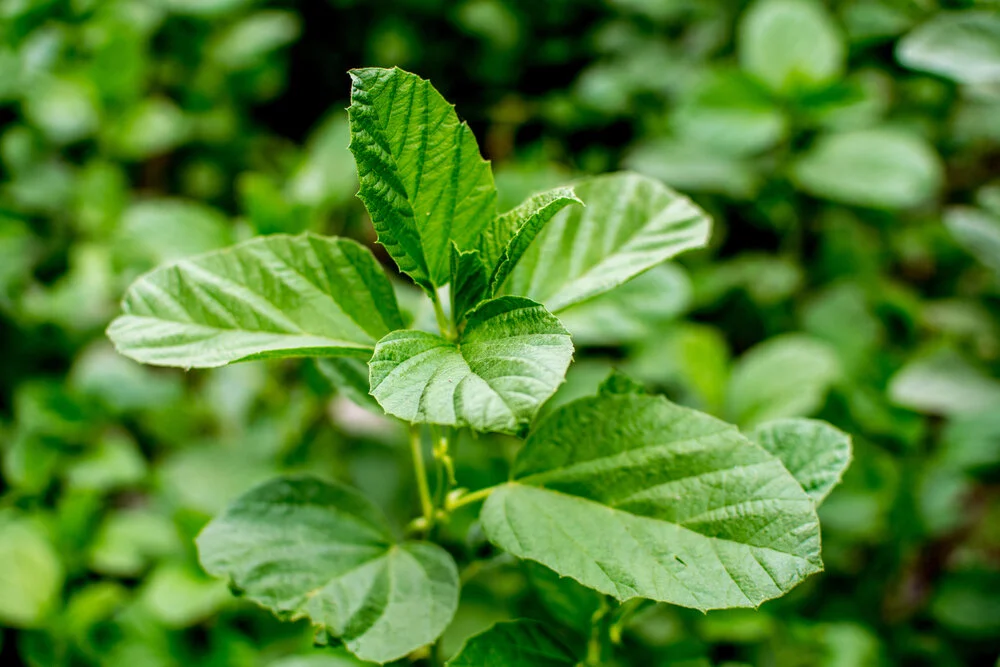
St. John’s Wort is famous as a herbal antidepressant, and MAO-A inhibition is one of several mechanisms in the mix. Its floral extract inhibits MAO-A at concentrations around 63–193 µg/mL, and the activity is credited mostly to its flavonoids — especially quercetin, which on its own inhibits MAO-A with an IC50 near 11.1 µM [11]. Interestingly, its signature compound hypericin contributes very little to the MAO effect.
That flavonoid activity is a moderate, MAO-A-leaning effect — not in the β-carbolines’ league. I include St. John’s Wort partly because it’s the flavonoid case study and partly for a safety reason: it’s itself a serotonergic herb with a notoriously large drug-interaction profile, so it belongs in any honest MAO conversation.
5. Astragalus / Milkvetch (Astragalus membranaceus)
Active compound: calycosin (an isoflavonoid)
If Syrian rue is the MAO-A champion, this is one of the cleanest MAO-B-selective stories in the plant world. The isoflavonoid calycosin inhibits MAO-B potently — reported IC50 values from 0.24 µM up to ~7.19 µM across studies — while leaving MAO-A largely alone (over 100 µM there) [12, 13]. That’s a selectivity ratio in the hundreds, and it’s reversible.
That profile — strong MAO-B, weak MAO-A — is exactly the pattern you’d want for the dopamine-preserving, Parkinson’s-relevant side of MAO inhibition, with a low dietary-tyramine footprint. Related isoflavonoids in this family (medicarpin, 8-O-methylretusin) show the same sub-micromolar MAO-B potency, so it looks like a real structural theme rather than a one-off.
6. Kava (Piper methysticum)
Active compounds: kavain and other kavalactones
Kava is best known as an anxiolytic — the shot public speakers take before going on stage — and reversible MAO-B inhibition appears to be one of the mechanisms behind its calming effect. Its kavalactones are the actives: kavain inhibits MAO-B with an IC50 around 5.34 µM (and MAO-A near 19 µM), while another kavalactone, desmethoxyyangonin, reaches down to a Ki of ~0.28 µM on MAO-B [14, 15]. It’s modestly MAO-B-leaning overall.
One important flag that has nothing to do with MAO: kava carries a well-documented liver-toxicity signal. It’s better suited to anxiety and sleep than to depression, and heavy or long-term use warrants caution and, ideally, liver monitoring.
7. Ellagic-Acid Foods (Rosa multiflora, berries & nuts)
Active compound: ellagic acid
Ellagic acid is a polyphenol found in strawberries, raspberries, cranberries, grapes, walnuts, and pecans (the plant it was isolated from in this research is Rosa multiflora). It’s a moderately potent, MAO-B-preferring inhibitor — IC50 around 9.21 µM on MAO-B, with only weak MAO-A activity [16].
A word of caution about a stray statistic: you may see an eye-popping nanomolar figure for ellagic acid (and curcumin) floating around from one particular paper. That paper’s numbers are internally contradictory and garbled, and the researchers who compiled this synthesis flagged them as unreliable. The trustworthy figure is the ~9 µM one — respectable, MAO-B-selective, but not a nanomolar super-inhibitor.
8. Black Pepper (Piper nigrum)
Active compound: piperine
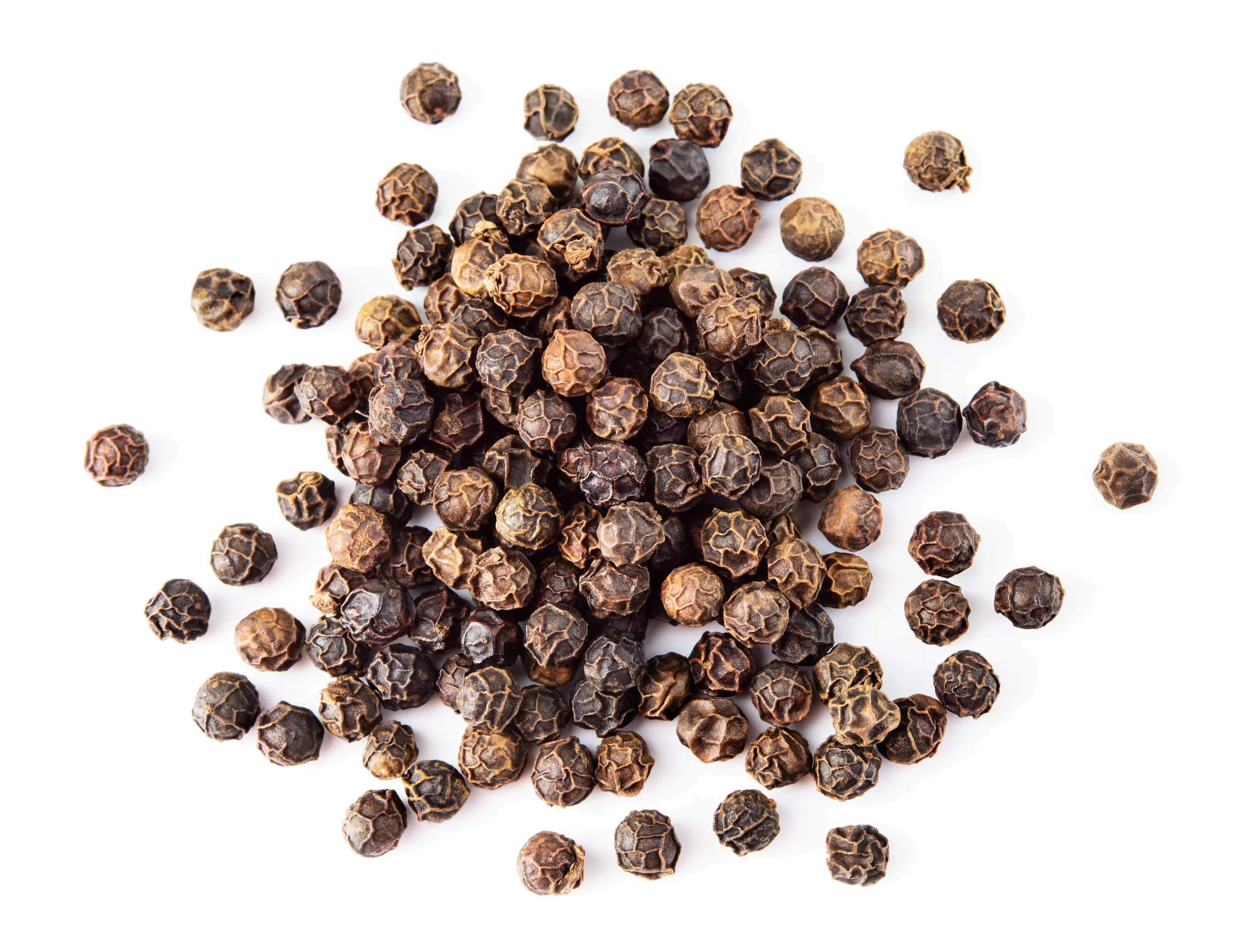
Piperine — the pungent alkaloid in black pepper — is already a common addition to herbal and nootropic formulas because it dramatically improves the intestinal absorption of other compounds. It’s also a genuine, reversible, non-selective MAO inhibitor: IC50 around 49.3 µM on MAO-A and 91.3 µM on MAO-B [7]. It’s on the weaker end of this list, but the effect is real and reproducible.
The practical appeal is the double action: piperine can both nudge MAO down and boost the bioavailability of whatever it’s paired with, which is a big part of why it shows up in so many stacks.
9. Turmeric (Curcuma longa)
Active compound: curcumin
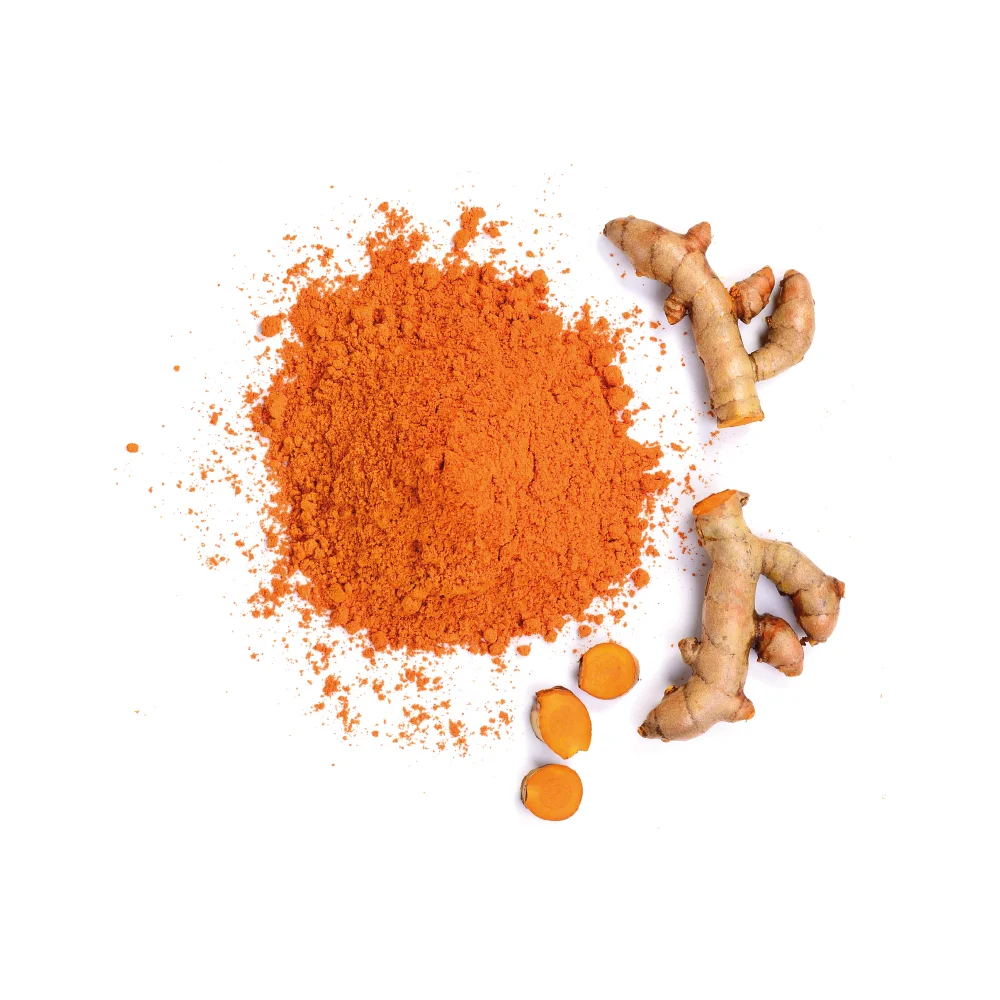
Turmeric stays on the list, but I’ve marked it honestly. Curcumin is repeatedly described as a MAO-B inhibitor, and there’s animal work supporting an antidepressant-type effect running partly through MAO. The trouble is the number: the widely-cited nanomolar potency for curcumin comes from the same flawed paper mentioned under ellagic acid — the one with garbled, internally contradictory figures — so it can’t be trusted as a clean value.
That leaves turmeric in an awkward but honest spot: probably a real, mild MAO-B effect, but without a reliable potency figure I’m willing to rank. Hence the “Unverified” bar. It’s a wonderful anti-inflammatory herb; just don’t believe the “super-potent MAO inhibitor” framing you’ll see repeated online.
10. Rhodiola (Rhodiola rosea)
The popular adaptogen Rhodiola shows up in the MAO literature with impressive-looking numbers — its extracts inhibited both MAO-A and MAO-B by roughly 80–92% in one screen [17]. The catch is that this is a single-concentration crude-extract screen (measured at 100 µg/mL of whole extract), not a proper dose-response with a real potency value. A high percentage at one dose tells you something is happening, but it can’t be converted into a fair ranking against the purified compounds above — so it sits in the “Unverified” band, not because it’s fake, but because it’s under-measured.
The Traditionally-Cited Herbs (One Old Screen Only)
Here’s where I owe you the most honesty. The following plants were the backbone of the original version of this article — and of a lot of other MAO-herb lists online. They all trace to one crude high-throughput screen that reported whole-extract MAO-B activity in mg/mL units [1]. When I went back through the larger verified research base, several of these plants simply weren’t there — no confirming study, no clean potency value.
I’m keeping them, because that original screen isn’t nothing and people come here looking for them. But they get the “Unverified” band, and you should read them as promising leads, not established facts:
- Amur Cork Tree (Phellodendron amurense) — a fundamental Chinese-medicine herb; the “very high MAO-B” claim rests entirely on that one screen and isn’t corroborated in the newer data.
- Licorice (Glycyrrhiza glabra / uralensis) — described as a “potent MAO-B inhibitor,” but only qualitatively; no verified potency number exists in the newer research.
- Guar (Cyamopsis tetragonoloba) — the cluster bean grown for guar gum. No genuine MAO evidence turned up outside that single screen (and note the babchi naming mix-up mentioned earlier).
- Lady’s Mantle (Alchemilla vulgaris) — same story: one screen, no confirmation.
If you’ve been recommending these based on my old post — this is the correction. They may well pan out, but the confident “very high potency” language was never really earned.
A Note on Green Tea (Camellia sinensis)
Green tea deserves its own note because the finding here is a mild myth-buster. Despite green tea’s enormous health reputation, its catechins are weak MAO inhibitors at best — one careful study found the tea catechins “scarcely exerted” MAO-inhibitory activity. So while green tea is a genuinely worthwhile beverage for other reasons, MAO inhibition isn’t really one of its strengths. I’ve rated it “Minimal” rather than dropping it, precisely to set the record straight.
Ayahuasca, DMT & the MAO Connection
This is the most striking real-world example of natural MAO inhibition, and now that you understand the two enzymes it should click perfectly into place.
Why oral DMT doesn’t work on its own. DMT is a powerful psychedelic tryptamine — and it’s a monoamine, which means it’s a target for MAO. Swallow DMT by itself and it never really reaches your brain: MAO-A in your gut wall and liver deaminates it during first-pass metabolism, destroying it before it can circulate. The molecule is essentially inactivated on the way in.
Why the brew works. The ayahuasca tradition solves this by combining a DMT-containing plant with a source of reversible MAO-A inhibitors — the β-carbolines from Banisteriopsis caapi (harmine, harmaline, tetrahydroharmine). With MAO-A temporarily inhibited, the DMT survives first-pass metabolism and can reach the brain to exert its effects. It’s a beautifully precise piece of plant pharmacology: the exact enzyme that would destroy oral DMT (MAO-A) is the exact one those β-carbolines are selective for.
A two-panel “before / after” flow. Panel 1 (DMT alone): swallowed DMT → gut-wall & liver MAO-A → deaminated in first-pass metabolism → never reaches the brain. Panel 2 (DMT + β-carbolines): the caapi β-carbolines reversibly block gut MAO-A → DMT survives first-pass → crosses into the brain and becomes active. Highlight that the enzyme destroying oral DMT (MAO-A) is exactly the one the β-carbolines are selective for.
That’s also why Peganum harmala — which contains the same β-carbolines but no DMT — is sometimes discussed alongside ayahuasca. The MAO-A inhibition is the shared ingredient.
The honest footnote, again: the mechanism here is textbook and well-established, but in the verified research the combined brew itself is documented mostly through qualitative and secondary statements rather than clean measurements. The individual β-carbolines are the well-quantified part; the whole preparation is not.
And a serious safety point: this same mechanism is what makes these combinations genuinely hazardous. Inhibiting MAO-A on purpose, then adding serotonergic molecules, is exactly the recipe for the dangerous interactions covered in the safety section below. The pharmacology is fascinating; the risk profile is real.
Conditions That May Benefit From MAO Inhibitors
1. Parkinson’s Disease
Parkinson’s is a condition of low dopamine. MAO-B inhibitors (like the drug selegiline) are a standard part of treatment — often alongside L-Dopa — specifically because blocking MAO-B slows the breakdown of the brain’s dwindling dopamine supply [1]. This is the corner of MAO medicine where the MAO-B-selective plants (like the calycosin story in Astragalus) are most interesting as research leads — though “interesting research lead” is a long way from “proven therapy.”
2. Depression & Anxiety
Depression is strongly linked to reduced monoamine signalling — particularly serotonin. Standard SSRIs work by blocking serotonin reuptake; MAO-A inhibition attacks the problem from a different angle by slowing serotonin’s breakdown. This is the MAO-A side of the ledger — the β-carboline and flavonoid plants — and it’s also the side that carries the serotonin-syndrome and tyramine risks, so it’s the one to be most careful with.
3. Cognitive Enhancement
MAO inhibitors show up in nootropic stacks mostly as support players: by slowing the breakdown of dopamine and serotonin, they prolong and amplify whatever the rest of the formula is doing to boost those neurotransmitters. Piperine is the go-to here — it inhibits MAO and improves absorption of the other ingredients. After going through this newer research, though, I’d add that MAO inhibition may have more standalone potential than the “just a helper” framing gives it credit for.
A Necessary Safety Note
Everything above should be read with one serious caveat in mind: MAO inhibition is not a risk-free mechanism, and “natural” does not mean “safe.” The enzyme interaction is identical whether the inhibitor comes from a pharmacy or a plant.
A one-glance safety graphic. Center: “MAO-A inhibitor (herbal or drug).” Radiating out as red “serotonin-syndrome” spokes: SSRIs, SNRIs, tricyclics, tramadol, dextromethorphan, triptans, MDMA, linezolid, lithium, St. John’s Wort. A separate amber “tyramine / cheese-reaction” cluster: aged cheese, cured meats, fermented foods, soy sauce, draft beer. A third amber “blood-pressure” cluster: pseudoephedrine, amphetamines, decongestants. Caption it “talk to a prescriber before combining.”
Serotonin syndrome. Combining an MAO inhibitor — herbal or pharmaceutical — with other serotonergic agents can cause a dangerous, occasionally fatal build-up of serotonin. The list of agents to worry about is long: SSRIs, SNRIs, tricyclic antidepressants, tramadol, dextromethorphan (a common cough suppressant), triptans (migraine drugs), MDMA, linezolid (an antibiotic), lithium, and serotonergic herbs like St. John’s Wort. This is the single most important interaction for the MAO-A-active plants — the β-carbolines (Syrian rue, ayahuasca vine) above all.
Tyramine (“cheese”) reaction. MAO-A breaks down dietary tyramine, found in aged cheeses, cured meats, fermented foods, soy sauce, and tap/draft beer. Strongly inhibit MAO-A and tyramine can build up, triggering a sudden, dangerous spike in blood pressure. The risk scales with how strongly and irreversibly MAO-A is inhibited — highest for potent β-carbolines, lower (but not zero) for the weak, reversible plant inhibitors.
Stimulant and blood-pressure interactions. MAO inhibition potentiates stimulants and decongestants (pseudoephedrine, amphetamines), raising the risk of dangerous blood-pressure elevation. Pre-existing cardiovascular disease raises the stakes across the board.
Who needs to be especially careful. Anyone on psychiatric medication (the classic serotonin-syndrome setup), anyone pregnant, anyone with bipolar disorder, cardiovascular disease, or liver disease (kava in particular carries an independent liver-toxicity signal).
The practical takeaway. If you take a prescription MAOI, SSRI, SNRI, or any other serotonergic medication, do not add MAO-inhibiting herbs to your routine without first talking to the prescribing doctor or a pharmacist. This is a well-documented drug-interaction class, not a theoretical worry — and a plant origin does not make the underlying enzyme interaction any gentler.
Author
The Sunlight Experiment
References:
- Mazzio, E., Deiab, S., Park, K., & Soliman, K. F. A. (2013). High throughput screening to identify natural human monoamine oxidase B inhibitors. Phytotherapy Research, 27(6), 818-828. Link
- Gal, S., Zheng, H., Fridkin, M., & Youdim, M. B. (2005). Novel multifunctional neuroprotective iron chelator-monoamine oxidase inhibitor drugs for neurodegenerative diseases. Journal of Neurochemistry, 95(1), 79-88. Link
- Rehman, H. U., & Masson, E. A. (2001). Neuroendocrinology of ageing. Age and Ageing, 30(4), 279-287. Link
- Shih, J. C. (2004). Cloning, after cloning, knock-out mice, and physiological functions of MAO A and B. Neurotoxicology, 25(1-2), 21-30. Link
- Guang, H., & Du, G. (2006). High-throughput screening for monoamine oxidase-A and monoamine oxidase-B inhibitors using one-step fluorescence assay. Acta Pharmacologica Sinica, 27(6), 760-766. Link
- Yamada, M., & Yasuhara, H. (2004). Clinical pharmacology of MAO inhibitors: safety and future. Neurotoxicology, 25(1-2), 215-221. Link
- Kong, L. D., Cheng, C. H., & Tan, R. X. (2004). Inhibition of MAO A and B by some plant-derived alkaloids, phenols and anthraquinones. Journal of Ethnopharmacology, 91(2), 351-355. Link
- Riederer, P., Lachenmayer, L., & Laux, G. (2004). Clinical applications of MAO-inhibitors. Current Medicinal Chemistry, 11(15), 2033-2043. Link
- Kim, H., Sablin, S. O., & Ramsay, R. R. (1997). Inhibition of monoamine oxidase A by β-carboline derivatives. Archives of Biochemistry and Biophysics, 337(1), 137-142. Link
- Coumarins from Psoralea corylifolia as human monoamine oxidase inhibitors (bakuchicin, isopsoralen, osthenol). PubMed record. Link
- MAO-A inhibition by Hypericum perforatum floral extract and its flavonoids (quercetin). PubMed record. Link
- Isoflavonoids as selective human MAO-B inhibitors (calycosin, medicarpin, 8-O-methylretusin). PubMed record. Link
- Isoflavone analogues as human MAO-B inhibitors (calycosin, 3’,4’,7-trihydroxyisoflavone). PubMed record. Link
- Uebelhack, R., Franke, L., & Schewe, H. J. (1998). Inhibition of platelet MAO-B by kava pyrones. Pharmacopsychiatry, 31(5), 187-192. Link
- Kavain inhibition of human MAO-A and MAO-B. PubMed record. Link
- Ellagic acid as a selective MAO-B inhibitor. PubMed record. Link
- van Diermen, D., et al. (2009). Monoamine oxidase inhibition by Rhodiola rosea L. roots. Journal of Ethnopharmacology, 122(2), 397-401. Link
Justin Cooke
Clinical herbalist and the writer behind The Sunlight Experiment — an evidence-based pharmacopoeia of herbs, supplements, and the chemistry behind them.