
Materia Medica
Chinese Clubmoss
Huperzia serrata
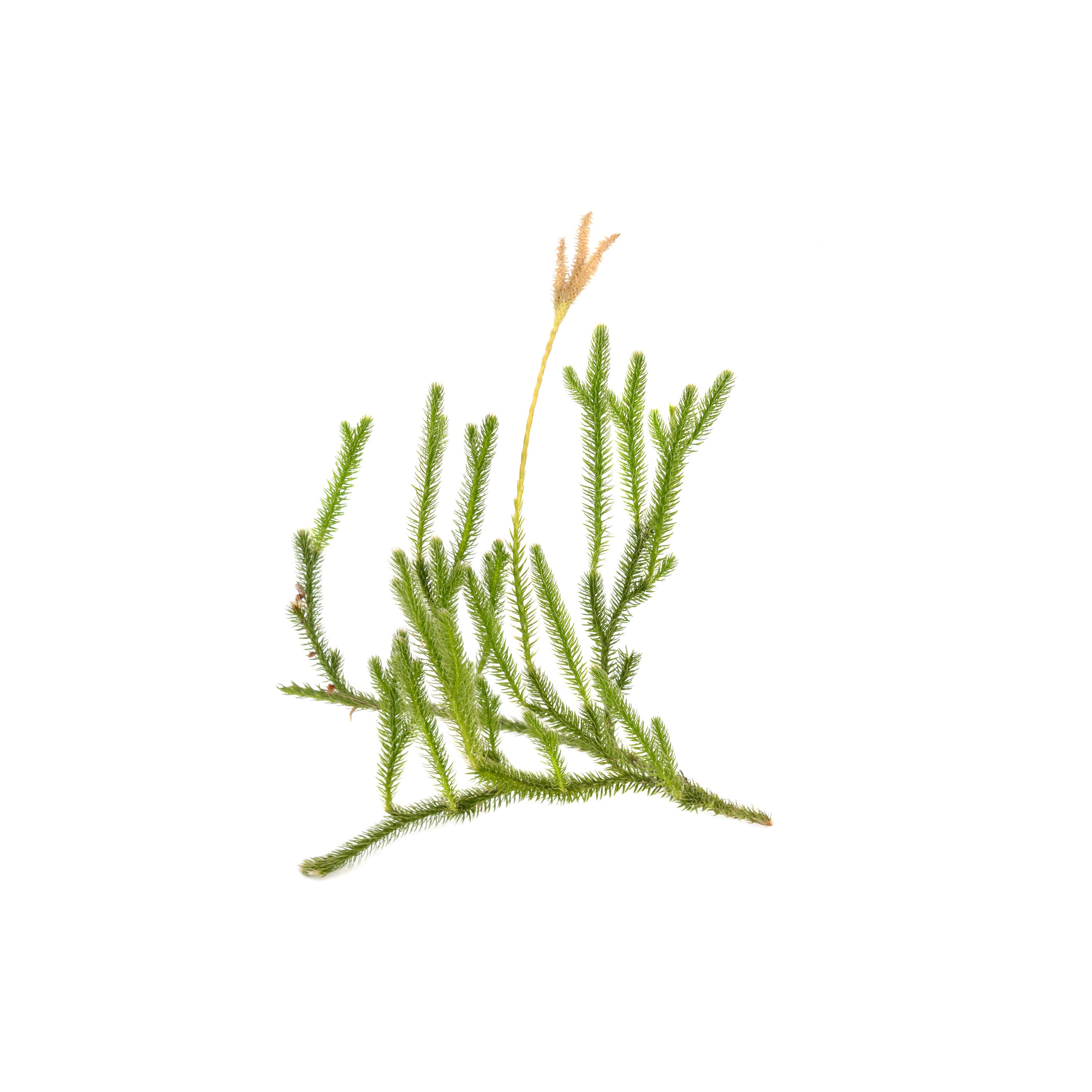
Chinese clubmoss (Huperzia serrata) — the source of huperzine-A, used as a nootropic and for memory and Alzheimer's support.
What Is Chinese Club Moss?
Chinese clubmoss (otherwise known as Chinese firmoss) is a type of clubmoss found in subtropical parts of Southern China, India, and the United States.
The whole herb has a long history of traditional use as a cognitive aid and for neurological complaints, but almost all of the modern interest is in a single molecule it contains: the alkaloid huperzine-A.
Huperzine-A is a popular addition to nootropic formulas for its ability to inhibit acetylcholinesterase — slowing the breakdown of the neurotransmitter acetylcholine. Its potency is unusual: therapeutic doses are only 50–400 micrograms of the isolated alkaloid, not of a bulk extract, which is why the crude plant is almost never used as such.
Huperzine-A is sometimes stacked with other nootropics, such as the racetams (piracetam, aniracetam) or choline donors like alpha-GPC, though these combinations rest on shared mechanism rather than trial evidence.
What Is Chinese Clubmoss Used For?
Clubmoss isn’t commonly used in Western herbal medicine but has a long history of use in traditional Chinese medicine. Its most common modern uses are for neurological disorders — primarily memory loss and Alzheimer’s disease.
The nootropic supplement huperzine-A is marketed for focus and memory. Contrary to a common impression, the compound is not lightly studied: it has been through 20+ randomised controlled trials, several meta-analyses and three Cochrane reviews. The honest limitation is not the volume of evidence but its quality — the positive trials are concentrated in China with a high risk of bias, and the one rigorously conducted Western trial was negative on its primary endpoint.
Traditional Uses
Usage of this herb can be traced back to the Tang dynasty in China, where it was mainly used to treat rheumatism, colds and flus, and to relax the muscles and tendons 1Reference 1ReviewHuperzine A from Huperzia species — an ethnopharmacological review — reviewView study →.
More modern Chinese medicinal uses include bruises, sprains, poor circulation, swelling, organophosphate poisoning, myasthenia gravis, schizophrenia, and Alzheimer’s disease 1,32Reference 1ReviewHuperzine A from Huperzia species — an ethnopharmacological review — reviewView study →Reference 32ReviewEthnopharmacology of the club moss subfamily Huperzioideae — reviewView study →.
Botanical Information
All clubmosses differ from true mosses by their vascular structure — they are lycophytes, an ancient lineage of vascular plants. Like true mosses, Chinese clubmoss reproduces via spores rather than seeds.
These plants are slow-growing and only reach around 10 cm in height. Taxonomy in this group is confusing: older literature places the plant in the family “Huperziaceae,” but the genus Huperzia is now generally treated within the Lycopodiaceae, and misidentification between look-alike species is a documented problem 32Reference 32ReviewEthnopharmacology of the club moss subfamily Huperzioideae — reviewView study →.
Habitat, Ecology & Distribution
Huperzia serrata is broadly distributed across East and South Asia and beyond, and is readily found in subtropical zones. Because it is valued as a source of huperzine-A and grows slowly, it has been over-harvested in many places, and its natural resources are a genuine conservation concern 33Reference 33A survey of potential huperzine A natural resources in China: the HuperziaceaeView study →.
Phytochemistry
The defining constituents of Huperzia serrata are its Lycopodium alkaloids. Chief among them is huperzine-A, a lycodine-type alkaloid that is the marker compound and the main driver of the herb’s cognitive-enhancing, anticholinesterase activity 1Reference 1ReviewHuperzine A from Huperzia species — an ethnopharmacological review — reviewView study →. It is accompanied by the closely related huperzine-B, the lycopodine-type lycopodine, and fawcettimine-type alkaloids such as fordine 1Reference 1ReviewHuperzine A from Huperzia species — an ethnopharmacological review — reviewView study →.
Huperzine-A is present only in trace amounts — averaging roughly 0.08 mg/g (about 80 µg/g) of dry plant, with reported seasonal variation from around 75 µg/g in spring to 93 µg/g in autumn 33Reference 33A survey of potential huperzine A natural resources in China: the HuperziaceaeView study →. This extreme potency-to-concentration ratio is why the herb is almost always sold as a concentrated, standardised extract rather than as crude material; content also varies markedly with plant part, chemotype, provenance and — critically — correct species identification 32,33Reference 32ReviewEthnopharmacology of the club moss subfamily Huperzioideae — reviewView study →Reference 33A survey of potential huperzine A natural resources in China: the HuperziaceaeView study →. Beyond the alkaloids, Huperzia serrata also contains triterpenes, flavonoids, flavones and phenolic acids 1Reference 1ReviewHuperzine A from Huperzia species — an ethnopharmacological review — reviewView study →.
Constituent Summary
Figures are µg/g of dry whole plant (huperzine-A); other classes reported qualitatively. Alkaloid content varies markedly with plant part, season and provenance.
Alkaloid4 compounds1 with data
Terpenoid1 compoundno data
Phenolic2 compoundsno data
Pharmacology & Research
For a herb this obscure in the garden, the literature is surprisingly deep — but it is almost entirely the story of one molecule, huperzine-A, not of the plant. Uniquely among the botanicals on this site, that molecule has been through human randomised controlled trials, several meta-analyses, and three separate Cochrane reviews, so the evidence tier for its lead indication (Alzheimer’s cognition) is genuinely clinical rather than preclinical 1,2,3,4Reference 1ReviewHuperzine A from Huperzia species — an ethnopharmacological review — reviewView study →Reference 2RCTA phase II trial of huperzine A in mild to moderate Alzheimer disease — randomised controlled trialView study →Reference 3Systematic reviewHuperzine A for Alzheimer’s disease — systematic review (Cochrane)View study →Reference 4Meta-analysisHuperzine A for Alzheimer’s disease: a systematic review and meta-analysis of randomised clinical trials — meta-analysisView study →. The signal, however, is softer than the volume suggests: the trials cluster in China with a high risk of bias, and the one rigorously conducted US trial missed its primary endpoint 2,3,4Reference 2RCTA phase II trial of huperzine A in mild to moderate Alzheimer disease — randomised controlled trialView study →Reference 3Systematic reviewHuperzine A for Alzheimer’s disease — systematic review (Cochrane)View study →Reference 4Meta-analysisHuperzine A for Alzheimer’s disease: a systematic review and meta-analysis of randomised clinical trials — meta-analysisView study →. The most interesting emerging work is outside dementia entirely — a purified-huperzine-A anticonvulsant is in Phase 2, and the compound has a decades-long military research trail as a nerve-agent pretreatment 12,13,15Reference 12AnimalHuperzine A suppresses absence seizures in the genetic absence epilepsy rat from Strasbourg (GAERS) model — rat in vivoView study →Reference 13AnimalHuperzine A attenuates epileptic seizures via enhancing dCA1-projecting septal cholinergic transmission — mouse in vivoView study →Reference 15Clinical trialProtection of red blood cell acetylcholinesterase by oral huperzine A against ex vivo soman exposure — clinical trial / ex vivoView study →. Throughout, remember that essentially all of this evidence is on the isolated alkaloid at microgram doses; the crude clubmoss is almost never used as such, because huperzine-A is present only in trace amounts — on the order of tens of micrograms per gram of dried plant (roughly 0.08 mg/g in the source most often quoted, though the exact primary quantitation is not well pinned down and varies with species, season and provenance) 33Reference 33A survey of potential huperzine A natural resources in China: the HuperziaceaeView study →.
- Best-supported: symptomatic cognitive benefit in Alzheimer’s disease, backed by human RCTs, meta-analyses and Cochrane reviews — though quality-limited and not confirmed by the pivotal US trial 2,3,4Reference 2RCTA phase II trial of huperzine A in mild to moderate Alzheimer disease — randomised controlled trialView study →Reference 3Systematic reviewHuperzine A for Alzheimer’s disease — systematic review (Cochrane)View study →Reference 4Meta-analysisHuperzine A for Alzheimer’s disease: a systematic review and meta-analysis of randomised clinical trials — meta-analysisView study →; and adjunctive cognitive improvement in schizophrenia from a meta-analysis of Chinese RCTs 9Reference 9Meta-analysisAdjunctive huperzine A for cognitive deficits in schizophrenia: a systematic review and meta-analysis — meta-analysisView study →.
- Emerging, worth watching: anti-seizure activity, with consistent animal data and a purified huperzine-A drug (SPN-817) now in clinical trials 12,13Reference 12AnimalHuperzine A suppresses absence seizures in the genetic absence epilepsy rat from Strasbourg (GAERS) model — rat in vivoView study →Reference 13AnimalHuperzine A attenuates epileptic seizures via enhancing dCA1-projecting septal cholinergic transmission — mouse in vivoView study →; and organophosphate/nerve-agent prophylaxis, with replicated preclinical protection and human enzyme-level data 15,16Reference 15Clinical trialProtection of red blood cell acetylcholinesterase by oral huperzine A against ex vivo soman exposure — clinical trial / ex vivoView study →Reference 16AnimalTime course, behavioral safety, and protective efficacy of centrally active reversible acetylcholinesterase inhibitors in cynomolgus macaques — animal in vivoView study →.
- Mechanistically thin: antioxidant neuroprotection and Parkinson’s disease rest on animal and cell models only, with no human data 21,26Reference 21AnimalHuperzine A protects against traumatic brain injury through anti-oxidative effects via the Nrf2-ARE pathway — mouse in vivoView study →Reference 26AnimalHuperzine A injection ameliorates motor and cognitive abnormalities via regulating multiple pathways in a murine model of Parkinson’s disease — mouse in vivoView study →.
- The caveat: the whole herb has barely been studied — nearly everything is the isolated alkaloid; trials skew Chinese with high bias risk, there is no long-term safety data, and the best-designed trial was negative on its primary outcome 2,4Reference 2RCTA phase II trial of huperzine A in mild to moderate Alzheimer disease — randomised controlled trialView study →Reference 4Meta-analysisHuperzine A for Alzheimer’s disease: a systematic review and meta-analysis of randomised clinical trials — meta-analysisView study →.
0. Evidence by indication
Support is an experimental score I’m building — a composite weighted by study type (human > animal > in vitro > review) and study volume. It’s a beta: a fast way to rank strength of evidence at a glance, not a validated metric, and I’ll keep honing the formula over time. Each indication name links down to its write-up.
| Indication | Support | Rests on |
|---|---|---|
| Alzheimer’s disease | ███████░░░ 74% | Human RCTs, meta-analyses & 3 Cochrane reviews — but high bias risk and a negative US trial; isolated huperzine-A, not the herb. |
| Cognitive deficits in schizophrenia | ██████░░░░ 62% | One meta-analysis of 12 adjunctive RCTs (n≈1,117), all conducted in China; positive but geographically narrow. |
| Anti-seizure / anticonvulsant | ██████░░░░ 57% | Replicated across multiple rodent seizure models; a purified huperzine-A drug is in Phase 2, but no human efficacy results yet. |
| Organophosphate & nerve-agent prophylaxis | █████░░░░░ 54% | Replicated preclinical protection plus human enzyme-protection data; no (ethical) human challenge trials possible. |
| Vascular dementia | █████░░░░░ 52% | Small RCTs signal benefit, but the Cochrane review found the evidence too thin and low-quality to conclude. |
| Neuroprotection (antioxidant / anti-inflammatory) | █████░░░░░ 48% | Consistent Nrf2/antioxidant and anti-inflammatory effects across animal and cell injury models; entirely preclinical. |
| Parkinson’s disease | ████░░░░░░ 40% | Mouse MPTP models only — protective signal, no human data. |
| Cognitive enhancement (healthy adults) | ████░░░░░░ 36% | One small, old adolescent RCT; unreplicated and prone to publication bias. |
1. Alzheimer’s disease
This is the herb’s flagship indication and the reason huperzine-A is a licensed anti-Alzheimer’s drug in China. As a reversible, blood-brain-barrier-penetrant acetylcholinesterase inhibitor, it works on the same cholinergic principle as donepezil or galantamine 1,8Reference 1ReviewHuperzine A from Huperzia species — an ethnopharmacological review — reviewView study →Reference 8ReviewHuperzine A: is it an effective disease-modifying drug for Alzheimer’s disease? — reviewView study →. A 2013 systematic review and meta-analysis of 20 RCTs (1,823 participants) found significant improvement in cognition (MMSE, Hasegawa and Wechsler scales) and activities of daily living versus placebo — but explicitly flagged that most included trials carried a high risk of bias 4Reference 4Meta-analysisHuperzine A for Alzheimer’s disease: a systematic review and meta-analysis of randomised clinical trials — meta-analysisView study →. Earlier multicentre Chinese RCTs, such as an 8-week trial at 0.2 mg/day, reported roughly 58% of treated patients improving versus 36% on placebo 5Reference 5RCTEfficacy of tablet huperzine-A on memory, cognition, and behavior in Alzheimer’s disease — randomised controlled trialView study →. The honest counterweight is the best-designed trial to date: a US Alzheimer’s Disease Cooperative Study Phase II RCT (n=210, huperzine-A 200 or 400 µg twice daily) found no effect on its primary cognitive endpoint (ADAS-Cog at 16 weeks) at the 200 µg dose, with only a weak secondary signal at the higher 400 µg dose 2Reference 2RCTA phase II trial of huperzine A in mild to moderate Alzheimer disease — randomised controlled trialView study →. A Cochrane review reached a similarly cautious verdict; a separate Cochrane review of huperzine-A for mild cognitive impairment found the evidence insufficient there too, and an overview of systematic reviews concluded benefit on cognition and daily function in AD but insufficient evidence elsewhere 3,7,20Reference 3Systematic reviewHuperzine A for Alzheimer’s disease — systematic review (Cochrane)View study →Reference 7Systematic reviewThe effects of Huperzine A on dementia and mild cognitive impairment: an overview of systematic reviews — systematic reviewView study →Reference 20Systematic reviewHuperzine A for mild cognitive impairment — systematic review (Cochrane)View study →.
Gap: the positive data are dominated by short, biased Chinese trials; the one rigorous Western trial was negative on its primary endpoint, and no trial has tested long-term or disease-modifying outcomes.
2. Cognitive deficits in schizophrenia
Because the cholinergic system contributes to the cognitive impairment seen in schizophrenia, huperzine-A has been tested as an add-on to antipsychotics. A 2016 systematic review and meta-analysis pooled 12 RCTs (n≈1,117, average 11.7 weeks) and found huperzine-A augmentation outperformed comparators on memory quotient and several intelligence and executive-function measures 9Reference 9Meta-analysisAdjunctive huperzine A for cognitive deficits in schizophrenia: a systematic review and meta-analysis — meta-analysisView study →. The effect sizes on memory were meaningful, and the compound was well tolerated as an adjunct. The decisive limitation is that every included trial was conducted in China, and the pooled quality was moderate at best 9Reference 9Meta-analysisAdjunctive huperzine A for cognitive deficits in schizophrenia: a systematic review and meta-analysis — meta-analysisView study →.
Gap: no trials outside China and no replication in a Western population; the benefit is on cognition specifically, not on core psychotic symptoms.
3. Anti-seizure / anticonvulsant
This is the most active area of new drug development around the molecule. Huperzine-A suppresses seizures across a broad range of rodent models — pentylenetetrazole, maximal electroshock, kainic acid, kindling, NMDA-induced status epilepticus, and genetic absence epilepsy — apparently through a combination of cholinergic modulation and enhanced GABA-mediated cortical inhibition, not simply acetylcholinesterase inhibition 10,11,12,13Reference 10AnimalHuperzine A prophylaxis against pentylenetetrazole-induced seizures in rats is associated with increased cortical inhibition — rat in vivoView study →Reference 11AnimalColeman BR, Ratcliffe RH, Oguntayo SA, et al. (2008). [+]-Huperzine A treatment protects against N-methyl-D-aspartate-induced seizure/status epilepticus in rats — rat in vivo. Chem Biol Interact. https://pubmed.ncbi.nlm.nih.gov/18588864/View study →Reference 12AnimalHuperzine A suppresses absence seizures in the genetic absence epilepsy rat from Strasbourg (GAERS) model — rat in vivoView study →Reference 13AnimalHuperzine A attenuates epileptic seizures via enhancing dCA1-projecting septal cholinergic transmission — mouse in vivoView study →. In the pentylenetetrazole rat model it raised the threshold to first myoclonus and increased measured intracortical inhibition 10Reference 10AnimalHuperzine A prophylaxis against pentylenetetrazole-induced seizures in rats is associated with increased cortical inhibition — rat in vivoView study →; in the genetic absence epilepsy (GAERS) model it potently suppressed absence seizures, albeit briefly 12Reference 12AnimalHuperzine A suppresses absence seizures in the genetic absence epilepsy rat from Strasbourg (GAERS) model — rat in vivoView study →. A purified huperzine-A pharmaceutical (developmental code SPN-817) is now in Phase 2 trials for focal epilepsy, which is why this preclinically-grounded indication is worth watching 14Reference 14ReviewHuperzine A: a promising anticonvulsant, disease modifying, and memory enhancing treatment option in Alzheimer’s disease — reviewView study →.
Gap: all efficacy evidence is preclinical — the human anticonvulsant trials are ongoing, and no efficacy results have been published; the short duration of action seen in animals is an open question.
4. Organophosphate & nerve-agent prophylaxis
Because huperzine-A binds acetylcholinesterase reversibly and with a long-lived complex, it can occupy and protect the enzyme from irreversible phosphonylation by organophosphate pesticides and nerve agents — the rationale for its long-standing military research interest 17Reference 17In vitroThe NMDA receptor ion channel: a site for binding of huperzine A — in vitroView study →. In a human Phase Ib study, oral huperzine-A produced dose-dependent protection of red-blood-cell acetylcholinesterase against ex vivo soman exposure, with 30-40% enzyme inhibition at 100 µg rising above 50% at 400 µg 15Reference 15Clinical trialProtection of red blood cell acetylcholinesterase by oral huperzine A against ex vivo soman exposure — clinical trial / ex vivoView study →. In cynomolgus macaques it was about 88 times more potent than galantamine as a centrally active reversible inhibitor, and its ability to block the NMDA channel adds a second, anti-excitotoxic layer relevant to nerve-agent seizures 16,17Reference 16AnimalTime course, behavioral safety, and protective efficacy of centrally active reversible acetylcholinesterase inhibitors in cynomolgus macaques — animal in vivoView study →Reference 17In vitroThe NMDA receptor ion channel: a site for binding of huperzine A — in vitroView study →.
Gap: for obvious ethical reasons there are no human efficacy trials against actual nerve-agent exposure — the human evidence stops at enzyme-protection biomarkers, and clinical superiority over existing pretreatments is unproven.
5. Vascular dementia
Cholinergic deficits also feature in vascular dementia, and small trials have tested huperzine-A here too. A randomised, double-blind, placebo-controlled trial in 78 patients with mild-to-moderate vascular dementia (0.1 mg twice daily for 12 weeks) reported significant improvement in MMSE, clinical dementia rating and daily-living scores versus placebo, with no serious adverse events 18Reference 18RCTTreatment with huperzine A improves cognition in vascular dementia patients — randomised controlled trialView study →. A meta-analysis combining AD and vascular dementia trials found benefit in both, with possibly fewer side effects in the vascular group 6Reference 6Meta-analysisHuperzine A in the treatment of Alzheimer’s disease and vascular dementia: a meta-analysis — meta-analysisView study →. The Cochrane review of huperzine-A for vascular dementia, however, could include only limited low-quality data and did not find sufficient evidence to recommend it 19Reference 19Systematic reviewHuperzine A for vascular dementia — systematic review (Cochrane)View study →.
Gap: the positive RCT is single and small; the Cochrane assessment judged the overall evidence base too thin and low-quality to support a conclusion.
6. Neuroprotection (antioxidant / anti-inflammatory)
Beyond enzyme inhibition, huperzine-A shows a consistent protective profile in injury models that is often described as “non-cholinergic” 8Reference 8ReviewHuperzine A: is it an effective disease-modifying drug for Alzheimer’s disease? — reviewView study →. In a mouse traumatic brain injury model it reduced oxidative stress markers (lowering malondialdehyde, raising glutathione peroxidase) by activating the Nrf2-ARE antioxidant pathway 21Reference 21AnimalHuperzine A protects against traumatic brain injury through anti-oxidative effects via the Nrf2-ARE pathway — mouse in vivoView study →. It reduces amyloid-beta-induced oxidative injury, up-regulates nerve growth factor, and in cell studies shifts amyloid precursor protein processing away from the amyloidogenic route (down-regulating BACE1, up-regulating ADAM10) 8,25Reference 8ReviewHuperzine A: is it an effective disease-modifying drug for Alzheimer’s disease? — reviewView study →Reference 25In vitroHuperzine A regulates the physiological homeostasis of amyloid precursor protein proteolysis and tau protein conformation — in vitro / in silicoView study →. It also dampens inflammation — protecting against lipopolysaccharide- and sepsis-induced acute lung injury via the α7-nicotinic receptor and by suppressing ferroptosis 23,24Reference 23AnimalHuperzine A ameliorates sepsis-induced acute lung injury by suppressing inflammation and oxidative stress via α7 nicotinic acetylcholine receptor — mouse in vivoView study →Reference 24In vitroHuperzine A protected against ferroptosis via activating PI3K/Akt signaling in lipopolysaccharide-induced acute lung injury — in vivo / in vitroView study →. The total alkaloid fraction of the herb, not just the isolated molecule, shows antioxidant and anti-amnesic activity in scopolamine-treated mice 22Reference 22AnimalNeuroprotective effects of total alkaloids fraction of Huperzia serrata on scopolamine-induced neurodegenerative animals — mouse in vivoView study →.
Gap: every one of these findings is in animals or cell lines; none of the antioxidant or anti-inflammatory neuroprotection has been demonstrated in humans.
7. Parkinson’s disease
The evidence here is the thinnest of the neurological indications. In an MPTP-induced mouse model of Parkinson’s disease, a huperzine-A injection improved motor and cognitive deficits and protected dopaminergic neurons from degeneration, apparently by modulating inflammatory and other pathways 26Reference 26AnimalHuperzine A injection ameliorates motor and cognitive abnormalities via regulating multiple pathways in a murine model of Parkinson’s disease — mouse in vivoView study →. Related work suggests acetylcholinesterase status influences apoptosis in dopaminergic neurons 27Reference 27AnimalAcetylcholinesterase deficiency decreases apoptosis in dopaminergic neurons — animal in vivoView study →. Huperzine-A is the active compound in each case.
Gap: only mouse data exist — no human trials in Parkinson’s disease have been conducted, and the cholinergic rationale is less direct than in Alzheimer’s disease.
8. Cognitive enhancement (healthy adults)
This is the popular nootropic claim, and it is the least substantiated. The most-cited human study is a 1999 double-blind RCT in 34 matched pairs of adolescent students complaining of memory problems, where huperzine-A (50 µg twice daily for 4 weeks) improved memory quotient and language scores versus placebo 28Reference 28RCTHuperzine-A capsules enhance memory and learning performance in 34 pairs of matched adolescent students — randomised controlled trialView study →. An older trial reported benefit in senile simple memory disorders 29Reference 29RCTDrug evaluation of huperzine A in the treatment of senile memory disorders — randomised controlled trialView study →, and controlled human work confirms the compound produces measurable central cholinesterase inhibition 30Reference 30RCTPhysiological and neurobehavioral effects of cholinesterase inhibition in healthy adults — placebo-controlled human studyView study →. But there is no modern, adequately powered trial of cognitive enhancement in healthy adults.
Gap: the only supportive human trial is small, decades old, and in adolescents; the widespread use as a general “focus” supplement in healthy adults rests on essentially no direct evidence.
Mechanisms
| Mechanism | Drives | Key compounds |
|---|---|---|
| Reversible acetylcholinesterase inhibition (BBB-penetrant, selective for AChE over BChE) | Alzheimer’s, vascular dementia, schizophrenia cognition, organophosphate prophylaxis | huperzine-A |
| NMDA-receptor channel antagonism | anti-seizure, neuroprotection against excitotoxicity | huperzine-A |
| Nrf2-ARE activation, ↓ lipid peroxidation, ↑ antioxidant enzymes | neuroprotection, antioxidant effects | huperzine-A |
| ↑ nerve growth factor; shift in APP processing (↓ BACE1, ↑ ADAM10, ↓ Aβ) | Alzheimer’s (disease-modifying hypothesis) | huperzine-A |
| α7-nicotinic receptor activation, anti-inflammatory (↓ NF-κB, IL-6, TNF-α) | neuroprotection, anti-inflammatory effects | huperzine-A |
Clinical trials
Unlike most herbs on this site, huperzine-A has a real registered-trial footprint — completed Phase II trials in Alzheimer’s disease (the US ADCS trial) and schizophrenia, an active Phase 2 anticonvulsant programme (SPN-817), and one terminated traumatic-brain-injury study — though the crude herb itself has never been trialled.
| Completed | Planned | Terminated | Preclinical |
|---|---|---|---|
| ~10 | ~7 | 1 | 100+ |
Last checked: July 2026.
Dosage
In research, Chinese clubmoss is essentially never given as a crude herb — it is dosed as the isolated alkaloid huperzine-A, in microgram amounts, because the plant contains so little of it. Oral huperzine-A is well absorbed and reaches the brain readily, which is why such small doses are active 31Reference 31RCTPharmacokinetics and tolerability of oral dosage forms of huperzine A in healthy Chinese male volunteers — randomised crossover studyView study →. The doses below are the research doses used in the trials cited above; they are not recommendations.
| Indication | Preparation | Dose | Est. dried-herb equivalent | Source |
|---|---|---|---|---|
| Alzheimer’s disease | Standardised huperzine-A tablet/capsule | 0.2 mg/day (≈0.1 mg twice daily); US trial tested 200–400 µg twice daily | ~1.3–5 g dried plant/day* | 2,5Reference 2RCTA phase II trial of huperzine A in mild to moderate Alzheimer disease — randomised controlled trialView study →Reference 5RCTEfficacy of tablet huperzine-A on memory, cognition, and behavior in Alzheimer’s disease — randomised controlled trialView study → |
| Vascular dementia | Standardised huperzine-A | 0.1 mg twice daily (0.2 mg/day) for 12 weeks | ~2.5 g dried plant/day* | 18Reference 18RCTTreatment with huperzine A improves cognition in vascular dementia patients — randomised controlled trialView study → |
| Cognitive enhancement (adolescents) | Huperzine-A capsule | 50 µg twice daily (0.1 mg/day) for 4 weeks | ~1.3 g dried plant/day* | 28Reference 28RCTHuperzine-A capsules enhance memory and learning performance in 34 pairs of matched adolescent students — randomised controlled trialView study → |
| Organophosphate prophylaxis (Phase Ib) | Oral huperzine-A | 100–400 µg twice daily (escalating) | ~1.3–5 g dried plant/day* | 15Reference 15Clinical trialProtection of red blood cell acetylcholinesterase by oral huperzine A against ex vivo soman exposure — clinical trial / ex vivoView study → |
| Senile simple memory disorder | Huperzine-A (IM) | 0.03–0.05 mg twice daily | not applicable (injection) | 29Reference 29RCTDrug evaluation of huperzine A in the treatment of senile memory disorders — randomised controlled trialView study → |
*Estimate only, not a conversion factor or recommendation. Assumes dried whole plant ≈ 80 µg huperzine-A per gram (the ~0.08 mg/g measured content 33Reference 33A survey of potential huperzine A natural resources in China: the HuperziaceaeView study →); e.g. 0.2 mg/day ÷ 0.08 mg/g ≈ 2.5 g dried plant. In practice the herb is never dosed as crude material for this reason — the standardised extract is used. The wide range reflects the low and variable alkaloid content.
Traditional Dosage
Traditional practice used the whole plant rather than a purified alkaloid, and no standardised traditional dose is well documented in the primary literature.
| System | Preparation | Dose |
|---|---|---|
| Traditional Chinese medicine | Dried whole plant, decoction | Historically used as a crude decoction for rheumatism, contusions, swelling and “relaxing the sinews”; no standardised dose is well documented 1Reference 1ReviewHuperzine A from Huperzia species — an ethnopharmacological review — reviewView study → |
Safety
Huperzine-A is a potent, reversible acetylcholinesterase inhibitor, and its adverse effects are the predictable cholinergic ones: nausea and gastrointestinal upset, dizziness, sweating, and — because it slows heart rate — the potential for bradycardia; in Alzheimer’s trials adverse effects were generally mild-to-moderate and transient at 200–400 µg twice daily 2,4,6Reference 2RCTA phase II trial of huperzine A in mild to moderate Alzheimer disease — randomised controlled trialView study →Reference 4Meta-analysisHuperzine A for Alzheimer’s disease: a systematic review and meta-analysis of randomised clinical trials — meta-analysisView study →Reference 6Meta-analysisHuperzine A in the treatment of Alzheimer’s disease and vascular dementia: a meta-analysis — meta-analysisView study →. As a cholinergic agent it is expected to interact with other cholinesterase inhibitors (donepezil, rivastigmine, galantamine, and the anticholinesterase drugs used in glaucoma or myasthenia gravis), with anticholinergic drugs (which oppose its action), and with cholinergic or bradycardia-inducing cardiac drugs such as beta-blockers — these interactions are pharmacologically predicted rather than formally trialled, so caution is warranted. It should be avoided in people with bradycardia or other cardiac-conduction problems, epilepsy or seizure disorders (paradoxically, despite its anticonvulsant research), asthma or chronic obstructive pulmonary disease (cholinergic bronchoconstriction), peptic ulcer disease, and urinary or gastrointestinal obstruction. The crude whole herb has essentially no formal safety data, and no long-term human safety studies of huperzine-A exist 1,8Reference 1ReviewHuperzine A from Huperzia species — an ethnopharmacological review — reviewView study →Reference 8ReviewHuperzine A: is it an effective disease-modifying drug for Alzheimer’s disease? — reviewView study →.
Note on quality: huperzine-A is a licensed anti-Alzheimer’s drug in China but is sold as a dietary supplement in the United States, where product content and purity vary widely.
Scope of this review: herb–drug interactions have not been formally trialled — the interactions above are mechanism-based predictions from huperzine-A’s cholinergic activity (plus a completed trial that combined it with rivastigmine). Treat them as predicted, not established; absence of reported problems is not evidence of safety.
Pregnancy & lactation
Avoid. Huperzine-A has not been studied in pregnancy or lactation, and as a blood-brain-barrier-penetrant cholinesterase inhibitor with systemic cholinergic activity it should not be used by anyone who is pregnant or breastfeeding. There is no safety data either way — this is a precautionary avoidance based on the pharmacology and the absence of study, not evidence of harm 1Reference 1ReviewHuperzine A from Huperzia species — an ethnopharmacological review — reviewView study →.
References
- Ma X, Tan C, Zhu D, Gang DR, Xiao P. (2007). Huperzine A from Huperzia species — an ethnopharmacological review — review. J Ethnopharmacol. https://pubmed.ncbi.nlm.nih.gov/17644292/
- Rafii MS, Walsh S, Little JT, et al. (2011). A phase II trial of huperzine A in mild to moderate Alzheimer disease — randomised controlled trial. Neurology. https://pubmed.ncbi.nlm.nih.gov/21502597/
- Li J, Wu HM, Zhou RL, Liu GJ, Dong BR. (2008). Huperzine A for Alzheimer’s disease — systematic review (Cochrane). Cochrane Database Syst Rev. https://pubmed.ncbi.nlm.nih.gov/18425924/
- Yang G, Wang Y, Tian J, Liu JP. (2013). Huperzine A for Alzheimer’s disease: a systematic review and meta-analysis of randomised clinical trials — meta-analysis. PLoS One. https://pubmed.ncbi.nlm.nih.gov/24086396/
- Xu SS, Gao ZX, Weng Z, et al. (1995). Efficacy of tablet huperzine-A on memory, cognition, and behavior in Alzheimer’s disease — randomised controlled trial. Zhongguo Yao Li Xue Bao. https://pubmed.ncbi.nlm.nih.gov/8701750/
- Xing SH, Zhu CX, Zhang R, An L. (2014). Huperzine A in the treatment of Alzheimer’s disease and vascular dementia: a meta-analysis — meta-analysis. Evid Based Complement Alternat Med. https://pubmed.ncbi.nlm.nih.gov/24639880/
- Ghassab-Abdollahi N, Mobasseri K, Dehghani Ahmadabad A, et al. (2021). The effects of Huperzine A on dementia and mild cognitive impairment: an overview of systematic reviews — systematic review. Phytother Res. https://pubmed.ncbi.nlm.nih.gov/33851462/
- Qian ZM, Ke Y. (2014). Huperzine A: is it an effective disease-modifying drug for Alzheimer’s disease? — review. Front Aging Neurosci. https://pubmed.ncbi.nlm.nih.gov/25191267/
- Zheng W, Xiang YQ, Ungvari GS, et al. (2016). Adjunctive huperzine A for cognitive deficits in schizophrenia: a systematic review and meta-analysis — meta-analysis. Hum Psychopharmacol. https://pubmed.ncbi.nlm.nih.gov/27302211/
- Gersner R, Ekstein D, Dhamne SC, Schachter SC, Rotenberg A. (2015). Huperzine A prophylaxis against pentylenetetrazole-induced seizures in rats is associated with increased cortical inhibition — rat in vivo. Epilepsy Res. https://pubmed.ncbi.nlm.nih.gov/26432930/
- Coleman BR, Ratcliffe RH, Oguntayo SA, et al. (2008). [+]-Huperzine A treatment protects against N-methyl-D-aspartate-induced seizure/status epilepticus in rats — rat in vivo. Chem Biol Interact. https://pubmed.ncbi.nlm.nih.gov/18588864/
- Casillas-Espinosa PM, Wang Y, Vandenberg S, et al. (2024). Huperzine A suppresses absence seizures in the genetic absence epilepsy rat from Strasbourg (GAERS) model — rat in vivo. Epilepsia Open. https://pubmed.ncbi.nlm.nih.gov/39096485/
- Wang Y, et al. (2025). Huperzine A attenuates epileptic seizures via enhancing dCA1-projecting septal cholinergic transmission — mouse in vivo. Acta Pharmacol Sin. https://pubmed.ncbi.nlm.nih.gov/40140526/
- Damar U, Gersner R, Johnstone JT, Schachter S, Rotenberg A. (2017). Huperzine A: a promising anticonvulsant, disease modifying, and memory enhancing treatment option in Alzheimer’s disease — review. Med Hypotheses. https://pubmed.ncbi.nlm.nih.gov/28110700/
- Haigh JR, Johnston SR, Peters BM, et al. (2008). Protection of red blood cell acetylcholinesterase by oral huperzine A against ex vivo soman exposure — clinical trial / ex vivo. Chem Biol Interact. https://pubmed.ncbi.nlm.nih.gov/18572153/
- Hamilton LR, Mendoza LL, Hulet SW, et al. (2017). Time course, behavioral safety, and protective efficacy of centrally active reversible acetylcholinesterase inhibitors in cynomolgus macaques — animal in vivo. Neurochem Res. https://pubmed.ncbi.nlm.nih.gov/27900576/
- Gordon RK, Nigam SV, Weitz JA, et al. (2001). The NMDA receptor ion channel: a site for binding of huperzine A — in vitro. J Appl Toxicol. https://pubmed.ncbi.nlm.nih.gov/11920920/
- Xu ZQ, Liang XM, Juan-Wu, et al. (2012). Treatment with huperzine A improves cognition in vascular dementia patients — randomised controlled trial. Cell Biochem Biophys. https://pubmed.ncbi.nlm.nih.gov/21833673/
- Hao Z, Liu M, Liu Z, Lv D. (2009). Huperzine A for vascular dementia — systematic review (Cochrane). Cochrane Database Syst Rev. https://pubmed.ncbi.nlm.nih.gov/19370686/
- Yue J, Dong BR, Lin X, et al. (2012). Huperzine A for mild cognitive impairment — systematic review (Cochrane). Cochrane Database Syst Rev. https://pubmed.ncbi.nlm.nih.gov/23235666/
- Mei Z, Zheng P, Tan X, Wang Y, Situ B. (2021). Huperzine A protects against traumatic brain injury through anti-oxidative effects via the Nrf2-ARE pathway — mouse in vivo. Iran J Basic Med Sci. https://pubmed.ncbi.nlm.nih.gov/35096305/
- Dang TK, Hong SM, Dao VT, et al. (2023). Neuroprotective effects of total alkaloids fraction of Huperzia serrata on scopolamine-induced neurodegenerative animals — mouse in vivo. Phytother Res. https://pubmed.ncbi.nlm.nih.gov/36065796/
- Su J, et al. (2024). Huperzine A ameliorates sepsis-induced acute lung injury by suppressing inflammation and oxidative stress via α7 nicotinic acetylcholine receptor — mouse in vivo. Int Immunopharmacol. https://pubmed.ncbi.nlm.nih.gov/39159557/
- Shi J, et al. (2024). Huperzine A protected against ferroptosis via activating PI3K/Akt signaling in lipopolysaccharide-induced acute lung injury — in vivo / in vitro. Eur J Pharmacol. https://pubmed.ncbi.nlm.nih.gov/39278310/
- Wongjaikam S, et al. (2024). Huperzine A regulates the physiological homeostasis of amyloid precursor protein proteolysis and tau protein conformation — in vitro / in silico. Biology (Basel). https://pubmed.ncbi.nlm.nih.gov/39056711/
- Guo X, et al. (2023). Huperzine A injection ameliorates motor and cognitive abnormalities via regulating multiple pathways in a murine model of Parkinson’s disease — mouse in vivo. Eur J Pharmacol. https://pubmed.ncbi.nlm.nih.gov/37549727/
- Zhang X, Lu L, Liu S, et al. (2013). Acetylcholinesterase deficiency decreases apoptosis in dopaminergic neurons — animal in vivo. Int J Biochem Cell Biol. https://pubmed.ncbi.nlm.nih.gov/23201480/
- Sun QQ, Xu SS, Pan JL, Guo HM, Cao WQ. (1999). Huperzine-A capsules enhance memory and learning performance in 34 pairs of matched adolescent students — randomised controlled trial. Zhongguo Yao Li Xue Bao. https://pubmed.ncbi.nlm.nih.gov/10678121/
- Zhang RW, Tang XC, Han YY, et al. (1991). Drug evaluation of huperzine A in the treatment of senile memory disorders — randomised controlled trial. Zhongguo Yao Li Xue Bao. https://pubmed.ncbi.nlm.nih.gov/1781288/
- Morasch KC, Aaron CL, Moon JE, Gordon RK. (2015). Physiological and neurobehavioral effects of cholinesterase inhibition in healthy adults — placebo-controlled human study. Physiol Behav. https://pubmed.ncbi.nlm.nih.gov/25455867/
- Wu SL, et al. (2017). Pharmacokinetics and tolerability of oral dosage forms of huperzine A in healthy Chinese male volunteers — randomised crossover study. J Huazhong Univ Sci Technolog Med Sci. https://pubmed.ncbi.nlm.nih.gov/29058298/
- Xu M, Heidmarsson S, Olafsdottir ES, et al. (2019). Ethnopharmacology of the club moss subfamily Huperzioideae — review. J Ethnopharmacol. https://pubmed.ncbi.nlm.nih.gov/31376517/
- Ma X, Tan C, Zhu D, Gang DR. (2006). A survey of potential huperzine A natural resources in China: the Huperziaceae. J Ethnopharmacol. https://pubmed.ncbi.nlm.nih.gov/16203116/