Materia Medica
Albizzia
Albizzia lebbeck
Albizzia (Albizzia lebbeck) is a fast-acting herb for seasonal allergies, allergic asthma and rhinitis, calming mast cells and the histamine response.
What is Albizzia?
Albizzia is a great herb for seasonal allergies and upper respiratory tract infections.
The mechanism of action is on the mast cells directly, thus inhibiting the histamine release responsible for the symptoms of allergies. In order for this to be most effective, albizzia must be taken prior to exposure to the allergen.
Further uses of albizzia is towards diabetes through its protective effect on the islet of langerhans in the pancreas. These are the cells responsible for secreting insulin to the body.
Indications
- Allergic asthma
- Allergic Rhinitis
- Diabetes
- Eczema
- Hypercholesterolemia
- Male Infertility
What Is Albizzia Used For?
Albizzia is used as a herbal antihistamine and mild sedative. It’s primarily used in Western herbal medicine for coughs, asthma, and seasonal allergies.
Traditional Uses
Ayurveda
In the Ayurvedic medical system, albizia bark and flowers were used (and still are) to treat conditions such as bronchitis, asthma, allergic disorders, leprosy, eczema, pruritus, paralysis, inflammation of the gums, inflammatory conditions, arthritis, and infection of parasitic worms 1,11Reference 1A clinical guide to blending liquid herbs: Herbal formulations for the individual patientReference 11Siddha Materia Medica.
Traditional Chinese Medicine
Pinyin
He Huan Pi
Taste
Sweet 15Reference 15An illustrated Chinese materia medica
Energy
Neutral 15Reference 15An illustrated Chinese materia medica
Channels
Heart and Liver 15Reference 15An illustrated Chinese materia medica
Action
Releives depression, tranquilizes the mind, promotes blood circulation to induce swelling 15Reference 15An illustrated Chinese materia medica.
Indications
Depression, restlessness due to defficiency, poor memory, insomnia 15Reference 15An illustrated Chinese materia medica.
Combinations
Bai Zi ren (For depression) 15Reference 15An illustrated Chinese materia medica. Dang gui, Chuan Xiong (For fractures). Pu Gong Ying, Ye Ju Hua (For carbuncles).
Dose
10-15g decocted in water orally 15Reference 15An illustrated Chinese materia medica.
Botany
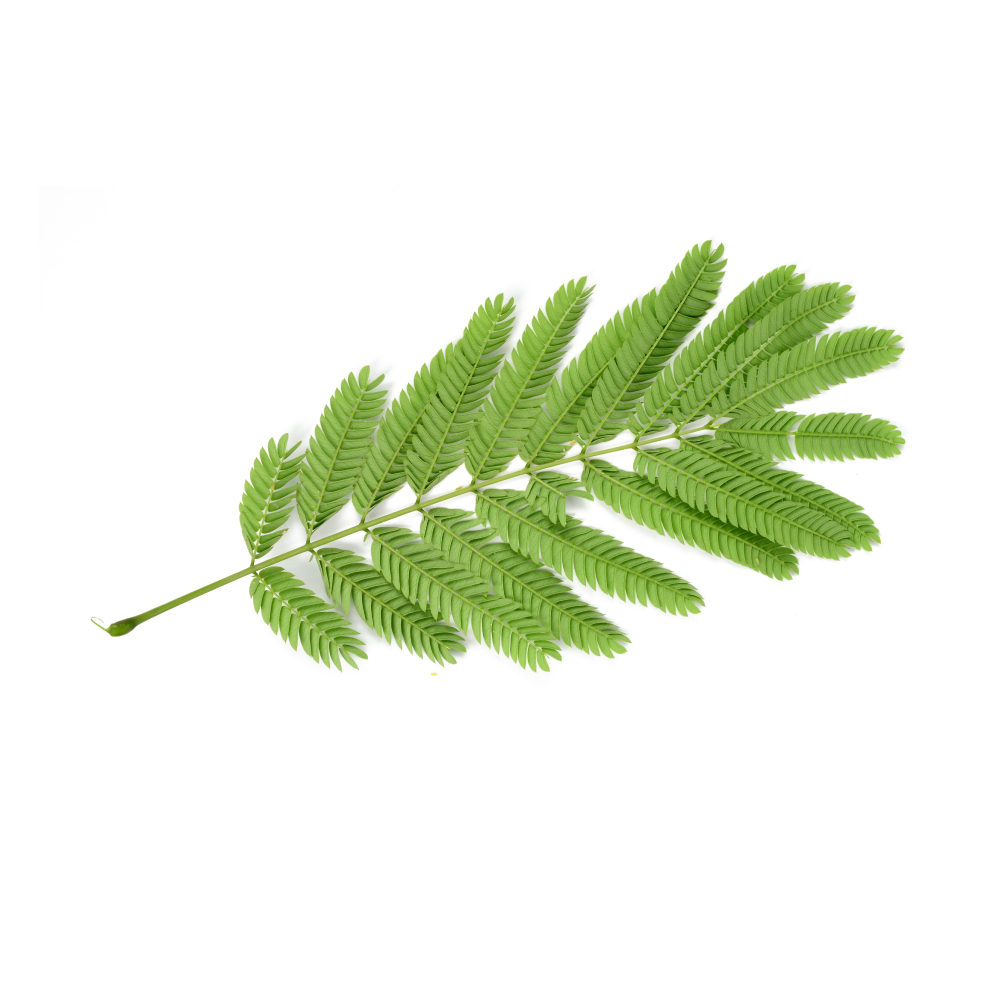
Albizzia (Albizia lebbeck — modern taxonomy favors the single-z spelling, though “Albizzia” persists in older herbal literature) is a fast-growing deciduous tree in the legume family (Fabaceae/Leguminosae), reaching 15–20 m with a broad, spreading crown and bipinnate leaves. It flowers in fragrant, pale yellow-green pompom-like clusters, and its flat, papery seed pods persist through winter and rattle in the wind — the source of its other common name, “woman’s tongue tree.” Nearly every continent has its own Albizia species, but the medicinal bark comes specifically from A. lebbeck.
Distribution
Albizia lebbeck is native to the Indian subcontinent, extending east to Myanmar. It has been planted so widely for shade, fodder and timber across the tropics and subtropics that it is now naturalized on most continents — a spread that carries an ecological cost in some regions: the species is rated a high invasion threat by Pacific Island Ecosystems at Risk, documented invading natural habitat in the Comoros archipelago (Mayotte, Réunion), and flagged as invasive by Florida and other authorities.
Growing Conditions
- Fast-growing, nitrogen-fixing deciduous tree, full sun.
- Suited to seasonally dry tropical/subtropical climates, roughly USDA zone 9–11.
- Full cultivation detail lives on the companion farm-wiki grow guide for Albizia lebbeck (link to be added once that project’s public URL is confirmed).
Phytochemistry
Albizzia’s anti-allergic, mast-cell-stabilising reputation rests on two groups: triterpenoid saponins (echinocystic-, oleanolic- and acacic-acid glycosides, e.g. the lebbeck-saponins) and a set of flavonoids, including the heartwood flavonol melanoxetin and the leucoanthocyanidins melacacidin and lebbecacidin 1,2Reference 1A clinical guide to blending liquid herbs: Herbal formulations for the individual patientReference 2Pharmacognostical Screening and Phytochemical Evaluation of Albizia lebbeck Benth. The bark and seeds also carry tannins, the cyclitol d-pinitol, and macrocyclic spermine (alkaloids) of the budmunchiamine type 2Reference 2Pharmacognostical Screening and Phytochemical Evaluation of Albizia lebbeck Benth.
The saponins share the triterpene sapogenin echinocystic acid on hydrolysis, which is thought to underlie much of the mast-cell and anti-inflammatory activity 2Reference 2Pharmacognostical Screening and Phytochemical Evaluation of Albizia lebbeck Benth.
Constituent Summary
Figures are for stem bark (mg/g of extract) unless noted; heartwood flavonoids are reported qualitatively. Quantities vary widely with plant part, source and extraction 2Reference 2Pharmacognostical Screening and Phytochemical Evaluation of Albizia lebbeck Benth.
Saponin1 compound1 with data
Triterpene1 compound1 with data
Flavonoid1 compound1 with data
Flavonol1 compound1 with data
Flavanol2 compounds2 with data
Tannin1 compound1 with data
Phenolic1 compoundno data
Amine1 compoundno data
Sugar alcohol1 compoundno data
Pharmacology & Medical Research
Allergies
A lot of research on albizia’s anti-allergic effects were conducted in the ’70s and ’80s which discovered that albizia was able to inhibit many of the early processes of sensitization. More specifically, albizia was reported to decrease the amount of T-cell, and B-cell activity. It’s also discovered to have a stabilizing effect on the mast cells. 1Reference 1A clinical guide to blending liquid herbs: Herbal formulations for the individual patient.
Albizzia has been shown to reduce asthma symptoms in 94% of patients in a single-blinded study 5Reference 5Clinical efficacy of Albizia lebbeck stem bark decoction on Bronchial asthma, International Journal of Pharmaceutical Science and Drug Research. These effects were thought to be due to albizzias ability to stabilize mast cells and prevent degranulation and subsequent release of histamine and leukotrienes. This has been proven to be possible through in vitro research 12Reference 12Effect of histamine and Albizzia lebbek Benth. on guinea pig adrenal glands.
Diabetes
Another species of Albizia, Albizia odoratissima was shown to possess anti-diabetic actions in alloxan-induced diabetic mice 14Reference 14AnimalAntidiabetic activity of methanolic bark extract of Albizia odoratissima Benth. in alloxan induced diabetic albino mice. Due to the confirmed hypoglycemic activity of Albizia lebbeck as well 13Reference 13AnimalHypoglycaemic activity of bark extracts of Albizia lebbeck Benth. in streptozotocin induced diabetic rats, it is likely that both of these species possess similar actions towards diabetes.
In a different study, Albizia lebbeck was investigated for its anti-diabetic activity. The study found that Albizia lebbeck was able to protect the pancreatic islet of Langerhans cells from oxidative damage 10Reference 10AnimalAntidiabetic, renal/hepatic/pancreas/cardiac protective and antioxidant potential of methanol/dichloromethane extract of Albizzia Lebbeck Benth. stem bark (ALEx) on streptozotocin induced diabetic ratsView study →. This suggests a protective effect against diabetes mellitus due to fatty deposits and destruction in the pancreas.
Clinical Applications
The stem bark of albizzia is used as a strong decoction or liquid extract to treat a wide range of respiratory-related conditions. The most effective use of albizzia towards allergies is achieved by treating before exposure to the allergen.
Safety & Pregnancy
Albizzia has no adverse effects reported in the clinical herbal literature at normal doses 1Reference 1A clinical guide to blending liquid herbs: Herbal formulations for the individual patient, and is regarded as suitable for long-term use. Its one meaningful caution is a documented anti-spermatogenic (antifertility) action, so it should be avoided by anyone trying to conceive 9Reference 9AnimalAntifertility effects of methanolic pod extract of Albizia lebbeck Benth. in male rats.
- Antifertility (male). Albizia has documented anti-spermatogenic activity — avoid use if trying to conceive 9Reference 9AnimalAntifertility effects of methanolic pod extract of Albizia lebbeck Benth. in male rats.
- No adverse effects reported. None noted in the clinical herbal literature at normal doses 1Reference 1A clinical guide to blending liquid herbs: Herbal formulations for the individual patient.
- Suitable for long-term use. Traditionally regarded as safe for extended courses.
Full safety & interactions detail
None reported 1Reference 1A clinical guide to blending liquid herbs: Herbal formulations for the individual patient
Due to the anti-spermatogenic activity of Albizia 9Reference 9AnimalAntifertility effects of methanolic pod extract of Albizia lebbeck Benth. in male rats, avoid use if trying to conceive.
Albizzia’s effects in pregnancy and lactation have not been formally studied, so safety is not established. Note also that the herb has documented anti-spermatogenic activity in males and should be avoided by couples trying to conceive 9Reference 9AnimalAntifertility effects of methanolic pod extract of Albizia lebbeck Benth. in male rats.
References
- Bone, K. (2003). A clinical guide to blending liquid herbs: Herbal formulations for the individual patient. Edinburgh, Churchill Livingstone. (Pg. 59-60).
- Yadav S.S, Galib, Prajpati P.K, Harisha C.R. (2011). Pharmacognostical Screening and Phytochemical Evaluation of Albizia lebbeck Benth. Heartwood. Asian Journal of Biomedical and Pharmaceutical Sciences. 1(5). 1-6.
- Paramanic KC, Bhattacharya P, Chatterjee TK and Mandal SC. (2005). Anti-inflammatory activities of methanol extract of Albizia lebbeck bark. European Bull Drug Reser. 13:71-74.
- Tripathi RM, Sen PC, Das PK, (1979). Studies on the mechanism of action of Albizzia lebbeck, an Indian indigenous drug used in the treatment of atopic allergy. J Ethnopharmacol. 1(4):385-396.
- Kumar S, Bansal P, Gupta V, S and R, Rao MM., (2010). Clinical efficacy of Albizia lebbeck stem bark decoction on Bronchial asthma, International Journal of Pharmaceutical Science and Drug Research. 2(1):48-50.
- Shyamlal Singh Yadav, Galib, Prajapati PK, Ravishankar B, Ashok BK. (2010). Evaluation of Anti-tussive activity of Shirishavaleha –An Ayurvedic Herbal Compound Formulation in Sulphur Dioxide induced Cough in mice, Indian Drugs, 47(9):38-41
- Resmi CR., (2006). Antioxidant activity of albizia lebbeck in alloxan diabetic rats. Indian J Physiol Pharmacol. 50(3): 297-302
- Kasture VS, Pal SC, (1996). Anticonvulsant activity of Albizzia lebbeck leaves, Indian journal of Experimental 34(1):78-80.
- Gupta RS, Kachhawa JB and Chaudhary R., (2004). Antifertility effects of methanolic pod extract of Albizia lebbeck Benth. in male rats. Asian J. Androl. 6(2): 155-159.
- Ahmed, D., Kumar, V., Verma, A., Gupta, P. S., Kumar, H., Dhingra, V., Sharma, M. (2014). Antidiabetic, renal/hepatic/pancreas/cardiac protective and antioxidant potential of methanol/dichloromethane extract of Albizzia Lebbeck Benth. stem bark (ALEx) on streptozotocin induced diabetic rats. BMC Complementary and Alternative Medicine,14(1), 243. doi:10.1186/1472-6882-14-243
- Mudaliar KSM. (1936). Siddha Materia Medica. Chennai: Department of Indian Medicine and Homeopathy; 799–800.
- Tripathi SN, Shukla P. (1979). Effect of histamine and Albizzia lebbek Benth. on guinea pig adrenal glands. Indian J Exp Biol. 17:915–917.
- Kumar D, Dash GK, Tripathy NK. (2013). Hypoglycaemic activity of bark extracts of Albizia lebbeck Benth. in streptozotocin induced diabetic rats. Int J Pharm Sci Rev Res. 18(2):28–32.
- Kumar D, Kumar S, Kohli S, Arya R, Gupta J. (2011). Antidiabetic activity of methanolic bark extract of Albizia odoratissima Benth. in alloxan induced diabetic albino mice. Asian Pac J Trop Med. 4:900–903.
- Wu, J. N. (2005). An illustrated Chinese materia medica. New York: Oxford University Press. (Pg. 56-57).