Materia Medica
Aloe
Aloe vera/barbadensis
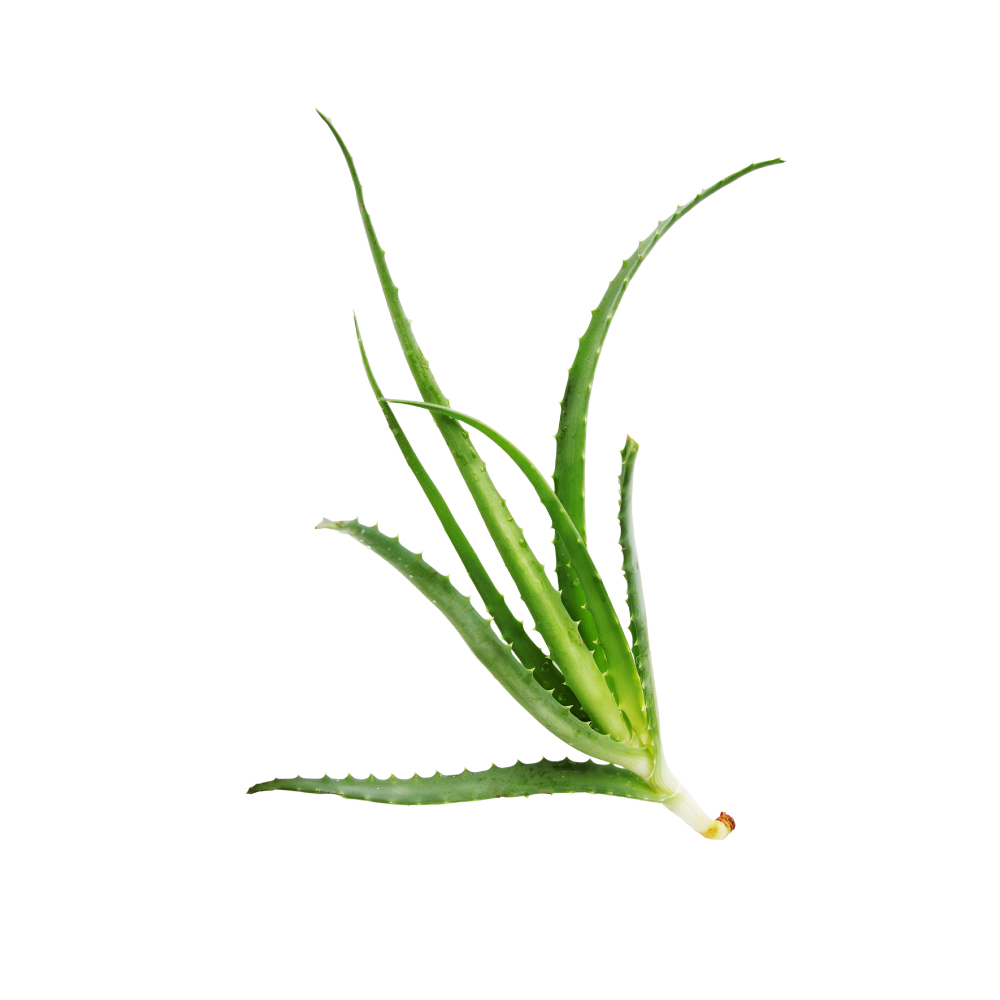
Aloe vera, one of the oldest recorded herbal medicines — a soothing gel used for burns, wounds, skin healing and digestive complaints.
What Is Aloe?
Aloe is a genus of succulents with sharp ridges on the leaves, and a thick, slippery gel on the inside. Aloes of all species have been used for a wide range of conditions, and is one of the longest recorded herbal medicines in human history. The use of aloe dates back to the early Egyptians, Chinese, and Roman empires. Alexander the Great has been said to have conquered the island of Socotra, off the coast of Africa in order to secure Aloe growing there to heal his soldiers.
Aloe has a wide range of clinical actions both internally and externally, and remains popular amongst herbalists and product developers for anything from skin conditions, digestive complaints, liver dysfunction, and cardiovascular disease.
How Is Aloe Used?
Aloe is commonly used as a topical agent for burns, skin irritations, and eczema. The thick mucilage contained in the leaf gel has antiseptic, anti-inflammatory, and vulnerary actions, making it an excellent choice for general skin irritations.
Internally, aloe provides similar support for the epithelial tissue of the digestive tract. Consumed internally also offers some mild laxative actions and hepatobiliary effects.
Traditional Uses
Western Herbal Medicine
Aloe vera (and other Aloes) have been used for a long time in various cultures, for its actions on conditions such as: anti-inflammatory, immunostimulant, antiseptic, wound and burn healing, anti-tumoral and laxative effects 5,6,7,8Reference 5ReviewAloe vera leaf gel: a review updateReference 6AnimalWound healing effects of Aloe gel and other topical antibacterial agents in rat skinReference 7AnimalInfluence of Aloe vera on the healing of dermal wounds in diabetic ratsReference 8The effect of Aloe vera leaf gel on fatty streak formation in hypercholesterolemic rabbits.
Traditional Chinese Medicine
Pinyin
Lu Hui
Taste
Bitter 13Reference 13An illustrated Chinese materia medica
Energy
Cold 13Reference 13An illustrated Chinese materia medica
Channels
Liver and large intestine 13Reference 13An illustrated Chinese materia medica
Action
Removes liver heat, improves intestinal motility 13Reference 13An illustrated Chinese materia medica,
Indications
Constipation with restless insomnia due to heat accumulation 13Reference 13An illustrated Chinese materia medica
Cautions & Safety
Do not use during pregnancy or in patients with cold deficient spleen or stomach disorders 13Reference 13An illustrated Chinese materia medica.
Ayurvedic Medicine
In the Ayurvedic and Thai medicine, Aloe was used to treat peptic ulcers, burns, wounds, abscesses, mouth ulcers, and inflammation 12Reference 12A clinical guide to blending liquid herbs: Herbal formulations for the individual patient.
Botany
Aloe vera is a stemless or short-stemmed succulent in the Asphodelaceae, forming stoloniferous rosettes of thick, gray-green, lance-shaped leaves edged with small teeth, with tubular yellow flowers on tall spikes above the foliage. The genus Aloe holds roughly 500 species within a family of about 900 species across 40-plus genera. Taxonomic placement has shifted — APG III (2009) placed the genus in Xanthorrhoeaceae, while the currently favored APG IV (2016) treatment places it in Asphodelaceae.
Distribution
Aloe vera’s true wild range has been obscured by thousands of years of cultivation and trade, but nuclear phylogenomic evidence traces its origin to the Hajar Mountains of northeastern Oman and eastern U.A.E., at the northernmost edge of the genus’s range — possibly the only genuinely wild population left. Sudan and the wider Arabian Peninsula have also been proposed as alternative origins. Long cultivated far beyond that range, the species has naturalized in North Africa, Sudan and neighboring countries, the Canary Islands, Cape Verde, Madeira, and parts of Iberia (the Algarve in Portugal, Murcia in Spain).
Growing Conditions
- Drought-tolerant succulent, full sun to part shade.
- Winter-hardy only to about USDA zone 10–12; grown as a container/houseplant elsewhere.
- Full cultivation detail lives on the companion farm-wiki grow guide for Aloe vera (link to be added once that project’s public URL is confirmed).
Harvesting, Collection & Preparation
Leaf extracts containing quantified levels of the chemical acemannan are recommended (no less than 11.25 mg/ml) 12Reference 12A clinical guide to blending liquid herbs: Herbal formulations for the individual patient.
Aloe extracts containing low anthraquinones (through removal process) are also preferred for internal use 12Reference 12A clinical guide to blending liquid herbs: Herbal formulations for the individual patient.
Pharmacology & Medical Research
Atherosclerosis
Aloe vera’s confirmed anti-inflammatory actions 4Reference 4Wound healing, as well as its hypocholesterolemic actions 8Reference 8The effect of Aloe vera leaf gel on fatty streak formation in hypercholesterolemic rabbits, may be the main mechanism of actions in its suggested ability to treat and prevent atherosclerosis. Inflammation has been linked closely with the development of atherosclerosis 1,2Reference 1Clinical trialAloe vera for prevention of radiation-induced dermatitis: a self-controlled clinical trial.Current Oncology, 20(4), 345. doi:10.3747/co.20.1356View study →Reference 2Systematic reviewAloe vera: a systematic review of its clinical effectiveness, and using anti-inflammatory medications such as Aloe vera may soon become a mainstay of treating or preventing this ultimately deadly disease process.
Dermatitis
The emollient actions of Aloe vera has been well studied and is an effective treatment in radiation-induced dermatitis 1Reference 1Clinical trialAloe vera for prevention of radiation-induced dermatitis: a self-controlled clinical trial.Current Oncology, 20(4), 345. doi:10.3747/co.20.1356View study →.
In burns, a topical application of Aloe gel is suggested to inhibit thromboxane B2 and prostaglandin F-2-alpha formation. This subsequently preserves dermal circulation and improves the outcome of both first degree, and 2nd-degree burns 12Reference 12A clinical guide to blending liquid herbs: Herbal formulations for the individual patient.
Inflammation
Aloe vera has well-documented actions as an anti-inflammatory 4,12Reference 4Wound healingReference 12A clinical guide to blending liquid herbs: Herbal formulations for the individual patient. The anti-inflammatory action is reported to rely on the presence of anthraquinones 12Reference 12A clinical guide to blending liquid herbs: Herbal formulations for the individual patient.
Cholesterol
Aloe vera was shown to reduce the atherosclerosis formation significantly, and blood cholesterol levels of animals fed a high cholesterol diet vs. those with just a high cholesterol diet 8Reference 8The effect of Aloe vera leaf gel on fatty streak formation in hypercholesterolemic rabbits. This common disease process is one of the major risk factors for developing chronic heart disease, or myocardial infarction, and stroke.
Phytochemistry
Aloe yields two chemically distinct products from one leaf: the bitter yellow latex just under the rind, and the clear inner-leaf gel. Its medicinal activity is usually attributed to two groups — the anthraquinones of the latex and the polysaccharides of the gel 1,12,14Reference 1Clinical trialAloe vera for prevention of radiation-induced dermatitis: a self-controlled clinical trial.Current Oncology, 20(4), 345. doi:10.3747/co.20.1356View study →Reference 12A clinical guide to blending liquid herbs: Herbal formulations for the individual patientReference 14Composition and applications of Aloe vera leaf gelView study →.
The latex anthraquinones — chiefly aloin (the major one, present as a mix of aloin A and B) and the related anthraquinone glycosides, with aloe-emodin formed on oxidation — are the stimulant-laxative and antiviral principles 11,12Reference 11Inactivation of enveloped viruses by anthraquinones extracted from plantsView study →Reference 12A clinical guide to blending liquid herbs: Herbal formulations for the individual patient. The gel is roughly 98–99% water; of its small solid fraction, the dominant polysaccharide is acemannan, an acetylated mannan that makes up the majority of gel solids and carries much of the immunomodulating and wound-healing activity. It is the marker compound most leaf extracts are standardised to, often to no less than 11.25 mg/mL 12,14,15Reference 12A clinical guide to blending liquid herbs: Herbal formulations for the individual patientReference 14Composition and applications of Aloe vera leaf gelView study →Reference 15ReviewExtraction, purification, structural characteristics, biological activities and pharmacological applications of acemannan, a polysaccharide from Aloe vera: A reviewView study →.
Beyond these the leaf supplies saponins, sterols, lignins and salicylic acid, along with vitamins, minerals, enzymes, sugars and amino acids 1,12,14Reference 1Clinical trialAloe vera for prevention of radiation-induced dermatitis: a self-controlled clinical trial.Current Oncology, 20(4), 345. doi:10.3747/co.20.1356View study →Reference 12A clinical guide to blending liquid herbs: Herbal formulations for the individual patientReference 14Composition and applications of Aloe vera leaf gelView study →.
Constituent Summary
Figures describe whole leaf or the fraction noted; the gel is ~98–99% water, so gel-solid percentages are of the small dried residue, not of fresh gel. Anthraquinone content of “low-anthraquinone” internal-use extracts is deliberately reduced, and all values vary widely with species, plant age and processing 1,12,14Reference 1Clinical trialAloe vera for prevention of radiation-induced dermatitis: a self-controlled clinical trial.Current Oncology, 20(4), 345. doi:10.3747/co.20.1356View study →Reference 12A clinical guide to blending liquid herbs: Herbal formulations for the individual patientReference 14Composition and applications of Aloe vera leaf gelView study →.
Polysaccharide1 compound1 with data
Anthraquinone3 compounds3 with data
Saponin1 compoundno data
Sterol1 compoundno data
Lignan1 compoundno data
Phenolic acid1 compoundno data
Vitamin1 compound1 with data
Mineral1 compound1 with data
Amino acid1 compoundno data
Clinical Applications
Aloe is a useful laxative, hepatoprotective, and for reducing triglyceride and cholesterol levels. Externally it’s very useful for treating all kinds of skin irritations, burns, and traumatic damage.
Safety & Pregnancy
Aloe’s inner-leaf gel is well tolerated and can be used topically long-term, but the anthraquinone latex is a stimulant laxative, so internal use should be short-term and low-anthraquinone extracts are preferred.
- Not for long-term internal use. The anthraquinone latex is a stimulant laxative — take internally short-term only.
- Prefer low-anthraquinone extracts internally. Extracts with the anthraquinones removed are preferred for internal use 12Reference 12A clinical guide to blending liquid herbs: Herbal formulations for the individual patient.
- Avoid in pregnancy. Traditional (TCM) practice avoids aloe in pregnancy and in cold, deficient spleen or stomach states 13Reference 13An illustrated Chinese materia medica.
- Topical use well tolerated. The gel can be applied to skin over the long term.
Full safety & interactions detail
Do not use aloe internally for long periods of time.
Traditional Chinese practice contraindicates aloe during pregnancy, and in those with cold, deficient spleen or stomach patterns 13Reference 13An illustrated Chinese materia medica. Modern safety in pregnancy and lactation has not been formally established, and internal use of the anthraquinone latex is best avoided.
References
- Haddad, P., Amouzgar-Hashemi, F., Samsami, S., Chinichian, S., & Oghabian, M. (2013). Aloe vera for prevention of radiation-induced dermatitis: a self-controlled clinical trial.Current Oncology, 20(4), 345. doi:10.3747/co.20.1356
- Vogler BK, Ernst E (1999). Aloe vera: a systematic review of its clinical effectiveness. Br J Gen Pract. 49:823-8.
- Natural Products Insider. (2009). International Aloe Science Council presents a scientific primer on aloe. www.naturalproducts insider.com/ebooks/2009/10/iasc-presents-a-scientific-primer-on-aloe. aspx
- Davis RH, Leitner MG, Russo JM, Byrne ME. (1989). Wound healing. Oral and topical activity of Aloe vera. J Am Podiatr Med Assoc. 79(11):559–62.
- Reynolds T, Dweck AC. (1999). Aloe vera leaf gel: a review update. J Ethnopharmacol. 68(1-3):3–37.
- Heggers JP, Kucukcelebi A, Listengarten D, Broemel KF. (1995). Wound healing effects of Aloe gel and other topical antibacterial agents in rat skin. Phytotherapy Res. 9(6):455–7.
- Chithra P, Sajithlal GB, Chandrakasan G. (1998). Influence of Aloe vera on the healing of dermal wounds in diabetic rats. J Ethnopharmacol. 59(3):195– 201.
- Dana, N., Javanmard, S. H., Asgary, S., Asnaashari, H., & Abdian, N. (2012). The effect of Aloe vera leaf gel on fatty streak formation in hypercholesterolemic rabbits. J Res Med Sci, 17(5), 439-442.
- Libby P, Ridker PM. (2004). Inflammation and atherosclerosis: role of C-reactive protein in risk assessment. Am J Med. 2004;116(Suppl 6A):9S–16S.
- Hansson GK, Libby P. (2006). The immune response in atherosclerosis: a double-edged sword. Nat Rev Immunol. 2006;6(7):508–19.
- Sydiskis, R. J., Owen, D. G., Lohr, J. L., Rosler, K. H., & Blomster, R. N. (1991). Inactivation of enveloped viruses by anthraquinones extracted from plants. Antimicrobial Agents and Chemotherapy, 35(12), 2463-2466. doi:10.1128/aac.35.12.2463
- Bone, K. (2003). A clinical guide to blending liquid herbs: Herbal formulations for the individual patient. Edinburgh [u.a.: Churchill Livingstone. (Pg. 61-64).
- Wu, J. N. (2005). An illustrated Chinese materia medica. New York: Oxford University Press. (Pg 62-63).
- Hamman, J. H. (2008). Composition and applications of Aloe vera leaf gel. Molecules, 13(8), 1599-1616. doi:10.3390/molecules13081599
- Liu, C., Cui, Y., Pi, F., Cheng, Y., Guo, Y., & Qian, H. (2019). Extraction, purification, structural characteristics, biological activities and pharmacological applications of acemannan, a polysaccharide from Aloe vera: A review. Molecules, 24(8), 1554. doi:10.3390/molecules24081554