Materia Medica
Amaranth
Amaranthus blitum
Amaranth (Amaranthus blitum) — a nutritive leafy herb used in Western, Chinese and Ayurvedic traditions, valued as food and gentle medicine.
What Is Amaranth?
Amaranthus blitum, commonly known as purple amaranth or purple spinach, is a fast-growing leafy annual in the amaranth family (Amaranthaceae). It has long been cultivated and gathered as a nutrient-rich vegetable throughout the Mediterranean, Africa, the Middle East, India, and parts of Asia.
Like many amaranths, the plant occupies a space between food and medicine. The leaves are rich in minerals, carotenoids, vitamin C, and polyphenols, while traditional systems of medicine regard the plant as cooling, moistening, and gently restorative.
Although less famous than grain-producing amaranths, A. blitum has historically been valued as an accessible wild food and tonic green during periods of heat, illness, or nutritional depletion.
How Is Amaranth Used?
Amaranth is used primarily as a cooked leafy vegetable, though it also appears in traditional herbal preparations including decoctions, poultices, juices, and soups.
The young leaves and shoots are most commonly consumed steamed, sautéed, or added to broths and stews. Traditional preparations often use the plant as a nutritive tonic during recovery from illness, digestive irritation, or periods of weakness.
In folk medicine, fresh leaf preparations have also been applied topically for inflammatory skin conditions, minor wounds, and swelling. Some traditions additionally use the herb as a mild cooling remedy during excessive internal heat or dryness.
Traditional Uses
Western Herbal Medicine
In Western herbal traditions, amaranth has primarily been regarded as a nutritive and soothing herb rather than a strongly pharmacological medicine. Traditional uses include digestive irritation, constipation associated with dryness, and general nutritional support.
Its mineral-rich leaves were historically valued as strengthening foods during convalescence and periods of dietary insufficiency.
Traditional Chinese Medicine
In Traditional Chinese Medicine, various amaranth species are considered cooling and are used to clear heat, cool the blood, and support urination. The plant is traditionally associated with inflammatory conditions, summer heat, and digestive irritation.
Some regional traditions additionally use amaranth preparations for skin eruptions and damp-heat conditions.
Ayurvedic Medicine
Ayurvedic traditions classify amaranth as cooling, light, and nourishing. It is commonly used to pacify excess Pitta and support digestion without excessive heating.
The leaves are traditionally consumed during inflammatory states, digestive sensitivity, and conditions associated with excess heat or irritation.
Indications
Amaranth is primarily used as a nutritive and cooling herb.
Common traditional indications include:
- Nutritional depletion
- Digestive irritation
- Mild constipation associated with dryness
- Heat conditions
- Inflammatory skin irritation
- General weakness during recovery
- Mild urinary irritation
- Summer heat and dehydration
Clinically, the plant is more commonly regarded as a functional food than a concentrated medicinal herb.
Botany
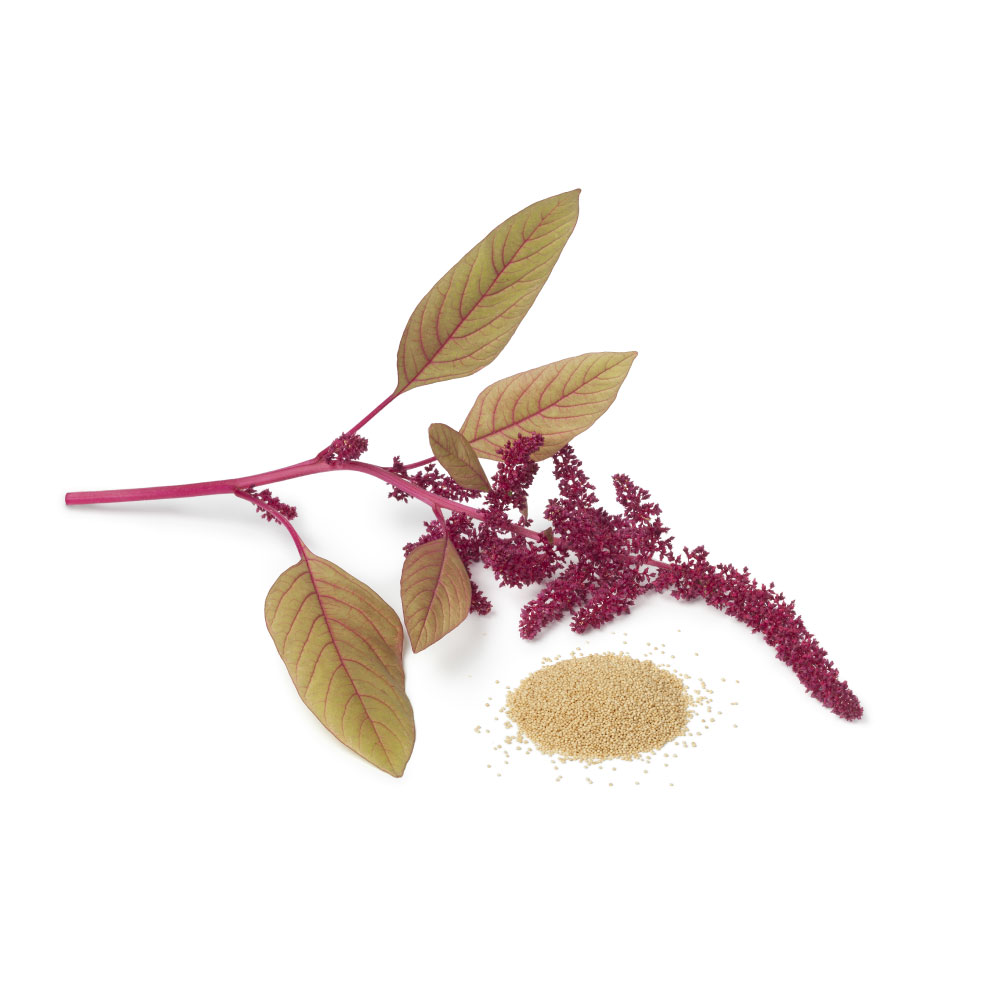
Purple amaranth is a low-growing, branching annual herb in the amaranth family (Amaranthaceae), with soft stems and smooth ovate leaves ranging from green to reddish-purple depending on variety and growing conditions. It bears small, densely clustered green flowers and readily self-seeds in warm climates — a fast, resilient grower tolerant of heat and drought.
Distribution
Kew’s Plants of the World Online treats Amaranthus blitum as native to South America — Peru, Brazil, Bolivia, Paraguay, Uruguay, northern Argentina and northern Chile. This is worth noting because the species is popularly associated with the Mediterranean and Old World, where it has been cultivated and naturalized as a leaf vegetable for so long that many regional sources describe it as native there; the taxonomic authority instead lists essentially all of Europe, Africa and Asia as introduced range.
Either way, it is now one of the most widely distributed weedy amaranths, occurring on every inhabited continent, and behaves as a common weed of gardens and vegetable crops in several introduced regions (documented as abundant in Brazilian, Comoros and Mauritian vegetable fields) — agricultural-field weediness rather than natural-area invasion.
Growing Conditions
- Fast-growing annual, full sun to part shade.
- Thrives in disturbed soils, gardens, roadsides and cultivated fields; tolerant of heat and drought.
- Full cultivation detail lives on the companion farm-wiki grow guide for Amaranthus blitum (link to be added once that project’s public URL is confirmed).
Pharmacology & Research
Amaranthus blitum sits at the food end of the food–medicine spectrum, and its evidence base reflects that. The only genuine human data concern the leaf as a dietary source of provitamin-A carotenoids and iron in at-risk populations 1,3Reference 1RCTTotal iron absorption from an amaranth-containing meal — randomised stable-isotope studyView study →Reference 3Cooked sun-dried amaranth-and-cowpea-leaf recipe raises serum β-carotene, retinol and haemoglobin — human intervention studyView study →; everything beyond nutrition is preclinical — in-vitro antioxidant capacity and animal organ-protective, neuroprotective and antiplatelet signals, none tested in people. A recurring confusion is that the cardiovascular and cholesterol trials attributed to “amaranth” used grain seed oil (squalene, tocotrienols), not the leaf 6,7,8,9Reference 6RCTAmaranth seed oil in coronary heart disease and hypertension — randomised clinical trialView study →Reference 7Clinical trialUnrefined amaranth and sunflower oil in type 2 diabetes — clinical trial. https://pubmed.ncbi.nlm.nih.gov/19227865/View study →Reference 8Clinical trialSqualene from amaranth oil in ischaemic heart disease with hyperlipoproteinaemia — comparative clinical study. https://pubmed.ncbi.nlm.nih.gov/17313043/View study →Reference 9Clinical trialAmaranth-oil diet and serum lipids/erythrocyte fatty acids — comparative clinical study. https://pubmed.ncbi.nlm.nih.gov/16862949/View study → — those results do not transfer to the leafy vegetable on this page. Traditional cooling, nutritive and astringent uses are well documented but unstudied clinically, and there is no pharmacopoeial monograph for the species.
- Best-supported: the leaf as a provitamin-A vegetable — human intervention data show it raises serum β-carotene, retinol and haemoglobin 3Reference 3Cooked sun-dried amaranth-and-cowpea-leaf recipe raises serum β-carotene, retinol and haemoglobin — human intervention studyView study →, though its iron is poorly bioavailable 1Reference 1RCTTotal iron absorption from an amaranth-containing meal — randomised stable-isotope studyView study →.
- Emerging, worth watching: in-vitro antioxidant activity from betalain pigments and flavonoids 4,5Reference 4In vitroAmaranthus lividus leaf extract radical scavenging and phytochemical profile — in vitroView study →Reference 5Nutrients, minerals, pigments, phytochemicals and radical-scavenging activity in Amaranthus blitum — analytical characterisation of 16 genotypesView study →; animal liver/kidney protection in oxidative-injury models 10Reference 10AnimalWater extract of A. lividus protects rat kidney against CCl₄ injury — animal study. https://doi.org/10.1177/0748233714555390View study →.
- Mechanistically thin / misattributed: the cardiovascular “amaranth” evidence is seed-oil, not leaf 6,7,8,9Reference 6RCTAmaranth seed oil in coronary heart disease and hypertension — randomised clinical trialView study →Reference 7Clinical trialUnrefined amaranth and sunflower oil in type 2 diabetes — clinical trial. https://pubmed.ncbi.nlm.nih.gov/19227865/View study →Reference 8Clinical trialSqualene from amaranth oil in ischaemic heart disease with hyperlipoproteinaemia — comparative clinical study. https://pubmed.ncbi.nlm.nih.gov/17313043/View study →Reference 9Clinical trialAmaranth-oil diet and serum lipids/erythrocyte fatty acids — comparative clinical study. https://pubmed.ncbi.nlm.nih.gov/16862949/View study →; neuroprotective, anthelmintic and antiplatelet effects are single in-vitro leads 14,16Reference 14In vitroA. blitum leaf larvicidal, antiplatelet and anticoagulant activity — in vitroView study →Reference 16In vitroMethanol extracts of A. lividus and A. tricolor protect SH-SY5Y neuroblastoma cells against H₂O₂ — in vitroView study →.
- The caveat: almost all non-nutritional evidence is preclinical, several studies use different Amaranthus species, and nothing here has been tested as the leaf in humans.
1. Nutritive value — provitamin A & iron
The leaf is a dense source of β-carotene, iron, vitamin C and minerals, and small human studies show a measurable but bounded nutritional benefit. In Kenyan preschool children, a cooked sun-dried amaranth-and-cowpea-leaf recipe raised serum β-carotene, retinol and haemoglobin, retaining over 60% of β-carotene through processing 3Reference 3Cooked sun-dried amaranth-and-cowpea-leaf recipe raises serum β-carotene, retinol and haemoglobin — human intervention studyView study →; intake modelling in Burkina Faso suggests leaf sauces could supply most of a child’s daily vitamin-A and iron requirement 2Reference 2Kenyan amaranth leaf sauces as a source of vitamin A and iron — dietary intake modellingView study →. But a stable-isotope trial found that adding more leaf did not increase the iron actually absorbed — the leaf’s oxalate and polyphenol content make its iron poorly bioavailable 1Reference 1RCTTotal iron absorption from an amaranth-containing meal — randomised stable-isotope studyView study →.
Gap: the iron is real but poorly absorbed — amaranth leaf is a vitamin-A vegetable, not a reliable iron source.
2. Antioxidant activity
The red and purple leaf forms owe their colour to betalain pigments (betacyanin, betaxanthin) which, with β-carotene, vitamin C and rutin, give the leaf substantial free-radical-scavenging capacity in the test tube. A leaf extract scavenged ~76% of DPPH and ~85% of superoxide radicals and contained gallic acid, caffeic acid, quercetin, kaempferol and β-sitosterol 4Reference 4In vitroAmaranthus lividus leaf extract radical scavenging and phytochemical profile — in vitroView study →; a 16-genotype characterisation found pigment and phytochemical content tracking antioxidant activity 5Reference 5Nutrients, minerals, pigments, phytochemicals and radical-scavenging activity in Amaranthus blitum — analytical characterisation of 16 genotypesView study →. All of it is in vitro.
Gap: no human study has shown a measurable antioxidant effect from eating the leaf.
3. Cardiovascular (seed oil, not leaf)
The most misattributed area. Small human trials report that amaranth grain seed oil — rich in squalene and tocotrienols — improves lipid profiles in coronary heart disease, hyperlipidaemia and type 2 diabetes, at doses standardised to 100–600 mg squalene/day 6,7Reference 6RCTAmaranth seed oil in coronary heart disease and hypertension — randomised clinical trialView study →Reference 7Clinical trialUnrefined amaranth and sunflower oil in type 2 diabetes — clinical trial. https://pubmed.ncbi.nlm.nih.gov/19227865/View study →, with 600 mg/day squalene most effective on cholesterol and triglycerides 8,9Reference 8Clinical trialSqualene from amaranth oil in ischaemic heart disease with hyperlipoproteinaemia — comparative clinical study. https://pubmed.ncbi.nlm.nih.gov/17313043/View study →Reference 9Clinical trialAmaranth-oil diet and serum lipids/erythrocyte fatty acids — comparative clinical study. https://pubmed.ncbi.nlm.nih.gov/16862949/View study →. None of this involves the leaf: squalene is a seed-oil constituent of grain-type amaranths, so the results cannot be claimed for A. blitum leaf.
Gap: wrong plant part, often a different species — no cardiovascular evidence exists for the leaf itself.
4. Organ protection — liver & kidney
A cluster of rodent and cell studies report that Amaranthus extracts protect liver and kidney against carbon-tetrachloride oxidative damage. Most relevant, a water extract of A. lividus (the same species as this page) reduced CCl₄-induced kidney lipid peroxidation and preserved catalase in rats 10Reference 10AnimalWater extract of A. lividus protects rat kidney against CCl₄ injury — animal study. https://doi.org/10.1177/0748233714555390View study →; the better-characterised hepatoprotective work used A. spinosus, a different species 11,12,13Reference 11In vitroA. spinosus extract restores CCl₄-injured rat hepatocytes and HepG2 cells — in vitroView study →Reference 12A. spinosus whole-plant extract normalises liver enzymes after CCl₄ injury — animal studyView study →Reference 13Ethanolic extracts of tropical vegetables including amaranth reduce serum AST/ALT after CCl₄ damage — animal studyView study →.
Gap: entirely preclinical, partly a different species, and CCl₄ is a toxicology assay, not a human disease model.
5. Other preclinical activity
A scatter of single-laboratory studies report further activities, all in cells or test tubes. A. blitum leaf extracts killed Trichinella spiralis larvae and inhibited platelet aggregation and coagulation — echoing folk use against worms and bleeding — with rutin and coumaroyl-tryptophan compounds credited 14Reference 14In vitroA. blitum leaf larvicidal, antiplatelet and anticoagulant activity — in vitroView study →. Methanol leaf extracts protected human neuroblastoma cells against peroxide stress 16Reference 16In vitroMethanol extracts of A. lividus and A. tricolor protect SH-SY5Y neuroblastoma cells against H₂O₂ — in vitroView study →, and in-vitro antidiabetic work (glucose uptake, α-glucosidase inhibition) used grain-type species rather than the leaf 15Reference 15In vitroGrain-type amaranth extracts stimulate glucose uptake; α-glucosidase/α-amylase docking — in vitroView study →.
Gap: each is a promising lead and nothing more; none supports a clinical claim.
Mechanisms
| Mechanism | Drives | Key compounds |
|---|---|---|
| free-radical scavenging | antioxidant | betacyanin, betaxanthin |
| radical scavenging; antiplatelet, larvicidal | antioxidantantiplatelet | rutin, quercetin, kaempferol, gallic acid, caffeic acid |
| retinol precursor | nutritive (vitamin A) | β-carotene |
| cholesterol-synthesis modulation | cardiovascular (seed oil only) | squalene, tocotrienols |
Clinical trials
No registered clinical trials of A. blitum leaf were identified — the human evidence is limited to three nutrition intervention/absorption studies. (The cardiovascular trials in the literature used grain-amaranth seed oil, a different plant part and usually a different species.)
| Completed | Planned | Terminated | Preclinical |
|---|---|---|---|
| 3(nutrition) | 0 | 0 | Many(in-vitro / animal) |
Last checked: July 2026.
Phytochemistry
As a leafy vegetable, Amaranthus blitum is valued less for potent single actives than for a dense matrix of antioxidant pigments, vitamins and minerals. Its most distinctive constituents are the betalain pigments — betacyanin (red–purple) and betaxanthin (yellow) — which give the red and purple leaf forms their colour and account for much of the plant’s radical-scavenging capacity. The leaves are also a strong source of β-carotene, ascorbic acid (vitamin C) and the flavonoid rutin. Grain-type amaranths additionally concentrate the triterpene squalene in their seed oil, though this is a seed rather than leaf constituent. A leaf-extract profile also identifies the flavonoids quercetin and kaempferol, the phenolic acids gallic acid and caffeic acid, and the sterol β-sitosterol 4Reference 4In vitroAmaranthus lividus leaf extract radical scavenging and phytochemical profile — in vitroView study →.
Constituent Summary
Units differ by constituent and are given per row. Leaf pigment figures are µg per 100 g fresh weight (ranges across 16 A. blitum genotypes); β-carotene and vitamin C are µg per g fresh weight; squalene is reported as percent of seed oil in grain-type Amaranthus. All leaf values vary widely with genotype, maturity and growing conditions. † marks betacyanin/betalain, the pigment markers that distinguish the red- and purple-leaved forms from green types.
Betalain2 compounds2 with data
Carotenoid1 compound1 with data
Vitamin1 compound1 with data
Sterol1 compoundno data
Triterpene1 compound1 with data
Dosage
Amaranth is a food rather than a dosed medicine — the leaves are eaten freely as a cooked vegetable, or taken as a decoction or infusion (1–2 cups daily) in traditional practice. Because it is mild and nutritive, intake follows culinary custom rather than a therapeutic target. There are no research-derived doses for the leaf; the standardised doses in the literature are for grain seed oil (a different plant part), so they are not reproduced here.
Nutrition (per 100 g, cooked leaves)
Amaranth leaf earns its “nutritive” classification as a food more than as a medicine. Cooked (boiled, drained) leaves are low in calories but a strong source of vitamin C, vitamin A, calcium, iron, magnesium and folate:
| Nutrient | Per 100 g | % Daily Value |
|---|---|---|
| Energy | 21 kcal | 1% |
| Protein | 2.1 g | 5% |
| Carbohydrate | 4.1 g | 1% |
| Fat | 0.2 g | 0% |
| Vitamin C | 41 mg | 46% |
| Vitamin A | 139 µg RAE | 15% |
| Folate | 57 µg | 14% |
| Calcium | 209 mg | 21% |
| Iron | 2.3 mg | 28% |
| Magnesium | 55 mg | 13% |
| Potassium | 641 mg | 19% |
| Manganese | 0.86 mg | 37% |
Values for cooked, boiled, drained amaranth leaves — the plant part this monograph covers; amaranth grain is a separate food with a different profile 18Reference 18Amaranth leaves, cooked, boiled, drained, without salt — food composition data (FDC ID 169202)View study →. The iron shown is total, not absorbed: the leaf’s oxalate and polyphenols make much of it poorly bioavailable 1Reference 1RCTTotal iron absorption from an amaranth-containing meal — randomised stable-isotope studyView study →.
Safety & Pregnancy
Amaranth leaf is safe as a food with no toxicity signal at dietary amounts; the cautions worth knowing are all composition-driven — oxalate, nitrate and heavy-metal accumulation intrinsic to the leaf.
- Safe as a food. No toxicity signal at normal dietary amounts.
- High oxalate. Stores calcium-oxalate crystals — limit if prone to calcium-oxalate kidney stones 1,17Reference 1RCTTotal iron absorption from an amaranth-containing meal — randomised stable-isotope studyView study →Reference 17Edible amaranth as a calcium-oxalate-rich, cadmium-hyperaccumulating vegetable — plant-physiology studyView study →.
- Nitrate accumulation. Leafy amaranth and its cooking water are not appropriate for very young infants (methaemoglobinaemia risk).
- Heavy-metal accumulator. Amaranthus takes up cadmium — soil source matters for regular eaters 17Reference 17Edible amaranth as a calcium-oxalate-rich, cadmium-hyperaccumulating vegetable — plant-physiology studyView study →.
Full safety & interactions detail
Amaranth is generally considered safe when consumed as a food, and there is no toxicity signal at dietary amounts. Three composition-driven cautions are worth naming, all intrinsic to the leaf rather than to any extract.
Like spinach and chard, the leaf is high in oxalate (it stores calcium-oxalate crystals), which both lowers the bioavailability of its own iron and calcium and is relevant to people prone to calcium-oxalate kidney stones 1,17Reference 1RCTTotal iron absorption from an amaranth-containing meal — randomised stable-isotope studyView study →Reference 17Edible amaranth as a calcium-oxalate-rich, cadmium-hyperaccumulating vegetable — plant-physiology studyView study →. Fast-growing leafy amaranth also readily accumulates nitrate, especially in heavily nitrogen-fertilised soil; because high dietary nitrate in leafy greens is a recognised cause of infant methaemoglobinaemia, amaranth leaf and its cooking water are not appropriate for very young infants. Third, Amaranthus species are documented cadmium and heavy-metal accumulators, so soil source matters for anyone eating the leaf regularly 17Reference 17Edible amaranth as a calcium-oxalate-rich, cadmium-hyperaccumulating vegetable — plant-physiology studyView study →. Cooking reduces both oxalate and nitrate but does not remove accumulated metals.
Herb–drug interactions have not been specifically evaluated for A. blitum; as a common food it is generally regarded as safe in normal dietary amounts, but the absence of formal assessment should not be read as a guarantee. Allergic reactions are rare but possible in sensitive individuals.
Amaranth leaf is eaten as a cooked vegetable during pregnancy across many cultures, with no specific safety signal at dietary amounts. Therapeutic or concentrated preparations have not been evaluated in pregnancy or lactation, and the usual leaf cautions still apply — cook to reduce oxalate and nitrate, and mind soil source for heavy metals.
References
- Cercamondi, C. I., et al. (2014). Total iron absorption from an amaranth-containing meal — randomised stable-isotope study. Journal of Nutrition. https://doi.org/10.3945/jn.114.194670
- Nawiri, M. P., et al. (2015). Kenyan amaranth leaf sauces as a source of vitamin A and iron — dietary intake modelling. Plant Foods for Human Nutrition. https://doi.org/10.1007/s11130-014-0462-5
- Nyambaka, H. N., et al. (2013). Cooked sun-dried amaranth-and-cowpea-leaf recipe raises serum β-carotene, retinol and haemoglobin — human intervention study. European Journal of Nutrition. https://doi.org/10.1007/s00394-012-0360-2
- Karadeniz, F., et al. (2022). Amaranthus lividus leaf extract radical scavenging and phytochemical profile — in vitro. Scientific Reports. https://doi.org/10.1038/s41598-022-08421-8
- Sarker, U., & Oba, S. (2020). Nutrients, minerals, pigments, phytochemicals and radical-scavenging activity in Amaranthus blitum — analytical characterisation of 16 genotypes. Scientific Reports. https://doi.org/10.1038/s41598-020-59848-w
- Martirosyan, D. M., et al. (2007). Amaranth seed oil in coronary heart disease and hypertension — randomised clinical trial. Lipids in Health and Disease. https://doi.org/10.1186/1476-511X-6-1
- Tikhonov, A. V., et al. (2008). Unrefined amaranth and sunflower oil in type 2 diabetes — clinical trial. https://pubmed.ncbi.nlm.nih.gov/19227865/
- Pogozheva, A. V., et al. (2006). Squalene from amaranth oil in ischaemic heart disease with hyperlipoproteinaemia — comparative clinical study. https://pubmed.ncbi.nlm.nih.gov/17313043/
- Pogozheva, A. V., et al. (2006). Amaranth-oil diet and serum lipids/erythrocyte fatty acids — comparative clinical study. https://pubmed.ncbi.nlm.nih.gov/16862949/
- Ozsoy-Sacan, O., et al. (2016). Water extract of A. lividus protects rat kidney against CCl₄ injury — animal study. https://doi.org/10.1177/0748233714555390
- Zeashan, H., et al. (2009). A. spinosus extract restores CCl₄-injured rat hepatocytes and HepG2 cells — in vitro. Journal of Ethnopharmacology. https://doi.org/10.1016/j.jep.2009.05.010
- Zeashan, H., et al. (2008). A. spinosus whole-plant extract normalises liver enzymes after CCl₄ injury — animal study. Food and Chemical Toxicology. https://doi.org/10.1016/j.fct.2008.08.013
- Ojiako, O. A., & Nwanjo, H. U. (2007). Ethanolic extracts of tropical vegetables including amaranth reduce serum AST/ALT after CCl₄ damage — animal study. Journal of Medicinal Food. https://doi.org/10.1089/jmf.2006.212
- Awad, N. E., et al. (2024). A. blitum leaf larvicidal, antiplatelet and anticoagulant activity — in vitro. BMC Complementary Medicine and Therapies. https://doi.org/10.1186/s12906-024-04478-2
- Ngamukote, S., et al. (2025). Grain-type amaranth extracts stimulate glucose uptake; α-glucosidase/α-amylase docking — in vitro. BMC Complementary Medicine and Therapies. https://doi.org/10.1186/s12906-025-05169-2
- Sani, D., et al. (2016). Methanol extracts of A. lividus and A. tricolor protect SH-SY5Y neuroblastoma cells against H₂O₂ — in vitro. Genetics and Molecular Research. https://doi.org/10.4238/gmr.15027562
- Wang, J., et al. (2023). Edible amaranth as a calcium-oxalate-rich, cadmium-hyperaccumulating vegetable — plant-physiology study. Chemosphere. https://doi.org/10.1016/j.chemosphere.2023.138435
- USDA FoodData Central. Amaranth leaves, cooked, boiled, drained, without salt — food composition data (FDC ID 169202). https://fdc.nal.usda.gov/food-details/169202/nutrients