Materia Medica
Black Truffle
Tuber melanosporum
Black Truffle (Tuber melanosporum) is a prized edible subterranean fungus valued for its intense aroma rather than any medicinal or psychoactive property.
What is Black Truffle?
The Black Truffle (Tuber melanosporum), also called the Périgord truffle, is an edible subterranean fungus that grows in symbiosis with the roots of oak and hazel trees in southern Europe, especially France, Italy and Spain. It is harvested with the help of trained dogs or pigs and is one of the most expensive culinary ingredients in the world.
Traditional & Modern Uses
The black truffle is a gourmet food prized for its powerful, earthy aroma, used in small shavings to flavour dishes, oils and sauces. It has no significant tradition of medicinal use and is not psychoactive; its value is entirely culinary and sensory. It is included here for completeness as an aromatic organism rather than a herb.
Mycology
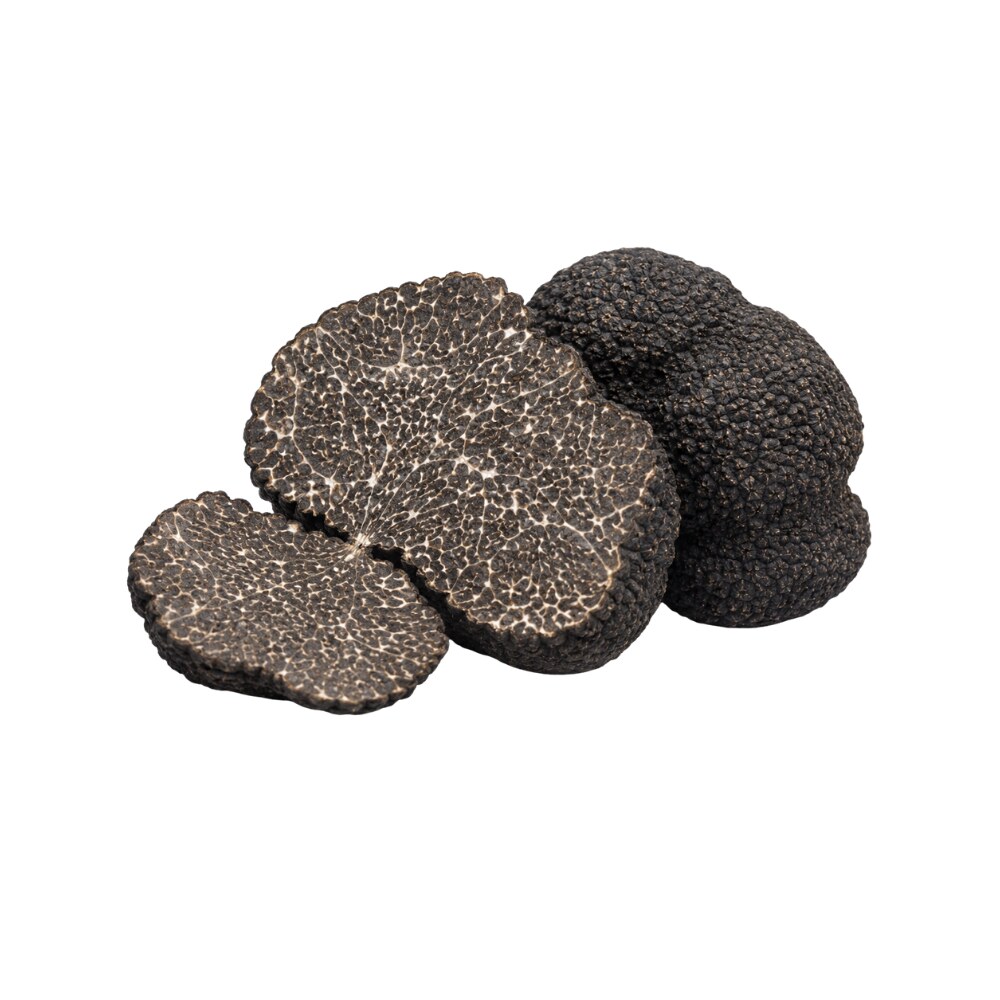
The black truffle is not a plant, a root or a tuber but the fruiting body of a fungus — and an unusual one, because it fruits entirely underground. What a chef buys is the ascocarp: a rounded, black, warty lump the size of a walnut to a fist, its dark interior marbled with a fine white web of veins. It grows in partnership with trees, sheathing the fine roots of oaks and hazels in a mutual exchange of nutrients for sugars, so a truffle never appears far from a host tree.
Fruiting below the soil, it cannot scatter spores on the wind; instead it ripens a powerful aroma that draws wild boar and rodents to dig it up and spread its spores — the same scent that makes it so prized in the kitchen, and the reason dogs and pigs are trained to find it.
Distribution
The Périgord black truffle is native to the warm, dry limestone country of southern Europe — France, Spain and Italy above all — where it fruits underground through the winter in alkaline, well-drained soil. Its high value has since carried it around the world: it is now farmed in suitable Mediterranean-type climates in Australia, New Zealand, the United States, Chile and even Wales.
Cultivation
- Grown through trufficulture — oak or hazel seedlings are inoculated with truffle spores in the nursery, then planted out into prepared ground.
- Demands loose, well-drained, calcareous (alkaline, limestone) soil and a warm Mediterranean climate with distinct seasons and some summer moisture.
- Slow and speculative: the first truffles usually appear only 4–10 years after planting, and yields depend on the right soil biology establishing itself.
- Harvested in winter with trained dogs (or, traditionally, pigs) that scent the ripe truffles below ground.
- Full cultivation detail lives on the companion farm-wiki grow guide for Tuber melanosporum (link to be added once that project’s public URL is confirmed).
Phytochemistry
The black truffle’s celebrated scent is built almost entirely from volatile compounds rather than any single bulk active. The dominant note is dimethyl sulfide, a low-boiling sulphur volatile that is also the cue truffle dogs and pigs follow underground; it is joined by dimethyl disulfide, the “garlic-onion” thioether 2,4-dithiapentane (bis(methylthio)methane, the molecule synthetic “truffle oil” is usually built from) and the mushroom-aroma ketone 1-octen-3-one. The fruiting body also carries the steroid androstenol at trace levels and a non-volatile fraction of amino acids, polysaccharides and the fungal sterol ergosterol — the last being the constituent enriched in the extract fraction studied for anti-inflammatory activity 9Reference 9In vitroScreening of bioactive compounds in truffles and evaluation of pressurized liquid extractions (PLE) to obtain fractions with biological activities — in vitroView study → — but published work quantifies the aroma profile qualitatively far more often than by absolute concentration. The figures below are reported as relative shares of the volatile fraction, which varies widely with ripeness, strain and storage.
Constituent Summary
Volatile aroma fraction; values are approximate relative abundances and vary strongly with maturity, strain and post-harvest handling. Sulphur volatiles dominate the odour despite low absolute amounts because of their very low olfactory thresholds. No Data = not quantified in the sources consulted.
Organosulfur3 compounds1 with data
Ketone1 compoundno data
Sterols1 compound1 with data
Pharmacology & Research
The black truffle is studied far more as an aroma chemistry and cultivation subject than as a bioactive organism, and its therapeutic literature is small and entirely preclinical — a handful of rodent and cell-line studies against a large body of volatile-profiling and mycology work. No human trial of any kind exists. The most developed signal is metabolic: three streptozotocin-induced diabetic-rat studies report that an oral truffle extract lowers blood glucose, restores insulin signalling, and dampens oxidative stress and inflammation via Nrf2 and NF-κB 2,3,4Reference 2AnimalBlack Truffle Aqueous Extract Attenuates Oxidative Stress and Inflammation in STZ-Induced Hyperglycemic Rats via Nrf2 and NF-κB Pathways — animal modelView study →Reference 3AnimalThe Black Truffle, Tuber melanosporum, Ameliorates Hyperglycemia and Regulates Insulin Signaling Pathway in STZ-Induced Diabetic Rats — animal modelView study →Reference 4In vitroBlack Truffle Extract Exerts Antidiabetic Effects through Inhibition of Inflammation and Lipid Metabolism Regulation — in vitro and animal modelView study →. Supporting antioxidant, anti-inflammatory and antitumour activity has been shown for isolated truffle polysaccharides and β-glucan/ergosterol fractions in vitro 5,6,7,8,9Reference 5AnimalThe anti-fatigue activities of Tuber melanosporum in a mouse model — animal modelView study →Reference 6In vitroChemical composition and evaluation of antioxidant, antimicrobial and antiproliferative activities of Tuber and Terfezia truffles — in vitroView study →Reference 7In vitroComparison of structural and antioxidant activity of polysaccharide extracted from truffles — in vitroView study →Reference 8In vitroIsolation and characterization of polysaccharides with the antitumor activity from Tuber fruiting bodies and fermentation system — in vitroView study →Reference 9In vitroScreening of bioactive compounds in truffles and evaluation of pressurized liquid extractions (PLE) to obtain fractions with biological activities — in vitroView study →. The central caveat is preparation: these effects come from concentrated aqueous, polysaccharide or pressurised-liquid extracts at doses far above the few grams of truffle eaten as a flavouring, so they do not describe the food as consumed.
- Best-supported: antidiabetic/hypoglycaemic and antioxidant activity, both from rodent and in vitro extract studies — not human data 2,3,4,5,6Reference 2AnimalBlack Truffle Aqueous Extract Attenuates Oxidative Stress and Inflammation in STZ-Induced Hyperglycemic Rats via Nrf2 and NF-κB Pathways — animal modelView study →Reference 3AnimalThe Black Truffle, Tuber melanosporum, Ameliorates Hyperglycemia and Regulates Insulin Signaling Pathway in STZ-Induced Diabetic Rats — animal modelView study →Reference 4In vitroBlack Truffle Extract Exerts Antidiabetic Effects through Inhibition of Inflammation and Lipid Metabolism Regulation — in vitro and animal modelView study →Reference 5AnimalThe anti-fatigue activities of Tuber melanosporum in a mouse model — animal modelView study →Reference 6In vitroChemical composition and evaluation of antioxidant, antimicrobial and antiproliferative activities of Tuber and Terfezia truffles — in vitroView study →.
- Emerging, worth watching: anti-inflammatory and immunomodulatory signals from a THP-1 β-glucan/ergosterol fraction and rat cytokine work 4,9Reference 4In vitroBlack Truffle Extract Exerts Antidiabetic Effects through Inhibition of Inflammation and Lipid Metabolism Regulation — in vitro and animal modelView study →Reference 9In vitroScreening of bioactive compounds in truffles and evaluation of pressurized liquid extractions (PLE) to obtain fractions with biological activities — in vitroView study →.
- Mechanistically thin: anti-fatigue, antitumour and antimicrobial claims rest on single or weak studies, several stronger in other Tuber/Terfezia species than in T. melanosporum itself 6,8,9Reference 6In vitroChemical composition and evaluation of antioxidant, antimicrobial and antiproliferative activities of Tuber and Terfezia truffles — in vitroView study →Reference 8In vitroIsolation and characterization of polysaccharides with the antitumor activity from Tuber fruiting bodies and fermentation system — in vitroView study →Reference 9In vitroScreening of bioactive compounds in truffles and evaluation of pressurized liquid extractions (PLE) to obtain fractions with biological activities — in vitroView study →.
- The caveat: everything is preclinical, uses concentrated extracts rather than culinary truffle, and the metabolic work appears to come from a small cluster of related studies.
1. Antidiabetic
This is the most-developed line of work, though it is entirely in rats. In streptozotocin (STZ)-induced diabetic Wistar rats, an oral truffle extract (200–600 mg/kg for 45 days) lowered fasting glucose, improved glucose tolerance, raised insulin, and restored the activity of glucose-handling enzymes (hexokinase, glucose-6-phosphatase, fructose-1,6-bisphosphatase), with effects comparable to the reference drug glibenclamide 3Reference 3AnimalThe Black Truffle, Tuber melanosporum, Ameliorates Hyperglycemia and Regulates Insulin Signaling Pathway in STZ-Induced Diabetic Rats — animal modelView study →. A companion study attributed this partly to reduced oxidative stress and inflammation through upregulation of Nrf2 and normalisation of NF-κB signalling 2Reference 2AnimalBlack Truffle Aqueous Extract Attenuates Oxidative Stress and Inflammation in STZ-Induced Hyperglycemic Rats via Nrf2 and NF-κB Pathways — animal modelView study →, and a third reported correction of the diabetic lipid profile (cholesterol, triglycerides, free fatty acids) alongside downregulated TNF-α and IL-6 4Reference 4In vitroBlack Truffle Extract Exerts Antidiabetic Effects through Inhibition of Inflammation and Lipid Metabolism Regulation — in vitro and animal modelView study →. The direction is consistent across all three, but the studies share design, model and comparator and appear to come from a closely related group, so this is best read as one replicated finding rather than three independent ones.
Gap: No human data, no dose-finding beyond the rat range, and the extract is a concentrated aqueous preparation unlike dietary truffle — the claim of “traditional antidiabetic use” in these papers is not supported by any pharmacopoeial source.
2. Antioxidant
Truffle antioxidant activity has been shown in three complementary ways. Chemical characterisation of ten Tuber/Terfezia species found measurable total phenolic content and radical-scavenging capacity, though T. melanosporum ranked modestly and T. magnatum (white truffle) was strongest 6Reference 6In vitroChemical composition and evaluation of antioxidant, antimicrobial and antiproliferative activities of Tuber and Terfezia truffles — in vitroView study →. Isolated T. melanosporum polysaccharide protected porcine intestinal (IPEC-J2) cells from H₂O₂ damage and raised intracellular superoxide dismutase and catalase, although a T. aestivum polysaccharide was more potent in the same assay 7Reference 7In vitroComparison of structural and antioxidant activity of polysaccharide extracted from truffles — in vitroView study →. In the diabetic-rat work, the extract restored SOD, catalase and vitamins C and E and reduced lipid peroxidation 2Reference 2AnimalBlack Truffle Aqueous Extract Attenuates Oxidative Stress and Inflammation in STZ-Induced Hyperglycemic Rats via Nrf2 and NF-κB Pathways — animal modelView study →. The activity is real but generic to many fungal foods and driven by polysaccharides and phenolics rather than a single characterised molecule.
Gap: No human antioxidant-status data, and the whole-food contribution at culinary doses is untested; most of the potency in comparative studies belongs to other truffle species.
3. Anti-inflammatory
A pressurised-liquid extract of truffle enriched in (1→3)-β-glucan and ergosterol reduced IL-1β secretion by ~40% and IL-6 by ~60% in stimulated THP-1 human macrophage-like cells, indicating an immunomodulatory, anti-inflammatory action from the β-glucan fraction 9Reference 9In vitroScreening of bioactive compounds in truffles and evaluation of pressurized liquid extractions (PLE) to obtain fractions with biological activities — in vitroView study →. In diabetic rats the truffle extract downregulated the pro-inflammatory cytokines TNF-α and IL-6 and normalised NF-κB 2,4Reference 2AnimalBlack Truffle Aqueous Extract Attenuates Oxidative Stress and Inflammation in STZ-Induced Hyperglycemic Rats via Nrf2 and NF-κB Pathways — animal modelView study →Reference 4In vitroBlack Truffle Extract Exerts Antidiabetic Effects through Inhibition of Inflammation and Lipid Metabolism Regulation — in vitro and animal modelView study →. Both the cell and animal data point the same way — suppression of NF-κB-driven cytokine output — but the human evidence stops at a cell line and the animal evidence is confined to the diabetic model.
Gap: No inflammatory-disease model beyond diabetes and no human data; the effective fraction is a concentrated β-glucan/ergosterol extract, not the intact food.
4. Anti-fatigue
A single study in BALB/c mice reported that two weeks of truffle treatment increased hepatic and muscular ATP and glycogen, lowered serum lactate and lactate dehydrogenase after forced swimming, and shifted antioxidant enzymes (SOD, glutathione peroxidase up; ROS and malondialdehyde down) 5Reference 5AnimalThe anti-fatigue activities of Tuber melanosporum in a mouse model — animal modelView study →. The same study noted sex-dependent changes in reproductive hormones, which complicates interpretation. It is a plausible energy-metabolism and antioxidant effect, but it rests on one unreplicated rodent experiment with a whole extract.
Gap: No replication, no human data, and the hormonal findings are unexplained — the result should be treated as preliminary.
5. Antitumor
Polysaccharides isolated from Tuber fruiting bodies and, more strongly, from submerged fermentation mycelia showed in vitro antiproliferative activity against several human cancer lines (HepG2, A549, HCT-116, SK-BR-3, HL-60) 8Reference 8In vitroIsolation and characterization of polysaccharides with the antitumor activity from Tuber fruiting bodies and fermentation system — in vitroView study →. In the ten-species characterisation, however, the clearest antiproliferative extracts were from Terfezia and T. gennadii, with T. melanosporum itself showing little cytotoxicity toward tumour lines 6Reference 6In vitroChemical composition and evaluation of antioxidant, antimicrobial and antiproliferative activities of Tuber and Terfezia truffles — in vitroView study →. So the antitumour signal exists for the Tuber polysaccharide class broadly but is weak for black truffle specifically, and is entirely cell-line based.
Gap: No animal tumour models, no human data, and the strongest activity is in fermentation mycelia or other species rather than the black-truffle fruiting body that is actually eaten.
6. Antimicrobial
Antimicrobial interest dates to a 1947 report on the “antibiotic properties” of Tuber melanosporum 10Reference 10In vitroOn the antibiotic properties of Tuber melanosporum Vitt — in vitro. https://pubmed.ncbi.nlm.nih.gov/18900726/View study →. Modern testing is thin: in the ten-species screen only five extracts — including T. melanosporum — produced slight inhibition of bacterial growth, with no strong or broad-spectrum effect 6Reference 6In vitroChemical composition and evaluation of antioxidant, antimicrobial and antiproliferative activities of Tuber and Terfezia truffles — in vitroView study →. Truffle thio-volatiles do inhibit some microbial and plant systems in ecological assays, but that is a soil-signalling phenomenon rather than a demonstrated food or therapeutic activity.
Gap: Only weak, non-quantified inhibition; no clinically relevant pathogen panel, no in vivo work, and no link to culinary consumption.
Mechanisms
| Mechanism | Drives | Key compounds |
|---|---|---|
| Nrf2 ↑, SOD/CAT/GPx ↑ | antioxidantantidiabeticanti-fatigue | polysaccharides, phenolics |
| NF-κB ↓, TNF-α ↓, IL-6/IL-1β ↓ | anti-inflammatoryantidiabetic | β-glucans, ergosterol |
| Insulin-signalling & glucose-enzyme restoration; HMG-CoA ↓ | antidiabetichypolipidemic | truffle extract (whole) |
| Radical scavenging, cell protection from H₂O₂ | antioxidantantitumor | polysaccharides |
| ATP/glycogen ↑, lactate ↓ | anti-fatigue | truffle extract (whole) |
Clinical trials
No registered clinical trials of Tuber melanosporum as a therapeutic were identified — the evidence base is entirely preclinical (rodent and in vitro).
| Completed | Planned | Terminated | Preclinical |
|---|---|---|---|
| 0 | 0 | 0 | ~12 |
Last checked: July 2026.
Dosage
Black truffle has no medicinal dose — no pharmacopoeia (WHO, ESCOP, EMA/HMPC, Commission E, Botanical Safety Handbook) monographs Tuber melanosporum, and the “traditional antidiabetic use” invoked in the animal papers has no pharmacopoeial basis. The doses below are the concentrated extracts used in rodent research, not the food.
| Indication | Preparation | Dose | Est. dried-herb equivalent | Source |
|---|---|---|---|---|
| Antidiabetic (rats) | Aqueous truffle extract, oral, 45 days | 200–600 mg/kg body weight | — (rat mg/kg; extract, not whole truffle — no back-conversion attempted) | 3Reference 3AnimalThe Black Truffle, Tuber melanosporum, Ameliorates Hyperglycemia and Regulates Insulin Signaling Pathway in STZ-Induced Diabetic Rats — animal modelView study → |
| Anti-fatigue (mice) | Truffle extract, oral, 2 weeks | not clearly reported per kg | — | 5Reference 5AnimalThe anti-fatigue activities of Tuber melanosporum in a mouse model — animal modelView study → |
Active preparations are concentrated aqueous/polysaccharide extracts with no stated marker-compound %, so no defensible whole-truffle weight can be derived — no ratio is invented. These are research doses, not recommendations.
Traditional Dosage
| System | Preparation | Dose |
|---|---|---|
| Western culinary | Fresh fruiting body, shaved | A few grams as a flavouring; no medicinal dose exists |
Safety & Pregnancy
Black truffle is a culinary fungus eaten in small amounts with no notable toxicity. The absence of any interaction or organ-toxicity signal reflects a lack of human safety studies rather than proven safety at medicinal doses.
- Medicinal doses unstudied. No human safety data; the concentrated research extracts are not the same exposure as eating truffle.
- “Truffle oil” is usually synthetic. Most products are flavoured with 2,4-dithiapentane rather than containing real truffle.
- Low toxicity. Recent extract testing found low heavy-metal content and no cytotoxicity in human intestinal cells.
- Allergy possible. As with any food, individual allergy can occur.
Full safety & interactions detail
Black truffle is a culinary fungus eaten in small quantities and carries no notable toxicity; a 2025 characterisation of truffle-leftover extracts found low heavy-metal content and no cytotoxicity in human Caco-2 intestinal cells 12Reference 12In vitroChemical characterization and safety assessment of black truffle (Tuber melanosporum) leftovers extracts obtained through non-conventional extraction techniques — in vitroView study →. As with any food, individual allergy is possible, and products sold as “truffle oil” are usually synthetically flavoured (typically with 2,4-dithiapentane) rather than containing real truffle. No drug-interaction, contraindication, or organ-toxicity signal has been reported, but this reflects the near-total absence of human safety studies rather than demonstrated safety at medicinal doses — the concentrated extracts used in the animal research are not the same exposure as eating truffle.
No pregnancy or lactation studies of black truffle exist. Eaten as a normal culinary ingredient it is treated as a food and raises no specific concern. The concentrated extracts studied in animals have not been assessed for reproductive safety, so no medicinal-dose recommendation can be made.
References
- Splivallo R, Ottonello S, Mello A, Karlovsky P. (2011). Truffle volatiles: from chemical ecology to aroma biosynthesis — review. New Phytologist. https://pubmed.ncbi.nlm.nih.gov/21287717/
- Zhang T, Jayachandran M, et al. (2018). Black Truffle Aqueous Extract Attenuates Oxidative Stress and Inflammation in STZ-Induced Hyperglycemic Rats via Nrf2 and NF-κB Pathways — animal model. Frontiers in Pharmacology. https://pubmed.ncbi.nlm.nih.gov/30473664/
- Zhang T, Jayachandran M, et al. (2020). The Black Truffle, Tuber melanosporum, Ameliorates Hyperglycemia and Regulates Insulin Signaling Pathway in STZ-Induced Diabetic Rats — animal model. International Journal of Medicinal Mushrooms. https://pubmed.ncbi.nlm.nih.gov/33426837/
- Wu Z, Jayachandran M, et al. (2022). Black Truffle Extract Exerts Antidiabetic Effects through Inhibition of Inflammation and Lipid Metabolism Regulation — in vitro and animal model. Evidence-Based Complementary and Alternative Medicine. https://pubmed.ncbi.nlm.nih.gov/35251478/
- Jiang X, Chu Q, et al. (2018). The anti-fatigue activities of Tuber melanosporum in a mouse model — animal model. Experimental and Therapeutic Medicine. https://pubmed.ncbi.nlm.nih.gov/29599841/
- Tejedor-Calvo E, Amara K, et al. (2021). Chemical composition and evaluation of antioxidant, antimicrobial and antiproliferative activities of Tuber and Terfezia truffles — in vitro. Food Research International. https://pubmed.ncbi.nlm.nih.gov/33648293/
- Guan T, Wei X, et al. (2022). Comparison of structural and antioxidant activity of polysaccharide extracted from truffles — in vitro. Journal of Food Science. https://pubmed.ncbi.nlm.nih.gov/35674229/
- Zhao W, Wang XH, et al. (2014). Isolation and characterization of polysaccharides with the antitumor activity from Tuber fruiting bodies and fermentation system — in vitro. Applied Microbiology and Biotechnology. https://pubmed.ncbi.nlm.nih.gov/24272369/
- Tejedor-Calvo E, Morales D, et al. (2020). Screening of bioactive compounds in truffles and evaluation of pressurized liquid extractions (PLE) to obtain fractions with biological activities — in vitro. Food Research International. https://pubmed.ncbi.nlm.nih.gov/32331654/
- (1947). On the antibiotic properties of Tuber melanosporum Vitt — in vitro. https://pubmed.ncbi.nlm.nih.gov/18900726/
- Liu QN, Liu RS, Wang YH, et al. (2009). Fed-batch fermentation of Tuber melanosporum for the hyperproduction of mycelia and bioactive Tuber polysaccharides. Bioresource Technology. https://pubmed.ncbi.nlm.nih.gov/19303769/
- (2025). Chemical characterization and safety assessment of black truffle (Tuber melanosporum) leftovers extracts obtained through non-conventional extraction techniques — in vitro. Food Chemistry. https://pubmed.ncbi.nlm.nih.gov/40961528/