
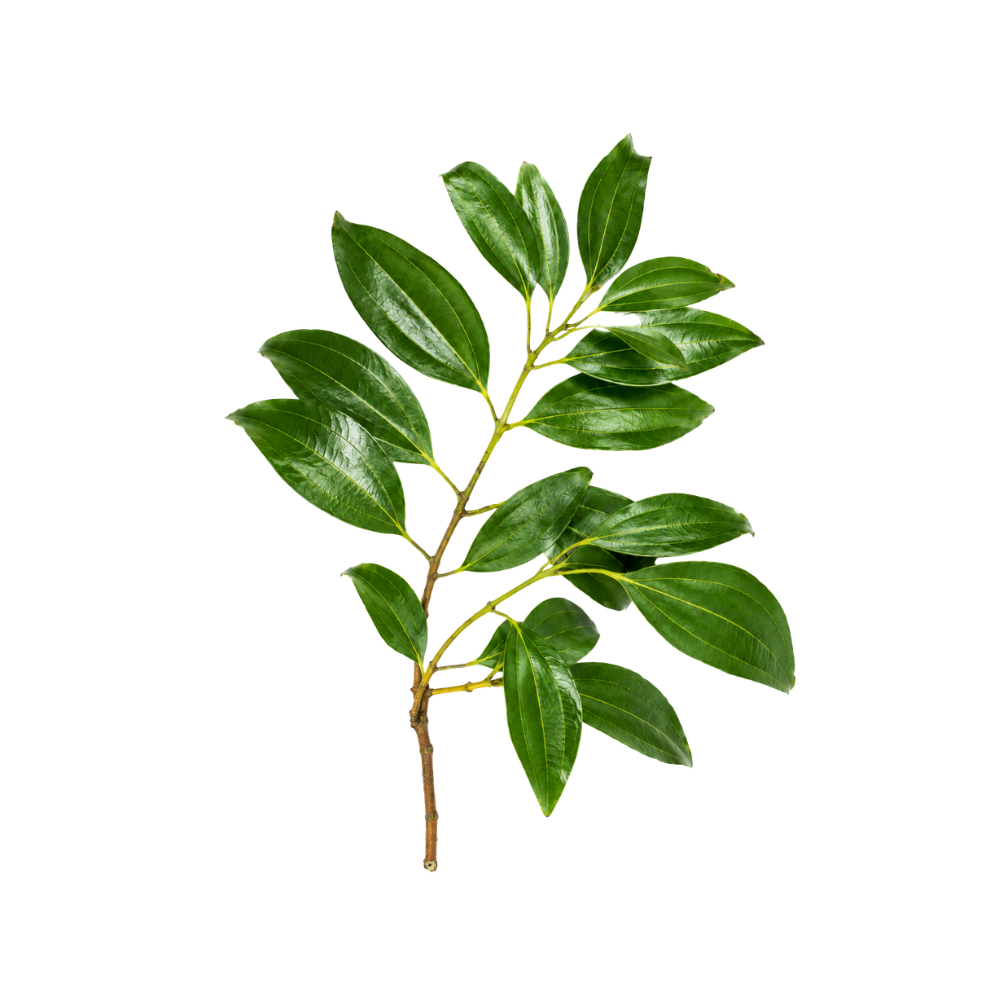
Materia Medica
Ceylon Cinnamon
Cinnamomum verum
Ceylon cinnamon (Cinnamomum verum) — "true cinnamon," a sweeter, more delicate bark with only trace coumarin, used like cassia but considered safe for regular, longer-term use.
Draft scaffold. This is the Cinnamomum verum (Ceylon / “true” cinnamon) monograph, split out from the cassia cinnamon page so the two species — which differ sharply in coumarin content and therefore in safe dosing — are documented separately. The botanical, phytochemistry and safety sections below are Ceylon-specific and complete; the Pharmacology & Research section is deliberately light and awaits a dedicated Ceylon research pass (see the note in that section). It is kept
draftuntil then.
What Is Ceylon Cinnamon?
Ceylon cinnamon (Cinnamomum verum, formerly C. zeylanicum) is the bark of a small evergreen tree native to Sri Lanka and southern India, and is the spice sold as “true cinnamon.” It is distinguished from the commoner, cheaper cassia cinnamon (Cinnamomum cassia) in two ways. In form, Ceylon bark is peeled into thin, brittle, multi-layered quills that crumble easily, rather than cassia’s single thick, hard curl. In chemistry, it has a sweeter, more delicate aroma and — most importantly — only trace amounts of coumarin, the hepatotoxic compound that limits how much cassia can safely be taken. That single difference is the main reason to reach for Ceylon over cassia when cinnamon is used regularly, in quantity, or medicinally.
How Is Ceylon Cinnamon Used?
Ceylon cinnamon is used in the same ways as cassia — as a warming culinary spice and in teas, decoctions, powders, tinctures and digestive, circulatory and blood-sugar-support formulas. Because it carries essentially no coumarin, it is the preferred form wherever a person wants to use cinnamon frequently or over a longer period rather than as an occasional flavouring. Like cassia, its warming, aromatic character pairs it with ginger, cardamom, clove, fennel and licorice in traditional formulas.
Traditional Uses
Across Western herbal, Ayurvedic and other traditions, cinnamon in general is regarded as warming and stimulating — used to support digestion, improve circulation, dispel cold and stimulate appetite. Ceylon is the “true cinnamon” of the Western and culinary tradition and of Ayurvedic practice in its native range. (In Traditional Chinese Medicine, the barks and twigs used as Rou Gui and Gui Zhi are typically cassia, C. cassia, not Ceylon — one reason the two are worth documenting separately.)
Botany
Ceylon cinnamon, or “true cinnamon” (Cinnamomum verum, syn. C. zeylanicum), is an evergreen tree of the laurel family (Lauraceae). The medicinal material is the inner bark, harvested from coppiced young shoots: the outer bark is scraped away and the delicate inner bark peeled and dried, curling into the fine, papery, multi-layered quills characteristic of the spice. Its aroma comes from a volatile oil dominated by cinnamaldehyde.
Ceylon is a distinct species from cassia (Chinese cinnamon, Cinnamomum cassia) and is the low-coumarin “true” cinnamon — the difference that makes it the safer choice for regular or higher-dose use (see Phytochemistry and Safety).
Distribution
Cinnamomum verum is native to Sri Lanka; it has long been associated horticulturally with the Malabar coast of southern India, though the strictly native range is the island of Sri Lanka. It is cultivated for bark across the wet tropics — Sri Lanka, the Seychelles, Madagascar and India.
Where it has escaped cultivation, Ceylon cinnamon can become a serious invader of island ecosystems: it is naturalized and invasive in the Seychelles (where it dominates large areas of forest canopy), Réunion and several other tropical islands.
Growing Conditions
- Wet-tropical evergreen tree, coppiced for bark; full sun to part shade; frost-tender (roughly USDA zones 10–12).
- Full cultivation detail lives on the companion farm-wiki grow guide for Cinnamomum verum (link to be added once that project’s public URL is confirmed).
Phytochemistry
Ceylon cinnamon’s medicine, like cassia’s, sits in the bark’s volatile oil, which is dominated by cinnamaldehyde — though at a somewhat lower share than in cassia (roughly 50–75% of Ceylon bark oil versus 70–90% in cassia). Around it, Ceylon carries proportionally more eugenol and a characteristic note of linalool, together with cinnamyl acetate, cinnamic acid, cinnamyl alcohol and caryophyllene. The non-volatile fraction adds astringent condensed tannins (procyanidins).
The feature that defines Ceylon against cassia is what it lacks: coumarin. Where cassia bark can carry appreciable, highly variable amounts (up to roughly 1% or more), Ceylon carries only a trace — typically negligible — which is why Ceylon has no coumarin-driven ceiling on how much can be taken safely 1,2Reference 1Quantification of flavoring constituents in cinnamon: high variation of coumarin in cassia bark from the German retail market and in authentic samplesView study →Reference 2Toxicology and risk assessment of coumarin: focus on human dataView study →.
Constituent Summary
Quantities are share of bark essential oil. † marks coumarin, the compound that distinguishes the two cinnamons: it is only a trace in Ceylon versus appreciable and variable in cassia, and this is the key compositional and safety difference between them 1,2Reference 1Quantification of flavoring constituents in cinnamon: high variation of coumarin in cassia bark from the German retail market and in authentic samplesView study →Reference 2Toxicology and risk assessment of coumarin: focus on human dataView study →.
Phenylpropanoid4 compounds2 with data
Monoterpene1 compound1 with data
Phenolic acid1 compoundno data
Sesquiterpene1 compoundno data
Coumarin1 compound1 with data
Flavanol1 compoundno data
Pharmacology & Research
Almost the entire modern clinical literature on “cinnamon” — dozens of randomised trials and more than ten meta-analyses on blood glucose, lipids and blood pressure — was conducted with cassia or with species left unspecified, because cassia is what most of the world (and most of the supplement market) sells as cinnamon. Dedicated trials of Ceylon cinnamon specifically are comparatively few. The honest position for this page, therefore, is that Ceylon most likely shares the modest metabolic signal seen for cinnamon as a class — a real but small reduction in fasting glucose, with little reliable effect on HbA1c — but that this cannot simply be assumed to transfer, and the effect sizes reported in the pooled literature belong to cassia, not to Ceylon.
- Best-established difference: Ceylon’s defining, well-documented property is its trace coumarin content, which removes the hepatotoxicity ceiling that limits cassia — the strongest, most reproducible fact about this species 1,2Reference 1Quantification of flavoring constituents in cinnamon: high variation of coumarin in cassia bark from the German retail market and in authentic samplesView study →Reference 2Toxicology and risk assessment of coumarin: focus on human dataView study →.
- Shared, cassia-derived signal: the metabolic evidence base (fasting-glucose reduction, unreliable HbA1c change, modest lipid/BP effects) is drawn overwhelmingly from cassia or unspecified-species trials; see the cassia cinnamon monograph for that evidence in detail, read with a species caveat.
- Thin, Ceylon-specific data: trials using C. verum explicitly are sparse, so species-specific effect sizes are uncertain.
- The caveat: antimicrobial and anti-inflammatory activity rests on the essential oil and isolated cinnamaldehyde at concentrations unlike the swallowed bark.
A dedicated Ceylon-specific research pass is pending. When a Ceylon (C. verum) research package is run through the loop, this section will be built out to the full evidence-by-indication structure used elsewhere on the site; until then it deliberately points to the shared, cassia-dominated evidence rather than restating it as if it were Ceylon’s own.
Dosage
Ceylon cinnamon is used at the same everyday amounts as any cinnamon — around 1–4 g of dried bark daily as a powder, tea or decoction, or 2–5 mL of tincture. The important practical difference from cassia is at the top of the range and over time: because Ceylon carries only trace coumarin, it does not attract cassia’s caution about keeping medicinal doses short-term, and it is the sensible choice for anyone taking cinnamon daily or in larger amounts. The essential oil is used only in very small professional doses and is not taken internally undiluted.
Safety & Pregnancy
Ceylon is one of the safer cinnamons: its trace coumarin content removes the hepatotoxicity ceiling that limits cassia, leaving only the cautions shared by any cinnamon — a possible additive effect with antidiabetic drugs and the irritancy of the concentrated essential oil.
- Antidiabetic drug interaction. concentrated supplements may add to blood-sugar-lowering medication — monitor glucose if combining.
- Essential oil is an irritant. it can irritate skin and mucous membranes and should not be swallowed undiluted.
- Low coumarin. unlike cassia, only a trace of coumarin — no hepatotoxicity-driven ceiling, so it is suited to regular, longer-term and higher-dose use.
- Well tolerated. generally regarded as safe in culinary and moderate medicinal amounts.
Full safety & interactions detail
Ceylon cinnamon is generally regarded as safe in culinary and moderate medicinal amounts, and — unlike cassia — is considered safe for regular, longer-term use because it contains only trace coumarin, the hepatotoxicant that caps cassia intake 1,2Reference 1Quantification of flavoring constituents in cinnamon: high variation of coumarin in cassia bark from the German retail market and in authentic samplesView study →Reference 2Toxicology and risk assessment of coumarin: focus on human dataView study →. The main remaining cautions apply to any cinnamon: concentrated supplements may add to the blood-sugar-lowering effect of antidiabetic medications, so blood glucose should be monitored if the two are combined, and the concentrated essential oil can irritate the skin and mucous membranes and should not be swallowed undiluted.
Ceylon cinnamon is regarded as safe as a culinary spice in normal food amounts during pregnancy and lactation. Concentrated supplements and essential oil have not been formally evaluated in either, so medicinal or concentrated use is best avoided in the absence of data rather than assumed safe.
References
- Woehrlin, F., Fry, H., Abraham, K., & Preiss-Weigert, A. (2010). Quantification of flavoring constituents in cinnamon: high variation of coumarin in cassia bark from the German retail market and in authentic samples. Journal of Agricultural and Food Chemistry, 58(19), 10568–10575. https://pubmed.ncbi.nlm.nih.gov/20853872/
- Abraham, K., Wöhrlin, F., Lindtner, O., Heinemeyer, G., & Lampen, A. (2010). Toxicology and risk assessment of coumarin: focus on human data. Molecular Nutrition & Food Research, 54(2), 228–239. https://pubmed.ncbi.nlm.nih.gov/20024932/