Materia Medica
Chaga
Inonotus obliquus
Chaga (Inonotus obliquus) — a birch-grown medicinal mushroom prized as an immunomodulator and antioxidant tonic for immune and overall health.
What Is Chaga?
Chaga is a slow-growing tree fungus found in cold climates around the world.
This fungus is thought to be one of the best immunomodulators in the natural world. It has a long history of use as medicine, has been the subject of dozens of clinical trials, and is the source product for over 40 pharmaceutical oncology medications.
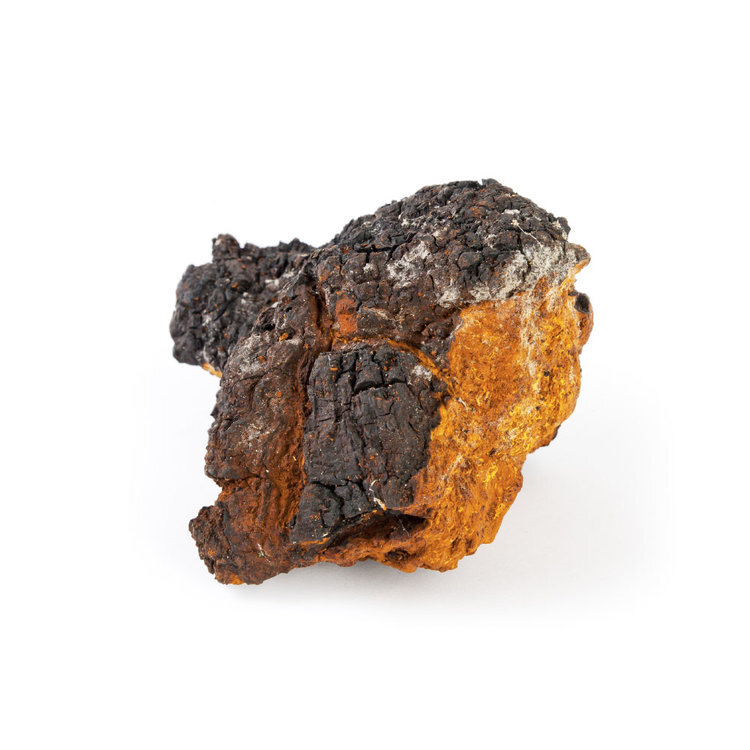
The fungus itself doesn’t have an appetizing appearance, resembling burnt, diseased growth protruding from birch or alder trees. Once harvested chaga looks more like a rock than a herb.
Despite its appearance, chaga makes a delicous tea resembling the color and flavor of coffee — without the caffeine.
What Is Chaga Used For?
Chaga is primarily used as an immune tonic. It’s consumed in capsules, as a strong tea, or in tincture form for supporting and stimulating several different parts of the immune system.
Medicinally, the msot common use for the herb is as an adjunctive cancer treatment, and for compromised immune systems.
Herbalists often use chaga for heart disease, high cholesterol, hypertension, hyperglycemia, and atherosclerosis. This fungus contains an array of antioxidant, immune-boosting, anti-inflammatory, and adaptogenic compounds that give it a long list of potential uses.
Traditional Uses
Chaga was commonly used for conditions such as cancer, ulcers, infection, and heart disease. In Russia and Siberia, chaga was used for general health-promoting effects. People drank chaga tea to prevent illness and infection and promote overall vitality and health.
Northern Europe
A lot of the traditional knowledge we have of the fungus today comes from the Khanty people of Siberia (formerly called the Ostyaks). This group had a strong affinity for the fungus which grew abundantly in the birch forests they lived in. They used it as an anthelmintic to kill parasites, to treat tubuculosis (TB), for digestive disorders (gastritis, ulcers, etc), for liver disease, and to prevent or treat heart dissease.
The Khanty people used chaga as a tea as it’s commonly used today — but they also smoked it, or topically by burning it and using the ash to make an antiseptic soap.
In some parts of Russia where chaga consumption was common, the USSR Ministry of Health noticed dramatic reductions in cancer rates among these popularions and attributed it to the consumption of chaga. It was then added to the official Soviet Pharmacopoea in 1955.
Asia
Chaga can also be found in the cold regions of Korea, Japan, and China. Here, chaga was used for its benefits on metabolic function, heart function, and for its antiseptic, anti-inflammatory, and antioxidant activities.
Harvesting, Collection & Preparation
Harvesting chaga is difficult, and should only be done by experienced wild crafters to avoid damaging or killing the host tree. Usually, the wild-crafter will climb up to where the chaga is located, and using a saw or chisel, they’ll cut away chunks of the chaga — being careful not to damage the host tree underneath or remove too much of the fungus.
Preparing chaga can be difficult as well unless you buy it pre-ground or chopped. This fungus is extremely tough and hard to break into smaller pieces to make a tea with.
One of the best ways to prepare chaga for tea is to cut it into smaller pieces with a ban-saw. Smaller chunks can be added to a bag and beaten with a hammer into smaller pieces.
Chaga can then be added to a pot and simmered for 10-15 minutes to produce a dark, mildly bitter tea.
Pharmacology & Medical Research
Inflammation
Animal studies on chaga has revealed potent anti-microbial effects on experimental models of colitis [5]. Other animal studies have tested the effects of chaga on broader inflammatory models. One such study found that chaga extracts inhibited key inflammatory messengers such as nitric oxide (NO), prostaglandin E2 (PGE2) and tumor necrosis factor-α (TNF-α) [14].
Cancer
One of the most well-studied aspects of chaga is its effects on cancer. None of these studies are clinical trials. The majority of research involves in vitro or animal research.
There are hundreds of medicinal compounds in chaga alone, but three in-particular stand out in the literature for their potential anti-cancer effects — betulin, betulinic acid, and inotodiol.
The tetracyclic triterpene called inotodiol has been of particular interest by the scientific community studying the effects of chaga for cancer therapy. This compound has been shown to have direct anti-proliferative activities on lung adenocarcinoma cells (A549) [8].
Chaga grown on birch trees also contain some of the medicinal compounds from the host tree — such as betulin or betulinic acid. Both of these compounds have shown promising inhibitory activity on cancer cell lines as well (cutaneous, ovarian, and pulmonary) [9,10,11].
Immunomodulation
Chaga endo-polysaccharide extract (BELYU1102) was shown to possess powerful immuno-stimulant activity in cell cultures. The extract was shown to increase proliferation of IgM antibodies in B cells, and lead to an increase in nitrite production, IL-6, IL-1, TNF-alpha, and iNOS in macrophages [4]. The endopolysaccharide fraction used in this study did not lead to a proliferation of T cells, the IL-2 expression of Th1 cells, or the IL-4 expression of Th2 cells. This suggests that chaga doesn’t directly kill cancer cells, but may lead to indirect inhibition of cancer growth through immuno-stimulation.
Metabolic Disorders
Chaga has a long history of use for metabolic disorders. Animal studies involving overfed, obese mice given chaga extracts had improved insulin sensitivity and reduced adiposity [6].
One animal study found a 31% reduction in blood sugar levels of diabetic mice given a chaga extract compared to the control group after just 3-weeks [12].
The mechanism of action for this effect is thought to be through an increase peroxisome proliferator-activated receptors γ transcriptional activities — which is a common therapeutic target for metabolic disorders such as diabetes and dyslipidaemia [7].
Pharmacology & Active Ingredients
Chaga contains hundreds of different compounds — many of which are still being explored for their use as medicine. The fungus is rich in compounds including polysaccharides, triterpenes (inotodiol), polyphenols, and various minerals.
Mycology
Chaga is one of the strangest things gathered for the herbal cabinet: the hard, black, cracked mass that grows out of a wounded birch trunk is not a mushroom in the usual sense but a sclerotium — a dense, sterile knot of fungal tissue. Its outside looks exactly like burnt charcoal, blackened by melanin, while the inside is a rusty golden-brown. The true, spore-bearing fruiting body is a different, fragile thing that forms hidden under the bark, usually only once the tree has died — so what is harvested is the sterile conk, not the fungus’s reproductive structure.
The fungus is a parasite of living birch, slowly rotting the wood from within, and its black conk can keep growing on the tree for many years.
Distribution
Chaga is a fungus of the cold north. It grows across the circumboreal birch forests of the Northern Hemisphere — most abundantly in Russia, Scandinavia and eastern Europe, which supply most of the world’s chaga, and more rarely in North America and East Asia. Wherever it occurs it is bound to birch and to a cool, high-latitude climate.
Cultivation
- Chaga is almost entirely wild-harvested from living birch trees rather than farmed.
- Cultivation is slow and difficult: a conk adds only a centimetre or two a year and takes many years — often a decade or more — to reach a useful size, even when birch is deliberately inoculated.
- It does not fruit well in artificial culture, and lab-grown mycelium does not reproduce the chemistry of the wild birch-grown conk.
- Because it grows so slowly and demand is high, over-harvesting is a real concern — sustainable practice leaves part of the conk to regrow and avoids stripping trees bare.
- Full cultivation detail lives on the companion farm-wiki grow guide for Inonotus obliquus (link to be added once that project’s public URL is confirmed).
Phytochemistry
Chaga’s chemistry is unusual because the sclerotium combines fungal metabolites with triterpenes scavenged from its birch host. Three groups carry most of the documented activity. The immunomodulating bulk comes from polysaccharides, chiefly beta-glucans, which can reach ~35% of a purified extract (commercial products are typically standardised to a minimum of ~8%) 15Reference 15Chemical characterization and biological activity of Chaga (Inonotus obliquus), a medicinal “mushroom”View study →. The pigment that makes the conk black is a water-soluble melanin complex — an antioxidant fraction reported to make up as much as 50–60% of the crude extractives 16Reference 16Melanin complex of the fungus Inonotus obliquus.
The third group is the lanostane triterpenes and sterols, headlined by inotodiol (the most-studied anticancer marker, present at up to ~0.2% of the dried fungus) alongside lanosterol and 3β-Hydroxylanosta-8,24-dien-21-al 15Reference 15Chemical characterization and biological activity of Chaga (Inonotus obliquus), a medicinal “mushroom”View study →. The birch-derived triterpenes betulin and betulinic acid occur at much lower, microgram-per-gram levels and vary strongly with the host tree 15Reference 15Chemical characterization and biological activity of Chaga (Inonotus obliquus), a medicinal “mushroom”View study →. A range of polyphenols rounds out the antioxidant profile.
Constituent Summary
Amounts mix units (% of purified extract, % of dried fungus, % of crude extractives, µg/g) so the column is headed “Amount”; figures are highly dependent on host tree, extraction method and growing region 15,16Reference 15Chemical characterization and biological activity of Chaga (Inonotus obliquus), a medicinal “mushroom”View study →Reference 16Melanin complex of the fungus Inonotus obliquus.
Polysaccharide2 compounds2 with data
Other1 compound1 with data
Triterpene5 compounds3 with data
Phenolic1 compoundno data
Safety & Pregnancy
Chaga is widely regarded as safe even at high doses and with long-term use; the notable cautions are drug interactions — it may antagonise anti-diabetic and blood-thinning drugs and could counteract immunosuppressant medication.
- Immunosuppressant interaction. its direct immunostimulant activity could weaken or negate immunosuppressive medication.
- Anti-diabetic & blood-thinner interaction. avoid alongside these drugs due to potential antagonistic reactions.
- Widely considered safe. no expected side effects from high doses or long-term use.
- No pregnancy toxicity reports. no reported complications from use in pregnancy, though data are limited.
Full safety & interactions detail
Chaga is widely considered a safe herb, with no expected side effects from high doses, or long-term use.
With that said, anybody taking anti-diabetic or blood-thinner medications should avoid using chaga due to potential antagonistic reactions.
People on immuno-suppresive medications should also avoid this fungus. Chaga has direct immunostimulant activity and could weaken or negate the effects of the medication.
There are no reports of toxicity or complications from using chaga during pregnancy, but it has not been formally studied in pregnancy or lactation, so its safety at medicinal doses is not established. As chaga has direct immunostimulant activity, concentrated or long-term use during pregnancy and breastfeeding is best approached with caution rather than assumed safe.
References
- Lee, S. H., Hwang, H. S., & Yun, J. W. (2009). Antitumor activity of water extract of a mushroom, Inonotus obliquus, against HT‐29 human colon cancer cells. Phytotherapy Research, 23(12), 1784-1789.
- Shibnev, V. A., Mishin, D. V., Garaev, T. M., Finogenova, N. P., Botikov, A. G., & Deryabin, P. G. (2011). Antiviral activity of Inonotus obliquus fungus extract towards infection caused by hepatitis C virus in cell cultures. Bulletin of experimental biology and medicine, 151(5), 612.
- Shibnev, V. A., Garaev, T. M., Finogenova, M. P., Kalnina, L. B., & Nosik, D. N. (2015). Antiviral activity of aqueous extracts of the birch fungus Inonotus obliquus on the human immunodeficiency virus. Voprosy virusologii, 60(2), 35-38.
- Kim, Y. O., Han, S. B., Lee, H. W., Ahn, H. J., Yoon, Y. D., Jung, J. K., … & Shin, C. S. (2005). Immuno-stimulating effect of the endo-polysaccharide produced by submerged culture of Inonotus obliquus. Life Sciences, 77(19), 2438-2456.
- Choi, S. Y., Hur, S. J., An, C. S., Jeon, Y. H., Jeoung, Y. J., Bak, J. P., & Lim, B. O. (2010). Anti-inflammatory effects of Inonotus obliquus in colitis induced by dextran sodium sulfate. BioMed Research International, 2010.
- Lee, J. H., & Hyun, C. K. (2014). Insulin‐sensitizing and beneficial lipid‐metabolic effects of the water‐soluble melanin complex extracted from Inonotus obliquus. Phytotherapy research, 28(9), 1320-1328.
- Joo, J. I., Kim, D. H., & Yun, J. W. (2010). Extract of Chaga mushroom (Inonotus obliquus) stimulates 3t3‐l1 adipocyte differentiation. Phytotherapy research, 24(11), 1592-1599.
- Zhong, X. H., Wang, L. B., & Sun, D. Z. (2011). Effects of inotodiol extracts from Inonotus obliquus on proliferation cycle and apoptotic gene of human lung adenocarcinoma cell line A549. Chinese journal of integrative medicine, 17(3), 218-223.
- Dehelean, C. A., Şoica, C., Ledeţi, I., Aluaş, M., Zupko, I., Gǎluşcan, A., … & Munteanu, M. (2012). Study of the betulin enriched birch bark extracts effects on human carcinoma cells and ear inflammation. Chemistry Central Journal, 6(1), 137.
- Fulda, S. (2008). Betulinic acid for cancer treatment and prevention. International journal of molecular sciences, 9(6), 1096-1107.
- Drag, M., Surowiak, P., Drag-Zalesinska, M., Dietel, M., Lage, H., & Oleksyszyn, J. (2009). Comparision of the cytotoxic effects of birch bark extract, betulin and betulinic acid towards human gastric carcinoma and pancreatic carcinoma drug-sensitive and drug-resistant cell lines. Molecules, 14(4), 1639-1651.
- Sun, J. E., Ao, Z. H., Lu, Z. M., Xu, H. Y., Zhang, X. M., Dou, W. F., & Xu, Z. H. (2008). Antihyperglycemic and antilipidperoxidative effects of dry matter of culture broth of Inonotus obliquus in submerged culture on normal and alloxan-diabetes mice. Journal of ethnopharmacology, 118(1), 7-13.
- Pan, H. H., Yu, X. T., Li, T., Wu, H. L., Jiao, C. W., Cai, M. H., … & Peng, T. (2013). Aqueous extract from a Chaga medicinal mushroom, Inonotus obliquus (higher basidiomyetes), prevents herpes simplex virus entry through inhibition of viral-induced membrane fusion. International journal of medicinal mushrooms, 15(1).
- Park, Y. M., Won, J. H., Kim, Y. H., Choi, J. W., Park, H. J., & Lee, K. T. (2005). In vivo and in vitro anti-inflammatory and anti-nociceptive effects of the methanol extract of Inonotus obliquus. Journal of Ethnopharmacology, 101(1-3), 120-128.
- Glamočlija, J., Ćirić, A., Nikolić, M., Fernandes, Â., Barros, L., Calhelha, R. C., Ferreira, I. C. F. R., Soković, M., & van Griensven, L. J. L. D. (2015). Chemical characterization and biological activity of Chaga (Inonotus obliquus), a medicinal “mushroom”. Journal of Ethnopharmacology, 162, 323-332. doi:10.1016/j.jep.2014.12.069 (inotodiol, betulin and betulinic acid content; β-glucan; host-tree variation).
- Babitskaya, V. G., Scherba, V. V., & Ikonnikova, N. V. (2000). Melanin complex of the fungus Inonotus obliquus. Applied Biochemistry and Microbiology, 36(4), 377-381. (water-soluble melanin complex, ~50–60% of crude extractives).