
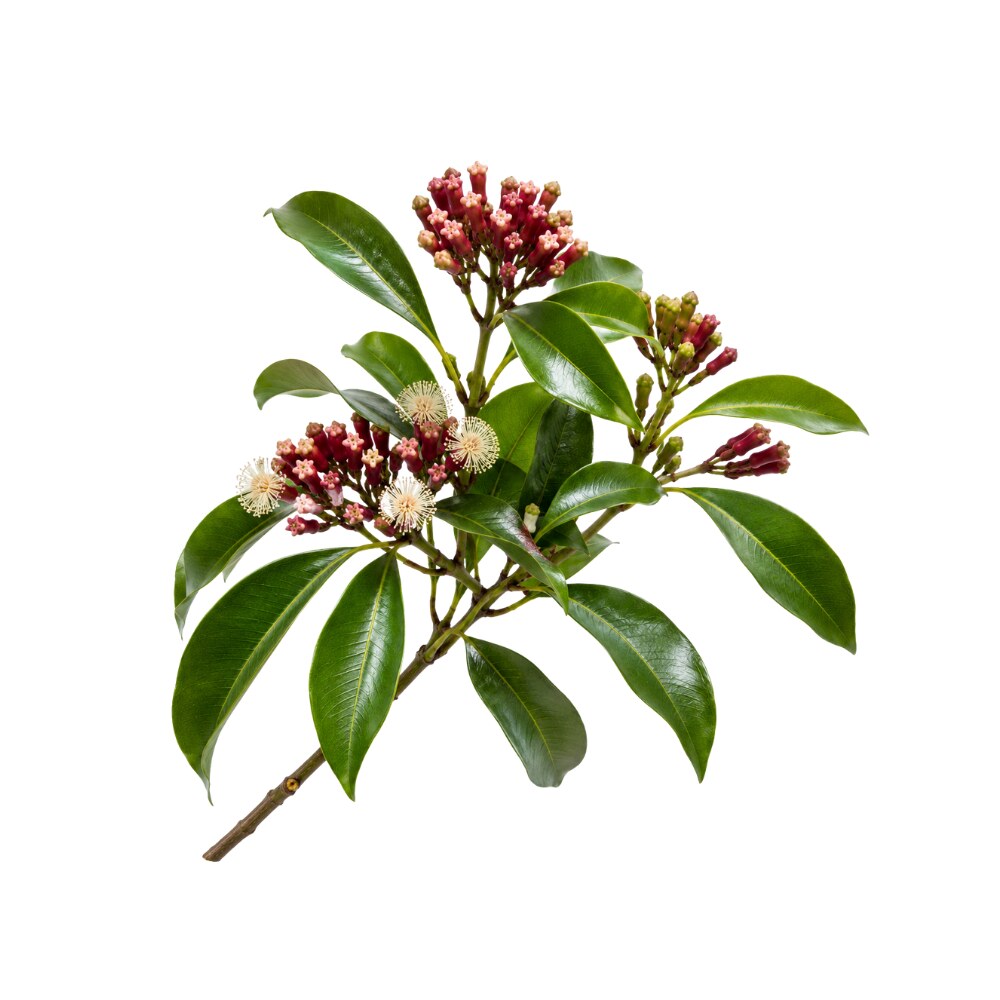
What is Clove?
Cloves are the dried, unopened flower buds of an evergreen tropical tree (Syzygium aromaticum) originally native to the Maluku (“Spice”) Islands of Indonesia. Intensely aromatic and warming, they have been a prized spice and medicine in global trade for centuries.
Traditional & Modern Uses
Clove is a familiar culinary spice, but it is equally well known as a folk remedy — most famously, clove or clove oil applied to a sore tooth or gum for its numbing, pain-relieving effect, a use that continues in modern dentistry. Traditionally it has also been used as a carminative for digestion, an antiseptic, and a warming remedy for colds. Cloves are an ingredient in clove cigarettes (kreteks) and some herbal smoking blends.
Botany
Clove is the dried, unopened flower bud of Syzygium aromaticum, a broadleaf evergreen tree in the myrtle family (Myrtaceae). Kew treats this as the accepted name, subsuming the familiar older synonyms Eugenia caryophyllata, Eugenia aromatica and Caryophyllus aromaticus — the Eugenia and Caryophyllus placements are outdated. The tree is a modest, densely pyramidal evergreen, reaching roughly 4.5–9 m, with leathery, glossy, aromatic leaves.
The spice is harvested before bloom: the flower buds are picked while the stamens and style are still tightly wrapped inside the unopened petals, then dried — the bud yielding the eugenol-rich essential oil behind clove’s aroma and its traditional dental and analgesic use. The common name comes from the French clou (“nail”), for the bud’s shape.
Distribution
Syzygium aromaticum is native to the Maluku Islands (the Moluccas, or “Spice Islands”) of eastern Indonesia — Kew places its natural range specifically in the North Moluccas. It grows in the wet tropical biome and demands hot, humid, frost-free conditions.
Beyond its homeland it is now grown throughout the tropics as a plantation spice crop, with production historically centred on Zanzibar and Pemba, Madagascar, Sri Lanka and Indonesia itself. It is cold-sensitive, restricted outdoors to roughly USDA zones 11–12, and is not considered a weed.
Growing Conditions
- Wet-tropical evergreen tree; full sun to part shade; frost-tender (roughly USDA zones 11–12).
- Full cultivation detail lives on the companion farm-wiki grow guide for Syzygium aromaticum (link to be added once that project’s public URL is confirmed).
Pharmacology & Research
Clove has a large but lopsided evidence base: many hundreds of laboratory papers on its essential oil and on eugenol, its dominant phenylpropanoid, but only a handful of human trials — and almost all of those concern its one classical use, topical numbing of the mouth. Eugenol makes up roughly 70–90% of clove-bud oil and carries most of its documented bioactivity 30,31,32Reference 30ReviewSyzygium aromaticum L. (Myrtaceae): Traditional Uses, Bioactive Chemical Constituents, Pharmacological and Toxicological Activities — [review]View study →Reference 31ReviewClove Essential Oil (Syzygium aromaticum LView study →Reference 32ReviewClove (Syzygium aromaticum): a precious spice — [review]View study →. The single strongest study is a randomised human trial in which a homemade clove gel matched benzocaine 20% as a topical anaesthetic before needle sticks 1Reference 1RCTThe effect of clove and benzocaine versus placebo as topical anesthetics — [randomised controlled trial]View study →, a result that fits eugenol’s documented block of voltage-gated sodium channels 2,3Reference 2In vitroEugenol interacts with cardiac sodium channel and reduces heart excitability and arrhythmias — [animal in vivo / in vitro]View study →Reference 3ReviewAnesthetic Agents of Plant Origin: A Review of Phytochemicals with Anesthetic Activity — [review]View study →. Beyond the mouth, the literature is overwhelmingly preclinical: robust antibacterial, antifungal, antioxidant and anti-inflammatory activity in vitro, and metabolic, hepatic and cardiovascular signals in rodents that have not been tested in people. A recurring caveat runs through all of it — most work uses the concentrated essential oil or purified eugenol at doses far above what a culinary clove or a whole-bud preparation delivers, and eugenol shows a sharp dose-reversal (protective low, damaging high) in several organ systems.
- Best-supported: topical dental/oral analgesia — a human RCT puts clove gel on par with benzocaine 1Reference 1RCTThe effect of clove and benzocaine versus placebo as topical anesthetics — [randomised controlled trial]View study →, mechanistically anchored to sodium-channel block 2,3Reference 2In vitroEugenol interacts with cardiac sodium channel and reduces heart excitability and arrhythmias — [animal in vivo / in vitro]View study →Reference 3ReviewAnesthetic Agents of Plant Origin: A Review of Phytochemicals with Anesthetic Activity — [review]View study →; broad antibacterial and antifungal action of the oil in vitro 6,7,14Reference 6ReviewAntimicrobial activity of eugenol and essential oils containing eugenol: A mechanistic viewpoint — [review]View study →Reference 7In vitroAntibacterial and antibiofilm mechanism of eugenol against antibiotic resistant Vibrio parahaemolyticus — [in vitro]View study →Reference 14In vitroClove Essential Oil and Its Main Constituent, Eugenol, as Potential Natural Antifungals against Candida sppView study →.
- Emerging, worth watching: antiplatelet and cardioprotective effects of eugenol (human platelets ex vivo plus mouse models) 19,20Reference 19AnimalEugenol Suppresses Platelet Activation and Mitigates Pulmonary Thromboembolism in Humans and Murine Models — [human ex vivo and mouse model]View study →Reference 20ReviewCardiovascular protective properties of the natural product eugenol — [review]View study →; a low-dose gastroprotective effect in rodents 16,17Reference 16AnimalGastroprotective effect of low dose Eugenol in experimental rats against ethanol induced toxicity — [animal in vivo (rat model)]View study →Reference 17AnimalMechanisms of gastroprotective effect of eugenol in indomethacin-induced ulcer in rats — [animal in vivo (rat model)]View study →.
- Mechanistically thin: antidiabetic, hepatoprotective and anticancer claims rest on rodent and cell-line work, with a human spice-trial meta-analysis finding no glycaemic benefit for clove 23,24,25Reference 23Meta-analysisEffect of Aromatic Herbs and Spices Present in the Mediterranean Diet on the Glycemic Profile in Type 2 Diabetes Subjects: A Systematic Review and Meta-Analysis — [systematic review and meta-analysis]View study →Reference 24AnimalInhaling Eugenol Inhibits NAFLD by Activating the Hepatic Ectopic Olfactory Receptor Olfr544 and Modulating the Gut Microbiota — [animal in vivo (mouse model)]View study →Reference 25In vitroAnticancer potential of eugenol in hepatocellular carcinoma through modulation of oxidative stress, inflammation, apoptosis, and proliferation mechanisms — [animal in vivo (rat model) and in vitro]View study →.
- The caveat: nearly all systemic evidence uses essential oil or purified eugenol at supra-culinary doses, and eugenol reverses from protective to toxic as the dose rises 18,26Reference 18AnimalDual role of eugenol on chronic gastric ulcer in rats: Low-dose healing efficacy and the worsening gastric lesion in high doses — [animal in vivo (rat model)]View study →Reference 26AnimalHigh doses of eugenol cause structural and functional damage to the rat liver — [animal in vivo (rat model)]View study → — there is no standardised oral clove medicine or dose.
1. Topical & dental analgesic
This is clove’s signature use and its best-evidenced one. In a randomised, subject-blinded trial in 73 adults, a homemade eugenol-based clove gel produced significantly lower pain scores than placebo and was statistically indistinguishable from benzocaine 20% gel before needle insertion into oral mucosa 1Reference 1RCTThe effect of clove and benzocaine versus placebo as topical anesthetics — [randomised controlled trial]View study →; a paediatric comparison found a clove-papaya gel broadly comparable to benzocaine, though not superior to pre-cooling 1Reference 1RCTThe effect of clove and benzocaine versus placebo as topical anesthetics — [randomised controlled trial]View study →. The mechanism is well characterised: eugenol inhibits voltage-gated sodium channels in excitable tissue, the same target class as conventional local anaesthetics, and is catalogued among plant-derived anaesthetic phytochemicals 2,3Reference 2In vitroEugenol interacts with cardiac sodium channel and reduces heart excitability and arrhythmias — [animal in vivo / in vitro]View study →Reference 3ReviewAnesthetic Agents of Plant Origin: A Review of Phytochemicals with Anesthetic Activity — [review]View study →. Eugenol is also the active principle of zinc-oxide-eugenol dental dressings, and clove-containing preparations appear in reviews of local interventions for post-extraction “dry socket” and orofacial pain 4,5Reference 4Systematic reviewLocal interventions for the management of alveolar osteitis (dry socket) — [systematic review]View study →Reference 5Meta-analysisHerbal extracts in orofacial pain: a systematic review and direct and indirect meta-analysis — [systematic review and meta-analysis]View study →. Clove also features as one of nine herbs in SS-cream, a topical formula studied for premature ejaculation — another topical local-anaesthetic application — though clove’s specific contribution cannot be isolated from the multi-herb blend 28,29Reference 28RCTClinical study of SS-cream in patients with lifelong premature ejaculation — [randomised controlled trial]View study →Reference 29Meta-analysisTopical Anesthetics and Premature Ejaculation: A Systematic Review and Meta-Analysis — [systematic review and meta-analysis]View study →. The evidence is specifically for topical, local application; it does not support systemic analgesia.
Gap: the human RCTs are small, single-centre, and use non-standardised “homemade” gels; no trial defines an effective eugenol concentration or compares durability against lidocaine.
2. Antibacterial
Clove oil and eugenol show consistent, broad-spectrum antibacterial activity in vitro against Gram-positive and Gram-negative organisms and oral pathogens, with mechanistic work attributing this to disruption of the cytoplasmic membrane, leakage of cell contents, and interference with efflux and biofilm formation 6Reference 6ReviewAntimicrobial activity of eugenol and essential oils containing eugenol: A mechanistic viewpoint — [review]View study →. Against antibiotic-resistant Vibrio parahaemolyticus, eugenol at 0.1–0.6% reduced biofilm mass, metabolic activity and extracellular polysaccharide, eradicating established biofilms 7Reference 7In vitroAntibacterial and antibiofilm mechanism of eugenol against antibiotic resistant Vibrio parahaemolyticus — [in vitro]View study →. Encapsulated clove essential oil retains antibacterial and antioxidant activity, pointing toward food-preservation uses 8,9Reference 8In vitroAntimicrobial and antioxidant activity of unencapsulated and encapsulated clove (Syzygium aromaticum, L.) essential oil — [in vitro]View study →Reference 9Systematic reviewAntioxidant Application of Clove (Syzygium aromaticum) Essential Oil in Meat and Meat Products: A Systematic Review — [review]View study →. All of this is laboratory work on the oil or purified compound at concentrations well above dietary exposure; there is no human infection endpoint.
Gap: no clinical antibacterial data; MICs are achieved with concentrated oil, not whole clove, and systemic antibacterial use is not supported.
3. Antioxidant
Clove is among the most phenolic-rich spices, and both the essential oil and the bud’s non-volatile fraction (gallic acid, hydrolysable tannins, caffeic acid, kaempferol) show strong radical-scavenging capacity in standard in-vitro assays 9,10Reference 9Systematic reviewAntioxidant Application of Clove (Syzygium aromaticum) Essential Oil in Meat and Meat Products: A Systematic Review — [review]View study →Reference 10In vitroClove (Syzygium aromaticum) Pods: Revealing Their Antioxidant Potential via GC-MS Analysis and Computational Insights — [in vitro]View study →. Eugenol itself is a potent antioxidant, and its redox activity is proposed as the upstream driver of much of clove’s anti-inflammatory and tissue-protective behaviour 11Reference 11ReviewAn Overview on the Anti-inflammatory Potential and Antioxidant Profile of Eugenol — [review]View study →. The signal is highly replicated but confined to chemical and cell-based assays; there is no human biomarker trial (e.g. plasma oxidative-stress markers after clove intake).
Gap: antioxidant capacity in a test tube does not establish in-vivo antioxidant benefit; no human endpoint exists.
4. Anti-inflammatory
Eugenol suppresses inflammatory signalling in cell and animal models: in murine macrophages, clove extract and eugenol inhibited LPS-induced IL-6 (and clove additionally IL-1β) production, with the effect attributed to suppression of the NF-κB pathway 12Reference 12In vitroClove and eugenol in noncytotoxic concentrations exert immunomodulatory/anti-inflammatory action on cytokine production by murine macrophages — [in vitro]View study →. A structural analogue, ortho-eugenol, showed anti-nociceptive and anti-inflammatory activity in rodents 13Reference 13AnimalOrtho-eugenol exhibits anti-nociceptive and anti-inflammatory activities — [animal in vivo]View study →, and reviews map eugenol’s action onto NF-κB, COX-2/PGE2 and cytokine pathways 11Reference 11ReviewAn Overview on the Anti-inflammatory Potential and Antioxidant Profile of Eugenol — [review]View study →. The β-caryophyllene component adds a plausible CB2-receptor-mediated anti-inflammatory contribution. No human inflammatory-disease trial has been done.
Gap: entirely preclinical; doses and delivery in cell/rodent studies do not translate to any defined human anti-inflammatory regimen.
5. Antifungal
Clove essential oil and eugenol are reliably active against Candida species in vitro, including azole-resistant clinical isolates, and show synergy when combined with conventional antimycotics, lowering the effective antifungal concentration 14Reference 14In vitroClove Essential Oil and Its Main Constituent, Eugenol, as Potential Natural Antifungals against Candida sppView study →. In liquid- and vapour-phase assays clove oil inhibited C. albicans, C. glabrata and C. tropicalis, though it was not always the most potent oil tested 15Reference 15In vitroLiquid and vapour-phase antifungal activities of essential oils against Candida albicans and non-albicans Candida — [in vitro]View study →. This supports interest in clove as an adjunct or topical antifungal but remains laboratory-stage.
Gap: no clinical antifungal data; activity is demonstrated against isolates in vitro, not in treated infections.
6. Gastroprotective
Low-dose eugenol protects the rodent stomach through convergent mechanisms. In an ethanol-ulcer rat model, low-dose eugenol reduced the ulcer index, raised mucus and prostaglandin output, and lowered lipid peroxidation and TNF-α/IL-6 16Reference 16AnimalGastroprotective effect of low dose Eugenol in experimental rats against ethanol induced toxicity — [animal in vivo (rat model)]View study →; against indomethacin-induced ulcers, protection was mediated by opening ATP-sensitive potassium channels, free-radical scavenging, reduced acid-pepsin secretion and increased mucin 17Reference 17AnimalMechanisms of gastroprotective effect of eugenol in indomethacin-induced ulcer in rats — [animal in vivo (rat model)]View study →. Critically, the effect is biphasic: eugenol at 1 mg/kg accelerated gastric-ulcer healing by up to 52%, but at 100 mg/kg it enlarged the ulcerated area 18Reference 18AnimalDual role of eugenol on chronic gastric ulcer in rats: Low-dose healing efficacy and the worsening gastric lesion in high doses — [animal in vivo (rat model)]View study → — a dose-reversal that is central to interpreting any “clove for the stomach” claim.
Gap: protection is rat-model-only and strictly dose-dependent; the same compound worsens ulcers at high dose, and no human gastric study exists.
7. Cardiovascular & antiplatelet
Eugenol shows two cardiovascular signals of note. At a low 2 µM concentration it inhibited collagen- and arachidonic-acid-induced aggregation of human platelets ex vivo and reduced pulmonary thromboembolism in mice, without affecting thrombin- or U46619-induced aggregation 19Reference 19AnimalEugenol Suppresses Platelet Activation and Mitigates Pulmonary Thromboembolism in Humans and Murine Models — [human ex vivo and mouse model]View study →. Separately, eugenol interacts with cardiac sodium channels to produce negative inotropic/chronotropic and antiarrhythmic effects in guinea-pig atria 2Reference 2In vitroEugenol interacts with cardiac sodium channel and reduces heart excitability and arrhythmias — [animal in vivo / in vitro]View study →. Reviews consolidate broader cardioprotective actions — anti-atherosclerotic, lipid- and blood-pressure-lowering — from preclinical data 20Reference 20ReviewCardiovascular protective properties of the natural product eugenol — [review]View study →. The human platelet work is ex vivo, not a clinical outcome; the antiplatelet action is also the basis of a bleeding-interaction caution (see Safety).
Gap: no cardiovascular outcome or dosing trial in humans; the antiplatelet effect is a double-edged finding that also flags interaction risk.
8. Antidiabetic
Rodent evidence is positive but human evidence is not. A meta-analysis of hyperglycaemic murine studies found eugenol lowered glucose and carbohydrate-metabolising-enzyme activity, improved lipids and reduced oxidative/renal/hepatic damage, without changing insulin 21Reference 21Meta-analysisEffect of eugenol treatment in hyperglycemic murine models: A meta-analysis — [meta-analysis (animal)]View study →; mechanistically, eugenol increased skeletal-muscle GLUT4 translocation and AMPK phosphorylation to enhance glucose uptake in diabetic mice 22Reference 22AnimalEugenol improves high-fat diet/streptomycin-induced type 2 diabetes mellitus (T2DM) mice muscle dysfunction by alleviating inflammation and increasing muscle glucose uptake — [animal in vivo (mouse model)]View study →. However, a systematic review and meta-analysis of Mediterranean-diet spices in people with type 2 diabetes found that cinnamon, turmeric, ginger, black cumin and saffron improved fasting glucose — but clove specifically did not 23Reference 23Meta-analysisEffect of Aromatic Herbs and Spices Present in the Mediterranean Diet on the Glycemic Profile in Type 2 Diabetes Subjects: A Systematic Review and Meta-Analysis — [systematic review and meta-analysis]View study →.
Gap: the positive data are animal-only; the one human meta-analysis touching clove found no glycaemic benefit, so this should not be presented as an effective antidiabetic.
9. Hepatoprotective
The hepatic picture is genuinely mixed. Inhaled eugenol reduced steatosis in high-fat-diet NAFLD mice via a hepatic olfactory-receptor (Olfr544) pathway and gut-microbiota remodelling 24Reference 24AnimalInhaling Eugenol Inhibits NAFLD by Activating the Hepatic Ectopic Olfactory Receptor Olfr544 and Modulating the Gut Microbiota — [animal in vivo (mouse model)]View study →, and eugenol showed chemopreventive, liver-function-normalising effects in a DENA/AAF rat hepatocarcinogenesis model 25Reference 25In vitroAnticancer potential of eugenol in hepatocellular carcinoma through modulation of oxidative stress, inflammation, apoptosis, and proliferation mechanisms — [animal in vivo (rat model) and in vitro]View study →. But the same compound at high doses (10–40 mg/kg) caused structural and functional liver damage in healthy rats 26Reference 26AnimalHigh doses of eugenol cause structural and functional damage to the rat liver — [animal in vivo (rat model)]View study →, and network-toxicology work links eugenol-type phenols to liver injury via EGFR/SRC/TNF targets 27Reference 27In vitroUnveiling the toxicity secrets of eugenol-like compounds: from interaction mechanisms to treatment strategies — [in silico / in vitro]View study →. The protective and toxic findings coexist in the same organ.
Gap: protection and hepatotoxicity are both dose-dependent and rodent-only; net human liver benefit is unestablished, and high-dose clove oil is a recognised hepatotoxin.
10. Anticancer
Evidence is at the earliest tier. In a single study, eugenol reduced HepG2 hepatocellular-carcinoma cell viability (IC50 ~189 µg/mL) and inhibited migration in vitro, and in DENA/AAF-induced rats it improved tumour histopathology and lowered ALT/AST, AFP and NF-κB-linked markers 25Reference 25In vitroAnticancer potential of eugenol in hepatocellular carcinoma through modulation of oxidative stress, inflammation, apoptosis, and proliferation mechanisms — [animal in vivo (rat model) and in vitro]View study →. This is constituent-level chemoprevention in one model system, echoed by broad preclinical reviews but with no independent replication in the clove-specific literature and no human data.
Gap: single-model, single-compound preclinical work; nowhere near clinical relevance, and not a basis for any anticancer claim.
Mechanisms
| Mechanism | Drives | Key compounds |
|---|---|---|
| Voltage-gated Na⁺ channel block; TRPV1 / K_ATP modulation; NF-κB ↓, COX-2/PGE2 ↓; microbial membrane disruption | topical analgesiaanti-inflammatoryantibacterialantifungalgastroprotection | eugenol, eugenyl acetate |
| CB2-receptor agonism; anti-inflammatory signalling | anti-inflammatory | β-caryophyllene |
| Radical scavenging; metal chelation | antioxidanthepatoprotection | gallic acid, caffeic acid |
| Radical scavenging; enzyme modulation | antioxidant | kaempferol, rhamnetin |
Clinical trials
Registered human trials exist, but overwhelmingly for topical/dental and oral-care use and mostly small; the systemic claims above are preclinical. Counts are ClinicalTrials.gov totals for a “clove / Syzygium aromaticum” keyword search (~51 registered, not all clove-specific — many test eugenol in dental materials rather than clove as a therapy). A broader “eugenol” search returns ~112 registered studies.
| Completed | Planned | Terminated | Preclinical |
|---|---|---|---|
| ~25 | ~12 | 0 | Several hundred |
Last checked: July 2026.
Phytochemistry
Clove is one of the richest spices in volatile oil — the dried buds yield roughly 15–20% essential oil — and that oil is overwhelmingly a single phenylpropanoid: eugenol, which makes up about 70–90% of clove bud oil and carries clove’s aroma along with its local-anaesthetic, analgesic and antiseptic actions 31,32Reference 31ReviewClove Essential Oil (Syzygium aromaticum LView study →Reference 32ReviewClove (Syzygium aromaticum): a precious spice — [review]View study →. The two main companions are eugenyl acetate and the sesquiterpene β-caryophyllene 31,32Reference 31ReviewClove Essential Oil (Syzygium aromaticum LView study →Reference 32ReviewClove (Syzygium aromaticum): a precious spice — [review]View study →. Beyond the oil, the buds are also high in gallic acid and hydrolysable tannins, with smaller amounts of caffeic acid and the flavonoids kaempferol and rhamnetin 32Reference 32ReviewClove (Syzygium aromaticum): a precious spice — [review]View study →.
Constituent Summary
Figures for the three volatile compounds are share of bud essential oil and vary with origin, maturity and storage; the phenolic and tannin figures are content per dry weight of bud 31,32Reference 31ReviewClove Essential Oil (Syzygium aromaticum LView study →Reference 32ReviewClove (Syzygium aromaticum): a precious spice — [review]View study →.
Phenylpropanoid2 compounds2 with data
Sesquiterpene1 compound1 with data
Phenolic acid2 compounds1 with data
Tannin1 compoundno data
Dosage
There is no established therapeutic oral dose for clove: the human efficacy data are for a topical dental gel, and the systemic effects are preclinical, using essential oil or purified eugenol at doses far above culinary intake. As a culinary spice it is used freely to taste. The one human application with dosing detail is topical — a eugenol/clove gel applied to oral mucosa for local numbing 1Reference 1RCTThe effect of clove and benzocaine versus placebo as topical anesthetics — [randomised controlled trial]View study →. Concentrated clove oil should never be self-dosed by mouth: the margin between the low doses that are protective in animal studies and the high doses that damage the liver and stomach is narrow 16,18,26Reference 16AnimalGastroprotective effect of low dose Eugenol in experimental rats against ethanol induced toxicity — [animal in vivo (rat model)]View study →Reference 18AnimalDual role of eugenol on chronic gastric ulcer in rats: Low-dose healing efficacy and the worsening gastric lesion in high doses — [animal in vivo (rat model)]View study →Reference 26AnimalHigh doses of eugenol cause structural and functional damage to the rat liver — [animal in vivo (rat model)]View study →, and as little as 5–10 mL of the oil has caused serious poisoning in children. Preparation is the load-bearing distinction — whole-bud culinary clove, a topical gel, and concentrated essential oil are not interchangeable.
Safety & Pregnancy
Clove is safe as a culinary spice; the hazard lies almost entirely in concentrated clove essential oil and purified eugenol, which are toxic if swallowed and carry a bleeding-interaction risk.
- Concentrated oil is toxic. Ingesting even small volumes of clove essential oil has caused serious poisoning — hepatotoxicity, hypoglycaemia, seizures, CNS depression and coagulopathy — with young children most vulnerable.
- Bleeding risk. Eugenol inhibits platelet aggregation, a plausible interaction with anticoagulant / antiplatelet drugs and a reason to stop clove oil before surgery.
- Undiluted oil irritates. Neat oil can burn skin and oral mucosa; topical clove oil can cause contact allergy and dental-pulp irritation with repeated use.
- Interactions unstudied. No systematic CYP450 study was located, so interactions beyond the bleeding risk are uncharacterised — absence of reports is not proof of safety.
- Safe as a spice. Ordinary culinary use of whole clove is safe.
Full safety & interactions detail
As a culinary spice, clove is safe. The hazard lies almost entirely in concentrated clove essential oil and purified eugenol: undiluted oil irritates and can burn skin and oral mucosa, and ingestion of even small volumes has caused serious poisoning — hepatotoxicity, hypoglycaemia, seizures, CNS depression and coagulopathy — with young children the most vulnerable 26,27Reference 26AnimalHigh doses of eugenol cause structural and functional damage to the rat liver — [animal in vivo (rat model)]View study →Reference 27In vitroUnveiling the toxicity secrets of eugenol-like compounds: from interaction mechanisms to treatment strategies — [in silico / in vitro]View study →. Eugenol’s liver toxicity is dose-dependent, and doses that are protective at the low end become damaging higher up 18,26Reference 18AnimalDual role of eugenol on chronic gastric ulcer in rats: Low-dose healing efficacy and the worsening gastric lesion in high doses — [animal in vivo (rat model)]View study →Reference 26AnimalHigh doses of eugenol cause structural and functional damage to the rat liver — [animal in vivo (rat model)]View study →. Eugenol also inhibits human platelet aggregation ex vivo, giving a plausible bleeding-risk interaction with anticoagulant and antiplatelet drugs and a reason to stop clove oil before surgery 19Reference 19AnimalEugenol Suppresses Platelet Activation and Mitigates Pulmonary Thromboembolism in Humans and Murine Models — [human ex vivo and mouse model]View study →. Topical clove oil can cause contact allergy and local mucosal or dental-pulp irritation with repeated use 1,6Reference 1RCTThe effect of clove and benzocaine versus placebo as topical anesthetics — [randomised controlled trial]View study →Reference 6ReviewAntimicrobial activity of eugenol and essential oils containing eugenol: A mechanistic viewpoint — [review]View study →. No systematic CYP450 interaction study was located, so drug interactions beyond the pharmacodynamic bleeding risk are not well characterised — treat the absence of reports as unstudied, not as proof of safety.
Culinary amounts of clove are fine in pregnancy — it has a long history as a food spice and normal culinary use raises no specific concern — but concentrated clove oil is best avoided. Therapeutic use of the concentrated oil or eugenol has not been studied: no adequate human pregnancy or lactation data were located, so the oil should be avoided on precaution rather than on any evidence of harm. This is an “unstudied,” not a “safe,” verdict — enjoy clove as a spice and leave the concentrated oil alone while pregnant or breastfeeding.
References
- Alqareer A, Alyahya A, & Andersson L (2006). The effect of clove and benzocaine versus placebo as topical anesthetics — [randomised controlled trial]. Journal of Dentistry. https://pubmed.ncbi.nlm.nih.gov/16530911/
- Teixeira-Fonseca JL, et al. (2021). Eugenol interacts with cardiac sodium channel and reduces heart excitability and arrhythmias — [animal in vivo / in vitro]. Life Sciences. https://pubmed.ncbi.nlm.nih.gov/34217764/
- Tsuchiya H (2017). Anesthetic Agents of Plant Origin: A Review of Phytochemicals with Anesthetic Activity — [review]. Molecules. https://pubmed.ncbi.nlm.nih.gov/28820497/
- Daly BJ, et al. (2022). Local interventions for the management of alveolar osteitis (dry socket) — [systematic review]. Cochrane Database of Systematic Reviews. https://pubmed.ncbi.nlm.nih.gov/36156769/
- Barrera SD, et al. (2024). Herbal extracts in orofacial pain: a systematic review and direct and indirect meta-analysis — [systematic review and meta-analysis]. Scientific Reports. https://pubmed.ncbi.nlm.nih.gov/39609444/
- Marchese A, et al. (2017). Antimicrobial activity of eugenol and essential oils containing eugenol: A mechanistic viewpoint — [review]. Critical Reviews in Microbiology. https://pubmed.ncbi.nlm.nih.gov/28346030/
- Ashrafudoulla M, et al. (2020). Antibacterial and antibiofilm mechanism of eugenol against antibiotic resistant Vibrio parahaemolyticus — [in vitro]. Food Microbiology. https://pubmed.ncbi.nlm.nih.gov/32539983/
- Radünz M, et al. (2019). Antimicrobial and antioxidant activity of unencapsulated and encapsulated clove (Syzygium aromaticum, L.) essential oil — [in vitro]. Food Chemistry. https://pubmed.ncbi.nlm.nih.gov/30409582/
- Valarezo E, et al. (2025). Antioxidant Application of Clove (Syzygium aromaticum) Essential Oil in Meat and Meat Products: A Systematic Review — [review]. Plants. https://pubmed.ncbi.nlm.nih.gov/40647967/
- Abdelmuhsin AA, et al. (2025). Clove (Syzygium aromaticum) Pods: Revealing Their Antioxidant Potential via GC-MS Analysis and Computational Insights — [in vitro]. Pharmaceuticals. https://pubmed.ncbi.nlm.nih.gov/40283940/
- Barboza JN, et al. (2018). An Overview on the Anti-inflammatory Potential and Antioxidant Profile of Eugenol — [review]. Oxidative Medicine and Cellular Longevity. https://pubmed.ncbi.nlm.nih.gov/30425782/
- Bachiega TF, et al. (2012). Clove and eugenol in noncytotoxic concentrations exert immunomodulatory/anti-inflammatory action on cytokine production by murine macrophages — [in vitro]. Journal of Pharmacy and Pharmacology. https://pubmed.ncbi.nlm.nih.gov/22420667/
- Fonsêca DV, et al. (2016). Ortho-eugenol exhibits anti-nociceptive and anti-inflammatory activities — [animal in vivo]. International Immunopharmacology. https://pubmed.ncbi.nlm.nih.gov/27355133/
- Biernasiuk A, Baj T, & Malm A (2022). Clove Essential Oil and Its Main Constituent, Eugenol, as Potential Natural Antifungals against Candida spp. Alone or in Combination with Other Antimycotics Due to Synergistic Interactions — [in vitro]. Molecules. https://pubmed.ncbi.nlm.nih.gov/36615409/
- Mandras N, et al. (2016). Liquid and vapour-phase antifungal activities of essential oils against Candida albicans and non-albicans Candida — [in vitro]. BMC Complementary and Alternative Medicine. https://pubmed.ncbi.nlm.nih.gov/27576581/
- Hobani YH, et al. (2022). Gastroprotective effect of low dose Eugenol in experimental rats against ethanol induced toxicity — [animal in vivo (rat model)]. Journal of Ethnopharmacology. https://pubmed.ncbi.nlm.nih.gov/35101571/
- Morsy MA, & Fouad AA (2008). Mechanisms of gastroprotective effect of eugenol in indomethacin-induced ulcer in rats — [animal in vivo (rat model)]. Phytotherapy Research. https://pubmed.ncbi.nlm.nih.gov/18543354/
- Longo B, et al. (2021). Dual role of eugenol on chronic gastric ulcer in rats: Low-dose healing efficacy and the worsening gastric lesion in high doses — [animal in vivo (rat model)]. Chemico-Biological Interactions. https://pubmed.ncbi.nlm.nih.gov/33245926/
- Huang WC, et al. (2024). Eugenol Suppresses Platelet Activation and Mitigates Pulmonary Thromboembolism in Humans and Murine Models — [human ex vivo and mouse model]. International Journal of Molecular Sciences. https://pubmed.ncbi.nlm.nih.gov/38396774/
- Liu XY, et al. (2025). Cardiovascular protective properties of the natural product eugenol — [review]. European Journal of Pharmacology. https://pubmed.ncbi.nlm.nih.gov/40623537/
- Carvalho RPR, Lima GDA, & Machado-Neves M (2021). Effect of eugenol treatment in hyperglycemic murine models: A meta-analysis — [meta-analysis (animal)]. Pharmacological Research. https://pubmed.ncbi.nlm.nih.gov/33497803/
- Jiang Y, et al. (2022). Eugenol improves high-fat diet/streptomycin-induced type 2 diabetes mellitus (T2DM) mice muscle dysfunction by alleviating inflammation and increasing muscle glucose uptake — [animal in vivo (mouse model)]. Frontiers in Nutrition. https://pubmed.ncbi.nlm.nih.gov/36424928/
- Garza MC, et al. (2024). Effect of Aromatic Herbs and Spices Present in the Mediterranean Diet on the Glycemic Profile in Type 2 Diabetes Subjects: A Systematic Review and Meta-Analysis — [systematic review and meta-analysis]. Nutrients. https://pubmed.ncbi.nlm.nih.gov/38542668/
- Wang XR, et al. (2025). Inhaling Eugenol Inhibits NAFLD by Activating the Hepatic Ectopic Olfactory Receptor Olfr544 and Modulating the Gut Microbiota — [animal in vivo (mouse model)]. Advanced Science. https://pubmed.ncbi.nlm.nih.gov/40831283/
- Zaky MY, et al. (2025). Anticancer potential of eugenol in hepatocellular carcinoma through modulation of oxidative stress, inflammation, apoptosis, and proliferation mechanisms — [animal in vivo (rat model) and in vitro]. Discover Oncology. https://pubmed.ncbi.nlm.nih.gov/40506614/
- Carvalho RPR, et al. (2022). High doses of eugenol cause structural and functional damage to the rat liver — [animal in vivo (rat model)]. Life Sciences. https://pubmed.ncbi.nlm.nih.gov/35679916/
- Wang W (2025). Unveiling the toxicity secrets of eugenol-like compounds: from interaction mechanisms to treatment strategies — [in silico / in vitro]. Environment International. https://pubmed.ncbi.nlm.nih.gov/40966960/
- Choi HK, et al. (2000). Clinical study of SS-cream in patients with lifelong premature ejaculation — [randomised controlled trial]. Urology. https://pubmed.ncbi.nlm.nih.gov/10688090/
- Shah MDA, et al. (2023). Topical Anesthetics and Premature Ejaculation: A Systematic Review and Meta-Analysis — [systematic review and meta-analysis]. Cureus. https://pubmed.ncbi.nlm.nih.gov/37664322/
- Batiha GE, et al. (2020). Syzygium aromaticum L. (Myrtaceae): Traditional Uses, Bioactive Chemical Constituents, Pharmacological and Toxicological Activities — [review]. Biomolecules. https://pubmed.ncbi.nlm.nih.gov/32019140/
- Haro-González JN, et al. (2021). Clove Essential Oil (Syzygium aromaticum L. Myrtaceae): Extraction, Chemical Composition, Food Applications, and Essential Bioactivity for Human Health — [review]. Molecules. https://pubmed.ncbi.nlm.nih.gov/34770801/
- Cortés-Rojas DF, de Souza CR, & Oliveira WP (2014). Clove (Syzygium aromaticum): a precious spice — [review]. Asian Pacific Journal of Tropical Biomedicine. https://pubmed.ncbi.nlm.nih.gov/25182278/