
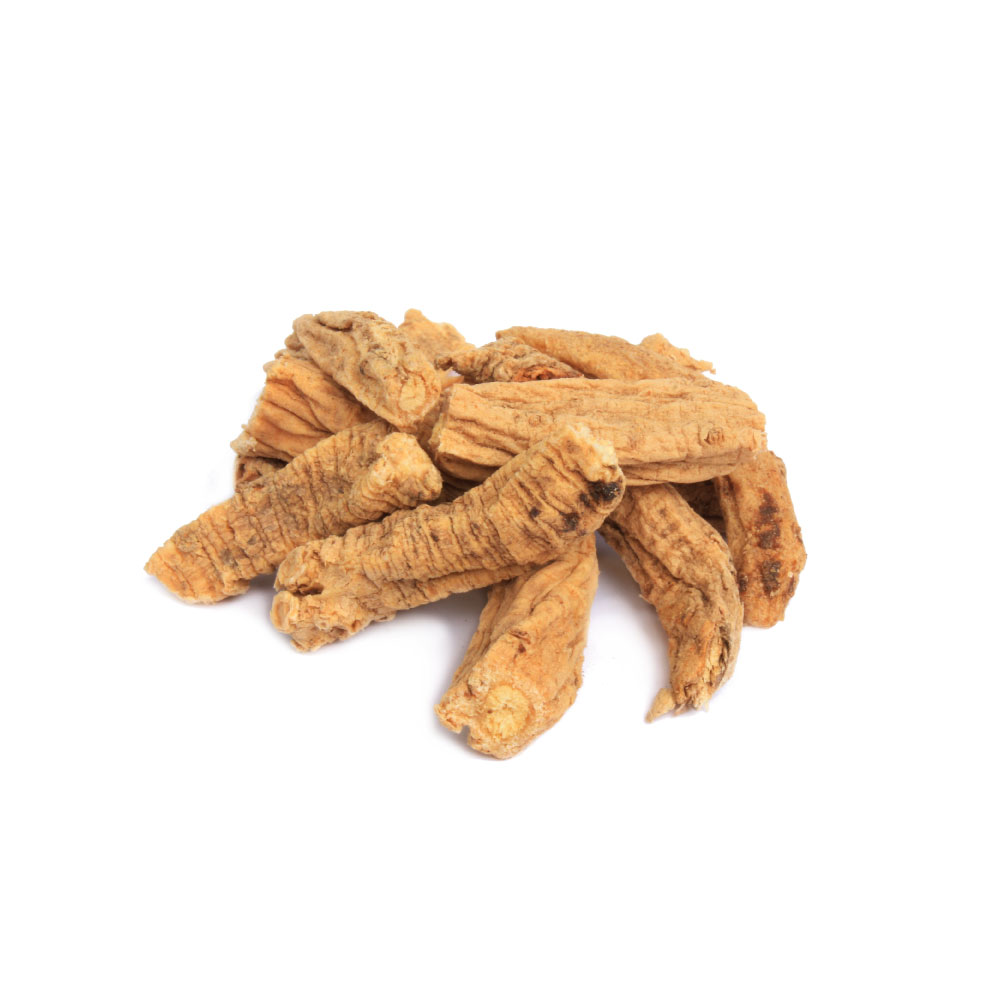
Materia Medica
Codonopsis
Codonopsis pilosula
Codonopsis (Codonopsis pilosula) — 'poor man's ginseng,' a gentle Chinese qi tonic for energy, digestion and healthy blood.
What Is Codonopsis?
Codonopsis is a common herb in traditional Chinese medicine — where it’s better known as Dang Shen. It’s used as a nourishing tonic for reinforcing qi.
It’s used for many of the same conditions as ginseng despite having a vastly different chemical makeup. Many refer to it as “poor man’s ginseng” due to the similarity in effects and much lower cost.
Codonopsis has a particularly impressive effect on the blood, which is likely the mechanism behind the traditional uses for poor “Qi”.
These conditions could be thought of in conventional terms as dysfunctional red and white blood cell production.
It’s been shown to increase lymphocytes (white blood cells), as well as both hemoglobin (concentration) and red blood cell count.
How Is Codonopsis Used?
Codonopsis can be used for many of the same conditions Panax ginseng is used for. It’s often used as an adaptogen during convalescence, especially when there is a need to stimulate blood cell production. This action is useful during chemotherapy or radiotherapy for cancer patients experiencing leukopenia.
Traditional Uses
Traditional Chinese Medicine
Codonopsis is considered “poor mans ginseng” in parts of Asia where it’s used as a substitute for ginseng. Although the actions are similar, Panax ginseng has differrent chemistry than codonopsis, and codonopsis does not contain triterpene saponins 22Reference 22A Clinical Guide to Blending Liquid Herbs: Herbal Formulations for the Individual Patient.
Codonopsis was traditionally used for chronic coughs, fatigue, tired limbs, to reinforce qi, diarrhea, vomiting, lack of appetite, tuburculosis, psychoneurosis, dyspepsia, and prolaps of the uterus, stomach, or anus. 22,27,28,29Reference 22A Clinical Guide to Blending Liquid Herbs: Herbal Formulations for the Individual PatientReference 27Chemotaxonomic study of Codonopsis (family Campanulaceae) and its related generaReference 28Structure of a new echinocystic acid bisdesmoside isolated from Codonopsis lanceolata rootsReference 29Simultaneous determination of seven saponins in the roots of Codonopsis lanceolata by LC-MS.
Taste
Sweet 24Reference 24A Materia Medica for Chinese Medicine: Plants, Minerals, and Animal Products
Energy
Neutral 24Reference 24A Materia Medica for Chinese Medicine: Plants, Minerals, and Animal Products
Channels
Spleen, lung 24Reference 24A Materia Medica for Chinese Medicine: Plants, Minerals, and Animal Products
Actions
Harmonizes and tonifies Qi, raises Qi, harmonizes and tonifies spleen and stomach, generates fluids 24Reference 24A Materia Medica for Chinese Medicine: Plants, Minerals, and Animal Products.
Indications
Use with caution during pregnancy 24Reference 24A Materia Medica for Chinese Medicine: Plants, Minerals, and Animal Products.
Dose
3-15g (Standard is 8g) decocted 20 min 24Reference 24A Materia Medica for Chinese Medicine: Plants, Minerals, and Animal Products.
Contraindications
Damp heat, ascending liver-yang 24Reference 24A Materia Medica for Chinese Medicine: Plants, Minerals, and Animal Products.
Description
Codonopsis is a popular qi tonic, used to invigorate spleen and lung infections by restoring qi. It promotes the production of body fluids, and is useful as a blood and immune system tonic. 25Reference 25The Ancient Wisdom of the Chinese Tonic Herbs.
Botany
Codonopsis (Codonopsis pilosula) is a herbaceous perennial in the bellflower family (Campanulaceae), grown for its fleshy, sweet-tasting taproot — the part used in medicine, where it is known as dang shen or “poor man’s ginseng.” Above ground it sends up slender, branching stems that twine into surrounding vegetation, carrying ovate leaves and nodding, bell-shaped yellow-green flowers marked purple inside. Each year it dies back to its rootstock and regrows.
Several Codonopsis taxa are traded as dang shen. C. pilosula is the principal source; the plant long sold as C. tangshen (“chuan dang shen”) is now treated by botanists as a subspecies of it, C. pilosula subsp. tangshen, while C. lanceolata is a related but separate medicinal species.
Distribution
Codonopsis pilosula is native to temperate northeast Asia — China (including Inner Mongolia, Qinghai and Manchuria), Korea, Mongolia and the Russian Far East. In the wild it grows at forest edges, in meadows and scrub, generally at montane elevations of roughly 1,500–3,100 m.
It is widely cultivated within and beyond its native range for its medicinal root, and is not considered weedy.
Growing Conditions
- Twining herbaceous perennial; sun to part shade; cold-hardy across roughly USDA zones 3–8; likes light, fertile, well-drained soil with steady moisture.
- Full cultivation detail lives on the companion farm-wiki grow guide for Codonopsis pilosula (link to be added once that project’s public URL is confirmed).
Harvesting, Collection & Preparation
Codonopsis pilosa is the preferred species, however, Codonopsis tangshen is also common. The chemical marker that differentiates the two was shown to be the compound codonopyrrolidum A 23Reference 23Chemical constituents comparison of Codonopsis tangshen, Codonopsis pilosula varView study →.
Phytochemistry
Despite sharing many of the uses of Panax ginseng, codonopsis has a completely different chemical profile and, importantly, does not contain the triterpenoid (ginsenoside-type) saponins that define ginseng 22,26Reference 22A Clinical Guide to Blending Liquid Herbs: Herbal Formulations for the Individual PatientReference 26ReviewThe genus Codonopsis (Campanulaceae): a review of phytochemistry, bioactivity and quality control. Its activity is instead attributed to four groups: the inulin-type polysaccharides that make up the bulk of the root, the polyacetylene lobetyolin (its most-used quality marker), the phenylpropanoid glycoside tangshenoside I, and trace β-carboline alkaloids such as perlolyrin 26,30Reference 26ReviewThe genus Codonopsis (Campanulaceae): a review of phytochemistry, bioactivity and quality controlReference 30ReviewA Monograph of Codonopsis and Allied Genera (Campanulaceae). The pyrrolidine alkaloid codonopyrrolidum A is used as a chemotaxonomic marker to tell C. tangshen apart from C. pilosula 23Reference 23Chemical constituents comparison of Codonopsis tangshen, Codonopsis pilosula varView study →.
Storage carbohydrate dominates the root: inulin makes up roughly 62% (w/w) of the neutral polysaccharide fraction, and the crude polysaccharides themselves are typically extracted at low-double-digit yields from the dried root 31Reference 31ReviewCodonopsis radix: a review of resource utilisation, postharvest processing, quality assessment, and its polysaccharide compositionView study →. Lobetyolin, tangshenoside I and the alkaloids are present only at trace (sub-percent) levels and vary widely with species, growing site and processing, so they are reported as quality markers rather than fixed amounts.
Constituent Summary
Constituents of the dried root (Codonopsis pilosula). Polyacetylene and alkaloid figures vary widely with species and growing conditions and are used as quality markers rather than standardised contents; † marks the species-differentiating chemotaxonomic marker.
Polysaccharide1 compound1 with data
Polyacetylene1 compound1 with data
Phenylpropanoid2 compounds2 with data
Indole Alkaloid1 compound1 with data
Alkaloid1 compound1 with data
Mucilage1 compoundno data
Pharmacology & Research
The modern literature on Codonopsis pilosula is moderate in size but sits almost entirely in the preclinical tier: several hundred indexed papers, dominated by cell-line and rodent studies of the root’s polysaccharides, with the polyacetylene marker lobetyolin a distant second. The most consistent and best-matched signals are immunomodulation and gastrointestinal protection — both studied with the water extracts and inulin-type fructans that reflect how the root is actually used 1,2,3,4,5,6,7,8Reference 1ReviewCodonopsis Radix: a comprehensive review for its ethnopharmacology, phytochemistry, pharmacodynamics, pharmacokinetics, toxicity and potential clinical applicationsView study →Reference 2AnimalAn inulin-type fructan from Codonopsis pilosula ameliorates cyclophosphamide-induced immunosuppression and intestinal barrier injury in miceView study →Reference 3Specific inulin in Codonopsis pilosula exerts immunological enhancement by promoting cellular uptake and regulating p65-dependent MAPK and NF-κB pathwaysView study →Reference 4AnimalImmunomodulatory effects and multi-omics analysis of Codonopsis pilosula extract in septic ratsView study →Reference 5AnimalInvestigations on the protective action of Codonopsis pilosula (Dangshen) extract on experimentally-induced gastric ulcer in ratsView study →Reference 6The effect and mechanism of Codonopsis Radix and its active components tangshenoside I and lobetyolin on preventing gastric ulcer based on spectrum-effect relationshipView study →Reference 7An inulin-type fructan CP-A from Codonopsis pilosula alleviates TNBS-induced ulcerative colitis based on serum-untargeted metabolomicsView study →Reference 8Codonopsis pilosula (Dangshen) alleviates ulcerative colitis through activation of the aryl-hydrocarbon-receptor signaling pathway by the gut bacterium Alistipes onderdonkii and its metabolite 5-HIAAView study →. Emerging work on anti-aging/antioxidant and neuroprotective activity is real but rests on D-galactose and Alzheimer’s-model rodents 11,12,13,14Reference 11AnimalCodonopsis pilosula water extract delays D-galactose-induced aging of the brain in mice by activating autophagy and regulating metabolismView study →Reference 12Codonopsis pilosula polysaccharide (CPP) alleviates D-Gal-induced aging and gut microbiota dysbiosisView study →Reference 13AnimalCodonopsis pilosula polysaccharides alleviate neuronal apoptosis induced by endoplasmic-reticulum-stress-activated PERK-ATF4-CHOP signaling in APP/PS1 miceView study →Reference 14Neuroprotective effect of Codonopsis pilosula polysaccharide on Aβ(25-35)-induced damage in PC12 cells via the p38 MAPK signaling pathwaysView study →. No monotherapy human trial of C. pilosula exists; the single randomised controlled trial combined the herb’s total glycosides with Ginkgo biloba, so its cognitive result cannot be attributed to the root alone 20Reference 20Dangshen (Codonopsis pilosula) and Bai guo (Ginkgo biloba) enhance learning and memoryView study →. A recurring caveat runs through the whole literature: activity varies by preparation (whole-root decoction vs isolated polysaccharide vs trace-level lobetyolin) and by species — some effects attributed to “Codonopsis” were shown in the unrelated C. lanceolata, which, unlike C. pilosula, contains triterpenoid saponins 1,21Reference 1ReviewCodonopsis Radix: a comprehensive review for its ethnopharmacology, phytochemistry, pharmacodynamics, pharmacokinetics, toxicity and potential clinical applicationsView study →Reference 21AnimalProtective effect of Codonopsis lanceolata root extract against alcoholic fatty liver in the ratView study →.
- Best-supported: immunomodulation via inulin-type fructans (restored immunity in immunosuppressed and septic animals, macrophage activation) 2,3,4Reference 2AnimalAn inulin-type fructan from Codonopsis pilosula ameliorates cyclophosphamide-induced immunosuppression and intestinal barrier injury in miceView study →Reference 3Specific inulin in Codonopsis pilosula exerts immunological enhancement by promoting cellular uptake and regulating p65-dependent MAPK and NF-κB pathwaysView study →Reference 4AnimalImmunomodulatory effects and multi-omics analysis of Codonopsis pilosula extract in septic ratsView study → and gastrointestinal protection (gastric-ulcer and colitis models with water extract/decoction) 5,6,7,8Reference 5AnimalInvestigations on the protective action of Codonopsis pilosula (Dangshen) extract on experimentally-induced gastric ulcer in ratsView study →Reference 6The effect and mechanism of Codonopsis Radix and its active components tangshenoside I and lobetyolin on preventing gastric ulcer based on spectrum-effect relationshipView study →Reference 7An inulin-type fructan CP-A from Codonopsis pilosula alleviates TNBS-induced ulcerative colitis based on serum-untargeted metabolomicsView study →Reference 8Codonopsis pilosula (Dangshen) alleviates ulcerative colitis through activation of the aryl-hydrocarbon-receptor signaling pathway by the gut bacterium Alistipes onderdonkii and its metabolite 5-HIAAView study →.
- Emerging, worth watching: antioxidant/anti-aging and neuroprotective signals in D-galactose and Alzheimer’s-model rodents 11,12,13,14Reference 11AnimalCodonopsis pilosula water extract delays D-galactose-induced aging of the brain in mice by activating autophagy and regulating metabolismView study →Reference 12Codonopsis pilosula polysaccharide (CPP) alleviates D-Gal-induced aging and gut microbiota dysbiosisView study →Reference 13AnimalCodonopsis pilosula polysaccharides alleviate neuronal apoptosis induced by endoplasmic-reticulum-stress-activated PERK-ATF4-CHOP signaling in APP/PS1 miceView study →Reference 14Neuroprotective effect of Codonopsis pilosula polysaccharide on Aβ(25-35)-induced damage in PC12 cells via the p38 MAPK signaling pathwaysView study →; isolated lobetyolin in inflammation and cancer cell lines 16,17Reference 16Lobetyolin suppresses the proliferation of hepatocellular carcinoma through activating DUSP1-ERK1/2 signaling pathwayView study →Reference 17AnimalLobetyolin protects mice against LPS-induced sepsis by downregulating the production of inflammatory cytokines in macrophageView study →.
- Mechanistically thin: anti-fatigue, hematopoietic and anticancer claims rest on single studies, isolated fractions, or the trace marker lobetyolin rather than the whole root 16,18,19Reference 16Lobetyolin suppresses the proliferation of hepatocellular carcinoma through activating DUSP1-ERK1/2 signaling pathwayView study →Reference 18AnimalAntifatigue and antihypoxia activities of oligosaccharides and polysaccharides from Codonopsis pilosula in miceView study →Reference 19A highly branched arabinogalactan from Codonopsis pilosula: structural insights and hematopoietic-protective mechanismView study →.
- The caveat: preclinical-only across the board, no standardised human dose for the root itself, wide preparation and species variance — and one prominent traditional claim (fatty-liver protection) that traces to a different species, C. lanceolata 21Reference 21AnimalProtective effect of Codonopsis lanceolata root extract against alcoholic fatty liver in the ratView study →.
1. Immunomodulation
This is the strongest and best-matched body of evidence, and it centres on the root’s carbohydrates rather than any small molecule. In immunosuppressed mice (cyclophosphamide model), an inulin-type fructan restored immune-organ indices, raised serum immunoglobulins and cytokines (IgG, IL-2, IL-4, IL-6, TNF-α) and repaired intestinal-barrier damage 2Reference 2AnimalAn inulin-type fructan from Codonopsis pilosula ameliorates cyclophosphamide-induced immunosuppression and intestinal barrier injury in miceView study →. A purified inulin (lobetyolin is not the active here) activated THP-1 macrophages through p65-dependent MAPK and NF-κB signalling, and notably outperformed a chemically near-identical commercial inulin — the difference traced to smaller particle size and better cellular uptake 3Reference 3Specific inulin in Codonopsis pilosula exerts immunological enhancement by promoting cellular uptake and regulating p65-dependent MAPK and NF-κB pathwaysView study →. In septic rats, a whole-root aqueous extract produced measurable immunomodulation on multi-omics readouts 4Reference 4AnimalImmunomodulatory effects and multi-omics analysis of Codonopsis pilosula extract in septic ratsView study →. Because the polysaccharides make up the bulk of the dried root, these results align well with the traditional decoction.
Gap: every study is animal or in-vitro; there is no human trial of the isolated herb, and immune endpoints differ enough across models that no dose-response for a standardised human preparation can be drawn.
2. Gastroprotective
The oldest and one of the more consistent preclinical signals. A C. pilosula aqueous extract protected against gastric ulceration in several rat models (stress-, acetic-acid- and sodium-hydroxide-induced) and reduced gastric acid and pepsin secretion, though it did little against pyloric-ligation or indomethacin ulcers 5Reference 5AnimalInvestigations on the protective action of Codonopsis pilosula (Dangshen) extract on experimentally-induced gastric ulcer in ratsView study →. More recent spectrum–effect work links gastric-ulcer prevention to the decoction plus its markers tangshenoside I and lobetyolin 6Reference 6The effect and mechanism of Codonopsis Radix and its active components tangshenoside I and lobetyolin on preventing gastric ulcer based on spectrum-effect relationshipView study →. In inflammatory-bowel models, an inulin-type fructan (CP-A) eased TNBS-induced ulcerative colitis via serum-metabolomic shifts 7Reference 7An inulin-type fructan CP-A from Codonopsis pilosula alleviates TNBS-induced ulcerative colitis based on serum-untargeted metabolomicsView study →, and whole dangshen alleviated DSS colitis through a gut bacterium (Alistipes onderdonkii) and aryl-hydrocarbon-receptor signalling 8Reference 8Codonopsis pilosula (Dangshen) alleviates ulcerative colitis through activation of the aryl-hydrocarbon-receptor signaling pathway by the gut bacterium Alistipes onderdonkii and its metabolite 5-HIAAView study →. Preparations used (water extract, decoction, isolated fructan) match traditional digestive use.
Gap: all rodent; the human evidence for GI benefit exists only inside multi-herb TCM formulas, where Codonopsis cannot be isolated as the active agent.
3. Anti-inflammatory
Anti-inflammatory activity is better read as a mechanism cutting across the other indications than as a standalone use. Across colitis, NAFLD and aging models, C. pilosula water extract and polysaccharides consistently lower TNF-α, IL-6 and NF-κB activity 7,8,9Reference 7An inulin-type fructan CP-A from Codonopsis pilosula alleviates TNBS-induced ulcerative colitis based on serum-untargeted metabolomicsView study →Reference 8Codonopsis pilosula (Dangshen) alleviates ulcerative colitis through activation of the aryl-hydrocarbon-receptor signaling pathway by the gut bacterium Alistipes onderdonkii and its metabolite 5-HIAAView study →Reference 9AnimalCodonopsis pilosula polysaccharides attenuate lipid accumulation and inflammatory response in the NAFLD mouse by regulating AMPK/ACC/SREBP1 signaling pathwayView study →. The isolated polyacetylene lobetyolin reproduces this: it protected mice against LPS-induced sepsis by downregulating macrophage inflammatory cytokines 17Reference 17AnimalLobetyolin protects mice against LPS-induced sepsis by downregulating the production of inflammatory cytokines in macrophageView study →. The signal is mechanistically coherent but is almost always a secondary readout rather than the primary endpoint.
Gap: no human anti-inflammatory data; and the cleanest effects come from isolated lobetyolin, which is present only at trace levels in the root, so whole-herb potency is uncertain.
4. Antioxidant
Antioxidant capacity shows up mostly as supporting biochemistry inside aging and metabolic studies rather than as a dedicated line of work. In D-galactose-induced aging mice, both the water extract and purified polysaccharides raised superoxide dismutase and glutathione and lowered malondialdehyde 11,12Reference 11AnimalCodonopsis pilosula water extract delays D-galactose-induced aging of the brain in mice by activating autophagy and regulating metabolismView study →Reference 12Codonopsis pilosula polysaccharide (CPP) alleviates D-Gal-induced aging and gut microbiota dysbiosisView study →. Similar redox improvements accompany the diabetic and hepatic models 10Reference 10AnimalJournal of Functional FoodsView study →. The whole-root preparations used here match traditional practice, and the direction of effect is consistent.
Gap: antioxidant endpoints are almost always secondary; there is no human data, and no study isolates antioxidant benefit from the broader anti-aging phenotype.
5. Neuroprotective
An emerging, still-preclinical area with one weak human data point. In aging and Alzheimer’s-model mice, C. pilosula polysaccharides reduced neuronal apoptosis through the PERK-ATF4-CHOP endoplasmic-reticulum-stress pathway and improved Morris-water-maze performance 13Reference 13AnimalCodonopsis pilosula polysaccharides alleviate neuronal apoptosis induced by endoplasmic-reticulum-stress-activated PERK-ATF4-CHOP signaling in APP/PS1 miceView study →; the water extract delayed brain aging by activating autophagy 11Reference 11AnimalCodonopsis pilosula water extract delays D-galactose-induced aging of the brain in mice by activating autophagy and regulating metabolismView study →; and in cultured PC12 cells, the polysaccharide protected against amyloid-β(25-35) toxicity via p38 MAPK 14Reference 14Neuroprotective effect of Codonopsis pilosula polysaccharide on Aβ(25-35)-induced damage in PC12 cells via the p38 MAPK signaling pathwaysView study →. The only human study — a 60-participant double-blind RCT — found improved memory acquisition and retention, but tested C. pilosula total glycosides combined with Ginkgo biloba, so the effect cannot be assigned to Codonopsis 20Reference 20Dangshen (Codonopsis pilosula) and Bai guo (Ginkgo biloba) enhance learning and memoryView study →.
Gap: the human RCT is a combination product at a glycoside dose, not the whole root; all mechanistic work is animal or cell-line, so translational relevance is unestablished.
6. Hepatoprotective
The whole-herb liver evidence for C. pilosula is thin and needs to be separated from a species mix-up. One mouse study found that C. pilosula polysaccharides reduced hepatic lipid accumulation, serum ALT/AST and inflammatory markers in high-fat-diet NAFLD via AMPK/ACC/SREBP1 signalling 9Reference 9AnimalCodonopsis pilosula polysaccharides attenuate lipid accumulation and inflammatory response in the NAFLD mouse by regulating AMPK/ACC/SREBP1 signaling pathwayView study →. Importantly, the fatty-liver claim carried on many Codonopsis pages traces to Cho et al. (2009), which studied Codonopsis lanceolata — a different species that (unlike C. pilosula) contains triterpenoid saponins — so it should not be read as evidence for this herb 21Reference 21AnimalProtective effect of Codonopsis lanceolata root extract against alcoholic fatty liver in the ratView study →.
Gap: only a single whole-herb NAFLD study in mice supports C. pilosula directly; the more frequently cited hepatoprotective data belong to another species and preparation.
7. Anti-fatigue
This is the experimental correlate of the traditional “qi tonic” reputation, but the data are slim. In a single mouse study, ethanol extract, water extract, polysaccharides, inulin and oligosaccharides were compared in weight-loaded swimming and hypoxia tests; only the polysaccharide fraction significantly prolonged swimming time and raised liver and muscle glycogen 18Reference 18AnimalAntifatigue and antihypoxia activities of oligosaccharides and polysaccharides from Codonopsis pilosula in miceView study →. The fraction that worked is the one that dominates the root, which is reassuring, but the base is one study.
Gap: a single rodent study with no replication and no human anti-fatigue trial; the traditional claim outstrips the experimental evidence.
8. Hematopoietic
Traditional use frames Codonopsis as a blood tonic (raising red cells, haemoglobin and leukocytes), but dedicated experimental support for the isolated herb is limited. One study isolated a highly branched arabinogalactan (CP2A) from C. pilosula and demonstrated hematopoietic-protective effects 19Reference 19A highly branched arabinogalactan from Codonopsis pilosula: structural insights and hematopoietic-protective mechanismView study →. Most other “blood-building” data come from multi-herb formulas (e.g. Fufang E’jiao Jiang) in which Codonopsis is one of several ingredients and cannot be isolated.
Gap: essentially one whole-herb study; the widely repeated claim that Codonopsis raises blood counts “more effectively than ginseng” is not supported by any head-to-head human data.
9. Anticancer
Anticancer activity is entirely cell-line and early-animal, and largely attributable to the trace marker rather than the whole root. Whole C. pilosula extract inhibited hepatocellular-carcinoma growth and metastasis in vitro and in vivo by suppressing CDK1 15Reference 15Molecular mechanisms of Codonopsis pilosula in inhibiting hepatocellular carcinoma growth and metastasisView study →, and isolated lobetyolin suppressed HCC cell proliferation through DUSP1-ERK1/2 signalling 16Reference 16Lobetyolin suppresses the proliferation of hepatocellular carcinoma through activating DUSP1-ERK1/2 signaling pathwayView study →. Because lobetyolin is present only at sub-percent (trace-marker) levels in the root, isolated-compound potency does not carry over to a decoction.
Gap: no clinical evidence; the strongest effects are from an isolated compound at concentrations the whole herb cannot deliver, and human oncology use appears only within multi-herb supportive-care formulas.
Mechanisms
| Mechanism | Drives | Key compounds |
|---|---|---|
| Inulin-type fructans → macrophage activation, ↑Ig/cytokines (MAPK, NF-κB) | immunomodulationgastroprotection | inulin, polysaccharides |
| NF-κB ↓, TNF-α ↓, IL-6 ↓ | anti-inflammatoryhepatoprotectivegastroprotective | lobetyolin |
| AMPK/ACC/SREBP1 modulation → ↓hepatic lipogenesis | hepatoprotectivemetabolic | polysaccharides |
| ↑SOD/GSH, ↓MDA; autophagy activation | antioxidantneuroprotective | polysaccharides |
| PERK-ATF4-CHOP ER-stress ↓, p38 MAPK modulation → ↓neuronal apoptosis | neuroprotective | polysaccharides |
| DUSP1-ERK1/2 activation, CDK1 ↓ → tumour-cell growth inhibition | anticancer | lobetyolin |
| Gut-microbiota remodelling + AhR signalling | gastroprotectionimmunomodulation | polysaccharides, tangshenoside |
Clinical trials
No registered clinical trial of C. pilosula as a single herb was identified; the one published randomised controlled trial tested the herb’s total glycosides in combination with Ginkgo biloba 20Reference 20Dangshen (Codonopsis pilosula) and Bai guo (Ginkgo biloba) enhance learning and memoryView study →, and all other human data come from multi-herb TCM formulas where the herb cannot be isolated.
| Completed | Planned | Terminated | Preclinical |
|---|---|---|---|
| 1(combination, not monotherapy) | 0 | 0 | ~several hundred |
Last checked: July 2026.
Dosage
No standalone human dose for the root is established — the only human trial combined the herb’s total glycosides with Ginkgo, and the modern efficacy work uses isolated polysaccharide fractions in animals. The doses below are what the studies used (research doses, not recommendations); the traditional decoction range is separate.
| Indication | Preparation | Dose | Est. dried-herb equivalent | Source |
|---|---|---|---|---|
| Anti-fatigue | Polysaccharide fraction (oral, mice) | 0.25–1.0 g/kg/day × 21 days | animal-only; not derivable from one mouse study | 18Reference 18AnimalAntifatigue and antihypoxia activities of oligosaccharides and polysaccharides from Codonopsis pilosula in miceView study → |
| Neuroprotective / cognition (combination) | C. pilosula total glycosides + Ginkgo | 75 mg total glycosides + 40 mg Ginkgo, twice daily | — (combination; marker-based back-conversion unreliable) | 20Reference 20Dangshen (Codonopsis pilosula) and Bai guo (Ginkgo biloba) enhance learning and memoryView study → |
| Immunomodulation / gastroprotection | Water extract / inulin-type fructan (oral, rodent) | model-specific mg/kg (not standardised) | — (polysaccharide-fraction doses don’t map to whole-root grams) | 2,3,4,5,6,7,8Reference 2AnimalAn inulin-type fructan from Codonopsis pilosula ameliorates cyclophosphamide-induced immunosuppression and intestinal barrier injury in miceView study →Reference 3Specific inulin in Codonopsis pilosula exerts immunological enhancement by promoting cellular uptake and regulating p65-dependent MAPK and NF-κB pathwaysView study →Reference 4AnimalImmunomodulatory effects and multi-omics analysis of Codonopsis pilosula extract in septic ratsView study →Reference 5AnimalInvestigations on the protective action of Codonopsis pilosula (Dangshen) extract on experimentally-induced gastric ulcer in ratsView study →Reference 6The effect and mechanism of Codonopsis Radix and its active components tangshenoside I and lobetyolin on preventing gastric ulcer based on spectrum-effect relationshipView study →Reference 7An inulin-type fructan CP-A from Codonopsis pilosula alleviates TNBS-induced ulcerative colitis based on serum-untargeted metabolomicsView study →Reference 8Codonopsis pilosula (Dangshen) alleviates ulcerative colitis through activation of the aryl-hydrocarbon-receptor signaling pathway by the gut bacterium Alistipes onderdonkii and its metabolite 5-HIAAView study → |
The human-relevant actives are polysaccharides (the bulk of the root), but the marker molecules (lobetyolin, tangshenoside I) sit at trace/sub-percent levels, so there is no reliable marker-to-whole-herb ratio — dried-herb equivalents are left blank rather than invented. These are a guide, not a recommendation.
Traditional Dosage
| System | Preparation | Dose |
|---|---|---|
| Traditional Chinese Medicine | Dried root, decocted ~20 min | 3–15 g/day (standard ~8–9 g) |
| Western herbal | Liquid extract 1:2 | 30–60 mL/week (≈4–8 mL/day) |
Safety & Pregnancy
Codonopsis has a long food and traditional-medicine record and is reported as well tolerated at customary doses, but its dedicated toxicology is preclinical and its herb–drug interaction potential is unassessed rather than cleared.
- Well tolerated. An officially recognised medicinal-and-edible herb in China, with few adverse effects reported at customary doses.
- Interactions unassessed. No single-herb interaction study exists; nearly all human use is within multi-herb formulas, so interaction potential is unknown, not “safe.”
- Toxicology is preclinical. No human safety trial of the isolated root; absence of adverse reports is not evidence of safety.
- Pregnancy caution. Not researched for reproductive safety; classical sources advise caution.
- Family sensitivity. People with known Campanulaceae-family sensitivities should exercise normal botanical caution.
Full safety & interactions detail
Codonopsis pilosula has a reassuring traditional and food-use record — it is an officially recognised medicinal-and-edible herb in China — and the modern literature reports it as well tolerated with few adverse effects at customary doses 1Reference 1ReviewCodonopsis Radix: a comprehensive review for its ethnopharmacology, phytochemistry, pharmacodynamics, pharmacokinetics, toxicity and potential clinical applicationsView study →. That said, dedicated toxicology is limited: no human safety trial of the isolated root exists, and the available evidence is preclinical 1Reference 1ReviewCodonopsis Radix: a comprehensive review for its ethnopharmacology, phytochemistry, pharmacodynamics, pharmacokinetics, toxicity and potential clinical applicationsView study →. No specific cytochrome-P450 interaction has been demonstrated — a pharmacokinetic study characterised absorption of the root’s markers but did not establish enzyme inhibition or induction, so the page’s former “CYP3A4” flag has been removed as unsupported. People with known Campanulaceae-family sensitivities should exercise normal botanical caution.
Scope: no herb–drug interaction study of single-herb C. pilosula was identified, and nearly all human use is within multi-herb TCM formulas — so interaction potential is unassessed, not “safe.” Absence of adverse reports is not evidence of safety.
Not established — not specifically researched for safety. Codonopsis pilosula has not been evaluated for reproductive or developmental toxicity; classical Chinese sources advise using it with caution in pregnancy. Lactation safety is likewise unstudied. Absence of adverse reports is not evidence of safety.
References
- Bai J, Xie N, Hou Y, et al. Codonopsis Radix: a comprehensive review for its ethnopharmacology, phytochemistry, pharmacodynamics, pharmacokinetics, toxicity and potential clinical applications. Phytomedicine. 2025. https://pubmed.ncbi.nlm.nih.gov/41275746/
- Xie X, Gu Y, Liu Y, et al. An inulin-type fructan from Codonopsis pilosula ameliorates cyclophosphamide-induced immunosuppression and intestinal barrier injury in mice. International Journal of Biological Macromolecules. 2025. https://pubmed.ncbi.nlm.nih.gov/40250123/
- Gao Z, Ren J, Ke C, et al. Specific inulin in Codonopsis pilosula exerts immunological enhancement by promoting cellular uptake and regulating p65-dependent MAPK and NF-κB pathways. Journal of Agricultural and Food Chemistry. 2025. https://pubmed.ncbi.nlm.nih.gov/40758307/
- Xia Z, Li G, Zhai Y, et al. Immunomodulatory effects and multi-omics analysis of Codonopsis pilosula extract in septic rats. Journal of Ethnopharmacology. 2025. https://pubmed.ncbi.nlm.nih.gov/39368762/
- Wang ZT, Du Q, Xu GJ, et al. Investigations on the protective action of Codonopsis pilosula (Dangshen) extract on experimentally-induced gastric ulcer in rats. General Pharmacology. 1997;28(3):469–473. https://pubmed.ncbi.nlm.nih.gov/9068993/
- Chen Q, Sun Y, Hu X, et al. The effect and mechanism of Codonopsis Radix and its active components tangshenoside I and lobetyolin on preventing gastric ulcer based on spectrum-effect relationship. Journal of Ethnopharmacology. 2025. https://pubmed.ncbi.nlm.nih.gov/40653041/
- Zhou J, Wang J, Li D, et al. An inulin-type fructan CP-A from Codonopsis pilosula alleviates TNBS-induced ulcerative colitis based on serum-untargeted metabolomics. American Journal of Physiology. Gastrointestinal and Liver Physiology. 2024. https://pubmed.ncbi.nlm.nih.gov/38193197/
- Yang Q, Pang W, Ma L, et al. Codonopsis pilosula (Dangshen) alleviates ulcerative colitis through activation of the aryl-hydrocarbon-receptor signaling pathway by the gut bacterium Alistipes onderdonkii and its metabolite 5-HIAA. American Journal of Chinese Medicine. 2026. https://pubmed.ncbi.nlm.nih.gov/41692705/
- Chen Q, Lin H, Huang X, et al. Codonopsis pilosula polysaccharides attenuate lipid accumulation and inflammatory response in the NAFLD mouse by regulating AMPK/ACC/SREBP1 signaling pathway. Tissue & Cell. 2025. https://pubmed.ncbi.nlm.nih.gov/40451044/
- Effects of Codonopsis pilosula crude polysaccharides by hypoglycemic and modulating gut microbiome in a high-fat diet and streptozotocin-induced mouse model of T2DM. Journal of Functional Foods. 2023;111:105893. https://doi.org/10.1016/j.jff.2023.105893
- Wang X, Kang J, Li X, et al. Codonopsis pilosula water extract delays D-galactose-induced aging of the brain in mice by activating autophagy and regulating metabolism. Journal of Ethnopharmacology. 2024. https://pubmed.ncbi.nlm.nih.gov/38462027/
- Zhang B, Zhang C, Yu M, et al. Codonopsis pilosula polysaccharide (CPP) alleviates D-Gal-induced aging and gut microbiota dysbiosis. International Journal of Molecular Sciences. 2026. https://pubmed.ncbi.nlm.nih.gov/42123518/
- Cai Y, Wang X, Xiang Y, et al. Codonopsis pilosula polysaccharides alleviate neuronal apoptosis induced by endoplasmic-reticulum-stress-activated PERK-ATF4-CHOP signaling in APP/PS1 mice. Journal of Alzheimer’s Disease. 2025. https://pubmed.ncbi.nlm.nih.gov/40325880/
- Yang L, Song S, Li X, et al. Neuroprotective effect of Codonopsis pilosula polysaccharide on Aβ(25-35)-induced damage in PC12 cells via the p38 MAPK signaling pathways. Pharmaceuticals. 2024. https://pubmed.ncbi.nlm.nih.gov/39338393/
- Li N, Yang C, Xia J, et al. Molecular mechanisms of Codonopsis pilosula in inhibiting hepatocellular carcinoma growth and metastasis. Phytomedicine. 2024. https://pubmed.ncbi.nlm.nih.gov/38520835/
- Hu J, Wang D, Wang F, et al. Lobetyolin suppresses the proliferation of hepatocellular carcinoma through activating DUSP1-ERK1/2 signaling pathway. Biological & Pharmaceutical Bulletin. 2024. https://pubmed.ncbi.nlm.nih.gov/39477468/
- Chen Z, Su Y, Ding J, et al. Lobetyolin protects mice against LPS-induced sepsis by downregulating the production of inflammatory cytokines in macrophage. Frontiers in Pharmacology. 2024. https://pubmed.ncbi.nlm.nih.gov/38799158/
- Xie Q, Sun Y, Cao L, et al. Antifatigue and antihypoxia activities of oligosaccharides and polysaccharides from Codonopsis pilosula in mice. Food & Function. 2020. https://pubmed.ncbi.nlm.nih.gov/32608442/
- Zhu Y, Li X, Wang S, et al. A highly branched arabinogalactan from Codonopsis pilosula: structural insights and hematopoietic-protective mechanism. International Journal of Biological Macromolecules. 2025. https://pubmed.ncbi.nlm.nih.gov/40997968/
- Singh B, Song H, Liu XD, et al. Dangshen (Codonopsis pilosula) and Bai guo (Ginkgo biloba) enhance learning and memory. Alternative Therapies in Health and Medicine. 2004;10(4):52–56. https://pubmed.ncbi.nlm.nih.gov/15285274/
- Cho K, Kim SJ, Park SH, et al. Protective effect of Codonopsis lanceolata root extract against alcoholic fatty liver in the rat. Journal of Medicinal Food. 2009;12(6):1293–1301. https://pubmed.ncbi.nlm.nih.gov/20041784/ (Note: C. lanceolata — a different species; cited only to flag the common cross-species misattribution.)
- Bone K. A Clinical Guide to Blending Liquid Herbs: Herbal Formulations for the Individual Patient. Edinburgh: Churchill Livingstone; 2003. (Secondary source.)
- Lin LC, Tsai TH, Kuo CL. Chemical constituents comparison of Codonopsis tangshen, Codonopsis pilosula var. modesta and Codonopsis pilosula. Natural Product Research. 2013;27(19):1812–1815. https://doi.org/10.1080/14786419.2013.778849
- Hempen CH, Fischer T. A Materia Medica for Chinese Medicine: Plants, Minerals, and Animal Products. 2009:710–711. (Secondary source — TCM properties.)
- Teeguarden R. The Ancient Wisdom of the Chinese Tonic Herbs. New York: Warner Books; 2000:157–158. (Secondary source.)
- He JY, Ma N, Zhu S. The genus Codonopsis (Campanulaceae): a review of phytochemistry, bioactivity and quality control. Journal of Natural Medicines. 2015;69(1):1–21. (Review/secondary source.)
- Wang ZT, Ma GY, Tu PF, Xu GJ, Ng TB. Chemotaxonomic study of Codonopsis (family Campanulaceae) and its related genera. Biochemical Systematics and Ecology. 1995;23:809–812.
- Lee KT, Choi J, Jung WT, et al. Structure of a new echinocystic acid bisdesmoside isolated from Codonopsis lanceolata roots. Journal of Agricultural and Food Chemistry. 2002;50:4190–4193. (C. lanceolata.)
- Ichikawa M, Ohta S, Komoto N, et al. Simultaneous determination of seven saponins in the roots of Codonopsis lanceolata by LC-MS. Journal of Natural Medicines. 2009;63:52–57. (C. lanceolata.)
- Hong DY. A Monograph of Codonopsis and Allied Genera (Campanulaceae). Academic Press; 2015. (Secondary source.)
- Liang W, Sun J, Bai G, et al. Codonopsis radix: a review of resource utilisation, postharvest processing, quality assessment, and its polysaccharide composition. Frontiers in Pharmacology. 2024;15:1366556. https://doi.org/10.3389/fphar.2024.1366556