
Materia Medica
Guamura
Cecropia mexicana
Guamura (Cecropia mexicana) is a fast-growing Central American trumpet tree whose leaves are used traditionally as a cardiotonic and respiratory tea.
What Is Guamura?
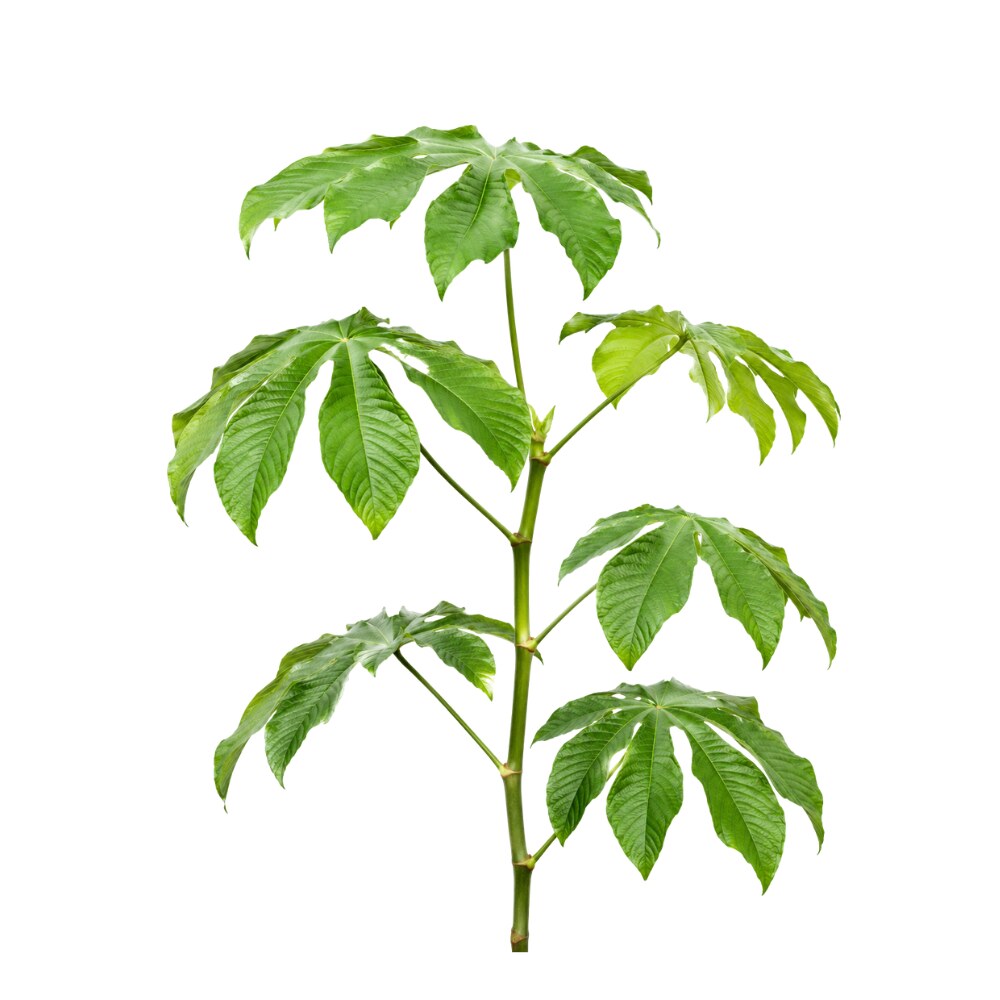
Guamura is one of the Cecropia “trumpet trees,” fast-growing pioneer trees of disturbed tropical forest in Mexico and Central America, recognisable by their large lobed leaves and hollow stems often inhabited by ants. The genus Cecropia is widely used in Latin American folk medicine, and its leaves are the principal medicinal part. C. mexicana is one of roughly sixty species in the genus and among the least studied — the pharmacology below is read across from its better-characterised congeners, not tested in this species itself.
Traditional & Modern Uses
Cecropia leaves are traditionally brewed as a tea for cardiovascular complaints, high blood pressure, asthma and cough, and for blood-sugar support. Although it appears in some smoking-blend listings, the established route of use is as an infusion or decoction rather than smoked. It is valued as a gentle cardiotonic and respiratory aid in regional herbalism. Of these traditional uses, blood-sugar support is the one carrying the most modern evidence (from the congener C. obtusifolia), while the cardiovascular action best supported in the genus is blood-pressure lowering rather than a strengthening effect on the heart.
Botany
Guamura is a “trumpet tree” — one of the Cecropia, the fast-growing pioneer trees whose large, silvery, hand-shaped leaves and pale, ringed trunks are among the most recognisable sights of disturbed tropical forest. Snap a branch and you find it hollow and chambered, and in the living tree those hollow stems are usually occupied by colonies of stinging Azteca ants, which defend the tree in exchange for lodging and food — a textbook partnership between plant and insect. The common name comes from those hollow stems, once cut for whistles and blow-tubes.
It is soft-wooded, quick to grow and short-lived, and the leaf is the part used in regional herbal practice.
Distribution
Guamura is native to Mexico and Central America, part of a wider group of trumpet trees that reaches into northern South America. It is a classic pioneer: one of the first trees to spring up in forest clearings, along roadsides and on abandoned land, thriving in the high rainfall of the tropical lowlands and foothills. Carried outside its range — to Hawaii, for instance — Cecropia can escape and turn weedy.
Growing Conditions
- A fast-growing tropical pioneer: it establishes quickly in full sun on cleared or disturbed ground and grows rapidly but does not live long.
- Frost-tender and strictly tropical — it thrives in warm, humid, high-rainfall lowlands (average temperatures around 22–24 °C) and has no cold tolerance.
- Tolerates a wide range of soils, well- or poorly-drained, given ample moisture.
- Easily raised from its abundant seed, which is how it colonises new ground so readily; note that some Cecropia become invasive where introduced, so keep it out of sensitive areas.
- Full cultivation detail lives on the companion farm-wiki grow guide for Cecropia mexicana (link to be added once that project’s public URL is confirmed).
Phytochemistry
Across the Cecropia trumpet trees the leaf is defined by chlorogenic acid and a suite of flavone C-glycosides — orientin, isoorientin, vitexin and isovitexin — which serve as the genus’s chemical markers and are credited with much of its cardiovascular and antioxidant activity. The leaf also carries flavonols such as quercetin, kaempferol, myricetin, apigenin and luteolin, the isoflavones genistein and daidzein, and the triterpenoid acids ursolic acid, oleanolic acid and betulinic acid. Procyanidins and catechins also occur across the genus and, as a class, are among the vasodilator-active fractions.
Constituent Summary
Cecropia mexicana itself is little studied; the profile below is drawn from the well-characterised congener C. obtusifolia and the wider genus, where chlorogenic acid and the flavone C-glycosides are the recognised quality-control markers. Reliable amounts for the leaf are not established and are given as No Data; profiles vary with species, plant part and origin. The middle column gives the constituent type.
Phenolic acid1 compoundno data
Flavonoid9 compoundsno data
Triterpene3 compoundsno data
Pharmacology & Research
Guamura (Cecropia mexicana) sits inside one of tropical America’s most-used medicinal genera, but the species itself is essentially unstudied — a PubMed search returns no pharmacology specific to C. mexicana, and the profile below is read across from its well-characterised congeners, chiefly the Mexican antidiabetic tree Cecropia obtusifolia and the Brazilian cardiovascular species C. glaziovii and C. pachystachya, all of which share the same defining leaf chemistry of chlorogenic acid plus flavone C-glycosides (orientin, isoorientin, vitexin, isovitexin) 1,20,23Reference 1ReviewMexican plants with hypoglycaemic effect used in the treatment of diabetes — reviewView study →Reference 20In vitroIn vitro antiherpes effects of a C-glycosylflavonoid-enriched fraction of Cecropia glaziovii Sneth — in vitro studyView study →Reference 23ReviewPhytochemical diversity, therapeutic potential, and ecological roles of the genus Cecropia — reviewView study →. On that shared-chemistry basis the genus carries a substantial preclinical literature — dozens of in vivo and in vitro studies — but the human evidence is confined to a single small open-label diabetes study in C. obtusifolia 2Reference 2Clinical trialHypoglycemic effect of Cecropia obtusifolia Bertol aqueous extracts on type 2 diabetic patients — clinical trialView study →. The strongest and most reproducible signals are hypoglycaemic (C. obtusifolia) and hypotensive/vasodilatory (C. glaziovii), both mechanistically mapped 2,3,4,5,6,7,9Reference 2Clinical trialHypoglycemic effect of Cecropia obtusifolia Bertol aqueous extracts on type 2 diabetic patients — clinical trialView study →Reference 3AnimalHypoglycemic effect of Cecropia obtusifolia on streptozotocin diabetic rats — animal studyView study →Reference 4Hypoglycemic effect and chlorogenic acid content in two Cecropia species — animal studyView study →Reference 5In vitroCecropia obtusifolia Bertol and its active compound, chlorogenic acid, stimulate 2-NBDglucose uptake in insulin-sensitive and insulin-resistant 3T3 adipocytes — in vitroView study →Reference 6In vitroChlorogenic acid as a multitarget agent: insulin-secretagogue and PPAR α/γ dual agonist — in vitro mechanisticView study →Reference 7AnimalAntihypertensive effect of a standardized aqueous extract of Cecropia glaziovii Sneth in rats: in vivo hypotensive mechanism — animal studyView study →Reference 9Chemical standardization of the aqueous extract of Cecropia glaziovii Sneth with antihypertensive, bronchodilator, antiacid-secretion and antidepressant-like activities — animal studyView study →. No randomised controlled trial exists for any Cecropia species, and no registered clinical trial names the genus. Read everything below as genus-level evidence transferred to a species that has not itself been tested, in the aqueous-tea preparation that matches traditional use.
- Best-supported: blood-sugar lowering, from C. obtusifolia animal studies plus one small open-label human trial, with chlorogenic acid and isoorientin as the active constituents 2,3,5,6Reference 2Clinical trialHypoglycemic effect of Cecropia obtusifolia Bertol aqueous extracts on type 2 diabetic patients — clinical trialView study →Reference 3AnimalHypoglycemic effect of Cecropia obtusifolia on streptozotocin diabetic rats — animal studyView study →Reference 5In vitroCecropia obtusifolia Bertol and its active compound, chlorogenic acid, stimulate 2-NBDglucose uptake in insulin-sensitive and insulin-resistant 3T3 adipocytes — in vitroView study →Reference 6In vitroChlorogenic acid as a multitarget agent: insulin-secretagogue and PPAR α/γ dual agonist — in vitro mechanisticView study →; and blood-pressure lowering via endothelium-dependent vasodilation, replicated in vivo in C. glaziovii and C. pachystachya 7,9,10Reference 7AnimalAntihypertensive effect of a standardized aqueous extract of Cecropia glaziovii Sneth in rats: in vivo hypotensive mechanism — animal studyView study →Reference 9Chemical standardization of the aqueous extract of Cecropia glaziovii Sneth with antihypertensive, bronchodilator, antiacid-secretion and antidepressant-like activities — animal studyView study →Reference 10In vitroMechanisms of calcium mobilization by procyanidins, flavonols and flavonoids from Cecropia glaziovii Sneth in pulmonary endothelial cell cultures — in vitroView study →.
- Emerging, worth watching: antioxidant and anti-inflammatory activity across the genus 14,15Reference 14In vitroCecropia pachystachya: expressive in vivo topical anti-inflammatory and in vitro antioxidant effects — animal and in vitro studyView study →Reference 15Anti-inflammatory and antioxidant activities of aqueous extract of Cecropia glaziovii leaves — animal studyView study →, hepatoprotection in two species 18,19Reference 18In vitroHepatoprotective effects and HSV-1 activity of the hydroethanolic extract of Cecropia glaziovii against an acyclovir-resistant strain — animal and in vitro studyView study →Reference 19AnimalAntiobesity, hepatoprotective and anti-hyperglycemic effects of a formulation containing Cecropia pachystachya Trécul in mice fed a hypercaloric diet — animal studyView study →, and an antidepressant-like effect for the C. pachystachya flavonoid fraction 16,17Reference 16AnimalEnriched flavonoid fraction from Cecropia pachystachya Trécul leaves exerts antidepressant-like behavior and protects brain against oxidative stress in rats subjected to chronic mild stress — animal studyView study →Reference 17LC/QTOF profile and antidepressant-like activity of an enriched flavonoid fraction of Cecropia pachystachya Trécul leaves — animal studyView study →.
- Mechanistically thin: the page’s “cardiotonic” label — the only direct cardiac-muscle study (C. lyratiloba) found cardiac depression, not a tonic effect 21Reference 21AnimalActivity of Cecropia lyratiloba extract on contractility of cardiac and smooth muscles in Wistar rats — animal studyView study →; and antiviral activity, which is in vitro only 20Reference 20In vitroIn vitro antiherpes effects of a C-glycosylflavonoid-enriched fraction of Cecropia glaziovii Sneth — in vitro studyView study →.
- The caveat: none of this is C. mexicana. It is a genus read-across resting on chemical-marker similarity, with no standardised dose for this species and no human data outside diabetes.
1. Antidiabetic / hypoglycaemic
This is the genus’s best-evidenced action, though all of it comes from the Mexican congener C. obtusifolia rather than C. mexicana. A single oral dose of aqueous or butanolic leaf extract significantly lowered plasma glucose in streptozotocin-diabetic rats, with the flavone isoorientin and chlorogenic acid isolated as the principal active constituents 3Reference 3AnimalHypoglycemic effect of Cecropia obtusifolia on streptozotocin diabetic rats — animal studyView study →; the hypoglycaemic effect tracks chlorogenic-acid content across species 4Reference 4Hypoglycemic effect and chlorogenic acid content in two Cecropia species — animal studyView study →. Mechanistically, chlorogenic acid stimulates glucose uptake in insulin-sensitive and insulin-resistant adipocytes and acts as an insulin secretagogue and PPAR-α/γ dual agonist 5,6Reference 5In vitroCecropia obtusifolia Bertol and its active compound, chlorogenic acid, stimulate 2-NBDglucose uptake in insulin-sensitive and insulin-resistant 3T3 adipocytes — in vitroView study →Reference 6In vitroChlorogenic acid as a multitarget agent: insulin-secretagogue and PPAR α/γ dual agonist — in vitro mechanisticView study →. The one human study — an open-label trial in newly diagnosed type 2 diabetics given daily aqueous extract over 32 weeks — reported significant, sustained reductions in fasting glucose and HbA1c, but had no placebo arm and a very small sample 2Reference 2Clinical trialHypoglycemic effect of Cecropia obtusifolia Bertol aqueous extracts on type 2 diabetic patients — clinical trialView study →.
Gap: no randomised controlled trial; the human data are uncontrolled, small, and in a different species; no dose is established for C. mexicana.
2. Antihypertensive
The cardiovascular case rests mainly on C. glaziovii, whose standardised aqueous extract and butanolic fraction produce hypotension in normotensive rats and antihypertensive effects on repeated dosing 7,9Reference 7AnimalAntihypertensive effect of a standardized aqueous extract of Cecropia glaziovii Sneth in rats: in vivo hypotensive mechanism — animal studyView study →Reference 9Chemical standardization of the aqueous extract of Cecropia glaziovii Sneth with antihypertensive, bronchodilator, antiacid-secretion and antidepressant-like activities — animal studyView study →. The mechanism has been worked out in some detail: the effect is endothelium-dependent vasodilation driven by calcium mobilisation in response to procyanidins and the C-glycosyl flavonoids orientin and isoorientin, reproduced in isolated aortic rings and pulmonary endothelial cells 10,11Reference 10In vitroMechanisms of calcium mobilization by procyanidins, flavonols and flavonoids from Cecropia glaziovii Sneth in pulmonary endothelial cell cultures — in vitroView study →Reference 11In vitroVasorelaxant effect of standardized Cecropia glaziovii extract encapsulated in PLGA microparticles — in vitroView study →. Notably, angiotensin-converting-enzyme (ACE) activity does not change during the hypotensive response, so this is not a captopril-like ACE mechanism 8Reference 8ACE activity during the hypotension produced by standardized aqueous extract of Cecropia glaziovii Sneth: comparison to captopril — animal studyView study →. C. pachystachya likewise shows hypotensive and diuretic activity in rats 12,13Reference 12Ethnopharmacological investigations of the leaves of Cecropia pachystachya Trécul (Urticaceae) — animal studyView study →Reference 13AnimalCecropia pachystachya extract attenuated the renal lesion in 5/6 nephrectomized rats by reducing inflammation and renal arginase activity — animal studyView study →. The traditional aqueous-tea route matches the preparation tested.
Gap: entirely preclinical — no human blood-pressure data in any Cecropia species; the clinically relevant magnitude and dose are unknown.
3. Antioxidant
Radical-scavenging and tissue-protective antioxidant activity is the most consistently reproduced property across the genus, attributed to the phenolic-acid and flavonoid load. C. pachystachya methanol extract showed dose-dependent activity across DPPH, reducing-power, β-carotene-bleaching and TBARS assays 14Reference 14In vitroCecropia pachystachya: expressive in vivo topical anti-inflammatory and in vitro antioxidant effects — animal and in vitro studyView study →, and C. glaziovii aqueous extract reduced lipid and protein oxidative damage in vivo in a pleurisy model 15Reference 15Anti-inflammatory and antioxidant activities of aqueous extract of Cecropia glaziovii leaves — animal studyView study →. The activity maps onto chlorogenic acid, quercetin and the flavone C-glycosides that also define C. mexicana’s listed profile.
Gap: in vitro and animal only; antioxidant assay results do not establish a clinical benefit, and effect sizes are preparation-dependent.
4. Anti-inflammatory
Anti-inflammatory activity appears in vivo in three species. C. glaziovii aqueous extract cut cell migration and the pro-inflammatory cytokines TNF-α, IL-1β and IL-6, and lowered myeloperoxidase activity, in rat pleurisy 15Reference 15Anti-inflammatory and antioxidant activities of aqueous extract of Cecropia glaziovii leaves — animal studyView study →; C. pachystachya methanol extract was active topically in several mouse ear-oedema models 14Reference 14In vitroCecropia pachystachya: expressive in vivo topical anti-inflammatory and in vitro antioxidant effects — animal and in vitro studyView study →; and C. obtusifolia aqueous extract showed anti-inflammatory and analgesic effects alongside a central-depressant action 24Reference 24A pharmacological study of Cecropia obtusifolia Bertol aqueous extract — animal studyView study →. The flavones luteolin and apigenin present in the leaf are plausible drivers via NF-κB and COX suppression.
Gap: no human data; the topical and injected models don’t directly predict oral efficacy from a tea.
5. Bronchodilator / antiasthmatic
The traditional use of Cecropia leaf tea for cough, asthma and bronchitis is directly supported for C. glaziovii, whose standardised aqueous extract showed bronchodilator activity in vivo when its actions on respiratory, cardiovascular, gastrointestinal and CNS function were profiled together 9Reference 9Chemical standardization of the aqueous extract of Cecropia glaziovii Sneth with antihypertensive, bronchodilator, antiacid-secretion and antidepressant-like activities — animal studyView study →. The same calcium-mobilisation mechanism that relaxes vascular smooth muscle is a plausible basis for airway smooth-muscle relaxation 10Reference 10In vitroMechanisms of calcium mobilization by procyanidins, flavonols and flavonoids from Cecropia glaziovii Sneth in pulmonary endothelial cell cultures — in vitroView study →. This is a strong traditional signal with a mechanistic rationale but a thin experimental base concentrated in one species.
Gap: a single species’ in vivo data; no controlled human respiratory outcomes, and no work on C. mexicana airways.
6. Hepatoprotective
Two species show liver protection in standard injury models. C. glaziovii hydroethanolic extract protected against carbon-tetrachloride-induced hepatotoxicity while showing antioxidant and antiviral activity in vitro 18Reference 18In vitroHepatoprotective effects and HSV-1 activity of the hydroethanolic extract of Cecropia glaziovii against an acyclovir-resistant strain — animal and in vitro studyView study →, and a C. pachystachya formulation reduced hepatic steatosis (NAFLD) and improved glycaemia in mice on a hypercaloric diet 19Reference 19AnimalAntiobesity, hepatoprotective and anti-hyperglycemic effects of a formulation containing Cecropia pachystachya Trécul in mice fed a hypercaloric diet — animal studyView study →. The effect is consistent with the genus’s antioxidant chemistry.
Gap: animal models only; the hepatoprotective dose and its relevance to human liver disease are unestablished.
7. Antidepressant-like / neuroprotective
An enriched C-glycosyl-flavonoid fraction of C. pachystachya produced antidepressant-like behaviour in the forced-swim and splash tests and protected the rat brain against oxidative stress under chronic mild stress, alongside effects on mitochondrial chain function and cytokines 16,17Reference 16AnimalEnriched flavonoid fraction from Cecropia pachystachya Trécul leaves exerts antidepressant-like behavior and protects brain against oxidative stress in rats subjected to chronic mild stress — animal studyView study →Reference 17LC/QTOF profile and antidepressant-like activity of an enriched flavonoid fraction of Cecropia pachystachya Trécul leaves — animal studyView study →. A central-depressant/CNS component also appears in C. glaziovii profiling 9Reference 9Chemical standardization of the aqueous extract of Cecropia glaziovii Sneth with antihypertensive, bronchodilator, antiacid-secretion and antidepressant-like activities — animal studyView study → and C. obtusifolia 24Reference 24A pharmacological study of Cecropia obtusifolia Bertol aqueous extract — animal studyView study →.
Gap: rodent behavioural models only; no clinical mood or cognition data, and the fraction tested is not the whole-leaf tea.
9. Cardiotonic (cardiac activity)
The page lists Guamura as a cardiotonic, but the one study that measured direct cardiac-muscle effects — a methanol extract and flavonoid fraction of C. lyratiloba on rat papillary muscle — found the flavonoid fraction depressed cardiac contractility rather than strengthening it 21Reference 21AnimalActivity of Cecropia lyratiloba extract on contractility of cardiac and smooth muscles in Wistar rats — animal studyView study →. The genus’s cardiovascular benefit is better described as peripheral vasodilation and blood-pressure lowering (see Antihypertensive) than as a positive cardiac inotrope.
Gap: the direct cardiac evidence contradicts the “cardiotonic” framing; the label likely reflects traditional cardiovascular use (hypotension) rather than a demonstrated tonic effect on the heart.
Mechanisms
| Mechanism | Drives | Key compounds |
|---|---|---|
| Endothelial Ca²⁺ mobilisation → endothelium-dependent vasodilation; antioxidant | antihypertensivebronchodilatorantioxidant | orientin, isoorientin, vitexin, isovitexin |
| Stimulates adipocyte glucose uptake; insulin secretagogue; PPAR-α/γ dual agonist | antidiabetichepatoprotective | chlorogenic acid |
| NF-κB and COX / cytokine (TNF-α, IL-1β, IL-6) suppression; radical scavenging | anti-inflammatoryantioxidantneuroprotective | luteolin, apigenin, quercetin |
| Vascular Ca²⁺-channel modulation; ACE-independent hypotension | antihypertensive | procyanidins, catechin, epicatechin |
| Anti-inflammatory / membrane and enzyme effects (genus-level, supporting) | anti-inflammatory | ursolic acid, oleanolic acid, betulinic acid |
Clinical trials
No registered clinical trials were identified for any Cecropia species, and none name C. mexicana — the evidence base is preclinical, plus one small open-label (uncontrolled) human study of C. obtusifolia aqueous extract in newly diagnosed type 2 diabetics 2Reference 2Clinical trialHypoglycemic effect of Cecropia obtusifolia Bertol aqueous extracts on type 2 diabetic patients — clinical trialView study →.
| Completed | Planned | Terminated | Preclinical |
|---|---|---|---|
| 0 | 0 | 0 | ~40+(genus) |
Last checked: July 2026.
Dosage
No standardised, research-derived human dose is established for Cecropia mexicana. The only human data used C. obtusifolia aqueous leaf extract taken daily for up to 32 weeks 2Reference 2Clinical trialHypoglycemic effect of Cecropia obtusifolia Bertol aqueous extracts on type 2 diabetic patients — clinical trialView study →, and animal hypoglycaemic doses were roughly 90–150 mg/kg for the aqueous extract (9–15 mg/kg butanolic) 3Reference 3AnimalHypoglycemic effect of Cecropia obtusifolia on streptozotocin diabetic rats — animal studyView study → — neither translates to a defined human tea dose.
Traditional Dosage
Traditionally the leaf is taken as an aqueous infusion or decoction (leaf tea) rather than a measured medicine; amounts follow regional custom, and no standardised dose exists for the species.
Safety & Pregnancy
As a traditional aqueous leaf tea Cecropia is regarded as low-risk, with no direct toxicity signal; the main concern is additive effects with antidiabetic or antihypertensive drugs, since the leaf lowers both blood sugar and blood pressure.
- Additive drug effects. may amplify antidiabetic and antihypertensive medicines — monitor blood sugar and pressure
- Species untested. all safety data are read across from congeners; C. mexicana itself has not been toxicologically tested
- Smoking unsupported. not a traditional route and has no safety or efficacy data
- Low toxicity as tea. rat testing of a congener’s crude aqueous extract found no significant toxicity
Full safety & interactions detail
As a traditional aqueous leaf tea, Cecropia is regarded as low-risk, and acute and subacute toxicity testing of the crude aqueous extract of the congener C. pachystachya in rats found no significant toxicity 22Reference 22Acute and subacute toxicity of the crude aqueous extract of Cecropia pachystachya — animal toxicology studyView study →. The two pharmacologically established genus effects both create plausible interaction risks rather than direct toxicity: the leaf lowers blood glucose (demonstrated for C. obtusifolia, including in diabetic patients) and lowers blood pressure via vasodilation (C. glaziovii), so additive effects with antidiabetic or antihypertensive drugs are the main concern, and blood sugar and blood pressure should be monitored in anyone on those medications 2,3,7Reference 2Clinical trialHypoglycemic effect of Cecropia obtusifolia Bertol aqueous extracts on type 2 diabetic patients — clinical trialView study →Reference 3AnimalHypoglycemic effect of Cecropia obtusifolia on streptozotocin diabetic rats — animal studyView study →Reference 7AnimalAntihypertensive effect of a standardized aqueous extract of Cecropia glaziovii Sneth in rats: in vivo hypotensive mechanism — animal studyView study →. No formal interaction study exists — these are pharmacodynamic (additive) risks inferred from the established effects, not documented pharmacokinetic or CYP interactions, which have not been assessed. All safety data are read across from congeners: C. mexicana itself has not been toxicologically tested, and smoking the leaf is not a traditional route and has no safety or efficacy data.
Not assessed. No reproductive-toxicity data exist for Cecropia mexicana or any congener, and the genus has not been studied in pregnancy or lactation. This is an absence of evidence, not evidence of safety — best avoided during pregnancy and breastfeeding.
References
- Andrade-Cetto, A., & Heinrich, M. (2005). Mexican plants with hypoglycaemic effect used in the treatment of diabetes — review. J Ethnopharmacol. https://pubmed.ncbi.nlm.nih.gov/15964161/
- Revilla-Monsalve, M. C., et al. (2007). Hypoglycemic effect of Cecropia obtusifolia Bertol aqueous extracts on type 2 diabetic patients — clinical trial. J Ethnopharmacol. https://pubmed.ncbi.nlm.nih.gov/17291702/
- Andrade-Cetto, A., & Wiedenfeld, H. (2001). Hypoglycemic effect of Cecropia obtusifolia on streptozotocin diabetic rats — animal study. J Ethnopharmacol. https://pubmed.ncbi.nlm.nih.gov/11694359/
- Nicasio, P., et al. (2005). Hypoglycemic effect and chlorogenic acid content in two Cecropia species — animal study. Phytother Res. https://pubmed.ncbi.nlm.nih.gov/16177966/
- Alonso-Castro, A. J., & Salazar-Olivo, L. A. (2008). Cecropia obtusifolia Bertol and its active compound, chlorogenic acid, stimulate 2-NBDglucose uptake in insulin-sensitive and insulin-resistant 3T3 adipocytes — in vitro. J Ethnopharmacol. https://pubmed.ncbi.nlm.nih.gov/18948178/
- Sanchez, M. B., et al. (2017). Chlorogenic acid as a multitarget agent: insulin-secretagogue and PPAR α/γ dual agonist — in vitro mechanistic. Biomed Pharmacother. https://pubmed.ncbi.nlm.nih.gov/28759754/
- Lima-Landman, M. T., et al. (2007). Antihypertensive effect of a standardized aqueous extract of Cecropia glaziovii Sneth in rats: in vivo hypotensive mechanism — animal study. Phytomedicine. https://pubmed.ncbi.nlm.nih.gov/17446057/
- Ninahuaman, M. F., et al. (2007). ACE activity during the hypotension produced by standardized aqueous extract of Cecropia glaziovii Sneth: comparison to captopril — animal study. Phytomedicine. https://pubmed.ncbi.nlm.nih.gov/17433647/
- Tanae, M. M., et al. (2007). Chemical standardization of the aqueous extract of Cecropia glaziovii Sneth with antihypertensive, bronchodilator, antiacid-secretion and antidepressant-like activities — animal study. Phytomedicine. https://pubmed.ncbi.nlm.nih.gov/17434301/
- Trettel, G., et al. (2021). Mechanisms of calcium mobilization by procyanidins, flavonols and flavonoids from Cecropia glaziovii Sneth in pulmonary endothelial cell cultures — in vitro. Biomed Pharmacother. https://pubmed.ncbi.nlm.nih.gov/34610498/
- Dos Santos, T. C., et al. (2018). Vasorelaxant effect of standardized Cecropia glaziovii extract encapsulated in PLGA microparticles — in vitro. Mater Sci Eng C. https://pubmed.ncbi.nlm.nih.gov/30184746/
- Machado, C. D., et al. (2021). Ethnopharmacological investigations of the leaves of Cecropia pachystachya Trécul (Urticaceae) — animal study. J Ethnopharmacol. https://pubmed.ncbi.nlm.nih.gov/33388429/
- Maquiaveli, C. C., et al. (2014). Cecropia pachystachya extract attenuated the renal lesion in 5/6 nephrectomized rats by reducing inflammation and renal arginase activity — animal study. J Ethnopharmacol. https://pubmed.ncbi.nlm.nih.gov/25304199/
- Pacheco, N. R., et al. (2014). Cecropia pachystachya: expressive in vivo topical anti-inflammatory and in vitro antioxidant effects — animal and in vitro study. Biomed Res Int. https://pubmed.ncbi.nlm.nih.gov/24877079/
- Müller, S. D., et al. (2016). Anti-inflammatory and antioxidant activities of aqueous extract of Cecropia glaziovii leaves — animal study. J Ethnopharmacol. https://pubmed.ncbi.nlm.nih.gov/26965365/
- Ortmann, C. F., et al. (2016). Enriched flavonoid fraction from Cecropia pachystachya Trécul leaves exerts antidepressant-like behavior and protects brain against oxidative stress in rats subjected to chronic mild stress — animal study. Neurotox Res. https://pubmed.ncbi.nlm.nih.gov/26762362/
- Ortmann, C. F., et al. (2017). LC/QTOF profile and antidepressant-like activity of an enriched flavonoid fraction of Cecropia pachystachya Trécul leaves — animal study. Biomed Chromatogr. https://pubmed.ncbi.nlm.nih.gov/28370241/
- Petronilho, F., et al. (2012). Hepatoprotective effects and HSV-1 activity of the hydroethanolic extract of Cecropia glaziovii against an acyclovir-resistant strain — animal and in vitro study. Pharm Biol. https://pubmed.ncbi.nlm.nih.gov/22480215/
- Campos, M. L., et al. (2021). Antiobesity, hepatoprotective and anti-hyperglycemic effects of a formulation containing Cecropia pachystachya Trécul in mice fed a hypercaloric diet — animal study. J Ethnopharmacol. https://pubmed.ncbi.nlm.nih.gov/34271111/
- Silva, I. T., et al. (2010). In vitro antiherpes effects of a C-glycosylflavonoid-enriched fraction of Cecropia glaziovii Sneth — in vitro study. Lett Appl Microbiol. https://pubmed.ncbi.nlm.nih.gov/20572924/
- Ramos Almeida, R., et al. (2006). Activity of Cecropia lyratiloba extract on contractility of cardiac and smooth muscles in Wistar rats — animal study. Clin Exp Pharmacol Physiol. https://pubmed.ncbi.nlm.nih.gov/16445708/
- Pereira, E. D. M., et al. (2020). Acute and subacute toxicity of the crude aqueous extract of Cecropia pachystachya — animal toxicology study. J Toxicol Environ Health A. https://pubmed.ncbi.nlm.nih.gov/32865139/
- Al Shammari, L., et al. (2024). Phytochemical diversity, therapeutic potential, and ecological roles of the genus Cecropia — review. Heliyon. https://pubmed.ncbi.nlm.nih.gov/39759284/
- Pérez-Guerrero, C., et al. (2001). A pharmacological study of Cecropia obtusifolia Bertol aqueous extract — animal study. J Ethnopharmacol. https://pubmed.ncbi.nlm.nih.gov/11448550/