
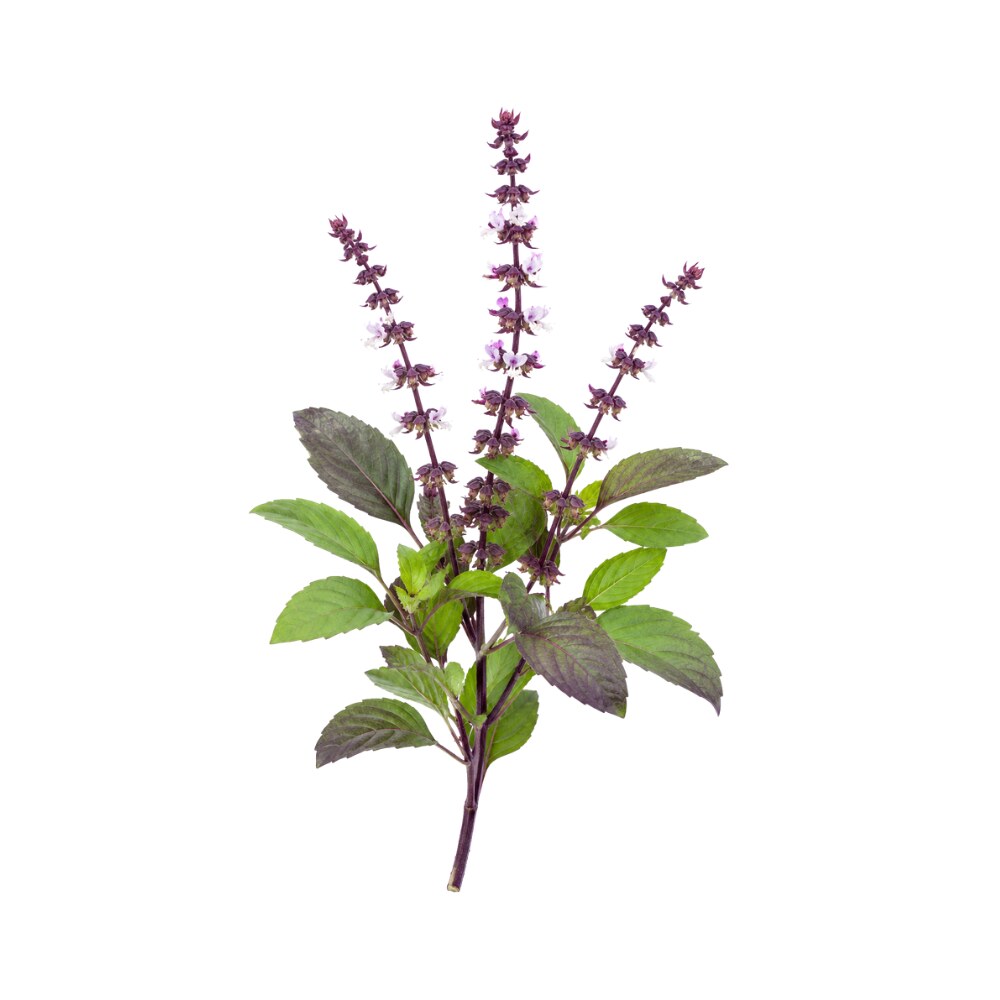
Materia Medica
Holy Basil
Ocimum tenuiflorum
Holy basil (Ocimum tenuiflorum), or tulsi, is a sacred aromatic herb of India used as an adaptogen and gentle relaxant for stress, mood and respiratory support.
What Is Holy Basil?
Holy basil, known across India as tulsi, is an aromatic, somewhat hairy member of the mint family native to the Indian subcontinent and Southeast Asia. Revered in Hinduism and grown in courtyards and temples, it is one of the most important herbs of Ayurvedic medicine, distinct in aroma and use from culinary sweet basil.
Botany
Holy basil is an aromatic, much-branched subshrub in the mint family (Lamiaceae), growing to about 1 m tall, often with a purplish cast to its stems, opposite toothed leaves, and tiny two-lipped purple-to-white flowers in slender terminal spikes. It is a tender perennial in the tropics but grown as an annual where winters are cold, and is aromatic from clove-scented essential oils (chiefly eugenol). It is a close relative of culinary sweet basil (Ocimum basilicum); the wider Lamiaceae holds many other kitchen and medicinal herbs, including mint, sage, thyme and lemon balm.
Herbalists distinguish several types of tulsi, and they are not chemically identical: green-leaved Rama (Sri) and purple-leaved Krishna tulsi are both Ocimum tenuiflorum, while the wild, more clove-scented Vana tulsi is usually the related Ocimum gratissimum 1Reference 1ReviewTulsi — Ocimum sanctum: A herb for all reasons — reviewView study →. The leaf’s essential-oil chemotype shifts between them and with growing region — dominated in varying degrees by eugenol, methyl-eugenol or methyl-chavicol — which changes both the aroma and the pharmacology of a given batch 20Reference 20Comparative volatile oil composition of four Ocimum species from northern India — chemotype analysisView study →.
Distribution
Holy basil is native to the Indian subcontinent and widely across tropical and subtropical Asia. Cultivated for millennia as a sacred and medicinal plant, it has been carried around the tropics and naturalized in tropical Africa, the Caribbean and the Pacific Islands, where it can behave as a locally weedy colonizer of disturbed ground. It is not a listed noxious weed and has no conservation concern.
Growing Conditions
- Life cycle: tender perennial, hardy only in USDA zones 10–11; grown as a warm-season annual elsewhere.
- Light: full sun.
- Water: steady moisture; warm, humid conditions.
- Habit: fast-growing to ~1 m; pinch flower spikes to prolong leaf harvest.
- Full cultivation detail lives on the companion farm-wiki grow guide for Ocimum tenuiflorum (link to be added once that project’s public URL is confirmed).
Traditional & Modern Uses
Tulsi is classically used as a rasayana (rejuvenative) and adaptogen, taken as a tea or fresh leaf to support resilience to stress, calm the mind, ease coughs and colds, and aid digestion. Contemporary herbalists use it as a gentle nervine and adaptogen for stress, mood and immune support. Unusually for a traditional herb, several small human trials back the stress/adaptogenic use and report modest effects on blood glucose and lipids, while its anti-inflammatory and antimicrobial reputation still rests largely on laboratory work.
Phytochemistry
Tulsi’s aroma is driven by its essential oil, whose make-up shifts dramatically between chemotypes. The classic Indian tulsi oil is rich in eugenol (the same phenylpropanoid found in clove), but other accessions are dominated instead by methyl eugenol or by the sesquiterpene β-caryophyllene, with linalool contributing to the scent 1,20Reference 1ReviewTulsi — Ocimum sanctum: A herb for all reasons — reviewView study →Reference 20Comparative volatile oil composition of four Ocimum species from northern India — chemotype analysisView study →. Beyond the oil, holy basil supplies the triterpene acids ursolic acid and oleanolic acid and the phenolic acid rosmarinic acid — the actives most standardised extracts are measured against — together with the flavonoids apigenin, luteolin, orientin and the flavone C-glycoside vicenin (vicenin-2), which underlie its antioxidant, anti-inflammatory and adaptogenic reputation 1,11Reference 1ReviewTulsi — Ocimum sanctum: A herb for all reasons — reviewView study →Reference 11ReviewOcimum sanctum L (holy basil or tulsi) and its phytochemicals in the prevention and treatment of cancer — reviewView study →.
Constituent Summary
Figures for the volatile compounds are share of leaf essential oil and swing widely; the triterpene and rosmarinic-acid figures are typical content of standardised leaf extracts (% w/w). † marks the chemotype-defining compounds — Ocimum tenuiflorum occurs as eugenol-rich, methyl-eugenol-rich and β-caryophyllene-rich chemotypes whose oils differ markedly 1,11,20Reference 1ReviewTulsi — Ocimum sanctum: A herb for all reasons — reviewView study →Reference 11ReviewOcimum sanctum L (holy basil or tulsi) and its phytochemicals in the prevention and treatment of cancer — reviewView study →Reference 20Comparative volatile oil composition of four Ocimum species from northern India — chemotype analysisView study →.
Phenylpropanoid2 compounds2 with data
Sesquiterpene1 compound1 with data
Monoterpene1 compoundno data
Triterpene2 compounds1 with data
Phenolic acid1 compound1 with data
Pharmacology & Research
Holy basil (tulsi) is one of the better-studied herbs in the Ayurvedic materia medica, and unusually for a traditional herb it carries a genuine — if small and methodologically uneven — human clinical literature layered on top of a very large preclinical base. A 2017 systematic review of human studies identified 24 trials covering stress, metabolic, immune and neurocognitive endpoints, most small, short and at moderate-to-high risk of bias, but consistently reporting benefit and no serious adverse events 2Reference 2Systematic reviewThe clinical efficacy and safety of tulsi in humans: a systematic review of the literature — systematic reviewView study →. The strongest human signals are for stress/anxiety symptom relief and for modest reductions in fasting blood glucose and lipids; most other indications (anti-inflammatory, hepatoprotective, anticancer, radioprotective) rest on animal and cell-line work, frequently on isolated constituents such as eugenol, rosmarinic acid and vicenin-2 rather than the whole herb 1,11Reference 1ReviewTulsi — Ocimum sanctum: A herb for all reasons — reviewView study →Reference 11ReviewOcimum sanctum L (holy basil or tulsi) and its phytochemicals in the prevention and treatment of cancer — reviewView study →. The single largest caveat is preparation: tulsi is chemotype-variable, and results from a standardised ethanolic leaf extract, an essential oil and a cup of fresh-leaf tea are not interchangeable.
- Best-supported: stress and anxiety symptom reduction in several small placebo-controlled RCTs 3,4,5Reference 3RCTEfficacy of an extract of Ocimum tenuiflorum (OciBest) in the management of general stress — randomised placebo-controlled trialView study →Reference 4Clinical trialControlled programmed trial of Ocimum sanctum leaf on generalized anxiety disorders — controlled clinical trialView study →Reference 5RCTA randomised, double-blind, placebo-controlled trial investigating the effects of a standardised Ocimum tenuiflorum extract — randomised controlled trialView study →, and modest lowering of fasting/postprandial glucose and lipids 6,7Reference 6RCTRandomised placebo-controlled, single-blind trial of holy basil leaves in patients with non-insulin-dependent diabetes mellitus — randomised controlled trialView study →Reference 7ReviewOcimum sanctum: a therapeutic role in diabetes and the metabolic syndrome — reviewView study →.
- Emerging, worth watching: immunomodulation (a Th1/NK shift in healthy volunteers) 8Reference 8RCTDouble-blinded randomised controlled trial for immunomodulatory effects of tulsi (Ocimum sanctum) leaf extract on healthy volunteers — randomised controlled trialView study → and tulsi mouthrinse matching chlorhexidine for plaque/gingivitis 12,13Reference 12RCTA randomised controlled clinical trial of Ocimum sanctum and chlorhexidine mouthwash on dental plaque and gingival inflammation — randomised controlled trialView study →Reference 13RCTComparative evaluation of efficacy of 4% tulsi extract dentifrice on plaque and gingivitis — randomised controlled trialView study →.
- Mechanistically thin: anticancer and radioprotective claims rest almost entirely on the isolated flavone vicenin-2 and other constituents in cell lines 11,17,18Reference 11ReviewOcimum sanctum L (holy basil or tulsi) and its phytochemicals in the prevention and treatment of cancer — reviewView study →Reference 17In vitroVicenin-2 acts as a radiosensitiser of non-small-cell lung cancer by lowering Akt expression — in vitroView study →Reference 18In vitroVicenin-2 inhibits Wnt/β-catenin signalling and induces apoptosis in HT-29 human colon cancer cell line — in vitroView study →.
- The caveat: chemotype and preparation vary enormously; there is no single standardised dose, and most human trials are small and short.
1. Stress & anxiety
This is tulsi’s best human evidence. A six-week randomised, double-blind, placebo-controlled trial of the standardised extract OciBest (1200 mg actives/day, n=150) found significant reductions in self-rated stress symptoms — forgetfulness, exhaustion, sleep and sexual problems — versus placebo 3Reference 3RCTEfficacy of an extract of Ocimum tenuiflorum (OciBest) in the management of general stress — randomised placebo-controlled trialView study →. An earlier controlled trial in generalised anxiety disorder (500 mg twice daily, 60 days, n=35) reported significant falls in anxiety, stress and depression scores 4Reference 4Clinical trialControlled programmed trial of Ocimum sanctum leaf on generalized anxiety disorders — controlled clinical trialView study →, and a 2022 8-week RCT of a standardised Ocimum extract (125 mg/day, n=100) found improvements in stress and sleep-related measures 5Reference 5RCTA randomised, double-blind, placebo-controlled trial investigating the effects of a standardised Ocimum tenuiflorum extract — randomised controlled trialView study →. All are small, use different preparations and doses, and rely on self-report scales, but the direction is consistent and adverse events were minimal. The traditional “adaptogen/rasayana” framing is the one place where classical use and modern trials genuinely converge.
Gap: no large or long trial, no single agreed dose or extract, and endpoints are subjective symptom scales rather than physiological stress markers.
2. Blood sugar & lipids
A randomised, placebo-controlled crossover trial in non-insulin-dependent diabetics found holy basil leaf significantly lowered fasting blood glucose (−21 mg/dL, ~17.6%) and postprandial glucose (~7.3%), with small favourable shifts in cholesterol 6Reference 6RCTRandomised placebo-controlled, single-blind trial of holy basil leaves in patients with non-insulin-dependent diabetes mellitus — randomised controlled trialView study →. This sits within a wider body of animal and review evidence framing tulsi as an antidiabetic and metabolic-syndrome herb, plausibly via effects on insulin secretion and lipid handling 7Reference 7ReviewOcimum sanctum: a therapeutic role in diabetes and the metabolic syndrome — reviewView study →. The human effect is real but modest and comes largely from a single small older trial; it is enough to warrant the caution about additive effects with antidiabetic drugs, not enough to position tulsi as a glucose-lowering therapy.
Gap: the key human trial is small, single-blind and decades old; no modern well-powered RCT confirms the glucose or lipid effect, and effect sizes are clinically modest.
3. Oral & periodontal
Tulsi performs well as a topical oral agent. In a triple-blind RCT, an Ocimum sanctum mouthrinse reduced dental plaque and gingival inflammation as effectively as chlorhexidine over 15–30 days, without chlorhexidine’s staining drawback 12Reference 12RCTA randomised controlled clinical trial of Ocimum sanctum and chlorhexidine mouthwash on dental plaque and gingival inflammation — randomised controlled trialView study →. A 4% tulsi dentifrice reduced plaque and gingivitis in adolescents 13Reference 13RCTComparative evaluation of efficacy of 4% tulsi extract dentifrice on plaque and gingivitis — randomised controlled trialView study →, and further trials of tulsi mouthwash against gingivitis and as an endodontic antimicrobial report comparable performance to standard agents 14Reference 14RCTEfficacy of herbal mouthwashes compared with chlorhexidine on gingivitis — randomised placebo-controlled trialView study →. The antibacterial action is attributed to eugenol and the essential oil. Note this is a topical, locally applied use — it does not transfer to any systemic benefit from drinking tulsi tea.
Gap: short follow-up, small samples and heterogeneous formulations; efficacy is established only for local oral use, not systemic administration.
4. Immunomodulatory
A double-blind, placebo-controlled crossover RCT in healthy volunteers (300 mg ethanolic leaf extract, n=22 completing) found significant increases in interferon-γ, interleukin-4, T-helper cells and natural-killer cells after four weeks — a measurable shift toward a Th1/innate-immune profile 8Reference 8RCTDouble-blinded randomised controlled trial for immunomodulatory effects of tulsi (Ocimum sanctum) leaf extract on healthy volunteers — randomised controlled trialView study →. This gives biological substance to the traditional “immunity” claim, but the endpoints are immune-cell surrogates in healthy people, not clinical outcomes like infection rates. Animal studies broadly support immunostimulant activity.
Gap: tiny sample, surrogate immunological markers only; no trial shows tulsi reduces actual infections or clinical illness.
5. Anti-inflammatory
The anti-inflammatory reputation is mechanistically well-mapped but clinically unproven as a standalone indication. In human monocytic (THP-1) cells, tulsi extracts and their phenolic constituent eugenol attenuated cell activation, consistent with suppression of NF-κB-driven inflammatory signalling 10Reference 10In vitroOcimum sanctum leaf extracts attenuate human monocytic (THP-1) cell activation — in vitroView study →. Rosmarinic acid and the flavones apigenin and luteolin contribute COX- and cytokine-modulating activity in preclinical models. No trial has tested tulsi against an inflammatory disease endpoint in humans on its own, though anti-inflammatory action plausibly underlies its metabolic and oral effects.
Gap: entirely preclinical/constituent-level for the isolated indication; no human anti-inflammatory outcome trial.
6. Antioxidant
Holy basil essential oil and extracts show strong free-radical scavenging in standard assays — holy basil oil was among the more active of ten Thai aromatic-plant oils in DPPH and lipid-peroxidation (TBARS) tests 19Reference 19In vitroPotential of native Thai aromatic plant extracts (including holy basil oil) in antiwrinkle body creams: antioxidant assays — in vitroView study →. The activity tracks with eugenol, rosmarinic acid and the flavonoids. The important caveat: much of the strongest antioxidant data is generated on the essential oil, whereas tulsi is most often taken as tea or leaf, so the in-vitro potency does not straightforwardly transfer to the consumed preparation.
Gap: overwhelmingly in-vitro, often on the essential oil rather than the tea/leaf; no evidence of a meaningful antioxidant effect at tissue level in humans.
7. Hepatoprotective
Animal models support a liver-protective action: tulsi extracts reduce chemically induced hepatic injury, and a 2024 study reported holy basil improved markers in metabolic dysfunction-associated steatotic liver disease (MASLD) via choline metabolism in an animal model 15Reference 15AnimalHoly basil (Ocimum sanctum) and metabolic dysfunction-associated steatotic liver disease via choline metabolism — animal in vivo studyView study →. The triterpene acids ursolic acid and oleanolic acid and rosmarinic acid are the presumed actives. There is no human liver-outcome evidence.
Gap: animal-only; no clinical trial with liver endpoints in people.
8. Cognitive
A placebo-controlled trial of 300 mg/day ethanolic leaf extract over 30 days in healthy adults found significant improvements in specific cognitive parameters — reaction time and error rate on Sternberg and Stroop tasks — versus placebo 9Reference 9RCTHoly basil (Ocimum sanctum) leaf extract enhances specific cognitive parameters in healthy adult volunteers: a placebo-controlled study — randomised controlled trialView study →. This aligns with animal data on neuroprotection and stress-buffering, and overlaps mechanistically with the anxiolytic signal. The endpoints are computerised cognitive-test surrogates in healthy volunteers rather than clinical cognition outcomes.
Gap: single small trial, short duration, surrogate cognitive tasks; no data in cognitive impairment or ageing populations.
9. Anticancer
Chemoprevention is a large preclinical theme but has no human data. Tulsi and its phytochemicals — eugenol, rosmarinic acid, apigenin, luteolin and the flavone-glycoside vicenin (vicenin-2) — prevented chemically induced skin, liver, oral and lung cancers in rodents and altered proliferation/apoptosis pathways in cell lines 11Reference 11ReviewOcimum sanctum L (holy basil or tulsi) and its phytochemicals in the prevention and treatment of cancer — reviewView study →. Isolated vicenin-2 inhibits Wnt/β-catenin signalling in colon-cancer cells 18Reference 18In vitroVicenin-2 inhibits Wnt/β-catenin signalling and induces apoptosis in HT-29 human colon cancer cell line — in vitroView study →. These are mechanism-of-action and constituent-level findings; none establishes clinical benefit, and the doses used are not achievable from culinary or tea use.
Gap: cell-line and rodent chemoprevention only, much of it on isolated constituents; no clinical oncology evidence whatsoever.
10. Radioprotective
The radioprotective/radiosensitising claim rests almost entirely on the constituent vicenin (vicenin-2), which in non-small-cell lung-cancer cells acted as a radiosensitiser by lowering Akt expression 17Reference 17In vitroVicenin-2 acts as a radiosensitiser of non-small-cell lung cancer by lowering Akt expression — in vitroView study →. Whole-herb radioprotection has been reported in older rodent work but not in humans. This is the thinnest of the scored indications — a plausible constituent-level mechanism with no clinical translation.
Gap: constituent-level, cell-line evidence only; no human radioprotection data, and the whole-herb-versus-isolated-molecule gap is largest here.
Mechanisms
| Mechanism | Drives | Key compounds |
|---|---|---|
| NF-κB ↓, COX inhibition, antimicrobial membrane action | anti-inflammatoryoral/antimicrobialantioxidant | eugenol, methyl eugenol |
| radical scavenging, cytokine modulation | antioxidantanti-inflammatoryhepatoprotective | rosmarinic acid |
| antioxidant, Wnt/β-catenin ↓, Akt ↓, apoptosis induction | anticancerradioprotectiveantioxidant | apigenin, luteolin, orientin, vicenin |
| anti-inflammatory, hepatocyte protection | hepatoprotectiveanti-inflammatory | ursolic acid, oleanolic acid |
| HPA-axis/stress buffering, Th1/NK immune shift, glucose & lipid modulation | stress/anxietyimmunomodulatoryblood sugar & lipids | standardised leaf extract (whole-extract adaptogenic action) |
Clinical trials
Human trials do exist — unusually for a traditional herb — but are concentrated in stress, metabolic, immune and oral-health endpoints and are generally small and short; the 2017 systematic review pooled 24 human studies across all indications 2Reference 2Systematic reviewThe clinical efficacy and safety of tulsi in humans: a systematic review of the literature — systematic reviewView study →.
| Completed | Planned | Terminated | Preclinical |
|---|---|---|---|
| ~24(human, across indications) 2Reference 2Systematic reviewThe clinical efficacy and safety of tulsi in humans: a systematic review of the literature — systematic reviewView study → | Not catalogued | 0 | Several hundred (animal + in vitro) |
Last checked: June 2026.
Safety & Pregnancy
Holy basil is well tolerated in human trials up to eight weeks; the main cautions are additive glucose-lowering with antidiabetic drugs and an animal-derived reproductive signal that makes it one to avoid in pregnancy.
- Avoid in pregnancy & conception. Reversible antifertility and anti-implantation effects in animals; also avoid while breastfeeding or trying to conceive.
- Antidiabetic drugs. Modestly lowers fasting and postprandial glucose — monitor for additive hypoglycaemia.
- Bleeding / surgery. Mild antiplatelet activity in animals; caution around surgery, though no human bleeding signal is shown.
- Interactions under-studied. No formal CYP450 or pharmacokinetic interaction data — absence of reports is not evidence of safety.
- Well tolerated. No serious adverse events across ~24 human trials up to eight weeks.
Full safety & interactions detail
Holy basil is generally well tolerated as a food, tea and standardised extract, with human trials up to eight weeks reporting no serious adverse events 2Reference 2Systematic reviewThe clinical efficacy and safety of tulsi in humans: a systematic review of the literature — systematic reviewView study →. It can modestly lower fasting and postprandial blood glucose, so people taking antidiabetic medication (insulin or oral hypoglycaemics) should monitor for additive hypoglycaemia 6Reference 6RCTRandomised placebo-controlled, single-blind trial of holy basil leaves in patients with non-insulin-dependent diabetes mellitus — randomised controlled trialView study →. The clearest genuine caution is reproductive: benzene and other leaf extracts produce a reversible antifertility effect in male rats — reduced sperm count, motility and testicular androgen activity, normalising after withdrawal 16Reference 16AnimalReversible antifertility effect of benzene extract of Ocimum sanctum leaves on sperm parameters and fructose content in rats — animal in vivo studyView study → — and antifertility and anti-implantation activity is a recurring finding across reviews 21Reference 21ReviewTherapeutic uses of Ocimum sanctum Linn (tulsi) with a note on eugenol and its pharmacological actions: a short review — reviewView study →. Tulsi has also shown mild antiplatelet activity in animals, so caution is reasonable around surgery, though no human bleeding signal has been demonstrated. No regulatory monograph (WHO, ESCOP, EMA/HMPC) currently lists tulsi with formal contraindications; the framing here rests on primary trials and animal studies rather than a pharmacopoeial source.
Interactions have been only partially assessed: additive hypoglycaemia with antidiabetic drugs is plausible and documented via the glucose-lowering effect 6Reference 6RCTRandomised placebo-controlled, single-blind trial of holy basil leaves in patients with non-insulin-dependent diabetes mellitus — randomised controlled trialView study →, and an antiplatelet/bleeding interaction is inferred from animal data, not from human interaction studies. No formal CYP450 or pharmacokinetic interaction studies were identified — absence of reports is not evidence of safety.
Holy basil has not been evaluated for safety in human pregnancy or lactation, and the available animal data point the wrong way: leaf extracts show reversible antifertility effects in males 16Reference 16AnimalReversible antifertility effect of benzene extract of Ocimum sanctum leaves on sperm parameters and fructose content in rats — animal in vivo studyView study → and antifertility/anti-implantation activity recurs across reviews 21Reference 21ReviewTherapeutic uses of Ocimum sanctum Linn (tulsi) with a note on eugenol and its pharmacological actions: a short review — reviewView study →. Combined with long-standing traditional caution against therapeutic doses in pregnancy, that is enough to advise avoiding medicinal or concentrated tulsi (extracts, essential oil, high-dose tea) while pregnant, breastfeeding or trying to conceive. The reproductive caution is animal-derived, not a demonstrated human harm — but with efficacy unproven in pregnancy there is no reason to take the risk.
Dosage
Human trials used standardised leaf extracts rather than a fixed amount of raw herb, so “dose” depends heavily on the preparation. Treat the figures below as what was tested, not a recommendation, and note that essential oil, standardised extract and fresh-leaf tea are not interchangeable.
| Preparation | Amount used | Endpoint (trial) |
|---|---|---|
| Standardised extract (OciBest) | 1200 mg actives/day, 6 weeks | Stress symptoms 3Reference 3RCTEfficacy of an extract of Ocimum tenuiflorum (OciBest) in the management of general stress — randomised placebo-controlled trialView study → |
| Ocimum sanctum leaf | ~500 mg twice daily, 60 days | Generalised anxiety 4Reference 4Clinical trialControlled programmed trial of Ocimum sanctum leaf on generalized anxiety disorders — controlled clinical trialView study → |
| Standardised Ocimum extract | 125 mg/day, 8 weeks | Stress & sleep 5Reference 5RCTA randomised, double-blind, placebo-controlled trial investigating the effects of a standardised Ocimum tenuiflorum extract — randomised controlled trialView study → |
| Ethanolic leaf extract | 300 mg/day, 4–6 weeks | Immune markers 8Reference 8RCTDouble-blinded randomised controlled trial for immunomodulatory effects of tulsi (Ocimum sanctum) leaf extract on healthy volunteers — randomised controlled trialView study →; cognition 9Reference 9RCTHoly basil (Ocimum sanctum) leaf extract enhances specific cognitive parameters in healthy adult volunteers: a placebo-controlled study — randomised controlled trialView study → |
Trials ran 4–8 weeks; there is no long-term dosing data and no single agreed dose or extract across studies.
Traditional Dosage
Classically tulsi is taken as fresh leaf (a few leaves chewed daily) or as a leaf infusion — roughly 1–2 g of dried leaf steeped as a tea — drunk as a daily rasayana rather than a measured medicine. Traditional use follows custom and the eugenol-rich culinary/tea chemotype, not the standardised extracts used in the trials above.
References
- Cohen, M. M. (2014). Tulsi — Ocimum sanctum: A herb for all reasons — review. J Ayurveda Integr Med, 5(4), 251–259. https://pubmed.ncbi.nlm.nih.gov/25624701/
- Jamshidi, N., & Cohen, M. M. (2017). The clinical efficacy and safety of tulsi in humans: a systematic review of the literature — systematic review. Evid Based Complement Alternat Med, 2017, 9217567. https://pubmed.ncbi.nlm.nih.gov/28400848/
- Saxena, R. C., et al. (2012). Efficacy of an extract of Ocimum tenuiflorum (OciBest) in the management of general stress — randomised placebo-controlled trial. Evid Based Complement Alternat Med, 2012, 894509. https://pubmed.ncbi.nlm.nih.gov/21977056/
- Bhattacharyya, D., et al. (2008). Controlled programmed trial of Ocimum sanctum leaf on generalized anxiety disorders — controlled clinical trial. Nepal Med Coll J, 10(3), 176–179. https://pubmed.ncbi.nlm.nih.gov/19253862/
- Lopresti, A. L., et al. (2022). A randomised, double-blind, placebo-controlled trial investigating the effects of a standardised Ocimum tenuiflorum extract — randomised controlled trial. Front Nutr, 9, 965130. https://pubmed.ncbi.nlm.nih.gov/36185698/
- Agrawal, P., et al. (1996). Randomised placebo-controlled, single-blind trial of holy basil leaves in patients with non-insulin-dependent diabetes mellitus — randomised controlled trial. Int J Clin Pharmacol Ther, 34(9), 406–409. https://pubmed.ncbi.nlm.nih.gov/8880292/
- Kapoor, S., et al. (2008). Ocimum sanctum: a therapeutic role in diabetes and the metabolic syndrome — review. Horm Metab Res, 40(5), 296–301. https://pubmed.ncbi.nlm.nih.gov/18425717/
- Mondal, S., et al. (2011). Double-blinded randomised controlled trial for immunomodulatory effects of tulsi (Ocimum sanctum) leaf extract on healthy volunteers — randomised controlled trial. J Ethnopharmacol, 136(3), 452–456. https://pubmed.ncbi.nlm.nih.gov/21619917/
- Sampath, S., et al. (2015). Holy basil (Ocimum sanctum) leaf extract enhances specific cognitive parameters in healthy adult volunteers: a placebo-controlled study — randomised controlled trial. Indian J Physiol Pharmacol, 59(1), 69–77. https://pubmed.ncbi.nlm.nih.gov/26571987/
- Choudhury, S. S., et al. (2014). Ocimum sanctum leaf extracts attenuate human monocytic (THP-1) cell activation — in vitro. J Ethnopharmacol, 153(3), 636–641. https://pubmed.ncbi.nlm.nih.gov/24732112/
- Baliga, M. S., et al. (2013). Ocimum sanctum L (holy basil or tulsi) and its phytochemicals in the prevention and treatment of cancer — review. Nutr Cancer, 65(sup1), 26–35. https://pubmed.ncbi.nlm.nih.gov/23682780/
- Gupta, D., et al. (2014). A randomised controlled clinical trial of Ocimum sanctum and chlorhexidine mouthwash on dental plaque and gingival inflammation — randomised controlled trial. J Ayurveda Integr Med, 5(2), 109–116. https://pubmed.ncbi.nlm.nih.gov/24948862/
- Nadar, B. G., et al. (2020). Comparative evaluation of efficacy of 4% tulsi extract dentifrice on plaque and gingivitis — randomised controlled trial. Contemp Clin Dent, 11(2), 133–139. https://pubmed.ncbi.nlm.nih.gov/33110312/
- Penmetsa, G. S., et al. (2019). Efficacy of herbal mouthwashes compared with chlorhexidine on gingivitis — randomised placebo-controlled trial. Ayu, 40(1), 21–28. https://pubmed.ncbi.nlm.nih.gov/31831965/
- Taesuwan, S., et al. (2024). Holy basil (Ocimum sanctum) and metabolic dysfunction-associated steatotic liver disease via choline metabolism — animal in vivo study. Plants (Basel), 14(1), 13. https://pubmed.ncbi.nlm.nih.gov/39795274/
- Ahmed, M., et al. (2002). Reversible antifertility effect of benzene extract of Ocimum sanctum leaves on sperm parameters and fructose content in rats — animal in vivo study. J Basic Clin Physiol Pharmacol, 13(1), 51–59. https://pubmed.ncbi.nlm.nih.gov/12099405/
- Baruah, T. J., et al. (2019). Vicenin-2 acts as a radiosensitiser of non-small-cell lung cancer by lowering Akt expression — in vitro. Biofactors, 45(2), 200–210. https://pubmed.ncbi.nlm.nih.gov/30496626/
- Yang, D., et al. (2018). Vicenin-2 inhibits Wnt/β-catenin signalling and induces apoptosis in HT-29 human colon cancer cell line — in vitro. Drug Des Devel Ther, 12, 1303–1312. https://pubmed.ncbi.nlm.nih.gov/29849451/
- Leelapornpisid, P., et al. (2015). Potential of native Thai aromatic plant extracts (including holy basil oil) in antiwrinkle body creams: antioxidant assays — in vitro. J Cosmet Sci, 66(6), 373–388. https://pubmed.ncbi.nlm.nih.gov/26665978/
- Padalia, R. C., & Verma, R. S. (2011). Comparative volatile oil composition of four Ocimum species from northern India — chemotype analysis. Nat Prod Res, 25(6), 569–575. https://pubmed.ncbi.nlm.nih.gov/21409717/
- Prakash, P., & Gupta, N. (2005). Therapeutic uses of Ocimum sanctum Linn (tulsi) with a note on eugenol and its pharmacological actions: a short review — review. Indian J Physiol Pharmacol, 49(2), 125–131. https://pubmed.ncbi.nlm.nih.gov/16170979/