
Materia Medica
Horsetail
Equisetum arvense
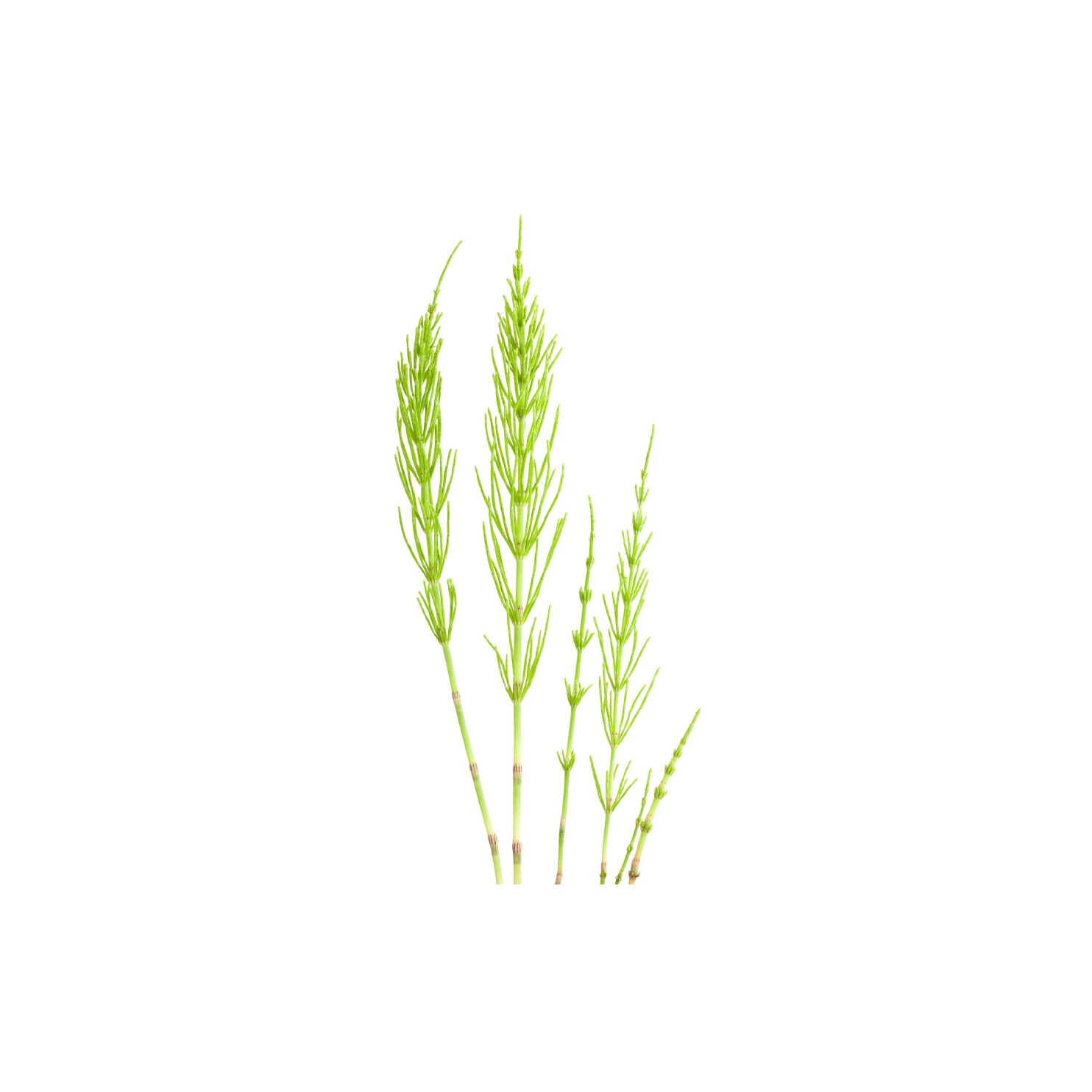
Horsetail (Equisetum arvense) — a mineral-rich, silica-packed herb used for hair and nail growth and as a urinary diuretic.
What Is Horsetail?
Horsetail is the last remaining member of a class of plants that used to dominate the terrain for over 100 million years. These unusual vascular plants reproduce via spores and have been incredibly successful despite the vast majority of the related species having gone extinct.
They’re high in minerals, and offer support through their ability to flush the urinary tract — most people who use this herb use it to support hair and nail growth, or as a diuretic and urinary antispasmodic.
What Is Horsetail Used For?
Horsetail is mainly used for its urinary antiseptic qualities to treat urinary tract infections (cystitis, urethritis). In men, horsetail is used to treat benign prostatic hyperplasia.
It’s also used for its high silica content to support nail and hair growth and is used traditionally for rheumatic pain.
Traditional Uses
Horsetail was used in traditional western herbal medicine for cystitis, urethritis, frequent urination, nocturnal enuresis, urinary calculi, renal colic, hematuria, enlarged prostate, prostatitis, to speed wound healing, and to stop bleeding 22,23Reference 22A clinical guide to blending liquid herbs: Herbal formulations for the individual patientReference 23Case reportSeborrhoeic dermatitis induced by nicotine of horsetails (Equisetum arvense L.) — case reportView study →.
The British herbal pharmacopeia lists horsetail as a genitourinary astringent, antihaemorrhagic, and prophylactic causing a mild leucocytosis. Topically it’s suggested as a vulnerary, and styptic. Indications include enuresis, prostatic disease, and cystitis with haematuria 24Reference 24HILIC HPLC-ESI-MS/MS identification and quantification of the alkaloids from Equisetum species — analyticalView study →.
All species except Equisetum palustre have been used as a food. This is because Equisetum palustre is toxic due to the constituent palustrine (an alkaloid) 6Reference 6In vitroAntioxidant, antimicrobial and genotoxicity screening of hydro-alcoholic extracts of five Serbian Equisetum species — in vitroView study →. In Japan, Equisetum arvense is made into a health drink known as sagina.
Botany
Horsetail is a botanical relic — a spore-bearing fern-ally rather than a true flowering plant, and one of the oldest lineages still growing wild today. It never blooms and never sets seed. Instead it throws up two distinct forms of stem across the season: brief, pale, unbranched spring shoots capped with a spore cone, and then the green summer stems that herbalists actually gather.
Those sterile summer stems are the medicinal part. They are jointed and hollow, ridged along their length, and encircled at each joint by whorls of slender, wiry branchlets — the “horsetail” or “mare’s tail” that gives the plant its name. What sets the stem apart from an ordinary green herb is its gritty, almost abrasive texture, a legacy of the silica it lays down in its tissues; it also contains thiaminase, an enzyme that degrades vitamin B1, which is why prolonged internal use is approached with caution (see Safety).
The genus is broad, and correct identification matters enormously. Field horsetail (Equisetum arvense) is the one traditionally used, but it has a taller wetland relative — marsh horsetail (Equisetum palustre) — that is toxic and must never be substituted or harvested by mistake. Gathering from clean, well-drained ground away from marshy margins, and confirming the species, is the essential first step.
Distribution
Field horsetail grows throughout the temperate and arctic Northern Hemisphere, on damp, disturbed ground — riverbanks, ditches, fields and roadsides across North America, Europe and Asia. Its deep, creeping rhizomes make it one of the most stubborn weeds a gardener can meet, spreading readily and resisting nearly every attempt to dig or spray it out.
Growing Conditions
- Thrives in moist to wet, disturbed soils in full sun to partial shade, and tolerates poor, compacted or sandy ground.
- Spreads aggressively by deep rhizomes that reach several feet down; even small broken fragments resprout, so tilling tends to make it worse.
- Effectively impossible to eradicate once established — treat it as something to contain, not casually plant; grow only in a sunken barrier or sealed container if at all.
- Hardy across a very wide range (roughly USDA zones 3–11) and needs no feeding; the challenge is always restraint, never survival.
- Full cultivation detail lives on the companion farm-wiki grow guide for Equisetum arvense (link to be added once that project’s public URL is confirmed).
Phytochemistry
Horsetail’s defining feature is its mineral load: the dried stems hold more than 10% inorganic matter, of which the bulk is silica and silicic acid — usually cited at around 5–8% of the dry herb, with a small water-soluble fraction. This is the highest plant silica content in common use and underlies horsetail’s traditional role as a connective-tissue and hair/nail nutritive.
The aerial parts are also rich in flavonoids (about 0.2–0.9%), led by the quercetin glycoside isoquercitrin with kaempferol glycosides alongside; the European Pharmacopoeia sets a minimum of 0.3% total flavonoids expressed as isoquercitrin. A phenolic-acid fraction including caffeic acid esters (up to ~1%, with chlorogenic and dicaffeoyl-tartaric acids) and salicylic acid supplies most of the herb’s antioxidant activity 5Reference 5In vitroPhenolic compounds in field horsetail (Equisetum arvense L.) as natural antioxidants — in vitroView study →. A saponin historically called equisetonin (reported near 5%) is also described, though modern work suggests it is a mixture of sugars and flavonoids rather than a single true saponin. The toxic alkaloid palustrine is essentially confined to the related Equisetum palustre and is only a trace concern in E. arvense 24Reference 24HILIC HPLC-ESI-MS/MS identification and quantification of the alkaloids from Equisetum species — analyticalView study →. Trace nicotine is also present and is relevant to skin contact rather than efficacy 23Reference 23Case reportSeborrhoeic dermatitis induced by nicotine of horsetails (Equisetum arvense L.) — case reportView study →.
Constituent Summary
Figures are share of the dried herb; flavonoid and silica levels vary with season, harvest stage and habitat. Equisetonin’s “~5%” is a historical figure and its single-compound status is disputed.
Mineral1 compound1 with data
Flavonoid2 compounds1 with data
Phenolic Acid2 compounds1 with data
Saponin1 compound1 with data
Other Alkaloid2 compounds2 with data
Pharmacology & Research
Horsetail has a modest and lopsided evidence base: a very large descriptive and phytochemical literature, a substantial body of animal and cell-culture pharmacology, and just two small human randomised trials — one for acute diuresis, one for topical wound healing after episiotomy. The strongest and most interesting human signal is the diuretic trial, in which a standardised dried extract matched hydrochlorothiazide without the electrolyte loss that defines thiazide diuretics 1Reference 1RCTRandomized, double-blind clinical trial to assess the acute diuretic effect of Equisetum arvense (field horsetail) in healthy volunteers — randomised controlled trialView study →. Almost everything else — antioxidant, anti-inflammatory, bone, antibacterial and antidiabetic activity — rests on preclinical work, and much of the bone-health case is really an argument about silica rather than about horsetail as taken. A recurring caveat runs through the whole literature: results depend heavily on species (several Equisetum species are studied interchangeably), extract type and solvent, so a standardised-extract finding does not automatically transfer to a tea or a whole-herb powder.
- Best-supported: acute diuresis from a standardised dried extract, equal to hydrochlorothiazide in one human RCT 1Reference 1RCTRandomized, double-blind clinical trial to assess the acute diuretic effect of Equisetum arvense (field horsetail) in healthy volunteers — randomised controlled trialView study →; faster episiotomy-wound healing and less pain from a 3% topical ointment in a second RCT 2Reference 2RCTThe effect of Equisetum arvense (horsetail) ointment on wound healing and pain intensity after episiotomy — randomised placebo-controlled trialView study →.
- Emerging, worth watching: consistent animal/in-vitro anti-inflammatory and antinociceptive activity 8,9,10Reference 8AnimalAntinociceptive and anti-inflammatory properties of the hydroalcoholic extract of stems from Equisetum arvense in mice — animal modelView study →Reference 9In vitroEquisetum arvense (common horsetail) modulates the function of inflammatory immunocompetent cells — in vitroView study →Reference 10In vitroIn vitro anti-inflammatory effects of Equisetum arvense are not solely mediated by silica — in vitroView study →, and osteoblast-supporting effects tied to silica 13,14Reference 13In vitroEquisetum arvense hydromethanolic extracts in bone tissue regeneration: in vitro osteoblastic modulation — in vitroView study →Reference 14AnimalEffect of Equisetum arvense extract on bone mineral density in Wistar rats via digital radiography — animal modelView study →.
- Mechanistically thin: bone “nutritive,” antidiabetic and anxiolytic claims rest on single animal studies or constituent-level inference about silica.
- The caveat: no standardised oral dose is validated for anything but acute diuresis, human data are almost absent, and effects vary by species and extract type.
1. Diuretic
The one genuinely persuasive human result. In a double-blind, randomised crossover trial, 36 healthy male volunteers received a standardised dried extract of Equisetum arvense (900 mg/day), placebo (corn starch), or hydrochlorothiazide (25 mg/day) for four days each, separated by 10-day washouts, with 24-hour water balance as the endpoint 1Reference 1RCTRandomized, double-blind clinical trial to assess the acute diuretic effect of Equisetum arvense (field horsetail) in healthy volunteers — randomised controlled trialView study →. The extract produced a diuretic effect stronger than placebo and statistically equivalent to hydrochlorothiazide — but, unlike the thiazide, without significantly increasing electrolyte excretion, which is the mechanistically interesting part and the basis of the traditional “flushing” use. Adverse events were rare and minor and lab tests were unchanged, though the trial was acute (four days) and enrolled only healthy young men.
Gap: A single small acute trial in healthy men; no data on sustained dosing, on patients with the urinary conditions horsetail is actually used for, or on the tea/whole-herb forms most people take.
2. Topical wound healing
A double-blind placebo-controlled RCT applied a 3% E. arvense ointment to episiotomy wounds in 108 nulliparous women and measured healing on the REEDA scale and pain on a visual analogue scale at 5 and 10 days postpartum 2Reference 2RCTThe effect of Equisetum arvense (horsetail) ointment on wound healing and pain intensity after episiotomy — randomised placebo-controlled trialView study →. Both wound-healing scores and pain were significantly better in the horsetail group at both follow-ups, with fewer analgesics used. Two streptozotocin-diabetic and dermal rat wound models support the direction of effect, showing higher wound-closure ratios with 5–10% ointment versus vehicle 3,4Reference 3AnimalEffects of Equisetum arvense ointment on diabetic wound healing in rats — animal modelView study →Reference 4AnimalEffects of Equisetum arvense ointment on dermal wound healing in rats — animal modelView study →. The silica and phenolic content is the proposed mechanism.
Gap: All evidence is topical; nothing here supports oral use for wound healing. The human trial is single-centre and specific to episiotomy, and the rat studies use different, higher-strength ointments.
3. Antioxidant
Antioxidant activity is the most-replicated preclinical property. Ethyl-acetate and butanol fractions of the aerial parts show strong DPPH and nitric-oxide radical scavenging and inhibition of lipid peroxidation, tracking the phenolic-acid and flavonoid content — caffeic acid derivatives and the quercetin glycoside isoquercitrin are the main contributors, with the water extract weakest 5Reference 5In vitroPhenolic compounds in field horsetail (Equisetum arvense L.) as natural antioxidants — in vitroView study →. A comparison of five Equisetum species found E. telmateia, not E. arvense, had the highest capacity, and flagged that all the hydro-alcoholic extracts increased micronucleus formation in vitro — a genotoxicity signal at high concentration 6Reference 6In vitroAntioxidant, antimicrobial and genotoxicity screening of hydro-alcoholic extracts of five Serbian Equisetum species — in vitroView study →. Later work confirms both antioxidant and antigenotoxic profiles depending on extract and dose 7Reference 7In vitroInvestigation of the genotoxic, antigenotoxic and antioxidant profile of different extracts from Equisetum species — in vitroView study →.
Gap: Entirely in-vitro; no human antioxidant-status data, and the same extracts show concentration-dependent genotoxicity, so “antioxidant” should not be read as uniformly protective.
4. Anti-inflammatory
Animal and cell data are consistent here. A hydroalcoholic stem extract reduced acetic-acid writhing by up to 98%, cut formalin-test licking, and reduced carrageenan paw oedema in mice, with the analgesia not reversed by naloxone (i.e. non-opioid) 8Reference 8AnimalAntinociceptive and anti-inflammatory properties of the hydroalcoholic extract of stems from Equisetum arvense in mice — animal modelView study →. A standardised extract inhibited human T-cell proliferation and lowered IL-2, IFN-γ and TNF-α in vitro, pointing to genuine immunomodulation 9Reference 9In vitroEquisetum arvense (common horsetail) modulates the function of inflammatory immunocompetent cells — in vitroView study →. In-vitro work shows the anti-inflammatory effect is not solely due to silica, implicating the phenolic fraction 10Reference 10In vitroIn vitro anti-inflammatory effects of Equisetum arvense are not solely mediated by silica — in vitroView study →, and a 2023 phytochemical study and a 2025 rat ulcerative-colitis model add further anti-inflammatory signals 11,12Reference 11In vitroPhytochemical investigation of Equisetum arvense and evaluation of their anti-inflammatory potential — in vitroView study →Reference 12AnimalAntioxidant and anti-inflammatory effects of Equisetum arvense L. on acid-induced ulcerative colitis — animal modelView study →.
Gap: No human anti-inflammatory trial exists; doses are high intraperitoneal animal doses that do not map onto oral human use, and extract standardisation varies across studies.
5. Bone support
The traditional “connective-tissue nutritive” role rests mostly on silica. Hydromethanolic extracts increased viability, proliferation and alkaline-phosphatase activity in human osteoblastic cells at 50–500 µg/mL, with deleterious effects at ≥1000 µg/mL 13Reference 13In vitroEquisetum arvense hydromethanolic extracts in bone tissue regeneration: in vitro osteoblastic modulation — in vitroView study →. A Wistar-rat study reported increased mandibular bone mineral density at 120 mg/kg extract 14Reference 14AnimalEffect of Equisetum arvense extract on bone mineral density in Wistar rats via digital radiography — animal modelView study →, and an alveolar-bone model showed reduced osteoclast activity via RANKL/OPG modulation 15Reference 15AnimalEquisetum arvense inhibits alveolar bone destruction in a rat model with lipopolysaccharide-induced periodontitis — animal modelView study →. Much of the broader case comes from silicon-supplementation research rather than horsetail itself — an umbrella review found the human bone-density evidence for silicon suggestive but not conclusive 16Reference 16Systematic reviewSilicon supplementation for bone health: an umbrella review — systematic reviewView study →.
Gap: No human trial of horsetail for bone; the strongest support is constituent-level (silicon), the in-vitro benefit reverses to harm at high concentration, and silicon bioavailability from horsetail preparations is not well characterised.
6. Antibacterial
The urinary-antiseptic reputation has only in-vitro backing. Various Equisetum species show moderate-to-strong activity against gram-positive bacteria, and a 2018 study reported antibacterial activity alongside oxidative-stress and inflammation modulation 17Reference 17In vitroEquisetum arvense L. extract induces antibacterial activity and modulates oxidative stress, inflammation — in vitroView study →; the five-species Serbian screen found most tested organisms sensitive to some degree 6Reference 6In vitroAntioxidant, antimicrobial and genotoxicity screening of hydro-alcoholic extracts of five Serbian Equisetum species — in vitroView study →. Activity is inconsistent across species, solvents and strains.
Gap: No clinical confirmation that oral horsetail reaches antibacterial concentrations in the urinary tract; the traditional urinary-antiseptic use is not backed by any human trial, and gram-negative uropathogens are poorly covered.
7. Antidiabetic
Only rodent data. Methanol, n-hexane and dichloromethane extracts lowered blood glucose in streptozotocin-diabetic rats over five weeks 18Reference 18AnimalAntidiabetic effect of Equisetum arvense L. (Equisetaceae) in streptozotocin-induced diabetes in male rats — animal modelView study →, and a later study attributed a moderate glucose-lowering and insulin-sensitising effect to SIRT1 activation in cardiac tissue, with benefits described as modest and dose-dependent 19Reference 19AnimalSIRT1 activation by Equisetum arvense L. (horsetail) modulates insulin sensitivity in streptozotocin-diabetic rats — animal modelView study →.
Gap: Animal-only, streptozotocin model; no human glucose data, and the reported effects are moderate even in rats.
8. Anxiolytic
Two isolated animal studies. An ethanolic stem extract (50–100 mg/kg) increased open-arm time in the elevated-plus-maze in mice, comparable to diazepam but with less sedation 20Reference 20AnimalAnxiolytic effects of Equisetum arvense Linn. extracts in mice — animal modelView study →. A separate study found chronic hydroalcoholic extract (50 mg/kg) improved memory retention in aged rats, alongside in-vitro antioxidant effects 21Reference 21AnimalCognitive enhancement in aged rats after chronic administration of Equisetum arvense L. with demonstrated antioxidant properties — animal modelView study →. The endpoints differ and neither has been replicated.
Gap: Two single studies with different endpoints, no replication, no human data; the CNS case is currently a hypothesis.
Mechanisms
| Mechanism | Drives | Key compounds |
|---|---|---|
| Radical scavenging, lipid-peroxidation ↓, cytokine (IL-2 / IFN-γ / TNF-α) ↓ | antioxidantanti-inflammatory | isoquercitrin, kaempferol |
| DPPH / NO scavenging, non-silica anti-inflammatory action | antioxidantanti-inflammatory | caffeic acid, salicylic acid |
| Osteoblast ALP ↑, connective-tissue / collagen support, wound matrix | bone supporttopical wound healing | silica |
| Neuromuscular toxicity (mainly E. palustre); safety, not efficacy | (identity / adulteration marker) | palustrine |
Clinical trials
Two small single-herb randomised controlled trials underpin the human evidence — one for acute diuresis, one for topical episiotomy-wound healing. Registered E. arvense trials on ClinicalTrials.gov are almost all multi-ingredient consumer products (hair-growth blends, bladder-control and silicon-supplement combinations), not single-herb studies, so they add no clean evidence for any single indication.
| Completed | Planned | Terminated | Preclinical |
|---|---|---|---|
| 2(single-herb RCTs) | 0 | 0 | ~20+ |
Last checked: July 2026.
Clinical Applications
Horsetail’s clearest evidence-based use is as a gentle diuretic: a standardised dried extract matched a thiazide for acute diuresis in one human trial, without the electrolyte loss 1Reference 1RCTRandomized, double-blind clinical trial to assess the acute diuretic effect of Equisetum arvense (field horsetail) in healthy volunteers — randomised controlled trialView study →. Traditionally it is taken as a urinary antiseptic for lower urinary tract complaints, but that use rests on in-vitro antibacterial data only and has never been confirmed in a human trial, so it should be regarded as traditional rather than proven. The high silica content underlies its long-standing use as a nutritive for nail and hair growth, and a 3% topical ointment sped episiotomy-wound healing in a controlled trial 2Reference 2RCTThe effect of Equisetum arvense (horsetail) ointment on wound healing and pain intensity after episiotomy — randomised placebo-controlled trialView study →.
Dosage
The only clinically tested oral dose is a standardised dried extract at 900 mg/day, used for acute diuresis over four days in the one human trial 1Reference 1RCTRandomized, double-blind clinical trial to assess the acute diuretic effect of Equisetum arvense (field horsetail) in healthy volunteers — randomised controlled trialView study →; for topical wound healing a 3% ointment was applied to episiotomy wounds 2Reference 2RCTThe effect of Equisetum arvense (horsetail) ointment on wound healing and pain intensity after episiotomy — randomised placebo-controlled trialView study →. These are specific preparations and do not translate directly to the traditional tincture range below. There is no validated standardised oral dose for the traditional urinary or nutritive uses.
| Preparation | Dose (from research) | Use | Source |
|---|---|---|---|
| Standardised dried extract | 900 mg/day (4 days) | acute diuresis | 1Reference 1RCTRandomized, double-blind clinical trial to assess the acute diuretic effect of Equisetum arvense (field horsetail) in healthy volunteers — randomised controlled trialView study → |
| Topical ointment | 3% | episiotomy-wound healing | 2Reference 2RCTThe effect of Equisetum arvense (horsetail) ointment on wound healing and pain intensity after episiotomy — randomised placebo-controlled trialView study → |
Because horsetail contains thiaminase, therapeutic doses should not be taken long-term 25Reference 25Thiaminase activities and thiamine content of Pteridium aquilinum, Equisetum ramosissimum and other plants — analyticalView study →.
Traditional Dosage
- Liquid extract (1:2): 15–40 mL per week (traditional Western herbal figure) 26Reference 26British Herbal Pharmacopoeia.
- Traditionally taken as a tea/infusion of the dried aerial parts for urinary “flushing” and as a mineral/silica nutritive for hair, nails and connective tissue.
Safety & Pregnancy
Horsetail is well tolerated short-term, but crude preparations carry a thiaminase (vitamin B1-depleting) risk that rules out prolonged use, and correct species identity is the key safeguard — the neurotoxic marsh horsetail (E. palustre) is the main serious toxicity concern.
- Thiaminase depletes vitamin B1. Prolonged use of crude preparations risks thiamine depletion — avoid long-term therapeutic use.
- Species identity is critical. Misidentification or adulteration with neurotoxic marsh horsetail (E. palustre) is the main serious toxicity risk — use authenticated E. arvense.
- Trace nicotine. Linked to seborrhoeic/contact dermatitis on skin exposure; a consideration for topical use and in children.
- Diuretic interactions. Theoretical potassium loss and additive effects with pharmaceutical diuretics or lithium (reduced clearance).
- Short-term tolerability. The one human diuretic trial found no significant electrolyte or laboratory changes after four days.
Full safety & interactions detail
Horsetail is generally well tolerated in the short term — the one human diuretic trial found no significant electrolyte or laboratory changes after four days 1Reference 1RCTRandomized, double-blind clinical trial to assess the acute diuretic effect of Equisetum arvense (field horsetail) in healthy volunteers — randomised controlled trialView study → — but it carries three under-appreciated concerns. It contains thiaminase, an enzyme that degrades vitamin B1 (thiamine); this is well documented across the genus and is the mechanism behind horsetail poisoning in grazing livestock, so prolonged use of crude preparations risks thiamine depletion 25Reference 25Thiaminase activities and thiamine content of Pteridium aquilinum, Equisetum ramosissimum and other plants — analyticalView study →. This is the reason for the standing “avoid long-term therapeutic use” caution, and why some practitioners pair it with B1 supplementation. Horsetail also contains trace nicotine, which has been linked to seborrhoeic/contact dermatitis on skin exposure and is a consideration for topical use and in children 23,27Reference 23Case reportSeborrhoeic dermatitis induced by nicotine of horsetails (Equisetum arvense L.) — case reportView study →Reference 27ReviewSafety assessment of Equisetum arvense-derived ingredients as used in cosmetics — reviewView study →. Its diuretic action creates a theoretical risk of potassium loss and additive effects with pharmaceutical diuretics or with lithium (reduced clearance).
Correct botanical identity is the most serious practical safeguard: the neurotoxic alkaloid palustrine is essentially confined to the related Equisetum palustre (marsh horsetail), which is toxic to livestock, so adulteration or misidentification with that species is the main serious toxicity risk 24Reference 24HILIC HPLC-ESI-MS/MS identification and quantification of the alkaloids from Equisetum species — analyticalView study →. Products should be sourced as authenticated E. arvense. Horsetail should not be used long-term in therapeutic doses.
Scope of this assessment. No dedicated human drug-interaction study exists; the additive-diuresis, hypokalaemia and lithium concerns are mechanistic inferences, and the thiaminase / B1-depletion risk is drawn from veterinary and analytical data rather than modern human oral-use trials. Absence of reported human problems is not evidence of safety.
Horsetail has not been formally evaluated in pregnancy or lactation; the two human trials enrolled healthy men (oral diuretic) and postpartum women (topical only). Given the documented nicotine content, the thiaminase / B1-depletion mechanism and the diuretic action, medicinal use in pregnancy and breastfeeding should be avoided as a precaution rather than treated as unstudied-but-safe.
References
- Carneiro, D. M., et al. (2014). Randomized, double-blind clinical trial to assess the acute diuretic effect of Equisetum arvense (field horsetail) in healthy volunteers — randomised controlled trial. Evidence-Based Complementary and Alternative Medicine. https://pubmed.ncbi.nlm.nih.gov/24723963/
- Asgharikhatooni, A., et al. (2015). The effect of Equisetum arvense (horsetail) ointment on wound healing and pain intensity after episiotomy — randomised placebo-controlled trial. Iranian Red Crescent Medical Journal. https://pubmed.ncbi.nlm.nih.gov/26019907/
- Ozay, Y., et al. (2013). Effects of Equisetum arvense ointment on diabetic wound healing in rats — animal model. Wounds. https://pubmed.ncbi.nlm.nih.gov/25867238/
- Ozay, Y., et al. (2010). Effects of Equisetum arvense ointment on dermal wound healing in rats — animal model. Wounds. https://pubmed.ncbi.nlm.nih.gov/25901493/
- Mimica-Dukić, N., et al. (2008). Phenolic compounds in field horsetail (Equisetum arvense L.) as natural antioxidants — in vitro. Molecules. https://pubmed.ncbi.nlm.nih.gov/18719517/
- Milovanović, V., et al. (2007). Antioxidant, antimicrobial and genotoxicity screening of hydro-alcoholic extracts of five Serbian Equisetum species — in vitro. Plant Foods for Human Nutrition. https://pubmed.ncbi.nlm.nih.gov/17676400/
- Dormousoglou, M., et al. (2022). Investigation of the genotoxic, antigenotoxic and antioxidant profile of different extracts from Equisetum species — in vitro. Antioxidants. https://pubmed.ncbi.nlm.nih.gov/35883882/
- Do Monte, F. H., et al. (2004). Antinociceptive and anti-inflammatory properties of the hydroalcoholic extract of stems from Equisetum arvense in mice — animal model. Pharmacological Research. https://pubmed.ncbi.nlm.nih.gov/14726218/
- Gründemann, C., et al. (2014). Equisetum arvense (common horsetail) modulates the function of inflammatory immunocompetent cells — in vitro. BMC Complementary and Alternative Medicine. https://pubmed.ncbi.nlm.nih.gov/25088216/
- Steinborn, C., et al. (2018). In vitro anti-inflammatory effects of Equisetum arvense are not solely mediated by silica — in vitro. Planta Medica. https://pubmed.ncbi.nlm.nih.gov/29202511/
- Jeong, S. Y., et al. (2023). Phytochemical investigation of Equisetum arvense and evaluation of their anti-inflammatory potential — in vitro. Pharmaceuticals. https://pubmed.ncbi.nlm.nih.gov/37895949/
- Koohi-Hosseinabadi, O., et al. (2025). Antioxidant and anti-inflammatory effects of Equisetum arvense L. on acid-induced ulcerative colitis — animal model. Scientific Reports. https://pubmed.ncbi.nlm.nih.gov/40258911/
- Bessa Pereira, C., et al. (2012). Equisetum arvense hydromethanolic extracts in bone tissue regeneration: in vitro osteoblastic modulation — in vitro. Cell Proliferation. https://pubmed.ncbi.nlm.nih.gov/22672309/
- Arbabzadegan, N., et al. (2019). Effect of Equisetum arvense extract on bone mineral density in Wistar rats via digital radiography — animal model. Caspian Journal of Internal Medicine. https://pubmed.ncbi.nlm.nih.gov/31363396/
- Shiba, F., et al. (2022). Equisetum arvense inhibits alveolar bone destruction in a rat model with lipopolysaccharide-induced periodontitis — animal model. International Journal of Dentistry. https://pubmed.ncbi.nlm.nih.gov/36794024/
- Pritchard, A., et al. (2024). Silicon supplementation for bone health: an umbrella review — systematic review. Nutrients. https://pubmed.ncbi.nlm.nih.gov/38337624/
- Pallag, A., et al. (2018). Equisetum arvense L. extract induces antibacterial activity and modulates oxidative stress, inflammation — in vitro. Oxidative Medicine and Cellular Longevity. https://pubmed.ncbi.nlm.nih.gov/29636839/
- Safiyeh, S., et al. (2007). Antidiabetic effect of Equisetum arvense L. (Equisetaceae) in streptozotocin-induced diabetes in male rats — animal model. Pakistan Journal of Biological Sciences. https://pubmed.ncbi.nlm.nih.gov/19086514/
- Hegedűs, C., et al. (2020). SIRT1 activation by Equisetum arvense L. (horsetail) modulates insulin sensitivity in streptozotocin-diabetic rats — animal model. Molecules. https://pubmed.ncbi.nlm.nih.gov/32486051/
- Singh, N., et al. (2011). Anxiolytic effects of Equisetum arvense Linn. extracts in mice — animal model. Indian Journal of Experimental Biology. https://pubmed.ncbi.nlm.nih.gov/21615059/
- Guilherme dos Santos, J. Jr, et al. (2005). Cognitive enhancement in aged rats after chronic administration of Equisetum arvense L. with demonstrated antioxidant properties — animal model. Pharmacology, Biochemistry, and Behavior. https://pubmed.ncbi.nlm.nih.gov/15972233/
- Bone, K. (2003). A clinical guide to blending liquid herbs: Herbal formulations for the individual patient. Edinburgh: Churchill Livingstone.
- Sudan, B. J. (1985). Seborrhoeic dermatitis induced by nicotine of horsetails (Equisetum arvense L.) — case report. Contact Dermatitis. https://pubmed.ncbi.nlm.nih.gov/2932297/
- Tipke, I., et al. (2019). HILIC HPLC-ESI-MS/MS identification and quantification of the alkaloids from Equisetum species — analytical. Phytochemical Analysis. https://pubmed.ncbi.nlm.nih.gov/31115949/
- Meyer, P. (1989). Thiaminase activities and thiamine content of Pteridium aquilinum, Equisetum ramosissimum and other plants — analytical. Onderstepoort Journal of Veterinary Research. https://pubmed.ncbi.nlm.nih.gov/2748137/
- British Herbal Medicine Association. (1983). British Herbal Pharmacopoeia. Bournemouth, UK: BHMA.
- Johnson, W., et al. (2026). Safety assessment of Equisetum arvense-derived ingredients as used in cosmetics — review. International Journal of Toxicology. https://pubmed.ncbi.nlm.nih.gov/41069090/