
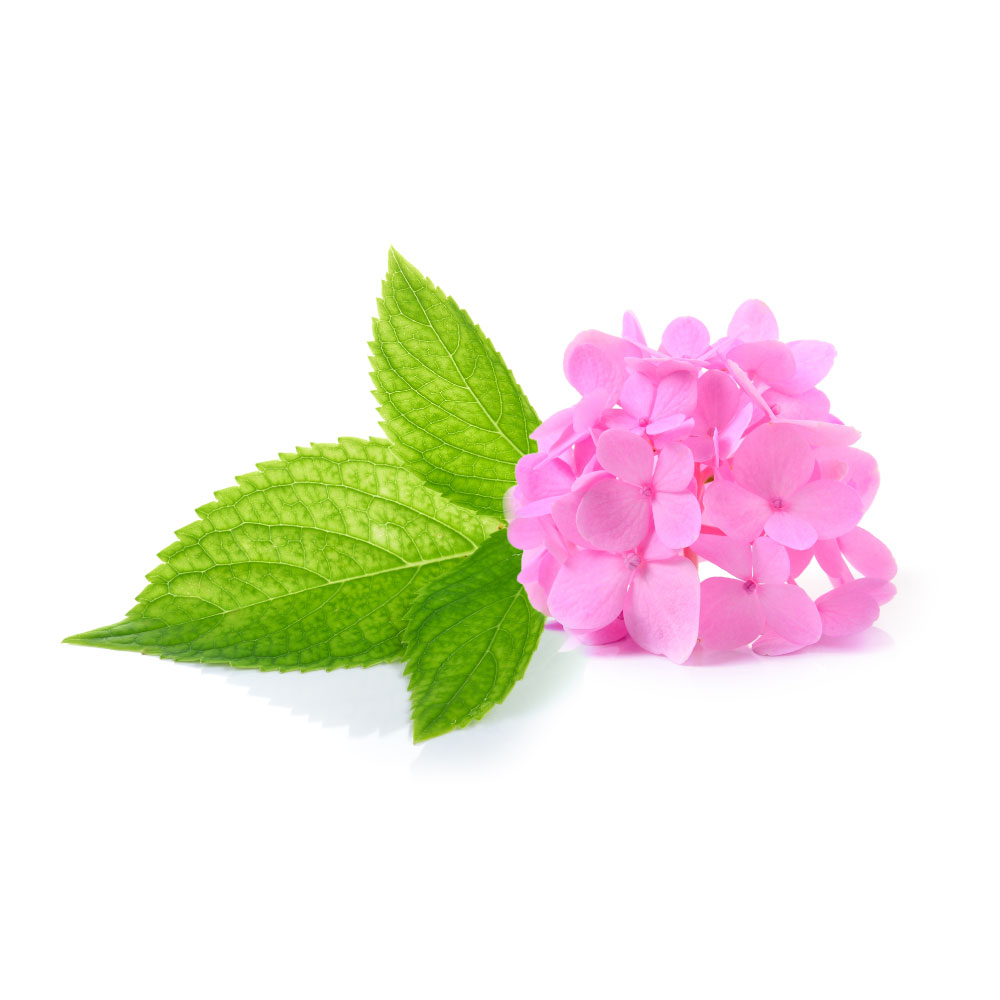
Materia Medica
Hydrangea
Hydrangea arborescens
Hydrangea (Hydrangea arborescens) — a traditional urinary and antilithic herb used to support the kidneys, bladder and the passing of stones.
What Is Hydrangea?
Hydrangea is the dried root and rhizome of Hydrangea arborescens, a shrub of the family Hydrangeaceae native to the Appalachian region of North America. Unlike its ornamental relatives, it is a root herb rather than a leaf tea, and it reaches people almost entirely as a decoction or a 1:5 tincture — the working part of the plant being the root and rhizome, not the flowers or foliage. Its traditional standing is narrow and specific: a diuretic and antilithic (“stone-breaker”) remedy for urinary gravel, small kidney and bladder stones, and urinary irritation.
That reputation is genuinely Western and genuinely old — used by the Cherokee and other Indigenous peoples of the Appalachians, then carried into 19th- and 20th-century Eclectic and physiomedicalist practice — but it rests on tradition rather than trials. The herb’s actual urinary and stone-passing uses have essentially no modern experimental validation, and no clinical trial has ever tested the arborescens root for them.
Reading the research correctly matters here more than for most herbs, because almost all of it belongs to a different plant. The documented pharmacology of the genus — anti-inflammatory, antiallergic, metabolic and skin-ageing effects, including the one human trial 14Reference 14RCTOral intake of Hydrangea serrata leaves extract improves wrinkles, hydration, elasticity, texture and roughness in human skin: a randomised, double-blind, placebo-controlled study — randomised controlled trialView study → — comes from the Asian sister species H. serrata and H. macrophylla, whose fermented leaves are the sweet tea “amacha,” and is driven largely by constituents such as thunberginols, phyllodulcin and hydrangeic acid that have not been confirmed in H. arborescens. The two are linked chiefly by a single shared compound, the dihydroisocoumarin hydrangenol, so that leaf pharmacology should not be read as evidence for the North American root described here.
How Is Hydrangea Used?
Hydrangea arborescens is used as a root herb, not a leaf tea like its Asian relatives — the dried root and rhizome are the working part of the plant. The traditional preparation is a decoction (roughly 6–12 g of dried root simmered per day, divided across doses) or a 1:5 tincture in 40% alcohol taken at 2–4 mL up to three times daily. Herbalists dose it through the day rather than as a single large intake, consistent with its traditional role as a urinary and antilithic remedy meant to be taken over days to weeks while gravel or a small stone is passing.
Its purpose in practice is narrow and specific: supporting the kidneys and bladder, easing urinary irritation, and helping the passage of small stones or gravel. It is not used as a general tonic or for the anti-inflammatory, antiallergic or metabolic effects documented for the H. serrata/macrophylla leaf — that pharmacology belongs to a different species and a different plant part, and has not been shown to apply to the arborescens root used here.
Traditional Uses
Western Herbal Medicine
Hydrangea arborescens is a North American root with a genuinely Western herbal history. It was used by the Cherokee and other Indigenous peoples of the Appalachian region for urinary complaints and to ease the passage of kidney and bladder stones, and this use was carried directly into 19th- and 20th-century Eclectic and physiomedicalist practice as a diuretic and antilithic — a “stone-breaker” root taken by decoction or tincture for gravel, urinary irritation and bladder weakness. It remains part of contemporary Western herbal medicine largely on this traditional basis, since, as the Pharmacology & Research section above notes, the diuretic/antilithic use itself has no modern experimental validation.
Traditional Chinese Medicine
Hydrangea arborescens has no history in Traditional Chinese Medicine — it is a North American species, not part of the Chinese materia medica. The genus Hydrangea does appear in East Asian herbalism through the related species H. macrophylla var. thunbergii and H. serrata, whose fermented leaves are used as the sweet tea “amacha” in Japanese and Chinese folk custom, but that is a different plant, a different part (leaf, not root) and a different tradition; it should not be conflated with this monograph’s herb.
Ayurvedic Medicine
Hydrangea arborescens has no place in Ayurveda. It is not native to South Asia and does not appear in the classical Ayurvedic materia medica; any claim of Ayurvedic use would be unsupported.
Indications
Based on the traditional record and the Pharmacology & Research section above:
- Urinary gravel and small kidney stones — the herb’s core traditional indication, as a diuretic and antilithic; supported historically but with no modern experimental validation.
- Bladder irritation and urinary discomfort — a traditional supportive use alongside its antilithic role, again resting on historical use rather than clinical evidence.
- Benign prostatic hyperplasia (adjunctive, traditional) — reflects the herb’s traditional urinary-system use; not supported by dedicated research.
The well-documented pharmacology (anti-inflammatory, antiallergic, metabolic, neuroprotective — see above) belongs almost entirely to hydrangenol and other constituents from the Asian leaf species and preparations, and should not be read as clinical indications for H. arborescens root.
Botany
Hydrangea arborescens is a low, spreading deciduous shrub of eastern North American woodlands, standing three to five feet high with opposite, sharply toothed leaves and broad, dome-shaped heads of creamy-white summer flowers. Herbalists know it by several folk names — wild hydrangea, smooth hydrangea, and “seven bark,” the last for the way its aging stems peel in thin, layered sheets. The part used in the Western herbal tradition is not the showy flowering top but the underground portion: the root and rhizome, dug from mature plants, cleaned and dried. Cherokee and later Eclectic physicians reached for this root as a diuretic and antilithic — a reputed “stone-breaker” for gravel and urinary calculi.
It is worth keeping this plant firmly separate from the hydrangeas most people picture. H. arborescens is the North American medicinal species. The rounded blue-and-pink “mophead” of gardens is H. macrophylla, the bigleaf hydrangea, and its close relative H. serrata is the Asian mountain hydrangea whose sweetened leaves make the Japanese ceremonial tea amacha. Those Asian species belong to the ornamental and tea traditions, not the American root-medicine one, and their chemistry and uses should not be read across to H. arborescens. The genus also includes the panicle hydrangea (H. paniculata) and the native oakleaf hydrangea (H. quercifolia), both grown chiefly as landscape shrubs.
Distribution
Wild hydrangea grows through the eastern United States, favouring moist, rocky wooded slopes, ravines, streambanks and shaded bluff bases, with the Appalachian uplands as its heartland. Its range runs from New York and the mid-Atlantic south to Florida and west into the lower Midwest and mid-South. It is a woodland understory shrub, not a plant of open or disturbed ground.
Growing Conditions
- Best in part shade; it tolerates fuller sun only where the soil stays reliably moist.
- Wants average, medium-moisture, well-drained soil and resents drought once established.
- Hardy across a wide range of climates (roughly USDA zones 3–9), blooming on new wood so it flowers even after cold winters.
- A woodland-edge shrub by nature — mimic dappled light and consistent moisture rather than hot, dry, open sites.
- Full cultivation detail lives on the companion farm-wiki grow guide for Hydrangea arborescens (link to be added once that project’s public URL is confirmed).
Phytochemistry
The dried rhizome and root of Hydrangea arborescens are characterised by a coumarin glycoside known as hydrangin, generally identified with umbelliferone, together with hydrangenol — a dihydroisocoumarin that serves as the chemical marker for the Hydrangea genus and is the compound implicated in the plant’s contact-allergen potential. The root also yields a group of flavonoids, including kaempferol, quercetin and rutin, alongside saponins, resin and carbohydrate material (gum, starch and sugars).
Constituent Summary
The table lists the documented root and rhizome constituents by class. The traditional herbal and pharmacognostic literature characterises these compounds qualitatively; validated quantitative levels for H. arborescens are not established, so amounts are recorded as No Data. † marks hydrangenol, the dihydroisocoumarin that acts as the genus marker and is the documented allergen of the plant.
Pharmacology & Research
The research base for Hydrangea is real but structurally lopsided, and reading it correctly matters more here than for most herbs. Almost all modern pharmacology has been done on the Asian sister species — Hydrangea macrophylla and H. serrata var. thunbergii, whose fermented leaves are the East Asian sweet tea “Hydrangeae Dulcis Folium” (amacha) — and not on H. arborescens, the North American root/rhizome herb this monograph describes. The two are linked chiefly by one shared constituent, the dihydroisocoumarin hydrangenol; the other headline actives of the Asian material (thunberginols, phyllodulcin, hydrangeic acid) have not been confirmed in H. arborescens. The strongest signals are anti-inflammatory, mast-cell/antiallergic and metabolic, and they are overwhelmingly in vitro and rodent 1,2,5Reference 1In vitroWater extract of processed Hydrangea macrophylla leaf attenuates the expression of pro-inflammatory mediators by suppressing Akt-mediated NF-κB activation — in vitroView study →Reference 2In vitroHydrangenol inhibits lipopolysaccharide-induced nitric oxide production in BV2 microglial cells by suppressing the NF-κB pathway and activating the Nrf2-mediated HO-1 pathway — in vitroView study →Reference 5In vitroIn vitro and in vivo anti-inflammatory and chondroprotective effects of standardised hot-water extract from Hydrangea serrata via NF-κB and MAPK pathways — animal modelView study →. Exactly one human randomised controlled trial exists — and it tested a H. serrata leaf extract for skin ageing, not the arborescens root for its traditional urinary and stone-passing uses 14Reference 14RCTOral intake of Hydrangea serrata leaves extract improves wrinkles, hydration, elasticity, texture and roughness in human skin: a randomised, double-blind, placebo-controlled study — randomised controlled trialView study →. The herb’s actual traditional indications — diuretic, antilithic, urinary — have essentially no modern experimental validation.
- Best-supported: anti-inflammatory activity of hydrangenol and H. serrata/macrophylla leaf extracts (NF-κB and MAPK suppression, iNOS/COX-2 down), replicated across cell and rodent models 1,2,5Reference 1In vitroWater extract of processed Hydrangea macrophylla leaf attenuates the expression of pro-inflammatory mediators by suppressing Akt-mediated NF-κB activation — in vitroView study →Reference 2In vitroHydrangenol inhibits lipopolysaccharide-induced nitric oxide production in BV2 microglial cells by suppressing the NF-κB pathway and activating the Nrf2-mediated HO-1 pathway — in vitroView study →Reference 5In vitroIn vitro and in vivo anti-inflammatory and chondroprotective effects of standardised hot-water extract from Hydrangea serrata via NF-κB and MAPK pathways — animal modelView study →; and mast-cell/antiallergic effects of the thunberginol/hydrangenol group 7,8,11Reference 7In vitroThunberginols A, B, and F, new antiallergic and antimicrobial principles from Hydrangeae Dulcis Folium — in vitroView study →Reference 8AnimalEffects of phyllodulcin, hydrangenol, their 8-O-glucosides, and thunberginols A and F on passive cutaneous anaphylaxis reaction in rats — rat in vivoView study →Reference 11In vitroInhibitory effects of thunberginols A and B on cytokine mRNA expression and AP-1 activation in RBL-2H3 cells — in vitroView study →.
- Emerging, worth watching: metabolic effects (PPARγ-like adipogenesis, lipid and glucose lowering in mice) 16,17,20Reference 16In vitroNew type of anti-diabetic compounds from the processed leaves of Hydrangea macrophylla var. thunbergii — in vitro and mouseView study →Reference 17AnimalHydrangeic acid from the processed leaves of Hydrangea macrophylla var. thunbergii as a new type of anti-diabetic compound — KK-Aʸ mouse in vivoView study →Reference 20AnimalHydrangenol exerts anti-obesity effects by disturbing adipogenesis via mitotic clonal expansion and gut-microbiota dysbiosis — mouse in vivoView study →; neuroprotective/anxiolytic and anti-amyloid signals 21,22Reference 21AnimalHydrangea macrophylla and thunberginol C attenuate stress-induced anxiety in mice — mouse in vivoView study →Reference 22AnimalPhyllodulcin improves hippocampal long-term potentiation in 5XFAD mice — mouse in vivoView study →; and one food-chemistry finding that leaf dihydroisocoumarins block SARS-CoV-2 spike–ACE2 binding in vitro 26Reference 26In vitroDihydroisocoumarins of Hydrangea macrophylla var. thunbergii inhibit binding of the SARS-CoV-2 spike protein to ACE2 — in vitroView study →.
- Mechanistically thin: antiproliferative (single bladder-cancer cell line, IC50 ≈ 100 µM) 24Reference 24In vitroHydrangenol inhibits proliferation, migration and invasion of EJ bladder cancer cells via p21ᵂᴬᶠ¹-mediated G1 arrest and p38 MAPK — in vitroView study → and antimicrobial (in vitro, constituent-level) 7Reference 7In vitroThunberginols A, B, and F, new antiallergic and antimicrobial principles from Hydrangeae Dulcis Folium — in vitroView study → claims.
- The caveat: the herb’s actual traditional uses — diuretic, antilithic, urinary — have no modern experimental validation. The pharmacology that exists is on the leaf of different species, in a different preparation, and transfers to H. arborescens only through hydrangenol.
1. Anti-inflammatory
This is the deepest and most consistent signal, and it rests substantially on hydrangenol, the dihydroisocoumarin that H. arborescens shares with the Asian species. A whole water extract of processed H. macrophylla leaf suppressed nitric oxide, PGE₂ and TNF-α in LPS-stimulated macrophages by inhibiting Akt-mediated NF-κB activation 1Reference 1In vitroWater extract of processed Hydrangea macrophylla leaf attenuates the expression of pro-inflammatory mediators by suppressing Akt-mediated NF-κB activation — in vitroView study →, and the isolated constituent reproduces this: in LPS-stimulated macrophages and BV2 microglia, hydrangenol suppresses nitric oxide, iNOS and COX-2 by blocking NF-κB nuclear translocation while activating the Nrf2/HO-1 axis 2,6Reference 2In vitroHydrangenol inhibits lipopolysaccharide-induced nitric oxide production in BV2 microglial cells by suppressing the NF-κB pathway and activating the Nrf2-mediated HO-1 pathway — in vitroView study →Reference 6In vitroAnti-inflammatory and antinociceptive activities of a synthetic hydrangenol derivative — in vitro and in vivoView study →. In vivo, oral hydrangenol reduced intestinal inflammation in an LPS endotoxemia model 3Reference 3AnimalProtective effect of hydrangenol on lipopolysaccharide-induced endotoxemia by suppressing intestinal inflammation — mouse in vivoView study → and ameliorated dextran-sulfate colitis by curbing macrophage infiltration and protecting the epithelial tight junction 4Reference 4AnimalHydrangenol, an active constituent of Hydrangea serrata, ameliorates colitis by suppressing macrophage-mediated inflammation in DSS-treated mice — mouse in vivoView study →. A 2025 study of standardised H. serrata hot-water extract showed anti-inflammatory and chondroprotective effects in macrophages, chondrocytes and two rodent arthritis models via NF-κB/MAPK, with hydrangenol named as the major active metabolite 5Reference 5In vitroIn vitro and in vivo anti-inflammatory and chondroprotective effects of standardised hot-water extract from Hydrangea serrata via NF-κB and MAPK pathways — animal modelView study →; a synthetic hydrangenol derivative extended the same anti-inflammatory/antinociceptive profile 6Reference 6In vitroAnti-inflammatory and antinociceptive activities of a synthetic hydrangenol derivative — in vitro and in vivoView study →. Doses are typically 20–40 mg/kg orally in mice.
Gap: no human anti-inflammatory data, and every positive study used leaf extract or isolated hydrangenol — not an H. arborescens root decoction or tincture at a realistic human intake.
2. Antiallergic
The classic Hydrangea pharmacology, from the Yoshikawa/Matsuda group, concerns mast-cell stabilisation by isocoumarins of Hydrangeae Dulcis Folium. Thunberginol A, B and F inhibit antigen- and calcium-ionophore-induced degranulation and the release of TNF-α and IL-4 in RBL-2H3 mast cells, and suppress the AP-1/ERK signalling that drives cytokine transcription — with a transcriptional profile resembling that of the anti-allergic flavone luteolin 10,11Reference 10In vitroInhibitory effects of thunberginols A, B and F on degranulation and release of TNF-α and IL-4 in RBL-2H3 cells — in vitroView study →Reference 11In vitroInhibitory effects of thunberginols A and B on cytokine mRNA expression and AP-1 activation in RBL-2H3 cells — in vitroView study →. Structure–activity work identified the 3,4-double bond and specific hydroxyls as essential, making the fully aromatic thunberginols more potent than dihydro forms such as hydrangenol 9Reference 9In vitroStructure requirements of isocoumarins, phthalides and stilbenes from Hydrangeae Dulcis Folium for inhibition of histamine release from rat peritoneal mast cells — in vitroView study →. In the rat passive cutaneous anaphylaxis model, these constituents (excepting phyllodulcin) significantly inhibited the reaction; the authors judged hydrangenol the principal antiallergic component of the processed leaf once abundance is accounted for 8Reference 8AnimalEffects of phyllodulcin, hydrangenol, their 8-O-glucosides, and thunberginols A and F on passive cutaneous anaphylaxis reaction in rats — rat in vivoView study →. Thunberginols A, B and F were first isolated as combined antiallergic/antimicrobial principles 7Reference 7In vitroThunberginols A, B, and F, new antiallergic and antimicrobial principles from Hydrangeae Dulcis Folium — in vitroView study →.
Gap: the potent actives (thunberginols) are documented in the Asian fermented leaf and have not been confirmed in H. arborescens; the constituent that is shared, hydrangenol, is the weaker antiallergic. All data are in vitro or in rats.
3. Anti-photoaging (skin)
This indication carries the only human trial. A randomised, double-blind, placebo-controlled study (n=151, once-daily oral H. serrata leaf extract “WHS” 300 or 600 mg for 12 weeks) reported significant reductions in skin wrinkles and improvements in hydration, elasticity, texture and roughness versus placebo, with no extract-related adverse events 14Reference 14RCTOral intake of Hydrangea serrata leaves extract improves wrinkles, hydration, elasticity, texture and roughness in human skin: a randomised, double-blind, placebo-controlled study — randomised controlled trialView study →. It is supported mechanistically: in UVB-irradiated human fibroblasts, hydrangenol preserved procollagen and boosted hyaluronic-acid production while downregulating MMP-1/-3 and COX-2 12Reference 12In vitroChemical constituents from leaves of Hydrangea serrata and their anti-photoaging effects on UVB-irradiated human fibroblasts — in vitroView study →, and in UVB-exposed hairless mice it reduced wrinkling and collagen loss via MAPK/AP-1 suppression and Nrf2/HO-1 induction 13Reference 13AnimalHydrangenol isolated from the leaves of Hydrangea serrata attenuates wrinkle formation and repairs skin moisture in UVB-irradiated hairless mice — mouse in vivoView study →.
Gap: genuinely strong evidence — but for a different species (H. serrata leaf), a different preparation (standardised oral leaf extract), and a cosmetic endpoint with no bearing on the traditional urinary/antilithic use of H. arborescens root. The score is capped to reflect that mismatch, not the trial’s quality.
4. Antioxidant
Antioxidant activity is best read as a mechanism running underneath the anti-inflammatory and photoaging findings rather than a standalone therapeutic claim. Hydrangenol activates nuclear factor erythroid-2-related factor 2 (Nrf2), driving heme oxygenase-1 (HO-1) and related cytoprotective genes in microglia and skin models 2,13Reference 2In vitroHydrangenol inhibits lipopolysaccharide-induced nitric oxide production in BV2 microglial cells by suppressing the NF-κB pathway and activating the Nrf2-mediated HO-1 pathway — in vitroView study →Reference 13AnimalHydrangenol isolated from the leaves of Hydrangea serrata attenuates wrinkle formation and repairs skin moisture in UVB-irradiated hairless mice — mouse in vivoView study →. In Caenorhabditis elegans, a phyllodulcin-rich H. macrophylla fraction raised catalase activity and lowered reactive-oxygen species and lipid accumulation under oxidative and thermal stress 15Reference 15AnimalPhyllodulcin from the hexane fraction of Hydrangea macrophylla inhibits glucose-induced lipid accumulation and ROS generation in Caenorhabditis elegans — in vivo (invertebrate)View study →. The dihydroisocoumarin/coumarin scaffold is a recognised Keap1/Nrf2/ARE modulator class.
Gap: entirely mechanistic and preclinical; no clinical antioxidant biomarker data, and the effect is inferred at the constituent level rather than demonstrated for the whole arborescens root.
5. Antidiabetic / metabolic
A coherent preclinical metabolic story sits on the Asian leaf constituents. Hydrangenol, phyllodulcin and hydrangeic acid promote adipocyte differentiation and adiponectin release with a PPARγ-agonist-like profile — without directly binding the receptor, unlike thiazolidinediones 16,18Reference 16In vitroNew type of anti-diabetic compounds from the processed leaves of Hydrangea macrophylla var. thunbergii — in vitro and mouseView study →Reference 18ReviewSearch for a new type of PPARγ agonist-like anti-diabetic compounds from medicinal plants — reviewView study →. Hydrangeic acid (200 mg/kg/day) lowered blood glucose, triglycerides and free fatty acids in diabetic KK-Aʸ mice 17Reference 17AnimalHydrangeic acid from the processed leaves of Hydrangea macrophylla var. thunbergii as a new type of anti-diabetic compound — KK-Aʸ mouse in vivoView study →. On the obesity side, phyllodulcin reduced fat mass and induced fat-browning genes (UCP1, PRDM16, PGC-1α) in high-fat-diet mice 19Reference 19AnimalPhyllodulcin regulates obesity-related metabolic changes and fat-browning genes in high-fat-diet-induced obese mice — mouse in vivoView study →, and a 2026 study found hydrangenol disrupts adipogenesis (AMPKα up; Akt/mTOR down) and shifts gut microbiota toward a leaner profile in obese mice 20Reference 20AnimalHydrangenol exerts anti-obesity effects by disturbing adipogenesis via mitotic clonal expansion and gut-microbiota dysbiosis — mouse in vivoView study →.
Gap: promising but rodent/cell-only; the principal actives (phyllodulcin, hydrangeic acid) are leaf/species-specific and not documented in H. arborescens, so the bridge to this monograph’s herb is weak.
6. Neuroprotective
An emerging cluster of single studies. Oral H. macrophylla extract protected cortical neurons against corticosterone toxicity and reduced restraint-stress anxiety in mice, with thunberginol C identified as an active ingredient 21Reference 21AnimalHydrangea macrophylla and thunberginol C attenuate stress-induced anxiety in mice — mouse in vivoView study →. Phyllodulcin inhibited amyloid-β aggregation, reduced hippocampal Aβ deposition and improved synaptic plasticity in 5XFAD Alzheimer’s-model mice 22Reference 22AnimalPhyllodulcin improves hippocampal long-term potentiation in 5XFAD mice — mouse in vivoView study →. Separately, thunberginol C and a hydrangenol glucoside were identified in vitro as natural cholinesterase inhibitors 23Reference 23In vitroDiscovery of natural inhibitors of cholinesterases from hydrangea (thunberginol C, hydrangenol 8-O-glucoside) — in vitroView study →.
Gap: each mechanism rests on one study; all preclinical; and the actives are again the Asian-leaf constituents rather than anything confirmed in H. arborescens.
7. Antiproliferative
The anticancer evidence is narrow. Hydrangenol inhibited proliferation, migration and invasion of EJ bladder-cancer cells via p21ᵂᴬᶠ¹-mediated G1 arrest, p38 MAPK activation and suppression of Sp-1-driven MMP-9 — but at an IC50 of about 100 µM, a high concentration 24Reference 24In vitroHydrangenol inhibits proliferation, migration and invasion of EJ bladder cancer cells via p21ᵂᴬᶠ¹-mediated G1 arrest and p38 MAPK — in vitroView study →. A follow-up reported antiangiogenic activity (VEGFR-2 signalling, MMP-2, G1 arrest) in vitro 25Reference 25In vitroHydrangenol suppresses VEGF-stimulated angiogenesis by targeting p27ᴷᴵᴾ¹-dependent G1 arrest and VEGFR-2 signalling — in vitroView study →.
Gap: a single cancer cell line at high micromolar doses plus one in vitro angiogenesis study; no animal tumour models and no selectivity or pharmacokinetic data.
8. Antimicrobial
The original 1990s isolations described thunberginol A, B and F as combined antiallergic and antimicrobial principles, with activity against oral bacteria 7Reference 7In vitroThunberginols A, B, and F, new antiallergic and antimicrobial principles from Hydrangeae Dulcis Folium — in vitroView study →. A more recent food-chemistry screen found leaf dihydroisocoumarins (hydrangenol, phyllodulcin) bind ACE2 and inhibit SARS-CoV-2 spike–ACE2 interaction in vitro, framed as a rationale for the traditional sweet-tea 26Reference 26In vitroDihydroisocoumarins of Hydrangea macrophylla var. thunbergii inhibit binding of the SARS-CoV-2 spike protein to ACE2 — in vitroView study →.
Gap: in vitro and constituent-level only, with no MICs against clinically relevant pathogens, no in vivo infection models, and — as elsewhere — reliance on Asian-leaf compounds not confirmed in H. arborescens.
Mechanisms
| Mechanism | Drives | Key compounds |
|---|---|---|
| NF-κB ↓, MAPK/AP-1 ↓, iNOS/COX-2 ↓, Nrf2/HO-1 ↑; PPARγ-like adipogenesis | anti-inflammatoryantioxidantphotoagingmetabolic | hydrangenol, phyllodulcin |
| mast-cell degranulation ↓, TNF-α/IL-4 ↓, intracellular Ca²⁺ ↓ | antiallergicantimicrobialneuroprotective | thunberginol A, B, C, F |
| adiponectin/GLUT4 ↑, blood glucose ↓ (PPARγ-like) | antidiabetic / metabolic | hydrangeic acid |
| Keap1/Nrf2/ARE modulation (class effect) | antioxidant (constituent-level) | umbelliferone (“hydrangin”) |
| antioxidant / anti-inflammatory (general flavonoid activity) | antioxidantanti-inflammatory (supportive) | kaempferol, quercetin |
Clinical trials
No registered clinical trials were identified for Hydrangea arborescens or for its traditional urinary/antilithic use — the evidence base is preclinical and traditional. The single published human study is a completed randomised controlled trial of a H. serrata leaf extract for skin ageing 14Reference 14RCTOral intake of Hydrangea serrata leaves extract improves wrinkles, hydration, elasticity, texture and roughness in human skin: a randomised, double-blind, placebo-controlled study — randomised controlled trialView study →, a different species, preparation and endpoint; a ClinicalTrials.gov match for “Hydrangea” is an unrelated oncology drug trial.
| Completed | Planned | Terminated | Preclinical |
|---|---|---|---|
| 1(H. serrata leaf, skin endpoint) | 0 | 0 | ~40+ |
Last checked: July 2026.
Dosage
The traditional Western herbal dose of dried H. arborescens root is roughly 6–12 g/day taken as a decoction, or a 1:5 tincture in 40% alcohol at 2–4 mL three times daily. These are traditional figures for the North American root and are not research-derived; the single human trial used a proprietary H. serrata leaf extract (300–600 mg/day) that does not transfer to arborescens root.
Traditional Dosage
In Western herbal practice the root and rhizome are given as a decoction (about 6–12 g of dried root simmered per day, divided) or as a liquid extract / tincture (1:5 in 40% alcohol, 2–4 mL up to three times daily), traditionally for urinary gravel, bladder irritation and the passing of small stones. No standardised or research-validated therapeutic dose exists for these uses.
Safety & Pregnancy
Hydrangea arborescens root has a long traditional record with low reported toxicity; the two genuine cautions are its documented contact-allergen potential and the dose-related effects (dizziness, chest tightness, GI upset) reported from excess. Interactions are untested, and a couple of persistent myths are worth dismissing.
- Contact allergen. Documented occupational allergic contact dermatitis to Hydrangea (a florist case).
- Excess doses. Traditional reports of dizziness, chest tightness and gastroenteritis — dose-related and poorly characterised.
- Interactions unassessed. No herb–drug studies exist; a theoretical additive-hypoglycaemic effect from leaf constituents is untested and unconfirmed in this species.
- Low reported toxicity. A long traditional record at customary decoction/tincture doses with low reported toxicity.
- Myths to disregard. The “cyanogenic hydrangin” claim is a coumarin/cyanogen conflation (no cyanide is released), and the psychoactive/“cannabinoid-mimic” reputation is unsupported.
Full safety & interactions detail
Hydrangea arborescens root has a long record of traditional use with low reported toxicity, but two genuine cautions apply. It is a documented contact allergen: occupational allergic contact dermatitis to Hydrangea has been reported in a florist 28Reference 28Case reportOccupational allergic contact dermatitis to Hydrangea spp. in an Italian florist — case reportView study →. Traditional sources warn that excessive doses may cause dizziness, a feeling of chest tightness and gastroenteritis; these effects are dose-related and not well characterised in the modern literature. The often-repeated claim that the plant’s “hydrangin” is a cyanogenic glycoside appears to be an error — hydrangin is a coumarin (an umbelliferone glycoside), not a cyanogen, and releases no cyanide. A true cyanogenic glycoside, taxiphyllin, has been quantified in the leaves of the Asian species H. macrophylla var. thunbergii, but it was found to be largely hydrolysed during processing and was judged unlikely to have caused the reported food-poisoning cases 27Reference 27Quantitative analysis of taxiphyllin, a cyanogenic glycoside, in the leaves of Hydrangea macrophylla var. thunbergii — analyticalView study →; it has not been characterised in H. arborescens root. Separately, a folkloric reputation for the root as a psychoactive or “cannabinoid-mimic” is not supported by any evidence and should be disregarded.
No formal herb–drug interaction studies exist for H. arborescens, so interactions have not been assessed; the mouse glucose-lowering data for leaf constituents (hydrangeic acid, phyllodulcin) raise a theoretical additive-hypoglycaemic consideration, but this is untested and those constituents are not confirmed in this species. The absence of reported problems should not be read as evidence of safety.
Hydrangea arborescens has not been evaluated for safety in pregnancy or lactation, and no reproductive or toxicological data exist. Avoidance is a precaution reflecting the absence of data, not a demonstrated risk.
References
- Dilshara MG, et al. (2013). Water extract of processed Hydrangea macrophylla leaf attenuates the expression of pro-inflammatory mediators by suppressing Akt-mediated NF-κB activation — in vitro. Environ Toxicol Pharmacol. https://pubmed.ncbi.nlm.nih.gov/23376181/
- Kim HJ, et al. (2016). Hydrangenol inhibits lipopolysaccharide-induced nitric oxide production in BV2 microglial cells by suppressing the NF-κB pathway and activating the Nrf2-mediated HO-1 pathway — in vitro. Int Immunopharmacol. https://pubmed.ncbi.nlm.nih.gov/27032067/
- Jang SY, et al. (2023). Protective effect of hydrangenol on lipopolysaccharide-induced endotoxemia by suppressing intestinal inflammation — mouse in vivo. Int Immunopharmacol. https://pubmed.ncbi.nlm.nih.gov/37871380/
- Kim SY, et al. (2023). Hydrangenol, an active constituent of Hydrangea serrata, ameliorates colitis by suppressing macrophage-mediated inflammation in DSS-treated mice — mouse in vivo. Food Funct. https://pubmed.ncbi.nlm.nih.gov/37435675/
- Heo HS, et al. (2025). In vitro and in vivo anti-inflammatory and chondroprotective effects of standardised hot-water extract from Hydrangea serrata via NF-κB and MAPK pathways — animal model. J Ethnopharmacol. https://pubmed.ncbi.nlm.nih.gov/40714059/
- Yoo HS, et al. (2025). Anti-inflammatory and antinociceptive activities of a synthetic hydrangenol derivative — in vitro and in vivo. Int Immunopharmacol. https://pubmed.ncbi.nlm.nih.gov/39889413/
- Yoshikawa M, et al. (1992). Thunberginols A, B, and F, new antiallergic and antimicrobial principles from Hydrangeae Dulcis Folium — in vitro. Chem Pharm Bull (Tokyo). https://pubmed.ncbi.nlm.nih.gov/1477932/
- Matsuda H, et al. (1999). Effects of phyllodulcin, hydrangenol, their 8-O-glucosides, and thunberginols A and F on passive cutaneous anaphylaxis reaction in rats — rat in vivo. Biol Pharm Bull. https://pubmed.ncbi.nlm.nih.gov/10480329/
- Matsuda H, et al. (1999). Structure requirements of isocoumarins, phthalides and stilbenes from Hydrangeae Dulcis Folium for inhibition of histamine release from rat peritoneal mast cells — in vitro. Bioorg Med Chem. https://pubmed.ncbi.nlm.nih.gov/10465418/
- Wang Q, et al. (2007). Inhibitory effects of thunberginols A, B and F on degranulation and release of TNF-α and IL-4 in RBL-2H3 cells — in vitro. Biol Pharm Bull. https://pubmed.ncbi.nlm.nih.gov/17268088/
- Matsuda H, et al. (2008). Inhibitory effects of thunberginols A and B on cytokine mRNA expression and AP-1 activation in RBL-2H3 cells — in vitro. Phytomedicine. https://pubmed.ncbi.nlm.nih.gov/17950587/
- Shin JS, et al. (2019). Chemical constituents from leaves of Hydrangea serrata and their anti-photoaging effects on UVB-irradiated human fibroblasts — in vitro. Biol Pharm Bull. https://pubmed.ncbi.nlm.nih.gov/30828074/
- Myung DB, et al. (2019). Hydrangenol isolated from the leaves of Hydrangea serrata attenuates wrinkle formation and repairs skin moisture in UVB-irradiated hairless mice — mouse in vivo. Nutrients. https://pubmed.ncbi.nlm.nih.gov/31581754/
- Myung DB, et al. (2020). Oral intake of Hydrangea serrata leaves extract improves wrinkles, hydration, elasticity, texture and roughness in human skin: a randomised, double-blind, placebo-controlled study — randomised controlled trial. Nutrients. https://pubmed.ncbi.nlm.nih.gov/32481760/
- Cho M, et al. (2024). Phyllodulcin from the hexane fraction of Hydrangea macrophylla inhibits glucose-induced lipid accumulation and ROS generation in Caenorhabditis elegans — in vivo (invertebrate). Biosci Biotechnol Biochem. https://pubmed.ncbi.nlm.nih.gov/38599627/
- Zhang H, et al. (2007). New type of anti-diabetic compounds from the processed leaves of Hydrangea macrophylla var. thunbergii — in vitro and mouse. Bioorg Med Chem Lett. https://pubmed.ncbi.nlm.nih.gov/17609121/
- Zhang H, et al. (2009). Hydrangeic acid from the processed leaves of Hydrangea macrophylla var. thunbergii as a new type of anti-diabetic compound — KK-Aʸ mouse in vivo. Eur J Pharmacol. https://pubmed.ncbi.nlm.nih.gov/19374876/
- Matsuda H, et al. (2014). Search for a new type of PPARγ agonist-like anti-diabetic compounds from medicinal plants — review. Biol Pharm Bull. https://pubmed.ncbi.nlm.nih.gov/24882400/
- Kim E, et al. (2017). Phyllodulcin regulates obesity-related metabolic changes and fat-browning genes in high-fat-diet-induced obese mice — mouse in vivo. Nutrients. https://pubmed.ncbi.nlm.nih.gov/28934139/
- Han HS, et al. (2026). Hydrangenol exerts anti-obesity effects by disturbing adipogenesis via mitotic clonal expansion and gut-microbiota dysbiosis — mouse in vivo. J Nutr Biochem. https://pubmed.ncbi.nlm.nih.gov/40975182/
- Lee J, et al. (2022). Hydrangea macrophylla and thunberginol C attenuate stress-induced anxiety in mice — mouse in vivo. Antioxidants (Basel). https://pubmed.ncbi.nlm.nih.gov/35204117/
- Cho E, et al. (2023). Phyllodulcin improves hippocampal long-term potentiation in 5XFAD mice — mouse in vivo. Biomed Pharmacother. https://pubmed.ncbi.nlm.nih.gov/36913892/
- Hwang J, et al. (2021). Discovery of natural inhibitors of cholinesterases from hydrangea (thunberginol C, hydrangenol 8-O-glucoside) — in vitro. Nutrients. https://pubmed.ncbi.nlm.nih.gov/33477276/
- Shin SS, et al. (2018). Hydrangenol inhibits proliferation, migration and invasion of EJ bladder cancer cells via p21ᵂᴬᶠ¹-mediated G1 arrest and p38 MAPK — in vitro. EXCLI J. https://pubmed.ncbi.nlm.nih.gov/30034317/
- Gho Y, et al. (2019). Hydrangenol suppresses VEGF-stimulated angiogenesis by targeting p27ᴷᴵᴾ¹-dependent G1 arrest and VEGFR-2 signalling — in vitro. Anim Cells Syst (Seoul). https://pubmed.ncbi.nlm.nih.gov/30949393/
- Yano A, et al. (2023). Dihydroisocoumarins of Hydrangea macrophylla var. thunbergii inhibit binding of the SARS-CoV-2 spike protein to ACE2 — in vitro. Biosci Biotechnol Biochem. https://pubmed.ncbi.nlm.nih.gov/37296229/
- Tsukioka J, et al. (2023). Quantitative analysis of taxiphyllin, a cyanogenic glycoside, in the leaves of Hydrangea macrophylla var. thunbergii — analytical. J Nat Med. https://pubmed.ncbi.nlm.nih.gov/37517070/
- Romita P, et al. (2020). Occupational allergic contact dermatitis to Hydrangea spp. in an Italian florist — case report. Contact Dermatitis. https://pubmed.ncbi.nlm.nih.gov/32065404/