Materia Medica
Magic Mushrooms
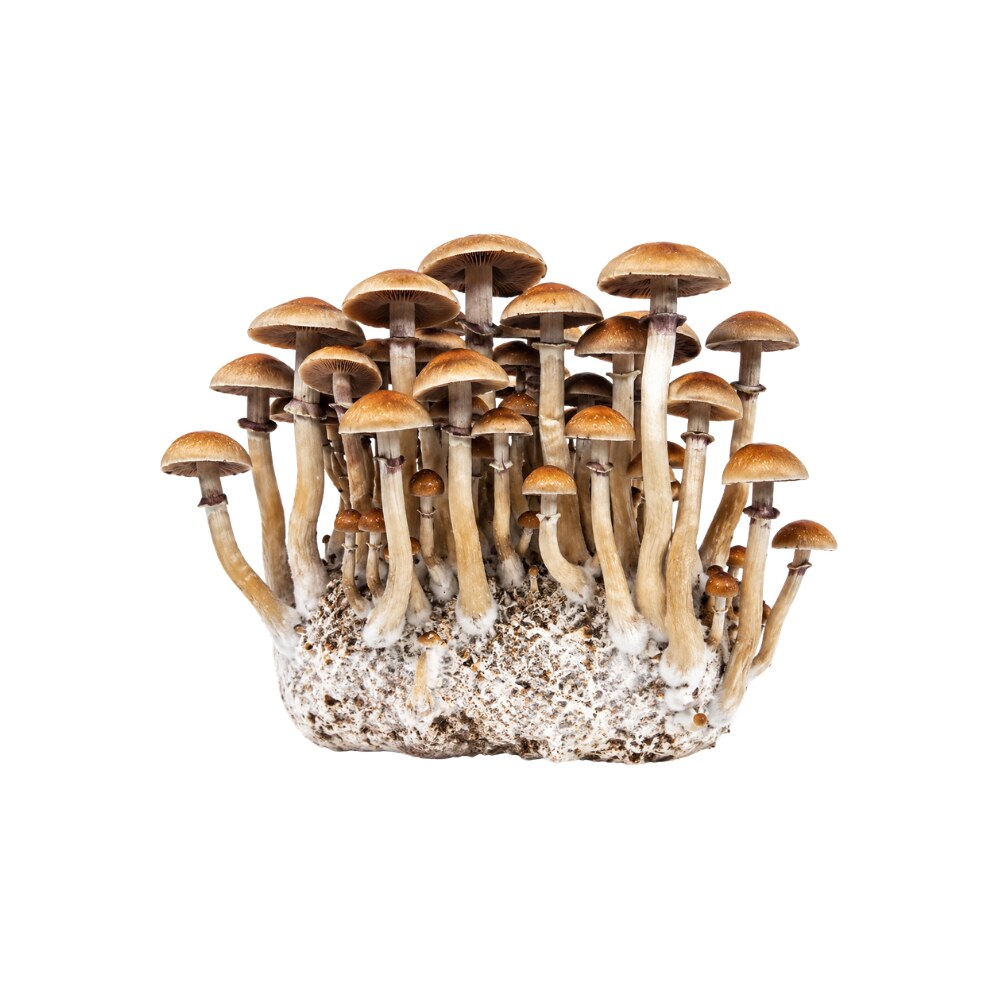
Psilocybe cubensis
Magic mushrooms (Psilocybe cubensis) are psilocybin-containing fungi used for their classic serotonergic psychedelic and entheogenic effects.
What Are Magic Mushrooms?
Magic mushrooms are fungi that contain psilocybin, a naturally occurring psychedelic compound. The species most commonly meant by the term is Psilocybe cubensis, the cultivated standard behind many well-known strains, including Golden Teacher, B+, and Penis Envy.
Unlike nutritive or tonic herbs, psilocybin mushrooms are fully psychoactive. Their effects can be profound, emotionally intense, and highly sensitive to context. In supportive settings, psilocybin has shown promise in clinical research for depression, anxiety, addiction, end-of-life distress, and cluster headaches. Used carelessly, it may produce fear, confusion, panic, or disorientation.
Psilocybin appears to have low physical toxicity, but its psychological effects can be powerful. This monograph approaches the mushroom as a serious medicine requiring caution, respect, and careful screening.
Traditional Uses
Psilocybin mushrooms have a deep ceremonial history in Mesoamerica. The Mazatec and other Indigenous peoples of Mexico used them in healing, divination, and spiritual rituals, referring to them as teonanácatl — often translated as “flesh of the gods.”
These traditions remained largely outside Western awareness until the mid-twentieth century, when they attracted attention from writers, ethnomycologists, and researchers. After decades of legal restriction and scientific neglect, psilocybin has re-emerged as a major subject in modern psychedelic medicine.
How Are Magic Mushrooms Used?
In traditional contexts, psilocybin mushrooms are used ceremonially under the guidance of experienced practitioners. The emphasis is not casual intoxication, but healing, divination, spiritual insight, and psychological confrontation.
In modern settings, psilocybin appears in several distinct contexts:
- Traditional or ceremonial use
- Clinical research settings
- Psychedelic-assisted therapy models
- Personal or spiritual exploration
- Microdosing practices
The effects depend heavily on species, potency, preparation, dose, mindset, environment, and support. Potency can vary widely between species, strains, individual mushrooms, and even different parts of the same mushroom.
How Much Should I Take?
Potency is never perfectly predictable — it varies between species, strains, individual mushrooms, and even parts of the same mushroom — so a dose should always be weighed rather than counted. The ranges below are for dried Psilocybe cubensis; fresh mushrooms hold roughly ten times the water weight, so a dried figure multiplies by about ten for fresh. Tolerance also builds almost immediately, so full doses cannot be meaningfully repeated day to day; spacing of one to two weeks is typical.
- Microdose (0.1–0.4 g): sub-perceptual, taken for mood, focus, or creativity rather than a noticeable experience.
- Threshold (0.5–1 g): light perceptual and mood shifts.
- Standard psychoactive dose (1.5–3.5 g): the full psychedelic experience; the range used in most therapeutic and ceremonial contexts.
- Heroic dose (5 g+): intense and unpredictable; best reserved for experienced users with a sober sitter present.
Onset is typically 20–40 minutes, with effects lasting around 4–6 hours.
How Do Magic Mushrooms Work?
Psilocybin itself is a prodrug. After ingestion, the body converts it into psilocin, the compound primarily responsible for the psychedelic effects.
Psilocin interacts mainly with serotonin receptors, especially the 5-HT2A receptor 8,9Reference 8The therapeutic role of 5-HT1A and 5-HT2A receptors in depressionReference 9Elevated 5-HT2A receptors in the prefrontal cortex in major depression are associated with reduced activity of protein kinase A. This receptor activity is associated with changes in perception, emotion, sensory processing, meaning-making, and patterns of thought.
Research also focuses on psilocybin’s effects on large-scale brain networks, especially the default mode network. This network is involved in self-referential thinking, rumination, memory, and the narrative sense of self. Psilocybin appears to temporarily loosen rigid patterns of activity in this system 3Reference 3Psilocybin for treatment-resistant depression: fMRI-measured brain mechanisms, which may help explain its therapeutic potential in depression, addiction, and existential distress.
Pharmacology & Medical Research
Modern research on psilocybin is strongest in the areas of mood, addiction, and existential distress. Clinical studies suggest potential benefit for:
- Treatment-resistant depression 10Reference 10Psilocybin with psychological support for treatment-resistant depression: an open-label feasibility study
- Anxiety and depression related to life-threatening illness 11,12Reference 11Clinical trialPilot study of psilocybin treatment for anxiety in patients with advanced-stage cancerReference 12RCTPsilocybin produces substantial and sustained decreases in depression and anxiety in patients with life-threatening cancer: a randomized, double-blind trial
- Alcohol and tobacco use disorders 13,14Reference 13Psilocybin-assisted treatment for alcohol dependence: a proof-of-concept studyReference 14Pilot study of the 5-HT2AR agonist psilocybin in the treatment of tobacco addiction
- Cluster headaches 7Reference 7Indoleamine hallucinogens in cluster headache: results of the Clusterbusters medication use survey
- Obsessive or rigid thought patterns
- Psychological flexibility and emotional processing 4Reference 4Psychological flexibility mediates the relations between acute psychedelic effects and subjective decreases in depression and anxiety
Microdosing has received significant popular attention, but the evidence remains more mixed 15Reference 15Might microdosing psychedelics be safe and beneficial? An initial exploration. Reported benefits for mood, focus, and creativity are difficult to separate from expectancy and placebo effects.
Psilocybin research is promising, but it is not a universal treatment. Outcomes depend heavily on screening, preparation, therapeutic support, integration, and the individual’s psychological history.
Mycology
The “magic mushroom” of common cultivation, Psilocybe cubensis, is a fairly ordinary-looking gilled mushroom: a golden-brown cap that starts bell-shaped and flattens with age, on a pale stem with a thin ring. Two features give it away — it drops a deep purple-brown spore print, and any part of it bruises blue when handled, a reaction typical of the psilocybin-bearing Psilocybe. The mushroom itself is the fruiting body of a much larger mycelial web living out of sight.
Its way of life is humble: it is a dung-lover, a fungus that decomposes the manure of grazing cattle and other livestock, springing up in warm, damp pastures.
Distribution
Psilocybe cubensis grows through the warm, humid grasslands of the tropics and subtropics worldwide — the Gulf coast of the Americas, Mexico and Central and South America, the Caribbean, Southeast Asia, India and Australia. Because it fruits on cattle dung, it has followed grazing livestock across much of the world, its spores carried on and passing through the animals themselves.
Cultivation
- Relatively easy to grow indoors, which is why it is the best-known cultivated psilocybin mushroom: grain spawn is started, then grown out on a dung-, straw- or coir-based bulk substrate.
- Hobbyist methods include PF-Tek jars and the monotub; fruiting is driven by high humidity, fresh air and misting.
- Legal caution: the mushrooms contain psilocybin, a controlled substance in most countries, so cultivation is illegal in most places, with only a few licensed exceptions — check local law before anything.
- In the wild it needs no cultivation at all, appearing naturally on dung in warm pasture.
- Full cultivation detail lives on the companion farm-wiki grow guide for Psilocybe cubensis (link to be added once that project’s public URL is confirmed).
Phytochemistry
The activity of Psilocybe cubensis comes from a small group of indole alkaloids.
The principal compound is psilocybin, a phosphorylated tryptamine that is converted in the body into psilocin. Psilocin is the primary active compound responsible for the psychedelic experience.
Minor related alkaloids include baeocystin and norbaeocystin, which occur in much smaller amounts 2Reference 2Synthesis and biological evaluation of tryptamines found in hallucinogenic mushrooms: norbaeocystin, baeocystin, norpsilocin, and aeruginascin. Their contribution to the overall effects remains less clearly understood.
Psilocybin content varies substantially by species, strain, growing conditions, fruiting body maturity, and mushroom part. Caps are often more concentrated than stems, though this is not consistent enough to rely on for practical use 1Reference 1Stability of psilocybin and its four analogs in the biomass of the psychotropic mushroom Psilocybe cubensis.
Constituent Summary
Indole alkaloid4 compounds4 with data
Related Psilocybe Species
Psilocybe cubensis is the most common cultivated species and the one most often discussed in modern psychedelic culture. However, many other psilocybin-containing mushrooms exist.
Related species include:
- Psilocybe cubensis — the most common cultivated species
- Psilocybe semilanceata — “liberty caps,” common in grassland habitats
- Psilocybe cyanescens — “wavy caps,” often associated with wood-chip habitats
- Psilocybe azurescens — a notably potent species from the Pacific Northwest
- Psilocybe mexicana — historically important in early psilocybin research
- Psilocybe baeocystis — a species known for higher levels of minor alkaloids
Not every psychoactive mushroom is a psilocybin mushroom. Amanita muscaria, for example, is psychoactive through entirely different compounds and has a very different pharmacology and risk profile.
Safety & Pregnancy
Psilocybin has low known physical toxicity, but its psychological effects can be powerful, with a genuine risk of acute fear, panic or confusion; it is contraindicated in people prone to psychosis and is controlled in most jurisdictions.
- Psychological risk. Acute fear, panic, paranoia or confusion can occur, and it can destabilise vulnerable people.
- Psychiatric contraindication. Avoid with a personal or close family history of psychosis, schizophrenia or bipolar disorder.
- Drug & cardiac interactions. Caution with lithium, tramadol, alcohol, MAOIs, serotonergic medications and significant cardiovascular disease.
- Misidentification danger. Toxic wild look-alikes can cause severe poisoning or death.
- Legal status. Controlled or illegal in many jurisdictions — confirm local law before any handling or use.
- Low physical toxicity. Physiologically well tolerated at typical doses 5,6Reference 5RCTAcute psychological and physiological effects of psilocybin in healthy humans: a double-blind, placebo-controlled dose-effect studyReference 6Psilocybin can occasion mystical-type experiences having substantial and sustained personal meaning and spiritual significance.
Full safety & interactions detail
Psilocybin has low known physical toxicity 5,6Reference 5RCTAcute psychological and physiological effects of psilocybin in healthy humans: a double-blind, placebo-controlled dose-effect studyReference 6Psilocybin can occasion mystical-type experiences having substantial and sustained personal meaning and spiritual significance, but its psychological risks are significant. The most common adverse effects are acute fear, panic, confusion, paranoia, nausea, headache, increased heart rate, elevated blood pressure, dilated pupils, and impaired coordination.
Avoid psilocybin mushrooms in individuals with a personal or close family history of psychosis, schizophrenia, or bipolar disorder. Psilocybin may worsen or trigger destabilizing psychiatric symptoms in vulnerable individuals.
Psilocybin should also be avoided in people with significant cardiovascular disease, and when taking medications or substances that may increase risk, including lithium, tramadol, alcohol, MAOIs, and certain serotonergic or psychiatric medications.
Wild mushroom identification is a major practical danger. Many toxic mushrooms resemble edible or psychoactive species, and misidentification can cause severe poisoning or death.
Psilocybin is controlled or illegal in many jurisdictions. Legal status varies widely and should be confirmed before any handling, possession, or use.
Psilocybin should be avoided during pregnancy and breastfeeding. It has not been formally studied in either, so the conservative position — reinforced by its potent serotonergic activity — is to avoid it entirely rather than assume safety.
References
- Gotvaldová, K., Hájková, K., Borovička, J., Jurok, R., Cihlářová, P., & Kuchař, M. (2021). Stability of psilocybin and its four analogs in the biomass of the psychotropic mushroom Psilocybe cubensis. Drug Testing and Analysis, 13(2), 439–446. (HPLC ranges: whole fruit body ~0.37–1.30% psilocybin and ~0.14–0.42% psilocin dry weight; cap higher than stem.)
- Sherwood, A. M., Halberstadt, A. L., Klein, A. K., et al. (2020). Synthesis and biological evaluation of tryptamines found in hallucinogenic mushrooms: norbaeocystin, baeocystin, norpsilocin, and aeruginascin. Journal of Natural Products, 83(2), 461–467. (Reports freshly homogenised P. cubensis powder at ~0.07 wt% baeocystin and ~0.01 wt% norbaeocystin.)
- Carhart-Harris, R. L., Roseman, L., Bolstridge, M., et al. (2017). Psilocybin for treatment-resistant depression: fMRI-measured brain mechanisms. Scientific Reports, 7(1), 1–11.
- Davis, A. K., Barrett, F. S., & Griffiths, R. R. (2020). Psychological flexibility mediates the relations between acute psychedelic effects and subjective decreases in depression and anxiety. Journal of Contextual Behavioral Science, 15, 39–45.
- Hasler, F., Grimberg, U., Benz, M. A., Huber, T., & Vollenweider, F. X. (2004). Acute psychological and physiological effects of psilocybin in healthy humans: a double-blind, placebo-controlled dose-effect study. Psychopharmacology, 172(2), 145–156.
- Griffiths, R. R., Richards, W. A., McCann, U., & Jesse, R. (2006). Psilocybin can occasion mystical-type experiences having substantial and sustained personal meaning and spiritual significance. Psychopharmacology, 187(3), 268–283.
- Schindler, E. A., Gottschalk, C. H., Weil, M. J., Shapiro, R. E., Wright, D. A., & Sewell, R. A. (2015). Indoleamine hallucinogens in cluster headache: results of the Clusterbusters medication use survey. Journal of Psychoactive Drugs, 47(5), 372–381.
- Celada, P., Puig, M. V., Amargós-Bosch, M., Adell, A., & Artigas, F. (2004). The therapeutic role of 5-HT1A and 5-HT2A receptors in depression. Journal of Psychiatry and Neuroscience, 29(4), 252.
- Shelton, R. C., Sanders-Bush, E., Manier, D. H., & Lewis, D. A. (2009). Elevated 5-HT2A receptors in the prefrontal cortex in major depression are associated with reduced activity of protein kinase A. Neuroscience, 158(4), 1406–1415.
- Carhart-Harris, R. L., Bolstridge, M., Rucker, J., et al. (2016). Psilocybin with psychological support for treatment-resistant depression: an open-label feasibility study. The Lancet Psychiatry, 3(7), 619–627.
- Grob, C. S., Danforth, A. L., Chopra, G. S., et al. (2011). Pilot study of psilocybin treatment for anxiety in patients with advanced-stage cancer. Archives of General Psychiatry, 68(1), 71–78.
- Griffiths, R. R., Johnson, M. W., Carducci, M. A., et al. (2016). Psilocybin produces substantial and sustained decreases in depression and anxiety in patients with life-threatening cancer: a randomized, double-blind trial. Journal of Psychopharmacology, 30(12), 1181–1197.
- Bogenschutz, M. P., Forcehimes, A. A., Pommy, J. A., et al. (2015). Psilocybin-assisted treatment for alcohol dependence: a proof-of-concept study. Journal of Psychopharmacology, 29(3), 289–299.
- Johnson, M. W., Garcia-Romeu, A., Cosimano, M. P., & Griffiths, R. R. (2014). Pilot study of the 5-HT2AR agonist psilocybin in the treatment of tobacco addiction. Journal of Psychopharmacology, 28(11), 983–992.
- Fadiman, J., & Korb, S. (2019). Might microdosing psychedelics be safe and beneficial? An initial exploration. Journal of Psychoactive Drugs, 51(2), 118–122.