
Materia Medica
Raspberry Leaf
Rubus idaeus
Raspberry Leaf (Rubus idaeus) is a mild astringent herb long valued as a uterine tonic and gentle smoking-blend base.
What is Raspberry Leaf?
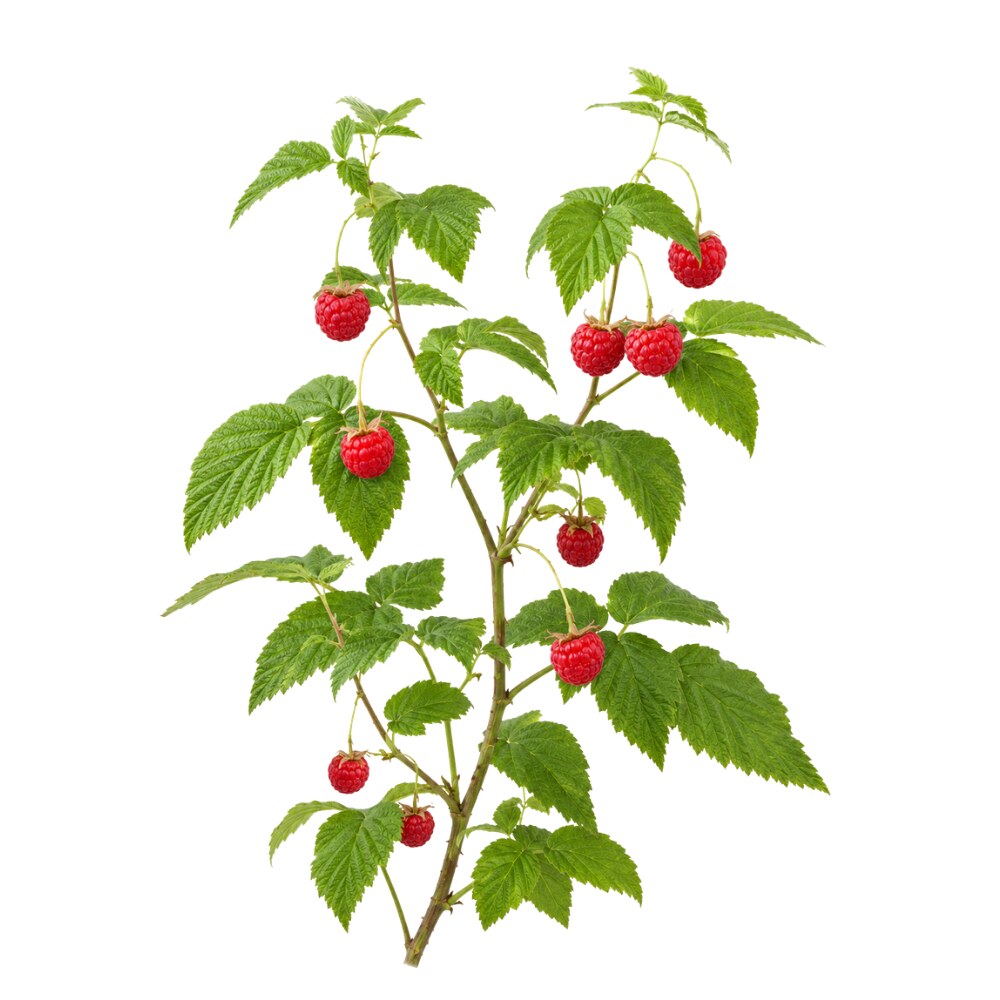
Raspberry leaf is the foliage of the common red raspberry, a thorny shrub native to temperate Europe, Asia and North America and widely cultivated. The dried leaf has a long history as a mild, pleasant-tasting herbal tea, and it is also used as a smooth, low-irritation base in herbal smoking blends.
Traditional & Modern Uses
Raspberry leaf is best known as a traditional “women’s tonic,” used especially in the later stages of pregnancy in the belief that it tones the uterine muscles and eases labour — though the one controlled trial to test this found no shortening of first-stage labour, the core traditional claim 6Reference 6RCTRaspberry leaf in pregnancy: its safety and efficacy in labor — randomised, double-blind, placebo-controlled trialView study →. It is also taken as a gentle astringent for mild digestive upset and as a soothing everyday tea. In smoking blends it contributes bulk and a mild flavour without strong psychoactivity.
Pharmacology & Research
The research literature on raspberry leaf is modest and lopsided: a large body of in vitro phytochemistry and antioxidant assays sits atop a very thin layer of human data. Almost all of it concerns the polyphenol fraction — ellagitannins (sanguiin H-6, lambertianin C), quercetin and kaempferol glycosides, and phenolic acids — rather than the leaf’s traditional identity as a uterine tonic, which remains poorly substantiated. The two genuinely human findings point in unexpected directions: a 2001 double-blind RCT in pregnancy that was largely null on its headline claim, and a first-in-class 2025 crossover RCT showing that raspberry leaf tea blunts the post-meal glucose spike from sugar. Most other activities — antioxidant, anti-inflammatory, antiplatelet, smooth-muscle relaxant — rest on cell-free and tissue-bath work only. Because polyphenol content varies several-fold with cultivar, harvest time and how the leaf is prepared, effects shown for a concentrated extract do not reliably transfer to a cup of tea.
- Best-supported: an acute reduction in postprandial glucose and insulin when raspberry leaf tea is taken with sugar (single human RCT) 1Reference 1RCTEffects of Raspberry Leaf Tea Polyphenols on Postprandial Glucose and Insulin Responses in Healthy Adults — randomised controlled trialView study →; consistent antioxidant activity of leaf polyphenols across in vitro assays 2,3,4Reference 2In vitroPhenolic Composition, Mineral Content, and Beneficial Bioactivities of Leaf Extracts from Black Currant, Raspberry, and Aronia — review of in vitro studiesView study →Reference 3ReviewBerry Leaves: An Alternative Source of Bioactive Natural Products of Nutritional and Medicinal Value — reviewView study →Reference 4In vitroIn Vitro Antioxidant and Prooxidant Activities of Red Raspberry (Rubus idaeus L.) Stem Extracts — in vitroView study →.
- Emerging, worth watching: modest labour-related signals — a shorter second stage and fewer forceps deliveries — in an old RCT and a recent observational cohort, neither confirming the traditional “shortens labour” claim 6,7Reference 6RCTRaspberry leaf in pregnancy: its safety and efficacy in labor — randomised, double-blind, placebo-controlled trialView study →Reference 7ObservationalRaspberry leaf (Rubus idaeus) use in pregnancy: a prospective observational studyView study →.
- Mechanistically thin: anti-inflammatory, antiplatelet and antispasmodic (smooth-muscle relaxant) activities, all cell-free or isolated-tissue only 10,11Reference 10In vitroRelaxant activity of raspberry (Rubus idaeus) leaf extract in guinea-pig ileum in vitroView study →Reference 11In vitroThe influence of Rubus idaeus and Rubus caesius leaf extracts on platelet aggregation in whole blood — in vitroView study →.
- The caveat: the flagship “uterine tonic” use has no defined active molecule (the long-invoked “fragarine” has never been isolated), and human efficacy data are limited to two small trials with different endpoints.
1. Postprandial glucose control
The strongest human signal in the whole literature, and it is recent. A 2025 randomised crossover trial in 22 healthy adults gave 50 g of glucose or sucrose with or without 10 g of raspberry leaf tea. Taken with sucrose, the tea cut blood glucose by roughly 26% at 15 min and 44% at 30 min and significantly lowered insulin at 15–60 min; with pure glucose it did nothing 1Reference 1RCTEffects of Raspberry Leaf Tea Polyphenols on Postprandial Glucose and Insulin Responses in Healthy Adults — randomised controlled trialView study →. That split is mechanistically coherent: the authors attribute the effect to inhibition of carbohydrate-digesting enzymes (α-glucosidase and β-fructofuranosidase) by ellagic acid and related polyphenols — enzymes that act on sucrose but not on already-free glucose 1Reference 1RCTEffects of Raspberry Leaf Tea Polyphenols on Postprandial Glucose and Insulin Responses in Healthy Adults — randomised controlled trialView study →. The preparation tested was an ordinary hot-water infusion, so this is one of the few findings that maps directly onto how the herb is actually consumed.
Gap: a single, acute, single-dose study in healthy volunteers; no data yet on repeated use, on people with dysglycaemia, or on HbA1c. A type 2 diabetes trial (NCT06385626) may address this.
2. Antioxidant
This is the best-replicated activity, though entirely preclinical. Raspberry leaf extracts consistently show high total phenolic content and strong radical-scavenging capacity across the standard battery — DPPH, ABTS, FRAP, CUPRAC — typically outperforming the stems and bark of the same plant 4Reference 4In vitroIn Vitro Antioxidant and Prooxidant Activities of Red Raspberry (Rubus idaeus L.) Stem Extracts — in vitroView study →. Comparative work on berry-bush leaves places raspberry leaf alongside blackcurrant and aronia as a dense source of antioxidant polyphenols, led by quercetin and kaempferol glycosides, chlorogenic acid and the ellagitannins 2,3Reference 2In vitroPhenolic Composition, Mineral Content, and Beneficial Bioactivities of Leaf Extracts from Black Currant, Raspberry, and Aronia — review of in vitro studiesView study →Reference 3ReviewBerry Leaves: An Alternative Source of Bioactive Natural Products of Nutritional and Medicinal Value — reviewView study →. One caution worth carrying forward: the same Rubus stem/leaf extracts show pro-oxidant behaviour under some conditions, so “antioxidant” is assay- and concentration-dependent, not an unqualified property 4Reference 4In vitroIn Vitro Antioxidant and Prooxidant Activities of Red Raspberry (Rubus idaeus L.) Stem Extracts — in vitroView study →.
Gap: no human study has measured any antioxidant endpoint (oxidative-stress biomarkers, LDL oxidation) after raspberry leaf intake; the entire case is cell-free chemistry.
3. Labour & uterine tone
The traditional flagship use is the least well supported by its own best evidence. The one adequate trial — a double-blind, placebo-controlled RCT in 192 low-risk first-time mothers taking raspberry leaf tablets (2 × 1.2 g/day) from 32 weeks — found no shortening of the first stage of labour, the central traditional claim 6Reference 6RCTRaspberry leaf in pregnancy: its safety and efficacy in labor — randomised, double-blind, placebo-controlled trialView study →. Its only notable findings were a shorter second stage (mean difference ~9.6 min) and a lower forceps rate (19.3% vs 30.4%), with no adverse effects on mother or baby 6Reference 6RCTRaspberry leaf in pregnancy: its safety and efficacy in labor — randomised, double-blind, placebo-controlled trialView study →. A 2024 prospective observational study (n=91) reported less labour augmentation and fewer interventions among users, but observational designs cannot separate the herb from the kind of woman who chooses it 7Reference 7ObservationalRaspberry leaf (Rubus idaeus) use in pregnancy: a prospective observational studyView study →. Systematic reviews conclude the same: biophysical effects on uterine smooth muscle are demonstrable in the lab, but clinical efficacy is unproven and older reports even show high-dose toxicity in animal tissue 8,9Reference 8ReviewBiophysical effects, safety and efficacy of raspberry leaf use in pregnancy: a systematic integrative reviewView study →Reference 9Systematic reviewHerb remedies during pregnancy: a systematic review of controlled clinical trialsView study →. No defined “uterine active” molecule has ever been isolated — the historically named “fragarine” is not a characterised compound.
Gap: the primary traditional claim (shorter, easier labour) is essentially null in the only RCT; secondary findings are unreplicated, and optimal dose and timing in pregnancy remain undefined.
4. Anti-inflammatory
Anti-inflammatory activity is inferred from the polyphenol profile rather than demonstrated for the leaf in a disease model. Reviews of berry-leaf bioactives group raspberry leaf’s flavonols and phenolic acids with documented anti-inflammatory and cardioprotective actions in generic assay systems 2,3Reference 2In vitroPhenolic Composition, Mineral Content, and Beneficial Bioactivities of Leaf Extracts from Black Currant, Raspberry, and Aronia — review of in vitro studiesView study →Reference 3ReviewBerry Leaves: An Alternative Source of Bioactive Natural Products of Nutritional and Medicinal Value — reviewView study →. The mechanistic rationale is the standard flavonoid one — NF-κB and eicosanoid-pathway suppression by quercetin and apigenin-type flavones — but this has not been tested on a raspberry-leaf preparation in humans, and a completed knee-osteoarthritis trial of a raspberry leaf extract (NCT03703024) has no published result.
Gap: no leaf-specific in vivo or clinical anti-inflammatory data; the claim is constituent-level extrapolation.
5. Smooth-muscle relaxant
This is the pharmacology underlying both the digestive (“colic, diarrhoea”) and uterine folk uses. In a guinea-pig ileum tissue bath, a methanol extract of raspberry leaf produced dose-dependent relaxation of electrically stimulated smooth muscle, with activity tracking to relatively polar fractions and at least two distinct active components 10Reference 10In vitroRelaxant activity of raspberry (Rubus idaeus) leaf extract in guinea-pig ileum in vitroView study →. Historically, raspberry leaf preparations have shown both stimulant and relaxant effects on uterine tissue depending on the model, which is part of why the “tonic” concept has resisted a clean mechanistic explanation 8Reference 8ReviewBiophysical effects, safety and efficacy of raspberry leaf use in pregnancy: a systematic integrative reviewView study →.
Gap: isolated-tissue evidence only, in gut rather than uterine muscle; the active compounds are uncharacterised and no in vivo confirmation exists.
6. Antiplatelet
A single study points to a possible cardiovascular angle. In whole blood, a raspberry leaf extract (15 µg/mL) reduced expression of the activated GPIIb/IIIa receptor and inhibited ADP-induced platelet aggregation by 31–41%; notably, the effect vanished in platelet-rich plasma, implying it depends on leukocyte–platelet cross-talk rather than a direct platelet action 11Reference 11In vitroThe influence of Rubus idaeus and Rubus caesius leaf extracts on platelet aggregation in whole blood — in vitroView study →.
Gap: one in vitro study at a defined concentration; no in vivo, pharmacokinetic or clinical follow-up, and the leukocyte-dependence complicates interpretation.
Mechanisms
| Mechanism | Drives | Key compounds |
|---|---|---|
| α-glucosidase / β-fructofuranosidase inhibition; astringent protein binding; also genotoxic/cytotoxic to colon cells at high dose (a safety flag) | postprandial glucose controlastringency | sanguiin H-6, lambertianin C, ellagic acid |
| Radical scavenging; NF-κB / eicosanoid-pathway suppression | antioxidantanti-inflammatory | quercetin, hyperoside, kaempferol |
| Metal chelation, radical scavenging | antioxidant | gallic acid, chlorogenic acid |
| Smooth-muscle relaxation; whole-blood platelet inhibition | antispasmodicantiplatelet | polar leaf fraction (uncharacterised) |
Clinical trials
Raspberry leaf has been formally trialled only a handful of times, and never for its traditional uterine indication at adequate scale.
| Completed | Planned | Terminated | Preclinical |
|---|---|---|---|
| 21,6Reference 1RCTEffects of Raspberry Leaf Tea Polyphenols on Postprandial Glucose and Insulin Responses in Healthy Adults — randomised controlled trialView study →Reference 6RCTRaspberry leaf in pregnancy: its safety and efficacy in labor — randomised, double-blind, placebo-controlled trialView study → | 1ongoing/unconfirmed (NCT06385626) | 0 | ~30+(1 registered, results pending: NCT03703024) |
Last checked: July 2026.
Botany
The raspberry most herbalists reach for is Rubus idaeus, a bramble of the rose family — but here the working part is the leaf, not the berry. It is worth holding those two apart from the start: the sweet red fruit belongs to the kitchen, while the dried green leaf is the material behind the classic uterine-tonic and “partus preparator” pregnancy tea.
Structurally the plant is a cane bramble. A woody, spreading rootstock is genuinely long-lived and perennial, but the canes it sends up live only two seasons — leafing out and building in their first year, flowering and fruiting in their second, then dying back as fresh canes take their place. The stems are armed with slender prickles; the leaves are divided into several toothed leaflets, deep green on top and pale, almost silvery-white and soft-woolly beneath, which is the quickest way to tell raspberry foliage apart from blackberry.
One point of confusion worth settling: there is a European–northern-Asian red raspberry and a North American one. The North American plant is usually treated as Rubus idaeus subsp. strigosus (some botanists split it off as R. strigosus), and for leaf-tea purposes the two are used interchangeably.
Distribution
Red raspberry grows wild across the cool temperate belt of Europe and northern Asia, with its own red-raspberry counterpart native to North America. It favours woodland margins, clearings and hedgerows, and — being an eager sucker-former — turns up readily as a garden escape wherever the climate stays cool and moist.
Growing Conditions
- Grows as thicket-forming canes from a perennial root: canes are biennial (leaf the first year, fruit the second, then die back), so old spent canes are cut out while new ones come on.
- Prefers full sun to part shade in cool, moist temperate conditions; broadly hardy from about USDA zones 3–8.
- Wants rich, moist but well-drained, slightly acidic soil; dislikes waterlogging.
- Spreads by underground suckers and can wander into dense stands, so it usually needs a defined bed, support or root-pruning to stay in bounds.
- Full cultivation detail lives on the companion farm-wiki grow guide for Rubus idaeus (link to be added once that project’s public URL is confirmed).
Phytochemistry
Raspberry leaf is, above all, a tannin herb: its astringency comes from hydrolysable tannins (roughly 2.6–6.9% of the dried leaf), led by the dimeric ellagitannin sanguiin H-6 — the signature marker of Rubus — with lambertianin C alongside, breaking down to free ellagic acid 16,13Reference 16Flavonoids, phenolic acids and coumarins from the leaves of Rubus idaeus LReference 13Assessment report on Rubus idaeus L., folium (EMA/HMPC/44211/2012). The flavonoid fraction is dominated by glycosides of quercetin (chiefly hyperoside) and kaempferol, supported by phenolic acids such as gallic acid and chlorogenic acid and a little vitamin C (ascorbic acid) 13,3Reference 13Assessment report on Rubus idaeus L., folium (EMA/HMPC/44211/2012)Reference 3ReviewBerry Leaves: An Alternative Source of Bioactive Natural Products of Nutritional and Medicinal Value — reviewView study →. The traditional uterine “tonic” compound long called fragarine remains poorly characterised and has never been isolated as a defined molecule, so it is omitted from the table below.
Constituent Summary
Figures are share of dried leaf where a quantitative range was reported; individual flavonoid glycosides and phenolic acids are largely qualitative and vary with cultivar and growth stage. † marks the ellagitannin sanguiin H-6, the characteristic Rubus marker 16,13Reference 16Flavonoids, phenolic acids and coumarins from the leaves of Rubus idaeus LReference 13Assessment report on Rubus idaeus L., folium (EMA/HMPC/44211/2012).
Tannin3 compounds1 with data
Phenolic acid3 compounds1 with data
Flavonoid3 compoundsno data
Anthocyanin3 compoundsno data
Vitamin1 compoundno data
Dosage
Raspberry leaf’s human research is unusually well matched to how the herb is actually taken — the postprandial-glucose trial used an ordinary tea infusion, and the labour trial used tablets at a dose translatable to dried leaf.
| Indication | Preparation | Dose | Est. dried-herb equivalent | Source |
|---|---|---|---|---|
| Postprandial glucose (with sucrose) | Hot-water infusion | 10 g dried leaf per infusion, taken with a 50 g sucrose load | 10 g/dose (direct — the tea itself was the studied preparation) | RCT 1Reference 1RCTEffects of Raspberry Leaf Tea Polyphenols on Postprandial Glucose and Insulin Responses in Healthy Adults — randomised controlled trialView study → |
| Labour outcomes (from 32 weeks) | Tablets | 2 × 1.2 g/day (2.4 g/day total) | ~2.4 g/day (direct — tablets are whole-leaf preparations) | RCT 6Reference 6RCTRaspberry leaf in pregnancy: its safety and efficacy in labor — randomised, double-blind, placebo-controlled trialView study → |
Unlike most herbs in this database, both research doses are close to whole-leaf preparations rather than standardized extracts, so the “equivalent” is closer to a direct read than an estimate.
Traditional Dosage
| System | Preparation | Dose |
|---|---|---|
| Western herbal | Dried-leaf infusion | 1–2 tsp dried leaf per cup |
Safety & Pregnancy
Raspberry leaf tea is gentle and generally well tolerated; its main open question is pregnancy and lactation use, which is traditional but not formally established.
- Gentle as a tea. Well tolerated; the one controlled pregnancy trial recorded no adverse effects on mother or baby.
- Pregnancy use unconfirmed. A traditional late-pregnancy herb whose safety is not formally established — use under professional guidance.
- Lactation unstudied. No lactation safety data despite traditional galactogogue use — treat as not assessed, not as safe.
- High-dose tissue toxicity. Older animal-tissue work shows uterine toxicity only at very high, non-dietary doses.
Full safety & interactions detail
Raspberry leaf taken as a tea is gentle and generally well tolerated, and the one controlled pregnancy trial recorded no adverse effects on mother or baby from leaf tablets (2 × 1.2 g/day from 32 weeks) 6Reference 6RCTRaspberry leaf in pregnancy: its safety and efficacy in labor — randomised, double-blind, placebo-controlled trialView study →. Older animal-tissue work shows uterine toxicity only at very high, non-dietary doses 8Reference 8ReviewBiophysical effects, safety and efficacy of raspberry leaf use in pregnancy: a systematic integrative reviewView study →.
Raspberry leaf is a traditional late-pregnancy herb, and the one controlled RCT found no adverse effects on mother or baby 6Reference 6RCTRaspberry leaf in pregnancy: its safety and efficacy in labor — randomised, double-blind, placebo-controlled trialView study → — but safety at therapeutic doses is not formally established, so it is best used under professional guidance. Lactation safety has not been studied at all despite traditional galactogogue use — treat it as not assessed rather than safe 14Reference 14Systematic reviewHerbal Medicinal Product Use During Pregnancy and the Postnatal Period: A Systematic ReviewView study →.
References
- Alkhudaydi, H. M. S., & Spencer, J. P. E. (2025). Effects of Raspberry Leaf Tea Polyphenols on Postprandial Glucose and Insulin Responses in Healthy Adults — randomised controlled trial. Nutrients, 17(17), 2849. https://pubmed.ncbi.nlm.nih.gov/40944237/
- Staszowska-Karkut, M., & Materska, M. (2020). Phenolic Composition, Mineral Content, and Beneficial Bioactivities of Leaf Extracts from Black Currant, Raspberry, and Aronia — review of in vitro studies. Nutrients, 12(2), 463. https://pubmed.ncbi.nlm.nih.gov/32059465/
- Ferlemi, A.-V., & Lamari, F. N. (2016). Berry Leaves: An Alternative Source of Bioactive Natural Products of Nutritional and Medicinal Value — review. Antioxidants, 5(2), 17. https://pubmed.ncbi.nlm.nih.gov/27258314/
- Garjonyte, R., Budiene, J., & Labanauskas, L. (2022). In Vitro Antioxidant and Prooxidant Activities of Red Raspberry (Rubus idaeus L.) Stem Extracts — in vitro. Molecules, 27(13), 4073. https://pubmed.ncbi.nlm.nih.gov/35807315/
- Kucharski, Ł., Cybulska, K., & Kucharska, E. (2022). Biologically Active Preparations from the Leaves of Wild Plant Species of the Genus Rubus — in vitro antioxidant and antimicrobial. Molecules, 27(17), 5486. https://pubmed.ncbi.nlm.nih.gov/36080251/
- Simpson, M., Parsons, M., Greenwood, J., & Wade, K. (2001). Raspberry leaf in pregnancy: its safety and efficacy in labor — randomised, double-blind, placebo-controlled trial. Journal of Midwifery & Women’s Health, 46(2), 51–59. https://pubmed.ncbi.nlm.nih.gov/11370690/
- Bowman, R. L., Taylor, J., Davis, D. L., et al. (2024). Raspberry leaf (Rubus idaeus) use in pregnancy: a prospective observational study. BMC Complementary Medicine and Therapies, 24, 152. https://pubmed.ncbi.nlm.nih.gov/38649906/
- Bowman, R., Taylor, J., Muggleton, S., & Davis, D. (2021). Biophysical effects, safety and efficacy of raspberry leaf use in pregnancy: a systematic integrative review. BMC Complementary Medicine and Therapies, 21, 56. https://pubmed.ncbi.nlm.nih.gov/33563275/
- Dante, G., Pedrielli, G., Annessi, E., & Facchinetti, F. (2013). Herb remedies during pregnancy: a systematic review of controlled clinical trials. Journal of Maternal-Fetal & Neonatal Medicine, 26(3), 306–312. https://pubmed.ncbi.nlm.nih.gov/22928540/
- Rojas-Vera, J., Patel, A. V., & Dacke, C. G. (2002). Relaxant activity of raspberry (Rubus idaeus) leaf extract in guinea-pig ileum in vitro. Phytotherapy Research, 16(7), 665–668. https://pubmed.ncbi.nlm.nih.gov/12410549/
- Dudzinska, D., Bednarska, K., Boncler, M., et al. (2016). The influence of Rubus idaeus and Rubus caesius leaf extracts on platelet aggregation in whole blood — in vitro. Platelets, 27(5), 433–439. https://pubmed.ncbi.nlm.nih.gov/26836594/
- Nowak, A., Sójka, M., Klewicka, E., et al. (2017). Ellagitannins from Rubus idaeus L. Exert Geno- and Cytotoxic Effects against Human Colon Adenocarcinoma Cell Line Caco-2 — in vitro. Journal of Agricultural and Food Chemistry, 65(14), 2947–2955. https://pubmed.ncbi.nlm.nih.gov/28301143/
- European Medicines Agency, Committee on Herbal Medicinal Products. (2014). Assessment report on Rubus idaeus L., folium (EMA/HMPC/44211/2012). London: EMA.
- Muñoz Balbontín, Y., Stewart, D., Shetty, A., et al. (2019). Herbal Medicinal Product Use During Pregnancy and the Postnatal Period: A Systematic Review. Obstetrics and Gynecology, 133(5), 920–932. https://pubmed.ncbi.nlm.nih.gov/30969204/
- Farnaghi, S., & Braniff, K. (2022). Survey of Raspberry Leaf Tea in pregnancy. Australian and New Zealand Journal of Obstetrics and Gynaecology, 62(1), 91–96. https://pubmed.ncbi.nlm.nih.gov/35188267/
- Gudej, J. (1991). Flavonoids, phenolic acids and coumarins from the leaves of Rubus idaeus L. Acta Poloniae Pharmaceutica, 48(5–6), 95–99.