
Materia Medica
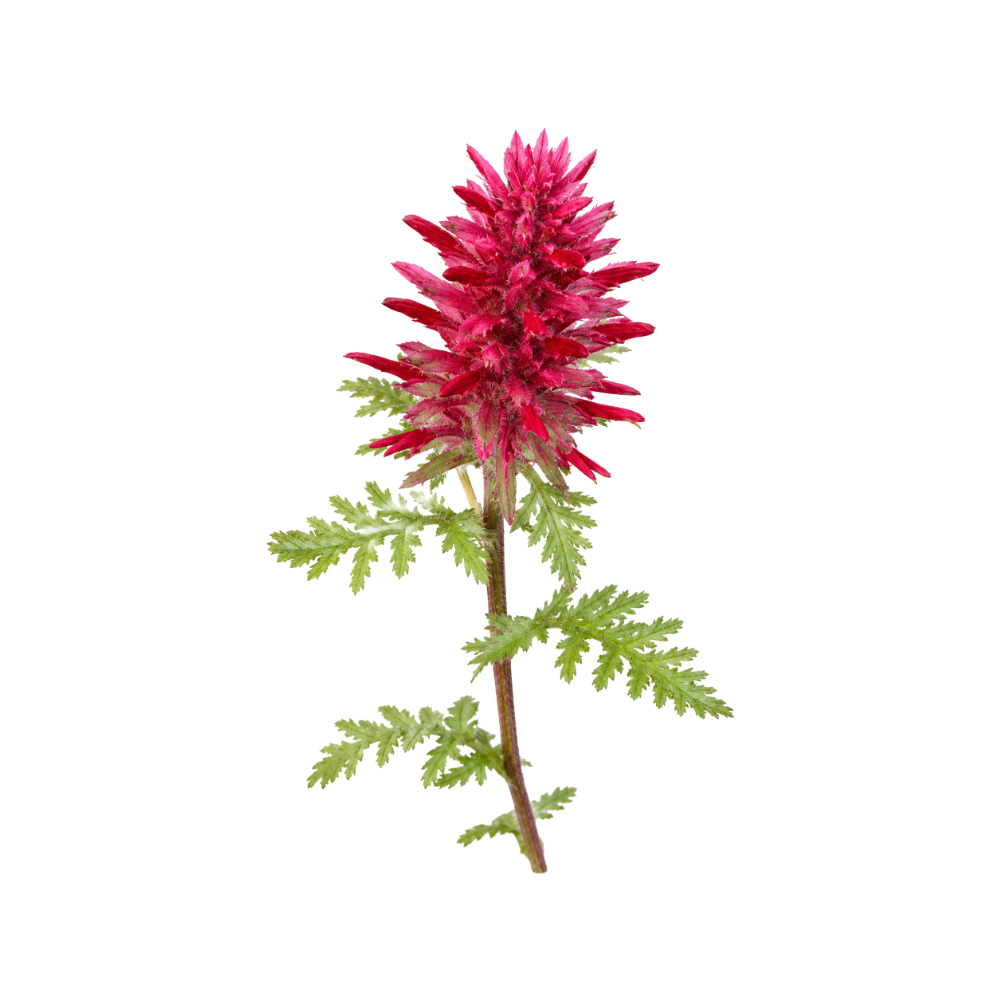
Warrior's Plume
Pedicularis densiflora
Warrior's Plume (Pedicularis densiflora) is a western North American wildflower used in herbal blends as a gentle skeletal-muscle relaxant.
What is Warrior’s Plume?
Warrior’s Plume, also called Indian warrior, is a striking red-flowered wildflower of the broomrape family, native to the chaparral and woodlands of California and the western United States. Like other Pedicularis (louseworts), it is hemiparasitic, drawing some of its nourishment from the roots of neighbouring plants. Its leaves and flowers are used in herbal smoking blends and teas.
Traditional & Modern Uses
Pedicularis species have a folk reputation as gentle skeletal-muscle relaxants, used as a tea or smoked to ease muscular tension and promote relaxation, and sometimes valued for a mildly calming, sedative quality. Warrior’s Plume is among the species favoured for this purpose in western North American herbalism.
This relaxant billing is a traditional/folk reputation, not a pharmacological finding. No study in any Pedicularis species demonstrates a muscle-relaxant, antispasmodic or sedative action; the replicated genus pharmacology actually points the opposite way — toward an anti-fatigue, endurance-enhancing (ergogenic) effect (see Pharmacology & Research). There is also no human clinical record for the plant: P. densiflora appears in no WHO, ESCOP, EMA/HMPC or Commission E monograph, so nothing here has an official adjudication behind it.
Botany
Warrior’s plume — Indian warrior — is one of the first splashes of colour in the California chaparral each late winter, sending up dense spikes of deep crimson, hooded flowers above lacy, fern-like foliage that is often flushed red itself. It belongs to the louseworts, and like its relative elephant’s head it hides a secret in its roots: though green and leafy, it is a partial root parasite, splicing into the roots of neighbouring shrubs to steal water and minerals.
Its favourite hosts are the tough chaparral shrubs it grows among — manzanita and madrone above all — and that dependence is the key to understanding both where it grows and why it resists cultivation. The flowering plant is the part of interest.
Distribution
The plant is native to the chaparral, oak woodland and conifer forests of California and southern Oregon, reaching down into northern Baja California. It is a common spring wildflower of shrubby slopes throughout California’s coastal ranges and foothills — but always among its host shrubs, since its distribution follows the manzanitas and other chaparral plants it taps.
Habitat & Cultivation
- This plant is very difficult to cultivate and is effectively wild-only. As a root hemiparasite, its seedlings must attach to the roots of a compatible host shrub (manzanita, madrone and similar) to thrive — a relationship that is hard to reproduce in a garden or nursery.
- Successful establishment effectively requires an established host planting alongside it; it does not transplant or establish reliably on its own.
- It prefers part shade in well-drained chaparral or woodland soils under a Mediterranean climate (roughly USDA zones 8–10).
- Best appreciated in place in its native chaparral rather than grown; seed is occasionally offered, but survival without a host is poor.
- Habitat and identification notes live on the companion farm-wiki entry for Pedicularis densiflora (link to be added once that project’s public URL is confirmed).
Phytochemistry
The phytochemistry of Pedicularis densiflora is only lightly documented, but the genus is defined by two metabolite classes: iridoid glycosides — above all aucubin, the diagnostic iridoid common to Pedicularis 2,3Reference 2ReviewA review of the pharmacology and toxicology of aucubinView study →Reference 3Phytochemistry and pharmacology of the genus Pedicularis used in traditional Chinese medicineView study → — and phenylethanoid (phenylpropanoid) glycosides, chiefly verbascoside with related compounds such as martynoside, which are typically the most abundant molecules in the genus 1,3Reference 1ReviewVerbascoside — a review of its occurrence, (bio)synthesis and pharmacological significanceView study →Reference 3Phytochemistry and pharmacology of the genus Pedicularis used in traditional Chinese medicineView study →. These are traditionally presumed to underlie the plant’s mild relaxant character, but the constituents have no documented relaxant activity — the presumption is not supported by any pharmacological study. A xanthone has also been associated with the genus. Because the plant is hemiparasitic, its profile can additionally reflect compounds taken up from neighbouring host plants; in related species the phenylethanoid-glycoside fraction can exceed 60% of an “effective fraction” 10Reference 10AnimalContent determination of phenylpropanoids and enhancing exercise ability of effective fractions in Pedicularis densispica — animal modelView study →, though no such figure exists for P. densiflora.
Constituent Summary
No quantitative content data (% or mg/g) have been published for Pedicularis densiflora, so all amounts are recorded as No Data and the constituents listed are those reported qualitatively for the species and its genus; profiles also vary with the hemiparasitic host. † marks aucubin, the diagnostic iridoid that chemotaxonomically characterises the genus Pedicularis. The middle column gives the constituent type.
Iridoid1 compoundno data
Phenylpropanoid2 compoundsno data
Xanthone1 compoundno data
Pharmacology & Research
Pedicularis densiflora has not itself been the subject of any published pharmacological study — the literature on the plant is essentially zero, and everything below is inferred from research on other members of the genus Pedicularis (roughly two dozen species studied) and, more directly, on its two signature constituent classes: phenylethanoid glycosides (chiefly verbascoside and martynoside) and the iridoid glycoside aucubin. That evidence is entirely preclinical — cell-free radical-scavenging assays, cell lines, and rodent models — with no randomised controlled trial on any Pedicularis species and no human data on this one. The most consistent and best-replicated signals are antioxidant activity and a genus-wide anti-fatigue / exercise-endurance effect; note that this ergogenic direction is different from the plant’s folk reputation as a relaxant, which has no direct pharmacological support. Because the plant is hemiparasitic and its constituent profile shifts with its host, and because no standardised extract or dose exists, every figure below should be read as a genus/constituent-level inference rather than a property demonstrated in P. densiflora.
- Best-supported: broad antioxidant / free-radical scavenging by its phenylethanoid glycosides, replicated across many genus species and in cell-free systems 4,5,6Reference 4In vitroScavenging effects of phenylpropanoid glycosides from Pedicularis on superoxide anion and hydroxyl radical by the spin trapping method — in vitroView study →Reference 5In vitroAntioxidative and chelating activities of phenylpropanoid glycosides from Pedicularis striata — in vitroView study →Reference 6In vitroAntioxidant and antimicrobial activity of Pedicularis sibthorpii and Pedicularis wilhelmsiana — in vitroView study →; and a genus-wide anti-fatigue / ergogenic effect for verbascoside and martynoside in muscle and animal models 7,8,9,10Reference 7In vitroRetardation of skeletal muscle fatigue by the two phenylpropanoid glycosides verbascoside and martynoside from Pedicularis plicata — in vitroView study →Reference 8AnimalCentral anti-fatigue activity of verbascoside — rat in vivoView study →Reference 9AnimalAnti-sports anaemia effects of verbascoside and martynoside in mice — animal modelView study →Reference 10AnimalContent determination of phenylpropanoids and enhancing exercise ability of effective fractions in Pedicularis densispica — animal modelView study →.
- Emerging, worth watching: anti-hypoxic neuroprotection / memory protection 11Reference 11AnimalPhenylethanoid glycosides of Pedicularis muscicola ameliorate high altitude-induced memory impairment — rat in vivoView study →, hepatoprotective constituents 14,2Reference 14In vitroChemical constituents of Pedicularis rex and their hepatoprotective activities — in vitroView study →Reference 2ReviewA review of the pharmacology and toxicology of aucubinView study →, and isolated cytotoxic / immunomodulatory signals 16,17,18Reference 16In vitroIn vitro modulation of telomerase activity, telomere length and cell cycle in MKN45 cells by verbascoside — in vitroView study →Reference 17In vitroIridoid derivatives with cytotoxic activity from Pedicularis uliginosa — in vitroView study →Reference 18In vitroIn vitro and in vivo immunomodulatory potential of Pedicularis longiflora in alloxan-induced diabetes in rats — animal modelView study →.
- Mechanistically thin: the traditional muscle-relaxant, antispasmodic and sedative framing — no study demonstrates a relaxant, antispasmodic or CNS-depressant action in any Pedicularis species; the pharmacology actually points the opposite way (endurance-enhancing).
- The caveat: nothing here was measured in P. densiflora. All of it is constituent- or other-species inference, preclinical only, with no standardised preparation, no human dose, and host-dependent chemistry.
1. Antioxidant
This is the strongest and most replicated activity in the genus, and it is a constituent property rather than a whole-plant one. The phenylethanoid glycosides that define Pedicularis — above all verbascoside and its isomer isoverbascoside — are potent scavengers of superoxide and hydroxyl radicals in cell-free spin-trapping assays, with activity tracking the number of phenolic hydroxyl groups on the molecule 4Reference 4In vitroScavenging effects of phenylpropanoid glycosides from Pedicularis on superoxide anion and hydroxyl radical by the spin trapping method — in vitroView study →. The same glycosides inhibit iron-dependent lipid peroxidation and chelate Fe²⁺, so their antioxidant effect is partly a metal-chelating one 5Reference 5In vitroAntioxidative and chelating activities of phenylpropanoid glycosides from Pedicularis striata — in vitroView study →. Whole-extract work agrees: methanolic extracts of P. sibthorpii and P. wilhelmsiana show clear DPPH radical-scavenging activity 6Reference 6In vitroAntioxidant and antimicrobial activity of Pedicularis sibthorpii and Pedicularis wilhelmsiana — in vitroView study →, and a P. decora extract reduced oxidative injury markers in mice 13Reference 13AnimalEffects of Pedicularis decora extract on anti-oxidation injury in mice — animal modelView study →. All of this is in vitro or in rodents, on species other than P. densiflora, using isolated fractions rather than the tea or smoking blend the plant is actually used as.
Gap: No antioxidant measurement exists for P. densiflora itself, no human data for any Pedicularis, and no evidence that a tea or smoked preparation delivers a meaningful dose of these water-soluble glycosides.
2. Anti-fatigue & muscle endurance
The genus has a coherent, repeatedly reported ergogenic signal — which is worth flagging because it runs opposite to the plant’s folk billing as a muscle relaxant. In electrically stimulated frog gastrocnemius muscle, verbascoside (20 µM) significantly resisted fatigue while martynoside (80 µM) helped only slightly, an effect the authors attributed to their antioxidant quenching of reactive oxygen species that drive muscle fatigue 7Reference 7In vitroRetardation of skeletal muscle fatigue by the two phenylpropanoid glycosides verbascoside and martynoside from Pedicularis plicata — in vitroView study →. In rats, verbascoside prolonged treadmill time-to-exhaustion as effectively as caffeine and blunted the exercise-induced rise in central serotonin synthesis 8Reference 8AnimalCentral anti-fatigue activity of verbascoside — rat in vivoView study →; in mice, verbascoside and martynoside countered “sports anaemia” by protecting red cells from free-radical damage 9Reference 9AnimalAnti-sports anaemia effects of verbascoside and martynoside in mice — animal modelView study →. Phenylpropanoid-rich fractions of the closely related P. densispica increased exhaustive-swimming and anoxia-endurance times in mice 10Reference 10AnimalContent determination of phenylpropanoids and enhancing exercise ability of effective fractions in Pedicularis densispica — animal modelView study →, and phenylethanoid fractions of P. kansuensis were the active anti-fatigue principle in a high-altitude fatigue model 12Reference 12AnimalAntioxidant activity and potential ameliorating effective ingredients for high altitude-induced fatigue from Pedicularis kansuensis — animal modelView study →. The consistent theme is endurance and fatigue-resistance via antioxidant protection — not skeletal-muscle relaxation.
Gap: Every study used isolated constituents or fractions from other species in exercise/endurance models; none tested P. densiflora, and none demonstrates the muscle-relaxant/antispasmodic action for which the herb is traditionally used.
3. Neuroprotective
The neuroprotection signal is real but narrow. Orally dosed phenylethanoid glycosides from P. muscicola protected rats against hypobaric-hypoxia-induced memory impairment, reducing hippocampal oxidative stress, neuronal degeneration and caspase-3-marked apoptosis and improving radial-maze performance 11Reference 11AnimalPhenylethanoid glycosides of Pedicularis muscicola ameliorate high altitude-induced memory impairment — rat in vivoView study →. This fits the broader constituent literature: reviews of verbascoside catalogue neuroprotective activity across ischaemia and neurodegeneration models, again largely oxidative-stress-mediated 1Reference 1ReviewVerbascoside — a review of its occurrence, (bio)synthesis and pharmacological significanceView study →. The aucubin that characterises the genus is also described as neuroprotective in its own pharmacology review 2Reference 2ReviewA review of the pharmacology and toxicology of aucubinView study →.
Gap: A single in-vivo model (one species, hypoxia-specific) plus constituent reviews; no P. densiflora data, no human data, and the memory-protection context is high-altitude hypoxia rather than general cognition.
4. Hepatoprotective
Hepatoprotection is a plausible constituent-driven effect with modest direct genus support. A 2025 phytochemical study of P. rex isolated constituents and reported hepatoprotective activity in vitro 14Reference 14In vitroChemical constituents of Pedicularis rex and their hepatoprotective activities — in vitroView study →, and the genus review lists hepatoprotection among documented activities 3Reference 3Phytochemistry and pharmacology of the genus Pedicularis used in traditional Chinese medicineView study →. Mechanistically this is expected: the diagnostic iridoid aucubin is one of the better-characterised hepatoprotective and anti-fibrotic natural products, with anti-oxidant and anti-inflammatory liver effects summarised in its pharmacology/toxicology review 2Reference 2ReviewA review of the pharmacology and toxicology of aucubinView study →.
Gap: Evidence is constituent-level and from other species; no whole-plant P. densiflora liver study and no clinical data.
5. Anti-inflammatory
Anti-inflammatory activity is inferred almost entirely from the constituents rather than from any Pedicularis inflammation study. Verbascoside is repeatedly documented as anti-inflammatory alongside its antioxidant and wound-healing actions 1Reference 1ReviewVerbascoside — a review of its occurrence, (bio)synthesis and pharmacological significanceView study →, and aucubin has well-reviewed anti-inflammatory and anti-fibrotic effects, typically via suppression of NF-κB-driven signalling 2Reference 2ReviewA review of the pharmacology and toxicology of aucubinView study →. No study has tested a Pedicularis extract in a dedicated inflammation model, so this rests on molecule-level extrapolation.
Gap: No Pedicularis-specific anti-inflammatory experiment exists; the claim is constituent inference only, and delivered dose from traditional preparations is unknown.
6. Antimicrobial
The antibacterial signal is genuine but limited to Gram-positive organisms and to isolated work. A neolignan glycoside (armaoside) and related compounds from P. armata were isolated and assayed against Bacillus subtilis, Escherichia coli and Staphylococcus aureus 15Reference 15In vitroAntibacterial constituents from Pedicularis armata — in vitroView study →, and methanolic extracts of P. sibthorpii and P. wilhelmsiana showed antibacterial activity chiefly against Gram-positive strains (S. aureus, S. epidermidis) with no antifungal activity 6Reference 6In vitroAntioxidant and antimicrobial activity of Pedicularis sibthorpii and Pedicularis wilhelmsiana — in vitroView study →.
Gap: In-vitro disc/well-diffusion data on other species only; no potency benchmarking, no P. densiflora material, and activity appears confined to Gram-positive bacteria.
7. Cytotoxic (anticancer)
This is an early, cell-line-only signal from two independent directions. Verbascoside inhibited telomerase activity, shortened telomeres and induced G2/M arrest in human gastric carcinoma MKN45 cells at ~17.8 µg/mL 16Reference 16In vitroIn vitro modulation of telomerase activity, telomere length and cell cycle in MKN45 cells by verbascoside — in vitroView study →. Separately, several iridoid derivatives isolated from P. uliginosa were cytotoxic to human tumour cell lines, some more so than the vinblastine control 17Reference 17In vitroIridoid derivatives with cytotoxic activity from Pedicularis uliginosa — in vitroView study →. There is also an in-vitro/in-vivo immunomodulatory report for P. longiflora in diabetic rats 18Reference 18In vitroIn vitro and in vivo immunomodulatory potential of Pedicularis longiflora in alloxan-induced diabetes in rats — animal modelView study →, which bears on immune tone rather than direct anticancer action.
Gap: Purely in-vitro cytotoxicity on isolated molecules/fractions; no in-vivo tumour model for the genus, no selectivity or therapeutic-window data, and nothing on P. densiflora.
Mechanisms
| Mechanism | Drives | Key compounds |
|---|---|---|
| Superoxide / hydroxyl-radical scavenging; Fe²⁺ chelation | antioxidantanti-fatigueneuroprotective | verbascoside, martynoside |
| Inhibition of lipid peroxidation | antioxidanthepatoprotective | phenylethanoid glycosides |
| NF-κB-mediated anti-inflammatory / anti-fibrotic signalling | anti-inflammatoryhepatoprotective | aucubin |
| Reduced central 5-HT synthesis during exercise | anti-fatigueendurance | verbascoside |
| Telomerase inhibition, G2/M arrest | cytotoxic (in vitro) | verbascoside |
Clinical trials
No registered clinical trials of Pedicularis densiflora — or, as far as the literature shows, of any Pedicularis species — were identified; the entire evidence base is preclinical and largely constituent-level.
| Completed | Planned | Terminated | Preclinical |
|---|---|---|---|
| 0 | 0 | 0 | ~20(genus/constituent) |
Last checked: June 2026.
Dosage
No clinical or trial dose exists for P. densiflora or any Pedicularis species; the “research doses” below are the constituent/fraction doses used in the preclinical studies, not human recommendations.
| Indication | Preparation | Dose | Est. dried-herb equivalent | Source |
|---|---|---|---|---|
| Anti-fatigue (muscle, in vitro) | Isolated verbascoside, frog muscle bath | 20 µM | — (in-vitro molar; not convertible) | 7Reference 7In vitroRetardation of skeletal muscle fatigue by the two phenylpropanoid glycosides verbascoside and martynoside from Pedicularis plicata — in vitroView study → |
| Anti-fatigue (endurance, rat) | Isolated verbascoside, oral/systemic | 10 mg/kg (effective; 0.1–10 mg/kg tested) | — (no marker % for whole herb) | 8Reference 8AnimalCentral anti-fatigue activity of verbascoside — rat in vivoView study → |
| Anti-sports-anaemia (mouse) | Verbascoside or martynoside | 10 mg/kg/day, 5 weeks | — | 9Reference 9AnimalAnti-sports anaemia effects of verbascoside and martynoside in mice — animal modelView study → |
| Antioxidant (in vitro) | PhG fractions / verbascoside | assay-concentration only | — | 4,5,6Reference 4In vitroScavenging effects of phenylpropanoid glycosides from Pedicularis on superoxide anion and hydroxyl radical by the spin trapping method — in vitroView study →Reference 5In vitroAntioxidative and chelating activities of phenylpropanoid glycosides from Pedicularis striata — in vitroView study →Reference 6In vitroAntioxidant and antimicrobial activity of Pedicularis sibthorpii and Pedicularis wilhelmsiana — in vitroView study → |
| Immunomodulatory (rat) | P. longiflora ethanol extract, whole-plant | 500 mg/kg (ED50) | ≈ crude-extract dose (not marker-standardised) | 18Reference 18In vitroIn vitro and in vivo immunomodulatory potential of Pedicularis longiflora in alloxan-induced diabetes in rats — animal modelView study → |
The Est. dried-herb equivalent is left ”—” for every constituent row. These are isolated-molecule doses (µM in vitro, or mg/kg of purified verbascoside in animals); back-converting to whole-herb weight would require a published marker % for P. densiflora*, which does not exist. No reliable dried-herb ↔ marker conversion is possible without species-specific content data, so no equivalent is given — inventing a ratio would be misleading. These are research figures, not recommendations.*
Traditional Dosage
P. densiflora is not covered by any pharmacopoeial or official monograph, so no authoritative dose exists; the whole-herb use below is deliberately left unquantified rather than fabricated.
| System | Preparation | Dose |
|---|---|---|
| Western herbal (western N. America folk use) | Dried leaf/flower as tea (infusion) or in smoking blends | Not standardised — no pharmacopoeial dose published; used as a mild relaxant in small amounts |
Safety & Pregnancy
Warrior’s Plume has no toxicology of its own and no reported human adverse events, so its safety is inferred rather than demonstrated; the most concrete caution is that its hemiparasitic chemistry can carry compounds drawn from its host plants.
- Unstudied — not proven safe. No published toxicology or reported human adverse events; safety is inferred from genus/constituent data, and absence of reports is not evidence of safety.
- Hemiparasitic sourcing. Pedicularis draws sap from neighbouring plants, so material grown on or near toxic hosts can carry host-derived compounds — use clean, host-aware material.
- Smoking carries respiratory risk. Inhaling any plant material is inherently risky, and inhaled-route toxicology is entirely unstudied for this species.
- Interactions & allergy unknown. No herb–drug interaction study or Orobanchaceae allergy data exist for the plant or genus.
- Low constituent toxicity. Its major constituents — verbascoside, martynoside and aucubin — have low reported toxicity and are common in the wider plant kingdom.
Full safety & interactions detail
Warrior’s Plume has no published toxicology of its own and no reported human adverse events, so its safety profile is inferred from genus and constituent data rather than demonstrated. Its major constituents — the phenylethanoid glycosides verbascoside and martynoside and the iridoid aucubin — have low reported toxicity in their pharmacology reviews and are common in the wider plant kingdom 1,2Reference 1ReviewVerbascoside — a review of its occurrence, (bio)synthesis and pharmacological significanceView study →Reference 2ReviewA review of the pharmacology and toxicology of aucubinView study →. The most concrete, species-specific caution is botanical, not pharmacological: Pedicularis is hemiparasitic and draws sap from neighbouring plants, so material grown on or near toxic hosts can in principle carry host-derived compounds — use clean, host-aware material. No drug-interaction, contraindication, or organ-toxicity signal has been studied for this plant, and smoking any plant material carries inherent respiratory risk; inhaled-route toxicology is entirely unstudied for this species.
Scope note: drug interactions were not assessed — no herb–drug interaction study exists for P. densiflora or the genus, so no interaction profile can be implied either way. Allergy potential (Orobanchaceae) is also undocumented and therefore unassessed. Absence of reports is not evidence of safety.
Not researched. No study has assessed Pedicularis densiflora, or any Pedicularis species, in pregnancy or lactation, and no reproductive-toxicity data exist for the plant. Absence of reported harm is not evidence of safety; given the lack of data and the plant’s host-variable chemistry, avoidance during pregnancy and breastfeeding is the prudent, precautionary default rather than a finding of harm.
References
- Alipieva K, et al. (2014). Verbascoside — a review of its occurrence, (bio)synthesis and pharmacological significance. Biotechnology Advances. https://pubmed.ncbi.nlm.nih.gov/25048704/
- Zeng X, et al. (2020). A review of the pharmacology and toxicology of aucubin. Fitoterapia. https://pubmed.ncbi.nlm.nih.gov/31790767/
- Li MX, et al. (2014). Phytochemistry and pharmacology of the genus Pedicularis used in traditional Chinese medicine. The American Journal of Chinese Medicine. https://pubmed.ncbi.nlm.nih.gov/25242078/
- Wang P, et al. (1996). Scavenging effects of phenylpropanoid glycosides from Pedicularis on superoxide anion and hydroxyl radical by the spin trapping method — in vitro. Biochemical Pharmacology. https://pubmed.ncbi.nlm.nih.gov/8615906/
- Li J, et al. (1997). Antioxidative and chelating activities of phenylpropanoid glycosides from Pedicularis striata — in vitro. Acta Pharmacologica Sinica. https://pubmed.ncbi.nlm.nih.gov/10072901/
- Khodaie L, et al. (2012). Antioxidant and antimicrobial activity of Pedicularis sibthorpii and Pedicularis wilhelmsiana — in vitro. Advanced Pharmaceutical Bulletin. https://pubmed.ncbi.nlm.nih.gov/24312775/
- Liao F, et al. (1999). Retardation of skeletal muscle fatigue by the two phenylpropanoid glycosides verbascoside and martynoside from Pedicularis plicata — in vitro. Phytotherapy Research. https://pubmed.ncbi.nlm.nih.gov/10548760/
- Zhu M, et al. (2016). Central anti-fatigue activity of verbascoside — rat in vivo. Neuroscience Letters. https://pubmed.ncbi.nlm.nih.gov/26827721/
- Zhu M, et al. (2010). Anti-sports anaemia effects of verbascoside and martynoside in mice — animal model. International Journal of Sports Medicine. https://pubmed.ncbi.nlm.nih.gov/20556696/
- Chu H, et al. (2017). Content determination of phenylpropanoids and enhancing exercise ability of effective fractions in Pedicularis densispica — animal model. Pharmacognosy Magazine. https://pubmed.ncbi.nlm.nih.gov/28539713/
- Zhou B, et al. (2016). Phenylethanoid glycosides of Pedicularis muscicola ameliorate high altitude-induced memory impairment — rat in vivo. Physiology & Behavior. https://pubmed.ncbi.nlm.nih.gov/26825251/
- Yu L, et al. (2020). Antioxidant activity and potential ameliorating effective ingredients for high altitude-induced fatigue from Pedicularis kansuensis — animal model. Journal of Traditional Chinese Medicine. https://pubmed.ncbi.nlm.nih.gov/32227769/
- Yang J, et al. (2002). Effects of Pedicularis decora extract on anti-oxidation injury in mice — animal model. Zhong Yao Cai. https://pubmed.ncbi.nlm.nih.gov/12583242/
- Fei-Yu Y, et al. (2025). Chemical constituents of Pedicularis rex and their hepatoprotective activities — in vitro. Natural Product Research. https://pubmed.ncbi.nlm.nih.gov/40285472/
- Yuan CS, et al. (2007). Antibacterial constituents from Pedicularis armata — in vitro. Journal of Asian Natural Products Research. https://pubmed.ncbi.nlm.nih.gov/17943564/
- Zhang F, et al. (2002). In vitro modulation of telomerase activity, telomere length and cell cycle in MKN45 cells by verbascoside — in vitro. Planta Medica. https://pubmed.ncbi.nlm.nih.gov/11859459/
- Liu LF, et al. (2019). Iridoid derivatives with cytotoxic activity from Pedicularis uliginosa — in vitro. Chemistry & Biodiversity. https://pubmed.ncbi.nlm.nih.gov/30468024/
- Yatoo MI, et al. (2018). In vitro and in vivo immunomodulatory potential of Pedicularis longiflora in alloxan-induced diabetes in rats — animal model. Biomedicine & Pharmacotherapy. https://pubmed.ncbi.nlm.nih.gov/29091887/