Materia Medica
Wormwood
Artemisia absinthium
Wormwood (Artemisia absinthium) — a deeply bitter, antiparasitic herb used to expel worms and clear gut infections; use cautiously.
What Is Wormwood?
Wormwood is most famous for its central role in the European liquor known commonly as “Absinthe.” The liquor was long blamed on the thujone in wormwood, but modern toxicology attributes most of absinthe’s reputed effects to its very high alcohol content (and historical adulterants) rather than thujone, which was generally present at too low a level to explain them — though thujone is genuinely neurotoxic at high doses 16Reference 16ReviewWormwood (Artemisia absinthium L.) — a curious plant with both neurotoxic and neuroprotective properties? — review/commentaryView study →.
Wormwood is a deeply bitter herb and is useful for removing parasites of the gastrointestinal tract as well as cleaning out bacterial infections. It’s carminative and mildly antimicrobial, but can also be neurotoxic at high doses thanks to the thujone 15Reference 15Höld, K. M., Sirisoma, N. S., Ikeda, T., Narahashi, T., & Casida, J. E. (2000). α-Thujone (the active component of absinthe): gamma-aminobutyric acid type A receptor modulation and metabolic detoxification. Proceedings of the National Academy of Sciences USA. https://pubmed.ncbi.nlm.nih.gov/10725394/View study →.
What Is Wormwood Used For?
Wormwood is mainly used for treating parasitic infections, bacterial infection of the gastrointestinal tract, spasmodic conditions, and as a bitter to stimulate digestion and appetite.
Traditional Uses
Western Herbal Medicine
Artemisia absinthium has traditionally been used to treat parasitic, and bacterial infection, as well as neurodegenerative disorders, cancer, stomach aches, fevers, declining cognitive function, hepatitis, and as a cardiac stimulant, nootropic, and antispasmodic agent 30,17Reference 30Study of effect of extraction conditions on the biochemical composition and antioxidant activity of Artemisia absinthium by HPLC and TLCReference 17In vitroVolatile composition and antimicrobial activity of the essential oil of Artemisia absinthium growing in the Western Ghats region of North West Karnataka, India — in vitroView study →. Artemesia as a genus, including wormwood, were often used to treat conditions such as malaria, hepatitis, cancer, inflammation, and fungal infections 30,33Reference 30Study of effect of extraction conditions on the biochemical composition and antioxidant activity of Artemisia absinthium by HPLC and TLCReference 33ReviewThe genus Artemisia: a comprehensive review.
In Culpeper’s complete herbal, Culpepper lists wormwood seeds for expelling worms 35Reference 35Culpeper’s complete herbal: A book of natural remedies for ancient ills.
Traditional Chinese Medicine
In traditional Chinese medicine, this herb is referred to as yin chen and is used to treat acute biliary dysentery, cancers, and neurodegenerative diseases 17,36Reference 17In vitroVolatile composition and antimicrobial activity of the essential oil of Artemisia absinthium growing in the Western Ghats region of North West Karnataka, India — in vitroView study →Reference 36Introduction to Chinese materia medica (3rd ed.). (Pg 217-220). (Note: in standard TCM, Yin Chen (Yin Chen Hao) usually denotes Artemisia capillaris / A. scoparia rather than A. absinthium — the names are often conflated.)
Pinyin
Yin Chen (Alternate names are Yin Chen Hao or Mian yin chen)
Taste
Bitter and pungent 36Reference 36Introduction to Chinese materia medica (3rd ed.). (Pg 217-220)
Energy
Cool 36Reference 36Introduction to Chinese materia medica (3rd ed.). (Pg 217-220)
Actions
Clears heat, drains dampness, promotes gallbladder function, relieves jaundice 36Reference 36Introduction to Chinese materia medica (3rd ed.). (Pg 217-220).
Indications
Jaundice, scanty urine, eczema, itching, abdominal distention and fullness, greasy tongue coating 36Reference 36Introduction to Chinese materia medica (3rd ed.). (Pg 217-220).
Iran
In northern parts of Iran, where Artemisia absinthium grows wild, its aerial parts are traditionally used as both food and medicine 30Reference 30Study of effect of extraction conditions on the biochemical composition and antioxidant activity of Artemisia absinthium by HPLC and TLC. It has been, and is continued to be used in the food industry to prepare aperitifs, bitters, and spirits 17Reference 17In vitroVolatile composition and antimicrobial activity of the essential oil of Artemisia absinthium growing in the Western Ghats region of North West Karnataka, India — in vitroView study →, such as absinth.
Botany
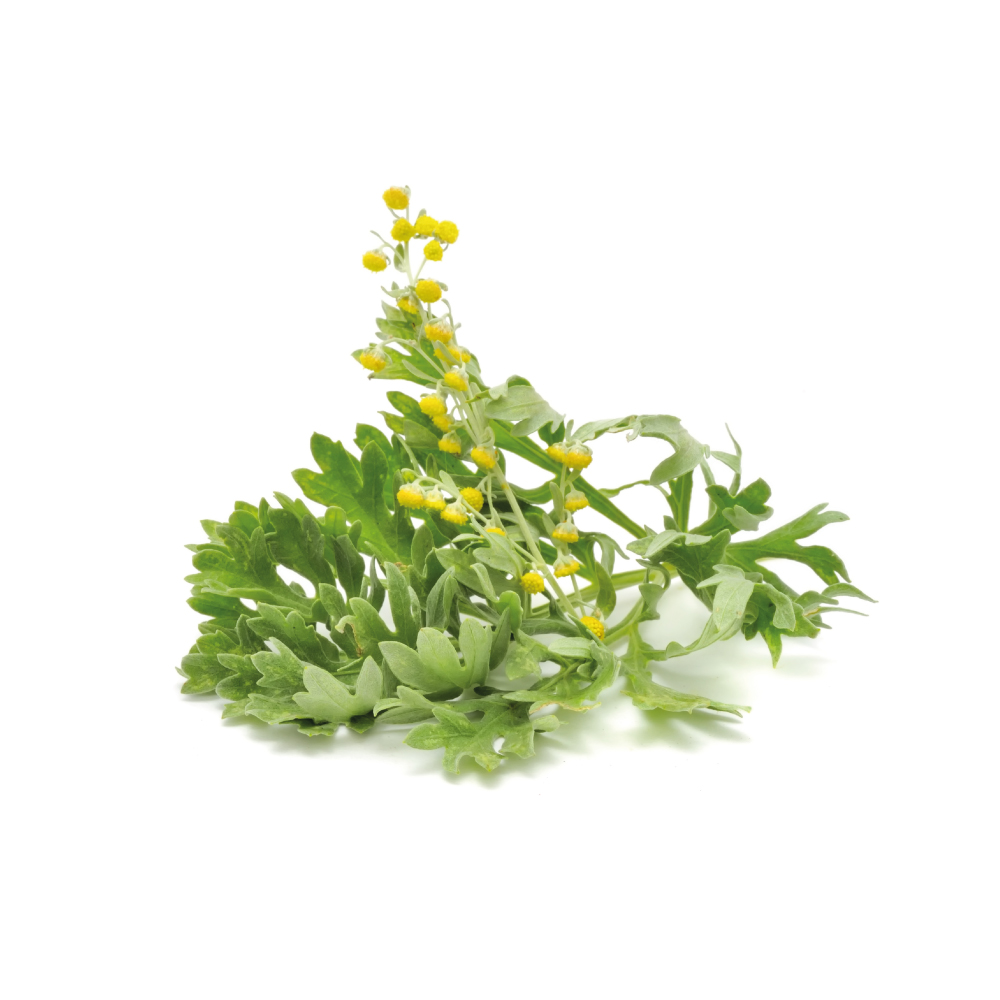
Wormwood is an aromatic, semi-woody herbaceous perennial in the daisy family (Asteraceae), growing 2–4 ft (0.6–1.2 m) tall with silvery, silky-hairy, deeply divided gray-green foliage that is intensely bitter, and loose summer panicles of small nodding yellowish button-like flower heads. The whole plant is strongly scented and is the classic bittering agent of absinthe and vermouth. The genus Artemisia is large — around 250–500 species across Europe, Asia and North America — and its notable members include mugwort (A. vulgaris), tarragon (A. dracunculus), sagebrush (A. arbuscula) and sweet wormwood (A. annua).
The constituent to watch is thujone, a neurotoxic monoterpene whose content in the essential oil swings enormously between chemotypes and provenances — from near-trace to the dominant component — so wormwood material is far from uniform in either potency or toxicity 16,34Reference 16ReviewWormwood (Artemisia absinthium L.) — a curious plant with both neurotoxic and neuroprotective properties? — review/commentaryView study →Reference 34Composition of the essential oil of Artemisia absinthium L. of different geographical origin. It should not be confused with its relative sweet wormwood (A. annua), a chemically distinct species whose artemisinin underpins modern antimalarial drugs and which is used quite differently.
Distribution
Wormwood is native to Europe, North Africa and temperate Asia. Widely grown as a medicinal and ornamental herb, it has naturalized broadly across North America — especially the northern Great Plains and New England — and other temperate regions, spreading along roadsides, pastures and waste ground. As “absinth wormwood” it is a recognized agricultural weed that can taint dairy and displace forage, and it is listed as a noxious weed in one or more US states. No conservation concern.
Growing Conditions
- Life cycle: hardy herbaceous perennial with a woody base, USDA zones 4–9.
- Light: full sun.
- Water: drought-tolerant; wants poor-to-moderate, dry, sharply-drained soil.
- Habit: vigorous self-seeder — deadhead to limit spread where it is a listed weed.
- Full cultivation detail lives on the companion farm-wiki grow guide for Artemisia absinthium (link to be added once that project’s public URL is confirmed).
Harvesting, Collection & Preparation
When preparing Artemisia absinthium, a study investigating the antioxidant potential of various extracts discovered that the optimal temperature for extraction using a variety of solvents was 45 degrees C, and the best solvent was methanol (75%). They recorded the highest extraction was with a 75% methanol extract at this temperature, and the lowest was a 100% water extract 30Reference 30Study of effect of extraction conditions on the biochemical composition and antioxidant activity of Artemisia absinthium by HPLC and TLC.
Some of the best wormwood is suggested to come from Jiangxi, China 36Reference 36Introduction to Chinese materia medica (3rd ed.). (Pg 217-220).
Pharmacology & Research
Wormwood has a broad but tier-uneven literature: dozens of preclinical papers (in vitro antioxidant, antimicrobial and antiparasitic assays, rodent hepatoprotection and memory models) sit above a small but genuinely important human layer that the older monograph literature often misses. The single most useful signal is in Crohn’s disease, where two controlled trials — one double-blind and placebo-controlled — reported steroid-sparing and TNF-α–lowering effects from dried whole-herb wormwood 1,2Reference 1RCTSteroid-sparing effect of wormwood (Artemisia absinthium) in Crohn’s disease: a double-blind placebo-controlled study — randomised placebo-controlled trialView study →Reference 2Clinical trialWormwood (Artemisia absinthium) suppresses tumour necrosis factor alpha and accelerates healing in patients with Crohn’s disease — controlled clinical trialView study →. A pilot uncontrolled trial in IgA nephropathy 3Reference 3Clinical trialWormwood (Artemisia absinthium) for poorly responsive early-stage IgA nephropathy: a pilot uncontrolled clinical trialView study → and a topical trial in knee osteoarthritis 4Reference 4RCTTopical effects of Artemisia absinthium ointment and liniment in comparison with piroxicam gel in patients with knee osteoarthritis: a randomised double-blind controlled trialView study → round out the human data, all small and none independently replicated. Almost everything hinges on preparation and chemotype: results come from dried whole herb or thujone-free extracts, not from the essential oil, and thujone content varies enormously between plants, so findings do not transfer cleanly between a tea, a tincture and an oil.
- Best-supported: adjunctive symptom relief and steroid-sparing in Crohn’s disease, via TNF-α suppression, in two small controlled trials of dried whole herb 1,2Reference 1RCTSteroid-sparing effect of wormwood (Artemisia absinthium) in Crohn’s disease: a double-blind placebo-controlled study — randomised placebo-controlled trialView study →Reference 2Clinical trialWormwood (Artemisia absinthium) suppresses tumour necrosis factor alpha and accelerates healing in patients with Crohn’s disease — controlled clinical trialView study →; long-standing use as a bitter digestive/appetite stimulant backed by pharmacopoeial monographs 13Reference 13ReviewThe Complete German Commission E Monographs — Wormwood (Absinthii herba): appetite loss, dyspeptic and biliary complaints — pharmacopoeial monograph.
- Emerging, worth watching: hepatoprotective and antifibrotic activity in rodent liver-injury models 5,6,7Reference 5AnimalIn vivo hepatoprotective activity of the aqueous extract of Artemisia absinthium L. against chemically and immunologically induced liver injuries in mice — animal modelView study →Reference 6AnimalReversal of carbon tetrachloride-induced hepatic injury by aqueous extract of Artemisia absinthium in Sprague-Dawley rats — animal modelView study →Reference 7AnimalArtemisia absinthium attenuates hepatic fibrosis in mice by suppressing hepatic stellate cell activation and modulating inflammatory chemokine signalling — animal modelView study →; a TNF-α–driven signal extending to IgA nephropathy 3Reference 3Clinical trialWormwood (Artemisia absinthium) for poorly responsive early-stage IgA nephropathy: a pilot uncontrolled clinical trialView study →.
- Mechanistically thin: antioxidant, neuroprotective/pro-cognitive, antidiabetic and anticancer claims rest on in vitro assays and rodent models, with no human confirmation 8,9,10,11Reference 8In vitroFlowers and leaves of Artemisia absinthium and Artemisia annua: phytochemical characterization, anti-inflammatory, antioxidant and anti-proliferative activities — in vitro and rat modelView study →Reference 9AnimalThe effects of Artemisia absinthium L. on scopolamine-induced learning and memory impairment and brain tissue oxidative damage in adult rats — animal modelView study →Reference 10ReviewBioactive compounds, pharmacological actions, and pharmacokinetics of wormwood (Artemisia absinthium) — reviewView study →Reference 11AnimalEffect of Artemisia absinthium ethanolic extract on oxidative stress markers and TLR4, S100A4, Bax and Bcl-2 gene expression in the kidney of STZ-induced diabetic rats — animal modelView study →.
- The caveat: the active herb also carries the convulsant neurotoxin thujone 15,16Reference 15Höld, K. M., Sirisoma, N. S., Ikeda, T., Narahashi, T., & Casida, J. E. (2000). α-Thujone (the active component of absinthe): gamma-aminobutyric acid type A receptor modulation and metabolic detoxification. Proceedings of the National Academy of Sciences USA. https://pubmed.ncbi.nlm.nih.gov/10725394/View study →Reference 16ReviewWormwood (Artemisia absinthium L.) — a curious plant with both neurotoxic and neuroprotective properties? — review/commentaryView study →; efficacy is tied to specific preparations (dried herb or thujone-free extract), there is no standardised marketed dose, and every human trial is small.
1. Anti-inflammatory (Crohn’s / IBD)
This is wormwood’s strongest human signal. In a double-blind, placebo-controlled, multicentre study in Germany (n=40 Crohn’s patients), a herbal blend delivering dried wormwood (3×500 mg/day) alongside a tapering steroid dose produced steady clinical improvement in 90% of the wormwood group as steroids were withdrawn, versus worsening in the placebo group 1Reference 1RCTSteroid-sparing effect of wormwood (Artemisia absinthium) in Crohn’s disease: a double-blind placebo-controlled study — randomised placebo-controlled trialView study →. A second controlled trial (n=20) using dried powdered wormwood (3×750 mg/day for 6 weeks) found average serum TNF-α fell from ~24.5 to ~8.0 pg/mL with remission (CDAI improvement) in 8 of 10 treated patients versus 2 of 10 controls 2Reference 2Clinical trialWormwood (Artemisia absinthium) suppresses tumour necrosis factor alpha and accelerates healing in patients with Crohn’s disease — controlled clinical trialView study →. The mechanism is plausible and consistent — TNF-α is central to Crohn’s, and wormwood extracts suppress it — but both trials are small, from overlapping investigators, and used dried whole herb rather than any standardised extract. Systematic reviews and a meta-analysis of herbal therapy in IBD include these results while cautioning that the evidence base remains limited 27Reference 27Meta-analysisInduction of clinical response and remission of inflammatory bowel disease by use of herbal medicines: a meta-analysisView study →.
Gap: No large, independent, adequately powered replication; the positive trials are small and share investigators, and durability beyond a few weeks is untested.
2. Digestive bitter / appetite
Wormwood is one of the classic intensely bitter herbs, and its digestive use is the best-documented traditional indication. The bitter sesquiterpene lactone absinthin activates bitter (TAS2R) taste receptors, which reflexively stimulate salivary, gastric and biliary secretion — the rationale for its use in loss of appetite and dyspeptic complaints. This indication is anchored by pharmacopoeial monographs (German Commission E and the EMA/HMPC herbal monograph) that classify Absinthii herba for appetite loss and dyspeptic/biliary complaints 13,14Reference 13ReviewThe Complete German Commission E Monographs — Wormwood (Absinthii herba): appetite loss, dyspeptic and biliary complaints — pharmacopoeial monographReference 14ReviewCommunity herbal monograph on Artemisia absinthium L., herba — pharmacopoeial monographView study →, rather than by modern trials. A small controlled study of a multi-herb bitter preparation containing wormwood reported relief of functional upper-abdominal symptoms, but the effect cannot be attributed to wormwood alone 28Reference 28RCTPhytotherapy in functional upper abdominal complaints: results of a clinical study with a preparation of several plants (inclView study →.
Gap: Almost no modern monotherapy trials; the human evidence is pharmacopoeial and traditional, and the one supportive clinical study used a multi-herb formula.
3. Hepatoprotective
Rodent models are consistent. An aqueous extract protected mouse liver against chemically and immunologically induced injury 5Reference 5AnimalIn vivo hepatoprotective activity of the aqueous extract of Artemisia absinthium L. against chemically and immunologically induced liver injuries in mice — animal modelView study →, and an aqueous extract reversed carbon-tetrachloride–induced hepatic damage in rats, normalising raised transaminases and lipid peroxidation 6Reference 6AnimalReversal of carbon tetrachloride-induced hepatic injury by aqueous extract of Artemisia absinthium in Sprague-Dawley rats — animal modelView study →. A 2026 mouse study went further mechanistically: a methanol extract (400 mg/kg) attenuated CCl₄-induced liver fibrosis by suppressing hepatic stellate-cell activation and downregulating TGF-β/PDGF-D and fibrotic markers (COL1A1, αSMA) via TGF-β/SMAD, NF-κB and MAPK pathways, with a benefit comparable to silymarin 7Reference 7AnimalArtemisia absinthium attenuates hepatic fibrosis in mice by suppressing hepatic stellate cell activation and modulating inflammatory chemokine signalling — animal modelView study →. The traditional Chinese and Persian use of the herb for jaundice and hepatitis aligns with this direction.
Gap: Entirely preclinical — no human hepatoprotection trials, and doses used in rodents (hundreds of mg/kg) do not map onto documented human dosing.
4. Antioxidant
Wormwood extracts are reliably active in cell-free antioxidant assays (DPPH, FRAP, hydroxyl- and NO-radical scavenging), an activity attributed to flavonol glycosides of quercetin and isorhamnetin plus phenolic acids 8,10Reference 8In vitroFlowers and leaves of Artemisia absinthium and Artemisia annua: phytochemical characterization, anti-inflammatory, antioxidant and anti-proliferative activities — in vitro and rat modelView study →Reference 10ReviewBioactive compounds, pharmacological actions, and pharmacokinetics of wormwood (Artemisia absinthium) — reviewView study →. A 2025 study characterised flowers and leaves and found rich polyphenol content with moderate in vitro antioxidant activity, and confirmed in vivo shifts in oxidative-status markers in a rat inflammation model 8Reference 8In vitroFlowers and leaves of Artemisia absinthium and Artemisia annua: phytochemical characterization, anti-inflammatory, antioxidant and anti-proliferative activities — in vitro and rat modelView study →. The activity is real but preparation-dependent — methanolic and ethanolic extracts outperform water extracts, and content varies with chemotype and plant organ.
Gap: No human antioxidant-endpoint data; “antioxidant” here is a laboratory property, not a demonstrated clinical benefit, and potency is described as moderate.
5. Antimicrobial
The essential oil shows in vitro antibacterial and antifungal activity, most pronounced against gram-positive bacteria — gram-negative species are relatively protected by their hydrophilic outer membrane, which blocks the oil’s lipophilic terpenoids 17Reference 17In vitroVolatile composition and antimicrobial activity of the essential oil of Artemisia absinthium growing in the Western Ghats region of North West Karnataka, India — in vitroView study →. Broader Artemisia essential-oil screening confirms activity that tracks with oil composition, including 1,8-cineole and other monoterpenes 18Reference 18In vitroScreening of chemical composition, antimicrobial and antioxidant activities of Artemisia essential oils — in vitroView study →. Activity is a property of the volatile oil, not the water-based preparations used in the Crohn’s trials.
Gap: In vitro only, with the effect residing in the essential oil rather than the herb as commonly used; no clinical infection data.
6. Antiparasitic / anthelmintic
This extends wormwood’s namesake traditional use (“worm-wood”). In vitro work found that A. absinthium extract inhibited embryogenesis and egg hatching of the roundworm Ascaris suum 19Reference 19In vitroThe effects of Allium sativum, Artemisia absinthium, Cucurbita pepo, Coriandrum sativum, Satureja hortensis and Calendula officinalis on the embryogenesis of Ascaris suum eggs — in vitroView study →, and a rat study compared A. absinthium against Trichinella spiralis infection 20Reference 20AnimalComparison of the effects of Artemisia vulgaris and Artemisia absinthium growing in western Anatolia against trichinellosis (Trichinella spiralis) in rats — animal modelView study →. Extracts also show strong larvicidal activity against mosquito vectors 21Reference 21In vitroChicory (Cichorium intybus) and wormwood (Artemisia absinthium) extracts exhibit strong larvicidal activity against mosquito vectors of malaria, dengue fever and filariasis — in vitroView study → and, formulated as an essential-oil nanocochleate, antileishmanial activity in vitro and in vivo 22Reference 22In vitroIn vitro and in vivo evaluation of essential oil from Artemisia absinthium L. formulated in nanocochleates against cutaneous leishmaniasis — animal modelView study →. The signal is broad across parasite types but preparation-varied and untested in humans for helminth clearance.
Gap: No human anthelmintic efficacy or safety trials; evidence is in vitro/animal and spread across many different parasite species and formulations.
7. Neuroprotective / cognitive
The traditional nootropic claim has partial mechanistic support and a large asterisk. In a rat model, hydroalcoholic extract improved scopolamine-impaired learning and memory (Morris water maze, passive avoidance) and reduced brain oxidative damage while raising SOD and catalase 9Reference 9AnimalThe effects of Artemisia absinthium L. on scopolamine-induced learning and memory impairment and brain tissue oxidative damage in adult rats — animal modelView study →. Extract also protected OLN-93 glial cells against quinolinic-acid neurotoxicity in vitro 12Reference 12In vitroArtemisia absinthium extract attenuates quinolinic acid-induced cell injury in OLN-93 cells — in vitroView study →, and older work found wormwood displaced ligand at CNS nicotinic acetylcholine receptors, a target relevant to failing memory 23Reference 23In vitroCNS acetylcholine receptor activity in European medicinal plants traditionally used to improve failing memory — in vitroView study →. The asterisk: the same plant contains thujone, a GABA-A receptor antagonist and dose-dependent convulsant 15Reference 15Höld, K. M., Sirisoma, N. S., Ikeda, T., Narahashi, T., & Casida, J. E. (2000). α-Thujone (the active component of absinthe): gamma-aminobutyric acid type A receptor modulation and metabolic detoxification. Proceedings of the National Academy of Sciences USA. https://pubmed.ncbi.nlm.nih.gov/10725394/View study →, so any “neuroactive” reading must be weighed against neurotoxic risk at higher exposures.
Gap: Rodent and cell-line only, mechanistically mixed (protective flavonoids vs. neurotoxic thujone), and no human cognitive data.
8. Antidiabetic
Evidence is early. Extracts inhibit α-amylase and other carbohydrate-handling enzymes in vitro 24Reference 24In vitroNatural α-amylase inhibitors from medicinal herbs: in vitro evaluation of extracts prepared with food-compatible solvents — in vitroView study →, and an ethanolic extract improved oxidative-stress and apoptosis markers in the kidneys of streptozotocin-induced diabetic rats 11Reference 11AnimalEffect of Artemisia absinthium ethanolic extract on oxidative stress markers and TLR4, S100A4, Bax and Bcl-2 gene expression in the kidney of STZ-induced diabetic rats — animal modelView study →. Comparative in vitro work also reports antidiabetic and anti-inflammatory potential for membrane-processed extracts 29Reference 29In vitroIn vitro assessment of the antidiabetic and anti-inflammatory potential of Artemisia absinthium, Artemisia vulgaris and Trigonella foenum-graecum extracts processed using membrane technologies — in vitroView study →. There is no human glucose-lowering trial for wormwood specifically.
Gap: In vitro and single-model rodent data only; no clinical glycaemic endpoints.
9. Anticancer
Wormwood extracts trigger apoptosis in cultured cancer cells — reported via multiple apoptotic pathways in human breast cancer lines 25Reference 25In vitroArtemisia absinthium (AA): a novel potential complementary and alternative medicine for breast cancer — in vitroView study → and, for the constituent thujone, metabolic disruption of placental choriocarcinoma cells 26Reference 26In vitroLee, J. Y., et al. (2020). α,β-Thujone suppresses human placental choriocarcinoma cells via metabolic disruption — in vitro. Reproduction. https://pubmed.ncbi.nlm.nih.gov/32240978/View study →. A 2025 study also showed antiproliferative activity against ovarian tumour lines linked to apoptosis and multidrug-resistance modulation 8Reference 8In vitroFlowers and leaves of Artemisia absinthium and Artemisia annua: phytochemical characterization, anti-inflammatory, antioxidant and anti-proliferative activities — in vitro and rat modelView study →. All of this is cell-line work: there is no in vivo tumour-model efficacy or human oncology data, and cytotoxicity in a dish is a weak predictor of clinical benefit.
Gap: Confined to cell lines; no animal efficacy or human trials, and apoptotic activity in vitro does not establish anticancer use.
Mechanisms
| Mechanism | Drives | Key compounds |
|---|---|---|
| TNF-α ↓, NF-κB ↓, NLRP3 inflammasome ↓ | anti-inflammatory (Crohn’s/IBD)hepatoprotective | absinthin, flavonoids (quercetin, isorhamnetin) |
| TGF-β/SMAD ↓, hepatic stellate-cell quiescence, ↓ PDGF-D | hepatoprotective (antifibrotic) | polyphenol-rich extract fraction |
| Free-radical scavenging (DPPH/FRAP), ↑ SOD/catalase/thiols | antioxidantneuroprotective | quercetin, isorhamnetin, phenolic acids |
| GABA-A receptor antagonism (convulsant, dose-dependent) | neuroactivity and neurotoxicity | α-thujone, β-thujone |
| Membrane disruption, selective for gram-positive bacteria | antimicrobial | essential-oil terpenoids (1,8-cineole, sabinene, thujone) |
| Bitter TAS2R receptor activation → reflex gastric/biliary secretion | digestive bittercholeretic | absinthin, sesquiterpene lactones |
Clinical trials
A handful of small completed human trials exist (two in Crohn’s disease, one pilot in IgA nephropathy, one topical trial in knee osteoarthritis), but there is no large registered efficacy RCT and ClinicalTrials.gov lists no active wormwood-specific trial — the strong preclinical layer far outweighs the human data.
| Completed | Planned | Terminated | Preclinical |
|---|---|---|---|
| 4 | 0 | 0 | ~50+ |
Last checked: July 2026.
Phytochemistry
Wormwood’s two defining features are its essential oil — dominated in the classic chemotype by the neurotoxic monoterpene ketone thujone (as α- and β-isomers, the marker behind absinthe’s reputation) — and its intensely bitter sesquiterpene lactones, chiefly absinthin. The oil also carries sabinene, trans-sabinyl acetate, myrcene and 1,8-cineole, and the herb yields antioxidant flavonol glycosides of quercetin and isorhamnetin 30,32,17,18,34Reference 30Study of effect of extraction conditions on the biochemical composition and antioxidant activity of Artemisia absinthium by HPLC and TLCReference 32Phenolic SpeciesReference 17In vitroVolatile composition and antimicrobial activity of the essential oil of Artemisia absinthium growing in the Western Ghats region of North West Karnataka, India — in vitroView study →Reference 18In vitroScreening of chemical composition, antimicrobial and antioxidant activities of Artemisia essential oils — in vitroView study →Reference 34Composition of the essential oil of Artemisia absinthium L. of different geographical origin.
The plant is strongly chemotype-dependent: separate sabinyl-acetate, cis-epoxyocimene and thujone chemotypes occur, so two samples can differ wildly in thujone content. Compounds marked † are the chemotype-defining markers.
Constituent Summary
Share of the essential oil unless noted; figures vary enormously by chemotype, geographical origin and plant organ. Total essential oil is roughly 0.2–1.3% of the dried herb 30,17Reference 30Study of effect of extraction conditions on the biochemical composition and antioxidant activity of Artemisia absinthium by HPLC and TLCReference 17In vitroVolatile composition and antimicrobial activity of the essential oil of Artemisia absinthium growing in the Western Ghats region of North West Karnataka, India — in vitroView study →. † = chemotype-differentiating marker.
Monoterpene10 compounds4 with data
Sesquiterpene lactone1 compound1 with data
Flavonoid4 compoundsno data
Clinical Applications
Wormwood is a reliable bitter herb, useful for stimulating appetite and digestion, eliminating parasites, and treating infections of the gastrointestinal tract. Its best human evidence, however, is as an adjunct in Crohn’s disease, where two small controlled trials of dried whole herb allowed steroid tapering and lowered TNF-α 1,2Reference 1RCTSteroid-sparing effect of wormwood (Artemisia absinthium) in Crohn’s disease: a double-blind placebo-controlled study — randomised placebo-controlled trialView study →Reference 2Clinical trialWormwood (Artemisia absinthium) suppresses tumour necrosis factor alpha and accelerates healing in patients with Crohn’s disease — controlled clinical trialView study → — a promising but not-yet-replicated signal. Because the active herb also carries the convulsant neurotoxin thujone, use is kept short-term and the essential oil / high-thujone chemotypes are avoided for internal use.
Dosage
In research, wormwood has been given as the whole dried herb (or a whole-herb thujone-free preparation), not as a standardised marker-titrated extract — so the doses below are herb weights, and the essential oil (where the thujone risk concentrates) is a different preparation entirely.
| Indication | Preparation | Dose | Est. dried-herb equivalent | Source |
|---|---|---|---|---|
| Crohn’s disease (steroid-sparing) | Dried wormwood herb in a herbal blend, oral | 3 × 500 mg/day (1.5 g/day) for 10 weeks | ~1.5 g/day (already whole dried herb) | 1Reference 1RCTSteroid-sparing effect of wormwood (Artemisia absinthium) in Crohn’s disease: a double-blind placebo-controlled study — randomised placebo-controlled trialView study → |
| Crohn’s disease (TNF-α ↓) | Dried powdered wormwood, oral | 3 × 750 mg/day (2.25 g/day) for 6 weeks | ~2.25 g/day (already whole dried herb) | 2Reference 2Clinical trialWormwood (Artemisia absinthium) suppresses tumour necrosis factor alpha and accelerates healing in patients with Crohn’s disease — controlled clinical trialView study → |
| IgA nephropathy (pilot) | Thujone-free wormwood preparation, oral | 1.8 g/day for 6 months | ~1.8 g/day (whole-herb basis; thujone removed) | 3Reference 3Clinical trialWormwood (Artemisia absinthium) for poorly responsive early-stage IgA nephropathy: a pilot uncontrolled clinical trialView study → |
| Knee osteoarthritis | Topical 3% ointment/liniment (aerial parts) | 3% formulation, applied TID for 4 weeks | — (topical; not a whole-herb oral equivalent) | 4Reference 4RCTTopical effects of Artemisia absinthium ointment and liniment in comparison with piroxicam gel in patients with knee osteoarthritis: a randomised double-blind controlled trialView study → |
The three oral trials already used whole dried herb (or a whole-herb thujone-free preparation), so the reported mg is the dried-herb weight — no marker back-conversion is needed. The topical trial’s 3% formulation has no oral equivalent (marked ”—”). These are research doses, not recommendations.
Traditional Dosage
| System | Preparation | Dose |
|---|---|---|
| Western herbal | Dried herb infusion (bitter, before meals) | ~1–2 g as a bitter tea, short-term |
| Western herbal | 1:5 liquid extract | 5–20 mL/week (existing sidebar value — verify against source) |
| German Commission E | Dried herb / preparations | ~2–3 g herb daily; extracts correspondingly 13Reference 13ReviewThe Complete German Commission E Monographs — Wormwood (Absinthii herba): appetite loss, dyspeptic and biliary complaints — pharmacopoeial monograph |
| TCM (Yin Chen) | Decoction of aerial parts | Traditional decoction dosing per materia medica 36Reference 36Introduction to Chinese materia medica (3rd ed.). (Pg 217-220) |
Safety & Pregnancy
Wormwood’s principal hazard is thujone, a GABA-A antagonist and dose-dependent convulsant concentrated in the essential oil and high-thujone chemotypes — so use is kept short-term and the oil is avoided internally. It is contraindicated in pregnancy.
- Thujone neurotoxicity. GABA-A antagonist and dose-dependent convulsant; keep use short-term (≤2–4 weeks) and avoid the essential oil / high-thujone chemotypes internally.
- Avoid in pregnancy. Traditionally an emmenagogue and abortifacient, contraindicated in the standard safety literature.
- Asteraceae allergy. Can provoke allergic / contact reactions in daisy-family–sensitised people.
- GI & biliary caution. A bitter that stimulates gastric and biliary secretion — caution in active ulcer disease and biliary obstruction.
- Interactions not assessed. No human drug-interaction trial identified; a CYP3A4 metabolic route is not an interaction profile.
- Dried-herb bitters milder. The neurotoxic risk sits in the oil, not in the thujone-free extracts and bitters used in the trials.
Full safety & interactions detail
Wormwood’s principal hazard is thujone, a monoterpene ketone in its essential oil that acts as a GABA-A receptor antagonist and a dose-dependent convulsant, producing tonic-clonic seizures in animals above threshold and neuro-excitatory poisoning (agitation, insomnia, hallucinations) in humans after heavy or prolonged ingestion 15,16Reference 15Höld, K. M., Sirisoma, N. S., Ikeda, T., Narahashi, T., & Casida, J. E. (2000). α-Thujone (the active component of absinthe): gamma-aminobutyric acid type A receptor modulation and metabolic detoxification. Proceedings of the National Academy of Sciences USA. https://pubmed.ncbi.nlm.nih.gov/10725394/View study →Reference 16ReviewWormwood (Artemisia absinthium L.) — a curious plant with both neurotoxic and neuroprotective properties? — review/commentaryView study →. For this reason use should be short-term (traditionally under 2–4 weeks), and the neurotoxic risk is concentrated in the essential oil and high-thujone chemotypes rather than in dried-herb bitters or the thujone-free extracts used in the Crohn’s and IgA-nephropathy trials 2,3Reference 2Clinical trialWormwood (Artemisia absinthium) suppresses tumour necrosis factor alpha and accelerates healing in patients with Crohn’s disease — controlled clinical trialView study →Reference 3Clinical trialWormwood (Artemisia absinthium) for poorly responsive early-stage IgA nephropathy: a pilot uncontrolled clinical trialView study →. As an Asteraceae (daisy family) member, wormwood can provoke allergic/contact reactions in people sensitised to that family, and it is a documented bitter that stimulates gastric and biliary secretion, so caution applies in active gastric or duodenal ulceration and in biliary obstruction. Thujone content is capped in food and beverages by EU regulation, and the herb should not be used in pregnancy (see below).
Interactions and CYP450: not assessed. No human drug-interaction trial has been identified for wormwood. Thujone is metabolised by liver CYP enzymes (including CYP3A4) to 7-hydroxythujone 15Reference 15Höld, K. M., Sirisoma, N. S., Ikeda, T., Narahashi, T., & Casida, J. E. (2000). α-Thujone (the active component of absinthe): gamma-aminobutyric acid type A receptor modulation and metabolic detoxification. Proceedings of the National Academy of Sciences USA. https://pubmed.ncbi.nlm.nih.gov/10725394/View study →, but this is a metabolic route, not a demonstrated clinical interaction — do not read it as an interaction profile.
Avoid. Wormwood is traditionally regarded as an emmenagogue and abortifacient and is contraindicated in pregnancy in the standard safety literature; its thujone content adds a neurotoxic concern, and thujone/the essential oil disrupts hormonally responsive and placental (choriocarcinoma) cells in vitro 26Reference 26In vitroLee, J. Y., et al. (2020). α,β-Thujone suppresses human placental choriocarcinoma cells via metabolic disruption — in vitro. Reproduction. https://pubmed.ncbi.nlm.nih.gov/32240978/View study →. No controlled human pregnancy or lactation safety data exist — the contraindication rests on traditional use and toxicology, not on trials. Avoid during lactation as well, as safety has not been assessed.
References
- Omer, B., Krebs, S., Omer, H., & Noor, T. O. (2007). Steroid-sparing effect of wormwood (Artemisia absinthium) in Crohn’s disease: a double-blind placebo-controlled study — randomised placebo-controlled trial. Phytomedicine. https://pubmed.ncbi.nlm.nih.gov/17240130/
- Krebs, S., Omer, T. N., & Omer, B. (2010). Wormwood (Artemisia absinthium) suppresses tumour necrosis factor alpha and accelerates healing in patients with Crohn’s disease — controlled clinical trial. Phytomedicine. https://pubmed.ncbi.nlm.nih.gov/19962291/
- Krebs, S., Omer, T. N., & Omer, B. (2010). Wormwood (Artemisia absinthium) for poorly responsive early-stage IgA nephropathy: a pilot uncontrolled clinical trial. American Journal of Kidney Diseases. https://pubmed.ncbi.nlm.nih.gov/20843592/
- Basiri, Z., et al. (2017). Topical effects of Artemisia absinthium ointment and liniment in comparison with piroxicam gel in patients with knee osteoarthritis: a randomised double-blind controlled trial. Iranian Journal of Medical Sciences. https://pubmed.ncbi.nlm.nih.gov/29184260/
- Amat, N., Upur, H., & Blažeković, B. (2010). In vivo hepatoprotective activity of the aqueous extract of Artemisia absinthium L. against chemically and immunologically induced liver injuries in mice — animal model. Journal of Ethnopharmacology. https://pubmed.ncbi.nlm.nih.gov/20637853/
- Saxena, M., & Shakya, A. K. (2012). Reversal of carbon tetrachloride-induced hepatic injury by aqueous extract of Artemisia absinthium in Sprague-Dawley rats — animal model. Journal of Environmental Pathology, Toxicology and Oncology. https://pubmed.ncbi.nlm.nih.gov/23394445/
- Manzoor, R., et al. (2026). Artemisia absinthium attenuates hepatic fibrosis in mice by suppressing hepatic stellate cell activation and modulating inflammatory chemokine signalling — animal model. Cell Biochemistry and Biophysics. https://pubmed.ncbi.nlm.nih.gov/41849079/
- Țicolea, M., et al. (2025). Flowers and leaves of Artemisia absinthium and Artemisia annua: phytochemical characterization, anti-inflammatory, antioxidant and anti-proliferative activities — in vitro and rat model. Plants. https://pubmed.ncbi.nlm.nih.gov/40219097/
- Rahimi, M., et al. (2023). The effects of Artemisia absinthium L. on scopolamine-induced learning and memory impairment and brain tissue oxidative damage in adult rats — animal model. Avicenna Journal of Phytomedicine. https://pubmed.ncbi.nlm.nih.gov/36698740/
- Batiha, G. E., et al. (2020). Bioactive compounds, pharmacological actions, and pharmacokinetics of wormwood (Artemisia absinthium) — review. Antibiotics (Basel). https://pubmed.ncbi.nlm.nih.gov/32585887/
- Bagheri, F., et al. (2020). Effect of Artemisia absinthium ethanolic extract on oxidative stress markers and TLR4, S100A4, Bax and Bcl-2 gene expression in the kidney of STZ-induced diabetic rats — animal model. Hormone Molecular Biology and Clinical Investigation. https://pubmed.ncbi.nlm.nih.gov/33079704/
- Rashidi, R., et al. (2023). Artemisia absinthium extract attenuates quinolinic acid-induced cell injury in OLN-93 cells — in vitro. Current Drug Discovery Technologies. https://pubmed.ncbi.nlm.nih.gov/36998142/
- Blumenthal, M., et al. (Eds.). (1998). The Complete German Commission E Monographs — Wormwood (Absinthii herba): appetite loss, dyspeptic and biliary complaints — pharmacopoeial monograph. American Botanical Council.
- European Medicines Agency, Committee on Herbal Medicinal Products (HMPC). (2009). Community herbal monograph on Artemisia absinthium L., herba — pharmacopoeial monograph. EMA/HMPC. https://www.ema.europa.eu/en/medicines/herbal/absinthii-herba
- Höld, K. M., Sirisoma, N. S., Ikeda, T., Narahashi, T., & Casida, J. E. (2000). α-Thujone (the active component of absinthe): gamma-aminobutyric acid type A receptor modulation and metabolic detoxification. Proceedings of the National Academy of Sciences USA. https://pubmed.ncbi.nlm.nih.gov/10725394/
- Lachenmeier, D. W. (2010). Wormwood (Artemisia absinthium L.) — a curious plant with both neurotoxic and neuroprotective properties? — review/commentary. Journal of Ethnopharmacology. https://pubmed.ncbi.nlm.nih.gov/20542104/
- Joshi, R. K. (2013). Volatile composition and antimicrobial activity of the essential oil of Artemisia absinthium growing in the Western Ghats region of North West Karnataka, India — in vitro. Pharmaceutical Biology. https://pubmed.ncbi.nlm.nih.gov/23570523/
- Lopes-Lutz, D., Alviano, D. S., Alviano, C. S., & Kolodziejczyk, P. P. (2008). Screening of chemical composition, antimicrobial and antioxidant activities of Artemisia essential oils — in vitro. Phytochemistry. https://pubmed.ncbi.nlm.nih.gov/18417176/
- Băieş, M. H., et al. (2022). The effects of Allium sativum, Artemisia absinthium, Cucurbita pepo, Coriandrum sativum, Satureja hortensis and Calendula officinalis on the embryogenesis of Ascaris suum eggs — in vitro. Pathogens. https://pubmed.ncbi.nlm.nih.gov/36145497/
- Caner, A., et al. (2008). Comparison of the effects of Artemisia vulgaris and Artemisia absinthium growing in western Anatolia against trichinellosis (Trichinella spiralis) in rats — animal model. Experimental Parasitology. https://pubmed.ncbi.nlm.nih.gov/18325496/
- Ali, S. I., et al. (2018). Chicory (Cichorium intybus) and wormwood (Artemisia absinthium) extracts exhibit strong larvicidal activity against mosquito vectors of malaria, dengue fever and filariasis — in vitro. Parasitology International. https://pubmed.ncbi.nlm.nih.gov/30118862/
- Tamargo, B., et al. (2017). In vitro and in vivo evaluation of essential oil from Artemisia absinthium L. formulated in nanocochleates against cutaneous leishmaniasis — animal model. Medicines (Basel). https://pubmed.ncbi.nlm.nih.gov/28930253/
- Wake, G., et al. (2000). CNS acetylcholine receptor activity in European medicinal plants traditionally used to improve failing memory — in vitro. Journal of Ethnopharmacology. https://pubmed.ncbi.nlm.nih.gov/10687867/
- Fostok, S., et al. (2026). Natural α-amylase inhibitors from medicinal herbs: in vitro evaluation of extracts prepared with food-compatible solvents — in vitro. Foods. https://pubmed.ncbi.nlm.nih.gov/42279630/
- Shafi, G., et al. (2012). Artemisia absinthium (AA): a novel potential complementary and alternative medicine for breast cancer — in vitro. Molecular Biology Reports. https://pubmed.ncbi.nlm.nih.gov/22311047/
- Lee, J. Y., et al. (2020). α,β-Thujone suppresses human placental choriocarcinoma cells via metabolic disruption — in vitro. Reproduction. https://pubmed.ncbi.nlm.nih.gov/32240978/
- Rahimi, R., et al. (2013). Induction of clinical response and remission of inflammatory bowel disease by use of herbal medicines: a meta-analysis. World Journal of Gastroenterology. https://pubmed.ncbi.nlm.nih.gov/24039370/
- Westphal, J., Hörning, M., & Leonhardt, K. (1996). Phytotherapy in functional upper abdominal complaints: results of a clinical study with a preparation of several plants (incl. Artemisia absinthium) — randomised controlled study. Phytomedicine. https://pubmed.ncbi.nlm.nih.gov/23194763/
- Neagu, E., et al. (2023). In vitro assessment of the antidiabetic and anti-inflammatory potential of Artemisia absinthium, Artemisia vulgaris and Trigonella foenum-graecum extracts processed using membrane technologies — in vitro. Molecules. https://pubmed.ncbi.nlm.nih.gov/37894635/
- Ghafoori, H., Sariri, R., & Naghavi, M. R. (2014). Study of effect of extraction conditions on the biochemical composition and antioxidant activity of Artemisia absinthium by HPLC and TLC. Journal of Liquid Chromatography & Related Technologies, 37(11), 1558-1567.
- Bremer, K. (1993). Generic monograph of the Asteraceae-Anthemideae. Bull. Nat. Hist. Mus. London (Bot.), 23, 71-177.
- Hoffmann, B. Z., & Herrmann, K. (1982). Phenolic Species. 8. Flavonol Glycosides of Mugwort (Artemisia vulgaris), Tarragon (Artemisia dracunculus L.) and Absinthe (Artemisia absinthium L.). Z Lebensm Unters-Forsch., 174, 211–215.
- Bora, K. S., & Sharma, A. (2011). The genus Artemisia: a comprehensive review. Pharmaceutical Biology, 49(1), 101-109.
- Orav, A., Raal, A., Arak, E., Muurisepp, M., & Kailas, T. (2006). Composition of the essential oil of Artemisia absinthium L. of different geographical origin. Proceedings of the Estonian Academy of Sciences Chemistry, 55(3), 155.
- Culpeper, N. (1995). Culpeper’s complete herbal: A book of natural remedies for ancient ills. Wordsworth Editions.
- Yang, J., Huang, H., Zhu, Li-Jiang, & Chen, Y. (2013). Introduction to Chinese materia medica (3rd ed.). (Pg 217-220).
- Aberham, A., Cicek, S. S., Schneider, P., & Stuppner, H. (2010). Analysis of sesquiterpene lactones, lignans, and flavonoids in wormwood (Artemisia absinthium L.) using HPLC-mass spectrometry, reversed phase HPLC, and HPLC-solid phase extraction-nuclear magnetic resonance. Journal of Agricultural and Food Chemistry, 58(20), 10817-10823.