Materia Medica
Cacao
Theobroma cacao
Cacao (Theobroma cacao) — the chocolate tree, rich in theobromine; a mild stimulant, bronchodilator and vasodilator for heart and mood.
What Is Cacao?
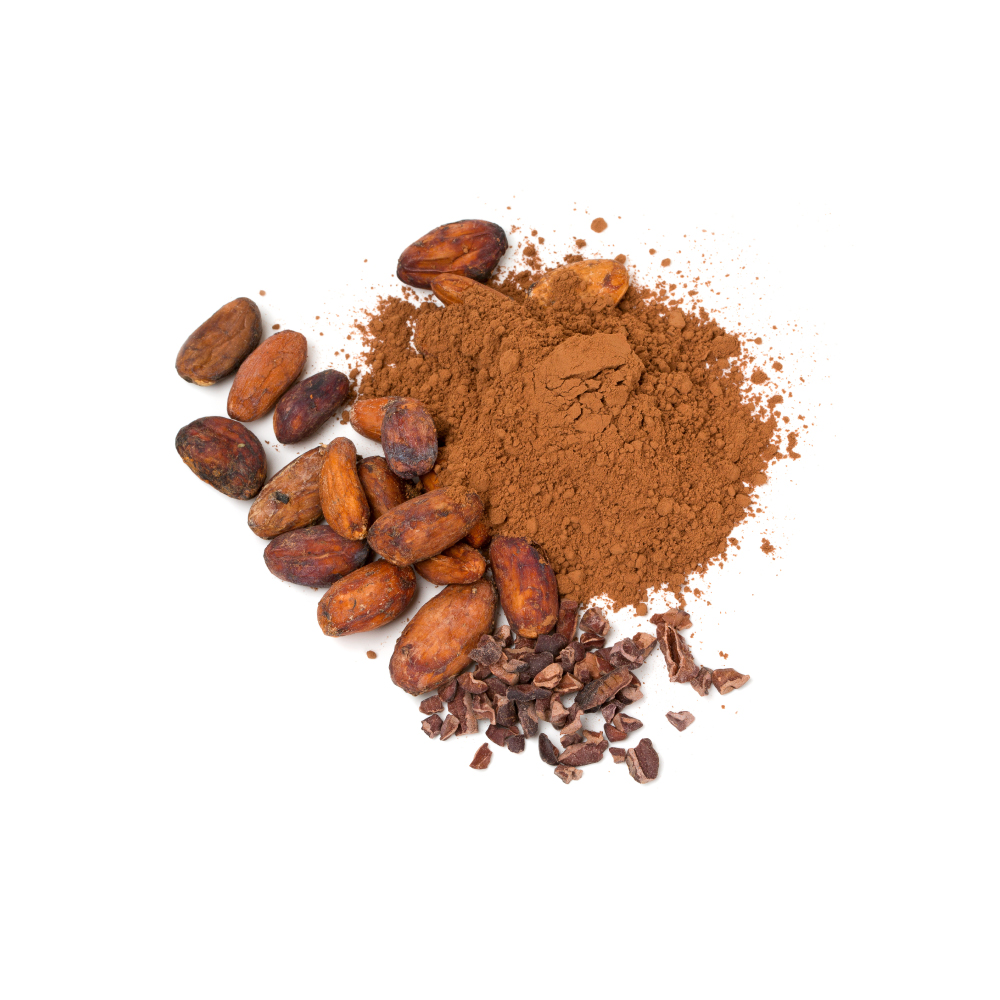
Theobroma cacao is the tree that gives us chocolate. Its seeds are roasted, crushed, and mixed into water to form a thick, bitter brew. Which was traditionally used in South America as a stimulant and aphrodisiac.
Some of the chemicals contained in the seeds are closely related to caffeine. Theobromine, which is the main active constituent in cacao, is nearly identical to caffeine in fact. It has very similar effects overall to caffeine, but is a weaker mental stimulant, and a stronger bronchodilator and vasodilator. This makes theobroma useful for athletic performance, as it increases the airflow to the lungs, combats high blood pressure, and provides subtle mental stimulation.
The medicinal uses of Theobroma cacao vary significantly depending on the plant part used.
Indications
- Inflammation
- Premature skin ageing
- Cardiac disease prevention
- Impaired immune function
- Atherosclerosis
- Diabetes control and prevention
- Cancer support and prevention
- High cholesterol
- Fatigue
- Depression
Contraindications
- May cause insomnia if taken too late in the evenings.
What Is Cacao Used For?
Cacao is mainly used to make the delicious snack we know as chocolate. As a herb however, it’s mainly used as a mild stimulant, aphrodisiac, and antioxidant. This is a herb not generally used to treat a particular condition — rather it’s used as a general “health-promoting” supplemental food, a whole-food tonic and, thanks to its methylxanthine-driven bronchodilation, sometimes taken by athletes and those travelling to high altitudes for altitude sickness (mountain sickness). The best human evidence, however, is cardiovascular — see the research section below.
Traditional Uses
Traditional South American Medicine
In Aztec times, the seeds of Theobroma were used as a form of currency, and in some places in Mexico, still, are to this day 31Reference 31A Modern Herbal | Cacao. (n.d.). Retrieved from https://www.botanical.com/botanical/mgmh/c/cacao-02.htmlView study →. The Olmec, Maya, and Aztec civilizations have been recorded to have consumed T. cacao as early as 600 BC 25Reference 25In vitroIn vitro antioxidant and antiproliferative activities of methanolic plant part extracts of Theobroma cacaoView study →, however contradictory evidence suggests it was earlier than 1000 BC.
This older suggestion is based on a sample found in Honduras on residues extracted from pottery 36Reference 36Chemical and archaeological evidence for the earliest cacao beverages. Theobroma spp. based beverages were used in virtually all social and ritual occasions in Aztec, societies. The traditional preparation method as outlined by J. S. Henderson (2007) involves the fermentation of the cacao seeds, then drying, toasting (optional), grinding, and finally mixing with water to form a suspension. The beverage was very bitter and highly sought after by all, including the invading Europeans.
How T. cacao arrived in Mesoamerica is highly debated to this day, as the origins of all T. cacao stem from the northern Amazonia 36Reference 36Chemical and archaeological evidence for the earliest cacao beverages. It’s possible the native range of T. cacao stretched farther past central America, or alternatively, it may have simply been spread by humans.
G. Scapagnini et al., (2014) reports that T. cacao has even been used medicinally by the Mayan and Aztec civilizations, as well as a nutritional substance 35Reference 35Cocoa Bioactive Compounds: Significance and Potential for the Maintenance of Skin Health.
Various parts of Theobroma cacao have been used and studied as medicine including the leaves, seeds, bark, flower, pulp, and cocoa butter (oil).
A liquor has been made from Theobroma cacao, by combining cocoa butter, cocoa powder, which is cleaned, fermented, dried, and roasted, and possibly then processed with an alkali (called dutching) to increase palatability. 35Reference 35Cocoa Bioactive Compounds: Significance and Potential for the Maintenance of Skin Health. The earliest use of cacao, in Mesoamerica (pre-1000 BC) is thought to be a fermented alcoholic beverage of the pulp, which may have been what then lead to the production of the cocoa beverage still used today due to a byproduct of this process yielding fermented cacao seeds. It’s these fermented seeds that are the primary ingredient in the non-alcoholic cocoa beverage that is still used today 36Reference 36Chemical and archaeological evidence for the earliest cacao beverages.
Traditionally, in various Meso-American cultures such as Olmec, Aztec, and Maya used the cocoa beverage to fight fatigue, and to build up a resistance 24Reference 24In vitroImmunomodulatory properties of cacao extracts — potential consequences for medical applications — in vitro studyView study →.
Botany
Cacao is a small evergreen understory tree in the mallow family (Malvaceae) — its classification has shifted over time; older literature often places it in Sterculiaceae, now generally treated as part of Malvaceae. Small, reddish, unscented flowers grow directly from the trunk and older branches (cauliflory), developing into large yellow-red pods that ripen year-round; as the seeds ripen inside, they rattle within the pod, and quickly become infertile if separated from it.
Theobroma’s name was given to it by Linnaeus, meaning “food of the gods” 31Reference 31A Modern Herbal | Cacao. (n.d.). Retrieved from https://www.botanical.com/botanical/mgmh/c/cacao-02.htmlView study →, while “chocolate” stems from the Aztec word chocolatyl, referring to the beverage drunk at social celebrations and rituals 36Reference 36Chemical and archaeological evidence for the earliest cacao beverages.
Distribution
Cacao is native to the humid tropical rainforest understory of Central and South America, from southern Mexico through the Amazon basin to Bolivia, at elevations from sea level to about 1,540 m. The highest genetic diversity occurs in the Upper Amazon, from southern Peru to the Ecuadorian Amazon and the Colombia-Peru-Brazil border region. It shows no invasive or weedy tendencies and is cultivated as a shade-tolerant tree crop throughout the tropics — the Ivory Coast and Indonesia are the largest modern producers 33Reference 33In vitroImproving Nutritional Quality of Cocoa Pod (Theobroma cacao) through Chemical and Biological Treatments for Ruminant Feeding: In vitro and In vivo Evaluation.
Growing Conditions
- Shade-tolerant understory tree, part shade; humid, consistently moist soil. Roughly USDA zone 10-12.
- Full cultivation detail lives on the companion farm-wiki grow guide for Theobroma cacao (link to be added once that project’s public URL is confirmed).
Harvesting, Collection & Preparation
Theobroma cacao is grown around the world 34Reference 34Ecological, economic and social perspectives on cocoa production worldwide, usually in large plantations under the shade of other trees such as banana.
The pods develop continuously but are usually picked in June and December 31Reference 31A Modern Herbal | Cacao. (n.d.). Retrieved from https://www.botanical.com/botanical/mgmh/c/cacao-02.htmlView study →. Once the pods are picked, they are cut open and allowed to ferment so that the seeds can be separated easier.
Drying methods of the seeds vary but are generally dried in the sun 31Reference 31A Modern Herbal | Cacao. (n.d.). Retrieved from https://www.botanical.com/botanical/mgmh/c/cacao-02.htmlView study →. Once dried, the seeds are ground into a paste, mixed with sugar and starch, and some of the fat is removed to make cocoa if the fat is retained it’s referred to as chocolate.
Often, the seeds are also roasted before powdering, this helps to break down polyphenols associated with the bitter and astringent qualities.
To obtain the yellowish white oil or butter from Theobroma cacao, the fermented, roasted seeds are expressed.
When using this plant as medicine, it’s essential to consider a few things in its preparation.
The traditional method of processing the seeds involves, fermenting, and roasting, which has been shown to decrease the concentration of constituents, especially polyphenols (antioxidant) 32Reference 32Roasting Effects on Phenolic content and Free-Radical Scavenging Activities of Pulp Pre-Conditioned and Fermented cocoa (Theobroma cacao) Beans, but may be necessary to remove enough of the astringent, and bitter qualities of the plant which may, in turn, reduce compliance in patients.
A few other things to consider is what part of the plant to use. In a single in vitro study the leaf extract showed the most selective cytotoxicity toward cancer cell lines 25Reference 25In vitroIn vitro antioxidant and antiproliferative activities of methanolic plant part extracts of Theobroma cacaoView study → (early cell-line work only — not evidence of a cancer treatment), while the seeds are best for their uses involving theobromine (appetite stimulant, anti-diabetic, anti-cholesterol, stimulant), as well as their nutritional content for such minerals as copper, magnesium, and iron.
For antioxidant benefit, the leaves, or non-roasted or fermented seeds, may be the best choice.
Phytochemistry
Cacao’s pharmacology rests on two compound families. The first is the purine alkaloids (methylxanthines) — dominated by theobromine, with a smaller amount of caffeine — which drive the stimulant, bronchodilator and cardiac effects. The second is a large polyphenol fraction of flavan-3-ols (flavanols) led by epicatechin and catechin and their procyanidins, responsible for cacao’s strong antioxidant activity. Trace phenethylamine is also present and often cited for cacao’s mood effects.
The seeds contain mostly fat (40-60%), and about 2% theobromine 31Reference 31A Modern Herbal | Cacao. (n.d.). Retrieved from https://www.botanical.com/botanical/mgmh/c/cacao-02.htmlView study →.
The shells contain roughly 1% theobromine, and mucilage 31Reference 31A Modern Herbal | Cacao. (n.d.). Retrieved from https://www.botanical.com/botanical/mgmh/c/cacao-02.htmlView study →.
Theobromine, as well as caffeine (also contained in the beans of cocoa), are both methylxanthine compounds. These compounds vary in concentration on the genotype of the tree 35Reference 35Cocoa Bioactive Compounds: Significance and Potential for the Maintenance of Skin Health. Theobromine is part of the purine class of alkaloids. This alkaloid (theobromine) has been shown to stimulate the heart muscle, relax bronchial smooth muscles, and play a role in the transmission of intracellular signals.
The alkaloid theobromine is similar in effects to caffeine but has a less potent effect on the central nervous system 31Reference 31A Modern Herbal | Cacao. (n.d.). Retrieved from https://www.botanical.com/botanical/mgmh/c/cacao-02.htmlView study →. It does, however, have a pronounced action on the heart, kidneys, and muscles.
In T. cacao beans (seeds), the dry weight contains between 10% and 20% polyphenol content, and include 3 groups: flavan-3-ols, anthocyanins, and proanthocyanins or leucoanthocyanidins 32Reference 32Roasting Effects on Phenolic content and Free-Radical Scavenging Activities of Pulp Pre-Conditioned and Fermented cocoa (Theobroma cacao) Beans. The phenolic compounds found in T. cacao are considered bioactive (partly due to antioxidant effects), and potentially useful for such chronic diseases as inflammation, cardiovascular disease, neurodegenerative disorders, as well as cancer 25Reference 25In vitroIn vitro antioxidant and antiproliferative activities of methanolic plant part extracts of Theobroma cacaoView study →.
G. Scapagnini et al., (2014) suggests the primary compounds responsible for cocoa beans’ various benefits are theobromine, flavonoids, and magnesium, and reports T. cacao is also a rich source of copper, potassium, and iron as well 35Reference 35Cocoa Bioactive Compounds: Significance and Potential for the Maintenance of Skin Health.
Constituent Summary
Figures are for the dried bean (seed) unless noted; alkaloid and polyphenol levels fall sharply with fermentation and roasting, and vary with genotype and origin. Percentages and mg/g both appear, so the column is left as a general amount.
Purine Alkaloid2 compounds2 with data
Amine1 compound1 with data
Flavanol3 compounds3 with data
Phenolic1 compound1 with data
Pharmacology & Research
Cacao (Theobroma cacao) is one of the most heavily studied botanicals in the cardiovascular literature: its flavanol fraction has been through dozens of randomised controlled trials, multiple meta-analyses, a Cochrane review, and a 21,000-person outcomes trial (COSMOS). This puts it in a rare tier for a “herb” — the strongest signals rest on human RCT and meta-analytic data, not preclinical inference. The best-replicated effects are vascular: cocoa flavanols acutely and chronically improve flow-mediated dilation and produce a small but consistent reduction in blood pressure 1,5Reference 1Meta-analysisDose-response relationship between cocoa flavanols and human endothelial function: a systematic review and meta-analysis of randomised trials — systematic review, meta-analysisView study →Reference 5Meta-analysisEffect of cocoa on blood pressure — Cochrane systematic review and meta-analysisView study →. Effects on cognition, lipids, glycaemia, mood and skin are real but weaker or mixed, and the large COSMOS trial found no significant reduction in its primary cardiovascular endpoint, tempering the enthusiasm generated by the biomarker studies 15Reference 15RCTEffect of cocoa flavanol supplementation for the prevention of cardiovascular disease events: the COcoa Supplement and Multivitamin Outcomes Study (COSMOS) randomised controlled trialView study →. The dominant caveat throughout is preparation: nearly every positive result used a flavanol-standardised extract or high-flavanol cocoa — fermentation, roasting and alkalisation (“dutching”) destroy most of these flavanols, so ordinary chocolate and heavily processed cocoa carry a fraction of the active dose.
- Best-supported: improved endothelial/flow-mediated dilation 1,3Reference 1Meta-analysisDose-response relationship between cocoa flavanols and human endothelial function: a systematic review and meta-analysis of randomised trials — systematic review, meta-analysisView study →Reference 3RCTCocoa flavanol intake improves endothelial function and Framingham Risk Score in healthy men and women: a randomised, controlled, double-masked trialView study → and a small blood-pressure reduction, ~1.8–2 mmHg systolic in a Cochrane meta-analysis 5,6Reference 5Meta-analysisEffect of cocoa on blood pressure — Cochrane systematic review and meta-analysisView study →Reference 6Meta-analysisDoes chocolate reduce blood pressure? A meta-analysis — systematic review, meta-analysisView study →.
- Emerging, worth watching: cognitive benefit in older adults and in those with poor baseline diet quality 9,10Reference 9RCTEffects of cocoa extract and a multivitamin on cognitive function: a randomised clinical trial (COSMOS-Web)View study →Reference 10RCTEnhancing dentate gyrus function with dietary flavanols improves cognition in older adults — randomised controlled trialView study →, plus a signal for reduced cardiovascular death (a secondary endpoint) in COSMOS 15,16Reference 15RCTEffect of cocoa flavanol supplementation for the prevention of cardiovascular disease events: the COcoa Supplement and Multivitamin Outcomes Study (COSMOS) randomised controlled trialView study →Reference 16RCTCocoa flavanol supplementation and prevention of cardiovascular disease: a novel analysis of the COSMOS randomised trialView study →.
- Mechanistically thin: anticancer and immunomodulatory claims rest on in vitro leaf/bean extract work with no human data 24,25Reference 24In vitroImmunomodulatory properties of cacao extracts — potential consequences for medical applications — in vitro studyView study →Reference 25In vitroIn vitro antioxidant and antiproliferative activities of methanolic plant part extracts of Theobroma cacaoView study →.
- The caveat: the active dose is flavanols, which fermentation, roasting and alkalisation largely destroy — conventional chocolate is not a reliable delivery form, and there is no single standardised medicinal dose.
1. Endothelial / vascular function
This is cacao’s best-characterised action. A 2019 systematic review and meta-analysis of randomised trials found a clear dose-response relationship between cocoa flavanol intake and flow-mediated dilation (FMD), the ultrasound measure of how well an artery relaxes 1Reference 1Meta-analysisDose-response relationship between cocoa flavanols and human endothelial function: a systematic review and meta-analysis of randomised trials — systematic review, meta-analysisView study →. Controlled trials show the effect acutely (within hours of a single high-flavanol drink) and after sustained daily intake — Heiss and colleagues reported sustained FMD gains over one week of a high-flavanol cocoa drink 2Reference 2RCTSustained increase in flow-mediated dilation after daily intake of high-flavanol cocoa drink over 1 week — randomised crossover trialView study →, and Sansone’s double-masked RCT found improved endothelial function alongside an improved Framingham Risk Score 3Reference 3RCTCocoa flavanol intake improves endothelial function and Framingham Risk Score in healthy men and women: a randomised, controlled, double-masked trialView study →. The active molecule is (-)-epicatechin, which raises nitric oxide bioavailability; the benefit extends to the lower-extremity vasculature and to people with type 2 diabetes 4Reference 4RCTCocoa flavanol consumption improves lower extremity endothelial function in healthy individuals and people with type 2 diabetes — randomised controlled trialView study →.
Gap: effects are measured on a surrogate (FMD), and all positive trials used flavanol-standardised cocoa — ordinary chocolate delivers far less.
2. Antihypertensive
The 2017 Cochrane review of cocoa and blood pressure (over 40 trials, ~1,800 participants) found a small but statistically significant reduction — on the order of 1.8 mmHg systolic — versus flavanol-free control, consistent with two earlier independent meta-analyses 5,6,7Reference 5Meta-analysisEffect of cocoa on blood pressure — Cochrane systematic review and meta-analysisView study →Reference 6Meta-analysisDoes chocolate reduce blood pressure? A meta-analysis — systematic review, meta-analysisView study →Reference 7Meta-analysisEffect of cocoa products on blood pressure: systematic review and meta-analysisView study →. The mechanism overlaps with the endothelial effect: flavanol-driven nitric oxide release causes mild vasodilation, and theobromine contributes a modest diuretic and vasodilatory action. The effect is real but clinically modest and short-lived across the trial durations studied (mostly 2–18 weeks), and larger in normotensive-to-mildly-elevated cohorts than in treated hypertensives.
Gap: a ~2 mmHg change is small, trials are short, and long-term blood-pressure benefit was not confirmed by the COSMOS outcomes data.
3. Antioxidant / cardiometabolic biomarkers
Cacao’s polyphenols — chiefly the flavan-3-ols and their procyanidins — are potent free-radical scavengers in vitro, and a 2016 meta-analysis of randomised trials found that cocoa flavanol intake favourably shifted a panel of cardiometabolic biomarkers, including markers of oxidative status, insulin resistance and inflammation 8Reference 8Meta-analysisCocoa flavanol intake and biomarkers for cardiometabolic health: a systematic review and meta-analysis of randomised controlled trialsView study →. In vitro work confirms high radical-scavenging capacity concentrated in the less-processed plant parts (leaf, cherelle, non-fermented bean) 25,26Reference 25In vitroIn vitro antioxidant and antiproliferative activities of methanolic plant part extracts of Theobroma cacaoView study →Reference 26In vitroIn vitro studies on the antioxidant property and inhibition of alpha-amylase, alpha-glucosidase, and angiotensin-I-converting enzyme by polyphenol-rich extracts from cocoa (Theobroma cacao) beanView study →. The key point the older page missed: antioxidant capacity in a test tube is not the same as a clinical antioxidant effect, and here the human data are on biomarkers, not on disease endpoints.
Gap: biomarker improvements are surrogate outcomes; fermentation and roasting sharply lower the polyphenol content of the forms people actually eat.
4. Cognitive function
Cocoa flavanols have been tested repeatedly for cognition with genuinely mixed results. Brickman’s 2014 RCT found that a high-flavanol diet enhanced dentate-gyrus function and improved a memory task in older adults 10Reference 10RCTEnhancing dentate gyrus function with dietary flavanols improves cognition in older adults — randomised controlled trialView study →, and the CoCoA trial reported cognitive and metabolic gains in elderly subjects 11Reference 11RCTCocoa flavanol consumption improves cognitive function, blood pressure control, and metabolic profile in elderly subjects: the Cocoa, Cognition, and Aging (CoCoA) randomised trialView study →. But the large COSMOS-Web RCT found no significant effect on its primary global-cognition composite, with benefit only in a subgroup with poorer baseline diet quality 9Reference 9RCTEffects of cocoa extract and a multivitamin on cognitive function: a randomised clinical trial (COSMOS-Web)View study →, and the COSMOS clinic subcohort likewise found no in-person cognitive benefit 28Reference 28RCTEffect of cocoa extract supplementation on cognitive function: results from the clinic subcohort of the COSMOS randomised trialView study →. A systematic review concluded the evidence is suggestive but methodologically inconsistent 12,13Reference 12Systematic reviewEffects of cocoa-derived polyphenols on cognitive function in humans — systematic reviewView study →Reference 13RCTInsights into the role of diet and dietary flavanols in cognitive aging: results of a randomised controlled trialView study →.
Gap: the best-powered trial (COSMOS) was null on its primary endpoint; positive results cluster in small studies and post-hoc subgroups.
5. Lipid modulation
A 2011 meta-analysis of cocoa/dark-chocolate trials found a modest, statistically significant reduction in LDL and total cholesterol, without a consistent effect on HDL 14Reference 14Meta-analysisEffects of cocoa products/dark chocolate on serum lipids: a meta-analysisView study →. This tempers the older monograph’s claim — drawn from a review — that theobromine raises HDL; the pooled RCT data show the clearer effect is a small LDL/total-cholesterol decrease, and the HDL signal is inconsistent. The magnitude is small and the trials were short.
Gap: effects are small, trials brief, and confounded by the sugar and fat matrix of chocolate products used in some studies.
6. Cardiovascular event prevention
COSMOS is the decisive trial: a randomised, double-blind, placebo-controlled study of 21,442 older US adults given 500 mg/day cocoa flavanols (incl. 80 mg epicatechin) or placebo 15Reference 15RCTEffect of cocoa flavanol supplementation for the prevention of cardiovascular disease events: the COcoa Supplement and Multivitamin Outcomes Study (COSMOS) randomised controlled trialView study →. Over a median 3.6 years, the primary composite of total cardiovascular events was not significantly reduced (HR 0.90; 95% CI 0.78–1.02; P=0.11). A pre-specified secondary endpoint, cardiovascular death, was lower (HR 0.73; 95% CI 0.54–0.98), and a 2026 reanalysis argued the per-protocol cardiovascular benefit may be larger once adherence is accounted for 16Reference 16RCTCocoa flavanol supplementation and prevention of cardiovascular disease: a novel analysis of the COSMOS randomised trialView study →. Read honestly, this is a null primary result with an encouraging but non-definitive secondary signal.
Gap: the primary endpoint did not reach significance; the CVD-death benefit is a secondary finding that needs independent confirmation.
7. Skin photoprotection
Two RCTs found that 12 weeks of high-flavanol cocoa raised the minimal erythema dose (the UV exposure needed to redden skin) and improved skin hydration and texture 17,18Reference 17RCTLong-term ingestion of high-flavanol cocoa provides photoprotection against UV-induced erythema and improves skin condition in women — randomised controlled trialView study →Reference 18RCTEating chocolate can significantly protect the skin from UV light — randomised controlled trialView study →. A third, well-controlled parallel RCT using a comparable flavanol dose found no photoprotective effect 19Reference 19RCTChocolate flavanols and skin photoprotection: a parallel, double-blind, randomised clinical trialView study →, so the evidence is split. Where an effect appeared, it tracked flavanol content, consistent with the vascular/antioxidant mechanism proposed for dermal protection.
Gap: small trials with contradictory results; only high-flavanol cocoa (not conventional chocolate) showed any effect, and none tested hard endpoints.
8. Glycaemic control
The meta-analytic biomarker data suggest cocoa flavanols improve insulin sensitivity and fasting insulin, plausibly via epicatechin effects on nitric oxide and glucose handling, plus in vitro α-amylase and α-glucosidase inhibition by the bean polyphenols 8,26Reference 8Meta-analysisCocoa flavanol intake and biomarkers for cardiometabolic health: a systematic review and meta-analysis of randomised controlled trialsView study →Reference 26In vitroIn vitro studies on the antioxidant property and inhibition of alpha-amylase, alpha-glucosidase, and angiotensin-I-converting enzyme by polyphenol-rich extracts from cocoa (Theobroma cacao) beanView study →. However, the COSMOS trial found cocoa extract supplementation did not reduce the incidence of type 2 diabetes over follow-up 20Reference 20RCTCocoa extract supplementation and risk of type 2 diabetes: the Cocoa Supplement and Multivitamin Outcomes Study (COSMOS) randomised controlled trialView study →. So the surrogate markers move in a favourable direction while the one large clinical-incidence trial was null.
Gap: biomarker benefit does not translate to reduced diabetes incidence in the only large outcomes trial.
9. Mood
Small trials have tested cocoa flavanols on mood with limited and largely acute findings: Massee’s RCT in young adults found some acute mood and cognitive effects but little sub-chronic benefit 21Reference 21RCTThe acute and sub-chronic effects of cocoa flavanols on mood, cognitive and cardiovascular health in young healthy adults — randomised controlled trialView study →, and a 2023 RCT in middle-aged Japanese women reported improvement on a profile-of-mood-state measure 22Reference 22RCTEffect of flavanol-rich cacao extract on the profile of mood state in healthy middle-aged Japanese women: a randomised controlled trialView study →. Trace phenethylamine is often invoked for cacao’s mood reputation, but it is extensively degraded by monoamine oxidase after oral intake, so its systemic contribution is doubtful.
Gap: few trials, small samples, mostly acute effects; the popular phenethylamine mechanism is not pharmacologically supported at dietary doses.
10. Antitussive (theobromine)
In a mechanistic human RCT, isolated theobromine inhibited sensory-nerve (vagal) activation and suppressed citric-acid-induced cough more effectively than placebo, and comparably to codeine but without the central side effects 23Reference 23RCTTheobromine inhibits sensory nerve activation and cough — randomised controlled trialView study →. This is a well-designed but single study of the purified alkaloid, not of cacao as consumed, and it has not been replicated into an approved antitussive.
Gap: one trial, isolated theobromine at a controlled dose — does not establish cacao (food or beverage) as a cough remedy.
11. Immunomodulatory
Becker and colleagues showed in vitro that cacao extracts modulate immune signalling by inhibiting indoleamine-2,3-dioxygenase (IDO) and slowing tryptophan breakdown, which in turn influences serotonin biosynthesis and cytokine activity 24Reference 24In vitroImmunomodulatory properties of cacao extracts — potential consequences for medical applications — in vitro studyView study →. This is a plausible, mechanistically interesting cell-based finding that the older page presented as a general benefit — but it is entirely in vitro, with no human immunological outcomes.
Gap: in vitro only; no clinical immunological endpoints in humans.
12. Anticancer
The anticancer claim rests on a single in vitro study in which methanolic leaf extract of T. cacao was selectively cytotoxic to cancer cell lines while sparing healthy cells, with activity attributed to flavonoids, tannins, triterpenes and saponins rather than to the alkaloids 25Reference 25In vitroIn vitro antioxidant and antiproliferative activities of methanolic plant part extracts of Theobroma cacaoView study →. This is early cell-line work in a non-consumed plant part; it does not support cacao as a cancer treatment or “adjunct,” and the page’s framing overstates it.
Gap: one in vitro study, leaf extract (not the seed people consume), no animal or human data.
Mechanisms
| Mechanism | Drives | Key compounds |
|---|---|---|
| ↑ Nitric oxide bioavailability, endothelial NO synthase | endothelial functionantihypertensiveskin blood flow | epicatechin, catechin, procyanidins |
| Free-radical scavenging, ↓ LDL oxidation | antioxidant/cardiometaboliclipidphotoprotection | epicatechin, procyanidins, polyphenols |
| Adenosine-receptor antagonism, phosphodiesterase inhibition | mild stimulantbronchodilationvasodilationantitussive | theobromine, caffeine |
| α-amylase / α-glucosidase / ACE inhibition (in vitro) | glycaemicantihypertensive | cocoa polyphenols, procyanidins |
| IDO inhibition, ↓ tryptophan degradation | immunomodulatorymood (proposed) | cacao polyphenol extract |
Clinical trials
Cacao has an unusually deep human trial base for a botanical, anchored by the large COSMOS randomised trial and its ancillary studies, plus a Cochrane blood-pressure review; the headline caveat is that COSMOS was null on its primary cardiovascular endpoint and on diabetes and macular-degeneration incidence 15,20,27Reference 15RCTEffect of cocoa flavanol supplementation for the prevention of cardiovascular disease events: the COcoa Supplement and Multivitamin Outcomes Study (COSMOS) randomised controlled trialView study →Reference 20RCTCocoa extract supplementation and risk of type 2 diabetes: the Cocoa Supplement and Multivitamin Outcomes Study (COSMOS) randomised controlled trialView study →Reference 27RCTCocoa flavanol supplementation and risk of age-related macular degeneration: an ancillary study of the COSMOS randomised controlled trialView study →.
| Completed | Planned | Terminated | Preclinical |
|---|---|---|---|
| 25+ | ongoing(COSMOS ancillary analyses) | 0 | ~dozens(in vitro/animal) |
Last checked: July 2026.
Dosage
In research, cacao is almost always given as a flavanol-standardised cocoa extract titrated to a set flavanol (and epicatechin) dose, not as chocolate — the trial doses below are for the standardised material and are not interchangeable with the whole-food amounts in traditional use.
| Indication | Preparation | Dose | Est. dried-herb equivalent | Source |
|---|---|---|---|---|
| CVD prevention / vascular | Flavanol-standardised cocoa extract | 500 mg cocoa flavanols/day (incl. 80 mg epicatechin) | ~25 g raw cacao/day; far more for processed cocoa | 15Reference 15RCTEffect of cocoa flavanol supplementation for the prevention of cardiovascular disease events: the COcoa Supplement and Multivitamin Outcomes Study (COSMOS) randomised controlled trialView study → |
| Endothelial function | High-flavanol cocoa drink/extract | ~450–900 mg flavanols/day | ~20–45 g raw cacao equiv. | 1,2Reference 1Meta-analysisDose-response relationship between cocoa flavanols and human endothelial function: a systematic review and meta-analysis of randomised trials — systematic review, meta-analysisView study →Reference 2RCTSustained increase in flow-mediated dilation after daily intake of high-flavanol cocoa drink over 1 week — randomised crossover trialView study → |
| Blood pressure | Flavanol-rich cocoa / dark chocolate | ~30–1000 mg flavanols/day across trials | varies widely; — | 5Reference 5Meta-analysisEffect of cocoa on blood pressure — Cochrane systematic review and meta-analysisView study → |
| Cognition (older adults) | High-flavanol cocoa drink | ~900 mg flavanols/day | ~45 g raw cacao equiv. | 10Reference 10RCTEnhancing dentate gyrus function with dietary flavanols improves cognition in older adults — randomised controlled trialView study → |
| Skin photoprotection | High-flavanol cocoa | ~320–670 mg flavanols/day | ~16–34 g raw cacao equiv. | 17,19Reference 17RCTLong-term ingestion of high-flavanol cocoa provides photoprotection against UV-induced erythema and improves skin condition in women — randomised controlled trialView study →Reference 19RCTChocolate flavanols and skin photoprotection: a parallel, double-blind, randomised clinical trialView study → |
| Antitussive | Isolated theobromine | ~1000 mg theobromine (single dose) | ~25–50 g dried bean at ~2–4% theobromine (isolated compound used, not cacao) | 23Reference 23RCTTheobromine inhibits sensory nerve activation and cough — randomised controlled trialView study → |
Est. dried-herb equivalent uses a stated assumption of ~2% total flavanols / ~2–4% theobromine in raw unfermented bean. These are rough guides, not conversion factors or recommendations; fermented, roasted and alkalised cocoa contains far less flavanol, so real-world equivalents in processed products are much higher.
Traditional Dosage
Traditionally, cacao is used as a whole food rather than a dosed medicine — the ground seed drunk as a bitter water suspension, or eaten as a general tonic.
| System | Preparation | Dose |
|---|---|---|
| Western herbal / dietary | Raw cacao (ground seed) | ~30–100 g/day as a general tonic (whole-food use; not a standardised medicinal dose) |
| Traditional South American | Fermented, roasted, ground seed as a water suspension (“chocolatyl”, often with vanilla) | Beverage, no defined dose |
Safety & Pregnancy
Cacao is well tolerated as a food, with years of flavanol-extract trial data behind it; the practical cautions are its methylxanthine stimulant load (insomnia, migraine, cardiac stimulation) and the cadmium and lead that accumulate in high-percentage cocoa products.
- Methylxanthine stimulant load. Theobromine and caffeine can cause insomnia, restlessness, headache or palpitations late in the day or in large amounts.
- Heavy-metal contamination. Cocoa and dark chocolate accumulate cadmium and lead — heavy intake of high-percentage products warrants attention to sourcing.
- Cardiac and stimulant medication. Use cautiously alongside stimulant or heart-rhythm drugs; interactions are inferred, not formally studied.
- Chocolate/cocoa sensitivity. A recognised migraine and food-intolerance trigger — avoid if sensitive.
- Well tolerated as a food. Flavanol-standardised cocoa up to 500 mg/day reported good safety over several years.
Full safety & interactions detail
Cacao is well tolerated as a food, and human trials of flavanol-standardised cocoa up to 500 mg flavanols/day have reported good safety over several years 15Reference 15RCTEffect of cocoa flavanol supplementation for the prevention of cardiovascular disease events: the COcoa Supplement and Multivitamin Outcomes Study (COSMOS) randomised controlled trialView study →. Its methylxanthines — theobromine and a smaller amount of caffeine — can cause insomnia, restlessness, headache or palpitations when consumed late in the day or in large amounts, and cacao is a recognised migraine trigger in susceptible people. Because theobromine and caffeine are mild cardiac stimulants, people taking stimulant or heart-rhythm medication should use it cautiously. A practical, under-reported concern is contamination: cocoa and dark chocolate are among the dietary sources most prone to accumulating cadmium and lead, so heavy daily intake of high-percentage products warrants attention to sourcing 29Reference 29The concentrations of selected trace elements (Cd, Pb, As, Zn, Fe) in traditional food products including cocoa — analytical studyView study →. Cacao is also a common cause of food intolerance/migraine and should be avoided by anyone with a known chocolate or cocoa sensitivity.
Herb–drug interactions have not been formally studied for cacao: the cautions around stimulant and cardiac medication are inferred from theobromine/caffeine pharmacology, not from dedicated interaction trials, and no systematic drug-interaction study of cacao was identified. Absence of reports should not be read as evidence of safety.
Generally safe as a food; medicinal/high-flavanol doses not established. Dietary cocoa and chocolate are considered acceptable in normal food amounts during pregnancy, and a small randomised trial in pregnant women found high-flavanol chocolate improved arterial stiffness and endothelial measures without adverse effects 30Reference 30RCTChanges in endothelial function, arterial stiffness and blood pressure in pregnant women after consumption of high-flavanol and low-flavanol chocolate — randomised controlled trialView study →. However, the methylxanthine content means intake should be moderate (caffeine plus theobromine add to total stimulant load), and concentrated flavanol supplements have not been formally assessed for safety in pregnancy or lactation — so their use is not established. Heavy-metal accumulation is an additional reason to keep intake of very-high-percentage products moderate in pregnancy 29Reference 29The concentrations of selected trace elements (Cd, Pb, As, Zn, Fe) in traditional food products including cocoa — analytical studyView study →.
Synergy
Traditionally combined with vanilla and made into the drink chocolatyl to be used as a general tonic, and aphrodisiac.
References
- Sun Y, Zimmermann D, et al. (2019). Dose-response relationship between cocoa flavanols and human endothelial function: a systematic review and meta-analysis of randomised trials — systematic review, meta-analysis. Food Funct. https://pubmed.ncbi.nlm.nih.gov/31524216/
- Heiss C, Finis D, et al. (2007). Sustained increase in flow-mediated dilation after daily intake of high-flavanol cocoa drink over 1 week — randomised crossover trial. J Cardiovasc Pharmacol. https://pubmed.ncbi.nlm.nih.gov/17312446/
- Sansone R, Rodriguez-Mateos A, et al. (2015). Cocoa flavanol intake improves endothelial function and Framingham Risk Score in healthy men and women: a randomised, controlled, double-masked trial. Br J Nutr. https://pubmed.ncbi.nlm.nih.gov/26348767/
- Bapir M, Untracht GR, et al. (2022). Cocoa flavanol consumption improves lower extremity endothelial function in healthy individuals and people with type 2 diabetes — randomised controlled trial. Food Funct. https://pubmed.ncbi.nlm.nih.gov/36164983/
- Ried K, Fakler P, et al. (2017). Effect of cocoa on blood pressure — Cochrane systematic review and meta-analysis. Cochrane Database Syst Rev. https://pubmed.ncbi.nlm.nih.gov/28439881/
- Ried K, Sullivan T, et al. (2010). Does chocolate reduce blood pressure? A meta-analysis — systematic review, meta-analysis. BMC Med. https://pubmed.ncbi.nlm.nih.gov/20584271/
- Desch S, Schmidt J, et al. (2010). Effect of cocoa products on blood pressure: systematic review and meta-analysis. Am J Hypertens. https://pubmed.ncbi.nlm.nih.gov/19910929/
- Lin X, Zhang I, et al. (2016). Cocoa flavanol intake and biomarkers for cardiometabolic health: a systematic review and meta-analysis of randomised controlled trials. J Nutr. https://pubmed.ncbi.nlm.nih.gov/27683874/
- Baker LD, Manson JE, et al. (2023). Effects of cocoa extract and a multivitamin on cognitive function: a randomised clinical trial (COSMOS-Web). Alzheimers Dement. https://pubmed.ncbi.nlm.nih.gov/36102337/
- Brickman AM, Khan UA, et al. (2014). Enhancing dentate gyrus function with dietary flavanols improves cognition in older adults — randomised controlled trial. Nat Neurosci. https://pubmed.ncbi.nlm.nih.gov/25344629/
- Mastroiacovo D, Kwik-Uribe C, et al. (2015). Cocoa flavanol consumption improves cognitive function, blood pressure control, and metabolic profile in elderly subjects: the Cocoa, Cognition, and Aging (CoCoA) randomised trial. Am J Clin Nutr. https://pubmed.ncbi.nlm.nih.gov/25733639/
- Barrera-Reyes PK, de Lara JC, et al. (2020). Effects of cocoa-derived polyphenols on cognitive function in humans — systematic review. Plant Foods Hum Nutr. https://pubmed.ncbi.nlm.nih.gov/31933112/
- Sloan RP, Wall M, et al. (2021). Insights into the role of diet and dietary flavanols in cognitive aging: results of a randomised controlled trial. Sci Rep. https://pubmed.ncbi.nlm.nih.gov/33589674/
- Tokede OA, Gaziano JM, et al. (2011). Effects of cocoa products/dark chocolate on serum lipids: a meta-analysis. Eur J Clin Nutr. https://pubmed.ncbi.nlm.nih.gov/21559039/
- Sesso HD, Manson JE, et al. (2022). Effect of cocoa flavanol supplementation for the prevention of cardiovascular disease events: the COcoa Supplement and Multivitamin Outcomes Study (COSMOS) randomised controlled trial. Am J Clin Nutr. https://pubmed.ncbi.nlm.nih.gov/35294962/
- Ogata S, Manson JE, et al. (2026). Cocoa flavanol supplementation and prevention of cardiovascular disease: a novel analysis of the COSMOS randomised trial. Eur J Epidemiol. https://pubmed.ncbi.nlm.nih.gov/41849087/
- Heinrich U, Neukam K, et al. (2006). Long-term ingestion of high-flavanol cocoa provides photoprotection against UV-induced erythema and improves skin condition in women — randomised controlled trial. J Nutr. https://pubmed.ncbi.nlm.nih.gov/16702322/
- Williams S, Tamburic S, et al. (2009). Eating chocolate can significantly protect the skin from UV light — randomised controlled trial. J Cosmet Dermatol. https://pubmed.ncbi.nlm.nih.gov/19735513/
- Mogollon JA, Boivin C, et al. (2014). Chocolate flavanols and skin photoprotection: a parallel, double-blind, randomised clinical trial. Nutr J. https://pubmed.ncbi.nlm.nih.gov/24970388/
- Li J, Sesso HD, et al. (2023). Cocoa extract supplementation and risk of type 2 diabetes: the Cocoa Supplement and Multivitamin Outcomes Study (COSMOS) randomised controlled trial. Diabetes Care. https://pubmed.ncbi.nlm.nih.gov/37816167/
- Massee LA, Ried K, et al. (2015). The acute and sub-chronic effects of cocoa flavanols on mood, cognitive and cardiovascular health in young healthy adults — randomised controlled trial. Front Pharmacol. https://pubmed.ncbi.nlm.nih.gov/26042037/
- Murakami R, Natsume M, et al. (2023). Effect of flavanol-rich cacao extract on the profile of mood state in healthy middle-aged Japanese women: a randomised controlled trial. Nutrients. https://pubmed.ncbi.nlm.nih.gov/37686875/
- Usmani OS, Belvisi MG, et al. (2005). Theobromine inhibits sensory nerve activation and cough — randomised controlled trial. FASEB J. https://pubmed.ncbi.nlm.nih.gov/15548587/
- Becker K, Geisler S, et al. (2013). Immunomodulatory properties of cacao extracts — potential consequences for medical applications — in vitro study. Front Pharmacol. https://pubmed.ncbi.nlm.nih.gov/24376420/
- Baharum Z, Akim AM, et al. (2014). In vitro antioxidant and antiproliferative activities of methanolic plant part extracts of Theobroma cacao. Molecules. https://pubmed.ncbi.nlm.nih.gov/25389662/
- Oboh G, Ademosun AO, et al. (2014). In vitro studies on the antioxidant property and inhibition of alpha-amylase, alpha-glucosidase, and angiotensin-I-converting enzyme by polyphenol-rich extracts from cocoa (Theobroma cacao) bean. Patholog Res Int. https://pubmed.ncbi.nlm.nih.gov/25295218/
- Christen WG, Rist PM, et al. (2025). Cocoa flavanol supplementation and risk of age-related macular degeneration: an ancillary study of the COSMOS randomised controlled trial. JAMA Ophthalmol. https://pubmed.ncbi.nlm.nih.gov/40146119/
- Vyas CM, Manson JE, et al. (2024). Effect of cocoa extract supplementation on cognitive function: results from the clinic subcohort of the COSMOS randomised trial. Am J Clin Nutr. https://pubmed.ncbi.nlm.nih.gov/38070683/
- Rusin M, Dziekan A, et al. (2025). The concentrations of selected trace elements (Cd, Pb, As, Zn, Fe) in traditional food products including cocoa — analytical study. Biol Trace Elem Res. https://pubmed.ncbi.nlm.nih.gov/40261545/
- Babar A, Bujold E, et al. (2018). Changes in endothelial function, arterial stiffness and blood pressure in pregnant women after consumption of high-flavanol and low-flavanol chocolate — randomised controlled trial. Hypertens Pregnancy. https://pubmed.ncbi.nlm.nih.gov/29658370/
- A Modern Herbal | Cacao. (n.d.). Retrieved from https://www.botanical.com/botanical/mgmh/c/cacao-02.html
- E. O Afoakwa, E. Ofosu-Ansah, A. S. Budu, H. Mensah-Brown, J. F. Takrama. (2015). Roasting Effects on Phenolic content and Free-Radical Scavenging Activities of Pulp Pre-Conditioned and Fermented cocoa (Theobroma cacao) Beans. African Journal of Food, Agriculture, Nutrition and Development. Vol 15. No, 1.
- Erika B. Laconi and Anuraga Jayanegara. (2015). Improving Nutritional Quality of Cocoa Pod (Theobroma cacao) through Chemical and Biological Treatments for Ruminant Feeding: In vitro and In vivo Evaluation. Asian Australas. J. Anim. Sci. Vol. 28, No. 3 : 343-350
- Franzen, M., & Mulder, M. B. (2007). Ecological, economic and social perspectives on cocoa production worldwide. Biodiversity and Conservation, 16(13).
- Giovanni Scapagnini, Sergio Davinelli, Laura Di Renzo, Antonino De Lorenzo, Hector Hugo Olarte, Giuseppe Micali, Arrigo F. Cicero and Salvador Gonzalez. (2014). Cocoa Bioactive Compounds: Significance and Potential for the Maintenance of Skin Health. Nutrients. 6. 3202-3213.
- John S. Henderson, Rosemary A. Joyce, Gretchen R. Hall, W. Jeffrey Hurst, and Patrick E. McGovern. (2007). Chemical and archaeological evidence for the earliest cacao beverages. PNAS.vol 104. 18937-18940