
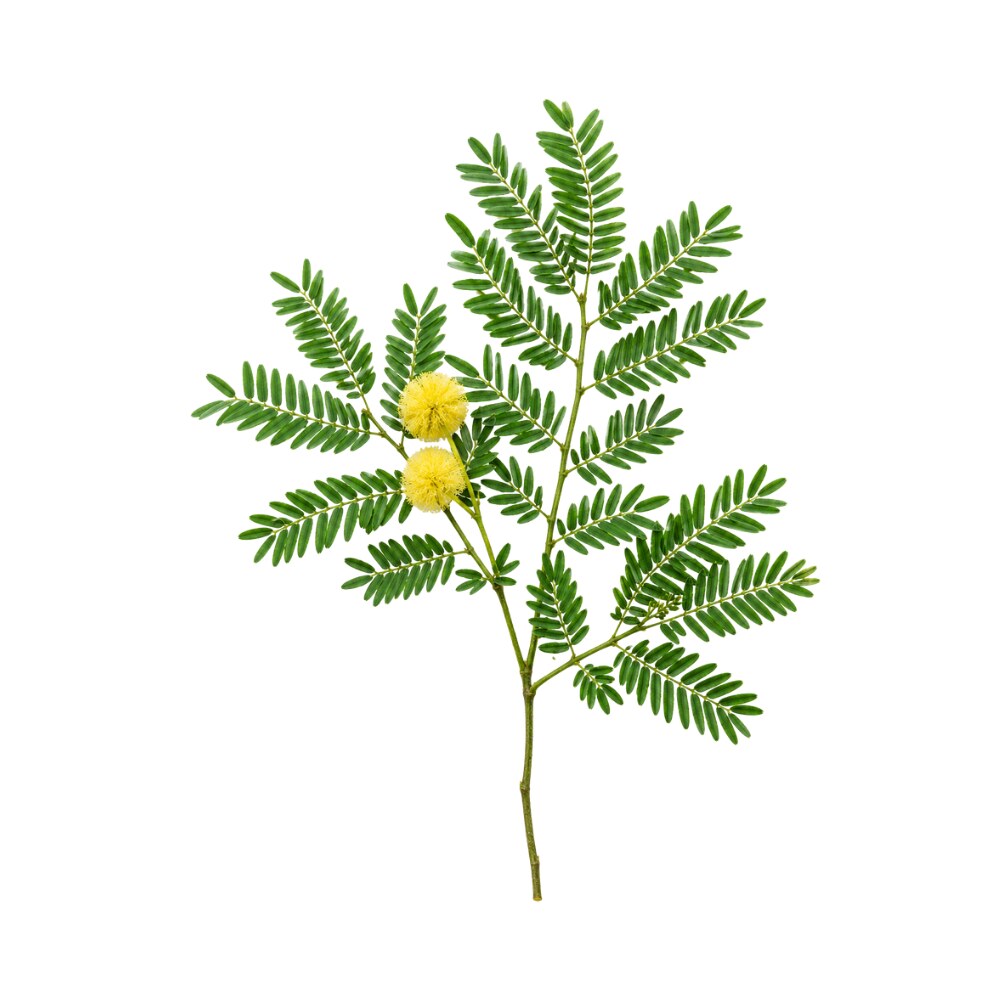
What Is Acacia?
Acacia is a large and diverse group of trees and shrubs in the legume family (Fabaceae). The genus is especially associated with Australia, Africa, the Middle East, and the Americas, though modern taxonomy has moved many former Acacia species into related genera such as Vachellia and Senegalia.
Because “acacia” refers to a broad group rather than a single medicinal plant, its uses and safety vary enormously. Some species are valued as food plants, some produce medicinal gums, some are used for tannin-rich bark, and others contain pharmacologically active alkaloids.
The best-known commercial product is gum arabic, traditionally derived from Acacia senegal and related species. Other species, especially Australian wattles, have been used for food, fiber, timber, dyes, and regional medicine.
How Is Acacia Used?
Acacia is used in different ways depending on the species and plant part.
Gum-producing species are used as demulcents, emulsifiers, food stabilizers, and soothing agents for irritated mucous membranes. Tannin-rich barks are used traditionally as astringents for diarrhea, wounds, inflamed gums, and skin irritation.
Some species produce edible seeds or pods, especially in Australian Aboriginal food traditions. These may be roasted, ground, or prepared as flour depending on the species.
Certain acacias also contain alkaloids in the bark or root bark, though this is highly species-dependent and should never be assumed across the genus.
Traditional Uses
Western Herbal Medicine
In Western herbal and folk medicine, acacia gum has been used primarily as a demulcent for irritated mucous membranes. It has appeared in lozenges, syrups, emulsions, and soothing preparations for the throat and digestive tract.
Tannin-rich acacia bark has also been used externally as an astringent wash and internally in traditional remedies for diarrhea or excess secretions.
African & Middle Eastern Traditions
Several African and Middle Eastern acacias have long been used as sources of gum, medicine, fodder, food, and practical materials.
Gum arabic has been especially important as a food, medicine, trade product, and pharmaceutical excipient.
Australian Aboriginal Traditions
Australian wattles have been widely used as food and medicine. Seeds from selected species were traditionally roasted, ground, and used as flour, while gums, bark, and leaves were used in regional remedies.
Because Australian acacias are highly diverse, traditional applications vary greatly between species and communities.
Indications
Acacia is primarily indicated according to the species and plant part used.
Common traditional indications include:
- Irritated throat
- Dry cough
- Digestive irritation
- Diarrhea
- Inflamed gums
- Minor wounds
- Skin irritation
- Nutritional support from edible seeds
- Demulcent support for mucous membranes
- Astringent support for excess secretions
The gum is mainly demulcent, while the bark is more astringent.
Botany
Acacia is a genus of trees and shrubs in the legume family (Fabaceae), within the mimosoid group. Members range from low subshrubs to tall trees; many of the Australian species carry flattened leaf-stalks (phyllodes) in place of true compound foliage, and thorns, small clustered flowers and legume seed pods are common across the genus.
The name “Acacia” no longer means what it once did — a distinction that matters when identifying the medicinal plant. The genus as traditionally drawn held over a thousand species, but it was split: the name Acacia was fixed on an Australian type and now covers mainly the Australian wattles, while the classic thorny African and Middle Eastern “acacias” were reassigned to Vachellia, and the Old- and New-World climbers and trees to Senegalia. True gum arabic and many of the folk-medicine “acacias” therefore sit botanically in Senegalia or Vachellia today, not in Acacia proper. Common names across the group include wattle, mimosa, thorntree and gum arabic tree.
Distribution
Acacia in the strict sense is overwhelmingly Australian — the largest plant genus in the Australian flora, spanning rainforest margins to arid and alpine zones, with a scatter of species reaching Southeast Asia, the Pacific and the western Indian Ocean. The gum-producing medicinal species, now placed in Senegalia and Vachellia, are instead African and Middle Eastern; Senegalia senegal (gum arabic), for example, ranges across the African Sahel.
Several Australian wattles are aggressive invaders where introduced — black wattle (Acacia mearnsii) is listed among the world’s worst invasive species for the dense stands it forms in South Africa and the Mediterranean — so the genus as a whole carries a mixed weed reputation, even though the African medicinal species generally do not.
Growing Conditions
- Woody perennial trees and shrubs of warm, dry to tropical climates; full sun. Roughly USDA zones 9–11 for commonly grown species, though hardiness varies widely across the genus.
- Full cultivation detail lives on the companion farm-wiki grow guide for Acacia (link to be added once that project’s public URL is confirmed).
Pharmacology & Research
“Acacia” is a genus of over a thousand species, and its research literature does not describe a single plant so much as a handful of distinct products — so the evidence has to be read species-by-species. The overwhelming majority of human data concerns gum arabic, the soluble-fibre exudate of Acacia (now Senegalia) senegal and A. seyal, which has been through more than a dozen small randomised trials as a dietary prebiotic and anti-inflammatory agent 1,7,8Reference 1Systematic reviewThe Efficacy of Gum Arabic in Managing Diseases: A Systematic Review of Evidence-Based Clinical Trials — systematic reviewView study →Reference 7RCTEffects of Gum Arabic ingestion on body mass index and body fat percentage in healthy adult females: randomised, placebo-controlled, double-blind trial — RCTView study →Reference 8RCTEffect of Gum Arabic (Acacia Senegal) supplementation on visceral adiposity index and blood pressure in patients with type 2 diabetes mellitus — randomised placebo-controlled trialView study →. A separate, smaller human signal attaches to Acacia catechu bark, whose catechin fraction is one half of the joint-pain nutraceutical “flavocoxid” 17,20Reference 17RCTA combination of Scutellaria baicalensis and Acacia catechu extracts for short-term symptomatic relief of joint discomfort associated with osteoarthritis of the knee — randomised controlled trialView study →Reference 20RCTThe safety of flavocoxid, a medical food, in the dietary management of knee osteoarthritis — randomised trialView study →. Everything else — the antimicrobial, anticancer and antidiabetic claims — rests on in vitro or animal work on tannin-rich barks (A. nilotica, A. mearnsii, A. catechu) and does not transfer to the gum. The single most important caveat is preparation: a result for a 30 g/day dose of purified gum fibre says nothing about an astringent bark decoction, and vice versa.
- Best-supported: gum arabic as a fermentable prebiotic that raises colonic butyrate 1,3,6Reference 1Systematic reviewThe Efficacy of Gum Arabic in Managing Diseases: A Systematic Review of Evidence-Based Clinical Trials — systematic reviewView study →Reference 3ReviewPrebiotic potential of gum Arabic for gut health — reviewView study →Reference 6Clinical trialEffect of Gum Arabic (Acacia senegal) on C-reactive protein level among sickle cell anemia patients — clinical trialView study →, and as a systemic anti-inflammatory that lowers C-reactive protein across several small RCTs 4,5,6Reference 4RCTGum Arabic Reduces C-Reactive Protein in Chronic Kidney Disease Patients without Affecting Urea or Indoxyl Sulfate Levels — randomised trialView study →Reference 5RCTGum Arabic Augmented Total Antioxidant Capacity and Reduced C-Reactive Protein among Haemodialysis Patients in a Phase II Trial — randomised trialView study →Reference 6Clinical trialEffect of Gum Arabic (Acacia senegal) on C-reactive protein level among sickle cell anemia patients — clinical trialView study →.
- Emerging, worth watching: modest reductions in BMI, visceral adiposity and blood pressure with 30 g/day gum arabic 7,8Reference 7RCTEffects of Gum Arabic ingestion on body mass index and body fat percentage in healthy adult females: randomised, placebo-controlled, double-blind trial — RCTView study →Reference 8RCTEffect of Gum Arabic (Acacia Senegal) supplementation on visceral adiposity index and blood pressure in patients with type 2 diabetes mellitus — randomised placebo-controlled trialView study →; joint-pain relief from an A. catechu–Scutellaria combination 17Reference 17RCTA combination of Scutellaria baicalensis and Acacia catechu extracts for short-term symptomatic relief of joint discomfort associated with osteoarthritis of the knee — randomised controlled trialView study →.
- Mechanistically thin: antimicrobial and anticancer claims are in vitro only 25,26Reference 25In vitroAcacia catechu Ethanolic Seed Extract Triggers Apoptosis of SCC-25 Cells — in vitroView study →Reference 26In vitroAntimicrobial Efficacy of Acacia nilotica, Murraya koenigii, Eucalyptus hybrid, Psidium guajava extracts on Fusobacterium nucleatum and Porphyromonas gingivalis — in vitroView study →, and rest on tannin-rich bark extracts, not the medicinal gum.
- The caveat: almost all human evidence is for gum arabic (a food fibre), not for the astringent bark, root bark or leaf; there is no standardised whole-”acacia” preparation and no dedicated glycaemic or renal-function RCT.
1. Prebiotic & gut microbiota
Gum arabic is a large, branched arabinogalactan-protein complex that humans cannot digest but colonic bacteria ferment slowly and distally, where most chronic colonic disease originates 6Reference 6Clinical trialEffect of Gum Arabic (Acacia senegal) on C-reactive protein level among sickle cell anemia patients — clinical trialView study →. In vitro gut-simulator models show it selectively raises Bifidobacteria and Faecalibacterium prausnitzii and boosts short-chain fatty acids, particularly propionate and butyrate 6Reference 6Clinical trialEffect of Gum Arabic (Acacia senegal) on C-reactive protein level among sickle cell anemia patients — clinical trialView study →. A systematic review of 29 clinical trials concluded that ingested gum arabic reliably behaves as a prebiotic and alters biochemical, inflammatory and adiposity markers downstream of that fermentation 1Reference 1Systematic reviewThe Efficacy of Gum Arabic in Managing Diseases: A Systematic Review of Evidence-Based Clinical Trials — systematic reviewView study →. This is the mechanistic root of most of gum arabic’s other effects — the anti-inflammatory and metabolic signals below are largely butyrate-mediated consequences of this fermentation 3Reference 3ReviewPrebiotic potential of gum Arabic for gut health — reviewView study →.
Gap: the microbiome shifts are best characterised in vitro and in animals; human data are largely indirect (downstream markers) rather than longitudinal microbiome sequencing.
2. Anti-inflammatory
The most consistent human finding for gum arabic is a drop in C-reactive protein. In a randomised dose-ranging trial, 10–40 g/day for four weeks lowered CRP in chronic-kidney-disease patients even at the lowest dose 4Reference 4RCTGum Arabic Reduces C-Reactive Protein in Chronic Kidney Disease Patients without Affecting Urea or Indoxyl Sulfate Levels — randomised trialView study →. A phase II trial in haemodialysis patients (30 g/day, 12 weeks) reduced both CRP and the oxidative marker malondialdehyde while raising total antioxidant capacity 5Reference 5RCTGum Arabic Augmented Total Antioxidant Capacity and Reduced C-Reactive Protein among Haemodialysis Patients in a Phase II Trial — randomised trialView study →, and a trial in sickle-cell anaemia found the same CRP reduction over 12 weeks 6Reference 6Clinical trialEffect of Gum Arabic (Acacia senegal) on C-reactive protein level among sickle cell anemia patients — clinical trialView study →. The proposed mechanism is butyrate produced by colonic fermentation acting on systemic inflammatory signalling; separately, the A. catechu catechin fraction suppresses NF-κB, COX-2 and 5-LOX in stimulated macrophages 19Reference 19In vitroFlavocoxid, a dual inhibitor of cyclooxygenase and 5-lipoxygenase, blunts pro-inflammatory phenotype activation in endotoxin-stimulated macrophages — in vitroView study →. Effects are modest and measured on biomarkers, not clinical endpoints.
Gap: all trials are small and biomarker-based (CRP), with no hard clinical outcomes; the effect is specific to ingested gum arabic, not to bark preparations.
3. Metabolic & adiposity
Two randomised, placebo-controlled trials from the same group report modest anthropometric effects. In 120 healthy women, 30 g/day gum arabic for six weeks reduced BMI by 0.32 and body-fat percentage by 2.2 points versus pectin placebo 7Reference 7RCTEffects of Gum Arabic ingestion on body mass index and body fat percentage in healthy adult females: randomised, placebo-controlled, double-blind trial — RCTView study →. In 91 type-2 diabetic patients, 30 g/day for three months lowered the visceral adiposity index by ~24% and systolic blood pressure by ~7.6%, though waist-to-hip ratio was unchanged 8Reference 8RCTEffect of Gum Arabic (Acacia Senegal) supplementation on visceral adiposity index and blood pressure in patients with type 2 diabetes mellitus — randomised placebo-controlled trialView study →. A broader systematic review of fibre supplements is more sober, judging gum arabic’s weight effect real but small and “not considerable” in clinical terms without accompanying dietary change 9Reference 9Systematic reviewAre Isolated and Complex Fiber Supplements Good Choices for Weight Management? A Systematic Review — systematic reviewView study →.
Gap: the positive trials share a research group and rely on the viscous-fibre satiety mechanism common to all soluble fibres; independent replication and larger samples are lacking.
4. Antioxidant
Antioxidant activity spans all three evidence tiers but is strongest in vitro. Condensed tannins and flavan-3-ols from A. mearnsii (black wattle) bark are potent radical scavengers, which is what motivated the wattle-tannin supplement industry 23Reference 23In vitroTannins from Acacia mearnsii De WildView study →. In vivo, gum arabic reduced oxidative and nitrosative stress markers in the gut of CKD mice 11Reference 11AnimalGum arabic reduces inflammation, oxidative and nitrosative stress in the gastrointestinal tract of mice with chronic kidney disease — mouse, in vivoView study →, and in humans the haemodialysis trial showed a significant rise in total antioxidant capacity with 30 g/day 5Reference 5RCTGum Arabic Augmented Total Antioxidant Capacity and Reduced C-Reactive Protein among Haemodialysis Patients in a Phase II Trial — randomised trialView study →. The likely contributors are the polyphenols — gallic acid, ellagic acid and the flavonols quercetin and kaempferol — rather than the gum polysaccharide itself.
Gap: the strongest antioxidant data are in vitro on bark tannins, while the human data are for the gum — two different preparations, so the human antioxidant effect is not cleanly attributable to the polyphenols.
5. Dental (antiplaque & gingivitis)
Gum arabic has a small but genuine oral-health literature. A double-blind RCT (n=60) found that gum arabic powder applied twice daily, after scaling, significantly reduced plaque and gingival index scores and gingival-crevicular IL-1β over 60 days versus cellulose placebo 14Reference 14RCTEffect of Gum Arabic on plaque-induced gingivitis: A randomised controlled trial — RCTView study →. A systematic review of medicated chewing gums lists acacia among ingredients with a positive effect on plaque scores, though it rates the overall evidence weaker than for chlorhexidine 15Reference 15Systematic reviewThe effect of medicated, sugar-free chewing gum on plaque and clinical parameters of gingival inflammation: a systematic review — systematic reviewView study →. The earliest signal is a 1991 blind crossover of Acacia arabica chewing gum that found lower plaque deposition than sugar-free gum 16Reference 16RCTThe finding of antiplaque features in Acacia Arabica type of chewing gum — randomised crossover clinical trialView study →.
Gap: the modern RCT is single-centre and small; effects are on indices, not on hard periodontal outcomes, and the antiplaque mechanism (prebiotic vs. tannin astringency) is unresolved.
6. Renal support (CKD adjunct)
Gum arabic is a traditional Arabian remedy for renal failure, and the modern data are genuinely mixed — a useful corrective to the traditional claim. Randomised trials in CKD and haemodialysis patients consistently lower inflammatory markers (CRP) but show no effect on serum urea or creatinine 4Reference 4RCTGum Arabic Reduces C-Reactive Protein in Chronic Kidney Disease Patients without Affecting Urea or Indoxyl Sulfate Levels — randomised trialView study →, and one trial recorded a small drop in serum sodium 4Reference 4RCTGum Arabic Reduces C-Reactive Protein in Chronic Kidney Disease Patients without Affecting Urea or Indoxyl Sulfate Levels — randomised trialView study →. The nephroprotective case is far stronger in animals: gum arabic markedly attenuated renal dysfunction and glomerular/tubular lesions in adenine-induced chronic renal failure in rats 10Reference 10AnimalEffects of Gum Arabic in rats with adenine-induced chronic renal failure — animal model, in vivoView study → and reduced gut inflammation in CKD mice 11Reference 11AnimalGum arabic reduces inflammation, oxidative and nitrosative stress in the gastrointestinal tract of mice with chronic kidney disease — mouse, in vivoView study →, effects a 2024 narrative review attributes to its antioxidant and anti-inflammatory actions 12Reference 12ReviewTherapeutic Potential of Gum Arabic (Acacia senegal) in Chronic Kidney Disease Management: A Narrative Review — reviewView study →.
Gap: the headline traditional claim — that it improves kidney function — is not supported by human trials, which show unchanged urea and creatinine; the benefit is anti-inflammatory, not a restoration of filtration.
7. Osteoarthritis (joint)
Acacia catechu bark is the source of the catechin half of “flavocoxid” (marketed as Limbrel), a combination with Scutellaria baicalensis baicalin. A randomised controlled trial (n=79) of the UP446 blend versus naproxen over one week found significant reductions in knee pain and stiffness and improved range of motion 17Reference 17RCTA combination of Scutellaria baicalensis and Acacia catechu extracts for short-term symptomatic relief of joint discomfort associated with osteoarthritis of the knee — randomised controlled trialView study →, and a 12-week safety RCT found it well tolerated 20Reference 20RCTThe safety of flavocoxid, a medical food, in the dietary management of knee osteoarthritis — randomised trialView study →. The mechanism is dual COX/5-LOX inhibition demonstrated in macrophages 18,19Reference 18ReviewFlavocoxid, a nutraceutical approach to blunt inflammatory conditions — reviewView study →Reference 19In vitroFlavocoxid, a dual inhibitor of cyclooxygenase and 5-lipoxygenase, blunts pro-inflammatory phenotype activation in endotoxin-stimulated macrophages — in vitroView study →. Two constraints cap this: the product is a combination, so the effect cannot be attributed to acacia alone, and flavocoxid carries a documented idiosyncratic liver-injury signal (see Safety) 21Reference 21ObservationalAcute liver injury due to flavocoxid (Limbrel), a medical food for osteoarthritis: a case series — observational case seriesView study →.
Gap: no trial isolates A. catechu from the Scutellaria co-ingredient; the hepatotoxicity case series and the product’s later regulatory troubles mean the benefit-risk balance is unfavourable at face value.
8. Antidiabetic & glycaemic
The glucose-lowering claim is preclinical. In alloxan-induced diabetic rats, gum arabic lowered serum glucose, raised insulin and improved pancreatic islet structure over 21 days 13Reference 13AnimalArabic gum ameliorates systemic modulation in Alloxan monohydrate-induced diabetic rats — rat, in vivoView study →. Mechanistically, polyphenol fractions from A. mearnsii bark inhibit the carbohydrate-digesting enzymes catechin-rich α-glucosidase and α-amylase in vitro, which would blunt post-meal glucose spikes 22Reference 22In vitroPolyphenols isolated from Acacia mearnsii bark with anti-inflammatory and carbolytic enzyme inhibitory activities — in vitroView study →. The only human hint is indirect — the visceral-adiposity trial was conducted in type-2 diabetics but measured adiposity and blood pressure, not glycaemic control, as its endpoints 8Reference 8RCTEffect of Gum Arabic (Acacia Senegal) supplementation on visceral adiposity index and blood pressure in patients with type 2 diabetes mellitus — randomised placebo-controlled trialView study →.
Gap: no human trial has measured fasting glucose or HbA1c as a primary outcome; the enzyme-inhibition data are in vitro on a bark fraction, not the ingested gum.
9. Antimicrobial
Tannin-rich acacia extracts inhibit bacteria in the dish, consistent with the traditional astringent use of the bark. Ethanolic A. nilotica leaf extract inhibited the periodontal pathogens Fusobacterium nucleatum and Porphyromonas gingivalis 26Reference 26In vitroAntimicrobial Efficacy of Acacia nilotica, Murraya koenigii, Eucalyptus hybrid, Psidium guajava extracts on Fusobacterium nucleatum and Porphyromonas gingivalis — in vitroView study →, and earlier work documented antibacterial activity of A. nilotica against a range of organisms 27Reference 27In vitroAntimicrobial activity of Acacia nilotica (L.) Willd. ex Del. var. nilotica — in vitroView study →. The activity tracks the condensed-tannin and gallic acid content, which precipitates microbial proteins.
Gap: all data are in vitro against reference strains; there are no clinical antimicrobial trials, and activity is species- and extract-specific (bark/leaf, not gum).
10. Anticancer
The anticancer evidence is a single cell-line study: an ethanolic A. catechu seed extract triggered apoptosis in SCC-25 human oral squamous carcinoma cells at 25–50 µg/mL, upregulating caspase-8/9, Bax and cytochrome c while downregulating Bcl-2 25Reference 25In vitroAcacia catechu Ethanolic Seed Extract Triggers Apoptosis of SCC-25 Cells — in vitroView study →. This is a mechanistic starting point, not evidence of anticancer activity in a living system.
Gap: one in vitro study, one cell line, no animal or human follow-up — the lowest tier of evidence.
Mechanisms
| Mechanism | Drives | Key compounds |
|---|---|---|
| Colonic fermentation → SCFA / butyrate ↑ | prebioticanti-inflammatorysystemic CRP ↓ | arabinogalactan polysaccharides, butyrate |
| NF-κB ↓, COX-2 & 5-LOX ↓ | anti-inflammatoryjoint | catechin |
| Radical scavenging (TAC ↑, MDA ↓) | antioxidantrenalhepatoprotective | gallic acid, ellagic acid, quercetin |
| α-glucosidase / α-amylase inhibition | antidiabetic | condensed tannins, kaempferol |
| Tannin astringency / protein precipitation | antimicrobialastringent (traditional) | condensed tannins (proanthocyanidins) |
Clinical trials
Registered human trials exist almost entirely for gum arabic as a dietary fibre — ClinicalTrials.gov lists ~80 studies under “gum arabic” (many using it as a food additive or excipient rather than a therapeutic), only three naming Acacia catechu and none Acacia mearnsii; no registered trial studies acacia bark, root bark or leaf as a herbal medicine.
| Completed | Planned | Terminated | Preclinical |
|---|---|---|---|
| ~52 | ~13 | 1 | ~50 |
Last checked: July 2026.
Phytochemistry
Acacia is chemically defined by its astringent polyphenols. Tannin-rich barks supply condensed tannins (proanthocyanidins) alongside the flavan-3-ols catechin and epicatechin and the hydrolysable-tannin building blocks gallic acid and ellagic acid, with flavonols such as quercetin and kaempferol also widely reported. Gum-producing species (the source of gum arabic) instead accumulate complex arabinogalactan polysaccharides, while a minority of species carry the amine tyramine and, in bark or root bark, indole alkaloids such as N,N-DMT.
Constituent Summary
Acacia is a vast genus, and its chemistry differs enormously between species and plant parts; constituent profiles should never be assumed across the genus. No single quantitative profile applies, so amounts are given as ranges only where a specific species has been measured and otherwise as No Data. Figures vary with species, part and origin. The middle column gives the constituent type.
Tannin1 compound1 with data
Flavanol2 compounds2 with data
Polysaccharide1 compound1 with data
Amine1 compound1 with data
Indole alkaloid1 compound1 with data
Dosage
Dosage depends entirely on species, plant part, and preparation — there is no single “acacia” dose. In research, almost all doses are for gum arabic given as the isolated soluble-fibre powder (not a marker-standardised extract of dried herb), so a whole-herb back-conversion is not meaningful and the equivalent column is left blank.
Research doses
| Indication | Preparation | Dose | Est. dried-herb equivalent | Source |
|---|---|---|---|---|
| Anti-inflammatory / renal (CRP↓) | Gum arabic powder | 10–40 g/day, 4 weeks | — (gum arabic is itself the whole product) | 4Reference 4RCTGum Arabic Reduces C-Reactive Protein in Chronic Kidney Disease Patients without Affecting Urea or Indoxyl Sulfate Levels — randomised trialView study → |
| Antioxidant / anti-inflammatory (dialysis) | Gum arabic powder | 30 g/day, 12 weeks | — | 5Reference 5RCTGum Arabic Augmented Total Antioxidant Capacity and Reduced C-Reactive Protein among Haemodialysis Patients in a Phase II Trial — randomised trialView study → |
| Metabolic (BMI, body fat) | Gum arabic powder | 30 g/day, 6 weeks | — | 7Reference 7RCTEffects of Gum Arabic ingestion on body mass index and body fat percentage in healthy adult females: randomised, placebo-controlled, double-blind trial — RCTView study → |
| Metabolic (visceral adiposity, BP) | Gum arabic powder | 30 g/day, 3 months | — | 8Reference 8RCTEffect of Gum Arabic (Acacia Senegal) supplementation on visceral adiposity index and blood pressure in patients with type 2 diabetes mellitus — randomised placebo-controlled trialView study → |
| Dental (plaque, gingivitis) | Gum arabic powder, topical | applied to gingiva 2×/day, 60 days | — | 14Reference 14RCTEffect of Gum Arabic on plaque-induced gingivitis: A randomised controlled trial — RCTView study → |
| Osteoarthritis (joint) | UP446 (A. catechu + Scutellaria extract) | 500 mg/day, ~1 week | not applicable (proprietary combination extract) | 17Reference 17RCTA combination of Scutellaria baicalensis and Acacia catechu extracts for short-term symptomatic relief of joint discomfort associated with osteoarthritis of the knee — randomised controlled trialView study → |
The dried-herb equivalent is left blank throughout: gum arabic is administered as the isolated gum rather than a standardised extract of dried herb, and UP446 is a proprietary combination extract with no stated marker %, so no ratio is invented.
Traditional Dosage
Traditional practice uses whole-herb preparations — chiefly the soothing gum and the astringent bark — in amounts that differ entirely from the research fibre doses above; keep the two separate.
| System | Preparation | Dose |
|---|---|---|
| Western herbal / folk | Gum arabic (mucilage) in lozenges, syrups, demulcent preparations | soothing demulcent, food/lozenge amounts as needed |
| Western herbal / folk | Bark decoction (astringent wash or internal remedy) | species-specific; short-term only |
| African / Middle Eastern | Gum arabic as food, medicine and excipient | dietary amounts |
Because the genus is so variable, dosing should be species-specific rather than generalized across all acacias.
Safety & Pregnancy
Acacia safety cannot be generalised across a thousand-species genus: the food-grade gum arabic is a well-tolerated dietary fibre, but tannin-rich barks and alkaloid- or cyanogen-bearing species make correct species identification essential before any internal use.
- Identify the species first. The genus spans over a thousand species — some food-grade, others carrying toxic alkaloids or cyanogenic compounds; never ingest unidentified material.
- Liver-injury signal (A. catechu). The flavocoxid combination product has caused clinically significant, though reversible, drug-induced liver injury 21Reference 21ObservationalAcute liver injury due to flavocoxid (Limbrel), a medical food for osteoarthritis: a case series — observational case seriesView study →.
- Tannin-rich bark. Astringent barks may irritate the gut, add to constipation, and impair iron/mineral and drug absorption.
- Tyramine–MAOI (species-dependent). Tyramine-bearing species could theoretically interact with MAOI antidepressants.
- Gum arabic well tolerated. Only transient first-week bloating, nausea and mild diarrhoea reported at 30 g/day 7Reference 7RCTEffects of Gum Arabic ingestion on body mass index and body fat percentage in healthy adult females: randomised, placebo-controlled, double-blind trial — RCTView study →.
Full safety & interactions detail
Acacia safety cannot be generalised: “acacia” spans over a thousand species, some food-grade and some containing toxic alkaloids or cyanogenic compounds, so correct species identification is essential before any internal use. The best-studied preparation, gum arabic (Acacia/Senegalia senegal), is a well-tolerated dietary fibre — the main adverse effects reported in trials were transient first-week bloating, nausea and mild diarrhoea at 30 g/day 7Reference 7RCTEffects of Gum Arabic ingestion on body mass index and body fat percentage in healthy adult females: randomised, placebo-controlled, double-blind trial — RCTView study →.
Tannin-rich barks are astringent and may irritate the digestive tract or contribute to constipation with excessive use; as with other high-tannin herbs they can also impair the absorption of iron and other minerals and bind alkaloid or protein drugs in the gut. Tyramine-containing species could theoretically interact with MAOI antidepressants (dietary tyramine plus MAO inhibition raises the risk of a hypertensive reaction) — this is species-dependent, not a genus-wide property.
A distinct and important signal comes from Acacia catechu: the flavocoxid combination product (catechu catechins plus Scutellaria baicalin, marketed as Limbrel) has caused clinically significant, though reversible, drug-induced liver injury in a documented case series 21Reference 21ObservationalAcute liver injury due to flavocoxid (Limbrel), a medical food for osteoarthritis: a case series — observational case seriesView study →. Anyone using an A. catechu joint-support product should be aware of this.
Do not ingest unidentified acacia bark, root bark, seeds, or foliage. Internal use should be limited to properly identified species with an established food or medicinal history.
Scope note: no systematic drug-interaction study of gum arabic or acacia bark exists; the tyramine–MAOI concern is theoretical and species-dependent, and the only demonstrated interaction signal is the flavocoxid hepatotoxicity above. Absence of other interaction reports is not evidence of safety.
No controlled studies assess medicinal acacia bark, root bark or leaf preparations in pregnancy or lactation. Gum arabic is a long-standing food additive considered generally safe in dietary amounts, but it has not been evaluated at therapeutic doses in pregnant or breastfeeding women, and tannin-rich or alkaloid-bearing species should be avoided internally in the absence of any safety data.
References
- Al-Jubori, Y., Ahmed, N. T. B., Albusaidi, R., et al. (2023). The Efficacy of Gum Arabic in Managing Diseases: A Systematic Review of Evidence-Based Clinical Trials — systematic review. Biomolecules. https://pubmed.ncbi.nlm.nih.gov/36671523/
- Duysburgh, C., Govaert, M., Guillemet, D., & Marzorati, M. (2024). Co-Supplementation of Baobab Fiber and Arabic Gum Synergistically Modulates the In Vitro Human Gut Microbiome — in vitro. Nutrients. https://pubmed.ncbi.nlm.nih.gov/38892504/
- Elnour, A. A. M., Abdurahman, N. H., Musa, K. H., & Rasheed, Z. (2023). Prebiotic potential of gum Arabic for gut health — review. Int J Health Sci (Qassim). https://pubmed.ncbi.nlm.nih.gov/37929233/
- Elamin, S., Alkhawaja, M. J., Bukhamsin, A. Y., et al. (2017). Gum Arabic Reduces C-Reactive Protein in Chronic Kidney Disease Patients without Affecting Urea or Indoxyl Sulfate Levels — randomised trial. Int J Nephrol. https://pubmed.ncbi.nlm.nih.gov/28589039/
- Ali, N. E., Kaddam, L. A., Alkarib, S. Y., et al. (2020). Gum Arabic Augmented Total Antioxidant Capacity and Reduced C-Reactive Protein among Haemodialysis Patients in a Phase II Trial — randomised trial. Int J Nephrol. https://pubmed.ncbi.nlm.nih.gov/32328307/
- Kaddam, L. A., & Kaddam, A. S. (2020). Effect of Gum Arabic (Acacia senegal) on C-reactive protein level among sickle cell anemia patients — clinical trial. BMC Res Notes. https://pubmed.ncbi.nlm.nih.gov/32188508/
- Babiker, R., Merghani, T. H., Elmusharaf, K., et al. (2012). Effects of Gum Arabic ingestion on body mass index and body fat percentage in healthy adult females: randomised, placebo-controlled, double-blind trial — RCT. Nutr J. https://pubmed.ncbi.nlm.nih.gov/23241359/
- Babiker, R., Elmusharaf, K., Keogh, M. B., & Saeed, A. M. (2018). Effect of Gum Arabic (Acacia Senegal) supplementation on visceral adiposity index and blood pressure in patients with type 2 diabetes mellitus — randomised placebo-controlled trial. Lipids Health Dis. https://pubmed.ncbi.nlm.nih.gov/29558953/
- Namazi, N., Larijani, B., & Azadbakht, L. (2018). Are Isolated and Complex Fiber Supplements Good Choices for Weight Management? A Systematic Review — systematic review. Arch Iran Med. https://pubmed.ncbi.nlm.nih.gov/29480736/
- Ali, B. H., Al-Salam, S., Al Husseni, I., et al. (2010). Effects of Gum Arabic in rats with adenine-induced chronic renal failure — animal model, in vivo. Exp Biol Med (Maywood). https://pubmed.ncbi.nlm.nih.gov/20404056/
- Ali, B. H., Al Za’abi, M., Al Suleimani, Y., et al. (2020). Gum arabic reduces inflammation, oxidative and nitrosative stress in the gastrointestinal tract of mice with chronic kidney disease — mouse, in vivo. Naunyn Schmiedebergs Arch Pharmacol. https://pubmed.ncbi.nlm.nih.gov/32157347/
- Alobaidi, S. (2024). Therapeutic Potential of Gum Arabic (Acacia senegal) in Chronic Kidney Disease Management: A Narrative Review — review. J Clin Med. https://pubmed.ncbi.nlm.nih.gov/39407837/
- Ibrahim, R. M., Abdelhafez, H. M., El-Shamy, S. A. E., et al. (2023). Arabic gum ameliorates systemic modulation in Alloxan monohydrate-induced diabetic rats — rat, in vivo. Sci Rep. https://pubmed.ncbi.nlm.nih.gov/36973339/
- Gafar, A. M., Ramadan, A. M., ElSaid, N. A., & Nurelhuda, N. M. (2022). Effect of Gum Arabic on plaque-induced gingivitis: A randomised controlled trial — RCT. Saudi Dent J. https://pubmed.ncbi.nlm.nih.gov/36092515/
- Keukenmeester, R. S., Slot, D. E., Putt, M. S., & Van der Weijden, G. A. (2014). The effect of medicated, sugar-free chewing gum on plaque and clinical parameters of gingival inflammation: a systematic review — systematic review. Int J Dent Hyg. https://pubmed.ncbi.nlm.nih.gov/23790138/
- Gazi, M. I. (1991). The finding of antiplaque features in Acacia Arabica type of chewing gum — randomised crossover clinical trial. J Clin Periodontol. https://pubmed.ncbi.nlm.nih.gov/2045522/
- Arjmandi, B. H., Ormsbee, L. T., Elam, M. L., et al. (2014). A combination of Scutellaria baicalensis and Acacia catechu extracts for short-term symptomatic relief of joint discomfort associated with osteoarthritis of the knee — randomised controlled trial. J Med Food. https://pubmed.ncbi.nlm.nih.gov/24611484/
- Bitto, A., Squadrito, F., Irrera, N., et al. (2014). Flavocoxid, a nutraceutical approach to blunt inflammatory conditions — review. Mediators Inflamm. https://pubmed.ncbi.nlm.nih.gov/25242871/
- Altavilla, D., Squadrito, F., Bitto, A., et al. (2009). Flavocoxid, a dual inhibitor of cyclooxygenase and 5-lipoxygenase, blunts pro-inflammatory phenotype activation in endotoxin-stimulated macrophages — in vitro. Br J Pharmacol. https://pubmed.ncbi.nlm.nih.gov/19681869/
- Morgan, S. L., Baggott, J. E., Moreland, L., et al. (2009). The safety of flavocoxid, a medical food, in the dietary management of knee osteoarthritis — randomised trial. J Med Food. https://pubmed.ncbi.nlm.nih.gov/19857081/
- Chalasani, N., Vuppalanchi, R., Navarro, V., et al. (2012). Acute liver injury due to flavocoxid (Limbrel), a medical food for osteoarthritis: a case series — observational case series. Ann Intern Med. https://pubmed.ncbi.nlm.nih.gov/22711078/
- Xiong, J., Grace, M. H., Esposito, D., et al. (2017). Polyphenols isolated from Acacia mearnsii bark with anti-inflammatory and carbolytic enzyme inhibitory activities — in vitro. Chin J Nat Med. https://pubmed.ncbi.nlm.nih.gov/29329608/
- Ogawa, S., & Yazaki, Y. (2018). Tannins from Acacia mearnsii De Wild. Bark: Tannin Determination and Biological Activities — review, in vitro. Molecules. https://pubmed.ncbi.nlm.nih.gov/29621196/
- Ikarashi, N., Sato, W., Toda, T., et al. (2012). Inhibitory Effect of Polyphenol-Rich Fraction from the Bark of Acacia mearnsii on Itching Associated with Allergic Dermatitis — mouse, in vivo. Evid Based Complement Alternat Med. https://pubmed.ncbi.nlm.nih.gov/22315629/
- Lakshmi, T., Ezhilarasan, D., Nagaich, U., & Vijayaragavan, R. (2017). Acacia catechu Ethanolic Seed Extract Triggers Apoptosis of SCC-25 Cells — in vitro. Pharmacogn Mag. https://pubmed.ncbi.nlm.nih.gov/29142391/
- Chandra Shekar, B. R., Nagarajappa, R., Jain, R., et al. (2018). Antimicrobial Efficacy of Acacia nilotica, Murraya koenigii, Eucalyptus hybrid, Psidium guajava extracts on Fusobacterium nucleatum and Porphyromonas gingivalis — in vitro. Indian J Dent Res. https://pubmed.ncbi.nlm.nih.gov/30409946/
- Abd el Nabi, O. M., Reisinger, E. C., Reinthaler, F. F., et al. (1992). Antimicrobial activity of Acacia nilotica (L.) Willd. ex Del. var. nilotica — in vitro. J Ethnopharmacol. https://pubmed.ncbi.nlm.nih.gov/1453705/