
Materia Medica
Arjuna
Terminalia arjuna
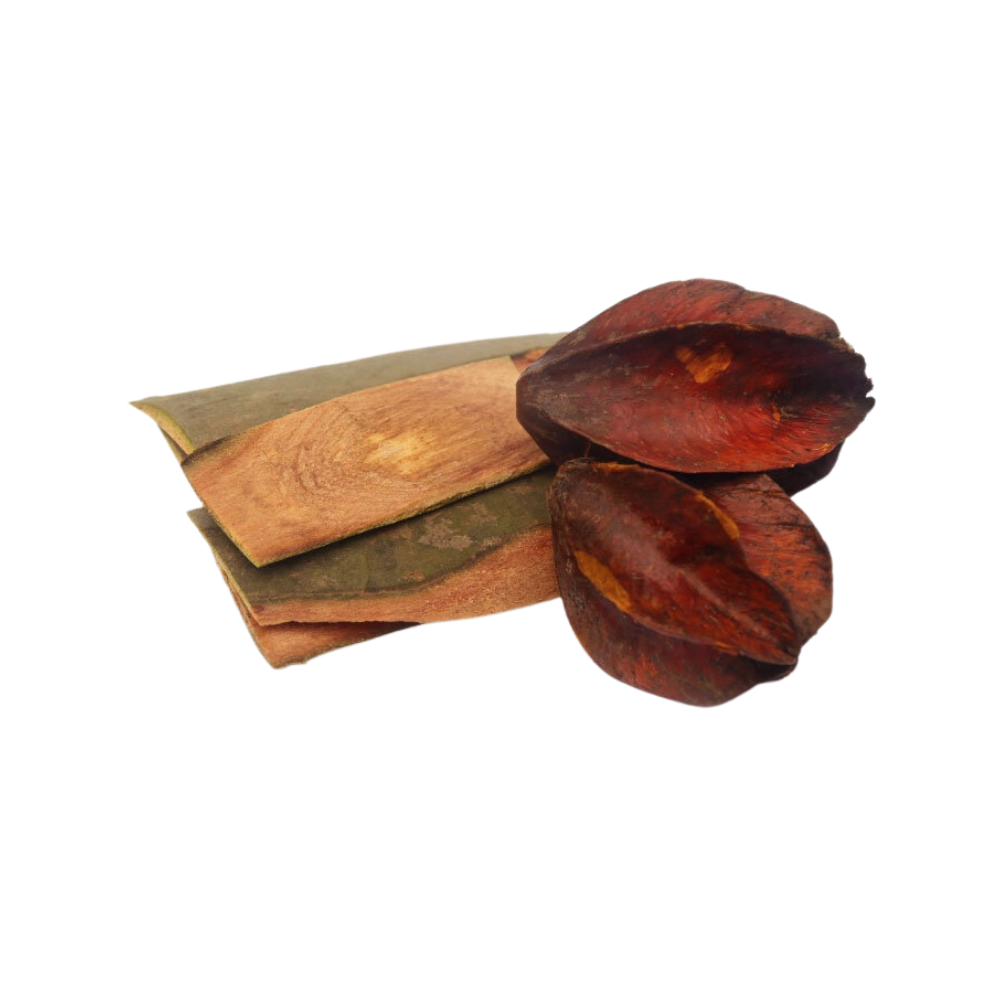
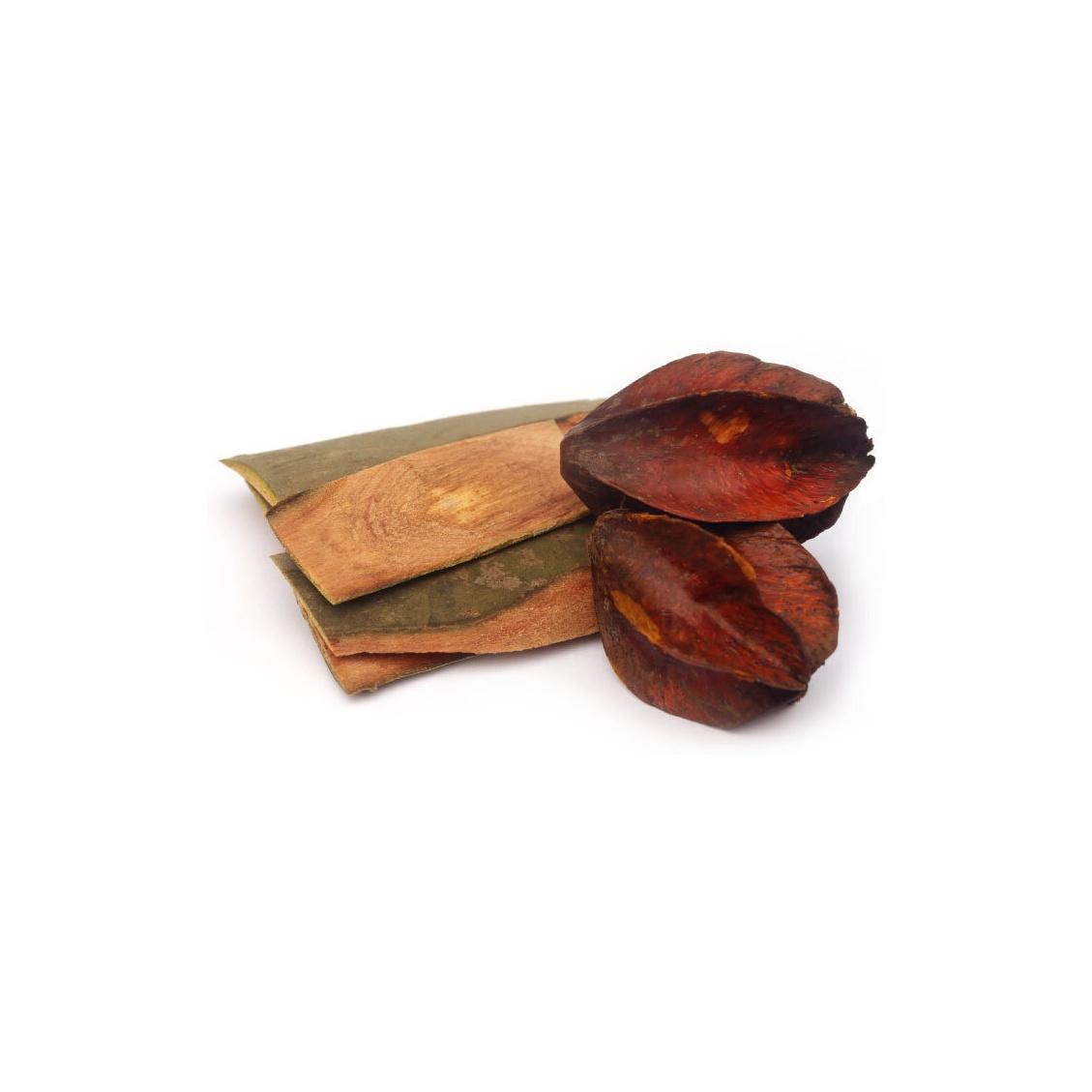
Arjuna (Terminalia arjuna) — a renowned Ayurvedic cardiotonic, its bark used to strengthen and protect the heart in cardiac debility and old age.
What is Arjuna?
What is Arjuna Used For?
Traditional Uses of Arjuna
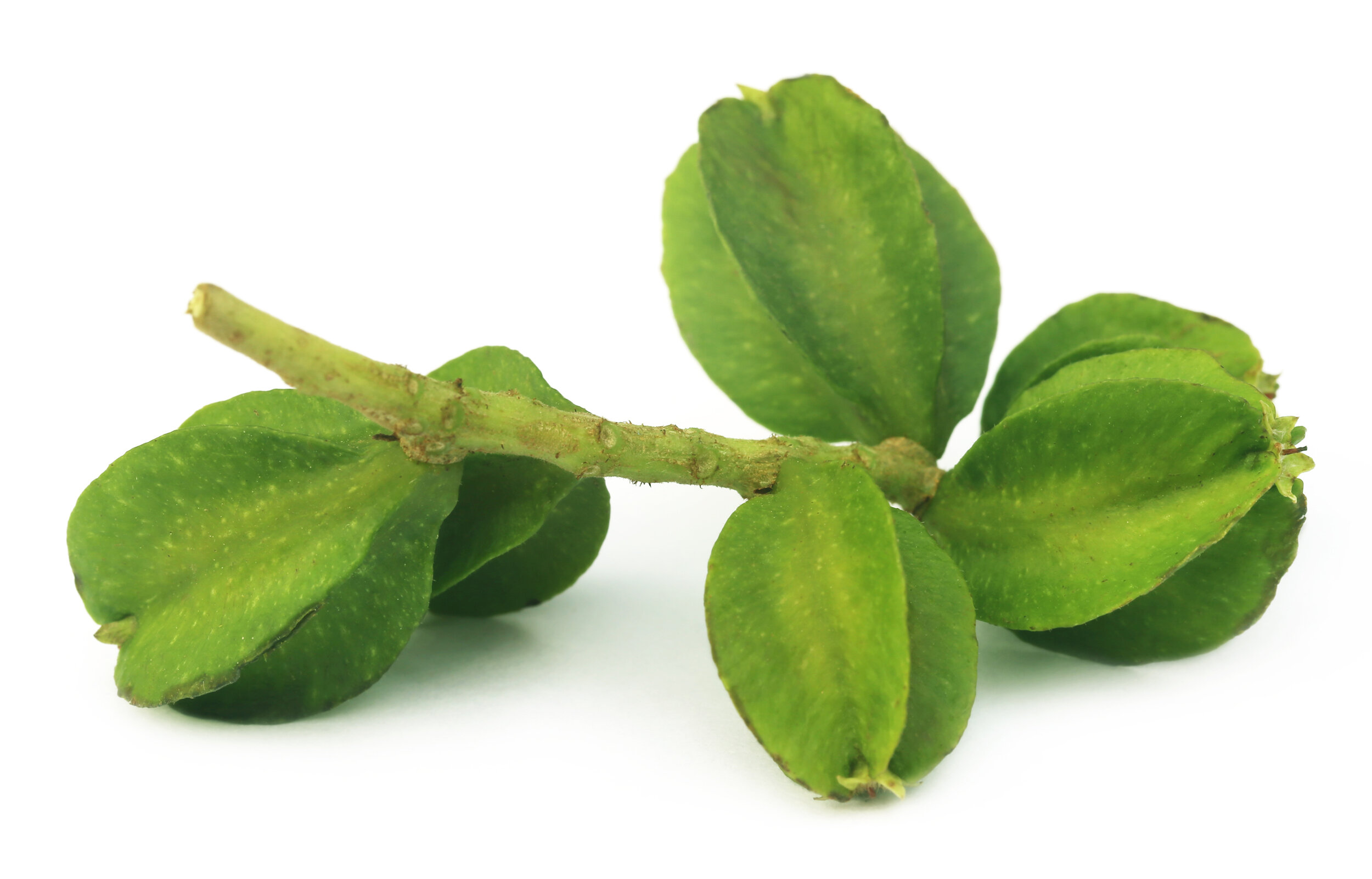
Arjuna has a long history of use in India where the herb originates. The bark of the tree is popular as a cardiotonic used for cardiac debility and in old age to protect the heart.
Herb Details: Arjuna
Botany
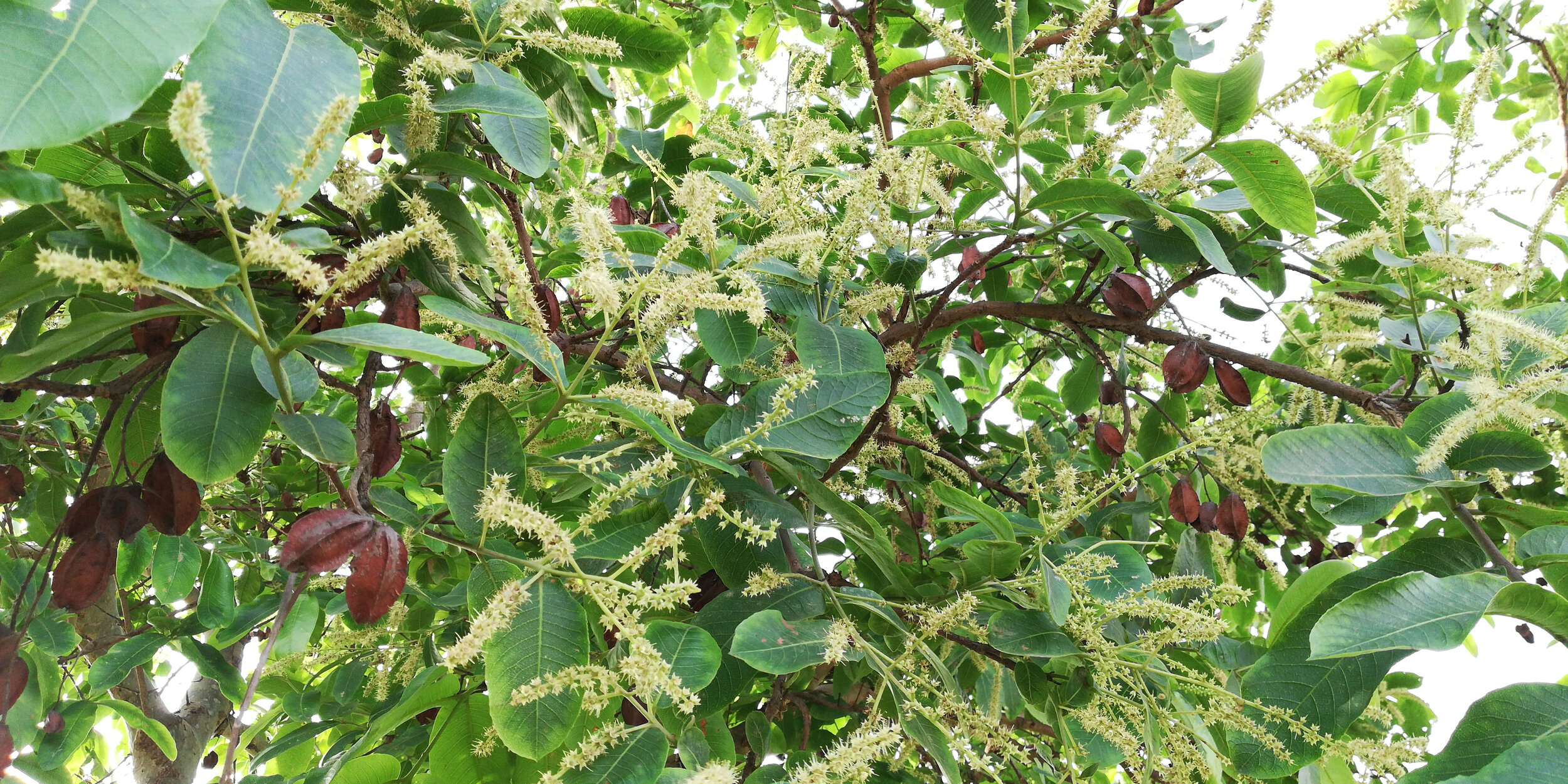
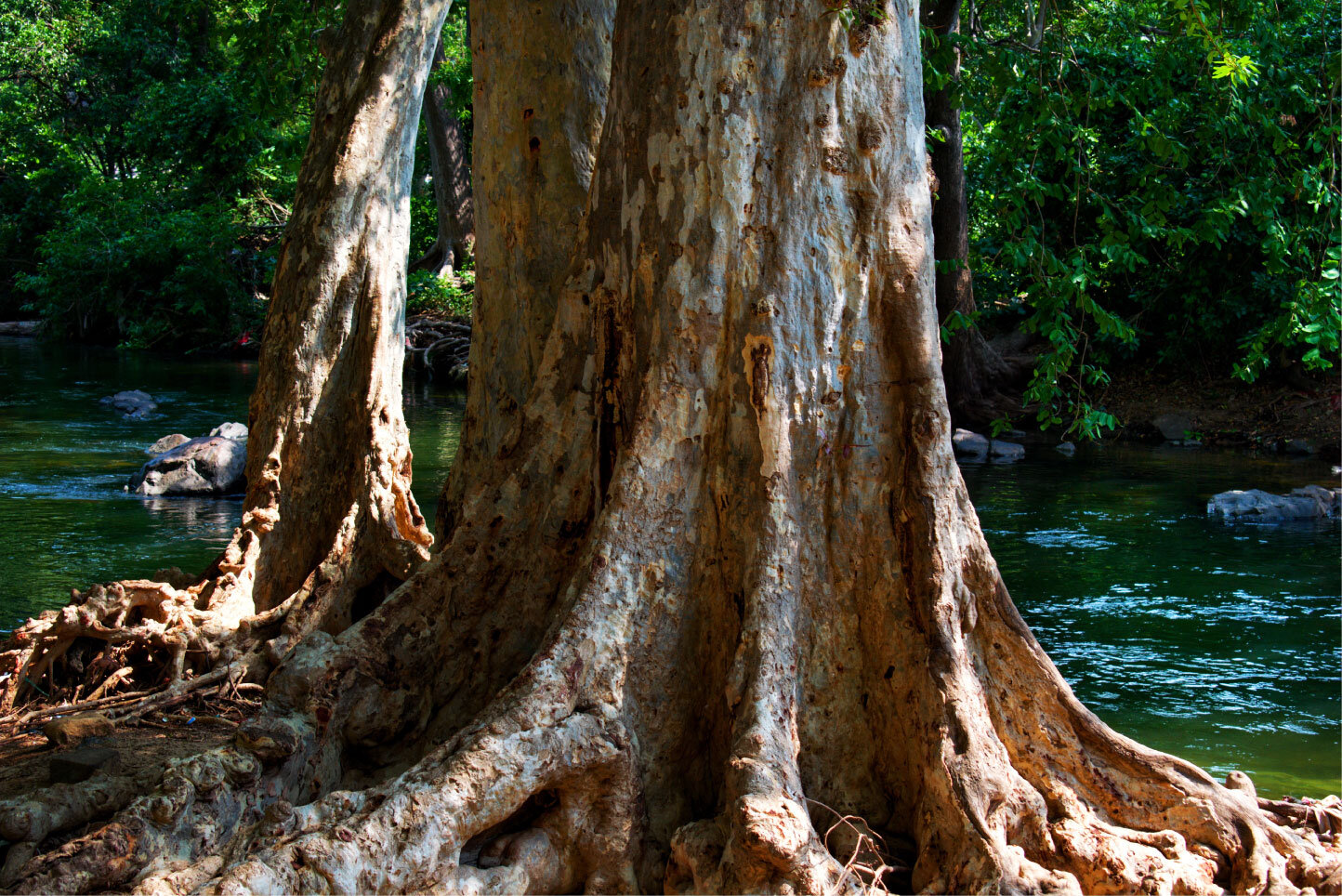
Arjuna is a large tree in the Combretaceae, notable for its smooth, pale grey buttressed bark, which flakes away in patches to reveal fresh whitish inner bark — the medicinally used part. It grows tall and straight along watercourses, with a spreading crown and the cone-like, five-winged fruit typical of Terminalia.
Distribution
Arjuna is native to the Indian subcontinent, from Assam and Bangladesh through India and Pakistan to Sri Lanka, extending east to Myanmar. It has been introduced and cultivated in southeast China, Mauritius, Rodrigues, Trinidad-Tobago, Venezuela and the Venezuelan Antilles. The species is closely tied to riverine habitat, favoring humid, fertile soils along riverbanks and streams with 1,000–1,500 mm of annual rainfall — it is a widely planted avenue and shade tree with no documented invasive or noxious-weed status.
Growing Conditions
- Riverine tree, full sun; thrives along riverbanks and streams in humid, fertile soil.
- Prefers annual rainfall of 1,000–1,500 mm; roughly USDA zone 10–12.
- Full cultivation detail lives on the companion farm-wiki grow guide for Terminalia arjuna (link to be added once that project’s public URL is confirmed).
Pharmacology & Research
Terminalia arjuna is unusual among Ayurvedic cardiac herbs in having a genuine, if modest, human clinical literature: several small randomized controlled trials in stable angina, heart failure, endothelial dysfunction and ischemic mitral regurgitation, sitting on top of a large body of animal and in vitro cardioprotective work. The overall tier is best described as promising but preclinical-heavy — the human trials are almost all small, single-centre, conducted in India between 1994 and 2016, and of acknowledged methodological weakness, so the strongest formal appraisal to date (a 2014 systematic review and meta-analysis in stable angina) concluded the evidence was insufficient to support or refute efficacy 7Reference 7Meta-analysisTerminalia arjuna in chronic stable angina: systematic review and meta-analysisView study →. The most rigorous single trial — a 100-patient, double-blind RCT in chronic heart failure — missed its primary endpoint (left-ventricular ejection fraction) while showing improvements only in functional and antioxidant secondary measures 8Reference 8RCTClinical efficacy of water extract of stem bark of Terminalia arjuna in patients of chronic heart failure: a double-blind, randomized controlled trialView study →. Nearly all human work used the crude water/alcohol stem-bark extract or bark powder (typically 500 mg three times daily) rather than a standardised compound, so results do not transfer cleanly to tinctures, teas or proprietary blends.
- Best-supported: antioxidant activity, mapped in animals and echoed in human biomarker shifts (RBC-SOD, catalase, glutathione) 8,13Reference 8RCTClinical efficacy of water extract of stem bark of Terminalia arjuna in patients of chronic heart failure: a double-blind, randomized controlled trialView study →Reference 13AnimalTerminalia arjuna augments cardioprotection via antioxidant and antiapoptotic cascade in isoproterenol-induced cardiotoxicity in rats — animal modelView study →; symptomatic relief in chronic stable angina across several small human trials 2,4,9Reference 2Clinical trialAntianginal and cardioprotective effects of Terminalia arjuna, an indigenous drug, in coronary artery disease — clinical studyView study →Reference 4RCTEfficacy of Terminalia arjuna in chronic stable angina: a double-blind, placebo-controlled, crossover study comparing Terminalia arjuna with isosorbide mononitrate — randomized controlled trialView study →Reference 9Safety and efficacy of Hartone in stable angina pectoris — an open comparative trial (Terminalia arjuna–based product)View study →.
- Emerging, worth watching: anti-ischemic and anti-hypertrophic cardioprotection, with mechanism worked out in rat models and validated by proteomics/transcriptomics 13,14,15Reference 13AnimalTerminalia arjuna augments cardioprotection via antioxidant and antiapoptotic cascade in isoproterenol-induced cardiotoxicity in rats — animal modelView study →Reference 14AnimalProteomic analysis of the protective effects of aqueous bark extract of Terminalia arjuna on isoproterenol-induced cardiac hypertrophy in rats — animal modelView study →Reference 15AnimalTranscriptomic validation of the protective effects of aqueous bark extract of Terminalia arjuna against isoproterenol-induced cardiac hypertrophy — animal modelView study →; endothelial-function recovery in a small crossover RCT 5Reference 5RCTTerminalia arjuna reverses impaired endothelial function in chronic smokers — randomized double-blind crossover trialView study →.
- Mechanistically thin: blood-pressure lowering and lipid lowering rest largely on animal data and inconsistent early human reports 17,18Reference 17AnimalBeneficial effects of aqueous extract of stem bark of Terminalia arjuna in experimental pulmonary hypertension — animal modelView study →Reference 18Systematic reviewThe efficacy and safety of herbal medicines used in the treatment of hyperlipidemia: a systematic reviewView study →.
- The caveat: human trials are small, old, single-centre and of poor methodological quality; the one adequately powered RCT was null on its primary cardiac endpoint 7,8Reference 7Meta-analysisTerminalia arjuna in chronic stable angina: systematic review and meta-analysisView study →Reference 8RCTClinical efficacy of water extract of stem bark of Terminalia arjuna in patients of chronic heart failure: a double-blind, randomized controlled trialView study →. No standardised extract or dose is established.
1. Antioxidant
Antioxidant activity is the most consistently demonstrated property of arjuna bark and the presumed engine behind its cardiovascular effects. The bark is dominated by phenolics — tannins (~16% of an aqueous extract) and a large flavonoid complement including luteolin, baicalein, quercetin and proanthocyanidins — which scavenge reactive oxygen species and preserve endogenous antioxidant enzymes 10Reference 10ReviewMedicinal properties of Terminalia arjuna (Roxb.) Wight & Arn.: a reviewView study →. In the 100-patient chronic heart failure RCT, add-on Arjuna extract (750 mg twice daily) significantly raised or preserved red-blood-cell superoxide dismutase, catalase and glutathione versus placebo, translating the in vitro antioxidant signal into a measurable human biomarker effect 8Reference 8RCTClinical efficacy of water extract of stem bark of Terminalia arjuna in patients of chronic heart failure: a double-blind, randomized controlled trialView study →. Rat models of isoproterenol cardiotoxicity likewise show the extract restoring myocardial antioxidant defences and limiting lipid peroxidation 13Reference 13AnimalTerminalia arjuna augments cardioprotection via antioxidant and antiapoptotic cascade in isoproterenol-induced cardiotoxicity in rats — animal modelView study →.
Gap: human data are limited to surrogate blood biomarkers in one trial; no study shows that arjuna’s antioxidant action produces a hard clinical outcome.
2. Antianginal (stable angina)
This is arjuna’s flagship human indication. In a double-blind, placebo-controlled crossover trial, 58 men with chronic stable angina (NYHA II–III) received bark extract 500 mg every 8 hours, isosorbide mononitrate, or placebo for one week each; arjuna reduced anginal frequency and improved treadmill exercise parameters comparably to the nitrate 4Reference 4RCTEfficacy of Terminalia arjuna in chronic stable angina: a double-blind, placebo-controlled, crossover study comparing Terminalia arjuna with isosorbide mononitrate — randomized controlled trialView study →. Earlier open and comparative studies reported roughly 50% reductions in anginal episodes and delayed onset of ST-changes on treadmill testing after three months of bark powder 2,3Reference 2Clinical trialAntianginal and cardioprotective effects of Terminalia arjuna, an indigenous drug, in coronary artery disease — clinical studyView study →Reference 3Clinical trialBeneficial effects of Terminalia arjuna in coronary artery disease — comparative clinical studyView study →, and a proprietary arjuna product (Hartone) gave symptomatic relief comparable to isosorbide mononitrate in a small open trial 9Reference 9Safety and efficacy of Hartone in stable angina pectoris — an open comparative trial (Terminalia arjuna–based product)View study →. The important counterweight: a 2014 systematic review and meta-analysis found the pooled trials to be of poor methodological design and concluded the evidence was insufficient to favour or reject arjuna in stable angina 7Reference 7Meta-analysisTerminalia arjuna in chronic stable angina: systematic review and meta-analysisView study →.
Gap: trials are small, short, single-centre and methodologically weak; the crossover designs and brief washouts make durable, clinically meaningful benefit hard to establish.
3. Cardioprotective (anti-ischemic)
The most mechanistically developed body of evidence is preclinical cardioprotection against ischemic and hypertrophic injury. In rats given isoproterenol to model myocardial infarction, hydroalcoholic bark extract limited biochemical and apoptotic damage in a dose-dependent way 13Reference 13AnimalTerminalia arjuna augments cardioprotection via antioxidant and antiapoptotic cascade in isoproterenol-induced cardiotoxicity in rats — animal modelView study →, and proteomic and transcriptomic analyses of isoproterenol-induced cardiac hypertrophy showed the aqueous extract normalising established molecular markers of hypertrophy 14,15Reference 14AnimalProteomic analysis of the protective effects of aqueous bark extract of Terminalia arjuna on isoproterenol-induced cardiac hypertrophy in rats — animal modelView study →Reference 15AnimalTranscriptomic validation of the protective effects of aqueous bark extract of Terminalia arjuna against isoproterenol-induced cardiac hypertrophy — animal modelView study →. At the single-molecule level, arjunolic acid acts as a PPAR-α agonist that regresses cardiac fibrosis by inhibiting non-canonical TGF-β signaling 16Reference 16In vitroArjunolic acid, a peroxisome proliferator-activated receptor α agonist, regresses cardiac fibrosis by inhibiting non-canonical TGF-β signaling — in vitro/animal mechanistic studyView study →. Together these define a coherent anti-ischemic, anti-hypertrophic, anti-fibrotic mechanism.
Gap: entirely animal and cell-level; no human trial has tested arjuna specifically for infarct protection or reversal of hypertrophy.
4. Endothelial function
A single double-blind, placebo-controlled crossover RCT tested whether arjuna could reverse smoking-induced endothelial dysfunction. Eighteen healthy male chronic smokers, whose flow-mediated dilation was markedly impaired versus non-smokers (4.71% vs 11.75%), received bark extract 500 mg every 8 hours or placebo; arjuna improved endothelium-dependent flow-mediated dilation, consistent with its antioxidant action restoring nitric-oxide-mediated vasodilation 5Reference 5RCTTerminalia arjuna reverses impaired endothelial function in chronic smokers — randomized double-blind crossover trialView study →. Because endothelium-independent (nitroglycerine) dilation was unaffected, the effect appears specific to the endothelial pathway.
Gap: one small, short study in young healthy smokers, using crude extract — not replicated, and not extended to patients with established vascular disease.
5. Heart failure
Arjuna’s heart-failure evidence is genuinely mixed. An early double-blind crossover trial in 12 patients with severe refractory (NYHA IV) heart failure reported symptomatic improvement and better echocardiographic indices on bark extract added to maximal conventional therapy 1Reference 1RCTSalutary effect of Terminalia Arjuna in patients with severe refractory heart failure — randomized double-blind crossover trialView study →. But the definitive test — a 100-patient, double-blind, placebo-controlled add-on RCT of standardised water extract (750 mg twice daily) in NYHA II CHF with ejection fraction ≤40% — was null on its primary endpoint: LVEF did not change versus placebo (24.3% vs 25.5%; p = 0.4) 8Reference 8RCTClinical efficacy of water extract of stem bark of Terminalia arjuna in patients of chronic heart failure: a double-blind, randomized controlled trialView study →. Only secondary measures moved, with greater improvement in 6-minute walk distance, antioxidant enzymes and symptom-related quality-of-life domains in subsets of patients.
Gap: the best-powered trial did not improve the primary cardiac endpoint; benefits were confined to functional and biomarker secondaries, so a true effect on cardiac function is unproven.
6. Hypolipidemic
Several early Indian trials reported lipid changes alongside antianginal benefit, and a case report documented a marked fall in lipoprotein(a) after bark-stem powder in a patient with metabolic syndrome and beta-thalassemia 11,12Reference 11Case reportBeta-thalassemia, hyperlipoproteinemia(a), and metabolic syndrome: its low-cost holistic therapy (Terminalia arjuna case report)View study →Reference 12ReviewTerminalia arjuna Wight & Arn. — a useful drug for cardiovascular disorders — reviewView study →. Preclinical work supports a hypolipidemic and anti-atherogenic action via the bark’s flavonoids and sterols such as beta-sitosterol. However, a systematic review of herbal medicines for hyperlipidemia that screened 53 clinical trials did not list Terminalia arjuna among the plants with demonstrated cholesterol- or LDL-lowering efficacy 18Reference 18Systematic reviewThe efficacy and safety of herbal medicines used in the treatment of hyperlipidemia: a systematic reviewView study →, underscoring how thin the controlled human lipid data are.
Gap: human lipid evidence is incidental, uncontrolled or anecdotal; no dedicated, adequately powered lipid-lowering RCT exists.
7. Antihypertensive
Although arjuna is traditionally used and tagged as antihypertensive, the modern evidence is predominantly animal. Aqueous bark extract lowered pulmonary arterial pressure and reduced right-ventricular hypertrophy and oxidative stress in a rat model of pulmonary hypertension 17Reference 17AnimalBeneficial effects of aqueous extract of stem bark of Terminalia arjuna in experimental pulmonary hypertension — animal modelView study →, and various animal studies describe hypotensive and vasodilatory effects 12Reference 12ReviewTerminalia arjuna Wight & Arn. — a useful drug for cardiovascular disorders — reviewView study →. Human blood-pressure data are incidental to the angina and heart-failure trials rather than the object of a dedicated hypertension study.
Gap: no human RCT targets blood pressure as a primary outcome; the antihypertensive label rests on preclinical and traditional evidence.
Mechanisms
| Mechanism | Drives | Key compounds |
|---|---|---|
| PPAR-α agonism, anti-fibrotic (↓ non-canonical TGF-β), positive inotropy, membrane antioxidant | cardioprotectiveheart failureantioxidant | arjunolic acid, arjunic acid |
| Cardiotonic/glycoside-like activity, coronary vasodilation | antianginalheart failure | arjunetin, arjunin |
| ROS scavenging, NO preservation, anti-inflammatory, lipid-lowering | antioxidantendothelial functionhypolipidemic | luteolin, baicalein, quercetin, proanthocyanidins |
| Antioxidant, astringent, endothelial protection | antioxidantendothelial function | condensed tannins, gallic acid |
| Cholesterol absorption interference | hypolipidemic | beta-sitosterol |
Clinical trials
Human evidence comes almost entirely from investigator-led academic RCTs published in the cardiology/ethnopharmacology literature rather than from registered, regulated trials. On ClinicalTrials.gov, no completed registered trial evaluates single-herb Terminalia arjuna for a cardiac indication; the arjuna-containing entries are multi-ingredient Ayurvedic or “cardiovascular wellness” formulations, which cannot isolate the herb’s effect.
| Completed | Planned | Terminated | Preclinical |
|---|---|---|---|
| ~61,2,4,5,6,8Reference 1RCTSalutary effect of Terminalia Arjuna in patients with severe refractory heart failure — randomized double-blind crossover trialView study →Reference 2Clinical trialAntianginal and cardioprotective effects of Terminalia arjuna, an indigenous drug, in coronary artery disease — clinical studyView study →Reference 4RCTEfficacy of Terminalia arjuna in chronic stable angina: a double-blind, placebo-controlled, crossover study comparing Terminalia arjuna with isosorbide mononitrate — randomized controlled trialView study →Reference 5RCTTerminalia arjuna reverses impaired endothelial function in chronic smokers — randomized double-blind crossover trialView study →Reference 6RCTRole of Terminalia arjuna in ischaemic mitral regurgitation — randomized controlled trialView study →Reference 8RCTClinical efficacy of water extract of stem bark of Terminalia arjuna in patients of chronic heart failure: a double-blind, randomized controlled trialView study → | 0 | 0 | Extensive(dozens of animal/in vitro reports) |
Last checked: July 2026.
Phytochemistry
The cardioactive reputation of Terminalia arjuna bark rests on a suite of oleanane-type triterpenes — chiefly arjunolic acid and arjunic acid — together with their saponin glycosides arjunetin and arjunin. Quantitatively, however, the triterpene fraction is minor: compositional analysis of the bark puts total triterpenoids at under 1%, with arjunolic acid reported around 0.5% w/w and the related arjungenin near 0.3% w/w 19Reference 19Extraction and TLC densitometric determination of triterpenoid acids (arjungenin, arjunolic acid) from Terminalia arjuna stem bark without interference of tannins — analytical studyView study →.
The bulk of the bark is phenolic. It is dominated by tannins (an aqueous extract has been measured at ~16%) and a very large flavonoid complement — including arjunone, baicalein, luteolin, quercetin and proanthocyanidins — estimated near 5.7 g/100 g of bark 10Reference 10ReviewMedicinal properties of Terminalia arjuna (Roxb.) Wight & Arn.: a reviewView study →. Sterols such as beta-sitosterol and trace minerals round out the profile.
Constituent Summary
Figures are % w/w of dried stem bark unless noted; values vary widely with provenance, season and extraction method. “No Data” marks compounds documented in the bark but without a reliable published figure.
Triterpene5 compounds3 with data
Flavonoid7 compounds1 with data
Anthocyanin1 compoundno data
Phenolic Acid1 compoundno data
Sterol1 compoundno data
Dosage
Nearly all human trials used the crude water/alcohol stem-bark extract or bark powder rather than a standardised compound, so results don’t transfer cleanly to a tincture or tea. Here’s what the trials used:
| Indication | Preparation | Dose | Est. dried-herb equivalent | Source |
|---|---|---|---|---|
| Stable angina / endothelial function | Bark extract | 500 mg every 8 hours (1,500 mg/day) | Not established (crude extract, no marker compound reported) | RCTs 4,5,9Reference 4RCTEfficacy of Terminalia arjuna in chronic stable angina: a double-blind, placebo-controlled, crossover study comparing Terminalia arjuna with isosorbide mononitrate — randomized controlled trialView study →Reference 5RCTTerminalia arjuna reverses impaired endothelial function in chronic smokers — randomized double-blind crossover trialView study →Reference 9Safety and efficacy of Hartone in stable angina pectoris — an open comparative trial (Terminalia arjuna–based product)View study → |
| Chronic heart failure | Standardised water extract | 750 mg twice daily (1,500 mg/day) | Not established (standardised extract, no marker compound reported) | RCT 8Reference 8RCTClinical efficacy of water extract of stem bark of Terminalia arjuna in patients of chronic heart failure: a double-blind, randomized controlled trialView study → |
Both doses land in the same 1,500 mg/day range across different preparations, which is at least internally consistent — but neither trial reports a marker-compound percentage, so no dried-herb conversion is given. Treat as a record of what was studied, not a dosing guide.
Traditional Dosage
Ayurvedic and Western herbal practice both use the bark, most often as a decoction, powder, or liquid extract, typically over months rather than the 1–12 weeks used in the clinical trials above.
| System | Preparation | Dose |
|---|---|---|
| Western herbal | 1:2 liquid extract | 20–40 mL/week |
| Ayurveda | Bark powder / decoction (Kwath) | Traditional decoction dose, not separately quantified in the sources reviewed |
Safety & Pregnancy
Arjuna bark is well tolerated and has a long traditional record, but its cardioactive constituents mean it should be used under medical supervision alongside cardiac, antihypertensive or anticoagulant drugs.
- Cardiac drug interactions. Cardioactive constituents may add to cardiac, antihypertensive and anticoagulant drugs — use under medical supervision in established heart disease.
- Pregnancy & lactation. No safety data; precautionary avoid given the herb’s cardioactive, hypotensive pharmacology.
- Well tolerated. Long traditional use; the largest RCT reported no significant adverse events, with only mild, self-limiting gastritis and constipation seen elsewhere.
- Unverified thyroid claim. A “high doses may affect thyroid” claim could not be traced to a primary source — treat as unverified.
Full safety & interactions detail
Arjuna bark has a long traditional record and was well tolerated in clinical trials, with the largest heart-failure RCT reporting no significant adverse events over 12 weeks and only mild, self-limiting gastritis and constipation seen in a chronic coronary-disease study 8Reference 8RCTClinical efficacy of water extract of stem bark of Terminalia arjuna in patients of chronic heart failure: a double-blind, randomized controlled trialView study →. It has not, however, been formally tested for drug interactions, and its cardioactive constituents create a plausible risk of additive effects with prescription cardiac, antihypertensive and anticoagulant drugs — it should be used under medical supervision in anyone with established heart disease or on such medication. Because it can lower blood pressure and lipids, effects may compound those of conventional agents. No dedicated pharmacokinetic or drug-interaction study was identified; the interaction caution above is mechanistic and precautionary, not based on a reported interaction. A sidebar claim that “high doses may affect thyroid function” could not be traced to a primary human study in this review and should be treated as unverified pending a source.
Not established. No pregnancy or lactation safety data were identified for Terminalia arjuna. Given its cardioactive, hypotensive and lipid-lowering pharmacology, it should be avoided in pregnancy and lactation absent professional guidance — this is a precaution based on the herb’s known mechanisms, not a documented harm.
References
- Bharani, A., Ganguly, A., & Bhargava, K. D. (1995). Salutary effect of Terminalia Arjuna in patients with severe refractory heart failure — randomized double-blind crossover trial. International Journal of Cardiology, 49(3), 191–199. https://pubmed.ncbi.nlm.nih.gov/7649665/
- Dwivedi, S., & Agarwal, M. P. (1994). Antianginal and cardioprotective effects of Terminalia arjuna, an indigenous drug, in coronary artery disease — clinical study. Journal of the Association of Physicians of India, 42(4), 287–289. https://pubmed.ncbi.nlm.nih.gov/7741874/
- Dwivedi, S., & Jauhari, R. (1997). Beneficial effects of Terminalia arjuna in coronary artery disease — comparative clinical study. Indian Heart Journal, 49(5), 507–510. https://pubmed.ncbi.nlm.nih.gov/9505018/
- Bharani, A., Ganguli, A., Mathur, L. K., et al. (2002). Efficacy of Terminalia arjuna in chronic stable angina: a double-blind, placebo-controlled, crossover study comparing Terminalia arjuna with isosorbide mononitrate — randomized controlled trial. Indian Heart Journal, 54(2), 170–175. https://pubmed.ncbi.nlm.nih.gov/12086380/
- Bharani, A., Ahirwar, L. K., & Jain, N. (2004). Terminalia arjuna reverses impaired endothelial function in chronic smokers — randomized double-blind crossover trial. Indian Heart Journal, 56(2), 123–128. https://pubmed.ncbi.nlm.nih.gov/15377133/
- Dwivedi, S., Aggarwal, A., & Agarwal, M. P. (2005). Role of Terminalia arjuna in ischaemic mitral regurgitation — randomized controlled trial. International Journal of Cardiology, 100(3), 507–508. https://pubmed.ncbi.nlm.nih.gov/15837100/
- Kaur, N., Shafiq, N., Negi, H., et al. (2014). Terminalia arjuna in chronic stable angina: systematic review and meta-analysis. Cardiology Research and Practice, 2014, 281483. https://pubmed.ncbi.nlm.nih.gov/24600529/
- Maulik, S. K., Wilson, V., Seth, S., et al. (2016). Clinical efficacy of water extract of stem bark of Terminalia arjuna in patients of chronic heart failure: a double-blind, randomized controlled trial. Phytomedicine, 23(11), 1211–1219. https://pubmed.ncbi.nlm.nih.gov/26988798/
- Kumar, P. U., Adhikari, P., Pereira, P., et al. (1999). Safety and efficacy of Hartone in stable angina pectoris — an open comparative trial (Terminalia arjuna–based product). Journal of the Association of Physicians of India, 47(7), 685–689. https://pubmed.ncbi.nlm.nih.gov/10778587/
- Amalraj, A., & Gopi, S. (2017). Medicinal properties of Terminalia arjuna (Roxb.) Wight & Arn.: a review. Journal of Traditional and Complementary Medicine, 7(1), 65–78. https://pubmed.ncbi.nlm.nih.gov/28053890/
- Dwivedi, S., & Aggarwal, A. (2007). Beta-thalassemia, hyperlipoproteinemia(a), and metabolic syndrome: its low-cost holistic therapy (Terminalia arjuna case report). Journal of Alternative and Complementary Medicine, 13(3), 389–391. https://pubmed.ncbi.nlm.nih.gov/17388772/
- Dwivedi, S. (2007). Terminalia arjuna Wight & Arn. — a useful drug for cardiovascular disorders — review. Journal of Ethnopharmacology, 114(2), 114–129. https://pubmed.ncbi.nlm.nih.gov/17875376/
- Shukla, S. K., Sharma, S. B., & Singh, U. R. (2015). Terminalia arjuna augments cardioprotection via antioxidant and antiapoptotic cascade in isoproterenol-induced cardiotoxicity in rats — animal model. Indian Journal of Experimental Biology, 53(12), 810–818. https://pubmed.ncbi.nlm.nih.gov/26742326/
- Kumar, S., Jahangir Alam, M., Prabhakar, P., et al. (2017). Proteomic analysis of the protective effects of aqueous bark extract of Terminalia arjuna on isoproterenol-induced cardiac hypertrophy in rats — animal model. Journal of Ethnopharmacology, 198, 98–108. https://pubmed.ncbi.nlm.nih.gov/28063919/
- Kumar, G., Saleem, N., Kumar, S., et al. (2019). Transcriptomic validation of the protective effects of aqueous bark extract of Terminalia arjuna against isoproterenol-induced cardiac hypertrophy — animal model. Frontiers in Pharmacology, 10, 1443. https://pubmed.ncbi.nlm.nih.gov/31920643/
- Bansal, T., Chatterjee, E., Singh, J., et al. (2017). Arjunolic acid, a peroxisome proliferator-activated receptor α agonist, regresses cardiac fibrosis by inhibiting non-canonical TGF-β signaling — in vitro/animal mechanistic study. Journal of Biological Chemistry, 292(40), 16440–16462. https://pubmed.ncbi.nlm.nih.gov/28821620/
- Meghwani, H., Prabhakar, P., Mohammed, S. A., et al. (2017). Beneficial effects of aqueous extract of stem bark of Terminalia arjuna in experimental pulmonary hypertension — animal model. Journal of Ethnopharmacology, 197, 184–194. https://pubmed.ncbi.nlm.nih.gov/27401289/
- Hasani-Ranjbar, S., Nayebi, N., Moradi, L., et al. (2010). The efficacy and safety of herbal medicines used in the treatment of hyperlipidemia: a systematic review. Current Pharmaceutical Design, 16(26), 2935–2947. https://pubmed.ncbi.nlm.nih.gov/20858178/
- Kalola, J., & Rajani, M. (2006). Extraction and TLC densitometric determination of triterpenoid acids (arjungenin, arjunolic acid) from Terminalia arjuna stem bark without interference of tannins — analytical study. Chromatographia, 63, 475–481. https://doi.org/10.1365/s10337-006-0772-3