Materia Medica
Calamus
Acorus calamus
Calamus (Acorus calamus) is an aromatic wetland rhizome long used as a digestive and stimulant tonic, but containing beta-asarone of toxicological concern.
What is Calamus?
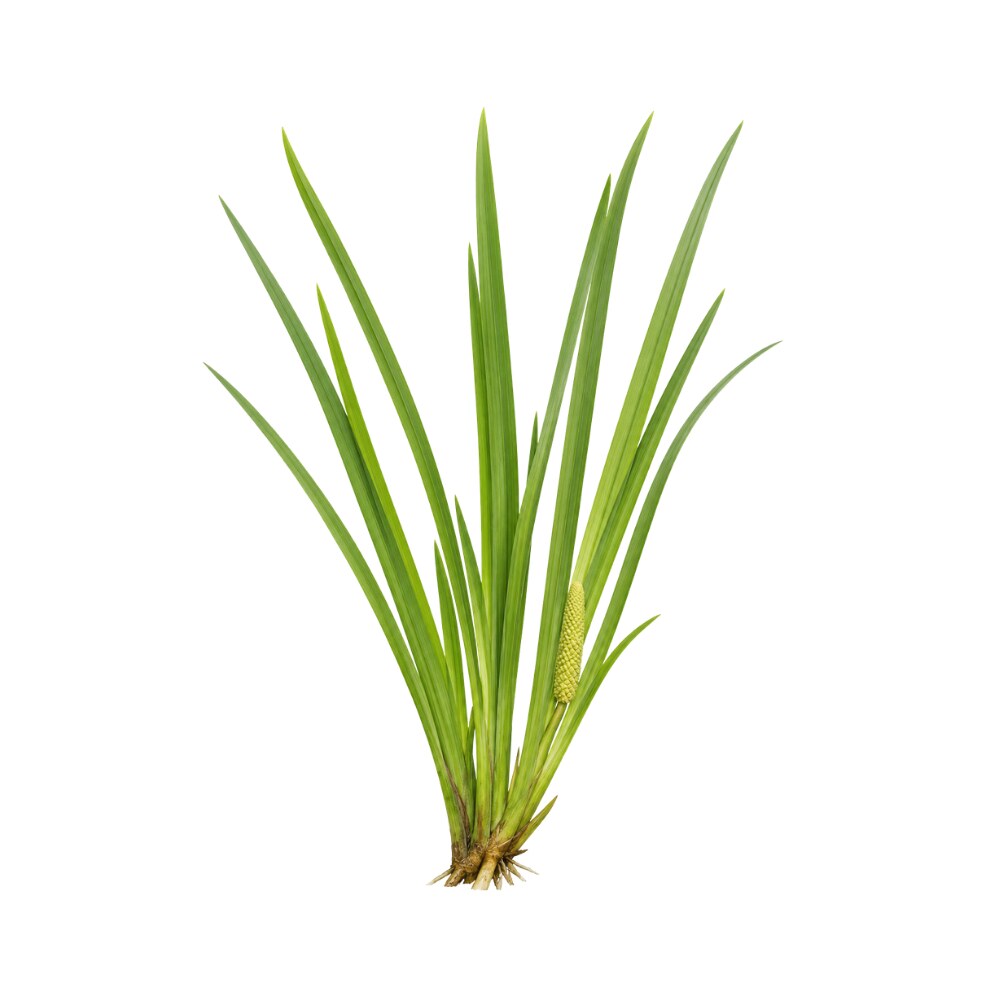
Calamus, or sweet flag, is an aromatic semi-aquatic perennial (Acorus calamus) with sword-like leaves and a pungent, spicy rhizome, found in wetlands across Asia, Europe and North America. The rhizome has been used as medicine, incense and flavouring for thousands of years in many cultures.
Traditional & Modern Uses
Calamus root is valued in Ayurveda (as vacha), traditional Chinese medicine and Western herbalism as a warming digestive bitter and carminative, a stimulant to the mind and senses, and an aid for sluggish digestion and coughs. Native American peoples chewed small pieces of the root for fatigue and as a stimulant. In larger amounts it has a reputation as a mild psychoactive, though this is closely tied to its asarone content; calamus essential oil traded online as a “hallucinogen” has caused prolonged vomiting and intoxication 52Reference 52Case reportBioanalytical investigation of asarone in connection with Acorus calamus oil intoxications — human case seriesView study →. It is also used in perfumery and as a bittering agent.
Botany
Sweet flag is a deciduous, spreading, marginal-aquatic perennial in the Acoraceae, with iris-like, sword-shaped leaves growing in basal clumps to about 30 in tall, and inconspicuous greenish flowers in an elongated spadix.
Distribution
Kew’s Plants of the World Online gives the species’ native range as Central Asia, specifically the Irtysh River valley. It has been cultivated and traded for its aromatic rhizome for so long — introduced into North America by European settlers in the 1600s — that many regional sources describe it simply as native to Europe as well; this page follows Kew’s narrower native-range call.
It has naturalized widely and vigorously across Europe and much of the United States and Canada, and its strong, spreading rhizomes have driven it to displace the native congener Acorus americanus in heavily settled parts of the eastern US and Canada.
Growing Conditions
- Marginal-aquatic perennial, full sun to part shade; boggy, medium-to-wet soil or shallow standing water. Roughly USDA zone 4-10.
- Full cultivation detail lives on the companion farm-wiki grow guide for Acorus calamus (link to be added once that project’s public URL is confirmed).
Phytochemistry
The rhizome’s aroma and activity come largely from its phenylpropanoid-rich essential oil, defined by the two marker compounds beta-asarone and alpha-asarone, with the allylic isomer gamma-asarone also reported. These are joined by methyl eugenol and the sesquiterpenes acorone, calamusin, beta-gurjunene and shyobunone / isoshyobunone, with the phytosterol beta-sitosterol, phenolic acids (caffeic, chlorogenic) and flavonoids (kaempferol, quercetin) also present. Asarone content differs dramatically between geographic varieties, which underpins both the plant’s reputation and its toxicological concern.
Constituent Summary
The dried rhizome yields roughly 1.3–3.3% essential oil. The asarone figures below are given as the approximate share of that oil and swing enormously with ploidy: diploid North American plants carry only traces of beta-asarone, triploid European types around 5–10%, and tetraploid Asian types 70–96%. Because that oil is itself only ~1.3–3.3% of the rhizome, even the high-asarone extreme works out to at most roughly 1–3% beta-asarone by dry weight of the whole herb — not 70–96% of it. Other compounds lack consistent quantitative data. † marks beta-asarone, the marker whose abundance differentiates the chemotypes (and ploidy levels) of Acorus calamus.
Phenylpropanoids4 compounds2 with data
Sesquiterpenes5 compoundsno data
Phytosterols1 compoundno data
Phenolic acids2 compoundsno data
Pharmacology & Research
Calamus (Acorus calamus) has a large preclinical literature — several hundred pharmacology papers across the Acorus genus — but the evidence base for the true sweet flag rests almost entirely on animal and cell-line studies plus long traditional use; no randomised controlled trial of A. calamus in humans has been published, and the only human data are a poisoning case series and ethnomedicinal surveys 52,1Reference 52Case reportBioanalytical investigation of asarone in connection with Acorus calamus oil intoxications — human case seriesView study →Reference 1ReviewAn overview on traditional uses and pharmacological profile of Acorus calamus Linn. (Sweet flag) and other Acorus species — reviewView study →. The best-developed signals are its traditional strengths — a spasmolytic, carminative action on gut and airway smooth muscle mediated by calcium-channel blockade 14,16,15Reference 14In vitroAntispasmodic effect of Acorus calamus Linn. is mediated through calcium channel blockade — in vitroView study →Reference 16In vitroSpasmolytische wirkung des isoasaronfreien kalmus1 — in vitroView study →Reference 15AnimalBronchodilatory effect of Acorus calamus (Linn.) is mediated through multiple pathways — animal in vivoView study →, and anticonvulsant and cognitive/memory effects replicated across rodent models 6,7,8,9,10,11,12Reference 6AnimalAnticonvulsant activity of raw and classically processed Vacha (Acorus calamus Linn.) rhizomes — animal in vivoView study →Reference 7AnimalInhibitory role of Acorus calamus in ferric chloride-induced epileptogenesis in rat — animal in vivoView study →Reference 8AnimalInteraction of hydroalcoholic extract of Acorus calamus Linn. with sodium valproate and carbamazepine — animal in vivoView study →Reference 9AnimalAntioxidative and neuroprotective potential of Acorus calamus linn. and Cordia dichotoma GView study →Reference 10AnimalAnti-amnesic and anti-cholinesterase activities of α-asarone against scopolamine-induced memory impairments in rats — animal in vivoView study →Reference 11AnimalRole of Acorus calamus and alpha-asarone on hippocampal dependent memory in noise stress exposed rats — animal in vivoView study →Reference 12AnimalEffects of Acorus calamus Rhizome Extract on the Neuromodulatory System in Restraint Stress Male Rats — animal in vivoView study →. A recurring caveat runs through the whole file: much of the “Acorus” cognitive and neuroprotective literature is actually the related TCM species A. tatarinowii or A. gramineus, not calamus, and only genuine A. calamus studies are scored below. The deeper tension is chemical — β-asarone, the constituent that drives several of the herb’s activities (vasorelaxation, antifungal action, autophagy-mediated amyloid clearance), is the same compound that is genotoxic and carcinogenic in rodents 47,5Reference 47In vitroHepatic metabolism of carcinogenic β-asarone — in vitroView study →Reference 5ReviewPharmacology and toxicology of α- and β-Asarone: A review of preclinical evidence — reviewView study →, so potency and hazard are coupled, and results from high-asarone Asian/European chemotypes do not transfer cleanly to the low-asarone North American type.
- Best-supported: spasmolytic/carminative action on gut and airway smooth muscle via calcium-channel blockade 14,16,15Reference 14In vitroAntispasmodic effect of Acorus calamus Linn. is mediated through calcium channel blockade — in vitroView study →Reference 16In vitroSpasmolytische wirkung des isoasaronfreien kalmus1 — in vitroView study →Reference 15AnimalBronchodilatory effect of Acorus calamus (Linn.) is mediated through multiple pathways — animal in vivoView study →; anticonvulsant activity replicated across three rodent seizure models 6,7,8Reference 6AnimalAnticonvulsant activity of raw and classically processed Vacha (Acorus calamus Linn.) rhizomes — animal in vivoView study →Reference 7AnimalInhibitory role of Acorus calamus in ferric chloride-induced epileptogenesis in rat — animal in vivoView study →Reference 8AnimalInteraction of hydroalcoholic extract of Acorus calamus Linn. with sodium valproate and carbamazepine — animal in vivoView study →; cognitive/memory protection in scopolamine- and stress-induced deficits 9,10,11,12Reference 9AnimalAntioxidative and neuroprotective potential of Acorus calamus linn. and Cordia dichotoma GView study →Reference 10AnimalAnti-amnesic and anti-cholinesterase activities of α-asarone against scopolamine-induced memory impairments in rats — animal in vivoView study →Reference 11AnimalRole of Acorus calamus and alpha-asarone on hippocampal dependent memory in noise stress exposed rats — animal in vivoView study →Reference 12AnimalEffects of Acorus calamus Rhizome Extract on the Neuromodulatory System in Restraint Stress Male Rats — animal in vivoView study →.
- Emerging, worth watching: anti-inflammatory effects across arthritis and asthma models with a mapped NF-κB/cytokine mechanism 23,24,25,26Reference 23AnimalAnti-arthritic appraisal of Acorus calamus L. extracts in complete Freund’s adjuvant‑induced arthritic Wistar rats via regulating inflammatory cytokines and OPG/RANKL pathway — animal in vivoView study →Reference 24AnimalThe evaluation of the anti-inflammatory effects of Acorus calamus L. ethanolic extract on ovalbumin-induced allergic asthma in mice — animal in vivoView study →Reference 25AnimalBai H et al. (2023). α-Asarone alleviates allergic asthma by stabilizing mast cells through inhibition of ERK/JAK2-STAT3 pathway — animal in vivo. Biofactors. https://pubmed.ncbi.nlm.nih.gov/35861676/View study →Reference 26In vitroAnti-inflammatory activity of a water extract of Acorus calamus L. leaves on keratinocyte HaCaT cells — in vitroView study →; incretin-driven antidiabetic activity of the ethyl-acetate fraction 27,28,29Reference 27In vitroEffects and molecular mechanisms of the antidiabetic fraction of Acorus calamus L. on GLP-1 expression and secretion in vivo and in vitro — animal in vivoView study →Reference 28In vitroInsulin sensitizing activity of ethyl acetate fraction of Acorus calamus L. in vitro and in vivo — animal in vivoView study →Reference 29In vitroInsulin releasing and alpha-glucosidase inhibitory activity of ethyl acetate fraction of Acorus calamus in vitro and in vivo — animal in vivoView study →.
- Mechanistically thin: immunomodulation and anticancer effects rest on isolated polysaccharide fractions 41,42,43,44,45,46Reference 41AnimalWater-soluble polysaccharide obtained from Acorus calamus L. classically activates macrophages and stimulates Th1 response — animal in vivoView study →Reference 42In vitroEffect of plant polysaccharides on TH1-dependent immune response: screening investigation — in vitroView study →Reference 43AnimalThe protective effect of the Vacha rhizome extract on chronic stress-induced immunodeficiency in rat — animal in vivoView study →Reference 44AnimalProspects for the use of plant polysaccharides in complex treatment of malignant tumors — animal in vivoView study →Reference 45AnimalEffect of Acorus calamus LView study →Reference 46In vitroRole of Acorus calamus extract in reducing exosome secretion by targeting Rab27a and nSMase2: a therapeutic approach for breast cancer — in vitroView study →; antimicrobial data are essential-oil-driven and in vitro only 37,38,39,40Reference 37In vitroRajput SB et al. (2013). β-Asarone, an active principle of Acorus calamus rhizome, inhibits morphogenesis, biofilm formation and ergosterol biosynthesis in Candida albicans — in vitro. Phytomedicine. https://pubmed.ncbi.nlm.nih.gov/23123225/View study →Reference 38In vitroAcorus calamus Linn.: phytoconstituents and bactericidal property — in vitroView study →Reference 39In vitroTerpenoid composition and antifungal activity of three commercially important essential oils against Aspergillus flavus and Aspergillus niger — in vitroView study →Reference 40In vitroAntibacterial properties of traditionally used Indian medicinal plants — in vitroView study →.
- The caveat: entirely preclinical — no human RCT, no standardised dose, and the active β-asarone is also the carcinogenic one, so efficacy and toxicity cannot be separated in high-asarone material.
1. Antispasmodic & digestive
This is calamus’s clearest pharmacological match to its traditional role as a warming digestive bitter and carminative. In isolated rabbit jejunum, a crude ethanol extract inhibited both spontaneous and high-K⁺-induced contractions (EC₅₀ 0.42 and 0.13 mg/mL), a pattern indicating calcium-channel blockade rather than a receptor-specific action 14Reference 14In vitroAntispasmodic effect of Acorus calamus Linn. is mediated through calcium channel blockade — in vitroView study →. The same mechanism relaxed pre-contracted guinea-pig trachea, giving a bronchodilator effect attributed to combined Ca²⁺-channel blockade and muscarinic antagonism 15Reference 15AnimalBronchodilatory effect of Acorus calamus (Linn.) is mediated through multiple pathways — animal in vivoView study →. Notably, a β-asarone-free (“isoasarone-free”) oil retained spasmolytic activity against histamine-induced ileal spasm comparable to the antihistamine pyrilamine, suggesting the smooth-muscle effect does not depend on the toxic constituent 16Reference 16In vitroSpasmolytische wirkung des isoasaronfreien kalmus1 — in vitroView study →.
Gap: All data are isolated-organ preparations; no human study has tested calamus for dyspepsia, colic, or bronchospasm, and no standardised oral dose has been defined.
2. Anticonvulsant
Anticonvulsant activity is calamus’s best-replicated neurological signal and aligns with its traditional use for epilepsy. Raw and classically processed rhizome both shortened the tonic-extensor phase in the maximal-electroshock model, with the processed form additionally reducing convulsion and stupor 6Reference 6AnimalAnticonvulsant activity of raw and classically processed Vacha (Acorus calamus Linn.) rhizomes — animal in vivoView study →. In a ferric-chloride epileptogenesis model, 200 mg/kg orally for 14 days reduced seizure behaviour and spike-wave discharges while lowering brain lipid peroxidation 7Reference 7AnimalInhibitory role of Acorus calamus in ferric chloride-induced epileptogenesis in rat — animal in vivoView study →. A sub-anticonvulsant dose of hydroalcoholic extract potentiated sodium valproate and carbamazepine in the pentylenetetrazole model, giving greater protection than either drug alone — a possible adjunct signal but also a drug-interaction flag 8Reference 8AnimalInteraction of hydroalcoholic extract of Acorus calamus Linn. with sodium valproate and carbamazepine — animal in vivoView study →.
Gap: Effects are animal-only and often use whole rhizome of unspecified chemotype; the valproate/carbamazepine potentiation has never been evaluated for safety in humans.
3. Cognitive & memory
Calamus (Ayurvedic vacha) is traditionally a “brain tonic,” and rodent work gives partial support. A hydroalcoholic extract (600 mg/kg) restored Morris water-maze performance and normalised acetylcholinesterase, SOD and glutathione in scopolamine-induced dementia 9Reference 9AnimalAntioxidative and neuroprotective potential of Acorus calamus linn. and Cordia dichotoma GView study →, and isolated α-asarone (15–30 mg/kg for 14 days) reversed scopolamine amnesia while lowering cortical and hippocampal AChE 10Reference 10AnimalAnti-amnesic and anti-cholinesterase activities of α-asarone against scopolamine-induced memory impairments in rats — animal in vivoView study →. Extract and α-asarone also protected spatial memory under noise stress 11Reference 11AnimalRole of Acorus calamus and alpha-asarone on hippocampal dependent memory in noise stress exposed rats — animal in vivoView study → and preserved Na⁺/K⁺-ATPase under restraint stress 12Reference 12AnimalEffects of Acorus calamus Rhizome Extract on the Neuromodulatory System in Restraint Stress Male Rats — animal in vivoView study →. Mechanistically, β-asarone promoted autophagy and reduced amyloid-β accumulation in an Alzheimer’s cell model 13Reference 13In vitroWang N et al. (2019). β-Asarone Inhibits Amyloid-β by Promoting Autophagy in a Cell Model of Alzheimer’s Disease — in vitro. Front Pharmacol. https://pubmed.ncbi.nlm.nih.gov/32009952/View study →, and an older study found the ethanol extract has broad CNS-depressant/tranquilising activity 53Reference 53AnimalCentral nervous system studies on an ethanol extract of Acorus calamus rhizomes — animal in vivoView study →.
Gap: No human cognition trial exists; much of the mechanistic weight sits on α- and β-asarone, coupling the nootropic claim to the herb’s toxicological liability.
4. Anti-inflammatory
Anti-inflammatory activity is a coherent emerging signal with a mapped mechanism. A methanol extract (500 mg/kg) dose-dependently reduced paw swelling, arthritis scores and TNF-α/CRP in adjuvant-induced arthritic rats, acting on the OPG/RANKL pathway 23Reference 23AnimalAnti-arthritic appraisal of Acorus calamus L. extracts in complete Freund’s adjuvant‑induced arthritic Wistar rats via regulating inflammatory cytokines and OPG/RANKL pathway — animal in vivoView study →. In ovalbumin-induced allergic asthma, an ethanol extract (50–200 mg/kg) lowered IL-4, total IgE and nitric oxide while raising IFN-γ 24Reference 24AnimalThe evaluation of the anti-inflammatory effects of Acorus calamus L. ethanolic extract on ovalbumin-induced allergic asthma in mice — animal in vivoView study →, and α-asarone separately stabilised mast cells and suppressed IL-5/IL-13 via ERK/JAK2-STAT3 inhibition 25Reference 25AnimalBai H et al. (2023). α-Asarone alleviates allergic asthma by stabilizing mast cells through inhibition of ERK/JAK2-STAT3 pathway — animal in vivo. Biofactors. https://pubmed.ncbi.nlm.nih.gov/35861676/View study →. A leaf water extract attenuated NF-κB and IRF3 activation and IL-6/IL-8 expression in keratinocytes 26Reference 26In vitroAnti-inflammatory activity of a water extract of Acorus calamus L. leaves on keratinocyte HaCaT cells — in vitroView study →, pointing to NF-κB downregulation as the common thread.
Gap: All models are animal or cell-based; extract types differ across studies, so no single preparation is validated, and there are no human inflammatory-disease data.
5. Neuroprotective
Beyond memory, calamus shows consistent neuroprotection across injury models. An ethanol extract (25 mg/kg) improved motor function and cut infarct area from 33% to 19% after middle-cerebral-artery occlusion in rats, with higher SOD and glutathione 17Reference 17AnimalNeuroprotective effect of Acorus calamus against middle cerebral artery occlusion-induced ischaemia in rat — animal in vivoView study →. In traumatic-brain-injury models, both a Drosophila paradigm 18Reference 18AnimalAcorus calamus Linn.: A novel neuroprotective approach for traumatic brain injury in Drosophila melanogaster — animal in vivoView study → and a mouse weight-drop model — using α-asarone (12.5–50 mg/kg) and extract (190 mg/kg) — reduced blood-brain-barrier permeability, oxidative stress and mortality 19Reference 19AnimalNeuroprotection in traumatic brain injury: effects of alpha-asarone and Acorus calamus extract in mice using weight drop model — animal in vivoView study →. In vitro, extract and α-asarone protected hippocampal neurons from glutamate and ER-stress-induced death by lowering ROS and PERK phosphorylation 20Reference 20In vitroAcorus calamus extract and its component α-asarone attenuate murine hippocampal neuronal cell death induced by l-glutamate and tunicamycin — in vitroView study →.
Gap: Preclinical only, across heterogeneous models and doses; the recurring reliance on isolated α-asarone limits translation to the whole-herb preparations people actually use.
6. Antioxidant
Antioxidant activity underlies much of calamus’s neuro- and organ-protection rather than standing alone as a therapeutic claim. Ethyl-acetate and methanolic extracts protected six regions of rat brain against noise-stress oxidative damage, restoring SOD, catalase and glutathione 21Reference 21AnimalProtective effect of Acorus calamus LINN on free radical scavengers and lipid peroxidation in discrete regions of brain against noise stress exposed rat — animal in vivoView study →. Given orally at 100–200 mg/kg for seven days, the extract reduced nickel-chloride-induced renal oxidative stress, lipid peroxidation and hyperproliferation 22Reference 22AnimalAcorus calamus extracts and nickel chloride: prevention of oxidative damage and hyperproliferation response in rat kidney — animal in vivoView study →. The activity tracks the rhizome’s phenolic acids — caffeic acid and chlorogenic acid — alongside the asarones.
Gap: Antioxidant effects are demonstrated only as biomarkers in stressed rodents; no clinical endpoint and no dose-response in humans.
7. Antidiabetic
An antidiabetic signal is concentrated in the rhizome’s ethyl-acetate fraction rather than the whole herb. In streptozotocin and db/db mice, the fraction (100 mg/kg) lowered fasting glucose and raised plasma GLP-1 and insulin, upregulating incretin-related genes in intestinal L-cells 27Reference 27In vitroEffects and molecular mechanisms of the antidiabetic fraction of Acorus calamus L. on GLP-1 expression and secretion in vivo and in vitro — animal in vivoView study →. Related work showed insulin-sensitising activity — reduced glucose, triglycerides and free fatty acids with higher adiponectin in db/db mice, plus enhanced glucose uptake in L6 myotubes 28Reference 28In vitroInsulin sensitizing activity of ethyl acetate fraction of Acorus calamus L. in vitro and in vivo — animal in vivoView study → — and α-glucosidase inhibition with increased insulin release from HIT-T15 cells at 400–800 mg/kg 29Reference 29In vitroInsulin releasing and alpha-glucosidase inhibitory activity of ethyl acetate fraction of Acorus calamus in vitro and in vivo — animal in vivoView study →.
Gap: Effects are tied to a specific solvent fraction, not the traditional rhizome or tincture; all data are rodent/cell, with no human glycaemic trial.
8. Analgesic (neuropathic pain)
Calamus shows a reproducible analgesic effect in neuropathic-pain models, though from a single research group. A hydroalcoholic extract (100–200 mg/kg for 14 days) attenuated thermal and mechanical hyperalgesia and allodynia in chronic-constriction-injury 30Reference 30AnimalAttenuating effect of Acorus calamus extract in chronic constriction injury induced neuropathic pain in rats: an evidence of anti-oxidative, anti-inflammatory, neuroprotective and calcium inhibitory effects — animal in vivoView study →, vincristine-induced 31Reference 31AnimalAttenuating effect of hydroalcoholic extract of Acorus calamus in vincristine-induced painful neuropathy in rats — animal in vivoView study → and nerve-transection 32Reference 32AnimalEffect of hydroalcoholic extract of Acorus calamus on tibial and sural nerve transection-induced painful neuropathy in rats — animal in vivoView study → neuropathy, each time lowering superoxide, myeloperoxidase and calcium alongside the behavioural benefit.
Gap: All three studies share one group and one extract, so independent replication is absent; the effect is entirely rodent and mechanistically framed as anti-oxidative/anti-inflammatory rather than a distinct analgesic pathway.
9. Hypotensive & vasorelaxant
Cardiovascular effects are real in animals but carry the herb’s central paradox. Crude extract lowered mean arterial pressure in normotensive rats through Ca²⁺ antagonism and a nitric-oxide component 33Reference 33AnimalBlood pressure-lowering and vascular modulator effects of Acorus calamus extract are mediated through multiple pathways — animal in vivoView study →, and an aqueous-methanolic extract produced cardiac depression with EDHF-mediated coronary vasodilation 34Reference 34AnimalAqueous-methanolic extract of sweet flag (Acorus calamus) possesses cardiac depressant and endothelial-derived hyperpolarizing factor-mediated coronary vasodilator effects — animal in vivoView study →; a 30-day course also attenuated isoproterenol-induced cardiomyopathy via reduced calcineurin and oxidative stress 35Reference 35AnimalIsoproterenol-induced cardiomyopathy in rats: influence of Acorus calamus Linn.: A. calamus attenuates cardiomyopathy — animal in vivoView study →. Critically, a 2026 study found the vasorelaxation is driven by β-asarone itself (1–30 µg/mL, L-type VDCC modulation) — framing calamus as an “efficacy vs toxicity paradox” where the active compound is the carcinogenic one 36Reference 36AnimalParashar S et al. (2026). β-Asarone-induced vasorelaxation in isolated rat mesenteric artery: An efficacy vs toxicity paradox of Acorus calamus — animal in vivo. J Ethnopharmacol. https://pubmed.ncbi.nlm.nih.gov/41519184/View study →.
Gap: Preclinical only; because the principal vasoactive constituent is β-asarone, any cardiovascular use would maximise exposure to the toxic marker — the opposite of the recommended low-asarone approach.
10. Antimicrobial & antifungal
Calamus has broad antimicrobial activity in vitro, but almost entirely as essential oil or β-asarone rather than the water/tincture forms taken internally. β-Asarone inhibited Candida albicans growth and biofilm and was fungicidal at higher concentrations 37Reference 37In vitroRajput SB et al. (2013). β-Asarone, an active principle of Acorus calamus rhizome, inhibits morphogenesis, biofilm formation and ergosterol biosynthesis in Candida albicans — in vitro. Phytomedicine. https://pubmed.ncbi.nlm.nih.gov/23123225/View study →; the essential oil showed bactericidal MBCs of 0.032–0.143 mg/mL against Gram-positive and -negative bacteria and fungi 38Reference 38In vitroAcorus calamus Linn.: phytoconstituents and bactericidal property — in vitroView study →, and inhibited Aspergillus flavus and A. niger, with (Z)-asarone as the dominant constituent 39Reference 39In vitroTerpenoid composition and antifungal activity of three commercially important essential oils against Aspergillus flavus and Aspergillus niger — in vitroView study →. An ethanolic extract gave broad antibacterial activity including against MRSA and ESβL producers 40Reference 40In vitroAntibacterial properties of traditionally used Indian medicinal plants — in vitroView study →.
Gap: Results are in vitro and preparation-mismatched — the active fraction is the volatile oil, not the digestive preparations calamus is used as — capping real-world relevance.
11. Immunomodulatory
Immunomodulation rests on isolated polysaccharide fractions rather than the whole herb or its asarones. A water-soluble polysaccharide activated macrophages, stimulated IL-12 and nitric oxide, and promoted a Th1 response while suppressing Th2-dependent IgG1/IgE in mice 41Reference 41AnimalWater-soluble polysaccharide obtained from Acorus calamus L. classically activates macrophages and stimulates Th1 response — animal in vivoView study →; a related screen found calamus polysaccharides stimulated macrophage NO synthase at levels comparable to LPS 42Reference 42In vitroEffect of plant polysaccharides on TH1-dependent immune response: screening investigation — in vitroView study →. Separately, a benzene rhizome extract protected against stress-induced immunosuppression, preserving leukocyte and lymphocyte counts and bone-marrow cellularity 43Reference 43AnimalThe protective effect of the Vacha rhizome extract on chronic stress-induced immunodeficiency in rat — animal in vivoView study →.
Gap: Constituent-level evidence tied to specific polysaccharide isolates; no whole-herb or human immunological data, and preparation relevance is unclear.
12. Anticancer
Anticancer data are early and mechanistically scattered. Water-soluble polysaccharides enhanced chemotherapy efficacy while reducing cytostatic toxicity to blood, liver and intestinal epithelium in tumour-bearing animals 44Reference 44AnimalProspects for the use of plant polysaccharides in complex treatment of malignant tumors — animal in vivoView study →, and a defined polysaccharide reduced Lewis-lung-carcinoma tumour size and metastasis with lower CD274/CD326 expression 45Reference 45AnimalEffect of Acorus calamus LView study →. More recently, an extract reduced exosome secretion by downregulating Rab27a and nSMase2 across three breast-cancer cell lines 46Reference 46In vitroRole of Acorus calamus extract in reducing exosome secretion by targeting Rab27a and nSMase2: a therapeutic approach for breast cancer — in vitroView study →. A review frames asarone-based chemoprevention as a hypothesis rather than an established effect 54Reference 54ReviewExperimental evidence for use of Acorus calamus (asarone) for cancer chemoprevention — reviewView study →.
Gap: Heterogeneous targets, small studies, and reliance on isolated fractions or cell lines; no coherent mechanism and no clinical signal.
Mechanisms
| Mechanism | Drives | Key compounds |
|---|---|---|
| Ca²⁺-channel blockade (± muscarinic antagonism) | antispasmodicbronchodilatorhypotensive | β-asarone, α-asarone, essential oil |
| Acetylcholinesterase inhibition | cognitive & memory | α-asarone |
| NF-κB ↓, cytokine ↓ (TNF-α, IL-4/5/13, IL-6/8) | anti-inflammatoryneuroprotective | α-asarone, β-asarone |
| Free-radical scavenging (↑SOD, ↑GSH, ↓lipid peroxidation) | antioxidantneuroprotectiveanticonvulsant | caffeic acid, chlorogenic acid, asarones |
| GLP-1 secretion ↑, insulin sensitisation, α-glucosidase ↓ | antidiabetic | ethyl-acetate fraction |
| Autophagy induction / amyloid-β clearance | cognitive (Alzheimer models) | β-asarone |
| Macrophage & Th1 activation | immunomodulatory | polysaccharides |
Clinical trials
No registered clinical trials of A. calamus as a single herb were identified; the few ClinicalTrials.gov records mentioning “Acorus” are multi-ingredient traditional formulas (for Alzheimer’s, stroke and angina) that mostly contain the related TCM species A. tatarinowii, not calamus — so the human evidence base is effectively absent.
| Completed | Planned | Terminated | Preclinical |
|---|---|---|---|
| 0 | 0 | 0 | ~85 |
Last checked: July 2026.
Dosage
There are no standardised or research-derived human doses for calamus; the evidence base is entirely preclinical, and the regulatory reality (a US food-additive ban and restriction elsewhere) frames any use. The research doses below are the animal/cell doses each study used — rodent mg/kg body-weight for solvent extracts or isolated asarones — not human recommendations.
| Indication | Preparation | Dose | Est. dried-herb equivalent | Source |
|---|---|---|---|---|
| Anticonvulsant | Ethanol/whole rhizome (rat, p.o.) | 200 mg/kg × 14 days | — | 7Reference 7AnimalInhibitory role of Acorus calamus in ferric chloride-induced epileptogenesis in rat — animal in vivoView study → |
| Cognitive/memory | Hydroalcoholic extract (rat) | 600 mg/kg | — | 9Reference 9AnimalAntioxidative and neuroprotective potential of Acorus calamus linn. and Cordia dichotoma GView study → |
| Cognitive/memory | α-asarone (rat) | 15–30 mg/kg × 14 days | — | 10Reference 10AnimalAnti-amnesic and anti-cholinesterase activities of α-asarone against scopolamine-induced memory impairments in rats — animal in vivoView study → |
| Anti-inflammatory (arthritis) | Methanol extract (rat) | 500 mg/kg | — | 23Reference 23AnimalAnti-arthritic appraisal of Acorus calamus L. extracts in complete Freund’s adjuvant‑induced arthritic Wistar rats via regulating inflammatory cytokines and OPG/RANKL pathway — animal in vivoView study → |
| Antidiabetic | Ethyl-acetate fraction (mouse) | 100 mg/kg | — | 27Reference 27In vitroEffects and molecular mechanisms of the antidiabetic fraction of Acorus calamus L. on GLP-1 expression and secretion in vivo and in vitro — animal in vivoView study → |
| Neuroprotective (stroke) | Ethanol extract (rat) | 25 mg/kg | — | 17Reference 17AnimalNeuroprotective effect of Acorus calamus against middle cerebral artery occlusion-induced ischaemia in rat — animal in vivoView study → |
The dried-herb equivalent is left blank throughout: every research dose is a rodent mg/kg body-weight of a solvent extract or an isolated asarone, and converting these to a human whole-herb weight would require an extract-to-herb ratio and an interspecies scaling factor the sources do not provide. No conversion is offered rather than an invented one.
Traditional Dosage
Traditional whole-herb figures below are unverified against a primary pharmacopoeial monograph (WHO/ESCOP/Commission E) and are given only as a rough guide; the US food-additive ban and use of low-asarone material should frame any dosing.
| System | Preparation | Dose |
|---|---|---|
| Western herbal | Dried rhizome (decoction/powder) | ~1–3 g/day, short-term, low-asarone material only |
| Western herbal | Tincture 1:5 (45%) | ~1–2 mL, up to 3×/day |
| Ayurveda (vacha) | Rhizome powder (churna) | ~125–500 mg |
Safety & Pregnancy
Calamus’s defining concern is β-asarone — genotoxic and carcinogenic in rodents and banned as a food additive in the US. Any use should be short-term and confined to low-asarone North American material.
- Carcinogenic constituent. β-asarone is genotoxic and carcinogenic in rodents (liver and intestinal tumours); α-asarone and methyl eugenol are additional rodent carcinogens.
- Chemotype matters. Asarone content swings with ploidy — only the low-asarone North American diploid material is the safer choice, and only short-term.
- Food-additive ban. Banned as a food additive in the US and restricted elsewhere; prolonged or high-dose internal use is discouraged.
- Avoid in pregnancy and lactation. Genotoxic constituent plus reproductive/developmental toxicity signals and no human safety data.
- Essential-oil intoxication. Oil products marketed as “hallucinogenic” have caused prolonged vomiting and intoxication.
- Antiepileptic interaction. Rodent data show potentiation of valproate and carbamazepine.
Full safety & interactions detail
The principal safety concern is β-asarone, a phenylpropene that is genotoxic and carcinogenic in rodents (liver and small-intestine tumours), acting through a hepatic epoxide metabolite 47,5,4Reference 47In vitroHepatic metabolism of carcinogenic β-asarone — in vitroView study →Reference 5ReviewPharmacology and toxicology of α- and β-Asarone: A review of preclinical evidence — reviewView study →Reference 4ReviewUebel T et al. (2021). α-Asarone, β-asarone, and γ-asarone: Current status of toxicological evaluation — review. J Appl Toxicol. https://pubmed.ncbi.nlm.nih.gov/33236787/View study →. Its content swings with the plant’s ploidy: diploid North American material carries only trace β-asarone (~0.2% of the oil) while triploid European and Indian types run ~4–11% and tetraploid Asian types far higher 51,50Reference 51In vitroRapid assessment of beta-asarone content of Acorus calamus by micellar electrokinetic capillary chromatography — in vitroView study →Reference 50In vitroIdentification of an EcoRI restriction site for a rapid and precise determination of beta-asarone-free Acorus calamus cytotypes — in vitroView study →, so the safest material is the low-asarone North American diploid. On this basis calamus is banned as a food additive in the United States and restricted elsewhere; high or prolonged internal use is discouraged, and essential-oil products marketed as “hallucinogenic” have caused prolonged vomiting and intoxication 52Reference 52Case reportBioanalytical investigation of asarone in connection with Acorus calamus oil intoxications — human case seriesView study →. α-Asarone, also listed among the rhizome’s key constituents, is likewise carcinogenic in male mice and probably genotoxic 48Reference 48In vitroMetabolism of the carcinogen alpha-asarone in liver microsomes — in vitroView study →, and the constituent methyl eugenol is itself a recognised rodent carcinogen — a second toxicological flag beyond the asarones. A 2025 OECD-guideline Ames test on Indian rhizome and β-asarone was negative for bacterial mutagenicity, which does not overturn the rodent carcinogenicity data but suggests the mechanism is not simple point mutation 49Reference 49In vitroReporting negative Ames test results for Indian Acorus calamus L., rhizome, extracts, and beta asarone — in vitroView study →. Standard herbal caution also applies: the anticonvulsant potentiation of valproate and carbamazepine seen in rodents flags a possible interaction with antiepileptic drugs 8Reference 8AnimalInteraction of hydroalcoholic extract of Acorus calamus Linn. with sodium valproate and carbamazepine — animal in vivoView study →.
Scope note: beyond the single rodent antiepileptic-potentiation signal 8Reference 8AnimalInteraction of hydroalcoholic extract of Acorus calamus Linn. with sodium valproate and carbamazepine — animal in vivoView study →, herb–drug interactions and CYP450 effects have not been systematically assessed for calamus; no human drug-interaction data exist. The absence of further reports should not be read as evidence of safety.
Avoid. Calamus is not recommended in pregnancy or lactation. Its marker constituent β-asarone is genotoxic and carcinogenic in animal studies 47,5Reference 47In vitroHepatic metabolism of carcinogenic β-asarone — in vitroView study →Reference 5ReviewPharmacology and toxicology of α- and β-Asarone: A review of preclinical evidence — reviewView study →, and asarones as a class show reproductive and developmental toxicity in the toxicological literature 4Reference 4ReviewUebel T et al. (2021). α-Asarone, β-asarone, and γ-asarone: Current status of toxicological evaluation — review. J Appl Toxicol. https://pubmed.ncbi.nlm.nih.gov/33236787/View study →; dedicated human pregnancy safety data do not exist. Given a known genotoxic constituent and no evidence of safety, the prudent position is avoidance rather than reassurance from absence of reports.
References
- Rajput SB et al. (2014). An overview on traditional uses and pharmacological profile of Acorus calamus Linn. (Sweet flag) and other Acorus species — review. Phytomedicine. https://pubmed.ncbi.nlm.nih.gov/24200497/
- Khwairakpam AD et al. (2018). Acorus calamus: a bio-reserve of medicinal values — review. J Basic Clin Physiol Pharmacol. https://pubmed.ncbi.nlm.nih.gov/29389665/
- He X et al. (2023). Acorus calamus var. angustatus Besser: Insight into current research on ethnopharmacological use, phytochemistry, pharmacology, toxicology, and pharmacokinetics — review. Phytochemistry. https://pubmed.ncbi.nlm.nih.gov/36871902/
- Uebel T et al. (2021). α-Asarone, β-asarone, and γ-asarone: Current status of toxicological evaluation — review. J Appl Toxicol. https://pubmed.ncbi.nlm.nih.gov/33236787/
- Chellian R et al. (2017). Pharmacology and toxicology of α- and β-Asarone: A review of preclinical evidence — review. Phytomedicine. https://pubmed.ncbi.nlm.nih.gov/28732807/
- Bhat SD et al. (2012). Anticonvulsant activity of raw and classically processed Vacha (Acorus calamus Linn.) rhizomes — animal in vivo. Ayu. https://pubmed.ncbi.nlm.nih.gov/23049196/
- Hazra R et al. (2007). Inhibitory role of Acorus calamus in ferric chloride-induced epileptogenesis in rat — animal in vivo. Hum Exp Toxicol. https://pubmed.ncbi.nlm.nih.gov/18375638/
- Katyal J et al. (2012). Interaction of hydroalcoholic extract of Acorus calamus Linn. with sodium valproate and carbamazepine — animal in vivo. Indian J Exp Biol. https://pubmed.ncbi.nlm.nih.gov/22279941/
- Malik R et al. (2024). Antioxidative and neuroprotective potential of Acorus calamus linn. and Cordia dichotoma G. Forst. In Alzheimer’s type dementia in rodent — animal in vivo. Brain Res. https://pubmed.ncbi.nlm.nih.gov/37793605/
- Venkatesan K (2022). Anti-amnesic and anti-cholinesterase activities of α-asarone against scopolamine-induced memory impairments in rats — animal in vivo. Eur Rev Med Pharmacol Sci. https://pubmed.ncbi.nlm.nih.gov/36111936/
- Sundaramahalingam M et al. (2013). Role of Acorus calamus and alpha-asarone on hippocampal dependent memory in noise stress exposed rats — animal in vivo. Pak J Biol Sci. https://pubmed.ncbi.nlm.nih.gov/24498829/
- Reddy S et al. (2015). Effects of Acorus calamus Rhizome Extract on the Neuromodulatory System in Restraint Stress Male Rats — animal in vivo. Turk Neurosurg. https://pubmed.ncbi.nlm.nih.gov/26037183/
- Wang N et al. (2019). β-Asarone Inhibits Amyloid-β by Promoting Autophagy in a Cell Model of Alzheimer’s Disease — in vitro. Front Pharmacol. https://pubmed.ncbi.nlm.nih.gov/32009952/
- Gilani AU et al. (2006). Antispasmodic effect of Acorus calamus Linn. is mediated through calcium channel blockade — in vitro. Phytother Res. https://pubmed.ncbi.nlm.nih.gov/17009206/
- Shah AJ et al. (2010). Bronchodilatory effect of Acorus calamus (Linn.) is mediated through multiple pathways — animal in vivo. J Ethnopharmacol. https://pubmed.ncbi.nlm.nih.gov/20643200/
- Keller K et al. (1985). Spasmolytische wirkung des isoasaronfreien kalmus1 — in vitro. Planta Med. https://pubmed.ncbi.nlm.nih.gov/17340388/
- Shukla PK et al. (2006). Neuroprotective effect of Acorus calamus against middle cerebral artery occlusion-induced ischaemia in rat — animal in vivo. Hum Exp Toxicol. https://pubmed.ncbi.nlm.nih.gov/16696294/
- Kalra S et al. (2024). Acorus calamus Linn.: A novel neuroprotective approach for traumatic brain injury in Drosophila melanogaster — animal in vivo. Brain Res. https://pubmed.ncbi.nlm.nih.gov/38643931/
- Kalra S et al. (2025). Neuroprotection in traumatic brain injury: effects of alpha-asarone and Acorus calamus extract in mice using weight drop model — animal in vivo. Naunyn Schmiedebergs Arch Pharmacol. https://pubmed.ncbi.nlm.nih.gov/40080151/
- Mikami M et al. (2021). Acorus calamus extract and its component α-asarone attenuate murine hippocampal neuronal cell death induced by l-glutamate and tunicamycin — in vitro. Biosci Biotechnol Biochem. https://pubmed.ncbi.nlm.nih.gov/33589895/
- Manikandan S et al. (2005). Protective effect of Acorus calamus LINN on free radical scavengers and lipid peroxidation in discrete regions of brain against noise stress exposed rat — animal in vivo. Biol Pharm Bull. https://pubmed.ncbi.nlm.nih.gov/16327175/
- Prasad L et al. (2006). Acorus calamus extracts and nickel chloride: prevention of oxidative damage and hyperproliferation response in rat kidney — animal in vivo. Biol Trace Elem Res. https://pubmed.ncbi.nlm.nih.gov/17114817/
- Bari MU et al. (2026). Anti-arthritic appraisal of Acorus calamus L. extracts in complete Freund’s adjuvant‑induced arthritic Wistar rats via regulating inflammatory cytokines and OPG/RANKL pathway — animal in vivo. Inflammopharmacology. https://pubmed.ncbi.nlm.nih.gov/41343015/
- Zaheri Abdevand Z et al. (2025). The evaluation of the anti-inflammatory effects of Acorus calamus L. ethanolic extract on ovalbumin-induced allergic asthma in mice — animal in vivo. J Ethnopharmacol. https://pubmed.ncbi.nlm.nih.gov/40316152/
- Bai H et al. (2023). α-Asarone alleviates allergic asthma by stabilizing mast cells through inhibition of ERK/JAK2-STAT3 pathway — animal in vivo. Biofactors. https://pubmed.ncbi.nlm.nih.gov/35861676/
- Kim H et al. (2009). Anti-inflammatory activity of a water extract of Acorus calamus L. leaves on keratinocyte HaCaT cells — in vitro. J Ethnopharmacol. https://pubmed.ncbi.nlm.nih.gov/19146941/
- Liu YX et al. (2015). Effects and molecular mechanisms of the antidiabetic fraction of Acorus calamus L. on GLP-1 expression and secretion in vivo and in vitro — animal in vivo. J Ethnopharmacol. https://pubmed.ncbi.nlm.nih.gov/25792018/
- Wu HS et al. (2009). Insulin sensitizing activity of ethyl acetate fraction of Acorus calamus L. in vitro and in vivo — animal in vivo. J Ethnopharmacol. https://pubmed.ncbi.nlm.nih.gov/19429374/
- Si MM et al. (2010). Insulin releasing and alpha-glucosidase inhibitory activity of ethyl acetate fraction of Acorus calamus in vitro and in vivo — animal in vivo. J Ethnopharmacol. https://pubmed.ncbi.nlm.nih.gov/20051258/
- Muthuraman A et al. (2011). Attenuating effect of Acorus calamus extract in chronic constriction injury induced neuropathic pain in rats: an evidence of anti-oxidative, anti-inflammatory, neuroprotective and calcium inhibitory effects — animal in vivo. BMC Complement Altern Med. https://pubmed.ncbi.nlm.nih.gov/21426568/
- Muthuraman A et al. (2011). Attenuating effect of hydroalcoholic extract of Acorus calamus in vincristine-induced painful neuropathy in rats — animal in vivo. J Nat Med. https://pubmed.ncbi.nlm.nih.gov/21404093/
- Muthuraman A et al. (2011). Effect of hydroalcoholic extract of Acorus calamus on tibial and sural nerve transection-induced painful neuropathy in rats — animal in vivo. J Nat Med. https://pubmed.ncbi.nlm.nih.gov/21153448/
- Shah AJ et al. (2009). Blood pressure-lowering and vascular modulator effects of Acorus calamus extract are mediated through multiple pathways — animal in vivo. J Cardiovasc Pharmacol. https://pubmed.ncbi.nlm.nih.gov/19528816/
- Shah AJ et al. (2012). Aqueous-methanolic extract of sweet flag (Acorus calamus) possesses cardiac depressant and endothelial-derived hyperpolarizing factor-mediated coronary vasodilator effects — animal in vivo. J Nat Med. https://pubmed.ncbi.nlm.nih.gov/21826570/
- Singh BK et al. (2011). Isoproterenol-induced cardiomyopathy in rats: influence of Acorus calamus Linn.: A. calamus attenuates cardiomyopathy — animal in vivo. Cardiovasc Toxicol. https://pubmed.ncbi.nlm.nih.gov/21695526/
- Parashar S et al. (2026). β-Asarone-induced vasorelaxation in isolated rat mesenteric artery: An efficacy vs toxicity paradox of Acorus calamus — animal in vivo. J Ethnopharmacol. https://pubmed.ncbi.nlm.nih.gov/41519184/
- Rajput SB et al. (2013). β-Asarone, an active principle of Acorus calamus rhizome, inhibits morphogenesis, biofilm formation and ergosterol biosynthesis in Candida albicans — in vitro. Phytomedicine. https://pubmed.ncbi.nlm.nih.gov/23123225/
- Joshi RK (2016). Acorus calamus Linn.: phytoconstituents and bactericidal property — in vitro. World J Microbiol Biotechnol. https://pubmed.ncbi.nlm.nih.gov/27562598/
- Bisht D et al. (2011). Terpenoid composition and antifungal activity of three commercially important essential oils against Aspergillus flavus and Aspergillus niger — in vitro. Nat Prod Res. https://pubmed.ncbi.nlm.nih.gov/21707253/
- Aqil F et al. (2007). Antibacterial properties of traditionally used Indian medicinal plants — in vitro. Methods Find Exp Clin Pharmacol. https://pubmed.ncbi.nlm.nih.gov/17440624/
- Belska NV et al. (2010). Water-soluble polysaccharide obtained from Acorus calamus L. classically activates macrophages and stimulates Th1 response — animal in vivo. Int Immunopharmacol. https://pubmed.ncbi.nlm.nih.gov/20483383/
- Danilets MG et al. (2010). Effect of plant polysaccharides on TH1-dependent immune response: screening investigation — in vitro. Eksp Klin Farmakol. https://pubmed.ncbi.nlm.nih.gov/20726346/
- Sarjan HN et al. (2017). The protective effect of the Vacha rhizome extract on chronic stress-induced immunodeficiency in rat — animal in vivo. Pharm Biol. https://pubmed.ncbi.nlm.nih.gov/28303736/
- Safonova EA et al. (2012). Prospects for the use of plant polysaccharides in complex treatment of malignant tumors — animal in vivo. Eksp Klin Farmakol. https://pubmed.ncbi.nlm.nih.gov/23156088/
- Lopatina KA et al. (2017). Effect of Acorus calamus L. Polysaccharide on CD274 and CD326 Expression by Lewis Lung Carcinoma Cells in Mice — animal in vivo. Bull Exp Biol Med. https://pubmed.ncbi.nlm.nih.gov/29124538/
- Gupta S et al. (2025). Role of Acorus calamus extract in reducing exosome secretion by targeting Rab27a and nSMase2: a therapeutic approach for breast cancer — in vitro. Mol Biol Rep. https://pubmed.ncbi.nlm.nih.gov/39812915/
- Cartus AT et al. (2015). Hepatic metabolism of carcinogenic β-asarone — in vitro. Chem Res Toxicol. https://pubmed.ncbi.nlm.nih.gov/26273788/
- Cartus AT et al. (2016). Metabolism of the carcinogen alpha-asarone in liver microsomes — in vitro. Food Chem Toxicol. https://pubmed.ncbi.nlm.nih.gov/26678343/
- Narayana DBA et al. (2025). Reporting negative Ames test results for Indian Acorus calamus L., rhizome, extracts, and beta asarone — in vitro. Indian J Pharmacol. https://pubmed.ncbi.nlm.nih.gov/40844059/
- Bertea CM et al. (2005). Identification of an EcoRI restriction site for a rapid and precise determination of beta-asarone-free Acorus calamus cytotypes — in vitro. Phytochemistry. https://pubmed.ncbi.nlm.nih.gov/15721942/
- Hanson KM et al. (2005). Rapid assessment of beta-asarone content of Acorus calamus by micellar electrokinetic capillary chromatography — in vitro. Electrophoresis. https://pubmed.ncbi.nlm.nih.gov/15714542/
- Björnstad K et al. (2009). Bioanalytical investigation of asarone in connection with Acorus calamus oil intoxications — human case series. J Anal Toxicol. https://pubmed.ncbi.nlm.nih.gov/20040135/
- Vohora SB et al. (1990). Central nervous system studies on an ethanol extract of Acorus calamus rhizomes — animal in vivo. J Ethnopharmacol. https://pubmed.ncbi.nlm.nih.gov/2314110/
- Das BK et al. (2019). Experimental evidence for use of Acorus calamus (asarone) for cancer chemoprevention — review. Heliyon. https://pubmed.ncbi.nlm.nih.gov/31193009/