
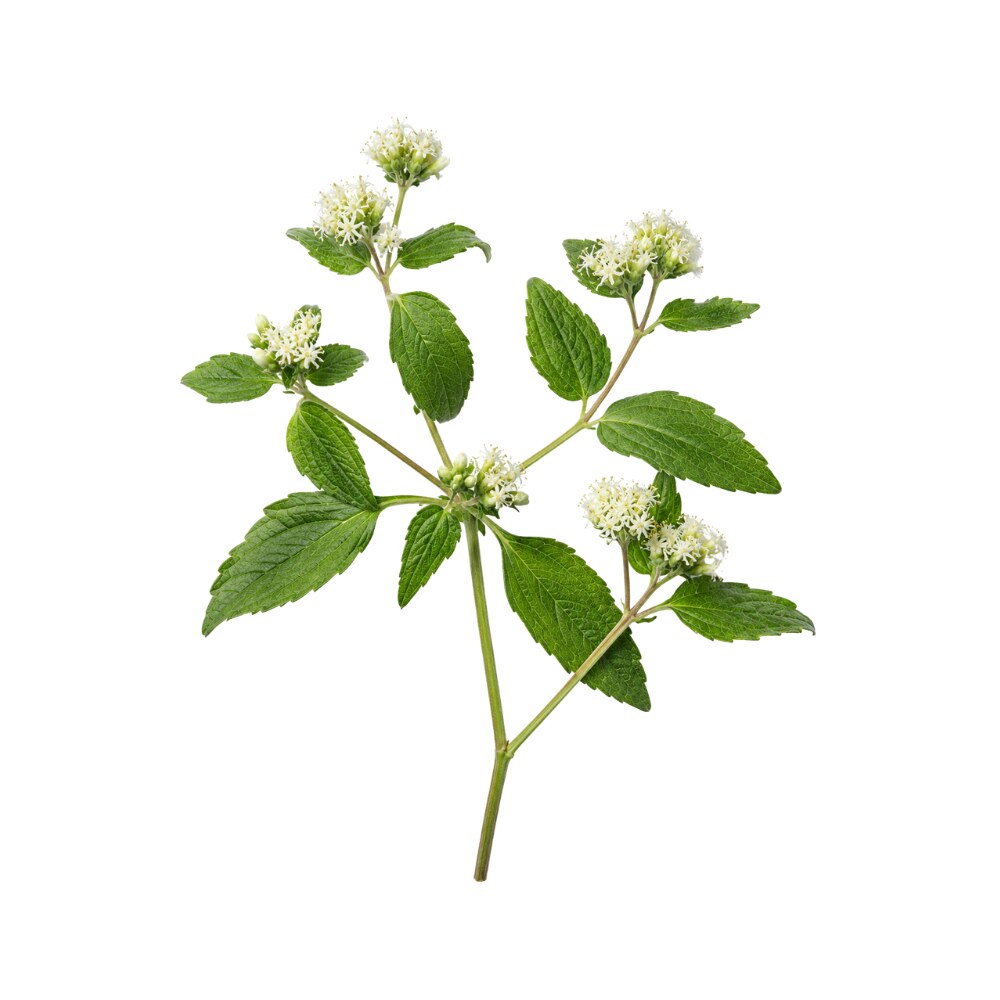
What Is Calea zacatechichi?
Calea zacatechichi (Calea ternifolia) is a small shrub from Mexico and Central America, best known as the “Mexican Dream Herb.” It is an oneirogen — a plant taken not for its waking effects but for what it does to sleep, making dreams more vivid, more detailed, and far easier to remember. In Oaxaca it has long been smoked or brewed as a bitter tea to deepen dreaming and, traditionally, to read meaning in those dreams.
Two things are worth understanding up front. First, this is a gentle herb physically — it has low toxicity, no record of serious poisoning, and the realistic worst case from a normal dose is nausea (the taste is genuinely awful) and a groggy morning. Second, the dreaming comes at a cost to sleep quality: calea works by shifting how the night is spent, holding you longer in light, dream-rich sleep at the expense of the deep, restorative stages, so heavy or nightly use tends to leave people unrefreshed. For that reason it is best used occasionally rather than as a routine sleep aid.
The same plant carries two botanical names. Calea ternifolia was published first (1820); Calea zacatechichi was applied later and is now the more common label, from the Nahuatl zacatl chichic — “bitter grass.” Both names refer to the same species, and the bitterness is the other half of its traditional reputation: as a digestive bitter and folk fever remedy.
Traditional Uses
Calea has a deep history among the peoples of southern Mexico and Central America, most notably the Chontal of Oaxaca, who used it in ceremony and divination — drinking the tea (often after smoking the leaf) to bring on vivid, message-bearing dreams that could be interpreted on waking. Its common names hoja madre (“mother leaf”) and hoja de dios (“leaf of god”) reflect that sacred role.
Beyond dreaming, the plant’s intense bitterness made it a practical folk medicine. It was taken as a digestive bitter for sluggish digestion, poor appetite, cramping, and diarrhoea, and used as a febrifuge to break fevers. One of its Spanish names, prodigiosa, points to a reputation as a general tonic for the stomach and liver. These bitter-tonic uses sit alongside the dream work rather than competing with it — the same leaf served both purposes.
How Much Should I Take?
A typical dose is 1–5 g of dried leaf, and the figure is much the same whether the leaf is brewed or smoked. The dream effects rarely show up below about a gram; most people need 2 g or more before dreams noticeably change. Traditional preparations were far stronger — some reports describe upwards of 60 g — but there is no need to chase those amounts.
Start low and build up. A sensible first try is 0.5 g, then 1 g, then 2 g on later nights, climbing only as far as you need to get the effect. Because calea dilutes the deeper stages of sleep and can leave you groggy, it is best spaced to once or twice a week rather than used nightly.
| Method | Typical dose | Notes |
|---|---|---|
| Tea | 2–5 g, steeped ~20 min | Very bitter; mint, lemongrass or honey help a little |
| Smoked | 1–5 g (a few puffs to a couple of “cigarettes”) | Often blended with mullein, damiana or mugwort to smooth the smoke |
| Tincture (1:5) | ~15 mL per ~3 g-equivalent dose | Reduces volume but not the bitterness; glycerine versions taste sweeter |
| Capsules | 2–5 g (≈3–7 × “00” caps) | Mainly a way to bypass the taste |
Why calea tastes so bad
The name “bitter grass” is not an exaggeration. Calea is one of the more punishingly bitter herbs in common use — the tea is harsh even by the standards of people who drink bitter brews regularly. That bitterness is not incidental: it is tied to the sesquiterpene lactones that also drive the digestive-bitter action. Practically, most people either mask it (mint, lemongrass, honey, cooling the tea in the fridge) or sidestep it entirely with capsules or a glycerine tincture, then chase the dose with juice or peppermint tea.
A traditional “dream smoke” blend
Calea was traditionally smoked and then followed with a strong tea. On its own the leaf burns smoothly but can feel harsh, so it is usually blended. A common ratio is roughly two parts calea leaf to one part each of a second oneirogenic herb (damiana or mugwort), a smoke base (mullein or raspberry leaf), and an optional relaxant. The smoking and the tea are often used together rather than as alternatives.
How Does Calea Work?
The honest answer is that the mechanism is not fully understood. Calea contains dozens of biologically active compounds, and its dream effects most likely come from several of them acting together rather than from a single “active ingredient” hitting a single receptor.
What is reasonably well established is what calea does to the architecture of sleep. In the one controlled sleep-lab study, it reduced REM sleep, increased time in light (N1) sleep, and raised the number of brief spontaneous awakenings across the night 1Reference 1RCTPsychopharmacologic analysis of an alleged oneirogenic plant: Calea zacatechichi. Light N1 sleep sits closer to waking consciousness than the deeper stages, and dreams formed there tend to be more lucid and more memorable — which plausibly explains both halves of calea’s reputation: the vivid, recall-rich dreams and the unrefreshed morning, since more time in shallow sleep means less of the deep, restorative kind. Its waking effects are milder and more diffuse — a calm, faintly dreamlike, “floaty” quality some compare to kava — rather than the visual, perception-warping experience of a classic psychedelic.
Botany
Dream herb is a shrub in the daisy family (Asteraceae), growing in seasonally dry tropical habitat.
Distribution
Calea ternifolia is native from Mexico south to Colombia, recorded across Belize, Costa Rica, El Salvador, Guatemala, Honduras and Nicaragua as well as several regions of Mexico. No invasive or weedy status has been documented for the species.
Growing Conditions
- Dry-tropical shrub, full sun; roughly USDA zone 9-11.
- Full cultivation detail lives on the companion farm-wiki grow guide for Calea ternifolia (link to be added once that project’s public URL is confirmed).
Pharmacology & Medical Research
Calea is lightly studied, but the existing work points consistently to a sleep-modulating, mildly sedative, bitter-tonic plant with some anti-inflammatory chemistry.
Oneirogenic & dream effects
The central claim — that calea changes dreams — was tested directly by Mayagoitia and colleagues, who ran a placebo-controlled sleep-lab study of the plant in human volunteers. Compared with placebo, calea increased the number and self-rated vividness of dream recollections and produced measurable EEG changes, alongside more frequent brief awakenings and a shift toward lighter sleep 1Reference 1RCTPsychopharmacologic analysis of an alleged oneirogenic plant: Calea zacatechichi. It is the main piece of clinical evidence that the “dream herb” reputation reflects a real effect on sleep rather than suggestion alone, though the sample was small and the work has not been widely replicated.
Sedative & relaxant effects
The same study described calea’s waking profile as mild and relaxing rather than overtly intoxicating, consistent with the traditional account of a calm, slightly dreamy state at higher doses 1Reference 1RCTPsychopharmacologic analysis of an alleged oneirogenic plant: Calea zacatechichi. This sits at the gentle end of the spectrum — closer to a soft, kava-like ease than to sedation proper — which is why it is treated here as a mild sedative rather than a reliable hypnotic.
Bitter digestive tonic
Long before its dream use reached a wider audience, calea was a Mexican folk remedy for the gut — taken for poor appetite, indigestion, cramping and diarrhoea, and reputed as a stomach and liver tonic (one of its names, prodigiosa, captures this) 2Reference 2ReviewCalea ternifolia Kunth, the Mexican “dream herb,” a concise review. The action is the classic bitter mechanism: intensely bitter sesquiterpene lactones stimulate digestive secretions and tone. Its traditional use as a febrifuge (fever-breaker) belongs to the same body of ethnobotanical use 2Reference 2ReviewCalea ternifolia Kunth, the Mexican “dream herb,” a concise review.
Anti-inflammatory & antispasmodic chemistry
Sesquiterpene lactones — the compound class calea is built on — are broadly associated with anti-inflammatory and smooth-muscle-relaxing (antispasmodic) activity across the daisy family, which fits the plant’s folk use for cramping and digestive complaints 2Reference 2ReviewCalea ternifolia Kunth, the Mexican “dream herb,” a concise review. Calea’s germacranolides have also drawn pharmacological interest in their own right: isolated germacranolides from the plant showed antileishmanial activity in laboratory testing, an indication of how bioactive this chemistry is even though it is unrelated to the herb’s traditional uses 4Reference 4In vitroAntileishmanial germacranolides from Calea zacatechichi.
Phytochemistry
Calea’s chemistry is dominated by sesquiterpene lactones — the bitter, biologically busy compounds typical of the Asteraceae. More than thirty have been identified in the plant, and the group is widely regarded as central to both its bitter-tonic action and (in combination) its effect on dreaming. The most-cited members are the caleines (including calein A and calein B) and the closely related caleicins, alongside compounds such as calaxin and ciliarin 1,3Reference 1RCTPsychopharmacologic analysis of an alleged oneirogenic plant: Calea zacatechichiReference 3Sesquiterpene lactones of Calea zacatechichi and C. urticifolia. A subset of these lactones are germacranolides — built on the germacrane skeleton — which have been studied separately for their pharmacological activity 4Reference 4In vitroAntileishmanial germacranolides from Calea zacatechichi.
Beyond the lactones, the leaf yields a varied supporting cast: triterpenoids (taraxasterol and squalene), chromenes (the caleochromenes), coumarins (herniarin and scoparone), flavonoids (acacetin, apigenin, luteolin and quercetin), caffeoylquinic acids such as chlorogenic acid, and a volatile-oil fraction of terpenes such as pinene, camphene, chamazulene and alpha-bisabolol 2,4Reference 2ReviewCalea ternifolia Kunth, the Mexican “dream herb,” a concise reviewReference 4In vitroAntileishmanial germacranolides from Calea zacatechichi. Content varies a great deal between wild samples — folklore even distinguishes “good” from “bad” calea — though chemical studies have not found a clean marker that separates the two 2Reference 2ReviewCalea ternifolia Kunth, the Mexican “dream herb,” a concise review.
Constituent Summary
No reliable per-compound percentages are established for calea, so amounts are given qualitatively (No Data) and grouped by class. Profiles vary widely between wild-harvested samples 2Reference 2ReviewCalea ternifolia Kunth, the Mexican “dream herb,” a concise review.
Sesquiterpene Lactone7 compoundsno data
Triterpene2 compoundsno data
Flavonoid4 compoundsno data
Phenolic Acid1 compoundno data
Monoterpene1 compoundno data
Safety & Pregnancy
Calea is a low-risk plant with no record of serious poisoning; a normal dose mostly causes nausea and a groggy morning. Its cautions worth knowing are a possible drop in blood pressure and blood sugar at larger doses, and a legal status that varies by country.
- Low physical risk. no serious poisoning on record
- Heart, BP & diabetes drugs. may lower blood pressure and blood sugar — be careful or avoid
- Pregnancy & breastfeeding. sparse safety data — best avoided
- Legal status varies. banned in Louisiana and Poland
- Mild side effects. nausea, grogginess, throat irritation from smoking
Full safety & interactions detail
Calea is a low-risk plant. It is not considered dangerous, has no record of serious poisoning, and the side effects of a normal dose are mostly minor:
- Nausea — the most common complaint, driven mainly by the extreme bitterness of the tea.
- A groggy, unrefreshed morning — the predictable trade-off for dreaming, since calea dilutes deep, restorative sleep. This is why occasional use beats nightly use.
- From smoking — sore throat, coughing, or headache, as with any smoked herb.
A few cautions deserve more weight. Larger doses may lower blood pressure (with possible dizziness or light-headedness) and have been suggested to have a blood-sugar-lowering effect. On that basis it is sensible to be careful with, or avoid, calea if you take medication for heart disease, high or low blood pressure, or diabetes.
On legality, calea is unregulated and legal in most of the world, with notable exceptions: it is banned in the US state of Louisiana (State Act 159, which lists it among prohibited hallucinogenic plants) and in Poland. Confirm your local status before buying or growing it.
Safety data for calea in pregnancy and breastfeeding is sparse, so it is best avoided during both. No formal studies establish its safety for a developing baby or a nursing infant, and its blood-pressure- and blood-sugar-lowering effects add further reason for caution.
References
- Mayagoitia, L., Díaz, J. L., & Contreras, C. M. (1986). Psychopharmacologic analysis of an alleged oneirogenic plant: Calea zacatechichi. Journal of Ethnopharmacology, 18(3), 229–243. (Placebo-controlled human sleep-lab study: increased dream recall and vividness, EEG changes, more spontaneous awakenings, reduced REM and increased light/N1 sleep.)
- Mata, R., Contreras-Rosales, A. J., Gutiérrez-González, J. A., Villaseñor, J. L., & Pérez-Vásquez, A. (2021). Calea ternifolia Kunth, the Mexican “dream herb,” a concise review. Botany, 99(999), 1–14. (Review of the plant’s botany, traditional digestive/bitter and febrifuge uses, and broad phytochemistry.)
- Herz, W., & Kumar, N. (1980). Sesquiterpene lactones of Calea zacatechichi and C. urticifolia. Phytochemistry, 19(4), 593–597. (Isolation and characterisation of caleine-type sesquiterpene lactones.)
- Wu, H., Fronczek, F. R., Burandt, C. L., & Zjawiony, J. K. (2011). Antileishmanial germacranolides from Calea zacatechichi. Planta Medica, 77(7), 749–753. (Germacranolide sesquiterpene lactones isolated from the plant and shown to have antileishmanial activity in vitro.)