
Materia Medica
Chagro-Panga
Diplopterys cabrerana
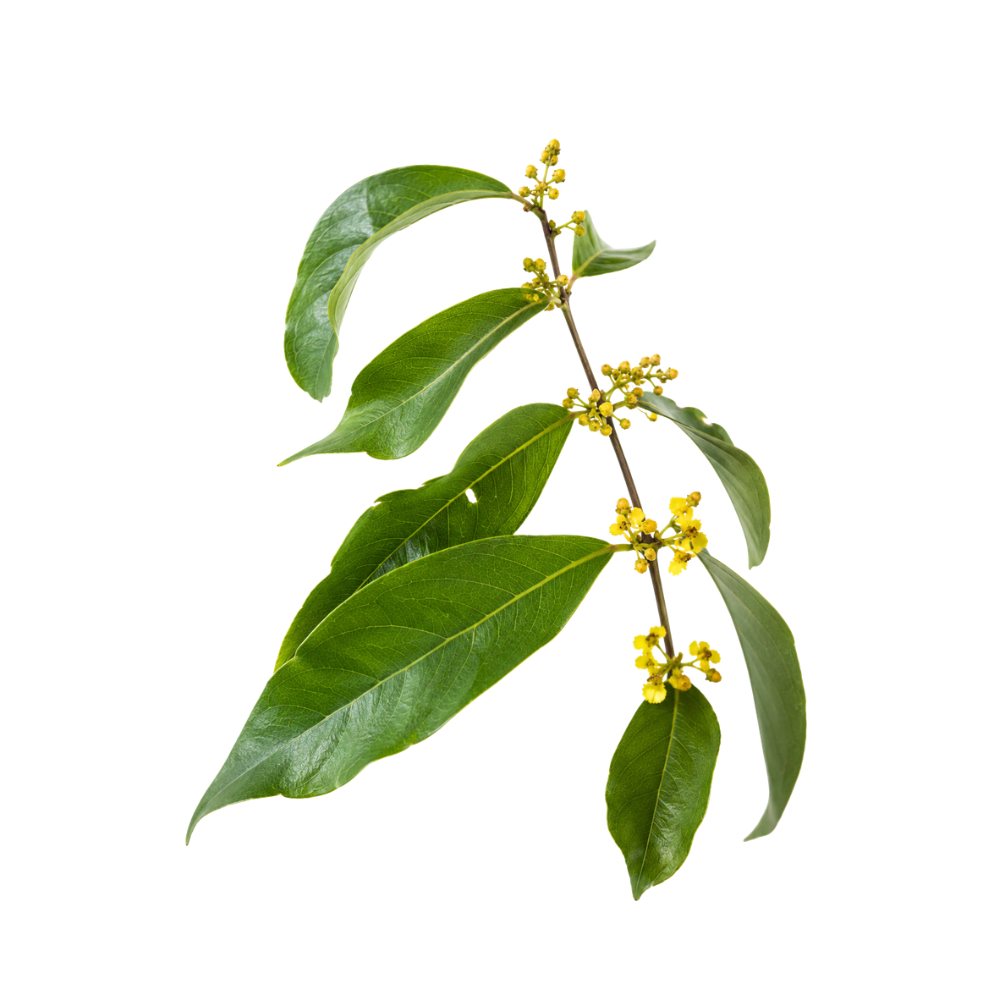
Chagro-Panga (Diplopterys cabrerana) is an Amazonian vine whose tryptamine-rich leaves are used as a potent visionary admixture in ayahuasca.
What is Chagro-Panga?
Chagro-Panga, more often called chaliponga, is a climbing vine (Diplopterys cabrerana) of the western Amazon, related to the ayahuasca vine. Its leaves are prized as a strong DMT-containing admixture and are used in place of, or alongside, chacruna in some ayahuasca traditions.
Traditional & Modern Uses
In parts of Ecuador, Colombia and Peru the leaves of chaliponga are added to Banisteriopsis caapi to make ayahuasca, valued for producing particularly vivid and long-lasting visionary effects. As with chacruna, the MAO-inhibiting beta-carbolines of the caapi vine render the leaf’s tryptamines orally active. Its use is embedded in indigenous and mestizo healing and ceremonial practice.
Botany
Chagro-panga (Diplopterys cabrerana) is a woody climbing vine (liana) in the family Malpighiaceae — the same family as the ayahuasca vine Banisteriopsis caapi, though the two belong to different genera. It is a perennial of humid lowland-to-submontane Amazonian rainforest, climbing over surrounding vegetation to reach light at canopy gaps and forest edges. It is the botanical source of the DMT-rich admixture leaf known in the western Amazon as chagro-panga or chaliponga. (The plant is often cited in older literature under the misapplied name Banisteriopsis rusbyana; its correct basionym is Banisteriopsis cabrerana.)
Distribution
Diplopterys cabrerana is native to the upper (western) Amazon Basin — Colombia, Ecuador, Peru, northern Brazil and Venezuela — concentrated in the Andean-Amazon foothills and adjacent lowland forest. It has no naturalized range and is not weedy or invasive; it is a slow-growing liana of undisturbed humid forest.
Growing Conditions
- Frost-tender tropical woody vine (roughly USDA zones 10–12); full sun to part shade; a humid rainforest species.
- Full cultivation detail lives on the companion farm-wiki grow guide for Diplopterys cabrerana (link to be added once that project’s public URL is confirmed).
Phytochemistry
The leaves are dominated by the indole alkaloid N,N-DMT, present at roughly 0.17–1.75% of dry leaf — generally higher than in chacruna, which contributes to the plant’s reputation for strong, long-lasting effects 1Reference 1Alkaloid content of Banisteriopsis rusbyana — phytochemical analysisView study →. Classic analysis of the leaf also found traces of 5-MeO-DMT, bufotenine and the β-carboline N-methyltetrahydro-beta-carboline 1Reference 1Alkaloid content of Banisteriopsis rusbyana — phytochemical analysisView study →. The presence of 5-MeO-DMT, although minor, is often cited as giving its effects a somewhat distinct character. As always, alkaloid levels vary between plants.
Constituent Summary
Figures are percentages of dried leaf; DMT content is highly variable, and the accompanying tryptamines and β-carboline occur only in trace amounts. † marks the marker constituent that identifies chagro-panga as a DMT-bearing ayahuasca admixture.
Indole alkaloid4 compounds4 with data
Pharmacology & Research
The published science on chagro-panga is small and almost entirely indirect. No pharmacological or clinical study has ever tested Diplopterys cabrerana on its own; the species-specific literature is confined to mid-century phytochemistry establishing N,N-DMT as the dominant leaf alkaloid 1,2Reference 1Alkaloid content of Banisteriopsis rusbyana — phytochemical analysisView study →Reference 2Native use and occurrence of N,N-dimethyltryptamine in the leaves of Banisteriopsis rusbyana — phytochemical analysisView study →, the mechanistic finding that the leaf’s tryptamines are only orally active because a co-administered β-carboline inhibits monoamine oxidase 3Reference 3In vitroMonoamine oxidase inhibitors in South American hallucinogenic plants: tryptamine and β-carboline constituents of ayahuasca — in vitro enzyme assayView study →, and human pharmacokinetics of DMT once it is delivered in an ayahuasca brew 4Reference 4Metabolism and disposition of N,N-dimethyltryptamine and harmala alkaloids after oral administration of ayahuasca — human pharmacokinetic studyView study →. Everything else is inference from two better-studied levels: whole ayahuasca, in which chaliponga is one interchangeable DMT-donating leaf, and the isolated tryptamines it carries. On that borrowed evidence the strongest signal is antidepressant, resting on one small randomised controlled trial and a supportive meta-analysis for ayahuasca 5,8Reference 5RCTRapid antidepressant effects of the psychedelic ayahuasca in treatment-resistant depression: a randomized placebo-controlled trial — RCTView study →Reference 8Meta-analysisEfficacy and safety of psychedelics for the treatment of mental disorders: a systematic review and meta-analysisView study →, while the more mechanistically interesting work on DMT-driven neurogenesis remains preclinical 10,11Reference 10In vitroN,N-dimethyltryptamine regulates adult neurogenesis in vitro and in vivo — animal and cell-line studyView study →Reference 11AnimalA single dose of 5-MeO-DMT stimulates cell proliferation, neuronal survivability, morphological and functional changes in adult mice ventral dentate gyrus — in vivo animal studyView study →. The load-bearing caveat runs through everything below: these findings were generated with chacruna-based brews or purified compounds at controlled doses, not with the leaf as it is actually used, and the whole tryptamine payload is inert without an MAOI.
- Best-supported: rapid antidepressant effect of the brew chaliponga can substitute into, from one RCT (n=29, effect size d=1.49 at day 7) and a meta-analysis 5,8Reference 5RCTRapid antidepressant effects of the psychedelic ayahuasca in treatment-resistant depression: a randomized placebo-controlled trial — RCTView study →Reference 8Meta-analysisEfficacy and safety of psychedelics for the treatment of mental disorders: a systematic review and meta-analysisView study →.
- Emerging, worth watching: DMT and 5-MeO-DMT stimulate adult hippocampal neurogenesis and neuroplasticity in animals and cell models, via sigma-1 and 5-HT2A signalling 10,11,12Reference 10In vitroN,N-dimethyltryptamine regulates adult neurogenesis in vitro and in vivo — animal and cell-line studyView study →Reference 11AnimalA single dose of 5-MeO-DMT stimulates cell proliferation, neuronal survivability, morphological and functional changes in adult mice ventral dentate gyrus — in vivo animal studyView study →Reference 12In vitroShort-term changes in the proteome of human cerebral organoids induced by 5-MeO-DMT — in vitro studyView study →.
- Mechanistically thin: anxiety and general wellbeing rest mostly on secondary outcomes and acute mindfulness measures, not dedicated trials 9Reference 9Clinical trialExploring the therapeutic potential of ayahuasca: acute intake increases mindfulness-related capacities — human studyView study →.
- The caveat: no study used D. cabrerana itself; all efficacy data are brew-level or single-compound, and the leaf is orally inactive without a β-carboline MAOI 3,4Reference 3In vitroMonoamine oxidase inhibitors in South American hallucinogenic plants: tryptamine and β-carboline constituents of ayahuasca — in vitro enzyme assayView study →Reference 4Metabolism and disposition of N,N-dimethyltryptamine and harmala alkaloids after oral administration of ayahuasca — human pharmacokinetic studyView study →.
1. Antidepressant
The antidepressant case is the plant’s strongest, and it is entirely a case about the brew it feeds into. In the only randomised controlled trial, a single dose of ayahuasca outperformed placebo in 29 patients with treatment-resistant depression, with between-group depression-rating differences that grew over the week after dosing (MADRS Cohen’s d = 1.49 at day 7) and a 64% response rate versus 27% for placebo 5Reference 5RCTRapid antidepressant effects of the psychedelic ayahuasca in treatment-resistant depression: a randomized placebo-controlled trial — RCTView study →. This built on open-label work: six inpatients showed up to 82% reductions in depression scores across three weeks 6Reference 6Clinical trialAntidepressant effects of a single dose of ayahuasca in patients with recurrent depression: a preliminary report — open-label trialView study →, and a companion single-photon emission tomography study linked the effect to increased blood flow in mood-regulating regions 7Reference 7Clinical trialAntidepressant effects of a single dose of ayahuasca in patients with recurrent depression — open-label SPECT studyView study →. A 2024 systematic review and meta-analysis placed ayahuasca’s pooled antidepressant effect at Hedges’ g = −1.34 (95% CI −1.86 to −0.82), second only to psilocybin among the psychedelics examined 8Reference 8Meta-analysisEfficacy and safety of psychedelics for the treatment of mental disorders: a systematic review and meta-analysisView study →. The active tryptamine in all of these brews is N,N-DMT, exactly the alkaloid chaliponga supplies and at leaf concentrations generally higher than chacruna’s, which is why the signal plausibly transfers. What it does not do is transfer proven: the trial brews used chacruna, doses were standardised to DMT content rather than to leaf, and the antidepressant response depends on the β-carboline MAOI that makes any of the DMT orally available in the first place 3,4Reference 3In vitroMonoamine oxidase inhibitors in South American hallucinogenic plants: tryptamine and β-carboline constituents of ayahuasca — in vitro enzyme assayView study →Reference 4Metabolism and disposition of N,N-dimethyltryptamine and harmala alkaloids after oral administration of ayahuasca — human pharmacokinetic studyView study →.
Gap: No trial has used D. cabrerana; the evidence is for a standardised whole brew, and the leaf’s own dose-response, consistency, and safety margin in this indication are unknown.
2. Neuroplasticity & neurogenesis
The most mechanistically interesting work concerns what the leaf’s tryptamines do to neurons, and here the evidence is preclinical but unusually consistent. In mice, N,N-DMT activated the subgranular zone of the hippocampal dentate gyrus (a principal site of adult neurogenesis), increased the production of new neurons, and improved performance on memory tasks; the effect was abolished by a sigma-1 receptor antagonist, implicating that receptor alongside DMT’s serotonergic activity 10Reference 10In vitroN,N-dimethyltryptamine regulates adult neurogenesis in vitro and in vivo — animal and cell-line studyView study →. The leaf’s minor constituent 5-MeO-DMT produced a parallel result: a single dose stimulated dentate-gyrus cell proliferation and neuronal survival in adult mice 11Reference 11AnimalA single dose of 5-MeO-DMT stimulates cell proliferation, neuronal survivability, morphological and functional changes in adult mice ventral dentate gyrus — in vivo animal studyView study →, and in human cerebral organoids it rapidly remodelled proteins governing cytoskeletal and synaptic structure 12Reference 12In vitroShort-term changes in the proteome of human cerebral organoids induced by 5-MeO-DMT — in vitro studyView study →. Receptor-level work situates these tryptamines as agonists at 5-HT2A and, for the methoxylated compound, 5-HT1A 13,14Reference 13Structural pharmacology and therapeutic potential of 5-methoxytryptamines — receptor pharmacologyView study →Reference 14AnimalThe serotonin hallucinogen 5-MeO-DMT alters cortico-thalamic activity in freely moving mice — in vivo animal studyView study →, the same pathway through which 5-HT2A activation drives ayahuasca’s measurable cortical effects in humans 15Reference 15RCTInhibition of alpha oscillations through serotonin-2A receptor activation underlies the visual effects of ayahuasca in humans — randomized controlled studyView study →. Together this maps a plausible route from tryptamine to structural plasticity, but every experiment used isolated compounds, often at doses or by routes (including intracerebroventricular injection) far removed from a leaf drunk in a brew, and none measured neurogenesis in a person.
Gap: Entirely preclinical and single-compound; no evidence that whole chaliponga, or a realistically dosed brew, produces neurogenesis in humans.
3. Anxiety & wellbeing
Beyond depression, ayahuasca has shown acute effects on anxiety and psychological wellbeing, though on thinner and less direct footing. A controlled human study found that a single ayahuasca session increased mindfulness-related capacities, particularly the ability to accept experience without reacting, a construct linked to lower anxiety 9Reference 9Clinical trialExploring the therapeutic potential of ayahuasca: acute intake increases mindfulness-related capacities — human studyView study →. Anxiolytic and wellbeing improvements also appear as secondary outcomes within the depression trials and are folded into the 2024 meta-analysis, which reported benefits extending to anxiety symptoms 8Reference 8Meta-analysisEfficacy and safety of psychedelics for the treatment of mental disorders: a systematic review and meta-analysisView study →. The mechanism is presumed to overlap with the antidepressant one: acute 5-HT2A-driven changes in self-referential processing 15Reference 15RCTInhibition of alpha oscillations through serotonin-2A receptor activation underlies the visual effects of ayahuasca in humans — randomized controlled studyView study → followed by a sustained “afterglow.” The evidence stops short of a dedicated trial in an anxiety disorder, rests substantially on secondary endpoints and acute-state measures, and (as everywhere here) describes the brew rather than the leaf.
Gap: No primary anxiety-disorder trial; signal is secondary-outcome and acute-state, brew-level, and not specific to chaliponga.
Mechanisms
| Mechanism | Drives | Key compounds |
|---|---|---|
| 5-HT2A receptor agonism | antidepressantanxiety/wellbeingacute visionary effects | N,N-DMT, 5-MeO-DMT |
| Sigma-1 receptor activation | neuroplasticityneurogenesis | N,N-DMT |
| 5-HT1A receptor agonism | cortico-thalamic modulation (5-MeO-selective) | 5-MeO-DMT, bufotenine |
| Monoamine oxidase inhibition (by co-administered β-carbolines) | enabling oral bioavailability of all leaf tryptamines | N-methyltetrahydro-β-carboline; harmala alkaloids from the caapi vine |
Clinical trials
No registered clinical trial has studied Diplopterys cabrerana itself; the ~13 ayahuasca and ~50 DMT trials on ClinicalTrials.gov test the whole brew or the isolated compound, so the numbers below count the ayahuasca programme the plant feeds into, not chaliponga.
| Completed | Planned | Terminated | Preclinical |
|---|---|---|---|
| ~6(ayahuasca) | ~4(recruiting/not-yet) | 0 | ~10+ |
Last checked: July 2026.
Safety & Pregnancy
Chaliponga is a potent DMT-bearing ayahuasca admixture, and the MAO inhibition that makes its tryptamines orally active is itself the central hazard — driving serious food and drug interactions and a risk of serotonin toxicity. It is best confined to screened, experienced ceremonial contexts, and DMT is a controlled substance in many places.
- Serotonin toxicity. Combined with SSRIs, SNRIs, MAOIs or other serotonergic drugs it can precipitate serotonin syndrome.
- MAOI food & drug hazard. Requires tyramine-food restriction and carries hypertensive-reaction risk across many medications.
- Avoid in pregnancy & breastfeeding. No human safety data for a psychoactive, MAO-active preparation.
- Potent, variable tryptamines. Minor 5-MeO-DMT and bufotenine add unpredictable intensity.
- Controlled substance. DMT is illegal in many jurisdictions.
- Experienced settings only. For medically screened, well-prepared ceremonial use — never casual use.
Full safety & interactions detail
Chaliponga is a potent DMT-bearing leaf and carries the full risk profile of the ayahuasca brews it is used in. Its tryptamines are orally inactive alone and become active only when combined with a monoamine-oxidase-inhibiting β-carboline; that MAO inhibition is itself the central hazard, producing serious sensitivity to tyramine-containing foods and to a wide range of medications, with potential for hypertensive reactions and for serotonin toxicity when combined with SSRIs, SNRIs, MAOIs, or other serotonergic drugs 3,4,16Reference 3In vitroMonoamine oxidase inhibitors in South American hallucinogenic plants: tryptamine and β-carboline constituents of ayahuasca — in vitro enzyme assayView study →Reference 4Metabolism and disposition of N,N-dimethyltryptamine and harmala alkaloids after oral administration of ayahuasca — human pharmacokinetic studyView study →Reference 16ReviewAyahuasca preparations and serotonin reuptake inhibitors: a potential combination for severe adverse interactions — case-based pharmacology reviewView study →. Case-based pharmacology specifically warns that ayahuasca-type preparations taken with serotonin-reuptake inhibitors can precipitate a serotonin syndrome with potentially grave outcome 16Reference 16ReviewAyahuasca preparations and serotonin reuptake inhibitors: a potential combination for severe adverse interactions — case-based pharmacology reviewView study →. The leaf also supplies minor amounts of 5-MeO-DMT and bufotenine, more powerful and less predictable tryptamines that add to the intensity of effect 1,13Reference 1Alkaloid content of Banisteriopsis rusbyana — phytochemical analysisView study →Reference 13Structural pharmacology and therapeutic potential of 5-methoxytryptamines — receptor pharmacologyView study →. Broader reviews find that acute and long-term ayahuasca use is not markedly toxic in physically healthy, screened adults, but caution that cardiovascular, psychiatric, and drug-interaction risks are real and that DMT is a controlled substance in many jurisdictions 17,18Reference 17ReviewSafety and side effects of ayahuasca in humans — an overview focusing on developmental toxicology — reviewView study →Reference 18ReviewAyahuasca: psychological and physiologic effects, pharmacology and potential uses in addiction and mental illness — reviewView study →. This is a plant for experienced, well-prepared ceremonial contexts with medical and pharmacological screening — never casual use, and never alongside serotonergic medication.
Scope note: interactions were assessed for the MAOI mechanism the leaf is used within — tyramine-food and serotonergic-drug interactions are well documented for ayahuasca-type preparations and apply directly 3,4,16Reference 3In vitroMonoamine oxidase inhibitors in South American hallucinogenic plants: tryptamine and β-carboline constituents of ayahuasca — in vitro enzyme assayView study →Reference 4Metabolism and disposition of N,N-dimethyltryptamine and harmala alkaloids after oral administration of ayahuasca — human pharmacokinetic studyView study →Reference 16ReviewAyahuasca preparations and serotonin reuptake inhibitors: a potential combination for severe adverse interactions — case-based pharmacology reviewView study →. Absence of reports is not evidence of safety.
Pregnancy and lactation safety for chaliponga specifically has not been researched. Reviews of ayahuasca focus on developmental toxicology and report that controlled human data in pregnancy are lacking, while animal developmental studies raise possible concerns that cannot be dismissed 17Reference 17ReviewSafety and side effects of ayahuasca in humans — an overview focusing on developmental toxicology — reviewView study →. Given a psychoactive, MAO-dependent, serotonergically active preparation with no human safety data, avoidance during pregnancy and breastfeeding is the only defensible position — an “avoid because unstudied and high-risk,” not an inference of safety from silence.
Dosage
Note: chaliponga is not used as a standalone therapeutic herb; it is a ceremonial ayahuasca admixture, active only with an MAOI, and a controlled substance in many jurisdictions. The tables below are descriptive/ethnographic, drawn from the research and pharmacology literature — not a preparation guide or a recommendation.
Research doses (one row per indication that reported one — cited with its [n]):
| Indication | Preparation | Dose | Est. dried-herb equivalent | Source |
|---|---|---|---|---|
| Antidepressant | Standardised whole ayahuasca (chacruna-based, DMT-quantified) | Single dose ~0.36 mg DMT/kg body weight | — (brew standardised to DMT, not to chaliponga leaf; no valid leaf back-conversion) | 5Reference 5RCTRapid antidepressant effects of the psychedelic ayahuasca in treatment-resistant depression: a randomized placebo-controlled trial — RCTView study → |
| Antidepressant | Whole ayahuasca (open-label) | Single ceremonial dose | — | 6,7Reference 6Clinical trialAntidepressant effects of a single dose of ayahuasca in patients with recurrent depression: a preliminary report — open-label trialView study →Reference 7Clinical trialAntidepressant effects of a single dose of ayahuasca in patients with recurrent depression — open-label SPECT studyView study → |
| Neuroplasticity | Isolated DMT / 5-MeO-DMT, animal (incl. ICV) | Not human-applicable | — (non-oral routes; not convertible to leaf) | 10,11Reference 10In vitroN,N-dimethyltryptamine regulates adult neurogenesis in vitro and in vivo — animal and cell-line studyView study →Reference 11AnimalA single dose of 5-MeO-DMT stimulates cell proliferation, neuronal survivability, morphological and functional changes in adult mice ventral dentate gyrus — in vivo animal studyView study → |
Est. dried-herb equivalent is deliberately left ”—”. The trials dosed by DMT content of a chacruna brew, not by chaliponga leaf mass; and leaf DMT ranges roughly 0.17–1.75% 1Reference 1Alkaloid content of Banisteriopsis rusbyana — phytochemical analysisView study →, a ~10× spread that makes any single back-conversion misleading. If one were forced: at ~1% leaf DMT, a ~25 mg DMT dose ≈ ~2.5 g dried leaf — order-of-magnitude only, not a dosing instruction.
Traditional Dosage
Traditionally, chaliponga is never taken alone or by a standardised amount: the leaves are boiled together with the MAOI vine into an ayahuasca decoction, with quantities set by the practitioner rather than by weight.
| System | Preparation | Dose |
|---|---|---|
| Amazonian (indigenous/mestizo) ceremonial | Leaves boiled with Banisteriopsis caapi into an ayahuasca decoction; a handful of leaves per brew, quantities set by the practitioner | Not standardised — determined by tradition/practitioner; always with the MAOI vine |
References
- Agurell S, Holmstedt B, Lindgren JE, Schultes RE. (1968). Alkaloid content of Banisteriopsis rusbyana — phytochemical analysis. Biochem Pharmacol. https://pubmed.ncbi.nlm.nih.gov/5698439/
- Der Marderosian AH, Pinkley HV, Dobbins MF. (1968). Native use and occurrence of N,N-dimethyltryptamine in the leaves of Banisteriopsis rusbyana — phytochemical analysis. Am J Pharm Sci Support Public Health. https://pubmed.ncbi.nlm.nih.gov/5698438/
- McKenna DJ, Towers GHN, Abbott F. (1984). Monoamine oxidase inhibitors in South American hallucinogenic plants: tryptamine and β-carboline constituents of ayahuasca — in vitro enzyme assay. J Ethnopharmacol. https://pubmed.ncbi.nlm.nih.gov/6587171/
- Riba J, McIlhenny EH, Valle M, et al. (2012). Metabolism and disposition of N,N-dimethyltryptamine and harmala alkaloids after oral administration of ayahuasca — human pharmacokinetic study. Drug Test Anal. https://pubmed.ncbi.nlm.nih.gov/22514127/
- Palhano-Fontes F, Barreto D, Onias H, et al. (2019). Rapid antidepressant effects of the psychedelic ayahuasca in treatment-resistant depression: a randomized placebo-controlled trial — RCT. Psychol Med. https://pubmed.ncbi.nlm.nih.gov/29903051/
- Osório FL, Sanches RF, Macedo LR, et al. (2015). Antidepressant effects of a single dose of ayahuasca in patients with recurrent depression: a preliminary report — open-label trial. Braz J Psychiatry. https://pubmed.ncbi.nlm.nih.gov/25806551/
- Sanches RF, de Lima Osório F, dos Santos RG, et al. (2016). Antidepressant effects of a single dose of ayahuasca in patients with recurrent depression — open-label SPECT study. J Clin Psychopharmacol. https://pubmed.ncbi.nlm.nih.gov/26650973/
- Yao Y, Guo D, Lu TS, et al. (2024). Efficacy and safety of psychedelics for the treatment of mental disorders: a systematic review and meta-analysis. Psychiatry Res. https://pubmed.ncbi.nlm.nih.gov/38574699/
- Soler J, Elices M, Franquesa A, et al. (2016). Exploring the therapeutic potential of ayahuasca: acute intake increases mindfulness-related capacities — human study. Psychopharmacology (Berl). https://pubmed.ncbi.nlm.nih.gov/26612618/
- Morales-García JA, Calleja-Conde J, López-Moreno JA, et al. (2020). N,N-dimethyltryptamine regulates adult neurogenesis in vitro and in vivo — animal and cell-line study. Transl Psychiatry. https://pubmed.ncbi.nlm.nih.gov/32989216/
- Lima da Cruz RV, Moulin TC, Petiz LL, Leão RN. (2018). A single dose of 5-MeO-DMT stimulates cell proliferation, neuronal survivability, morphological and functional changes in adult mice ventral dentate gyrus — in vivo animal study. Front Mol Neurosci. https://pubmed.ncbi.nlm.nih.gov/30233313/
- Dakic V, Minardi Nascimento J, Costa Sartore R, et al. (2017). Short-term changes in the proteome of human cerebral organoids induced by 5-MeO-DMT — in vitro study. Sci Rep. https://pubmed.ncbi.nlm.nih.gov/28993683/
- Warren AL, Lankri D, Cunningham MJ, et al. (2024). Structural pharmacology and therapeutic potential of 5-methoxytryptamines — receptor pharmacology. Nature. https://pubmed.ncbi.nlm.nih.gov/38720072/
- Riga MS, Lladó-Pelfort L, Artigas F, Celada P. (2018). The serotonin hallucinogen 5-MeO-DMT alters cortico-thalamic activity in freely moving mice — in vivo animal study. Neuropharmacology. https://pubmed.ncbi.nlm.nih.gov/29221792/
- Valle M, Maqueda AE, Rabella M, et al. (2016). Inhibition of alpha oscillations through serotonin-2A receptor activation underlies the visual effects of ayahuasca in humans — randomized controlled study. Eur Neuropsychopharmacol. https://pubmed.ncbi.nlm.nih.gov/27039035/
- Callaway JC, Grob CS. (1998). Ayahuasca preparations and serotonin reuptake inhibitors: a potential combination for severe adverse interactions — case-based pharmacology review. J Psychoactive Drugs. https://pubmed.ncbi.nlm.nih.gov/9924842/
- dos Santos RG. (2013). Safety and side effects of ayahuasca in humans — an overview focusing on developmental toxicology — review. J Psychoactive Drugs. https://pubmed.ncbi.nlm.nih.gov/23662333/
- Hamill J, Hallak J, Dursun SM, Baker G. (2019). Ayahuasca: psychological and physiologic effects, pharmacology and potential uses in addiction and mental illness — review. Curr Neuropharmacol. https://pubmed.ncbi.nlm.nih.gov/29366418/
- Goldin D, Salani D. (2021). Ayahuasca: what healthcare providers need to know — clinical review. J Addict Nurs. https://pubmed.ncbi.nlm.nih.gov/34060770/