
Materia Medica
Coltsfoot
Tussilago farfara
Coltsfoot (Tussilago farfara) is a traditional cough and lung herb that also contains liver-toxic pyrrolizidine alkaloids.
What is Coltsfoot?
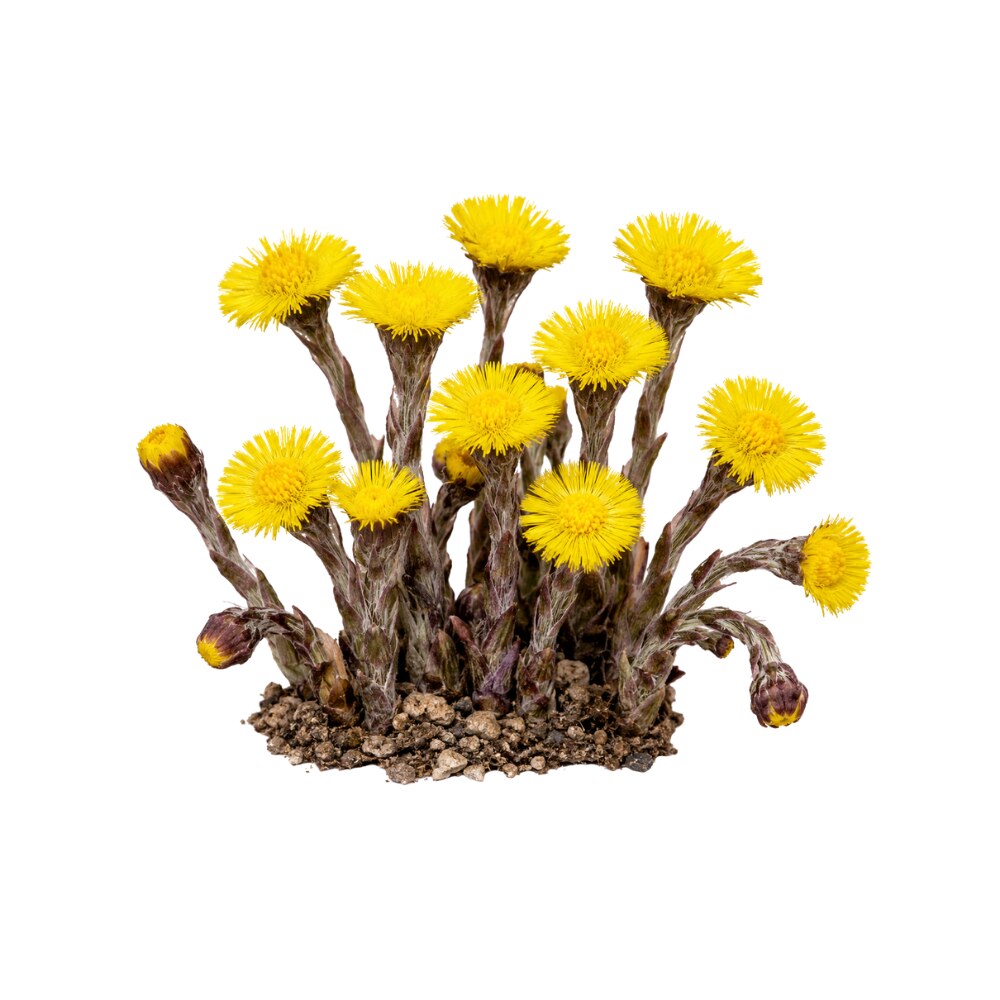
Coltsfoot (Tussilago farfara) is a low, spreading perennial in the daisy family, native to Europe and Asia and naturalised in North America. Its bright yellow flowers appear in early spring before the broad, hoof-shaped leaves, which gave the plant its name. It has a long history as a remedy for coughs and lung complaints.
Traditional & Modern Uses
The botanical name Tussilago means “cough dispeller,” reflecting the plant’s ancient reputation. The leaves and flowers were used as a soothing, mucilage-rich expectorant tea or syrup for coughs, bronchitis, asthma and sore throats, and dried coltsfoot was historically smoked as a “herbal tobacco” to ease the chest. It remains a component of some herbal smoking blends and traditional cough preparations. Modern practice has shifted decisively away from that internal use: because the plant carries hepatotoxic pyrrolizidine alkaloids, the herb is now widely discouraged for ingestion, and the tension between its long traditional record and its documented liver toxicity is the defining fact of the monograph.
Botany
Coltsfoot (Tussilago farfara) is a low, rhizomatous perennial in the daisy family (Asteraceae) and the sole species of its genus. It spreads through a network of fleshy, brittle underground rhizomes that fragment easily and can lie dormant for years. Its habit is unmistakable: in early spring, bright yellow, dandelion-like flower heads open singly on short, scaly, purple-tinged stalks before any foliage appears, and only after they set seed do the large, hoof-shaped basal leaves — the source of the “colt’s foot” name — unfurl. Because the flower precedes the leaf, it earned old names like “son-before-father.”
A safety note belongs with the botany here: coltsfoot contains hepatotoxic pyrrolizidine alkaloids (see Safety), the reason many products now require PA-free material.
Distribution
Tussilago farfara is native across temperate Eurasia, extending to North Africa and the Himalaya. European settlers carried it to North America for its reputed medicinal use, and it has since naturalized and turned invasive there — spreading aggressively by seed and rhizome, crossing the continental divide into the Pacific Northwest, and earning noxious-weed listings in several US states (Oregon, Washington, Alabama, Massachusetts, Connecticut).
Growing Conditions
- Very cold-hardy rhizomatous perennial (roughly USDA zones 3–8); full sun to part shade; favours moist, open, disturbed ground and neutral-to-alkaline soils.
- Full cultivation detail lives on the companion farm-wiki grow guide for Tussilago farfara (link to be added once that project’s public URL is confirmed).
Phytochemistry
Coltsfoot’s soothing, demulcent action comes from abundant mucilage (polysaccharides), supported by tannins and the flavonoids rutin, isoquercitrin, quercetin and kaempferol; the sesquiterpene tussilagone is credited in preclinical work with the plant’s expectorant and anti-inflammatory activity 1,9,10Reference 1ReviewA review of the ethnobotanical value, phytochemistry, pharmacology, toxicity and quality control of Tussilago farfara L. (coltsfoot) — reviewView study →Reference 9In vitroTussilagone suppressed the production and gene expression of MUC5AC mucin — in vitro airway modelView study →Reference 10In vitroThe anti-inflammatory effect of tussilagone, from Tussilago farfara, is mediated by the induction of heme oxygenase-1 in murine macrophages — in vitroView study →, and the caffeoylquinic acids — chiefly chlorogenic acid and its dicaffeoyl relatives — carry much of the antitussive/expectorant signal 5,6Reference 5AnimalAntitussive, expectorant, and anti-inflammatory activities of four caffeoylquinic acids isolated from Tussilago farfara — mouse in vivoView study →Reference 6In vitrohttps://pubmed.ncbi.nlm.nih.gov/32023945/View study →. Crucially, coltsfoot also contains hepatotoxic pyrrolizidine alkaloids — chiefly senkirkine, senecionine and tussilagine — which are the compounds that drive its safety restrictions 1,2Reference 1ReviewA review of the ethnobotanical value, phytochemistry, pharmacology, toxicity and quality control of Tussilago farfara L. (coltsfoot) — reviewView study →Reference 2Content of pyrrolizidine alkaloids in the leaves of coltsfoot (Tussilago farfara L.) in Poland — analyticalView study →. It helps to hold the chemistry in two halves: the beneficial classes (sesquiterpenoids, caffeoylquinic acids, flavonoids and mucilage) sit alongside a harmful one (the pyrrolizidine alkaloids), and the benefit-risk problem is the coexistence of the two in the same leaf.
Constituent Summary
Figures are percent of dried herb where known; the pyrrolizidine-alkaloid content is very low and highly variable (often reported below 0.015%, i.e. micrograms per leaf) and depends strongly on plant part, chemotype and region — so a low average does not guarantee a low dose in any given sample. Sesquiterpenes and flavonoids are documented qualitatively and listed as No Data 1,2,45Reference 1ReviewA review of the ethnobotanical value, phytochemistry, pharmacology, toxicity and quality control of Tussilago farfara L. (coltsfoot) — reviewView study →Reference 2Content of pyrrolizidine alkaloids in the leaves of coltsfoot (Tussilago farfara L.) in Poland — analyticalView study →Reference 45Journal of Separation Science. https://pubmed.ncbi.nlm.nih.gov/27673325/View study →.
Mucilage1 compound1 with data
Other Alkaloid3 compounds3 with data
Sesquiterpene1 compoundno data
Phenolic acid1 compoundno data
Flavonoid4 compoundsno data
Tannin1 compoundno data
Pharmacology & Research
Coltsfoot has a large phytochemical literature (roughly 175 characterised compounds) but a pharmacology base that is almost entirely preclinical — cell-line assays and rodent models, with no registered clinical trials evaluating the whole herb for any indication 1,3,4Reference 1ReviewA review of the ethnobotanical value, phytochemistry, pharmacology, toxicity and quality control of Tussilago farfara L. (coltsfoot) — reviewView study →Reference 3ReviewFarfarae Flos: a review of botany, traditional uses, phytochemistry, pharmacology, and toxicology — reviewView study →Reference 4ReviewNatural Product Research. https://pubmed.ncbi.nlm.nih.gov/40892112/View study →. The most consistent and heavily replicated signal is anti-inflammatory, driven largely by the sesquiterpenoid tussilagone and a family of caffeoylquinic acids, converging on NF-κB suppression and Nrf2/HO-1 induction 10,11,23Reference 10In vitroThe anti-inflammatory effect of tussilagone, from Tussilago farfara, is mediated by the induction of heme oxygenase-1 in murine macrophages — in vitroView study →Reference 11AnimalTussilagone ameliorates inflammatory responses in dextran-sulphate-sodium-induced murine colitis — mouse in vivoView study →Reference 23In vitroTussilagonone-induced Nrf2 pathway activation protects HepG2 cells from oxidative injury — in vitroView study →. The traditional respiratory use — cough, phlegm, bronchitis — is supported by animal antitussive/expectorant models and by mucin-suppression and lung-inflammation work, though again only in animals 5,9,17Reference 5AnimalAntitussive, expectorant, and anti-inflammatory activities of four caffeoylquinic acids isolated from Tussilago farfara — mouse in vivoView study →Reference 9In vitroTussilagone suppressed the production and gene expression of MUC5AC mucin — in vitro airway modelView study →Reference 17In vitroThe ethanol extract of flower buds of Tussilago farfara L. attenuates cigarette-smoke-induced lung inflammation through NLRP3 inflammasome, Nrf2, and NF-κB — mouse in vivo / in vitroView study →. The single most important caveat is not efficacy but safety: coltsfoot contains hepatotoxic, pro-carcinogenic pyrrolizidine alkaloids (senkirkine, senecionine), and one of the few in vivo whole-herb feeding studies produced liver tumours in rats 43Reference 43AnimalCarcinogenic activity of coltsfoot, Tussilago farfara L. — rat in vivoView study →. Effect sizes also depend heavily on preparation — most active-compound work uses isolated tussilagone or solvent fractions given by injection, not the leaf tea the herb is traditionally taken as.
- Best-supported: anti-inflammatory activity across many models, converging on NF-κB↓ and Nrf2/HO-1↑ 10,11,14Reference 10In vitroThe anti-inflammatory effect of tussilagone, from Tussilago farfara, is mediated by the induction of heme oxygenase-1 in murine macrophages — in vitroView study →Reference 11AnimalTussilagone ameliorates inflammatory responses in dextran-sulphate-sodium-induced murine colitis — mouse in vivoView study →Reference 14AnimalTussilagonone ameliorates psoriatic features in keratinocytes and imiquimod-induced psoriasis-like skin inflammation — mouse in vivo. https://pubmed.ncbi.nlm.nih.gov/31877316/View study →; and antitussive/expectorant action matching the traditional lung use, shown in rodent cough and mucus models 5,6,9Reference 5AnimalAntitussive, expectorant, and anti-inflammatory activities of four caffeoylquinic acids isolated from Tussilago farfara — mouse in vivoView study →Reference 6In vitrohttps://pubmed.ncbi.nlm.nih.gov/32023945/View study →Reference 9In vitroTussilagone suppressed the production and gene expression of MUC5AC mucin — in vitro airway modelView study →.
- Emerging, worth watching: Nrf2-mediated antioxidant cytoprotection 23,24Reference 23In vitroTussilagonone-induced Nrf2 pathway activation protects HepG2 cells from oxidative injury — in vitroView study →Reference 24In vitroAntioxidative effects of quercetin-glycosides isolated from the flower buds of Tussilago farfara L. — in vitroView study →, neuroprotection in ischaemia and Parkinson’s models 27,28Reference 27In vitroNeuroprotection against 6-OHDA toxicity in PC12 cells and mice through the Nrf2 pathway by a sesquiterpenoid from Tussilago farfara — in vivo / in vitroView study →Reference 28Animalhttps://pubmed.ncbi.nlm.nih.gov/30090976/View study →, and antiproliferative effects in colon and breast cancer lines 29,30Reference 29In vitroTussilagone suppresses colon cancer cell proliferation by promoting the degradation of β-catenin — in vitroView study →Reference 30In vitroImmunopharmacology and Immunotoxicology. https://pubmed.ncbi.nlm.nih.gov/41029481/View study →.
- Mechanistically thin: anti-allergic, metabolic/anti-diabetic, cardiovascular and antimicrobial signals rest on one or two isolated-compound studies each 34,36,38,40Reference 34In vitroFitoterapia. https://pubmed.ncbi.nlm.nih.gov/32058052/View study →Reference 36In vitroJournal of Chromatography A. https://pubmed.ncbi.nlm.nih.gov/40117791/View study →Reference 38In vitroPlatelets. https://pubmed.ncbi.nlm.nih.gov/32850895/View study →Reference 40In vitroNatural Product Research. https://pubmed.ncbi.nlm.nih.gov/30257572/View study →.
- The caveat: every efficacy finding is preclinical, most use isolated tussilagone by injection rather than the whole-leaf tea, and the herb’s own pyrrolizidine alkaloids are hepatotoxic and carcinogenic 43,44Reference 43AnimalCarcinogenic activity of coltsfoot, Tussilago farfara L. — rat in vivoView study →Reference 44Systematic reviewFitoterapia. https://pubmed.ncbi.nlm.nih.gov/32105669/View study → — a genuine benefit-risk problem, not a footnote.
1. Anti-inflammatory
This is the deepest and most reproducible part of the literature. The sesquiterpenoid tussilagone induces heme oxygenase-1 (HO-1) in macrophages and suppresses NO, TNF-α and PGE2 production 10Reference 10In vitroThe anti-inflammatory effect of tussilagone, from Tussilago farfara, is mediated by the induction of heme oxygenase-1 in murine macrophages — in vitroView study →, and reduces colonic inflammation in dextran-sulphate-sodium colitis in mice via NF-κB↓ and Nrf2↑ 11Reference 11AnimalTussilagone ameliorates inflammatory responses in dextran-sulphate-sodium-induced murine colitis — mouse in vivoView study →. Multiple isolated sesquiterpenoids independently inhibit LPS-induced NO and cytokine release in BV-2 microglia and RAW264.7 macrophages 12,13,16Reference 12In vitroIn vitro neuroprotective activity of sesquiterpenoids from the flower buds of Tussilago farfara — in vitroView study →Reference 13In vitrohttps://pubmed.ncbi.nlm.nih.gov/24963619/View study →Reference 16In vitroChinese Journal of Natural Medicines. https://pubmed.ncbi.nlm.nih.gov/41781124/View study →, the analogue tussilagonone attenuates psoriasis-like skin inflammation in an imiquimod mouse model 14Reference 14AnimalTussilagonone ameliorates psoriatic features in keratinocytes and imiquimod-induced psoriasis-like skin inflammation — mouse in vivo. https://pubmed.ncbi.nlm.nih.gov/31877316/View study →, and a whole-plant extract lowered inflammatory markers in rabbits 15Reference 15In vitroJournal of Ethnopharmacology. https://pubmed.ncbi.nlm.nih.gov/39442825/View study →. The convergence of independent groups on the same NF-κB / Nrf2-HO-1 axis is what pushes this above the other indications.
Gap: every study is animal or in vitro, doses and routes vary widely, and no human anti-inflammatory data exist.
2. Antitussive & expectorant
This is the herb’s traditional flagship use, and it is the indication where the tested preparation best matches how coltsfoot is actually taken. In mice, four chlorogenic acid-type caffeoylquinic acids (chlorogenic and di-caffeoylquinic acids) given orally at 10–20 mg/kg reduced ammonia-induced cough and increased phenol-red expectoration 5Reference 5AnimalAntitussive, expectorant, and anti-inflammatory activities of four caffeoylquinic acids isolated from Tussilago farfara — mouse in vivoView study →, and bioactivity-guided and metabolomic profiling identified these caffeoylquinic acids and sesquiterpenes as the constituents carrying the antitussive/expectorant activity of the flower bud 6,7,8Reference 6In vitrohttps://pubmed.ncbi.nlm.nih.gov/32023945/View study →Reference 7AnimalMetabolomic profiling of the flower bud and rachis of Tussilago farfara with antitussive and expectorant effects — animal model. (2012). https://pubmed.ncbi.nlm.nih.gov/22210102/View study →Reference 8https://pubmed.ncbi.nlm.nih.gov/23261808/View study →. Mechanistically, tussilagone suppresses production and gene expression of MUC5AC — a major airway mucin — which is consistent with an expectorant/mucoregulatory action 9Reference 9In vitroTussilagone suppressed the production and gene expression of MUC5AC mucin — in vitro airway modelView study →.
Gap: all data are rodent or cell-based; there is no controlled human cough trial, and the classic “smoked as herbal tobacco” route has no supporting efficacy evidence.
3. Respiratory / lung-protective
Beyond cough, coltsfoot constituents are protective in several rodent lung-injury models. An ethanol extract of the flower buds attenuated cigarette-smoke-induced lung inflammation in mice by regulating the NLRP3 inflammasome, Nrf2 and NF-κB 17Reference 17In vitroThe ethanol extract of flower buds of Tussilago farfara L. attenuates cigarette-smoke-induced lung inflammation through NLRP3 inflammasome, Nrf2, and NF-κB — mouse in vivo / in vitroView study →, and tussilagone attenuated cigarette-smoke COPD by covalently modifying cysteine-434 of KEAP1 to activate Nrf2 18Reference 18AnimalJournal of Advanced Research. https://pubmed.ncbi.nlm.nih.gov/40669599/View study →, protected against PM2.5-induced acute lung injury via the Hif-1α/NF-κB axis 19Reference 19In vitroEnvironmental Toxicology. https://pubmed.ncbi.nlm.nih.gov/35112795/View study →, and improved survival and reduced lung injury in sepsis models 20,22Reference 20Animalhttps://pubmed.ncbi.nlm.nih.gov/42015326/View study →Reference 22Animalhttps://pubmed.ncbi.nlm.nih.gov/29258263/View study →. A metabolomic study links the caffeoylquinic acids to the lung-protective effect 21Reference 21AnimalBiomedical Chromatography. https://pubmed.ncbi.nlm.nih.gov/39775926/View study →.
Gap: most of the strongest work uses isolated tussilagone, frequently by intraperitoneal injection, so it speaks to the molecule more than to a leaf infusion; no human respiratory-disease data exist.
4. Antioxidant (Nrf2 cytoprotection)
Coltsfoot’s antioxidant action is mechanistically specific rather than merely a radical-scavenging assay result. The analogue tussilagonone activates Nrf2 and up-regulates the detoxifying enzymes NQO1 and HO-1, protecting HepG2 cells from oxidative injury 23Reference 23In vitroTussilagonone-induced Nrf2 pathway activation protects HepG2 cells from oxidative injury — in vitroView study →. Quercetin glycosides isolated from the flower buds raised cellular glutathione and induced γ-glutamylcysteine ligase through the Nrf2/ARE pathway 24Reference 24In vitroAntioxidative effects of quercetin-glycosides isolated from the flower buds of Tussilago farfara L. — in vitroView study →, and an ethyl-acetate fraction blocked oxidative neuronal damage from H2O2 and other oxidants 25Reference 25In vitroNeuroprotective and antioxidant effects of the ethyl acetate fraction prepared from Tussilago farfara L. — in vitroView study →. Comparative phytochemical work confirms measurable antioxidant capacity tracking the phenolic content 26Reference 26In vitrohttps://pubmed.ncbi.nlm.nih.gov/35807614/View study →.
Gap: almost entirely in-vitro/cell-based; antioxidant assays do not establish a clinical antioxidant effect, and the Nrf2-inducing compounds overlap with those studied as isolated molecules.
5. Neuroprotective
Several models point to neuroprotection through the same antioxidant/anti-inflammatory machinery. An ethyl-acetate fraction protected primary rat cortical neurons against amyloid-β, glutamate/NMDA excitotoxicity and oxidative insult 25Reference 25In vitroNeuroprotective and antioxidant effects of the ethyl acetate fraction prepared from Tussilago farfara L. — in vitroView study →; isolated sesquiterpenoids reduced LPS-induced microglial activation and downstream neuronal death via NF-κB inhibition 12Reference 12In vitroIn vitro neuroprotective activity of sesquiterpenoids from the flower buds of Tussilago farfara — in vitroView study →; a sesquiterpenoid protected PC12 cells and mice against 6-OHDA (a Parkinson’s model) through Nrf2 27Reference 27In vitroNeuroprotection against 6-OHDA toxicity in PC12 cells and mice through the Nrf2 pathway by a sesquiterpenoid from Tussilago farfara — in vivo / in vitroView study →; and a flower-bud extract reduced infarct size and microglial inflammation in a rat middle-cerebral-artery-occlusion stroke model 28Reference 28Animalhttps://pubmed.ncbi.nlm.nih.gov/30090976/View study →.
Gap: rodent and cell models only, several using isolated compounds; no cognitive or neurological human data.
6. Anticancer (antiproliferative)
Preclinical antiproliferative signals exist across several tumour types. Tussilagone promotes β-catenin degradation and suppresses colon-cancer cell proliferation 29Reference 29In vitroTussilagone suppresses colon cancer cell proliferation by promoting the degradation of β-catenin — in vitroView study →, inhibits triple-negative breast-cancer cell growth and EMT via the TLR4/NF-κB pathway 30Reference 30In vitroImmunopharmacology and Immunotoxicology. https://pubmed.ncbi.nlm.nih.gov/41029481/View study →, sensitises hepatocellular-carcinoma cells to TRAIL-induced apoptosis 31Reference 31In vitroOncology Reports. https://pubmed.ncbi.nlm.nih.gov/24969837/View study →, suppresses angiogenesis through VEGFR2 32Reference 32In vitrohttps://pubmed.ncbi.nlm.nih.gov/31333473/View study →, and reduces tumour burden in a colitis-associated colon-cancer mouse model 33Reference 33Animalhttps://pubmed.ncbi.nlm.nih.gov/32290483/View study →. This indication carries an internal contradiction worth stating plainly: the whole herb is itself hepatocarcinogenic in rodents through its pyrrolizidine alkaloids 43Reference 43AnimalCarcinogenic activity of coltsfoot, Tussilago farfara L. — rat in vivoView study →, so any “anticancer” reading applies to purified constituents, not the plant.
Gap: cell lines and one mouse model; the herb’s own carcinogenicity makes whole-plant anticancer use untenable.
7. Anti-allergic
Tussilagone reduced allergic-rhinitis symptoms and serum histamine, IgE and cytokines in an ovalbumin-sensitised guinea-pig model and stabilised IgE-stimulated mast cells 34Reference 34In vitroFitoterapia. https://pubmed.ncbi.nlm.nih.gov/32058052/View study →, and a 2026 study shows it inhibits MRGPRX2-mediated mast-cell degranulation, suppressing pseudo-allergic (non-IgE) reactions 35Reference 35In vitrohttps://pubmed.ncbi.nlm.nih.gov/41707990/View study →.
Gap: two isolated-compound studies in one animal species and cell lines; no human allergy data.
8. Metabolic / anti-diabetic
Signals here are constituent-level and early. Flower-bud extracts inhibit aldose reductase, an enzyme implicated in diabetic complications 36Reference 36In vitroJournal of Chromatography A. https://pubmed.ncbi.nlm.nih.gov/40117791/View study →; tussilagone reduced high-fat-diet hepatic steatosis in mice by enhancing energy metabolism and antioxidant activity 37Reference 37In vitroPhytotherapy Research. https://pubmed.ncbi.nlm.nih.gov/37010930/View study →; and newly isolated sesquiterpenoids enhanced insulin-stimulated glucose uptake in C2C12 myotubes via IRS-1/Akt/GSK-3β 16Reference 16In vitroChinese Journal of Natural Medicines. https://pubmed.ncbi.nlm.nih.gov/41781124/View study →.
Gap: in-vitro enzyme and cell assays plus a single NAFLD mouse model; no glycaemic human data.
9. Cardiovascular
Tussilagone inhibits platelet activation by blocking GPVI downstream signalling in vitro 38Reference 38In vitroPlatelets. https://pubmed.ncbi.nlm.nih.gov/32850895/View study → and attenuated atherosclerotic lesion formation in ApoE-deficient mice by suppressing MAPK-mediated macrophage inflammation 39Reference 39AnimalInternational Immunopharmacology. https://pubmed.ncbi.nlm.nih.gov/37058752/View study →.
Gap: one in-vitro platelet study and one mouse model; an antiplatelet signal is also a theoretical bleeding-interaction concern rather than a validated benefit.
10. Antimicrobial
In-vitro screens report modest antibacterial activity for coltsfoot extracts and essential oil 40,41Reference 40In vitroNatural Product Research. https://pubmed.ncbi.nlm.nih.gov/30257572/View study →Reference 41In vitrohttps://pubmed.ncbi.nlm.nih.gov/12169406/View study →, and Flos Farfarae preparations inhibited enterovirus 71 replication in cell culture 42Reference 42In vitrohttps://pubmed.ncbi.nlm.nih.gov/28231741/View study →.
Gap: most antibacterial data come from the essential oil — a preparation the herb is not traditionally taken as — and potencies are modest; no in-vivo infection data.
Mechanisms
| Mechanism | Drives | Key compounds |
|---|---|---|
| NF-κB ↓, MAPK ↓, Nrf2/HO-1 ↑, KEAP1-Cys434 modification, NO/TNF-α/PGE2 ↓ | anti-inflammatoryrespiratoryantioxidantneuroprotectiveanticancer | tussilagone, tussilagonone |
| Cough-reflex suppression, mucin (MUC5AC) regulation, phenolic antioxidant | antitussiveexpectorantlung-protective | chlorogenic acid, dicaffeoylquinic acids |
| Radical scavenging; Nrf2/ARE → glutathione ↑ | antioxidantcytoprotective | quercetin, kaempferol, rutin, isoquercitrin |
| Physical demulcent coating; immunomodulatory in vitro | demulcentsoothing (traditional) | mucilage polysaccharides |
| Hepatic metabolism to reactive pyrroles → DNA/protein adducts | hepatotoxicitycarcinogenicity (harmnot benefit) | senkirkine, senecionine |
Clinical trials
No registered clinical trials evaluate coltsfoot as a single-herb intervention for any efficacy indication — a ClinicalTrials.gov search returns only studies where coltsfoot appears incidentally within a multi-ingredient product, not as the agent under test, so the efficacy evidence base is entirely preclinical.
| Completed | Planned | Terminated | Preclinical |
|---|---|---|---|
| 0 | 0 | 0 | ~60–80 |
Last checked: July 2026.
Safety & Pregnancy
Coltsfoot contains hepatotoxic, pro-carcinogenic pyrrolizidine alkaloids that make internal use genuinely unsafe; it is restricted in several countries and contraindicated in pregnancy, lactation and liver disease.
- Hepatotoxic and carcinogenic. Pyrrolizidine alkaloids (senkirkine, senecionine) are bioactivated to liver-damaging, DNA-adducting pyrroles — a rodent feeding study produced liver tumours.
- Veno-occlusive liver disease. Human case reports link coltsfoot ingestion to hepatic veno-occlusive disease, including a fatal infantile case.
- Contraindicated in pregnancy and lactation. PAs cross the placenta; avoid internally in pregnancy, breastfeeding and liver disease, and for prolonged periods.
- Legally restricted. PA-containing herbs face strict daily-intake limits (EMA/HMPC and national regulators); given safer cough alternatives, internal use is best avoided.
- Asteraceae cross-sensitivity. May trigger reactions in those sensitive to ragweed, chamomile and related daisy-family plants.
- Theoretical bleeding interaction. An in-vitro antiplatelet effect raises a possible interaction with anticoagulant/antiplatelet drugs (not studied clinically).
Full safety & interactions detail
Coltsfoot contains unsaturated pyrrolizidine alkaloids (chiefly senkirkine and senecionine) that are hepatotoxic and pro-carcinogenic; hepatic metabolism converts them to reactive pyrroles that form DNA and protein adducts 43,45Reference 43AnimalCarcinogenic activity of coltsfoot, Tussilago farfara L. — rat in vivoView study →Reference 45Journal of Separation Science. https://pubmed.ncbi.nlm.nih.gov/27673325/View study →. This bioactivation step is why the alkaloids are both liver-toxic and carcinogenic, and why intermittent low-dose exposure still accumulates risk. A long-term rodent feeding study of pre-blooming coltsfoot flowers produced hepatic haemangioendothelial sarcomas, attributed to senkirkine 43Reference 43AnimalCarcinogenic activity of coltsfoot, Tussilago farfara L. — rat in vivoView study → — one of the only whole-herb in vivo toxicology studies of the plant. Human evidence is limited to case reports of hepatic veno-occlusive disease — including a fatal infantile case — associated with coltsfoot ingestion, though a systematic review found species misidentification and substitution frequently compromised these reports and cautioned against over-attribution 44Reference 44Systematic reviewFitoterapia. https://pubmed.ncbi.nlm.nih.gov/32105669/View study →. Alkaloid content is low and highly variable (typically <0.015% of dried herb) and depends on plant part, chemotype and region 2,45Reference 2Content of pyrrolizidine alkaloids in the leaves of coltsfoot (Tussilago farfara L.) in Poland — analyticalView study →Reference 45Journal of Separation Science. https://pubmed.ncbi.nlm.nih.gov/27673325/View study →; PA-free cultivars exist, but a low average content does not guarantee a low dose in any given sample. As a daisy-family plant, coltsfoot also carries the general Asteraceae cross-sensitivity caution relevant to those who react to ragweed, chamomile and related plants. Internal use is restricted or discouraged in several countries — PA-containing herbs are subject to strict daily-intake limits under EMA/HMPC and various national regulators — and should be avoided in pregnancy, lactation, liver disease, and for prolonged periods. Given safer alternatives for coughs, internal use of ordinary coltsfoot is best avoided.
Scope: interactions were only partially assessed. An in-vitro antiplatelet effect of tussilagone (GPVI inhibition) 38Reference 38In vitroPlatelets. https://pubmed.ncbi.nlm.nih.gov/32850895/View study → raises a theoretical bleeding-risk interaction with anticoagulant or antiplatelet drugs, but no clinical drug-interaction study exists, and no CYP450 interaction has been formally evaluated — treat both as theoretical, not established. The pregnancy contraindication rests on pyrrolizidine-alkaloid placental transfer and case-report harm, not on a controlled pregnancy safety study. Absence of a large adverse-event volume reflects limited use under restriction, not established safety.
Avoid. Pyrrolizidine alkaloids cross the placenta and are linked to a fatal infantile hepatic veno-occlusive-disease case 44Reference 44Systematic reviewFitoterapia. https://pubmed.ncbi.nlm.nih.gov/32105669/View study →; coltsfoot should not be used internally during pregnancy or breastfeeding. This is a precautionary pharmacopoeial contraindication, not a conclusion from a pregnancy safety trial.
References
- Chen, S., et al. (2021). A review of the ethnobotanical value, phytochemistry, pharmacology, toxicity and quality control of Tussilago farfara L. (coltsfoot) — review. Journal of Ethnopharmacology. https://pubmed.ncbi.nlm.nih.gov/33069788/
- Adamczak, A., Opala, B., Gryszczyńska, A., & Buchwald, W. (2013). Content of pyrrolizidine alkaloids in the leaves of coltsfoot (Tussilago farfara L.) in Poland — analytical. Acta Societatis Botanicorum Poloniae. https://doi.org/10.5586/asbp.2013.028
- Liu, C., et al. (2020). Farfarae Flos: a review of botany, traditional uses, phytochemistry, pharmacology, and toxicology — review. Journal of Ethnopharmacology. https://pubmed.ncbi.nlm.nih.gov/32526340/
- Coltsfoot (Tussilago farfara): a review — review. (2025). Natural Product Research. https://pubmed.ncbi.nlm.nih.gov/40892112/
- Wu, Q. Z., et al. (2016). Antitussive, expectorant, and anti-inflammatory activities of four caffeoylquinic acids isolated from Tussilago farfara — mouse in vivo. Pharmaceutical Biology. https://pubmed.ncbi.nlm.nih.gov/26439905/
- Discovering the major antitussive, expectorant, and anti-inflammatory bioactive constituents in Farfarae Flos — animal / in vitro. (2020). https://pubmed.ncbi.nlm.nih.gov/32023945/
- Li, Z. Y., et al. (2012). Metabolomic profiling of the flower bud and rachis of Tussilago farfara with antitussive and expectorant effects — animal model. (2012). https://pubmed.ncbi.nlm.nih.gov/22210102/
- Metabolomic profiling of the antitussive and expectorant plant Tussilago farfara L. by NMR — analytical. (2013). https://pubmed.ncbi.nlm.nih.gov/23261808/
- Choi, B. S., et al. (2018). Tussilagone suppressed the production and gene expression of MUC5AC mucin — in vitro airway model. Korean Journal of Physiology & Pharmacology. https://pubmed.ncbi.nlm.nih.gov/30402027/
- Hwangbo, C., et al. (2009). The anti-inflammatory effect of tussilagone, from Tussilago farfara, is mediated by the induction of heme oxygenase-1 in murine macrophages — in vitro. International Immunopharmacology. https://pubmed.ncbi.nlm.nih.gov/19800419/
- Cheon, H. J., et al. (2018). Tussilagone ameliorates inflammatory responses in dextran-sulphate-sodium-induced murine colitis — mouse in vivo. Chemico-Biological Interactions. https://pubmed.ncbi.nlm.nih.gov/30142311/
- Lim, H. J., et al. (2015). In vitro neuroprotective activity of sesquiterpenoids from the flower buds of Tussilago farfara — in vitro. Journal of Enzyme Inhibition and Medicinal Chemistry. https://pubmed.ncbi.nlm.nih.gov/25291008/
- Sesquiterpenoids from Tussilago farfara and their inhibitory effects on nitric oxide production — in vitro. (2014). https://pubmed.ncbi.nlm.nih.gov/24963619/
- Lee, J., et al. (2020). Tussilagonone ameliorates psoriatic features in keratinocytes and imiquimod-induced psoriasis-like skin inflammation — mouse in vivo. https://pubmed.ncbi.nlm.nih.gov/31877316/
- Prunella vulgaris and Tussilago farfara demonstrate anti-inflammatory activity in rabbits and protect human adipose stem cells against thermal stress in vitro — animal / in vitro. (2025). Journal of Ethnopharmacology. https://pubmed.ncbi.nlm.nih.gov/39442825/
- Sesquiterpenoids from Tussilago farfara: full structure elucidation, anti-diabetic and anti-inflammatory signalling pathways — in vitro. (2026). Chinese Journal of Natural Medicines. https://pubmed.ncbi.nlm.nih.gov/41781124/
- Li, J., et al. (2022). The ethanol extract of flower buds of Tussilago farfara L. attenuates cigarette-smoke-induced lung inflammation through NLRP3 inflammasome, Nrf2, and NF-κB — mouse in vivo / in vitro. Journal of Ethnopharmacology. https://pubmed.ncbi.nlm.nih.gov/34601084/
- Tussilagone attenuated cigarette-smoke-induced COPD via KEAP1 cysteine-434 — in vivo. (2026). Journal of Advanced Research. https://pubmed.ncbi.nlm.nih.gov/40669599/
- Tussilagone protects acute lung injury from PM2.5 via Hif-1α/NF-κB — mouse in vivo / in vitro. (2022). Environmental Toxicology. https://pubmed.ncbi.nlm.nih.gov/35112795/
- Tussilagone mitigates sepsis-induced acute lung injury in mice by suppressing RIPK1 — mouse in vivo. (2026). https://pubmed.ncbi.nlm.nih.gov/42015326/
- Farfarae Flos mitigates cigarette-smoking-induced lung inflammation via lysophosphatidylcholine and tryptophan metabolism — mouse in vivo. (2025). Biomedical Chromatography. https://pubmed.ncbi.nlm.nih.gov/39775926/
- Tussilagone inhibits the inflammatory response and improves survival in CLP-induced septic mice — mouse in vivo. (2017). https://pubmed.ncbi.nlm.nih.gov/29258263/
- Lee, K. M., et al. (2017). Tussilagonone-induced Nrf2 pathway activation protects HepG2 cells from oxidative injury — in vitro. Food and Chemical Toxicology. https://pubmed.ncbi.nlm.nih.gov/28733231/
- Kim, M. R., et al. (2006). Antioxidative effects of quercetin-glycosides isolated from the flower buds of Tussilago farfara L. — in vitro. Food and Chemical Toxicology. https://pubmed.ncbi.nlm.nih.gov/16574296/
- Cho, J., et al. (2005). Neuroprotective and antioxidant effects of the ethyl acetate fraction prepared from Tussilago farfara L. — in vitro. Biological & Pharmaceutical Bulletin. https://pubmed.ncbi.nlm.nih.gov/15744068/
- A comparative analysis of the anatomy, phenolic profile, and antioxidant capacity of Tussilago farfara — in vitro. (2022). https://pubmed.ncbi.nlm.nih.gov/35807614/
- Lee, J., et al. (2018). Neuroprotection against 6-OHDA toxicity in PC12 cells and mice through the Nrf2 pathway by a sesquiterpenoid from Tussilago farfara — in vivo / in vitro. Redox Biology. https://pubmed.ncbi.nlm.nih.gov/29890337/
- Effects of flower buds extract of Tussilago farfara on focal cerebral ischemia in rats and inflammatory response in BV2 microglia — rat in vivo. (2018). https://pubmed.ncbi.nlm.nih.gov/30090976/
- Li, H., et al. (2014). Tussilagone suppresses colon cancer cell proliferation by promoting the degradation of β-catenin — in vitro. Biochemical and Biophysical Research Communications. https://pubmed.ncbi.nlm.nih.gov/24269588/
- Tussilagone suppresses triple-negative breast cancer progression by inhibiting the TLR4/NF-κB pathway — in vitro. (2025). Immunopharmacology and Immunotoxicology. https://pubmed.ncbi.nlm.nih.gov/41029481/
- Tussilago farfara L. augments TRAIL-induced apoptosis through MKK7/JNK activation in human hepatocellular carcinoma cells — in vitro. (2014). Oncology Reports. https://pubmed.ncbi.nlm.nih.gov/24969837/
- Tussilagone suppresses angiogenesis by inhibiting the VEGFR2 signalling pathway — in vitro. (2019). https://pubmed.ncbi.nlm.nih.gov/31333473/
- Tussilagone reduces tumorigenesis by diminishing inflammation in experimental colitis-associated colon cancer — mouse in vivo. (2020). https://pubmed.ncbi.nlm.nih.gov/32290483/
- Tussilagone inhibits allergic responses in OVA-induced allergic rhinitis guinea pigs and IgE-stimulated RBL-2H3 cells — animal / in vitro. (2020). Fitoterapia. https://pubmed.ncbi.nlm.nih.gov/32058052/
- Tussilagone inhibits MRGPRX2-mediated mast cell degranulation and suppresses pseudo-allergic reactions — in vitro. (2026). https://pubmed.ncbi.nlm.nih.gov/41707990/
- Identification of aldose reductase inhibitors from the flowers of Tussilago farfara — in vitro. (2025). Journal of Chromatography A. https://pubmed.ncbi.nlm.nih.gov/40117791/
- Tussilagone ameliorates high-fat-diet-induced hepatic steatosis by enhancing energy metabolism and antioxidant activity — mouse in vivo / in vitro. (2024). Phytotherapy Research. https://pubmed.ncbi.nlm.nih.gov/37010930/
- Antiplatelet activity of tussilagone via inhibition of the GPVI downstream signalling pathway in platelets — in vitro. (2020). Platelets. https://pubmed.ncbi.nlm.nih.gov/32850895/
- Tussilagone attenuates atherosclerosis through inhibiting MAPKs-mediated inflammation in macrophages — mouse in vivo. (2023). International Immunopharmacology. https://pubmed.ncbi.nlm.nih.gov/37058752/
- Chemical composition and antibacterial activity of Tussilago farfara essential oil — in vitro. (2020). Natural Product Research. https://pubmed.ncbi.nlm.nih.gov/30257572/
- Screening of some Siberian medicinal plants for antimicrobial activity — in vitro. (2002). https://pubmed.ncbi.nlm.nih.gov/12169406/
- Flos Farfarae inhibits enterovirus 71-induced cell injury by preventing viral replication — in vitro. (2017). https://pubmed.ncbi.nlm.nih.gov/28231741/
- Hirono, I., et al. (1976). Carcinogenic activity of coltsfoot, Tussilago farfara L. — rat in vivo. Gann (Japanese Journal of Cancer Research). https://pubmed.ncbi.nlm.nih.gov/1269853/
- A systematic review and quality assessment of case reports of adverse events for borage, coltsfoot, and comfrey — systematic review. (2020). Fitoterapia. https://pubmed.ncbi.nlm.nih.gov/32105669/
- Sensitive determination of pyrrolizidine alkaloids (senkirkine and senecionine) in Tussilago farfara L. — analytical. (2016). Journal of Separation Science. https://pubmed.ncbi.nlm.nih.gov/27673325/