
Materia Medica
Ginkgo
Ginkgo biloba
Ginkgo (Ginkgo biloba) — an ancient tree whose leaf is used to support memory, circulation and cognitive health, especially in later life.
What Is Ginkgo?
Ginkgo is the leaf of Ginkgo biloba, a “living fossil” — the sole surviving species of an ancient tree lineage (family Ginkgoaceae) with essentially no close living relatives. Although the tree has a long history in East Asia, its leaf has almost no deep herbal tradition: modern medicinal ginkgo is a 20th-century pharmaceutical development, and the classical Chinese use is of the seed (bai guo) for cough and wheezing, a different preparation with its own toxicity concerns.
Unlike most herbs on this site, ginkgo reaches people almost entirely as a single standardised leaf extract, EGb 761 — defined as 22–27% flavonol glycosides and 5–7% terpene lactones, with allergenic ginkgolic acids capped below 5 ppm. It is taken as tablets or capsules at 120–240 mg/day, not as tea or crude leaf; the raw plant carries far higher ginkgolic-acid levels and does not match the extract’s studied composition. Crucially, the evidence for EGb 761 does not transfer to unstandardised products.
What sets ginkgo apart is the depth of its human evidence: it is one of the most heavily trialled botanicals in the world, with dozens of RCTs rather than the preclinical-only picture typical of most herbs. The honest read of that record is mixed. The best-supported use is a modest, real benefit in people who already have diagnosed dementia or cognitive impairment (240 mg/day), alongside promising signals for vertigo and tardive dyskinesia 1,2,3,15Reference 1Meta-analysisGinkgo biloba for cognitive impairment and dementia — systematic review and meta-analysisView study →Reference 2Meta-analysisEfficacy and adverse effects of ginkgo biloba for cognitive impairment and dementia: a systematic review and meta-analysis — systematic review and meta-analysisView study →Reference 3Meta-analysisGinkgo Biloba for Mild Cognitive Impairment and Alzheimer’s Disease: A Systematic Review and Meta-Analysis of Randomized Controlled Trials — systematic review and meta-analysisView study →Reference 15Meta-analysisExtract of Ginkgo biloba for Tardive Dyskinesia: Meta-analysis of Randomized Controlled Trials — meta-analysisView study →. But the largest, best-designed trials are notably negative for its most popular consumer uses — ginkgo does not prevent dementia, does not sharpen memory in healthy adults, and shows no benefit for primary tinnitus 24,27,30,31Reference 24Systematic reviewGinkgo biloba for tinnitus — systematic reviewView study →Reference 27RCTGinkgo for memory enhancement: a randomized controlled trial — randomised controlled trialView study →Reference 30RCTGinkgo biloba for prevention of dementia: a randomized controlled trial — randomised controlled trialView study →Reference 31RCTGinkgo biloba for preventing cognitive decline in older adults: a randomized trial — randomised controlled trialView study →.
How Is Ginkgo Used?
Nearly all modern ginkgo use is a single standardised leaf extract, EGb 761 (22–27% flavonol glycosides, 5–7% terpene lactones), taken as tablets or capsules rather than tea or crude leaf — the raw plant carries far higher levels of allergenic ginkgolic acids and doesn’t match the extract’s studied composition. The typical dose is 120–240 mg/day split into 2–3 doses, taken with food, and started with the expectation that any benefit takes weeks to show: cognitive trials generally run 22–24 weeks before judging an effect 1,2,3Reference 1Meta-analysisGinkgo biloba for cognitive impairment and dementia — systematic review and meta-analysisView study →Reference 2Meta-analysisEfficacy and adverse effects of ginkgo biloba for cognitive impairment and dementia: a systematic review and meta-analysis — systematic review and meta-analysisView study →Reference 3Meta-analysisGinkgo Biloba for Mild Cognitive Impairment and Alzheimer’s Disease: A Systematic Review and Meta-Analysis of Randomized Controlled Trials — systematic review and meta-analysisView study →.
In practice this makes ginkgo a long-term, maintenance-style supplement rather than something taken acutely. Its main uses follow the standardised-extract dose bands above: 240 mg/day for cognitive/memory support in people with diagnosed impairment, tardive dyskinesia as an antipsychotic adjunct, and vertigo/dizziness; 120–160 mg/day where circulatory support (e.g. intermittent claudication) is the goal. Because of ginkgo’s antiplatelet activity, it’s generally paired with a check on any blood-thinning medication and stopped roughly two weeks before surgery (see Safety).
Traditional Uses
Western Herbal Medicine
Ginkgo leaf has essentially no deep Western herbal tradition — its Western use is a 20th-century pharmaceutical development built around the standardised EGb 761 extract, which emerged from German phytopharmaceutical research rather than folk or Eclectic/physiomedicalist practice. Contemporary Western herbalists have since folded it into circulatory and cognitive-support formulas, but this reflects the modern clinical-trial record more than an inherited lineage.
Traditional Chinese Medicine
Ginkgo has genuine standing in Chinese medicine, but it is the seed (bai guo), not the leaf, that carries the history: dried, decocted ginkgo seed has long been used for cough, wheezing/asthma, and to reduce vaginal discharge, and appears in classical Chinese materia medica. Raw or excessive seed intake is explicitly recognized as toxic in this tradition, which is consistent with the modern ginkgotoxin/seizure findings described in Safety. The leaf, by contrast, was not a significant part of historical Chinese practice — its use is essentially the same modern pharmaceutical development described above, later adopted back into some contemporary Chinese herbalism.
Ayurvedic Medicine
Ginkgo is not native to South Asia and has no meaningful place in classical Ayurveda; it does not appear in traditional Ayurvedic texts or practice. Any Ayurvedic-branded ginkgo products reflect modern, globalised supplement formulation rather than an inherited Ayurvedic use, and no traditional Ayurvedic indication should be assumed.
Indications
Based on the evidence reviewed in Pharmacology & Research, standardised EGb 761 leaf extract is most reasonably indicated for:
- Diagnosed cognitive impairment or dementia (Alzheimer’s, vascular or mixed) — modest but real improvement in cognition and neuropsychiatric/functional symptoms at 240 mg/day; evidence is inconsistent in quality 1,2,3,4,5,6Reference 1Meta-analysisGinkgo biloba for cognitive impairment and dementia — systematic review and meta-analysisView study →Reference 2Meta-analysisEfficacy and adverse effects of ginkgo biloba for cognitive impairment and dementia: a systematic review and meta-analysis — systematic review and meta-analysisView study →Reference 3Meta-analysisGinkgo Biloba for Mild Cognitive Impairment and Alzheimer’s Disease: A Systematic Review and Meta-Analysis of Randomized Controlled Trials — systematic review and meta-analysisView study →Reference 4RCTEfficacy and safety of a once-daily formulation of Ginkgo biloba extract EGb 761 in dementia with neuropsychiatric features: a randomized controlled trial — randomised controlled trialView study →Reference 5RCTGinkgo biloba special extract in dementia with neuropsychiatric featuresView study →Reference 6RCTEfficacy and tolerability of Ginkgo biloba extract EGb 761 by type of dementia: analyses of a randomised controlled trial — randomised controlled trialView study →.
- Vertigo and dizziness of vascular/vestibular origin — reasonably consistent trial support, including non-inferiority to betahistine 12,13Reference 12RCTEffect of treatment with Ginkgo biloba extract EGb 761 (oral) on unilateral idiopathic sudden hearing loss in a prospective randomized double-blind study of 106 outpatients — randomised controlled trialView study →Reference 13RCTTreatment of Vertigo: A Randomized, Double-Blind Trial Comparing Efficacy and Safety of Ginkgo biloba Extract EGb 761 and Betahistine — randomised controlled trialView study →.
- Tardive dyskinesia, as an add-on to antipsychotic treatment — supported by meta-analysis, though drawn from a narrow trial population 15Reference 15Meta-analysisExtract of Ginkgo biloba for Tardive Dyskinesia: Meta-analysis of Randomized Controlled Trials — meta-analysisView study →.
- Intermittent claudication (peripheral arterial disease) — a small, clinically marginal improvement in walking distance; unlikely to outperform exercise therapy 19,20,21Reference 19Meta-analysisGinkgo biloba for intermittent claudication — systematic review and meta-analysisView study →Reference 20Meta-analysisGinkgo biloba extract for the treatment of intermittent claudication: a meta-analysis of randomized trials — meta-analysisView study →Reference 21RCTDemonstration of the efficacy of ginkgo biloba special extract EGb 761 on intermittent claudication—a placebo-controlled, double-blind multicenter trial — randomised controlled trialView study →.
Not well supported despite popular use: cognitive enhancement in healthy adults, tinnitus as a primary complaint, and dementia prevention — each contradicted or unconfirmed by the largest, best-designed trials 24,25,26,27,28,29,30,31Reference 24Systematic reviewGinkgo biloba for tinnitus — systematic reviewView study →Reference 25Meta-analysisGinkgo biloba for tinnitus — systematic review and meta-analysisView study →Reference 26Systematic reviewGinkgo biloba extract for age-related macular degeneration — systematic reviewView study →Reference 27RCTGinkgo for memory enhancement: a randomized controlled trial — randomised controlled trialView study →Reference 28Systematic reviewGinkgo biloba is not a smart drug: an updated systematic review of randomised clinical trials testing the nootropic effects of G. biloba extracts in healthy people — systematic reviewView study →Reference 29RCTThe dose-dependent cognitive effects of acute administration of Ginkgo biloba to healthy young volunteers — randomised controlled trialView study →Reference 30RCTGinkgo biloba for prevention of dementia: a randomized controlled trial — randomised controlled trialView study →Reference 31RCTGinkgo biloba for preventing cognitive decline in older adults: a randomized trial — randomised controlled trialView study →.
Botany
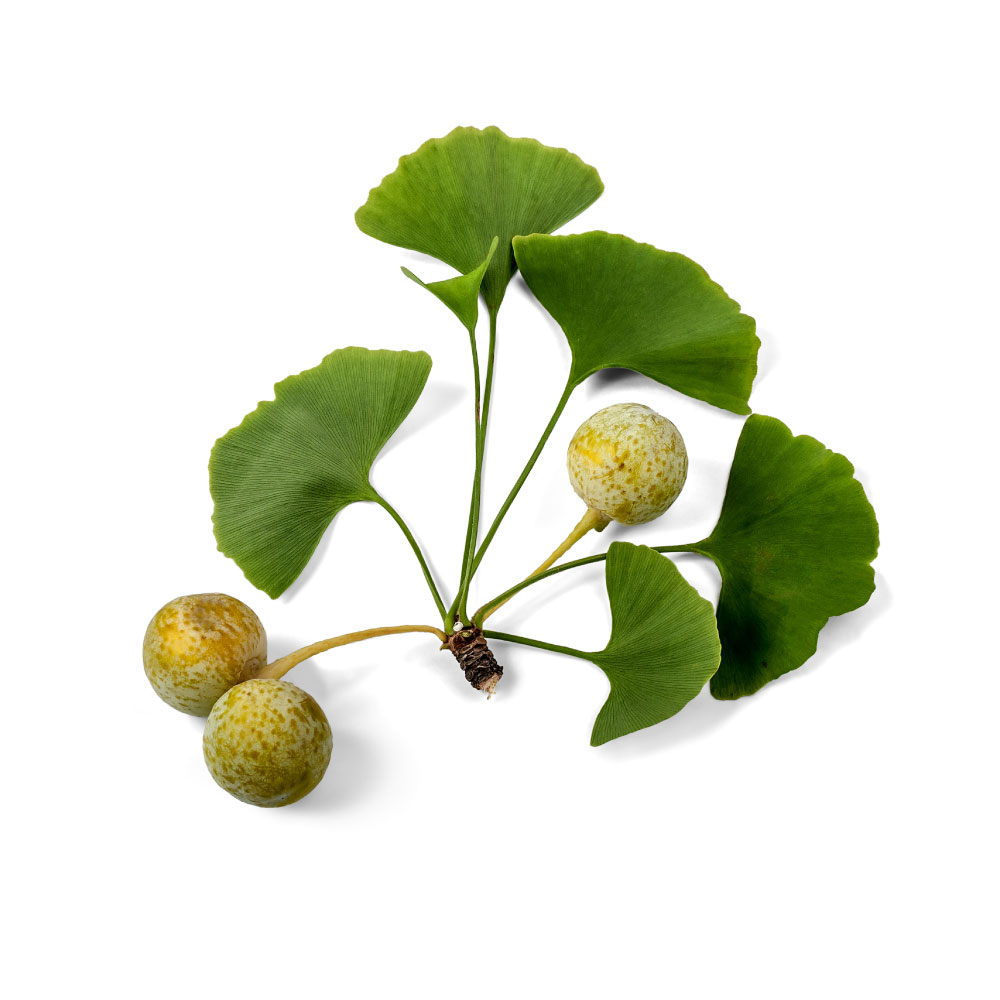
Few plants are as easy to name on sight as the ginkgo. Its fan-shaped, leathery leaf — often cleft down the middle into two lobes — has no real look-alike, and in autumn a whole tree turns the same even shade of gold before letting the leaves fall almost at once. That fan-leaf, gathered and dried, is the medicinal part; modern ginkgo preparations are standardized leaf extracts, not seed or bark.
The tree carries an unusual pedigree. Ginkgo is a living fossil — the last survivor of an old lineage of gymnosperms with no close living kin, a solitary twig at the very base of the seed-plant family tree. Where most herbs sit within a crowded genus of cousins, ginkgo stands essentially alone.
It is also dioecious, meaning male and female trees are separate individuals. Female trees set fleshy-coated seeds that smell strongly rancid once they drop and soften — memorable enough that most planted ginkgos are deliberately chosen to be male.
Distribution
Ginkgo’s homeland is China, where genuinely wild trees now cling to only a handful of mountain sites and are formally listed as Endangered. Yet as a cultivated tree it is everywhere — a favourite of temples, parks and city streets across the temperate world — so the species is at once rare in nature and one of the most familiar trees in cultivation.
Growing Conditions
- Full sun and deep, well-drained soil; ginkgo is remarkably tolerant of poor urban ground, pollution and heat once established.
- Cold-hardy across a wide temperate range (roughly USDA zones 3–8), so it suits most non-tropical gardens.
- Slow to establish and slow-growing, but exceptionally long-lived — plant it as a multi-decade tree, not a quick fill.
- Choose a named male tree to avoid the messy, foul-smelling fleshy seeds that female trees drop.
- Full cultivation detail lives on the companion farm-wiki grow guide for Ginkgo biloba (link to be added once that project’s public URL is confirmed).
Pharmacology & Research
Ginkgo is one of the most heavily investigated botanicals in the world, and — unusually — that investigation includes a large body of human trials rather than the preclinical-only picture typical of most herbs. Almost all of the credible work uses one standardised extract, EGb 761 (22–27% flavonol glycosides, 5–7% terpene lactones), typically at 120–240 mg/day; results from that extract do not transfer to teas, crude leaf, or unstandardised products. The strongest signals are in existing cognitive impairment and dementia, where several RCTs and meta-analyses show a modest benefit — though the landmark Cochrane review judged the overall evidence inconsistent and unreliable 1Reference 1Meta-analysisGinkgo biloba for cognitive impairment and dementia — systematic review and meta-analysisView study →. The most instructive findings are the well-powered negative ones: the ~3,000-participant Ginkgo Evaluation of Memory (GEM) trial found no prevention of dementia or cognitive decline 30,31Reference 30RCTGinkgo biloba for prevention of dementia: a randomized controlled trial — randomised controlled trialView study →Reference 31RCTGinkgo biloba for preventing cognitive decline in older adults: a randomized trial — randomised controlled trialView study →, and healthy-adult “brain booster” claims are contradicted by consistently null trials 27,28Reference 27RCTGinkgo for memory enhancement: a randomized controlled trial — randomised controlled trialView study →Reference 28Systematic reviewGinkgo biloba is not a smart drug: an updated systematic review of randomised clinical trials testing the nootropic effects of G. biloba extracts in healthy people — systematic reviewView study →. Underneath the clinical data sits a genuinely well-characterised mechanism — antioxidant flavonoids plus ginkgolide antagonism of platelet-activating factor — which also explains ginkgo’s real bleeding-risk and safety profile.
- Best-supported: modest cognitive benefit in diagnosed dementia/cognitive impairment with EGb 761 240 mg 1,2,3Reference 1Meta-analysisGinkgo biloba for cognitive impairment and dementia — systematic review and meta-analysisView study →Reference 2Meta-analysisEfficacy and adverse effects of ginkgo biloba for cognitive impairment and dementia: a systematic review and meta-analysis — systematic review and meta-analysisView study →Reference 3Meta-analysisGinkgo Biloba for Mild Cognitive Impairment and Alzheimer’s Disease: A Systematic Review and Meta-Analysis of Randomized Controlled Trials — systematic review and meta-analysisView study →; a well-mapped antioxidant + PAF-antagonist mechanism 8,9,10,11,14Reference 8In vitroPeroxyl radical scavenging activity of Ginkgo biloba extract EGb 761 — in vitro studyView study →Reference 9In vitroThe Ginkgo biloba extract (EGb 761) protects hippocampal neurons against cell death induced by beta-amyloid — in vitro studyView study →Reference 10AnimalAntioxidant effect of a Ginkgo biloba extract (EGb 761) on the retina — animal model studyView study →Reference 11ReviewGinkgo biloba extract (EGb 761) and CNS functions: basic studies and clinical applications — reviewView study →Reference 14In vitroGinkgolide B inhibits platelet release by blocking Syk and p38 MAPK phosphorylation in thrombin-stimulated platelets — in vitro studyView study →.
- Emerging, worth watching: vertigo/dizziness (non-inferior to betahistine in one trial) 12,13Reference 12RCTEffect of treatment with Ginkgo biloba extract EGb 761 (oral) on unilateral idiopathic sudden hearing loss in a prospective randomized double-blind study of 106 outpatients — randomised controlled trialView study →Reference 13RCTTreatment of Vertigo: A Randomized, Double-Blind Trial Comparing Efficacy and Safety of Ginkgo biloba Extract EGb 761 and Betahistine — randomised controlled trialView study → and tardive dyskinesia as an antipsychotic adjunct 15Reference 15Meta-analysisExtract of Ginkgo biloba for Tardive Dyskinesia: Meta-analysis of Randomized Controlled Trials — meta-analysisView study →.
- Mechanistically thin / not what it’s sold as: tinnitus and macular degeneration rest on small or null trials 24,25,26Reference 24Systematic reviewGinkgo biloba for tinnitus — systematic reviewView study →Reference 25Meta-analysisGinkgo biloba for tinnitus — systematic review and meta-analysisView study →Reference 26Systematic reviewGinkgo biloba extract for age-related macular degeneration — systematic reviewView study →; “smart drug” use in healthy adults is not supported 27,28,29Reference 27RCTGinkgo for memory enhancement: a randomized controlled trial — randomised controlled trialView study →Reference 28Systematic reviewGinkgo biloba is not a smart drug: an updated systematic review of randomised clinical trials testing the nootropic effects of G. biloba extracts in healthy people — systematic reviewView study →Reference 29RCTThe dose-dependent cognitive effects of acute administration of Ginkgo biloba to healthy young volunteers — randomised controlled trialView study →.
- The caveat: effects are tied to the standardised EGb 761 extract and are frequently modest, industry-sponsored, and inconsistently replicated; ginkgo does not prevent dementia 30,31Reference 30RCTGinkgo biloba for prevention of dementia: a randomized controlled trial — randomised controlled trialView study →Reference 31RCTGinkgo biloba for preventing cognitive decline in older adults: a randomized trial — randomised controlled trialView study →.
1. Dementia & cognitive impairment
This is ginkgo’s best-evidenced use, and it is still only a qualified success. Several double-blind RCTs of EGb 761 at 240 mg/day in Alzheimer’s, vascular and mixed dementia report small improvements in cognition and, more consistently, in neuropsychiatric symptoms and caregiver-rated function 4,5,6Reference 4RCTEfficacy and safety of a once-daily formulation of Ginkgo biloba extract EGb 761 in dementia with neuropsychiatric features: a randomized controlled trial — randomised controlled trialView study →Reference 5RCTGinkgo biloba special extract in dementia with neuropsychiatric featuresView study →Reference 6RCTEfficacy and tolerability of Ginkgo biloba extract EGb 761 by type of dementia: analyses of a randomised controlled trial — randomised controlled trialView study →; a large multicentre US RCT was closer to null 7Reference 7RCTA randomized, double-blind, placebo-controlled trial of two doses of Ginkgo biloba extract in dementia of the Alzheimer’s type — randomised controlled trialView study →. The 2009 Cochrane review pooled the trials and concluded the evidence of benefit is “inconsistent and unreliable,” largely because of heterogeneity and older positive trials of uncertain quality 1Reference 1Meta-analysisGinkgo biloba for cognitive impairment and dementia — systematic review and meta-analysisView study →. Later meta-analyses restricted to 240 mg/22–24 weeks are more favourable, finding statistically significant gains in cognition and activities of daily living, especially where neuropsychiatric symptoms are present 2,3Reference 2Meta-analysisEfficacy and adverse effects of ginkgo biloba for cognitive impairment and dementia: a systematic review and meta-analysis — systematic review and meta-analysisView study →Reference 3Meta-analysisGinkgo Biloba for Mild Cognitive Impairment and Alzheimer’s Disease: A Systematic Review and Meta-Analysis of Randomized Controlled Trials — systematic review and meta-analysisView study →. The honest read: a real but modest effect in people who already have measurable impairment, tied to the standardised extract and a therapeutic dose.
Gap: effect sizes are small and clinically borderline; trial quality is heterogeneous and much of the positive data is industry-sponsored on one extract.
2. Antioxidant
Antioxidant activity is ginkgo’s mechanistic core and its best-replicated laboratory finding. The flavonol glycosides of EGb 761 — glycosides of quercetin, kaempferol and isorhamnetin — are direct peroxyl- and hydroxyl-radical scavengers in vitro 8Reference 8In vitroPeroxyl radical scavenging activity of Ginkgo biloba extract EGb 761 — in vitro studyView study →, and the whole extract protects hippocampal neurons against beta-amyloid- and oxidative-stress-induced death in cell and animal models 9Reference 9In vitroThe Ginkgo biloba extract (EGb 761) protects hippocampal neurons against cell death induced by beta-amyloid — in vitro studyView study → and reduces oxidative damage in the retina 10Reference 10AnimalAntioxidant effect of a Ginkgo biloba extract (EGb 761) on the retina — animal model studyView study →. This activity plausibly underlies the neuroprotective and vascular-protective rationale for the clinical uses above. What is missing is the human bridge: there is no trial measuring an antioxidant outcome (e.g. oxidative-stress biomarkers tied to a clinical endpoint) in people taking ginkgo, so this remains mechanism rather than demonstrated human benefit.
Gap: entirely in vitro/animal; no human study links ginkgo’s antioxidant action to a clinical result.
3. Vertigo & dizziness
EGb 761 has reasonably consistent trial support for vertigo of vascular or vestibular origin. A randomised double-blind trial in idiopathic sudden hearing loss with vertigo found benefit 12Reference 12RCTEffect of treatment with Ginkgo biloba extract EGb 761 (oral) on unilateral idiopathic sudden hearing loss in a prospective randomized double-blind study of 106 outpatients — randomised controlled trialView study →, and a later randomised double-blind trial reported EGb 761 240 mg to be at least as effective as betahistine — the standard antivertigo drug — with better tolerability 13Reference 13RCTTreatment of Vertigo: A Randomized, Double-Blind Trial Comparing Efficacy and Safety of Ginkgo biloba Extract EGb 761 and Betahistine — randomised controlled trialView study →. Effects are attributed to improved microcirculation and central vestibular compensation. The trials are individually small, several are manufacturer-linked, and the vertigo populations are heterogeneous, so the signal is promising rather than settled.
Gap: small, heterogeneous, often industry-sponsored trials; no large independent replication against active comparators.
4. Antiplatelet / PAF antagonism
The terpene trilactones give ginkgo a mechanism no flavonoid herb shares. Ginkgolide B is a potent antagonist of platelet-activating factor (PAF), the phospholipid mediator that drives platelet aggregation and inflammatory signalling 11Reference 11ReviewGinkgo biloba extract (EGb 761) and CNS functions: basic studies and clinical applications — reviewView study →; in thrombin-stimulated human platelets it blocks Syk and p38 MAPK phosphorylation and suppresses granule release 14Reference 14In vitroGinkgolide B inhibits platelet release by blocking Syk and p38 MAPK phosphorylation in thrombin-stimulated platelets — in vitro studyView study →. This is the pharmacological basis for ginkgo’s circulatory effects — and, directly, for its bleeding risk (see Safety). It is a well-demonstrated molecular action, but it has not been developed into a clean human antithrombotic efficacy endpoint, so it sits here as mechanism with clinical consequences rather than a treatment claim.
Gap: robust in vitro/animal PAF antagonism, but no human trial establishing a therapeutic antiplatelet benefit — the same action shows up clinically mainly as bleeding risk.
5. Tardive dyskinesia
One of ginkgo’s more interesting adjunct signals. A meta-analysis of randomised controlled trials found that EGb 761 240 mg/day added to antipsychotics significantly reduced tardive dyskinesia symptoms versus placebo in patients with schizophrenia 15Reference 15Meta-analysisExtract of Ginkgo biloba for Tardive Dyskinesia: Meta-analysis of Randomized Controlled Trials — meta-analysisView study →, with the antioxidant hypothesis (protecting against neuroleptic-induced oxidative damage in the basal ganglia) as the proposed mechanism. The important limitation is that the pooled trials come largely from a single research context and population, so external validity is uncertain.
Gap: effect rests on a narrow set of trials from one region/population; needs independent replication before it generalises.
6. Anxiety (GAD)
A single well-conducted study anchors this use: a randomised, double-blind, placebo-controlled trial of EGb 761 (240 or 480 mg/day) in generalized anxiety disorder and adjustment disorder reported a dose-dependent reduction in anxiety scores over four weeks 16Reference 16RCTGinkgo biloba special extract EGb 761 in generalized anxiety disorder and adjustment disorder with anxious mood: a randomized, double-blind, placebo-controlled trial — randomised controlled trialView study →. The result is credible but unreplicated, and the mechanism in anxiety is not well defined.
Gap: one trial only, no replication; mechanism in anxiety unclear.
7. Acute ischaemic stroke
Meta-analyses of ginkgo (oral and injectable diterpene-lactone preparations) as an add-on in acute ischaemic stroke report improved neurological function and activities of daily living 17Reference 17Meta-analysisEfficacy and Safety of Ginkgo biloba in Patients with Acute Ischemic Stroke: A Systematic Review and Meta-Analysis — systematic review and meta-analysisView study →. The evidence is undercut by trial quality: most contributing RCTs are small, single-region, and at high risk of bias, and the earlier Cochrane review found no reliable evidence to support routine use 18Reference 18Meta-analysisGinkgo biloba for acute ischaemic stroke — systematic review and meta-analysisView study →. Injectable Chinese preparations differ substantially from the oral EGb 761 leaf extract, so results do not transfer cleanly to the supplement form.
Gap: meta-analytic benefit rests on low-quality trials of preparations (often injectable) unlike the standardised oral leaf extract; Cochrane remained unconvinced.
8. Intermittent claudication
An early meta-analysis found EGb 761 modestly increased pain-free walking distance versus placebo in peripheral arterial disease 20Reference 20Meta-analysisGinkgo biloba extract for the treatment of intermittent claudication: a meta-analysis of randomized trials — meta-analysisView study →, supported by a multicentre EGb 761 RCT 21Reference 21RCTDemonstration of the efficacy of ginkgo biloba special extract EGb 761 on intermittent claudication—a placebo-controlled, double-blind multicenter trial — randomised controlled trialView study →. The 2009 Cochrane review, with more and larger trials, concluded the effect on walking distance was small and of uncertain clinical significance 19Reference 19Meta-analysisGinkgo biloba for intermittent claudication — systematic review and meta-analysisView study →. So the direction is positive but the magnitude is probably too small to matter much against exercise therapy.
Gap: benefit is real-directional but small and clinically marginal; supervised exercise outperforms it.
9. Premenstrual syndrome
Two small placebo-controlled trials of EGb 761 report improvement in premenstrual symptoms, particularly congestive and breast symptoms (mastalgia) rather than mood 22,23Reference 22RCTA randomized, placebo-controlled trial of Ginkgo biloba L. in treatment of premenstrual syndrome — randomised controlled trialView study →Reference 23RCTTamborini A, & Taurelle R (1993). [Value of standardized Ginkgo biloba extract (EGb 761) in the management of congestive symptoms of premenstrual syndrome] — randomised controlled trial. Revue francaise de gynecologie et d’obstetrique. https://pubmed.ncbi.nlm.nih.gov/8235261/View study →. The vascular/PAF mechanism is a plausible fit for congestive symptoms. Evidence is thin and under-replicated.
Gap: only two small trials, focused on congestive symptoms; no large or recent confirmation.
10. Tinnitus
This is a case where popular use outruns the evidence. The Cochrane review of ginkgo for tinnitus as a primary complaint found no convincing evidence of benefit 24,25Reference 24Systematic reviewGinkgo biloba for tinnitus — systematic reviewView study →Reference 25Meta-analysisGinkgo biloba for tinnitus — systematic review and meta-analysisView study →. The only place a signal appears is when tinnitus is a secondary symptom in people with cognitive impairment taking ginkgo for dementia — an indirect and much weaker basis. Marketing ginkgo as a tinnitus remedy is not supported.
Gap: Cochrane-level evidence is negative for primary tinnitus; any signal is confined to tinnitus secondary to cognitive decline.
12. Cognitive enhancement in healthy adults
Despite being ginkgo’s most popular consumer use, the “smart drug” claim is the least supported. Systematic review of RCTs in healthy people finds no robust, durable effect on memory, attention or executive function 28Reference 28Systematic reviewGinkgo biloba is not a smart drug: an updated systematic review of randomised clinical trials testing the nootropic effects of G. biloba extracts in healthy people — systematic reviewView study →, and a large JAMA trial in older adults without dementia was null for memory enhancement 27Reference 27RCTGinkgo for memory enhancement: a randomized controlled trial — randomised controlled trialView study →. Acute single doses can shift performance on some speed/attention tasks in a dose-dependent way 29Reference 29RCTThe dose-dependent cognitive effects of acute administration of Ginkgo biloba to healthy young volunteers — randomised controlled trialView study →, but this does not translate into meaningful sustained cognitive improvement.
Gap: chronic dosing in healthy adults is consistently null; only transient, task-specific acute effects, of no practical significance.
13. Dementia prevention
The strongest evidence about ginkgo prevention is that it does not work. The Ginkgo Evaluation of Memory (GEM) study randomised roughly 3,000 older adults (normal cognition or mild cognitive impairment) to EGb 761 240 mg/day or placebo for a median ~6 years and found no reduction in the incidence of dementia or Alzheimer’s disease 30Reference 30RCTGinkgo biloba for prevention of dementia: a randomized controlled trial — randomised controlled trialView study →, and a companion analysis found no slowing of cognitive decline 31,32Reference 31RCTGinkgo biloba for preventing cognitive decline in older adults: a randomized trial — randomised controlled trialView study →Reference 32RCTThe Ginkgo Evaluation of Memory (GEM) study: design and baseline data of a randomized trial of Ginkgo biloba extract in prevention of dementia — randomised controlled trialView study →. This is a large, well-designed, independently funded trial — the most reliable single piece of ginkgo evidence — and it is negative for prevention.
Gap: none in the evidence itself — GEM is large and rigorous; the finding is a clear null. Ginkgo should not be taken to prevent dementia.
Mechanisms
| Mechanism | Drives | Key compounds |
|---|---|---|
| Peroxyl/hydroxyl radical scavenging, ↓ lipid peroxidation, metal chelation | antioxidantneuroprotectiveocular/vascular protection | quercetin, kaempferol, isorhamnetin |
| Platelet-activating-factor (PAF) receptor antagonism; ↓ platelet aggregation | circulationantiplatelet effectbleeding risk | ginkgolide B, ginkgolide A, ginkgolide C |
| Neuroprotection, GABAergic modulation, mitochondrial protection | neuroprotectiveanti-ischaemic | bilobalide |
| Allergenic/cytotoxic contaminant, capped <5 ppm in EGb 761 | safety limitnot a therapeutic action | ginkgolic acids |
Clinical trials
Ginkgo is exceptional among herbs for the volume of registered and published human trials — dozens of RCTs across cognition, circulation, hearing and balance, several pooled into Cochrane reviews. The tempering fact is how many of the largest, best-designed trials are null (dementia prevention, healthy-adult cognition, tinnitus). Counts below are approximate and reflect the trials feeding the syntheses cited here, not an exhaustive registry sweep.
| Completed | Planned | Terminated | Preclinical |
|---|---|---|---|
| ~50+ | Several | 0 | ~100+ |
Last checked: July 2026.
Phytochemistry
Ginkgo is standardised not to one marker but to two compound families whose ratio defines a genuine leaf extract. The first is a set of flavonol glycosides — mostly glycosides of quercetin, kaempferol and isorhamnetin — which make up roughly a quarter of the refined extract and supply most of its antioxidant and vascular-protective activity 11,42Reference 11ReviewGinkgo biloba extract (EGb 761) and CNS functions: basic studies and clinical applications — reviewView study →Reference 42ReviewChemical analysis and quality control of Ginkgo biloba leaves, extracts, and phytopharmaceuticals — reviewView study →. The second group is unique to ginkgo: the terpene trilactones, comprising the diterpene ginkgolides (A, B and C) and the sesquiterpene bilobalide. Ginkgolide B in particular is a potent antagonist of platelet-activating factor, and this group underlies ginkgo’s effects on circulation and platelet behaviour 11,42Reference 11ReviewGinkgo biloba extract (EGb 761) and CNS functions: basic studies and clinical applications — reviewView study →Reference 42ReviewChemical analysis and quality control of Ginkgo biloba leaves, extracts, and phytopharmaceuticals — reviewView study →.
The pharmaceutical reference extract, EGb 761, is defined as 22–27% flavonol glycosides and 5–7% terpene lactones — and, importantly, limits the allergenic ginkgolic acids to under 5 ppm; raw leaf and crude products can contain far more, which is the main reason home-made ginkgo preparations are discouraged 11,43Reference 11ReviewGinkgo biloba extract (EGb 761) and CNS functions: basic studies and clinical applications — reviewView study →Reference 43Assessment report on Ginkgo biloba L., folium. Smaller amounts of proanthocyanidins and organic acids round out the leaf.
Constituent Summary
Figures are the EGb 761 pharmaceutical standard for refined leaf extract (share of extract); whole-leaf material is not equivalent and is not standardised to these ranges 11,43Reference 11ReviewGinkgo biloba extract (EGb 761) and CNS functions: basic studies and clinical applications — reviewView study →Reference 43Assessment report on Ginkgo biloba L., folium.
Flavonoid1 compound1 with data
Flavonol3 compounds3 with data
Terpenoid1 compound1 with data
Diterpene3 compoundsno data
Sesquiterpene1 compoundno data
Flavanol1 compoundno data
Phenolic acid1 compound1 with data
Dosage
In research, ginkgo is almost always given as one standardised leaf extract — EGb 761 (or an equivalent ~24% flavonol-glycoside / ~6% terpene-lactone extract) — titrated to a set marker-compound dose rather than to a weight of dried leaf. Effects shown for this refined extract do not transfer to teas, crude leaf, or unstandardised products, and cognitive trials typically run 22–24 weeks before an effect is judged.
| Indication | Preparation | Dose | Est. dried-herb equivalent | Source |
|---|---|---|---|---|
| Dementia & cognitive impairment | EGb 761 standardised leaf extract | 240 mg/day | Not cleanly convertible (refined ~50:1 extract) | 1,2,3,4,5,6Reference 1Meta-analysisGinkgo biloba for cognitive impairment and dementia — systematic review and meta-analysisView study →Reference 2Meta-analysisEfficacy and adverse effects of ginkgo biloba for cognitive impairment and dementia: a systematic review and meta-analysis — systematic review and meta-analysisView study →Reference 3Meta-analysisGinkgo Biloba for Mild Cognitive Impairment and Alzheimer’s Disease: A Systematic Review and Meta-Analysis of Randomized Controlled Trials — systematic review and meta-analysisView study →Reference 4RCTEfficacy and safety of a once-daily formulation of Ginkgo biloba extract EGb 761 in dementia with neuropsychiatric features: a randomized controlled trial — randomised controlled trialView study →Reference 5RCTGinkgo biloba special extract in dementia with neuropsychiatric featuresView study →Reference 6RCTEfficacy and tolerability of Ginkgo biloba extract EGb 761 by type of dementia: analyses of a randomised controlled trial — randomised controlled trialView study → |
| Dementia prevention (GEM — null) | EGb 761 standardised leaf extract | 240 mg/day (120 mg ×2) | Not cleanly convertible | 30,31Reference 30RCTGinkgo biloba for prevention of dementia: a randomized controlled trial — randomised controlled trialView study →Reference 31RCTGinkgo biloba for preventing cognitive decline in older adults: a randomized trial — randomised controlled trialView study → |
| Vertigo & dizziness | EGb 761 standardised leaf extract | 240 mg/day | Not cleanly convertible | 13Reference 13RCTTreatment of Vertigo: A Randomized, Double-Blind Trial Comparing Efficacy and Safety of Ginkgo biloba Extract EGb 761 and Betahistine — randomised controlled trialView study → |
| Tardive dyskinesia (antipsychotic adjunct) | EGb 761 standardised leaf extract | 240 mg/day | Not cleanly convertible | 15Reference 15Meta-analysisExtract of Ginkgo biloba for Tardive Dyskinesia: Meta-analysis of Randomized Controlled Trials — meta-analysisView study → |
| Anxiety (GAD) | EGb 761 standardised leaf extract | 240–480 mg/day | Not cleanly convertible | 16Reference 16RCTGinkgo biloba special extract EGb 761 in generalized anxiety disorder and adjustment disorder with anxious mood: a randomized, double-blind, placebo-controlled trial — randomised controlled trialView study → |
| Intermittent claudication | EGb 761 standardised leaf extract | 120–160 mg/day | Not cleanly convertible | 19,21Reference 19Meta-analysisGinkgo biloba for intermittent claudication — systematic review and meta-analysisView study →Reference 21RCTDemonstration of the efficacy of ginkgo biloba special extract EGb 761 on intermittent claudication—a placebo-controlled, double-blind multicenter trial — randomised controlled trialView study → |
The doses above are the standardised-extract amounts used in the cited trials, not recommendations. EGb 761 is a refined, concentrated leaf extract standardised to marker-compound content, so a “dried-herb equivalent” cannot be given as a clean conversion factor — the whole-leaf weight behind a 240 mg extract dose is order-of-magnitude only and is not equivalent to drinking that weight as tea.
Traditional Dosage
Ginkgo’s modern medicinal use is largely a 20th-century pharmaceutical development around the EGb 761 leaf extract; the leaf is not a deep Western-herbal tradition, and historical Chinese use is of the seed/nut (bai guo), a different preparation with its own toxicity concern (see Safety). The whole-herb doses below are the practitioner ranges for the leaf, kept separate from the standardised-extract trial doses above.
| System | Preparation | Dose |
|---|---|---|
| Western herbal | Dried leaf, standardised extract | 120–240 mg extract/day, in 2–3 divided doses |
| Western herbal | Leaf tincture (1:5, 25% ethanol) | ~3–6 mL/day (practitioner custom; not standardised to marker content) |
| Traditional Chinese medicine | Seed/nut (bai guo), decocted — not the leaf | 3–9 g/day of the prepared seed (cough/asthma tradition; raw seed is toxic) |
Safety & Pregnancy
Standardised ginkgo leaf extract (EGb 761) is generally well tolerated, but it carries a real bleeding risk with blood-thinning drugs and around surgery, and the raw seed is a distinct seizure hazard.
- Bleeding risk. Ginkgolides antagonise platelet-activating factor — avoid with anticoagulant / antiplatelet drugs (warfarin, aspirin, clopidogrel) and stop about two weeks before surgery.
- Seeds cause seizures. Ginkgo seeds — not the leaf extract — contain ginkgotoxin and can trigger vitamin-B6-responsive seizures in poisoning cases.
- Rodent carcinogenicity signal. Chronic high-dose extract caused liver and thyroid tumours in rats and mice; human relevance at dietary doses is uncertain but it drives some regulatory watch-lists.
- Use the standardised extract. Crude leaf and homemade preparations carry high allergenic ginkgolic acids and are discouraged.
Full safety & interactions detail
Standardised ginkgo leaf extract (EGb 761) is generally well tolerated, but it has three established safety concerns. First, bleeding: ginkgolides antagonise platelet-activating factor, and observational and case data associate ginkgo — especially with antiplatelet or anticoagulant drugs (warfarin, aspirin, clopidogrel) — with an increased hemorrhage risk 33,36Reference 33ObservationalRisk of hemorrhage associated with co-prescriptions for Ginkgo biloba and antiplatelet or anticoagulant drugs — observational cohort studyView study →Reference 36ObservationalImpact of Ginkgo biloba drug interactions on bleeding risk and coagulation profiles: A comprehensive analysis — observational studyView study →, though a large Veterans Administration cohort found no significant warfarin interaction 34Reference 34ObservationalGinkgo and Warfarin Interaction in a Large Veterans Administration Population — observational cohort studyView study → and a careful review judged the interaction evidence weaker than commonly stated 35Reference 35ReviewPotential interaction of Ginkgo biloba leaf with antiplatelet or anticoagulant drugs: what is the evidence? — reviewView study →. The prudent position is to avoid combining ginkgo with blood-thinning drugs and to discontinue it about two weeks before surgery. Second, ginkgo seeds (not the leaf extract) contain ginkgotoxin (4-O-methylpyridoxine), which can cause vitamin-B6-responsive seizures in poisoning cases 37,38Reference 37Case reportEpileptic Seizure from Ginkgo Nut Intoxication in an Adult — case reportView study →Reference 38Case reportGas chromatography-mass spectrometry analysis of 4-O-methylpyridoxine (MPN) in the serum of patients with ginkgo seed poisoning — case reportView study →; crude leaf and homemade preparations are discouraged for this and for their high allergenic ginkgolic-acid content. Third, chronic high-dose ginkgo extract caused liver and thyroid tumours in a two-year US National Toxicology Program study in rats and mice 39,40Reference 39AnimalToxicology and carcinogenesis studies of Ginkgo biloba extract (CAS NoView study →Reference 40AnimalToxicity and carcinogenicity studies of Ginkgo biloba extract in rat and mouse: liver, thyroid, and nose are targets — animal (rat and mouse) carcinogenicity studyView study →; the human relevance of these rodent findings at dietary doses is uncertain and debated 41Reference 41Case reportReview of Ginkgo biloba-induced toxicity, from experimental studies to human case reports — reviewView study →, but they are why ginkgo appears on some regulatory watch-lists.
Herb–drug interactions have been assessed mainly for the antiplatelet/anticoagulant question, and the evidence there is genuinely mixed rather than settled: positive case and observational data 33,36Reference 33ObservationalRisk of hemorrhage associated with co-prescriptions for Ginkgo biloba and antiplatelet or anticoagulant drugs — observational cohort studyView study →Reference 36ObservationalImpact of Ginkgo biloba drug interactions on bleeding risk and coagulation profiles: A comprehensive analysis — observational studyView study → against a null warfarin cohort 34Reference 34ObservationalGinkgo and Warfarin Interaction in a Large Veterans Administration Population — observational cohort studyView study →. CYP-mediated interactions are inconsistent and not established, so no specific enzyme effect is asserted here.
No adequate human pregnancy or lactation safety studies were identified for ginkgo, so the caution is precautionary rather than evidence of harm. Given the documented antiplatelet/PAF-antagonist activity and the associated bleeding-risk signal 33,36Reference 33ObservationalRisk of hemorrhage associated with co-prescriptions for Ginkgo biloba and antiplatelet or anticoagulant drugs — observational cohort studyView study →Reference 36ObservationalImpact of Ginkgo biloba drug interactions on bleeding risk and coagulation profiles: A comprehensive analysis — observational studyView study →, and the absence of any assessment in pregnancy or breastfeeding, ginkgo is best avoided during pregnancy and lactation. The absence of reports should not be read as evidence of safety.
References
- Birks J, & Grimley Evans J (2009). Ginkgo biloba for cognitive impairment and dementia — systematic review and meta-analysis. The Cochrane database of systematic reviews. https://pubmed.ncbi.nlm.nih.gov/19160216/
- Tan MS, et al. (2015). Efficacy and adverse effects of ginkgo biloba for cognitive impairment and dementia: a systematic review and meta-analysis — systematic review and meta-analysis. Journal of Alzheimer’s disease : JAD. https://pubmed.ncbi.nlm.nih.gov/25114079/
- Yang G, et al. (2016). Ginkgo Biloba for Mild Cognitive Impairment and Alzheimer’s Disease: A Systematic Review and Meta-Analysis of Randomized Controlled Trials — systematic review and meta-analysis. Current topics in medicinal chemistry. https://pubmed.ncbi.nlm.nih.gov/26268332/
- Ihl R, et al. (2011). Efficacy and safety of a once-daily formulation of Ginkgo biloba extract EGb 761 in dementia with neuropsychiatric features: a randomized controlled trial — randomised controlled trial. International journal of geriatric psychiatry. https://pubmed.ncbi.nlm.nih.gov/21140383/
- Napryeyenko O, & Borzenko I (2007). Ginkgo biloba special extract in dementia with neuropsychiatric features. A randomised, placebo-controlled, double-blind clinical trial — randomised controlled trial. Arzneimittel-Forschung. https://pubmed.ncbi.nlm.nih.gov/17341003/
- Napryeyenko O, Sonnik G, & Tartakovsky I (2009). Efficacy and tolerability of Ginkgo biloba extract EGb 761 by type of dementia: analyses of a randomised controlled trial — randomised controlled trial. Journal of the neurological sciences. https://pubmed.ncbi.nlm.nih.gov/19286192/
- Schneider LS, et al. (2005). A randomized, double-blind, placebo-controlled trial of two doses of Ginkgo biloba extract in dementia of the Alzheimer’s type — randomised controlled trial. Current Alzheimer research. https://pubmed.ncbi.nlm.nih.gov/16375657/
- Maitra I, et al. (1995). Peroxyl radical scavenging activity of Ginkgo biloba extract EGb 761 — in vitro study. Biochemical pharmacology. https://pubmed.ncbi.nlm.nih.gov/7786306/
- Bastianetto S, et al. (2000). The Ginkgo biloba extract (EGb 761) protects hippocampal neurons against cell death induced by beta-amyloid — in vitro study. The European journal of neuroscience. https://pubmed.ncbi.nlm.nih.gov/10886329/
- Droy-Lefaix MT, et al. (1995). Antioxidant effect of a Ginkgo biloba extract (EGb 761) on the retina — animal model study. International journal of tissue reactions. https://pubmed.ncbi.nlm.nih.gov/8867648/
- DeFeudis FV, & Drieu K (2000). Ginkgo biloba extract (EGb 761) and CNS functions: basic studies and clinical applications — review. Current drug targets. https://pubmed.ncbi.nlm.nih.gov/11475535/
- Burschka MA, et al. (2001). Effect of treatment with Ginkgo biloba extract EGb 761 (oral) on unilateral idiopathic sudden hearing loss in a prospective randomized double-blind study of 106 outpatients — randomised controlled trial. European archives of oto-rhino-laryngology. https://pubmed.ncbi.nlm.nih.gov/11548897/
- Sokolova L, Hoerr R, & Mishchenko T (2014). Treatment of Vertigo: A Randomized, Double-Blind Trial Comparing Efficacy and Safety of Ginkgo biloba Extract EGb 761 and Betahistine — randomised controlled trial. International journal of otolaryngology. https://pubmed.ncbi.nlm.nih.gov/25057270/
- Liu X, et al. (2014). Ginkgolide B inhibits platelet release by blocking Syk and p38 MAPK phosphorylation in thrombin-stimulated platelets — in vitro study. Thrombosis research. https://pubmed.ncbi.nlm.nih.gov/25223809/
- Zheng W, et al. (2016). Extract of Ginkgo biloba for Tardive Dyskinesia: Meta-analysis of Randomized Controlled Trials — meta-analysis. Pharmacopsychiatry. https://pubmed.ncbi.nlm.nih.gov/26979525/
- Woelk H, et al. (2007). Ginkgo biloba special extract EGb 761 in generalized anxiety disorder and adjustment disorder with anxious mood: a randomized, double-blind, placebo-controlled trial — randomised controlled trial. Journal of psychiatric research. https://pubmed.ncbi.nlm.nih.gov/16808927/
- Chong PZ, et al. (2020). Efficacy and Safety of Ginkgo biloba in Patients with Acute Ischemic Stroke: A Systematic Review and Meta-Analysis — systematic review and meta-analysis. The American journal of Chinese medicine. https://pubmed.ncbi.nlm.nih.gov/32349519/
- Zeng X, et al. (2005). Ginkgo biloba for acute ischaemic stroke — systematic review and meta-analysis. The Cochrane database of systematic reviews. https://pubmed.ncbi.nlm.nih.gov/16235335/
- Nicolaï SP, et al. (2009). Ginkgo biloba for intermittent claudication — systematic review and meta-analysis. The Cochrane database of systematic reviews. https://pubmed.ncbi.nlm.nih.gov/19370657/
- Pittler MH, & Ernst E (2000). Ginkgo biloba extract for the treatment of intermittent claudication: a meta-analysis of randomized trials — meta-analysis. The American journal of medicine. https://pubmed.ncbi.nlm.nih.gov/11014719/
- Peters H, Kieser M, & Hölscher U (1998). Demonstration of the efficacy of ginkgo biloba special extract EGb 761 on intermittent claudication—a placebo-controlled, double-blind multicenter trial — randomised controlled trial. VASA. Zeitschrift fur Gefasskrankheiten. https://pubmed.ncbi.nlm.nih.gov/9612115/
- Ozgoli G, et al. (2009). A randomized, placebo-controlled trial of Ginkgo biloba L. in treatment of premenstrual syndrome — randomised controlled trial. Journal of alternative and complementary medicine (New York, N.Y.). https://pubmed.ncbi.nlm.nih.gov/19678774/
- Tamborini A, & Taurelle R (1993). [Value of standardized Ginkgo biloba extract (EGb 761) in the management of congestive symptoms of premenstrual syndrome] — randomised controlled trial. Revue francaise de gynecologie et d’obstetrique. https://pubmed.ncbi.nlm.nih.gov/8235261/
- Sereda M, et al. (2022). Ginkgo biloba for tinnitus — systematic review. The Cochrane database of systematic reviews. https://pubmed.ncbi.nlm.nih.gov/36383762/
- Hilton MP, Zimmermann EF, & Hunt WT (2013). Ginkgo biloba for tinnitus — systematic review and meta-analysis. The Cochrane database of systematic reviews. https://pubmed.ncbi.nlm.nih.gov/23543524/
- Evans JR (2013). Ginkgo biloba extract for age-related macular degeneration — systematic review. The Cochrane database of systematic reviews. https://pubmed.ncbi.nlm.nih.gov/23440785/
- Solomon PR, et al. (2002). Ginkgo for memory enhancement: a randomized controlled trial — randomised controlled trial. JAMA. https://pubmed.ncbi.nlm.nih.gov/12186600/
- Canter PH, & Ernst E (2007). Ginkgo biloba is not a smart drug: an updated systematic review of randomised clinical trials testing the nootropic effects of G. biloba extracts in healthy people — systematic review. Human psychopharmacology. https://pubmed.ncbi.nlm.nih.gov/17480002/
- Kennedy DO, Scholey AB, & Wesnes KA (2000). The dose-dependent cognitive effects of acute administration of Ginkgo biloba to healthy young volunteers — randomised controlled trial. Psychopharmacology. https://pubmed.ncbi.nlm.nih.gov/11026748/
- DeKosky ST, et al. (2008). Ginkgo biloba for prevention of dementia: a randomized controlled trial — randomised controlled trial. JAMA. https://pubmed.ncbi.nlm.nih.gov/19017911/
- Snitz BE, et al. (2009). Ginkgo biloba for preventing cognitive decline in older adults: a randomized trial — randomised controlled trial. JAMA. https://pubmed.ncbi.nlm.nih.gov/20040554/
- DeKosky ST, et al. (2006). The Ginkgo Evaluation of Memory (GEM) study: design and baseline data of a randomized trial of Ginkgo biloba extract in prevention of dementia — randomised controlled trial. Contemporary clinical trials. https://pubmed.ncbi.nlm.nih.gov/16627007/
- Chan AL, et al. (2011). Risk of hemorrhage associated with co-prescriptions for Ginkgo biloba and antiplatelet or anticoagulant drugs — observational cohort study. Journal of alternative and complementary medicine (New York, N.Y.). https://pubmed.ncbi.nlm.nih.gov/21649517/
- Stoddard GJ, et al. (2015). Ginkgo and Warfarin Interaction in a Large Veterans Administration Population — observational cohort study. AMIA … Annual Symposium proceedings. AMIA Symposium. https://pubmed.ncbi.nlm.nih.gov/26958257/
- Bone KM (2008). Potential interaction of Ginkgo biloba leaf with antiplatelet or anticoagulant drugs: what is the evidence? — review. Molecular nutrition & food research. https://pubmed.ncbi.nlm.nih.gov/18214851/
- Mai NTQ, et al. (2025). Impact of Ginkgo biloba drug interactions on bleeding risk and coagulation profiles: A comprehensive analysis — observational study. PloS one. https://pubmed.ncbi.nlm.nih.gov/40198642/
- Kosaki Y, et al. (2020). Epileptic Seizure from Ginkgo Nut Intoxication in an Adult — case report. Case reports in emergency medicine. https://pubmed.ncbi.nlm.nih.gov/32047675/
- Fujisawa M, et al. (2002). Gas chromatography-mass spectrometry analysis of 4-O-methylpyridoxine (MPN) in the serum of patients with ginkgo seed poisoning — case report. Journal of analytical toxicology. https://pubmed.ncbi.nlm.nih.gov/11991529/
- National Toxicology Program (2013). Toxicology and carcinogenesis studies of Ginkgo biloba extract (CAS No. 90045-36-6) in F344/N rats and B6C3F1/N mice (Gavage studies) — rodent (rat and mouse) carcinogenicity study. National Toxicology Program technical report series. https://pubmed.ncbi.nlm.nih.gov/23652021/
- Rider CV, et al. (2014). Toxicity and carcinogenicity studies of Ginkgo biloba extract in rat and mouse: liver, thyroid, and nose are targets — animal (rat and mouse) carcinogenicity study. Toxicologic pathology. https://pubmed.ncbi.nlm.nih.gov/23960164/
- Mei N, et al. (2017). Review of Ginkgo biloba-induced toxicity, from experimental studies to human case reports — review. Journal of environmental science and health. Part C, Environmental carcinogenesis & ecotoxicology reviews. https://pubmed.ncbi.nlm.nih.gov/28055331/
- van Beek, T. A., & Montoro, P. (2009). Chemical analysis and quality control of Ginkgo biloba leaves, extracts, and phytopharmaceuticals — review. Journal of Chromatography A, 1216(11), 2002–2032. https://pubmed.ncbi.nlm.nih.gov/19195661/
- European Medicines Agency, Committee on Herbal Medicinal Products (HMPC). Assessment report on Ginkgo biloba L., folium. (Ginkgolic acid limit in refined extracts.)