
Materia Medica
Griffonia
Griffonia simplicifolia
A West African shrub whose seeds are the richest natural source of 5-HTP, the direct precursor to serotonin — used for mood, sleep and appetite.
What Is Griffonia?
Griffonia simplicifolia is a woody climbing shrub of West and Central Africa, best known as the richest natural source of 5-HTP (5-hydroxytryptophan) — the direct metabolic precursor to the neurotransmitter serotonin.
Its seeds can contain a remarkably high proportion of 5-HTP, which is why most commercial 5-HTP supplements are extracted from Griffonia rather than synthesised 25Reference 25An HPLC method for the direct assay of the serotonin precursor 5-hydroxytryptophan in seeds of Griffonia simplicifoliaView study →. Because 5-HTP raises serotonin synthesis, Griffonia extracts are used in the same contexts as 5-HTP itself: low mood, disturbed sleep, and appetite regulation 15,16Reference 15ReviewSerotonin a la carte: supplementation with the serotonin precursor 5-hydroxytryptophan — reviewView study →Reference 16ReviewBirdsall TC. (1998). 5-Hydroxytryptophan: a clinically-effective serotonin precursor — review. Alternative Medicine Review. https://pubmed.ncbi.nlm.nih.gov/9727088/View study →.
Indications
- Low mood and mild depression (as a serotonin precursor)
- Difficulty with sleep onset (via the serotonin → melatonin pathway)
- Appetite and carbohydrate-craving regulation
- Anxiety and fibromyalgia (limited evidence)
Cautions & Safety
Do not combine with SSRIs, SNRIs, MAOIs, triptans, tramadol or other serotonergic drugs without medical supervision, owing to the risk of serotonin syndrome 22Reference 22ReviewSafety of 5-hydroxy-L-tryptophan — reviewView study →. Nausea is the most commonly reported side effect and is usually dose-related.
How Is Griffonia Used?
Griffonia is taken almost entirely as a standardised seed extract, dosed by its 5-HTP content rather than by raw herb weight. It’s most often used short-term, on its own or alongside cofactors such as vitamin B6 (needed to convert 5-HTP to serotonin) and magnesium.
Traditional Uses
In parts of West Africa the leaves, stems and seeds of Griffonia have a history of folk use — the stems as chewing sticks, and various preparations applied to wounds or used for digestive complaints. Its modern prominence, however, comes almost entirely from the isolation of 5-HTP from its seeds rather than from a classical materia medica tradition.
Botany
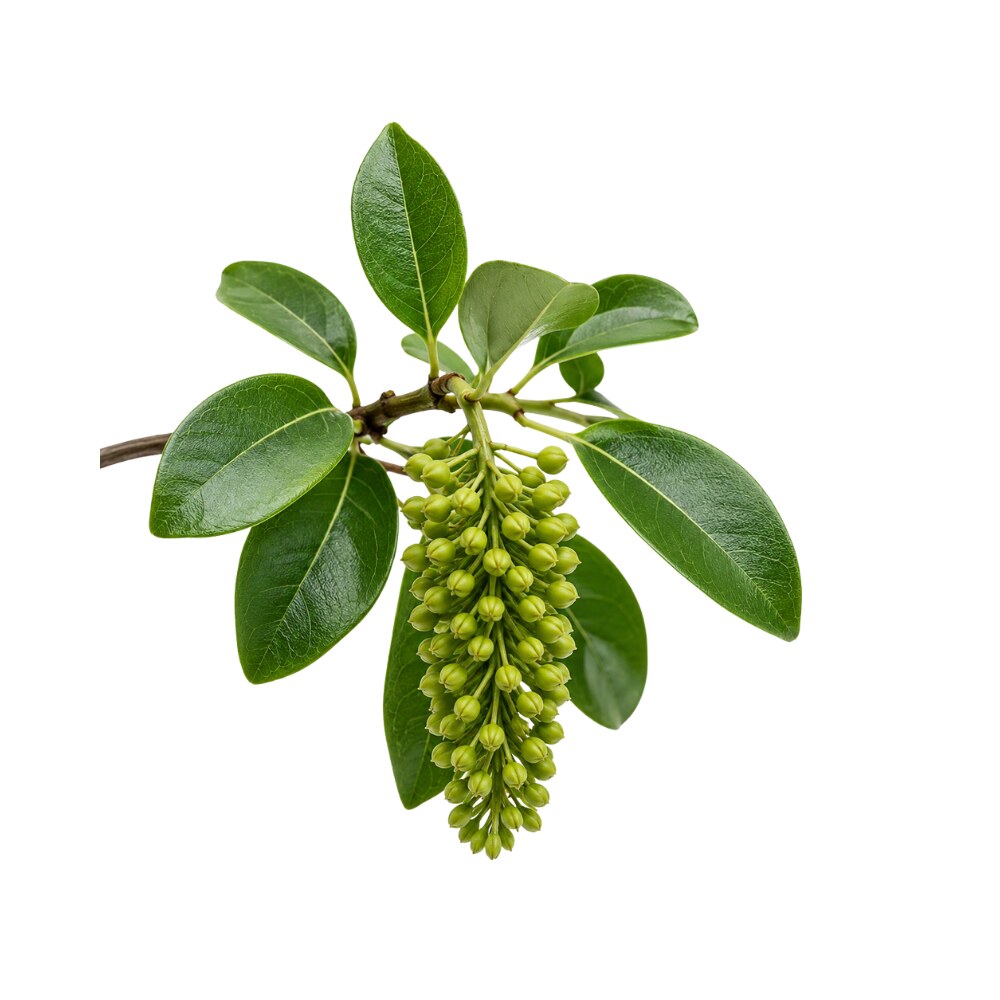
Griffonia is a woody, tendril-climbing shrub of the West African legume family — a modest liana rather than a tree, evergreen and hard-stemmed, scrambling to around three metres over savannah scrub and forest edge. Its species name, simplicifolia, points to an oddity: where most legumes carry divided, feather-like leaves, griffonia keeps its leaves plain and undivided. Small greenish flowers give way to dark, blackish pods.
For the herbalist the seed is everything. It is the pod-borne seed — not the leaf, bark or root — that carries the plant’s reputation, and Griffonia seed is the leading natural source of 5-HTP (5-hydroxytryptophan), the direct precursor the body uses to build serotonin. That chemistry is why a West African climbing legume, little known as a garden plant, has become a staple of the supplement shelf. It is also carried in older literature under the synonym Bandeiraea simplicifolia.
Distribution
Griffonia grows wild across West and West-Central Africa, from Liberia and Ivory Coast through Ghana, Togo and Benin to Nigeria and on into Gabon and Congo. It favours savannah, coastal scrub and the margins of secondary forest. Nearly all commercial seed is still gathered from these wild stands rather than from cultivation.
Growing Conditions
- Strictly tropical: griffonia has no frost tolerance and needs consistent warmth and humidity year-round.
- Naturally a climber of savannah scrub and forest edge — give it support and room to scramble, in full sun to part shade.
- Tolerant of poor and sandy soils in the wild, including coastal ground; sharp drainage suits it.
- Notoriously hard to propagate: seed germination is erratic even with pre-treatment and stem cuttings generally fail, which is why the plant is still wild-harvested rather than farmed.
- Full cultivation detail lives on the companion farm-wiki grow guide for Griffonia simplicifolia (link to be added once that project’s public URL is confirmed).
Phytochemistry
Griffonia simplicifolia is phytochemically unusual in being dominated by a single small molecule: 5-hydroxytryptophan (5-HTP), the direct precursor to serotonin. It is the seed’s defining constituent and the reason the plant is grown commercially — ripe seeds typically contain about 14–20% 5-HTP by weight, with figures as high as ~20.8% recorded in Ghanaian material 25Reference 25An HPLC method for the direct assay of the serotonin precursor 5-hydroxytryptophan in seeds of Griffonia simplicifoliaView study →. (Commercial “98–99%” extracts are concentrated and purified, not the raw seed value.) The seeds also carry the well-known Griffonia simplicifolia lectins (GSL-I and GSL-II), carbohydrate-binding proteins widely used as laboratory reagents, along with minor β-carboline alkaloids such as griffonine 26,27Reference 26Chemical characterization and DNA fingerprinting of Griffonia simplicifolia BaillView study →Reference 27A new β-carboline alkaloid from the seeds of Griffonia simplicifoliaView study →, and extract-dependent flavonoids, flavan-3-ols and seed-oil fatty acids 19,26Reference 19In vitroBiological activity and metabolomics of Griffonia simplicifolia seeds extracted with different methodologies — in vitroView study →Reference 26Chemical characterization and DNA fingerprinting of Griffonia simplicifolia BaillView study →.
Constituent Summary
5-HTP figure is % of seed dry weight; varies with seed ripeness and provenance. Lectins and griffonine are present but not quantified here.
Amino acid1 compound1 with data
β-Carboline alkaloid1 compound1 with data
Protein/peptide1 compoundno data
Pharmacology & Research
Griffonia simplicifolia is a rare case in phytotherapy: it is barely studied as a whole herb. It is grown, standardised and dosed as a botanical delivery vehicle for a single small molecule — 5-hydroxytryptophan (5-HTP), the immediate precursor to serotonin — and almost the entire human literature concerns purified 5-HTP rather than whole-seed extract 15,16,25Reference 15ReviewSerotonin a la carte: supplementation with the serotonin precursor 5-hydroxytryptophan — reviewView study →Reference 16ReviewBirdsall TC. (1998). 5-Hydroxytryptophan: a clinically-effective serotonin precursor — review. Alternative Medicine Review. https://pubmed.ncbi.nlm.nih.gov/9727088/View study →Reference 25An HPLC method for the direct assay of the serotonin precursor 5-hydroxytryptophan in seeds of Griffonia simplicifoliaView study →. That 5-HTP literature is modest and dated: several small randomised trials in depression, fibromyalgia, appetite/weight and panic, most from the 1980s–90s, generally positive but methodologically weak, with a Cochrane review judging the depression evidence insufficient despite a positive pooled signal 1,2Reference 1Systematic reviewTryptophan and 5-hydroxytryptophan for depression — systematic reviewView study →Reference 2Meta-analysisAre tryptophan and 5-hydroxytryptophan effective treatments for depression? A meta-analysisView study →. Studies using the actual seed extract are overwhelmingly preclinical (rat anxiolytic and reproductive-behaviour models, a mouse candidiasis model, cell-line antioxidant and antiproliferative work) 17,18,19,20Reference 17AnimalAnxiolytic-like effect of Griffonia simplicifolia Baill. seed extract in rats — animal modelView study →Reference 18AnimalGriffonia simplicifolia negatively affects sexual behavior in female rats — animal modelView study →Reference 19In vitroBiological activity and metabolomics of Griffonia simplicifolia seeds extracted with different methodologies — in vitroView study →Reference 20AnimalGriffonia simplicifolia seeds extract rich in 5-hydroxy-L-tryptophan reduces infection and inflammation in a mouse model of vulvovaginal candidiasis — animal modelView study →. The one recent exception is a 2026 randomised, double-blind, placebo-controlled crossover trial that tested the whole extract itself in humans — and it was null for pain modulation, even hinting at a pronociceptive effect 29Reference 29RCTThe effect of Griffonia simplicifolia on pain intensity, central and peripheral sensitization, and pain modulation in healthy volunteers — randomised, double-blind, placebo-controlled crossover trialView study →. The honest reading is that Griffonia’s clinical credibility is borrowed from 5-HTP pharmacology and transfers only insofar as a given seed extract delivers an equivalent, clean dose of 5-HTP.
- Best-supported: small human RCTs of 5-HTP show benefit for depressive symptoms 1,2,3Reference 1Systematic reviewTryptophan and 5-hydroxytryptophan for depression — systematic reviewView study →Reference 2Meta-analysisAre tryptophan and 5-hydroxytryptophan effective treatments for depression? A meta-analysisView study →Reference 3RCTComparative study of efficacy of l-5-hydroxytryptophan and fluoxetine in first depressive episode — randomised double-blind trialView study →, early satiety and weight loss in obesity 8,9Reference 8RCTEating behavior and adherence to dietary prescriptions in obese adult subjects treated with 5-hydroxytryptophan — randomised controlled trialView study →Reference 9RCTSatiety and amino-acid profile in overweight women after a natural plant-extract (5-hydroxytryptophan) sublingual spray — randomised, double-blind, placebo-controlled trialView study →, and fibromyalgia symptom scores 6,7Reference 6RCTDouble-blind study of 5-hydroxytryptophan versus placebo in the treatment of primary fibromyalgia syndrome — randomised controlled trialView study →Reference 7Primary fibromyalgia syndrome and 5-hydroxy-L-tryptophan: a 90-day open studyView study → — all with isolated 5-HTP, not whole extract.
- Emerging, worth watching: Griffonia-extract-specific signals — anxiolytic activity in rats 17Reference 17AnimalAnxiolytic-like effect of Griffonia simplicifolia Baill. seed extract in rats — animal modelView study →, an anti-infective/immunomodulatory effect in a mouse candidiasis model 20Reference 20AnimalGriffonia simplicifolia seeds extract rich in 5-hydroxy-L-tryptophan reduces infection and inflammation in a mouse model of vulvovaginal candidiasis — animal modelView study →, in-vitro antioxidant and antiproliferative activity 19,21Reference 19In vitroBiological activity and metabolomics of Griffonia simplicifolia seeds extracted with different methodologies — in vitroView study →Reference 21In vitroAntimetastatic effects of a Griffonia simplicifolia seed extract in osteosarcoma cell lines — in vitroView study →, and one small open-label paediatric trial of a Griffonia/magnesium complex for periodic syndromes 28Reference 28A medical-food formulation of Griffonia simplicifolia/magnesium for childhood periodic syndrome therapy — open-label studyView study →.
- Mechanistically thin: sleep-onset claims rest on serotonin→melatonin reasoning and old sleep-architecture data rather than insomnia trials 14,16Reference 14Clinical trialEffects of 5-hydroxytryptophan on the sleep of normal human subjects — clinical trialView study →Reference 16ReviewBirdsall TC. (1998). 5-Hydroxytryptophan: a clinically-effective serotonin precursor — review. Alternative Medicine Review. https://pubmed.ncbi.nlm.nih.gov/9727088/View study →; anticancer and antioxidant claims are cell-line only 19,21Reference 19In vitroBiological activity and metabolomics of Griffonia simplicifolia seeds extracted with different methodologies — in vitroView study →Reference 21In vitroAntimetastatic effects of a Griffonia simplicifolia seed extract in osteosarcoma cell lines — in vitroView study →.
- The caveat: almost no whole-herb human data — and the first modern whole-extract human RCT (n=18, 100 mg/day, 28 days) found no analgesic benefit and a possible pronociceptive signal 29Reference 29RCTThe effect of Griffonia simplicifolia on pain intensity, central and peripheral sensitization, and pain modulation in healthy volunteers — randomised, double-blind, placebo-controlled crossover trialView study →. Human efficacy comes from purified 5-HTP; commercial extract composition, dose and contaminant profile vary, and one contaminant family (“Peak X”) is historically linked to eosinophilia-myalgia syndrome 23,24Reference 23Eosinophilia-myalgia syndrome case-associated contaminants in commercially available 5-hydroxytryptophanView study →Reference 24Structural characterization of a case-implicated contaminant, “Peak X,” in commercial 5-hydroxytryptophanView study →.
1. Depression & low mood
This is the most-studied indication and the origin of Griffonia’s reputation. A Cochrane review of 5-HTP and tryptophan for depression found only two trials (64 patients total) of adequate quality; pooled, they favoured the precursors over placebo (Peto OR ≈ 4.1, 95% CI 1.3–13.2), but the reviewers judged the evidence insufficient because of small size and probable publication bias among ~100 excluded low-quality studies 1,2Reference 1Systematic reviewTryptophan and 5-hydroxytryptophan for depression — systematic reviewView study →Reference 2Meta-analysisAre tryptophan and 5-hydroxytryptophan effective treatments for depression? A meta-analysisView study →. Later randomised trials are more encouraging but still small and often use active comparators rather than placebo: 5-hydroxytryptophan matched fluoxetine over 8 weeks in first-episode depression (n=60) 3Reference 3RCTComparative study of efficacy of l-5-hydroxytryptophan and fluoxetine in first depressive episode — randomised double-blind trialView study → and performed comparably to fluvoxamine 4Reference 4RCTA functional-dimensional approach to depression: 5-hydroxytryptophan versus fluvoxamine — randomised multicentre trialView study →, while a small placebo-controlled crossover trial in Parkinson’s disease (n=25, 50 mg/day) reported improvement in depressive and apathy scores 5Reference 5RCTEfficacy and safety of 5-hydroxytryptophan on depression and apathy in Parkinson’s disease — randomised, double-blind, placebo-controlled crossover trialView study →. Every one of these used purified 5-HTP; none tested whole Griffonia seed extract.
Gap: no adequately powered, modern, placebo-controlled trial; and no depression trial has used the whole-seed extract that consumers actually buy.
2. Appetite & weight regulation
5-HTP’s satiety effect has the most internally consistent human signal. In a double-blind RCT, obese adults given 5-hydroxytryptophan 900 mg/day over two 6-week periods lost significant weight, reduced carbohydrate intake and reported early satiety, both with and without a prescribed diet 8Reference 8RCTEating behavior and adherence to dietary prescriptions in obese adult subjects treated with 5-hydroxytryptophan — randomised controlled trialView study →. A separate double-blind RCT in overweight women used a plant-extract sublingual spray naturally containing 5-HTP and reported increased satiety with confirmed 5-HTP bioavailability (urinary 5-HIAA) over 8 weeks 9Reference 9RCTSatiety and amino-acid profile in overweight women after a natural plant-extract (5-hydroxytryptophan) sublingual spray — randomised, double-blind, placebo-controlled trialView study → — one of the few human trials to use a botanical preparation rather than the pure molecule. The mechanism (post-prandial serotonergic satiety signalling) is coherent, but sample sizes are small and long-term weight-maintenance data are absent.
Gap: short trials, small samples, no durability data; nausea at the higher (900 mg) doses limits tolerability.
3. Fibromyalgia
Two Italian studies underpin this use. A double-blind, placebo-controlled trial in 50 patients with primary fibromyalgia found that 5-hydroxytryptophan significantly improved tender-point count, pain, sleep, anxiety and fatigue, with only mild transient side-effects 6Reference 6RCTDouble-blind study of 5-hydroxytryptophan versus placebo in the treatment of primary fibromyalgia syndrome — randomised controlled trialView study →; a subsequent 90-day open study in another 50 patients reported significant improvement across the same variables and sustained effect, with ~30% reporting (mostly minor) side-effects 7Reference 7Primary fibromyalgia syndrome and 5-hydroxy-L-tryptophan: a 90-day open studyView study →. The signal is consistent and the mechanism plausible given serotonin’s role in central pain modulation and sleep, but the evidence is two small studies from a single group, one uncontrolled, and now three decades old.
Gap: no replication outside the original investigators, no placebo-controlled confirmation since 1990, and no whole-extract data.
4. Anxiety & panic
The clearest human anxiety signal is a challenge-model RCT: 200 mg L-5-hydroxytryptophan significantly blunted the reaction to a 35% CO₂ panic challenge in 24 panic-disorder patients (subjective anxiety, panic-symptom score and number of attacks) but not in healthy controls 10Reference 10RCTAcute L-5-hydroxytryptophan administration inhibits carbon-dioxide-induced panic in panic disorder patients — randomised controlled trialView study →. An older double-blind comparison of 5-HTP, clomipramine and placebo in anxiety disorders provides supporting but weaker evidence 11Reference 11RCTEffect of a serotonin precursor and uptake inhibitor in anxiety disorders: a double-blind comparison of 5-hydroxytryptophan, clomipramine and placeboView study →. Uniquely for this indication, there is also a study using the actual herb: Griffonia seed extract (10 and 25 mg/kg) increased time in the light compartment in a rat dark–light test, the first published in-vivo evidence that the extract itself has anxiolytic activity 17Reference 17AnimalAnxiolytic-like effect of Griffonia simplicifolia Baill. seed extract in rats — animal modelView study →. A companion rat study is a caution flag rather than a benefit — the same extract reduced receptive/proceptive sexual behaviour in female rats at higher doses 18Reference 18AnimalGriffonia simplicifolia negatively affects sexual behavior in female rats — animal modelView study →.
Gap: human data are a single acute challenge model, not a treatment trial; the direct-herb evidence is rodent-only.
5. Migraine prophylaxis
Migraine is where the evidence is genuinely mixed. In adults, an RCT of 124 migraineurs found 5-hydroxytryptophan improved attacks in ~71% of patients — comparable to methysergide (~75%) and better tolerated — but this used an active comparator with no placebo arm 12Reference 12RCTTitus F, Dávalos A, Alom J, Codina A. (1986). 5-Hydroxytryptophan versus methysergide in the prophylaxis of migraine — randomised clinical trial. European Neurology. https://pubmed.ncbi.nlm.nih.gov/3536521/View study →, and a separate trial reported it comparable to propranolol. The key limiter is the paediatric evidence: a double-blind, placebo-controlled crossover trial in children (5 mg/kg/day) found that both 5-HTP and placebo reduced migraine index, with no significant difference between them 13Reference 13RCTL-5-hydroxytryptophan versus placebo in childhood migraine prophylaxis — double-blind crossover studyView study →. So the adult “positive vs active drug” picture is undercut by a null result against placebo in children.
Gap: no adult placebo-controlled trial; the one rigorous placebo comparison (paediatric) was negative, consistent with a large placebo response in migraine.
6. Sleep onset
The sleep rationale is mechanistic: serotonin is the biosynthetic precursor to melatonin, so raising serotonin synthesis is argued to support sleep onset 16Reference 16ReviewBirdsall TC. (1998). 5-Hydroxytryptophan: a clinically-effective serotonin precursor — review. Alternative Medicine Review. https://pubmed.ncbi.nlm.nih.gov/9727088/View study →. Direct human evidence is thin and old — early work showed 5-hydroxytryptophan alters sleep architecture (notably REM) in normal subjects 14Reference 14Clinical trialEffects of 5-hydroxytryptophan on the sleep of normal human subjects — clinical trialView study → — but there is no modern, placebo-controlled insomnia trial of Griffonia extract, and the appetite/mood trials did not use validated sleep endpoints as primary outcomes. Sleep improvement is often reported as a secondary benefit within fibromyalgia and mood studies rather than tested directly.
Gap: no dedicated insomnia RCT of the extract; the claim leans on mechanism and secondary outcomes.
7. Antioxidant
Antioxidant activity is a property of the seed extract measured in the test tube, not a clinical outcome. A metabolomics study characterising Griffonia seed extracts across solvents (water, acetone, methanol, ethanol) and extraction methods reported antioxidant, antiproliferative and antimicrobial activity, with radical-scavenging capacity tracking the flavonoid and flavan-3-ol content that acetone/ethanol extracted best 19Reference 19In vitroBiological activity and metabolomics of Griffonia simplicifolia seeds extracted with different methodologies — in vitroView study →. This is useful for understanding the extract’s chemistry but says nothing about systemic antioxidant effects at ingested doses.
Gap: in-vitro only, solvent- and method-dependent, no bioavailability or human data; the effect may not survive digestion at realistic doses.
8. Immunomodulatory & anti-infective
This is a newer, herb-specific line of work. A 2025 study optimised 5-HTP yield from Griffonia seed by high-power ultrasonic extraction and tested the extract in a mouse model of vulvovaginal candidiasis, reporting reduced infection and inflammation attributed to serotonin’s known immunomodulatory activity, then formulated it as a vaginal preparation 20Reference 20AnimalGriffonia simplicifolia seeds extract rich in 5-hydroxy-L-tryptophan reduces infection and inflammation in a mouse model of vulvovaginal candidiasis — animal modelView study →. It is a single, mechanistically-motivated animal study rather than a body of evidence, and the effect is inferred to run through serotonin signalling rather than a direct antifungal action.
Gap: one animal model, one group; no human data and no confirmation that the immunomodulatory effect is clinically meaningful.
9. Anticancer
Antitumour interest is entirely preclinical and cell-line based. A hydroalcoholic (ethanol/water 70:30) Griffonia seed extract showed cytotoxic and antimetastatic activity against osteosarcoma cell lines and was explored for interaction with chemotherapy targeting 21Reference 21In vitroAntimetastatic effects of a Griffonia simplicifolia seed extract in osteosarcoma cell lines — in vitroView study →, and the metabolomics study above also reported antiproliferative activity in vitro 19Reference 19In vitroBiological activity and metabolomics of Griffonia simplicifolia seeds extracted with different methodologies — in vitroView study →. These are early screening results in cultured cells; there is no animal tumour-model or human evidence, and the concentrations used in vitro may not be achievable systemically.
Gap: cell-line only, no in-vivo tumour data, no pharmacokinetic bridge to achievable human exposures.
Mechanisms
| Mechanism | Drives | Key compounds |
|---|---|---|
| Bypasses rate-limiting tryptophan hydroxylase; crosses the blood–brain barrier; raises central and peripheral serotonin (5-HT) synthesis, feeding the serotonin→melatonin pathway | depressionappetite/satietyfibromyalgiaanxiety/panicmigrainesleep | 5-hydroxytryptophan |
| Minor seed β-carboline alkaloid; potential neuromodulatory activity, largely uncharacterised pharmacologically (chemotaxonomic marker) | none established | griffonine |
| Carbohydrate-binding proteins (α-D-galactosyl / N-acetylglucosamine specificity); laboratory reagents, not an ingestion-relevant activity | none (research toolnot a therapeutic mechanism) | GSL-I, GSL-II lectins |
| Radical scavenging in vitro; oxidative-stress modulation as a class | antioxidantantiproliferative (in-vitro only) | flavonoids / flavan-3-ols (minor, extract-dependent) |
Clinical trials
Registered trials overwhelmingly test isolated 5-HTP, not Griffonia seed extract; the single registered trial using the herb itself (NCT06893822, healthy-volunteer pain modulation) has now published as a null result 29Reference 29RCTThe effect of Griffonia simplicifolia on pain intensity, central and peripheral sensitization, and pain modulation in healthy volunteers — randomised, double-blind, placebo-controlled crossover trialView study →, while the rest of the serotonin-precursor register concerns purified 5-HTP across mood, body composition, sleep and neurological indications, plus one published open-label paediatric study of a Griffonia/magnesium complex 28Reference 28A medical-food formulation of Griffonia simplicifolia/magnesium for childhood periodic syndrome therapy — open-label studyView study →.
| Completed | Planned | Terminated | Preclinical |
|---|---|---|---|
| ~20+(5-HTP) + 1 Griffonia-extract RCT (NCT06893822, null) | several 5-HTP trials recruiting | 0 | ~6(Griffonia extract: rat, mouse, cell line) |
Last checked: July 2026.
Dosage
Griffonia is dosed by 5-HTP content. Extracts standardised to roughly 20–30% 5-HTP are typical, providing about 50–300 mg of 5-HTP per day in divided doses. Starting low and taking it with food reduces nausea.
Research Doses
These figures describe doses used in trials of purified 5-HTP (the molecule Griffonia delivers), not a recommendation, and most were not run on whole-seed extract.
| Indication | Preparation | Dose | Est. dried-herb equivalent | Source |
|---|---|---|---|---|
| Depression | Purified 5-HTP | 150–300 mg/day (vs fluoxetine/fluvoxamine); 50 mg/day (Parkinson’s) | ~1–2 g seed / ~0.5–1.5 g of a 20–30% extract (assuming raw seed ≈ 15% 5-HTP) | 3,4,5Reference 3RCTComparative study of efficacy of l-5-hydroxytryptophan and fluoxetine in first depressive episode — randomised double-blind trialView study →Reference 4RCTA functional-dimensional approach to depression: 5-hydroxytryptophan versus fluvoxamine — randomised multicentre trialView study →Reference 5RCTEfficacy and safety of 5-hydroxytryptophan on depression and apathy in Parkinson’s disease — randomised, double-blind, placebo-controlled crossover trialView study → |
| Obesity / appetite | Purified 5-HTP; plant-extract spray | up to 900 mg/day (higher nausea) | ~6 g seed / ~3–4.5 g of a 20–30% extract | 8,9Reference 8RCTEating behavior and adherence to dietary prescriptions in obese adult subjects treated with 5-hydroxytryptophan — randomised controlled trialView study →Reference 9RCTSatiety and amino-acid profile in overweight women after a natural plant-extract (5-hydroxytryptophan) sublingual spray — randomised, double-blind, placebo-controlled trialView study → |
| Fibromyalgia | Purified 5-HTP | 300 mg/day | ~2 g seed / ~1–1.5 g of a 20–30% extract | 6,7Reference 6RCTDouble-blind study of 5-hydroxytryptophan versus placebo in the treatment of primary fibromyalgia syndrome — randomised controlled trialView study →Reference 7Primary fibromyalgia syndrome and 5-hydroxy-L-tryptophan: a 90-day open studyView study → |
| Anxiety / panic | Purified L-5-HTP | 200 mg acute (CO₂ challenge) | ~1.3 g seed / ~0.7–1 g of a 20–30% extract | 10Reference 10RCTAcute L-5-hydroxytryptophan administration inhibits carbon-dioxide-induced panic in panic disorder patients — randomised controlled trialView study → |
| Migraine | Purified 5-HTP | ~600 mg/day (adult); 5 mg/kg/day (childhood) | ~4 g seed / ~2–3 g of a 20–30% extract (adult) | 12,13Reference 12RCTTitus F, Dávalos A, Alom J, Codina A. (1986). 5-Hydroxytryptophan versus methysergide in the prophylaxis of migraine — randomised clinical trial. European Neurology. https://pubmed.ncbi.nlm.nih.gov/3536521/View study →Reference 13RCTL-5-hydroxytryptophan versus placebo in childhood migraine prophylaxis — double-blind crossover studyView study → |
| Pain / central sensitization (whole extract) | Griffonia seed extract | 100 mg/day × 28 days (null result) | ~100 mg extract as tested | 29Reference 29RCTThe effect of Griffonia simplicifolia on pain intensity, central and peripheral sensitization, and pain modulation in healthy volunteers — randomised, double-blind, placebo-controlled crossover trialView study → |
Est. dried-herb equivalent back-converts on the assumption that dried ripe seed ≈ 15% 5-HTP (midpoint of the 14–20% range 25Reference 25An HPLC method for the direct assay of the serotonin precursor 5-hydroxytryptophan in seeds of Griffonia simplicifoliaView study →). These are order-of-magnitude estimates and a guide only — not a conversion factor or a recommendation; the 2026 whole-extract trial dosed the extract directly at 100 mg with no 5-HTP standardisation stated, so its equivalent is left as the extract mass. Higher doses (≥900 mg/day) markedly increase gastrointestinal intolerance; carbidopa co-administration has historically been used to reduce peripheral decarboxylation and nausea, but is not present in over-the-counter Griffonia extracts.
Traditional Dosage
| System | Preparation | Dose |
|---|---|---|
| Western herbal | — | No established traditional dose; modern use is driven entirely by standardised seed extract dosed to 5-HTP content |
| West African folk use | Unstandardised stem / leaf / seed preparations (chewing sticks, topical, digestive) | Not quantified in the pharmacopoeial/primary record |
Safety & Pregnancy
Griffonia’s safety profile is essentially that of 5-HTP: generally well tolerated, with dose-related nausea the usual complaint. Its principal risk is serotonin syndrome when combined with serotonergic drugs.
- Serotonin-syndrome risk. Do not combine with SSRIs, SNRIs, MAOIs, triptans, tramadol or other serotonergic drugs without medical supervision.
- Not in pregnancy or breastfeeding. Serotonergic activity and no safety data — avoid.
- Contaminant “Peak X”. A trace contaminant family (EMS-related) argues for pharmaceutical-grade, tested material.
- Stop before surgery. Discontinue before scheduled surgery.
- Generally well tolerated. Dose-related nausea and gastrointestinal upset are the most frequent complaints.
Full safety & interactions detail
Griffonia is dosed by its 5-hydroxytryptophan (5-HTP) content, and its safety profile is essentially that of 5-HTP: generally well tolerated at common doses, with nausea and gastrointestinal upset the most frequent, dose-related complaints 22Reference 22ReviewSafety of 5-hydroxy-L-tryptophan — reviewView study →. The principal risk is serotonergic: it should not be combined with SSRIs, SNRIs, MAOIs, triptans, tramadol or other serotonergic agents (including dextromethorphan, linezolid and St John’s Wort) without medical supervision, because of the risk of serotonin syndrome 22Reference 22ReviewSafety of 5-hydroxy-L-tryptophan — reviewView study →. A distinct historical concern is contamination — a family of trace contaminants (“Peak X”, characterised as 4,5-tryptophan-dione and related species) has been detected in commercial 5-HTP and is chemically related to the contaminant implicated in the 1989 L-tryptophan eosinophilia-myalgia syndrome (EMS) outbreak; no definitive causal EMS case has been established for 5-HTP, but the signal argues for pharmaceutical-grade, tested material 22,23,24Reference 22ReviewSafety of 5-hydroxy-L-tryptophan — reviewView study →Reference 23Eosinophilia-myalgia syndrome case-associated contaminants in commercially available 5-hydroxytryptophanView study →Reference 24Structural characterization of a case-implicated contaminant, “Peak X,” in commercial 5-hydroxytryptophanView study →. Some formulations add carbidopa to reduce peripheral decarboxylation and nausea; this raises CNS bioavailability and its own interaction considerations. Discontinue before scheduled surgery.
Herb–drug interaction assessment here is pharmacodynamic (serotonergic), not pharmacokinetic: no dedicated CYP450 or herb–drug metabolic interaction study of Griffonia extract was identified. The absence of such studies should not be read as evidence of safety.
Avoid — not established. Griffonia/5-HTP has not been formally evaluated in pregnancy or lactation. Given its serotonergic activity and the absence of safety data, avoid it during pregnancy and breastfeeding. This is a precaution based on unstudied status and mechanism, not evidence of harm — and equally not evidence of safety.
References
- Shaw K, Turner J, Del Mar C. (2001). Tryptophan and 5-hydroxytryptophan for depression — systematic review. Cochrane Database of Systematic Reviews. https://pubmed.ncbi.nlm.nih.gov/11687048/
- Shaw K, Turner J, Del Mar C. (2002). Are tryptophan and 5-hydroxytryptophan effective treatments for depression? A meta-analysis. Australian & New Zealand Journal of Psychiatry. https://pubmed.ncbi.nlm.nih.gov/12169147/
- Jangid P, Malik P, Singh P, et al. (2013). Comparative study of efficacy of l-5-hydroxytryptophan and fluoxetine in first depressive episode — randomised double-blind trial. Asian Journal of Psychiatry. https://pubmed.ncbi.nlm.nih.gov/23380314/
- Pöldinger W, Calanchini B, Schwarz W. (1991). A functional-dimensional approach to depression: 5-hydroxytryptophan versus fluvoxamine — randomised multicentre trial. Psychopathology. https://pubmed.ncbi.nlm.nih.gov/1909444/
- Meloni M, Puligheddu M, Carta M, et al. (2020). Efficacy and safety of 5-hydroxytryptophan on depression and apathy in Parkinson’s disease — randomised, double-blind, placebo-controlled crossover trial. European Journal of Neurology. https://pubmed.ncbi.nlm.nih.gov/32067288/
- Caruso I, Sarzi Puttini P, Cazzola M, Azzolini V. (1990). Double-blind study of 5-hydroxytryptophan versus placebo in the treatment of primary fibromyalgia syndrome — randomised controlled trial. Journal of International Medical Research. https://pubmed.ncbi.nlm.nih.gov/2193835/
- Sarzi Puttini P, Caruso I. (1992). Primary fibromyalgia syndrome and 5-hydroxy-L-tryptophan: a 90-day open study. Journal of International Medical Research. https://pubmed.ncbi.nlm.nih.gov/1521674/
- Cangiano C, Ceci F, Cascino A, et al. (1992). Eating behavior and adherence to dietary prescriptions in obese adult subjects treated with 5-hydroxytryptophan — randomised controlled trial. American Journal of Clinical Nutrition. https://pubmed.ncbi.nlm.nih.gov/1384305/
- Rondanelli M, Klersy C, Iadarola P, et al. (2009). Satiety and amino-acid profile in overweight women after a natural plant-extract (5-hydroxytryptophan) sublingual spray — randomised, double-blind, placebo-controlled trial. International Journal of Obesity. https://pubmed.ncbi.nlm.nih.gov/19752879/
- Schruers K, van Diest R, Overbeek T, Griez E. (2002). Acute L-5-hydroxytryptophan administration inhibits carbon-dioxide-induced panic in panic disorder patients — randomised controlled trial. Psychiatry Research. https://pubmed.ncbi.nlm.nih.gov/12559480/
- Kahn RS, Westenberg HG. (1987). Effect of a serotonin precursor and uptake inhibitor in anxiety disorders: a double-blind comparison of 5-hydroxytryptophan, clomipramine and placebo. International Clinical Psychopharmacology. https://pubmed.ncbi.nlm.nih.gov/3312397/
- Titus F, Dávalos A, Alom J, Codina A. (1986). 5-Hydroxytryptophan versus methysergide in the prophylaxis of migraine — randomised clinical trial. European Neurology. https://pubmed.ncbi.nlm.nih.gov/3536521/
- Santucci M, Cortelli P, Rossi PG, et al. (1986). L-5-hydroxytryptophan versus placebo in childhood migraine prophylaxis — double-blind crossover study. Cephalalgia. https://pubmed.ncbi.nlm.nih.gov/3533271/
- Wyatt RJ, Zarcone V, Engelman K, et al. (1971). Effects of 5-hydroxytryptophan on the sleep of normal human subjects — clinical trial. Electroencephalography and Clinical Neurophysiology. https://pubmed.ncbi.nlm.nih.gov/4105646/
- Turner EH, Loftis JM, Blackwell AD. (2006). Serotonin a la carte: supplementation with the serotonin precursor 5-hydroxytryptophan — review. Pharmacology & Therapeutics. https://pubmed.ncbi.nlm.nih.gov/16023217/
- Birdsall TC. (1998). 5-Hydroxytryptophan: a clinically-effective serotonin precursor — review. Alternative Medicine Review. https://pubmed.ncbi.nlm.nih.gov/9727088/
- Carnevale G, Di Viesti V, Zavatti M, Zanoli P. (2011). Anxiolytic-like effect of Griffonia simplicifolia Baill. seed extract in rats — animal model. Phytomedicine. https://pubmed.ncbi.nlm.nih.gov/21353511/
- Carnevale G, Di Viesti V, Zavatti M, et al. (2010). Griffonia simplicifolia negatively affects sexual behavior in female rats — animal model. Phytomedicine. https://pubmed.ncbi.nlm.nih.gov/20359873/
- Mannino G, Gentile C, Porcu A, et al. (2023). Biological activity and metabolomics of Griffonia simplicifolia seeds extracted with different methodologies — in vitro. Antioxidants. https://pubmed.ncbi.nlm.nih.gov/37760012/
- Puccetti M, Pariano M, Costantini C, et al. (2025). Griffonia simplicifolia seeds extract rich in 5-hydroxy-L-tryptophan reduces infection and inflammation in a mouse model of vulvovaginal candidiasis — animal model. Journal of Pharmacy and Pharmacology. https://pubmed.ncbi.nlm.nih.gov/40414710/
- Bellavia D, Naselli F, Serio G, et al. (2026). Antimetastatic effects of a Griffonia simplicifolia seed extract in osteosarcoma cell lines — in vitro. Antioxidants, 15(2):263. https://pubmed.ncbi.nlm.nih.gov/41750643/
- Das YT, Bagchi M, Bagchi D, Preuss HG. (2004). Safety of 5-hydroxy-L-tryptophan — review. Toxicology Letters. https://pubmed.ncbi.nlm.nih.gov/15068828/
- Klarskov K, Johnson KL, Benson LM, et al. (1999). Eosinophilia-myalgia syndrome case-associated contaminants in commercially available 5-hydroxytryptophan. Advances in Experimental Medicine and Biology. https://pubmed.ncbi.nlm.nih.gov/10721089/
- Klarskov K, Johnson KL, Benson LM, et al. (2003). Structural characterization of a case-implicated contaminant, “Peak X,” in commercial 5-hydroxytryptophan. Journal of Rheumatology. https://pubmed.ncbi.nlm.nih.gov/12508395/
- Lemaire PA, Adosraku RK. (2002). An HPLC method for the direct assay of the serotonin precursor 5-hydroxytryptophan in seeds of Griffonia simplicifolia. Phytochemical Analysis. https://pubmed.ncbi.nlm.nih.gov/12494751/
- Vigliante I, Mannino G, Maffei ME. (2019). Chemical characterization and DNA fingerprinting of Griffonia simplicifolia Baill. Molecules. https://pubmed.ncbi.nlm.nih.gov/30875930/
- Wang XZ, Xia YM, et al. (2013). A new β-carboline alkaloid from the seeds of Griffonia simplicifolia. Chinese Journal of Natural Medicines. https://pubmed.ncbi.nlm.nih.gov/23845550/
- Esposito M, Precenzano F, Bitetti I, et al. (2015). A medical-food formulation of Griffonia simplicifolia/magnesium for childhood periodic syndrome therapy — open-label study. Journal of Medicinal Food. https://pubmed.ncbi.nlm.nih.gov/25590358/
- Schlemmer AJ, Hammer S, Fandler-Höfler S, et al. (2026). The effect of Griffonia simplicifolia on pain intensity, central and peripheral sensitization, and pain modulation in healthy volunteers — randomised, double-blind, placebo-controlled crossover trial. Nutrients. https://pubmed.ncbi.nlm.nih.gov/42197069/