
Materia Medica
Jasmine
Jasminum officinale
Jasmine (Jasminum officinale) is a fragrant climbing shrub whose flowers are prized in perfumery, tea and aromatherapy for their calming, mood-lifting scent.
What Is Jasmine?
Jasminum officinale, the common or “true” jasmine, is a deciduous climbing shrub of the olive family, native from the Caucasus and Middle East through the Himalayas to western China and widely cultivated for its intensely fragrant white star-shaped flowers. It is the species most associated with jasmine perfume and with scented jasmine teas.
Traditional & Modern Uses
Jasmine flowers are used to scent green and white teas, in perfumery as the prized “jasmine absolute,” and in aromatherapy where the scent is valued as an uplifting, calming and mildly aphrodisiac aroma. In traditional medicine the flowers are used as a gentle relaxant and mood-lifter, and there is a long cross-cultural tradition of using fresh jasmine flowers, applied to the breasts, as a lactifuge to suppress milk. The aroma is the primary medium of effect; jasmine is not a strongly active internal herb.
Botany
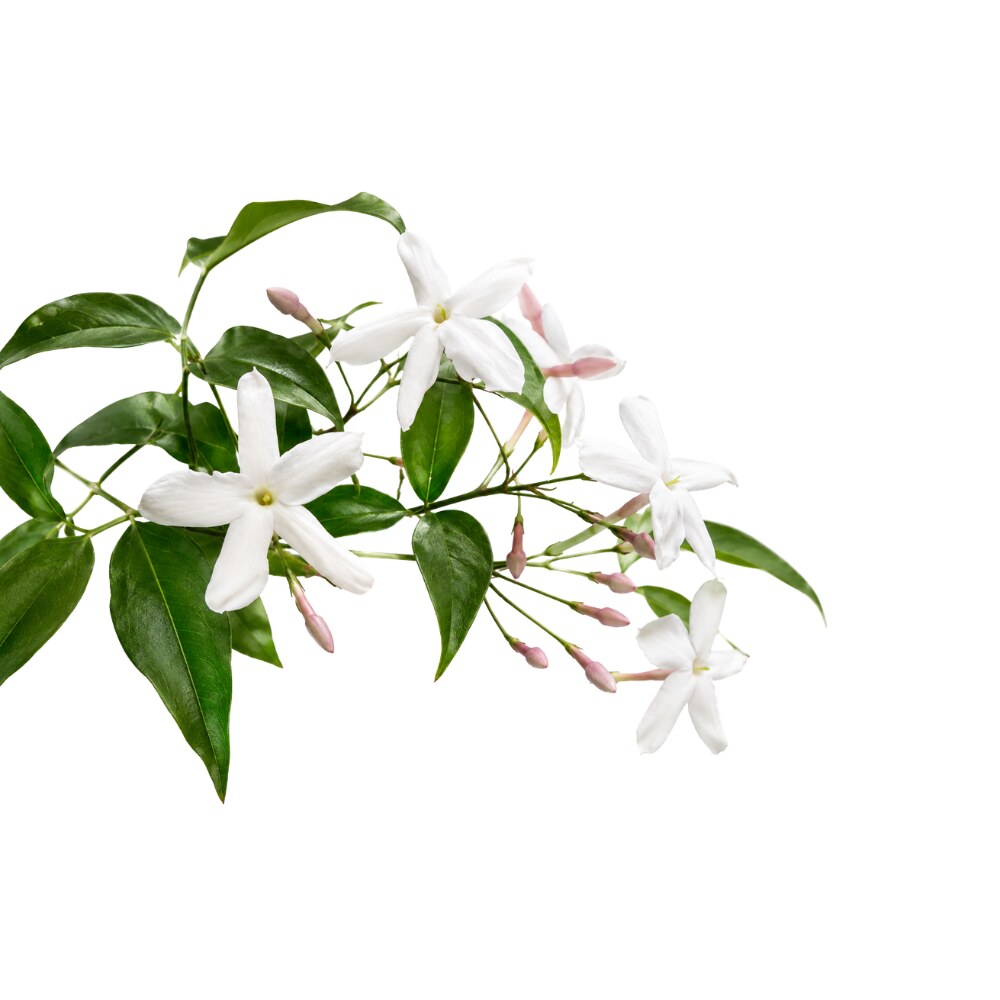
Jasmine belongs to the olive family (Oleaceae), and the plant behind the classic jasmine scent is Jasminum officinale — common or poet’s jasmine, a woody climbing vine that twines its way up whatever it can reach. Its slender green stems carry feathery, divided leaves, but everything about the plant points toward the flower: small, white, five-pointed stars that open through the warm season and release a heady, sweet perfume, strongest in the evening.
It is the flower itself that is the working material. The petals are so delicate that heat destroys their aroma, so the fragrance is captured cold — historically by enfleurage into fat, today largely by solvent extraction — yielding the prized jasmine “absolute” and its essential oil.
Two close cousins are worth keeping straight, because “jasmine” on a label rarely means this exact species. Jasminum sambac (Arabian or sambac jasmine) is the one whose flowers scent jasmine tea; Jasminum grandiflorum (Spanish or royal jasmine) is the perfumer’s mainstay. One more caution: “star jasmine” (Trachelospermum jasminoides) is not a true jasmine at all — it belongs to a different family (Apocynaceae) and is only a fragrant look-alike, a common source of confusion when sourcing plant material.
Distribution
True jasmine is a plant of temperate Asia, native in a sweep from the Caucasus and the Middle East through the Himalaya into south-central China. Prized for its scent, it has been carried into cultivation across the warm-temperate world and now grows well beyond its original range, thriving anywhere winters stay mild.
Growing Conditions
- Wants full sun to part shade and a warm, sheltered spot; flowering is best with plenty of light.
- Hardy roughly in USDA zones 7–10 — in colder areas grow it in a container and shelter it over winter.
- Give it a support (trellis, wires, arch) to twine up; it is a climber, not a self-supporting shrub.
- Ordinary well-drained garden soil suits it, with generous, steady moisture through the growing season.
- Full cultivation detail lives on the companion farm-wiki grow guide for Jasminum officinale (link to be added once that project’s public URL is confirmed).
Phytochemistry
Jasmine’s prized aroma is carried almost entirely in the flower’s volatile absolute, built from aromatic esters and a little nitrogen chemistry: benzyl acetate is usually the largest single component, with linalool and the heavy fixative benzyl benzoate close behind, and a small amount of indole lending the characteristic narcotic, “animalic” depth of a true white-floral 1Reference 1Stimulating effect of aromatherapy massage with jasmine oil — [human aromatherapy study]View study →. Trace cis-jasmone gives the green-jasmine top note, rounded out by methyl anthranilate and benzyl alcohol; small amounts of phenolic acids such as caffeic acid and ferulic acid occur in the flower tissue 1Reference 1Stimulating effect of aromatherapy massage with jasmine oil — [human aromatherapy study]View study →. Beyond the aroma chemistry, the flower also carries the secoiridoid glycoside oleuropein — the molecule shared with olive and privet that carries most of the genus’s measured hepatoprotective and antiviral activity 9Reference 9In vitroAntiviral efficacy against hepatitis B virus replication of oleuropein isolated from Jasminum officinale L. var. grandiflorum — [in vitro and animal study]View study → — and trace amounts of the plant stress-signalling molecule methyl jasmonate, a structural relative of cis-jasmone 7Reference 7AnimalAntidepressant-like activity of methyl jasmonate involves modulation of monoaminergic pathways in mice — [mouse model]View study →.
Constituent Summary
Figures are the share of jasmine absolute and vary substantially with species (J. officinale vs J. grandiflorum), origin and extraction; the cited percentages are for J. grandiflorum absolute. The phenolic acids are documented qualitatively in flower tissue, and oleuropein and methyl jasmonate are documented as present but not quantified — all listed as No Data 1,7,9Reference 1Stimulating effect of aromatherapy massage with jasmine oil — [human aromatherapy study]View study →Reference 7AnimalAntidepressant-like activity of methyl jasmonate involves modulation of monoaminergic pathways in mice — [mouse model]View study →Reference 9In vitroAntiviral efficacy against hepatitis B virus replication of oleuropein isolated from Jasminum officinale L. var. grandiflorum — [in vitro and animal study]View study →.
Phenylpropanoid3 compounds2 with data
Monoterpene1 compound1 with data
Secoiridoid1 compoundno data
Pharmacology & Research
Jasmine (Jasminum officinale) has a small, tiered research base that looks nothing like its cultural prominence: it is studied far more as a fragrance and flavouring than as an internal medicine, and most of what exists is preclinical. Two threads carry genuine human data. The first is aromatic — a handful of small controlled studies show that inhaled jasmine odour measurably shifts autonomic tone and mood, though the direction is not simply “calming”: some designs record relaxation and lowered blood pressure, others record arousal and heightened alertness 1,2Reference 1Stimulating effect of aromatherapy massage with jasmine oil — [human aromatherapy study]View study →Reference 2Clinical trialEffects of Olfactory Stimulation with Aroma Oils on Psychophysiological Responses of Female Adults — [human study]View study →. The second is unexpected — topical and intranasal jasmine flower preparations lower the milk-hormone prolactin and suppress lactation, tested head-to-head against the drug bromocriptine 3,4Reference 3Clinical trialSuppression of puerperal lactation using jasmine flowers (Jasminum sambac) — [comparative clinical study]View study →Reference 4RCTJasmine flower extract lowers prolactin — [randomised controlled trial]View study →. Almost everything else — anti-inflammatory, wound-healing, antioxidant, hepatoprotective, anticancer, antimicrobial activity — rests on animal or test-tube work, and a large share of it uses the sibling species J. grandiflorum (leaf) or J. sambac rather than J. officinale flower, so read the species and preparation notes on every line below.
- Best-supported: inhaled jasmine aroma produces reproducible, dose-dependent shifts in autonomic activity and mood in small human studies 1,5,6Reference 1Stimulating effect of aromatherapy massage with jasmine oil — [human aromatherapy study]View study →Reference 5Autonomic nervous responses according to preference for the odor of jasmine tea — [human autonomic study]View study →Reference 6Clinical trialSedative effects of the jasmine tea odor and (R)-(-)-linalool, one of its major odor components, on autonomic nerve activity and mood states — [human study]View study →; jasmine flower preparations lower prolactin and suppress lactation in two human studies, one an RCT 3,4Reference 3Clinical trialSuppression of puerperal lactation using jasmine flowers (Jasminum sambac) — [comparative clinical study]View study →Reference 4RCTJasmine flower extract lowers prolactin — [randomised controlled trial]View study →.
- Emerging, worth watching: jasmine-flower/leaf extracts and the plant-derived signalling molecule methyl jasmonate show antidepressant-like effects in rodent stress models 7,8Reference 7AnimalAntidepressant-like activity of methyl jasmonate involves modulation of monoaminergic pathways in mice — [mouse model]View study →Reference 8AnimalAntidepressant-like Effects of Five Essential Oils Inhaled in Reserpine-induced Depressed Mouse Models — [mouse model (in vivo)]View study →; oleuropein from J. officinale var. grandiflorum blocks hepatitis-B surface antigen in vitro 9Reference 9In vitroAntiviral efficacy against hepatitis B virus replication of oleuropein isolated from Jasminum officinale L. var. grandiflorum — [in vitro and animal study]View study →.
- Mechanistically thin: wound-healing, anti-inflammatory, antioxidant, analgesic, hepatoprotective, anticancer and antimicrobial claims are almost entirely animal/in-vitro and lean heavily on J. grandiflorum leaf, not J. officinale flower.
- The caveat: there is no standardised medicinal preparation and no registered clinical trial of jasmine as a medicine; the herb is used as a scented tea, an aromatic absolute and a perfume, yet much of the “activity” literature tests leaf or root extracts of other Jasminum species. A finding in one form or species does not transfer to the tea in your cup or the oil on a diffuser.
1. Autonomic & mood modulation (aromatic)
This is jasmine’s strongest human signal, and it is a genuinely aromatic effect — the odour, not an ingested dose, is the medium. In a controlled study, inhaling jasmine odour blunted the rise in diastolic blood pressure during a handgrip stress task by roughly a quarter, implying a central rather than a purely psychological action 10Reference 10Clinical trialPleasant odors attenuate the blood pressure increase during rhythmic handgrip in humans — [human study]View study →. Jasmine-tea odour and its component linalool at low perceived intensity slowed heart rate and increased parasympathetic (high-frequency heart-rate-variability) activity while raising calm-vigorous mood 5,6Reference 5Autonomic nervous responses according to preference for the odor of jasmine tea — [human autonomic study]View study →Reference 6Clinical trialSedative effects of the jasmine tea odor and (R)-(-)-linalool, one of its major odor components, on autonomic nerve activity and mood states — [human study]View study →. But the effect is bidirectional and dose/preference-dependent: topical aromatherapy massage with J. sambac oil increased breathing rate, blood pressure and subjective alertness — a stimulant profile, not a sedative one 1Reference 1Stimulating effect of aromatherapy massage with jasmine oil — [human aromatherapy study]View study → — and EEG work in women found jasmine inhalation raised alpha activity and lowered systolic pressure, read as relaxation 2Reference 2Clinical trialEffects of Olfactory Stimulation with Aroma Oils on Psychophysiological Responses of Female Adults — [human study]View study →. A 2024 single-blinded placebo-controlled trial reported reduced anxiety in children during dental procedures 11Reference 11RCTAnxiolytic Effect of Jasmine Aromatherapy in Pediatric Dental Procedures: A Single-Blinded Randomized Placebo-Controlled Trial — [randomised placebo-controlled trial]View study →. The picture is of a real neuroactive aroma whose direction depends on concentration, individual preference and context — which is exactly why the traditional framing of jasmine as both “calming” and “uplifting” survives.
Gap: every study is small, aroma delivery and outcomes are heterogeneous, and the herb’s sidebar label of “sedative” is only half-right — jasmine can be arousing, so the effect should not be presented as reliably relaxing.
2. Lactifuge / prolactin-lowering
The most surprising human finding: jasmine flowers suppress lactation. In a classic comparative study, fresh jasmine (J. sambac) flowers applied to the breasts suppressed puerperal (post-birth) milk production about as effectively as the dopamine-agonist drug bromocriptine on clinical measures such as breast engorgement and milk volume, though the fall in serum prolactin was smaller than with the drug 3Reference 3Clinical trialSuppression of puerperal lactation using jasmine flowers (Jasminum sambac) — [comparative clinical study]View study →. A later randomised controlled trial delivered an aqueous-ethanolic jasmine flower extract intranasally to antipsychotic-treated women with raised prolactin and saw a clinically meaningful drop (≥25 ng/mL) in roughly a third of them 4Reference 4RCTJasmine flower extract lowers prolactin — [randomised controlled trial]View study →, and the herb’s role as a “lactifuge” (milk-suppressing agent) has a clinical literature going back decades 12Reference 12Acharya SR (1987). “Jasmine—the lactifuge” — [clinical report]. J Assoc Physicians India. https://pubmed.ncbi.nlm.nih.gov/3429440/View study →. Mechanistically this points to an anti-prolactin / dopaminergic-type action carried in the flower.
Gap: samples are small, the two positive studies use different species (J. sambac topically; unspecified flower extract intranasally) and routes, and the practical corollary is a safety signal, not a benefit — anyone wishing to maintain a milk supply, i.e. breastfeeding women, has a reason to be cautious with jasmine flower preparations.
3. Wound healing & tissue repair
Topical jasmine has a consistent, if species-shifted, tissue-repair record. Ethanolic J. grandiflorum flower extract at 250 mg/kg raised wound epithelialisation and contraction (65% vs 54% in controls) and increased granulation tissue, collagen and fibroblasts in rats 13Reference 13AnimalInfluence of ethanolic extract of Jasminum grandflorum linn flower on wound healing activity in rats — [rat study (in vivo)]View study →, and methanolic leaf-extract ointment accelerated healing through enhanced collagen synthesis and the antioxidant enzymes SOD, catalase and glutathione 14Reference 14AnimalEfficacy of Jasminum grandiflorum L. leaf extract on dermal wound healing in rats — [rat study]View study →. A successive-ethanolic leaf ointment from the related J. auriculatum reached 84% wound contraction by day 15 15Reference 15AnimalEvaluation of wound healing, antioxidant and antimicrobial efficacy of Jasminum auriculatum Vahl. leaves — [rat study]View study →. The one human data point is adjacent: a J. grandiflorum (“jati”) oral gel, added to standard care, significantly reduced pain and lesion area in grade-2 radiation-induced oral mucositis 16Reference 16Clinical trialJasminum grandiflorum oral gel as an add-on to standard of care in radiation induced grade 2 oral mucositis - an open label pilot clinical trial — [clinical trial]View study →.
Gap: the healing data are almost entirely J. grandiflorum leaf/flower in rodents applied topically — not J. officinale flower, and not the aromatic absolute — so the effect belongs to jasmine-the-genus-leaf-poultice, not to jasmine tea or perfume.
4. Anti-inflammatory
Anti-inflammatory activity recurs across the genus in animal and cell models. An ethanolic J. officinale extract showed dose-dependent activity against both acute and chronic inflammation in mice — one of the few on-species in-vivo results 17Reference 17AnimalAnti-nociceptive and anti-inflammatory effects of some Jordanian medicinal plant extracts — [mouse study]View study →. In J. grandiflorum, a methanolic leaf extract cut nitric-oxide release from macrophages and carrageenan-induced paw oedema 18Reference 18AnimalMethanolic extract of leaves of Jasminum grandiflorum Linn modulates oxidative stress and inflammatory mediators — [rat study]View study →, and an aerial-parts extract at 400 mg/kg reduced colonic pro-inflammatory cytokines and matched the steroid prednisolone in colitis and arthritis models 19Reference 19AnimalAnti-inflammatory activity of Jasminum grandiflorum L. subsp. floribundum (Oleaceae) in inflammatory bowel disease and arthritis models — [rat study]View study →. On species, four new sesquiterpenoids isolated from J. officinale stems moderately inhibited LPS-induced nitric-oxide production in macrophages 20Reference 20In vitroFour new sesquiterpenoids with anti-inflammatory activity from the stems of Jasminum officinale — [in vitro]View study →, and a standardised J. sambac root extract showed anti-inflammatory, analgesic and antipyretic activity in rodents 21Reference 21Anti-inflammatory, analgesic and anti-pyretic activities of standardized root extract of Jasminum sambac — [study]View study →.
Gap: the strongest anti-inflammatory data use leaf/root/aerial extracts — not the flower the herb is actually used from — and the on-species (J. officinale) evidence is in-vitro or a single old mouse study; there is no human anti-inflammatory trial.
5. Antidepressant
Distinct from the acute aroma effect, several rodent studies suggest a genuine antidepressant-like action from ingested jasmine and its derivatives. Jasmine tea reversed depressive-like behaviour in chronically stressed rats, acting partly through the gut–brain axis by restoring BDNF and gut-microbial diversity 22,23Reference 22AnimalJasmine Tea Attenuates Chronic Unpredictable Mild Stress-Induced Depressive-like Behavior in Rats via the Gut-Brain Axis — [rat model]View study →Reference 23AnimalJasmine tea extract prevents CUMS-induced depression-like behaviors through the modulation of microbiota-gut-brain axis — [rat model]View study →, and inhaled J. sambac essential oil cut immobility in the forced-swim and tail-suspension tests while modulating hippocampal serotonin receptors and BDNF in mice 8Reference 8AnimalAntidepressant-like Effects of Five Essential Oils Inhaled in Reserpine-induced Depressed Mouse Models — [mouse model (in vivo)]View study →. The plant stress-hormone methyl jasmonate — chemically related to jasmine’s cis-jasmone — reduced depressive-like behaviour via monoaminergic pathways and by suppressing oxidative stress and TNF-α 7,24Reference 7AnimalAntidepressant-like activity of methyl jasmonate involves modulation of monoaminergic pathways in mice — [mouse model]View study →Reference 24AnimalMethyl jasmonate attenuated lipopolysaccharide-induced depressive-like behaviour in mice — [study]View study →.
Gap: entirely preclinical, spread across tea, essential oil and an isolated signalling molecule (methyl jasmonate is a research tool, not a jasmine dose form); no human antidepressant trial exists.
6. Antioxidant
Antioxidant activity is the most replicated finding in the jasmine literature and also the least clinically meaningful. Numerous in-vitro assays show flowers, leaves and stems of various Jasminum species scavenge DPPH and other radicals in proportion to their phenolic content 25Reference 25In vitroAntioxidant and anti-inflammatory caffeoyl phenylpropanoid and secoiridoid glycosides from Jasminum nervosum stems, a Chinese folk medicine — [in vitro]View study →, and a J. officinale flower enrichment gave the highest total-phenolic and antiradical activity among several herbs in one distillate study 26Reference 26In vitroHerbal distillates: A new era of grape marc distillates with enriched antioxidant profile — [in vitro]View study →. The active molecules are the usual plant phenolics and secoiridoid glycosides rather than anything jasmine-specific.
Gap: this is constituent-level, test-tube antioxidant capacity — a chemical property of many phenolic-rich plants — with no demonstration that drinking jasmine tea or inhaling the absolute produces a meaningful antioxidant effect in a person.
7. Analgesic
Pain relief shows up in both rodent and one human study. Hydroalcoholic J. grandiflorum leaf extract produced significant antinociception (and anticonvulsant activity) in tail-flick and acetic-acid-writhing tests at 50–200 mg/kg 27Reference 27AnimalAntinociceptive and anticonvulsant activities of hydroalcoholic extract of Jasminum grandiflorum (jasmine) leaves in experimental animals — [rodent study (in vivo)]View study →, and the standardised J. sambac root extract reduced writhing by about half 21Reference 21Anti-inflammatory, analgesic and anti-pyretic activities of standardized root extract of Jasminum sambac — [study]View study →. In humans, jasmine (J. officinale) aromatherapy reduced labour-pain severity at 30 minutes compared with control — but the difference had disappeared by 60 minutes, and there was no effect on neonatal Apgar scores 28Reference 28Clinical trialComparison of the effect of aromatherapy with Jasminum officinale and Salvia officinale on pain severity and labor outcome in nulliparous women — [clinical trial]View study →.
Gap: the only human analgesic result is a short-lived aromatherapy effect that washed out within an hour; the stronger animal data again use leaf/root extracts of other species.
8. Hepatoprotective
Liver-protective activity is real in animals but tightly tied to one molecule and the wrong species. Extracts of J. grandiflorum protected rat liver against carbon-tetrachloride injury dose-dependently 29Reference 29AnimalExtract of Jasminum grandiflorum L. alleviates CCl₄-induced liver injury in rats — [rat study]View study →, and new oligomeric secoiridoid glycosides from J. sambac flowers were hepatoprotective in mice at 12.5–25 mg/kg 30Reference 30AnimalOligomeric secoiridoid glycosides with hepatoprotective activity from the flowers of Jasminum sambac (L.) Aiton — [mouse study]View study →. The most specific result is that oleuropein — isolated here from J. officinale var. grandiflorum — blocked hepatitis-B surface-antigen secretion in liver cells (IC₅₀ ≈ 23 µg/mL) and lowered viraemia in infected ducks 9Reference 9In vitroAntiviral efficacy against hepatitis B virus replication of oleuropein isolated from Jasminum officinale L. var. grandiflorum — [in vitro and animal study]View study →.
Gap: hepatoprotection rides largely on oleuropein, a secoiridoid shared with olive and privet, at injected or high oral doses in animals; there is no evidence that jasmine flower tea delivers a hepatoprotective dose.
9. Anticancer / chemopreventive
The oncology data are preclinical and, at the whole-extract level, cross-species. Ethanolic J. grandiflorum flower extract (300 mg/kg) completely prevented chemically-induced mammary tumours in rats during the initiation phase while improving antioxidant defences 31Reference 31AnimalChemopreventive efficacy and anti-lipid peroxidative potential of Jasminum grandiflorum Linn. on 7,12-dimethylbenz(a)anthracene-induced rat mammary carcinogenesis — [rat model (in vivo)]View study →, and J. sambac essential oil inhibited triple-negative (MDA-MB-231) breast-cancer cells more than hormone-responsive MCF-7 cells, with supporting rat tumour-model data 32Reference 32In vitroNetwork pharmacology integrated with molecular docking reveals the anticancer mechanism of Jasminum sambac Linn. essential oil against human breast cancer and experimental validation by in vitro and in vivo studies — [in vitro and animal study]View study →. Beyond these, most reports are single cell-line cytotoxicity screens.
Gap: animal and cell-line only, mostly non-officinale, and cancer chemoprevention from an aromatic flower used in tea and perfume is a long inferential leap with no human data whatsoever.
10. Antimicrobial
Antimicrobial activity is the page’s implied selling point for the absolute, and it is the weakest efficacy claim. Jasmine essential oil is bactericidal against E. coli in vitro but only at high concentrations (MIC ~2–31 µL/mL) 33Reference 33In vitroAntibacterial potential assessment of jasmine essential oil against eView study →, J. officinale essential oil modestly inhibited the mould Aspergillus parasiticus (about 21% growth suppression over 14 days) 34Reference 34In vitroThe in vitro effect of selected essential oils on the growth and mycotoxin production of Aspergillus species — [in vitro]View study →, and cold/hot water extracts of J. officinale gave variable, generally weak inhibition of common pathogens 35Reference 35In vitroAntibacterial activity of some medicinal plants against selected human pathogenic bacteria — [in vitro]View study →.
Gap: in-vitro only, modest potency, and largely mismatched to use — the antibacterial results come from concentrated oil/absolute, not the dilute aroma of a scented tea, so they do not support any internal antimicrobial benefit.
Mechanisms
| Mechanism | Drives | Key compounds |
|---|---|---|
| Olfactory → limbic/autonomic signalling (parasympathetic ↑ or sympathetic ↑ by dose/preference) | autonomic & mood modulationantidepressantanalgesia | linalool, benzyl acetate, cis-jasmone |
| Dopaminergic / anti-prolactin action of flower constituents | lactifuge / prolactin-lowering | flower secoiridoid & phenolic fraction |
| NF-κB ↓, COX-2/iNOS ↓, nitric-oxide ↓ in macrophages | anti-inflammatorywound healing | oleuropein, sesquiterpenoids |
| Phenolic radical scavenging (DPPH), SOD/catalase/GSH ↑ | antioxidantwound healinghepatoprotection | caffeic acid, ferulic acid, secoiridoid glycosides |
| Monoaminergic modulation + BDNF ↑ via gut–brain axis | antidepressant | methyl jasmonate |
| HBsAg secretion ↓ in hepatocytes | hepatoprotective (antiviral) | oleuropein |
Clinical trials
No clinical trials of medicinal jasmine are registered on ClinicalTrials.gov — the only “jasmine” entries there study jasmine rice glycaemic response and a dental cement; the human evidence that exists comes from a few small published aromatherapy and lactation studies rather than a registered trial programme.
| Completed | Planned | Terminated | Preclinical |
|---|---|---|---|
| 0 | 0 | 0 | ~40 |
Last checked: July 2026.
Dosage
Jasmine is not used as a measured internal medicine — almost every “dose” in the research is an aroma exposure, and the traditional uses are a scented beverage or a topical flower application rather than a therapeutic quantity. The research doses below are the exposures the human studies actually used; they are records of what was tested, not recommendations.
| Indication | Preparation | Dose | Est. dried-herb equivalent | Source |
|---|---|---|---|---|
| Autonomic / mood modulation | Inhaled aroma (absolute / tea odour) | Ambient odour, low perceived intensity; single sessions | — (aroma exposure, not a weight dose) | 1,2,5Reference 1Stimulating effect of aromatherapy massage with jasmine oil — [human aromatherapy study]View study →Reference 2Clinical trialEffects of Olfactory Stimulation with Aroma Oils on Psychophysiological Responses of Female Adults — [human study]View study →Reference 5Autonomic nervous responses according to preference for the odor of jasmine tea — [human autonomic study]View study → |
| Anxiolytic (paediatric dental) | Inhaled aromatherapy | Diffused during procedure (RCT) | — | 11Reference 11RCTAnxiolytic Effect of Jasmine Aromatherapy in Pediatric Dental Procedures: A Single-Blinded Randomized Placebo-Controlled Trial — [randomised placebo-controlled trial]View study → |
| Labour-pain (analgesic) | Inhaled aromatherapy | 15-min inhalation; effect at 30 min, null by 60 min | — | 28Reference 28Clinical trialComparison of the effect of aromatherapy with Jasminum officinale and Salvia officinale on pain severity and labor outcome in nulliparous women — [clinical trial]View study → |
| Lactifuge / prolactin-lowering | Fresh flowers, topical to breasts | Fresh flowers applied to each breast (weight not reported in abstract) | — (fresh topical application; no meaningful dried-herb equivalent) | 3Reference 3Clinical trialSuppression of puerperal lactation using jasmine flowers (Jasminum sambac) — [comparative clinical study]View study → |
| Lactifuge / prolactin-lowering | Aqueous-ethanolic flower extract, intranasal | Intranasal drops (RCT; exact mg not standardised) | — (proprietary extract; no marker %) | 4Reference 4RCTJasmine flower extract lowers prolactin — [randomised controlled trial]View study → |
Est. dried-herb equivalent is a rough guide only, never a conversion factor or a recommendation. Most jasmine “doses” are aroma exposures with no meaningful dried-herb weight, so the column is largely ”—” by necessity: the topical dose is fresh-flower weight, and the aromatherapy/intranasal preparations are ambient or proprietary and cannot be back-converted without inventing a ratio.
Traditional Dosage
| System | Preparation | Dose |
|---|---|---|
| Western herbal / aromatherapy | Jasmine absolute, diluted in a carrier oil for topical / aromatic use | Typically 1–3% dilution for skin; a few drops diffused for aroma |
| Chinese / folk (scented tea) | Jasmine-scented green or white tea (flowers layered with tea) | 1 cup as a flavoured beverage; aroma-and-flavour, not a therapeutic dose |
| Traditional (flower, external) | Fresh flowers, topical | Applied to the breasts as a traditional lactifuge |
Safety & Pregnancy
Jasmine has a very low toxicity profile in ordinary culinary and aromatic use, with no serious systemic toxicity reported. The one evidence-based caution is specific to the flower — it lowers prolactin and can suppress milk supply, so breastfeeding women wanting to maintain lactation should avoid medicinal flower preparations.
- Suppresses lactation. Jasmine flower preparations lower prolactin and have suppressed milk supply comparably to bromocriptine — nursing mothers maintaining supply should avoid them.
- External use only. The concentrated absolute and essential oil are for aromatic and topical use, not ingestion.
- Fragrance allergens. The absolute carries benzyl benzoate, benzyl alcohol and linalool — recognised skin sensitisers that can provoke contact dermatitis; dilute and patch-test.
- Low toxicity in ordinary use. Scented tea, flavouring and diluted oil/absolute have no reported serious systemic toxicity.
Full safety & interactions detail
Jasmine has a very low toxicity profile in ordinary culinary and aromatic use — scented teas, flavouring and diluted essential oil/absolute — and no serious systemic toxicity has been reported for these forms. The concentrated absolute and essential oil are for external and aromatic use, not ingestion, and like any essential oil should be diluted and patch-tested before skin contact: jasmine absolute carries fragrance allergens including benzyl benzoate, benzyl alcohol and linalool, which are recognised skin sensitisers and can provoke contact dermatitis in susceptible people. One practical, evidence-based caution is specific to the flower: jasmine flower preparations lower the milk-hormone prolactin and have been used clinically to suppress lactation, comparably to the drug bromocriptine 3,4Reference 3Clinical trialSuppression of puerperal lactation using jasmine flowers (Jasminum sambac) — [comparative clinical study]View study →Reference 4RCTJasmine flower extract lowers prolactin — [randomised controlled trial]View study → — so breastfeeding women wishing to maintain milk supply should avoid medicinal jasmine flower preparations. Formal drug-interaction, ingestion-toxicity and standardised-dose data are essentially absent, so internal medicinal use beyond scented tea is not well characterised; no pharmacokinetic or CYP450 interaction study of jasmine was identified, and the absence of reports should not be read as evidence of safety.
Topical and intranasal jasmine flower preparations reduce serum prolactin and have suppressed puerperal lactation about as effectively as bromocriptine in small human studies 3,4,12Reference 3Clinical trialSuppression of puerperal lactation using jasmine flowers (Jasminum sambac) — [comparative clinical study]View study →Reference 4RCTJasmine flower extract lowers prolactin — [randomised controlled trial]View study →Reference 12Acharya SR (1987). “Jasmine—the lactifuge” — [clinical report]. J Assoc Physicians India. https://pubmed.ncbi.nlm.nih.gov/3429440/View study →, so nursing mothers who want to maintain lactation should avoid concentrated jasmine flower extracts — the aroma of a cup of jasmine-scented tea is a different exposure and has not been shown to affect supply. Jasmine’s effects in pregnancy have not been directly studied; aromatic use appears in aromatherapy practice (including a labour-pain study 28Reference 28Clinical trialComparison of the effect of aromatherapy with Jasminum officinale and Salvia officinale on pain severity and labor outcome in nulliparous women — [clinical trial]View study →) without reported harm, but this is an absence of data, not a demonstration of safety, and internal use of concentrated preparations is not recommended in pregnancy.
References
- Hongratanaworakit T (2010). Stimulating effect of aromatherapy massage with jasmine oil — [human aromatherapy study]. Nat Prod Commun. https://pubmed.ncbi.nlm.nih.gov/20184043/
- Choi NY et al. (2022). Effects of Olfactory Stimulation with Aroma Oils on Psychophysiological Responses of Female Adults — [human study]. Int J Environ Res Public Health. https://pubmed.ncbi.nlm.nih.gov/35564590/
- Shrivastav P et al. (1988). Suppression of puerperal lactation using jasmine flowers (Jasminum sambac) — [comparative clinical study]. Aust N Z J Obstet Gynaecol. https://pubmed.ncbi.nlm.nih.gov/3214386/
- Finny P et al. (2015). Jasmine flower extract lowers prolactin — [randomised controlled trial]. Trop Doct. https://pubmed.ncbi.nlm.nih.gov/25505191/
- Inoue N et al. (2003). Autonomic nervous responses according to preference for the odor of jasmine tea — [human autonomic study]. Biosci Biotechnol Biochem. https://pubmed.ncbi.nlm.nih.gov/12843644/
- Kuroda K et al. (2005). Sedative effects of the jasmine tea odor and (R)-(-)-linalool, one of its major odor components, on autonomic nerve activity and mood states — [human study]. Eur J Appl Physiol. https://pubmed.ncbi.nlm.nih.gov/15976995/
- Umukoro S et al. (2018). Antidepressant-like activity of methyl jasmonate involves modulation of monoaminergic pathways in mice — [mouse model]. Adv Med Sci. https://pubmed.ncbi.nlm.nih.gov/28818747/
- Ma Y et al. (2025). Antidepressant-like Effects of Five Essential Oils Inhaled in Reserpine-induced Depressed Mouse Models — [mouse model (in vivo)]. Chem Biodivers. https://pubmed.ncbi.nlm.nih.gov/40644689/
- Zhao G et al. (2009). Antiviral efficacy against hepatitis B virus replication of oleuropein isolated from Jasminum officinale L. var. grandiflorum — [in vitro and animal study]. J Ethnopharmacol. https://pubmed.ncbi.nlm.nih.gov/19580857/
- Nagai M et al. (2000). Pleasant odors attenuate the blood pressure increase during rhythmic handgrip in humans — [human study]. Neurosci Lett. https://pubmed.ncbi.nlm.nih.gov/10961671/
- Jafarzadeh Samani M et al. (2024). Anxiolytic Effect of Jasmine Aromatherapy in Pediatric Dental Procedures: A Single-Blinded Randomized Placebo-Controlled Trial — [randomised placebo-controlled trial]. Front Dent. https://pubmed.ncbi.nlm.nih.gov/39588286/
- Acharya SR (1987). “Jasmine—the lactifuge” — [clinical report]. J Assoc Physicians India. https://pubmed.ncbi.nlm.nih.gov/3429440/
- Nayak BS et al. (2007). Influence of ethanolic extract of Jasminum grandflorum linn flower on wound healing activity in rats — [rat study (in vivo)]. Indian J Physiol Pharmacol. https://pubmed.ncbi.nlm.nih.gov/18175666/
- Chaturvedi AP et al. (2013). Efficacy of Jasminum grandiflorum L. leaf extract on dermal wound healing in rats — [rat study]. Int Wound J. https://pubmed.ncbi.nlm.nih.gov/22905741/
- Arun M et al. (2016). Evaluation of wound healing, antioxidant and antimicrobial efficacy of Jasminum auriculatum Vahl. leaves — [rat study]. Avicenna J Phytomed. https://pubmed.ncbi.nlm.nih.gov/27462552/
- Anuja AR et al. (2024). Jasminum grandiflorum oral gel as an add-on to standard of care in radiation induced grade 2 oral mucositis - an open label pilot clinical trial — [clinical trial]. J Ayurveda Integr Med. https://pubmed.ncbi.nlm.nih.gov/39003915/
- Atta AH et al. (1998). Anti-nociceptive and anti-inflammatory effects of some Jordanian medicinal plant extracts — [mouse study]. J Ethnopharmacol. https://pubmed.ncbi.nlm.nih.gov/9582001/
- Chaturvedi AP et al. (2011). Methanolic extract of leaves of Jasminum grandiflorum Linn modulates oxidative stress and inflammatory mediators — [rat study]. Inflammopharmacology. https://pubmed.ncbi.nlm.nih.gov/21701798/
- El-Shiekh RA et al. (2021). Anti-inflammatory activity of Jasminum grandiflorum L. subsp. floribundum (Oleaceae) in inflammatory bowel disease and arthritis models — [rat study]. Biomed Pharmacother. https://pubmed.ncbi.nlm.nih.gov/34119929/
- Lu Y et al. (2019). Four new sesquiterpenoids with anti-inflammatory activity from the stems of Jasminum officinale — [in vitro]. Fitoterapia. https://pubmed.ncbi.nlm.nih.gov/30946945/
- Sengar N et al. (2015). Anti-inflammatory, analgesic and anti-pyretic activities of standardized root extract of Jasminum sambac — [study]. J Ethnopharmacol. https://pubmed.ncbi.nlm.nih.gov/25479154/
- Zhang Y et al. (2021). Jasmine Tea Attenuates Chronic Unpredictable Mild Stress-Induced Depressive-like Behavior in Rats via the Gut-Brain Axis — [rat model]. Nutrients. https://pubmed.ncbi.nlm.nih.gov/35010973/
- Zhou J et al. (2025). Jasmine tea extract prevents CUMS-induced depression-like behaviors through the modulation of microbiota-gut-brain axis — [rat model]. Food Res Int. https://pubmed.ncbi.nlm.nih.gov/40253129/
- Adebesin A et al. (2017). Methyl jasmonate attenuated lipopolysaccharide-induced depressive-like behaviour in mice — [study]. J Psychiatr Res. https://pubmed.ncbi.nlm.nih.gov/28647678/
- Guo ZY et al. (2014). Antioxidant and anti-inflammatory caffeoyl phenylpropanoid and secoiridoid glycosides from Jasminum nervosum stems, a Chinese folk medicine — [in vitro]. Phytochemistry. https://pubmed.ncbi.nlm.nih.gov/25107663/
- Andreou V et al. (2018). Herbal distillates: A new era of grape marc distillates with enriched antioxidant profile — [in vitro]. Food Chem. https://pubmed.ncbi.nlm.nih.gov/29502818/
- Gupta RK et al. (2013). Antinociceptive and anticonvulsant activities of hydroalcoholic extract of Jasminum grandiflorum (jasmine) leaves in experimental animals — [rodent study (in vivo)]. Pharmacognosy Res. https://pubmed.ncbi.nlm.nih.gov/24174823/
- Kaviani M et al. (2014). Comparison of the effect of aromatherapy with Jasminum officinale and Salvia officinale on pain severity and labor outcome in nulliparous women — [clinical trial]. Iran J Nurs Midwifery Res. https://pubmed.ncbi.nlm.nih.gov/25558267/
- Sun L et al. (2022). Extract of Jasminum grandiflorum L. alleviates CCl₄-induced liver injury in rats — [rat study]. Biomed Pharmacother. https://pubmed.ncbi.nlm.nih.gov/35689859/
- Inoue N et al. (2025). Oligomeric secoiridoid glycosides with hepatoprotective activity from the flowers of Jasminum sambac (L.) Aiton — [mouse study]. Phytochemistry. https://pubmed.ncbi.nlm.nih.gov/40345309/
- Kolanjiappan K et al. (2005). Chemopreventive efficacy and anti-lipid peroxidative potential of Jasminum grandiflorum Linn. on 7,12-dimethylbenz(a)anthracene-induced rat mammary carcinogenesis — [rat model (in vivo)]. Fundam Clin Pharmacol. https://pubmed.ncbi.nlm.nih.gov/16313281/
- Lakshmi SG et al. (2024). Network pharmacology integrated with molecular docking reveals the anticancer mechanism of Jasminum sambac Linn. essential oil against human breast cancer and experimental validation by in vitro and in vivo studies — [in vitro and animal study]. Appl Biochem Biotechnol. https://pubmed.ncbi.nlm.nih.gov/37129744/
- Rath CC et al. (2008). Antibacterial potential assessment of jasmine essential oil against e. Coli — [in vitro]. Indian J Pharm Sci. https://pubmed.ncbi.nlm.nih.gov/20046722/
- Císarová M et al. (2016). The in vitro effect of selected essential oils on the growth and mycotoxin production of Aspergillus species — [in vitro]. J Environ Sci Health B. https://pubmed.ncbi.nlm.nih.gov/27322876/
- Khan UA et al. (2013). Antibacterial activity of some medicinal plants against selected human pathogenic bacteria — [in vitro]. Eur J Microbiol Immunol (Bp). https://pubmed.ncbi.nlm.nih.gov/24294497/