
Materia Medica
Motherwort
Leonurus cardiaca
Motherwort (Leonurus cardiaca) — a heart and nerve herb used for cardiovascular complaints, palpitations, anxiety and women's reproductive health.
What Is Motherwort?
Motherwort is a bitter, mildly aromatic nervine and cardiotonic herb with a long history of use in Western herbal medicine. As its common name suggests, the herb has deep associations with women’s health, childbirth, postpartum recovery, and the emotional strain surrounding motherhood.
The botanical name Leonurus cardiaca points to another major traditional use: the heart. Motherwort has long been used for palpitations, nervous tension, anxiety, and cardiovascular complaints where emotional agitation and heart symptoms appear together.
The herb is especially suited to tense, restless, overheated states involving anxiety, palpitations, insomnia, irritability, or a sense of pressure in the chest.
How Is Motherwort Used?
Motherwort is most commonly prepared as a tincture, tea, infusion, capsule, or fresh plant extract.
In modern herbal practice, it is frequently used for anxiety with palpitations, stress-related cardiovascular tension, insomnia, nervous agitation, and menopausal or menstrual irritability. It is often chosen when emotional distress is felt strongly in the chest or heart.
Traditional women’s health uses include amenorrhea, menstrual tension, pelvic discomfort, postpartum anxiety, and symptoms associated with hormonal fluctuation. Because the herb is strongly bitter and somewhat unpleasant as tea, tinctures are often preferred.
Motherwort is commonly combined with hawthorn, skullcap, passionflower, lemon balm, valerian, or cramp bark depending on whether the emphasis is cardiovascular, nervous system, or reproductive support.
Traditional Uses
Western Herbal Medicine
In Western herbal medicine, motherwort is regarded as a nervine, cardiotonic, antispasmodic, emmenagogue, and mild hypotensive herb.
Traditional indications include anxiety, heart palpitations, nervous insomnia, hyperactivity, amenorrhea, menstrual discomfort, pelvic tension, and symptoms of emotional agitation after childbirth.
The herb was also historically used for restlessness, neuralgia, thyroid-related agitation, cardiovascular tension, and states of nervous exhaustion with a rapid or unsettled heartbeat.
Motherwort is especially associated with the overlap between the heart, nervous system, and reproductive system.
Traditional Chinese Medicine
In Traditional Chinese Medicine, the related herb Yi Mu Cao is most often derived from Leonurus japonicus, though it shares overlapping traditional themes with Western motherwort.
Yi Mu Cao is traditionally used to move blood, regulate menstruation, reduce swelling, and support postpartum recovery. It is especially associated with blood stagnation patterns involving menstrual irregularity, pelvic pain, and postpartum conditions.
Because the Chinese materia medica generally refers to a related species, these uses should not be assumed to apply identically to Leonurus cardiaca, though the traditional affinities are similar.
Indications
Motherwort is primarily indicated for nervous, cardiovascular, and reproductive conditions involving tension or agitation.
Common traditional and modern indications include:
- Anxiety
- Heart palpitations
- Insomnia
- Hyperactivity
- Restlessness
- Neuralgia
- Restless leg syndrome
- Amenorrhea
- Pelvic inflammatory conditions
- Menstrual tension
- Postpartum emotional distress
- Thyroid-related agitation
- Hypertension
- Coronary artery disease support
- Atherosclerosis support
Clinically, the herb is most commonly used when anxiety and cardiovascular symptoms overlap.
Botany
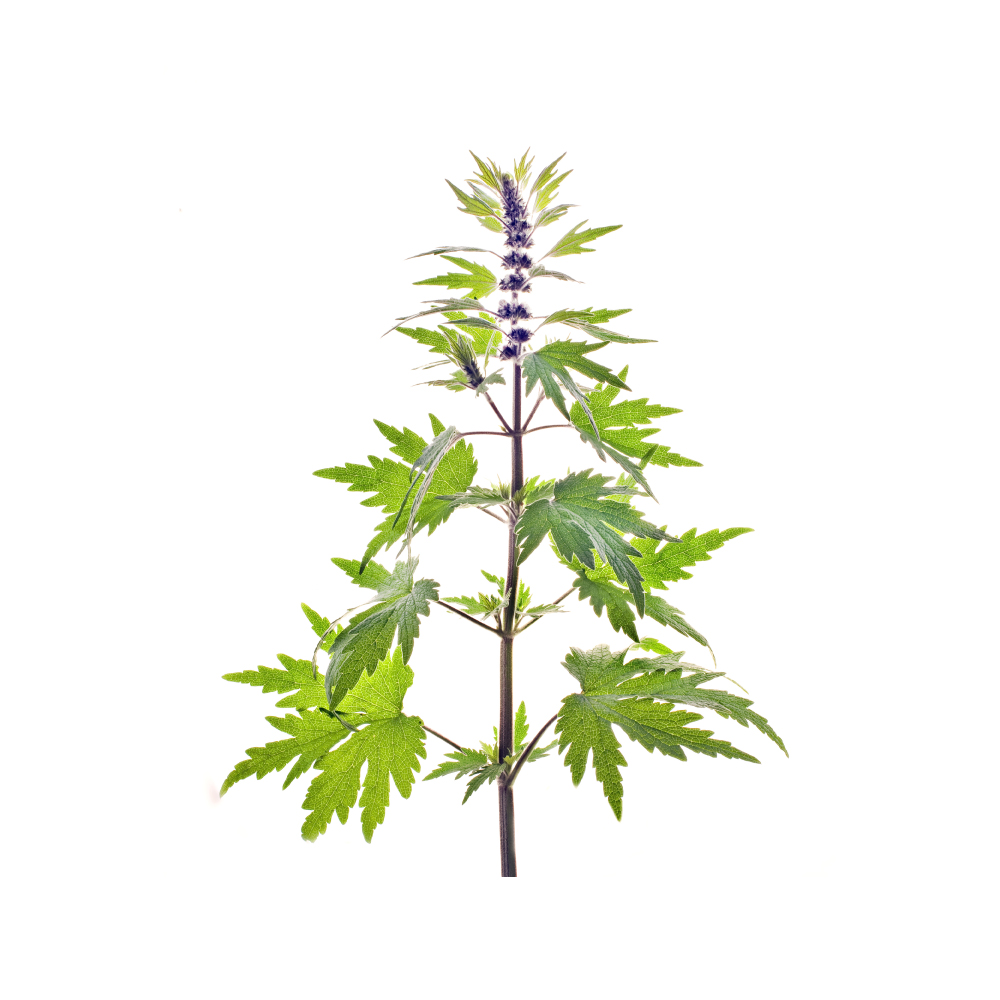
Motherwort is a member of the mint family (Lamiaceae), and it shows the family’s calling cards at a glance: an upright square stem, paired opposite leaves, and small lipped flowers gathered where leaf meets stem. It grows as a coarse, clump-forming perennial a few feet tall, with palmately lobed lower leaves that give it a slightly ragged, hand-like silhouette. In summer it carries tight whorls of pink-to-lilac flowers ringing the upper stem, each guarded by a distinctly prickly calyx — the feature that makes a mature seed head bite back when you grab it.
One distinction matters medicinally. Western herbalism’s motherwort is Leonurus cardiaca, the plant described here, valued for the heart and nervous system and for menstrual and menopausal support. Traditional Chinese Medicine’s “yi mu cao” is a different species, Leonurus japonicus (Chinese motherwort), used with its own emphasis — particularly around the uterus and postpartum recovery. The two are closely related and share a habit, but they are not interchangeable, and the pharmacopoeias treat them as separate materia medica.
Distribution
Motherwort is a native of southeastern Europe and Central Asia that has spread far beyond its home ground. Carried into North America and elsewhere in cultivation, it now grows wild across much of the continent, turning up along roadsides, field edges and other rough, disturbed places where it seeds itself with enthusiasm.
Growing Conditions
- Thrives in moist, fertile soil and tolerates part shade to full sun; avoid dry, droughty spots.
- Hardy and low-maintenance once established, returning from the crown each year (roughly USDA zones 3–8).
- Self-sows freely and can become weedy — deadhead the spiny seed heads before they scatter to keep it in bounds.
- Easily grown from seed or by division; it will naturalize on its own if left alone.
- Full cultivation detail lives on the companion farm-wiki grow guide for Leonurus cardiaca (link to be added once that project’s public URL is confirmed).
Phytochemistry
Motherwort’s bitterness and its action belong mostly to two families. The headline alkaloid is the betaine stachydrine (proline betaine), the most abundant and reliably quantified marker in Leonurus cardiaca, reported at roughly 0.6–1.5% of the dried aerial parts 17Reference 17Stachydrine in Leonurus cardiaca, Leonurus japonicus, Leonotis leonurus: detection and quantification by HPTLC and 1H-qNMR — analyticalView study →. The second key alkaloid, the guanidine derivative leonurine †, is the famous “motherwort” compound — but it is a marker of the Chinese species L. japonicus (Yi Mu Cao) and is reported as absent or only trace in true Western L. cardiaca, so it should not be assumed present here 16Reference 16Leonurus japonicus, Leonurus cardiaca, Leonotis leonurus: a novel HPLC study on the occurrence and content of the guanidino derivative leonurine — analyticalView study →.
The herb’s calming and mildly hypotensive reputation is often credited to its bitter iridoid glycosides, chiefly leonuride (ajugol), while lavandulifolioside — a phenylpropanoid glycoside — is the constituent most directly tied to the documented cardiac and negative-chronotropic effects of refined extracts 1,2Reference 1ReviewLeonurus cardiaca L. (motherwort): a review of its phytochemistry and pharmacology — reviewView study →Reference 2Cardiac and electrophysiological effects of primary and refined extracts from Leonurus cardiaca L. (PhView study →. A flavonoid fraction (standardised products aim for ≥0.2% total flavonoids, often to hyperoside, with quercetin glycosides, rutin and the flavone-C-glycoside orientin) carries much of the antioxidant activity, alongside phenolic acids such as chlorogenic acid 7Reference 7In vitroThe effect of Leonurus cardiaca herb extract and some of its flavonoids on mitochondrial oxidative phosphorylation in the heart — in vitroView study →. The labdane diterpenoid leocardin and triterpenes such as ursolic acid complete the profile.
Constituent Summary
Figures are percent of dried aerial parts (w/w) where quantified; most constituents are reported only qualitatively, hence the many No Data entries. † leonurine differentiates the species: well-documented in L. japonicus, reportedly absent/trace in L. cardiaca 16Reference 16Leonurus japonicus, Leonurus cardiaca, Leonotis leonurus: a novel HPLC study on the occurrence and content of the guanidino derivative leonurine — analyticalView study →.
Amines1 compound1 with data
Other Alkaloids1 compound1 with data
Iridoids1 compoundno data
Phenylpropanoids1 compoundno data
Flavonoids4 compounds1 with data
Phenolic Acid1 compoundno data
Diterpenes1 compoundno data
Triterpenes1 compoundno data
Pharmacology & Research
The research base for Leonurus cardiaca is modest and tilts heavily preclinical: a single narrative review, one well-designed ex-vivo cardiac electrophysiology programme, a scatter of in-vitro antioxidant and immunomodulatory work, one animal analgesic study, and two small, methodologically weak human studies 1,2,3,4Reference 1ReviewLeonurus cardiaca L. (motherwort): a review of its phytochemistry and pharmacology — reviewView study →Reference 2Cardiac and electrophysiological effects of primary and refined extracts from Leonurus cardiaca L. (PhView study →Reference 3AnimalPharmacological effects of lavandulifolioside from Leonurus cardiaca — animal in vivoView study →Reference 4Clinical trialEffect of Leonurus cardiaca oil extract in patients with arterial hypertension accompanied by anxiety and sleep disorders — clinical trial (open-label)View study →. The most developed signal is cardiovascular — a refined aqueous extract produces measurable negative-chronotropic, coronary-vasodilating and mild hypotensive effects in isolated hearts and animals, which lines up with the herb’s centuries-old use for palpitations and “nervous heart” 2,3Reference 2Cardiac and electrophysiological effects of primary and refined extracts from Leonurus cardiaca L. (PhView study →Reference 3AnimalPharmacological effects of lavandulifolioside from Leonurus cardiaca — animal in vivoView study →. A receptor-binding study offers the first plausible mechanism for the herb’s calming reputation, showing extract activity at the GABA-A receptor 5Reference 5In vitroGABA-A receptor binding assays of standardized Leonurus cardiaca and Leonurus japonicus extracts and their isolated constituents — in vitroView study →. Two important caveats run through the whole literature: almost none of it is randomised or placebo-controlled in humans, and leonurine — the guanidine alkaloid most often credited as motherwort’s active principle — is a marker of the Chinese species L. japonicus and is absent or only trace in true European L. cardiaca, so a large body of “leonurine” pharmacology does not transfer to this herb 16,17Reference 16Leonurus japonicus, Leonurus cardiaca, Leonotis leonurus: a novel HPLC study on the occurrence and content of the guanidino derivative leonurine — analyticalView study →Reference 17Stachydrine in Leonurus cardiaca, Leonurus japonicus, Leonotis leonurus: detection and quantification by HPTLC and 1H-qNMR — analyticalView study →.
- Best-supported: mild negative-chronotropic / hypotensive cardiac activity, mapped in isolated hearts and animals and consistent with traditional use 2,3Reference 2Cardiac and electrophysiological effects of primary and refined extracts from Leonurus cardiaca L. (PhView study →Reference 3AnimalPharmacological effects of lavandulifolioside from Leonurus cardiaca — animal in vivoView study →; a GABA-A-mediated sedative/anxiolytic mechanism with weak supporting human data 5,4,6Reference 5In vitroGABA-A receptor binding assays of standardized Leonurus cardiaca and Leonurus japonicus extracts and their isolated constituents — in vitroView study →Reference 4Clinical trialEffect of Leonurus cardiaca oil extract in patients with arterial hypertension accompanied by anxiety and sleep disorders — clinical trial (open-label)View study →Reference 6Clinical trialEffects of melatonin and motherwort tincture on the emotional state and visual functions in anxious subjects — clinical trialView study →.
- Emerging, worth watching: antioxidant capacity that survives into ordinary water infusions 8,9Reference 8In vitroThe comparison of anti-oxidative kinetics in vitro of the fluid extract from maidenhair tree, motherwort and hawthorn — in vitroView study →Reference 9In vitroWater infusions of motherwort (Leonurus cardiaca L.) — phenolic content and antioxidant properties — in vitroView study →, and an immunomodulatory/anti-platelet effect on vascular cells 12Reference 12In vitroThe immunomodulatory potential of Leonurus cardiaca extract in relation to endothelial cells and platelets — in vitroView study →.
- Mechanistically thin: anti-inflammatory and antimicrobial claims rest on in-vitro work, and much of the “anti-inflammatory” data is really about leonurine, which this species largely lacks 16Reference 16Leonurus japonicus, Leonurus cardiaca, Leonotis leonurus: a novel HPLC study on the occurrence and content of the guanidino derivative leonurine — analyticalView study →.
- The caveat: no placebo-controlled human trial has been published; the two human studies are open-label; effects are extract-specific (a CO₂ oil extract and a refined aqueous fraction), and do not automatically transfer to a homemade tea or tincture.
1. Antihypertensive
The one published human study is an open-label trial in 50 patients with stage 1–2 arterial hypertension accompanied by anxiety and sleep disturbance, given 1200 mg/day of a Leonurus CO₂ oil extract (LOE) for 28 days; blood pressure and psycho-emotional scores improved, with earlier response in stage 1 disease and minimal side effects 4Reference 4Clinical trialEffect of Leonurus cardiaca oil extract in patients with arterial hypertension accompanied by anxiety and sleep disorders — clinical trial (open-label)View study →. It has no placebo arm, no randomisation and a proprietary extract, so it is suggestive rather than confirmatory. The mechanistic backing is stronger: lavandulifolioside, a phenylpropanoid glycoside isolated from the aerial parts, lowered blood pressure and slowed heart rate in animals 3Reference 3AnimalPharmacological effects of lavandulifolioside from Leonurus cardiaca — animal in vivoView study →, and the refined aqueous extract reduced left-ventricular pressure and raised coronary flow in isolated hearts 2Reference 2Cardiac and electrophysiological effects of primary and refined extracts from Leonurus cardiaca L. (PhView study →. Pharmacopoeial and review sources describe the herb as mildly hypotonic 1,19Reference 1ReviewLeonurus cardiaca L. (motherwort): a review of its phytochemistry and pharmacology — reviewView study →Reference 19ReviewAssessment report on Leonurus cardiaca L., herba — pharmacopoeial/regulatory monographView study →.
Gap: no randomised, placebo-controlled trial; the only human data used an oil extract, not the tea or tincture people actually take, so the dose–effect relationship for common preparations is unknown.
2. Cardiotonic & antiarrhythmic
This is the herb’s best-mapped activity, and motherwort is grouped with the classic cardiotonic plants on the strength of it 18Reference 18ReviewAdonis sp., Convallaria sp., Strophanthus sp., Thevetia sp., and Leonurus sp. — cardiotonic plants with known traditional use — reviewView study →. Working from the traditional use against tachyarrhythmia, a bioassay-guided fractionation produced a Leonurus cardiaca refined extract (LCRE) that was applied to isolated rabbit hearts and to several ion-channel cell models 2Reference 2Cardiac and electrophysiological effects of primary and refined extracts from Leonurus cardiaca L. (PhView study →. It reduced left-ventricular pressure, increased relative coronary flow, prolonged the PQ interval, lengthened the basic cycle length, and modulated sodium (I_Na), L-type calcium (I_Ca,L) and pacemaker (I_f) currents — a coherent negative-chronotropic, coronary-vasodilating profile rather than a cardiac-glycoside effect 2Reference 2Cardiac and electrophysiological effects of primary and refined extracts from Leonurus cardiaca L. (PhView study →. In whole animals lavandulifolioside reproduced the negative chronotropism and PQ/QT prolongation 3Reference 3AnimalPharmacological effects of lavandulifolioside from Leonurus cardiaca — animal in vivoView study →, though its authors were explicit that this single constituent did not account for the whole extract’s activity 3Reference 3AnimalPharmacological effects of lavandulifolioside from Leonurus cardiaca — animal in vivoView study →. The betaine stachydrine — the herb’s most abundant marker — was enriched in the antiarrhythmic fraction and has reported cardiovascular effects 17Reference 17Stachydrine in Leonurus cardiaca, Leonurus japonicus, Leonotis leonurus: detection and quantification by HPTLC and 1H-qNMR — analyticalView study →. Cardioprotection may also be metabolic: herb-extract polyphenols partially uncoupled cardiac mitochondria and cut mitochondrial ROS production in vitro 7Reference 7In vitroThe effect of Leonurus cardiaca herb extract and some of its flavonoids on mitochondrial oxidative phosphorylation in the heart — in vitroView study →.
Gap: every functional result is ex vivo or animal; no human study has tested motherwort against a documented arrhythmia, and the active refined extract is not the same thing as a household preparation.
3. Anxiolytic & sedative
The traditional sedative reputation gained a mechanism in 2015, when standardised L. cardiaca extract inhibited binding at the GABA site of the rat GABA-A receptor with reasonable affinity (IC₅₀ ≈ 21 µg/mL), while barely touching the benzodiazepine site 5Reference 5In vitroGABA-A receptor binding assays of standardized Leonurus cardiaca and Leonurus japonicus extracts and their isolated constituents — in vitroView study →. Notably, the isolated constituent that explained the effect in L. japonicus was leonurine — which L. cardiaca lacks — so the active principle in true motherwort is still unidentified 5,16Reference 5In vitroGABA-A receptor binding assays of standardized Leonurus cardiaca and Leonurus japonicus extracts and their isolated constituents — in vitroView study →Reference 16Leonurus japonicus, Leonurus cardiaca, Leonotis leonurus: a novel HPLC study on the occurrence and content of the guanidino derivative leonurine — analyticalView study →. Human data are thin: in the hypertension trial, anxiety and depression scores improved on CGI in most patients 4Reference 4Clinical trialEffect of Leonurus cardiaca oil extract in patients with arterial hypertension accompanied by anxiety and sleep disorders — clinical trial (open-label)View study →, and a small clinical study found a motherwort tincture improved emotional state in anxious subjects, though less than melatonin 6Reference 6Clinical trialEffects of melatonin and motherwort tincture on the emotional state and visual functions in anxious subjects — clinical trialView study →. The overall review concludes sedative activity has been shown in clinical trials, but these are small and uncontrolled 1Reference 1ReviewLeonurus cardiaca L. (motherwort): a review of its phytochemistry and pharmacology — reviewView study →.
Gap: no placebo-controlled RCT has been published; a registered pilot RCT for generalized anxiety (NCT06954038) is not yet recruiting 20Reference 20RCTA randomized, double-dummy, placebo-controlled pilot study of an oral supplement based on Leonurus cardiaca for mood and anxiety — registered RCT (not yet recruiting)View study →. The compound responsible for GABA-A activity in this species is unknown.
4. Antioxidant
Radical-scavenging activity is the most consistently reproduced in-vitro finding. A fluid extract of motherwort scored highly in DPPH assays, comparable to or above hawthorn and ginkgo extracts 8Reference 8In vitroThe comparison of anti-oxidative kinetics in vitro of the fluid extract from maidenhair tree, motherwort and hawthorn — in vitroView study →, and methanolic/aqueous Lamiaceae extracts including L. cardiaca protected plasmid and cellular DNA against oxidative damage 10Reference 10In vitroA comprehensive assessment of the chemical composition, antioxidant, genoprotective and antigenotoxic activities of Lamiaceae species in vitro — in vitroView study →. The activity is carried by hyperoside, quercetin, rutin, orientin and chlorogenic acid, which in cardiac mitochondria attenuated ROS generation 7Reference 7In vitroThe effect of Leonurus cardiaca herb extract and some of its flavonoids on mitochondrial oxidative phosphorylation in the heart — in vitroView study →. Practically, the effect survives everyday preparation: plain hot-water infusions retained measurable phenolic content and antioxidant capacity 9Reference 9In vitroWater infusions of motherwort (Leonurus cardiaca L.) — phenolic content and antioxidant properties — in vitroView study →. Isolated polysaccharide fractions also scavenge free radicals 11Reference 11In vitroOptimum extraction of polysaccharides from motherwort leaf and its antioxidant and antimicrobial activities — in vitroView study →. Context matters, though — one study measured the extract’s antioxidant capacity as 13- to 16-fold weaker than ascorbic acid 12Reference 12In vitroThe immunomodulatory potential of Leonurus cardiaca extract in relation to endothelial cells and platelets — in vitroView study →.
Gap: entirely in-vitro/ex-vivo; no human biomarker or clinical-outcome data, and antioxidant assay results do not establish a benefit at achievable tissue concentrations.
5. Anti-inflammatory
In a vascular-cell model, a polyphenol-rich L. cardiaca extract increased nitric-oxide production in endothelial cells, suppressed platelet-activating-factor secretion triggered by bacterial peptidoglycan, and reduced arachidonic-acid-induced platelet aggregation — an immunomodulatory rather than a broadly “anti-inflammatory” signature 12Reference 12In vitroThe immunomodulatory potential of Leonurus cardiaca extract in relation to endothelial cells and platelets — in vitroView study →. The triterpene ursolic acid contributes anti-adhesive activity 14Reference 14In vitroLeonurus cardiaca L. herb — a derived extract and ursolic acid as factors affecting the adhesion capacity of Staphylococcus aureus — in vitroView study →. The wider literature looks stronger than it is for this herb: several prominent anti-inflammatory studies (LPS models, endometritis, kidney injury) test leonurine, which is a marker of L. japonicus and is absent or trace in L. cardiaca 16Reference 16Leonurus japonicus, Leonurus cardiaca, Leonotis leonurus: a novel HPLC study on the occurrence and content of the guanidino derivative leonurine — analyticalView study →, so those results should not be read across to Western motherwort.
Gap: no in-vivo inflammation model or human data for L. cardiaca itself; the effect is defined mainly in cultured endothelial cells and platelets.
6. Analgesic
A single mouse study tested an ethanolic extract of the aerial parts by intraperitoneal injection: 500 and 250 mg/kg produced significant antinociception in both phases of the formalin test, and 500 mg/kg increased response latency in the hot-plate and tail-flick tests, pointing to both central and peripheral components 13Reference 13AnimalThe study of analgesic effects of Leonurus cardiaca L. in mice by formalin, tail flick and hot plate tests — animal modelView study →. This is consistent with the herb’s traditional use for neuralgia and tension, but rests on one study, one species, and a parenteral route that does not reflect oral human use.
Gap: unreplicated; animal-only; injected rather than oral, so it says little about analgesia from a tea or tincture.
7. Antimicrobial
In-vitro work shows genuine but modest activity: motherwort polysaccharides had antimicrobial effects 11Reference 11In vitroOptimum extraction of polysaccharides from motherwort leaf and its antioxidant and antimicrobial activities — in vitroView study →, and extract plus ursolic acid reduced Staphylococcus aureus adhesion and biofilm formation on fibrinogen-, fibronectin- and collagen-coated surfaces relevant to infective endocarditis 14Reference 14In vitroLeonurus cardiaca L. herb — a derived extract and ursolic acid as factors affecting the adhesion capacity of Staphylococcus aureus — in vitroView study →. The picture is genuinely mixed, however: a follow-up study found that at sub-inhibitory concentrations the extract also enhanced staphylococcal tolerance to oxidative stress and had direct anticoagulant activity, which the authors flagged as a possible adverse effect in bloodstream infection 15Reference 15In vitroIs it true that plant-derived polyphenols are always beneficial? In-vitro study on Leonurus cardiaca extract in the context of Staphylococcus aureus infections — in vitroView study →.
Gap: in-vitro only, with contradictory (potentially harmful) findings; no evidence of clinically useful antimicrobial effect at achievable doses.
Mechanisms
| Mechanism | Drives | Key compounds |
|---|---|---|
| Negative chronotropy; I_Na / I_Ca,L / I_f modulation; PQ/QT prolongation | cardiotonicantiarrhythmicantihypertensive | lavandulifolioside, stachydrine |
| Coronary vasodilation; ↑ coronary flow, ↓ left-ventricular pressure | cardiotonicantihypertensive | refined aqueous phenolic fraction |
| GABA-A receptor (GABA site) binding | anxiolyticsedative | extract-level (active principle unidentified in L. cardiaca) |
| Free-radical scavenging (DPPH/ABTS); mitochondrial ROS ↓ / uncoupling | antioxidantcardioprotective | hyperoside, quercetin, chlorogenic acid, orientin, rutin |
| NO ↑ in endothelium; PAF ↓; platelet aggregation ↓ | anti-inflammatoryimmunomodulatoryanti-platelet | ursolic acid, hydroxycinnamic acid derivatives |
Clinical trials
One placebo-controlled pilot RCT of a Leonurus cardiaca extract for generalized anxiety is registered but not yet recruiting (NCT06954038); the only published human data are two small open-label/non-randomised studies, so the evidence base remains overwhelmingly preclinical.
| Completed | Planned | Terminated | Preclinical |
|---|---|---|---|
| 0 | 1 | 0 | ~40 |
Last checked: July 2026.
Dosage
Almost every human study of motherwort has used a concentrated, proprietary extract dosed by weight, not the tea or tincture people actually take — so the research doses and the traditional doses are not interchangeable and are kept in separate tables below.
The research doses come from the two human studies and the one registered trial:
| Indication | Preparation | Dose | Est. dried-herb equivalent | Source |
|---|---|---|---|---|
| Hypertension + anxiety | Leonurus CO₂ oil extract (LOE), proprietary | 1200 mg/day, 28 days | — (oil extract; no marker % given — no defensible ratio) | 4Reference 4Clinical trialEffect of Leonurus cardiaca oil extract in patients with arterial hypertension accompanied by anxiety and sleep disorders — clinical trial (open-label)View study → |
| Generalized anxiety (registered, not run) | Phospholipid-formulated extract | 250 mg or 500 mg twice daily, 30 days | — (proprietary extract; no marker %) | 20Reference 20RCTA randomized, double-dummy, placebo-controlled pilot study of an oral supplement based on Leonurus cardiaca for mood and anxiety — registered RCT (not yet recruiting)View study → |
| Anxiety (emotional/visual) | Motherwort tincture | tincture (dose not standardised in report) | — | 6Reference 6Clinical trialEffects of melatonin and motherwort tincture on the emotional state and visual functions in anxious subjects — clinical trialView study → |
The dried-herb equivalent is left blank for every row: both human preparations are concentrated proprietary extracts (a CO₂ oil extract and a phospholipid extract) reported without a marker-compound percentage, so no back-conversion to whole-herb weight can be made without inventing a ratio. These are research doses, not recommendations.
Traditional Dosage
In Western herbal practice motherwort is taken as a tincture, liquid extract or (less often, because it is intensely bitter) an infusion of the dried aerial parts.
| System | Preparation | Dose |
|---|---|---|
| Western herbal | Liquid extract 1:2 | 20–40 mL / week (≈ 3–6 mL/day) |
| Western herbal | Tincture 1:5 | 2–5 mL, up to 3×/day |
| Western herbal | Dried-herb infusion | 1–3 cups/day |
| Western herbal (EMA/HMPC) | Comminuted herb / traditional preparations | per the HMPC traditional-use monograph 19Reference 19ReviewAssessment report on Leonurus cardiaca L., herba — pharmacopoeial/regulatory monographView study → |
Motherwort is commonly used short term during acute anxiety or palpitations, and longer term in constitutional formulas when appropriate. The TCM herb Yi Mu Cao is a different species (L. japonicus) with its own dosing and should not be equated with L. cardiaca.
Safety & Pregnancy
Motherwort is generally well tolerated, but it has evidenced antiplatelet and anticoagulant activity plus rate-slowing, blood-pressure-lowering effects, so it warrants caution around blood-thinning, cardiac and sedative medicines — and it is contraindicated in pregnancy.
- Avoid in pregnancy. a traditional emmenagogue and uterine stimulant — contraindicated.
- Bleeding risk. in-vitro antiplatelet and direct anticoagulant activity — use cautiously with anticoagulant/antiplatelet drugs and stop before surgery.
- Cardiac & sedative interactions. slows heart rate and lowers blood pressure in models, so additive effects are plausible with cardiac glycosides, beta-blockers, antihypertensives and sedatives.
- Not formally studied. an EMA/HMPC traditional-use herb — human safety and interactions are inferred, not clinically quantified.
- Species confusion. much online “motherwort” information actually describes L. japonicus (Yi Mu Cao), not this species.
- Generally well tolerated. the main complaint is nausea or digestive upset from its intense bitterness.
Full safety & interactions detail
Motherwort is generally well tolerated; its intense bitterness can cause nausea or digestive upset in sensitive people 1Reference 1ReviewLeonurus cardiaca L. (motherwort): a review of its phytochemistry and pharmacology — reviewView study →. The clearest evidenced risks are cardiovascular and haemostatic. A polyphenol-rich extract reduced arachidonic-acid-induced platelet aggregation in vitro 12Reference 12In vitroThe immunomodulatory potential of Leonurus cardiaca extract in relation to endothelial cells and platelets — in vitroView study →, and a separate study found the extract has direct anticoagulant activity — it slowed the thrombin-dependent fibrinogen polymerization rate 15Reference 15In vitroIs it true that plant-derived polyphenols are always beneficial? In-vitro study on Leonurus cardiaca extract in the context of Staphylococcus aureus infections — in vitroView study → — so it should be used cautiously alongside anticoagulant or antiplatelet drugs and stopped before surgery. Because refined extracts slow heart rate and lower blood pressure in animal and ex-vivo models 2,3Reference 2Cardiac and electrophysiological effects of primary and refined extracts from Leonurus cardiaca L. (PhView study →Reference 3AnimalPharmacological effects of lavandulifolioside from Leonurus cardiaca — animal in vivoView study →, additive effects with cardiac glycosides, beta-blockers, other rate-slowing agents, antihypertensives and sedatives are plausible, so caution is warranted with those medicines. There is no systematic human safety, drug-interaction or toxicity dataset: the EMA/HMPC classifies motherwort as a traditional-use herbal medicine, meaning its standing rests on long use rather than established clinical safety data 19Reference 19ReviewAssessment report on Leonurus cardiaca L., herba — pharmacopoeial/regulatory monographView study →. Herb–drug interactions have not been formally studied in humans; the cautions above are inferred from the herb’s pharmacology, not clinically quantified, and the absence of reports is not evidence of safety.
A species caveat carries into safety as well as chemistry: much online “motherwort” information actually describes L. japonicus (Yi Mu Cao), which contains leonurine and is used specifically to stimulate the uterus — do not import those claims onto Western L. cardiaca 16Reference 16Leonurus japonicus, Leonurus cardiaca, Leonotis leonurus: a novel HPLC study on the occurrence and content of the guanidino derivative leonurine — analyticalView study →.
Avoid in pregnancy. Motherwort is traditionally regarded as an emmenagogue and uterine stimulant and is contraindicated on that basis; the related species L. japonicus is used in traditional medicine specifically to promote uterine contraction and menstrual flow 1Reference 1ReviewLeonurus cardiaca L. (motherwort): a review of its phytochemistry and pharmacology — reviewView study →. This is a traditional-use and mechanistic caution — dedicated pregnancy-safety studies have not been performed, and lactation safety has not been assessed. Do not read the absence of modern trials as evidence of safety.
References
- Wojtyniak, K., Szymański, M., & Matławska, I. (2013). Leonurus cardiaca L. (motherwort): a review of its phytochemistry and pharmacology — review. Phytotherapy Research, 27(8), 1115–1120. https://pubmed.ncbi.nlm.nih.gov/23042598/
- Ritter, M., Melichar, K., Strahler, S., et al. (2010). Cardiac and electrophysiological effects of primary and refined extracts from Leonurus cardiaca L. (Ph. Eur.) — animal / ex vivo. Planta Medica, 76(6), 572–582. https://pubmed.ncbi.nlm.nih.gov/19918711/
- Miłkowska-Leyck, K., Filipek, B., & Strzelecka, H. (2002). Pharmacological effects of lavandulifolioside from Leonurus cardiaca — animal in vivo. Journal of Ethnopharmacology, 80(1), 85–90. https://pubmed.ncbi.nlm.nih.gov/11891090/
- Shikov, A. N., Pozharitskaya, O. N., Makarov, V. G., et al. (2011). Effect of Leonurus cardiaca oil extract in patients with arterial hypertension accompanied by anxiety and sleep disorders — clinical trial (open-label). Phytotherapy Research, 25(4), 540–543. https://pubmed.ncbi.nlm.nih.gov/20839214/
- Rauwald, H. W., Savtschenko, A., Merten, A., et al. (2015). GABA-A receptor binding assays of standardized Leonurus cardiaca and Leonurus japonicus extracts and their isolated constituents — in vitro. Planta Medica, 81(12–13), 1103–1110. https://pubmed.ncbi.nlm.nih.gov/26218338/
- Ovanesov, K. B., Ovanesova, I. M., & Arushanian, E. B. (2006). Effects of melatonin and motherwort tincture on the emotional state and visual functions in anxious subjects — clinical trial. Eksperimental’naia i Klinicheskaia Farmakologiia, 69(6), 17–19. https://pubmed.ncbi.nlm.nih.gov/17209457/
- Bernatoniene, J., Kopustinskiene, D. M., Jakstas, V., et al. (2014). The effect of Leonurus cardiaca herb extract and some of its flavonoids on mitochondrial oxidative phosphorylation in the heart — in vitro. Planta Medica, 80(7), 525–532. https://pubmed.ncbi.nlm.nih.gov/24841965/
- Bernatoniene, J., Kucinskaite, A., Masteikova, R., et al. (2009). The comparison of anti-oxidative kinetics in vitro of the fluid extract from maidenhair tree, motherwort and hawthorn — in vitro. Acta Poloniae Pharmaceutica, 66(4), 415–421. https://pubmed.ncbi.nlm.nih.gov/19702174/
- Przybylska, A., Proszowska, A. M., Koba, M., et al. (2026). Water infusions of motherwort (Leonurus cardiaca L.) — phenolic content and antioxidant properties — in vitro. Foods, 15(11). https://pubmed.ncbi.nlm.nih.gov/42279633/
- Oalđe, M., Kolarević, S., Živković, J., et al. (2021). A comprehensive assessment of the chemical composition, antioxidant, genoprotective and antigenotoxic activities of Lamiaceae species in vitro — in vitro. Food & Function, 12(7), 3233–3245. https://pubmed.ncbi.nlm.nih.gov/33877247/
- Tahmouzi, S., & Ghodsi, M. (2014). Optimum extraction of polysaccharides from motherwort leaf and its antioxidant and antimicrobial activities — in vitro. Carbohydrate Polymers, 112, 396–403. https://pubmed.ncbi.nlm.nih.gov/25129759/
- Sadowska, B., Micota, B., Różalski, M., et al. (2017). The immunomodulatory potential of Leonurus cardiaca extract in relation to endothelial cells and platelets — in vitro. Innate Immunity, 23(3), 285–295. https://pubmed.ncbi.nlm.nih.gov/28142301/
- Rezaee-Asl, M., Sabour, M., Nikoui, V., et al. (2014). The study of analgesic effects of Leonurus cardiaca L. in mice by formalin, tail flick and hot plate tests — animal model. International Scholarly Research Notices, 2014, 687697. https://pubmed.ncbi.nlm.nih.gov/27433501/
- Micota, B., Sadowska, B., Podsędek, A., et al. (2014). Leonurus cardiaca L. herb — a derived extract and ursolic acid as factors affecting the adhesion capacity of Staphylococcus aureus — in vitro. Acta Biochimica Polonica, 61(2), 385–388. https://pubmed.ncbi.nlm.nih.gov/24918490/
- Micota, B., Sadowska, B., Podsędek, A., et al. (2016). Is it true that plant-derived polyphenols are always beneficial? In-vitro study on Leonurus cardiaca extract in the context of Staphylococcus aureus infections — in vitro. Journal of Medical Microbiology, 65(10), 1171–1181. https://pubmed.ncbi.nlm.nih.gov/27501946/
- Kuchta, K., Ortwein, J., & Rauwald, H. W. (2012). Leonurus japonicus, Leonurus cardiaca, Leonotis leonurus: a novel HPLC study on the occurrence and content of the guanidino derivative leonurine — analytical. Die Pharmazie, 67(12), 973–979. https://pubmed.ncbi.nlm.nih.gov/23346757/
- Kuchta, K., Volk, R. B., & Rauwald, H. W. (2013). Stachydrine in Leonurus cardiaca, Leonurus japonicus, Leonotis leonurus: detection and quantification by HPTLC and 1H-qNMR — analytical. Die Pharmazie, 68(7), 534–540. https://pubmed.ncbi.nlm.nih.gov/23923634/
- Orhan, I. E., Gokbulut, A., & Senol, F. S. (2017). Adonis sp., Convallaria sp., Strophanthus sp., Thevetia sp., and Leonurus sp. — cardiotonic plants with known traditional use — review. Current Pharmaceutical Design, 23(7), 1051–1059. https://pubmed.ncbi.nlm.nih.gov/27748195/
- EMA Committee on Herbal Medicinal Products (HMPC). (2010). Assessment report on Leonurus cardiaca L., herba — pharmacopoeial/regulatory monograph. European Medicines Agency. https://www.ema.europa.eu/en/medicines/herbal/leonuri-cardiacae-herba
- ClinicalTrials.gov. (2025). A randomized, double-dummy, placebo-controlled pilot study of an oral supplement based on Leonurus cardiaca for mood and anxiety — registered RCT (not yet recruiting). NCT06954038. https://clinicaltrials.gov/study/NCT06954038