
Materia Medica
Senna
Cassia angustifolia
Senna (Cassia angustifolia) — a powerful stimulant laxative used short-term for occasional constipation; not for long-term use.
What Is Senna?
Senna can be found all over the tropics. Although they are usually different species, the uses are almost always the same. The leaves and seed pods have powerful purgative and laxative actions, which have been used to treat constipation, infection, and in traditional Chinese medicine for conditions involving too much heat.
The uses of this herb are somewhat limited, and it’s no longer used for purging the body as it was in the past. This action is uncomfortable and can be dangerous if misused.
Now Senna is almost exclusively used for treating constipation short term. Long term use is not recommended under any circumstance.
What Is Senna Used For?
Senna is primarily used to treat constipation.
Traditional Uses
Senna is indigenous to many different countries, and for the most part each individual country’s native species have all been used for much the same purposes 27Reference 27A Modern Herbal — SennaView study →. Most of senna’s traditional usage involves its laxative action, as described in various ways. In traditional Chinese medicine, it’s described as downward draining, and purges heat 29Reference 29A Materia Medica for Chinese Medicine.
Senna is also a valuable medicinal plant for constipation in the Ayurvedic traditional medical system 30Reference 30A handbook of medicinal plants.
Ellingwood suggested senna for the treatment of temporary constipation 28Reference 28Medical herbalism: The science and practice of herbal medicine.
Traditional Chinese Medicine
(Leaves used)
Pinyin: Fan Xie Ye
Taste: Sweet and bitter 25,26,29Reference 25Introduction to Chinese materia medica (3rd ed.). (PgReference 26An illustrated Chinese materia medicaReference 29A Materia Medica for Chinese Medicine
Energy: Cold 25,26,29Reference 25Introduction to Chinese materia medica (3rd ed.). (PgReference 26An illustrated Chinese materia medicaReference 29A Materia Medica for Chinese Medicine
Channel: Large intestine 26,29Reference 26An illustrated Chinese materia medicaReference 29A Materia Medica for Chinese Medicine
Actions: Purging (aggressive), drains heat, removes stagnation, promotes defecation and urination, relaxes the bowels. This herb drains downwards. 25,26,29Reference 25Introduction to Chinese materia medica (3rd ed.). (PgReference 26An illustrated Chinese materia medicaReference 29A Materia Medica for Chinese Medicine.
Indications: Heat accumulation and binding, constipation with abdominal pain, edema, fullness, distention 25,29Reference 25Introduction to Chinese materia medica (3rd ed.). (PgReference 29A Materia Medica for Chinese Medicine.
Combinations:
- To break up stagnation: Zhi shi + huo po 29Reference 29A Materia Medica for Chinese Medicine.
- Constipation due to heat accumulation in the intestines: huo xiang + mu xiang 29Reference 29A Materia Medica for Chinese Medicine.
Botany
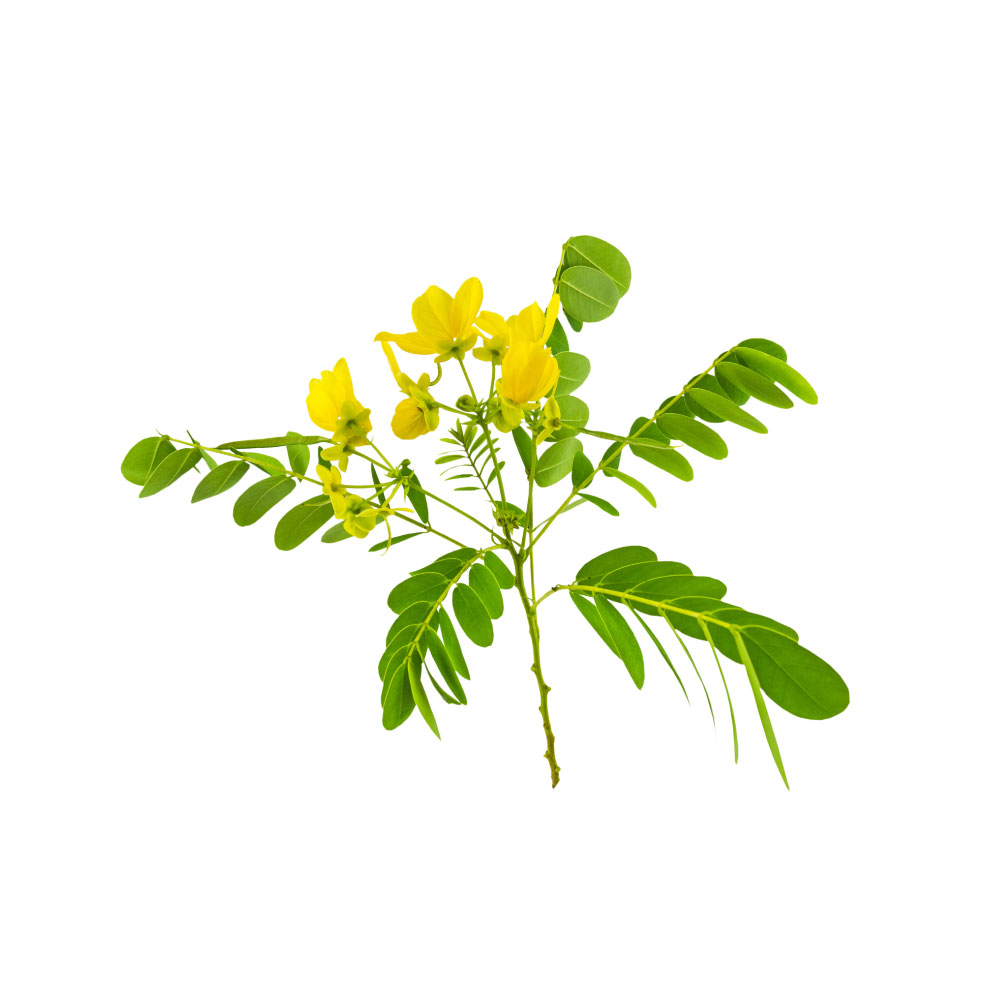
Senna is the small yellow-flowered legume behind one of the oldest and most reliable stimulant laxatives in the herbal cabinet. It grows as a low, tender shrub or subshrub — usually not much past waist height — with woody-based pale-green stems and airy, pinnate leaves made up of several pairs of slim leaflets. The parts that matter to the herbalist are the leaves (“senna leaf”) and the pods (“senna pods”); both are dried and used, with the pods generally regarded as the gentler preparation, and the flat, thin, papery seed pods are as diagnostic as the flowers.
The naming is worth getting straight, because old herbals and modern labels disagree. All of the commercial sennas are now treated as a single accepted species, Senna alexandrina, after the older Cassia names were reclassified into the genus Senna. Two of those older names still dominate the trade: Cassia angustifolia, the Indian or Tinnevelly senna (named for the Tirunelveli district of southern India where it is grown as a crop), and Cassia acutifolia / Cassia senna, the Alexandrian senna of Egypt and Sudan (named for the port of Alexandria that shipped it). Herbalists will encounter both trade names; they refer to the same species grown in different places, and the two remain distinguished in some pharmacopoeial monographs even though the botany has merged them.
Distribution
Senna is a plant of hot, arid country, native across the dry tropics from northeast Africa (Egypt and Sudan) and the Arabian Peninsula into the Indian subcontinent. Alexandrian senna is the North African crop of Egypt and Sudan; Tinnevelly senna is the Indian-grown material, produced mainly across Tamil Nadu and the drier states of western and southern India. It is a cultivated crop rather than a wild weed.
Growing Conditions
- Thrives in full sun and genuine heat; a frost-tender plant of the dry tropics, grown outdoors only in warm, frost-free regions.
- Prefers light, free-draining soils — sandy loam, red loam or alluvial ground — and tolerates low rainfall and semi-arid conditions well.
- Usually cropped as a fast annual, sown and harvested within a single warm season rather than kept as a long-lived shrub.
- Dislikes waterlogging and heavy, wet soils; drought-hardy once established.
- Full cultivation detail lives on the companion farm-wiki grow guide for Cassia angustifolia (link to be added once that project’s public URL is confirmed).
Harvesting, Collection & Preparation
Senna comes in a variety of species, but all are used for the same general purposes. The preferred species for medicinal benefit however, is Cassia acutifolia 27Reference 27A Modern Herbal — SennaView study →. The leaves and pods are commonly used with all of these species. The leaves are more powerful, however the pods are much less griping. The griping action is suggested to be mainly caused by the resin content of the leaves.
Alcohol and water combination is best used to extract the medicinal constituents of both senna pods and leaves rather than just one or the other 27Reference 27A Modern Herbal — SennaView study →.
Phytochemistry
Senna’s purgative action is the work of its dianthrone anthraquinone glycosides — collectively the sennosides. The two principal markers are sennoside A and sennoside B, a pair of optical isomers built from two molecules of rhein anthrone; sennosides C and D (rhein–aloe-emodin heterodianthrones) occur in smaller amounts. These glycosides pass intact to the colon, where bacterial enzymes liberate the active rhein-anthrone that stimulates peristalsis 18,24Reference 18In vitroCassia angustifolia extract is not hepatotoxic in an in vitro and in vivo study — animal modelView study →Reference 24Herbal medicines (3rd ed.). Pharmacopoeial material is standardised to not less than ~2.5% total hydroxyanthracene glycosides (calculated as sennoside B), with leaves typically carrying ~2–3% and pods ~3–4% 13Reference 13ReviewAssessment report on Cassia senna L. and Cassia angustifolia Vahl, folium and fructus — regulatory monographView study →.
Senna also contains a class of naphthalene glycosides that serve as a botanical fingerprint: tinnevellin glycoside † marks Indian (Tinnevelly) senna, while 6-hydroxymusizin glycoside characterises Alexandrian senna — the two are used to tell the commercial varieties apart 31Reference 31Naphthalene glycosides in Cassia senna and Cassia angustifoliaView study →. Yellow flavonol pigments, chiefly kaempferol and its glycosides, round out the leaf chemistry 31Reference 31Naphthalene glycosides in Cassia senna and Cassia angustifoliaView study →.
Constituent Summary
Figures are share of dried leaf or pod (total hydroxyanthracene glycosides, expressed as sennoside B); content varies with species, plant part, and harvest. † Tinnevellin glycoside is a chemotaxonomic marker distinguishing Indian (Tinnevelly) senna from Alexandrian senna. Browse a class to see related compounds, or any compound for its full profile.
Anthraquinone10 compounds2 with data
Phenolic2 compoundsno data
Flavonoid4 compoundsno data
Pharmacology & Research
Senna’s evidence base is unusual among herbal monographs: its single dominant use — as a stimulant laxative — rests on genuine human randomised controlled trials, meta-analyses, and current gastroenterology practice guidelines, not on tradition or preclinical inference. The active chemistry is well characterised: dianthrone glycosides (the sennosides) that pass intact to the colon, where bacteria liberate rhein-anthrone, the molecule that actually stimulates the bowel 13,19,20Reference 13ReviewAssessment report on Cassia senna L. and Cassia angustifolia Vahl, folium and fructus — regulatory monographView study →Reference 19AnimalEffect of indomethacin on aloin- and 1,8-dioxianthraquinone-induced production of prostaglandins in rat isolated colon — animal modelView study →Reference 20ReviewPharmacokinetics of anthraquinones from medicinal plants — reviewView study →. Beyond the laxative axis, a scattering of in vitro and rodent work reports antioxidant, hepatoprotective, antimicrobial, and cytotoxic activity from leaf extracts, but none of it has reached humans and much of it uses extracts or nanoparticle preparations far removed from how senna is taken. The honest headline is a herb that is well-proven for one thing, actively cautioned against for long-term use, and only speculatively interesting for anything else.
- Best-supported: short-term relief of constipation, backed by placebo-controlled RCTs and endorsed in current AGA-ACG guidance 1,3,4Reference 1RCTSenna versus magnesium oxide for the treatment of chronic constipation — randomised, placebo-controlled trialView study →Reference 3AGA-ACG clinical practice guideline: pharmacological management of chronic idiopathic constipation — practice guidelineView study →Reference 4Systematic reviewEfficacy and safety of over-the-counter therapies for chronic constipation — systematic reviewView study →; effective as an adjunct or alternative in colonoscopy bowel preparation 9,10,11Reference 9RCTPolyethylene glycol versus split high-dose senna for bowel preparation — randomised controlled trialView study →Reference 10RCTLow volume polyethylene glycol combined with senna versus high volume polyethylene glycol for bowel preparation — randomised controlled trialView study →Reference 11Meta-analysisPolyethylene glycol versus senna for bowel preparation for colonoscopy in children — systematic review and meta-analysisView study →.
- Emerging, worth watching: antioxidant and CCl₄-hepatoprotective signals in rodents, and cytotoxicity of leaf flavonoids against cancer cell lines — all preclinical 21,22Reference 21AnimalAntioxidant and hepatopreventive effects of Cassia angustifolia extract against carbon tetrachloride-induced hepatotoxicity in rats — animal modelView study →Reference 22In vitroPharmacologically active flavonoids from the anticancer, antioxidant and antimicrobial extracts of Cassia angustifolia Vahl — in vitroView study →.
- Mechanistically thin: antimicrobial and “hepatoprotective” claims rest largely on crude-extract or green-synthesised-nanoparticle assays, not the material people actually ingest 22,23Reference 22In vitroPharmacologically active flavonoids from the anticancer, antioxidant and antimicrobial extracts of Cassia angustifolia Vahl — in vitroView study →Reference 23In vitroAmoebicidal activity of Cassia angustifolia extract against Acanthamoeba triangularis — in vitroView study →.
- The caveat: senna is a short-term remedy. Long-term or high-dose anthranoid use is discouraged by every pharmacopoeial authority; the historic colorectal-cancer and “cathartic colon” fears are now judged weak, but the herb’s benefit does not extend beyond bowel evacuation 13,14,15,16,17Reference 13ReviewAssessment report on Cassia senna L. and Cassia angustifolia Vahl, folium and fructus — regulatory monographView study →Reference 14ReviewReview article: do stimulant laxatives damage the gut? A critical analysis of current knowledge — reviewView study →Reference 15ReviewIs senna laxative use associated with cathartic colon, genotoxicity, or carcinogenicity? — reviewView study →Reference 16ReviewReview article: anthranoid laxatives and their potential carcinogenic effects — reviewView study →Reference 17ObservationalConstipation, anthranoid laxatives, melanosis coli, and colon cancer: a risk assessment using aberrant crypt foci — observational studyView study →.
1. Laxative for constipation
This is senna’s proven indication. In the first double-blind, placebo-controlled RCT to pit a stimulant against an osmotic laxative for chronic idiopathic constipation, senna 1.0 g and magnesium oxide 1.5 g both produced overall symptom improvement in ~69% of patients versus 11.7% on placebo (n=90, 28 days), with no severe treatment-related adverse events 1Reference 1RCTSenna versus magnesium oxide for the treatment of chronic constipation — randomised, placebo-controlled trialView study →. Systematic reviews of therapies for chronic constipation and of over-the-counter agents rate senna as effective for increasing stool frequency, and the 2023 AGA-ACG clinical practice guideline conditionally recommends stimulant laxatives including senna 2,3,4Reference 2Systematic reviewEfficacy and safety of traditional medical therapies for chronic constipation — systematic reviewView study →Reference 3AGA-ACG clinical practice guideline: pharmacological management of chronic idiopathic constipation — practice guidelineView study →Reference 4Systematic reviewEfficacy and safety of over-the-counter therapies for chronic constipation — systematic reviewView study →. In frail and specialised populations the picture is more mixed: a senna-fibre combination outperformed lactulose in long-stay elderly patients 7Reference 7RCTChronic constipation in long stay elderly patients: comparison of lactulose and a senna-fibre combination — randomised controlled trialView study →, but in children a crossover trial favoured lactulose with markedly more side effects on senna 8Reference 8RCTConstipation in childhood: a controlled comparison between lactulose and standardised senna — randomised controlled trialView study →, and Cochrane found only low-quality evidence for stimulant laxatives in childhood constipation 6Reference 6Systematic reviewOsmotic and stimulant laxatives for the management of childhood constipation — systematic reviewView study →. The sennosides are the active fraction; effect and tolerability track dose closely.
Gap: Head-to-head data against modern secretagogues are thin, dose-standardisation across products varies, and griping/cramping remain the main tolerability limit.
2. Bowel preparation
Senna is widely used as a colonoscopy bowel-prep laxative, usually to reduce the volume of unpalatable polyethylene glycol (PEG) required. A randomised endoscopist-blinded study of 474 outpatients found split high-dose sennosides comparable to split-dose PEG for cleansing quality 9Reference 9RCTPolyethylene glycol versus split high-dose senna for bowel preparation — randomised controlled trialView study →, and adding senna to a low-volume PEG regimen matched high-volume PEG while improving tolerability 10Reference 10RCTLow volume polyethylene glycol combined with senna versus high volume polyethylene glycol for bowel preparation — randomised controlled trialView study →. A systematic review and meta-analysis in children concluded PEG and senna are broadly comparable options, though evidence quality is modest 11Reference 11Meta-analysisPolyethylene glycol versus senna for bowel preparation for colonoscopy in children — systematic review and meta-analysisView study →. The trade-off is consistent across trials: senna-based regimens are better tolerated but more often cause abdominal cramping.
Gap: Most trials test senna as an adjunct, not a standalone prep; optimal dose and timing vary between protocols, and cleansing adequacy still favours full-volume PEG in the hardest-to-prep patients.
3. Opioid-induced & palliative constipation
Guidelines and reviews position senna as a first-line stimulant for preventing and treating opioid-induced constipation, particularly in palliative care where opioid bowel dysfunction is near-universal. A Cochrane review of laxatives and methylnaltrexone in palliative patients found the available laxatives, senna among them, of broadly similar and limited effectiveness, with sparse high-quality data 5Reference 5Systematic reviewLaxatives or methylnaltrexone for the management of constipation in palliative care patients — systematic reviewView study →. Combination and comparative RCTs are the norm rather than senna-alone trials, and results are not uniformly positive: a randomised study of docusate plus senna after rotator-cuff surgery found no reduction in constipation versus control 12Reference 12RCTEfficacy of docusate sodium and senna glycoside for constipation after rotator cuff repair — randomised controlled trialView study →.
Gap: Dedicated placebo-controlled senna-monotherapy trials in opioid-induced constipation are lacking; most evidence is extrapolated from mixed-laxative comparisons.
4. Antioxidant
Leaf extracts of Cassia angustifolia show free-radical-scavenging activity in the DPPH assay, attributed to their phenolic and flavonoid content 22Reference 22In vitroPharmacologically active flavonoids from the anticancer, antioxidant and antimicrobial extracts of Cassia angustifolia Vahl — in vitroView study →. In a rat model of carbon tetrachloride hepatotoxicity, a methanol leaf fraction reduced hepatic lipid peroxidation (TBARS) and protein carbonyls and preserved liver histology, consistent with an antioxidant mechanism 21Reference 21AnimalAntioxidant and hepatopreventive effects of Cassia angustifolia extract against carbon tetrachloride-induced hepatotoxicity in rats — animal modelView study →. All of this is in vitro or rodent work using concentrated extracts, not the whole-herb or standardised laxative preparations people actually consume.
Gap: No human antioxidant data exist, and the antioxidant fraction is distinct from the sennoside laxative fraction — the effect does not describe how senna is used therapeutically.
5. Hepatoprotective
A single controlled rat study reported that a methanol fraction of Cassia angustifolia leaf pretreatment blunted CCl₄-induced rises in liver enzymes, cholesterol and triglycerides and prevented histological liver damage 21Reference 21AnimalAntioxidant and hepatopreventive effects of Cassia angustifolia extract against carbon tetrachloride-induced hepatotoxicity in rats — animal modelView study →. An in vitro and in vivo toxicology study separately concluded that a standardised senna extract was not itself hepatotoxic at tested doses 18Reference 18In vitroCassia angustifolia extract is not hepatotoxic in an in vitro and in vivo study — animal modelView study →. Together these suggest the herb is not a liver toxin and may have antioxidant liver-sparing activity in rodents — but this sits against case-series signals that anthranoid and other herbal products can occasionally cause herb-induced liver injury in humans.
Gap: Evidence is one rodent efficacy study plus a safety study; there is no human hepatoprotective data, and “protective” preclinical findings should not be read as a clinical liver indication.
6. Antimicrobial
Aqueous and organic Cassia angustifolia leaf extracts inhibit a range of bacteria in disk-diffusion assays, and the plant has been used as a green-synthesis substrate for silver and zinc nanoparticles with reported antibacterial activity 22Reference 22In vitroPharmacologically active flavonoids from the anticancer, antioxidant and antimicrobial extracts of Cassia angustifolia Vahl — in vitroView study →. A separate study showed leaf extract had amoebicidal activity against Acanthamoeba trophozoites in culture, causing membrane disruption 23Reference 23In vitroAmoebicidal activity of Cassia angustifolia extract against Acanthamoeba triangularis — in vitroView study →. These are exploratory in vitro findings, and the nanoparticle work tests an engineered material rather than senna itself.
Gap: No in vivo or clinical antimicrobial data; activity is extract- and preparation-specific and unrelated to senna’s actual use.
7. Anticancer
Bioactivity-guided fractionation of Cassia angustifolia leaf extracts isolated three flavonoids — quercimeritrin, scutellarein and rutin — with cytotoxic activity against MCF-7 breast cancer cells in the MTT assay 22Reference 22In vitroPharmacologically active flavonoids from the anticancer, antioxidant and antimicrobial extracts of Cassia angustifolia Vahl — in vitroView study →. The anthraquinone aloe-emodin, present in senna, has independently documented cytotoxic activity in other work. This is cell-line data on isolated constituents, not whole herb, and carries no bearing on senna’s clinical role.
Gap: In vitro only, on purified compounds; no animal tumour models or human data, and the anthranoid class carries its own carcinogenicity questions rather than an anticancer indication.
Mechanisms
| Mechanism | Drives | Key compounds |
|---|---|---|
| Bacterial cleavage in colon → active rhein-anthrone → stimulated peristalsis | laxativebowel prepopioid-induced constipation | sennoside A, sennoside B, rhein |
| ↑ prostaglandin & nitric oxide release; altered water/electrolyte secretion into lumen | laxative | rhein-anthrone |
| Free-radical scavenging (DPPH); ↓ lipid peroxidation | antioxidanthepatoprotective (preclinical) | kaempferol, rutin |
| Cytotoxicity in cancer cell lines | anticancer (in vitro) | quercimeritrin, scutellarein, aloe-emodin |
Clinical trials
Senna is one of the better-trialled herbal laxatives: ClinicalTrials.gov lists roughly a dozen completed interventional studies (mostly constipation and bowel-preparation comparators), a handful planned or recruiting, and several terminated — including a terminated PEG-versus-sennosides study in opioid-induced constipation and a terminated linaclotide-versus-senna trial.
| Completed | Planned | Terminated | Preclinical |
|---|---|---|---|
| ~11 | ~3 | 3 | ~30+ |
Last checked: July 2026.
Clinical Applications
Senna is a reliable laxative. It’s purgative in higher doses, however, this action is no longer used in modern herbal medicine. Topically, senna is useful for treating wounds and skin irritations.
Dosage
In research, senna is dosed either as whole leaf/pod weight or, more precisely, standardised to its hydroxyanthracene-glycoside (sennoside B) content; the EMA/HMPC standard adult dose is the equivalent of 15–30 mg hydroxyanthracene glycosides per day, taken as a single evening dose, using the lowest amount that produces a soft-formed stool 13Reference 13ReviewAssessment report on Cassia senna L. and Cassia angustifolia Vahl, folium and fructus — regulatory monographView study →.
| Indication | Preparation | Dose | Est. dried-herb equivalent | Source |
|---|---|---|---|---|
| Chronic constipation | Senna (standardised) | 1.0 g/day × 28 days | ~1 g dried leaf (dose is already whole-herb weight) | 1Reference 1RCTSenna versus magnesium oxide for the treatment of chronic constipation — randomised, placebo-controlled trialView study → |
| Chronic constipation (elderly) | Senna-fibre combination liquid | 10 mL/day | — (proprietary combination; sennoside content not stated) | 7Reference 7RCTChronic constipation in long stay elderly patients: comparison of lactulose and a senna-fibre combination — randomised controlled trialView study → |
| Bowel preparation | Split high-dose sennosides | e.g. ~two 74 mg sennoside doses (split) | assuming leaf ~2.5% HAG, ~3 g leaf per 74 mg dose | 9Reference 9RCTPolyethylene glycol versus split high-dose senna for bowel preparation — randomised controlled trialView study → |
| Constipation (children) | Standardised senna | age-titrated (product-specific) | — | 8Reference 8RCTConstipation in childhood: a controlled comparison between lactulose and standardised senna — randomised controlled trialView study → |
The “Est. dried-herb equivalent” is a rough guide, not a conversion factor: it assumes dried leaf ≈ 2.5% hydroxyanthracene glycosides (the EMA floor). Where only a proprietary product volume/mg is given without a marker %, the equivalent is left ”—”. These are research doses, not recommendations.
Traditional Dosage
Traditional practice doses the whole herb or its extracts rather than a standardised marker, and titrates to effect.
| System | Preparation | Dose |
|---|---|---|
| Western herbal | 1:2 liquid extract | 10–40 mL/week |
| Western herbal | Dried leaf infusion | 0.5–2 g as a single evening dose |
| Traditional Chinese Medicine (Fan Xie Ye) | Leaf, infused (not decocted long) | ~1.5–3 g, added near the end of a decoction |
Safety & Pregnancy
Senna is a stimulant (anthranoid) laxative for short-term use only — typically no more than one to two weeks. It is well tolerated acutely, but long-term or high-dose use risks potassium depletion, electrolyte loss and dependency, and it is contraindicated in bowel obstruction, appendicitis and active inflammatory bowel disease.
- Short-term only. Long-term or high-dose use can cause fluid and electrolyte loss (notably potassium depletion), dependency and melanosis coli.
- Contraindicated conditions. Do not use in intestinal obstruction, undiagnosed abdominal pain, appendicitis, or active inflammatory bowel disease.
- Potassium-related interactions. Caution with cardiac glycosides (digoxin), diuretics, corticosteroids and antiarrhythmics.
- Griping common. Abdominal cramping is the usual complaint; urine may harmlessly discolour during use.
- Low acute toxicity. The historic “cathartic colon” and colorectal-cancer fears are not supported by current critical reviews.
Full safety & interactions detail
Senna is a stimulant (anthranoid) laxative intended for short-term use only — typically no more than one to two weeks — for occasional constipation 13Reference 13ReviewAssessment report on Cassia senna L. and Cassia angustifolia Vahl, folium and fructus — regulatory monographView study →. The most common adverse effects are abdominal cramping and griping; the urine may harmlessly discolour (yellow-brown to reddish) during use 13Reference 13ReviewAssessment report on Cassia senna L. and Cassia angustifolia Vahl, folium and fructus — regulatory monographView study →. Long-term or high-dose use can cause fluid and electrolyte loss (notably potassium depletion) and the benign, reversible pigmentation of the colonic lining known as melanosis (pseudomelanosis) coli 16Reference 16ReviewReview article: anthranoid laxatives and their potential carcinogenic effects — reviewView study →. The historic concern that chronic anthranoid use causes “cathartic colon,” permanent nerve damage, or colorectal cancer is not supported by current critical reviews — supratherapeutic structural changes in animals are reversible, and no convincing human carcinogenicity link has been shown 14,15,17Reference 14ReviewReview article: do stimulant laxatives damage the gut? A critical analysis of current knowledge — reviewView study →Reference 15ReviewIs senna laxative use associated with cathartic colon, genotoxicity, or carcinogenicity? — reviewView study →Reference 17ObservationalConstipation, anthranoid laxatives, melanosis coli, and colon cancer: a risk assessment using aberrant crypt foci — observational studyView study →. Senna is contraindicated in intestinal obstruction, undiagnosed abdominal pain, appendicitis, and active inflammatory bowel conditions (Crohn’s disease, ulcerative colitis) 13Reference 13ReviewAssessment report on Cassia senna L. and Cassia angustifolia Vahl, folium and fructus — regulatory monographView study →. Because it can deplete potassium, caution is warranted with cardiac glycosides (digoxin), other potassium-losing drugs (thiazide/loop diuretics, corticosteroids), and antiarrhythmics 13Reference 13ReviewAssessment report on Cassia senna L. and Cassia angustifolia Vahl, folium and fructus — regulatory monographView study →.
Scope note: the EMA/HMPC monograph addresses pharmacodynamic interactions (potassium depletion → cardiac glycosides, diuretics, corticosteroids, antiarrhythmics) and pregnancy/lactation; no clinically significant CYP450-mediated interaction has been established. Interactions and pregnancy beyond those covered by that monograph were not separately assessed in this package.
Contraindications
- Intestinal obstruction
- Abdominal pain of unknown origin
- Inflammatory bowel disease
- Stomach inflammation due to griping
- Appendicitis
- Colitis
- Irritable bowel syndrome
- Ulcerative colitis
- Crohn’s disease
- Haemorrhoids
- Prolapsus
- Chronic constipation (because it can lead to dependency issues)
Generally considered acceptable short-term in pregnancy and lactation under professional guidance. European regulators note that although data are limited, senna may be used short-term in pregnancy if dietary measures and bulk-forming laxatives fail, and that only trace amounts of the active metabolite (rhein) appear in breast milk, with no laxative effect reported in breastfed infants 13Reference 13ReviewAssessment report on Cassia senna L. and Cassia angustifolia Vahl, folium and fructus — regulatory monographView study →. High doses and prolonged use should still be avoided, and any use in pregnancy or breastfeeding should be discussed with a clinician 13Reference 13ReviewAssessment report on Cassia senna L. and Cassia angustifolia Vahl, folium and fructus — regulatory monographView study →.
Synergy
Senna may have synergistic effects with carminatives in order to combat the negative side effect of griping pain and nausea. Some good herbs to combine for this are ginger, cloves, cinnamon or other aromatics.
References
- Morishita, D., Tomita, T., Mori, S., et al. (2021). Senna versus magnesium oxide for the treatment of chronic constipation — randomised, placebo-controlled trial. Am J Gastroenterol. https://pubmed.ncbi.nlm.nih.gov/32969946/
- Ramkumar, D., & Rao, S. S. (2005). Efficacy and safety of traditional medical therapies for chronic constipation — systematic review. Am J Gastroenterol. https://pubmed.ncbi.nlm.nih.gov/15784043/
- Chang, L., Chey, W. D., Imdad, A., et al. (2023). AGA-ACG clinical practice guideline: pharmacological management of chronic idiopathic constipation — practice guideline. Gastroenterology. https://pubmed.ncbi.nlm.nih.gov/37211380/
- Rao, S. S. C., & Brenner, D. M. (2021). Efficacy and safety of over-the-counter therapies for chronic constipation — systematic review. Am J Gastroenterol. https://pubmed.ncbi.nlm.nih.gov/33767108/
- Candy, B., Jones, L., Goodman, M. L., et al. (2011). Laxatives or methylnaltrexone for the management of constipation in palliative care patients — systematic review. Cochrane Database Syst Rev. https://pubmed.ncbi.nlm.nih.gov/21249653/
- Gordon, M., MacDonald, J. K., Parker, C. E., et al. (2016). Osmotic and stimulant laxatives for the management of childhood constipation — systematic review. Cochrane Database Syst Rev. https://pubmed.ncbi.nlm.nih.gov/27531591/
- Passmore, A. P., Wilson-Davies, K., Stoker, C., et al. (1993). Chronic constipation in long stay elderly patients: comparison of lactulose and a senna-fibre combination — randomised controlled trial. BMJ. https://pubmed.ncbi.nlm.nih.gov/8219947/
- Perkin, J. M. (1977). Constipation in childhood: a controlled comparison between lactulose and standardised senna — randomised controlled trial. Curr Med Res Opin. https://pubmed.ncbi.nlm.nih.gov/872608/
- Coskun, Y., & Yuksel, I. (2020). Polyethylene glycol versus split high-dose senna for bowel preparation — randomised controlled trial. J Gastroenterol Hepatol. https://pubmed.ncbi.nlm.nih.gov/32424868/
- Sadeghi, A., Rahmani, K., Ketabi Moghadam, P., et al. (2022). Low volume polyethylene glycol combined with senna versus high volume polyethylene glycol for bowel preparation — randomised controlled trial. Health Sci Rep. https://pubmed.ncbi.nlm.nih.gov/36172298/
- Watanabe, J., & Kotani, K. (2021). Polyethylene glycol versus senna for bowel preparation for colonoscopy in children — systematic review and meta-analysis. Cureus. https://pubmed.ncbi.nlm.nih.gov/34660023/
- Weekes, D. G., Campbell, R. E., Giunta, N. J., et al. (2021). Efficacy of docusate sodium and senna glycoside for constipation after rotator cuff repair — randomised controlled trial. J Am Assoc Nurse Pract. https://pubmed.ncbi.nlm.nih.gov/33625162/
- European Medicines Agency, Committee on Herbal Medicinal Products. (2018). Assessment report on Cassia senna L. and Cassia angustifolia Vahl, folium and fructus — regulatory monograph. EMA/HMPC. https://www.ema.europa.eu/en/documents/herbal-report/final-assessment-report-cassia-senna-l-cassia-angustifolia-vahl-folium-cassia-senna-l-fructus-revision-1_en.pdf
- Whorwell, P., Lange, R., & Scarpignato, C. (2024). Review article: do stimulant laxatives damage the gut? A critical analysis of current knowledge — review. Ther Adv Gastroenterol. https://pubmed.ncbi.nlm.nih.gov/38887508/
- Morales, M. A., Hernández, D., Bustamante, S., et al. (2009). Is senna laxative use associated with cathartic colon, genotoxicity, or carcinogenicity? — review. J Toxicol. https://pubmed.ncbi.nlm.nih.gov/20107583/
- van Gorkom, B. A., de Vries, E. G., Karrenbeld, A., et al. (1999). Review article: anthranoid laxatives and their potential carcinogenic effects — review. Aliment Pharmacol Ther. https://pubmed.ncbi.nlm.nih.gov/10215727/
- Nascimbeni, R., Donato, F., Ghirardi, M., et al. (2002). Constipation, anthranoid laxatives, melanosis coli, and colon cancer: a risk assessment using aberrant crypt foci — observational study. Cancer Epidemiol Biomarkers Prev. https://pubmed.ncbi.nlm.nih.gov/12163329/
- Vitalone, A., Di Giacomo, S., Di Sotto, A., et al. (2011). Cassia angustifolia extract is not hepatotoxic in an in vitro and in vivo study — animal model. Pharmacology. https://pubmed.ncbi.nlm.nih.gov/21997710/
- Capasso, F., Mascolo, N., Autore, G., et al. (1983). Effect of indomethacin on aloin- and 1,8-dioxianthraquinone-induced production of prostaglandins in rat isolated colon — animal model. Prostaglandins. https://pubmed.ncbi.nlm.nih.gov/6658004/
- Wang, D., Wang, X. H., Yu, X., et al. (2021). Pharmacokinetics of anthraquinones from medicinal plants — review. Front Pharmacol. https://pubmed.ncbi.nlm.nih.gov/33935728/
- Bellassoued, K., Hamed, H., Ghrab, F., et al. (2021). Antioxidant and hepatopreventive effects of Cassia angustifolia extract against carbon tetrachloride-induced hepatotoxicity in rats — animal model. Arch Physiol Biochem. https://pubmed.ncbi.nlm.nih.gov/31397186/
- Ahmed, S. I., Hayat, M. Q., Tahir, M., et al. (2016). Pharmacologically active flavonoids from the anticancer, antioxidant and antimicrobial extracts of Cassia angustifolia Vahl — in vitro. BMC Complement Altern Med. https://pubmed.ncbi.nlm.nih.gov/27835979/
- Boonhok, R., Sangkanu, S., Norouzi, R., et al. (2021). Amoebicidal activity of Cassia angustifolia extract against Acanthamoeba triangularis — in vitro. Parasitology. https://pubmed.ncbi.nlm.nih.gov/33966667/
- Barnes, J., Anderson, L. A., & Phillipson, J. D. (2007). Herbal medicines (3rd ed.). London, United Kingdom: Pharmaceutical Press. (Pg. 537-538).
- Yang, J., Huang, H., Zhu, Li-Jiang, & Chen, Y. (2013). Introduction to Chinese materia medica (3rd ed.). (Pg. 158-160).
- Wu, J. N. (2005). An illustrated Chinese materia medica. New York: Oxford University Press. (Pg. 164-165).
- Grieve, M. (1931). A Modern Herbal — Senna. Retrieved from http://www.botanical.com/botanical/mgmh/s/senna-42.html
- Hoffmann, D. (2003). Medical herbalism: The science and practice of herbal medicine. Rochester, VT: Healing Arts Press. (Pg. 582-583).
- Hempen, C. H., & Fischer, T. (2009). A Materia Medica for Chinese Medicine. Edinburgh: Churchill Livingstone.
- Das, P. N., Purohit, S. S., Sharma, A. K., & Kumar, T. (2003). A handbook of medicinal plants. Jodhpur, India: Agrobios. (Pg. 118).
- Lemli, J., Toppet, S., Cuveele, J., & Janssen, G. (1981). Naphthalene glycosides in Cassia senna and Cassia angustifolia. Studies in the field of drugs containing anthracene derivatives, Part 32. Planta Medica, 43(1), 11–17. doi:10.1055/s-2007-971465 (Tinnevellin glycoside in Indian/Tinnevelly senna vs 6-hydroxymusizin glycoside in Alexandrian senna; kaempferol flavonols also reported.)