
Materia Medica
Shatavari
Asparagus racemosus
Shatavari (Asparagus racemosus) — a prized Ayurvedic rejuvenative and female tonic, best supported by human trials for menopausal symptom relief and short-term lactation support.
What Is Shatavari?
Shatavari (Asparagus racemosus) is a climbing member of the asparagus family whose fleshy, tuberous roots are one of the most prized rejuvenative tonics (rasayana) in Ayurveda. Its name is usually translated as “she who possesses a hundred husbands,” pointing to its long reputation as a female reproductive and fertility tonic. It matters because it is one of the few classical Ayurvedic herbs now backed by a genuine cluster of human randomised controlled trials — concentrated in menopausal symptom relief and short-term lactation support — rather than tradition and preclinical work alone (see the research section below).
How Is Shatavari Used?
Shatavari is used chiefly as a nourishing female reproductive tonic — for menstrual and menopausal complaints, as a galactagogue to support breast-milk supply, and, more broadly, as an adaptogenic rasayana taken to build strength, calm and resilience. The best human evidence supports two of these uses: relief of menopausal and perimenopausal symptoms with standardised root extracts, and short-term postpartum lactation support 1,3,4Reference 1RCTShatavari (Asparagus racemosus Willd) root extract for postpartum lactation — randomised, double-blind, placebo-controlled trialView study →Reference 3RCTA standardized Asparagus racemosus root extract improves hormonal balance and menstrual health and reduces vasomotor symptoms — randomised placebo-controlled trialView study →Reference 4RCTEfficacy and safety of Shatavari root extract for the management of menopausal symptoms — double-blind, multicenter, randomised controlled trialView study →. It is also used traditionally as a demulcent for the digestive and respiratory tracts and, in modern reviews, is discussed as a fertility ally, though that framing rests largely on review and mechanism rather than dedicated trials 28Reference 28ReviewShatavari (Asparagus racemosus): a promising ally for fertility — reviewView study →. Almost all clinical work uses a standardised root extract, so its results do not transfer cleanly to a traditional decoction or whole-root powder.
Traditional Uses
Western Herbal Medicine
Shatavari has entered Western herbal practice mainly through Ayurveda, where it is used as a soothing demulcent and female reproductive tonic — for dryness of the reproductive and digestive membranes, for menopausal complaints, and to support lactation.
Traditional Chinese Medicine
Asparagus racemosus is not a classical TCM herb; the related Asparagus cochinchinensis (tian men dong) fills the “yin-nourishing asparagus” role in Chinese medicine, and the two should not be conflated.
Ayurvedic Medicine
In Ayurveda shatavari is a flagship rasayana (rejuvenative) and medhya (nervine/mind) tonic, classed as cooling, sweet and slightly bitter. It is the principal female reproductive tonic — used across the menstrual cycle, in menopause, and postpartum as a galactagogue — and also as a demulcent and adaptogen for stress, debility and dryness. It is usually given as a root powder (churna), often taken with warm milk or ghee.
Indications
- Menopausal and perimenopausal symptoms (hot flushes, night sweats, mood, menstrual complaints) — best human support 3,4Reference 3RCTA standardized Asparagus racemosus root extract improves hormonal balance and menstrual health and reduces vasomotor symptoms — randomised placebo-controlled trialView study →Reference 4RCTEfficacy and safety of Shatavari root extract for the management of menopausal symptoms — double-blind, multicenter, randomised controlled trialView study →.
- Short-term postpartum lactation support (galactagogue) — the traditional flagship use, with recent trial support 1,2Reference 1RCTShatavari (Asparagus racemosus Willd) root extract for postpartum lactation — randomised, double-blind, placebo-controlled trialView study →Reference 2RCTRandomized controlled trial of Asparagus racemosus (Shatavari) as a lactogogue in lactational inadequacy — RCTView study →.
- Adaptogenic / anti-stress tonic — traditional, with a secondary stress-score signal in one RCT 7Reference 7RCTEfficacy and safety of Shatavari root extract in women with polycystic ovarian syndrome — randomised, double-blind, placebo-controlled trialView study →.
- Digestive demulcent and gastroprotection — traditional and preclinical 16,17Reference 16AnimalAntisecretory and antiulcer activity of Asparagus racemosus against indomethacin plus pyloric ligation-induced gastric ulcer — animal model (rat)View study →Reference 17AnimalAntiulcer and antioxidant activity of Asparagus racemosus and Withania somnifera in rats — animal modelView study →.
- General female reproductive and fertility tonic — traditional, framed mechanistically in reviews 28Reference 28ReviewShatavari (Asparagus racemosus): a promising ally for fertility — reviewView study →.
Botany
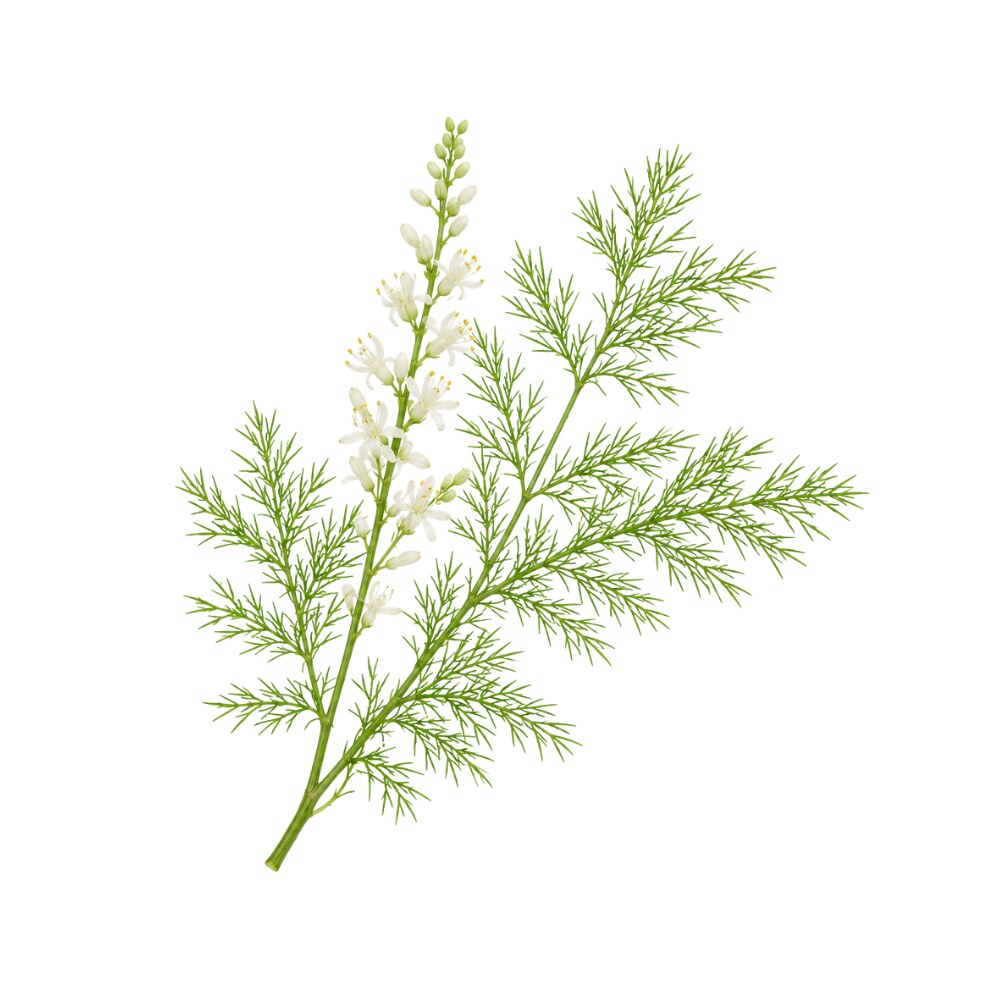
Shatavari is Asparagus racemosus, a member of the asparagus family (Asparagaceae) and a true botanical cousin of the asparagus you eat — the edible spring spears of Asparagus officinalis. Rather than standing upright, though, shatavari is a scrambling, thorny climber that hauls itself several metres up through scrub on wiry, spine-set stems, its foliage reduced to soft needle-like cladodes rather than true leaves. It bears tiny fragrant white flowers and small round berries.
What matters herbally lies underground: each plant grows a radiating cluster of long, finger-like tuberous roots — often dozens per crown — and it is these sweet, mucilaginous roots that are dug, dried and used. The name itself points to them: shatavari is read as “she who has a hundred roots,” and the herb is prized in Ayurveda as a rejuvenating rasayana and women’s tonic.
Distribution
Shatavari grows wild across a huge sweep of the Old World tropics — from tropical Africa, through India, Sri Lanka and the lower Himalayan foothills, into Southeast Asia and northern Australia — favouring seasonally dry, rocky ground. Most of the root entering the herbal trade is still gathered from the wild in India and Nepal, where sustained collection pressure has made cultivation and conservation an increasing concern.
Growing Conditions
- Thrives in frost-free subtropical to tropical conditions; treat it as tender where winters are cold.
- Give it full sun to light shade, with something to scramble up — it is a climbing, spine-armed vine.
- Prefers free-draining, gravelly or rocky soil; dislikes waterlogging around its tuberous roots.
- Slow to establish; the medicinal tuberous roots take a few seasons to bulk up before harvest.
- Full cultivation detail lives on the companion farm-wiki grow guide for Asparagus racemosus (link to be added once that project’s public URL is confirmed).
Phytochemistry
The defining chemistry of shatavari root is a family of steroidal saponins called the shatavarins (I–IV), built on the sarsasapogenin aglycone 30Reference 30Steroidal saponins from the roots of Asparagus racemosus — phytochemistryView study →. Shatavarin IV is the principal marker used to standardise and authenticate the root. Alongside the saponins, the root carries a small set of unusual antioxidant molecules — the dihydrophenanthrene racemosol, the furan derivative racemofuran, and the cage-like polycyclic alkaloid asparagamine A 8Reference 8In vitroIdentification of antioxidant compound from Asparagus racemosus — in vitroView study → — together with an immunoactive fructo-oligosaccharide fraction, mucilage, flavonoids (including quercetin) and the phytosterol beta-sitosterol. Bioactivity-guided work has also isolated novel furostanol saponins such as furoasparoside E, an antidiabetic lead 18Reference 18In vitroFurostanol saponins from Asparagus racemosus as potential hypoglycemic agents — animal model (db/db mice) and in vitroView study →.
Constituent Summary
Figures are percentages of dry root weight. Saponin content varies widely with soil, provenance and the analytical method used; the figures below are indicative rather than fixed 29Reference 29ReviewAn updated insight on the chemistry, ethnobotany and health benefits of Asparagus racemosus (Shatavari) — reviewView study →. A dagger (†) marks Shatavarin IV, the saponin used as the chemical marker to identify and standardise the species.
Saponins4 compounds1 with data
Phenolics1 compoundno data
Other1 compoundno data
Alkaloids1 compoundno data
Flavonoid1 compoundno data
Pharmacology & Research
Shatavari has a large preclinical literature — antioxidant, immunomodulatory, gastroprotective, adaptogenic and anticancer signals, almost all in rodents or cell lines — but it is unusual among Ayurvedic herbs in also carrying a growing cluster of human randomised controlled trials, concentrated in women’s reproductive and menopausal health and, more recently, skeletal-muscle function 2,3,4,5,6,7Reference 2RCTRandomized controlled trial of Asparagus racemosus (Shatavari) as a lactogogue in lactational inadequacy — RCTView study →Reference 3RCTA standardized Asparagus racemosus root extract improves hormonal balance and menstrual health and reduces vasomotor symptoms — randomised placebo-controlled trialView study →Reference 4RCTEfficacy and safety of Shatavari root extract for the management of menopausal symptoms — double-blind, multicenter, randomised controlled trialView study →Reference 5RCTShatavari supplementation in postmenopausal women improves handgrip strength and increases myosin regulatory light chain phosphorylation — randomised controlled trialView study →Reference 6RCTShatavari supplementation in postmenopausal women alters the skeletal muscle proteome — randomised controlled trialView study →Reference 7RCTEfficacy and safety of Shatavari root extract in women with polycystic ovarian syndrome — randomised, double-blind, placebo-controlled trialView study →. The strongest and most consistent human data are for relief of menopausal and perimenopausal symptoms (hot flushes, menstrual and mood scores) and for short-term lactation support 1,2,3,4Reference 1RCTShatavari (Asparagus racemosus Willd) root extract for postpartum lactation — randomised, double-blind, placebo-controlled trialView study →Reference 2RCTRandomized controlled trial of Asparagus racemosus (Shatavari) as a lactogogue in lactational inadequacy — RCTView study →Reference 3RCTA standardized Asparagus racemosus root extract improves hormonal balance and menstrual health and reduces vasomotor symptoms — randomised placebo-controlled trialView study →Reference 4RCTEfficacy and safety of Shatavari root extract for the management of menopausal symptoms — double-blind, multicenter, randomised controlled trialView study →. The most interesting emerging signal is a small but mechanistically detailed RCT programme showing improved handgrip strength and myosin contractile markers in postmenopausal women 5,6Reference 5RCTShatavari supplementation in postmenopausal women improves handgrip strength and increases myosin regulatory light chain phosphorylation — randomised controlled trialView study →Reference 6RCTShatavari supplementation in postmenopausal women alters the skeletal muscle proteome — randomised controlled trialView study →. Almost every trial used a standardised root extract (typically 200–1000 mg/day), so results do not transfer directly to a traditional decoction or whole-root powder; saponin content — the presumed active fraction — varies several-fold with provenance, chemotype and assay method, which limits how tightly any dose can be pinned.
- Best-supported: reduction of menopausal/perimenopausal vasomotor and menstrual symptoms in standardised-extract RCTs 3,4Reference 3RCTA standardized Asparagus racemosus root extract improves hormonal balance and menstrual health and reduces vasomotor symptoms — randomised placebo-controlled trialView study →Reference 4RCTEfficacy and safety of Shatavari root extract for the management of menopausal symptoms — double-blind, multicenter, randomised controlled trialView study →; short-term postpartum lactation support 1,2Reference 1RCTShatavari (Asparagus racemosus Willd) root extract for postpartum lactation — randomised, double-blind, placebo-controlled trialView study →Reference 2RCTRandomized controlled trial of Asparagus racemosus (Shatavari) as a lactogogue in lactational inadequacy — RCTView study →.
- Emerging, worth watching: improved muscle strength and myosin contractile function in postmenopausal women 5,6Reference 5RCTShatavari supplementation in postmenopausal women improves handgrip strength and increases myosin regulatory light chain phosphorylation — randomised controlled trialView study →Reference 6RCTShatavari supplementation in postmenopausal women alters the skeletal muscle proteome — randomised controlled trialView study →; AMPK/GLUT4-mediated hypoglycaemic saponins 18Reference 18In vitroFurostanol saponins from Asparagus racemosus as potential hypoglycemic agents — animal model (db/db mice) and in vitroView study →; in-vitro anti-HIV-1 activity of shatavarin IV 26Reference 26In vitroMitochondrial resilience and antioxidant defence against HIV-1: Asparagus racemosus extracts and shatavarin IV — in vitro and in silicoView study →.
- Mechanistically thin: neuroprotective/anti-Alzheimer’s claims rest mostly on network-pharmacology and in-silico work 21,22Reference 21ReviewExploring the neuroprotective role of Asparagus racemosus in Alzheimer’s disease — reviewView study →Reference 22In vitroExploration of Asparagus racemosus for Alzheimer’s disease through integrated metabolomics and network pharmacology targeting BACE1 — in silico and in vitroView study →; antitussive and anticancer claims rest on single animal or cell-line studies 19,25Reference 19In vitroShatavarins (containing shatavarin IV) with anticancer activity from the roots of Asparagus racemosus — in vitro and animal model (mice)View study →Reference 25AnimalAntitussive effect of Asparagus racemosus root against sulfur-dioxide-induced cough in mice — animal modelView study →.
- The caveat: the human trials are mostly small, industry-run, and use proprietary standardised extracts — not the traditional decoction — so efficacy and dose do not cleanly transfer to whole-root preparations.
1. Menopausal & vasomotor relief
Two double-blind, placebo-controlled RCTs report benefit for menopausal and perimenopausal symptoms using standardised root extracts. A 120-day trial of a standardised extract (CL22205, 200 mg/day) in 50 perimenopausal women significantly reduced total Menopause Rating Scale and hot-flush weekly weighted scores and improved dysmenorrhoea, alongside a fall in serum FSH (56.3%) and LH (34.3%) and a rise in anti-Müllerian hormone 3Reference 3RCTA standardized Asparagus racemosus root extract improves hormonal balance and menstrual health and reduces vasomotor symptoms — randomised placebo-controlled trialView study →. A separate multicentre RCT (n=70) reported significant reductions in hot flushes, night sweats, insomnia, anxiety and vaginal dryness with improved quality-of-life scores versus placebo 4Reference 4RCTEfficacy and safety of Shatavari root extract for the management of menopausal symptoms — double-blind, multicenter, randomised controlled trialView study →. Both used proprietary standardised extracts and industry sponsorship, and neither is large; the direction of effect is nonetheless consistent, and the phytoestrogenic steroidal saponins — built on the sarsasapogenin aglycone — supply a plausible mechanism.
Gap: small, sponsor-run trials on proprietary extracts; no head-to-head against hormone therapy and no whole-root data.
2. Galactagogue & lactation support
Lactation support is the herb’s traditional flagship use and the indication with the most direct human evidence. A 2025 randomised, double-blind, placebo-controlled trial (per-protocol n=113) gave 300 mg root extract twice daily for 72 hours postpartum and found significantly shorter time to breast fullness and significantly greater expressed milk volume at 72 hours versus placebo, with higher maternal satisfaction 1Reference 1RCTShatavari (Asparagus racemosus Willd) root extract for postpartum lactation — randomised, double-blind, placebo-controlled trialView study →. An earlier randomised controlled trial also evaluated the root as a lactogogue in lactational inadequacy 2Reference 2RCTRandomized controlled trial of Asparagus racemosus (Shatavari) as a lactogogue in lactational inadequacy — RCTView study →, and a rabbit galactagogue model supports a lactogenic effect on milk yield and composition 1Reference 1RCTShatavari (Asparagus racemosus Willd) root extract for postpartum lactation — randomised, double-blind, placebo-controlled trialView study →. The signal is real but the human outcomes are short-term (hours to days) rather than sustained milk-supply endpoints.
Gap: trials measure early milk volume over hours-to-days, not sustained supply or infant weight gain; optimal preparation and duration are unsettled.
3. Antioxidant
Antioxidant activity is the best-characterised preclinical property and underlies several of the herb’s other proposed actions. DPPH autography-guided fractionation of the root identified a new antioxidant furan derivative, racemofuran (DPPH IC50 ~130 µM), alongside the dihydrophenanthrene racemosol and the alkaloid asparagamine A 8Reference 8In vitroIdentification of antioxidant compound from Asparagus racemosus — in vitroView study →. Root extracts are high in phenols, flavonoids and tannins with significant DPPH and FRAP activity 9Reference 9In vitroBioactive compound, polyphenol content, and antioxidant activity of Asparagus racemosus root extract — in vitroView study →, and ethanolic extracts scavenge DPPH, hydroxyl and nitric-oxide radicals in vitro 11Reference 11In vitroIn vitro antioxidant activities of root extract of Asparagus racemosus Linn — in vitroView study →. A purified polysaccharide fraction protected rat-liver mitochondria against gamma-radiation-induced lipid peroxidation and protein oxidation at concentrations as low as 10 µg/mL 10Reference 10In vitroAntioxidant properties of Asparagus racemosus against gamma-radiation damage in rat liver mitochondria — in vitro/ex vivoView study →. All of this is in vitro or ex vivo — no human antioxidant biomarker trial exists.
Gap: entirely preclinical; DPPH/FRAP potencies are modest and no in-vivo human oxidative-stress endpoint has been measured.
4. Immunomodulatory
Immunomodulation is supported by consistent, replicated preclinical work driven by the steroidal saponins and a fructo-oligosaccharide fraction. A standardised aqueous root extract (100 mg/kg) raised CD3+ and CD4/CD8 percentages and up-regulated Th1/Th2 cytokine and antibody responses in sensitised animals, positioning it as a candidate immunoadjuvant 12Reference 12AnimalImmunomodulatory activity of Asparagus racemosus on systemic Th1/Th2 immunity — animal modelView study →. A characterised fructo-oligosaccharide fraction (~26.7% of extract) stimulated natural-killer-cell activity in human PBMCs in a dose-dependent way 13Reference 13In vitroCharacterization and in vitro immunomodulatory screening of fructo-oligosaccharides of Asparagus racemosus — in vitroView study →, and tissue-culture-derived shatavarins stimulated lymphocyte proliferation, IgG secretion and IL-12 while suppressing IL-6 14Reference 14In vitroImmunomodulatory potential of shatavarins produced from Asparagus racemosus tissue cultures — in vitroView study →. Isolated shatavarin IV also acted as a vaccine adjuvant, eliciting IgG and IgG2b responses in mice — though in that study the saponin was isolated from the fruit of the related species Asparagus adscendens (“safed musli”), not A. racemosus root, so it speaks to the molecule rather than to this herb’s preparation 15Reference 15AnimalShatavarin-IV saponin adjuvant elicits IgG and IgG2b responses against Staphylococcus aureus bacterin — animal model (mice); shatavarin IV isolated from Asparagus adscendens fruitView study →. The work is coherent but confined to animals and cell systems.
Gap: no human immune-outcome trial; effects span several fractions (saponins, FOS) with no standardised immunoactive dose.
5. Muscle strength & contractility
An unexpected and mechanistically detailed signal comes from postmenopausal muscle physiology. In a randomised double-blind trial, 20 postmenopausal women took 1000 mg/day shatavari (equivalent to 26,500 mg/day fresh weight) for six weeks; handgrip strength improved versus placebo (p=0.04) and phosphorylation of myosin regulatory light chain — a marker of contractile function — and of Akt increased in vastus lateralis biopsies 5Reference 5RCTShatavari supplementation in postmenopausal women improves handgrip strength and increases myosin regulatory light chain phosphorylation — randomised controlled trialView study →. A follow-up tandem-mass-tag proteomic analysis of the same biopsies found no single differentially expressed protein but coordinated up-regulation of integrin/MAPK, metabolism/insulin-secretion and muscle-contraction pathways 6Reference 6RCTShatavari supplementation in postmenopausal women alters the skeletal muscle proteome — randomised controlled trialView study →. The phytoestrogenic saponins binding the estradiol receptor offer a mechanism relevant to post-menopausal sarcopenia. The trial is small and from a single group.
Gap: single small RCT (n=20); knee-extensor strength was unchanged and findings await independent replication.
6. Gastroprotective & antiulcer
Two rat studies consistently show antiulcer and antisecretory activity. A methanolic root extract (100 mg/kg/day for 15 days) significantly reduced ulcer index, gastric secretion volume, free and total acidity in an indomethacin-plus-pyloric-ligation model, with efficacy comparable to ranitidine 16Reference 16AnimalAntisecretory and antiulcer activity of Asparagus racemosus against indomethacin plus pyloric ligation-induced gastric ulcer — animal model (rat)View study →. A comparative study using indomethacin- and stress-induced ulcer models reproduced the antisecretory effect and additionally showed raised antioxidant defences (superoxide dismutase, catalase, ascorbic acid) and reduced lipid peroxidation, with shatavari more effective than ashwagandha in the NSAID model 17Reference 17AnimalAntiulcer and antioxidant activity of Asparagus racemosus and Withania somnifera in rats — animal modelView study →. The mucilage and demulcent fraction plausibly complements the antioxidant mechanism. Both studies are in rats.
Gap: rodent-only; no human dyspepsia or ulcer-healing trial, and the demulcent contribution has not been isolated from the antioxidant one.
7. Menstrual & ovarian regulation
A 12-week randomised, double-blind, placebo-controlled trial (n=70; 66 completers) tested a standardised root extract in women with polycystic ovarian syndrome 7Reference 7RCTEfficacy and safety of Shatavari root extract in women with polycystic ovarian syndrome — randomised, double-blind, placebo-controlled trialView study →. Results were mixed: follicular count fell significantly and endometrial thickness increased versus placebo, and perceived-stress scores dropped markedly (PSS −6.64; p<0.0001), but the primary ovarian-volume endpoint did not differ (p=0.254) and BMI, serum hormones and metabolic laboratory parameters were unchanged. Adverse events were mild and comparable to placebo. The trial is honest about its null endpoints, which is why this scores below the menopausal indication despite being a formal RCT.
Gap: one trial with a null primary endpoint (ovarian volume) and no hormonal change; the improvements may reflect the stress/menstrual axis rather than direct ovarian modulation.
8. Adaptogenic & anti-stress
Shatavari is classed as an adaptogen and nervine tonic in Ayurvedic and comparative reviews, framed around HPA-axis modulation, antioxidant and anti-inflammatory activity 23,24Reference 23ReviewAdaptogenic property of Asparagus racemosus — reviewView study →Reference 24ReviewNeuro-nutraceutical potential of Asparagus racemosus — reviewView study →. The clearest human hint is secondary: the PCOS RCT recorded a large, significant fall in perceived-stress scores independent of hormonal change 7Reference 7RCTEfficacy and safety of Shatavari root extract in women with polycystic ovarian syndrome — randomised, double-blind, placebo-controlled trialView study →. Beyond that, the anti-stress and antidepressant framing rests on preclinical models and narrative review rather than dedicated human trials. The saponin-rich extract’s effects on monoaminergic and GABAergic signalling are proposed but not clinically demonstrated.
Gap: no dedicated human anxiety/depression RCT; the stress-score signal is a secondary outcome in a reproductive-health trial.
9. Antidiabetic
A single bioactivity-guided phytochemical study isolated six new furostanol saponins from the root; one, furoasparoside E, notably lowered postprandial blood glucose in leptin-receptor-deficient db/db mice and promoted GLUT4 translocation via AMPK-dependent signalling in L6 myotubes, with favourable pharmacokinetic stability 18Reference 18In vitroFurostanol saponins from Asparagus racemosus as potential hypoglycemic agents — animal model (db/db mice) and in vitroView study →. This is a well-executed mechanism-to-model study but is one report, in rodents and cell culture, on isolated constituents rather than the whole root. It maps a plausible pathway (AMPK/GLUT4) without any human confirmation.
Gap: single study on isolated saponins in animal/cell models; no whole-root or human glycaemic data.
10. Anticancer
Anticancer evidence is preclinical and constituent-level. Shatavarin IV and a shatavarin-rich fraction were cytotoxic to MCF-7 (breast), HT-29 (colon) and A-498 (kidney) cell lines, and oral dosing (250–500 mg/kg for 10 days) reduced tumour volume in Ehrlich-ascites-carcinoma mice 19Reference 19In vitroShatavarins (containing shatavarin IV) with anticancer activity from the roots of Asparagus racemosus — in vitro and animal model (mice)View study →. A separate study combined network pharmacology, molecular docking and dynamics with in-vitro work on triple-negative breast-cancer cells (MDA-MB-231), reporting dose-dependent viability loss (IC50 ~90 µg/mL), G1 arrest and apoptosis, with quercetin and beta-sitosterol predicted to bind AKT1 and ERBB2 20Reference 20In vitroMechanistic insights into the anticancer potential of Asparagus racemosus against triple-negative breast cancer — in silico and in vitroView study →. The evidence is a mix of cell lines, one mouse model and in-silico prediction.
Gap: no in-vivo tumour data beyond a single EAC model and no clinical work; much of the newer signal is computational.
11. Neuroprotective
Neuroprotective and anti-Alzheimer’s claims echo the traditional nervine-tonic (medhya rasayana) role but rest largely on reviews and computational work. Narrative reviews summarise adaptogenic, antioxidant, anti-inflammatory and cholinesterase-inhibiting mechanisms across preclinical reports 21,24Reference 21ReviewExploring the neuroprotective role of Asparagus racemosus in Alzheimer’s disease — reviewView study →Reference 24ReviewNeuro-nutraceutical potential of Asparagus racemosus — reviewView study →. An integrated untargeted-metabolomics and network-pharmacology study profiled thousands of root metabolites and modelled their interaction with BACE1, supported by in-vitro oxidative-stress and apoptosis assays 22Reference 22In vitroExploration of Asparagus racemosus for Alzheimer’s disease through integrated metabolomics and network pharmacology targeting BACE1 — in silico and in vitroView study →. The mechanistic story (amyloid-beta, tau, acetylcholine) is plausible but the primary in-vivo behavioural data are thin and the strongest recent evidence is in silico.
Gap: dominated by review and network-pharmacology; lacks robust in-vivo cognitive-outcome studies and any human trial.
Mechanisms
| Mechanism | Drives | Key compounds |
|---|---|---|
| Free-radical scavenging (DPPH, hydroxyl, NO), ↑SOD/catalase, ↓lipid peroxidation | antioxidantgastroprotectiveneuroprotective | racemofuran, racemosol, asparagamine A |
| Oestrogen-receptor binding (phytoestrogen), ↓FSH/LH, ↑AMH | menopausal reliefmuscle contractilitylactation | shatavarin IV, sarsasapogenin |
| Th1/Th2 balancing, ↑CD4/CD8, ↑NK activity, ↑IL-12/↓IL-6 | immunomodulatory | shatavarin IV, fructo-oligosaccharides |
| ↓Gastric acid secretion, ↑gastric mucopolysaccharides | gastroprotectiveantiulcer | steroidal saponins, mucilage |
| AMPK activation → GLUT4 translocation | antidiabetic | furoasparoside E |
| Pro-apoptotic (G1 arrest, apoptosis), predicted AKT1/ERBB2 binding | anticancer | shatavarin IV, quercetin, beta-sitosterol |
Clinical trials
Shatavari has an unusually active human-trial base for an Ayurvedic herb: multiple published double-blind RCTs (menopause, perimenopause, PCOS, postpartum lactation, muscle) plus several registered and recruiting trials on ClinicalTrials.gov and the CTRI, concentrated in women’s reproductive and menopausal health; no terminated programmes were identified.
| Completed | Planned | Terminated | Preclinical |
|---|---|---|---|
| ~8 | ~7 | 0 | ~60+ |
Last checked: July 2026.
Dosage
In research, shatavari is almost always given as a standardised root extract titrated to a set dose — not as whole-root powder, decoction or tincture — so the trial doses below are not interchangeable with the traditional preparations that follow.
| Indication | Preparation | Dose | Est. dried-herb equivalent | Source |
|---|---|---|---|---|
| Postpartum lactation | Standardised root extract, capsule | 300 mg twice daily × 72 h | ~15–30 g fresh-weight equivalent/day (extract-dependent; ratio not stated) | 1Reference 1RCTShatavari (Asparagus racemosus Willd) root extract for postpartum lactation — randomised, double-blind, placebo-controlled trialView study → |
| Perimenopausal symptoms | Standardised extract CL22205 | 200 mg/day × 120 days | — (proprietary; no marker % given) | 3Reference 3RCTA standardized Asparagus racemosus root extract improves hormonal balance and menstrual health and reduces vasomotor symptoms — randomised placebo-controlled trialView study → |
| Menopausal symptoms | Standardised Ayurvedic formulation | trial dose × trial period | — (proprietary) | 4Reference 4RCTEfficacy and safety of Shatavari root extract for the management of menopausal symptoms — double-blind, multicenter, randomised controlled trialView study → |
| Muscle strength (postmenopausal) | Root extract | 1000 mg/day × 6 weeks (stated ≈ 26,500 mg/day fresh weight) | ~26.5 g fresh root/day per the authors’ own equivalence | 5Reference 5RCTShatavari supplementation in postmenopausal women improves handgrip strength and increases myosin regulatory light chain phosphorylation — randomised controlled trialView study → |
| PCOS | Standardised root extract | trial dose × 12 weeks | — (proprietary) | 7Reference 7RCTEfficacy and safety of Shatavari root extract in women with polycystic ovarian syndrome — randomised, double-blind, placebo-controlled trialView study → |
Where authors give a fresh-weight equivalence (as in 5Reference 5RCTShatavari supplementation in postmenopausal women improves handgrip strength and increases myosin regulatory light chain phosphorylation — randomised controlled trialView study →, 1000 mg extract ≈ 26,500 mg fresh root) that figure is used directly; for proprietary extracts with no stated marker % or ratio the equivalent is left ”—” rather than invented. These are rough guides, not conversion factors or recommendations.
Traditional Dosage
Western herbal and Ayurvedic texts use the whole root or a liquid extract. These traditional doses are not interchangeable with the standardised-extract doses trialled above.
| System | Preparation | Dose |
|---|---|---|
| Western herbal (Bone & Mills) | Dried root (decoction) | 3–6 g/day (up to ~30 g in traditional practice) |
| Western herbal | 1:2 liquid extract | 20–40 mL/week |
| Western herbal | Standardised extract | 300–500 mg/day |
| Ayurveda | Root powder (churna), often with warm milk/ghee | ~3–6 g/day |
Safety & Pregnancy
Shatavari root is generally well tolerated, with mild placebo-comparable adverse events across its human trials. The main precautions are its phytoestrogenic activity (caution with hormone-modulating drugs and oestrogen-sensitive conditions), a contraindication in asparagus allergy, and avoiding it in pregnancy without supervision.
- Avoid in pregnancy without supervision. Safety not established; phytoestrogenic activity and preclinical antioxytocic saponin action.
- Phytoestrogen. Use cautiously with hormone therapy, oral contraceptives, tamoxifen, or in oestrogen-sensitive conditions.
- Asparagus allergy. Contraindicated in people with a known Asparagaceae allergy.
- Interactions unstudied. No CYP450, drug-interaction or long-term toxicity data — caution rests on mechanism, not reported harm.
- Well tolerated. Trial adverse events were mild and comparable to placebo; short-term lactation use is RCT-supported.
Full safety & interactions detail
Shatavari root is generally well tolerated: across the human trials, adverse events were mild, comparable to placebo, and not attributable to the herb (e.g. 11.4% vs 8.5% in the PCOS RCT) 7Reference 7RCTEfficacy and safety of Shatavari root extract in women with polycystic ovarian syndrome — randomised, double-blind, placebo-controlled trialView study →, with no serious events in the menopausal, muscle or lactation trials 1,3,4,5Reference 1RCTShatavari (Asparagus racemosus Willd) root extract for postpartum lactation — randomised, double-blind, placebo-controlled trialView study →Reference 3RCTA standardized Asparagus racemosus root extract improves hormonal balance and menstrual health and reduces vasomotor symptoms — randomised placebo-controlled trialView study →Reference 4RCTEfficacy and safety of Shatavari root extract for the management of menopausal symptoms — double-blind, multicenter, randomised controlled trialView study →Reference 5RCTShatavari supplementation in postmenopausal women improves handgrip strength and increases myosin regulatory light chain phosphorylation — randomised controlled trialView study →. Because the root carries phytoestrogenic steroidal saponins that bind the oestradiol receptor 5Reference 5RCTShatavari supplementation in postmenopausal women improves handgrip strength and increases myosin regulatory light chain phosphorylation — randomised controlled trialView study →, it should be used cautiously alongside hormone therapy, oral contraceptives, tamoxifen, or in oestrogen-sensitive conditions, though no clinical drug interaction has actually been demonstrated. As a member of the Asparagaceae, it is contraindicated in people with a known asparagus allergy. Formal drug-interaction, CYP450 and long-term toxicity studies in humans are lacking, so caution rests on mechanism rather than reported harm.
Scope note: drug-interaction and CYP450 safety were not assessed in this research — the hormone-therapy caution is mechanism-based (phytoestrogen), not tested. No systematic interaction or long-term toxicity study was found.
Not established in pregnancy — avoid without practitioner supervision; commonly used and RCT-supported short-term in lactation. Shatavari is a traditional galactagogue and a recent double-blind RCT (n=113) found it safely increased early postpartum milk volume over 72 hours 1Reference 1RCTShatavari (Asparagus racemosus Willd) root extract for postpartum lactation — randomised, double-blind, placebo-controlled trialView study →. For pregnancy, its phytoestrogenic activity and traditional use as a reproductive tonic mean it has not been shown safe; dedicated pregnancy safety studies have not been done, and one preclinical strand notes antioxytocic activity of the saponins 27Reference 27ReviewModulation of various pharmacological pathways by Asparagus saponins: special emphasis on shatavarin-IV — reviewView study →, so it should be avoided in pregnancy unless supervised. Avoidance is precautionary, not a finding of harm.
References
- Sharma, S., et al. (2025). Shatavari (Asparagus racemosus Willd) root extract for postpartum lactation — randomised, double-blind, placebo-controlled trial. Journal of Obstetrics and Gynaecology. https://pubmed.ncbi.nlm.nih.gov/41055223/
- Gupta, M., Shaw, B. (1996). Randomized controlled trial of Asparagus racemosus (Shatavari) as a lactogogue in lactational inadequacy — RCT. Indian Pediatrics. https://pubmed.ncbi.nlm.nih.gov/8979551/
- (2025). A standardized Asparagus racemosus root extract improves hormonal balance and menstrual health and reduces vasomotor symptoms — randomised placebo-controlled trial. Journal of the American Nutrition Association. https://pubmed.ncbi.nlm.nih.gov/40434025/
- (2024). Efficacy and safety of Shatavari root extract for the management of menopausal symptoms — double-blind, multicenter, randomised controlled trial. Cureus. https://pubmed.ncbi.nlm.nih.gov/38725785/
- O’Leary, M.F., et al. (2021). Shatavari supplementation in postmenopausal women improves handgrip strength and increases myosin regulatory light chain phosphorylation — randomised controlled trial. Nutrients. https://pubmed.ncbi.nlm.nih.gov/34959836/
- (2024). Shatavari supplementation in postmenopausal women alters the skeletal muscle proteome — randomised controlled trial. European Journal of Nutrition. https://pubmed.ncbi.nlm.nih.gov/38214710/
- (2026). Efficacy and safety of Shatavari root extract in women with polycystic ovarian syndrome — randomised, double-blind, placebo-controlled trial. Frontiers in Endocrinology. https://pubmed.ncbi.nlm.nih.gov/41816216/
- Wiboonpun, S., et al. (2004). Identification of antioxidant compound from Asparagus racemosus — in vitro. Phytotherapy Research. https://pubmed.ncbi.nlm.nih.gov/15478181/
- (2024). Bioactive compound, polyphenol content, and antioxidant activity of Asparagus racemosus root extract — in vitro. Natural Product Research. https://pubmed.ncbi.nlm.nih.gov/37874669/
- Kamat, J.P., et al. (2000). Antioxidant properties of Asparagus racemosus against gamma-radiation damage in rat liver mitochondria — in vitro/ex vivo. Journal of Ethnopharmacology. https://pubmed.ncbi.nlm.nih.gov/10940579/
- (2018). In vitro antioxidant activities of root extract of Asparagus racemosus Linn — in vitro. Journal of Traditional and Complementary Medicine. https://pubmed.ncbi.nlm.nih.gov/29321990/
- Gautam, M., et al. (2009). Immunomodulatory activity of Asparagus racemosus on systemic Th1/Th2 immunity — animal model. Journal of Ethnopharmacology. https://pubmed.ncbi.nlm.nih.gov/19038322/
- Thakur, M., et al. (2012). Characterization and in vitro immunomodulatory screening of fructo-oligosaccharides of Asparagus racemosus — in vitro. International Journal of Biological Macromolecules. https://pubmed.ncbi.nlm.nih.gov/22001723/
- (2015). Immunomodulatory potential of shatavarins produced from Asparagus racemosus tissue cultures — in vitro. Journal of Natural Science, Biology and Medicine. https://pubmed.ncbi.nlm.nih.gov/26283842/
- (2023). Shatavarin-IV saponin adjuvant elicits IgG and IgG2b responses against Staphylococcus aureus bacterin — animal model (mice); shatavarin IV isolated from Asparagus adscendens fruit. Heliyon. https://pubmed.ncbi.nlm.nih.gov/37123899/
- Bhatnagar, M., Sisodia, S.S. (2006). Antisecretory and antiulcer activity of Asparagus racemosus against indomethacin plus pyloric ligation-induced gastric ulcer — animal model (rat). Journal of Herbal Pharmacotherapy. https://pubmed.ncbi.nlm.nih.gov/17135157/
- Bhatnagar, M., et al. (2005). Antiulcer and antioxidant activity of Asparagus racemosus and Withania somnifera in rats — animal model. Annals of the New York Academy of Sciences. https://pubmed.ncbi.nlm.nih.gov/16387694/
- (2022). Furostanol saponins from Asparagus racemosus as potential hypoglycemic agents — animal model (db/db mice) and in vitro. Phytochemistry. https://pubmed.ncbi.nlm.nih.gov/35752344/
- Mitra, S.K., et al. (2012). Shatavarins (containing shatavarin IV) with anticancer activity from the roots of Asparagus racemosus — in vitro and animal model (mice). Indian Journal of Pharmacology. https://pubmed.ncbi.nlm.nih.gov/23248403/
- (2025). Mechanistic insights into the anticancer potential of Asparagus racemosus against triple-negative breast cancer — in silico and in vitro. Pharmaceuticals. https://pubmed.ncbi.nlm.nih.gov/40143209/
- (2025). Exploring the neuroprotective role of Asparagus racemosus in Alzheimer’s disease — review. 3 Biotech. https://pubmed.ncbi.nlm.nih.gov/40454371/
- (2025). Exploration of Asparagus racemosus for Alzheimer’s disease through integrated metabolomics and network pharmacology targeting BACE1 — in silico and in vitro. Neurochemical Research. https://pubmed.ncbi.nlm.nih.gov/40483633/
- (2023). Adaptogenic property of Asparagus racemosus — review. Heliyon. https://pubmed.ncbi.nlm.nih.gov/37095959/
- (2021). Neuro-nutraceutical potential of Asparagus racemosus — review. Neurochemistry International. https://pubmed.ncbi.nlm.nih.gov/33689806/
- Mandal, S.C., et al. (2000). Antitussive effect of Asparagus racemosus root against sulfur-dioxide-induced cough in mice — animal model. Fitoterapia. https://pubmed.ncbi.nlm.nih.gov/11077176/
- (2024). Mitochondrial resilience and antioxidant defence against HIV-1: Asparagus racemosus extracts and shatavarin IV — in vitro and in silico. Frontiers in Microbiology. https://pubmed.ncbi.nlm.nih.gov/39507335/
- (2026). Modulation of various pharmacological pathways by Asparagus saponins: special emphasis on shatavarin-IV — review. Chemistry & Biodiversity. https://pubmed.ncbi.nlm.nih.gov/41370308/
- (2025). Shatavari (Asparagus racemosus): a promising ally for fertility — review. Current Nutrition Reports. https://pubmed.ncbi.nlm.nih.gov/40974515/
- Singh, R., et al. (2025). An updated insight on the chemistry, ethnobotany and health benefits of Asparagus racemosus (Shatavari) — review. Journal of the American Nutrition Association. https://pubmed.ncbi.nlm.nih.gov/40334116/
- Hayes, P.Y., et al. (2008). Steroidal saponins from the roots of Asparagus racemosus — phytochemistry. Phytochemistry. https://pubmed.ncbi.nlm.nih.gov/17936315/